
Crypto World
H100 acquires 2,455 Bitcoin, holdings rise to 3,506


H100 Group completed its previously announced acquisition of NSD AS on Aug. 10, adding 2,455.37 Bitcoin and lifting its total treasury to 3,506.4 BTC.
Summary
- H100 acquired 2,455.37 Bitcoin through NSD, raising its total treasury holdings to 3,506.4 Bitcoin overall.
- The transaction used no cash, with H100 issuing 790.5 million shares to NSD’s sellers instead.
- H100 priced consideration shares at SEK 1.86, using Bitcoin’s July 31 reference price for valuation.
- The new share issue creates approximately 70% dilution, while basic Bitcoin per share remains unchanged.
- H100 says fully diluted sats per share increased roughly 5%, while NSD carried no debt.
The Stockholm listed company paid no cash for the transaction, instead issuing shares to the sellers under a Bitcoin for Bitcoin valuation structure, according to its official release.
The acquired Bitcoin was valued using a July 31 reference price of SEK 598,926.69, or about $62,900 per BTC. At Bitcoin’s current price near $65,158, H100’s enlarged treasury is worth roughly $228.5 million.
H100 nearly triples its Bitcoin holdings
The transaction follows a binding share purchase agreement signed on April 23 after the group first outlined the deal in March. NSD, formerly WR Start Up 594 AS, was reorganized so that it directly and indirectly owns Moonshot AS and PDI AS. H100 said the acquired company has no outstanding financial debt.
As crypto.news reported in the planned Norwegian acquisition, the original proposal was expected to raise H100’s treasury from about 1,051 BTC to roughly 3,501 BTC. The completed transaction ultimately added 2,455.37 BTC, taking the total slightly higher to 3,506.4 BTC.
Importantly, the roughly $62,900 figure was an agreed valuation reference, not the price of an open market Bitcoin purchase. The group used the Coinbase BTC/SEK spot rate at 23:59 CEST on July 31 to determine the consideration share price. The release does not provide a new official average purchase price for the combined treasury, so describing all 2,455.37 BTC as Bitcoin bought at $62,900 would be imprecise.
The group called the transaction the largest M&A deal in Europe’s public Bitcoin equity sector and “the first in the world done Bitcoin for Bitcoin.” Those descriptions are company claims and have not been independently established across every public market transaction.
In addition, H100 issued 790,534,666 new shares to the sellers at SEK 1.86 each. The consideration totaled about SEK 1.47 billion and was settled through seller promissory notes offset against the newly issued shares. As a result, the group made no cash payment to complete the acquisition.
The new shares create about 70% dilution based on the company’s share count when the deal closed. Even so, H100 said sats per basic share remained unchanged because the consideration was based on each side’s relative Bitcoin contribution. Fully diluted sats per share increased about 5%, from 288 to 303, according to company disclosures.
Deal adds Moonshot and PDI capabilities
The acquisition also brings Moonshot and PDI into H100’s corporate structure. The group said PDI follows an active Bitcoin management strategy focused on capital preservation, downside risk management and additional cash flow while retaining Bitcoin exposure. Those objectives describe the company’s strategy rather than guaranteed financial outcomes.
Executive Chairman Sander Andersen said the combination adds technology and market capabilities that complement H100’s existing operations. Principal seller Geir Harald Hansen also entered a 12 month lockup covering the consideration shares he received, subject to specified exceptions.

What happens next for H100
The newly issued shares are expected to begin trading on NGM Nordic SME as soon as practicable. The group completed the transaction using authority approved by shareholders at the June 23 annual general meeting, which allowed its board to issue consideration shares to the sellers under the April purchase agreement.
The deal represents a rapid expansion from the group’s first Bitcoin purchase in May 2025, when it acquired just 4.39 BTC. As previously reported in coverage of its first treasury purchase, the company subsequently raised capital and accelerated its Bitcoin accumulation strategy.
Moreover, the group also broadened its investor access through its Frankfurt market expansion in July 2025. After nearly tripling its Bitcoin holdings in the latest transaction, the immediate corporate milestone is the admission of the 790.5 million new shares to NGM Nordic SME.

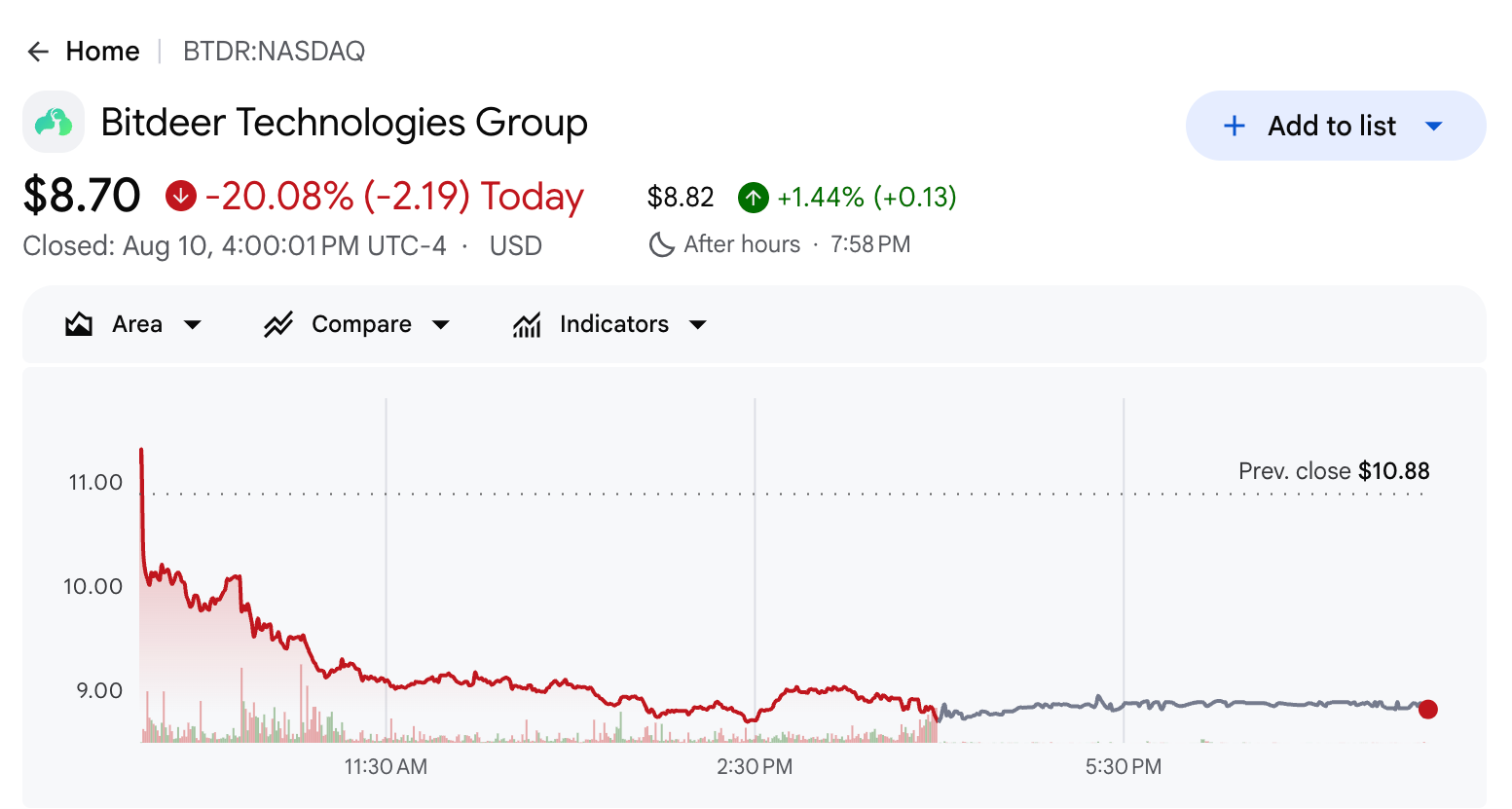
Bitdeer (BTDR) stock fell to its lowest level since March 31, after the crypto miner reported a wider second-quarter loss and revenue that missed Wall Street forecasts.
The Nasdaq-listed miner lost $0.37 per share, wider than the $0.32 expected by analysts. Revenue of $228.8 million also trailed the $231.16 million consensus.
Earnings Miss Overshadows Revenue Growth
Bitdeer’s net loss widened to $92.3 million from $62.9 million a year earlier. The company also swung to a gross loss of $8.5 million from a $12.0 million gross profit, according to its reported results.
The shortfall extended a difficult stretch that followed a $159.5 million deficit in the first quarter. Revenue still climbed 47% to $228.8 million from $155.6 million.
However, the cost of revenue outpaced that gain, rising to $237.3 million on electricity and depreciation charges.
Follow us on X to get the latest news as it happens
Mining Output and AI Push Continue
Operationally, the quarter told a stronger story. Self-mining revenue nearly tripled, from $59.3 million to $168.4 million. The gain came as Bitcoin (BTC) mined jumped to 2,694 from 565 a year earlier.
Adjusted EBITDA improved sharply to $31.1 million from $4.6 million over the same period. Bitdeer is also pushing deeper into artificial intelligence infrastructure.
AI Cloud revenue reached $14 million, up from $1.3 million. The CFO framed the period as measured progress.
“Our AI Cloud revenue continues to scale, alongside our mining business as our SEALMINER fleet comes online. Together, these results show the advantage of owning the fully integrated vertical stack, from power, to hardware, and infrastructure,” Michael G. Potter said.
Bitdeer Stock Erases Its Q2 Rally
Meanwhile, the results weighed heavily on the stock. BTDR fell 20.08% on Monday, closing at $8.70, a four-month low.

The slide capped a sharp reversal. BTDR gained roughly 83% in the second quarter, outpacing the broader Bitcoin market.
Since July, however, the stock has dropped 43.7%, and Monday’s decline erased what remained of those gains. Bitdeer’s next earnings update is due in November.
Subscribe to our YouTube channel to watch leaders and journalists provide expert insights
The post Bitdeer Stock Craters 20% Following Wider Second-Quarter Net Loss appeared first on BeInCrypto.


Luke Dashjr lost his BIP editor privileges after developers raised concerns over his role in BIP 110 and its stalled minority fork.

Trump Media said it is overhauling how it manages its digital-asset portfolio after unrealized losses on cryptocurrencies and securities pushed the company to a $238 million net loss in the second quarter. In its Q2 update released Monday, the business behind Truth Social and financial services brand Truth.Fi said it plans a “revamp” of its treasury approach aimed at keeping long-term crypto exposure while better controlling balance-sheet volatility.
The company attributed $190.4 million in unrealized losses across digital assets, pledged digital assets and equity securities. It also framed the changes as a way to improve the “productivity” of its balance sheet—an emphasis that suggests it intends to continue earning yield and structuring risk around Bitcoin, rather than simply holding spot exposure indefinitely.
Key takeaways
- Trump Media reported $190.4 million in unrealized losses tied to its digital assets, pledged holdings and equity securities during Q2.
- The company plans a new treasury framework to preserve long-term digital-asset exposure while managing volatility and improving balance-sheet efficiency.
- Trump Media’s Q2 filing indicates it already used options to manage Bitcoin volatility and to generate premium income, alongside deploying some BTC into yield arrangements.
- In July, Trump Media increased its Bitcoin exposure after selling Bitcoin-related securities worth $159.6 million and buying BTC with the proceeds.
- Trump Media warned that its Bitcoin yield/carry strategies introduce counterparty credit risk, including potential inability to recover Bitcoin if a counterparty becomes insolvent.
A larger rethink after a heavy Q2 loss
Trump Media said the portfolio losses were a key driver of its Q2 results, which ended in a $238 million net loss. Alongside the headline loss, the company disclosed a specific figure for unrealized drawdowns: $190.4 million spanning digital assets, pledged digital assets and equity securities.
Management’s stated intent for the “revamp” is not to eliminate crypto exposure, but to keep it while refining how the company absorbs and mitigates volatility. That framing matters for investors because it signals an ongoing commitment to crypto-linked strategies—particularly ones that may involve derivatives or lending structures—rather than a full shift toward holding only unencumbered assets.
Trump Media’s broader business context also provides a clue about the internal priorities behind the treasury shift. The company said it plans to direct more resources toward Truth Social, Truth+, and other media segments as part of a capital-allocation change.
Where the Bitcoin stood: little movement in Q2, a jump in July
According to the company’s Q2 reporting, its Bitcoin exposure was relatively stable throughout the second quarter. As of June 30, Trump Media held 9,477.16 BTC, down slightly from 9,542.16 BTC at the end of the prior quarter.
What complicates the picture is that the company also uses Bitcoin in collateral and structured strategies. In addition to its direct holdings, it pledged 2,077.34 BTC as collateral for its options approach. The filing also indicated that 4,260.73 BTC of reported holdings were posted as collateral for convertible notes.
The direction changed in July. Trump Media said it sold Bitcoin-related securities worth $159.6 million and used the proceeds to purchase Bitcoin. By July 31, the company reported holding approximately 14,139 BTC, including pledged Bitcoin, valued at about $890.5 million at the time.
For readers tracking crypto treasury behavior, the sequence is important: Q2 shows modest net spot movement, while July reflects a more decisive increase in aggregate BTC exposure—likely a response to how the company wanted to position itself after the earlier quarter’s unrealized losses.
Options and yield: how Trump Media says it manages volatility
In its Q2 filing, Trump Media described an approach that blends active derivatives management with yield-oriented deployment. The company said it is already using options to help manage Bitcoin volatility and to generate premium income. It also stated that it deploys some BTC through lending and other yield-generating arrangements.
This matters because options and yield structures can change the risk profile of a “Bitcoin holdings” headline. While spot exposure can be a straightforward mark-to-market asset, options premia and collateralized arrangements can introduce additional sensitivities—such as counterparty performance, liquidity, and constraints on how quickly the company can move or liquidate its BTC.
Trump Media also highlighted that the yield/carry strategies are relatively new. That qualifier suggests the company may still be learning how these structures behave under stress conditions, which lines up with its later risk disclosures about counterparties and recoverability.
Risk disclosure: counterparty credit exposure and operational limits
Trump Media warned that its Bitcoin yield strategy creates counterparty credit risk and the possibility of losing assets. The company said it has deployed part of its Bitcoin holdings to third parties via lending, placement and other arrangements designed to earn additional income.
According to the filing, some of these counterparties may not be rated by major credit rating agencies. In that scenario, the company said the counterparties could default during market downturns, liquidity crises or other periods of financial distress.
Trump Media also cautioned that if an arrangement is unsecured, it may be unable to recover its Bitcoin if a counterparty becomes insolvent. Beyond credit risk, it noted operational constraints: when BTC is deployed, the company may have limited ability to sell or pledge it, and counterparties may be able to use the assets at their discretion.
These are the kinds of details that can significantly affect investor expectations. Even if a treasury strategy is designed to reduce volatility or generate income, counterparty failure risk can turn income strategies into loss drivers—especially if recovery terms are weak or assets are not fully secured.
What to watch next
As Trump Media moves to implement its revamped digital-asset treasury framework, investors should focus on how the company structures options, how much BTC remains unencumbered versus pledged, and whether its new approach reduces reliance on unsecured or hard-to-recover yield arrangements during stress periods. The next quarterly filing will likely be the clearest window into whether the framework stabilizes results without increasing counterparty risk.
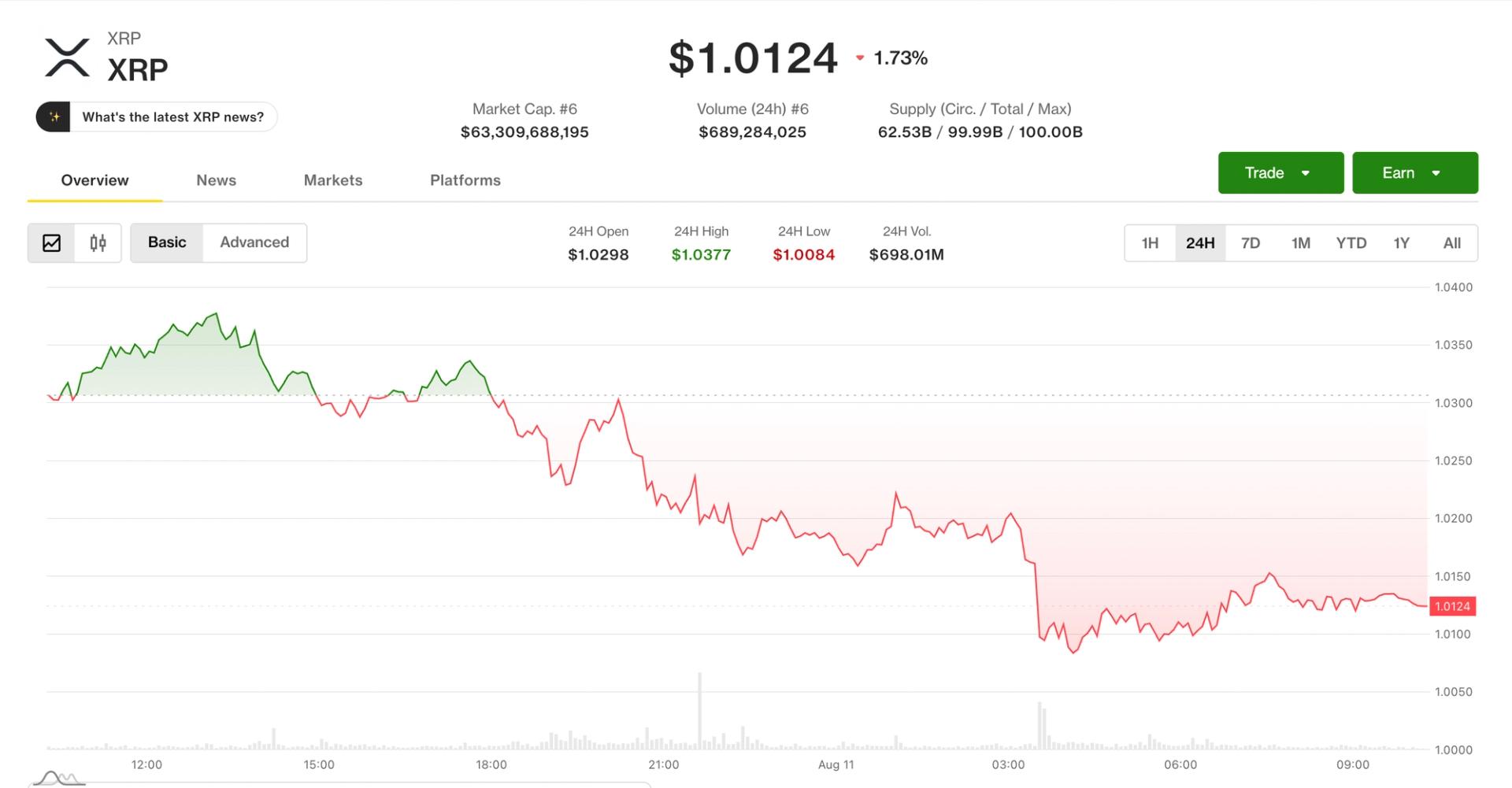
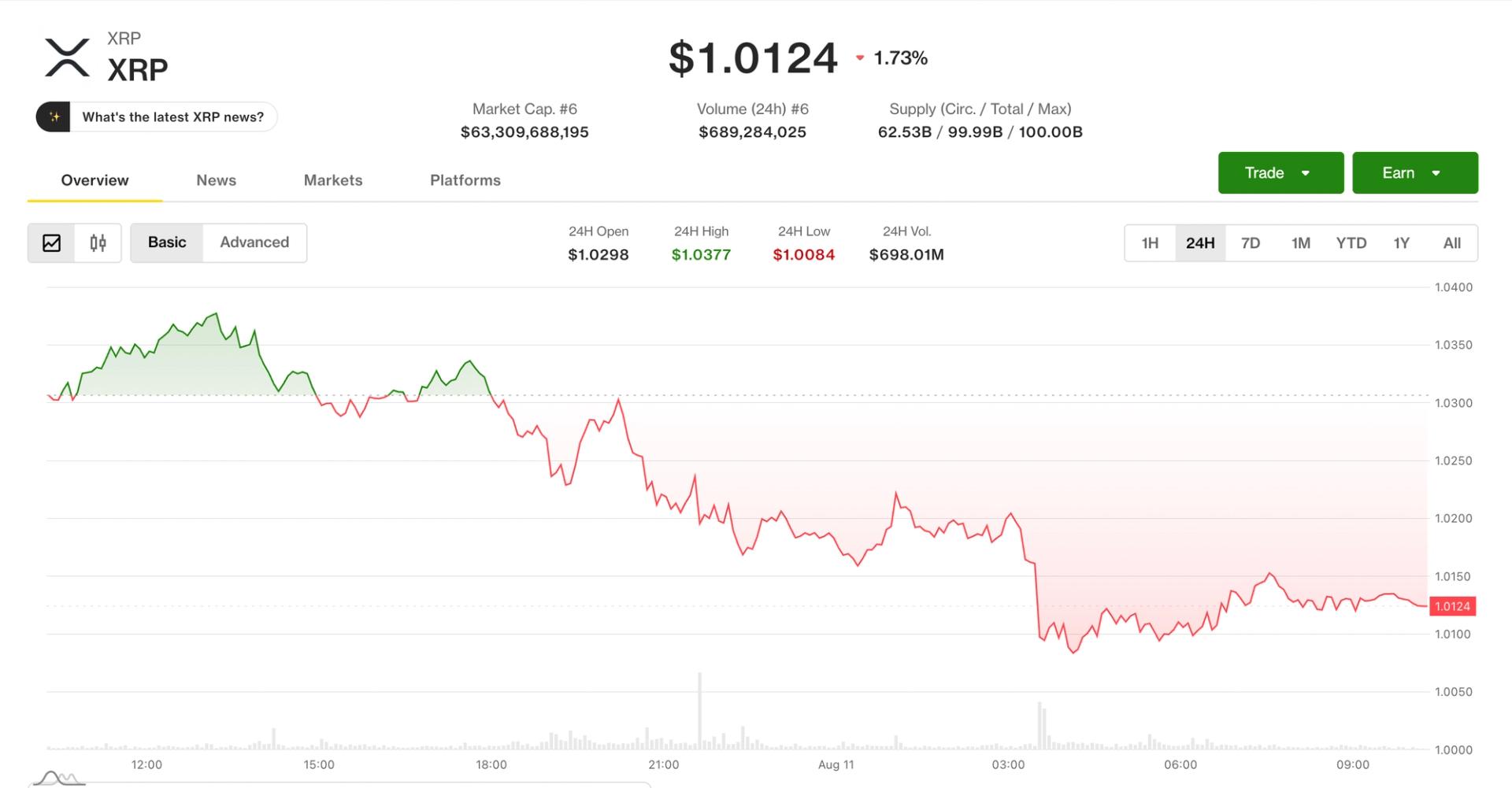
That makes $70,000 the next area to watch, another round number with the 200-day moving average sitting nearby. Clearing it would put bitcoin above the range where buyers and sellers fought through March and April, a move Kuptsikevich said would shift sentiment meaningfully.
Traders are not there yet. The crypto sentiment index sits at 30, in what is known as the fear zone, and has stayed there since mid-July with occasional dips toward extreme fear.
Bonds and oil set the tone in broader markets. U.S. 10-year Treasury yields rose six basis points on Monday to 4.71%, dragging Australian and New Zealand government bonds down with them, with no cash Treasury trading during Asian hours because of a public holiday in Japan.
Brent crude held at $87.73 a barrel after jumping 5% on Monday, when President Donald Trump made fresh demands on Iran and dimmed hopes of a deal to reopen the Strait of Hormuz. Gold rose for a third session above $4,400 an ounce.
Higher oil feeds into the inflation figures due Wednesday at 8:30 a.m. ET, which is why the rally is weighing on assets that do better when rate rises look less likely.
Fund flows had been running the other way until this week. U.S. spot bitcoin funds took in $865 million across five sessions through Aug. 7, before a provisional outflow of $91 million on Monday.


Keel Infrastructure has shut down all of its U.S. Bitcoin mining operations as the former Bitfarms business redirects its American power portfolio toward artificial intelligence and high performance computing data centers.
Summary
- Keel ended all U.S. Bitcoin mining operations on June 29 to prepare sites for HPC.
- Q2 revenue fell 50% yearly to $30 million as mining activity and Bitcoin prices weakened.
- Keel sold 1,085 BTC for $75 million, leaving 1,861 BTC on its balance August 7.
- $819 million in liquidity includes $698 million cash and $121 million in unencumbered Bitcoin reserves.
- U.S. sites in Washington and Pennsylvania have not yet generated any HPC data center revenue.
The company disclosed the transition on Aug. 10 alongside second quarter results showing revenue fell 50% from a year earlier to $30.4 million. Net loss reached about $65 million.
The move brings an end to Bitcoin mining at Keel’s sites in Washington and Pennsylvania, but it does not represent a complete exit from mining worldwide. The Delaware based company continues to operate legacy Bitcoin mining assets in Canada while pursuing approvals to convert more Canadian capacity toward HPC and AI workloads.
Keel Infrastructure ends U.S. Bitcoin mining
Keel’s SEC filing shows that the U.S. withdrawal happened in stages. Bitcoin mining at its Washington State site ended on April 28 as the company began converting the location into an 18 MW HPC data center. Mining then ceased at Panther Creek, Scrubgrass and Sharon in Pennsylvania on June 29.
The change is particularly relevant to Keel’s U.S. operations because the company is now trying to reuse power infrastructure originally built around cryptocurrency mining. Panther Creek and Scrubgrass continued selling electricity after their miners were switched off. They had about 60 MW and 63 MW of energized capacity, respectively, that had not been contracted under an electric supply agreement as of Aug. 7. Sharon is being prepared for a planned 110 MW HPC data center.
Keel has also changed its corporate center of gravity. The former Bitfarms completed its redomiciliation from Canada to the United States on April 1. Keel became a Delaware corporation, a U.S. domestic issuer and the ultimate parent of the Bitfarms business. Its common stock trades on Nasdaq under the KEEL ticker.
Bitcoin sales give Keel more cash for the AI shift
Keel’s latest release also shows its Bitcoin treasury continuing to shrink. Between April 1 and Aug. 7, the company sold 1,085 BTC for roughly $75 million. Its remaining balance stood at 1,861 BTC, valued by the company at approximately $121 million for liquidity purposes.
Management made clear that further disposals are planned. During its earnings presentation, Keel said its “intent is to liquidate our Bitcoin position in 2026.” That remains a management plan rather than a completed transaction, meaning the timing and proceeds from the remaining BTC are still dependent on future sales.
Total liquidity reached approximately $819 million as of Aug. 7, comprising $698 million of unrestricted cash and $121 million of unencumbered Bitcoin. That compares with about $533 million of liquidity reported in May, as previously reported in earlier earnings coverage.
Keel also raised $458 million through 1.25% convertible senior notes due in 2032 during the second quarter. Management said the capital is intended in part to support additional power capacity at its Pennsylvania properties, including Panther Creek and Scrubgrass.
Q2 losses show the cost of leaving Bitcoin mining
The transition is already visible in Keel’s financial results. Revenue from continuing operations fell to $30.4 million from $60.9 million a year earlier. Bitcoin mining revenue alone declined by $29.6 million as the company dealt with lower average Bitcoin prices, higher network difficulty and reduced U.S. mining activity.
The U.S. portion of the decline was substantial. U.S. operations generated 37% of second quarter revenue, down from 51% a year earlier. Revenue from U.S. operations fell by $19.9 million compared with Q2 2025, with Keel citing the Bitcoin market, higher network difficulty and the April shutdown in Washington.
Keel recorded a $141 million operating loss, compared with operating income of about $11 million one year earlier. Net loss was $65 million, while the loss from continuing operations was $64 million. The quarter also included large noncash depreciation charges tied partly to the retirement of mining infrastructure at Panther Creek and Scrubgrass.
General and administrative expenses increased to $31.3 million from $19.4 million. Keel attributed the rise partly to stock compensation, professional costs connected with its U.S. redomiciliation and hiring staff for its expansion into data center development.
The strategy follows a broader move by listed miners to reuse power intensive Bitcoin infrastructure for AI computing. In related broader industry coverage, several miners have redirected capital and electrical capacity toward AI hosting as mining economics weakened during 2026.
What happens next for Keel’s U.S. data centers
The next test is whether Keel can convert retired mining sites into contracted AI infrastructure. As of Aug. 7, the company had not begun HPC operations or recognized HPC data center revenue at the Washington site or its Pennsylvania properties. That makes the current transition primarily a development story rather than an established new revenue stream.
Keel says commercial talks are advancing. Chief executive Ben Gagnon said there were “multiple prospective tenants negotiating for each one” of the company’s three priority sites. However, Keel has not publicly named those prospective tenants or announced a signed customer lease for the sites in its latest results. The customer negotiations therefore remain a company reported commercial process rather than booked revenue.
Permitting is also unfinished. Panther Creek and Sharon have received zoning and land development approvals, while environmental permits remain in progress. Panther Creek has 350 MW of secured utility capacity, and management said its earliest expected ready for service date remains in 2027.
Keel has not abandoned Bitcoin mining everywhere. Its Canadian mining assets remain operational while it pursues further HPC conversions, including a proposed 96 MW data center campus in Sherbrooke, Quebec. Local approval has been obtained for the power transfer, although the change to HPC and AI use remains subject to provincial review.
For Keel, the U.S. pivot has therefore moved beyond planning: the miners are now off, mining equipment has been designated for sale and capital has been raised. The remaining milestones are more difficult to measure in advance. Permits must be completed, tenants must sign contracts, construction must proceed and the former mining sites must begin producing HPC revenue before the new model can be judged on operating performance.
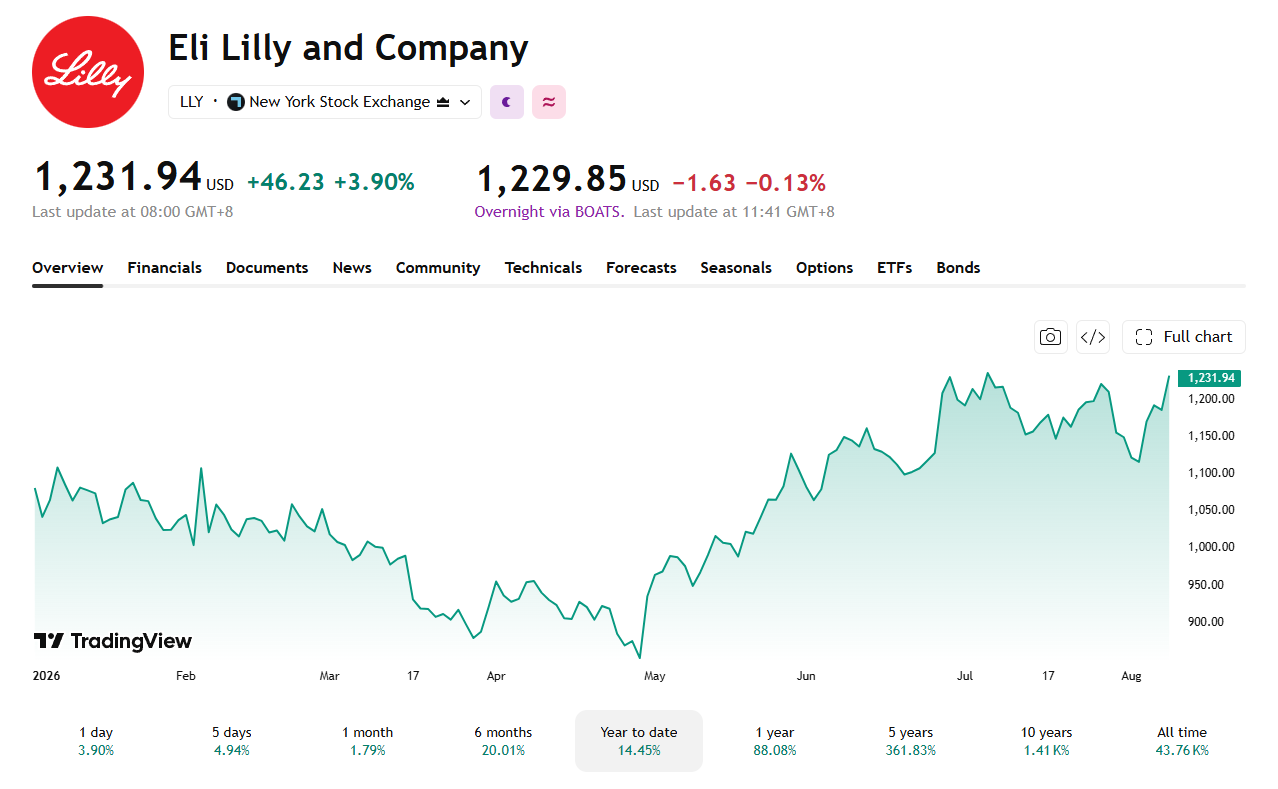
Eli Lilly (LLY) posted a blowout quarter, and Mad Money says the GLP-1 drugmaker’s stock story is far from over.
Jim Cramer and CNBC analyst Jeff Marks called Eli Lilly and Nvidia top momentum stocks.
Why Eli Lilly’s GLP-1 Stock Still Has Room to Run
The comment came during a viewer question about how price targets get set. Cramer raised Eli Lilly and Nvidia’s runs specifically when asking about the process.
Marks, the CNBC Investing Club’s portfolio analyst, said stocks like these need a longer time horizon than most.
“Stocks like that you also have to look out years out in advance, too. Especially in the case of Eli Lilly, where it’s more of towards the end of the decade is where it’s GLP-1 sales.”
— Jeff Marks, CNBC Investing Club portfolio analyst, on Mad Money
Eli Lilly’s second-quarter results back that framing. Revenue hit $23 billion, up 48% year over year. A 60% jump in sales volume offset a 13% drop in realized prices.
Management raised full-year revenue guidance to a range of $85 billion to $87 billion. Mounjaro sales rose 91% to $9.9 billion worldwide. Zepbound’s U.S. revenue grew 44% to $4.9 billion.
Cramer’s other 2026 stock picks lean on similarly durable, multi-year themes rather than short-term trades.
Global GLP-1 Demand Is Still Early
Eli Lilly’s international business is growing even faster than its U.S. business. Revenue outside the U.S. jumped 80% to $8.6 billion in the quarter, while volume surged 113%.

That growth came even as prices outside the U.S. fell 36%. The decline followed Mounjaro’s addition to China’s National Reimbursement Drug List (NRDL), a program covering drug costs under public insurance.
Lower prices widen access for millions of new patients, even as they compress near-term margins. Morgan Stanley expects the global obesity and diabetes drug market to nearly double by 2035.
The firm projects $190 billion in sales, up from $79 billion in 2025. Oral GLP-1 pills and expanding insurance coverage are the main drivers behind that forecast.
For Marks and Cramer, runway and scale are why Eli Lilly’s momentum looks built for years, not quarters.
The post Cramer’s Analyst Says Eli Lilly’s GLP-1 Stock Rally Has Years Left to Run appeared first on BeInCrypto.


Cointelegraph is committed to providing independent, high-quality journalism across the crypto, blockchain, AI, and fintech industries.
All news, reviews, and analyses are produced with full journalistic independence and integrity. For more details on our standards and processes, please read our Editorial Policy.
Crypto World
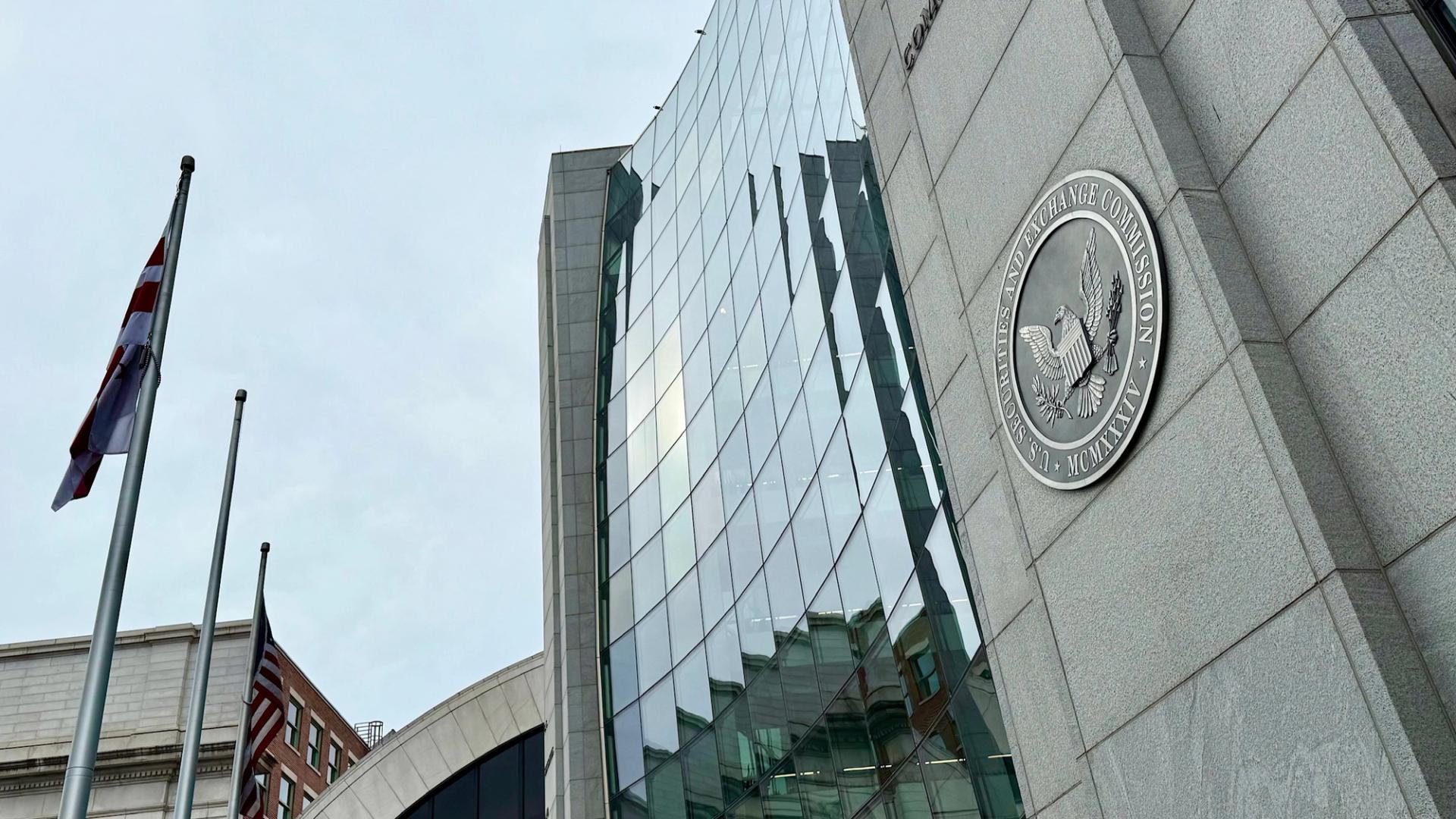
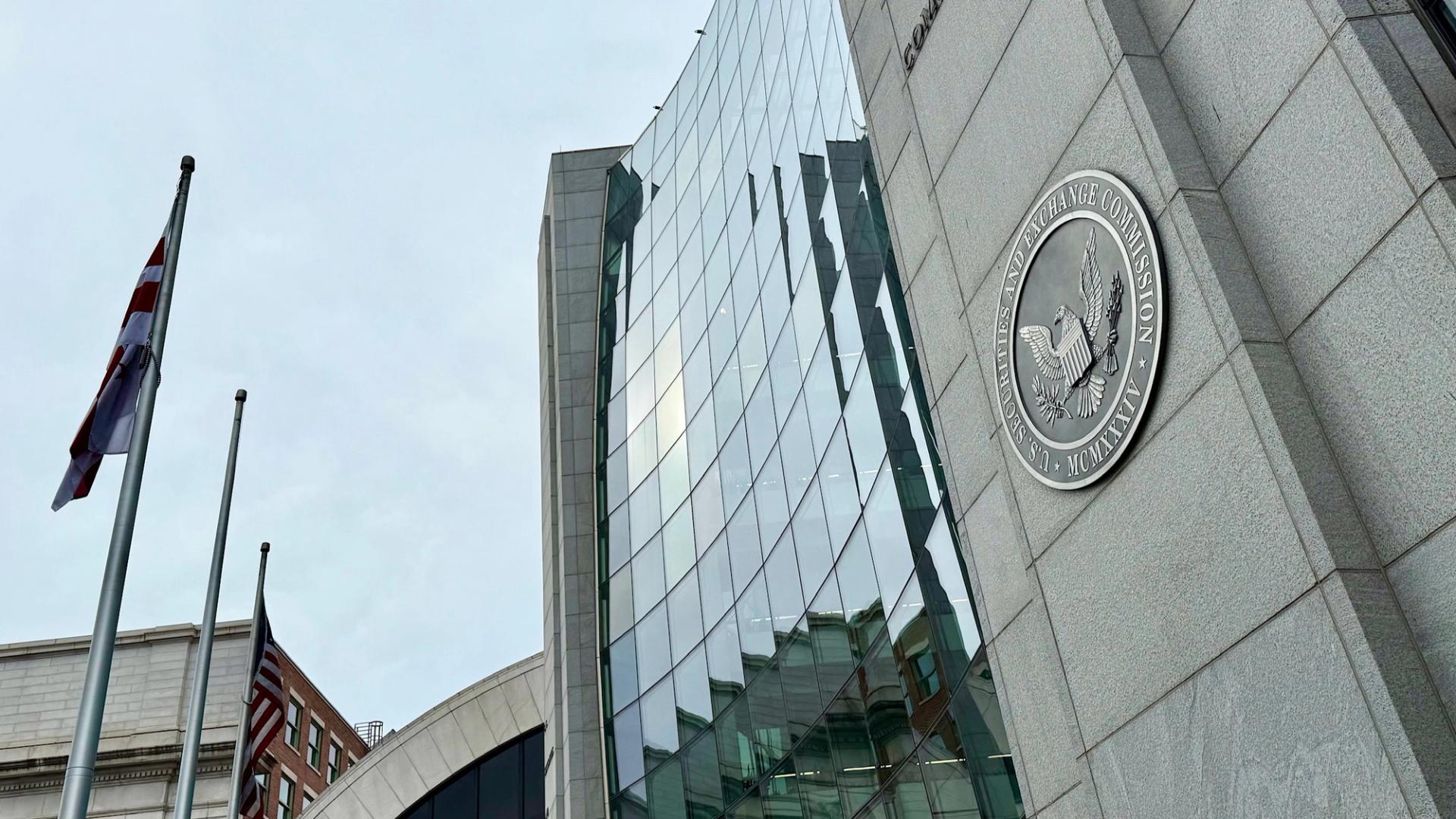
U.S. SEC sets meeting to propose Reg Crypto to support certain digital assets offerings
“We view this as the first of several rulemakings the SEC will undertake to provide regulatory certainty for crypto assets after the Senate failed before the August recess to advance the Clarity Act on crypto market structure,” TD Cowen analyst Jaret Seiberg wrote in a client note sent after the SEC’s notice.
The proposal is expected to give a path to crypto firms enabling them to raise capital for projects without triggering SEC registration requirements, and the businesses are also expected to be provided an exit path for getting clear of the agency’s jurisdiction when they’re not engaged in hands-on management of the projects anymore.
Before this, Atkins and the agency had rolled through a lengthy series of crypto policy statements meant to clarify its regulatory position on digital assets, but the staff statements have little long-term durability. A formal rulemaking would be more difficult to reverse in the future.
But the rule will likely take further months to develop and finalize. This first stage will come with a comment period — typically two or three months — and be followed by a potentially lengthy rewrite.
Reg Crypto would join some of the other significant steps the agency has taken or is still working on to foster the U.S. crypto industry. One of the major moves was a joint stance with the Commodity Futures Trading Commission on a “taxonomy” to define how they view various crypto assets and which jurisdictions they belong in. The agency is also still working on its tokenized securities approach, which Atkins routinely mentions as one of the SEC’s marquee crypto maneuvers.
Arthur Hayes says a Fed plan to help Japan defend the yen will print new dollar liquidity, and he argues that liquidity will pump Bitcoin (BTC).
Hayes co-founded BitMEX and now runs the Maelstrom family office. He has built a reputation for macro calls that tie Fed and Treasury policy moves directly to crypto prices.
How A Yen Rescue Becomes Dollar Liquidity
The mechanism he describes is real, though its scale is not yet confirmed. It runs through the Foreign and International Monetary Authorities (FIMA) Repo Facility, a Fed program that lets foreign governments post US Treasuries as collateral for short-term dollar loans, instead of selling those Treasuries outright.
Treasury Secretary Scott Bessent has said Japan holds $1.143 trillion in US Treasuries. Under Hayes’ scenario, Tokyo repos part of that stockpile for dollars, sells the dollars for yen, and reinvests the yen into domestic bonds and stocks.
The Fed’s balance sheet grows to fund each loan, which is functionally similar to printing money, though the Fed frames it as a lending facility rather than quantitative easing (QE).
Hayes’ bet is that these dollars do not stay contained. BTC, in his view, is one of the most liquidity-sensitive assets in the market.

Why The Fed Balance Sheet Matters For Bitcoin
During the pandemic, the Fed’s balance sheet grew from roughly $4.2 trillion to nearly $8.9 trillion by early 2022, an increase of more than $4.6 trillion in asset purchases, according to Federal Reserve research.
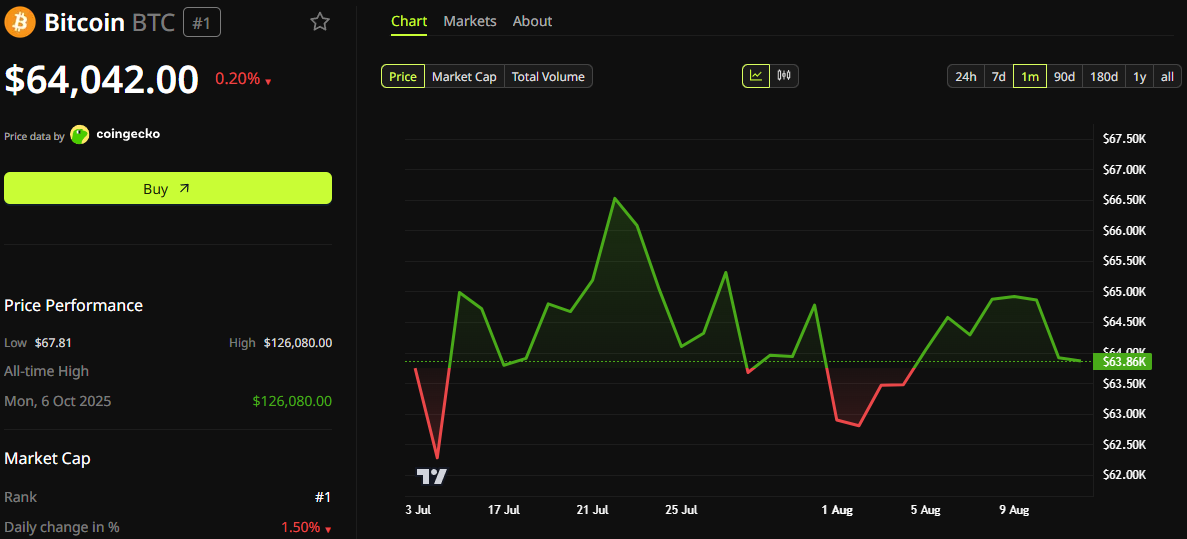
Over that stretch, the Bitcoin price ran from under $10,000 to an all-time high near $69,000 in November 2021. Hayes treats that stretch as the template.
There is a second layer. The yen is the world’s cheapest major funding currency, meaning traders borrow yen cheaply to buy other assets. A sudden yen spike forces those trades to unwind fast, which dragged down stocks and crypto together in August 2024.
Hayes argues that routing the rescue through FIMA lets the unwind happen gradually. A sharp Bank of Japan (BOJ) rate hike, by contrast, risks a repeat of that 2024 shock, which he says makes FIMA the friendlier path for BTC.
The Administration Side Checks Out, So Far
Bessent asked the Fed to expand FIMA’s $60 billion lending cap. This was days after the US and Japan jointly intervened to support the yen. He called the facility an important backstop and said he wants its cap raised in the months ahead.
Not everyone agrees FIMA is the right tool. Brad Setser, a former Treasury official, has argued the facility was built to backstop lending in moments of market stress, not to fund currency intervention.
Any cap increase also needs sign-off from the Federal Open Market Committee (FOMC). Fed Chairman Kevin Warsh has not committed to a schedule. Hayes treats the expansion as close to certain. The Fed has not.
Hayes’ own newsletter discloses that Maelstrom is already long Bitcoin, Ether (ETH), and Ethena (ENA). These are the same assets he says this liquidity will lift.
The post Arthur Hayes Says Fed’s Japan Yen Plan Will Pump Bitcoin appeared first on BeInCrypto.


Trump Media said it plans to revamp its digital asset treasury strategy after unrealized losses on crypto and securities helped push the company to a $238 million net loss in the second quarter.
The company reported $190.4 millio n in unrealized losses across its digital assets, pledged digital assets and equity securities in its Q2 earnings release on Monday.
Trump Media said the new framework is intended to preserve its long-term digital asset exposure while managing volatility and improving the productivity of its balance sheet.
Trump Media is the publicly traded company behind Truth Social, Truth+ and financial services brand Truth.Fi. The company is tied to US President Donald Trump, who is the sole beneficiary of a trust that held about 41.1% of Trump Media’s voting power as of Feb. 25, according to its latest annual report.
Related: Trump Media sells Wall Street low-latency access to Trump posts
Its Q2 filing shows the company is already using options to manage Bitcoin volatility and generate premium income, while deploying some BTC through lending and other yield-generating arrangements.
The company also said it plans to direct more resources toward Truth Social, Truth+ and other parts of its media business as part of a broader shift in how it allocates capital.
Trump Media boosts Bitcoin holdings after Q2
Trump Media’s Bitcoin holdings were little changed during the second quarter before the company stepped up its direct Bitcoin exposure in July.
As of June 30, Trump Media held 9,477.16 Bitcoin, down from 9,542.16 BTC at the end of the previous quarter.
Separately, the company had pledged 2,077.34 BTC as collateral for its options strategy. Of its reported holdings, 4,260.73 BTC was serving as collateral for convertible notes.
Related: Strategy turns 1,690 BTC into $108.6M STRC buyback
In July, the company sold Bitcoin-related securities worth $159.6 million and used the proceeds to purchase Bitcoin.
By July 31, Trump Media reported holding approximately 14,139 BTC, including pledged Bitcoin, worth about $890.5 million at the time.
Trump Media flags risks from Bitcoin yield strategy
Trump Media also warned that its efforts to earn additional income from its Bitcoin carry counterparty credit risk and the potential loss of its assets.
The company said it has deployed a portion of its Bitcoin holdings to third parties through lending, placement and other yield-generating arrangements, which it described as relatively new strategies.
Some of those counterparties may not be rated by major credit rating agencies and could default during market downturns, liquidity crises or other financial distress.
If an arrangement is unsecured, the company said it may be unable to recover its Bitcoin if a counterparty becomes insolvent. Trump Media is also limited in its ability to sell or pledge Bitcoin while it is deployed, while counterparties may use those assets at their discretion.
Magazine: Bitcoin will never fall below $60K again: Nansen founder

Rays rally to beat Athletics with eight-run eighth inning

Archer Aviation Takes Control of Boeing’s Flying Taxi Work and Gains a Ready-Made Defense Business

I MADE BAD FINANCIAL DECISIONS!~^0^


-

 Fashion3 days ago
Weekend Open Thread: Mattifying Sunscreen
-

 Fashion4 days ago
Frugal Friday’s Workwear Report: Cap-Sleeve Pointelle Crewneck Sweater
-

 Sports5 days ago
Jordan Coyle & Cordiamo take Laya Arena Stakes at RDS
-

 News Videos3 days ago
Can Astrology Help Find Gold and Silver Trends? A Financial Astrology Guide
-
 Business5 days ago
US stocks: Dow closes at record on Mideast optimism; SpaceX, AMD drag Nasdaq
-

 Politics5 days ago
Reform UK And Greens Sink To Lowest Favourability Ratings To Date
-

 Tech6 days ago
OpenAI, Anthropic AI agents targeted real people and systems in cyber tests
-

 Business6 days ago
Nvidia Stock Climbs 2.5% as Chip Sector Rally Builds Ahead of AMD Earnings, Nvidia’s Own Report Looms
-

 Crypto World7 days ago
Polymarket targets $20 billion valuation as competition heats up in prediction market sector
-

 Business5 days ago
Supply chain issues impact Ingredion
-
 Crypto World7 days ago
CLARITY Act Senate Vote Locked In, But 60-Vote Hurdle Looms Large
-

 Tech3 days ago
Rinn Pharma & Biopharma to join NordicPharmaTrain network
-
 Crypto World6 days ago
Dow and S&P 500 Hit Records on AI Earnings: When Will the Bubble Burst?
-

 Business2 days ago
How to Start a Cleaning Business: A Step-by-Step Guide
-

 Business2 days ago
Datadog: Best Of Breed For Multiple Reasons
-

 Business2 days ago
BDC Weekly Review: Private BDC Q2 Numbers Are Strong
-
 Crypto World6 days ago
Dollar Index Trapped at 100 as Hawkish Fed Meets Official Selling
-

 Business6 days ago
McDonald’s (MCD) Q2 2026 earnings
-
Crypto World7 days ago
Trump Administration Plans Ban on New Chinese AI Data Center Components: Report
-

 Fashion6 days ago
The Bright Side of Black and White
You must be logged in to post a comment Login