
Crypto World
HKDAP could take HKD beyond payments into on-chain finance, HashKey researcher says



HKDAP could move the Hong Kong dollar beyond payments and into cross-border settlement, corporate treasury management and tokenized finance as regulated stablecoins gain a role in Hong Kong’s on-chain financial system, according to a HashKey researcher.
Summary
- HashKey senior researcher Tim Sun sees HKD stablecoins becoming an on-chain settlement vehicle rather than simply another payment method.
- Insurance has emerged as an early HKDAP use case, with HashKey and YF Life already completing a live transaction using real funds.
- Trade settlement, corporate treasury management and tokenized assets could provide additional uses as HKDAP’s institutional network expands.
- Sun said HKD stablecoins could also prevent on-chain finance from depending solely on U.S. dollar stablecoins over the long run.
HashKey senior researcher Tim Sun told crypto.news that the future role of Hong Kong dollar stablecoins, including HKDAP, could extend well beyond payments as financial assets increasingly move onto blockchain networks.
“From our perspective, the role of HKD stablecoins (including HKDAP) in the future will be more than just a new payment tool; more importantly, they will serve as a digital vehicle for the Hong Kong Dollar to enter the on-chain financial system.”
According to Sun, Asia’s large cross-border capital flows, established financial system and growing use of asset tokenization create several possible applications for regulated HKD-denominated stablecoins. He identified cross-border settlement, corporate treasury management, and digital asset trading as areas where tokenized HKD could be used.
Tokenized financial assets could create another use case because their subscription, redemption, and settlement require a compatible form of money, Sun said.
“Looking further ahead, as more financial assets move on-chain, the market needs not only on-chain assets but also a matching on-chain settlement currency,” he added.
HKDAP insurance tests provide an early use case
Insurance has already provided one of the first institutional environments for testing the token.
On Aug. 14, HashKey Exchange said it had completed a live HKDAP transaction with YF Life Insurance International using real funds. The exercise covered the stablecoin’s subscription and redemption process, while YF Life said it planned to support HKDAP premium payments in the future, subject to regulatory requirements.
Sun said the regulated nature of insurance makes it compatible with a stablecoin issued under formal regulatory oversight. Premium payments also offer a standardized and recurring transaction that institutions can use to test settlement infrastructure.
“The two announced cooperation cases indeed both have a background in insurance institutions,” Sun said.
“On one hand, insurance is a highly regulated industry, which aligns well with the positioning of a regulated stablecoin. On the other hand, from a business perspective, premium payment itself is a relatively clear, standardized, and high-frequency real-world scenario.”
HashKey has also partnered with insurer OneDegree to explore local and cross-border applications for HKDAP, adding another insurance-related test to the token’s early institutional rollout.
The activity follows Anchorpoint Financial’s controlled launch of HKDAP earlier in August. As previously reported, Anchorpoint appointed HashKey Exchange as an authorized distributor, allowing eligible institutions and professional investors to access minting, redemption, and fiat conversion during the beta phase.
HashKey had completed an initial minting and redemption transaction with eligible clients when the distribution arrangement was announced.
HKDAP use cases are extending into trade and treasury
Insurance is not the only financial activity being tested.
On Aug. 13, Unloq said its SC+ trade-finance infrastructure completed a Hong Kong transaction using HKDAP as the settlement instrument for a receivables-financing transaction. SC+ created a blockchain representation of the approved receivable, while HKDAP handled settlement within the workflow.
Sun said trade, corporate cross-border fund management, and tokenized assets are among the areas where stablecoins could provide additional utility.
“These fields inherently have strong demands for multi-currency, cross-timezone, and capital allocation capabilities, which better reflect the incremental value of stablecoins in on-chain settlement and cross-border fund management,” he said.
Institutional distribution has also continued to expand since HKDAP entered beta access.
Standard Chartered Bank (Hong Kong) became HKDAP’s first bank distributor on Aug. 24 and said it was working with eligible institutional clients on potential applications involving fund settlement, treasury management and cross-border trade payments.
Anchorpoint’s records show further additions to the distribution network during the final week of August. Finloop became an authorized distributor on Aug. 25, followed by Yunfeng Financial on Aug. 26, while Bank of East Asia signed an agreement with Anchorpoint on Aug. 28 to explore applications for the HKD-backed token.
HKDAP remains under Hong Kong’s regulated rollout
Despite the expanding list of institutional participants, HKDAP remains in a controlled rollout rather than unrestricted public distribution.
Anchorpoint began beta access on Aug. 12 for institutional distributors and professional investors, initially identifying cross-border payments, fiat conversion, and tokenized-asset settlement among its intended applications. The institutional rollout followed months of regulatory and technical preparation.
Before distribution began, Anchorpoint, OSL Group and Futu-backed PantherTrade tested HKDAP transfers on Ethereum mainnet in May. The Ethereum test covered the token’s transaction process after Anchorpoint received regulatory approval.
HKDAP has a par value of HK$1 per token, according to Anchorpoint’s whitepaper. Tokens in circulation must be supported by a reserve pool with a market value at least equal to the outstanding HKDAP, with the assets held in trust for token holders.
The regulatory foundation was established in April, when the Hong Kong Monetary Authority granted its first stablecoin issuer licenses to Anchorpoint and HSBC. The first licenses came under the Stablecoins Ordinance, which took effect in August 2025 and subjects covered issuers to requirements involving reserves, redemption, governance and risk controls.
Anchorpoint itself was formed by Standard Chartered Bank (Hong Kong), HKT and Animoca Brands after the companies participated in the HKMA’s stablecoin issuer sandbox.
HKD stablecoins could offer an alternative settlement currency
For Sun, one of the longer-term questions is whether tokenized financial activity should remain overwhelmingly dependent on dollar-denominated stablecoins.
“The significance of the HKD stablecoin lies in enabling the HKD to participate in this new financial infrastructure system, preventing on-chain finance from relying solely on USD stablecoins in the long run.”
The argument comes as the United States builds its own federal framework around payment stablecoins. President Donald Trump signed the GENIUS Act into law in July 2025, creating a federal regulatory structure for permitted payment stablecoin issuers.
U.S. regulators, however, missed the law’s July 18, 2026 deadline for completing key implementing rules, leaving several proposals unfinished ahead of the framework’s Jan. 18, 2027 effective date. U.S. rulemaking deadline
Treasury and other U.S. regulators have also proposed customer-identification requirements for certain permitted payment stablecoin issuers. Under the proposal, covered issuers would be treated as financial institutions for Bank Secrecy Act purposes and would need to verify customers in direct relationships, while secondary-market transactions generally would not trigger the same requirement.
Hong Kong’s framework, meanwhile, has placed HKDAP under HKMA supervision from issuance. Anchorpoint’s whitepaper states that the token is authorized for issuance in Hong Kong and may be distributed in other jurisdictions only in accordance with applicable local laws.



The most important week in Solana’s history is about to begin, and Jacob Creech, Vice President of Technology at the Solana Foundation, has released the announcement the Solana community has been eagerly awaiting.
Summary
- Solana is preparing a series of network upgrades covering transaction costs, block times, transaction capacity and validator infrastructure.
- Transaction V1 is scheduled to launch on September 9, while the Alpenglow consensus upgrade is expected to reach mainnet in October.
- ASDeFi claims SOL holders can earn returns through cloud mining contracts without operating validators or purchasing mining hardware.
- The platform advertises several fixed term contracts with different investment amounts and projected returns, alongside support for SOL and other cryptocurrencies.
Solana is about to enter a period of intensive technical upgrades: The first phase of gas fee reductions will begin this week, followed by the launch of Transaction V1 on September 9. Block times will continue to be reduced, the Alpenglow consensus upgrade will be rolled out in October, and the community is set to come together at the “Scale or Die” conference in November. Solana’s development will take on a whole new look from this point forward.
A series of upgrades will reshape Solana’s infrastructure in several areas, including cost, transaction capacity, confirmation speed, and validator architecture. However, technical upgrades do not necessarily mean that the price of SOL will rise; ultimately, this depends on developer adoption, user growth, and genuine on-chain demand.
For ordinary investors, however, in addition to keeping an eye on the evolution of public blockchain infrastructure, it is equally important to consider how to maximize the efficiency of their Solana assets. ASDeFi addresses this need by offering an automated yield mechanism that allows users to access potential returns on their Solana assets without having to run their own validators or wait for public blockchain upgrades.
Solana is accelerating its infrastructure upgrades, while the asset efficiency sector is also evolving in parallel. In the future, what will truly be worth watching may not just be which blockchain is faster, but rather which one can enable users and assets to create more tangible value.
ASDeFi: Continuously accumulate SOL without upgrades
From the V1 trading upgrade on September 9 to the Alpenglow mainnet, which is expected to launch in October, Solana is undergoing a major technical upgrade. For ASDeFi users, you can continue to accumulate rewards through cloud mining without having to wait for blockchain upgrades, validator registration, or governance processes. At the same time, ASDeFi has integrated with the Solana ecosystem, including SOL payments and the listing of related tokens on Orca DEX, so its cloud mining business complements the Solana upgrade.
ASDeFi: How it works
Founded in 2020 and headquartered in the United Kingdom, AS DeFi is a cryptocurrency asset service platform specializing in AI-powered cloud mining. Through an AI-driven computing power scheduling system, it combines green-energy mining facilities with automated yield management to enable round-the-clock automated operation. Users can start mining cryptocurrency without having to purchase mining equipment or bear the costs of equipment maintenance, electricity, or complex technical management.
How do I join ASDeFi?
1. Go to register a cloud mining account: https://asdefi.com
Enter your email address and password to create an account. You’ll receive a $15 bonus upon registration, and a $0.60 bonus for logging in every day.
2. Deposit cryptocurrency
The platform supports deposits and withdrawals of more than a dozen cryptocurrencies, including SOL, XRP, BTC, ETH, DOGE, BNB, and USDT.
3. Purchase hashrate contracts
Purchase a $15 contract. The platform also offers a variety of hashrate contracts; choose one with the return that best fits your investment budget.
Examples of common contracts:
Check-in Contract: $15 — 1-day cycle — Total profit of approximately $15.6
Introductory Contract: $100 — 2-day cycle — Total profit of approximately $108
Basic Contract: $1,000 — 10-day cycle — Total profit of approximately $10,140
Stable Contract: $6,000 — 20-day cycle — Total profit approximately $8,040
Stable Contract: $30,000 — 30-day cycle — Total profit approximately $47,100
(For more contract details, please visit the official website.)
4. Start mining and earn rewards
Once the contract purchase is complete, the platform automatically allocates computing power resources, and the system begins running. You can view your earnings in real time on your phone and withdraw them to your wallet at any time.
Summary
With upgrades such as Transaction V1 and Alpenglow rolling out, Solana continues to optimize transaction efficiency, confirmation speeds, and network infrastructure. For investors, while keeping an eye on the technological advancements of public blockchains, there are also opportunities to explore new possibilities in terms of asset efficiency and participation methods.
ASDeFi offers SOL holders a way to participate without having to purchase mining equipment themselves, through cloud mining and automated computing power management. As blockchain infrastructure continues to upgrade, the integration of technological innovation with asset use cases will remain a key focus for the market.
For more details, visit: https://asdefi.com
Download the app: https://asdefi.com/xml/index.html#/app
Customer service email: [email protected]
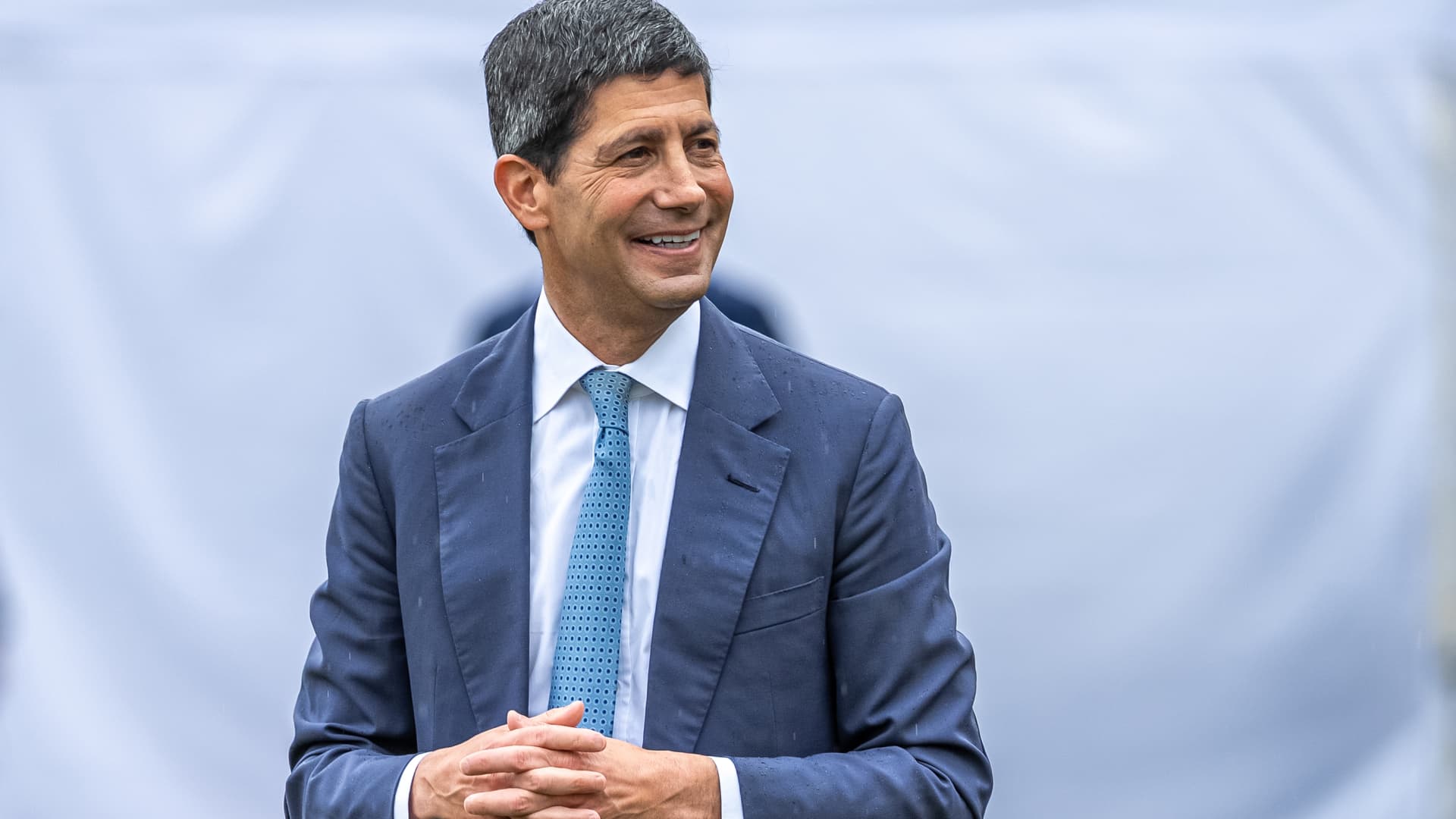
Kevin Warsh, chairman of the US Federal Reserve, walks the grounds during the Kansas City Federal Reserve’s Jackson Hole Economic Policy Symposium in Moran, Wyoming, US, on Friday, Aug. 28, 2026.
David Paul Morris | Bloomberg | Getty Images
Just a few carefully chosen words from Federal Reserve Chairman Kevin Warsh convinced markets that he was serious about inflation and ready to recommend an interest rate hike in just a few weeks.
The path in that direction, though, still looks cluttered, with plenty of incentive left to convince Warsh and his fellow central bank policymakers that a move isn’t necessary yet.
Following Warsh’s keynote speech Friday at the Fed’s annual Jackson Hole, Wyoming symposium, markets flipped on rate expectations. Prior, they expected little likelihood of a rate increase until at least December; after that changed to a high probability of one when the Federal Open Market Committee meets in a little more than two weeks.
However, some observers warned that hype for a hike is unjustified.
“It is my belief that we’ve seen a supply shock, and traditionally you don’t raise into a supply shock unless you see second- or third-order effects,” Treasury Secretary Scott Bessent told CNBC on Monday in an interview from the G20 summit in Asheville, N.C. “And we are seeing the core inflation has remained very, very restrained.”
Warsh, though acknowledging that inflation numbers have been soft lately, said the progress isn’t enough and does “not tell me that underlying trends have meaningfully improved.”
“We must be confident that underlying inflation is moving to our objective, clearly and at sufficient speed. Otherwise, we have work to do,” he added.
Switch in expectations
The sum of his remarks caused a sharp repricing in hike probabilities. Odds for a move at the Sept. 15-16 meeting jumped to 66.1% on Monday, nearly double where they were before Warsh spoke, according to the CME Group’s FedWatch.
But Warsh has spoken sternly on the Fed’s inflation mandate before, if with less direction about what he considers the proper response. At a July news conference, he pledged the Fed “will not waver” in its pursuit of 2% inflation. Yet markets took his commitment as less than full-throated, bidding up Treasury yields and lowering the probability of a hike.
Indeed, the chairman’s comments Friday were “relatively uncontroversial and have been restated by Warsh each time he has spoken,” Citigroup economist Andrew Hollenhorst wrote in a client note.
Hollenhorst characterized Warsh’s comments as more hawkish than usual “but only marginally so” and coming amid economic data that indicates no particular urgent need for tighter monetary policy.
“At the July FOMC meeting there was not a consensus to raise rates,” the economist predicted. “Data since that time have shown cooler inflation and softer hiring. There will not be a consensus to hike rates in September. Our expectation for cooler inflation data to continue make rate hikes unlikely this year.”
The Fed will have several key data points to consider before its next meeting.
This week will see important jobs reports, with questions mounting over a labor market that has shown three straight weak nonfarm payrolls numbers. The following week, just before the Fed meeting, will see the consumer and producer price indexes, both of which feed into the central bank’s primary inflation gauge, the personal consumption expenditures price index.
The July PCE inflation reading showed the headline rate at 3.7%, with core at 3.3%. A Dallas Fed measure that strips out extremes on either end held at 2.3%, much closer to the Fed’s goal.
Jobs in focus
There also will be several housing reports, along with retail sales figures released the day of the Fed rate decision.
Of those, the most important will the employment picture, which could dissuade the Fed from hikes, said David Kelly, chief global strategist at JPMorgan Asset Management. Recent data indicates “the economy doesn’t have quite as much momentum as Kevin Warsh suggested in his Jackson Hole speech,” Kelly wrote in his weekly market note.
“Given this, markets may have been premature in now assigning a 60% probability to a September rate hike … While investors should be prepared for possible policy mistakes, there is little in the labor market to suggest inflationary trouble ahead,” he added.
Markets, though, showed confidence that the Warsh Fed is ready to move following a July meeting that saw three of 12 FOMC voters supporting a hike.
Bank of America, meanwhile, is holding to its call for three increases ahead, saying Warsh’s Jackson Hole speech showed markets “a more credible Fed.”
“For us, the key takeaway is that Warsh has raised the bar for standing pat by arguing that the Fed should focus on trends rather than ‘isolated data points’ and that underlying inflation hasn’t ‘meaningfully improved,’” Bank of America economist Aditya Bhave said in a note.
“Absent a material downside surprise, the onus is now on Warsh to deliver a [September] hike,” he added. “Otherwise, he risks undermining some of the credibility he gained on Friday, in our view.”
Crypto World
North Korean hackers are moving tens of millions on Hyperliquid as Trump pushes to onshore the crypto platform


Blockchain data reviewed by CoinDesk shows wallets tied to North Korea’s Lazarus Group sold more than $30 million in bitcoin on the platform in the last three weeks alone.

Bitcoin’s derivatives market is showing a curious split, with open interest falling nearly 4% since August 21, while funding costs for long positions have risen quickly.
Analyst Axel Adler Jr. says that combination could leave BTC exposed to a long squeeze if traders start rebuilding leverage while maintaining an increasingly bullish bias.
Falling OI Meets Rising Funding
In Adler’s latest brief, he put the focus on what is happening beneath Bitcoin’s price, with BTC-denominated open interest falling from 331,100 BTC on August 21 to 318,600 BTC on August 31, a decline of 3.8%. Over the past 24 hours, another 2,850 BTC has left open positions.
That means the derivatives market is still in a deleveraging phase following the short squeeze. But traders have not rushed to rebuild the amount of leverage that was cleared out during the earlier move.
Meanwhile, funding tells a different story, with the current funding rate at 0.00906%, while the eight-hour average sits at 0.00821% and the 24-hour average at 0.00725%. The shorter-term average is already 13% above the 24-hour figure, pointing to a stronger preference for long positions among active traders.
“The shorts have already been burned. Now the longs are in the crosshairs,” noted the market watcher.
For now, he does not consider the market overheated, with the concern coming if funding continues rising at the same time that open interest begins recovering. That would mean traders are adding new long leverage rather than simply maintaining a bullish bias within a smaller derivatives market. A decline in Bitcoin under those conditions could trigger forced liquidations as leveraged longs close.
The price action gives that risk some context, with Bitcoin dipping below $77,000 due to ongoing tensions between the US and Iran, as reported by CryptoPotato earlier today, before rising back up again to $79,000.
Why $79,700 Matters
The immediate technical question is whether Bitcoin can reclaim and hold $79,700, and CryptoRUs has identified that price as the level needed for a four-hour confirmation, with $77,000 to $78,000 acting as nearby support.
However, the setup is complicated by the amount of leverage already removed. More than $9.7 billion in crypto positions has been liquidated over the past two weeks, including $6.55 billion in shorts and $3.16 billion in longs. Bitcoin’s move back to $79,000 also caused roughly $30 million in short liquidations within an hour.
That leaves a distinction between forced buying and genuine spot demand, and according to the crypto intel provider, if BTC holds above $79,700 with stronger volume, the market may absorb higher funding without immediately becoming vulnerable to a squeeze. But if the level fails and Bitcoin falls through $77,000 to $78,000, rising funding could become much more uncomfortable for longs.
Adler’s warning is therefore conditional, rather than a prediction of an imminent liquidation event. Open interest is falling now, but the more dangerous setup would come if it starts rising again while funding keeps climbing.
More on the market’s state and the latest developments can be found in our video below:
The post These 2 Bitcoin Derivatives Signals Could Trigger a Long Squeeze: Analyst appeared first on CryptoPotato.
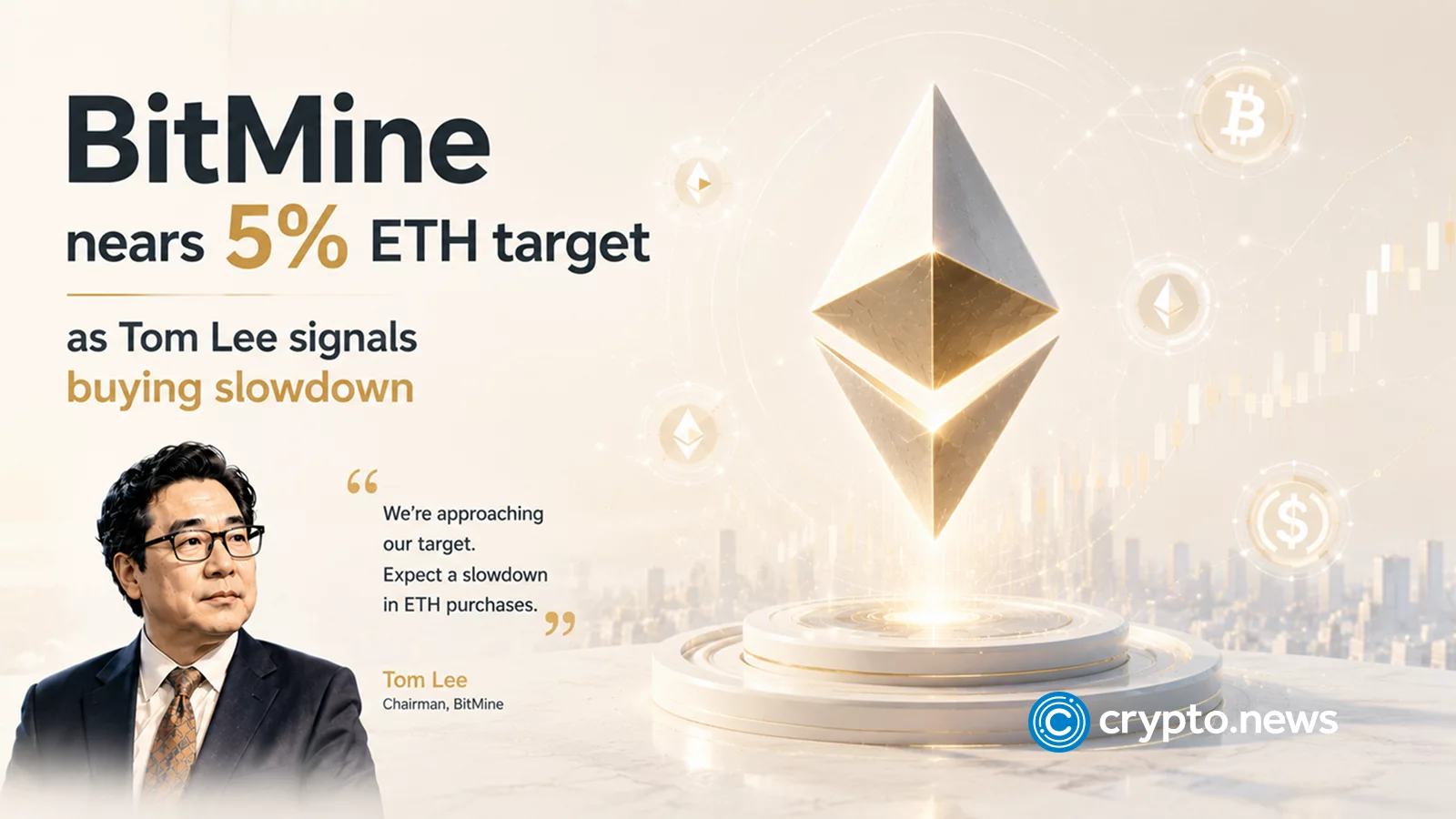
BitMine Immersion Technologies has purchased another 53,501 ETH, lifting its Ethereum treasury to 5,901,112 tokens worth about $14.54 billion at the time of writing.
Summary
- BitMine has bought Ethereum for 65 consecutive weeks since launching its treasury strategy.
- The company now controls about 4.9% of Ethereum’s reported 120.7 million-token supply.
- More than 5.06 million ETH is staked, producing an estimated $335 million in annual revenue.
- ETH trades near $2,464 as resistance around $2,540–$2,550 continues to limit its recovery.
BitMine’s Ethereum holdings have reached 5.9 million ETH
BitMine Immersion Technologies said in its latest treasury update that it held 5,901,112 ETH as of Aug. 30, after buying 53,501 tokens during the preceding week.
“Over the past week, we acquired 53,501 ETH,” Chairman Tom Lee said.
Using the company’s reference price of $2,511, the Ethereum position was valued at approximately $14.82 billion when BitMine recorded the snapshot at 3 p.m. Eastern Time. Management said its ETH balance accounted for about 4.9% of Ethereum’s reported supply of 120.7 million tokens.
At the time of writing, CoinGecko data showed Ethereum trading near $2,464, down about 0.4% over 24 hours and 1.1% across seven days. Applying that updated price places BitMine’s ETH holdings at approximately $14.54 billion, although the value will move with the token’s market price.
The latest acquisition extended BitMine’s buying run to 65 consecutive weeks. According to Lee, the company has added ETH every week since it adopted the treasury strategy on June 30, 2025.
Buying accelerated compared with several earlier updates. Earlier crypto.news coverage showed BitMine adding 9,946 ETH in late July, taking its holdings to 5,787,414 tokens. Another 9,926 ETH entered the treasury during the week ending Aug. 16, followed by 32,447 ETH in the next reporting period.
BitMine previously identified ownership of 5% of Ethereum’s supply as its treasury target. Based on the company’s supply figure, 5% would equal about 6.04 million ETH, leaving the current balance roughly 134,000 tokens below that threshold.
In June, Lee indicated that buying could slow once the company approached its target. A previous treasury report placed the balance at approximately 5.54 million ETH, or 4.6% of supply, after BitMine acquired 25,000 ETH from BitGo.
Staked Ethereum could produce $335 million annually
Alongside the treasury expansion, BitMine reported that 5,067,309 ETH had been staked through its own infrastructure and outside validator partners. The position accounts for approximately 85.9% of its entire Ethereum balance.
At CoinGecko’s latest price, the staked tokens are worth about $12.49 billion. BitMine valued the same position at close to $12.73 billion using its Aug. 30 reference price of $2,511.
Management estimated that the deployed ETH could generate $335 million in annualized staking revenue. The calculation used a seven-day annualized staking yield of 2.63%, meaning the actual return can change with Ethereum’s validator participation rate, network rewards, operational performance and protocol conditions.
Once more of its ETH is deployed, Lee said annual staking revenue could reach $390 million under similar yield conditions. Around 833,803 ETH remains outside the reported staked balance.
BitMine launched MAVAN, short for Made in America Validator Network, in 2026 as its institutional Ethereum staking operation. Part of the company’s balance is already deployed through MAVAN, while partner validators handle another portion.
Staking has developed into a central revenue source for the company. A July treasury report said BitMine generated $45.7 million from staking and validation during the three months ended May 31, equal to about 98% of its $46.5 million in quarterly revenue.
The income also supports BitMine’s preferred-stock strategy. In June, the company declared a $0.1056 dividend on each share of its 9.50% Series A Perpetual Preferred Stock, traded on the New York Stock Exchange under the ticker BMNP. Lee previously said staking income could help finance payments on the preferred shares.
BitMine’s combined holdings stood at $15.6 billion
Beyond Ethereum, BitMine’s Aug. 30 disclosure listed 211 Bitcoin, a $180 million investment in Beast Industries and an $81 million stake in Eightco Holdings. Cash and marketable securities totaled $541 million.
Using the prices and valuations captured for the company’s update, BitMine placed the combined value of its crypto assets, cash, securities and strategic investments at $15.6 billion. The figure represents a dated company snapshot rather than a fixed balance because cryptocurrency prices and listed investments continue to fluctuate.
BitMine described itself as the largest reported corporate Ethereum treasury. Strategy, led by Executive Chairman Michael Saylor, remains the largest digital-asset treasury company by total asset value because of its Bitcoin holdings.
For U.S. investors, exposure is available through BitMine’s NYSE-listed common stock under the ticker BMNR, as well as its BMNP preferred shares. BMNR traded near $24.27 at the time of writing, up about 2% during the session, with an intraday range between $23.72 and $24.46.
Fundstrat previously found that BMNR had an 80% correlation with ETH in a study of 17 large-cap stocks, compared with 74% for Coinbase. The research did not disclose the period or return interval used for the calculation, and correlation can change as stock and cryptocurrency prices move.
BitMine’s latest five-session average daily dollar trading volume reached approximately $1.36 billion through Aug. 29, according to the company. Management said the figure placed BMNR among the most heavily traded U.S. stocks by dollar volume.
Concentrating much of the company’s reported value in Ethereum also creates risks for shareholders. BitMine’s quarterly SEC filing identifies ETH price volatility, liquidity constraints, unrealized losses, custody arrangements, counterparty exposure and changes to U.S. rules governing digital assets and staking as factors that could affect its results.
Ethereum price remains below the $2,550 resistance zone
Ethereum was trading near $2,464 at the time of writing, giving the token a market capitalization of approximately $297.3 billion, according to CoinGecko. Trading volume stood near $15.45 billion over 24 hours.
Price has remained below the $2,540–$2,550 resistance area after several failed attempts to sustain a breakout. A recent Ethereum technical analysis identified resistance near $2,533, where an ascending triangle and a concentration of leveraged positions created another test for buyers.
On the weekly chart cited in the supplied analysis, ETH sat between its 50-week exponential moving average near $2,374 and its 50-week simple moving average around $2,542. The two averages define the immediate consolidation range while the price remains below the upper boundary.
Crypto analyst Ted said a weekly close above $2,550 could clear a path toward resistance near $2,800. Under his downside scenario, losing the $2,370 area could expose the $2,180–$2,220 support zone.
Years of lost savings taught Argentines to buy dollars. Economist Martín Tetaz says rebuilding trust in the peso could take years after inflation is tamed.
An Argentine saver could spend a decade earning interest at a bank and still lose more than half their purchasing power. That is a difficult experience to forget when the government announces another improvement in inflation.
BeInCrypto Intelligence’s The Exodus Economy found that a peso term deposit retained just 44% of its starting purchasing power between June 2016 and June 2026. Someone keeping the equivalent of $10,000 in peso cash ended with about $114 in dollar value.
Speaking to BeInCrypto, Martín Tetaz, an Argentine economist and former national deputy, described the resulting attachment to dollars.
“Demand for dollars is, in practice, the purchase of insurance. It’s like buying car insurance. And it’s a habit that is learned, and that takes time to unlearn.”

The report’s ten-year comparison shows why savers looked elsewhere. Dollar cash preserved 74% of purchasing power in Argentina.
Dollars earning short-term US Treasury yields preserved 94%. A Brazilian CDI-linked deposit, meanwhile, increased local purchasing power by 50%.
Dollar cash also lost purchasing power over the decade. In Argentina, the report’s peso options performed considerably worse.

The Peso Has a Better Case
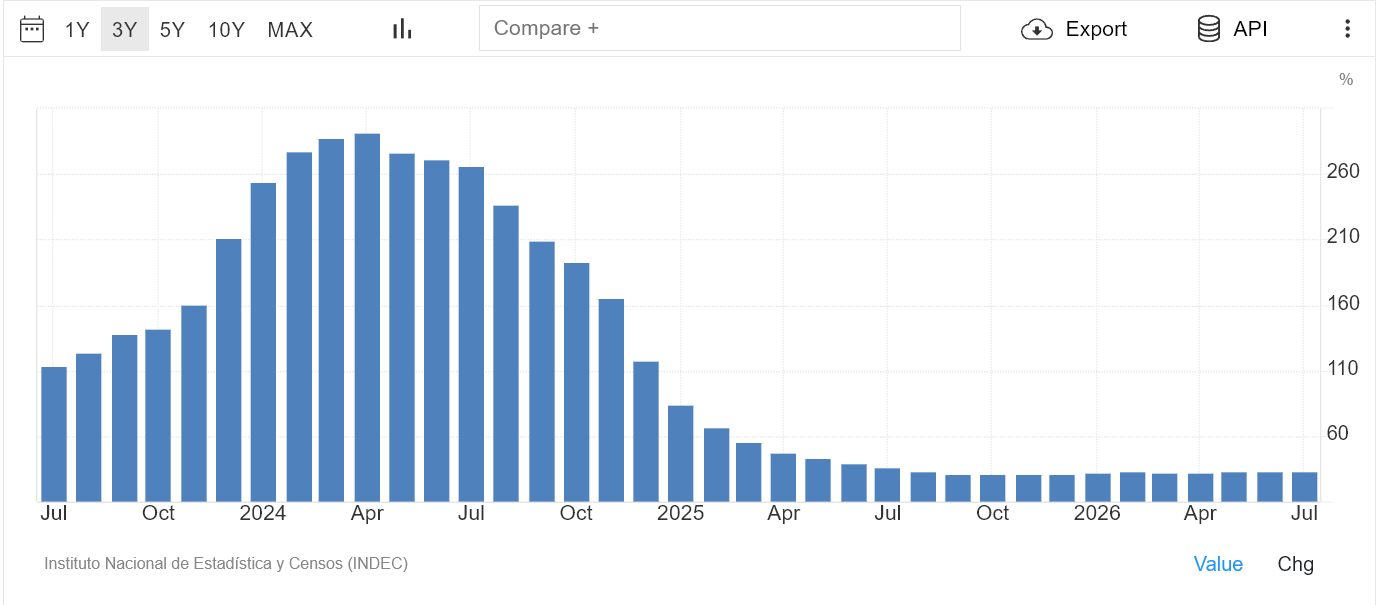
Under President Javier Milei, annual inflation has fallen far below its roughly 289% peak in April 2024. INDEC’s latest figures put it at 33.8% in July 2026. Monthly inflation edged up to 2.1%, from 1.9% in June, a reminder that prices are still rising appreciably.
Tetaz expects the preference to survive well beyond the immediate recovery.
“First it has to eliminate inflation, and then, once inflation is gone, for at least seven or eight years it will keep seeing significant dollar demand until that stability consolidates,” Tetaz said.
That is his estimate of how long confidence takes to recover. Savers have to believe today’s improvement will survive a change of government before committing money for years.
Dollars are Easier to Buy
The report charts another substantial change. The extra cost of buying dollars on the parallel market, compared with the official rate, fell from above 150% in 2023 to around 2% by July 2026.
A narrower gap makes dollar access less expensive. By itself, it reveals little about whether people want to hold fewer dollars.

There are signs that some crisis-driven demand is easing. Deel payroll data published by a16z crypto on August 30 show the share of Argentine contractors paid in USDC, a dollar-pegged stablecoin, fell as inflation eased, then levelled off. The sample covers contractors using Deel; it cannot establish a nationwide return to peso savings.
The report also shows how accessible digital dollars have become. On Argentine wallet Lemon, tracked withdrawals averaged $544 in the first half of 2026, with monthly medians around $150–$270. These are amounts within reach of ordinary earners.
Tetaz believes a more stable peso could recover some everyday uses.
“If stability returns, short- and medium-term contracts will all be in pesos, and many of the economy’s dollar contracts will unwind.”
He expects longer commitments, such as mortgages, could retain inflation-linked arrangements. Dollar earners may still prefer dollar rents.
Argentina could therefore regain confidence in the peso without persuading everyone to abandon dollars. For a household, trusting pesos for next month’s bills is a much smaller commitment than trusting them with ten years of savings.
Read The Exodus Economy for the full analysis.
The post Can Argentina Break Its Dollar Habit as Inflation Slows? appeared first on BeInCrypto.
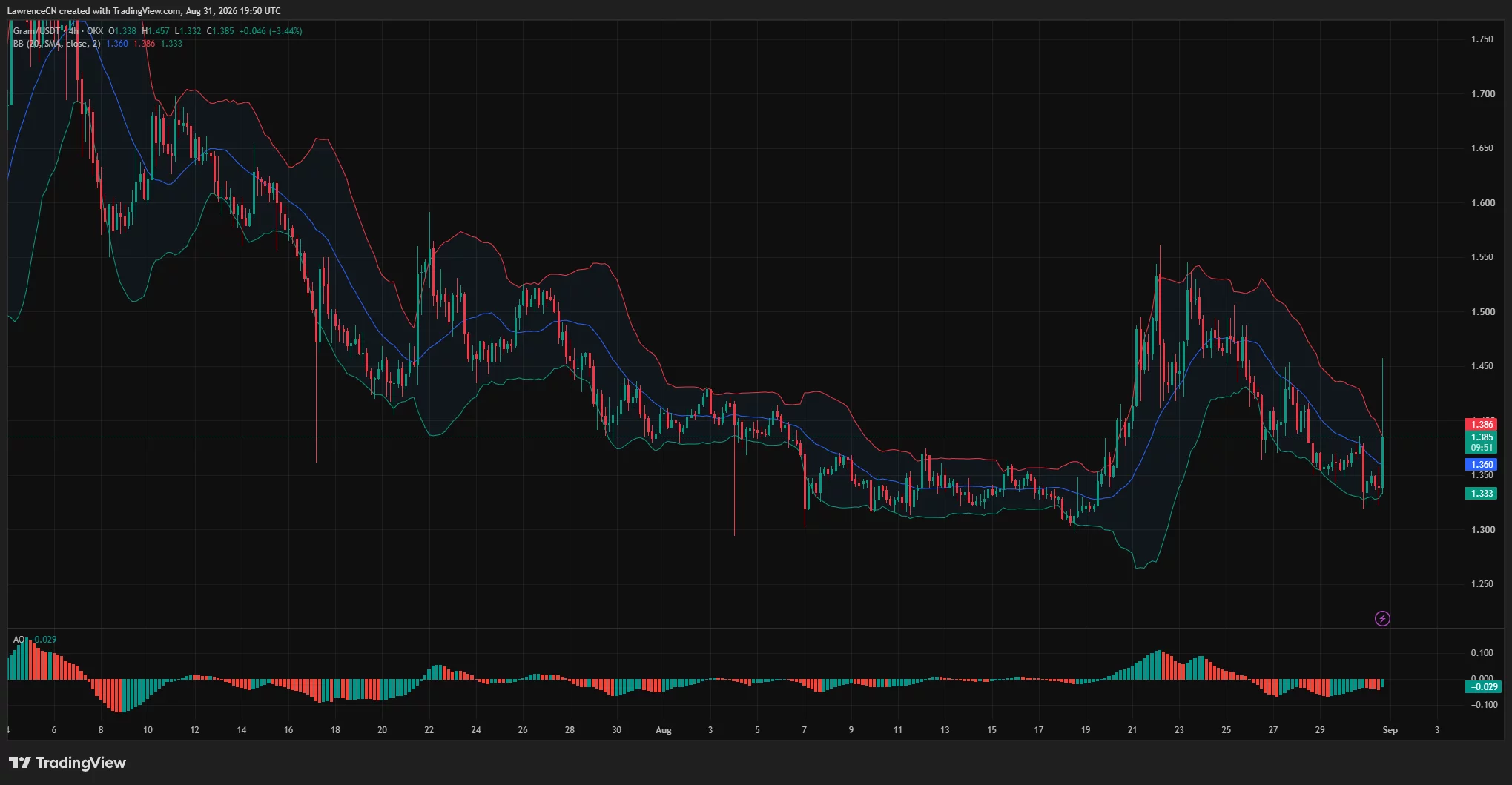
GRAM has rebounded toward $1.40 after Telegram began releasing its self-custodial Gram Wallet to selected users, while trading volume jumped about 137% around the announcement.
Summary
- GRAM gained about 2% over 24 hours after briefly approaching $1.46.
- Telegram will release Gram Wallet gradually to its billion-plus users.
- The wallet supports self-custody, fee-free transfers, and Telegram Collectibles.
- GRAM faces immediate resistance near $1.39, followed by $1.45.
Telegram begins phased Gram Wallet release
Telegram CEO Pavel Durov said the company had started giving selected users access to Gram Wallet before expanding availability over the next several weeks.
“We’ll be gradually rolling it out to our billion+ users over the next couple of weeks,” Durov said in a Telegram post.
Built directly into the messaging app, Gram Wallet will become the default wallet displayed in Telegram’s user settings. The product uses a self-custodial structure, allowing users to control their assets instead of leaving custody with a centralized service provider.
Telegram plans to support instant, zero-fee transactions through the wallet, according to Durov. Users will be able to send funds, make payments, and purchase products or services inside the app. Gram Wallet will also support Telegram Collectibles, a category that includes digital gifts, usernames, and phone numbers.
The release follows an announcement in July, when Durov said Telegram would bring a native, non-custodial wallet to every version of its app. As crypto.news reported at the time, the company did not provide details about identity checks, account recovery, security safeguards, or regional restrictions.
Telegram reported more than 1 billion monthly active users in 2025. Durov has not disclosed an adoption target for Gram Wallet or specified how many users received access during the first phase.
According to Durov, network validators approved the smart contract that powers the wallet before the rollout began. Its design allows developers to upgrade the product without forcing users to transfer their holdings to a replacement contract.
Gram Wallet and Walt serve different functions
Alongside the new product, Wallet in Telegram has changed its name to Walt and will no longer appear as the platform’s default crypto wallet.
Telegram’s product structure assigns everyday transfers, payments and purchases to Gram Wallet. Walt will remain available through Telegram search for users seeking trading, investment, and multichain services.
The two products will remain connected, with Walt supporting multichain deposits into Gram Wallet. Walt currently handles deposits, withdrawals and holdings for more than 300 crypto assets across four blockchains, according to an announcement shared with Cointelegraph.
Its trading service covers more than 200 assets, while its tokenized-asset catalog contains over 100 stocks, exchange-traded funds and metals. Walt also offers yield products and perpetual futures tied to more than 70 assets, including cryptocurrencies, oil, natural gas, and metals.
Andrew Rogozov, founder and CEO of The Open Platform and Walt, said the service started as a simple product for purchasing Toncoin before adding Earn products, real-world assets, and perpetual trading over the past four years.
Gram Wallet, by comparison, has been positioned as a simpler payment product built around GRAM and Telegram’s internal services. Telegram has not said whether every feature will be available in all countries when the phased release is completed.
GRAM rebrand restored Toncoin’s original name
The wallet launch has arrived about two and a half months after Toncoin officially became Gram.
A community vote approved the change with 81.22% support, and the new identity took effect on June 15. The blockchain retained The Open Network name, while its native asset changed from Toncoin and the TON ticker to Gram and GRAM.
A guide to the rebrand published in June explained that the change did not create a new token or require a swap. Wallet balances, addresses, smart contracts and staking positions remained in place, with only the asset’s name, ticker and logo changing.
GRAM previously gained nearly 19% when Durov first disclosed the planned rename in early June. The token reached about $2.21 before giving back part of the move, according to earlier market coverage.
The Gram name originated in Telegram’s 2018 blockchain project, but its first planned distribution faced enforcement action in the United States. The SEC sued Telegram in 2019, alleging that its $1.7 billion fundraising arrangement and planned token distribution formed an unregistered securities offering.
A federal court later blocked the distribution, and Telegram settled the case in 2020. According to an SEC commissioner’s account, the settlement included $1.2 billion in disgorgement for returning money to purchasers. Telegram also agreed to pay an $18.5 million civil penalty.
Independent developers continued working on the open-source network after Telegram left the original project. The current GRAM token is the renamed native asset of the network that emerged from that independent development, rather than a new distribution of the tokens blocked in the 2020 case.
GRAM price tests resistance near $1.39
Market data showed GRAM trading near $1.40 at press time, up approximately 2.07% over 24 hours. The announcement initially carried the token close to $1.45 before sellers erased part of the advance, while trading volume increased by about 137%.
On the 4-hour chart, the latest displayed candle opened at $1.338, reached $1.457, and fell as low as $1.332 before returning to approximately $1.385. The candle represented a gain of about 3.44%, although its long upper wick showed that selling increased above $1.45.
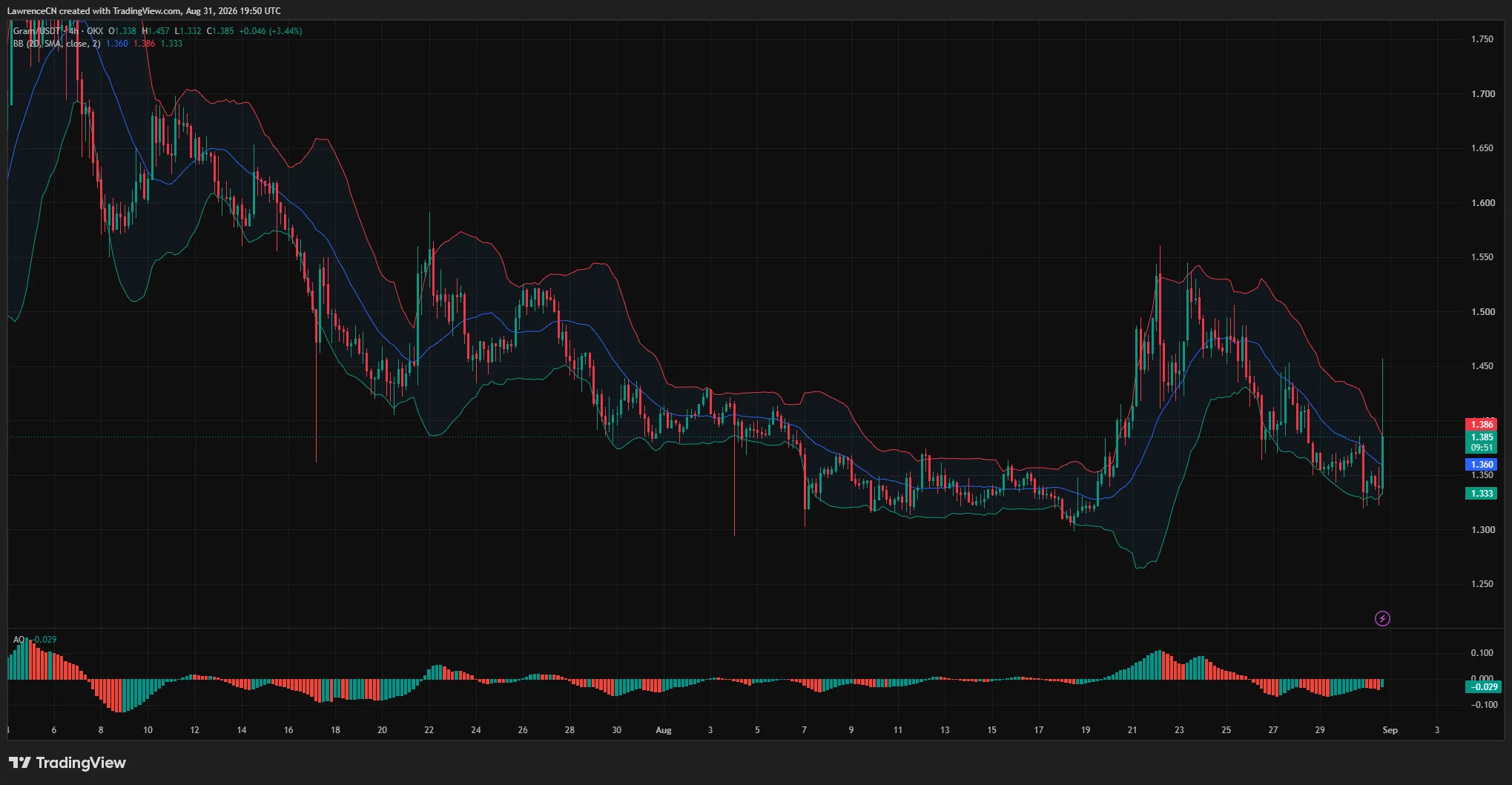
Bollinger Bands on the chart placed the 20-period midpoint near $1.360. GRAM moved above that line during the rebound and reached the upper band at approximately $1.386, making the $1.385–$1.40 range the first resistance area visible on the indicator.
A sustained move above $1.40 would leave the recent $1.45–$1.46 rejection zone as the next chart barrier. The 4-hour chart shows that sellers previously defended the same region during the wallet-driven price spike.
On the downside, the Bollinger midpoint near $1.360 provides the first visible support, followed by the lower band around $1.333. The Awesome Oscillator remained below zero at approximately minus 0.029, showing that bearish momentum had not fully cleared despite the rebound in the latest candle.
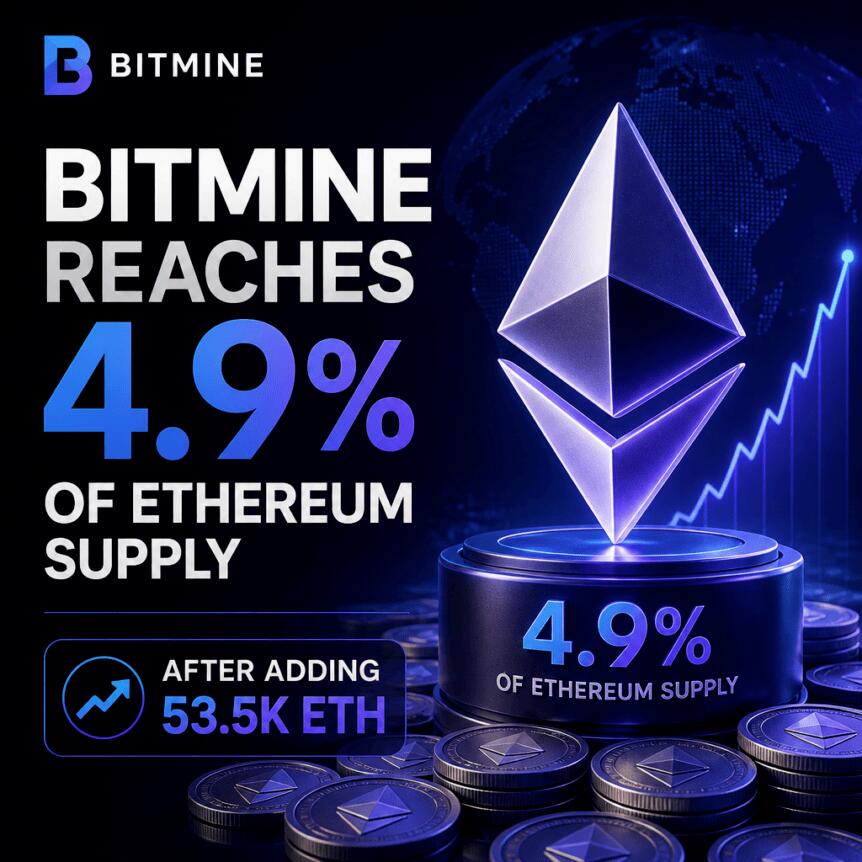
Bitmine Immersion Technologies has continued to build its Ethereum position, extending a weekly buying streak to 65 consecutive weeks by adding 53,501 ETH over the past week. The company’s expanding treasury comes as a broader crypto market rebound has lifted the value of its digital-asset holdings, even as it remains exposed to large paper losses on its Ether purchases.
With the most recent transaction, Bitmine says it now holds more than 5.9 million ETH. Using an Ether price of $2,511 referenced for Sunday pricing, the holdings were valued at roughly $14.8 billion. Bitmine’s current stake represents about 4.9% of Ethereum’s circulating supply of 120.7 million ETH, putting it close to its stated objective of reaching a 5% ownership level.
Key takeaways
- Bitmine added 53,501 ETH last week, extending its Ethereum accumulation streak to 65 straight weeks.
- The company’s wallet now contains more than 5.9 million ETH, valued around $14.8 billion at an ETH price of $2,511 (Sunday reference).
- Bitmine’s stake is about 4.9% of Ethereum’s 120.7 million circulating supply, nearing its goal of 5% ownership.
- Unrealized losses remain substantial: DropsTab data places Bitmine’s paper loss on Ether at about $5.1 billion.
- Bitmine’s chairman, Tom Lee, highlighted ETH’s relative strength alongside BTC and Solana since June 30.
Ethereum accumulation pushes Bitmine toward its 5% target
Bitmine’s latest purchase reinforces a steady approach to treasury building: the company has been acquiring Ether nearly continuously on a weekly basis since its prior buying run began. This time, the addition of 53,501 ETH lifts the total holdings beyond the 5.9 million ETH threshold, narrowing the gap to the company’s stated ambition to hold 5% of Ethereum’s circulating supply.
On the figures reported, Bitmine’s 4.9% share of Ethereum’s circulating supply suggests the company is operating at a scale where small percentage movements can translate into very large absolute changes. The market relevance is straightforward: such concentrated holdings can become a focal point for investors tracking institutional-style Ethereum exposure through public equity.
Large unrealized losses persist despite market recovery
Even with the apparent tailwind from a broader market recovery, Bitmine’s balance sheet still reflects the cost of accumulating through a downturn. According to DropsTab data, the company is currently sitting on roughly $5.1 billion in unrealized losses on its Ether holdings.
These paper losses are consistent with the idea that Bitmine continued accumulating during a period when Ether and the broader crypto complex were under pressure. The source notes that the downturn began in the fourth quarter of last year, driving significant declines across crypto markets. In that context, the fact that Bitmine is still deep in negative unrealized territory helps explain why the share performance and narrative are likely to stay tied to how much of the recovery is sustained rather than how the portfolio performs in isolation.
For investors, the key nuance is that unrealized losses do not mean realized capital destruction—Bitmine’s approach appears to be holding rather than trading around market swings. But if volatility increases again, the magnitude of unrealized losses can also amplify skepticism about whether continued accumulation during risk-off periods is improving the long-term average entry or simply delaying recovery.
Chairman Tom Lee points to ETH outperformance since June 30
Bitmine chairman Tom Lee said Ether, Bitcoin, and Solana have been among the best-performing major assets since June 30, with ETH leading the gains. His comments frame the company’s accumulation strategy around relative performance and momentum in the market rather than a single catalyst.
Lee also argued that this setup could encourage institutions to add to crypto holdings. He linked that potential shift to what he characterized as crypto’s outperformance versus other macro assets in the third quarter so far.
While the statement is broad, it matters because it connects Bitmine’s actions—systematic accumulation—with a broader institutional thesis. Publicly traded vehicles that hold large crypto treasuries often get attention when the market believes institutions are reallocating. For readers, the question becomes whether ETH’s relative strength persists beyond short-term cycles, especially after a multi-month rebound.
Bitmine shares react as the ETH treasury expands
Bitmine’s NYSE-traded shares (BMNR) were up 1.3% on Monday morning, trading at $24.09 per share. Yahoo Finance data indicated the stock was positioned to end the month with close to a 40% increase, based on its performance at the time of reporting.
This matters for two reasons. First, the market is effectively pricing the continued expansion of Bitmine’s Ether exposure, which can influence investor sentiment toward companies holding crypto as a treasury asset. Second, because Bitmine still reports large unrealized losses, equity market reactions can serve as a barometer for whether investors are comfortable with drawdowns in exchange for a longer-term accumulation plan.
What to watch next for Bitmine and Ethereum exposure
Readers should watch whether Bitmine can continue its weekly pace without interruption and how quickly unrealized losses narrow as Ether’s price and broader risk sentiment evolve. Just as importantly, attention will likely focus on whether ETH’s recent relative outperformance—highlighted by Tom Lee—continues long enough to validate the “institutional re-risking” argument behind treasury building through volatile cycles.
Crypto World
Japanese regulator requests tax filing exemption for trust-type stablecoins in 2027 reform


Japan’s FSA requested to exempt trust-type stablecoins from mandatory tax filings starting in fiscal year 2027, arguing that it would improve their use as transaction tools.

Webull, the retail trading platform known for commission-free stocks and options, is taking a bigger step into digital assets by expanding its Canadian offering to include cryptocurrency trading. The move adds Canada to Webull’s existing crypto footprint, which already includes the United States, Australia, and Brazil.
According to Webull’s announcement, the company will use Coinbase’s Crypto-as-a-Service (CaaS) infrastructure for its Canadian crypto capabilities, with Coinbase handling the underlying trading and custody functions. Webull’s Canadian website currently lists 10 cryptocurrencies—among them Bitcoin, Ether, and Solana—while also indicating that additional assets may be available later.
Key takeaways
- Webull’s Canada launch brings cryptocurrency trading to a platform that already offers stocks, ETFs, and options for retail users.
- The service is powered by Coinbase’s Crypto-as-a-Service, with Coinbase providing trading and custody.
- Webull points to rising Canadian interest in crypto, citing Ontario Securities Commission research showing ownership growth.
- Canada’s regulatory work—including a federal stablecoin framework effort—remains a key backdrop for future product expansion.
Why Webull is adding crypto in Canada
Webull framed the expansion around increased retail engagement with digital assets in Canada. The platform referenced research from the Ontario Securities Commission (OSC), which it says indicates crypto ownership climbed to 25% this year from 10% in 2023.
The underlying message for investors and traders is straightforward: Webull is responding to demand for broader brokerage-style access to crypto, not just standalone exchanges. For Canadian retail users who already use Webull for traditional markets, the addition of crypto could reduce friction—bringing a familiar interface and account setup to a category that many consumers previously accessed through separate platforms.
Webull’s Canadian crypto offering currently shows 10 coins, including Bitcoin, Ether, and Solana. The site also signals that more assets may be offered, though the announcement does not specify which additional tokens are planned.
How Coinbase custody and trading infrastructure fits in
Webull’s approach in Canada relies on third-party infrastructure rather than building custody and execution systems from scratch. The company said its Canadian crypto offering will run on Coinbase’s Crypto-as-a-Service, with Coinbase responsible for both trading operations and custody.
For users, this structure matters because custody and execution are among the most operationally sensitive parts of any crypto brokerage experience. By outsourcing these elements, Webull can focus on front-end onboarding, account access, and the user experience, while Coinbase provides the infrastructure behind the scenes.
Canada’s regulatory momentum—and stablecoins in focus
Crypto product launches in Canada are unfolding alongside ongoing regulatory efforts to clarify how the industry should operate. Webull pointed to the broader picture: regulators are working on clearer rules, including a federal framework for stablecoins.
While Canada still lacks comprehensive rules for fiat-backed stablecoins, the Stablecoin Act—introduced after the 2025 federal budget—would establish requirements for both domestic and foreign issuers. This is a notable development because stablecoins are often central to on-ramps and trading ecosystems. When stablecoin rules are uncertain, exchanges and brokerage services can face additional constraints or hesitation around integration depth and asset selection.
The stablecoin framework also signals that Canadian regulators are moving toward more structured oversight, which can influence how quickly platforms expand beyond spot crypto and into additional product categories later on.
What Canadian users should watch next
With Webull adding crypto to a retail brokerage platform and running it via Coinbase’s custody and trading infrastructure, the immediate question for users is not just which coins are available today, but how the offering evolves. Webull’s website already lists 10 assets and indicates further availability, and investors should monitor for updates as the platform potentially expands its supported cryptocurrencies.
More broadly, readers may also want to track how Canada’s stablecoin regulatory efforts progress. As stablecoin requirements become clearer, platforms that rely on compliant issuance and oversight may have more room to broaden offerings—particularly for products that intersect with fiat settlement and trading liquidity.

Days of our Lives 2-Week Spoilers Aug 31-Sept 11: EJ Slams Into Chaos as Maggie Makes Her Comeback

SAS veterans who fought in Northern Ireland ‘face endless legal jeopardy’ warns former UK defence minister
JPMorgan taps Deutsche Bank’s Jones for mid-cap basic materials role, memo says





-

 Crypto World6 days ago
SpaceX stock could rise 75% to $240, JPMorgan says
-

 Fashion3 days ago
Weekend Open Thread: Maeve – Corporette.com
-

 Crypto World4 days ago
Bitcoin’s 22% rally now needs real demand to outlast Treasury liquidity boost
-

 Crypto World5 days ago
Warsh Jackson Hole keynote puts financial innovation first
-

 Crypto World7 days ago
A $30 Billion AI Fund Implodes, Now the SEC Is Investigating Wall Street’s Role
-

 Business4 days ago
Salesforce Stock Soars 19% as Blowout Earnings and Agentforce AI Growth Silence Software Skeptics
-

 Crypto World6 days ago
Did Trump Just Move SpaceX Stock With One Truth Social Post?
-

 Crypto World5 days ago
Elon Musk Grok Bot Promise: We Will Make You Whole if AI Loses Your Money
-

 Business3 days ago
Onto Innovation Stock: AI’s Next Bottleneck Is Yield (NYSE:ONTO)
-

 Business4 days ago
Apple Confirms September 9 Keynote and Reveals Its Full Pre-Order Schedule
-
 NewsBeat5 days ago
Lindsay Clancy jury braces for closing arguments as judge tells court: ‘You’ve heard all the evidence’ – Live updates
-

 Business5 days ago
Walmart takes aim at younger shoppers with new fashion brand
-

 Crypto World3 days ago
Bitcoin price tests $82K resistance as Brandt stays long
-

 Business6 days ago
Thailand’s Eastern Economic Corridor Capital City (EECiti): Key Developments and Investment Opportunities
-

 Crypto World5 days ago
NVIDIA revenue hits $96.2B as AI demand doubles
-

 Business3 days ago
iPhone 18 Pro Pre-Orders Could Shift to Saturday as Apple Reportedly Avoids September 11 Anniversary
-

 Business7 days ago
NVIDIA Stock Drops Nearly 2 Percent to $210 on Seventh Losing Day Ahead of Critical AI Earnings
-

 NewsBeat6 days ago
Trump’s trade truce with China faces test with Iran effort
-
 Crypto World5 days ago
Nvidia Q2 Earnings Reveal $96.2 Billion Beat, So Why Is NVDA Falling?
-
 Tech5 days ago
Claude Cowork gets its own browser that doesn’t touch your tabs, bookmarks, or saved passwords
You must be logged in to post a comment Login