
Crypto World
Hyperliquid ETF demand cools as competition heats up: JPMorgan



Inflows into Hyperliquid (HYPE) exchange-traded funds (ETFs) have largely ground to a halt after surging in May and June, reflecting growing concerns over the protocol’s competitive outlook, according to Wall Street bank JPMorgan (JPM).
The bank said Hyperliquid ETFs led non-bitcoin crypto funds in inflows relative to assets under management in May and June, though that momentum faded in July and early August.
“We see significant challenges to the market share of decentralized platforms such as Hyperliquid,” analysts led by Nikolaos Panigirtzoglou said in a Thursday report.
Hyperliquid has been one of crypto’s biggest breakout stories this year, with its HYPE token surging as traders flocked to the protocol’s decentralized perpetual futures exchange.
The rapid growth has turned Hyperliquid into one of the largest crypto ecosystems outside bitcoin and ether, attracting institutional capital, corporate treasury buyers and ETF issuers.
According to JPMorgan analysts, the cooling demand comes as decentralized derivatives platforms face mounting competition from regulated centralized exchanges.
The report said the rollout of U.S.-regulated crypto perpetual futures products could shift trading activity away from offshore decentralized venues such as Hyperliquid, which remain exposed to concerns around licensing, compliance and investor protections.



In 2021, during the height of NFT-mania, an angel investor and macroeconomist named Tascha Che (aka Tascha Labs) announced her plan to buy a $5,000 diamond, create an NFT of it, then smash it to pieces.
The stunt, intended to prove that, while physical objects can be destroyed, digital footprints can forever retain value, was widely criticized by most outside of cryptocurrency and NFT circles.
But since the complete collapse of the NFT markets and liquidity falling to near all-time lows, how has the shattered diamond NFT performed?
Diamond background
Che came up with the idea after posting a hypothesis to Twitter:
Once the tweet got enough traction, she pursued the concept. In August of 2021 she purchased a 1.3 carat diamond online, had it delivered, and then started to work on ways she could destroy it.
Her initial plan — to hit the diamond with a hammer — failed miserably, but she was eventually able to go to a mechanic who used some type of drill to obliterate it for free.
The next step was to mint the now-destroyed gem on an NFT marketplace so that people could bid on it.
This proved to be successful.
In September of 2021 a user purchased the NFT for 5.5 ETH, valued at +$17,000 at the time and over three times the price Che paid for the diamond.
While Che instantly took to social media to proclaim that her hypothesis had been proved correct, the reality was that a single sale couldn’t possibly prove that all digitized assets could retain value in spite of their destruction.
Read more: NFT firm founder indicted for using treasury to support ‘DJ hobby’
Diamond hands
After purchasing the NFT, Ivan Zhang, a decentralized finance proponent and investor, held it until finally selling in October of 2025 — for an astounding 11 ETH, or $43,000 at the time.
The destroyed diamond NFT had once again nearly tripled in value, despite one carat diamond prices plummeting in value nearly 40% over that same time period.
So, was Che’s hypothesis correct after all?
Not at all.
Not value retention, an internet artifact
As admitted to by Zhang when posting about the sale, diamond prices will continue to go down as synthetics become easier to make and demand from retail dries up.
But somehow the NFT has continued to gain value.
If the NFT was simply designed to retain the value of a destroyed physical good, one would expect to see an equal rise or decline in value.
However, a similar 1.3 carat diamond available for purchase on the same website that Che purchased hers from is now worth between $3,500-$4,000, a decline of over 20%.
Over that time period, the destroyed diamond’s value has ballooned to $43,000, or an increase of 760%.
If anything, Che’s experiment has proven positively that there’s little to no expectation of value retention of real world, physical goods that are digitized and made into an NFT. One just has to be lucky and hope that their idea goes viral.
Got a tip? Send us an email securely via Protos Leaks. For more informed news and investigations, follow us on X, Bluesky, and Google News, or subscribe to our YouTube channel.
Katherine Wu, chief operating officer of ENS Labs, posted an executable draft Thursday of the proposal to establish an ENS Foundation, dropping a plan to shift the DAO's operational wallet to the new entity after weeks of delegate opposition to an earlier version of the plan. The draft, "[Draft]… Read the full story at The Defiant
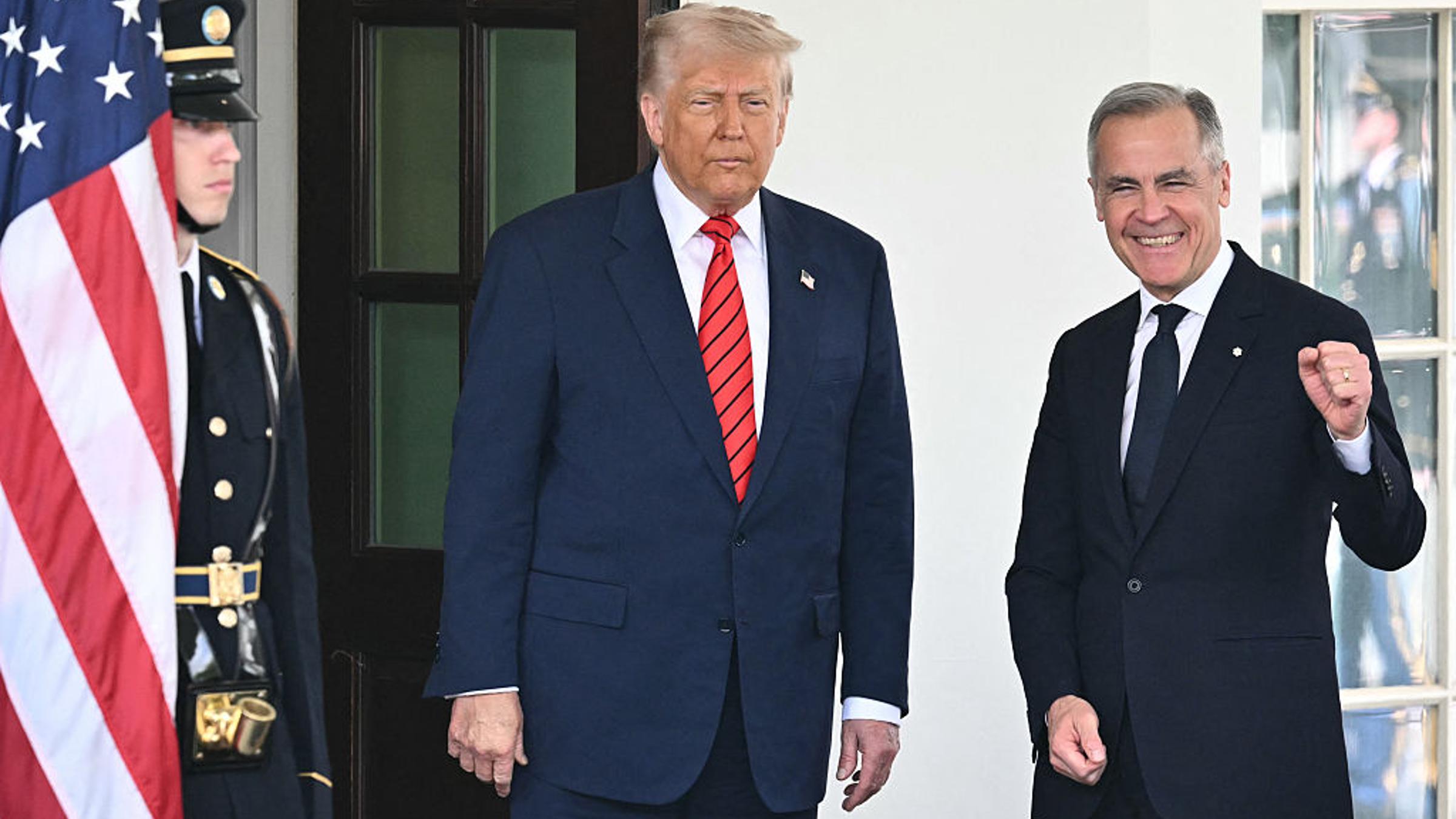
Trump has yet to publicly respond to Carney referencing the teleprompter incident, but he did continue his criticism of Canada during his own speech on Wednesday afternoon.
Addressing a crowd at the Red Rock Casino Resort in Las Vegas, Nevada, Trump touted his economic and immigration policies ahead of the crucial November midterm elections.
Referencing his controversial approach to tariffs, Trump said: “I love tariffs, right? Because we’ve been screwed by tariffs used against us for years. By China, by Japan, by South Korea, by Germany, by everybody, by Canada.”
Going on to insult his northern neighbors, the President continued: “Canada’s nasty. They are, they’re nasty. I love the people, but they’re nasty, nasty leadership.”
This is the latest example of the rift between Trump and Carney and, beyond that, the U.S. and Canada.
Since Trump returned to the Oval Office for a second term, relations between the two countries have become increasingly strained, partly due to a long-standing row over trade.
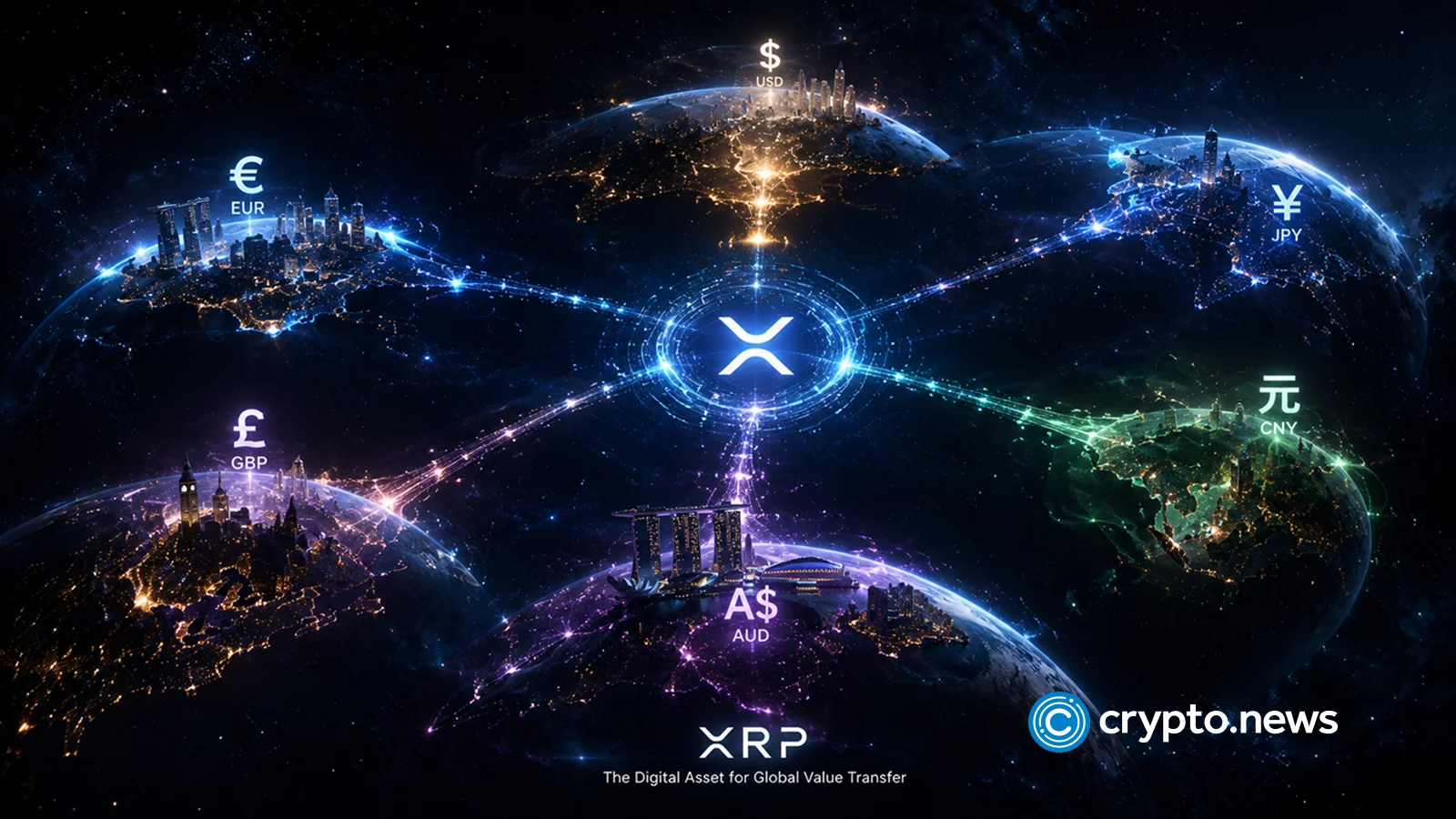
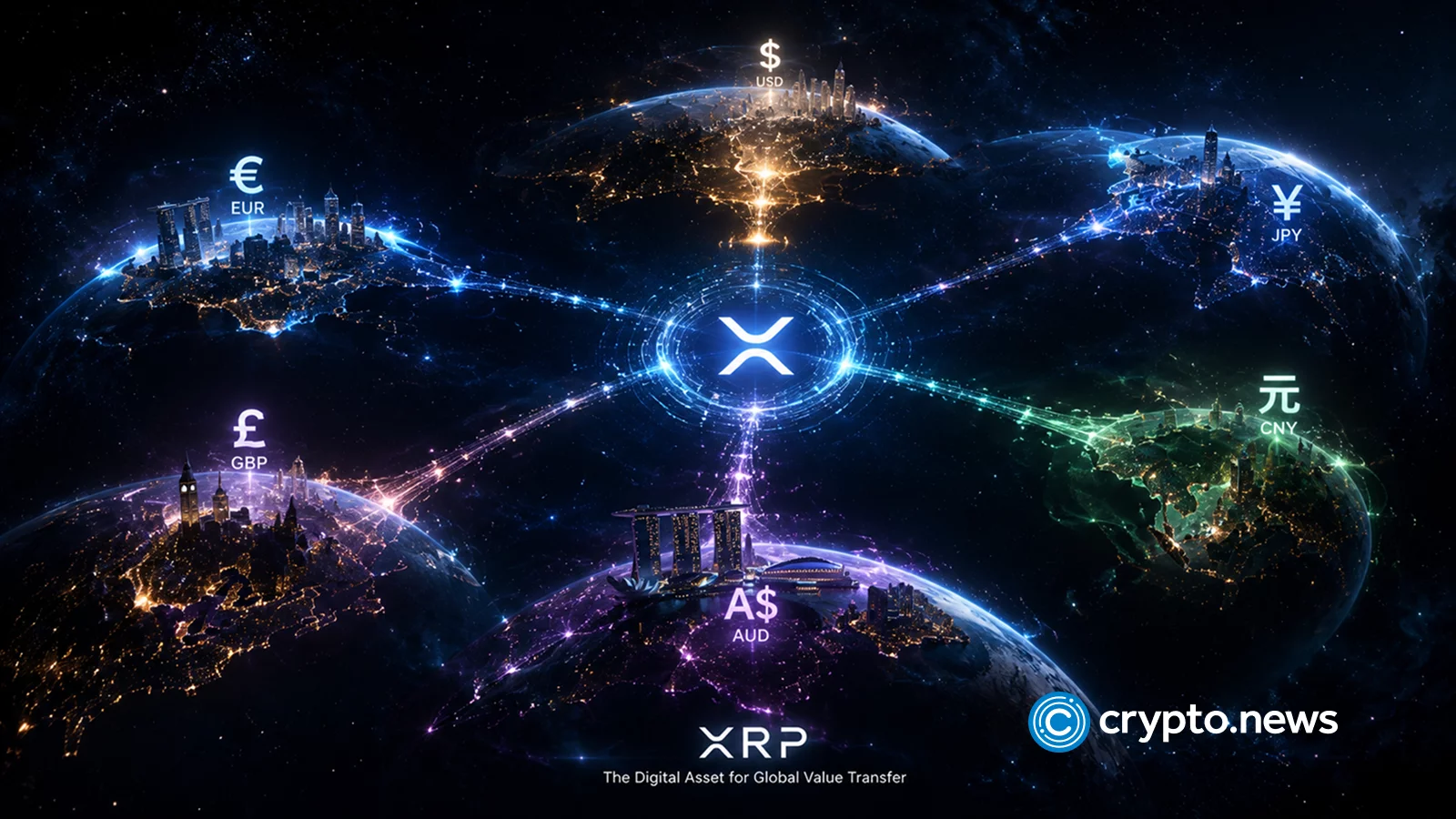
A reported $3.58 million outflow from the Bitwise XRP ETF drew attention on Aug. 6 after social media accounts described the move as an unusual sale by the asset manager.
Summary
- Bitwise’s XRP ETF reportedly recorded $3.58 million in net redemptions during Wednesday’s U.S. trading session.
- Official Bitwise data showed 293.9 million XRP held by the trust through August 4, 2026.
- ETF outflows reflect shareholder redemptions and do not establish a discretionary bearish decision by Bitwise.
- The trust may distribute XRP in kind or sell tokens to satisfy cash redemption orders.
- XRP traded near $1.07, remaining roughly 70% below its July 2025 record high of $3.65.
The available evidence supports a narrower conclusion: the fund reportedly experienced a net redemption during the Aug. 5 U.S. session.
No public transaction details show that Bitwise made a discretionary market call against XRP. The distinction matters because the fund is a trust holding XRP for shareholders. Bitwise Investment Advisers sponsors the product, while authorized financial firms handle share creation and redemption orders under the trust’s operating documents.
Bitwise XRP ETF outflow is a shareholder redemption
The Bitwise XRP ETF creates and redeems shares in blocks of 10,000 through authorized participants. A net outflow therefore indicates that more fund shares were redeemed than created. It does not, by itself, reveal why investors reduced exposure or show that Bitwise changed its view of XRP.
The trust can settle a redemption in two ways. For an in-kind redemption, it transfers the corresponding XRP to an authorized participant or its designee. For a cash redemption, the sponsor arranges for the required XRP to be sold and sends the cash proceeds. A redemption can therefore involve an XRP sale, but it remains part of the fund mechanism rather than a proprietary trade by Bitwise.
Moreover, Bitwise’s official page showed 293.93 million XRP in the trust as of Aug. 4, valued at $314.39 million. It also listed 26.31 million shares outstanding, net assets of about $314.37 million and an $11.95 net asset value per share. The page had not advanced to Aug. 5 holdings when checked.
That timing prevents the public holdings page from confirming the reported $3.58 million reduction. The post behind the claim also did not provide a transaction hash, wallet address or identified counterparty. Calling the report “onchain data” does not establish whether XRP was sold for cash, transferred in kind or reflected through a change in fund shares.
Redemptions are already part of the fund’s operations
The fund’s March 31 quarterly filing shows that redemptions have occurred before without proving a change in Bitwise’s XRP thesis. During the first quarter, the trust sold about 9.73 million XRP for share redemptions and delivered another 2.69 million XRP through in-kind redemptions. It still ended March with 194.90 million XRP, up from 131.22 million at year-end.
By Aug. 4, the official holdings total had climbed to 293.93 million XRP. That increase places a reported $3.58 million daily outflow in a broader context. As previously reported inearlier fund-flow coverage, Bitwise said its U.S. and European XRP products had attracted more than $200 million during 2026 by late June.
The claim that Bitwise made a “bearish” XRP sale remains unproven.
A single redemption can reflect portfolio rebalancing, liquidity needs, arbitrage or a client’s risk decision. It does not identify the beneficial investor behind the order. It also does not show whether Bitwise executives expect XRP to fall.
XRP weakness keeps ETF flows in focus
XRP traded near $1.07 on Aug. 6, with CoinGecko placing its 24-hour range between $1.05 and $1.08. The token remained around 70% below its July 2025 record of $3.65, while its market capitalization stood near $67 billion.
The Bitwise product has also absorbed the decline. Its official page showed a year-to-date NAV return of minus 41.70% through July 30. The fund’s NAV fell 0.76% on Aug. 4, while its market price declined 0.91%. Those figures help explain why redemptions attract attention, but they do not prove that one day’s flow drove XRP’s price.
In related institutional-demand coverage, U.S. spot XRP funds recorded $25.8 million in combined inflows on May 11, including $7.6 million for Bitwise. More recent market analysis also documented weaker ETF flows and fading whale activity as XRP approached the $1 support area.
What happens next for the Bitwise XRP fund
The next confirmation should come from Bitwise’s daily holdings data. Changes in XRP held, shares outstanding and net assets can show whether the Aug. 5 report represented a completed redemption. A later quarterly SEC filing will provide more detail on XRP sold for cash, XRP transferred in kind and shares redeemed during the reporting period.
Until those records are available, the defensible description is a reported $3.58 million ETF outflow. Describing it as Bitwise becoming bearish goes beyond the evidence. The market should also separate the fund sponsor’s role from redemption decisions initiated through authorized participants and their clients.
Brazil’s B3 stock exchange made headlines last month when its tokenized cows went viral.
A farmer in southern Brazil was able to use 10 cows as collateral for a 100,000 Brazilian real ($19,600) loan by virtually herding them into a blockchain based holding pen, demonstrating how farmers can literally milk their assets to access credit.
And it raises an obvious question: if cows can be tokenized, what can’t be?
From dairy cows to a year’s worth of farts, here are 10 of the strangest things to be tokenized onchain.
1. A year’s worth of farts
When BlackRock chief executive Larry Fink said every asset will eventually be tokenized, he probably wasn’t thinking about flatulence. Yet, that’s exactly what happened here.
Every bit as appealing as, well, a year’s worth of farts, it has to be a contender for the strangest thingever to make it onchain.
It was during the pandemic, when most people were baking bread or leveling up on Duolingo, that filmmaker Alex Ramírez-Mallis recorded his own farts and minted each one as a nonfungible token (NFT).
They say farts are like children, and you only love your own. But the novelty factor meant that Ramírez-Mallis was able to sell his for 0.05 ETH each (about $85 at the time), proving that every asset has its price.
2. Cows
Better known as a prime source of protein in Bitcoin circles, the idea of turning 10 Brazilian cows into tokenized cattle… er, tokenized collateral, is not the most obvious use case.
The deal was structured by Brazilian investment fund Target FIDC, giving each cow a unique digital token linked to an encrypted digital identity.
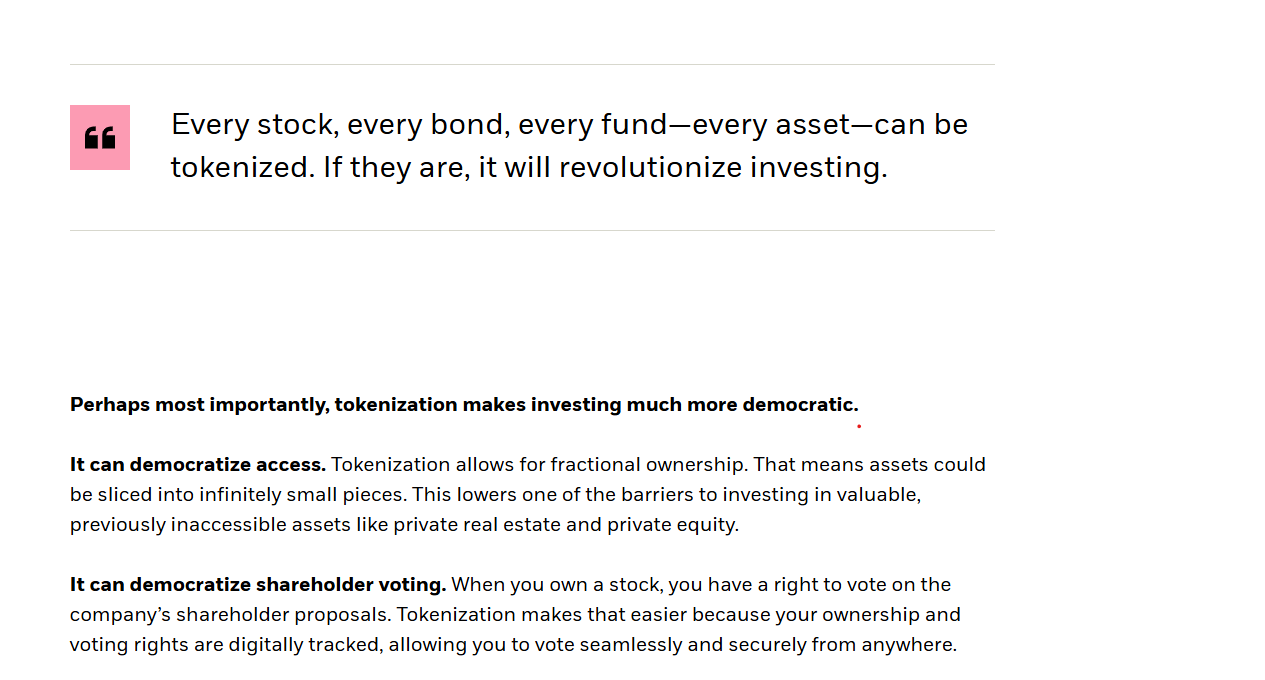
Larry Fink says every asset can be tokenized. Source: BlackRock
The first loan may have been worth just $19,600, but it was a proof of concept that shows the potential to eventually support around $80 million in livestock-backed financing across its farms.
While it sounds somewhat bizarre on first glance, the agriculture industry generated around $4 trillion in global value added in 2023, so watch out for tokenized sheep, goats and chickens as collateral next.
3. Whiskey barrels
When you think of sharing a whiskey, you probably have the liquid gold kind in mind, but whiskey barrels are a natural candidate for tokenization.
Related: Tokenized RWAs get an agent-ready research layer with a new protocol
That’s because, like high-end art and collectibles, Scotch whisky typically increases in value as it matures — talk about lifting your spirits!
Several projects are experimenting with putting whisky casks onchain so investors can buy whole units or fractional ownership of tokenized whisky stored in bonded warehouses.
Just remember that if the market crashes, you can’t actually drink a digital JPEG of a barrel.
4. Racehorses
Racehorse ownership has long been reserved for the ultra-wealthy, those with deep enough pockets to cover hundreds of thousands of dollars in breeding, training and upkeep, and a fancy hat to wear at the racetrack.
But tokenization is beginning to chip away at those elitist barriers, dividing ownership of real thoroughbred racehorses into digital shares.
Investors can buy a stake in an animal and share in any prize money, breeding income, or future sale proceeds, without purchasing an entire horse.

Own part of a racehorse. Source: Stablemans
A word of caution for would-be investors in this style of asset, though, whether its watches or whiskeys or large four legged animals, from Chris Turner, co-founder of impact investment firm KULA:
“Putting a collectible or luxury item on a blockchain doesn’t automatically make it more liquid or valuable if the legal rights, transfer process, and market structure remain unchanged.”
5. Uranium
If your mind turns to treasuries and private credit when thinking about tokenized real-world assets (RWAs), it might be a shift to consider uranium, the radioactive metal better known for its role in nuclear power.
But that’s what Tezos-backed metals.io is doing. Tezos co-founder Arthur Breitman says blockchain technology excels at building “reliable, auditable and cost-efficient financial rails for any asset,” but is particularly aligned with “technology-flavored commodities” like uranium.
Breitman says trading volume between November 2024 and July 2026 was $21.5 million over approximately 18,200 trades and around 7,400 unique wallets.
Related: RWAs become Hyperliquid’s largest trading category
He acknowledges that growth remains modest, telling Magazine that institutional players have shown interest but are “still shy about tokenized rails.”
6. Fishy revenue
One of the most unusual proposals tokenization platform Brickken received came from a Chilean fish-processing company that wanted to issue tokenized debt with returns tied to the value of the fish it sold.
“The token represented the lender’s contractual claim, while the interest payable adjusted according to the company’s verified sales performance. In effect, it was a tokenized, revenue-linked debt instrument,” explains Edwin Mata, chief executive of Brickken.
Mata argues that the idea highlights an important principle:
“Almost any cash flow can support a tokenized financial instrument, provided the underlying rights and data can be independently verified.”
In the end, the fish never made it onchain. The underlying fish sales still relied on audits, commercial reporting and legal agreements that couldn’t yet be automated, proving that, sometimes, the biggest obstacle to tokenization isn’t the blockchain; it’s the real world.
7. Music royalties
Music royalties have also found their way onchain, with one of the earliest high-profile examples in 2021, when DJ and producer 3LAU gave fans 50% of the streaming rights to his single Worst Case through his blockchain platform Royal.
Then, in 2022, rapper Nas used Royal to sell streaming royalty rights to two of his songs, Ultra Black and Rare.
While the idea of onchain royalties gained traction during the NFT boom, tokenized music royalties have yet to become a mainstream asset class. Maybe that’s because the streaming platforms pay peanuts.
Nothing says “financial freedom” quite like owning 0.001% of a track and realizing it needs to be played five million times just to buy a cup of coffee.
8. Human Skin
If tokenizing farts and cattle wasn’t weird enough, what about parts of your own body? That’s exactly what Croatian tennis player Oleksandra Oliynykova did in 2021, when she auctioned the advertising rights to a 15-by-18-centimeter patch of skin on her right arm as an NFT.
The winning bidder paid 3 Ether (around $5,400 at the time) for the right to choose which tattoo she would wear during tournaments for a year.
Athletes have long sold sponsorship space on shirts, helmets and race cars. Oliynykova just took the idea one step further, giving a whole new meaning to having skin in the game.
9. A Burned Banksy
Most art collectors try to preserve masterpieces; crypto collectors set them on fire to make a point about “digital ownership.” In 2021, a group calling itself Burnt Banksy bought a Banksy print titled Morons (White) for around $95,000. They livestreamed themselves burning it, and then minted the destruction.
If that leaves you scratching your head, there was method in the madness; the idea was that while the physical artwork no longer existed, ownership would live on forever through the blockchain.
The NFT sold for around $382,000, sparking fierce debate over whether the group had destroyed a valuable work of art or simply transformed it into a new one. It was probably the first time in history someone made a 300% profit from a “fire sale.”
10. The first tweet
Also in the year of our NFT Lord, 2021, Twitter co-founder Jack Dorsey tokenized his first-ever tweet — “just setting up my twttr” — and sold it as an NFT to crypto entrepreneur Sina Estavi for $2.9 million, quickly becoming a symbol of the NFT boom.
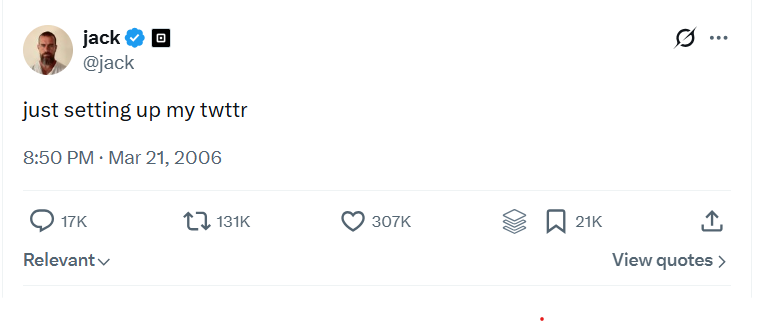
The first-ever tweet sold for $2.9 million. Source: Jack Dorsey
One year later, Estavi tried to resell it for $48 million, but only received bids worth a tiny fraction of the asking price, with the highest reported offer coming in at just $6,800.
While anyone can still read the tweet on X, only one person owns the blockchain certificate tied to it. Whether that’s valuable or not remains an open question. As Mata says:
“Tokenization can improve access, administration, settlement and transferability, but it cannot transform a poor investment into a good one.”
Magazine: The 100x obsession: Fundamentals grow in importance as crypto matures
Cointelegraph publishes long-form journalism, analysis and narrative reporting produced by Cointelegraph’s in-house editorial team with subject-matter expertise. All articles are edited and reviewed by Cointelegraph editors in line with our editorial standards. Some articles contain affiliate links, from which Cointelegraph may earn a commission. These relationships do not influence which products we review or our editorial conclusions. Content published in here does not constitute financial, legal or investment advice. Readers should conduct their own research and consult qualified professionals where appropriate. Cointelegraph maintains full editorial independence.
Crypto World
Coinbase Just Got Full UK Trading License, And Tokenized US Stocks With Dividends Are the Headline Feature

Coinbase just secured full MiFID-equivalent authorization from the UK’s FCA, and it changes what the exchange can actually offer British users.
This is not a cryptoasset registration or an e-money license. It is a genuine investment services authorization that lets Coinbase offer traditional equities, derivatives, and perpetual futures under one regulated roof in the UK, rather than splitting products across separate entities or jurisdictions.
The centerpiece of the rollout is tokenized stocks backed 1:1 by underlying US equities, carrying full dividend rights and delivered through Coinbase’s on-chain infrastructure. Not a synthetic. Not a CFD. A blockchain-native representation of real equity exposure.
That distinction is the entire story. It positions Coinbase as on-chain capital markets infrastructure, not a brokerage bolting crypto features onto a legacy stack.
Discover: Everyone’s Got a Take. Get Free $25 to Actually Trade Yours
What the FCA Authorization Actually Unlocks For Coinbase
The FCA license is a full MiFID-equivalent investment services authorization, not a cryptoasset registration or an e-money license. That distinction matters operationally: Coinbase can now offer traditional equities, derivatives, and perpetual futures under a single regulated umbrella in the UK, rather than routing products through separate entities or jurisdictions.
The UK rollout will include tokenized stocks backed 1:1 by underlying US equities, carrying full dividend rights, delivered through Coinbase’s on-chain infrastructure.
We’re accelerating the Everything Exchange in the UK.
Every Coinbase UK user can now trade US stocks, and crypto in one single app.
Zero commission, 24/5 access, with as little as £1. pic.twitter.com/vti6jfEmhd— Coinbase
(@coinbase) August 6, 2026
That structure is not a synthetic or a CFD; it is a blockchain-native representation of actual equity exposure, positioning Coinbase as on-chain capital markets infrastructure rather than a brokerage bolting crypto onto a legacy stack.
The broader trend toward tokenization of traditional securities is gaining traction across the industry, with XRPL-based tokenized capital markets projects among the most active development fronts.
Multi-asset perpetual futures are also in scope under the UK authorization, covering crypto, equities, and commodities. That product range puts Coinbase in direct competition with established derivatives venues for a retail audience that has historically been restricted to narrow leverage products under UK FCA rules.
Discover: Your Market Calls Are Worth Something. Start With Free $25 on Kalshi
The US Blueprint and What It Means for UK Volumes
The US product, live since February 24, 2026, offers access to more than 8,000 US-listed stocks and ETFs, 24/5 trading, zero commission, fractional shares starting at $1, and the ability to fund positions instantly using both USD and USDC.
Coinbase One members earn uncapped rewards on USDC trading balances, which ties stablecoin utility directly into the equity trading loop.
According to a Coinbase announcement covered by MarketsMedia, the US launch was described as a foundational step toward a unified account spanning crypto, equities, and derivatives.
UK users now have one place for stocks + crypto!
Excited for this @coinbase launch with a top offering:
– 24/5 trading hours
– Zero commission
– Start with £1 with fractional shares
– 4,000 US equities including top AI companies
– Trade in GBP or USDC (+ uncapped USDC rewards… https://t.co/yI57EGiBDF— keith grose
(@kmgrose) August 6, 2026

The UK launch replicates that architecture but adds the tokenized stock layer as the headline differentiator. For UK retail investors, the immediate practical effect is access to US large-cap equities during near-continuous hours via a platform they may already use for crypto, without opening a separate brokerage account.
Whether Coinbase can convert its existing UK crypto user base into active equity traders is the key volume question that no regulatory filing answers.
The MiFID authorization also gives Coinbase a first-mover window before the UK’s comprehensive crypto framework is expected to be fully operative around late 2027. Competing exchanges that hold only cryptoasset registrations cannot currently offer the same suite of regulated equity and derivatives.
Discover: Get Paid to Be Right, $25 to Start on Kalshi
Don’t Miss Out on Our $1,000 USDT Airdrop on ByBit
The post Coinbase Just Got Full UK Trading License, And Tokenized US Stocks With Dividends Are the Headline Feature appeared first on Cryptonews.

Traders work on the floor of the New York Stock Exchange during morning trading on August 05, 2026 in New York City.
Michael M. Santiago | Getty Images
The S&P 500 ended its more than 5.5% four-day rally on Wednesday, but the broad index’s surge to new records is recalibrating prediction market traders’ outlook for how high it can go.
Speculators on prediction market platform Kalshi now give a 2-in-3 chance that the index will cross 8,000 in 2026. As of Wednesday’s close, the index is just about 3.6% away from that level.
The contracts on Kalshi ask speculators if the S&P in 2026 will trade above various levels. The platform uses Google Finance to resolve the contracts.
While the S&P 500 surged in April and May from its lows during the U.S.-Iran war, the index didn’t do much in late June and July as investors moved out of key momentum names involved in the artificial intelligence trade that had experienced enormous rallies. However, a rotation into other stocks masked the turmoil.
The S&P’s four-day rally was driven by a slew of catalysts: Easing tensions between the U.S. and Iran in the Middle East, a strong earnings season and the near-collapse of Leopold Aschenbrenner’s Situational Awareness fund.
Rather than June and July marking the end to the AI rally, analysts broadly view it as a healthy reset and expect that the bull market can now build momentum again.
“Our investment thesis remains intact,” Truist Wealth’s chief market strategist Keith Lerner wrote in a Tuesday note. “Earnings remain our north star. Estimates continue to trend higher, economic growth remains resilient, and market participation has improved. Those are not conditions typically associated with the end of a bull market.”
Odds that the S&P 500 marches even higher are rising, too. Kalshi traders now place a one-in-three chance to cross 8,200 this year.

S&P 500 year-to-date.
Disclosure: CNBC and Kalshi have a commercial relationship that includes customer acquisition and a minority investment.


You’re reading Crypto for Advisors, CoinDesk’s weekly newsletter that unpacks digital assets for financial advisors. Subscribe here to get it every Thursday.
Users of MOACT, the rewards app run by a wholly owned subsidiary of Japanese utility Kansai Electric Power, can now convert their loyalty points into JPYC, the yen stablecoin, on Polygon, wallet developer HashPort said in a press release published Thursday. The feature, live as of July 30, lets… Read the full story at The Defiant


Labour Defence Secretary Wes Streeting reportedly received £37,000 ($50,000) from a Labour-supporting think tank whose founder was gifted $610,000 by notorious crypto fraudster Sam Bankman-Fried.
The Telegraph reports that David Lawrence, founder of the Labour for the Long Term (LLT) think tank, was gifted the sum by Bankman-Fried in June 2022.
This gift was made one month before his think tank donated £30,000 ($40,300) to Streeting, who used the funds to pay for policy advisor Dr. Thomas Gardiner. A year later, LLT would donate another £7,000 ($9,400) to Streeting.
Lawrence reportedly created his think tank’s website on June 20 and it was only 10 days later that Bankman-Fried gave the money to Lawrence.
The Telegraph reports that “it is thought” that Lawrence and Bankman-Fried were introduced to each other through William MacAskill, one of the founders of the effective altruism movement.
This movement was a central part of Bankman-Fried’s spree of donations that took place across 2020 and 2022 when he became one of the largest donors to the US democrats.
Read more: Sam Bankman-Fried needs favor from Trump after failed appeal
Bankman-Fried was charged in December 2022 with a variety of financial crimes. He was sentenced two years later and handed 25 years in prison after he was found guilty of misappropriating billions of dollars worth of customer funds deposited into his exchange.
Unnamed senior Labour officials reportedly claim the shadow ministers were being advised to avoid accepting donations from LLT.
Lawrence, however, denies this. He told the Telegraph that Bankman-Fried’s gift was donated to UK charities, and that LLT’s donation to Streeting was instead funded by a city investor.
However, the Telegraph found that this investor was recorded as starting their donations to Streeting in February 2023, not around the time of the £30,000 donation in 2022.
A Labour spokesperson said the party “carried out due diligence checks ahead of these donations being received, through which no issues were identified.”
Meanwhile, a spokesperson for Streeting said all due diligence processes were followed, and that a list of donors to LLT did not name Bankman-Fried.
The Telegraph’s report comes amid scrutiny of Nigel Farage’s Reform UK party, and the funding it’s received from those in the crypto industry.
Got a tip? Send us an email securely via Protos Leaks. For more informed news and investigations, follow us on X, Bluesky, and Google News, or subscribe to our YouTube channel.
Superlek vs. Dayakaev II, Anane vs. Suakim, Grigorian vs. Usubyan

Samsung’s Galaxy Z Fold8 Turns Movie Nights and Marathon Gaming Sessions Into Something You Actually Want to Keep Going

Moment cash for crash pair stage car accident and dial 999 as police warn drivers over fraud gangs’ new tactics


-

 Fashion6 days ago
Weekend Open Thread: Wit & Wisdom
-

 Politics6 days ago
Meta enters AI-training agreement with far-right ‘propaganda rag’ Newsmax
-

 Politics4 days ago
Zack Polanski: an incitement to murder Nigel Farage?
-

 Crypto World5 days ago
MicroStrategy Post-Earnings CLARITY Act Push Could Add New Catalyst for Its Stock
-

 Crypto World5 days ago
XRP Ledger v3.3.0 brings five institutional features
-

 Politics7 days ago
Luke Littler’s dominance sparks GOAT debate
-

 Crypto World6 days ago
New York sues Kalshi over prediction market gambling
-

 Sports7 days ago
Seema Kaliramna Wins Discus Throw Bronze, Takes India’s CWG Medals Tally To 17
-

 Crypto World4 days ago
Crypto PAC spending tops $2M in Michigan House race
-

 Business4 days ago
DTCR: Deleveraging And A Hedge Fund Collapse Point To A Possible AI Bottom
-

 Business6 days ago
Trump Announces Hamas Disarmament Agreement as Iran Strikes Kuwait Air Base and US Attacks Pause Overnight
-

 Tech4 days ago
ESET tracks rise in malicious AI skills and adaptable malware
-
 Crypto World6 days ago
3 Fed Officials Just Explained Their Rate Hike Vote: Is Inflation Winning?
-

 Tech6 days ago
Gemini Spark can now use Chrome logins and saved passwords to run errands on your behalf
-

 Sports5 days ago
France Cricket implodes: letters hidden in a drawer and a board at war
-
Crypto World4 days ago
XRP Ledger urges node upgrade after manifest flood
-
 Tech6 days ago
Building A Reproduction PlayStation Motherboard
-

 Crypto World5 days ago
Moneyflip CEO charged in $40K murder-for-hire plot
-
 Sports6 days ago
Bruno Fernandes decision made as Man United ‘discuss’ striker transfer option
-

 News Videos5 days ago
Financial Crash Expert: The 90-Day Collapse Timeline They Are Desperately Hiding.
You must be logged in to post a comment Login