

Crypto World
Hyperliquid ETFs Surpass $69 Million in Net Inflows



Hyperliquid's spot exchange-traded funds have accumulated over $69 million in total net inflows, with $16 million entering the funds yesterday alone. The two ETFs—$THYP and $BHYP—continue to attract significant capital from institutional and retail investors seeking exposure to the Hyperliquid… Read the full story at The Defiant


Strategy continued expanding its Bitcoin exposure this week through STRC perpetual preferred shares and MSTR stock activity. However, company executives also reduced personal holdings through recent stock sales filed with the U.S. Securities and Exchange Commission. Meanwhile, MSTR stock extended weekly losses as Bitcoin prices remained under pressure across broader crypto markets.
Strategy Executives Reduce Shareholdings
Strategy chief financial officer Andrew Kang disclosed several stock transactions through recent SEC filings this week. Kang received 12,500 MSTR shares after restricted stock units vested under company compensation agreements. He sold 5,597 shares one day later to satisfy tax withholding requirements tied to the vesting event.
The transactions carried a combined value of about $927,866 based on filing disclosures. The reported sale prices ranged between $163.98 and $166.00 per share during the trading sessions. Meanwhile, Kang still controls roughly 33,675 MSTR shares alongside several preferred stock positions connected to Strategy.
SEC filings also showed additional sales from Kang during the previous three months. The filings listed earlier disposals totaling 916 shares and another 2,373 shares before this week’s transactions. Consequently, market participants linked the continued selling activity with pressure surrounding Strategy’s recent stock performance.
Strategy director Jarrod Patten also reduced his exposure through several recent share sales. Patten sold 5,250 MSTR shares during the last few trading sessions, according to regulatory disclosures. Following the transactions, Patten retained direct ownership of 28,000 Class A common shares.
Patten continues to hold several Series A perpetual preferred stock positions tied to the company. Besides executive sales, broader market weakness added pressure on Strategy shares throughout the week. Analysts also noted concerns surrounding continued share dilution connected to Strategy’s Bitcoin acquisition model.
Strategy has repeatedly used equity offerings and preferred shares to finance additional Bitcoin purchases. The company remains one of the largest corporate holders of Bitcoin despite prolonged volatility across crypto markets. However, continued financing activity has increased concerns surrounding dilution among market participants.
MSTR Stock Extends Weekly Decline
MSTR stock closed 0.58% lower on Thursday as weakness spread across both equity and crypto markets. The stock finished the session at $164.85 after trading between $162.40 and $168.71 intraday. Trading volume also remained below the average daily level of approximately 18 million shares.
Premarket trading showed additional weakness as MSTR slipped another 0.20% before Friday’s opening bell. The stock has now declined more than 9% during the last trading week. However, MSTR still holds a gain of roughly 5% since the beginning of the year.
The stock remains significantly lower on a yearly basis despite earlier rallies connected to Bitcoin strength. MSTR has fallen almost 58% over the past twelve months, according to recent market data. Consequently, traders continued reacting to broader pressure affecting both technology stocks and digital assets.
Several Wall Street firms maintained positive long-term targets despite the recent weakness in Strategy shares. TD Cowen retained its buy rating and increased its MSTR price target to $400 this week. Meanwhile, Bernstein analyst Gautam Chhugani maintained a separate 12-month target price of $450.
Bitcoin prices also remained under pressure during Friday trading across global crypto exchanges. Bitcoin traded near $77,384 after moving between $76,655 and $78,004 during the previous 24 hours. Options market data also indicated expectations for a potential decline toward the $75,000 level amid ongoing macroeconomic and geopolitical pressure.
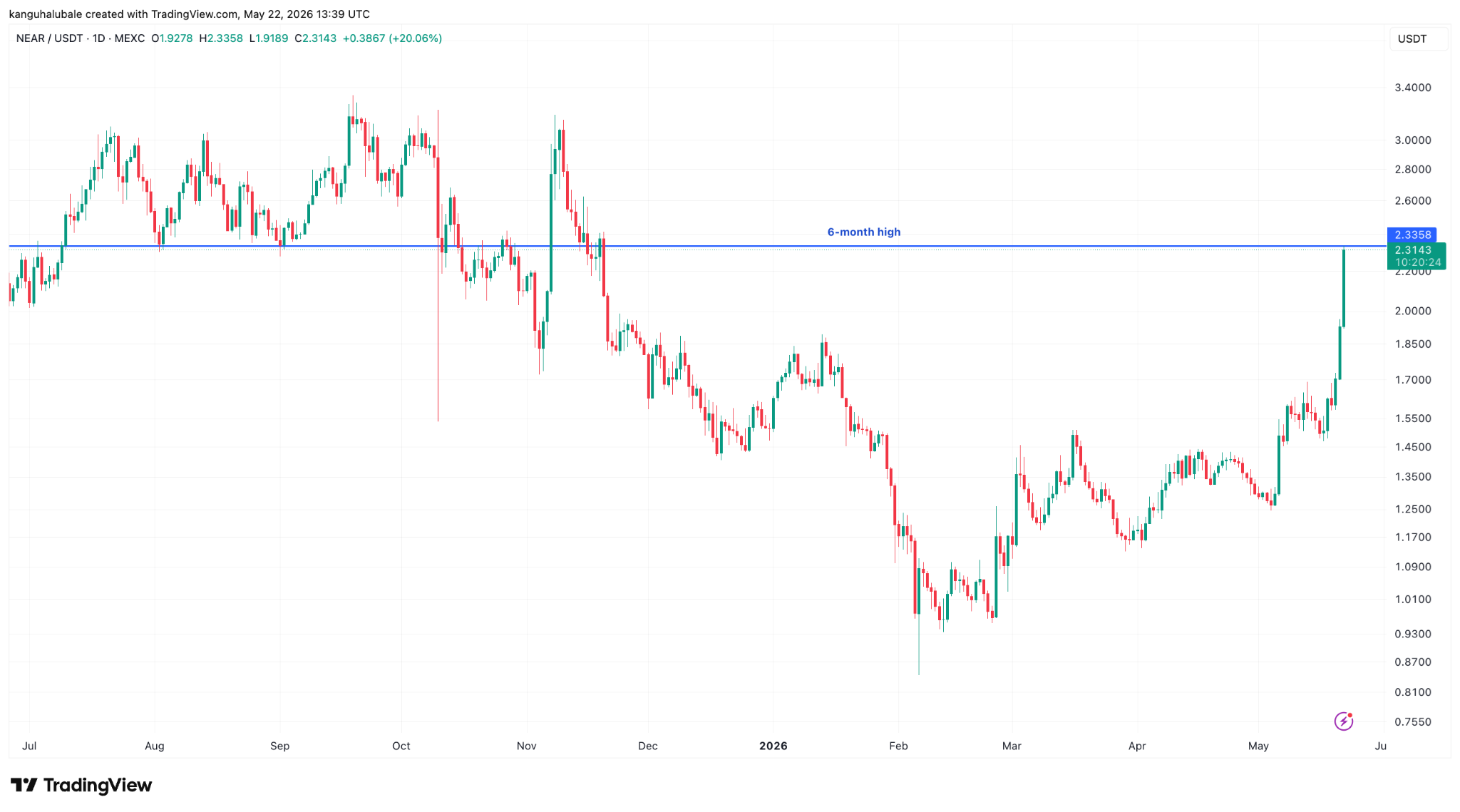
NEAR Protocol (NEAR) displayed strength on Friday, rising 34% over the last 24 hours to $2.32, leading artificial intelligence-based tokens in a rally fueled by NEAR’s network upgrades and NVIDIA’s bullish revenue forecast.
NEAR is trading 50% higher than its price seven days ago and has gained a whopping 115% over the last 90 days.
Key takeaways:
- NEAR price surged 50% in seven days, hitting six-month highs as AI crypto tokens rallied on strong market momentum.
- NEAR Protocol upgrades focused on AI, privacy and scaling boosted investor confidence and trading volume above $1 billion.
- A breakout from a multi-year wedge pattern puts $5.75 in focus if NEAR clears resistance between $2.60 and $3.
NEAR price rallies to six-month highs
Data from TradingView shows that NEAR’s recovery began on Monday, rising 58% to a six-month high of $2.34 on Friday from a low of $1.48.
Accompanying NEAR’s price growth is an uptick in its trading volume, which has increased by 190% to $1.15 billion over the last 24 hours, reinforcing the intensity of the buyers.
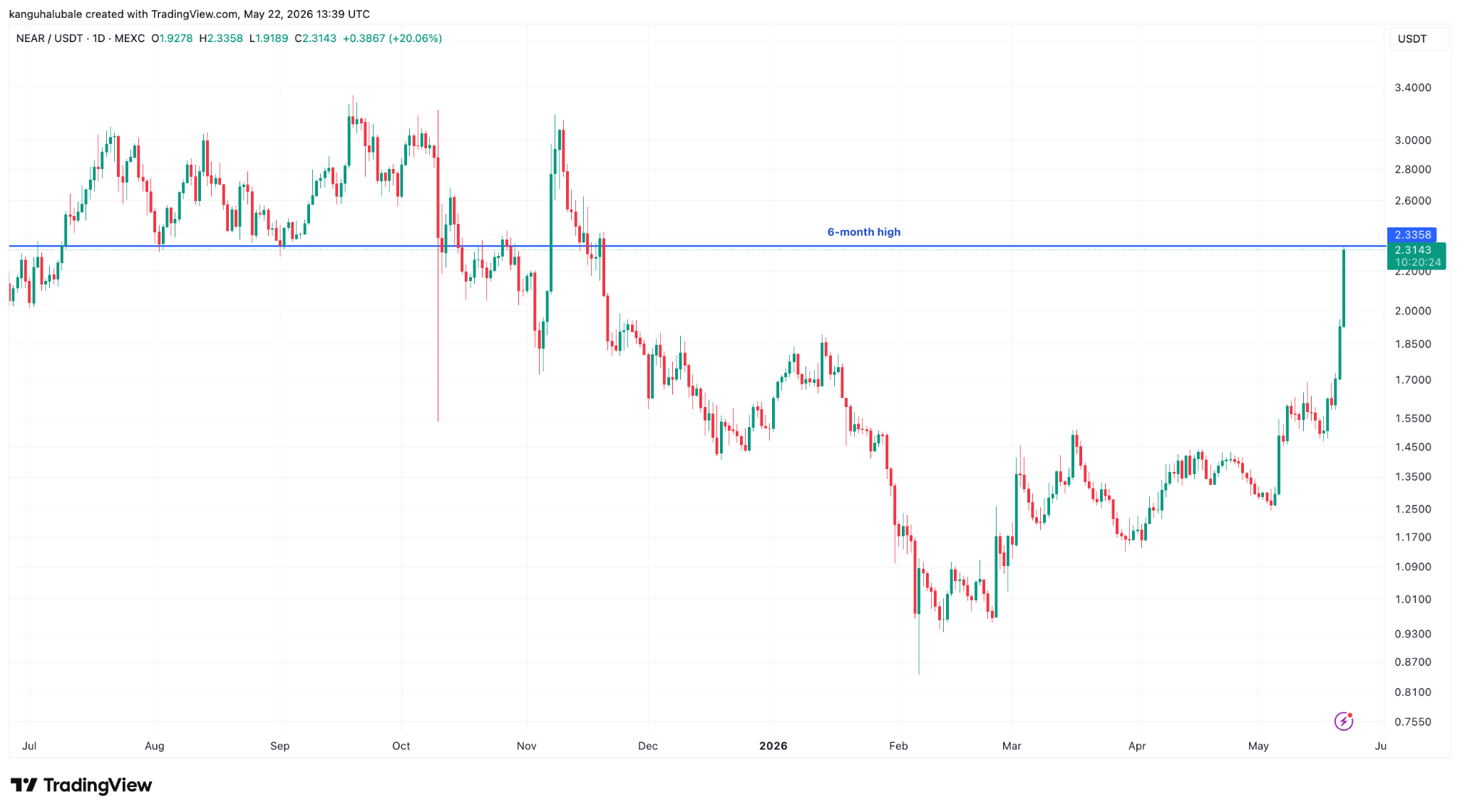
NEAR/USD daily chart. Source: Cointelegraph/TradingView
The altcoin’s jump above $2.30 triggered over $9.85 million in short liquidations, as those betting against the price were caught off guard.
The gains come after NEAR Protocol announced of major upgrades focused on privacy, AI integration, and network scaling.

Source: X/NEAR Protocol
Aurora, the Ethereum-compatible scaling solution built on NEAR, also announced the update of its Aurora Intents Widget. The update integrated ADI Chain as a new entry point, enabling smoother cross-chain swaps, deposits, and application flows for users.

Source: Aurora
These developments demonstrate ongoing technical progress within the NEAR Protocol ecosystem, potentially increasing demand for blockspace and the NEAR token.
NEAR price rallies as AI tokens recover
NEAR is not the only AI-themed token outperforming the crypto market today. Other cryptocurrencies in the AI sector have witnessed impressive 24-hour gains, including Grass (GRASS), OpenServe (SERVE) and Artificial Superintelligence Alliance (FET), which have gained over 27%, 21% and 11% over the day, respectively.
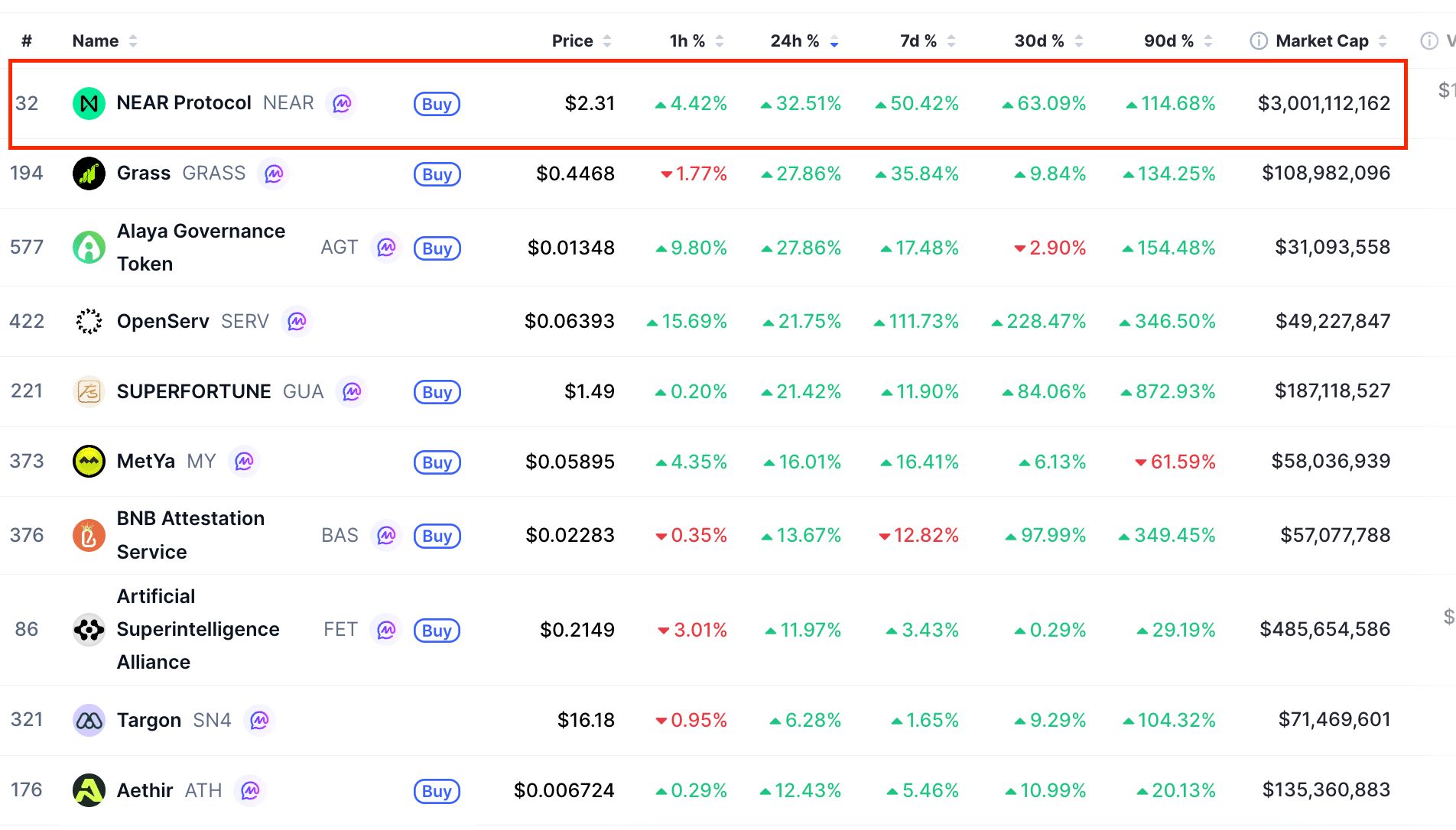
Performance of top AI tokens by market capitalization. Source: CoinMarketCap
Notably, the surge in AI tokens has also been accompanied by an increase in their total market value. The market capitalization of AI and big data crypto projects and tokens has risen by 8% over the past 24 hours to $21.44 billion at the time of publication, reflecting renewed investor confidence in the sector.
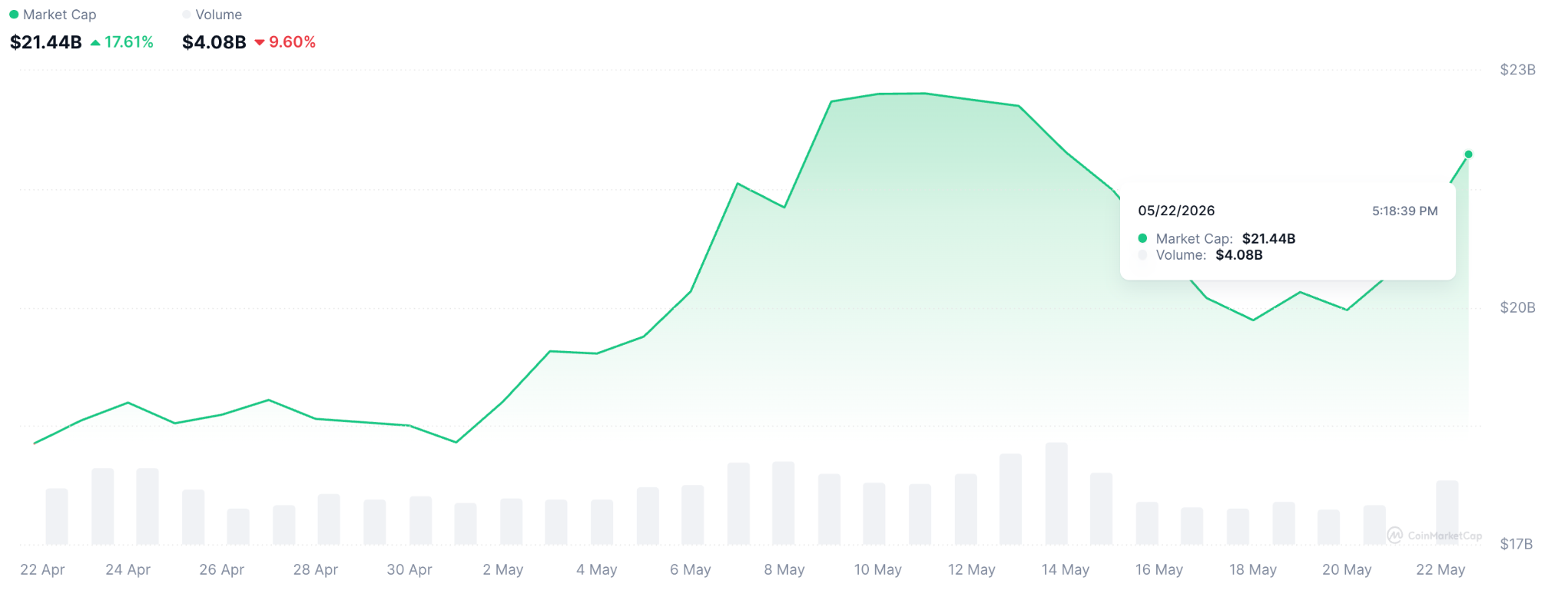
Market capitalization and volume of AI and big data tokens market. Source: CoinMarketCap
Broader sector momentum was fueled by positive signals from Nvidia’s AI dominance and revenue forecasts. Nvidia, which maintains an 81–90% share of the AI accelerator market, reported massive profits of approximately $81.6 billion in Q1 2026 and raised its projected revenue opportunity through 2027 to $1 trillion.
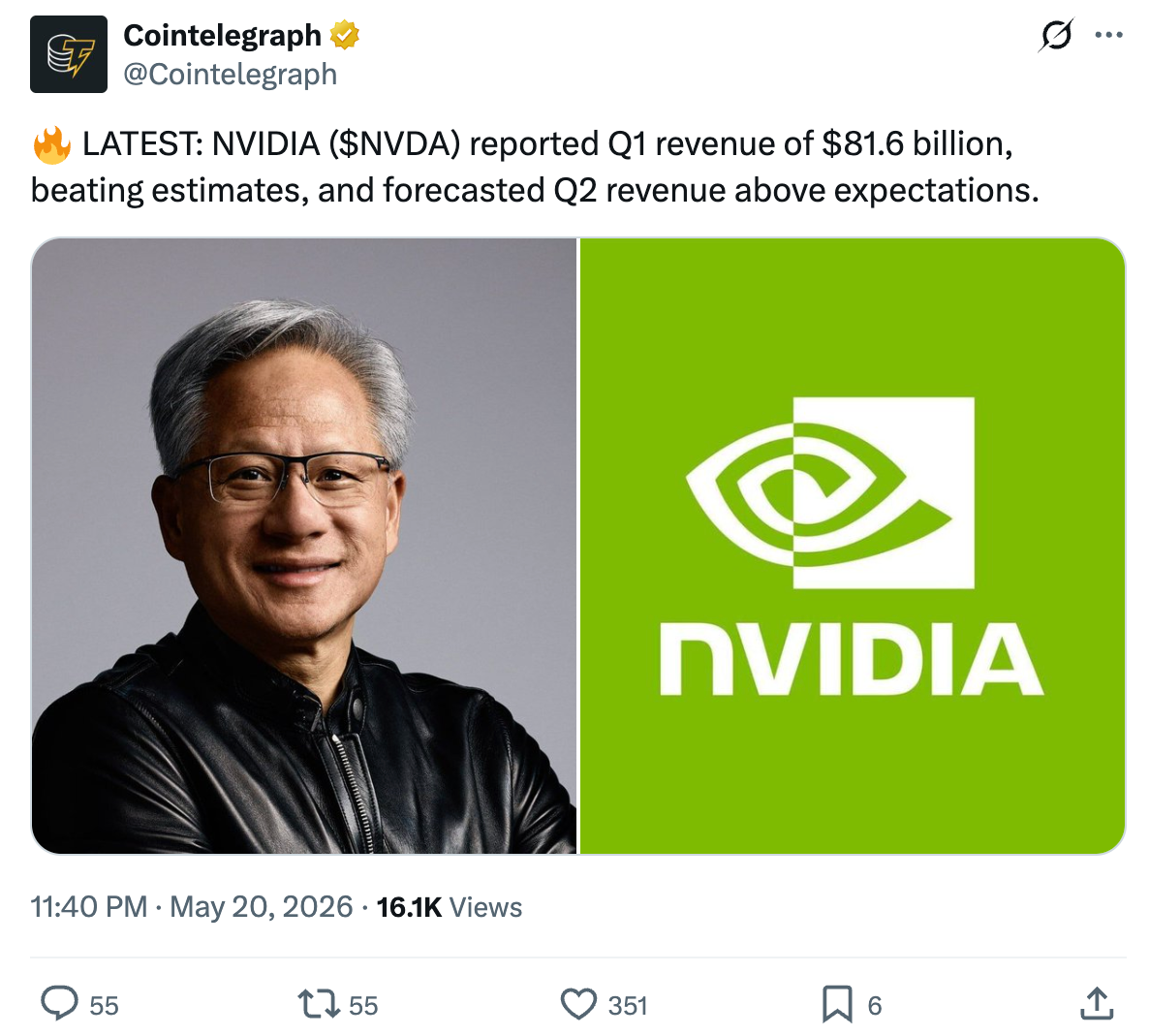
Source: X/Cointelegraph
Historically, Nvidia events have triggered strong rallies in NEAR price, as seen in February when the altcoin soared 58% following the company’s Q4 2025 earnings report.
How high can NEAR price go?
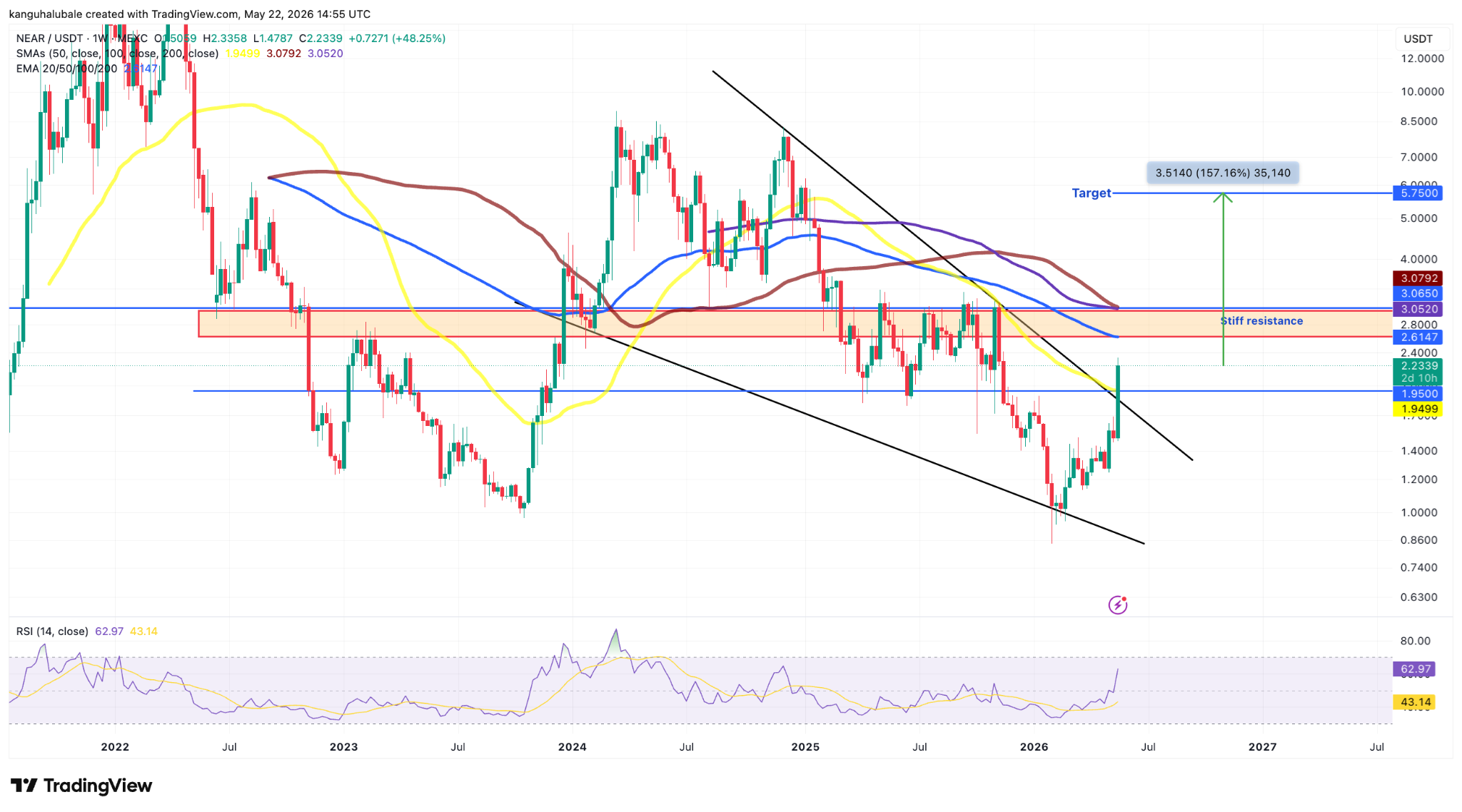
NEAR’s latest rally saw it break out of a multi-year falling wedge that has capped the price since late 2024.
The NEAR/USD pair now faces stiff resistance at the $2.60-$3.0 supply zone, where major moving averages sit, as shown on the weekly chart below.
A break above this level would clear the path toward the measured target of the wedge at $5.75, roughly 160% above the current price. The relative strength index has increased to 63, indicating increasing upward momentum.
NEAR/USD weekly chart. Source: Cointelegraph/TradingView
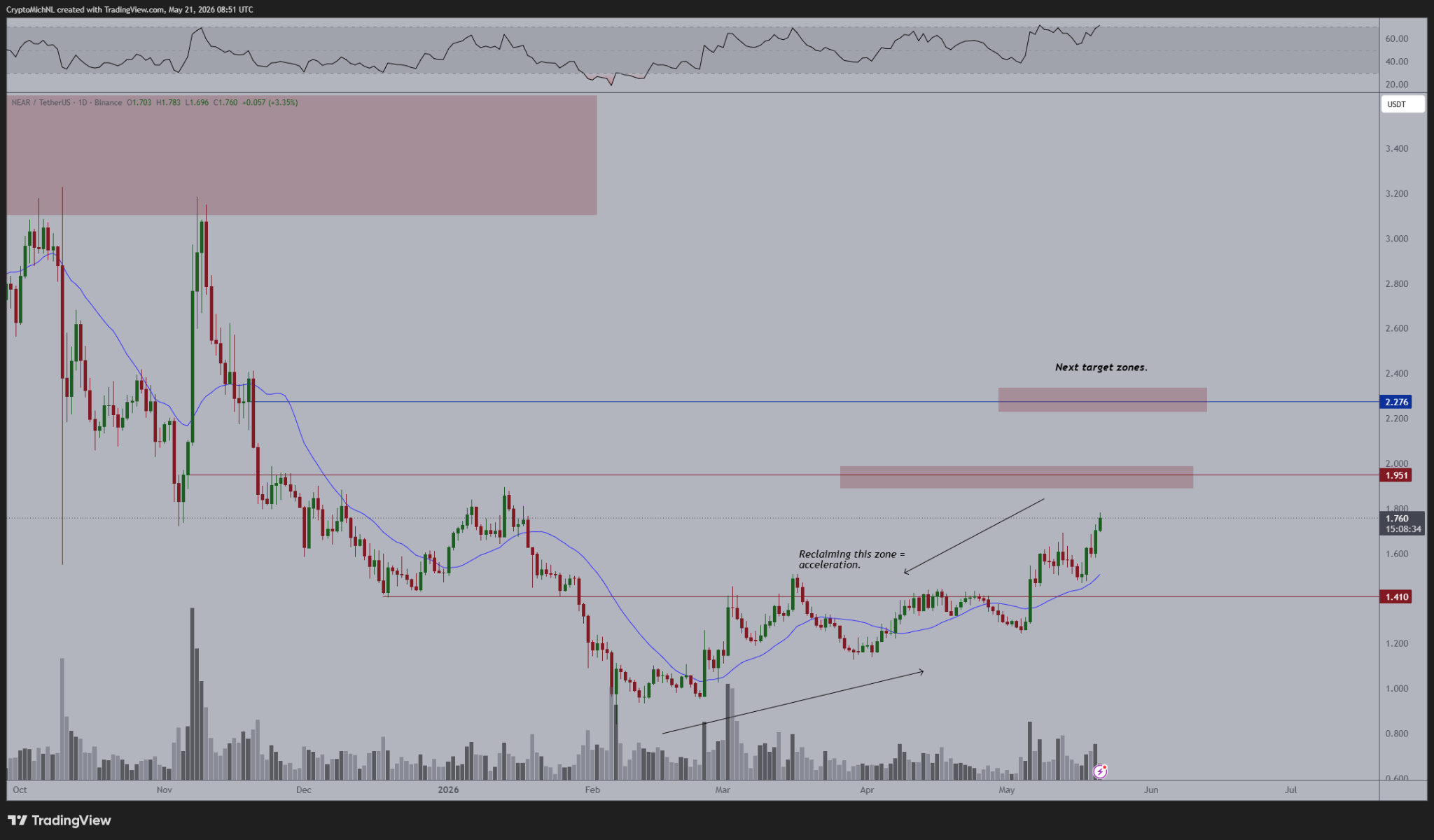
In an X post on Tuesday, MN Capital founder Michael van de Poppe said NEAR is displaying “one of the most bullish charts” in the market, adding that a continuation was in the cards as long as it held $1.40 as support.
“The first real resistance zones for $NEAR are at $2 and $2.25-$2.50,” Van de Poppe said in a follow-up post on Thursday, adding “it’s clearly trending higher,” with the next target near $2.75.
NEAR/USD daily chart. Source: X/Michael van de Poppe
Crypto World
F2Pool founder who controls 11% of bitcoin’s hashrate to lead first SpaceX mission to Mars


Chun Wang, the Chinese-born Maltese-Kittitian crypto investor who co-founded F2Pool, has been named Mission Commander for SpaceX’s first commercial human spaceflight interplanetary mission to Mars, crucial to Elon Musk’s plans to send one million people to the Red Planet.
Wang, whose mining pool controls roughly 11.3% of the global Bitcoin network hashrate and whose personal bitcoin assets are estimated to exceed $300 million, will take a two-year leave from his current role securing digital ledgers to leading humanity’s next frontier in deep space.
The SpaceX announcement comes as the company owner Elon Musk’s aggressive plans to colonize the Red Planet and establish a multi-planetary civilization continue to accelerate.
A two-year trek into the unknown
The ambitious, multi-phase timeline will take Wang on a a week-long circumlunar fly-by within approximately 125 miles of the moon’s surface alongside Dennis and Akiko Tito before launching on the historic Martian trajectory.
Target launch windows are currently driving technical preparations for a planned 2026 departure. Once launched, the crew will spend two consecutive years in space. The deep-space itinerary includes a full external exploration of the Earth-Moon system, a high-altitude fly-by of Mars, and a complex return trajectory back to Earth.
Navigating deep-space risks
Operating in deep space for 24 months introduces severe operational risks, including severe hardware fatigue and the volatile thermodynamics of managing cryogenic fuel during extended coasts in deep space.
To mitigate these hazards, SpaceX is debuting its next-generation Starship V3 architecture. The upgraded vehicle features vacuum-jacketed header feed lines, high-voltage cryogenic recirculation systems, and 60 integrated custom avionics units capable of handling distributed fault isolation up to 9MW of peak power.
The crew will faces acute biomedical dangers when gathering critical diagnostic telemetry. One of Wang’s team key tasks is performing advanced behavioral health tracking and capturing the first-ever human X-ray images in microgravity to evaluate long-duration physiological deterioration.
The path to a multi-planetary future
Wang’s mission is designed to deliver the crucial operational data required to transition Mars exploration from short-term novelties to permanent, self-sustaining habitats.
The data crew is expected to return to Earth, which will directly stress-test Starship’s autonomous navigation matrix, deep-space radiation shielding, and in-space propellant transfer mechanisms.
The SpaceX team’s findings will be vital to achieving Musk’s ultimate objective: verifying rapid vehicle reuse and validating the logistical baseline required to safely transport millions of tons of cargo and eventually a million citizens to the Martian surface.
The journey to Mars announcement comes as SpaceX, the satellite and space rocket company, confidentially filed for its public offering targeting a valuation upwards of $1.75 trillion, the largest in history. It also comes as Musk’s company officially revealed, for the first time, its bitcoin holdings, totaling 8,285 BTC.

TLDR
- Trump Media transferred 2,650 bitcoin worth about $205 million to Crypto.com.
- The transaction took place during late U.S. evening hours based on blockchain data.
- Trump Media originally purchased 11,542 BTC for about $1.37 billion at a higher average price.
- Bitcoin currently trades well below the company’s acquisition cost, leading to large unrealized losses.
- The company now faces an estimated $455 million loss on its bitcoin holdings.
Trump Media has transferred 2,650 Bitcoin worth about $205 million to Crypto.com. The move adds pressure on its crypto strategy as losses deepen. Trump Media now faces an estimated $455 million unrealized loss on its bitcoin holdings.
The transaction occurred late in U.S. evening hours, according to blockchain data. Analytics firm Lookonchain reported the transfer publicly.
Trump Media Bitcoin Transfer Raises Pressure on Crypto Strategy
The latest transfer involved 2,650 BTC moved to Crypto.com. Bitcoin traded near $77,341 during the transaction window.
Trump Media previously moved 2,000 BTC four months earlier. That earlier transfer was valued at about $175 million.
The company originally bought 11,542 BTC for about $1.37 billion. Its average purchase price stood at $118,522 per bitcoin.
Bitcoin now trades well below that acquisition level. This gap has led to a large unrealized loss.
Based on current prices, losses total around $455 million. The figure reflects the difference between purchase and market value.
Blockchain records confirm the timing and destination of the transfer. Lookonchain shared the data through a public update.
Financial Strain and ETF Withdrawal Follow Crypto Moves
The transfer comes days after Trump Media withdrew its spot bitcoin ETF application. Analysts said economics, not regulation, likely drove the decision.
ETF analysts stated the sector has seen weaker returns recently. They suggested profitability concerns influenced the withdrawal.
Trump Media has not issued a detailed statement on the ETF move. The company has also not clarified the purpose of the Bitcoin transfers.
Financial results show mounting pressure on the business. The company reported a first-quarter net loss of $405.9 million.
Revenue for the same quarter totaled just $871,200. That compares with a $31.7 million loss in the prior year period.
The widening loss reflects increased costs and investment exposure. Crypto holdings appear to contribute to financial volatility.
The company continues to hold a large bitcoin position despite recent transfers. Remaining holdings still exceed several thousand BTC.
Bitcoin price have remained below the firm’s average purchase level. This has kept unrealized losses elevated.
The latest blockchain transaction marks the most recent update in Trump Media’s crypto activity. No further transfers have been confirmed since the reported move.



Tanya Denisova, chief operating officer of Robinhood Crypto, is leaving the firm, according to two people with knowledge of the matter.
Denisova had been employed by the popular trading platform for over five years, according to her LinkedIn profile.
Neither Robinhood nor Denisova responded to requests for comments.
The departure comes amid Robinhood missing its first-quarter earnings and revenue estimates, mainly due to weaker crypto trading activities. Crypto-related revenue, one of Robinhood’s biggest sources of transaction income, fell 47% year over year to $134 million, down from $252 million. The drop comes as the company works to reduce its reliance on crypto market swings and reposition the business beyond price-cycle volatility.
Robinhood enables users to trade stocks, exchange-traded funds (ETFs), options, and cryptocurrencies through a mobile-first app. The company also offers retirement accounts, cash management services, and market insights designed to simplify investing and broaden access to financial markets.
The firm has expanded its presence in crypto by offering commission-free trading for major digital assets, including bitcoin , ether (ETH), solana (SOL), and , directly within its app.
The company also provides crypto wallets, onchain transfers, staking services in select markets, and educational tools aimed at newer investors. As part of its broader strategy to bridge traditional finance and digital assets, Robinhood has continued to grow its crypto offerings internationally while positioning itself as a simple, low-cost entry point into the crypto market
Read more: Robinhood stock falls 8% after big earnings miss due to weak crypto trading revenue

The exploiter who drained the Verus-Ethereum bridge of over $11 million has returned $8.5 million to the project’s team, while keeping $2.8 million as a white-hat bounty.
This comes barely a day after the Verus community and its developers offered the reward in exchange for the hacker meeting a set of terms.
Hacker Accepts $2.8 Million Bounty
The incident took place on May 17, with the hacker taking advantage of a missing validation step on one of its cross-chain bridge contracts, which allowed them to drain approximately 103.6 tBTC, 1,625 ETH, and 147,000 USDC. Following the hack, the project’s team decided to stop its block-producing nodes to prevent further transfers and issued an emergency patch.
Verus later said on social media that it was offering the Ethereum bridge exploiter a 1,350 ETH bounty in exchange for returning 4,052 ETH within 24 hours, adding that it would stop any investigations and not pursue charges if the conditions were met.
“If you return a total of 4052.4 ETH to the address 0xF9AB…C1A74 within 24 hours specified above, we will understand that as your agreement to these terms, and we will uphold our stated agreement to cease further investigation of you,” wrote the team.
Blockchain security firm PeckShieldAlerts has since reported that the hacker transferred 4,052 ETH back to the team’s address, recovering 75% of the stolen funds while retaining a 25% bounty of 1.350 ETH. However, Verus has yet to issue a formal acknowledgment of the recovery on their platforms as stipulated in their initial statement.
Developer Flags Possible AI Use in Hack
The update comes as the crypto sector is dealing with a rise in the number of bridge exploits, with the Verus incident being the eighth of this kind this year. According to PeckShield, attackers have made off with a total of $328.6 million from several cross-chain protocols like THORchain, ZetaChain, KelpDAO, HyperBridge, CrossCurve, Squid Router, and IoTeX.io as of Mid-May.
But the Verus case is notable because the complexity of the exploit suggests hackers are using AI to help execute it. The protocol’s lead developer, Mike Toutonghi, explained in an article how the technology might have helped them understand the system’s rules closely enough to design transactions that bypassed checks and tricked the Ethereum contract into accepting the malicious cross-chain transfer.
Elsewhere, Vitalik Buterin shared insights on how AI can still be used to strengthen security instead of breaking it. Responding to community concerns about the technology creating non-stop exploitation opportunities, the Ethereum co-founder countered by saying that AI-assisted formal verification could be used as a strong defense against security failures in the crypto industry.
The post Verus Bridge Exploiter Returns $8.5M, Keeps $2.8M as Bounty Reward appeared first on CryptoPotato.


Seasoned crypto investor Kevin Warsh took his oath as the 17th Chair of the world’s most powerful central bank this morning. President Donald Trump presided over the oath at the White House, the first such ceremony there since Alan Greenspan’s initiation in 1987.
Crypto investors are excited.
Warsh is 56 years old and disclosed roughly $190 million worth of assets earlier this year, including stakes in more than 20 crypto projects.
Jerome Powell, his predecessor, had very little interest in crypto and no disclosed crypto investments.
Warsh’s Office of Government Ethics disclosure from April, in stark contrast, was 69 pages long. It cataloged joint holdings with his wife, Estée Lauder heiress Jane Lauder.
Two positions in Stanley Druckenmiller’s funds were worth more than $50 million apiece.
A diversified investor, Warsh’s crypto exposure is smaller by allocation yet broad in scope. His disclosure names Solana, Optimism, dYdX, Compound, Polychain, Polymarket, DeSo, and Flashnet. Warsh holds most of these positions through the venture vehicles.
He’s committed to divest any conflicting positions and will also accept a one-year cooling-off period to ensure his investment management practices are long-term oriented.
Crypto enthusiasts interpreted his portfolio as a resume.
Warsh’s Senate confirmation vote was a slim 54-45, the narrowest margin for an incoming Fed chair since at least the 1970s.
Fascinating Kevin Warsh quotes about crypto
Not only because of his extensive crypto portfolio, fans point to Warsh’s pro-easing and pro-liquidity stances as bullish catalysts for inflows into the crypto sector.
For example, at his April 21 hearing before the Senate Banking Committee, Warsh blamed pandemic-era inflation on “the fatal policy error going back four or five years,” a direct attack on Powell.
He’s also called inflation a “choice” and described the Fed’s overgrown balance sheet, which once peaked near $9 trillion, as “fiscal policy” in disguise.
Specifically on the topic of crypto, Warsh said in a May 2025 Hoover Institution interview that bitcoin “can often be a very good policeman for policy.”
He floated similar logic in a 2018 Wall Street Journal (WSJ) op-ed, comparing the asset to gold.
In that same Hoover Institution interview, Warsh continued, “I think of [bitcoin] as an important asset that can help inform policymakers when they’re doing things right and wrong.”
No US dollar CBDC (except, maybe, for wholesale?)
Like most senior members of the US government, Warsh is generally opposed to a US dollar central bank digital currency (CBDC).
In response to a question by Senator Bernie Moreno in April 2026 as to whether the Fed could legally issue a retail CBDC, Warsh replied, “they don’t have the right and I think it would be a bad policy choice.”
He further agreed to a follow-up question that he would oppose any exploration of a CBDC to the full extent of his power as Fed chair.
Interestingly, in a 2022 WSJ op-ed, Warsh advocated for a digital dollar for wholesale transactions in order to remain competitive with China.
Indeed, a direct quote from Warsh from 2022 remains in print. He said, “The US should announce the essential design features of a digital dollar to be used exclusively for wholesale transactions,” which is apparently superseded by his April 2026 promise above.
Read more: Crypto wants Trump to replace Jerome Powell with a pro-stimulus Fed chair
What the crypto industry expects from Kevin Warsh
During the early days of Warsh’s term, crypto traders are hopeful that he’ll pump their bags.
Obviously, they hope he’ll quickly cut the Fed’s benchmark interest rate to ease liquidity conditions and encourage speculative inflows.
Moreover, stablecoin issuers such as Standard Custody & Trust are hopeful that Warsh will approve their Fed master account banking applications. All stablecoin issuers also hope he holds to his anti-CBDC promise, so that they can continue to compete in the marketplace with their private US dollar proxies.
Prediction markets are also interested in anything Warsh can do to keep regulators from impeding their growth.
Today, the same morning Trump swore Warsh in, the House Oversight Committee opened an insider-trading investigation into Polymarket and Kalshi, demanding documents from Shayne Coplan and Tarek Mansour.
Warsh’s own divested Polymarket investment still sits in the disclosure record. Perhaps he could make some phone calls to calm things down.
The new US central bank chairman will probably spend his first month telling crypto fans that his Fed will be smaller, friendlier, and less inflationary than under Powell. Time will tell if he follows-through on any of their aspirations.
Got a tip? Send us an email securely via Protos Leaks. For more informed news and investigations, follow us on X, Bluesky, and Google News, or subscribe to our YouTube channel.


Kalshi is backing a new advocacy group to fight the gaming lobby over prediction market regulation.
Summary
- Americans for Fair Markets launched with Kalshi support to counter sportsbook and casino opposition to prediction markets.
- The group tapped former Deputy White House Chief of Staff Taylor Budowich as its strategic advisor.
- Prediction markets have grown into a roughly $500 billion asset class with millions of monthly U.S. users.
The new organization, Americans for Fair Markets, launched on May 22 to shape federal policy on prediction markets and federally regulated exchanges. It will run paid and earned campaigns to counter what it describes as false narratives spread by sportsbook and casino interests.
AFM has tapped Taylor Budowich, who most recently served as Deputy White House Chief of Staff under Susie Wiles, as its strategic advisor. The hire signals Kalshi’s deepening ties to Republican political circles as the prediction market industry faces intensifying regulatory scrutiny.
Why Kalshi is escalating its lobbying effort
The launch comes as the gaming lobby mounts its own offensive. FairPredicts, a new group backed by casino interests and led by former Governor Chris Christie through the American Gaming Association, recently began a six-figure ad campaign targeting Kalshi directly.
“We’re not going to be outspent or out-organized by entrenched interests protecting their monopolies,” said John Bivona, AFM board member and Kalshi’s Head of Government Relations.
AFM will join the existing Coalition for Prediction Markets but focus specifically on campaign-style tactics. Kalshi has seen 32x growth in annualized trading volume, and the broader industry now represents roughly $500 billion in assets.
As crypto.news reported, prediction markets have been moving toward institutional adoption, with Bernstein pointing to Kalshi’s first bespoke block trade as a milestone. The company also explored crypto perpetual futures earlier this year.
The regulatory backdrop is shifting rapidly. The bipartisan Gillibrand-McCormick bill dropped earlier this month as the first comprehensive federal framework for prediction markets.
The CFTC is also undergoing a rulemaking process expected to strengthen consumer protections. Kalshi previously secured data partnerships with Fox and CNN, embedding real-time prediction odds into mainstream news coverage.

SEC Commissioner Hester Peirce narrowed the scope of the agency’s proposed innovation exemption for tokenized stocks. She ruled out synthetic instruments and limited the carve-out to digital representations of real equity shares.
Her clarification settled a debate that erupted across tokenization firms. A single word in her earlier post had triggered confusion over which on-chain products would qualify.
What Peirce Means for Tokenized Stocks
Peirce wrote on X that the tokenized stock framework would cover only listed equities. The carve-out applies to shares investors can already buy on the secondary market.
“I’ve always expected that it’d be limited in scope & would facilitate trading only of digital representations of the same underlying equity security that an investor could purchase in the secondary market today, not synthetics,” she stated in a her initial statement.
She pointed to the SEC’s January staff statement on tokenization for context. The document separates issuer-sponsored tokens and custodial wrappers from synthetic instruments.
Linked securities only provide economic exposure to the underlying stock. Holders face counterparty risk if the issuer fails, while voting rights and dividends typically disappear.
Why the Wording Stirred the Industry
Galaxy Research’s Alex Thorn highlighted the concern, noting that every policy team and tokenization firm spent the morning parsing Peirce’s chosen word.
The friction reflects how varied product designs have become. Many DeFi-native platforms rely on synthetic wrappers to bypass issuer cooperation and broker-dealer custody.
The structure enables faster launches and composability with lending or derivatives protocols.
Peirce’s framing favors fully-backed tokenization over derivative exposure tokens. It echoes her earlier digital securities sandbox proposal, which emphasized controlled experimentation.
The clarification arrives as SEC Chair Paul Atkins finalizes the broader Project Crypto framework. The exemption now reads as one narrow pilot rather than wholesale deregulation of on-chain equity trading.
The post Crypto Mom Hester Peirce Excludes Synthetic Tokenized Stocks From SEC Exemption appeared first on BeInCrypto.
The U.S. Securities and Exchange Commission has postponed its planned “innovation exemption” for tokenized versions of U.S. stocks, citing concerns from market participants.
Citing people close to the matter, Bloomberg reported that a draft framework, poised for release as early as this week, now faces delays as the agency reviews feedback.
SEC Delays Plan To Allow Crypto Versions of US Stocks
This exemption aimed to let crypto firms and DeFi platforms trade blockchain-based representations of stocks like Apple or Tesla.
It promised 24/7 trading, faster settlement, and easier fractional ownership while keeping tokens classified as securities.
Stock exchange officials and industry players reportedly raised alarms over potential liquidity fragmentation.
Critics worry parallel crypto markets could split trading volume from traditional exchanges, harming price discovery and efficiency.
Investor protection remains a core issue, especially for third-party tokens issued without company consent, which may lack full voting or dividend rights.
Market Context and Momentum
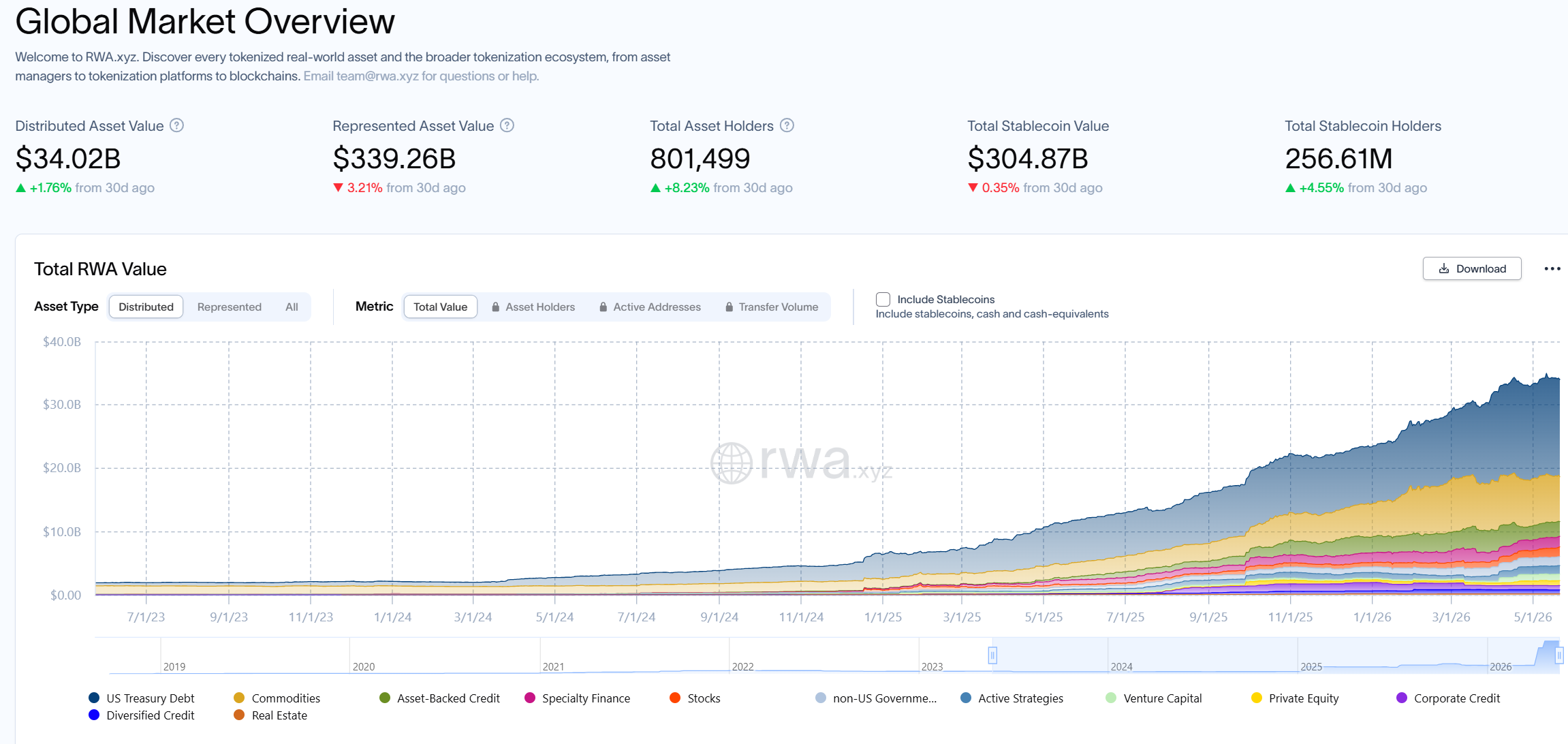
Tokenized real-world assets (RWAs) have surged to over $34 billion, up 1,600% in two years, with tokenized equities alone exceeding $1 billion in market value.
Ethereum leads platforms, followed by Solana. BlackRock’s BUIDL fund and similar products demonstrate strong institutional interest in on-chain assets.

Under SEC Chair Paul Atkins, the agency had consulted hundreds of participants to balance innovation with safeguards. The delay reflects caution even in a more crypto-friendly regulatory environment.
No new timeline has been announced, but the framework remains under active review. A refined version could still advance later this year, potentially reshaping U.S. equity trading.
This pause highlights the tension between ongoing crypto innovation and established market stability, key dynamics for anyone exposed to equities or digital assets.
Follow us on X to get the latest news as it happens
The post SEC Delays Crypto Stock Tokens Amid Wall Street Pushback appeared first on BeInCrypto.

Memorial Day Deals: 40+ Sales From Apple, Sonos, Nintendo and More

Wigan fire LIVE as emergency services scrambled and residents told to keep doors and windows closed

Bond Markets Are Bullying Japan and the U.K. One Has the Right Defenses


-

 Crypto World7 days ago
BloFin War of Whales 2026 Grand Prix opens registration for $5M trading championship
-

 Tech7 days ago
Google reimburses Register sources who were victims of API fraud
-

 Sports7 days ago
Napoleonic enters 2026 Doomben 10,000 field via Abounding withdrawal
-

 Crypto World7 days ago
BeInCrypto 100 Institutional Awards Nomination: KAST for Best Digital Assets Neobank and Best Digital Assets Fintech
-
 Crypto World7 days ago
Bitcoin Battles US Bond Nerves With BTC Price Dip Toward New May Lows
-

 Crypto World7 days ago
ICE and CME urge US regulators to curb Hyperliquid energy trading
-

 Fashion6 days ago
On the Scene at Gucci’s Cruise Show in New York City: Mariah Carey, Kim Kardashian, Lindsay Lohan, Iman, and More!
-
 Crypto World7 days ago
Wall Street’s Boldest Gold Prediction Has Russians Rushing to Buy
-

 Crypto World7 days ago
IREN closes $3 billion convertible notes deal amid AI infrastructure expansion
-

 Fashion6 days ago
Trending Western Style Vests Perfect for Summer
-

 Politics6 days ago
Watch: far-right flag-fanatics run over victim, attack locals – Setup By the Left wing for your entertainment
-

 Crypto World1 day ago
Blockchain.com files with SEC for U.S. IPO
-

 Fashion6 days ago
Amazon Sundays: Memorial Day Hosting
-

 Entertainment6 days ago
Off Campus Easter Eggs Explained: Characters, Stories, More
-

 Crypto World7 days ago
Crypto Market Structure Bill Clears Committee; Senate Vote in Focus
-

 Crypto World7 days ago
BeInCrypto 100 Institutional Awards Nomination: KuCoin for Leader in Digital Asset Adoption and Best Trading Infrastructure
-

 Politics7 days ago
UK’s top intelligence body warns Mandelson files being withheld by government
-
 Crypto World7 days ago
Enphase Energy (ENPH) Stock Rockets 32% This Week: What’s Fueling the Rally?
-

 Politics7 days ago
Voter disenfranchising, bulldozer operations, trampling democracy in India
-

 Business7 days ago
Strategies for Australian Businesses Entering Southeast Asian Markets
You must be logged in to post a comment Login