
Crypto World
Important Pi Network News and PI Price Update: September 22

The team behind Pi Network supposedly completed another major ecosystem development, while the broader cryptocurrency market has been booming lately.
Despite these positive developments, PI remains deep in the red on a weekly basis.
The Latest Ecosystem Advancement
Pi Network began the long process of protocol updates at the start of the year and first implemented version 19.6. Many others followed suit, including v20.2, which laid the foundation for smart contract capabilities.
During the summer months, it unveiled versions 25 and 26, which actually came after their initial deadlines. The last technical update from that list is protocol v27, which was supposed to add more flexible and secure smart-contract authentication and should have been deployed on September 15.
On that date, the X account BSCN revealed that Pi Network initiated the upgrade, starting with a Testnet 2 implementation and planning to transition to Mainnet in the coming days. Several hours ago, the entity disclosed that the Core Team completed the final step toward launching protocol v27.
“Pi Network PiCoreTeam is moving to Protocol V27 on its Testnet 2 environment as it works toward a mainnet launch. The new protocol has stabilized at 250 transactions per block with no recorded failures, showing it can handle higher traffic. This is the final technical step before the Pi Network team switches to the live environment,” the announcement reads.
It is important to note that other X users have also highlighted the development, yet Pi Network’s official X account has remained silent on the matter.
Performing Maintenance
Pi Network’s PI has a maximum supply of 100 billion tokens, with a large portion allocated to community mining rewards. However, the circulating supply currently stands at roughly 11.24 billion units (per CoinGecko), while the supply created so far is around 17.2 billion.
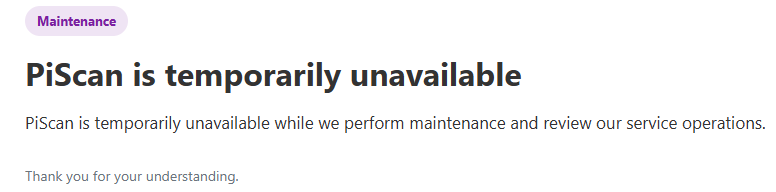
This means that many coins remain locked and are set for release in the coming months and years. Traders and investors have been closely monitoring that development, as it can impact the price. The website providing this insight is piscan.io, but it has been unavailable for a few weeks as the team performs maintenance and reviews its service operations.
Besides upcoming token unlocks, PiScan has been providing data about the amount of PI tokens stored on crypto exchanges: another factor that is vital for the price trajectory. Nevertheless, such information is also unavailable at the moment.
PI Price Outlook
As of this writing, PI trades at roughly $0.09, down about 8% this week. This is concerning given the broader cryptocurrency market’s major upswing, with Bitcoin (BTC) briefly touching $87,000 and Ethereum (ETH) nearing $2,800.
Still, some believe that the token may soon regain bullish momentum. X user Crypto With Gopal noted that the price has been holding the $0.07-$0.08 support zone, suggesting buyers are defending the lows.
“A breakout above the $0.10-$0.11 resistance could trigger a stronger upside move toward the projected target. Bulls are trying to build momentum – breakout confirmation is key,” he concluded.
The post Important Pi Network News and PI Price Update: September 22 appeared first on CryptoPotato.


Last week’s US Senate failure to advance a digital asset market structure bill could light a fire under cryptocurrency industry groups seeking to sway key congressional races in the 2026 US midterm election that‘s just 42 days away.
Senators on Sept. 15 voted 49 in favor and 50 against advancing the Digital Asset Market Clarity (CLARITY) Act, significantly reducing the chances of Congress passing the legislation with limited days in session before 2027.
While some crypto advocates haven’t ruled out the possibility of CLARITY coming up for another vote before the next session of Congress, at least one of the industry’s political action committees (PACs) isn’t taking any chances.
One PAC backed by Coinbase and Ripple Labs, Fairshake, now plans to pour $30 million into opposing Sherrod Brown in Ohio’s Senate race. Brown chaired the Senate Banking Committee when Democrats were in the majority and espoused many policies against crypto, making his potential return a challenge to another vote.
“[If Brown] wins, he might well be the deciding vote or one of the two deciding votes in a Democratic majority in the Senate,“ wrote economist Paul Krugman in a Tuesday Substack post. “And we now know that the Democratic Party is not clean as the driven snow. It is not immune to financial influence. It’s not even immune to de facto bribery from crypto.“
Steve Gannon, a partner at law firm Davis Wright Tremaine, told Cointelegraph that the CLARITY vote “provided the industry with a very clear picture of who are long-term reliable supporters and who are not,“ adding:
“It will be difficult for those who voted against Clarity to make the case that the industry should support them financially in the midterms.“
Related: CLARITY Act could get another shot during lame-duck session, policy advocate says
The former Ohio senator lost his 2024 reelection bid to Republican Bernie Moreno after Fairshake spent about $41 million opposing the Democrat. The PAC also spent more than $130 million on ads in the 2024 election cycle, offering a preview for how it might respond when faced with the threat of CLARITY not passing before the midterms.
Cointelegraph requested comments from Brown’s campaign but did not receive an immediate response.
How will the crypto industry react to CLARITY votes in the midterms?
Stand With Crypto, an initiative launched by Coinbase in 2023, warned that lawmakers who failed to advance the CLARITY Act in Congress last week could face “consequences” in the 2026 midterms based on their votes.
The organization responsible for rating politicians based on their positions on crypto could have a significant impact on the elections and on how PACs aligned with the industry use funds to target certain candidates, potentially influencing voters in an election year that could shake up control of the Senate and House of Representatives and give the market structure bill another chance of passing.
“The results of [the CLARITY Act] vote make it clear which officials are with our community, and which are against us — and we’ll make sure our advocates are ready to cast their ballots accordingly in this and future elections,” said Stand With Crypto executive director Mason Lynaugh.
As of Monday, Fairshake and its affiliate PACs Defend American Jobs and Protect Progress had not disclosed any expenditures to the Federal Election Commission (FEC) following the CLARITY vote.
FEC filings also showed no post-CLARITY spending by Fellowship, another crypto-aligned PAC funded by Cantor Fitzgerald and Anchorage Digital, or the Digital Freedom Fund, a group backed by Gemini co-founders Tyler and Cameron Winklevoss.
The OG meme coin has been on a tear lately, with its price tapping $0.10 for the first time since the beginning of June.
Analysts have spotted highly bullish signals, and some think the token could be gearing up for a rally to a new all-time high.
Realistic and Wild Predictions
DOGE has risen by almost 20% over the past week, with its market capitalization surging to roughly $15.2 billion and making it the 12th-largest cryptocurrency.
Currently, it trades just below the $0.10 psychological mark, but according to X user Cyriptoman4, it seems well positioned to attack higher levels. The analyst claimed that if DOGE decisively breaks above that zone, the upward move could continue toward the $0.1175-$0.15 region.
For their part, BSC Gems Alert claimed that the price has started forming a higher-low structure and is pushing against the upper boundary of the latest descending pattern.
“If DOGE can break and hold above $0.22, momentum could accelerate toward the higher resistance zones. The setup is simple: Breakout → Retest → Continuation,” they said.
At the same time, the analyst warned that a loss of support would invalidate the bullish setup and could trigger a pullback.
Others, like X user Bark, are much more optimistic. The analyst argued that the breakout to $1 has begun, expecting the potential explosion to happen faster than most people think.
MikybullCrypto issued a similar forecast, maintaining that the bullish move is about to kick off and setting the $1-$3 range as the bullish target.
Key Factors to Consider
Earlier this month, whales purchased more than 240 million DOGE in about a week. Many interpret such accumulations as bullish for several reasons.
First, the development reduces the tokens available on the open market, which, combined with steady or rising demand, is supposed to trigger a price pump.
Second, whales are experienced investors who make calculated moves and usually aren’t driven by pure instinct. Smaller players closely monitor their moves and might get encouraged to jump on the bandwagon, too, thus distributing fresh capital into the ecosystem.
However, some elements suggest that DOGE may be gearing up for a short-term correction. CoinGlass data shows exchange inflows have surpassed outflows over the past few days, suggesting some investors have moved from self-custody to centralized platforms. This, in turn, increases immediate selling pressure.

The post Dogecoin (DOGE) Rises to a 3-Month High: The Breakout to $1 Has Begun? appeared first on CryptoPotato.
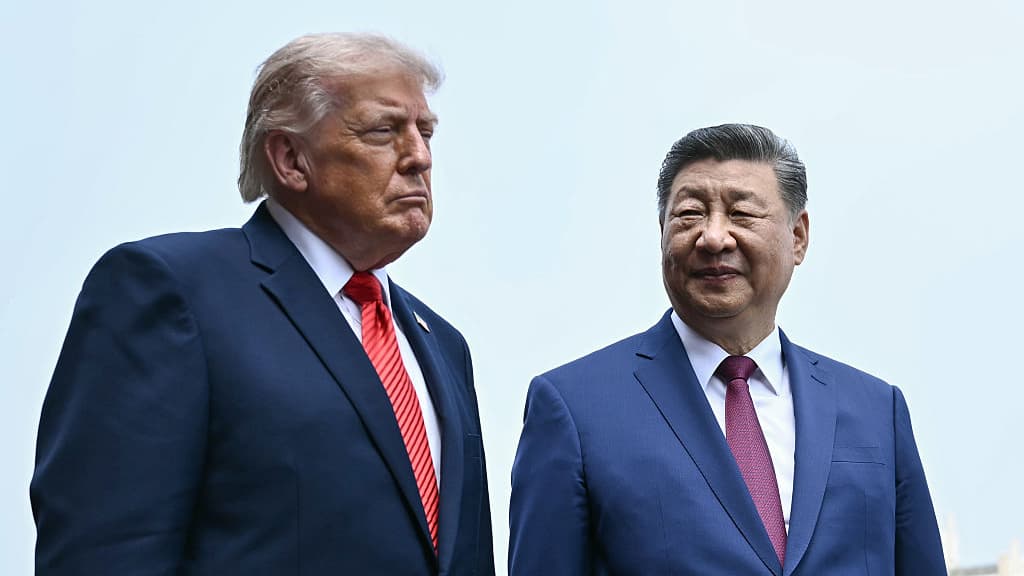
However, one major skeptic is Trump, who responded on Truth Social that “AI taking over the World, destroying Humanity, and all other things bad, is a HOAX.” Moreover, he insisted that “President Xi, of China, just announced that China will be doing absolutely nothing to stand in the way of AI, or its future.”
That characterization is misleading. China regulates AI more stringently than most other countries, and already enforces AI security guidance, ethics review requirements, and binding obligations on consumer AI services. Xi has also publicly called for legal, technical, and ethical guardrails that keep AI under human control (albeit while resisting restrictions that could impede China’s technological rise). “We should strengthen risk-awareness and ensure that AI is secure and controllable,” he told the World Artificial Intelligence Conference in Shanghai on July 17.
The hope among safety advocates is that Xi and Trump might strike a deal on AI. While Trump’s first term was anchored in antipathy to China, he posed a notably different tone in Beijing, calling Xi “a man I respect greatly” and telling him that “it’s an honor to be your friend.” Although that cordiality does not erase the national competition that makes either side hesitant to constrain its technological development, it may put narrower cooperation on the table.
Bitcoin went on a wild run on Monday, surging by over $7,000 on the heels of massive ETF inflows and topping $87,000 for the first time since late January before it finally calmed at around $86,000.
Most altcoins registered similar or even more impressive gains, including Ripple’s XRP, which flew past $1.50, and DOGE, which has neared $0.10.
BTC Hit 8-Month High
There was very little evidence last week of what would transpire in the crypto markets, starting from Friday and culminating on Monday evening, at least for now. The CLARITY Act was voted down in the US Senate, marking the first major blow against the industry. A day later, the Federal Reserve increased rates for the first time since July 2023. Both of these developments led to short-term declines for BTC, which slumped to $75,000 on a couple of occasions.
However, it reacted well on Thursday and especially on Friday. The BOJ’s decision to mimic the Fed didn’t harm bitcoin. Just the opposite; the asset rebounded to over $78,000 before it initiated another leg up that afternoon to over $80,000. It climbed to almost $82,000 on Wednesday, when the new escalation in both major wars led to a brief retracement to $80,300.
Monday, though, belonged to the bulls. BTC began its gradual ascent in the morning and culminated in the evening with a surge past $87,000 as the ETF inflows rocketed, which became an eight-month peak. After gaining $7,000 in less than 24 hours, bitcoin was due for a pullback. It dipped to $85,000 earlier today before it recovered to $86,000 as of now.
Its market cap has risen to $1.730 trillion on CMC, while its dominance over the alts stands above 59%.

XRP Above $1.50
Ethereum touched $2,800 briefly for the first time since the start of the year before it slid to $2,750. BNB tapped $800, but it’s now down to $788. Ripple’s XRP has reclaimed the key $1.50 resistance after another 4% run in the past 24 hours. Naturally, analysts have flipped bullish again, outlining some major predictions.
Dogecoin has neared $0.10 after a similar increase; ADA is close to $0.25, while NEAR has tapped $4.50. SHIB, CRO, HBAR, TAO, and PEPE have risen the most over the past day. In contrast, MORPHO, RAIN, UNI, ENA, BTW, and AAVE are in the red.
The total crypto market cap is up by over 3.5% today to $2.9 trillion on CMC.

The post XRP Reclaims Key Resistance as BTC Cools at $86K After Massive Run: Market Watch appeared first on CryptoPotato.

Six of Canada’s largest banks are exploring a Canadian-dollar tokenized deposit system designed to move money faster between financial institutions and eventually connect with other digital asset initiatives, TD Bank announced Tuesday.
Bank of Montreal, Canadian Imperial Bank of Commerce, National Bank of Canada, Royal Bank of Canada, Scotiabank and TD Bank Group form the joint venture, whose first phase focuses on moving tokenized deposits across participating banks. The joint statement said more banks could join the project later.
“The first phase of the project aims to move tokenized deposits efficiently across Canadian financial institutions with a longer-term goal to connect with other emerging digital assets initiatives,” they said.
The participating banks are collectively known as Canada’s Big Six: the dominant group in the country’s banking system, with operations spanning consumer banking, commercial lending, capital markets and wealth management.
The banks said the project aims to offer faster, more efficient and programmable payments to Canadian customers while preserving financial stability and regulatory oversight.


If you’ve ever sat up quickly or rolled over in bed abruptly and felt like the room was spinning or whirling around you when you’re actually still, you may have experienced a condition called benign paroxysmal positional vertigo (BPPV) without knowing what it was. This vestibular disorder—one that affects the inner ear—is one of the most common causes of vertigo, and it can make people feel very dizzy, unsteady, sweaty, even nauseous. Individual bouts tend to be brief—usually lasting 15 to 60 seconds at a time—but they can recur with certain head movements, make it difficult to function, and increase the risk of falling.
“The term ‘benign’ is the first part of the phrase—it does not feel benign when you experience it,” says Dr. Nedim Durakovic, an associate professor of otolaryngology and neurotology at the Washington University School of Medicine in St. Louis. Before the condition was well understood, “people thought that patients were having strokes when they had vertigo, [but] this is not the stroke form of vertigo.”
Here’s what to know about BPPV.
What causes BPPV?
With BPPV, tiny calcium carbonate crystals—called otoconia—that usually sit on hair cells in the inner ear get dislodged from where they belong and travel into one of the three semicircular canals of the inner ear. A change in head position, such as while rolling over in bed or tipping your head back in the shower, is what usually triggers BPPV symptoms.
It’s natural for these crystals to be in the ear. “They are part of your normal anatomy for your balance function,” says Dr. Gail Ishiyama, a professor in the departments of neurology and head and neck surgery and director of the Vestibular Clinical Laboratory at the UCLA School of Medicine. With BPPV, “they’re just in the wrong place, and that can cause vertigo.”
BPPV affects twice as many women as men, and it’s particularly common between the ages of 40 and 70. It can happen anytime, but head trauma or dental procedures involving drilling are two of the more common triggers, Ishiyama says.
People who have Menière’s disease (a chronic inner ear disorder), diabetes, hypertension, high cholesterol, hypothyroidism, migraine, anemia, osteoporosis, or peripheral neuropathy are particularly susceptible to BPPV, research has found. And research increasingly suggests that low vitamin D levels are a risk factor for BPPV.
How is BPPV diagnosed?
Getting the right diagnosis for BPPV isn’t always straightforward. “One of my frustrations with patients who experience this is they’ll go to the ER or they’ll get an MRI scan or a head CT scan—this whole [expensive] workup—when somebody just needed to lay them down and look at their eyes,” says Durakovic.
That, he says, is the easiest way to diagnose BPPV. Using something called the Dix-Hallpike maneuver, a health care provider will have the patient move between a seated and supine position and move their head in different directions while the provider examines their eyes. If the person’s eyes rapidly, repetitively, and involuntarily move up and down or in a twisting motion, these are signs of nystagmus, a condition involving sudden eye movements. Nystagmus often accompanies vertigo caused by BPPV, and if it does, the diagnosis is clear. If the patient doesn’t exhibit nystagmus, other diagnostic maneuvers may be used to trigger telltale symptoms.
What’s the treatment for BPPV?
The first-line treatment for BPPV uses a different maneuver called the Epley maneuver, which involves a series of specific head and body movements to remove the wayward crystals from the semicircular canal in order to relieve symptoms of vertigo. Sometimes the maneuver needs to be repeated several times, notes Durakovic. But research has found that it does the trick in more than 80% of people with BPPV.
There are other repositioning maneuvers, too, depending on which of the semi-circular canals is affected. “The positional maneuvers move the crystals along the pathway out of the canal and back to where they belong,” explains Dr. Cameron Wick, an associate professor of otolaryngology and neurotology at the Case Western Reserve University School of Medicine. If the maneuvers don’t provide immediate relief, people are advised to do them one to two times per day while they’re symptomatic, according to Wick.
In the instances when repositioning maneuvers don’t effectively relieve BPPV, the condition may resolve on its own over time. Other treatment options may include vestibular rehabilitation therapy—which is designed to treat dizziness, vertigo, and balance disorders—or surgery, which involves inserting a plug to block the part of the inner ear that crystals are flowing into.
Sometimes doctors prescribe vestibular suppressant medications, such as benzodiazepines or antihistamines, to calm the vertigo associated with BPPV. But Durakovic and Wick advise against these because they don’t address the underlying cause; they simply mask the symptoms temporarily. What’s more, these drugs are linked with an increased risk of falls when they’re used to treat dizziness.
Even when BPPV is successfully treated, recurrences occur in about 20% of people who’ve experienced it. “If you take vitamin D supplements, you’re less likely to get a recurrence of BPPV,” says Ishiyama. Staying hydrated and doing regular aerobic exercise can help, too, she says.
If, despite these measures, you find yourself experiencing recurrences of unexplained vertigo, it’s a good idea to see a neurotologist, an otolaryngologist, or a vestibular therapist to make sure that you are getting the right diagnosis.

European asset manager 21shares has launched the region’s first exchange-traded product tied to Zcash, extending the privacy coin’s reach into regulated markets following its strong performance over the past year.
On Tuesday, 21shares listed its physically backed Zcash ETP on Euronext Paris and Amsterdam, allowing investors to gain exposure to ZEC through brokerage accounts without holding the cryptocurrency directly.
The asset manager also introduced an ETP tracking ETHFI, the governance and utility token of Ether.fi, a decentralized finance protocol that offers staking and other crypto-based financial services. The ETHFI product is physically backed and trades on Euronext Paris and Amsterdam.
Both ETPs carry an annual management fee of 2.5%, well above the fees charged by many Bitcoin and Ether investment products in Europe.
The Zcash ETP follows the arrival of the Grayscale Zcash ETF in the United States, which trades on NYSE Arca under the ticker ZCSH. The addition of Zcash products in the United States and Europe reflects growing institutional interest in the privacy coin.
Related: Dragonfly’s Qureshi calls for end to Zcash dev fund after 2028
Zcash’s rally puts Bitcoin comparisons back in focus
The move comes after Zcash emerged as one of the crypto market’s standout performers, recently surging past $1,500 and gaining nearly 1,100% over the past year, according to CoinMarketCap data.
The rally has brought renewed attention to Zcash’s potential as a Bitcoin (BTC) alternative. Grayscale head of research Zach Pandl has argued that Zcash could benefit from “second-mover advantages” that may help it overcome Bitcoin’s entrenched network effects, something earlier alternatives such as Litecoin (LTC) have struggled to do.
Interest in Zcash has also spread to the mining sector. Fortitude Digital Mining told Cointelegraph that it mined about 28% of all ZEC produced in the first half of 2026, reflecting the scale of its operations on the network. The company said its focus on Zcash is based on its proof-of-work model, capped supply and privacy features.
Related: Zcash’s Ironwood upgrade faces possible delay over infrastructure readiness
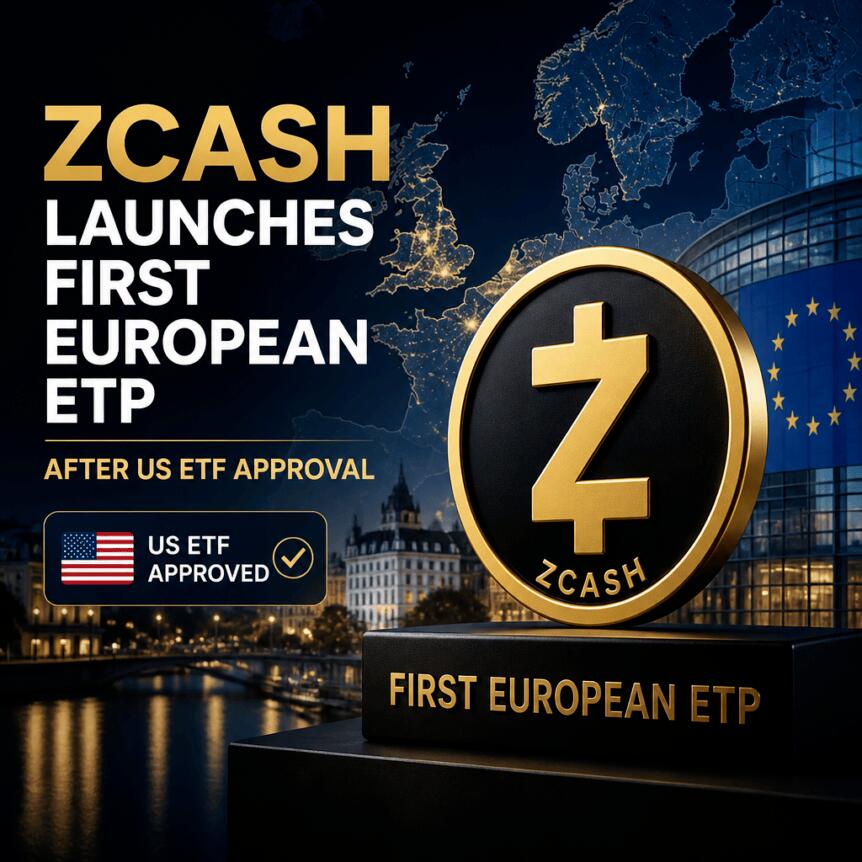
21Shares has rolled out a new set of exchange-traded products in Europe, bringing Zcash exposure to regulated Euronext markets and pairing it with a physically backed product tied to Ether.fi’s ETHFI token. The Zcash launch underscores how far privacy coins have traveled from niche infrastructure toward mainstream portfolio wrappers.
On Tuesday, the firm listed its physically backed Zcash ETP on both Euronext Paris and Euronext Amsterdam, giving investors the ability to hold Zcash-linked exposure through brokerage accounts rather than managing the cryptocurrency directly.
Key takeaways
- 21Shares listed a physically backed Zcash ETP on Euronext Paris and Amsterdam, offering ZEC exposure in a traditional investment format.
- A second physically backed ETP tracks ETHFI, the governance and utility token of Ether.fi, trading on the same Euronext venues.
- Both products charge a 2.5% annual management fee, which is higher than many comparable European crypto ETPs.
- The timing aligns with strong Zcash performance, including a recent push above $1,500 and a large gain over the past year, according to CoinMarketCap data.
- US and European product expansion is building momentum, following the earlier launch of Grayscale’s Zcash ETF on NYSE Arca.
Physically backed Zcash enters the Euronext wrapper
With the new Zcash ETP, 21Shares is effectively translating ZEC ownership into an exchange-listed product. Instead of buying and safeguarding the coin themselves, investors can access the asset through regulated trading and standard brokerage infrastructure.
The ETP is described as physically backed, meaning the product is intended to be supported by underlying Zcash holdings rather than relying on derivatives-based exposure. That structure often appeals to investors who want direct asset linkage while avoiding custody and operational complexity.
ETHFI ETP also lands in Europe
Alongside the privacy-coin listing, 21Shares introduced an ETP tracking ETHFI, associated with Ether.fi—an ecosystem that supports staking and other crypto financial services. The ETHFI product, like the Zcash offering, is physically backed and trades on Euronext Paris and Euronext Amsterdam.
For investors, the ETHFI ETP provides a similar “wrapper” experience for a token tied to a DeFi platform’s governance and utility. It also signals that ETP issuance in Europe is not limited to legacy assets such as bitcoin and ether, but is extending into tokenized access to active on-chain finance segments.
Fees: 2.5% puts both products above many peers
While the headline is new access via Euronext, the pricing details are equally important for potential buyers. Both the Zcash and ETHFI ETPs carry an annual management fee of 2.5%. The fee level stands out because it is well above what many Bitcoin– and Ether-linked investment products typically charge in Europe.
That higher fee can matter significantly for investors planning to hold over longer periods, especially in a market where alternative routes to crypto exposure—such as lower-fee ETPs or other regulated products—may be available. Investors evaluating either ETP may want to compare the total cost relative to their time horizon and expected volatility.
Zcash’s momentum revives “Bitcoin alternative” comparisons
The Euronext listing arrives during a period of renewed attention to Zcash’s market performance. The article notes that Zcash recently moved above $1,500 and was up nearly 1,100% over the past year, based on CoinMarketCap data.
That performance has also been feeding broader discussions about whether Zcash can serve as an alternative to bitcoin in certain narratives. Cointelegraph previously reported that Grayscale’s head of research, Zach Pandl, argued that Zcash could benefit from “second-mover advantages,” potentially helping it overcome Bitcoin’s entrenched network effects—an area where some earlier alternatives have struggled.
In practical terms, product listings like these often follow market interest. When an asset’s price action and institutional visibility rise together, it can create a feedback loop: regulated wrappers expand the investor base, and that expanded access can further boost attention.
Mining interest and institutional build-out
The Zcash story is not only about exchange-traded products. Mining activity has also been in focus. Cointelegraph reported that Fortitude Digital Mining said it mined about 28% of all ZEC produced in the first half of 2026, highlighting the scale of its operations on the network. The company tied its focus to Zcash’s proof-of-work model, its capped supply, and privacy features.
Meanwhile, Zcash’s move into regulated product structures is not confined to Europe. The source notes that the addition comes after the arrival of the Grayscale Zcash ETF in the United States, which trades on NYSE Arca under the ticker ZCSH. Combined with this European rollout, the trend points to a widening institutional appetite for Zcash exposure—despite ongoing debates about how privacy-oriented assets fit into regulated finance.
Investors should watch how these ETPs trade after launch—particularly whether the relatively high 2.5% fee influences demand—and whether Zcash’s recent momentum persists alongside further product announcements in other jurisdictions.

Self-proclaimed ChatGPT “co-creator” Diogo Almeida is running a viral marketing campaign for a new AI model, Jev, based on his work on the OpenAI chatbot’s core function, Reinforcement Learning from Human Feedback (RLHF).
The problem is, he’s admitting that his own invention doesn’t work well.
Almeida’s new startup, TypeSafe, emerged this month with a $40 million seed round, and a slick pitch that claimed he’d solved a problem that created during his time working on ChatGPT: AI hallucinations.
The pitch for its Jev model, however, is much less impressive and raises a few questions.
First of all, the claim that he “co-created ChatGPT” isn’t strictly true.
In fact, Almeida is the fourth of 20 listed authors on the 2022 InstructGPT paper that applied RLHF to language models. This was one research paper that ChatGPT engineers used while building the chatbot.
Relegating his role further, a footnote in that PDF marks Almeida as one of nine “primary” authors rather than a team lead.
Moreover, RLHF technology predates that paper by nearly five years and its foundational method came from six other researchers.
Read more: Viral report alleges Anthropic’s AI safety watchdog conflicted
Jev, an AI built on a résumé failure
Almeida is now attempting to launch and raise funding for Jev by admitting that his own creation, RLHF, “is not useful.”
He calls ChatGPT “unreliable without human supervision,” and he’s blamed RLHF for “mode dropping, overconfidence, and an overall lack of reliability.”
Almeida is also taking the opportunity to claim that his new AI model “can’t hallucinate.”
His claim about anti-hallucination technology, however, falls apart after even a momentary consideration.
Specifically, Jev’s supposed protection against hallucinations, according to its own documentation, is simply its option-choosing rather than sentence-writing design with a hard-coded cap of 255 options, not any particularly newsworthy code or algorithmic breakthrough.
Jev literally and quite simplistically presents itself as a simple decision selector among a limited set of options or pre-determined choices such as determining a likelihood percentage.
Because it doesn’t deliver text through a traditional chatbot, it literally cannot hallucinate because hallucinations require phrases that make sentences or factual claims.
Jev can only choose from predefined outputs and doesn’t deliver sentences that it or humans can misinterpret. Almeida therefore boasts that hallucinations in Jev are impossible by design.
Jev is days old and still in early access. It prices input tokens at $42 per billion, with output tokens momentarily free amid subsidies. Almeida claims speed, cost, and quality advantages over competitors.
Got a tip? Send us an email securely via Protos Leaks. For more informed news and investigations, follow us on X, Bluesky, and Google News, or subscribe to our YouTube channel.

Infamous entertainers Logan and Jake Paul, who are now making PR stops at the Treasury and the Department of War, are also heavily invested in gambling, AI, drones, and defense contracts, according to the website for their venture capital fund, Anti Fund.
Their portfolio includes Anduril, OpenAI, SpaceX, Kela Technologies, Polymarket, and Flock, which calls into question why they were invited to the Treasury and spoke in front of troops at the Pentagon.
Investments keep the brothers quiet
While fellow YouTubers and YouTube channels such as Benn Jordan, Donut, oompaville, and TommyG have criticized Flock and exposed issues with its surveillance cameras, Jake and Logan — who hosts a weekly podcast called Impaulsive with nearly 5 million subscribers — have remained silent about the company and its disturbing practices.
Anti Fund also invested in Kela Technologies, an Israeli defense contractor that “integrates commercial and military systems.” This could be why the brothers have completely avoided discussing the ongoing Palestinian genocide.
Read more: Paul brothers business partner claims ‘0% rug pull risk’ with new memecoin
Jake Paul says ‘America is not a spectator sport’
Jake Paul took to X after receiving a wave of backlash for appearing with numerous members of the Trump administration to tell his audience that “America is not a spectator sport,” and “Twitter fingers have never built a country.”
He failed to share what he discussed with Treasury Secretary Bessent, Secretary of War Hegseth, or Vice President JD Vance.
While the Paul brothers take aim at their critics, it’s undeniable that they’re putting their money where their mouths are: by investing in numerous companies and seeking short term profits while pouring hard cash into companies that are long-term eating away at the very fabric of American society.
Got a tip? Send us an email securely via Protos Leaks. For more informed news and investigations, follow us on X, Bluesky, and Google News, or subscribe to our YouTube channel.

What the Failure of the CLARITY Vote Means for US Lawmakers’ Reelection Bids

Rajel Nelson Shares First Clip W/ Boosie & Sevyn After Scandal

Joshua v Fury fans face chaos as Cardiff hotels gone and city booked up for Christmas




-

 Fashion4 days ago
Weekend Open Thread: Talbots – Corporette.com
-

 Tech2 days ago
Researchers escape OpenAI Codex sandbox to run commands on host
-

 Crypto World7 days ago
Robinhood engineers charged over $50K crypto scheme
-

 Crypto World4 days ago
Circle launches Arc Studio AI agent for building onchain apps
-
 NewsBeat4 days ago
Trump says US has reached an agreement to take permanent control of Greenland’s security
-

 Crypto World2 days ago
Who Needs CLARITY Anyway? ARB Could See 70X Increase: Hodler’s Digest
-

 Crypto World4 days ago
Bitcoin price breaks channel as RSI climbs to 63
-

 Crypto World6 days ago
US Charges Robinhood Engineers Over Crypto Listing Trades
-

 Crypto World4 days ago
Trading Bitcoin on Robinhood? Why 2% Spread Has Traders Worried
-

 Crypto World7 days ago
What Is the Status of the U.S.-Iran Peace Talks? Here's What Both Sides Are Saying
-

 Tech7 days ago
Webb’s IC 348 Mosaic Includes Two-Jupiter Dwarfs, Twin Jets, and a Nursery Still Making Worlds
-

 Crypto World5 days ago
Mortgage and refinance interest rates today, Thursday, September 17, 2026
-

 Crypto World4 days ago
World Money launches in 150+ countries with Stripe
-

 Entertainment7 days ago
Big Brother Update: Melody Explodes at Drew as Illness Sweeps BB28 House
-

 Crypto World4 days ago
Silver prices recover quickly, hitting weekly high today
-

 Business2 days ago
Analog Devices (ADI) Bets $1.35 Billion on Chips that Let Machines Think for Themselves
-
 NewsBeat4 days ago
US was ‘on brink of war’ with China over false AI report of nukes moving in Middle East
-

 Tech5 days ago
GPT-6 Astra Reached the Nether in Minecraft, Lost Its Stash to a Creeper, and Farmed Potatoes for Hours
-

 Crypto World1 day ago
Bitcoin price holds above $81K as key catalysts line up
-

 Business7 days ago
Federal Reserve expected to hike interest rates 25 basis points at FOMC meeting
You must be logged in to post a comment Login