
Crypto World
Institutions Are Paying Bitcoin Custodians For The Privilege Of Added Risk



Opinion by: Kevin Loaec, CEO of Wizardsardine
For decades, institutions have followed a familiar pattern when managing assets. They choose a large, regulated custodian. Then, institutions transfer responsibility. Institutions rely on the assumption that scale, compliance and insurance equate to safety.
In traditional finance, this approach holds. Transactions are reversible, central banks provide backstops and regulators can intervene. When something breaks, there are mechanisms to absorb, unwind or redistribute the damage.
Bitcoin changes those assumptions completely because it is a bearer asset. Control is defined by cryptographic keys, and not account credentials. Every single transaction is final. There is no authority that can freeze, reverse, or recover funds once they move onchain. Yet, many institutions still approach Bitcoin using the same mental model they apply to more traditional assets.
The result is a quiet contradiction. Institutions pay custodians large fees for the appearance of safety. They also accept the risks that Bitcoin was designed to mitigate.
When control is outsourced, risk concentrates
Custodial models are built on delegation. Assets are pooled. Keys are shared, abstracted or held behind layers of internal controls. Governance lives offchain. It’s enforced through policies, approvals and service agreements rather than the asset itself.
From an organizational perspective, this can feel sensible because responsibility is externalized. Liability appears contained and insurance is cited as a backstop.
Bitcoin does not recognize delegation. If keys are compromised, lost or misused, there is no external authority that can intervene. Insurance coverage is often partial, capped or conditional.
As a result, in a systemic failure, clients face the same bottleneck. There is a single custodian holding assets for many parties, with limited ability to make everyone whole.
This is not a theoretical concern. Concentrated custody creates honeypots. Honeypots attract failure. Failures can occur through technical compromise, internal error, regulatory action or operational breakdown. In Bitcoin, concentrating control does not reduce risk. It does the opposite: Risk is amplified.
The industry has already seen how this plays out. Large, centralized custody models have failed before. They’ve left consumers, businesses and counterparties tied up in lengthy recovery processes. Limited visibility, with uneven outcomes.
Governance cannot live outside the asset
The core misunderstanding is not technical. It is organizational. Institutions are accustomed to enforcing governance through accounts, permissions, emails and internal workflows. That approach works when assets themselves are controlled by intermediaries. In Bitcoin, governance that lives outside the asset is, at best, advisory.
If an institution does not control the keys, it does not control the asset. Boards and auditors are right to be wary of fragile set-ups. A model where one individual can move funds is indefensible. Regulators are also right to push back against unclear control structures.
The choice is not between a single-key wallet and full custodial outsourcing. Bitcoin allows governance to be enforced directly at the protocol level. Spending conditions, approval thresholds, delays and recovery paths can be encoded into the wallet. Control becomes structural rather than procedural. The network enforces the rules, not a vendor’s backend or a support desk.
Policy-driven custody changes the risk model
Modern Bitcoin scripting makes it possible to design custody around real organizational needs.
An institution can require multiple stakeholders to approve transactions. It can enforce time delays. It can define recovery paths if keys are lost or personnel change. It can separate day-to-day operations from emergency controls. These rules are enforced onchain, deterministically, every time. All of this fundamentally alters the risk profile.
Related: The crypto events that reshaped the industry in 2025
Instead of trusting a custodian to behave correctly under stress, institutions rely on systems that behave predictably by design. Instead of outsourcing risk to insurance policies, they reduce the likelihood of catastrophic failure in the first place. It is a matter of engineering.
The insurance narrative deserves scrutiny
Custodial insurance is often presented as the ultimate safeguard when in practice, it is frequently misunderstood. Several high-profile custody failures have shown that insurance coverage often falls short of client expectations, either due to coverage caps, exclusions or prolonged claims processes.
Large custodians insure pooled assets, and coverage limits rarely scale linearly with assets under custody. Exclusions are also common and payouts depend largely on the nature of the incident, and the custodian’s internal controls. In a systemic event, insurance does not eliminate risk, it distributes a fraction of it.
By contrast, individually controlled, policy-driven Bitcoin wallets are far easier to underwrite. Risk is isolated, controls are transparent and failure scenarios are bounded. For insurers, this is a simpler and more predictable model. The process of insurance works best when it complements strong controls, not when it compensates for their absence.
Sovereignty is operational, not philosophical
Vendor dependence introduces another layer of institutional risk that is not often known. Custodial outages, policy changes, or regulatory interventions can leave funds temporarily inaccessible. Exiting a custodian relationship can be slow, expensive and operationally complex, particularly for organizations operating across jurisdictions.
In practice, this has already happened through withdrawal freezes, compliance-driven access restrictions and service outages that left clients unable to move assets precisely when timing mattered most.
With onchain, open-source custody systems, the software provider is not the gatekeeper. If a service disappears, the institution retains control. Interfaces can change and providers can be replaced. The asset remains accessible because control lives on the blockchain, not inside a company’s infrastructure. This is not an argument against service providers but an argument for removing them from the critical path of asset control.
Trust the protocol, not the promise
Bitcoin offers institutions something rare: the ability to hold a high-value asset with rules that are transparent, enforceable and independent of any single counterparty.
Yet many institutions still prefer familiar narratives over structural safety. Log-in screens feel safer than scripts. Brands feel safer than math, and insurance sounds safer than prevention.
This level of comfort can come at a huge cost.
Institutions should not pay for the illusion of safety while absorbing unnecessary counterparty risk. Bitcoin allows governance, recoverability and control to be built directly into how assets are held. The technology is mature. The tools exist.
What remains is the willingness to abandon custody models that belong to a different financial system.
Opinion by: Kevin Loaec, CEO of Wizardsardine.
This opinion article presents the author’s expert view, and it may not reflect the views of Cointelegraph.com. This content has undergone editorial review to ensure clarity and relevance. Cointelegraph remains committed to transparent reporting and upholding the highest standards of journalism. Readers are encouraged to conduct their own research before taking any actions related to the company.

Crypto World
Pendle Joins Wall Street Giants to Shape Vietnam’s International Financial Center Future

TLDR:
- Pendle’s TN Lee represented DeFi alongside Wall Street giants at Vietnam’s Deputy Prime Minister meeting in New York.
- Vietnam is building sandbox models for both permissioned and permissionless tokenized assets to attract global capital.
- Tokenized bonds, ETFs, and private credit were central to discussions about Vietnam’s emerging financial infrastructure.
- Pendle’s inclusion signals DeFi protocols now hold a credible seat at the highest institutional financial policy tables.
Pendle joined some of Wall Street’s most powerful institutions to shape Vietnam’s financial future. TN Lee represented the protocol in New York alongside Deutsche Bank, Morgan Stanley, BlackRock, Franklin Templeton, and Anchorage Digital.
The delegation met with Vietnam’s Deputy Prime Minister to discuss the country’s ambitions for an International Financial Center. The meeting positioned Pendle as a credible voice for decentralized finance at the highest institutional levels.
Wall Street and DeFi Unite Around Vietnam’s Tokenization Potential
Pendle’s inclusion in the New York delegation alongside Wall Street’s biggest names was far from accidental. Vietnam’s leadership deliberately assembled a group spanning both traditional finance and emerging digital asset sectors.
The goal was to build a comprehensive case for Vietnam as a next-generation financial hub. That mix of institutions signals a broad and serious commitment to the country’s financial development.
TN Lee spoke directly to Vietnam’s potential as a market for tokenized bonds, ETFs, and private credit. As noted by @pendle_fi, Lee also made a strong case for the depth of talent Vietnam has to offer.
These points landed before an audience of institutional heavyweights rarely found in the same room as DeFi protocols. The moment reflected how significantly the tokenization conversation has shifted within mainstream finance.
Vietnam’s government is actively constructing the regulatory infrastructure to match its ambitions. Sandbox models covering both permissioned and permissionless assets are currently on the table.
That dual approach reflects a measured yet forward-thinking posture toward digital financial markets. Wall Street institutions present in the room clearly responded to this structured regulatory direction.
The meeting also reinforced that Vietnam is not simply watching the tokenization trend from a distance. Its leadership is making deliberate and targeted moves to attract global financial partners.
Bringing together Deutsche Bank, BlackRock, and Pendle under one policy conversation shows the breadth of that strategy. Each institution brings a different layer to what Vietnam is trying to build.
Pendle Positions Itself as DeFi’s Voice in Institutional Finance Discussions
Pendle’s seat at the table alongside Wall Street giants marked a turning point for DeFi’s role in formal financial policy. Traditional institutions have long dominated these high-level government discussions, without representation from blockchain.
That dynamic shifted visibly in New York when TN Lee addressed Vietnam’s Deputy Prime Minister directly. It established Pendle not just as a participant but as an advocate for the entire DeFi sector.
According to @pendle_fi, the protocol views Vietnam’s brightest days in decentralized finance as still ahead. That long-term perspective aligns with how Wall Street institutions typically approach emerging market opportunities.
Pendle is not entering Vietnam for short-term positioning but for sustained strategic involvement. This approach mirrors the patient capital mindset that major financial institutions bring to frontier markets.
Vietnam’s talent base emerged as a recurring point throughout the delegation’s discussions in New York. Skilled professionals across blockchain, finance, and technology are already driving adoption within the country.
That human capital argument carries significant weight with institutions assessing long-term market viability. Wall Street partners look beyond regulation to the people who will ultimately build and operate these systems.
Moving forward, the sandbox frameworks Vietnam develops will determine how quickly tokenized products reach the market. Pendle is already embedded in that process as an early and active participant.
Its presence alongside Morgan Stanley, Franklin Templeton, and Anchorage Digital has set a clear precedent. DeFi protocols can and will play a role in shaping the financial infrastructure of tomorrow’s emerging markets.

The Canadian government has moved to formally ban political donations made in crypto.
Filed March 26 as part of Bill C-25, the amendment to the Canada Elections Act aims to permanently close potential channels for untraceable foreign funding.
Canada Proposes Severe Penalties Up to $100,000 for Defaulters
The legislation prohibits cryptocurrency contributions for partisan activities, advertising, and election surveys. The ban is also being extended to money orders and prepaid payment products due to traceability concerns.
“No chief agent of a registered party, financial agent of a registered association, official agent of a candidate or financial agent of a nomination contestant or leadership contestant shall accept a contribution that is in the form of [digital assets],” the filing stated.
The ban blankets the entire political ecosystem, including parties, associations, candidates, leadership campaigns, and third parties.
Under the new rules, political agents must return any cryptocurrency donation to the contributor or destroy the asset within 30 days.
If the assets cannot be returned, third parties are required to liquidate them into fiat currency and surrender the funds to the chief electoral officer, who will then forward the amount to the Receiver General for Canada.
The penalties for noncompliance are severe. Violators who knowingly accept crypto donations face fines reaching twice the value of the offending contribution. Corporations involved in these activities face an even stiffer penalty: an automatic $100,000 fine in addition to the double-value penalty.
Meanwhile, Canada’s policy shift is not occurring in a vacuum. The legislation closely mirrors a recent UK government move to ban cryptocurrency donations to political parties.
These countries’ moves stand in stark contrast to the United States, where the crypto lobby has entirely financialized the political landscape.
The US crypto industry has already deployed over $273 million to influence the outcome of the forthcoming midterm elections, according to data tracked by Follow The Crypto.
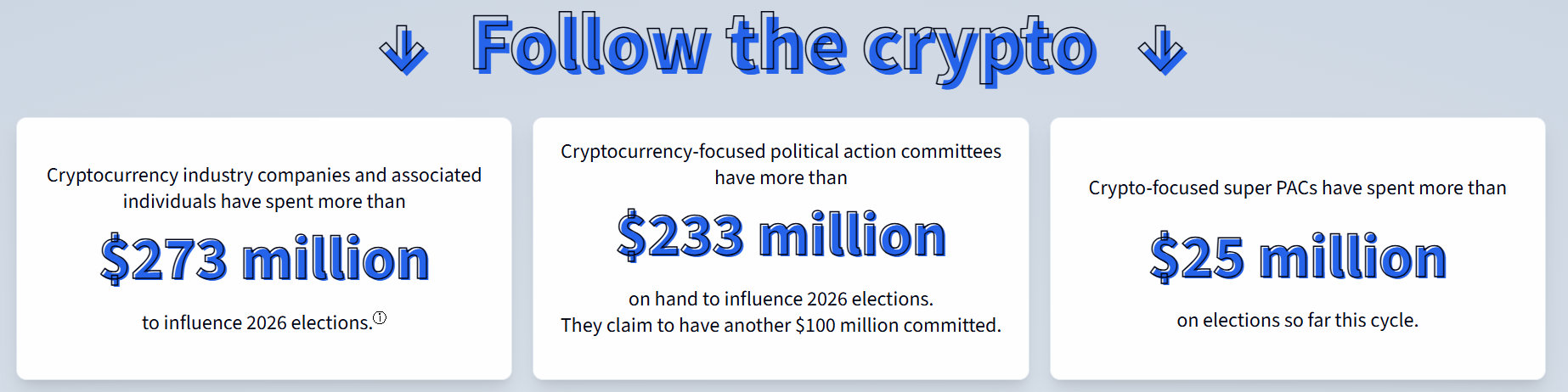
The divergence highlights a fundamental difference in political mechanics. In the US, crypto heavyweights like Coinbase and the Fairshake super PAC are using their corporate war chests to run sophisticated ad campaigns backing pro-crypto candidates.
If passed, Bill C-25 ensures Canada’s electoral system will remain firmly insulated from the digital asset arms race currently defining its southern neighbor.
The post Canada Moves to Shut Crypto Out of Election Financing appeared first on BeInCrypto.
Crypto World
Linea Ends Direct EVM Arithmetization, Moves to RISC-V to Match Ethereum’s Proving Roadmap
TLDR:
- Linea’s shift to RISC-V reduces instruction complexity from EVM’s full opcode set to roughly 40 instructions.
- Every Ethereum hard fork previously forced complete rewrites of Linea’s ZK constraint modules under the old system.
- RISC-V enables Type-1 Ethereum compatibility automatically through standard compiler tooling, replacing manual constraint work.
- Linea retains zkC, Vortex, and Arcane in the new stack, preserving years of cryptographic research and production experience.
Linea, the Ethereum Layer 2 network developed by ConsenSys, is transitioning from direct EVM arithmetization to a RISC-V-based proving architecture.
The team spent three years building one of the most rigorous ZK proving systems in production. That work produced a 1,000-page specification that became an ecosystem reference.
However, the approach created maintenance challenges that slowed progress. The move to RISC-V marks a strategic reset focused on performance, modularity, and Ethereum alignment.
A Simpler Instruction Set Changes Everything
The EVM operates with a complex, dynamic state model that is difficult to translate into mathematical constraints. RISC-V, by contrast, offers approximately 40 instructions and 32 registers.
That simplicity makes traces narrower and allows the prover to start working on proof chunks immediately. The performance gains are structural, not incremental.
Every Ethereum hard fork previously required complete rewrites of Linea’s constraint modules. That maintenance burden consumed significant research capacity.
The team was managing complexity instead of advancing cryptographic performance. Switching to RISC-V removes that cycle entirely.
Type-1 Ethereum compatibility was another major obstacle under the old architecture. Achieving it required implementing Keccak, RLP, and the Merkle Patricia Trie manually inside constraints.
With RISC-V, a standard EVM client compiles directly to a RISC-V binary, and the compiler handles compatibility automatically.
Linea’s cryptographic researcher Alexandre Belling presented the transition at the eth_proofs conference. As Linea posted on X, the team is moving toward “true modularity,” where every layer can be independently benchmarked, audited, or replaced. That was not achievable with the tightly coupled system previously in use.
The Ethereum Foundation has also committed to RISC-V as part of its proving layer roadmap. Linea cited this as a deciding factor. Continuing on the previous path would have meant diverging from Ethereum’s long-term technical direction.
What Carries Forward Into the New Stack
Linea is not discarding years of work. The team’s constraint-native language, zkC, will be used to write the RISC-V virtual machine. Vortex and Arcane, which handle proving and aggregation, are architecture-independent and transfer directly.
Formal verification is being built into the new system from the start. Constraints are being designed for export to tools like Lean. That approach makes the stack auditable by a much wider audience than before.
Linea also retains full-stack ownership across its infrastructure. That includes the Besu execution client, the Maru consensus layer, the ZK prover, and the gateway. No critical third-party dependencies exist in the architecture.
As Linea noted in a follow-up post on X, direct EVM arithmetization was “difficult to audit without deep cryptographic expertise.”
RISC-V is widely taught, well documented, and supported by a growing developer ecosystem. The shift makes the proving stack accessible beyond Linea’s internal team.
The transition positions Linea as an early mover in a space where the broader Ethereum ecosystem is now converging.
Years of production proving experience now apply to a simpler, faster architecture. The team has indicated more technical details will follow in the coming weeks.
Developers from Gnosis and Zisk, with backing from the Ethereum Foundation, have proposed a new framework aimed at unifying Ethereum’s fragmented layer-2 ecosystem by enabling rollups to interact seamlessly with each other and the mainnet in a single transaction.
According to an announcement shared with Cointelegraph, the proposed “Ethereum Economic Zone” (EEZ) would allow smart contracts on different rollups to execute synchronously across networks without relying on bridges.
The initiative targets a key trade-off in Ethereum’s scaling strategy, where dozens of layer-2 networks have improved throughput but split liquidity, infrastructure and user activity across separate environments.
If implemented, the framework would let applications share infrastructure across rollups while settling back to Ethereum, reducing duplication and the need for cross-chain transfers.
The project is being developed together with Ethereum researchers and industry participants, with early contributors including infrastructure providers and DeFi protocols exploring a shared standard for interoperable rollups.
Technical details and performance benchmarks are expected in the coming weeks as the group begins outlining how the framework would be implemented and adopted across the broader Ethereum ecosystem.
The proposal also introduces an “EEZ Alliance,” a group of ecosystem participants seeking to coordinate standards and support adoption as Ethereum’s scaling architecture continues to evolve.
Gnosis is an early Ethereum infrastructure developer. Zisk is a zero-knowledge proving project led by Polygon zkEVM creator Jordi Baylina.
Related: Bitcoin’s quantum-resistance lag may become Ethereum’s bull case: Nic Carter
Ethereum’s rollup model sparks debate over fragmentation and scaling
The proposal comes amid an ongoing debate within the Ethereum community over the trade-offs of its rollup-centric roadmap. While layer-2 networks have expanded the ecosystem’s capacity, they have also split liquidity and user activity across separate environments.
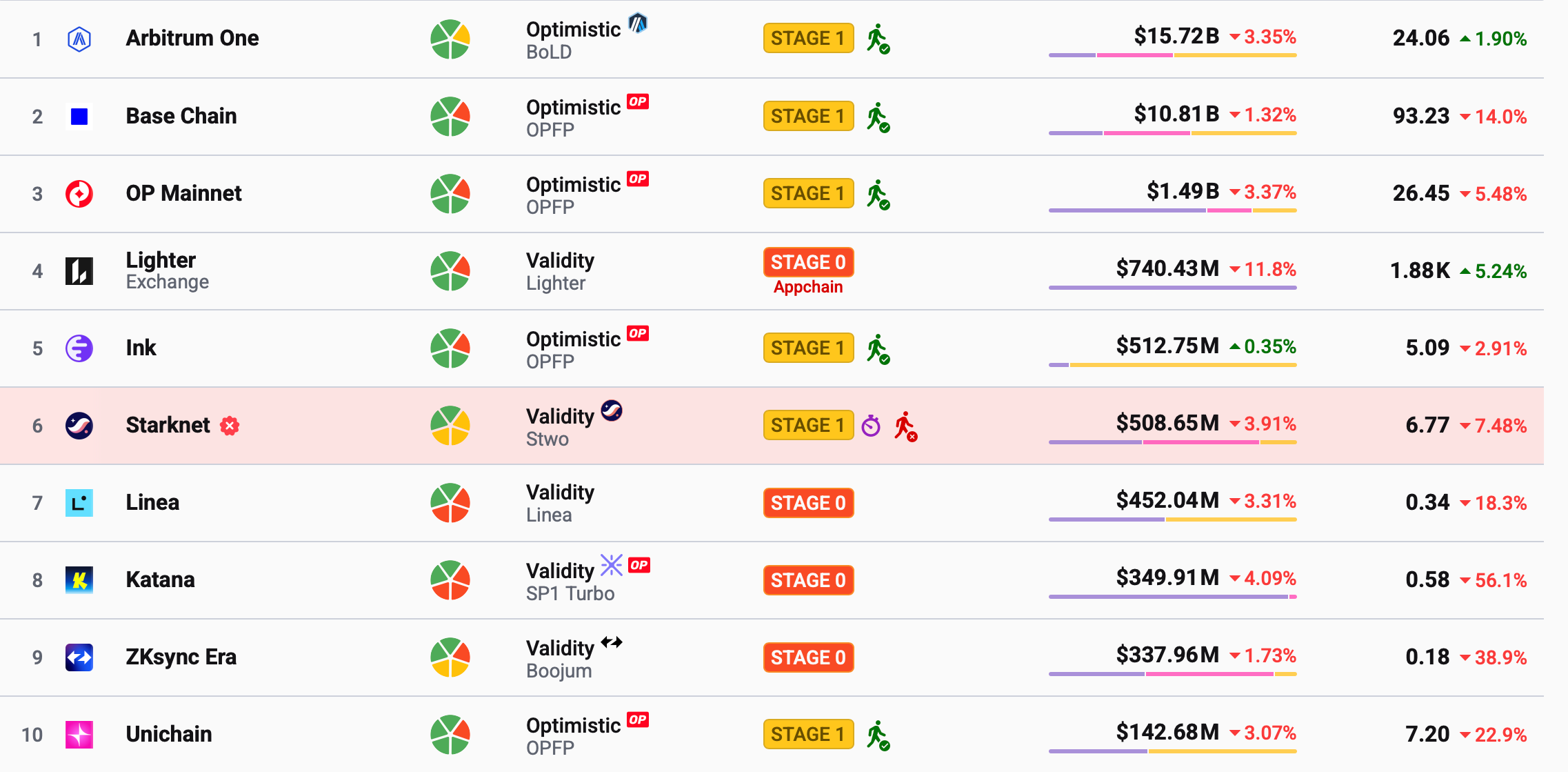
Data from L2BEAT shows more than 20 active layer-2 networks securing nearly $40 billion in total value, with liquidity distributed across networks such as Arbitrum, Base and Optimism. Rather than consolidating activity, Ethereum’s scaling model has created a landscape of parallel execution environments.

Ethereum co-founder Vitalik Buterin has raised concerns about the design of some layer-2 networks, pointing to centralized sequencers and trusted bridging mechanisms as potential weak points.
“The original vision of L2s and their role in Ethereum no longer makes sense, and we need a new path,” Buterin said in a Feb. 3 X post, indicating the ecosystem may need to rethink how rollups contribute to Ethereum’s scaling model.
Buterin’s comments drew mixed reactions from layer-2 builders, reflecting a divide over the future role of rollups.
Karl Floersch, co-founder of Optimism, acknowledged that L2s must evolve beyond simple scaling, citing ongoing technical limitations, while Steven Goldfeder, co-founder of Offchain Labs, the developer behind Arbitrum, argued that scaling remains a core function as rollups continue to handle higher transaction throughput than Ethereum itself.

Magazine: Nobody knows if quantum secure cryptography will even work
TLDR:
- Nakamoto Inc. stock dropped 99.38%, falling from a peak of $34.77 to just $0.226 per share.
- The company raised over $740M to buy 5,398 BTC at an average price of around $118,000 per coin.
- Unrealized Bitcoin losses reached roughly $280M as prices pulled back from the company’s buy levels.
- A related-party deal issued 363.6M new shares, nearly doubling share count and deepening investor losses.
Nakamoto Inc. (NAKA) has lost nearly all its market value after a series of financial moves tied to its Bitcoin treasury strategy.
The stock, formerly trading under KindlyMD, peaked at $34.77 in May 2025. It now trades at just $0.226. The company raised over $740 million to accumulate Bitcoin at near-cycle highs. The result has been a 99.38% decline and roughly $23.6 billion in erased shareholder value.
How the Bitcoin Buying Strategy Led to Heavy Losses
Nakamoto Inc. rebranded in early 2026 under CEO David Bailey as a Bitcoin treasury company. The company modeled its approach after MicroStrategy’s well-known Bitcoin accumulation strategy. However, the execution raised concerns from the start.
The company raised capital through share dilutions and convertible notes to fund its Bitcoin purchases. It acquired 5,398 BTC at an average price of approximately $118,000 per coin. As Bitcoin pulled back from those levels, the position moved deeply into the red.
The company now sits on roughly $270 million to $280 million in unrealized losses. Those losses reflect the gap between the average purchase price and current Bitcoin market prices. The timing of the purchases proved costly for shareholders.
Bailey publicly dismissed criticism of the company’s direction. He described outside concerns as noise and maintained confidence in the strategy. Meanwhile, shareholders continued to absorb the financial weight of those decisions.
Related-Party Deals and Share Dilution Deepen the Damage
Beyond Bitcoin losses, a separate transaction drew further scrutiny. Nakamoto used its already-depressed stock to acquire BTC Inc. and UTXO Management. Both companies were also founded by Bailey himself.
The deal issued 363.6 million new shares to complete the acquisition. That issuance nearly doubled the total share count in a single transaction. Existing shareholders saw their stakes reduced significantly as a result.
Short seller Jim Chanos publicly described the transaction as “Theater of the Absurd.” His comment drew attention to the related-party nature of the deal. The transaction benefited entities closely connected to the CEO.
The combination of Bitcoin losses and aggressive dilution created a compounding effect on the stock. Each move reduced shareholder value further. Together, they contributed to one of the sharpest corporate stock declines in recent crypto history.
The Nakamoto Inc. case has drawn attention across the crypto investment community. It raises questions about governance, timing, and the risks of replicating Bitcoin treasury models. Not every company that adopts this approach will produce the same results as MicroStrategy.
Crypto World
DeepSnitch AI’s 210% Rally Ahead of Launch as XRP Triangle Breaks & Ethereum Slips Below $2K

In the largest crypto news, Bitcoin ETFs just logged $171 million in single-day outflows as institutions hedged weekend geopolitical risks, dragging Bitcoin below $70,000. Yet, with March net inflows still at $1.36 billion, institutions are tactically repositioning.
Retail traders typically lack the tools to see these shifts coming. DeepSnitch AI is designed to close this critical information gap.
Raising $2.6 million through market turbulence and securing 210% presale gains, DSNT provides the real-time intelligence that everyday investors need to stay ahead. The March 31st Uniswap listing is just two days away. The opportunity to secure your position is closing fast.
Bitcoin ETFs log biggest outflows in 3 weeks
In the latest crypto news, US spot Bitcoin ETFs just suffered $171 million in single-day outflows as institutions tactically hedged against weekend geopolitical risks in the Middle East. This pre-emptive de-risking dragged Bitcoin below $70,000.
However, the underlying institutional bid remains fiercely intact. With March net inflows still a massive $1.36 billion positive, smart money is actively buying the dip rather than abandoning the asset, showing incredible resilience despite a 46% correction from the $126,198 all-time high.
While institutions use prime brokerage tools to seamlessly reposition during chaos, retail traders are often left reacting too late. DeepSnitch AI closes this gap, surfacing real-time sentiment shifts and whale movements so you can position ahead of the crowd.
Top 3 cryptocurrencies to buy amid today’s crypto news
DeepSnitch AI
When institutions need to hedge weekend geopolitical risk, they don’t guess – they utilize multi-million-dollar prime brokerage infrastructure to instantly reposition, triggering events like the recent $171 million in Bitcoin ETF outflows. Retail traders, however, usually rely on lagging headlines, only realizing a massive market move occurred after they are already on the wrong side of the trade.
DeepSnitch AI (DSNT) was built specifically to close this institutional information gap. With the March 31st Uniswap launch just two days away, the final presale opportunity at $0.04669 is rapidly shutting down. The $2.6 million raised is driven by real, active utility.
While the community is enthusiastically projecting 300x to 1000x returns post-launch, it is important to ground our expectations in reality: more than 100x is almost impossible in a bear market. For now, the project’s sustainable value is its live technology.
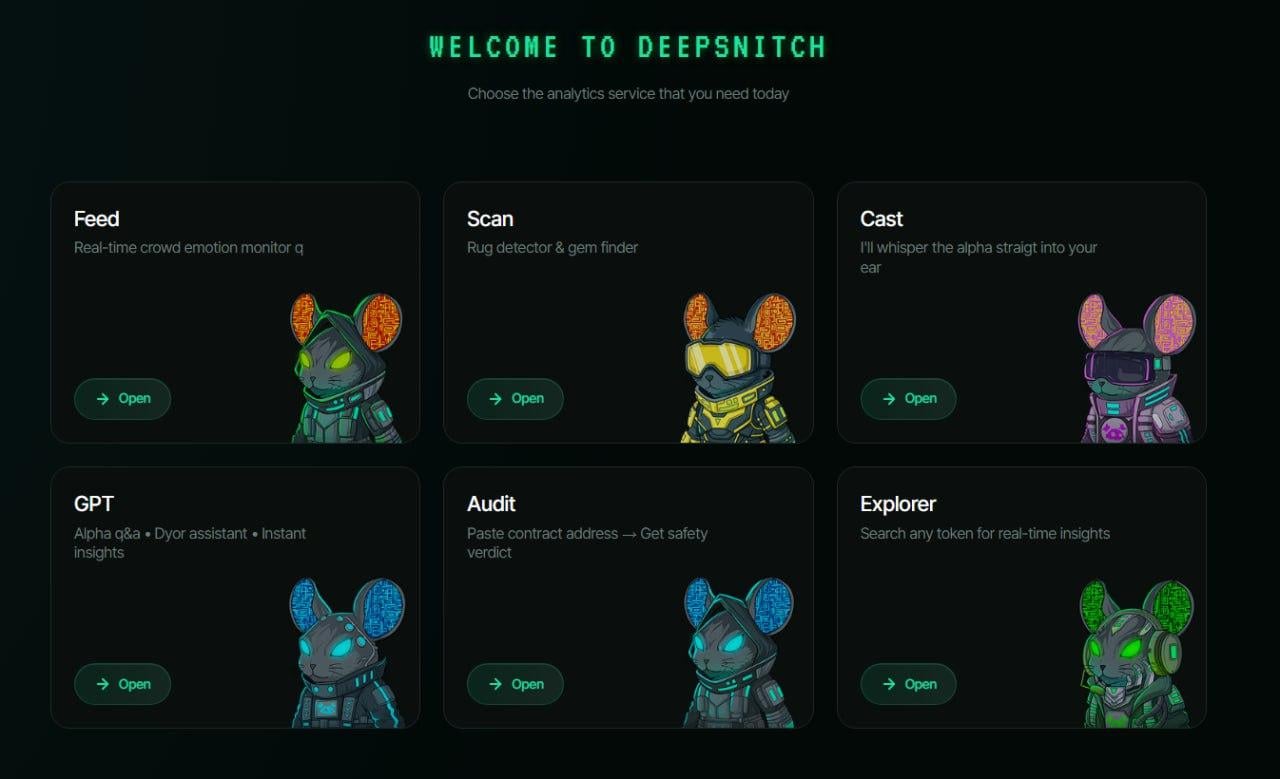
As the masses scramble during market corrections, DSNT’s five live AI agents run continuously. Accessible without any technical expertise, they identify breakout tokens, audit smart contracts for hidden risks, and track real-time sentiment shifts before prices react. Institutions have Bloomberg terminals to navigate chaos; everyday investors now have DeepSnitch AI.
XRP
XRP traded near $1.34 on March 27 with a precarious technical setup. Its ascending triangle just invalidated, exposing targets at $1.27 amid a highly fragile futures market.
However, the fundamental picture is staggering: whales are sustaining $9 million in daily accumulation, their longest streak since early 2025.
While XRP whales quietly accumulate, the presale market’s strongest signal is even clearer.
DeepSnitch AI (DSNT) has raised $2.6 million amid extreme market fear for an intelligence product that traders already use daily.
Ethereum
Ethereum broke below the $2,000 psychological support on March 27, trading near $1,975 and triggering over $111 million in long liquidations. With the 50-day SMA shattered, the path of least resistance remains strictly downward.
The structural demand picture is concerning. Ether’s Apparent Demand hit a 16-month low, and spot ETFs have suffered seven consecutive days of outflows totaling $391.8 million.
While Ethereum’s recovery thesis requires a massive reversal in institutional flows, DeepSnitch AI (DSNT) does not. With its March 31st Uniswap listing just two days away, DSNT’s launch is definitively fixed, regardless of broader market conditions.
Closing thoughts
The macro environment is doing what it always does: creating chaos. Bitcoin ETFs saw $171 million in single-day outflows over geopolitical fears, XRP’s triangle just invalidated, and Ethereum broke $2,000 amid continuous ETF bleeding. This turbulence triggers liquidations and leaves retail traders scrambling for clarity.
DeepSnitch AI (DSNT) was built for exactly this. Information asymmetry costs traders money daily; survival depends on seeing shifts before they happen. Raising $2.6 million straight through a 46% Bitcoin correction and global panic, DSNT provides five live AI agents tracking real-time sentiment, whale movements, and contract risks.
The March 31st Uniswap listing is exactly 48 hours away. Secure your intelligence edge before the open market takes over.
Visit the official DeepSnitch AI website, join Telegram, and follow on X for more updates.
FAQs
What is the biggest crypto news today as Bitcoin ETFs log their largest outflows in three weeks?
US spot Bitcoin ETFs shed $171M Thursday on Middle East military deployment fears, yet March inflows remain $1.36B positive, signaling institutional repositioning rather than structural exit. The retail investors who can read those moves before prices react are the ones who position ahead of the crowd. That is the gap DeepSnitch AI closes.
What does today’s crypto news reveal about XRP and Ethereum’s near-term price outlook?
XRP’s ascending triangle invalidated with $1.27 as the next target, though sustained whale accumulation at $9 million per day since February 27 provides the strongest fundamental signal in that market. Ethereum broke $2,000 with apparent demand at a 16-month low and seven consecutive ETF outflow days, putting $1,800 in multiple analysts’ sights.
What does today’s crypto news mean for retail investors still searching for ground-floor opportunities?
DeepSnitch AI at $0.04669 is the clearest answer: $2.6M raised through extreme fear, five live AI agents tracking the market-moving signals that triggered Thursday’s institutional hedging, and a March 31st Uniswap listing days away. The information gap that costs retail traders money every day is exactly what DSNT was built to close.
Disclaimer: This is a Press Release provided by a third party who is responsible for the content. Please conduct your own research before taking any action based on the content.


The latest version of the crypto bill Clarity Act is in the spotlight mostly because of its stablecoin rules. In practice, it may land hardest on decentralized finance (DeFi) and tokens tied to it, according to a report by 10x Research.
At the center of the proposal is a ban on offering yield — or anything resembling it like rewards — on stablecoin balances. That effectively ends the idea of stablecoins as onchain savings products and redefines them as pure payment rails.
“This represents a clear re-centralization of yield,” wrote Markus Thielen, founder of 10xResearch. This is because the proposal pulls back yield into banks, money market funds and regulated wrappers, leaving crypto-native platforms with less room to compete on returns.
That shift could also hit DeFi, despite early hopes it might benefit.
The logic was that if centralized platforms can’t offer yield, users would move onchain, Thielen said.
But that assumes DeFi escapes the same rules. In practice, the Clarity framework is likely to extend into front-end interfaces and token models, especially where fee generation or governance starts to resemble equity, he said.
That puts a wide swath of the sector in focus. Decentralized exchanges like Uniswap (UNI), and dYdX (DYDX), as well as lending protocols like Aave and , could face tighter constraints around how they operate and distribute value, the report argued. The result could be lower volumes, reduced liquidity and weaker token demand.
On the other hand, the proposed regulation is “structurally bullish” for infrastructure players like Circle (CRCL) as it embeds stablecoins deeper into payment rails, Thielen said.
TLDR:
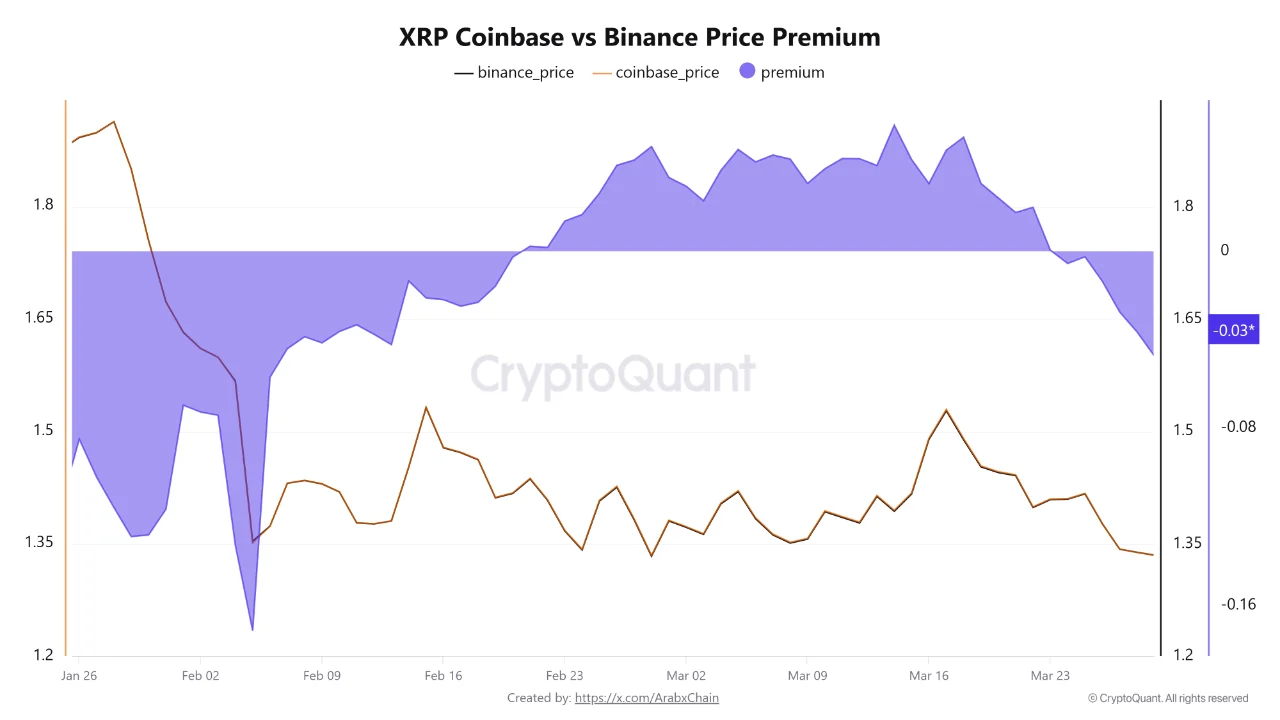
- XRP’s Coinbase Premium turned negative at -0.0364, marking a clear shift from mid-March positive readings.
- The premium held between +0.04 and +0.05 from March 10–22, reflecting strong U.S. institutional demand.
- A steady decline began March 23, pointing to reduced Coinbase buying pressure and weakening momentum.
- Higher XRP prices on Binance suggest retail investors outside the U.S. are now leading buying activity.
The XRP Coinbase Premium has shifted into negative territory, marking a clear change in market dynamics. The indicator compares XRP prices between Coinbase and Binance.
It had held positive levels from March 10 through March 22. A steady decline then began on March 23. The latest reading stands at -0.0364, pointing to reduced institutional buying on Coinbase and a broader shift in short-term market behavior.
Premium Held Positive Ground Through Mid-March Trading
The XRP Coinbase Premium maintained relatively elevated levels during mid-March trading sessions. Between March 10 and March 22, the indicator approached values between +0.04 and +0.05.
During this period, XRP prices remained stable, trading above the $1.35–$1.40 range. This positive spread reflected stronger demand from U.S.-based and institutional investors on Coinbase.
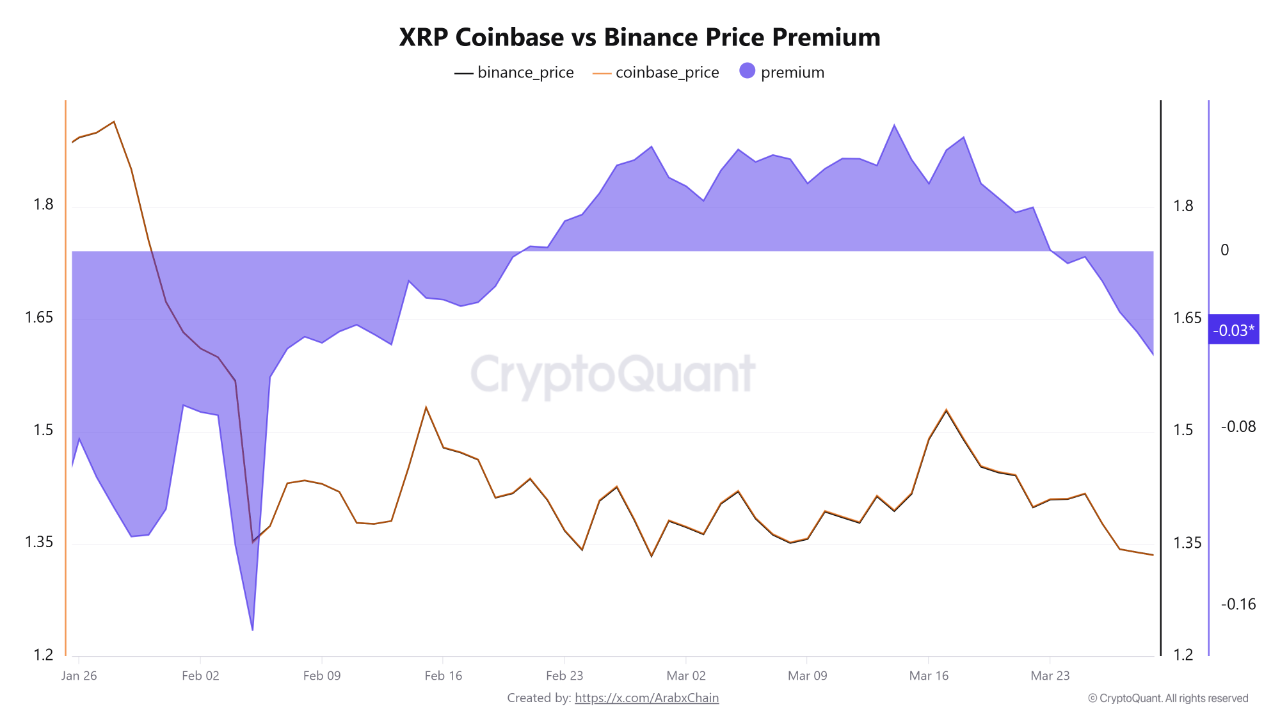
Source: Cryptoquant
A positive premium reading generally means Coinbase prices are higher than Binance prices. This pattern is widely associated with institutional buying interest and U.S. investor confidence.
Throughout that stretch, the market showed consistent demand from larger participants. The indicator moved within a clear positive range without major disruptions.
As trading progressed into late March, however, the premium began losing momentum gradually. The decline started on March 23 and has continued without any notable reversal since then.
Each passing session brought the indicator closer to the zero line. The sustained downward movement marked the beginning of a clear trend change.
By the time the premium crossed into negative territory, the market had already shifted its footing. The transition was not sudden but rather a gradual erosion of positive momentum.
Traders and analysts tracking this indicator closely noted the pattern early. The reading at -0.0364 confirmed the shift that had been building over several days.
Negative Premium Points to Shifting Liquidity and Retail Activity
A negative XRP Coinbase Premium means XRP is now priced lower on Coinbase than on Binance. This reversal carries weight in how analysts interpret institutional versus retail demand.
When Coinbase prices fall below Binance prices, it often reflects reduced U.S.-based buying pressure. The current reading supports this interpretation.
The higher XRP price on Binance points to increased retail buying activity outside the United States. This shift shows that liquidity may be moving away from institutional-heavy platforms toward retail-driven ones.
It does not necessarily mean the broader market is collapsing. However, it does reflect a change in who is currently driving buying activity.
Analysts note that a negative premium reading is often viewed as an early sign of continued selling pressure. It can also point to the market entering a correction phase in the near term.
If the indicator remains in negative territory, it may weaken institutional momentum further. The next few sessions will be closely watched for any signs of reversal.
Should the negative trend persist, the XRP market could face continued price pressure in the short term. The movement of liquidity to other platforms adds another layer of uncertainty.
Market participants will monitor whether institutional demand returns to Coinbase. Any shift back to positive territory would suggest a change in the current trend.
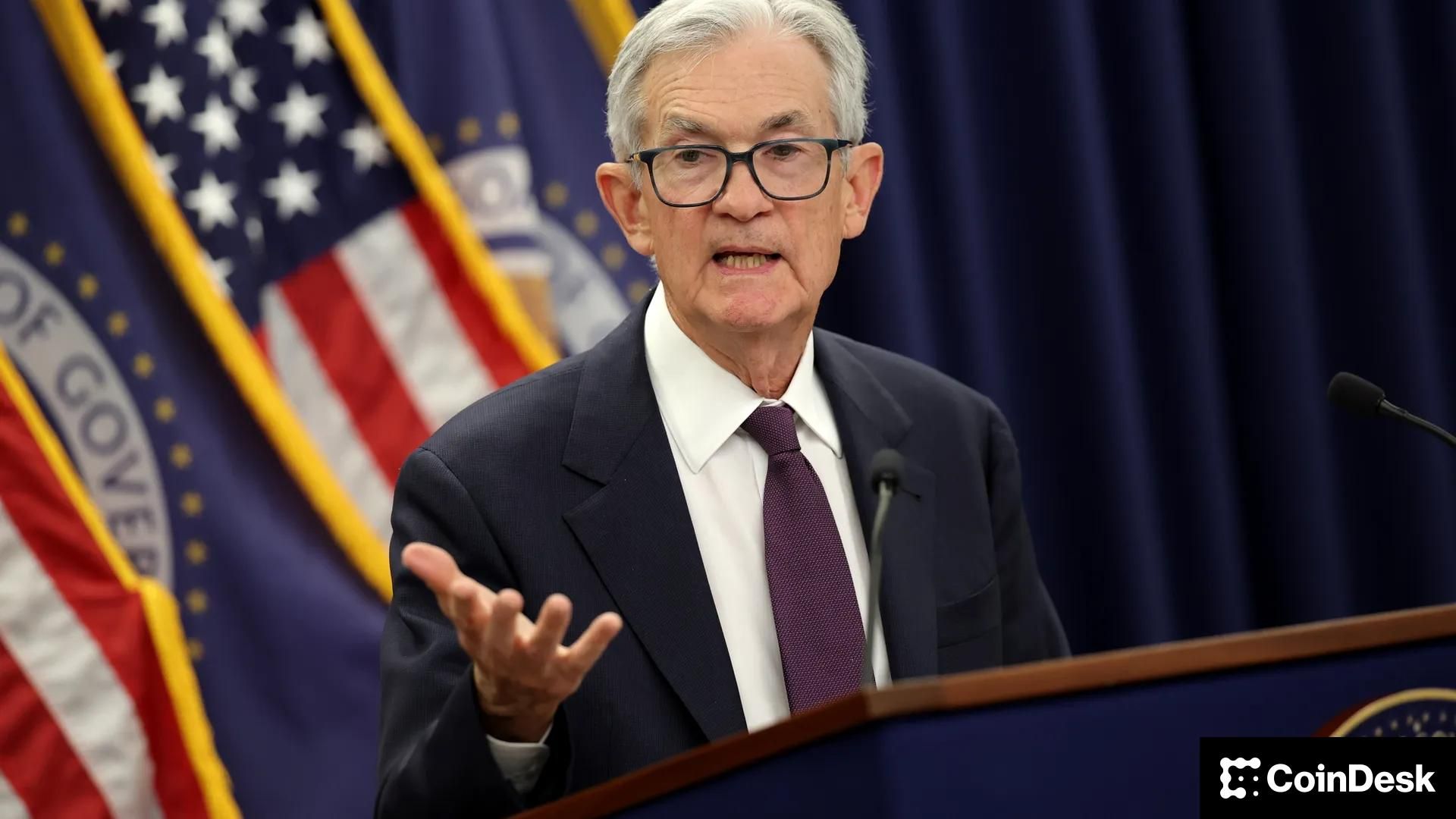
A “180” hardly does justice to the recent shift in market expectations regarding central bank monetary policy.
Expecting multiple Federal Reserve rate cuts in 2026 just weeks ago, markets have seriously begun to price in rate hikes this year.
Current pricing on CME FedWatch Tool shows nearly a 30% chance that the fed funds rate will be higher to end the year than its current level of 3.50%-3.75%. The odds that rates might go lower, meanwhile, have crashed to 2.9%.
The shift has been driven largely by renewed inflation fears tied to energy markets. Since the escalation of tensions in the Middle East at the end of February, the price of Brent Crude oil has risen from about $70 per barrel to its current level of $111. That’s helped send yields at the long end of the Treasury curve sharply higher, the 10-year yield rising to the current 4.40% from below 4% weeks ago.
“Food and energy prices are tragically going to climb and remain high for a while, at least until the utter mess of Middle East shipping is sorted out,” according to Crypto is Macro Now Newsletter. “Even if a peace deal were to be agreed tomorrow (unlikely), that would take months at best.”
Even prior to oil’s gains, inflation was still running well above the Fed’s 2% target. Core inflation in February came in at a 2.5% year-over-year pace and has not fallen below that 2% level since April 2021.
Longer-term inflation expectations remain above target as well, with 5-year and 10-year measures at 2.5% and 2.3%, respectively, suggesting markets expect inflation to exceed the Federal Reserve’s mandate beyond the immediate term.
“The US economy as a whole will, of course, benefit from higher energy prices as it is a net exporter,” Crypto is Macro Now continued. “And military spending will shoot up to replenish hardware, adding further stimulus. Both sectors should help keep GDP from dropping sharply.”
Bitcoin outperforms, but there’s more to the story
Still holding in the $65,000-$70,000 area, bitcoin , by holding roughly steady, has — on paper — outperformed since the start of the Iran war.
Gold, for instance, is lower by about 20% since the U.S. attacks began, while the Nasdaq on Friday entered correction territory by falling more than 10% from its 2026 highs.
But consider what came prior. Gold at the start of March was in the midst of a historic run higher, its price more than doubling over the preceding year. The Nasdaq, too, was near a record high, up 50% from its April 2025 lows. Bitcoin, meanwhile, was down about 50% from its early October 2025 record.
Taken on anything but the shortest of time frames, bitcoin continues to sizably underperform key assets like stocks and gold.
Crypto World
Jane Street vs. Terraform Labs: How One Federal Lawsuit Is Putting Crypto Market Makers on Trial
TLDR:
- Terraform’s wind-down trust sued Jane Street in February 2026 over alleged insider trading during the 2022 Terra collapse.
- A Jane Street-linked wallet allegedly withdrew 85M UST after Terraform quietly pulled 150M UST from Curve’s 3pool.
- The complaint invokes the Commodity Exchange Act and Rule 10b-5, applying traditional anti-fraud law to crypto markets.
- Binance has already updated market-maker guidelines, banning wash trading, profit-sharing deals, and undisclosed arrangements.
Jane Street vs. Terraform Labs is now one of the most closely watched legal battles in crypto history. Filed in Manhattan federal court in February 2026, the lawsuit pits Terraform’s court-appointed wind-down administrator against one of Wall Street’s most sophisticated trading firms.
The complaint accuses Jane Street of insider trading, fraud, and market manipulation during the May 2022 Terra collapse.
Jane Street has denied all wrongdoing. Regardless of outcome, the case is already forcing a hard industry reckoning.
The Clash at the Center of the Case
Jane Street vs. Terraform Labs traces back to the catastrophic May 2022 collapse of TerraUSD and Luna. The Terra ecosystem lost roughly $40 billion in market value within days.
The algorithmic stablecoin’s peg to the dollar broke, triggering a death spiral that shook the entire crypto market. That collapse is now the backdrop for a dispute over who knew what and when.
Terraform’s wind-down trust alleges Jane Street used material nonpublic information to exit UST positions at a precise moment.
The complaint claims Jane Street gained that access through direct and indirect contacts with Terraform insiders, including a private chat referred to in reporting as “Bryce’s Secret.”
While Jane Street allegedly unwound exposure, Terraform and the Luna Foundation Guard were buying billions of UST to defend the peg. Those purchases exceeded 1.9 billion UST between May 8 and May 10 alone.
The complaint adds a specific detail that sharpens the allegation considerably. A Jane Street-linked wallet withdrew around 85 million UST from Curve’s 3pool shortly after Terraform quietly pulled 150 million UST from the same pool.
That sequence sits at the core of the insider trading theory. Jane Street disputes this framing entirely and calls the lawsuit “a desperate attempt to shift blame for a multibillion-dollar fraud that Terraform itself created.”
Why This Case Could Reshape Crypto Market Making
Jane Street vs. Terraform Labs is significant because it applies established securities and commodities law to crypto market-making conduct.
The complaint invokes the Commodity Exchange Act, CFTC Rule 180.1, and Exchange Act Rule 10b-5. That legal structure treats the alleged behavior not as a crypto anomaly but as conventional fraud and manipulation.
Market makers like Jane Street provide liquidity by continuously quoting prices across trading venues. That role narrows spreads and improves execution for ordinary participants.
The problem arises when a firm’s edge stems from insider access rather than analytical skill or technological capability.
As one industry analysis framed it, the case asks whether sophisticated liquidity providers were “stabilizing the room or trading against it.”
“Crypto has often celebrated sophisticated liquidity providers as the adults in the room,” one widely circulated commentary noted. This lawsuit challenges that reputation directly.
It asks whether some of that activity operated with too little transparency and too much informational privilege, particularly during the most fragile moments of a market crisis.
Regulatory and Industry Consequences Taking Shape
The Jane Street vs. Terraform Labs dispute arrives as United States regulators are advancing a more coordinated digital-asset oversight framework in 2026.
The case hands policymakers a vivid, well-documented example of alleged market-maker misconduct. That makes the argument for tighter conduct standards considerably easier to advance publicly.
Binance has already moved in this direction by publishing updated market-maker guidelines. The exchange now bans wash trading, coordinated sell-offs, one-sided liquidity behavior, and guaranteed-profit arrangements with market makers.
Projects must also disclose market-maker identities and contract terms directly to the platform, and violating firms face blacklisting.
Traders and investors should watch whether the case survives early dismissal and what discovery eventually surfaces. They should also track whether regulators cite the lawsuit in formal policy consultations or market-structure proposals.
If that happens, the case’s reach extends well beyond the courtroom. The central question the industry now faces is stark: “when markets are opaque and information is unevenly shared,” are the most sophisticated players stabilizing crypto or exploiting it?

Reform activist accuses party of ‘sewer’ politics in resignation letter

Taylor Decker opens up on Detroit Lions divorce

S’pore digital publication RICE Media gets acquired


-
 NewsBeat4 days ago
Manchester United reach agreement with Casemiro over contract clause amid transfer speculation
-

 News Videos4 days ago
Parliament publishes latest register of MPs’ financial interests
-

 Sports6 days ago
Remo Stars and Kano Pillars Strengthen Survival Hopes in NPFL
-

 Sports6 days ago
Gary Kirsten Accuses Pakistan Cricket Board Of ‘Interference’, Mohsin Naqvi Responds
-

 Tech7 days ago
Give Your Phone a Huge (and Free) Upgrade by Switching to Another Keyboard
-

 Tech7 days ago
AI enters the chat: New Seattle dating app relies on tech to facilitate meaningful human connections
-

 Business3 days ago
Instagram, YouTube Found Responsible for Teen’s Mental Health Struggle in Historic Ruling
-

 News Videos6 days ago
Ch 9 Financial Management Part 1 | Detailed One Shot | Class 12 Business Studies Boards 2026
-

 NewsBeat2 days ago
The Story hosts event on Durham’s historic registers
-
 NewsBeat4 days ago
Tesco is selling new Cadbury Dairy Milk bar and people can’t wait to try it
-

 Tech6 days ago
Samsung will soon let you control smart home devices from your car’s dashboard
-

 Sports7 days ago
2026 Kentucky Derby horses, odds, futures, preview, date: Expert who hit 12 Derby-Oaks Doubles enters picks
-
 Entertainment19 hours ago
Lana Del Rey Celebrates Her Husband’s 51st Birthday In New Post
-
 Entertainment6 days ago
Cynthia Bailey Dishes on ‘RHOA’ Season 17, Discusses Kandi
-
 NewsBeat6 days ago
Colombian military plane with 110 soldiers onboard crashes following takeoff
-

 Fashion5 days ago
Does It Matter What You Wear When You’re Laid Off and Looking?
-

 Business5 days ago
More women enter wealth management, but few in advisory roles: study
-

 Sports4 days ago
Fantasy Baseball Week 1 Preview: Top sleeper hitters for both five- and 12-day period led by Munetaka Murakami
-

 Politics6 days ago
How Media Platforms Balance Performance and Accessibility in Image Delivery
-
 NewsBeat5 days ago
NASA Artemis II Astronauts enter 14-Day quarantine as moon rocket reaches launchpad
You must be logged in to post a comment Login