

Business
Bristol Myers Squibb’s Camzyos shows promise in adolescent trial



Heliostar Metals: The Early Stages Of A Burgeoning Gold Producer


The Pioneer Of Seeking Alpha’s BAD BEAT Investing, Quad 7 Capital is a team of 7 analysts with a wide range of experience sharing investment opportunities for nearly 12 years. They are best known for their February 2020 call to sell everything & go short, & have been on average 95% long 5% short since May 2020. The broader company has expertise in business, policy, economics, mathematics, game theory, & the sciences. They share both long & short trades & invest personally in equities they discuss within their investing group BAD BEAT Investing, focused on short- & medium-term investments, income generation, special-situations, & momentum trades. Rather than just give you trades, they focus on teaching investors to become proficient traders through their playbook. Their goal is to save you time by providing in depth, high-quality research, with crystal clear entry and exit targets. They have a proven track record of success.Benefits of BAD BEAT Investing include: Learning how to understand the pinball nature of markets, executing well-researched written trade ideas each week, use of 4 chat rooms, receive daily complimentary key analyst upgrade/downgrade summaries, learning basic options trading, & extensive trading tools. If you would like to learn more, click the link above!
Analyst’s Disclosure: I/we have a beneficial long position in the shares of PDI, JEPI, PDO, MLPI either through stock ownership, options, or other derivatives. I wrote this article myself, and it expresses my own opinions. I am not receiving compensation for it (other than from Seeking Alpha). I have no business relationship with any company whose stock is mentioned in this article.
BAD BEAT Investing and Quad 7 Capital offers research and writes opinion columns. By using our service you understand and acknowledge that there is a very high degree of risk involved in trading securities and, in particular, in trading options, including the entire loss of principal. Use of the service, our research columns, the chat service, and any other tools and the information contained herein is not intended to be a source of advice with respect to the material presented, and the information and/or documents contained in this website do not constitute investment advice. All users of the site are encouraged to consult with a personal financial advisor. No personal investment advice is being made, nor will be given. This content does not take into account your particular investment objectives, financial situation, or needs and is not intended as recommendations appropriate for you. You must make an independent decision regarding investments or strategies mentioned in this content. Before acting on information in this content, you should consider whether it is suitable for your particular circumstances and strongly consider seeking advice from your own financial or investment advisor. It does not take account of your objectives or your financial situation. You alone are solely responsible for determining whether any investment, security or strategy, or any other product or service, is appropriate or suitable for you based on your investment objectives and personal and financial situation and for evaluating the merits and risks.
Seeking Alpha’s Disclosure: Past performance is no guarantee of future results. No recommendation or advice is being given as to whether any investment is suitable for a particular investor. Any views or opinions expressed above may not reflect those of Seeking Alpha as a whole. Seeking Alpha is not a licensed securities dealer, broker or US investment adviser or investment bank. Our analysts are third party authors that include both professional investors and individual investors who may not be licensed or certified by any institute or regulatory body.


Apart from my academic training in Biology and Chemistry, I hold a Ph.D. in Environmental Science with a specialization in Bio-Medical Waste Management. My areas of research and analysis include clean technologies, renewable energy, pollution control systems, and environmental compliance solutions. I follow companies operating in these sectors using a research-driven approach that integrates regulatory trends, sustainability metrics, and scientific evaluation to assess long-term growth opportunities, risks, and value potential. By actively tracking and analyzing companies engaged in environmental management, renewable energy, and green technologies, my work aims to blend scientific depth with market analysis to provide practical insights that help investors understand financial outcomes and emerging opportunities. At a personal level, I also provide free stock market consultation to a select group of friends, relatives, and former colleagues. I am associated with Seeking Alpha analyst Eudaemon Research.
Analyst’s Disclosure: I/we have no stock, option or similar derivative position in any of the companies mentioned, and no plans to initiate any such positions within the next 72 hours. I wrote this article myself, and it expresses my own opinions. I am not receiving compensation for it (other than from Seeking Alpha). I have no business relationship with any company whose stock is mentioned in this article.
Seeking Alpha’s Disclosure: Past performance is no guarantee of future results. No recommendation or advice is being given as to whether any investment is suitable for a particular investor. Any views or opinions expressed above may not reflect those of Seeking Alpha as a whole. Seeking Alpha is not a licensed securities dealer, broker or US investment adviser or investment bank. Our analysts are third party authors that include both professional investors and individual investors who may not be licensed or certified by any institute or regulatory body.
Business
Bausch + Lomb Corporation (BLCO) Discusses Project Halo and Myopia Control Developments in Vision Care – Slideshow (NYSE:BLCO) 2026-06-01


Seeking Alpha’s transcripts team is responsible for the development of all of our transcript-related projects. We currently publish thousands of quarterly earnings calls per quarter on our site and are continuing to grow and expand our coverage. The purpose of this profile is to allow us to share with our readers new transcript-related developments. Thanks, SA Transcripts Team
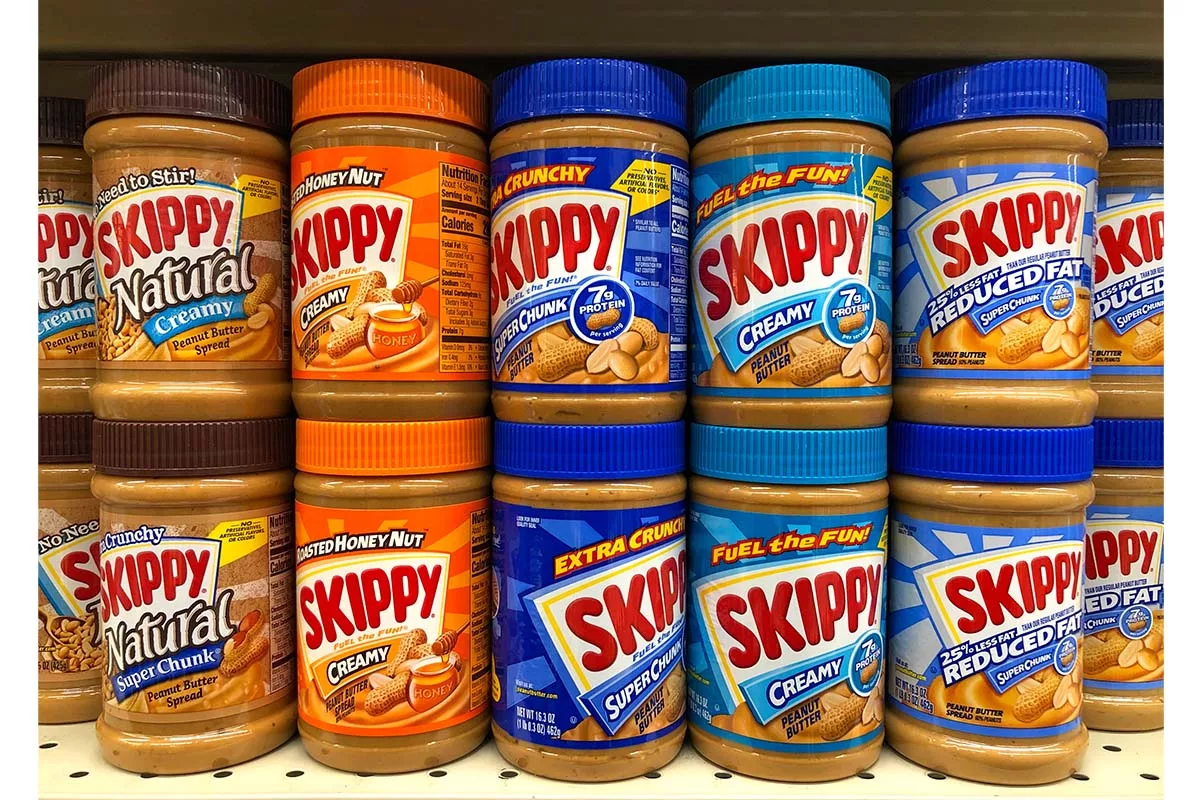

Quarterly volume falls 2% in second quarter.

UBS managing director and senior portfolio manager Jason Katz discusses whether the biggest gains from the AI boom are already behind investors and opportunities in consumer stocks on ‘Varney & Co.’
A finance expert is urging investors to look beyond the artificial intelligence trade after a massive rally in technology stocks, arguing that future market gains may come from other areas of the economy.
UBS Managing Director and Senior Portfolio Manager Jason Katz joined FOX Business’ “Varney & Co.” host Stuart Varney to discuss market leadership, the outlook for consumers and where investors may find opportunities if enthusiasm around AI begins to cool.

The New York Stock Exchange (NYSE) in New York, New York. (Michael Nagle/Bloomberg / Getty Images)
Artificial intelligence has driven much of the stock market’s gains over the past several years as companies race to build data centers, expand computing capacity and develop new AI-powered products. The surge has helped lift major technology stocks and fuel broader optimism on Wall Street.
FOX Business host Charles Payne discusses the market shift driven by artificial intelligence on ‘Making Money.’
But Katz suggested investors may need to adjust expectations after the sector’s rapid run-up.
“AI has taken all the air out of the room, and with good reason,” Katz said. “But this rally is astounding. There isn’t a single cautionary tone or voice out there.”
HOW ETFS CAN BE EFFECTIVE BUILDING BLOCKS FOR RETIREES
While Katz said he is not predicting a major downturn, he noted that investors may be waiting for the next catalyst as markets assess factors, including energy prices and corporate earnings.
Hennion & Walsh Asset Management President and CIO Kevin Mahn joins ‘Mornings with Maria’ to weigh the strength of the AI-driven market rally as experts debate whether oil prices are headed lower or could spike amid Middle East tensions.
Katz pointed to consumer discretionary stocks as a potential area to watch, noting they have significantly lagged the broader market this year despite the importance of consumer spending to the U.S. economy.
The discussion comes as Americans continue to closely monitor fuel costs and other household expenses. Katz argued that lower oil prices could provide meaningful relief for consumers.
WORKERS FACE GROWING ‘AUTOMATION ANXIETY’ AS TECH LAYOFFS SURGE, AI ADOPTION ACCELERATES
“For every dollar that that consumer is not spending at the pump, she’s spending at shopping… Hopefully, we see the consumer step up to the plate, and we believe that will be the case.” Katz said.

People walk by a McDonald’s restaurant on March 11, 2026 in Las Vegas, Nevada.
Kevin Carter | Getty Images
McDonald’s on Monday unveiled its latest global growth strategy to help the fast-food giant become customers’ first choice as it faces new rivals and consumer spending stretched by high gas prices.
A new restaurant design, better tasting food and drinks, consumer-led innovation and improved customer service are the four cornerstones of the new plan, which the company calls “McDonald’s > NEXT.”
Executives made the announcement at McDonald’s biennial Worldwide Convention for franchisees, held this year in Las Vegas. The chain released its last global strategy, known as “Accelerating the Arches,” in November 2020 as its sales bounced back from the pandemic.
The growth plan comes as restaurants compete for a smaller pool of customers, and a new crop of chains, like Raising Cane’s and 7 Brew Drive Thru Coffee, threaten McDonald’s sales. So far, McDonald’s, the largest U.S. restaurant chain by revenue, has managed to hold onto its dominant spot, with four straight quarters of same-store sales growth.
“Traditional competitors are upgrading their menus, and a new wave of specialists are emerging and redefining taste and quality across chicken, beef, and beverages,” McDonald’s CEO Chris Kempczinski wrote in a memo to the chain’s global system.
“In a world where every restaurant is a swipe away, there is no such thing as second place,” he added.
To become diners’ first option, McDonald’s plans to focus on menu innovation that elevates taste and quality, like improvements to its McCrispy chicken line. For years, the chain has sought to improve and expand its chicken offerings as rivals like Chick-fil-A stole its customers. Plus, Americans have been eating more chicken than beef for the last 16 years, due to health concerns tied to red meat consumption and higher beef prices, according to U.S. Department of Agriculture data.
“We’re raising the bar for our menu by improving quality and consistency at scale and innovating in spaces where we see growth potential and know matter to our customers, like chicken, beef and beverages,” said Jill McDonald, the chain’s global chief restaurant experience officer.
The chain also wants to “co-create” with customers, by listening more closely to what consumers want and how they interact with brands. Recent examples include the popularity of its viral Grimace milkshake and its collaboration with “A Minecraft Movie.”
The new restaurant design will give McDonald’s a recognizable look, but it should also ease employee headaches and improve kitchen operations. The company said back-end systems will be more intuitive and connected, for example.
McDonald’s is also testing automated order taking at five U.S. restaurants using a system it named ARCHY to let employees focus on other tasks. More broadly, the chain also said it wants to “redefine hospitality” by improving customer service and training employees to interact more with diners.
In September, the company will hold an investor day that will include more details about the strategy and relevant financial targets.

ImmunityBio presents ANKTIVA data at ASCO meeting

Penguin Solutions: A Great Run, But The Easy Money Has Been Made (Downgrade)

Citing superior earnings compounding potential and more attractive risk-reward dynamics at current valuations, analysts are explicitly tilting toward larger private sector banks.
Shrikant Chouhan, Head of Equity Research at Kotak Securities, highlights this tactical preference by stating that while the favorable operating momentum is likely to continue because they do not see any significant near-term fundamental headwinds, they currently prefer leading private sector banks since they offer a more attractive risk-reward profile at current valuations.
The record books
By every financial metric, FY26 was a watershed year for government-owned banks. Finance Ministry data shows aggregate PSU bank net profit rose 11.1% year-on-year to a historic high of ₹1.98 lakh crore, the fourth straight year of aggregate profitability for the sector. Gross advances grew 15.7% to ₹127 lakh crore, while aggregate deposits climbed 10.6% to ₹156.3 lakh crore, reflecting what the ministry described as continued depositor confidence and strong resource mobilisation.Asset quality, once the sector’s Achilles heel, has been transformed. The gross NPA ratio fell to 1.93% as of March 31, 2026, and the net NPA ratio to 0.39%, levels that now match or beat several private sector peers. Every single PSB maintained a provisioning coverage ratio above 90%. Fresh slippages continued to decline, with the slippage ratio at 0.7% for FY26, and total recoveries, including from written-off accounts, reached ₹86,971 crore.
What drove FY26 and why it may not repeat
Chouhan identifies two structural tailwinds that powered last year’s performance. First, PSU banks gained loan market share from private sector peers because they operated with lower credit-deposit ratios at a time when deposit growth was a key industry-wide constraint, giving them the balance sheet flexibility to grow their loan books faster. Second, substantial recoveries from legacy stressed assets provided a meaningful boost to profitability that supported both earnings growth and valuation re-rating across several PSU bank stocks.

But both tailwinds are now largely played out. There simply isn’t as much legacy stress left to recover from, and the deposit-ratio advantage has narrowed. “While the favourable operating momentum is likely to continue, as we do not see any significant near-term fundamental headwinds, we currently prefer leading private sector banks,” Chouhan says.
The earnings divergence that matters most
Motilal Oswal’s banking team lays out the starkest version of the divergence case. Over FY26–28, they project private banks to deliver earnings at roughly a 21% CAGR against just 8% for PSU banks, a gap of more than 2.5 times. Net interest income is expected to follow a similar split, with private banks delivering around a 17% CAGR against 13% for state-owned lenders. For the full banking coverage universe, Motilal Oswal estimates a 15% earnings CAGR over the period, modestly ahead of consensus expectations of 14%. Their top picks for the cycle: ICICI Bank, HDFC Bank, State Bank of India, and AU Small Finance Bank. SBI is the only PSU bank to make the cut.
Among private banks, Motilal Oswal expects mid-sized players to outperform on earnings, supported by improving net interest margins, easing stress in unsecured portfolios, and relatively stable credit costs driven by better asset quality trends.
The NIM problem
Elara Securities’ Prakhar Agarwal flags one of the sector’s most pressing structural concerns heading into FY27: the erosion of low-cost current and savings account deposits. “Sustained pressure points on low-cost deposits mean incremental growth will be funded by retail term and wholesale deposits, which will have pressure points on spreads,” he says. Some banks have already raised deposit rates, and incremental spreads are narrowing.
Agarwal argues that FY27 will favour banks with strong liability franchises and robust balance sheets. Large private banks with mid-teen returns on equity are best positioned to compound earnings even without a valuation re-rating. For smaller, less differentiated lenders, the combination of geopolitical uncertainty, margin compression, and tighter deposit competition could prove a difficult test. “Given near-term uncertainty, we prefer larger private banks with mid-teen ROE, justifying a case for earnings compounding if not for valuation re-rating,” he says.
Axis Direct’s Dnyanada Vaidya stops short of writing off the PSU bank space entirely. Most larger government-owned banks have maintained a 1% return on assets, a threshold that has historically supported strong stock performance, and the asset quality outlook remains constructive with no visible headwinds to credit costs. “Over the medium term, we expect PSU banks to replicate the performance of larger private banks on credit growth, while maintaining stable loan-to-deposit ratios,” she says.
But she flags the same NIM headwind: with the cost of funds having bottomed and the Reserve Bank’s rate-cut cycle underway, margin pressure is likely to persist near-term. Banks will need to reprice select lending segments to offset the squeeze, a process that takes time and carries execution risk. Her preference within the PSU space: SBI, and SBI alone.
(Disclaimer: Recommendations, suggestions, views and opinions given by the experts are their own. These do not represent the views of The Economic Times)

Heliostar Metals: The Early Stages Of A Burgeoning Gold Producer

Japan Ruling Party Advances Crypto ETFs Yen-Denominated Stablecoins

Euphoria’s Adewale Akinnuoye-Agbaje on If Maddy, Alamo Had Sex

Steven Gerrard disagrees with Gary Neville over ‘shock’ Chelsea and Arsenal claim | Football

US brings back mandatory military draft registration

Register Renaming | Hackaday

It’s 4 DAYS AWAY!!! XRP WHALES ARE GOING TO BUY NEWS!!!

How Much Money Does He Make from the Gold Dust He Has Been Saving? #shorts #gold #viral #money

All Banking Exam in 2026 | Banking & Financial Awareness | GA Practice Set-164 I By Chandan Sir
-

 NewsBeat5 days ago
Israel says it has killed new Hamas military leader in Gaza City airstrikes
-

 Tech6 days ago
NASA taps Blue Origin to deliver lunar rovers for Moon Base initiative
-

 Sports7 days ago
2026 NBA Finals schedule, odds: Knicks await Thunder or Spurs after winning East
-

 News Videos6 days ago
XRP *JUST* SUCCEEDED!!!! CLARITY ACT EXPOSED!!! (SHE EXPOSED IT)
-

 News Videos3 days ago
This is BROKEN! INSANE 5x MONEY CAR WASH WEEK! The NEW GTA Online UPDATE Today! (GTA5 New Update)
-
 Crypto World6 days ago
Micron Crosses $1 Trillion Market Cap as AI Demand Reshapes Memory Sector
-

 Business6 days ago
Selena Gomez Reportedly Upset Over Benny Blanco’s Comments on Her ‘Terrible’ Diet
-

 Business7 days ago
Nikkei 225 Surges Past 65,000 for First Time as Iran Peace Hopes Fuel Record Rally
-
 Tech7 days ago
China assigns ID codes to 28,000+ humanoid robots
-

 Tech4 days ago
Waymo dominates autonomous vehicle registrations as Tesla trails behind
-
 Entertainment7 days ago
‘Breaking Bad’ Star’s Easy-to-Binge 6-Part Crime Series Spin-Off Is Finally Heading to Free Streaming
-
 Tech2 days ago
SpaceX just won a second Golden Dome contract. This one is $4.16 billion.
-

 Tech5 days ago
The Samsung pay deal is the moment Korean unions changed register
-

 Entertainment6 days ago
Days of our Lives 2-Week Spoilers May 25-June 5: Gwen Rages, Abe Confesses & 2 Tragic Anniversaries!
-

 News Videos3 days ago
SHE IS KILLING XRP!!! WATCH URGENT AND ACT FAST
-
 NewsBeat3 days ago
FIRST NIGHT REVIEW: Take That bring the Circus back to life in spectacular sun-soaked style
-
 Entertainment7 days ago
Taylor Swift Fans Label Travis Kelce’s Beer-Chugging A ‘Red Flag
-

 Tech6 days ago
Millions of AI agents imperiled by critical vulnerability in open source package
-
Crypto World5 days ago
SpaceX’s $2 Trillion IPO: Why Tech Giants Nvidia (NVDA), Apple (AAPL), and Microsoft (MSFT) May Face Pressure
-
Crypto World3 days ago
CFTC Has Approved the First Regulated Bitcoin Perpetual Contract in the U.S.
You must be logged in to post a comment Login