
Crypto World
Iran turns Strait of Hormuz into $1-per-barrel Bitcoin tollbooth



Iran will charge tankers $1 per barrel in bitcoin to cross the Strait of Hormuz during a two‑week US ceasefire, adding a crypto tax to the world’s key oil chokepoint.
Summary
- Iran will charge ships $1 per barrel in crypto to cross the Strait of Hormuz during a two-week US ceasefire.
- Tankers must disclose cargo by email, then get only seconds to pay in bitcoin before passage is cleared.
- The move comes as oil prices whipsaw below $100 amid a fragile truce over a chokepoint that once carried about 20% of global supply.
Iran will force every oil tanker transiting the Strait of Hormuz during the new two-week ceasefire with the US to pay a $1-per-barrel toll in cryptocurrency, turning the world’s most sensitive oil chokepoint into a de facto bitcoin paywall. According to the Financial Times, Tehran will demand that shipping companies settle the fee in digital assets, primarily bitcoin, as it seeks hard-to-trace revenues while sanctions bite. Hamid Hosseini, spokesperson for Iran’s Oil, Gas and Petrochemical Products Exporters’ Union, said the system is designed to slow traffic on Iran’s terms and tighten control over what moves through the corridor.
Under the scheme, tankers must first email Iranian authorities with detailed cargo manifests before entering the strait. Hosseini told the Financial Times that once the email is received and Tehran completes its assessment, “vessels are given a few seconds to pay in bitcoin, ensuring they can’t be traced or confiscated due to sanctions.” He added that “everything can pass through, but the procedure will take time for each vessel, and Iran is not in a rush,” underscoring that the stated aim is to prevent weapons shipments during the pause in fighting. With typical crude cargoes ranging from 500,000 to 2 million barrels, a single transit could mean crypto payments of $500,000 to $2,000,000 per voyage.
Ceasefire, crypto and a global oil lifeline
The toll comes as Washington and Tehran test a fragile truce that hinges on a partial reopening of the Strait of Hormuz, which before the war carried roughly a fifth of the world’s seaborne oil. A senior Iranian official told Reuters that Iran could reopen the strait “limited, under Iran’s control” as early as Thursday or Friday, ahead of talks with US officials in Pakistan. Oil markets have already reacted: Brent futures slid about 13% to roughly $94.76 per barrel and US benchmark WTI dropped more than 15% to around $95.79 after President Donald Trump agreed to the two-week ceasefire, conditional on the “immediate and safe” reopening of the strait.
In Washington, Trump has floated turning the tolls themselves into a joint business model. “We’re thinking of doing it as a joint venture,” he told ABC News’s Jonathan Karl, calling it “a way of securing it — also securing it from lots of other people. It’s a beautiful thing.” That suggestion follows earlier musings that the US could impose its own tolling regime on ships using the strait, effectively monetizing a corridor where even a $1-per-barrel surcharge is a small fraction of crude trading in the mid-$90s but represents a new geopolitical tax on a market still reeling from weeks of war-driven price spikes.

Crypto World
Ceasefire lifts bitcoin, but animal spirits may not return just yet: Crypto Daybook Americas
The crypto market is back on the front-foot after a two-week ceasefire between the U.S. and Iran removed some of the geopolitical uncertainty and sent oil prices tumbling. Still, energy market dynamics are such that it may be too early to assume the return of animal spirits to risk assets.
Bitcoin has jumped 3% to $71,600 in the past 24 hours while ether (ETH), XRP (XRP), and solana (SOL) have all gained more than 5%. The CoinDesk 20 Index has outperformed bitcoin, rising 4.2 percent, which is typical when altcoins outpace the market leader.
Oil has plunged after Iran agreed to open the Strait of Hormuz, a key route for global shipments. WTI crude futures trading on NYMEX are down nearly 16 percent to $95 a barrel. When crude drops sharply, inflation fears ease, Fed rate hike calls weaken and crypto tends to rally.
Supporting the move is a drop in bitcoin and ether 30-day implied volatility, which measures market fear. Since the debut of spot ETFs two years ago, these numbers have evolved into VIX-like metrics, spiking during sell-offs and calming as panic fades.
The mood could get another lift later if Morgan Stanley’s bitcoin ETF debuts with strong volumes and inflows on day one. That would reinforce the story of institutional adoption.
“The recent pattern has been institutional demand showing up again through ETFs. When inflows are present, dips are bought faster and the market holds higher levels even when momentum cools,” Marex said.
Still, there are reasons to be cautious. The overnight rally was partly fueled by short positions being unwound after traders betting on a U.S.-Iran escalation got caught off guard. Shorts worth $431 million were liquidated in 24 hours, the largest since March 4, according to Coinglass. In cases like this, the market often chugs along waiting for fresh demand. Without it, gains can quickly reverse.
While oil is down to $85, it’s still $30 higher than before the conflict started on Feb. 28. Moreover, the ceasefire is temporary and not a permanent fix and for oil to drop further, hormuz tanker traffic and insurance rates need to normalize to pre-war levels.
“This remains a pause rather than a durable settlement, with the ceasefire conditional on how Iran manages passage through Hormuz over the coming weeks,” QCP Capital said. “That caution matters because the physical damage narrative has not gone away.”
Until then, oil could stay near $100 and keep risk assets like crypto in check. Stay alert.
What’s trending
Read more: For a comprehensive list of events that would be shaping up this week, see CoinDesk’s “Crypto Week Ahead“.
Today’s signal

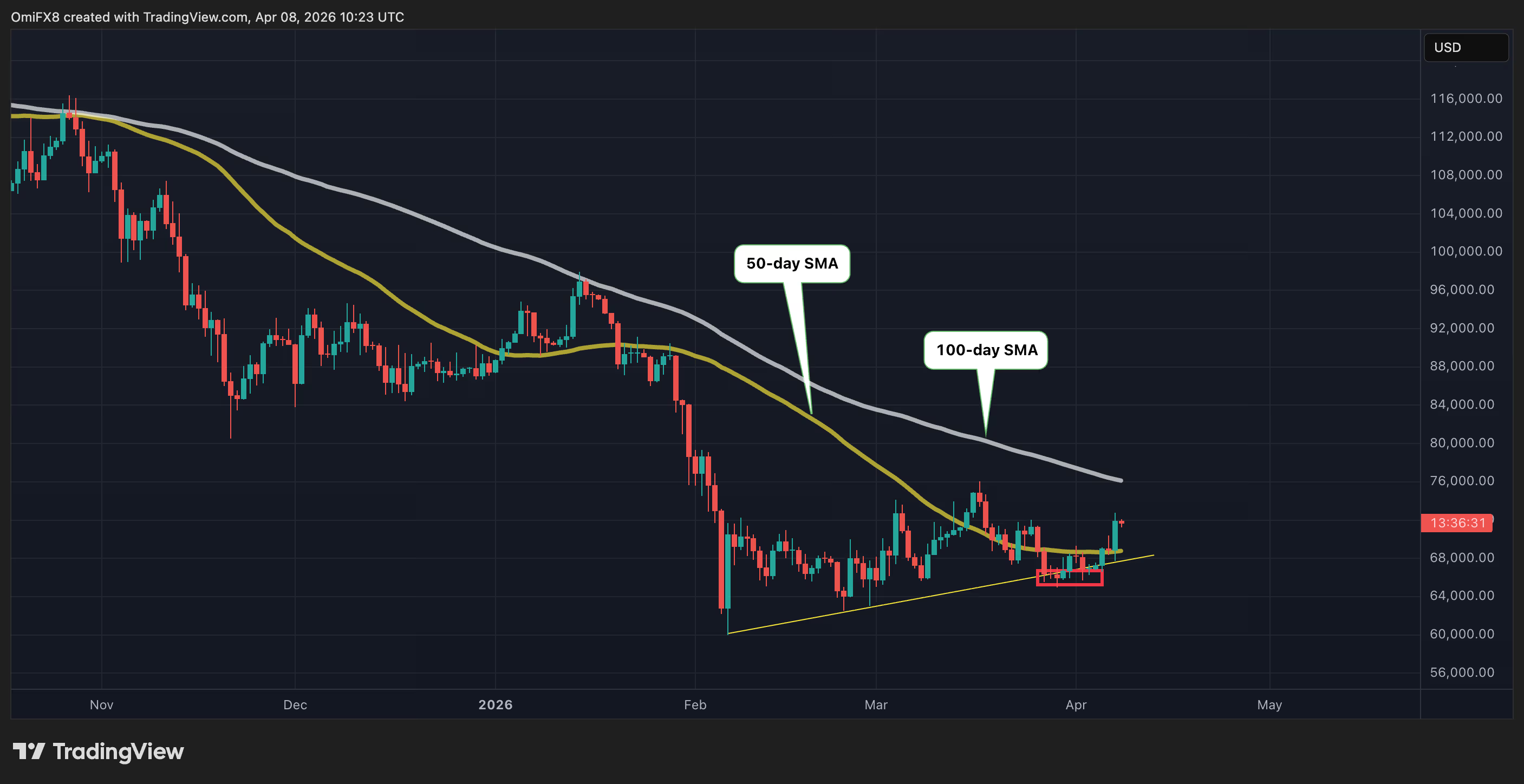
The chart shows bitcoin’s daily price swings in candlestick format since October. The yellow line represents the 50-day simple moving average (SMA) of the price, and the white line shows the 100-day average.
As shown, the spot price has decisively moved above the 50-day average, a widely watched measure of near-term trends. The move indicates a strengthening of bullish momentum and follows the recent bounce from the trendline support at the February lows.
Prices, therefore, could see more upside ahead, with $76,100, the 100-day average, as the next level to watch. On the downside, the late March lows near $65,000 are expected to act as a demand zone, supporting pullbacks. If that level fails, prices could fall to $60,000.
Read more: For analysis of today’s activity in altcoins and derivatives, see Crypto Markets Today
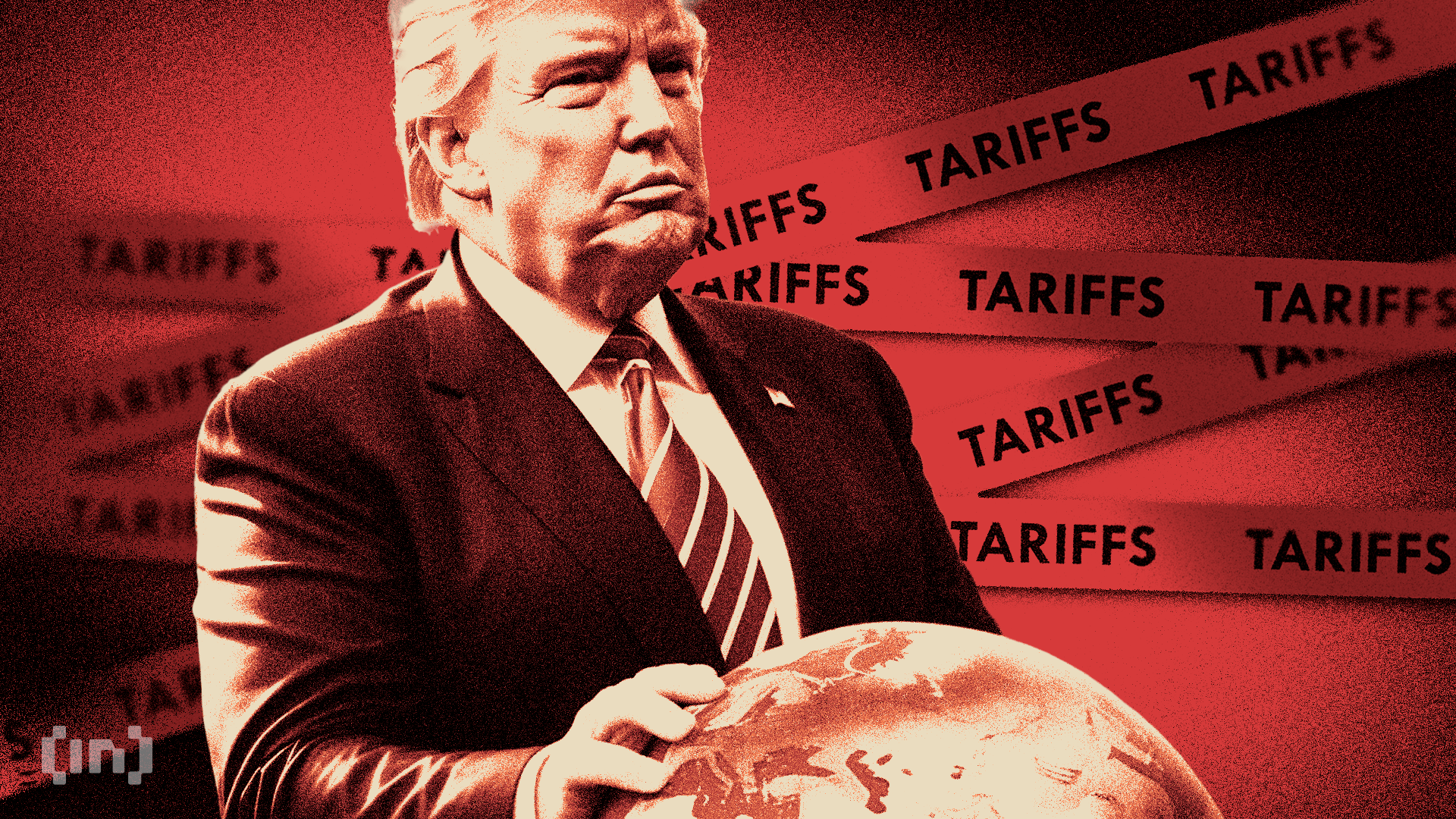
President Trump is weighing a plan to relocate US troops away from NATO countries he considers “unhelpful” in the Iran conflict, according to the Wall Street Journal.
The proposal, still in early stages, is one of several White House options to pressure allies over limited support for US-led operations.
NATO Rift Over Iran Widens
The plan would shift portions of roughly 84,000 American troops stationed across Europe. Trump and his team have expressed frustration at allies who denied the US logistical help, airspace access, or base use during strikes against Iran.
Secretary of State Marco Rubio said the administration would need to reexamine NATO’s value.
Trump himself has called some allies “cowards” and labeled the alliance a “paper tiger.”
Countries viewed as supportive, including Poland, Romania, Lithuania, and Greece, could receive additional forces. Those nations have aligned more closely with Washington’s eastern flank priorities.
Trade Threats Already in Motion
Trump threatened to cut off all trade with Spain after it refused to allow US military bases to be used in strikes against Iran.
He directed Treasury Secretary Scott Bessent to end all dealings with Madrid.
Meanwhile, Trump announced immediate 50% tariffs on goods from any country supplying weapons to Iran, with no exclusions or exemptions.
Russia and China are Iran’s most significant weapons suppliers.
No tariff package specifically targeting “unhelpful” NATO members has been formally announced.
However, the Spain episode and Trump’s pattern of mixing military pressure with economic punishment suggest trade measures could follow.
“The proposal would involve moving US troops from ‘unhelpful’ countries and into countries that were ‘more supportive’ of the Iran War 2. The plan is early in conception and one of several that the White House is discussing to punish NATO,” the Kobeissi Letter indicated, citing the WSJ.
Whether tariffs become the matching stick for resisters may depend on how NATO responds as ceasefire talks with Iran continue.
The post Trump Weighs NATO Troop Shakeup as Punishment: Could Tariffs Be Next? appeared first on BeInCrypto.
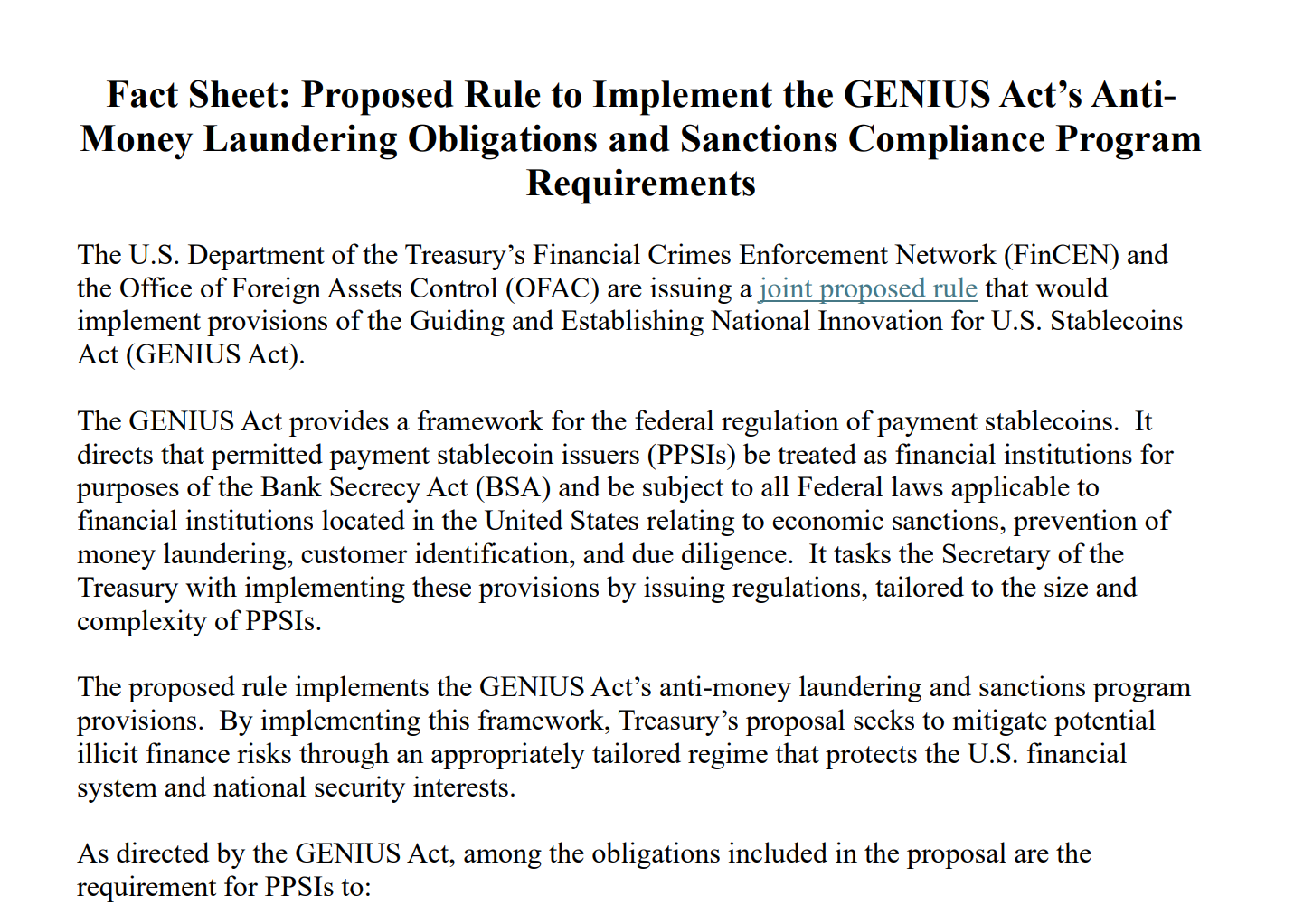
Payment stablecoin issuers in the United States will be required to implement a regime targeting illicit finance under the proposed framework for the GENIUS Act.
In a Wednesday notice, the US Treasury Department said its Financial Crimes Enforcement Network and Office of Foreign Assets Control (OFAC) had issued a joint proposed rule to implement provisions of the GENIUS Act, signed into law in July 2025.
The proposal would direct payment stablecoin issuers to establish and maintain an anti-money laundering (AML) and countering the financing of terrorism (CFT) program, maintain a sanctions compliance program, and have the ability to “block, freeze and reject” certain stablecoin transactions. Issuers would be treated as financial institutions for purposes of the Bank Secrecy Act (BSA).
“Bringing stablecoin issuers into full BSA/OFAC compliance effectively turns them into bank-like gatekeepers,” Snir Levi, CEO of blockchain intelligence firm Nominis, told Cointelegraph. “That means significantly more wallet freezes, transaction blocking and asset seizures at scale,” he said.

Treasury’s notice was part of the implementation of the GENIUS Act, the stablecoin payments bill signed into law by US President Donald Trump last year. The legislation provides a framework for stablecoin issuers and is expected to be a boon for crypto markets. It will be effective 18 months after it was signed in July or 120 days after federal authorities issue related regulations.
Related: NYT revives Adam Back theory in latest bid to identify Bitcoin creator
On Tuesday, the US Federal Deposit Insurance Corporation (FDIC) issued its own proposed rule as part of the agency’s GENIUS Act implementation. The FDIC said stablecoin holders would not be insured under the bill, though reserve deposits for issuers would receive protection.
Stablecoin yield fight rages between US lawmakers and banking and crypto industries
While federal agencies work on implementation of the GENIUS Act, Congress has effectively been stalled on progress for a bill to establish a digital asset market framework, called the CLARITY Act when it passed the House of Representatives last year.
With the Senate Banking Committee yet to schedule a markup on the bill — a necessary step before a full floor vote in the chamber — crypto and banking representatives have been meeting with White House officials to discuss issues related to stablecoin yield, tokenized equities and ethics.
The White House’s Council of Economic Advisers said on Wednesday that a ban on stablecoin yield in the bill “would do very little to protect bank lending,” claiming that it would impose costs on users.
As of Wednesday, the banking committee had not rescheduled a markup on the CLARITY Act.
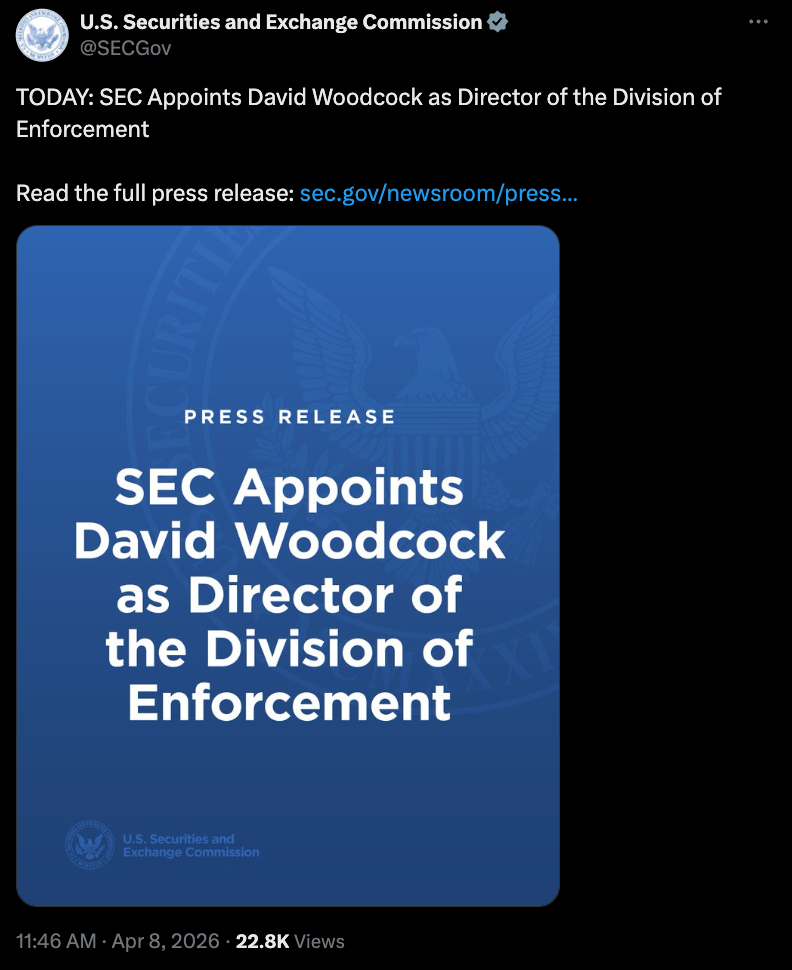
David Woodcock steps into the role as US senators await answers to questions on the agency’s dropping lawsuits against Justin Sun and several crypto companies.
The US Securities and Exchange Commission (SEC) has appointed David Woodcock as director of its division of enforcement as lawmakers press for answers on his predecessor’s departure.
In a Wednesday notice, the SEC said Woodcock would be taking over as the agency’s top enforcer starting on May 4. Sam Waldon will continue to serve as acting director of the division until then.
Woodcock, a partner at the law firm Gibson, Dunn and Crutcher, chairs that firm’s Securities Enforcement Practice Group. He previously worked as the director of the commission’s Fort Worth office from 2011 to 2015.
According to SEC Chair Paul Atkins, the appointment comes as the agency is “restoring Congressional intent by prioritizing cases that provide meaningful investor protection and strengthen market integrity.” Woodcock said that he planned to “execute the Chairman’s vision” in his role at the agency.

He replaces Margaret Ryan, who resigned in March. Her departure prompted several US lawmakers to question whether she left due to the SEC’s decision to drop several crypto-related enforcement cases.
Related: US Treasury moves forward with GENIUS Act, focusing on illicit finance
Two senators have called for Atkins to answer questions as to whether Ryan “faced resistance” from SEC leadership over enforcement cases tied to US President Donald Trump. These included a February 2025 decision — one month after the president took office — to drop a fraud case against Tron founder Justin Sun, tied to the Trump family-backed World Liberty Financial crypto platform.
“[The SEC] may have exercised preferential treatment for financial partners of President Trump against the advice and warnings of senior staff when the agency declined to litigate credible fraud cases,” wrote Senator Richard Blumenthal in a March 30 letter to Atkins.
“No investor benefit or protection” from past actions
On Tuesday, the SEC released a report on its enforcement results for the 2025 fiscal year. The agency reported seven enforcement cases of crypto companies that were registration-related and six related to the definition of a broker-dealer.
According to the SEC, it “identified no direct investor harm” and claimed that the cases “produced no investor benefit or protection,” calling them “a misinterpretation of the federal securities laws.” The narrative was the latest example of the SEC’s shift in enforcement of crypto-related cases following Trump’s inauguration.

TLDR
- The XFUNDS ETF, named Nicholas Bitcoin and Treasuries AfterDark ETF (NGHT), toggles between bitcoin and U.S. Treasuries throughout the day.
- The fund focuses on bitcoin’s overnight performance, capitalizing on the largest share of returns that occur after U.S. market hours.
- XFUNDS CEO David Nicholas emphasized that the strategy targets bitcoin’s global trading behavior, especially outside U.S. market hours.
- The NGHT ETF reduces exposure to bitcoin during the day and increases its position in U.S. Treasuries.
- The launch of the XFUNDS ETF coincides with heightened competition in the bitcoin ETF market, with Morgan Stanley debuting its own spot bitcoin ETF.
The newly launched XFUNDS ETF, named Nicholas Bitcoin and Treasuries AfterDark ETF (NGHT), offers investors a unique strategy. This fund toggles between bitcoin exposure and short-term U.S. Treasuries, adjusting throughout the day. It aims to capitalize on bitcoin’s performance during global market hours while minimizing exposure during U.S. trading hours.
XFUNDS ETF Shifts Between Bitcoin and Treasuries
The XFUNDS ETF targets Bitcoin’s movements outside of U.S. market hours. The fund’s strategy focuses on bitcoin’s overnight performance, which historically provides the most substantial returns. David Nicholas, CEO of XFUNDS, explained the fund’s approach, stating, “Bitcoin trades 24/7, and its behavior is increasingly driven by global activity outside U.S. market hours.”
To execute this strategy, the NGHT fund adjusts its holdings at the close of U.S. markets. It reduces exposure to Bitcoin and moves into U.S. Treasuries during the daytime. The ETF then shifts back to bitcoin after market hours, aiming to capture bitcoin’s “overnight alpha.” This strategy provides a targeted approach to trading the cryptocurrency market while minimizing risk during the day.
Rising Competition Among Bitcoin ETFs
The launch of the XFUNDS ETF comes at a time of increased competition in the bitcoin ETF market. On the same day, Morgan Stanley introduced its own spot bitcoin ETF, MSBT, with a 0.14% fee. This new product puts pressure on established players like BlackRock and Grayscale.
Financial experts believe that the MSBT could become a major player, with projections of $5 billion in assets under management within its first year. On the other hand, inflows into spot bitcoin ETFs are also gaining momentum. Recent data showed a surge of $471 million in net inflows, marking the largest single-day inflow in six weeks. This uptick signals growing investor interest in Bitcoin-focused ETFs.


Nasdaq filed a rule change on April 7 to expand its Exchange-Traded Product (ETP) definition to include Class ETF Shares, a hybrid product that blends mutual fund and ETF structures.
The amendment to Equity 1, Section 1(a)(15) would let issuers of these products use the exchange’s optional Initial ETP Open process on their first day of trading.
What the Rule Change Means for ETF Issuers
Class ETF Shares are exchange-traded shares issued by open-end funds that also offer traditional mutual fund share classes.
The SEC approved Nasdaq’s generic listing standards for these products in November 2025 under Rule 5703.
Separately, the SEC approved Nasdaq’s Initial ETP Open in May 2025. That process gives ETP issuers the option to delay a security’s opening from Pre-Market Hours at 4:00 a.m. ET until regular Market Hours at 9:30 a.m. ET.
The delay allows the Nasdaq Halt Cross to set an opening price, supporting more orderly price discovery.
Until now, only ETPs listed under existing Nasdaq rules could access that functionality. The new filing adds Rule 5703 to the list, extending the same option to Class ETF Shares.
A Growing Pipeline of Dual-Class Funds
The filing arrives as asset managers race to bring dual-class funds to market. The SEC has approved roughly 48 firms for multi-class ETF exemptive relief out of approximately 100 applications filed as of March 2026.
Major names including BlackRock, Fidelity, JPMorgan, and Morgan Stanley have all submitted applications.
However, operational infrastructure still lags behind regulatory progress. The DTCC’s automated solution for processing mutual fund-to-ETF share exchanges is not expected to go live until May 18, 2026.
Full custodian and market maker buildouts may not follow until late 2026 or 2027.
Nasdaq’s rule took immediate effect under Section 19(b)(3)(A)(iii) of the Securities Exchange Act.
The exchange has also asked the SEC to waive the standard 30-day operative delay, arguing the change is a non-controversial, definitional amendment that does not alter existing listing standards or the mechanics of the Initial ETP Open.
The SEC retains the authority to temporarily suspend the rule within 60 days if it determines the change raises investor protection concerns.
The post Nasdaq Wants to Give New ETFs a Smoother Launch Day appeared first on BeInCrypto.


Blockstream CEO Adam Back, downplayed the immediacy of quantum computing as a threat to the Bitcoin network, but emphasized the need for the industry to prepare.
A foundational figure in Bitcoin history for his cryptography work, dating back to the 1990s, Back laid out his central argument, saying that while quantum risk is real in theory, it is not yet practical, in an interview with Bloomberg on Tuesday.
Back noted that “the current hardware…generally doesn’t have any error correction.” That aligns with two recent papers highlighted in a thread on X, one a sober engineering analysis, the other a deadpan satire, which make that case from opposite directions. Together, they frame quantum computing as a long-term rather than near-term risk to cryptographic systems.
However, Back said the “lede” is not about dismissing the threat but about timing the response correctly. “We don’t have to agree about the timeline for quantum computers to become powerful enough to be a threat, because the prudent thing to do is to prepare Bitcoin and give people the option to migrate their keys to a quantum ready format, and to have, let’s say, a decade in which to do that.”
That timeline echoes reporting that post-quantum cryptography (PQC) is already moving from theory to implementation, particularly after NIST finalized standards in late 2024.
Back also stressed that preparation work is already active across the ecosystem, pointing to ongoing research and deployment. “There’s a 20-person research team that’s been working on this. Publishing papers and implementing things, putting them live.” He cited Blockstream’s Liquid network as an early proving ground.
The industry’s challenge is less about reacting to a breakthrough and more about coordinating a slow, orderly migration, before the risk becomes urgent.
UPDATE (April 8, 113:25 UTC): Adds link to Bloomberg interview.


Morgan Stanley’s spot bitcoin exchange-traded fund (ETF) began trading Wednesday with solid early activity, logging more than 1.6 million shares traded and roughly $34 million in inflows, the bank said.
The fund, listed under the ticker MSBT, tracks the CoinDesk Bitcoin Benchmark 4 PM New York Settlement Rate and charges a 0.14% expense ratio. It is the cheapest fund in the category, offering a clear, if narrow, pricing advantage to competitors.
MSBT entered the market with a different strength than others: distribution. Morgan Stanley’s wealth management arm oversees trillions of dollars in client assets and operates one of the largest financial advisor networks in the industry. That reach could help the fund gain traction as more investors access bitcoin through advisors rather than direct trading platforms.
Some experts anticipate the fund to draw capital from existing products, especially BlackRock’s iShares Bitcoin Trust (IBIT), the largest spot bitcoin ETF currently on the market. MSBT has a lot of catching up to do. IBIT, which launched among nine other ETFs in January 2024, has amassed over $53 billion in assets, quickly becoming the asset manager’s most successful ETF.
Wednesday’s trading offers an early signal of demand, though it remains to be seen whether MSBT can sustain momentum in a market dominated by a handful of large players.
UPDATE (April 8, 2026, 20:00 UTC): Adds additional detail.
Crypto World
Panda Bonds Surge as Global Borrowers Ditch Dollar Debt for Cheaper Yuan Financing in 2026
TLDR:
-
- Foreign panda bond issuance tripled year on year in March 2026, reaching 27.8 billion yuan in one month alone.
- China’s 10-year bond yield of 1.82% makes yuan borrowing roughly 60% cheaper than equivalent U.S. dollar debt.
- The U.S. dollar’s share of global reserves dropped to 56.32% in 2025, its lowest recorded level since 1995.
- Iran now requires oil tanker transit fees through the Strait of Hormuz to be paid in yuan or Bitcoin only.
- Foreign panda bond issuance tripled year on year in March 2026, reaching 27.8 billion yuan in one month alone.
Panda bonds recorded a dramatic rise in foreign issuance in March 2026, tripling year on year to 27.8 billion yuan. That equals roughly $4 billion in a single month.
Total yuan-denominated financing by foreign borrowers reached a record 218 billion yuan in the opening weeks of 2026.
The full year of 2025 produced only $167 billion through yuan notes and loans combined. The shift spans sovereign governments, global banks, and multilateral development institutions.
Record Deals Signal a Structural Turn in Yuan Borrowing
Deutsche Bank issued the largest single panda bond ever placed by a foreign bank, totaling 5.5 billion yuan. The three-year tranche was oversubscribed 1.55 times and the five-year 1.63 times.
Indonesia sold 9.25 billion yuan at roughly one percentage point below its euro-denominated debt issued the same week.
The Asian Infrastructure Investment Bank placed 3 billion yuan, with 58% allocated to overseas investors. Morgan Stanley, Barclays, and Hungary also joined as new or repeat yuan issuers in 2026. The Asian Development Bank had already raised a record 8.3 billion yuan in March 2025.
The cost advantage is a key factor. China’s 10-year bond yield sits at 1.82%, against 4.46% for the U.S. Treasury equivalent. That spread of 260 basis points is the widest recorded since August 2025.
As @BullTheoryio noted on X, “Borrowing in yuan is approximately 60% cheaper than borrowing in dollars right now.” For governments with heavy trade exposure to China, that arithmetic is difficult to overlook. The yuan now accounts for 34.5% of China’s cross-border goods trade settlements, up from 10% in 2017.
China is the dominant trading partner for more than 120 countries. When trade with the largest partner settles in yuan, holding that currency as a working reserve follows naturally. The offshore dim sum bond market hit a record 870 billion yuan in 2025, its eighth straight year of growth.
Dollar Weakness and Treasury Market Signals Add Further Pressure
The U.S. dollar index fell 9.6% in full year 2025, its worst annual result since 2017. In the first half of 2025 alone, it dropped 10.7%, the worst first-half performance in over 50 years. The dollar’s share of global reserves fell to 56.32%, the lowest since 1995.
China’s U.S. Treasury holdings fell to $682.6 billion in November 2025, down from $1.32 trillion in 2013. China has been selling U.S. Treasuries for nine consecutive months as of late 2025. That steady reduction reflects a deliberate portfolio rebalancing by the world’s second-largest economy.
Research from the National Bureau of Economic Research shows that Treasuries’ convenience yield turned negative, sitting at -0.25% for 10-year maturities.
That premium once saved the U.S. government hundreds of billions in annual borrowing costs. State Street confirmed that since April 2025, rising Treasury yields now reflect fiscal risk rather than economic strength.
During a global bond sell-off in March 2026, U.S. Treasury yields spiked to 4.4055%, a near eight-month high. China’s 10-year yield moved only from 1.80% to 1.84% across the same period. The contrast in stability was widely noted across international fixed income markets.
Iran now charges oil tankers transiting the Strait of Hormuz $1 per barrel of cargo. Payments are accepted only in Bitcoin or Chinese yuan.
A very large crude carrier with 2 million barrels owes up to $2 million per transit. Iran’s National Security Committee passed legislation codifying this fee structure, and at least two vessels paid in yuan before the ceasefire was announced.
TLDR
- Ripple has launched a Treasury Management System with native digital asset capabilities, allowing businesses to manage both fiat and digital assets.
- The new system integrates Digital Asset Accounts and Unified Treasury, making it the first TMS to directly support on-chain digital asset management.
- CFOs and treasury teams can now manage traditional cash balances alongside digital assets like XRP and RLUSD in a single system.
- Ripple’s Treasury platform addresses the growing demand for seamless digital asset solutions among fintech platforms and financial leaders.
- The new solution provides regulated Ripple-native accounts, simplifying asset management and ensuring compliance with industry standards.
Ripple, the San Francisco-based blockchain firm, has announced the launch of its Treasury Management System (TMS) with native digital asset capabilities. This new development is designed to support businesses in managing both fiat and digital assets efficiently. Ripple’s new offering aims to enhance enterprise blockchain solutions, simplifying the process of integrating digital assets into corporate treasuries.
Ripple’s Treasury Management System to Revolutionize Corporate Finance
Ripple’s new Treasury Management System is set to change how CFOs and treasury teams manage digital assets. The platform integrates on-chain digital asset capabilities, allowing businesses to handle both traditional fiat currencies and digital assets in a single system. Ripple’s solution eliminates the need for separate custody platforms and reconciliation processes, streamlining treasury operations.
The addition of Digital Asset Accounts and Unified Treasury within Ripple Treasury makes it the first TMS to directly integrate digital asset management. CFOs can now manage their assets more seamlessly, avoiding the complexities of using separate systems for digital currencies like XRP and RLUSD. This innovative move allows companies to focus on financial strategy rather than on the technicalities of asset management.
According to Ripple, this system addresses the growing demand from fintech platforms and financial leaders who are seeking smoother gateways for digital asset integration. Reece Merrick, Ripple’s top executive, highlighted that 72% of finance leaders believe offering a digital asset solution is critical to staying competitive in the market. As companies face uncertainty about implementing these solutions, Ripple aims to fill this gap with its new product.
Digital Asset Accounts Offer New Opportunities for Businesses
Ripple’s new Treasury platform provides businesses with the ability to create Ripple-native Digital Asset Accounts. These accounts allow companies to hold and manage digital assets like XRP and RLUSD in a regulated environment. By integrating digital assets into the corporate treasury, Ripple simplifies how businesses manage their cash and crypto balances in one unified system.
The introduction of these accounts comes at a time when companies are seeking to diversify their asset portfolios. The platform’s seamless integration of digital assets alongside traditional fiat currencies offers a more straightforward way for businesses to engage with the growing digital economy. Ripple’s new system ensures that businesses are equipped to stay ahead in a rapidly changing financial landscape.

Discounts, Premiums and Bonds at Par (Intermediate Financial Accounting Tutorial #12)

Edinburgh teen missing for 24 hours as police make public appeal for help

NANO Nuclear Energy: Making Moves In The Drawdown

Why Israel is blocking foreign journalists from entering

Bitcoin: We’re Entering The Most Dangerous Phase

Alan Cumming Brands Baftas Ceremony A ‘Triggering S**tshow’
Discounts, Premiums and Bonds at Par (Intermediate Financial Accounting Tutorial #12)

How to Use a BA II Plus Calculator For Financial Mathematics | Exam FM | JK Math

MAJOR XRP LEAK AT LIVE EVENT! ($33 TRILLION XRP 2026 PLAN!!!)
-

 NewsBeat6 days ago
Steven Gerrard disagrees with Gary Neville over ‘shock’ Chelsea and Arsenal claim | Football
-

 Business6 days ago
No Jackpot Winner and $194 Million Prize Rolls Over
-

 Fashion5 days ago
Weekend Open Thread: Spanx – Corporette.com
-

 Business5 days ago
Expert Picks for Every Need
-

 Business3 days ago
Three Gulf funds agree to back Paramount’s $81 billion takeover of Warner, WSJ reports
-

 Sports4 days ago
India men’s 4x400m and mixed 4x100m relay teams register big progress | Other Sports News
-

 Business7 days ago
Login and Checkout Issues Spark Merchant Frustration
-

 Tech1 day ago
How Long Can You Drive With Expired Registration? What Florida Law Says
-
Business3 days ago
No Jackpot Winner, Prize to Climb to $231 Million
-

 Tech6 days ago
Commonwealth Fusion Systems leans on magnets for near-term revenue
-

 Fashion2 days ago
Massimo Dutti Offers Inspiration for Your Summer Mood Board
-

 Fashion1 day ago
Let’s Discuss: DEI in 2026
-
Politics5 days ago
Wings Over Scotland | The quality of mercy
-

 Business4 days ago
Akebia Therapeutics, Inc. (AKBA) Discusses Pipeline Progress and Strategic Focus on Kidney Disease Treatments at R&D Day – Slideshow
-

 Tech7 days ago
Following Artemis II’s Journey Around The Moon
-

 Fashion6 days ago
Statement Sunglasses: The Accessory Shaping Modern Fashion
-

 Business7 days ago
Investor reactions to Trump’s speech on Iran war
-

 Tech7 days ago
Daily Deal: The Modern No-Code Development Bundle
-
Sports6 days ago
Justin Jefferson’s Situation Remains Unchanged after JSN’s Deal
-

 Politics7 days ago
Trans kids protest the Department of Education
You must be logged in to post a comment Login