

Crypto World
It Was All There: High Leverage and a Rare BTC Sale Behind the June Crypto Crash

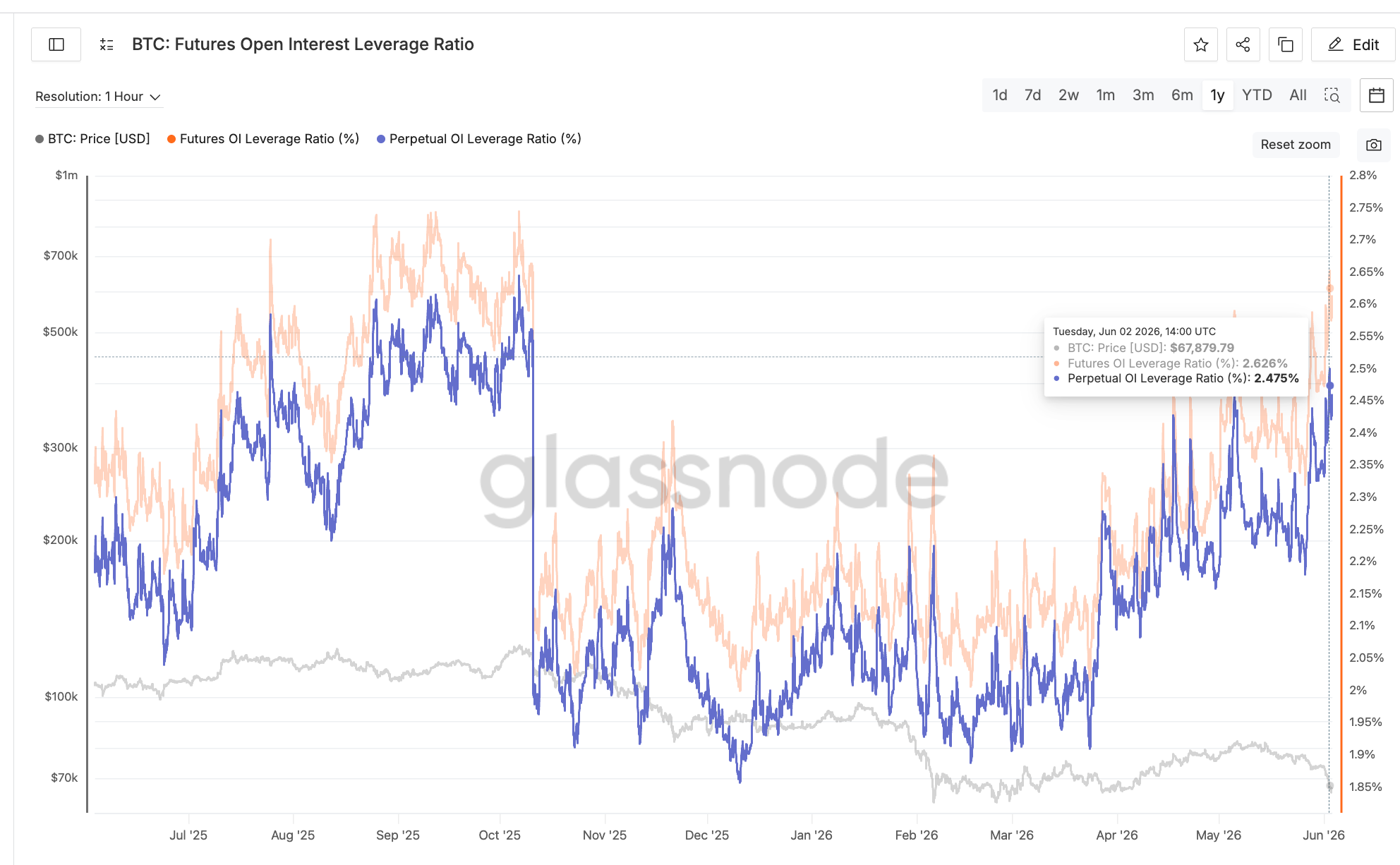
The crypto market fell nearly 7% in 24 hours into June 3, with Bitcoin briefly breaking below $66,000 and around $1.8 billion in positions wiped out.
The drop looked sudden, but the on-chain data had been flashing for days. Leverage sat at October-crash levels, funding ran hot, and a rare Strategy Bitcoin sale was the spark.
The Leverage Was Already at October-Crash Levels
Before the drop, the derivatives market was stretched. Bitcoin’s futures open interest leverage ratio, a gauge of how much borrowed money sits in the futures market relative to Bitcoin’s size, climbed to 2.63% on June 2. The perpetual version reached 2.48%. Both were the highest readings since October 6, 2025.

That date matters. It fell days before the October 10 Black Friday crash, when the same ratio peaked near 2.73%. A high reading means traders had piled into leveraged positions after a steady rally, leaving the market fragile.
Want more token insights like this? Sign up for Editor Harsh Notariya’s Daily Crypto Newsletter here.
Funding rates showed which side. The rate across all exchanges, the periodic fee that long traders pay shorts on perpetual futures, rose to about 0.018 on June 2, the most positive single-day reading since early September.

Because positive funding means longs pay to hold their bets, the spike confirms the leverage had crowded onto the long side. Notably, the funding bias was already high on June 1, at 0.017, the day when the market got its major bearish catalyst.
A Key BTC Sale Broke the Mood, Led to the Crypto Crash
The spark came on June 1. Strategy, the corporate Bitcoin holder led by Michael Saylor, disclosed a rare Bitcoin sale, its first in years. For a firm known only for buying, the reversal hit sentiment hard.
Analytics firm Santiment reported that social sentiment flipped into extreme fear, with traders blaming the Strategy sale as a main trigger.
With the market already leaning long and over-leveraged, that shock was enough to start the unwind.
BTC Spot Selling Ran Hotter Than October
The selling was not only in derivatives. Spot Bitcoin moving onto exchanges, often a precursor to selling, spiked on June 2. Total exchange inflows reached about 58,617 BTC, the highest since April 14. June 1 hit the sentiment hard and June 2 saw exchange-specific inflows as a result.

That figure carries weight against the October comparison. On October 7, 2025, just before the Black Friday crash, inflows peaked near 46,527 BTC. June 2 ran higher, so spot selling pressure was heavier this time than ahead of the October wipeout.
Crowded long leverage and real coins hitting exchanges together set off the crypto crash cascade.
Whales Sold, and It Was a Bitcoin Problem
The selling traced to large holders. Santiment data showed wallets holding between 10 and 10,000 BTC, the whales and sharks, offloaded 24,602 BTC over the past week, an 18% cut. The smallest traders, holding under 0.01 BTC, added just 61 coins, far too little to cushion the fall.
The cause sat with Bitcoin itself. CryptoQuant’s head of research, Julio Moreno, noted that Bitcoin demand was contracting at about 232,000 BTC a month, and argued the correction tied to demand rather than stocks, oil, or macro. US equities, by contrast, sat at record highs.
Because Bitcoin still commands about 58.4% of the total crypto market, its share of all crypto value, per CoinGecko, its slide dragged the rest of the market down with it, resulting in this sudden crypto crash.

For now, the data that flagged the drop is the data to watch. Whether leverage resets or builds back up, and whether Bitcoin demand steadies, will shape how the market moves over the next few days.
The post It Was All There: High Leverage and a Rare BTC Sale Behind the June Crypto Crash appeared first on BeInCrypto.



The Commodity Futures Trading Commission sued Kentucky on Tuesday to stop the state from using its own laws to shut down federally registered prediction markets. The suit widens a campaign the agency has now pressed against a string of states. The CFTC filed a Complaint for Declaratory and… Read the full story at The Defiant


Cboe Global Markets has rolled out the first product in Cboe Predicts, its new prediction markets suite, listing binary options on the Mini-S&P 500 Index (XSP) through Interactive Brokers.
Charles Schwab will add access in the coming months, with other brokers to follow.
Cboe Targets Prediction Markets With Mini-S&P 500 Contracts
According to the press release, the contracts are listed under the symbols XSPBW and XSPBX.
“Cboe Predicts represents the latest expansion of Cboe’s S&P 500 Index (SPX) product suite. XSP allows customers to trade on the performance of the S&P 500 Index (SPX) but is scaled to 1/10th the size of SPX – making it a smaller, more retail-friendly alternative,” the global markets operator said.
Follow us on X to get the latest news as it happens
The contracts let traders take a simple yes-or-no position on where the index closes. A “yes” position pays $100 if the index settles at or above a chosen level. A “no” position pays the same if it settles below.
Cboe routes the products through leading retail brokers and clears them centrally through the Options Clearing Corporation (OCC).
JJ Kinahan, Cboe’s Head of Retail Expansion, tied the move to demand following zero-days-to-expiration (0DTE) options. Rob Hocking, Cboe’s Global Head of Derivatives, framed the launch as an effort to raise standards across the sector.
“We look forward to bringing our experience, trusted market infrastructure, and the deep liquidity of the SPX options ecosystem to prediction markets. Our goal is to help set a higher standard for market integrity, product design and investor protection…” he added.
The firm said that its future plans include adding XSP vertical spreads through Cboe’s patent-pending Quoted Spread Book. Cboe is the latest established firm to enter the territory pioneered by Polymarket and Kalshi. Even Meta reportedly wants in with a standalone app.
The launch lands as prediction markets attract record interest. Open interest across the sector recently hit an all-time high of $1.48 billion.
Subscribe to our YouTube channel to watch leaders and journalists provide expert insights
The post Cboe Joins Prediction Market Race With Mini S&P 500 Binary Options appeared first on BeInCrypto.
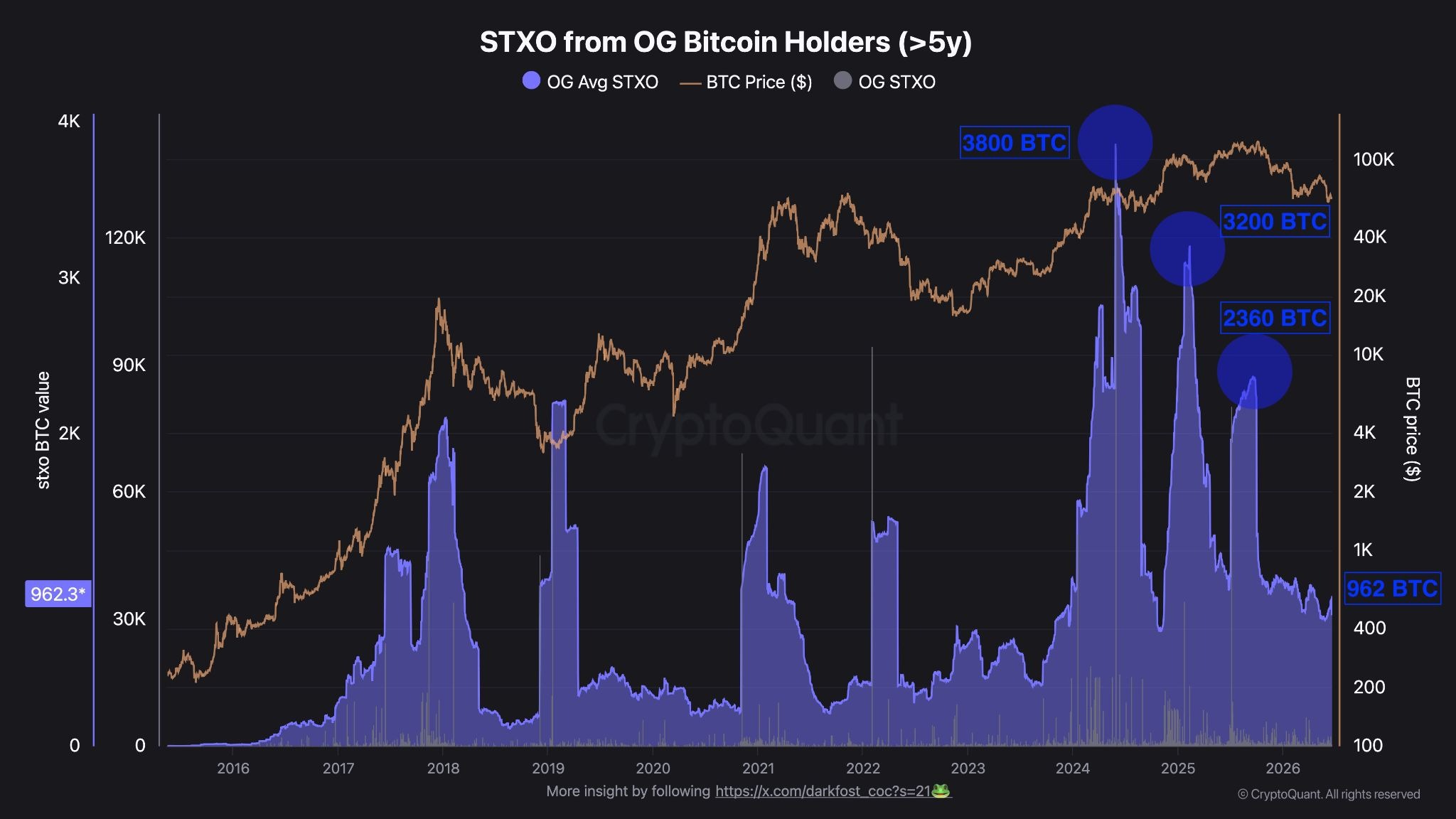
Bitcoin (BTC) holders who acquired their coins more than five years ago have cut spending to a 90-day average of 962 BTC, the lowest level since November 2024, according to CryptoQuant data. The slowdown follows three major spending peaks over the past two years, including a high of 3,860 BTC in May 2024.
At the same time, BTC analysts said that market and profitability indicators are converging in the second half of 2026, putting a new timeline of a potential Bitcoin bottom.
Bitcoin “OG” holders step back
Crypto analyst Darkfost said the current cycle has produced the highest level of spending by long-term Bitcoin holders on record. The cohort tracked in the dataset consists of investors who acquired Bitcoin more than five years ago.
Using spent transaction outputs (STXO), which track Bitcoin that has moved across the network, the analyst identified three major spending waves following strong rallies.
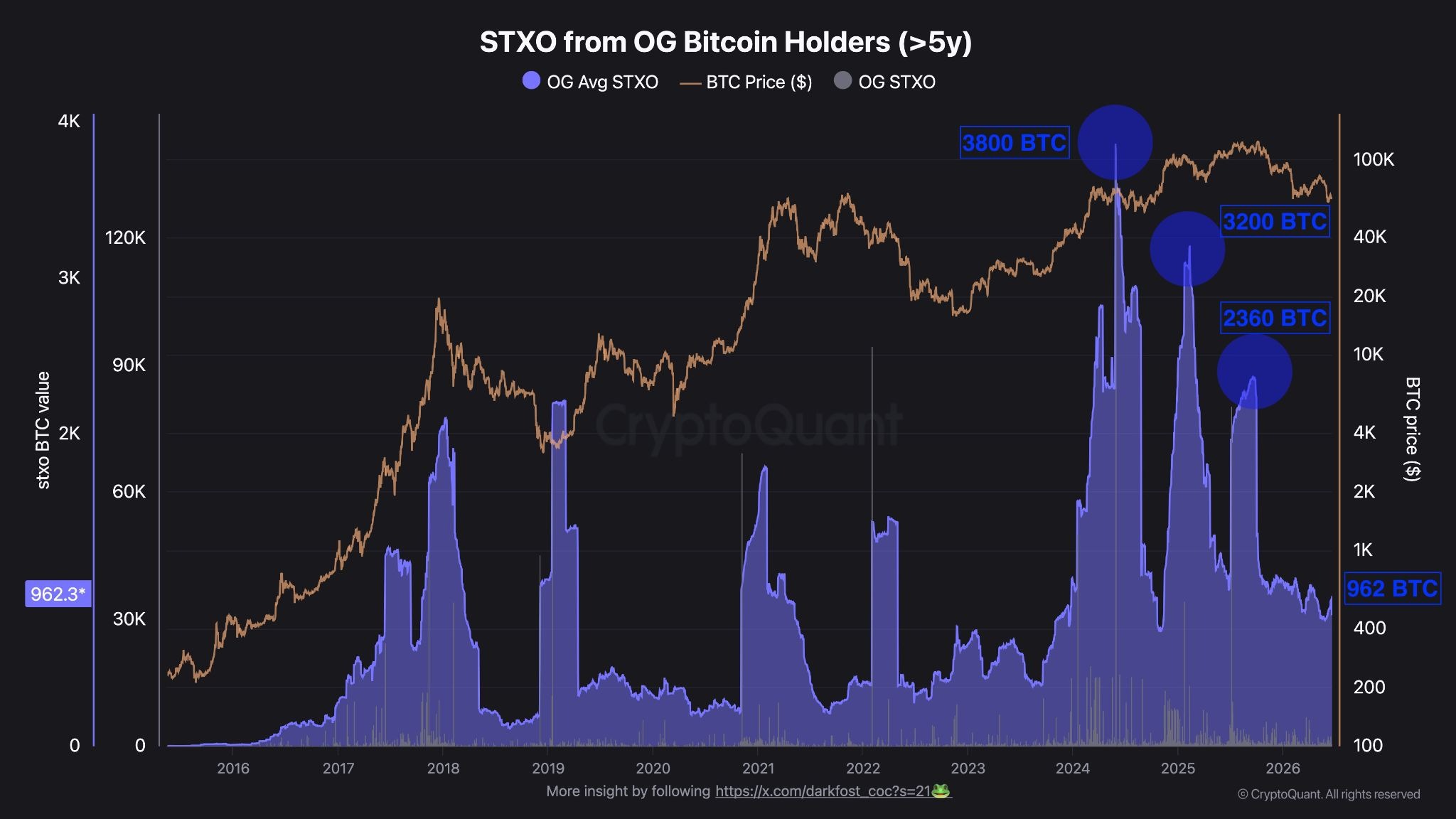
OG Bitcoin Holders selling pressure. Source: CryptoQuant
The 90-day moving average peaked at 3,860 BTC in May 2024, 3,200 BTC in February 2025 and 2,360 BTC in September 2025. Individual sessions were far larger, with some days recording output exceeding 10,000, 30,000 and even 142,000 BTC.
That selling pressure has eased sharply. The 90-day average has dropped to 962 BTC, the lowest reading in 19 months. Darkfost said the most expensive coins held by this group were acquired for about $63,200, which is close to current prices. This indicates that many of these holders are choosing not to sell, even though their holdings are trading near their highest cost basis.
Bitcoin Researcher Axel Adler Jr. further noted a split between newer and older BTC investors. The analyst said that Bitcoin’s adjusted net unrealized profit/loss (aNUPL) has fallen to -0.14 from near zero a month ago, showing that the average holder has moved back into unrealized losses as BTC traded near $62,500. However, Adler Jr argued,
“STH capital has shrunk by -56%, while LTH capital has barely drawn down. Weak hands are capitulating. Strong hands have not even flinched.”
Adler Jr. added that the key metric has spent nearly half of the past three months below zero, indicating sustained pressure on newer BTC market participants rather than a broad capitulation across long-term holders.
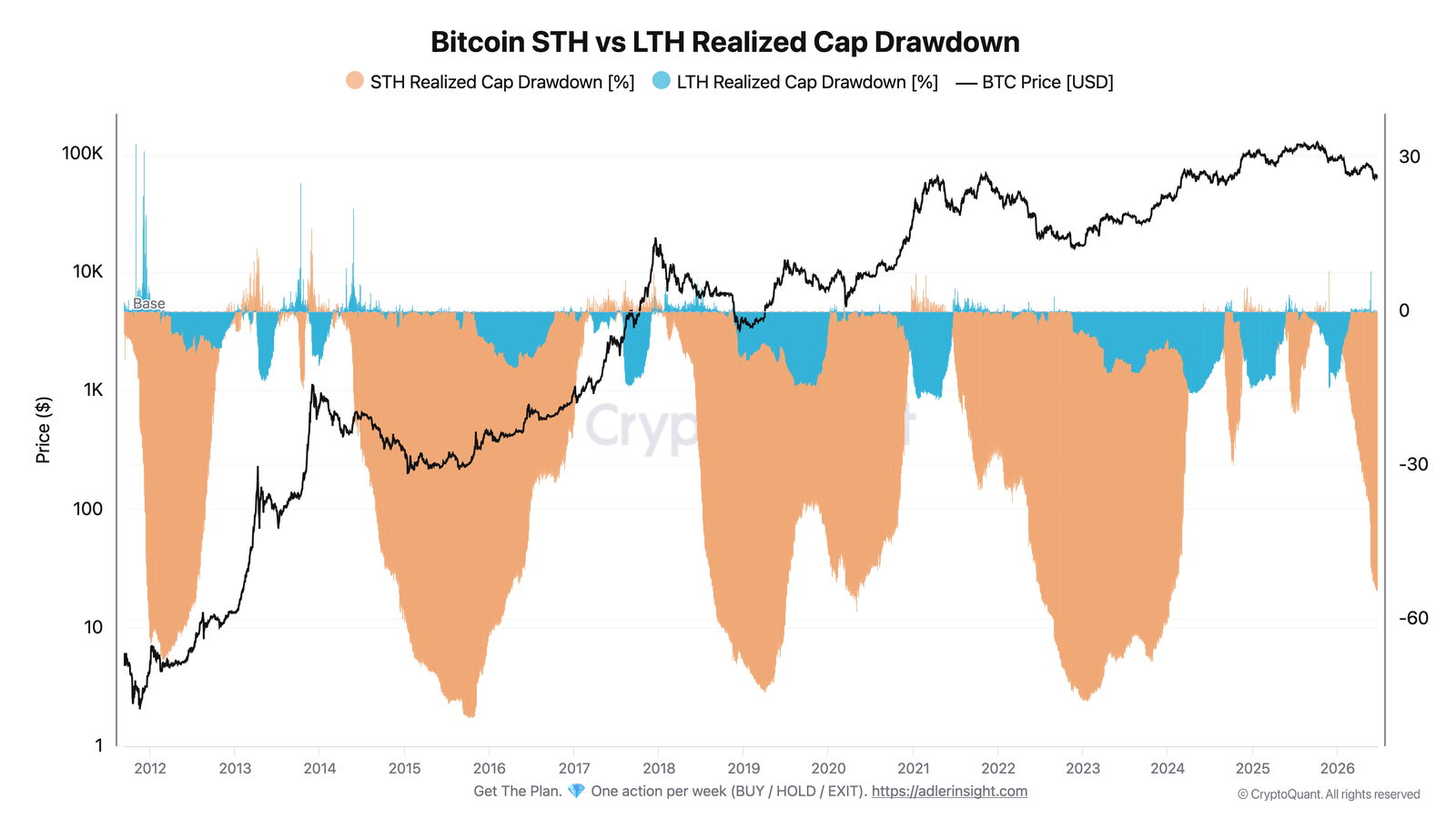
STH vs LTH realized cap analysis. Source: Axel Adler Jr.
Related: Bitcoin slump worsens amid SpaceX rout: Can BTC price hold $60K any longer?
BTC halving cycle points to September bottom, says analyst
Crypto analyst LP highlighted a recurring pattern tied to Bitcoin’s halving cycles. The previous bear market entered a final capitulation phase 826 days after the halving event, followed by a major low and sideways consolidation for 70 to 110 days.
For the current cycle, the 826-day marker falls on July 6. Applying the same timing range places a potential bottoming window in early September.
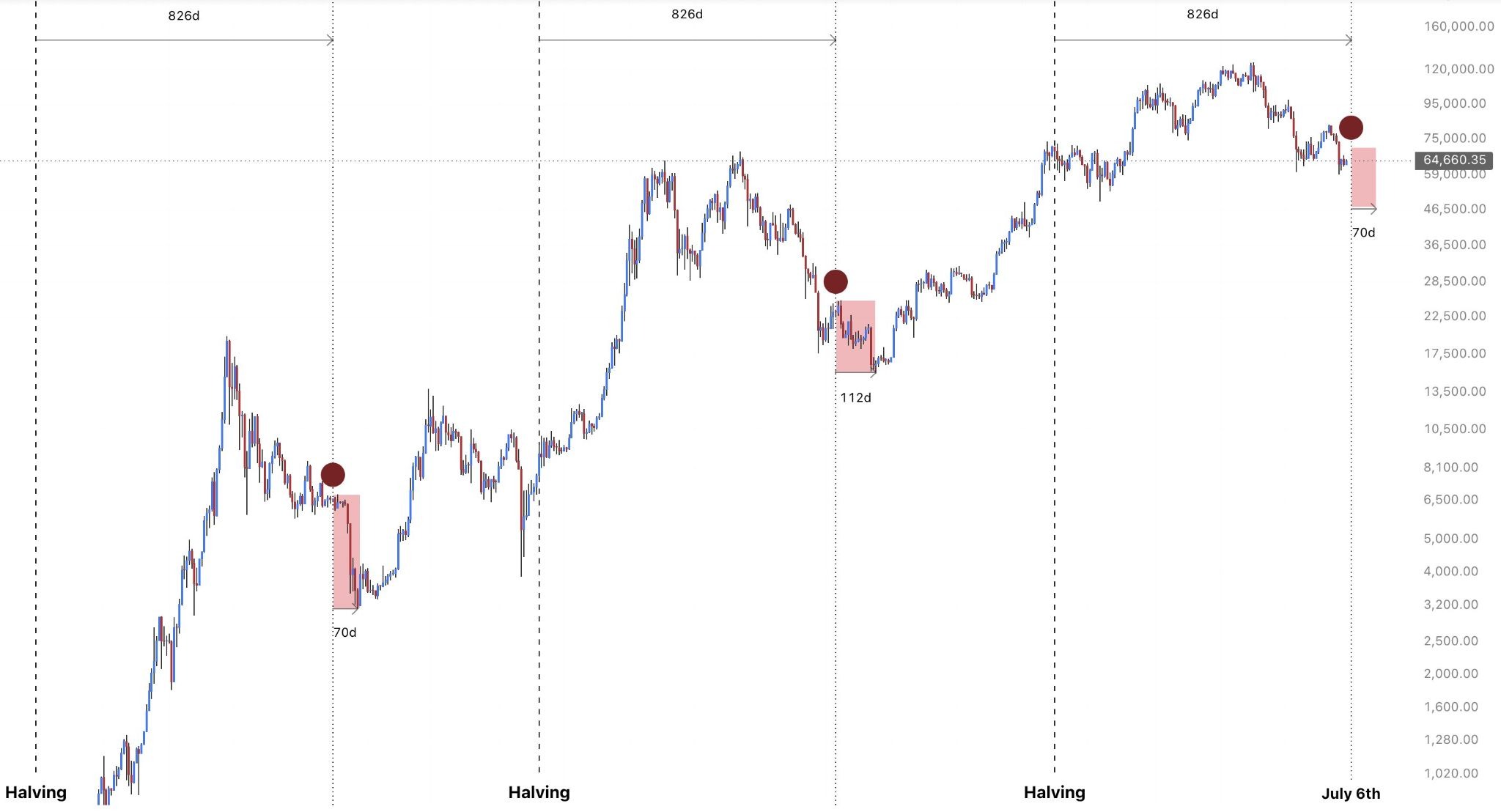
BTC bottom analysis by LP. Source: X
The trader noted that the scenario becomes more relevant if Bitcoin continues to trade higher into early July.
Likewise, BTC trader Titan also identified downside liquidity below the current levels. On the quarterly chart, Bitcoin has an untapped low near $58,900 and an open fair value gap between roughly $49,000 and $58,900.
The trader explained that leaving the quarterly low untouched throughout September may draw more attention to that liquidity zone, eventually leading to a market bottom between Q3 and Q4.
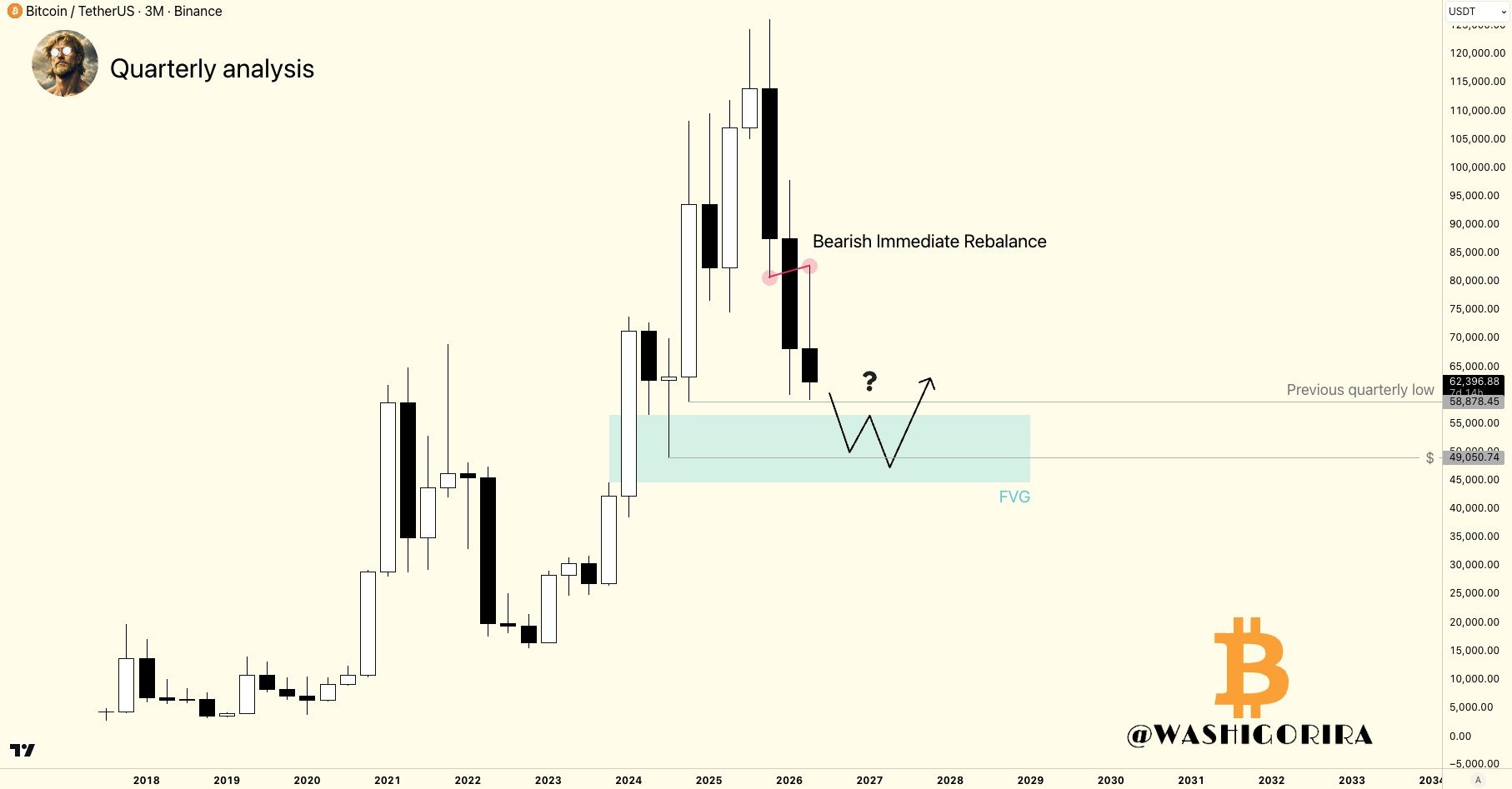
BTC quarterly analysis. Source: X
Related: Bitcoin gets new $54K warning as BTC price hits 11-day low on Asia tech sell-off
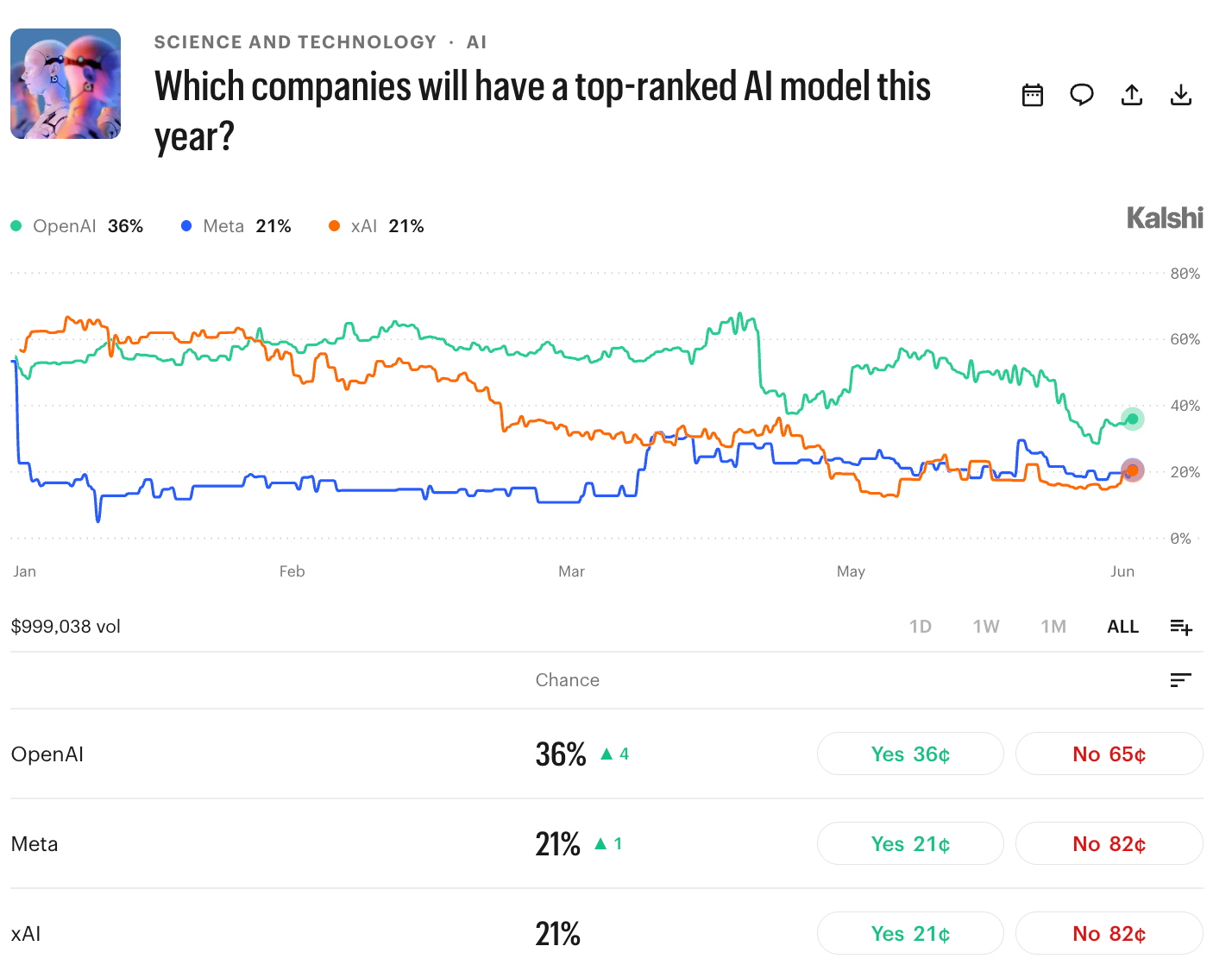
Meta CEO Mark Zuckerberg has reportedly directed his staff to create a prediction markets mobile app called “Arena” in what could become a challenge to platforms like Kalshi and Polymarket.
According to a Tuesday New York Times report citing two employees with knowledge of the matter, Zuckerberg ordered the development of the prediction markets app that would allow users to place wagers using a points system rather than money. The app will reportedly function independently of Meta’s existing platforms, including Facebook and Instagram.
The news outlet said insiders described the effort as experimental but a top priority for the company. If launched, it could challenge Kalshi’s and Polymarket’s market share for prediction markets, with Meta reporting its apps drew in 3.56 billion users daily as of March.
Meta has previously attempted to launch products with potential impacts on the crypto and blockchain industry, including its planned Libra stablecoin in 2019 that was later rebranded to Diem and dropped in 2022. In April, the company rolled out USDC payouts for certain Facebook creators in Colombia and the Philippines, with some US lawmakers expressing concerns about Meta’s US plans for stablecoins.
Meta reportedly planned to cut 10% of its staff in April amid the company pivoting to artificial intelligence, a move expected to affect about 8,000 people.
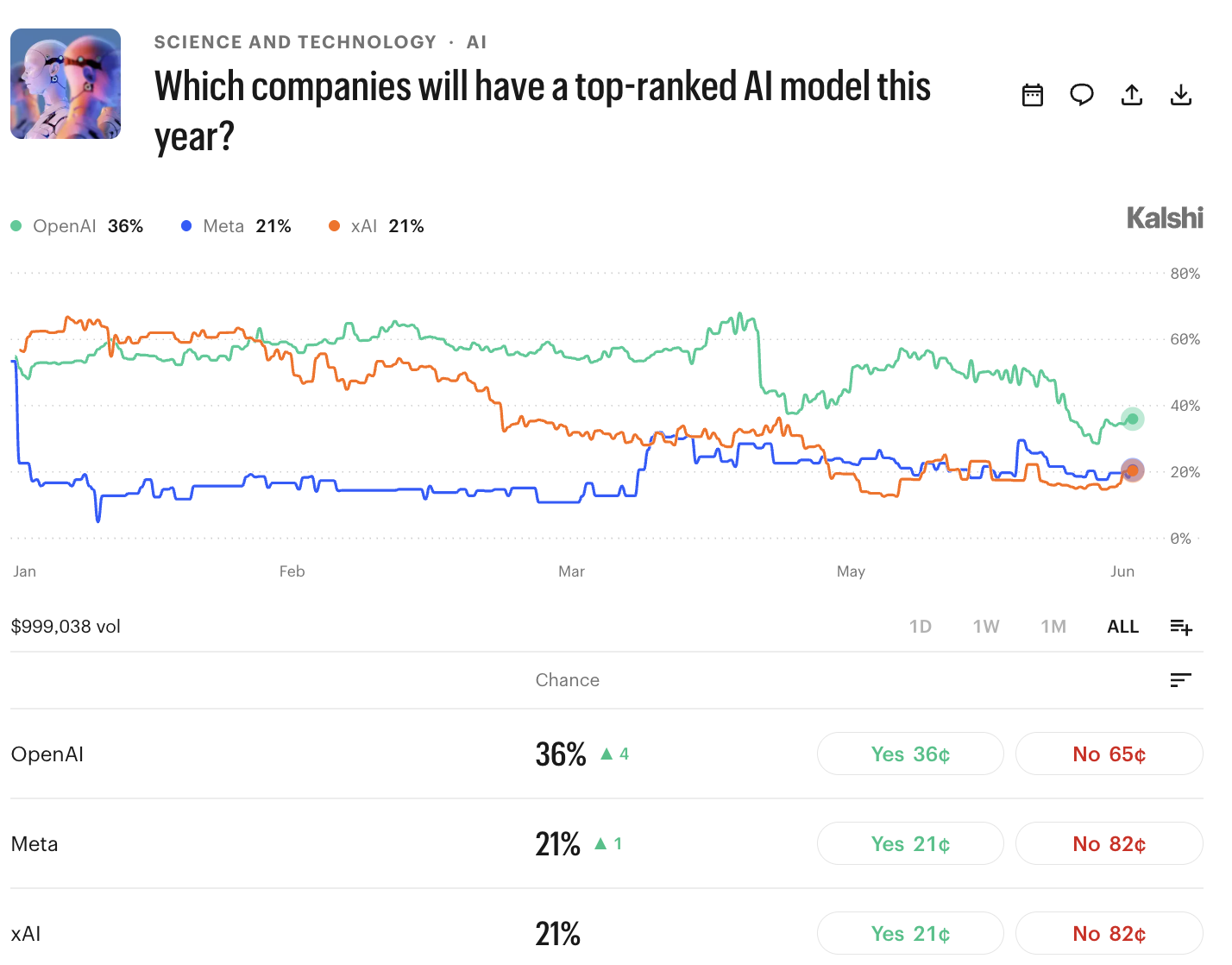
Source: Kalshi
Prediction markets still under scrutiny in US
While US regulators like the Commodity Futures Trading Commission (CFTC) remain engaged in legal battles with several state authorities over prediction markets, lawmakers are also considering legislation to address issues like insider trading and profiting from nonpublic information while in office.
Some of lawmakers’ concerns stemmed from a soldier allegedly making more than $400,000 on a Polymarket event contract related to the capture of Venezuela President Nicolás Maduro, removed by US forces in January to face a criminal trial in New York City. The soldier, Gannon Ken Van Dyke, is scheduled to go to trial in December.
Magazine: Japanese pension fund tips 1% in crypto, G7 urges action on NK hackers: Asia Express


Micron, Marvell and On Semiconductor, each more than doubled in 2026, led the drop. The selloff pulled the S&P 500 down 1.4% and the Nasdaq 100 down 3.3%. An attempted rebound in Asian chip stocks failed to hold on Wednesday, with Taiwan Semiconductor down more than 3%.
Oil kept falling as the other half of the macro picture. Brent crude slipped about 1% toward $76 a barrel as tanker traffic through the Strait of Hormuz became more visible following the US-Iran interim peace deal. A gauge of the dollar climbed to a seven-month high as investors moved toward safer assets.
The crypto-specific signal sits in the fund flows, said Mike McCluskey, co-founder of tx, in an email to CoinDesk. He called bitcoin’s stabilization in the low-to-mid $60,000s a measured response to the Federal Reserve’s hawkish turn, given how hard such shifts usually hit digital assets.
US spot bitcoin ETFs have seen a record 30-day net outflow of more than $6 billion, which McCluskey described as sustained institutional de-risking by the same buyers that drove this cycle. Until those flows clearly reverse, he said, relief rallies are likely to hit a hard ceiling.
McCluskey also flagged Friday’s options expiry on Deribit, with roughly $10.6 billion in notional value set to expire. An option is a contract giving the right to buy or sell at a set price, and notional value is the total value of the assets those contracts cover.
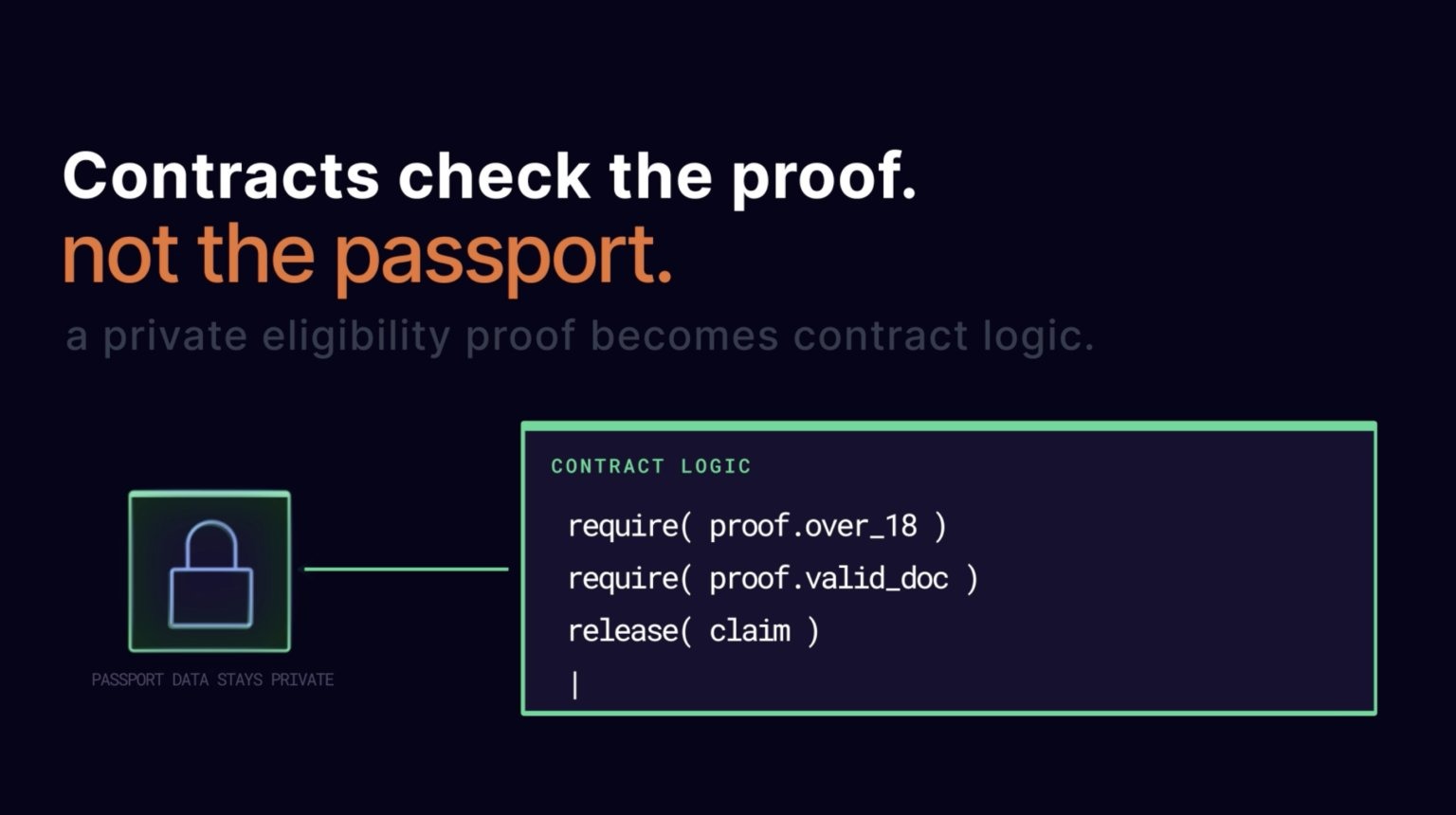
Zero-knowledge scaling company StarkWare has introduced Private KYC on Starknet, enabling users to complete know-your-customer requirements without revealing their full personal information.
The system, announced Tuesday as a demo, uses STRK20 privacy features and zero-knowledge STARK proofs to let users prove specific attributes, such as being older than 18 or holding valid credentials, without revealing their full passport details or address.
“Whether you need to prove you’re over 18, hold a valid credential or meet an eligibility rule, verification should only confirm the precise fact,” StarkWare said. Corporations should not collect the full identity behind it, “because every identity database becomes a liability the moment it exists.”
KYC compliance involves handing over personal information and trusting companies to keep it safe. The rollout comes as the US hit a record 3,322 data compromises in 2025, a 79% increase over five years, and the global average cost of a data breach is $4.4 million, according to StationX.
StarkWare users start by scanning their passport on their phones, using the camera and NFC chip to read and confirm the document is genuine and signed by its issuing authority.
They can then encrypt identity data to their Starknet wallet, register attributes in a public onchain registry, and submit zero-knowledge proofs for selective checks. Verifiers can confirm eligibility by reading the public registry without ever seeing the actual identity data.
Related: Privacy push as StarkWare and Sui move toward compliance-ready confidential transfers
“Private KYC shows that verification and privacy aren’t a trade-off,” StarkWare said. “An institution can confirm exactly what it needs without assembling another copy of someone’s identity it then has to defend.”
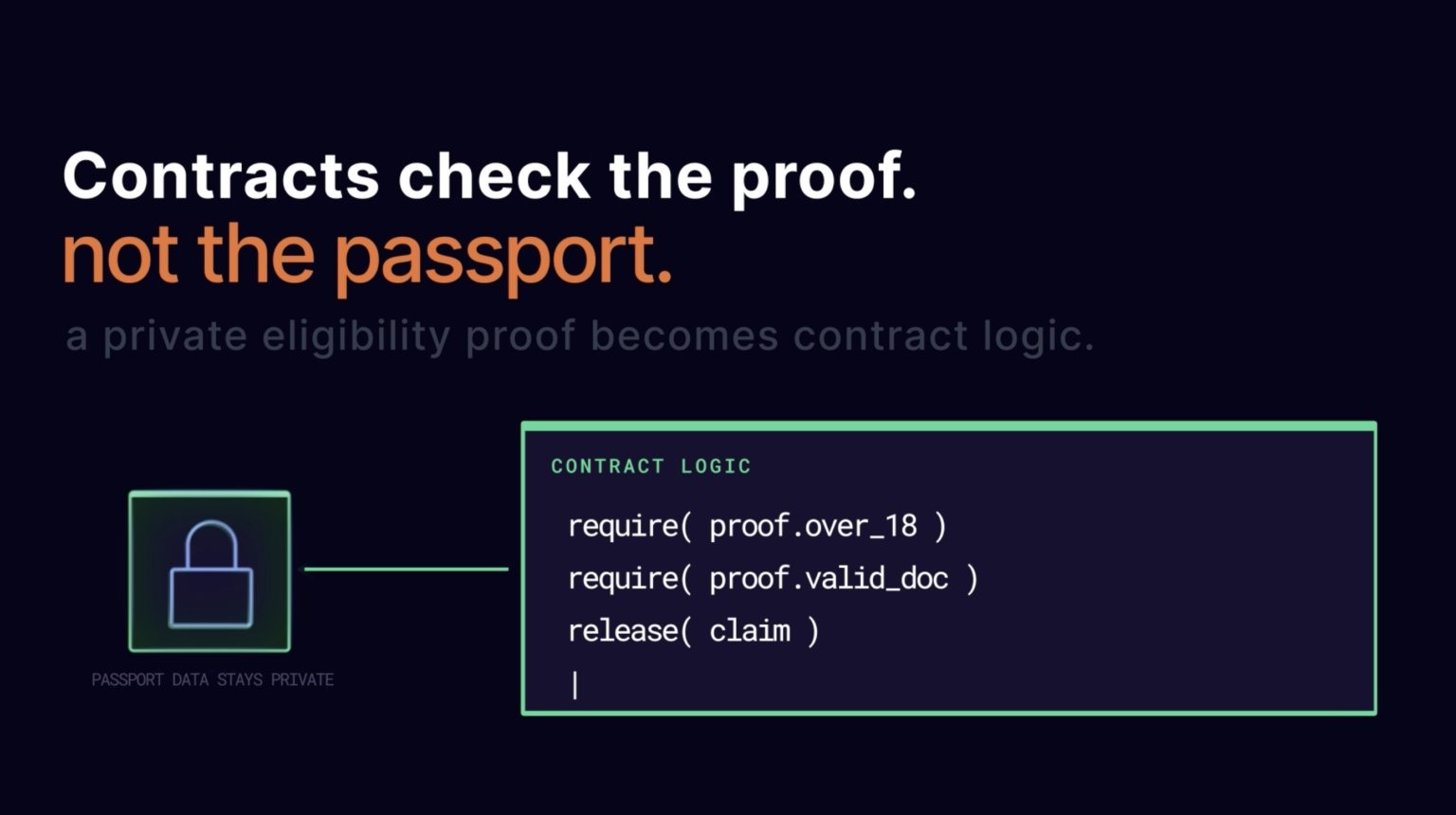
Contracts check the proofs, not the passports. Source: StarkWare
“Identity checks today ask for your whole document when they only need one fact,” the Starknet team said.
The system is similar to Sam Altman’s World ID (Worldcoin), which uses zk-proofs to verify humanness via iris scans on hardware orbs. However, World ID faced backlash over centralized biometric custody, whereas StarkWare’s self-custody model aims to address that issue.
Data breaches cost millions
According to Axis Intelligence, more than 1 billion health care records have been breached, with an average cost of $7.42 million, as of 2026. In the US, 772 large health care data breaches were confirmed in 2025, the highest annual total ever recorded.
The largest and most damaging data breach in the crypto industry occurred at hardware wallet provider Ledger, which suffered a massive database hack in 2020, resulting in the leak of more than 270,000 customer records and a wave of phishing attacks that continue to this day.
Magazine: Japanese pension fund tips 1% in crypto, G7 urges action on NK hackers: Asia Express

A group of US Senate Democrats is urging Senate Republican leaders to hold hearings into a reported $500 million deal between the Trump family’s crypto firm and Abu Dhabi royalty.
In a letter on Tuesday, the Democrats told Republicans, who control the Senate, lead its committees and decide on hearings, that they should “immediately hold hearings” into the deal and have Trump administration officials testify about it under oath.
The Wall Street Journal reported in January that an Abu Dhabi investment company backed by Sheikh Tahnoon bin Zayed Al Nahyan, the United Arab Emirates’ national security adviser, signed a deal in January 2025 to buy a 49% stake in World Liberty Financial, the crypto platform tied to US President Donald Trump.
Months later, in May 2025, the Trump administration made a major arms and artificial intelligence chip deal with the UAE, which the Democratic senators said came “despite concerns raised by US national security officials that China could access the chips.” Trump has said he wasn’t aware of the World Liberty deal.
The letter is the Democrats’ latest bid to probe World Liberty Financial’s dealings and its possible ties to decisions the president has made. Both Trump critics and supporters have criticized the perceived conflict of interest posed by the Trump family’s sprawling crypto interests amid Trump’s push to deregulate the sector.

Donald Trump (right) meeting with Tahnoon bin Zayed Al Nahyan (centre) at the White House in March 2025. Source: The White House
“We are deeply concerned about this series of events, which raise questions about what more the UAE may receive — or may have already received — at the expense of US national security after investing in the Trump family crypto company,” the Democrats wrote.
“Congress has a responsibility to investigate the details of the reported investment and whether it influenced subsequent actions by President Trump and the Trump Administration,” they added.
The senators said that they’re also concerned about the Trump administration’s “steps to weaken enforcement” by exempting crypto service providers from financial services regulations and disbanding the Justice Department’s crypto enforcement team.
Senators Elizabeth Warren, Richard Blumenthal, Gary Peters, Dick Durbin and Ron Wyden signed the letter.
Related: Crypto isn’t the problem with the US economy, says senator
Warren has called for an investigation into the UAE deal before, urging Treasury Secretary Scott Bessent in February to determine if the deal should be subject to a Committee on Foreign Investment probe.
Earlier this year, Democrats pressed Securities and Exchange Commission Chair Paul Atkins over the decision to drop a fraud case against Justin Sun, a major World Liberty Financial backer.
In May, Democratic Senator Peter Welch and Representative Dave Min launched a probe into Trump’s pardons, including that of Binance co-founder Changpeng Zhao.
The pardon came after Binance accepted a $2 billion investment from an Abu Dhabi fund in early 2025 and agreed for the funds to be paid in World Liberty Financial’s stablecoin, USD1.
Magazine: Trump’s crypto ventures raise conflict of interest, insider trading questions
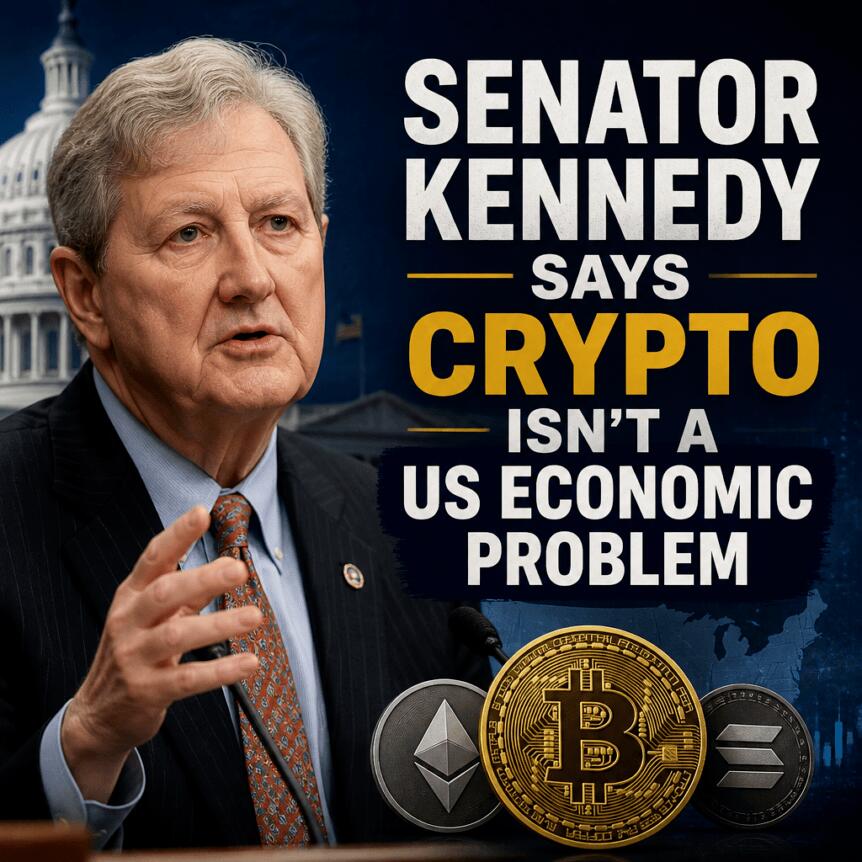
During a Senate Banking Committee hearing focused on U.S. affordability, Cody Carbone, CEO of the cryptocurrency advocacy group The Digital Chamber, argued that digital assets could reduce costs in payments and make it easier to own and move value. Carbone’s testimony, however, drew limited follow-up from most lawmakers, with only a small number of senators engaging directly on specific questions tied to stablecoins and foreign remittances.
The exchange came as Congress continues to weigh the Digital Asset Market Clarity (CLARITY) Act, a proposal advanced by the committee earlier this year. While the bill is widely expected to reach a broader Senate vote soon, additional political and regulatory concerns—particularly around ethics requirements and cross-sector regulatory treatment—are creating uncertainty around timing and final scope.
Key takeaways
- Cody Carbone used the hearing to argue that digital assets could improve affordability through faster, cheaper transactions and reduced frictions in asset ownership and transfers.
- Most lawmakers did not question him on digital assets; Senators Tim Banks and John Kennedy were among the only members to engage directly.
- Carbone linked his affordability argument to the Senate’s progress on the CLARITY Act, which committee leaders moved forward in May.
- Beyond ethics debates, external industry groups are pressing for clarifications that the bill would not expand the Commodity Futures Trading Commission’s reach over certain prediction-market activities.
Testimony on affordability and pressure on payment rails
In the Tuesday hearing titled The Affordability Agenda, Carbone presented digital assets as a potential competitive counterweight to incumbent payment systems. He argued that the industry could support affordability outcomes by enabling faster and less costly settlement, applying “competitive pressure” on existing rails, and lowering barriers to purchasing and transferring digital assets.
For institutional stakeholders, the key compliance-relevant aspect of this framing is not the affordability concept itself, but the policy implication that lawmakers may increasingly view digital-asset infrastructure as part of the broader U.S. financial-services toolkit. If Congress advances that approach, firms may need to anticipate tighter legislative integration between digital assets and existing regulatory expectations covering consumer protection, disclosures, and market integrity.
Carbone’s reception on the Senate floor also highlighted the uneven level of legislative attention to crypto-specific implementation details in general policy hearings. Other than questions focused on stablecoins and remittances, senators largely did not interrogate the evidence or compliance mechanisms underlying Carbone’s claims.
Limited engagement from lawmakers, with stablecoin and skepticism
Senators Tim Banks and John Kennedy provided the most direct responses during the hearing. Banks asked Carbone about the cost of foreign remittances relative to options involving U.S. dollar–pegged stablecoins, suggesting an interest in how stablecoin-mediated transfers might affect end-to-end costs for cross-border payments.
Kennedy’s remarks were more dismissive. He told Carbone, “Mr. Carbone, you seem to be here to promote cryptocurrency,” adding that he did not believe digital assets were the core driver of the economic issues the hearing addressed.
This split underscores a continuing challenge for the industry: affordability narratives may resonate rhetorically, but legislative scrutiny may still hinge on whether digital-asset mechanisms deliver measurable consumer and financial-stability benefits in practice—and on how regulators would oversee those mechanisms.
CLARITY Act advances, but ethics and scope disputes persist
Carbone’s testimony centered on the CLARITY Act, which the Senate Banking Committee advanced in May. Committee momentum is important because it signals that at least one major congressional venue views clearer digital-asset market rules as a priority. Still, passage is not guaranteed.
According to reporting on the bill’s committee movement, lawmakers are calling for additional ethics provisions. Such provisions can affect how the legislation is drafted and implemented, including how conflicts of interest, industry influence, and governance standards are addressed in any framework that authorizes or regulates market participants.
Meanwhile, timing remains fluid. Some lawmakers have expected the Senate to consider the bill before the chamber breaks for an August recess, but as of Tuesday, there was no scheduled floor vote.
For compliance teams and financial institutions, this phase matters because it can determine whether firms will need to adapt operational and governance policies in advance of enactment or only after final language is finalized. Ethics-related amendments can also influence how regulators interpret standards and enforce obligations once the statute is in effect.
Industry pushback on prediction markets and CFTC jurisdiction
Separate from ethics disputes, gambling industry groups have reportedly urged the Senate to clarify that the CLARITY Act would not allow the CFTC to pursue sports betting oversight in prediction markets. The concern stems from regulator statements regarding “exclusive jurisdiction” over certain platforms, including examples cited in public discussion such as Kalshi and Polymarket.
The underlying policy issue is jurisdictional boundaries—how a new legislative framework might interact with the existing Commodity Exchange Act and the CFTC’s authority. For firms operating in or adjacent to prediction markets, the uncertainty can have concrete compliance consequences: categorization of products, registration expectations, marketing restrictions, and enforcement risk can all shift depending on how Congress defines regulatory responsibility.
These disputes also illustrate the cross-border and cross-regulatory complexity of crypto-adjacent markets. A bill intended to address digital-asset market structure can inadvertently affect adjacent sectors—particularly where digital tokens, derivatives, or exchange-like trading are involved—requiring careful drafting to avoid unintentionally broad regulatory coverage.
Cointelegraph previously reported that gambling organizations sought clarity on this point as the CLARITY Act advanced, aligning with broader concerns that market structure legislation can produce second-order effects beyond digital-asset trading itself.
Closing perspective: a bill that could reshape oversight priorities
Carbone’s appearance at the affordability hearing points to a legislative strategy that connects digital assets to broader financial policy goals, but the path for the CLARITY Act remains unsettled. The next developments to watch are whether senators agree on ethics amendments and whether the bill’s final text resolves prediction-market jurisdiction concerns without expanding enforcement authority in ways that stakeholders view as unanticipated.
Crypto World
Pepe Coin Price Prediction: Whale Wallets Stack $7.5M PEPE During 17% Rebound While Pepeto Lines Up 150x Listing
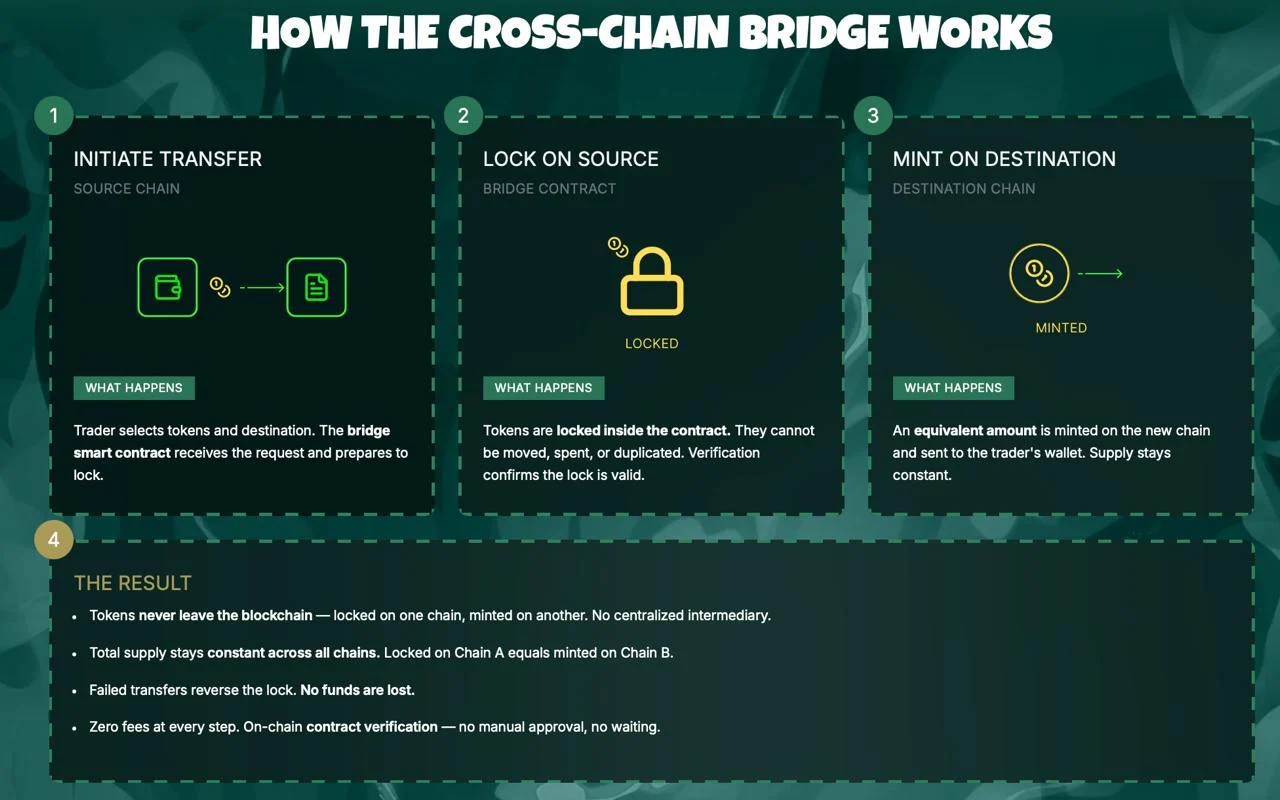
The Pepe Coin price prediction is heating up. PEPE whales added $7.5 million during a 17% rebound off the June 6 low, pushing whale supply from 181 trillion to 183.6 trillion tokens, and meme coin ETF flows are pulling capital back per CoinMarketCap.
Whenever big-money flows show that kind of conviction, meme tokens move first, and the hunt for the next Pepe-style winner gets noisy.
The same builder who scaled the original Pepe Coin from internet joke to $11 billion on 420 trillion tokens now leads Pepeto, with identical supply, the same bottom-up community heat, and a full exchange the first version never delivered.
Anyone who picked up Pepe Coin in April 2023 turned tiny deposits into life-rewriting paydays as the token printed 7,000% in four weeks, riding pure hype with no audit and no real product.
Pepeto ships both plus an approaching Binance listing, and the same crowd that drove the original Pepe Coin into mainstream headlines is already gathering. The big-cap picture lays the table, but the real prize is the presale still on offer. With whale wallets stacking, this is the moment.
The Next Pepe Coin: Same Builder, Real Products, and a Binance Listing Ready
The original Pepe Coin proved a meme token without products could ride pure crowd belief to $11 billion. Buyers who entered early and held past listing day walked away with returns that rewrote their lives. But PEPE never launched an exchange or any cross-chain product, leaving nothing to support demand once the hype faded.
That is why PEPE today sits 90% below its peak. Pepeto fills every void the first version left empty, with the same cofounder shipping zero-fee trading, a bridge across ETH, BNB, and SOL, a token scanner that flags threats before capital arrives, and a signed SolidProof audit on file. The Binance listing arrives at launch, and the organic build behind Pepeto walks the same path that took the original from nothing to billions.
Pepe Coin Price Prediction 2026 and the Presale Where the Same Builder Goes Bigger
Pepeto: The Exchange Presale From the Builder Who Already Hit $11 Billion
Pepeto is the strongest presale on the market, carrying more working tools than any meme coin has ever shipped at this stage.
Pepeto runs a live exchange on Ethereum where the risk engine scores every contract before your wallet goes near it, catching dangerous permissions and liquidity holes most buyers learn about only after losing money.
Against the original Pepe Coin which peaked at $11 billion on hype alone, Pepeto delivers a live exchange, a signed SolidProof audit, and a former Binance lead running the listing roadmap. Over $10.307 million committed while new wallets join every round shows where serious capital is heading.
Staking at 169% APY grows inside the presale while the market tracks PEPE price charts. At $0.0000001878 on 420 trillion tokens, reaching the same cap Pepe hit while shipping nothing means 150x, and the exchange gives that target a real base. That entry slams shut the moment the Binance listing goes live, and each round closes faster than the one before.
PEPE Price Outlook: Recovery Has a Ceiling and the Upside Is Capped
Pepe (PEPE) trades near $0.000002722 per CoinMarketCap, down 90% from its all-time high, with a $1.12 billion cap.
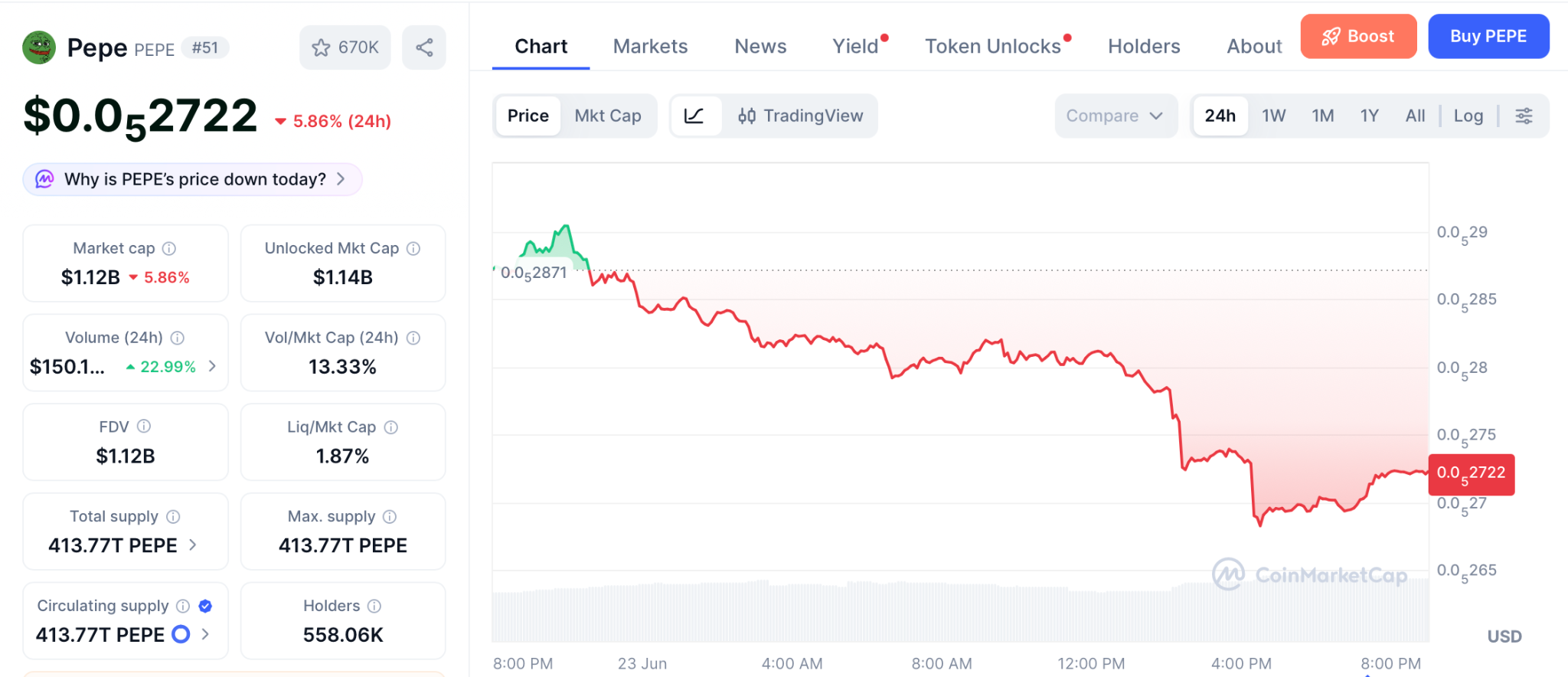
The 50-day EMA hovers around $0.0000035 per FXStreet, with a run back to the $0.000028 peak giving roughly 10x. For a Pepe Coin that already proved meme power, 10x is a recovery play not a wealth builder, while the builder behind Pepeto targeting 150x to that same peak tells you exactly where the better math lives.
Conclusion
The $7.5 million in whale accumulation and the 17% rebound off June lows tell you smart money is already back, and that blend of meme power with real exchange tools is why wallets entering each round trace to addresses that held winners across past cycles.
They commit with size, verify everything, and move the second they spot what the rest of the market hasn’t priced in. The Pepe Coin price prediction hands you a 10x at best, but the next Pepe Coin is the one shipping real products and a presale spot that vanishes the moment trading opens, and the Pepeto official website is the gateway holding those entries right now.
Every wallet stacking before the Binance listing opens is writing the part of this cycle late arrivals will spend the rest of 2026 trying to undo, because once the rounds close the entry price disappears and the chance to be early is gone for good.
Click To Visit Pepeto Website To Enter The Presale

FAQs
What makes the Pepe Coin price prediction for 2026 different from Pepeto’s upside?
PEPE at $0.000002722 targets recovery toward $0.0000050 short term, but even reaching its ATH only delivers 10x. Pepeto at presale pricing carries 150x to that same cap with a working exchange and approaching Binance listing behind it.
Why do crypto investors keep calling Pepeto the next Pepe Coin heading into 2026?
Pepeto shares the same cofounder and 420 trillion token supply as the original, but ships zero-fee trading, a cross-chain bridge, and a signed SolidProof audit. Over $10.307 million raised confirms serious conviction.
Disclaimer: This is a Press Release provided by a third party who is responsible for the content. Please conduct your own research before taking any action based on the content.


The U.S. Commodity Futures Trading Commission (CFTC) has filed a federal lawsuit against the state of Kentucky, seeking to halt Kentucky’s efforts to block several prediction market platforms. The action comes after Kentucky sued major players in the prediction market space last week, arguing they operate without the required state gaming approvals.
According to the CFTC, the event contracts offered by platforms including Polymarket and Kalshi fall under the agency’s jurisdiction as federally regulated prediction markets. The regulator’s complaint also challenges a Kentucky law that imposes an excise tax on prediction market transaction fees, arguing the measure is effectively designed to make such platforms unable to operate in the state.
Key takeaways
- The CFTC filed suit in federal court to block Kentucky’s legal action against five prediction market-related defendants.
- Kentucky’s complaint targets Polymarket and Kalshi, as well as partners including Coinbase, Robinhood, and Webull, alleging “sports wagering” without proper licensure.
- The CFTC argues its authority is exclusive because the platforms’ event contracts are regulated as swaps and are linked to CFTC-designated contract markets.
- Kentucky’s 14.25% excise tax on prediction market transaction fees is part of the dispute, with the CFTC claiming it would make operation economically unviable.
- This is the ninth state case the CFTC has pursued since it began escalating enforcement around prediction market jurisdiction.
CFTC moves to preserve federal control over prediction markets
In its filing, the CFTC asked the court for declaratory and injunctive relief aimed at stopping Kentucky’s state-level case. The lawsuit identifies Kentucky Governor Andrew Beshear, Attorney General Russell Coleman, and the Kentucky Horse Racing and Gaming Corporation, among others.
CFTC Chair Mike Selig said the agency is “firmly committed to maintaining its exclusive jurisdiction over prediction markets,” calling Kentucky “the latest state attempting to shut down federally-regulated event contracts.” In the same statement, Selig framed the lawsuit as part of the CFTC’s broader effort to protect its federal authority over how these markets are regulated.
The CFTC said its enforcement push has intensified since Selig became chair in December. Kentucky’s case marks the ninth state action the CFTC has initiated over state measures targeting prediction markets.
Kentucky’s theory: event contracts are “sports wagering” under state law
Kentucky’s earlier lawsuit, filed last week, named Polymarket and Kalshi, along with Kalshi partners Coinbase, Robinhood, and Webull. Kentucky argued these entities are “doing business without a Kentucky gaming license or following state regulations,” and that their sports event contracts “fall squarely within the definition of ‘sports wagering’ under Kentucky law.”
The state also pointed to consumer-protection requirements. Kentucky alleged the platforms provide users “few or no resources” to identify or seek help for a gambling problem, as required under Kentucky law.
Sports betting falls under the jurisdiction of the Kentucky Horse Racing and Gaming Corporation, which has overseen the sector since 2023. Kentucky’s complaint effectively treats prediction markets offering sports-linked event contracts as a category of gambling that must comply with Kentucky’s licensing and regulatory framework.
How the CFTC reframes the same contracts as swaps and regulated derivatives
The CFTC’s lawsuit takes a different starting point: it argues that Polymarket and Kalshi operate within the CFTC’s regulatory universe. Specifically, the agency contends that the platforms are designated contract markets under its authority and that their event contracts are “swaps” under federal commodities law.
On the involvement of Coinbase, Robinhood, and Webull, the CFTC argues these firms are CFTC-registered futures commission merchants capable of offering event contracts in partnership with a designated contract market. This approach ties the platforms’ products to federal derivatives-style oversight rather than state gambling licensing requirements.
At the center of the broader legal clash is jurisdiction—whether states can enforce their gaming rules on prediction markets that, according to the CFTC, are already regulated at the federal level.
Excise tax dispute raises stakes for state enforcement
Kentucky’s efforts aren’t limited to licensure. The CFTC also challenged Kentucky’s recent law imposing a 14.25% excise tax on prediction market transaction fees. The regulator argued the tax is an attempt to make prediction markets economically unviable in Kentucky.
In the CFTC’s view, the tax structure functions as a practical barrier rather than a neutral fiscal policy—an argument that could become important if the court evaluates whether the state measure effectively undermines federally regulated market activity.
Just weeks earlier, the CFTC similarly sued New Mexico to block state actions aimed at applying state gaming laws to Kalshi, underscoring that the dispute is not confined to one state. The pattern suggests the agency intends to test—through litigation—whether state gaming enforcement can proceed when the CFTC believes federal commodities regulation already governs the same products.
Political backdrop and what to watch next
The Kentucky case lands amid a wider political conversation about prediction market jurisdiction. Earlier reporting in the same coverage noted that President Donald Trump gave the CFTC “moral support,” saying it was “critically important” that the regulator be the authority on prediction markets. The filing also references related public political ties, including that Trump Jr. has invested in and advises groups connected to Polymarket and Kalshi.
For market participants and users, the practical question now is procedural as well as substantive: whether federal court intervention will pause or narrow Kentucky’s enforcement timeline, and how the court evaluates the CFTC’s claim of exclusive federal jurisdiction. Readers should watch for developments on the scope of the injunction the CFTC is seeking, and for whether additional states facing similar disputes will move to accelerate or pause their own prediction market enforcement actions.

CFTC Sues Kentucky to Defend Its Exclusive Jurisdiction Over Prediction Markets

‘Hacks’ Star Confesses To Storming Off The 2025 Emmys

Full list as dozens of Stockport roads hit by 20mph speed limits and parking bans


-

 Fashion4 days ago
Weekend Open Thread: Miami – Corporette.com
-

 Entertainment3 days ago
Renter of Home in Anne Heche Crash Denies Settlement With Son
-

 Tech2 days ago
Microsoft accidentally kills epic Outlook email threads
-

 Business3 days ago
Soccer-U.S. defends Iran World Cup travel restrictions, says discussions ongoing
-

 Politics5 days ago
BBC Reporter Discusses Cross Party Criticism Of Trumps Iran Deal
-
 Sports10 hours ago
Two goals and an assist by sheer aura: Cristiano Ronaldo just entered the World Cup chat
-
 Business4 days ago
Wall Street Week Ahead: Investors see Micron earnings as pulse check of AI rally momentum
-
Business4 hours ago
Entergy settles forward sale agreements, raises $672 million in cash proceeds
-

 Politics4 days ago
Andy Burnham and the meaning of Makerfield
-

 Tech6 days ago
AWS enters the context layer race with a graph that learns from agents, not manual curation
-
 Crypto World4 days ago
Can Charles Hoskinson Really Rescue Cardano?
-

 Crypto World4 days ago
HIVE shares jump as $220M AI deal speeds Bitcoin mining pivot
-

 Crypto World4 days ago
Jake Chervinsky accuses CME of protecting derivatives monopoly
-

 NewsBeat5 days ago
Keir Starmer Allies Question His Chances For No 10
-

 Tech1 day ago
Nearly 7,000 fake Amazon domains registered ahead of Prime Day 2026, researchers warn
-

 Business5 days ago
Brexit cost 6% of UK economy, Bank of England company data suggests
-

 Sports5 days ago
FIFA World Cup 2026: Canada beat 9-men Qatar 6-0 to register first ever win | FIFA World Cup 2026
-
 Tech3 days ago
Signal’s Meredith Whittaker says AI chatbots ‘are not your friends’ and calls Copilot agents a backdoor
-

 Entertainment4 days ago
Jose Alvarado Wants Taylor Swift at More Knicks Games
-

 Business3 days ago
MHP SE 2026 Q1 – Results – Earnings Call Presentation (OTCMKTS:MHPSY) 2026-06-20
You must be logged in to post a comment Login