
Crypto World
Japan’s Inflation Print Just Made a September BOJ Hike Harder to Avoid

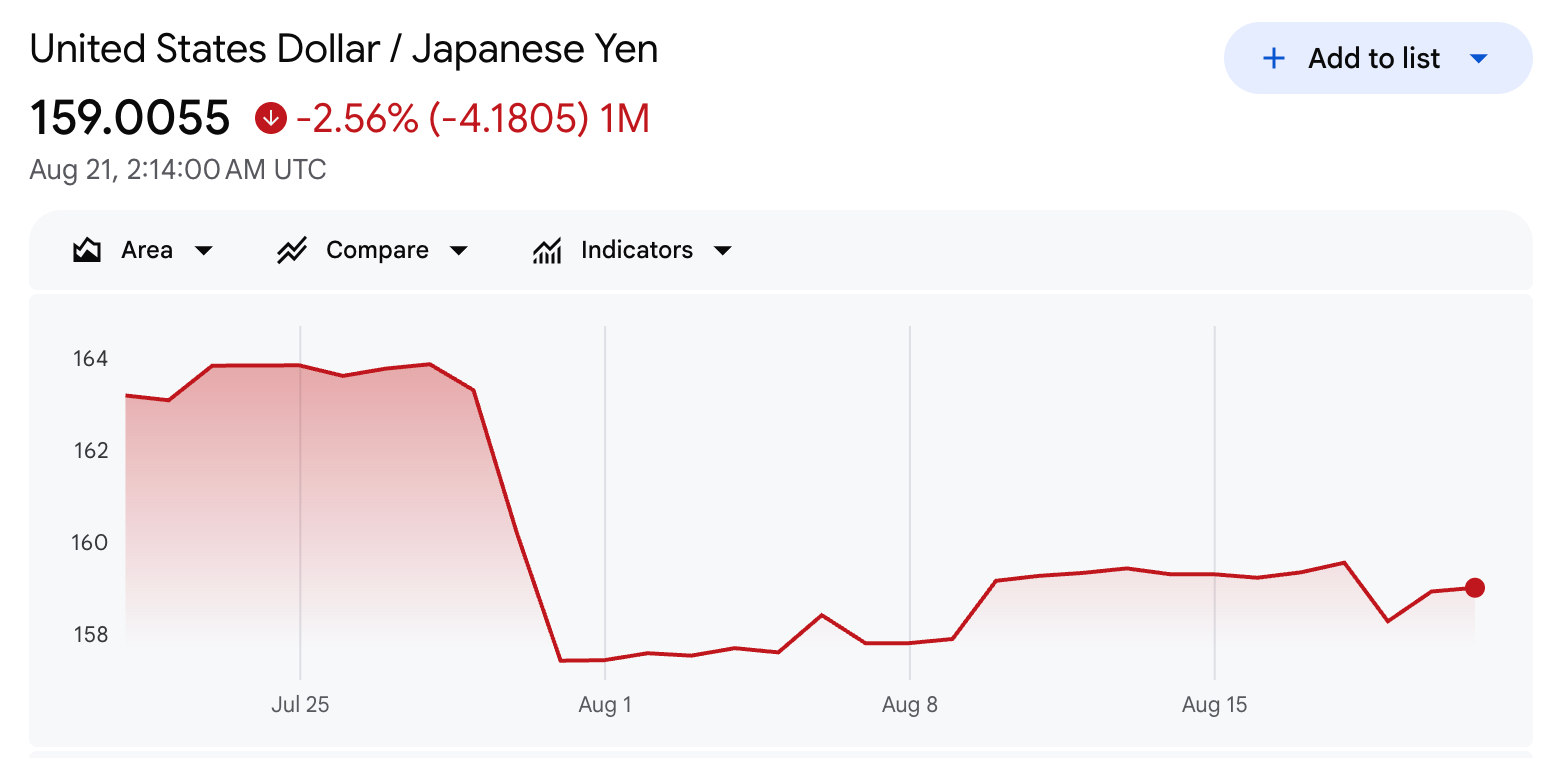
Japan’s headline inflation rate reached 1.9% in July, its highest level this year, as the Iran conflict pushed energy costs higher and the yen drifted back toward 159 per dollar.
Both readings now point the Bank of Japan toward the same decision in September, when its board next meets to set the policy rate.
Energy Costs Lift Japan’s Inflation to a 2026 High
Core inflation, which excludes fresh food but keeps energy, matched forecasts at 1.8%. The so-called core-core rate, stripping out both, came in at 1.9%.
Energy prices climbed for the first time since November 2025 despite government support. That fed into wholesale inflation, which reached 7.2% in July.
Electricity charges were the largest contributor. Fresh food prices climbed 7%, a sharp acceleration from the 3.9% increase recorded in June.
Analysts have said subsidies from Prime Minister Sanae Takaichi’s administration are holding down consumer prices. The measures shield households from energy costs.
Meanwhile, the BOJ warned last month that core inflation would clearly move above 2% starting in the second half of its 2026 fiscal year, which runs from September to March. It cited wage increases feeding into selling prices, higher crude oil prices, and the recent depreciation of the yen.
Follow us on X to get the latest news as it happens
Intervention Gave Carry Traders a Cheaper Entry
The joint US-Japan operation lifted the yen from roughly 164 per dollar to about 155 per dollar. Most of that move has since unwound, even though Japan’s intervention firepower remains substantial.

Nonetheless, Japanese investors treated the stronger yen as an opportunity to double down on the carry trade. They net bought more than 5 trillion yen of foreign equities and long-term bonds in the two weeks to August 15, reversing net sales of more than 300 billion yen.
“Intervention has ‘turbo charged’ the carry trade for fundamental & long-term investors,” Jesper Koll, expert director at Monex Group, told CNBC.
The US-Japan 10-year yield spread stood near 1.8 percentage points on August 20. The wide gap continues to support the carry trade by preserving the incentive to fund investments in higher-yielding overseas assets with relatively low-yielding yen.
That dynamic is unlikely to change materially unless the Bank of Japan raises rates enough to narrow the yield differential.
Both Pressures Point the BOJ the Same Way
This leaves the BOJ facing pressure from two directions at once. July’s inflation print argues for tightening, and so does a currency the market keeps selling back down.
Traders have already moved. Polymarket now assigns 84% odds to a 25-basis-point increase at the September 17-18 meeting, against 15% for no change. Those odds sat near 21% earlier.

The BOJ lifted its policy rate to 1% in June, the highest level since 1995. Whether one more quarter-point move does anything to a 1.8 point yield gap is the question September leaves open.
Subscribe to our YouTube channel to watch leaders and journalists provide expert insights
The post Japan’s Inflation Print Just Made a September BOJ Hike Harder to Avoid appeared first on BeInCrypto.



After years of stalled bills, misguided enforcement, and catastrophic collapses, almost any comprehensive crypto legislation began to look like progress. But Clarity is turning that hunger for progress into a political trap, argues Berkeley Law lecturer Hermine Wong.
Crypto World
Coldcard ships firmware after $114 million bitcoin theft; says AI helped catch more bugs
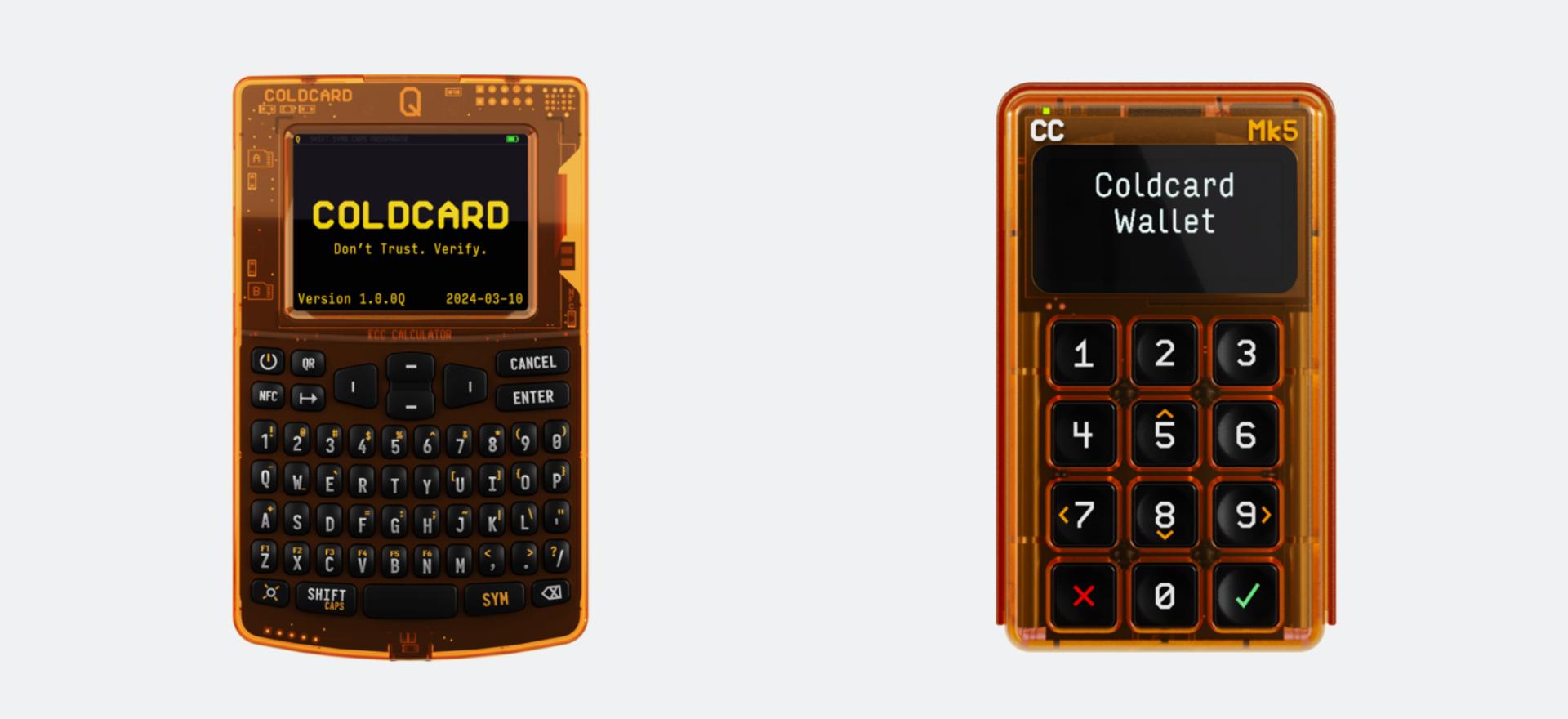
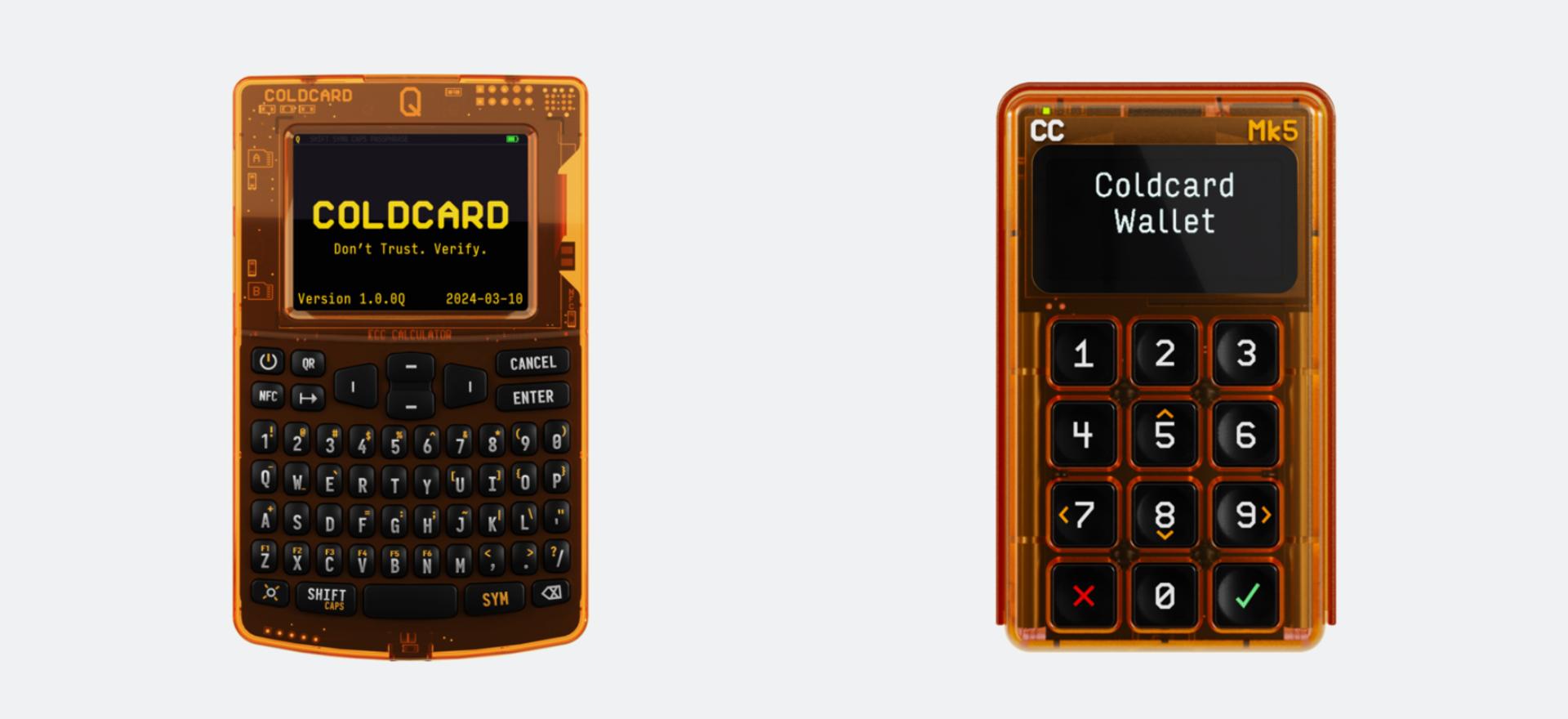
Three weeks of review turned up problems unrelated to the flaw that cost users $114 million, but updating still does not make a compromised wallet safe.


Yesterday’s arbitration motion hearing between Justin Sun and World Liberty Financial (WLFI) is being hotly contested by both the Tron billionaire and WLFI’s CEO Zach Witkoff.
The federal court hearing in California stems from Sun’s April lawsuit that accuses WLFI of fraud and breach of contract when it froze his tokens with alleged undisclosed blacklisting powers.
Sun says hearing was a ‘significant win’
Sun claimed on X that a judge ruled his case and “individual claims” would go to court, calling the apparent development a “major victory.”
He said that the judge “rejected World Liberty’s argument that all of the company-related claims should be arbitrated, and has ordered the parties to meet and confer about which of those claims should remain in court and which should go to arbitration.”
All this, Sun said, was despite WLFI’s efforts to force “secret arbitration proceedings.”
Witkoff says Sun is lying
Hours later, Witkoff said WLFI never wanted Sun’s “individual claims” to go to arbitration and that they wanted them dismissed entirely.
He said that the court is yet to rule on the outcome of these claims, completely contradicting Sun’s description of the hearing, which Witkoff described as “riddled with falsehoods.”
Read more: WLFI token falls 18% as governance vote branded a ‘scam’
Additionally, Witkoff claims the court sided with WLFI and agreed that many of Sun’s other claims must go to arbitration. He said, “Even Sun’s lawyers had to concede in the courtroom that these claims do not belong in court.”
Justin Sun is allegedly avoiding other lawsuit proceedings
To top it off, Witkoff alleges that Sun is “actively avoiding” legal proceedings regarding the separate lawsuit WLFI filed against him in Florida.
Court documents on the outcome of yesterday’s hearing are yet to be published online. It’s unclear when the parties will meet next to discuss the arbitration motion.
Sun says WLFI can’t afford to lose lawsuit
Sun also alleged that WLFI likely can’t afford the hundreds of millions of dollars in damages if they lose the lawsuit.
Read more: Trump’s World Liberty Financial sues its advisor Justin Sun
He highlighted that WLFI’s deposit of almost 5 billion WLFI tokens with Dolomite, and legal proceedings regarding Dough Finance litigation, raise doubts about whether WLFI has “enough money to satisfy a judgment, repay their debts, or make investors whole if there is a run on the bank.”
Got a tip? Send us an email securely via Protos Leaks. For more informed news and investigations, follow us on X, Bluesky, and Google News, or subscribe to our YouTube channel.

Spain has already constructed a 1,600-foot floating barrier along the sea border following the Ceuta crossings. In the past decade, tens of thousands of migrants have died in Mediterranean crossings alone. But as Hein de Haas, a sociologist of migration, has explained, restrictive immigration policies fail to stop migration as there is a structural demand for cheap migrant labor in Europe. The waters of the Atlantic and the Mediterranean are full of the remains of those who perished while trying to reach Europe, victims of a system that treats human mobility as a threat to be managed rather than a reality to be humanely addressed.
But the combination of rising inequality and violence globally, and the need for a workforce, means people won’t stop migrating. This means that current border policies don’t stem migration but instead increase death and suffering. Precisely because it takes much longer, thousands of migrants are stuck in Morocco. Mehdi Alioua, a Moroccan sociologist, has called this phenomenon “transit migration.” Each must find rent and work, saving for yet another attempt at a better passage. Some have children, who grow up speaking fluent Darija, the Moroccan colloquial tongue, and who eventually become part of the working class fabric of Tangier. Some migrants with means share rented apartments in the affordable, peripheral neighborhoods of Mesnana and Boukhalef in southwestern Tangier.

Ethereum extended its rally after climbing by over 5% on Friday and touched $2,420 for the first time in months. With ETH now trading above $2,380, new data suggest that several signals aligned ahead of this sharp move.
The recovery has pushed the $4,700 resistance into focus, which could open the door for $10,000, $15,000, and $20,000 targets.
Next Big Test
According to Santiment’s latest analysis, the crowd sentiment on ETH hit a three-month low on August 17. Its seven-day weighted sentiment average fell to its lowest reading in at least three months and turned negative. Two days later, ETH shot up.
On August 18, Santiment’s eth_whale_dump anomaly fired once at roughly $7.55 million, compared with five events in each of the prior two weeks. ETH held on exchanges also fell to about 6.54 million coins, the lowest level of the stretch.
Then macro factors took over as the US Treasury expanded long-end bond buybacks, followed by a record wave of short liquidations. The analytics platform said that the negative crowd did not cause the rally, but it did leave a record pile of shorts in its path.
The breakout has prompted Michaël van de Poppe to expect further upside, although the MN Fund founder said that the crypto asset could see some consolidation after the recent move. He believes ETH can continue higher as long as it stays above $2,000. His short-term upside levels include $2,465 and potentially $2,900. The market commentator added that a higher high would signal the end of the bear market.
Higher Targets Come into Focus
Crypto Patel’s chart puts longer-term upside in focus. Ethereum has gained more than 55% from the $1,500 accumulation zone highlighted in Crypto Patel’s analysis. The $4,700 has now emerged as a key resistance and breakout point. If the asset clears it, the analysis points to potential targets of $10,000, $15,000, and $20,000.
Axel Bitblaze also saw a familiar setup in ETH’s latest move. The analyst noted that Ethereum also bottomed near $1,500 in April 2025 before spending weeks below $1,950 and then pushing toward $2,400. With the current price action following a similar path, the analyst expects some sideways trading and added that the token could see one more dip before making another move higher.
On the institutional side of things, US spot Ethereum ETFs are also drawing fresh capital. These funds added yet another positive sign for the asset. On August 20, total net inflows topped $220 million, just a day after logging $189 million.
The post ETH Rallied 30% After Sentiment Collapsed: Here’s the Level That Matters Next appeared first on CryptoPotato.

MANTRA has halted its blockchain after an incident affecting its Cosmos EVM module, sending its native token to a new all-time low on August 21.
The team says two wallet addresses were affected, no user funds were exploited, and a patched release is being tested before a possible network restart later today.
MANTRA Freezes Chain as It Tests a Fix
MANTRA initially said it had halted the chain as a precaution while investigating an incident, with all endpoints and transactions frozen. Deposits and withdrawals to and from MANTRA Chain were also temporarily affected.
A status update later said the network remained halted while developers prepared and tested a remediation. Transactions, transfers and staking operations were unavailable, although MANTRA said user funds were unaffected by the halt itself.
The team has since identified the root cause, saying the incident was isolated to the Cosmos EVM module and affected two wallet addresses before the threat was contained.
“No user funds were exploited,” the team repeated.
They also said they had taken a full network snapshot before beginning the restart process. Its patched v8.4.0 release addresses the underlying vulnerability and is being tested on the DuKong testnet, with the project targeting a coordinated mainnet upgrade and restart later in the day, provided testing finishes cleanly.
Validators have also been told to keep their mainnet nodes offline until the restart is announced.
The native token, formerly known as OM, now trades under the MANTRA ticker after the project completed a 1:4 non-dilutive redenomination and ticker change in March this year, meaning holders received four MANTRA tokens for each former OM token without changing their overall value at the time of conversion.
After the chain was halted, the token plunged more than 18%, going from about $0.0050 to $0.0041 to set a new all-time low.
However, at the time of writing it had managed to claw back some of that value and was changing hands near $0.0046, which still put MANTRA about 82% below its March 4 all-time high of $0.02627.
OM Collapse Still Hangs Over MANTRA
Recall that OM fell from above $6 to below $1 in less than an hour on April 14, 2025, wiping out roughly 90% of its market value, with liquidations exceeding $70 million.
At the time, CEO John Patrick Mullin blamed the collapse on what he described as “reckless forced closures” by centralized exchanges.
The fallout continued into January 2026, when MANTRA announced staff cuts across several teams. The company said its rapid expansion through 2024 and early 2025 had left its cost base too high after a difficult market period and the events surrounding the token’s collapse. Mullin also pledged to burn 300 million OM tokens after the April 2025 crash, with the burn completed later that month.
MANTRA says a full post-mortem will follow. For now, the chain remains paused while the patched software undergoes testing, leaving users with limited information beyond the team’s update.
The post MANTRA Freezes Blockchain After Cosmos EVM Incident as Token Hits New Low appeared first on CryptoPotato.
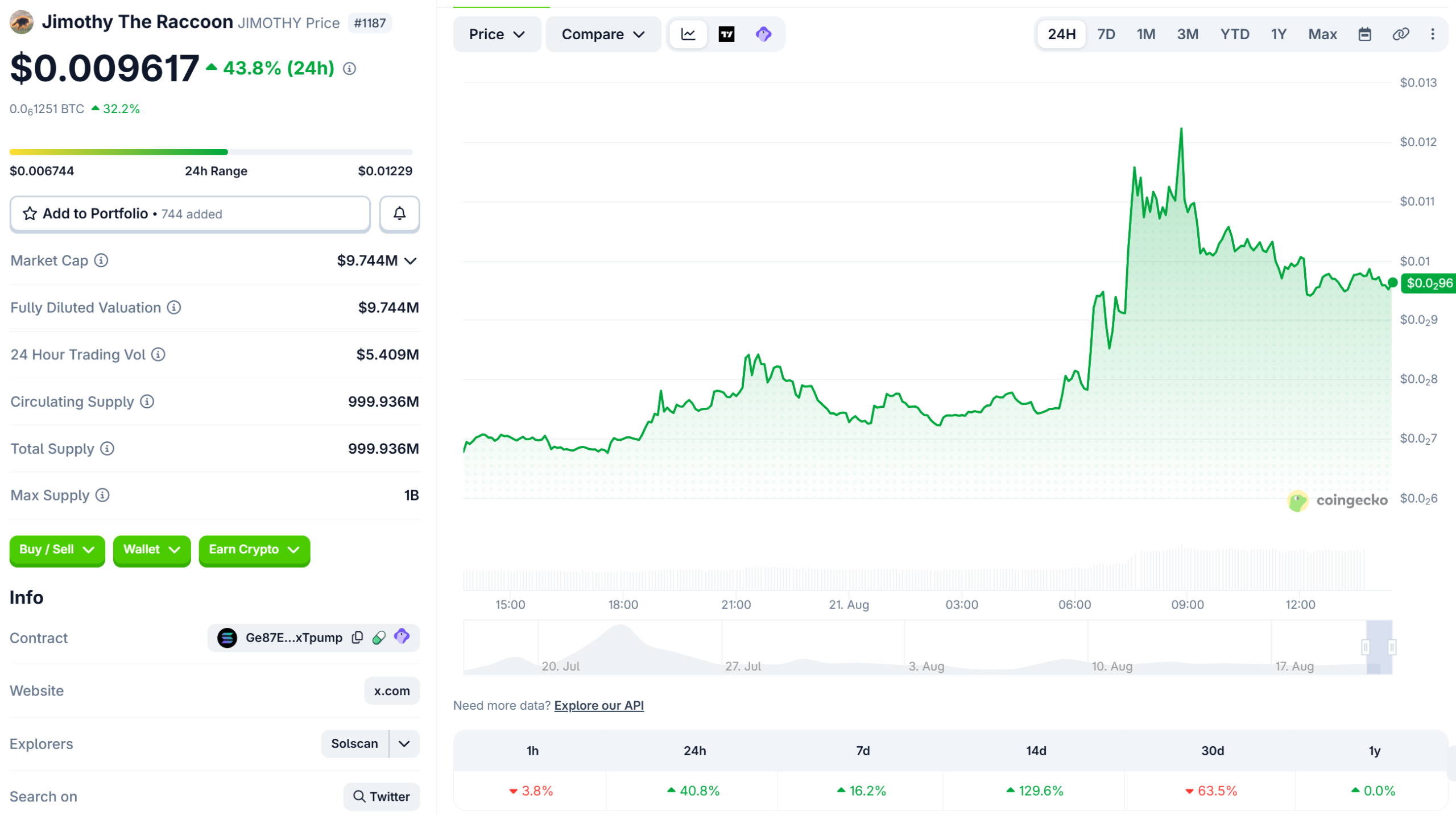
Two Solana meme coins climbed on Friday after a viral X (Twitter) post pulled a flood of token pitches into its replies. Jimothy The Raccoon (JIMOTHY) rose 41% in 24 hours.
Bullshit Coin (BULLSHIT), a Solana token built on self-aware jokes about meme coin culture, gained 21% over the same window. Neither move followed a project announcement.
How One X Post Moved Two Solana Meme Coins
Nate Esparza, a senior technical product manager for ads at SpaceXAI, wrote on Friday morning that the crypto community on X is “insane.”
SpaceXAI is the company Elon Musk formed in February by folding his artificial intelligence venture xAI into SpaceX.
The viral post saw traders answer with raccoon images, green bull graphics and direct pitches for their tokens.
JIMOTHY trades near $0.0096 with a market cap of about $9.7 million, according to Coingecko data. BULLSHIT sits near $0.0038.

Volume told the sharper story. BULLSHIT turned over roughly $4.7 million in 24 hours, more than its entire market value. Thin Solana meme coin markets often trade that way.
Meanwhile, the wider sector has leaned on the same loop all year. Attention arrives first and liquidity follows. Neither token carries a roadmap, a treasury or a product, which leaves social reach as the only visible driver.
Why the Jimothy Meme Keeps Pulling Bids
Jimothy is a real raccoon in Seattle’s Ballard neighborhood with short spine syndrome, a congenital condition that leaves him short and rounded. Marketing specialist Kiana Hall filmed him in July, and the clip drew millions of views.
City recognition, a mural and a token followed. The Solana token launch rode that fame to a 186% gain in July.
Musk has amplified the theme before. On August 8, he posted a raccoon video that sent JIMOTHY up 331% within hours. He has not posted about Friday’s exchange.
Friday’s move was smaller and arrived without him. That gap matters, because it suggests the reply machine now moves the Jimothy price chart without a headline account attached. Whether these gains survive the weekend will show how much of the bid was attention and how much was conviction.
The post SpaceXAI Manager Calls Crypto ‘Insane’: 2 Solana Meme Coins Jump Up to 40% appeared first on BeInCrypto.
Bitcoin jumped roughly 25% to a two-month high above $77,000 within hours of the U.S. Treasury doubling its long-dated bonds buyback operations on August 19.
Falling Treasury yields triggered a short squeeze estimated $3.5 billion across crypto derivatives.
The move raises a pointed question: did Bitcoin catch a genuine liquidity tailwind, or trade a one-day signal that the bond market itself partially reversed within 24 hours?
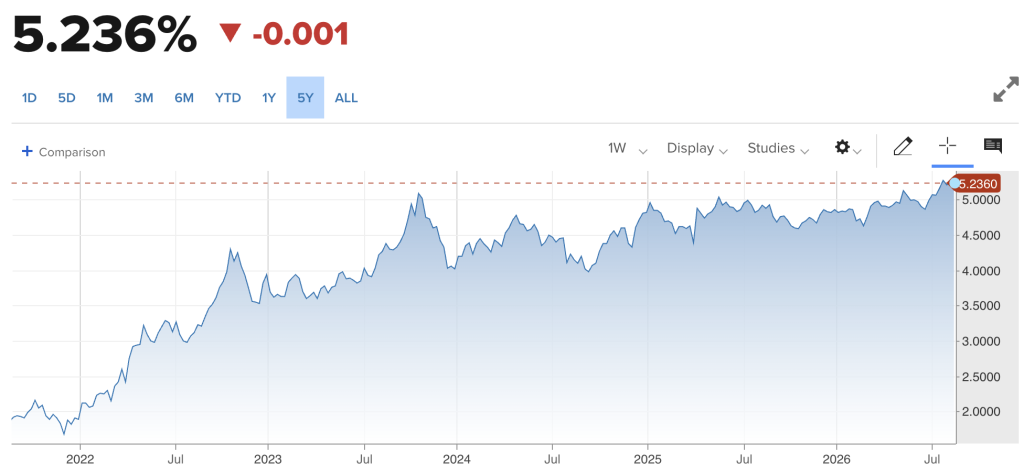
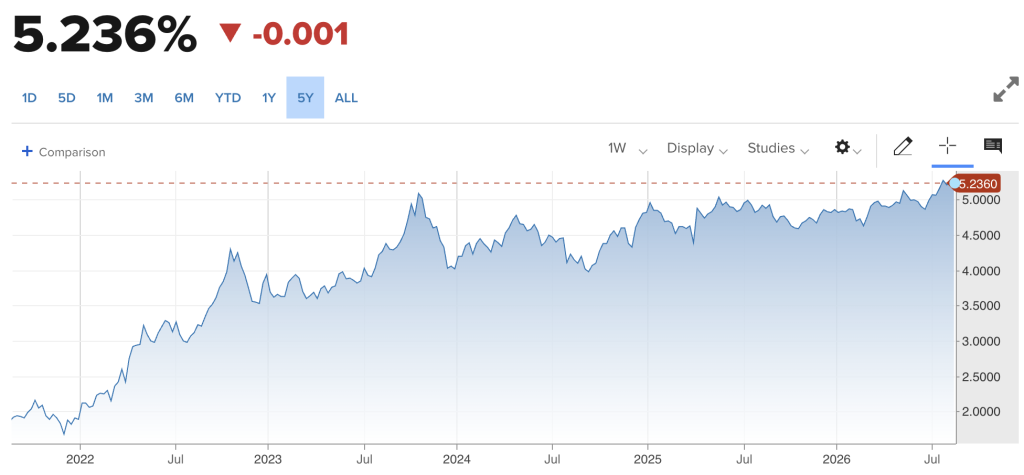
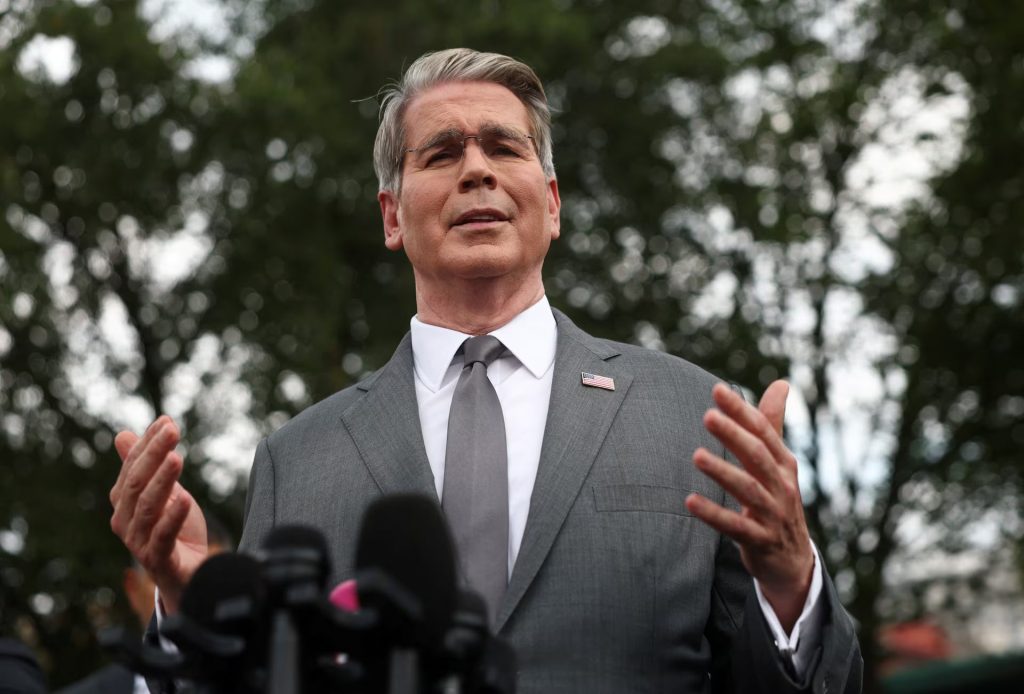
Treasury Secretary Scott Bessent’s move came a day after the 30-year Treasury yield hit 5.34%, its highest level since 2007, amid a global bond selloff tied to inflation worries, an escalating U.S.-Israeli conflict with Iran, and mounting concern over the U.S. fiscal trajectory. Total U.S. debt outstanding crossed $40 trillion the same day the buyback announcement landed.
Discover: The Best Token Presales
What the Buyback Actually Buys
Treasury will double the size of its 10- to 30-year buyback operations to at least $4 billion per operation, up from $2 billion previously, effective September 9 through November 4.
That adds at least $14 billion of additional liquidity support this quarter, bringing maximum repurchases in the current window to $83 billion, measured against a $32.2 trillion Treasury market and $5.5 trillion in outstanding 20- and 30-year bonds.
The announcement worked in the way it was designed to, at least initially: the 30-year yield fell to 5.184% from Tuesday’s high, and the 10-year yield dropped roughly six basis points to 4.66%.
Dan Gottlander, global head of USD and CAD swaps trading at Citi, told Reuters the move would have a huge impact on the long end, though he cautioned that Treasury would still need to issue elsewhere to cover the shortfall.
“It does not change deficits, obviously, and if you are going to buy back the long end, you still will need to issue. They may issue more bills, or also in the five-year to 10-year sector.”
That distinction matters for anyone reading the move as quantitative easing. A Treasury buyback is financed by issuing new short-term bills to retire older, harder-to-trade long bonds, a refinancing operation that swaps one liability for another without expanding the money supply, unlike the Federal Reserve’s own bond purchases under QE, which credit new bank reserves into existence.
Conflating the two overstates how loose the operation actually makes financial conditions.
Discover: The Best Crypto to Diversify Your Portfolio
Why the Relief Didn’t Last
By August 20, Bessent said he might increase buyback sizes even further. “We’re going to increase the size of the buyback,” he said. “I would note that it could be more than the $4 billion per issue.” He argued that yields didn’t reflect the underlying strength of the economy, tying the spike partly to the Iran conflict.
The bond market wasn’t fully convinced. The 30-year yield climbed back to 5.24% by August 20, retracing roughly half of the prior day’s drop, while the dollar clawed back most of its post-announcement losses. According to Bit.com’s market analysis, Bitcoin gave back the $70,000 level within hours, settling into the high-$60,000s after Fed minutes reintroduced rate-hike risk.
Thomas Simons, chief U.S. economist at Jefferies, told Reuters the surprise buyback announcement broke with Treasury’s tradition of predictable debt issuance, calling the move “shot from the hip.”
Evercore ISI analysts framed it more charitably, crediting Bessent’s tactical skill in catching bond shorts off guard during thin August liquidity, but questioned whether the impact would hold given the “tidal wave” of maturing debt and deficits still to be financed.
Trade Crypto Market on Kalshi and Get a $25 Signing-up Bonus
Bitcoin Just Traded a Policy Surprise: Kalshi Lets Traders Position Before the Next One Hits.
The Treasury buyback showed how fast crypto can reprice when a macro decision catches the market off guard. Bitcoin surged, shorts were squeezed, yields fell, and then part of the move unwound as the bond market reassessed what had actually changed.
Kalshi gives traders another way to approach that kind of setup.
The platform offers markets around economic data, Fed policy, politics, crypto, and other real-world events that can move risk assets. Instead of waiting for Bitcoin to react to the next Treasury announcement, rate decision, or inflation print, traders can take a position on the underlying outcome itself.
That distinction matters when the asset reaction is messy. Bitcoin can move on leverage, positioning, dollar strength, and liquidity all at once. An event market lets traders isolate the question they actually have conviction on.
Eligible new users who join Kalshi through CryptoNews can receive $25 through our referral link.
The post Treasury’s $14 Billion Buyback Triggered a $3.5 Billion Crypto Short Squeeze appeared first on Cryptonews.


Market watchers say sudden sharp price spikes and forced short liquidations are the classic signs of a bottom, though macro risks still remain.
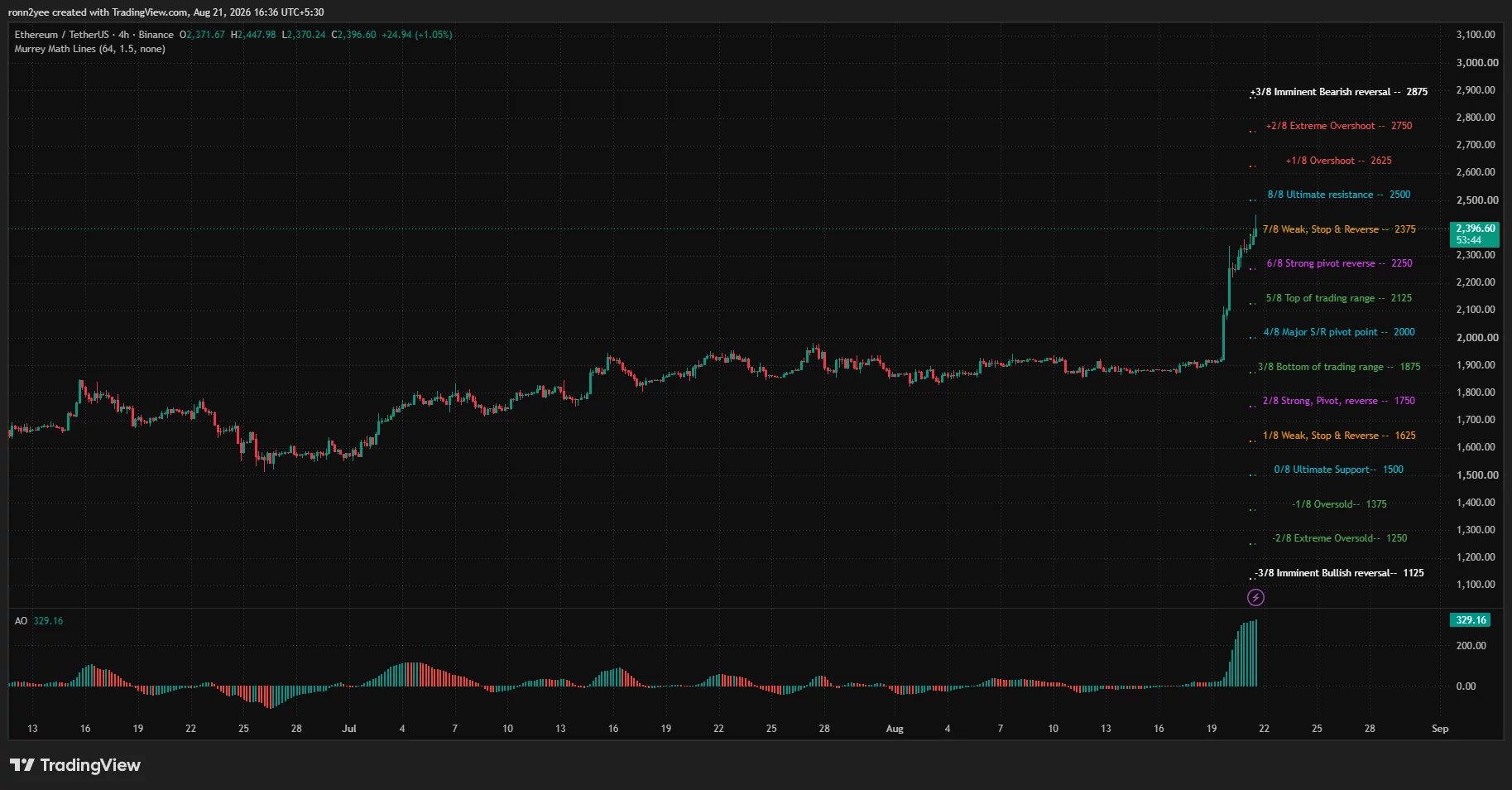
Ethereum price climbed 3% to about $2,397 on Aug. 21 after reaching an intraday high near $2,448, extending a breakout driven by ETF inflows, short liquidations and stronger risk appetite.
Summary
- Ethereum price reached $2,448 after gaining more than 20% over the past week.
- US spot Ether ETFs attracted $189 million on Aug. 19, their largest inflow since October.
- The daily RSI reached 86, placing ETH deep inside overbought territory.
- A weekly close above $2,450 could expose the $2,500 and $3,000 levels.
Ethereum price action today
According to data from crypto.news, Ethereum (ETH) price opened at $2,327 on Aug. 21 before climbing to $2,448 and settling near $2,397 at the time of writing. The 3% daily increase followed a much larger move that carried ETH from below $2,000 to more than $2,300 within two sessions.
The rally pushed Ethereum through several levels that had limited gains since April, including the $2,000 psychological barrier and the $2,250 resistance area. ETH also cleared the $2,375 Murrey Math level on the 4-hour chart, although the price was struggling to hold above it after its rejection near $2,450.
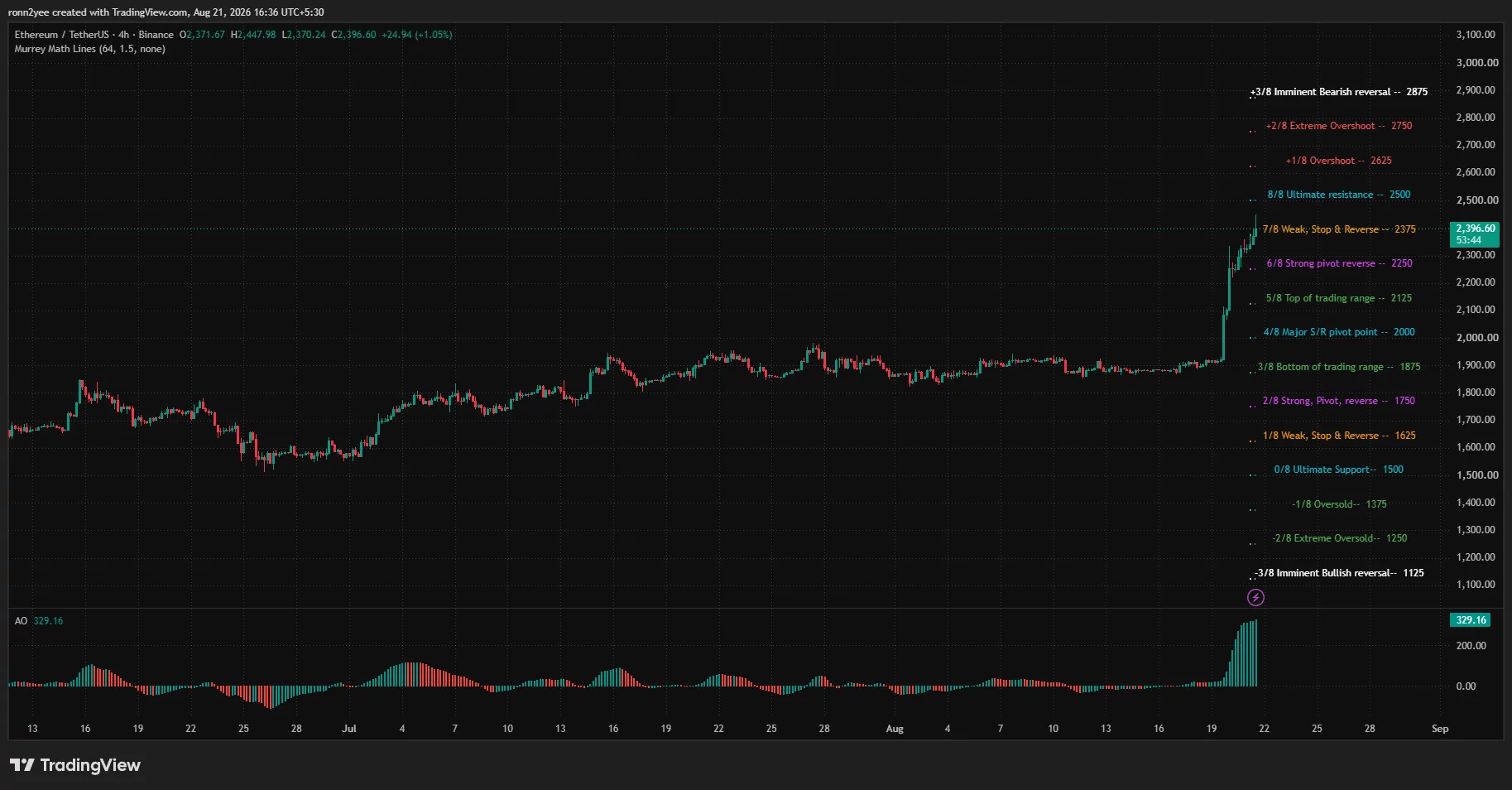
Momentum remained strong on the shorter timeframe. The 4-hour Awesome Oscillator rose to 329.16 and printed an expanding series of green bars, indicating that upward momentum had not yet weakened meaningfully.
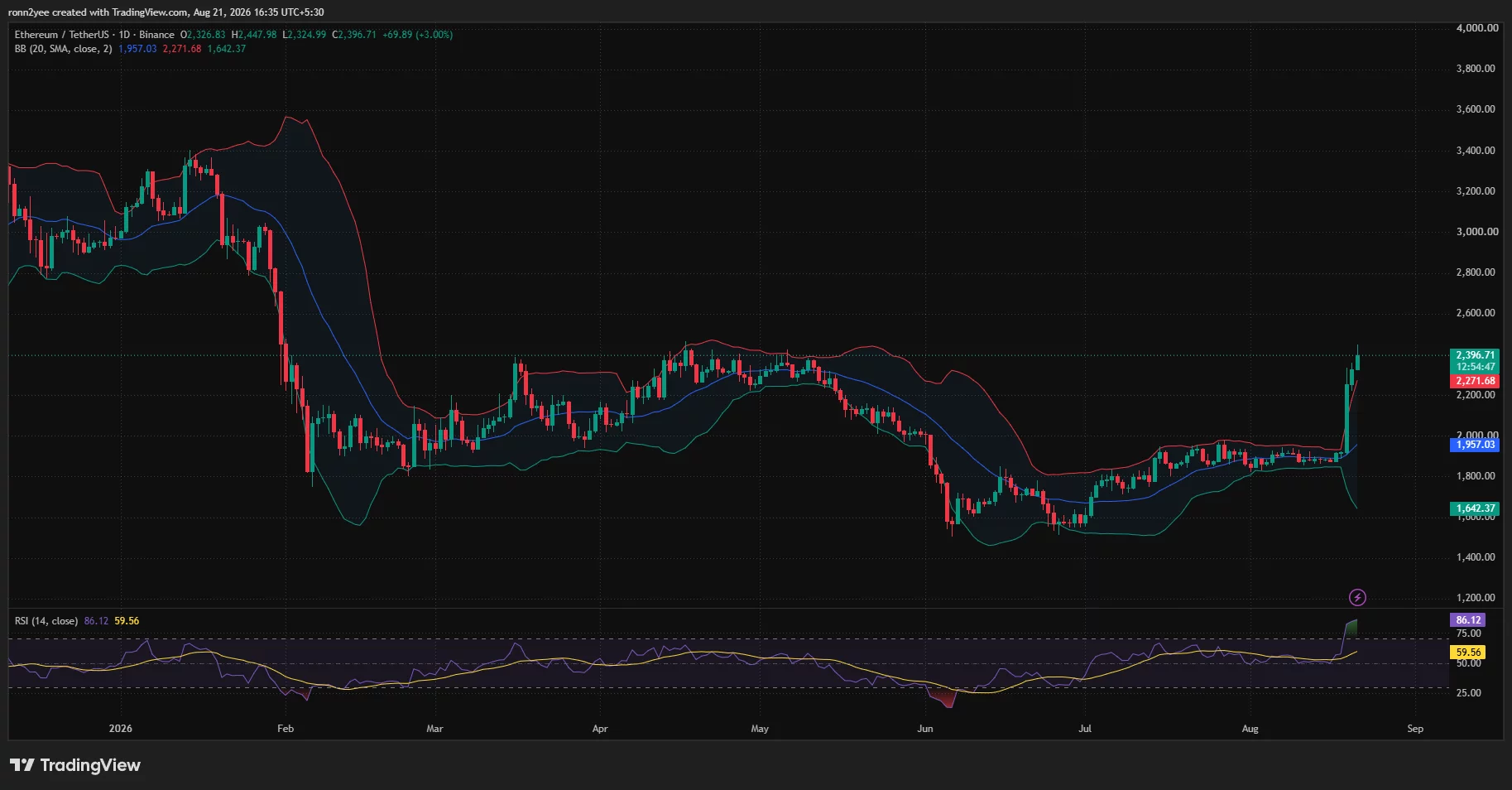
However, the daily chart showed that ETH had moved far outside its previous trading range. The price was trading about 5.5% above the upper Bollinger Band at $2,272, while the indicator’s middle band remained near $1,957.
What is driving the Ethereum rally?
US spot Ether ETFs recorded $189 million in net inflows on Aug. 19, their strongest daily intake since October 2025, according to SoSoValue data. BlackRock’s ETHA accounted for about $122 million of that total.
The ETF purchases arrived as Ethereum broke above $2,000, forcing traders with leveraged short positions to close their bets. CoinGlass data cited by Invezz showed that more than $1 billion in Ether shorts were liquidated during the initial breakout, contributing to a wider crypto liquidation event that exceeded $3 billion.
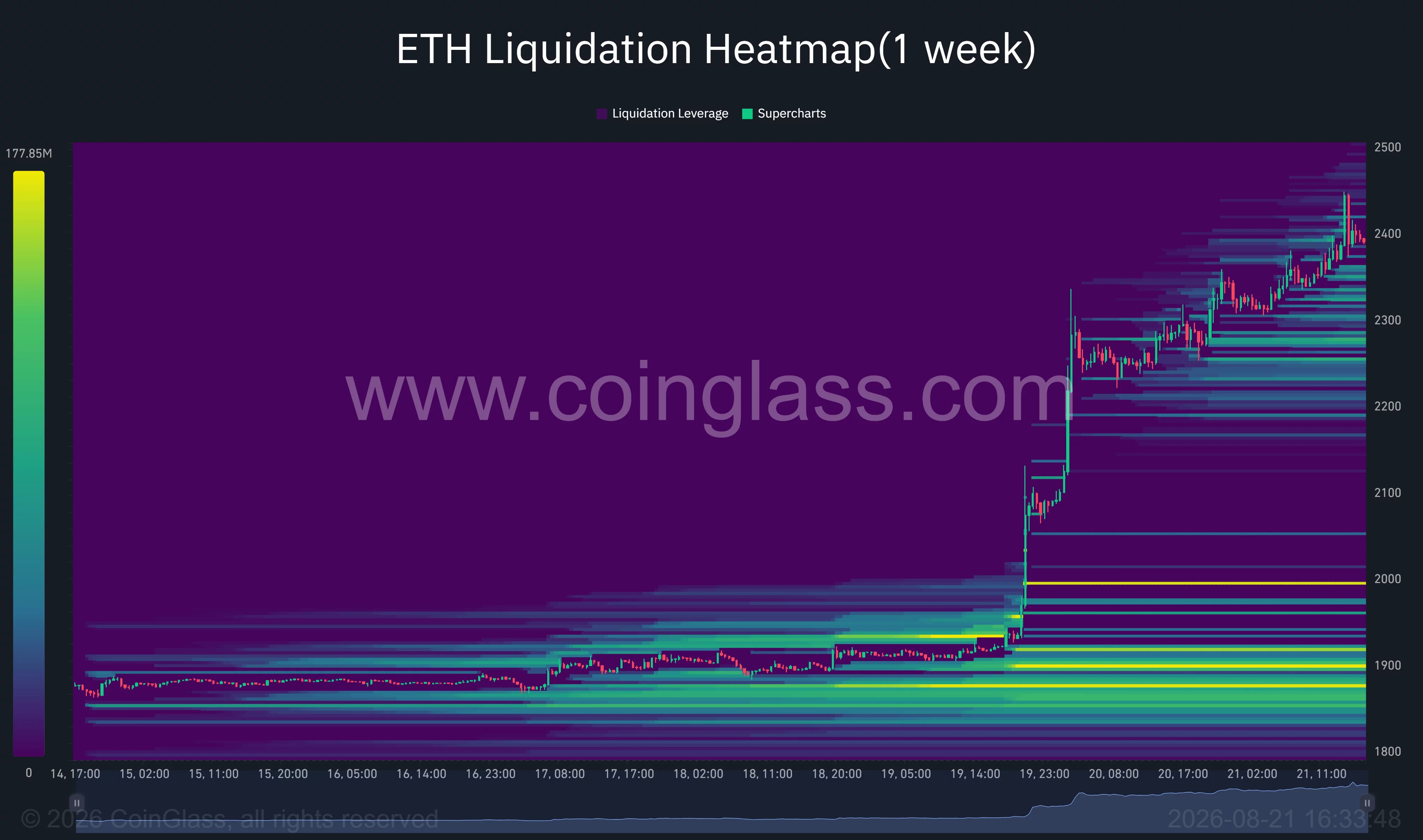
The supplied one-week CoinGlass heatmap shows how ETH moved rapidly through liquidation clusters between $1,900 and $2,300. Forced purchases associated with short liquidations likely added to the speed of the advance, although the breakout also coincided with new spot demand from US-listed funds.
Macro conditions provided another catalyst after the US Treasury announced that it would at least double the maximum size of buybacks for longer-dated nominal securities from $2 billion to $4 billion per operation. The change will begin on Sept. 9 and remain in place through Nov. 4.
Investors interpreted the announcement as support for bond-market liquidity. Treasury yields and the US dollar subsequently weakened, helping Bitcoin, Ethereum, and other risk assets extend their gains.
Ethereum faces overbought signals below $2,500
Ethereum’s immediate resistance sits between $2,448 and $2,500. The lower boundary marked the Aug. 21 intraday high, while the Murrey Math chart identifies $2,500 as the next major resistance level.
A sustained break above $2,500 could expose $2,625, followed by $2,750. The chart places stronger reversal risk near $2,875, although ETH would need additional demand to reach those levels after such a steep move.
Daily momentum presents the main short-term risk. Ethereum’s 14-day relative strength index jumped to 86.12, well above the 70 level commonly associated with overbought conditions. The reading does not guarantee a reversal, but it shows that prices have advanced much faster than their recent trend.
The CoinGlass heatmap identifies nearby liquidation concentrations between approximately $2,270 and $2,350. A failure to clear $2,450 could therefore send ETH back toward $2,375, followed by the $2,300–$2,250 area.
The $2,000 level remains the larger breakout support. The daily Bollinger Band midpoint near $1,957 and a dense heatmap cluster around $1,990 strengthen that zone, although a decline that deep would erase much of the latest advance.
Analysts watch the $2,450 weekly close
Crypto analyst Ted Pillows identified $2,450 as Ethereum’s next resistance zone. He said a weekly close above that area could open a move toward $3,000, making the upcoming close important for confirming whether the breakout can continue.
Market analyst Rain said ETH gained 17.1% during the initial daily surge and pushed its weekly advance beyond 20% after clearing resistance between $1,980 and $2,000. Rain also reported that 30-day realized volatility rose from 39.6 to 62.6 in one day, showing how quickly the earlier compression ended.
Rain said Ethereum must now prove that $2,000 can function as support. Holding well above that level would preserve the new market structure, while a deeper reversal would suggest that liquidations contributed more to the move than sustained spot demand.
US regulation adds to Ethereum’s market catalyst
The rally also followed the SEC’s Regulation Crypto Assets proposal, published on Aug. 18. The proposed framework would introduce tailored registration exemptions for certain investment contracts involving crypto assets, including fundraising exemptions of up to $75 million annually.
The proposal has not become law and does not change Ethereum’s regulatory status immediately. However, the SEC said it aims to give crypto issuers clearer pathways under federal securities laws, adding to the improved regulatory backdrop for US investors.
Ethereum’s next move now depends on whether ETF demand and spot buying can absorb profit-taking near $2,450. A confirmed breakout would bring $2,500 into focus, while rejection could produce a cooling period toward $2,375 or $2,300 as the overbought daily RSI resets.
Disclosure: This article does not represent investment advice. The content and materials featured on this page are for educational purposes only.

Frugal Friday’s Workwear Report: Floral Puff-Sleeve Split-Neck Top

Newcastle Knights vs Manly Sea Eagles Tips, Odds, Teams & Predictions – NRL Round 25 2026

ChatGPT On Mac Can Now Read And Respond To Apple iMessages

Weekend Open Thread – Corporette.com

Weekend Open Thread: Brooks Brothers

London Mayor Sadiq Khan handed a peerage by Keir Starmer alongside 15 other Labour figures… just days before the PM leaves No10

FY – Money Dance – Official Music Video

What The FED And BiS Just Said About Crypto Is SHOCKING!!! Clarity News, ETH & ADA News! BTC TA!?

GFR 2017 Class | UPSC Principal & Vice Principal General Financial Rules | Delhi Principal Vacancy
-

 Fashion7 days ago
Weekend Open Thread: Ann Taylor
-

 Sports6 days ago
Birmingham 2026: Day 6 Timetable for Irish Athletes
-
 NewsBeat6 days ago
Myanmar says over 300,000 Rohingya refugees verified for repatriation as exodus enters ninth year
-

 Business3 days ago
SMA Solar Technology AG (SMTGY) Q2 2026 Earnings Call Transcript
-

 Politics6 days ago
SEQ Code: The Three Letter Boarding Pass Code That Could Give You The Worst Seat
-

 Crypto World6 days ago
Pi Network Protocol 27 endgame: last upgrade before what?
-

 Tech3 days ago
Qwen3.8-27B runs frontier-class coding agents and reasoning locally, no cloud API required
-

 Crypto World4 days ago
OCC Greenlights Trump Family Crypto Firm for Trust Charter
-
 Tech6 days ago
Every fusion startup that has raised over $100M
-
 Entertainment6 days ago
Marvel Studios Reveals New X-Men Cast Including Adam Driver and Sadie Sink
-
 Business6 days ago
Monarch Mutual Fund set to enter MF space with maiden overnight fund; files draft with Sebi
-

 Fashion7 days ago
Weekly News Update, 8.14.26 – Corporette.com
-

 Fashion7 days ago
Silver bangles for women – Newbridge Silverware
-

 Business6 days ago
Facebook Down Now? Users Report Login And Loading Problems As Outage Trackers Monitor Ongoing Issues
-

 Business6 days ago
Cristiano Ronaldo’s Secret Wedding Deepens As Presenter Claims Family Learned ’30 Seconds’ Before
-

 News Videos1 day ago
Don’t Leave Your Financial Future To Chance | August 19, 2026
-

 Fashion7 days ago
Cart Confidential Vol. 44 – Julia Berolzheimer
-

 Crypto World4 days ago
NAVI Prime launches institutional lending framework on Sui
-

 Crypto World5 days ago
Data of 54K Wallet Users Leaked, Clarity Odds Just 10%: Hodler’s Digest, Aug. 16
-
 Fashion7 days ago
knitwear for women sale – up to 50% off
You must be logged in to post a comment Login