

Crypto World
Jes Staley interview about Jeffrey Epstein with House Oversight set


Former CEO of Barclays, Jes Staley, arrives at the High Court in London, United Kingdom, on March 14, 2025. Staley is challenging his ban from the UK finance sector over his ties to Jeffrey Epstein.
Tayfun Salci | Anadolu | Getty Images
Jes Staley, the former JPMorgan Chase executive and ex-Barclays CEO, has agreed to be interviewed on about his relationship with notorious sex offender Jeffrey Epstein on July 23 by the House Oversight and Government Reform Committee, a spokesman for the panel confirmed Sunday.
The Financial Times first reported that Staley accepted the invitation for a voluntary transcribed interview extended to him three weeks ago by Oversight Chairman Rep. James Comer, R-Ky.
The Oversight panel has been conducting a series of interviews with high-profile people about Epstein, including former President Bill Clinton, former Secretary of State Hillary Clinton, and Commerce Secretary Howard Lutnick.
Former Attorney General Pam Bondi was interviewed by the committee on Friday about the Department of Justice’s handling of the release of its files about Epstein.
Microsoft co-founder Bill Gates is scheduled to be interviewed by the Oversight committee on June 10 about his dealings with Epstein.
Billionaire Leon Black is reportedly scheduled to be interviewed by the panel on June 26, and Goldman Sachs general counsel Kathryn Ruemmler is reportedly scheduled to be interviewed on July 15.
Staley was a friend of Epstein, who had been a major client of JPMorgan’s private wealth and asset management divisions when Staley ran them.
Epstein, a former friend of President Donald Trump, died from a jailhouse suicide in New York in August 2019, weeks after being arrested on federal child sex trafficking charges.
JPMorgan in 2023 agreed to pay victims of Epstein $290 million to settle a lawsuit that the bank had facilitated sex trafficking by Epstein, who was a client of JPMorgan.
That same year, the bank agreed to pay $75 million to settle a similar lawsuit by the government of the U.S. Virgin Islands, and separately agreed to a confidential settlement with Staley to resolve the bank’s claims that he was responsible for any civil damages and costs associated with Epstein-related litigation.
In both public settlements, JPMorgan did not admit wrongdoing in its dealings with Epstein.
Staley served as CEO of Barclays from October 2015 until his resignation in late 2021.
His departure came after a probe by the United Kingdom’s Financial Conduct Authority into how he had characterized his relationship with Epstein to Barclays and the subsequent description of that relationship in Barclays’ response to the FCA.
That regulator fined Staley more than $2 million and permanently banned him from holding a management role in the sector in 2023.
Barclays noted at the time that the investigation “makes no findings that Mr Staley saw, or was aware of, any of Mr Epstein’s alleged crimes, which was the central question underpinning Barclays’ support for Mr Staley following the arrest of Mr Epstein in the summer of 2019.”
Staley, in 2020, said, “Obviously, I thought I knew him well, and I didn’t. For sure, with hindsight, with what we know now, I deeply regret having any relationship with Jeffrey.”
— CNBC’s Garrett Downs contributed to this article.

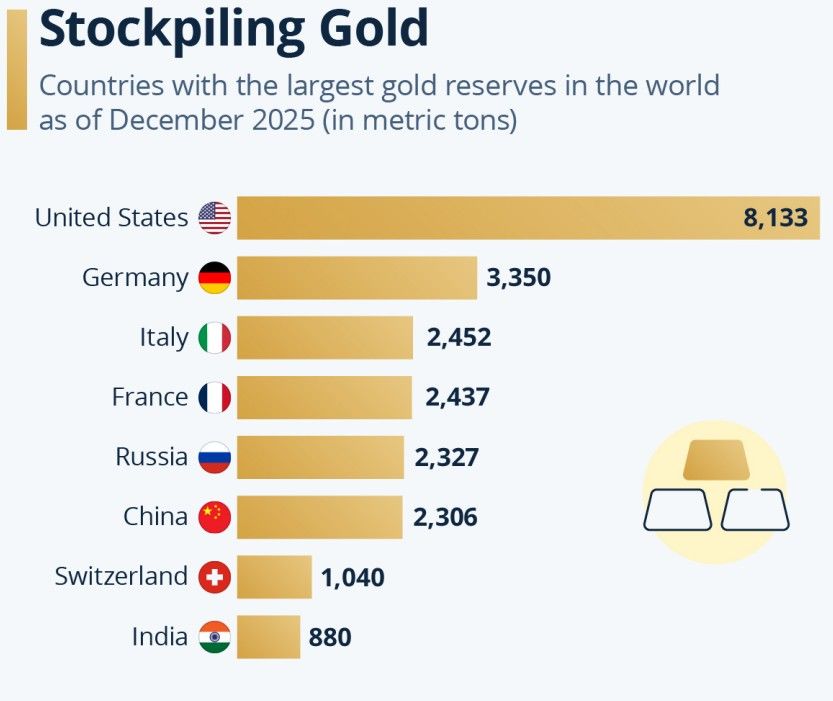
Trump renewed his push for a physical inspection of Fort Knox after a former senior CIA official was charged with stealing more than 300 gold bars worth over $40 million from the federal government.
The charges have intensified scrutiny over how the US tracks and verifies its gold holdings. Fort Knox has not undergone an independent public audit since 1974.
CIA Official Charged With Stealing $40 Million in Gold Bars
David Rush, a former senior executive-level CIA employee with top-secret clearance, was arrested on May 19 and charged with criminal theft of public money, per federal court filings in Virginia.
Between November and March, Rush requested and received a significant quantity of gold bars and foreign currency for work-related expenses, according to an FBI affidavit. What he intended to do with those funds remains unclear.
Federal agents searched his home on May 18 and seized more than 300 gold bars valued at over $40 million, roughly $2 million in US currency, and 35 luxury watches. Authorities arrested him the following day.
The FBI, working with the CIA and the Department of Justice, determined there was probable cause to believe Rush had stolen and converted government property for personal use. His attorney declined to comment.
Investigators also found Rush had allegedly fabricated his professional background, including false claims of being a Navy pilot and holding degrees from two universities.
Trump Calls for Fort Knox Inspection
The arrest drew immediate political attention. Trump posted on Truth Social, linking the case to Fort Knox audit questions he has raised since early 2025.

Trump addressed the Fort Knox question in a May 10 interview, saying he still wants to verify the contents of the depository himself.
“I do want to go to Fort Knox sometime. I want to see if the gold is there, which I’m sure it will be.”
Fort Knox holds approximately 147 million ounces of gold, about 59% of the US official reserves, with an estimated value of around $700 billion. The reserve’s scale has amplified interest in tokenized gold crypto markets, which gained traction during gold’s 2026 rally.
Treasury Secretary Scott Bessent has dismissed the concerns. He said that all gold is present and that the Treasury conducts annual internal audits. He has invited any member of Congress to visit and verify.
No authority has announced a formal inspection timeline. The Department of Government Efficiency, which previously floated the idea of an audit, has not followed up with a concrete plan.
The post Trump Renews Fort Knox Audit Call After Ex-CIA Official Faces Gold Theft Charges appeared first on BeInCrypto.

TLDR:
- HYPE surged above $67, setting a new all-time high and pushing market value beyond $14 billion.
- Hyperliquid’s trading volume surpassed BNB, reflecting growing user activity and liquidity.
- More than 45 million HYPE tokens have been removed through ongoing protocol buyback programs.
- Whale profit-taking emerged, while prediction market plans remained a focus for traders.
The Hyperliquid HYPE token price continues to capture market attention after climbing to a new all-time high above $67.
The latest rally comes amid strong platform growth, rising trading activity, and sustained token buybacks that have strengthened investor interest across the ecosystem.
Hyperliquid HYPE Token Price Climbs as Trading Activity Accelerates
Hyperliquid HYPE token price surged to a fresh record high, extending one of the strongest rallies currently unfolding in the digital asset market.
The token crossed the $67 mark, pushing Hyperliquid’s market capitalization above $14 billion and reinforcing its status as a major player in decentralized trading.
The rally has coincided with a sharp increase in platform activity. Hyperliquid has continued attracting traders through its on-chain perpetual futures and spot trading products, supported by a custom-built Layer-1 blockchain designed for speed and efficiency. As participation expanded, trading volumes grew significantly across the platform.
Notably, Hyperliquid’s daily trading volume recently surpassed that of BNB, a development that attracted considerable market attention.
The milestone reflects changing liquidity trends as more traders engage with decentralized trading platforms offering advanced functionality and deep liquidity.
Technical momentum has also remained firmly positive. Buyers have repeatedly stepped in during pullbacks, allowing the broader uptrend to remain intact while new highs continue to emerge.
Buybacks, Whale Activity, and Ecosystem Growth Support Momentum
Beyond trading activity, Hyperliquid’s tokenomics continue to play an important role in supporting demand. The protocol directs a portion of platform-generated revenue toward automatic HYPE buybacks, creating a consistent source of market demand.
According to available data, the network has already utilized billions of dollars in revenue to repurchase and remove more than 45 million HYPE tokens from circulation.
The reduction in available supply has strengthened the token’s market dynamics as platform usage continues expanding.
Investor confidence has remained strong throughout the rally. Several early participants have reported substantial gains after accumulating HYPE during earlier market conditions.
These success stories have helped maintain positive sentiment around the project’s long-term growth trajectory.
At the same time, whale activity has attracted fresh attention. Blockchain tracking data revealed that a genesis-era investor recently transferred a portion of holdings to Coinbase after HYPE reached new highs. The investor reportedly realized around $95 million in profit while retaining a sizeable position.
Although some analysts warned that additional token supply could generate short-term selling pressure, attention has also shifted toward Hyperliquid’s upcoming prediction market initiative.



DTCC’s decision to connect its upcoming tokenized securities platform to the Stellar (XLM) network is the latest step in a relationship that stretches back nearly a decade, according to Stellar Development Foundation CEO Denelle Dixon.
Earlier this week, DTCC said tokenized assets held through its Depository Trust Company could become available on Stellar beginning in the first half of 2027.
The move carries weight because DTCC is one of Wall Street’s core market utilities, overseeing more than $114 trillion in assets. The Stellar integration is designed to support the issuance, settlement and lifecycle management of tokenized securities, while opening the door to future projects involving highly liquid assets such as major indexes and U.S. Treasuries
The roots of the partnership go back to Securrency, the institutional tokenization platform DTCC acquired in 2023 and became what is now DTCC Digital Assets.
Securrency, Dixon told CoinDesk in an interview, worked closely with Stellar developers on features regulated financial institutions needed to issue assets onchain, including clawback functionality, compliance controls and transfer restrictions. Those tools were later built directly into the network.
“Some of the team has been working with Stellar for a long time,” Dixon said.
The news landed as tokenization has become one of the dominant themes across both crypto and traditional finance, drawing interest from global banks and asset managers looking to move traditional financial instruments onto blockchain rails.
Tokenization refers to representing assets such as U.S. Treasury bonds, money market funds, stocks or private credit as digital tokens that can be issued, traded and settled on blockchains. Proponents argue the technology could shorten settlement times, free up collateral trapped in legacy processes and eventually allow markets to operate around the clock.
It’s potentially a huge market. Standard Chartered projected $2 trillion in tokenized assets by 2028, while BCG and Ripple forecasted a $18.9 trillion market size by 2033.
Franklin Templeton’s early bet on Stellar
Dixon argued that tokenized assets are only the visible layer of a broader infrastructure shift.
“Blockchain is excellent at books and records,” she said. “Tokenization is the product outcome, but it’s all these underlying components that are really important.”
That focus on record-keeping was one reason Franklin Templeton selected Stellar for its onchain money market fund, BENJI. Dixon said the asset manager began exploring Stellar in 2019 and later launched the fund in 2021, aiming to place fund records on a single shared ledger rather than relying on multiple databases.
BENJI became one of the earliest examples of a regulated tokenized fund and helped pave the way for today’s tokenized Treasury market, which has grown to roughly $15 billion with BlackRock, JPMorgan, Fidelity entering the ring.
Making public blockchains work for regulated finance
For institutions, however, moving assets onchain requires more than faster settlement.
Regulated firms must comply with securities laws, sanctions requirements and investor protections, creating demand for blockchain infrastructure that can support identity checks, transfer restrictions and other compliance controls.
That need for compliance-ready infrastructure is one reason Stellar’s long-standing relationship with Securrency proved valuable, Dixon said.
Stellar’s architecture allows issuers to add compliance, identity controls and privacy protections on top of an open network, she said. Asset issuers can decide whether transfers require know-your-customer (KYC) checks, whether assets can be frozen or clawed back and what transaction information remains visible.
“The base layer is always going to be open,” Dixon said. “Then the institution gets to decide how compliance and privacy come into play.”
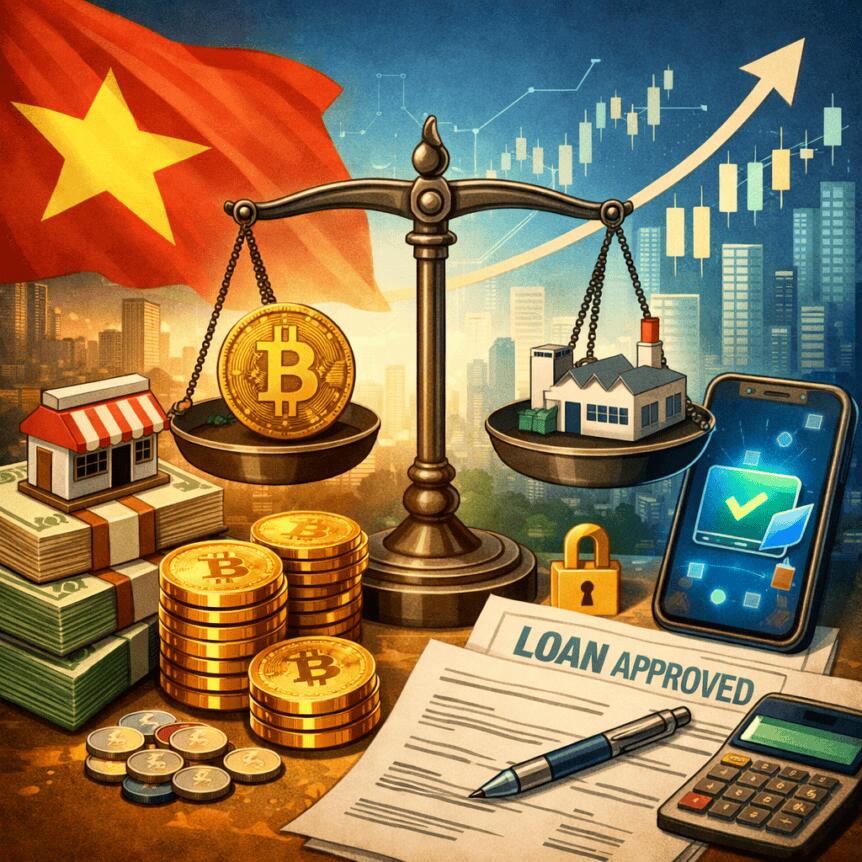
Vietnam’s Ministry of Finance is pushing a policy shift that could reshape credit access for small and medium-sized enterprises. A draft revision of the Law on Support for SMEs proposes allowing SMEs to use digital assets, virtual assets and intellectual property as collateral for bank loans. The proposal is open for public consultation, according to a Friday report from Vietnam News. Under the framework, businesses could borrow against future-formed assets, rights in property, intangible assets and digital or virtual assets.
Smaller businesses, including household enterprises, make up more than 98% of Vietnam’s business landscape, yet they receive only about 20% of total bank credit. The Ministry attributes the gap to a lack of eligible collateral, limited financial transparency and the relatively small capital bases of many SMEs. The new approach would acknowledge that valuable software, patents and other intellectual property can have real borrowing power, even when there are few physical assets to pledge. If adopted, the policy could unlock access to formal lending for a large swath of startups and tech firms that historically found themselves locked out of traditional credit channels.
Related: Bithumb enters Vietnam crypto license race with SSI Digital deal
Key takeaways
- SMEs could be allowed to pledge digital assets, virtual assets and intellectual property as collateral, widening access to bank credit as part of an SME law revision open for public consultation (per Vietnam News).
- The draft signals a shift toward lending decisions based on credit ratings, business plans, cash flows and market potential, not solely on fixed assets.
- Incentives for green and sustainable enterprises are included, such as credit guarantees, concessional financing, and support for ESG reporting and compliance.
- Vietnam is advancing toward a regulated crypto market, with a licensing pathway opened earlier this year and a potential launch window in Q3 2026, according to Cointelegraph.
- Chainalysis ranks Vietnam among the world’s most active crypto markets, placing it fourth in the 2025 Global Crypto Adoption Index behind India, the United States and Pakistan.
A broad shift in collateral rules
The core idea behind the draft revision is to furnish banks and other lending institutions with a broader set of assets that can back loans. By recognizing digital and virtual assets, as well as intellectual property, as legitimate collateral, the framework would align credit access with the modern asset economy—a crucial development for many tech-driven firms that rely on software platforms, patents and other intangible assets rather than land or heavy equipment.
The concept of “future-formed” assets—rights to assets that do not yet exist or are not yet monetized—appears central to the proposal. In practical terms, a startup with valuable IP or a robust stream of software-based revenue could, in theory, secure financing based on the anticipated value of its intangible holdings and projected cash flows. While details remain to be hammered out through consultation, officials describe a framework aimed at expanding the universe of eligible collateral beyond traditional physical assets.
As policymakers weigh this collateral expansion, they are balancing the goals of broader financial inclusion with prudent risk management for lenders. The SME sector’s historically limited collateral base has hindered credit access, particularly for technology-centric firms that may be asset-light but revenue-rich. If enacted, the policy could reframe the risk calculus for banks by integrating intangible asset valuations, governance disclosures and IP portfolios into standard credit assessments.
Credit decisions move beyond hard assets
Beyond collateral reform, the draft envisions a more nuanced approach to credit underwriting. Lenders would be encouraged to consider credit ratings, business plans, cash flows and the overall market potential of applicants. In other words, the bill seeks to formalize a more holistic evaluation of a borrower’s viability—especially for startups and knowledge-intensive firms that otherwise struggle to secure conventional financing due to a lack of tangible assets.
Supporters say the shift could help align Vietnam’s SME financing with contemporary risk analytics, leveraging data-driven assessments of cash generation, growth trajectories and competitive positioning. The emphasis on business plans and cash flow forecasts could also spur better financial discipline among smaller firms, as lenders demand clearer roadmaps and credible projections to accompany collateral in any new lending arrangements.
Officials stress that lending should remain anchored in responsible risk management. While expanding eligible collateral may reduce some barriers, lenders would still be expected to conduct due diligence and to price risk appropriately. The outcome could be more loans flowing to promising tech ventures and digital innovators that have demonstrated potential but lack hard assets to pledge, provided they meet the new underwriting criteria.
Incentives for green finance and ESG compliance
The draft also signals a broader policy push toward environmental sustainability and responsible financing. It outlines preferences for green and circular-economy projects, with potential access to credit guarantees, concessional financing and interest-rate support for eligible initiatives. Tax incentives and enhanced support for ESG disclosure and reporting are also included, aimed at lowering the cost of capital for sustainable ventures and encouraging transparent, standards-based reporting by borrowers.
These incentives align with global policy trends that increasingly link credit access to environmental, social and governance (ESG) criteria. For Vietnamese SMEs, that could translate into more affordable loans for energy efficiency upgrades, waste-reduction investments and other sustainability-focused activities. For lenders, ESG-friendly financing could come with clearer metrics and potential risk mitigants that help align capital allocation with long-term value creation.
Regulated market on the horizon
The policy mention of broader capital-market development parallels a parallel, separate track on crypto regulation in Vietnam. Cointelegraph has reported that Vietnam could see its first regulated crypto market activity as early as the third quarter of 2026, according to remarks from Deputy Minister of Finance Nguyen Duc Chi at the Digital Trust in Finance 2026 forum. The regulatory landscape has been evolving since regulators opened a licensing pathway for domestic crypto trading platforms earlier this year, with five companies—some affiliated with major banks such as Techcombank, VPBank and LPBank—advancing through an initial qualification stage to operate Vietnam’s first regulated exchange.
As the licensing process unfolds, policymakers are balancing domestic innovation with consumer protection and financial stability. The emergence of a formal exchange regime could provide a regulated on-ramp for residents and institutions seeking regulated access to digital assets, while also subjecting market participants to clearer standards and oversight. The juxtaposition of collateral reform for SMEs and the push toward a licensed exchange market underscores Vietnam’s broader ambition: to integrate digital assets and financial technology into a more formal, bank-assisted economy.
For market participants, the timing and scope of these developments will matter. A regulated market would offer more transparency, standardization and recourse for investors, potentially supporting broader adoption across consumers, startups and corporate treasuries. Yet questions remain about valuation frameworks for intangible assets, the calibration of risk in asset-light lending, and how such a regime would interact with international trading and cross-border flows. Observers will be watching how banks and non-bank lenders adapt to these shifts and how the regulatory framework evolves in response to market realities.
Adoption backdrop: Vietnam as a crypto hub
Vietnam’s crypto footprint has grown rapidly in recent years. Chainalysis ranks Vietnam among the most active crypto markets globally, placing it fourth in the 2025 Global Crypto Adoption Index, behind India, the United States and Pakistan. The ranking reflects a combination of on-chain activity, local usage, and the breadth of crypto-related services and infrastructure within the country. The new collateral and lending proposals arrive against this backdrop of heightened activity and policy experimentation, signaling a government intent to align financial integration with digital-asset innovation.
In broader market context, Vietnam’s regulatory and policy maneuvers come as domestic exchanges and crypto firms navigate licensing pathways and cross-border relationships. Earlier coverage highlighted ongoing regulatory developments and enforcement activity in the Vietnamese crypto ecosystem, underscoring a cautious but increasingly open stance toward digital-asset services when conducted within a clear regulatory framework.
As authorities solicit public input on the SME collateral framework and the crypto-regulatory trajectory continues to unfold, investors, lenders and startups alike will be keenly watching how the two strands intersect. The outcome could redefine how Vietnamese firms access credit and how digital assets are treated within formal financial channels, potentially shaping Vietnam’s role in the wider Southeast Asian crypto landscape.
Readers should monitor official updates to the SME law proposal and the evolving crypto licensing regime. The specifics of asset valuation, oversight mechanisms, and the exact scope of eligible intangible assets will determine how far these reforms go in practice and what they mean for corporate treasuries, fintechs and prospective lenders in the near term.
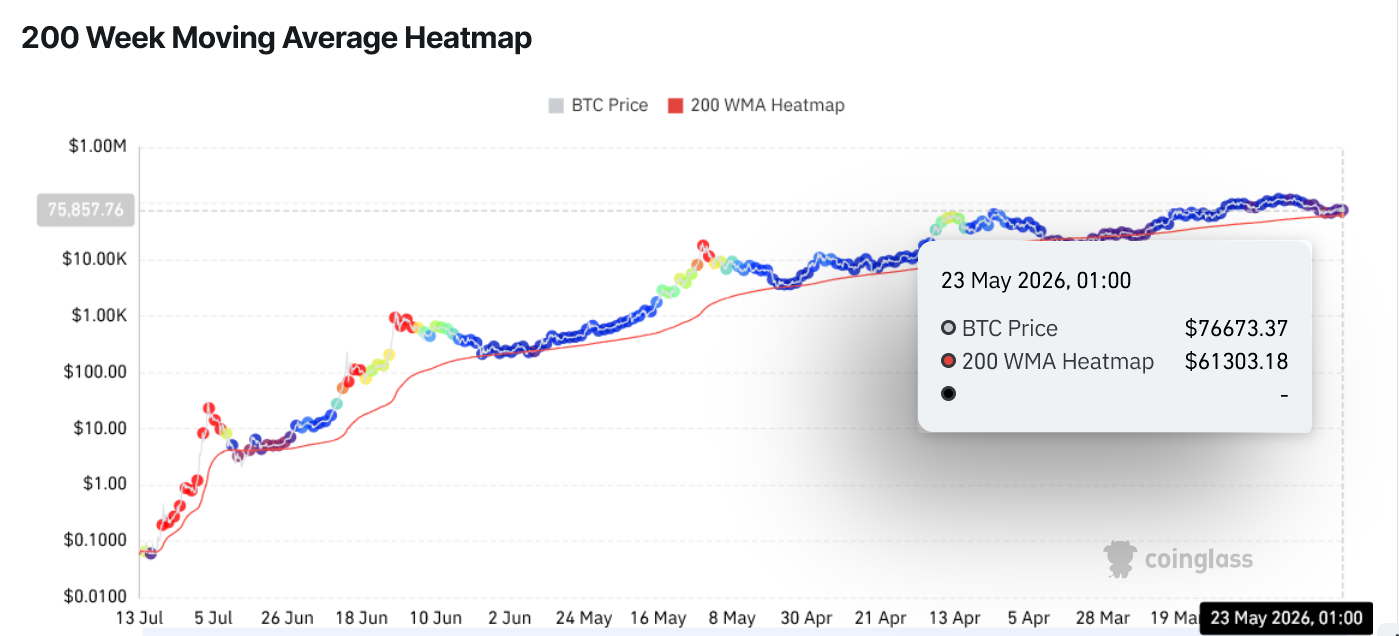
Bitcoin’s (BTC) 200-week moving average has climbed past $61,000. Blockstream CEO Adam Back flagged the threshold on May 30, weeks after noting the same indicator crossed $60,000 in early May.
The indicator has risen roughly $1,000 in under a month, a pace that reflects steady absorption of supply by long-term holders at current price levels.
A Rising Long-Term Floor
The 200-week moving average smooths nearly four years of weekly Bitcoin closes. It has served as a support floor at each of Bitcoin’s prior cycle bottoms, and crossings of major thresholds draw sustained attention from long-term holders watching the structural trend.
At the time of writing, BTC was trading well above this level. It maintained a significant gap between the spot price and the 200-week moving average first, highlighted by Back in early May.
The 2022 bear market remains the only period where BTC closed a weekly candle below the line before quickly reclaiming it. The long-term bullish structure has trended higher in every cycle since.
Munger’s Argument, Applied to Bitcoin
In a follow-up post, Back cited a remark attributed to the late Charlie Munger, a popular American billionaire investor.
Apparently Charlie Munger would agree generally “If all you ever did was buy high-quality stocks at the 200-week moving average, you would beat the S&P 500 by a large margin over time. The problem is, few human beings have that kind of discipline”
Back attributed the comment to Munger, then added a caveat. He noted that Munger and Buffett “never got bitcoin,” drawing a parallel to their early dismissal of the internet. He attributed both misses to their preference for physical businesses.
The implicit argument is that Bitcoin holders willing to apply Munger-style patience at moving-average lows could see outsized returns over full cycles.

The indicator rises gradually across cycles, meaning entries near it have historically represented a structural discount to Bitcoin’s long-term trend.
Back has made that case in prior posts, consistently advocating for disciplined accumulation strategies rather than active trading.
Whether the 200-week moving average sustains its current climb depends on whether institutional and retail demand continue to outpace selling. On-chain data has supported the case that structural buying remains intact for now.
The post Adam Back Flags Bitcoin’s 200-Week Average as a Structural Bull Signal appeared first on BeInCrypto.

Key Insights
- Solana stays dominant thanks to rapid transactions, low cost, and a thriving DeFi and gaming ecosystem.
- Cardano remains focused on security, governance enhancement, and robust blockchain infrastructure.
- Dogecoin gains an advantage through robust community backing, expanding payment usage, and high liquidity.
- Each cryptocurrency presents its own advantages that can put it ahead of the curve during the next bull run.
Top Crypto Coins to Buy Ahead of the Next Bull Run
The cryptocurrency sector is poised for another big break and investors are seeking coins with solid fundamentals, continuous development, and growing adoption. Despite the large number of digital tokens, only a few manage to survive each market cycle.
Solana (SOL), Cardano (ADA), and Dogecoin (DOGE) are notable cryptocurrencies worth watching in 2026. They play significant roles in blockchain technology and address diverse needs, from decentralized finance and smart contracts to payment systems.
Solana (SOL) High Speeds And Scalability Fuel Success
Solana is a blockchain network with remarkable performance capabilities. As a high-speed platform, Solana can process hundreds of transactions per second while keeping very low fees. The network’s speed and cost efficiency make it suitable for DeFi applications, NFT markets, blockchain games, and trading environments.
Continuous development by the community keeps Solana competitive. Several updates aim to increase scalability, security, and efficiency. The much-awaited Firedancer update is set to boost network resilience by introducing an independent validator client.
Advancements like Alpenglow aim to reduce transaction finality time and enhance the user experience. Faster transaction times and increased computing power may support the emergence of new decentralization applications and blockchain projects.
Solana’s active developer community and infrastructure upgrades make it an attractive option for investors looking to capitalize before the next bull market.
Cardano (ADA) Built For The Long Run
Cardano takes an academic and systematic approach to blockchain development. While many networks pursue rapid growth, Cardano emphasizes security, formal research, and long-term sustainability.
The platform uses the proof-of-stake consensus algorithm Ouroboros, which is energy efficient and enables developers to build decentralized applications. Cardano’s research-driven model has contributed to its reputation as a secure blockchain solution.
Recent governance changes have improved decentralization by increasing community participation and giving ADA holders greater influence over decision-making.
Scalability remains a challenge, with Hydra proposed to increase transaction throughput and reduce costs for decentralized applications. Projects like Midnight add privacy features aimed at enterprises and finance-oriented use cases. Investors seeking a sustainable blockchain project may consider Cardano for its focus on security, governance, and advanced technology.
Dogecoin (DOGE) Community Advantages And Payment Use
Dogecoin began as a meme-based cryptocurrency but has become one of the most recognized digital assets. It has remained relevant across market cycles thanks to strong support from retail and crypto communities.
The community behind Dogecoin is a key factor in its success. Unlike many short-lived meme tokens, DOGE benefits from widespread recognition and ongoing engagement.
Dogecoin is also practical for small payments due to low transaction fees and fast confirmations. It is commonly used for tipping, payments for goods and services, and international transfers.
High liquidity and significant daily trading volumes help DOGE maintain market presence and allow traders to enter and exit positions more easily. If adoption as a payment method continues to grow, Dogecoin could attract further attention in the next crypto rally.
Crypto World
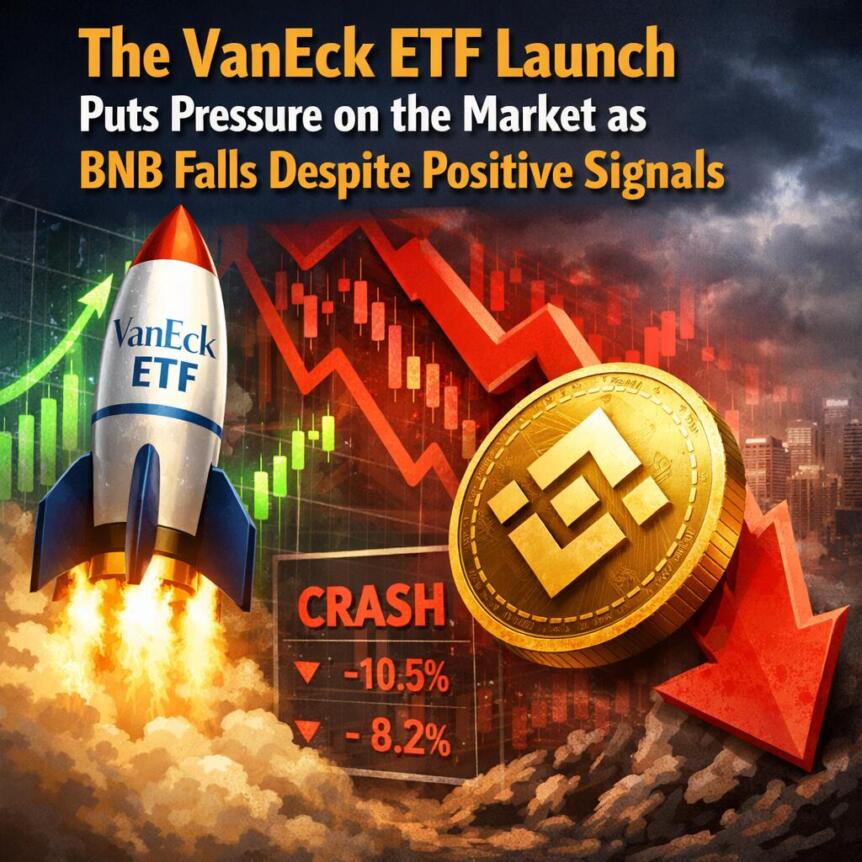
The VanEck ETF Launch Puts Pressure on the Market as BNB Falls Despite Positive Signals
Key Insights
- The ETF was developed by VanEck and is the first U.S. spot BNB ETF traded as VBNB.
- Despite the bullish news of the BNB ETF launch, the token has fallen by over 2%.
- The cryptocurrency faces downward pressure due to poor technical signals, futures’ lower interest rate, and macro issues.
Debut of the VanEck ETF Leaves BNB Price Rallying Behind
Investor sentiment hit an all-time high after the VanEck ETF that tracks BNB made its debut in the United States. Expectations for the price to rally following such a major move were high, but the market decided otherwise as the token declined throughout the session during which the ETF debuted.
Such an outcome may leave a number of cryptocurrency traders puzzled as ETF approvals have previously proven to be a bullish trigger for the asset class in general. The lack of positive impact left by the ETF approval on the token may point toward a situation in which other factors carry more weight than the underlying event itself. In another recent development, BNB’s founder, Changpeng Zhao (CZ), made a donation using the token.
ETF Provides Access Without Extra Incentives
The official BNB ETF has been listed on NASDAQ under the ticker symbol VBNB. The ETF has an annual management fee of 0.39%. The ETF was created under the Investment Company Act of 1940 to provide a regulated way of accessing BNB in traditional financial markets.
One of the advantages of the BNB ETF is that it tracks the spot price of BNB, making it easy for investors who do not want to store their cryptocurrencies. On the other hand, one of the shortcomings is that there are no staking incentives. Though staking incentives can be added by a third party at some point in the future, no definite plan has been provided yet.
The absence of incentives to generate income may have lowered its appeal. However, VanEck still sees positive potential in BNB and expects it to perform well in the coming years due to its strong fundamentals, including over 14 million transactions per day and over 2.5 million active users.
Despite this, the BNB token was trading at around $631 to $635 when the ETF debuted. Moreover, it closed over 2% lower on the day of the listing. It currently has lost more than 26% year-to-date.
Technical Indicators and Risks Persist Despite Improvements
The technical picture still indicates that BNB faces significant weakness. The coin is trading below many important resistance points, such as the $645 and $663 levels represented by 50-period and 100-period EMAs, respectively. The Bollinger Band median at $657 is also proving to be an impenetrable defense against all upward moves.
Momentum indicators point to negative sentiment. In particular, the MACD histogram persists in showing values below zero, highlighting continued bearishness, and the RSI has not moved above the crucial 50 mark. Derivatives metrics also back up the bearish outlook. Open interest in futures contracts has fallen from almost $1 billion to $961 million.
The support is currently around $634 and near the lower Bollinger band. A breach of this support level would increase the probability of further declines for the coin. Furthermore, the uncertainties in the market environment, including political risks and risk aversion among other factors, also contribute to reduced appetite.
Despite BNB becoming one of the coins whose exposure can now be traded via an ETF based in the United States, the VanEck ETF launch indicates that regulatory developments will not automatically translate into positive price movements under current circumstances.
TLDR:
-
- Sui Network’s v1.72 upgrade introduced a gas charging bug that caused three mainnet halts within 48 hours in May 2026.
- No user funds were lost during the outages, and validators restored full network activity by May 30, 2026, after emergency fixes.
- The SUI token dropped roughly 8% during the disruptions, falling below $0.89 and liquidating nearly $2M in long positions.
- This marks Sui’s second major outage of 2026, raising ongoing concerns about upgrade testing and Layer-1 infrastructure reliability.
Sui Network suffered three mainnet halts within 48 hours, from May 28 to May 30, 2026. The disruptions traced back to a crash bug introduced in the v1.72 software upgrade.
No user funds were lost during any of the three stalls. Validators coordinated emergency fixes and restored block production by May 30.
However, the repeated downtime pushed the SUI token sharply lower and renewed questions about the chain’s infrastructure reliability.
Three Halts in 48 Hours: What Triggered the Outages
The root cause of the first outage was a crash bug in the gas charging logic introduced in version v1.72. Sui had improved gas charging in this release to more accurately estimate fees based on transaction complexity.
However, the new logic contained an edge-case defect. When a specific transaction structure appeared on the network, gas calculation would error out. This caused all validators to crash and enter a loop, halting the entire network completely.
The first halt began on May 28, 2026, at 13:48 UTC. SuiScan showed no new checkpoints, and the outage lasted five hours and 55 minutes. Validators then worked to deploy a corrected version.
Restoring the network required manual coordination across the entire validator set. Node operators identified the divergence point, purged incorrect consensus data, and deployed corrected logic.
The second and third halts followed shortly after. The outages originated from an interaction conflict between the Address Balances feature and gas billing logic introduced in version 1.72.
A temporary fix deployed earlier carried a known issue that could trigger outages with an extremely low probability — a calculated risk that backfired when epoch transition problems piled on.
The third Sui mainnet outage hit on May 29, 2026, at approximately 4:30 PM EDT. The trigger was the rollout of the long-term patch itself.
As validators restarted to deploy the new version, a latent bug in epoch transition handling froze user transactions all over again.
Sui’s official account confirmed the situation on X, stating: “Sui mainnet stopped accepting user transactions due to an issue during the epoch change beginning at ~1:30PT. Validators are up and creating system transactions, but user transactions are not currently being accepted.”
SUI Price Falls as Market Reacts to Repeated Downtime
The price of SUI dropped across all three outage periods. The SUI token dropped 8% during the incident, trading at $0.91 after falling from $0.99.
Approximately $1 billion in on-chain assets were temporarily frozen while all validators entered a crash loop. Trading activity across decentralized finance protocols on the network came to a full stop during each halt.
CoinGlass confirmed $1.88 million in network positions were liquidated in the latest wave alone. SUI traded at $0.874 as of May 31, 2026, per CoinGECKO data.
The token broke below the $0.89 level, which crypto analyst Crypto Patel noted was near the cycle low, adding that SUI was down roughly 37% in 20 days with approximately $2 million in long positions liquidated.
A complete halt in block production created operational risk considerations for exchanges, liquidity providers, and institutional participants integrated with the network.
While no funds were reported lost, the inability to process transactions for nearly six hours intensified scrutiny around infrastructure stability.
This incident marks the second major stall for Sui in 2026, following the January 14 consensus-related issue that forced the network to be deliberately paused.
In both cases, the disruptions stemmed from bugs introduced during software upgrades, with no loss or risk to user funds.
Validators completed the emergency upgrade by May 30, and network activity resumed. A full incident review from the Sui core team is expected in the coming days.
TLDR:
- Bitcoin’s final weeks of the month trend downward, while the first weeks historically push prices higher.
- No trade was triggered over the weekend as slim price action failed to meet van de Poppe’s entry conditions.
- BTC dominance printed a false break above resistance, a classic bearish signal that traps late buyers.
- Falling Bitcoin dominance historically drives capital into altcoins, setting the stage for a broader altseason.
Bitcoin traders are watching closely as the market approaches a familiar pattern at the month’s end. Analysts are identifying key trade setups while Bitcoin dominance shows signs of a reversal.
Weekend price action remained quiet, with no major trades triggered. Meanwhile, technical signals suggest capital may soon rotate into altcoins, setting the stage for broader market movement in the days ahead.
Bitcoin Trade Setup Holds Firm Amid Quiet Weekend Price Action
Crypto analyst Michaël van de Poppe noted that his Bitcoin trade outlook remains unchanged. He pointed to a recurring seasonal pattern playing out in the market right now.
According to van de Poppe, the final weeks of the month tend to produce downward price pressure. The first weeks, however, tend to see upward movement return to the market.
Van de Poppe shared his view on X, stating the markets follow a pattern of “final weeks of the month — down only” and “first weeks of the month — up only.”
He added that a brief sweep at the start of June is possible before any upward move. This means traders should stay patient and wait for confirmation before entering. Because weekend movements were slim, none of his identified scenarios triggered a trade entry.
With no trade executed yet, van de Poppe’s strategy remains on the long side. He continues to monitor the setups he has already outlined for the coming sessions.
The lack of weekend volatility kept conditions subdued but did not change his overall bias. Traders following his analysis are advised to watch for triggers early in the new month.
The setup reflects a measured approach, relying on pattern recognition rather than reactive trading. Van de Poppe’s framework gives traders clear conditions to watch before committing to a position.
This disciplined method avoids chasing price moves that lack confirmation. It is a strategy well-suited to the current uncertain macro environment.
Bitcoin Dominance False Break Signals Potential Altcoin Season Ahead
Trader Tardigrade flagged a key development on the Bitcoin dominance weekly chart. He reported that BTC dominance printed a false break above a major overhead resistance level.
The price spiked above resistance, then rejected sharply and closed back below it. That type of price action is widely regarded as a bearish signal for dominance.
A false break above resistance traps buyers who entered too late on the breakout. Once price reverses, those trapped positions add selling pressure that pushes dominance lower.
When Bitcoin dominance falls, capital historically rotates from Bitcoin into altcoins. This rotation is the typical precursor to what markets call altseason.
Tardigrade stated clearly on X: “False breaks above resistance are classic bearish signals for dominance. They trap late buyers, then reverse hard.” He added that when BTC dominance drops, capital flows into altcoins.
His post concluded that the false break is now formed, calling it the setup that precedes an altcoin rally. The weekly candle close gave technical traders the confirmation they were waiting for.
Both analysts, though focused on different instruments, point toward a similar near-term outcome. A potential Bitcoin dip early in June could align with falling dominance and rising altcoin interest. Traders are now watching both setups in tandem as the new month begins.
TLDR:
- Google engineer Michele Spagnuolo allegedly used confidential data to profit $1.2M on Polymarket.
- Spagnuolo operated under the alias “AlphaRaccoon” and risked approximately $2.75M in total bets.
- The DOJ charged him with commodities fraud, wire fraud, and money laundering across three counts.
- Combined maximum sentencing across all three federal charges totals up to fifty years in prison.
The U.S. Department of Justice has charged Michele Spagnuolo, a Google software engineer, with commodities fraud, wire fraud, and money laundering.
Prosecutors allege he used confidential company data to place bets on Polymarket, a prediction market platform.
Operating under the alias “AlphaRaccoon,” Spagnuolo allegedly generated over $1.2 million in profits between October and December 2025, risking approximately $2.75 million in total wagers tied to nonpublic Google information.
Federal Authorities Allege Misuse of Internal Google Data
Spagnuolo, 36, is an Italian citizen currently residing in Switzerland. He held a software engineering role at Google that granted him access to internal data systems.
One tool he allegedly used displayed a “Google Confidential” banner in red text. He had also signed confidentiality and ethics agreements with the company.
Prosecutors say he created his Polymarket account in May 2024 under the name “AlphaRaccoon.” He then began accessing internal Google data before placing trades on the platform. The bets were reportedly tied directly to nonpublic information he accessed through his role.
The alleged trading activity ran from October 15 to December 4, 2025. Shortly after Google publicly announced the relevant information, the markets resolved in his favor. His account then collected profits exceeding $1.2 million from those resolved bets.
U.S. Attorney Jay Clayton addressed the case directly, stating that “today’s charges reinforce a decades-old message: corporate insiders cannot use confidential business information to turn a profit in our markets.”
He added that Spagnuolo violated duties owed to his employer and that “insider trading compromises the integrity of our markets.”
Charges Carry a Combined Maximum Sentence of 50 Years
Spagnuolo now faces three separate federal charges. The first is one count of violating the Commodity Exchange Act, carrying a maximum sentence of ten years. The second is one count of wire fraud, which carries up to twenty years in prison.
The third charge is money laundering, also carrying a maximum of twenty years. Together, the charges carry a combined maximum exposure of fifty years in federal prison. The actual sentence, however, will be determined by a judge.
FBI Assistant Director James C. Barnacle, Jr. stated that Spagnuolo “allegedly abused his elevated access to confidential trends to place bets with nonpublic information.”
He further confirmed that “the FBI remains dedicated to searching for fraudsters who betray their employer for personal financial gains.”
The case is being handled by the Office’s Securities and Commodities Fraud Task Force. Assistant U.S. Attorneys Thomas Burnett, Ryan B. Finkel, and Allison Nichols are leading the prosecution.
Spagnuolo was presented before U.S. Magistrate Judge Sarah Netburn in the Southern District of New York following the unsealing of the complaint.

TNT’s Jordan Heading saves best game in clincher vs Meralco

Shadow Walker Was a DIY Biped Humanoid Robot

Something Is Fundamentally Broken – Workers Reporting CONSTANT FINANCIAL STRESS

Steven Gerrard disagrees with Gary Neville over ‘shock’ Chelsea and Arsenal claim | Football

US brings back mandatory military draft registration

Register Renaming | Hackaday
Something Is Fundamentally Broken – Workers Reporting CONSTANT FINANCIAL STRESS
![DTCC CEO Drops a BOMBSHELL! They’re Planning XRPL/XRP Integration... THIS IS CRAZY! [HARDCORE POOF]](https://wordupnews.com/wp-content/uploads/2026/05/1780248492_maxresdefault-80x80.jpg)
DTCC CEO Drops a BOMBSHELL! They’re Planning XRPL/XRP Integration… THIS IS CRAZY! [HARDCORE POOF]

Stock Market Will RISE in June 2026 | Vedic Financial Astrology Prediction
-

 Business7 days ago
NYT Strands Answers May 24 2026 Revealed for Puzzle No. 812 Theme Summer Essentials
-

 NewsBeat4 days ago
Israel says it has killed new Hamas military leader in Gaza City airstrikes
-

 Tech4 days ago
NASA taps Blue Origin to deliver lunar rovers for Moon Base initiative
-

 Politics6 days ago
Bridgerton Season 5: Cast, Release Date And Everything We Know So Far
-

 News Videos5 days ago
XRP *JUST* SUCCEEDED!!!! CLARITY ACT EXPOSED!!! (SHE EXPOSED IT)
-

 Sports6 days ago
2026 NBA Finals schedule, odds: Knicks await Thunder or Spurs after winning East
-
Crypto World7 days ago
Brian Armstrong Outlines Crypto Vision for the Future Financial System
-
Crypto World5 days ago
Micron Crosses $1 Trillion Market Cap as AI Demand Reshapes Memory Sector
-

 Business5 days ago
Selena Gomez Reportedly Upset Over Benny Blanco’s Comments on Her ‘Terrible’ Diet
-

 News Videos2 days ago
This is BROKEN! INSANE 5x MONEY CAR WASH WEEK! The NEW GTA Online UPDATE Today! (GTA5 New Update)
-

 Business6 days ago
BTS Sells Out Four Las Vegas Shows at Allegiant Stadium for ARIRANG World Tour
-
 Tech6 days ago
China assigns ID codes to 28,000+ humanoid robots
-
 NewsBeat6 days ago
Hottest May day ever as London hits 34.8C in 2C leap from previous records
-

 Tech6 days ago
Microsoft’s quiet Claude Code retreat and the real cost of enterprise AI
-

 Tech3 days ago
Waymo dominates autonomous vehicle registrations as Tesla trails behind
-

 Business6 days ago
Nikkei 225 Surges Past 65,000 for First Time as Iran Peace Hopes Fuel Record Rally
-
Tech4 days ago
The Samsung pay deal is the moment Korean unions changed register
-

 NewsBeat6 days ago
Crowds find riverside shade in York as temperatures soar
-

 Tech6 days ago
Westone Audio and Etymotic Acquired by Fidelity Collective in Major IEM Market Move
-
 Entertainment6 days ago
‘Breaking Bad’ Star’s Easy-to-Binge 6-Part Crime Series Spin-Off Is Finally Heading to Free Streaming
You must be logged in to post a comment Login