
Crypto World
Jumper sets Sep. 29 date for JUMP token sale on Legion


Jumper has scheduled its JUMP token sale on Legion for Sep. 29 at 13:00 UTC, with the three-day offering set to close on Oct. 2 at the same time.
Summary
- Eligible participants can submit pledges through Legion, but a pledge does not guarantee a JUMP allocation.
- Legion excludes US and UK persons from the sale, along with users in several other jurisdictions.
- Jumper says the offering is its first independent fundraising effort and that it has no company equity.
In its Sep. 25 announcement, Jumper said eligible participants will be able to review the sale terms on Legion, submit a pledge, and request a JUMP allocation during the sale window. Final allocations will depend on eligibility, the terms of the offering, demand, and Legion’s allocation process.
If requests exceed the available tokens by a substantial amount, allocations may be adjusted to let more eligible participants take part.
Jumper described the sale as its first time raising funds independently. The company said there is no equity in Jumper and presented JUMP as the route for users, contributors and investors to participate in its growth. The announcement did not turn a pledge into a confirmed purchase: participants must still receive an allocation under the final sale terms.
JUMP sale excludes US and UK participants
For American users, the immediate consequence is an access restriction. Legion lists the United States and the United Kingdom among the jurisdictions excluded from the sale. Its exclusion list also includes the United Arab Emirates, Russia, Iran, Syria, North Korea, Cuba, and sanctioned regions of Ukraine.
Within the European Union, access to the sale terms is restricted to fewer than 150 eligible people in each member state, according to Jumper. The company’s notice also says that completing eligibility or identity checks does not guarantee access to the offering or an allocation. Any offer to acquire JUMP will be made separately through Legion to selected eligible people.
The US restriction comes while domestic rules for crypto fundraising remain under review. In August, crypto.news covered an SEC proposal that would create exemptions for certain token offerings, including one allowing qualifying issuers to raise up to $75 million in a 12-month period without full registration. The proposed routes carry disclosure requirements and have been opened for public comment; Jumper has not said its Legion sale will use either route.
Legion has also supported other crypto fundraising campaigns. In December 2025, Superform reported $4.7 million in commitments for an UP token sale conducted on Cookie.fun, a platform powered by Legion. Superform said the commitments exceeded its initial target, a separate result that does not indicate how much demand Jumper’s sale will receive.
Jumper plans to add trading products to its app
Jumper currently offers swaps and transfers between blockchains through one interface. It says users can also access yield products and view assets that include cryptocurrencies, tokenized stocks, and other real-world assets. CEO Marko Jurina leads the team, according to the announcement.
The company claims more than $41 billion in lifetime transaction volume and over 100,000 monthly active users. Jumper calls itself the largest aggregator by bridging volume, while describing the $41 billion figure as lifetime activity across bridging and swapping. Its announcement uses both “more than $41 billion” in the main text and “more than $40 billion” in its company description.
Jumper is building out four product lines: Earn, Advanced, real-world assets, and perpetual futures. Earn, which offers access to on-chain yield opportunities across blockchains, recently reached $10 million in attributed total value locked, according to the company. Advanced is designed to add trading tools such as limit orders, time-weighted average price orders and recurring purchases.
For tokenized assets, Jumper points to an interface for trading tokenized stocks and other real-world assets. The company also says its Perps product will bring together perpetual futures venues and launch with JUMP token and USD incentives with Ondo. Those plans concern products beyond the existing swap and bridge functions; the announcement does not say that access to them depends on receiving an allocation in the token sale.
Other trading interfaces have been adding tokenized securities alongside crypto assets. In June, Bitget Wallet expanded its trading API to route orders from cryptocurrencies into tokenized stocks and other real-world assets. The company named Ondo Finance and xStocks among its early integrations. Jumper’s announcement describes its own real-world asset interface, without claiming that the Bitget product forms part of the JUMP sale.
Allocation requests remain subject to Legion’s process
A participant who can view Jumper’s terms may submit a pledge during the period beginning Sep. 29 at 13:00 UTC and ending Oct. 2 at 13:00 UTC. Jumper says the amount requested may differ from the final allocation, particularly if demand leads Legion to adjust individual allotments.
The company’s sale notice specifies that its announcement is for general information and is not itself an offer to acquire JUMP. It says tokens cannot be purchased, reserved, or pledged through the announcement; eligible participants must use the separate offering process on Legion.

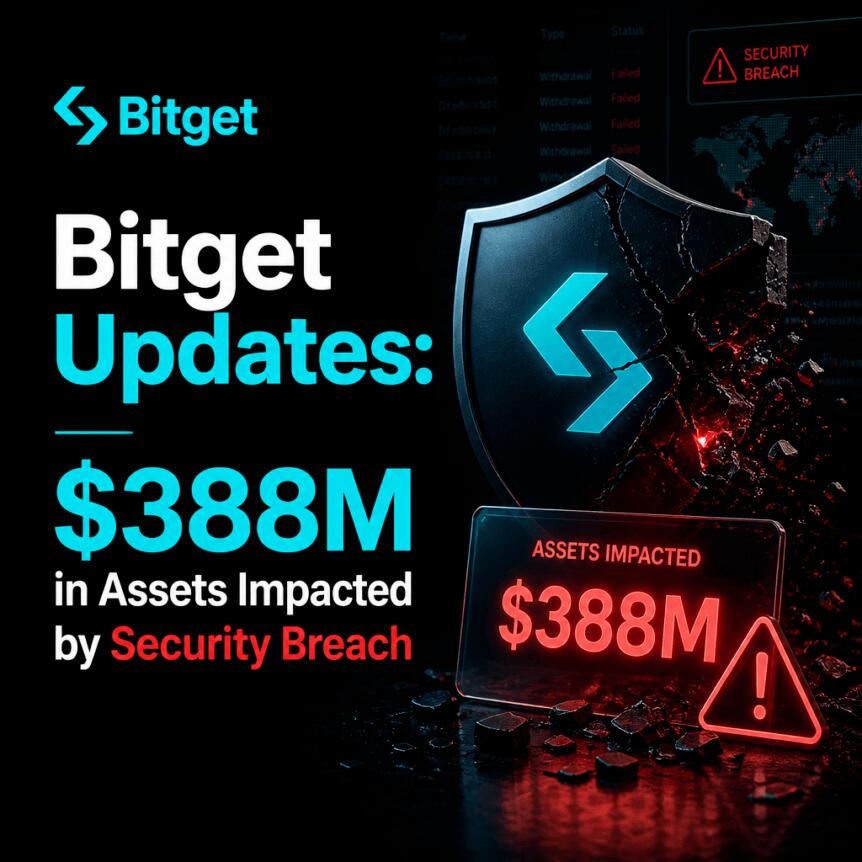
Bitget has revised its accounting of losses from last week’s security breach, raising the figure tied to attacker-controlled addresses to $387.5 million—up from an earlier estimate of $352 million. The updated incident report, released Thursday and followed by another update Friday, also said the incident remains contained and that no further unauthorized transfers are possible.
The exchange reiterated that it will continue pausing withdrawals and said it has launched a bounty program intended to help freeze or recover affected assets. The key change in Bitget’s latest disclosure is a “more complete accounting” of transfers, including assets that were not included in the initial estimate.
Key takeaways
- Bitget updated its breach figures: $387.5 million was transferred to attacker-controlled addresses, not $352 million.
- The exchange said the revision reflects additional accounting of affected assets on Zcash and TRON, without indicating any new unauthorized activity.
- Withdrawals remain paused, while Bitget launched a bounty program aimed at freezing or recovering funds.
- Bitget reported involvement of multiple networks, including EVM chains, XRP Ledger, Zcash, and TRON.
What Bitget changed in its incident report
In its revised accounting, Bitget said that the updated figure comes from a fuller reconciliation of transfers that occurred during the incident. The exchange attributed the adjustment to affected assets on Zcash and TRON that were left out of the initial estimate, stating that the new number does not reflect further unauthorized transfers.
Bitget’s statement emphasized containment: the company said the incident remains contained and that “no further unauthorized transfers are possible.” For users watching the case, the practical implication is that the revision is about measurement and scope rather than evidence of an expanded compromise.
Withdrawals paused as attacker routing is traced on-chain
In its Friday update, Bitget confirmed it will continue pausing withdrawals. At the same time, the platform said it has launched a bounty program designed to incentivize efforts to freeze or recover the assets that were moved to addresses controlled by the attacker.
Bitget also pointed to on-chain tracing in explaining where funds went. According to the exchange, “$387.5 million were transferred to attacker-controlled addresses,” with the revised total about $35 million higher than the earlier number. In other words, the updated report is not just a re-phrasing of loss estimates—it is an adjustment tied to the mapping of those transfers to attacker-controlled endpoints.
Networks and assets implicated across the ecosystem
Bitget’s revised incident report lists multiple affected blockchain environments. The exchange said the incident involved addresses on Ethereum Virtual Machine (EVM) networks as well as the XRP Ledger, Zcash, and TRON.
The follow-up disclosure also enumerated several assets the attackers allegedly took. According to Bitget, stolen or affected assets included XRP, Ether (ETH), Tether’s USDt (USDT), Zcash (ZEC), USDC, USDT0, XAUt, BNB, AVAX, and TRX.
For investors and traders, the multi-network nature of the incident matters because it affects how quickly risk can be reduced. Different chains can require different monitoring, compliance processes, and—critically—different operational steps for exchanges trying to halt or limit withdrawals and protect hot and intermediate custody.
Broader industry context and what remains unclear
Even with the clarification on the corrected loss figure, Bitget’s security breach remains among the largest incidents to hit the industry. The article’s context highlights that hackers stole about $1.5 billion worth of Ether from Bybit in February 2025, underscoring how damaging major exchange compromises can be even when withdrawals are halted and funds are monitored.
Notably, Bitget’s later update did not directly address comments made by CEO Gracy Chen from Thursday. In earlier coverage, Chen speculated that a North Korean hacking group might be behind the attack, citing what she described as “IP clues.” The revised incident report, as presented in the update, focuses on accounting and containment rather than attributing the breach to a specific actor.
That leaves an important tension for readers: while the exchange’s updated figures aim to settle questions about scale, attribution and motive appear to remain separate and unresolved in Bitget’s latest public disclosures. As the bounty program ramps up and tracing work continues, additional information could emerge—either from on-chain evidence, coordination efforts to identify and freeze assets, or follow-on updates from the exchange.
For now, market participants should watch whether Bitget later provides more details on recovery efforts and the timeline for when withdrawals might resume, alongside any further revisions to affected totals. The updated numbers suggest the incident’s spread is better understood, but the path from attacker-controlled transfers to recoverable funds—and the question of who carried out the breach—will likely determine the next phase of this story.
.jpg?branch=production)
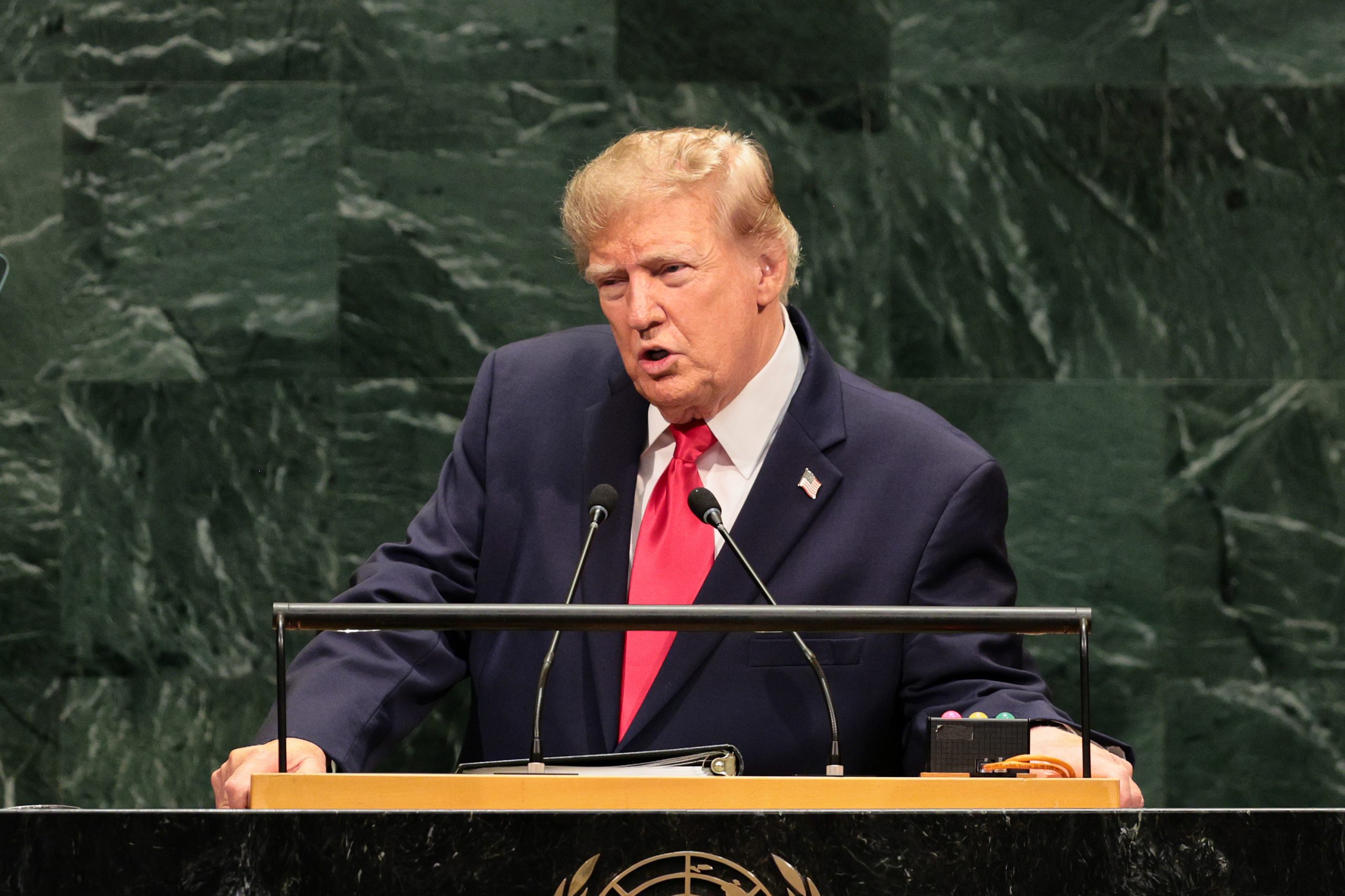
European leaders are rallying behind the International Criminal Court (ICC) after President Donald Trump called for countries to “immediately” resign from the organization, amid a broader push by the U.S. Administration to dismantle it.
Irish Taoiseach (Prime Minister) Micheál Martin pledged his support for the intergovernmental organization and said Ireland “strongly opposes efforts to undermine the court,” during his speech at the United Nations General Assembly in New York on Thursday.
Referencing the Hague-based court as he discussed the conflict in Ukraine, Martin said Russia must be held “accountable” for its actions. “There can be no impunity for war crimes… that is why Ireland is a steadfast supporter of the International Criminal Court,” he said, stressing that all “measures against it should be immediately withdrawn.”
Netherlands Prime Minister Rob Jetten issued a similar defense of the ICC earlier in the day. Without directly mentioning Trump or the U.S., Jetten reflected on how the court has come “under attack” and asked how can anyone “possibly be opposed to prosecuting the very worst crimes?”
“I believe there can be only one response,” he continued. “To say: ‘hands off’ the ICC, and all those other institutions that protect the international legal order.” The remarks drew loud applause from attending delegates.
The ICC is recognized as the world’s highest criminal court. It draws its jurisdiction from the Rome Statute, a treaty that went into effect in 2002 and is ratified by 125 countries. Neither the U.S. nor Israel is a state party to the Rome Statute, and therefore they do not recognize the jurisdiction of the court.
Trump has long complained that the ICC oversteps its authority and should not claim jurisdiction over U.S. citizens. His calls against the organization culminated in a public appeal at the U.N. on Tuesday. During his 45-minute speech, Trump called “on all nations that are members of the ICC to officially resign from this rogue institution, immediately.”
He said the U.S. is “opposed to the out-of-control institution known as the ICC” and “will never allow U.S. service members or anyone else to be investigated or given show trials by an anti-American tribunal with no jurisdiction over us.”
His call to action was swiftly rejected by German Foreign Minister Johann Wadephul.
“We will, of course, not be doing that,” Wadephul told Germany’s Deutschlandfunk radio station on Wednesday. He described the court as “an important institution” and said the issue is “one of the areas where we do indeed have to acknowledge a regrettable difference in policy from the U.S. Administration.”
Similarly, European Council president Antonio Costa said the E.U. stands “firmly behind” the ICC and argued it’s “unacceptable to threaten or attack the International Criminal Court, its officials, and its staff.”
At the U.N. assembly, the only nation to follow Trump’s lead appeared to be Naoero, a microstate island country formerly known as Nauru.
Naoero President David Adeang said in his speech late Tuesday that he would formally withdraw his country from the Rome Statute, citing the ICC’s “increasing irrelevance.”
“Naoero joins a growing number of nations standing up for their sovereignty against the ICC’s illegitimate overreach,” said U.S. Assistant Secretary for East Asian and Pacific Affairs Michael DeSombre, after meeting with Naoero’s Deputy Foreign Minister.
Leaving the ICC is neither an immediate or clean break, experts tell TIME.
Withdrawal takes at least a year, and states remain bound to cooperate with proceedings opened before their departure, according to Sergey Vasiliev, a professor of international law at Open University Netherlands.
“The state that intends to withdraw has to file a notification of withdrawal from the statute, and it comes into effect only one year after such notification has been received by the depository of the treaty,” he says. “Those states are still obliged to provide full cooperation to the court for all the proceedings and cases that started while they were a state party and right until the moment when their withdrawal becomes effective.”
In addition to Naoero, five other states—Niger, Burkina Faso, Mali, Venezuela, and Chad—have moved to withdraw. Vasiliev calls their planned departures a “serious loss,” but says it is not “lethal to the existence of the ICC.”
Hungary formally moved to withdraw from the ICC last year under former Prime Minister Viktor Orbán, but his successor, Péter Magyar, reversed the decision, signaling its renewed commitment to the organization.

A timeline of Trump’s campaign against the ICC
Trump’s complaints with the ICC date back to his first term. In late 2017, the ICC requested to open an investigation into American actions overseas, looking into alleged war crimes committed by U.S. personnel in Afghanistan.
Trump pushed back and challenge the court’s authority. During his speech at the U.N. General Assembly in 2018, he claimed the ICC had “no jurisdiction, no legitimacy, and no authority” and vowed to “never surrender America’s sovereignty to an unelected, unaccountable, global bureaucracy.”
“The United States has always objected to the ICC’s exercise of jurisdiction over its service members,” says Vasiliev, noting this has been an ongoing point of contention.
However, “the ICC has jurisdiction over crimes committed on the state party territory, even when those crimes are committed by non-state party nationals,” he adds.
In 2020, Trump signed an Executive Order issuing sanctions in response to the ICC’s Afghanistan investigation, calling the court’s actions “illegitimate assertions of jurisdiction.” The sanctions and visa restrictions against personnel of the ICC were later revoked by former President Joe Biden in 2021.
In recent years, the Trump Administration’s arguments with the ICC have largely centered on the court’s investigation into possible Israeli war crimes in Gaza. The court issued arrest warrants for Israeli Prime Minister Benjamin Netanyahu, a Trump ally, and Israeli Defense Minister Yoav Gallant in November 2024.
New York City Mayor Zohran Mamdani had previously pledged to execute the ICC’s warrant and have Netanyahu arrested when he traveled to the city for the U.N. assembly. But in July, Mamdani conceded that his Administration had “reviewed every avenue available,” only to find they did not have the jurisdiction.
Shortly after returning to office in early 2025, Trump signed an Executive Order declaring a “national emergency” and imposing sanctions on the ICC over what he said was the court’s “illegitimate and baseless actions targeting America and our close ally Israel.”
Efforts were ramped up again in July, when U.S. Secretary of State Marco Rubio announced a “whole-of-government” effort “to systematically disable the ICC’s ability to operate, target American servicemen or officials, or otherwise threaten American sovereignty.”
A month later, the State Department imposed sanctions on the ICC’s president, Judge Tomoko Akane, and Abdoulaye Seye, a Senegalese senior trial lawyer for the Office of the Prosecutor.
The ICC referred to the sanctions as “a flagrant attack against the independence of an impartial judicial institution which operates pursuant to the mandate conferred by its states parties.”

Crypto exchange Bitget released an updated incident report on Thursday’s security breach, clarifying that about $388 million in assets had been affected and not $352 million as previously reported.
In a Friday update, Bitget said it would continue to pause withdrawals following the security breach, and the company had launched a bounty program to incentivize freezing or recovering the assets. The exchange confirmed that “$387.5 million were transferred to attacker-controlled addresses” based on onchain tracing — about $35 million more than reported on Thursday.
“The revised figure reflects a more complete accounting of transfers that occurred during the incident, adding affected assets on Zcash and TRON that were not included in the initial estimate,” said Bitget. “It does not reflect further unauthorized transfers. The incident remains contained and no further unauthorized transfers are possible.”
According to Bitget, the incident included addresses on Ethereum Virtual Machine (EVM) networks, the XRP Ledger, Zcash and TRON. Among the assets stolen were XRP, Ether (ETH), Tether’s USDt (USDT), Zcash (ZEC), USDC, USDT0, XAUt, BNB, AVAX and TRX. The follow-up report did not address comments made by CEO Gracy Chen on Thursday speculating that a North Korean hacking group may have been behind the attack.
Even with the update on the assets transferred to hacker-controlled addresses, the Bitget security breach remains one of the largest to impact the industry. Hackers stole about $1.5 billion worth of Ether from Bybit in February 2025.
Related: Symbiosis says recovered 15 BTC from bridge hack, offers 20% bounty

Strategy is asking shareholders to approve a change to the payment schedule for its four preferred “digital credit” securities—moving them from periodic payouts to daily dividends. The company says the switch would not alter the preferred stocks’ dividend rates or the total amount paid, but would make dividend record dates occur on every calendar day.
According to a Friday filing with the U.S. Securities and Exchange Commission, the board approved the proposal on Thursday. Shareholders are set to vote on the amendments during a virtual special meeting scheduled for Oct. 28.
Key takeaways
- Strategy wants to convert STRC, STRF, STRK, and STRD to daily dividend record dates, without changing their dividend rates or aggregate payout.
- If approved, each calendar day becomes a record date, with payments made on the next business day.
- STRC would be the first to transition, with an initial expected daily dividend payment on Nov. 2.
- The other three preferred stocks would follow in January, with their first daily-schedule payments expected on Jan. 4.
- Strategy is following Strive’s earlier step toward daily dividends after Strive became the first public company to adopt the model.
Strategy seeks approval for daily dividend schedule
In its SEC filing, Strategy outlined amendments that would alter how dividends are timed for its preferred stock lineup, including STRC. The company’s stated goal is to shift to a daily framework while keeping economics consistent—specifically, maintaining the same dividend rates and the same total amount paid.
Under the proposed structure, a dividend record date would be set for every calendar day. The corresponding dividend payment would then be processed on the next business day. Strategy also specified an implementation sequence: STRC would transition first, followed by STRF, STRK, and STRD in the subsequent months.
Strategic timing details included in the filing indicate that STRC’s first expected daily dividend payment would arrive on Nov. 2. The remaining three preferred stocks are expected to begin daily payouts in January, with the first payments under the daily record-date schedule anticipated for Jan. 4.
The company said the amendments would take effect after Strategy updates the preferred stock certificates governed under Delaware law.
A broader shift in Bitcoin treasury preferred securities
Strategy’s move arrives after Strive, another Bitcoin treasury-focused public company, changed its own preferred stock payout mechanics to daily dividends. Earlier coverage of Strive noted that SATA began paying dividends every business day on June 16 at a 13% annual rate, after Strive reported eliminating outstanding debt in the first quarter.
While both companies are aiming for the same general outcome—more frequent income timing—the details differ. The source describing Strive’s change emphasized dividends on each business day. Strategy’s plan, by contrast, would treat every calendar day as the record date, with payments aligned to the next business day. For investors, that distinction matters for cash-flow timing and for how dividends accrue around weekends and holidays.
Strategy also positions the preferred securities within its “digital credit” approach—preferred securities designed to generate income from a capital structure anchored by its Bitcoin holdings.
Why daily dividends may matter to holders
Daily dividend schedules can be appealing because they more closely align income distribution with the passage of time. For traders and income-focused investors, more frequent payouts may reduce reliance on longer intervals between distribution dates and can improve short-term planning around liquidity needs.
At the same time, Strategy emphasized that the proposal would not change the dividend rates or the total amount paid. That detail signals the company is aiming primarily at payment mechanics rather than changing the underlying economics of the securities.
Strategy’s scale within the Bitcoin treasury category provides context for why the proposal could draw attention. According to BitcoinTreasuries.NET, Strategy holds about 846,000 BTC, compared with Strive’s 26,355 BTC.
CEO discusses volatility tied to leverage in STRC
Beyond the dividend schedule, Strategy has also been managing investor expectations around STRC’s trading behavior. The article notes that STRC saw notable volatility during the year. In June, it dropped sharply below its $100 stated amount, with an intraday low reported at $71.25 on June 26 based on Yahoo Finance data.
Speaking on Natalie Brunell’s Coin Stories podcast earlier this week, Strategy CEO Phong Le attributed the downturn to more leverage entering the STRC market than the company expected. He said that some investors borrowed against Bitcoin at lower rates to buy STRC and capture the spread between their borrowing costs and STRC’s dividend yield. When Bitcoin’s price declined, Le said those positions faced pressure to add collateral or sell STRC.
“We did not expect the amount of leverage that came into the system,” Le said. “And so that’s a lesson learned, next time around.”
Le also described measures Strategy is pursuing to avoid another similar unwind. These include maintaining a strong U.S. dollar reserve, using a policy that allows the company to repurchase STRC when it trades below its $100 stated amount, and working to attract more long-term holders—particularly institutional investors.
Since the June lows, the article states that STRC has recovered to around $98.41, near Strategy’s stated target range of keeping the security between $99 and $100. It also notes that STRC currently carries a 12% variable annual dividend rate.
What to watch before the shareholder vote
Investors should focus on the Oct. 28 special meeting outcome and on the implementation details once Strategy updates its Delaware certificates. If the daily schedule is approved, traders will likely watch how the more frequent record-date structure interacts with STRC’s ongoing volatility and with the company’s repurchase and reserve strategy.

The Bitget hacker has converted stolen USDC into ETH after a breach that the exchange valued at about $351.6 million, renewing questions about when Circle freezes funds linked to an attack.
Summary
- Security researcher Taylor Monahan flagged USDC transfers and swaps tied to the Bitget attacker.
- Bitget estimated the theft at $351.6 million and temporarily suspended withdrawals.
- Circle says it freezes USDC when legally compelled, while researchers have criticized its response time in past hacks.
- A U.S. lawsuit over the Drift exploit has raised similar questions about stolen USDC moving across chains.
Security researcher Taylor Monahan flagged the attacker’s activity on X, pointing to USDC moving through wallets as stolen assets were converted into ETH. Monahan questioned why the funds remained movable despite Circle’s ability to block transfers from specific USDC addresses.
The transactions show the attacker using USDC during the conversion process, according to Monahan’s account. Her criticism concerns Circle’s response to identifiable funds, although the public account of the transfers does not establish whether Circle received a legal order concerning those addresses or when it learned their identities.
Bitget attacker moves USDC after $351.6 million breach
Bitget said its security systems detected unauthorized transfers from some hot wallets at 18:31 UTC on Sep. 24. The exchange activated an emergency response, suspended customer withdrawals and estimated the affected assets at approximately $351.6 million. Deposits and trading remained available, while Bitget said account balances were accurate and its cold wallets were secure.
In its initial report on the breach, crypto.news covered Bitget CEO Gracy Chen’s account of the preliminary investigation. Chen said investigators had ruled out a leak of wallet private keys and believed the attackers had entered the exchange’s systems to move funds directly, without submitting customer withdrawal requests. Bitget was still investigating the entry point and had not released a final account of the attack.
The theft involved several assets, leaving investigators to follow more than one route for the stolen funds. On-chain tracker Lookonchain estimated the stolen portfolio at roughly $356.8 million using prices at the time of its update. Its breakdown included 102.93 million XRP worth about $157.48 million, 31,890 ETH worth about $85.75 million, and 21.05 million USDC. Lookonchain’s changing on-chain estimate and Bitget’s internal loss figure use different measurements.
Bitget said it had flagged addresses linked to the abnormal transfers and notified law enforcement and on-chain security firms. Chen said measures to prevent further outflows had been completed as engineers worked on repairs and the return of withdrawal services.
Monahan’s concern centers on the portion of the stolen assets held in USDC. Circle’s USDC terms say the issuer reserves the right to block transfers to and from certain on-chain addresses under its blocklisting policy. Once an attacker swaps USDC for ETH, however, a block on a USDC address cannot freeze the ETH received in that trade.
Circle’s freeze policy draws a response-time dispute
Circle has described a narrower standard for using its technical controls than the one its critics seek during a live exploit. In an April statement on lawful intervention, published after the Drift Protocol hack, the company said it exercises its freeze ability when legally compelled by an appropriate authority. Circle argued that letting an issuer decide on its own whose assets to block could put legitimate holders’ property rights at risk.
Its USDC terms also say Circle may be required to freeze tokens after receiving a legal order from a valid government authority. The terms separately reserve the right to block certain addresses that Circle determines may be associated with illegal activity or a violation of its terms. They state that an on-chain USDC transaction cannot be reversed or recalled once initiated.
Those provisions matter to U.S. holders because Circle issues a dollar-backed stablecoin used across exchanges and decentralized applications, while its freeze decisions can affect access to tokens at a particular address. Circle’s stated policy places lawful process at the center of that decision. Monahan’s criticism focuses on the time available to intervene before a suspected attacker finishes moving or swapping the USDC.
Circle said in its April statement that tools for faster intervention exist, but legal frameworks for quicker, coordinated action while protecting users’ rights remain incomplete. The company called for clearer rules and for security measures across protocols, wallets, exchanges and stablecoin issuers.
ZachXBT documented 15 earlier USDC cases
On-chain investigator ZachXBT alleged in April that Circle had taken minimal action or failed to act quickly enough in 15 cases involving more than $420 million in suspected illicit USDC flows since 2022. His list covered hacks and fraud cases in which he said stolen funds remained movable despite time to identify the activity.
As previously covered by crypto.news, ZachXBT cited about $9 million in USDC linked to the July 2025 GMX hack and said wallets involved in the Cetus hack were blocked only after the stolen USDC had been converted into ETH. He also alleged that attackers in the Drift case moved roughly $232 million over about six hours and more than 100 transactions before converting the funds.
The Drift transfers became the subject of a U.S. civil case. In April, a claimant sued Circle over transfers following the exploit, alleging that the issuer failed to stop roughly $230 million in stolen USDC routed through its Cross-Chain Transfer Protocol. The complaint, filed in a federal district court in Massachusetts, argues that earlier intervention could have reduced the losses. Those are the claimant’s allegations, rather than a court finding against Circle.
In that case, the claimant also pointed to Circle’s freeze of 16 USDC-linked wallets tied to a separate sealed U.S. civil matter as evidence that the issuer could block addresses. Circle’s April public statement, issued after the Drift attack, said freezes require lawful authority and called for legal structures that would permit faster action during future incidents.

Anthropic has sought shareholder approval for a plan that would give CEO Dario Amodei and six other co-founders a combined 50.1% of voting power after its planned IPO.
Summary
- The proposed voting rights would apply to most corporate matters if at least three founders retain minimum shareholdings.
- Anthropic’s Long-Term Benefit Trust would continue to elect most of the company’s board.
- A separate class of employee shares could break ties on some decisions.
- Anthropic’s May funding round valued the company at $965 billion; its reported IPO valuation remains unsettled.
According to The Information, which cited people familiar with the planning, Anthropic is asking shareholders to approve a special class of shares before the Claude developer goes public. The proposed shares would give its seven co-founders majority voting power on most matters, provided at least three of them continue to hold a minimum number of company shares.
Anthropic founders would hold voting power beyond their stakes
Each of the seven founders currently owns about 2% of Anthropic, according to the report. Their proposed shares would increase their voting rights without giving them a larger economic stake. As a result, the founders could retain collective control of shareholder votes even if they own far less than half of the company.
The plan resembles a founder-control structure used by Palantir, The Information reported. Its minimum shareholding condition would allow the arrangement to continue while at least three founders keep the required stakes; the report did not specify the threshold each would need to meet. Shareholder approval is still required for Anthropic’s proposal.
Board elections would work differently from most shareholder votes. Under the reported plan, Anthropic’s Long-Term Benefit Trust would retain the power to choose a majority of directors, while the number of seats elected by founders would rise from two to three. The board has seven seats, one of which is vacant, according to The Information.
Employees would also receive a special class of shares that could break ties on certain corporate matters, the report said. Their role would give them a vote in those specific decisions without transferring the trust’s board-election power to the founders.
The trust would keep its role in choosing directors
Anthropic describes itself as a public benefit corporation and says its Long-Term Benefit Trust is an independent body whose members have no financial stake in the company. The trust holds a separate class of stock that gives it authority to elect and remove directors, with that authority designed to grow to a majority of board seats.
The company said when it established the trust that its board would continue to oversee major decisions. Its trust structure gives people outside the shareholder group a role in selecting directors, even as investors and founders hold other voting rights.
The reported proposal would therefore put two kinds of control in different hands. Founders would hold 50.1% of the votes on most shareholder matters, while the trust would select most directors. The details of how those powers interact would be relevant to investors reviewing the company’s offering documents.
For U.S. investors, the Securities and Exchange Commission’s IPO guidance points to the prospectus as the place to check a company’s share classes and their voting rights. The SEC says shares with extra votes can let founders control a company without owning most of its equity, leaving public shareholders with less influence over corporate decisions.
Anthropic has previously been reported to have confidentially filed for a U.S. listing. A public prospectus would give prospective buyers firmer details on the proposed share structure, alongside the company’s financial information and offering terms. In earlier coverage of its IPO timetable, crypto.news reported that the prospectus was expected in late September and investor marketing could begin in mid-October; both dates were subject to change.
Anthropic’s IPO valuation remains under discussion
The voting proposal arrives while Anthropic prepares a potential public offering whose size and timing have changed in recent reports. On Sep. 19, reporting on a November IPO said investors were discussing a listing that could raise up to $100 billion at a valuation of about $2 trillion. The reported terms were preliminary.
Anthropic’s last announced funding round provides a separate figure. In May, the company said it raised $65 billion in Series H financing at a $965 billion valuation after the investment. Its announcement also said annualized revenue had crossed $47 billion earlier that month.
Secondary-market estimates later put Anthropic’s value at about $1.5 trillion, according to earlier coverage of its offering preparations. Those private transactions do not set the price for a public listing, where the final valuation will depend on the shares sold and the price investors pay.
Pre-IPO contracts give traders no shareholder vote
Anthropic’s approaching listing has also drawn interest from crypto trading platforms. Kraken offers perpetual futures tied to Anthropic’s private-market valuation, as reported in September. The contracts give eligible traders price exposure, but no Anthropic shares, dividends or voting rights. Kraken excludes U.S. customers from the products.
OKX introduced Anthropic-linked pre-IPO contracts for eligible European customers on Sep. 10. Its products likewise track an implied valuation without making contract holders company shareholders. The exchange said the contracts can be traded with up to 10 times leverage, while their prices may differ from both private funding valuations and any eventual IPO price.
XRP has risen 15.92% over the past week to $1.54, putting the token back against the 1.55–1.60 resistance zone as ETF demand and whale accumulation remain active.
Summary
- XRP has gained 15.92% weekly while buyers continue testing resistance between $1.55 and $1.60.
- U.S. spot XRP ETFs added $14.89 million, lifting cumulative net inflows to $1.76 billion overall.
- Large XRP holders accumulated 1.54 billion tokens during 96 hours, according to Santiment data recently.
- RSI stands at 62.77, favoring buyers without entering conventional overbought territory above 70 yet.
- EGRAG says reclaiming $1.55 could strengthen momentum, while failure keeps 1.40–1.41 support in focus nearby.
CoinGecko shows XRP trading near $1.54 after moving between roughly $1.45 and $1.55 during the past 24 hours. The rebound follows a volatile week that saw XRP reach $1.65 on September 23 before sellers pushed it back toward $1.48.
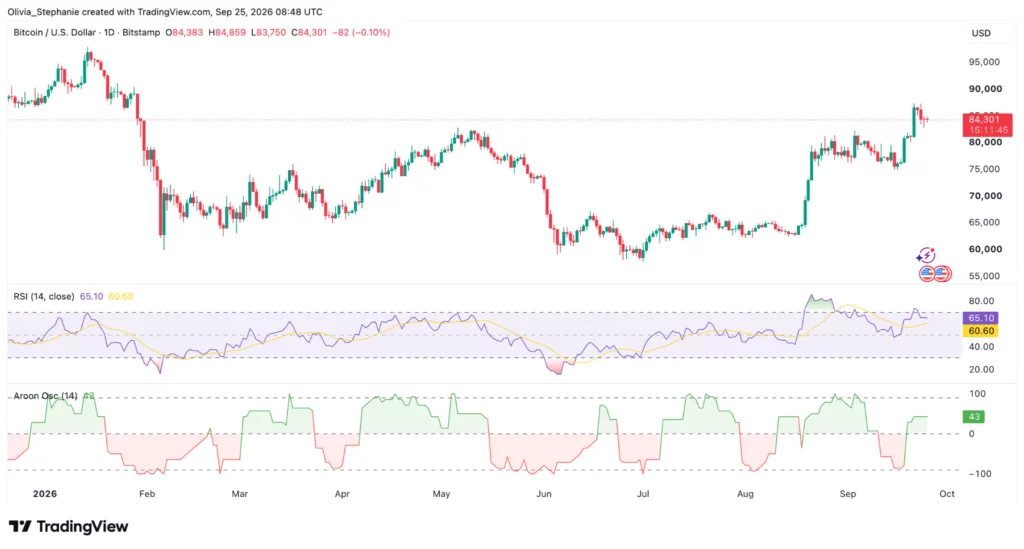
The recovery has restored positive momentum without producing a confirmed breakout. XRP’s 14-day Relative Strength Index stands at 62.77, above its signal average near 56.24 but below the conventional overbought threshold of 70. The Aroon Oscillator sits at +50, showing that recent highs are occurring more recently than recent lows.
Can XRP price finally break through $1.60?
The 1.55–1.60 region remains the immediate test because XRP has repeatedly struggled to hold above it. On September 23, the token reached $1.6581 before retreating toward $1.51, according to recent XRP price analysis from crypto.news. A sustained move through $1.60 would put the recent 1.65–1.66 high back in play.
EGRAG Crypto sees the current hesitation as a compression phase. The analyst wrote that XRP’s 21-day, 50-day and 100-day exponential moving averages are converging with a macro trendline near price. He described XRP as being “squeezed,” though his much higher long-term targets of $12, $15 and $27 remain speculative and require moves far beyond current resistance.
His shorter-term setup places more weight on $1.55. A strong recovery through that level after a retest of 1.40–1.41 would support his bullish continuation scenario. If XRP cannot reclaim $1.55, EGRAG sees the middle of a falling channel near $1.22 becoming more relevant.
Current momentum data lean toward buyers. RSI at 65 remains comfortably above 50, while the +50 Aroon Oscillator supports the recent upward trend without showing extreme dominance.
The next confirmation would need to come from price. Crypto.news previously identified the $1.60 barrier after XRP’s September 23 rejection, with roughly $1.70 representing the next visible resistance area if buyers establish support above $1.60.
Whales bought the dip while XRP recovered
Large-holder accumulation has accompanied the rebound. Santiment data shared by analyst Ali Martinez showed wallets in the tracked whale cohort accumulating roughly 1.54 billion XRP within 96 hours, worth approximately $2.2 billion at prices during the accumulation period.
The tracked holdings increased from roughly 8.27 billion XRP to 9.81 billion XRP. The buying began while XRP traded near $1.40 following the market reaction to the failed CLARITY Act vote.
Wallet data cannot identify every beneficial owner because exchanges, custodians and institutions may control multiple addresses. The 1.54 billion XRP figure therefore measures balances within the monitored wallet cohort, not confirmed purchases by a known group of individual investors.
Price nevertheless strengthened after the accumulation period. XRP moved from roughly $1.41 on September 20 to $1.53 the following day before eventually testing above $1.65, historical market data show.
EGRAG’s RSI roadmap gives another way to measure whether momentum can continue. He wants RSI to cross its moving average above 53, retest that region and hold it before targeting stronger momentum readings toward 80.
His downside alternative places 47 as the next momentum level if RSI fails to hold above 53. The current RSI reading of 62.77 already sits above that gateway, but maintaining it through another price test would be required for his “preferred bullish roadmap” to remain intact.
XRP ETF demand keeps building below resistance
U.S. spot XRP ETFs have continued attracting new money while XRP trades below $1.60. SoSoValue data reported for September 24 showed $14.89 million in daily net inflows, taking cumulative net inflows to approximately $1.76 billion. Bitwise led the session with $9.91 million, while Franklin Templeton added $4.98 million.
The previous session brought another $18.04 million. Bitwise received $11.54 million on September 23 and Franklin’s XRPZ drew $6.50 million, pushing cumulative inflows at that point to approximately $1.748 billion.
Fund demand has not removed XRP’s price volatility. September 23 offers the clearest example: XRP ETFs absorbed fresh capital while spot XRP fell sharply after failing to sustain its move above $1.60.
As crypto.news reported when Bitwise’s XRP ETF passed $500 million, regulated fund demand has continued through multiple XRP corrections. Seven U.S. spot XRP funds had already attracted roughly $1.57 billion by late August.
Institutional exposure is extending beyond dedicated XRP products. A September 9 SEC filing for the T. Rowe Price Active Crypto ETF showed XRP carrying a 9.15% weight in the fund’s benchmark as of August 31. Bitcoin represented 39.54%, Ethereum 18.86% and BNB 9.29%.
The filing lists XRP among the fund’s eligible assets. T. Rowe Price had already launched the actively managed crypto product earlier in 2026, so the filing represents an updated allocation disclosure, not a pending request for permission to begin holding XRP.
The Cyber Hornet S&P 500 and XRP 75/25 Strategy ETF is likewise already operating. Its SEC prospectus states that the product targets approximately 75% exposure to S&P 500 stocks and 25% to XRP through direct holdings, futures and XRP-linked exchange-traded products. The fund commenced operations on January 30, 2026.
Ripple’s institutional push continues behind XRP’s rally
Ripple has continued building institutional connections separately from XRP’s short-term trading setup. At the Middle East Stablecoin Forum in Dubai on September 17, Ripple Middle East and Africa Managing Director Reece Merrick joined representatives from BlackRock, HSBC, Mashreq and other financial firms for a discussion covering stablecoins, tokenized deposits and tokenized money-market funds.
MESA’s published event material listed BlackRock Managing Director Tony Ashraf, HSBC executive Finali Fernando and Merrick on the same “Digital Money and Tokenised Assets 2030” panel. The event documentation establishes their participation but does not show that BlackRock or HSBC entered a new commercial partnership with Ripple.
RLUSD formed part of Ripple’s discussion of institutional settlement. Merrick described stablecoins as an always-on layer for moving value between institutions and said Ripple built RLUSD “not to replace bank money, but to let it travel.” His statement describes Ripple’s intended use case, not evidence that banks represented at the conference have adopted RLUSD.
Ripple’s stablecoin had already crossed $2.3 billion in market capitalization earlier in September. Crypto.news reported that RLUSD reached $2.32 billion while XRP remained far below its 2025 cycle high, showing that growth in Ripple’s stablecoin business has not consistently translated into matching XRP price performance.
In the UAE, Ripple holds a separate regulatory foundation for its institutional products. The Dubai Financial Services Authority approved RLUSD as a recognized crypto token in June 2025, allowing DFSA-licensed firms inside the Dubai International Financial Centre to use it for permitted virtual-asset services. Ripple had received its own DFSA license for regulated blockchain payment services three months earlier.
Disclosure: This article does not represent investment advice. The content and materials featured on this page are for educational purposes only.

Crypto bros with stagnating portfolios have turned to so-called “dopamine shopping” — pretending to buy luxury goods online — to get their kicks.
Emerging in South Korea earlier this year, dopamine shopping involves going through the process of browsing and paying for high ticket items like luxury watches, designer clothes, and fancy meals, but without actually spending any real money.
The idea is to experience the rush of spending big without the financial hit. After all, budgets for authentic luxury goods are still tight after crypto’s market cap dropped 30% from its all-time high a year ago.
A Singapore-based lawyer and crypto influencer has poked fun at the trend, proposing a startup that introduces real giveaways into fake shopping apps as a way to introduce variable rewards.
A company that could convert users into paying customers by combining a dopamine purchase with a lottery entry for a real item could be worth “multi billions” he joked.
Read more: NHS exec warns that crypto trading could fuel problem gambling
Already, the aptly titled Dopamine Shop stocks a fake jewelry aisle, including a $10,950 Rolex Submariner and a $56,000 Audemars Piguet.
The site’s slogan: “Shop freely. Buy nothing.”
The BBC recently counted more than 2.7 million visitors to FoodNeverComes since June 2026. The website is a so-called “dopamine kitchen” that reproduces an UberEats ordering experience.
Crypto jumped onto the bandwagon this week when a commentator posted screenshots of fake storefronts to nearly two million views. He shouted out his own audience in a reply, “Degens would love it.”
Commenters kept the joke going, “I love checking TripNeverLeaves right after a 45-minute session with FoodNeverComes.”
A fintech worker asked appropriately, “Why do we keep coming up with new and creative ways to gamble?”
Got a tip? Send us an email securely via Protos Leaks. For more informed news and investigations, follow us on X, Bluesky, and Google News, or subscribe to our YouTube channel.

Japan has expanded its push to bring yen stablecoins into everyday business use, with 26 companies, financial institutions and local government bodies joining a six month program that will test EJPY and other stablecoin use cases across payments, remittances and digital assets.
Summary
- Toshiba and 25 other participants have joined a six month program testing EJPY and other stablecoin use cases in Japan.
- Testing will cover domestic and cross border payments, business transactions, digital asset settlement and Web3 services.
- Participants will receive EJPY test tokens, wallets and access to Japan Open Chain infrastructure for technical trials.
- The program runs through February 2027, while participation does not commit any company to launching a stablecoin service.
Japan Blockchain Foundation said the Stablecoin Proof of Concept Partners program began in September and will run until February 2027, giving participants access to test EJPY tokens, wallets and the Japan Open Chain infrastructure needed to develop and verify potential services.
Toshiba is among the companies taking part, alongside SCSK, QUICK, Seiko Solutions, Hachijuni Nagano Bank, Asahi Broadcasting Group Holdings, Tobu Top Tours and several technology and financial services firms. Tagawa City has joined from the public sector.
Sixteen participants have been publicly named so far, while another 10 will be disclosed after discussions with the companies are completed.
The program moves EJPY beyond the preparation work outlined earlier this year and into testing with businesses that could eventually use stablecoins for actual transactions. The foundation is developing EJPY as a trust based, yen denominated stablecoin centered on Japan Open Chain, an Ethereum compatible Layer 1 blockchain operated by a consortium of Japanese companies.
EJPY tests move toward business payments
Participants will examine potential applications across domestic payments and remittances, cross border transactions, business to business settlements and payments involving digital assets such as real world assets and security tokens.
Other areas include Web3 services, local government and regional economy payments, and new financial services built around stablecoins.
Japan Blockchain Foundation said the companies will develop use cases based on their own business needs instead of working from a single predefined payment model. Technical testing will then be used to examine whether those ideas could eventually become commercial services.
Participation does not mean the companies have committed to issuing, handling or commercially launching stablecoins. The program is intended to study possible applications and verify the technology before any individual company decides whether to proceed with a product.
The latest work builds on plans for EJPY that were disclosed earlier this year. As crypto.news previously reported, Japan Blockchain Foundation was preparing the yen pegged token for business to business settlement, with Japan Open Chain serving as a core issuance network and Ethereum support planned from the start.
At the time, launch terms and timing had yet to be finalized as work continued around regulatory reviews, trustee selection and discussions with potential partners.
The foundation is still preparing the trust structure, issuance and redemption process, systems and legal compliance arrangements for EJPY.
Under the new program, participating organizations will receive information on stablecoin regulations, market developments, the EJPY structure and use cases already being explored in Japan and overseas. Individual consultations will be offered for companies designing stablecoin based business models or systems.
Technical support will include EJPY test tokens and wallets that can operate on Japan Open Chain, allowing companies to test transactions before deciding whether a service is commercially viable.
Japan stablecoin use is moving beyond issuance
EJPY is entering testing as several Japanese businesses explore how stablecoins could work within existing payment systems.
Convenience store operator Lawson expanded a stablecoin trial in August to include JPYC, USDC and USDT at two Tokyo stores. The test processes wallet barcodes through Lawson’s existing point of sale registers without requiring separate payment terminals.
Lawson said it would examine payment speed, system integration and store operations before deciding whether stablecoin payments should be introduced more widely.
Corporate payment use is developing alongside retail trials. Japanese logistics group AZ COM Maruwa Holdings has laid out plans to use JPYC for payments involving roughly 2,300 business partners and contractors, including truck drivers.
JPYC itself has continued attracting corporate backing. The stablecoin issuer raised a total of 6 billion yen, or roughly $38 million, through an extended Series B round announced in August. AZ COM Maruwa invested 1 billion yen as part of the funding while preparing its planned payment use.
EJPY would add another yen denominated option to the market. Japan Blockchain Foundation expects the token to support business settlements, digital asset payments, remittances and transactions involving Web3 services.
Japan Open Chain is intended to serve as the main network for issuance and circulation, though the foundation is considering multichain support to make EJPY available to businesses in Japan and overseas.
Japanese banks prepare their own stablecoin services
Stablecoin development is taking place within Japan’s banking sector as well.
MUFG Bank, Sumitomo Mitsui Banking Corporation and Mizuho Bank are targeting live stablecoin transactions during fiscal 2026, which ends in March 2027.
The three banks have been working through a shared framework covering issuance infrastructure, governance, operating rules and systems. Their work followed a Financial Services Agency backed pilot that tested corporate cross border payments through a trust structure using Progmat blockchain infrastructure.
Cross border testing has continued outside that project. Kyobo Life Insurance and Japan’s SBI Group completed a yen and won stablecoin test in September using the Canton Network.
The pilot tested direct exchange between representations of yen and won stablecoins without first converting the funds through the US dollar. Institutional transfer, foreign exchange, settlement, tracking and reconciliation were included in the test, although no institutional funds changed hands.
Japan Blockchain Foundation has identified similar cross border payments as one of the areas EJPY participants want to explore.
Japan builds a regulated stablecoin market
Japan already has a legal framework covering stablecoins, while regulators have continued adjusting oversight as more financial institutions and businesses enter the sector.
The Financial Services Agency established a dedicated Cryptocurrency and Stablecoin Division in August, bringing digital asset supervision, innovation and digital payment planning under a standalone department.
Yen stablecoin activity has meanwhile expanded through JPYC, which operates as a regulated electronic payment instrument. JPYC Inc. received registration as a funds transfer service provider in August 2025 and formally launched its current stablecoin and JPYC EX issuance and redemption service later that year.
The token is designed to maintain a one to one value with the yen and is backed by yen denominated deposits and Japanese government bonds. Its use has since spread into retail and corporate payment tests, while the token became available for trading on South Korean exchange Upbit in September.
EJPY is being developed under a different trust based structure. Japan Blockchain Foundation plans to use the proof of concept program to work through potential business applications while continuing preparations for issuance and redemption, regulatory compliance and the underlying system.
Participation in the program is free and is open to businesses, financial institutions and local governments considering stablecoin payment infrastructure, remittance services or blockchain based digital transformation.
The current testing period is scheduled to continue through February 2027, with participating organizations expected to develop and verify EJPY use cases using test tokens and Japan Open Chain infrastructure.

The CFTC has updated its guidance on tokenized customer-fund investments and blockchain records, putting the focus back on the rules that already let some futures intermediaries take crypto as margin. A fall in the token’s price sets off several different calculations. The crucial distinctions are whose asset it is, which haircut applies, and who must fill a shortfall.
Summary
- The CFTC updated its crypto activity FAQs on September 24, 2026, addressing 2 subjects: tokenized investments and blockchain records.
- February’s Staff Letter 26-05 lets qualifying intermediaries count certain customer crypto as margin under specified conditions.
- The staff letter requires at least a 20% haircut for most non-stablecoin crypto in specified intermediary calculations.
- A $100,000 token position subject to a 20% haircut starts with $80,000 of recognized value.
- The earlier FAQ gives clearinghouses discretion to set initial-margin haircuts and review them at least monthly.
The Commodity Futures Trading Commission has updated its crypto activity FAQs as regulated derivatives firms work with tokenized assets and digital records.
The agency’s September 24 release says the latest additions address investments of customer funds in tokenized forms of permitted investments and blockchain recordkeeping. It points back to the March 20 FAQs, Staff Letter 25-39 on tokenized collateral and Staff Letter 26-05 on digital assets accepted as customer margin. The announcement does not say that September 24 created an unrestricted new right to pledge any token against any derivatives trade. The collateral permission, and its conditions, predate the new release.
The CFTC’s existing crypto guidance was covered by crypto.news in March. Its practical question has become more urgent as firms put digital assets into structures usually associated with cash and government securities. Suppose a customer posts bitcoin against a futures position and bitcoin falls while the futures position loses money. A mark on the coin and a mark on the trade occur together. The first reduces the value of security available to the account; the second raises what the account needs.
The regulatory papers separate these movements. Staff Letter 26-05 concerns what a futures commission merchant, or FCM, may count while evaluating a customer account and segregated funds. A derivatives clearing organization, or DCO, sets its own haircut for assets accepted as initial margin under separate rules. A 20% charge on an intermediary’s proprietary bitcoin inventory is a third issue. Applying one number to all three would give the reader a false answer.
September’s FAQ update is narrower than the collateral headlines
CFTC Release 9303-26 names the Market Participants Division, Division of Market Oversight and Division of Clearing and Risk as the staff groups publishing the update. The release specifies two matters: tokenized versions of investments already permitted for customer funds and use of blockchain technology to satisfy recordkeeping requirements. It traces the FAQ series to March 20, 2026. That chronology is the first check on claims circulating about a new collateral rule.
The original March FAQs explicitly say an FCM may not invest customer funds in payment stablecoins under Regulation 1.25 merely because it can accept a qualifying stablecoin as customer margin. An FCM may, under Staff Letter 26-05, place its own payment stablecoins into segregated customer accounts as residual interest. These are different sources of funds and different transactions. Buying tokens with segregated customer cash is not interchangeable with receiving a customer’s token as a margin deposit.
The distinction carries into the September update. A tokenized form of an investment already permitted under Regulation 1.25 is a question about the wrapper on an eligible underlying asset. It is not a general license for an intermediary to use customer cash to buy bitcoin or a payment stablecoin. Without the full text of the updated FAQ attached to the CFTC’s public release as reviewed for this feature, the release supports only its stated scope. We do not attribute new haircut values or new eligibility categories to yesterday’s update.
An agency staff FAQ is not an amendment to every CFTC rule. Staff Letter 26-05 is a no-action position: the Market Participants Division says it will not recommend enforcement against an FCM acting within specified conditions. It does not repeal the customer segregation provisions of the Commodity Exchange Act, and it does not promise that a DCO will accept every coin. The original letter was issued following a request by Coinbase Financial Markets and was reissued on February 6, 2026, to clarify that a national trust bank may qualify as a payment stablecoin issuer for its purposes.
The CFTC’s latest tokenization comments show the policy context. Chairman Michael Selig has discussed round-the-clock markets and tokenized collateral; an agency’s interest in those markets does not eliminate the ordinary margin test. A clearinghouse still has to decide whether a proposed collateral asset has sufficiently low credit, market and liquidity risk for its clearing program.
The customer owns the token, but its recognized value can move
A futures customer places margin with an FCM, which carries the customer’s trading account. Federal segregation rules require the intermediary to account for customer property separately from the firm’s own assets. Staff Letter 26-05 lets an FCM count certain non-security digital assets, including payment stablecoins, when determining whether the customer account is undermargined and performing specified segregation calculations, provided it follows the letter’s conditions.
The FCM does not simply copy the wallet’s displayed market value into those calculations. For a payment stablecoin it determines fair market value and applies a haircut under its risk policies. For other qualifying digital assets the letter calls for a haircut of at least 20% for the specified calculations, subject to the letter’s particular exception for collateral and a position both based on and denominated in the same asset. The FCM’s relevant valuation or a clearing organization or trading venue’s measure may differ depending on the calculation. The text matters more than a slogan that bitcoin is accepted at 80 cents on the dollar everywhere.
Here is a deliberately simple illustration, not a report of an actual account. A customer posts bitcoin worth $100,000, and the relevant FCM calculation applies a 20% haircut. Recognized value is $80,000. If bitcoin’s spot value then falls by 15% to $85,000 and the haircut remains 20%, recognized value becomes $68,000. The haircut alone did not jump; market value fell. The account has lost $12,000 of recognized collateral value without a single bitcoin leaving custody.
Now assume the relevant margin requirement for the futures position stays at $75,000. Before the bitcoin move, $80,000 of recognized collateral exceeds the requirement by $5,000. After the move, $68,000 leaves a $7,000 shortfall. The gap changed by $12,000. If the position itself simultaneously loses $10,000, the economic pressure becomes more severe, but the precise cash call depends on the account’s other balances, settlement, portfolio margin and the FCM’s rules. The illustration deliberately holds those factors fixed to show one moving part at a time.
It follows that a 20% haircut is not an insurance policy against a 20% fall. Starting with $100,000, a 20% haircut gives $80,000 of credit. If spot subsequently drops 25%, the asset is worth $75,000 and its value after the same haircut is $60,000, a $20,000 decline in recognized credit. The ratio applies to the new price each time. Calling the initial discount a guarantee would obscure the mechanics of margin calls.
The hypothetical can be run in the other direction to see what would invalidate the concern. If the token price is flat, the recognized collateral value stays at $80,000 under the fixed 20% assumption; a fall in the trader’s futures position could still create a margin deficit. If the futures position earns enough to offset a decline in the pledged token, the combined account may remain above its required margin even as the bitcoin collateral loses value. The public letter does not allow an outsider to infer a margin call from a token price alone. Account equity, product exposure and the firm’s house margin are needed.
Nor is the haircut necessarily static. The 20% in the letter is a minimum for the specified non-stablecoin FCM calculations, not a cap. If the FCM’s risk policy required 30%, a $100,000 holding would initially count as $70,000. After a 15% decline in the asset price, it would count as $59,500. Changing the assumed discount from 20% to 30% while holding the post-decline price at $85,000 would reduce recognized value by another $8,500. A fall in spot and an increase in the discount can therefore compound; whether a firm changes its policy in a real episode requires its actual rules or an announcement, neither of which follows from the CFTC letter alone.
The same caution applies to a payment stablecoin that moves below its intended peg. The letter instructs a firm to use fair market value and its risk policy, with an appropriate haircut, when counting a payment stablecoin. A token trading at 98 cents does not retain one dollar of regulatory collateral value merely because its issuer promises redemption at par. The recognized amount would depend on the policy’s treatment of market price, redemption access and the relevant haircut. It would be wrong to use the 2% proprietary capital charge as an automatic discount on a customer’s stablecoin margin: the figure addresses the firm’s own position in a different calculation.
The letter has a narrower exception when a customer posts a non-stablecoin digital asset to support a contract both based on and denominated in that same asset. For the permitted offset against the deficit in that specific contract, the applicable clearing organization or foreign clearing organization’s haircut alone may govern. The exception does not turn that asset into universal collateral for every unrelated contract. For an account holding more than one kind of derivatives exposure, the FCM must still apply the relevant requirements to the exposures outside the exception.
The clearinghouse sets a separate haircut
The March CFTC FAQs answer the DCO question directly. A clearinghouse may accept crypto assets, including qualifying payment stablecoins, as initial margin if the assets meet Regulation 39.13(g)(10), which limits accepted assets to those with minimal credit, market and liquidity risks. Regulation 39.13(g)(12) makes the DCO responsible for setting haircuts that account for those risks, including stressed market conditions, and for reassessing them at least monthly.
No universal CFTC clearinghouse bitcoin haircut appears in that answer. A venue might apply a larger discount, restrict a coin, impose concentration limits or decline it under its risk rules. The FCM’s treatment of a customer’s margin and the DCO’s treatment of collateral posted to the clearinghouse operate at different links in the chain. An individual can see a token in an FCM account without the clearinghouse necessarily holding that same token as its own initial margin. The FCM may satisfy clearing obligations in another accepted form.
The easiest error is to import the 20% proprietary capital charge from Question 6 of the March FAQ into Question 8 about a DCO’s initial-margin haircut. Question 6 says the CFTC staff would not object if an FCM used a minimum 20% capital charge for its own inventory positions in bitcoin or ether, and 2% for its own payment stablecoins. Those are regulatory net-capital deductions on the firm’s property. Question 8 requires the DCO to choose its own haircut for initial margin. Question 1 separately tells the FCM how to treat customer property using the conditions in Staff Letter 26-05.
Three percentages might happen to coincide in one arrangement. They still come from different rules and belong to different balance sheets. The comparison is especially relevant when an FCM tries to meet a shortfall with its own stablecoins. Staff guidance permits proprietary qualifying payment stablecoins as residual interest in a segregated customer account but does not permit the firm to substitute proprietary bitcoin or ether for that purpose. The 2% capital charge on proprietary stablecoin holdings is a separate firm-level cost.
The market for tokenized funds supplies a related example. A fund share represented on a blockchain can carry the legal and economic rights of a conventional eligible fund share, yet the speed of moving a token is only one part of its margin value. Fund redemption terms, ownership records, settlement restrictions and who can receive the shares remain relevant. The CFTC’s tokenized-collateral guidance focuses on equivalence of rights, not merely on whether a blockchain transaction confirms quickly.
Franklin Templeton’s tokenized BENJI fund shares illustrate how a fund token can sit inside securities and custody structures even while its ownership record uses a blockchain. Whether any such share is accepted in a particular derivatives margin program depends on that program’s rules. The existence of a token and a large pool of underlying government assets does not show that a DCO has approved it as collateral.
A falling price reaches three balance sheets
When a customer’s bitcoin collateral declines, the customer faces the first exposure: it must keep its account adequately margined under the firm’s and venue’s rules. A deficit can lead to a call for more collateral, reduced positions or liquidation under the applicable agreements. An FCM that serves as intermediary must monitor its own exposure and keep customer segregation intact. The clearinghouse monitors its members and the assets it accepts as initial margin. They are linked, but their duties are not identical.
The Commodity Exchange Act and CFTC regulations prohibit an FCM from using one customer’s property to carry another customer’s positions. Staff Letter 26-05 describes why FCMs may have to place their own funds into segregation equal to customer undermargined amounts, including deficits. That obligation is the reason a rapid collateral move is not merely an app notification for one trader. An intermediary must account for it in a protected customer-funds system whose balance changes with the value of pledged assets.
Time complicates the chain. The March FAQs say the FCM’s daily segregation reports compute separate schedules as of the close of each business day. Crypto prices can move continuously. A firm may monitor and call margin more often under its own risk policies, but the existence of daily regulatory reporting should not be mistaken for a token price that changes only once daily. Nor does a blockchain timestamp itself establish the legal value accepted by a clearing organization when the relevant market becomes thin.
An FCM’s own contribution to a segregated account deserves a separate explanation. Customer property is protected by segregation, but if a customer account is undermargined, the firm may have to put its own money into the segregated pool so the protected total is not short. The margin call issued to a customer and the firm-level deposit into segregation can occur on different schedules. A customer may later cure a deficit or close a position; the firm’s immediate duty to preserve required segregation does not wait for an optimistic prediction about that customer’s next transfer. Staff Letter 26-05 addresses how the FCM counts the qualifying crypto when it determines that amount. It does not authorize using another customer’s surplus as a substitute for the firm’s money.
In practice, the customer agreement can set a house margin above a clearinghouse minimum. A trader looking only at the DCO’s public haircut or product margin schedule may therefore understate the collateral demanded by its FCM. Conversely, a clearinghouse’s decision to recognize a token does not force every intermediary to offer that token to customers. Those choices can be checked against a particular firm’s disclosures, but the CFTC’s general FAQ does not supply a single industrywide customer contract.
The staff letter first limited an FCM relying on the no-action position to payment stablecoins, bitcoin and ether as customer margin for its initial three months. It required notices of significant operational or cyber problems during that period and weekly reporting of amounts held by asset and account class. After the initial period, an FCM may accept other qualifying crypto assets if it meets the letter’s continuing conditions; it must submit revised risk policies before accepting some assets. Reporting and the initial restriction have different start and end mechanics. It would be inaccurate to claim all FCMs became eligible to accept every token on the same calendar date.
A second 2026 staff action addressed customer crypto sent to foreign brokers for certain foreign futures arrangements. The location and reuse rights of pledged property can change in such a structure. It should not be folded into the domestic clearinghouse example without checking the relevant letter and customer agreement. Asset custody, margin recognition and legal claims need to be traced for the particular route a trader uses.
A strong case for crypto collateral still needs limits
The strongest affirmative argument comes from the CFTC’s own pilot and subsequent staff work. In December 2025, acting chair Caroline Pham launched a digital-asset pilot that included bitcoin, ether and tokenized collateral in derivatives markets with reporting and monitoring requirements. A trader who already holds these assets may avoid selling them simply to create cash margin. Tokenized fund shares may preserve claims on an eligible investment while making transfers faster within approved systems. The staff letters set conditions because officials saw a use case they were prepared to test.
Neither faster movement nor a public ledger cancels market risk. Regulation 39.13(g)(10) still asks a DCO to assess credit, market and liquidity risks. CFTC Staff Letter 26-05 still requires valuation policies and deductions for an FCM relying on relief. A clearinghouse can consider stressed markets when setting a haircut. A token whose transfer settles promptly can still have a falling market price or a legal ownership claim that takes time to verify. The regulatory system treats those as separate questions.
There is a measurable distinction between holding a token as customer collateral, holding an FCM’s token as firm inventory, and using a tokenized security as an investment of customer cash. The September 24 FAQs concern the third of these subjects and blockchain records. The March FAQs and February letter speak to the first two. A story that merges them would incorrectly imply a new permission or an official 20% haircut across every venue.
Limits remain. The CFTC releases reviewed here do not show how many FCMs filed a notice, how much bitcoin they currently hold as collateral, or a definitive haircut for a named clearinghouse’s latest program. The $100,000 example shows the math of a fixed haircut and a market move; it is not a forecast of liquidations. An actual customer’s result requires its account records, product margin schedule, collateral mix and agreements.
What to watch
- Updated CFTC FAQs: Check the published text for the exact treatment of tokenized permitted investments and blockchain records.
- FCM collateral terms: Look for each firm’s accepted coins, customer valuation policy and house haircuts.
- DCO margin schedules: Check the clearinghouse’s eligible assets and its own haircut for each accepted token.
- FCM notices and disclosures: Identify firms publicly reporting reliance on Staff Letter 26-05 without assuming all intermediaries participate.
- Token price and required margin: Compare both at the same timestamp to see whether a customer’s recognized collateral still covers its obligation.
The March FAQ specifies that a DCO must reassess whether its collateral haircuts remain appropriate at least monthly. Its staff answer leaves the actual discount to the clearinghouse under Regulation 39.13(g)(12).
FAQ
Did the CFTC first allow bitcoin as derivatives collateral on September 24?
No. September’s release updates FAQs on tokenized customer-fund investments and blockchain records. The earlier Staff Letter 26-05 describes the no-action conditions for FCMs accepting certain customer crypto as margin.
Is the bitcoin collateral haircut always 20%?
No. The letter calls for at least a 20% haircut in certain FCM calculations for non-stablecoin assets, subject to a specified same-asset exception. A DCO sets its own initial-margin haircut based on risk.
What happens to $100,000 in bitcoin margin after a 15% price drop?
With a fixed illustrative 20% haircut, its recognized value moves from $80,000 to $68,000. The actual margin call depends on the account and product rules.
Is the 20% FCM capital charge the same as a clearinghouse haircut?
No. The March FAQ’s 20% proprietary charge concerns an FCM’s own bitcoin or ether inventory. A DCO sets a separate haircut on initial margin that it accepts.
Can a futures firm use customer cash to buy stablecoins?
The March FAQs say the no-action letter does not expand Regulation 1.25’s list of permitted investments. The staff distinguishes investing customer funds from accepting customer stablecoins as margin.
Can an FCM place its own bitcoin into customer segregation?
The FAQ says the letter permits proprietary payment stablecoins as residual interest under its conditions, not proprietary bitcoin or ether. Customer-owned qualifying bitcoin can be treated separately as margin.
Who fills a shortfall when crypto collateral falls?
The customer must maintain its required account margin under the applicable terms. The FCM must meet its own segregation and clearing obligations and cannot use another customer’s property to carry that deficit.
Does faster blockchain settlement remove collateral risk?
No. CFTC requirements still address asset valuation, stressed liquidity and ownership rights. This is educational analysis, not investment advice.
Disclaimer: This article is for information and educational purposes only and does not constitute financial or investment advice. Figures reflect regulatory filings and reporting available at the time of writing and change with each disclosure. Nothing here is a recommendation to buy, sell, or hold any security or asset. Always do your own research. Information is accurate as of September 25, 2026.

Texas vs. Tennessee prediction, pick, odds, spread: Longhorns face tough road test against Vols

Bambu Lab Loses Big In $27M 3D Printer Lawsuit

Bitget Updates: $388M in Assets Impacted by Security Breach





-

 Crypto World3 days ago
Goldman Sachs and Deutsche Bank Agree: The S&P 500 Rally Isn't Over
-

 Tech5 days ago
Researchers escape OpenAI Codex sandbox to run commands on host
-

 Fashion1 day ago
8 iPhone Accessories That Add Personality
-

 Crypto World5 days ago
Who Needs CLARITY Anyway? ARB Could See 70X Increase: Hodler’s Digest
-

 Crypto World7 days ago
Circle launches Arc Studio AI agent for building onchain apps
-

 Crypto World7 days ago
Trading Bitcoin on Robinhood? Why 2% Spread Has Traders Worried
-
 NewsBeat7 days ago
Trump says US has reached an agreement to take permanent control of Greenland’s security
-

 Tech6 days ago
Trump suggests rebranding AI with a new name, says he’s also creating an AI Force
-

 Business5 days ago
Analog Devices (ADI) Bets $1.35 Billion on Chips that Let Machines Think for Themselves
-

 Crypto World5 days ago
Coinbase, Robinhood, Circle Seen as Tokenized-Stock Winners
-

 Crypto World3 days ago
This Bearish Netflix Stock Trade Can Cash In On Video Streaming Giant’s Woes
-

 Crypto World7 days ago
Bitcoin price breaks channel as RSI climbs to 63
-

 Tech4 days ago
Google’s $899 Googlebook is a bet that you’ll buy a new laptop for Gemini
-

 Crypto World3 days ago
Trump-Xi Polymarket Odds for Handshake Hit 50%
-

 Entertainment3 days ago
These 17 Fall Amazon Dresses Seriously Look Like Anthropologie
-
 Business3 days ago
Oil Price Today (September 23): Crude oil below $100 on hopes of US-Iran talks. What did Trump say?
-

 Crypto World2 days ago
Crude Oil Prices Pressured by Diplomatic Hopes in the Middle East
-

 Crypto World7 days ago
World Money launches in 150+ countries with Stripe
-

 Crypto World2 days ago
Bitcoin Threatens Sub-$84,000 Breakdown as Long Liquidations Spike
-
 Crypto World2 days ago
Bitcoin price tests $83,600 Supertrend support after $87K rejection
You must be logged in to post a comment Login