
Crypto World
Kalshi now controls 89% of the U.S. prediction market as regulated trading takes over

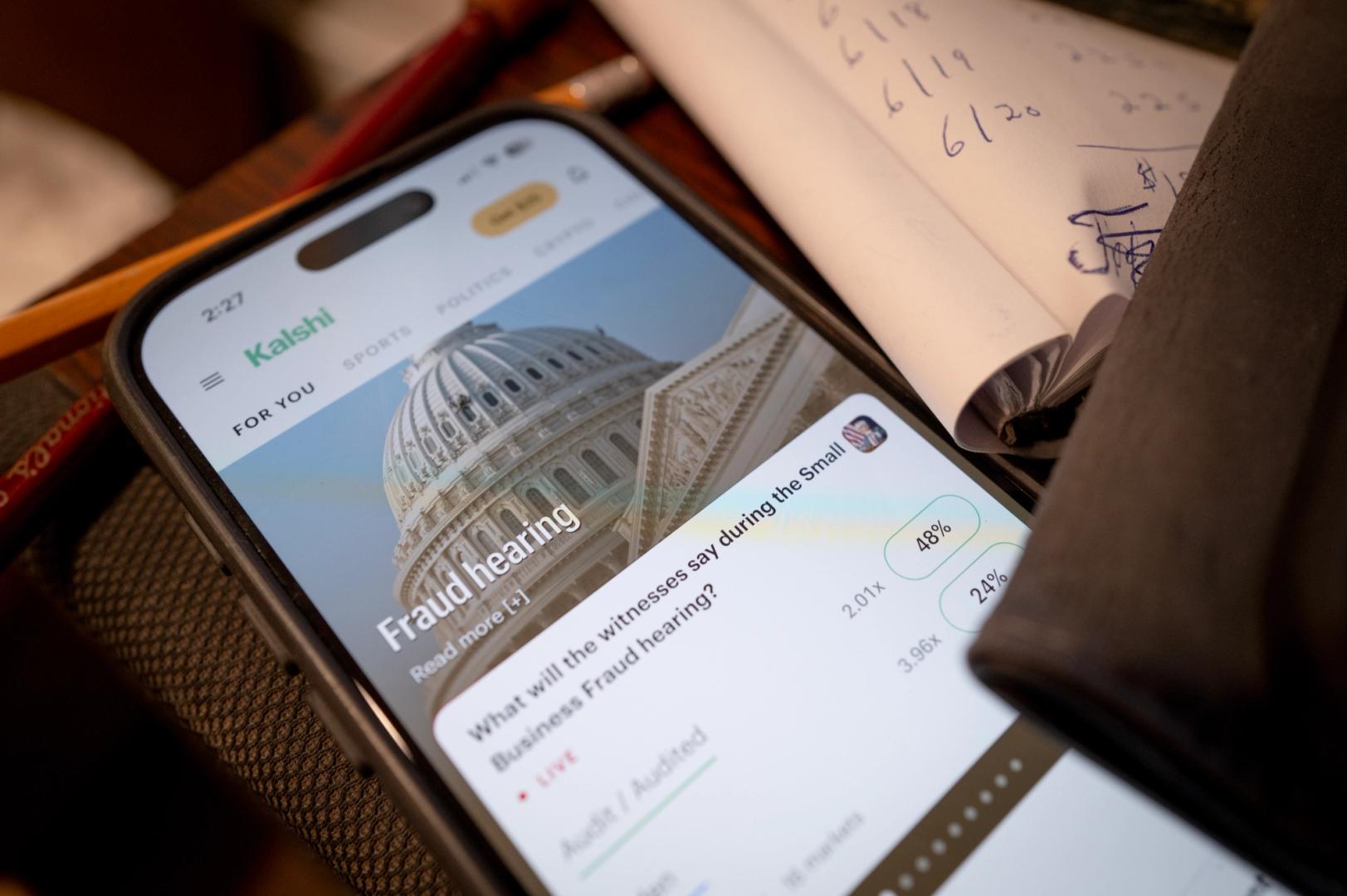
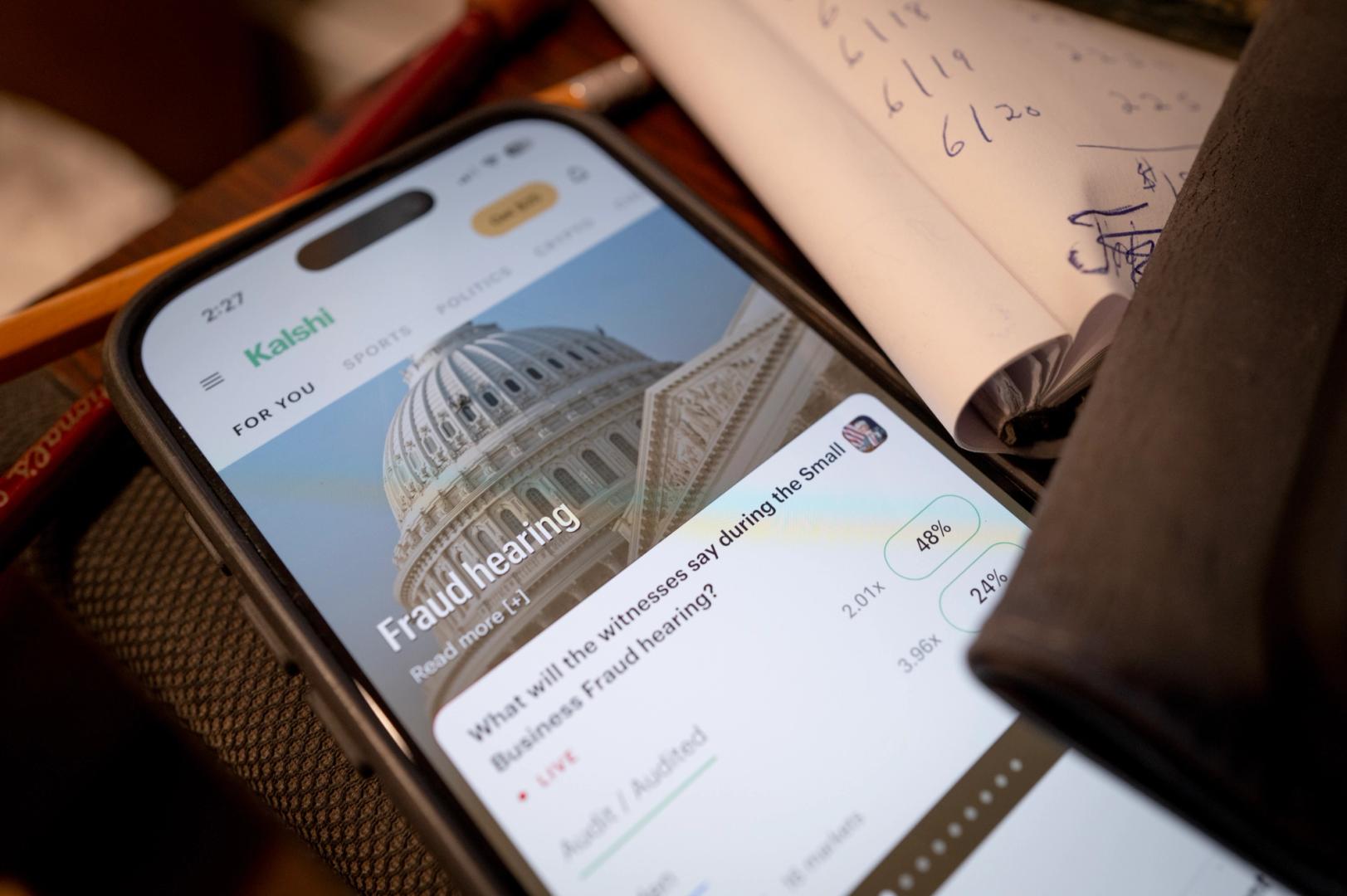
Prediction markets are seeing steady growth in the U.S., but a wave of legal disputes and shifting competition is beginning to reshape the sector, a new report from Bank of America said.
Total weekly volume rose 4% week-over-week, according to the report, with Kalshi — a federally regulated exchange — leading gains at 6%. Crypto.com posted a smaller increase, while Polymarket, a crypto-native platform that had surged in prior weeks, saw overall volumes fall 16%.
Kalshi now controls roughly 89% of measured U.S. prediction market volume, far ahead of Polymarket at 7% and Crypto.com at 4%, according to BofA estimates. The shift points to a market consolidating around platforms with clearer regulatory standing.
That divide reflects a deeper tension. At the center is whether prediction markets should be treated as financial instruments or as gambling. Kalshi operates under oversight from the Commodity Futures Trading Commission (CFTC), framing its contracts — including those tied to political or sports outcomes — as derivatives.
Polymarket runs on blockchain rails and has historically operated outside U.S. regulatory boundaries. It allows users to trade on event outcomes using crypto, often attracting global liquidity but facing restrictions domestically.
The gap is becoming more visible as regulators step in. Nevada and Massachusetts have both secured preliminary injunctions against Kalshi at the state level, while New Jersey lost an appeal that limits its ability to enforce gambling laws against the firm.
At the same time, the CFTC has taken an aggressive stance in support of prediction markets.
The agency has sued multiple states, arguing that federal law preempts state-level gambling rules. CFTC leadership has also drawn a distinction between sports betting, which it views as entertainment, and event contracts, which it classifies as financial tools for hedging risk.
The outcome of that fight could define the industry. A federal win would allow platforms like Kalshi to scale nationally under a single framework. A loss could push the market into a state-by-state model similar to online sports betting, slowing growth.
Crypto firms are still trying to carve out a role. Polymarket remains one of the largest global platforms and has drawn attention during major events like elections, where trading volumes can spike sharply. Meanwhile, companies like Crypto.com and Coinbase (COIN) are experimenting with prediction market-style products, signaling broader interest from centralized exchanges. The largest crypto exchange in the world, Binance, announced Thursday that it added a prediction markets feature to Binance Wallet.
Even traditional gaming firms are adjusting. FanDuel recently shut down parts of its fantasy sports offerings, a move Bank of America links in part to the rise of prediction markets. The shift suggests users may be moving toward products that resemble trading more than betting.



SpaceX is sitting on 8,285 BTC worth $603 million in Coinbase Prime custody while reporting a loss of nearly $5 billion for 2025, according to Arkham Intelligence data and a report from The Information published late Friday.
The loss marks a sharp reversal from a year earlier when SpaceX generated roughly $8 billion in profit on revenues estimated between $15 billion and $16 billion.
Revenue grew to $18.5 billion in 2025, but the integration of xAI, Elon Musk’s artificial intelligence venture acquired in February, drove costs past the top line.
There are no changes to the company’s bitcoin position despite these losses. Transfer history analyzed by CoinDesk shows the last significant movement was an internal rebalance roughly four months ago, with 614 BTC and 1,021 BTC moving between SpaceX’s own wallets.
The balance history chart shows holdings have remained stable since mid-2024 after peaking above $1.6 billion in value during the October 2025 all-time high.
For a company that just posted a $5 billion loss and is actively pursuing an IPO, holding $603 million in a volatile asset rather than liquidating it to improve the balance sheet is a statement about how Musk (or the broad) view bitcoin as a treasury asset.
SpaceX’s position is now the fourth-largest known corporate bitcoin holding behind Strategy, Marathon Digital, and Riot Platforms.
CoinDesk reported last month that SpaceX had filed for an IPO that would disclose the bitcoin position in public filings for the first time, potentially forcing a fair-value accounting decision under the new FASB rules that took effect in late 2025.

Bitcoin is set for a potential short squeeze as on-chain indicators illuminate a crowded setup against a backdrop of rising open interest and persistently negative funding rates. After BTC briefly breached $73,000 last Friday, traders are watching how leveraged shorts might be forced to cover as funding costs stay deeply negative and open interest climbs to a five-week high.
CryptoQuant’s Quicktake analysis highlighted that Bitcoin was “crowded” with short positions, noting that BTC is moving off exchanges while funding rates remain strongly negative. This combination, according to contributors, can amplify a squeeze if demand returns and shorts are compelled to unwind their bets. Source: CryptoQuant
Key takeaways
- Bitcoin open interest rose to about $24.2 billion, the highest since early March, signaling growing leverage as traders position for a potential move.
- Funding rates on major exchanges sit in deeply negative territory, indicating short positions are paying longs and increasing the risk of a forced reversal.
- Analysts say large-scale speculators have turned net long on BTC again, a posture that historically foreshadows a powerful move when conviction builds.
- After BTC cleared $73,000, some market voices eye higher targets, including $80,000 and beyond, though caution remains warranted amid persistent volatility.
- Daily liquidations across the broader crypto space remained subdued, with CoinGlass reporting under $100 million in cross-crypto liquidations over a 24-hour window.
Open interest and the squeeze dynamic
Analysts have flagged that the confluence of rising open interest and continuous negative funding rates creates a precarious setup for Bitcoin’s upside trade. Since March, negative funding has become more frequent and has persisted through April, reinforcing a narrative where shorts have dominated the market. CoinNiel summarized the situation, noting that “shorts paying longs” amid a tightening squeeze environment increases the potential for a reversal driven by forced liquidations when prices move against crowded bets. CryptoQuant analysis and accompanying posts have framed the setup as a developing risk for anyone wagering on continued upside with overweight leverage.
Bitcoin’s price action recently reignited the debate around who’s in control. BTC/USD pushed past $73,000 on Friday, a move traders interpreted as a potential catalyst for a squeeze if short bets were to unwind aggressively. Open interest’s uptick to five-week highs, paired with the negative funding climate, has kept the market on edge about a rapid shift in momentum.
“Since March, negative funding has become more frequent, and throughout April it has remained in negative territory without flipping positive.”
In this context, CoinNiel cautioned that the combination of rising open interest and negative funding suggests an accumulation of leveraged short exposure, warning that the current range could still be a zone of buying demand rather than a clean breakout. Further Quicktake notes reinforce the view that the market remains cautious despite the bounce in price.
Sentiment, positioning, and trader perspectives
Market voices have begun to point to a potential shift in sentiment as large-volume participants tilt toward a net-long stance. Trader Michaël van de Poppe noted that speculators are net long Bitcoin, drawing a parallel with prior occasions when similar positioning preceded a notable breakout in 2023. His observation, echoed by others tracking the positioning of institutional and high-net-worth traders, underscores a tension between a crowded short setup and a growing conviction among bulls that a new leg higher could be underway. Van de Poppe’s commentary highlights the evolving consensus among key market participants.
Despite the renewed optimism among some traders, risk remains. The market has not yet exhibited a sharp deleveraging that would accompany a decisive breakout; instead, it sits at a fragile equilibrium where shorts could be squeezed only if buyers sustain pressure, while a renewed wave of selling could reintroduce downward volatility.
What to watch next
Several data points will be critical to assess the likelihood and scale of any squeeze or new rally:
- Funding rates and exchange net flows: Continued negative funding and ongoing outflows from exchange wallets would reinforce the crowded-short narrative and caution against premature bullish bets.
- Open interest dynamics: Whether open interest maintains its upward trajectory or begins to roll over will signal whether leverage is expanding or unwinding.
- Liquidation activity: Short-term spikes in cross-asset liquidations could foreshadow a rapid price revaluation, though the current snapshot shows relatively modest liquidation levels (under $100 million over 24 hours according to CoinGlass).
- Key price targets and risk markers: Trader targets around $80,000 and higher are in circulation, but traders caution that the market remains vulnerable to shifts in macro momentum or regulatory headlines that could reverse the trend.
Taken together, the setup suggests a careful balance between a potential burst higher if shorts capitulate and the risk of a quick reversal if the market fails to sustain upside momentum. As always, participants should monitor on-chain signals, funding costs, and liquidity conditions to gauge whether the next move is a breakout or a test of support.
This article synthesizes observations from CryptoQuant’s Quicktake posts, CoinNiel’s summaries, CoinGlass liquidity data, and trader commentary from Michaël van de Poppe, in the context of BTC’s recent price action around $73,000 and the broader narrative on leveraged positioning in crypto markets.

TLDR:
- Bhutan reduced its Bitcoin holdings by 70%, from 13,000 BTC to 3,954 BTC, since October 2024.
- Over $215.7 million in BTC has moved out of Bhutan’s holding addresses in 2026 alone.
- Bhutan’s last Bitcoin mining inflow above $100,000 was recorded more than one year ago.
- Bhutan’s remaining 3,954 BTC is now less than what Strategy typically buys in one week.
Bhutan Bitcoin sell-off data confirms the kingdom has reduced its holdings by roughly 70% over the past 18 months.
Once sitting on approximately 13,000 BTC accumulated through a hydropower-backed mining operation, Bhutan now retains just 3,954 BTC valued at around $280.6 million.
Arkham Intelligence data shows over $215.7 million in BTC has already moved out of Bhutan’s holding addresses in 2026 alone, with no public comment from Druk Holding and Investments.
Steady Outflows and Slowing Mining Signal a Strategic Shift in Bhutan’s Bitcoin Position
Bhutan’s sell-off traces back to October 2024, when the kingdom held roughly 13,000 BTC. Arkham Intelligence data shows a steady, methodical drawdown rather than a single liquidation event.
Over $215.7 million in BTC has left Bhutan’s holding addresses in 2026 alone. A notable portion of these outflows has been routed to unlabeled wallets, while others have been sent to addresses linked to Galaxy Digital and OKX.
That pattern points to direct market sales rather than simple fund repositioning. In one recent transfer, roughly 319.7 BTC, worth $22.68 million, moved to two separate addresses in a single transaction.
Bhutan originally built its Bitcoin reserve through a hydropower-backed domestic mining operation run by Druk Holding and Investments. However, Arkham data shows no mining inflow exceeding $100,000 has been recorded in over a year.
The operation that once converted river energy into Bitcoin appears to have slowed considerably or stopped entirely.
The economics behind this shift are straightforward. Bhutan’s mining operation worked when network difficulty was lower, and Bitcoin traded above $90,000.
At current levels near $71,000, with difficulty at all-time highs and post-halving block rewards cut to 3.125 BTC, margins have compressed sharply. Selling hydropower directly to neighboring India may now generate more predictable revenue than mining Bitcoin.
Bhutan’s Retreat Stands Out as Institutional Buyers Continue Accumulating Bitcoin
Bhutan’s sell-off runs directly against the broader trend among institutional and sovereign-level holders. Strategy purchased 4,871 BTC for $330 million in a single weekend, bringing its total to 766,970 BTC.
U.S. spot Bitcoin ETFs absorbed approximately 50,000 BTC in March alone, reflecting sustained institutional demand.
The contrast sharpens further when other market participants are considered. The Ethereum Foundation staked $93 million in ether rather than selling during the same period.
Bhutan currently stands as the only sovereign-level holder visibly reducing its Bitcoin position while others continue to accumulate. Bhutan’s remaining 3,954 BTC is now smaller than what Strategy acquires in a typical week.
The kingdom once mined 13,000 BTC directly from its own rivers and mountains. Druk Holding and Investments has not responded to multiple media inquiries, leaving the future of both its reserve and mining operations publicly unanswered.

Crypto World
Ethereum (ETH) Price Prediction: ETF Inflows Hit 23,039 ETH, Pepeto Presale, and Why 2026 Changes Everything
The ethereum price prediction just got a shot of confidence after spot ETFs absorbed 23,039 ETH worth over $51 million in a single session, marking one of the strongest institutional buying days of the year.
That kind of demand is bullish for the ETH outlook long term, but months could pass before the buying pressure shows up in the price chart. Pepeto pulled in more than $8.9 million during the same correction window with the Binance listing confirmed.
Pepe went from its presale price to $11 billion, and the wallets that moved early locked in the biggest returns of their lives. That same setup is forming right now because over $8.9 million flowing in during Extreme Fear at 16 does not happen without serious conviction behind it.
Spot Ethereum ETFs recorded a net inflow of 23,039 ETH on April 10, worth roughly $51 million, while Bitcoin ETFs pulled in 4,614 BTC the same day, according to Lookonchain. TD Cowen set an ETH target of $3,650 for December 2026 in the same week, according to CoinDesk.
The real question is whether sitting for months waiting for that catalyst makes the best use of capital when a single listing event delivers the return the ethereum price prediction needs a full year to reach.
The Platform That Puts You in Control Instead of Making You Wait
Pepeto
No one can promise ETH makes a big move anytime soon, and that is exactly why the verified exchange creates such a strong opportunity right now. Pepeto is where analysts project 100x to 300x, which at current pricing could be life changing for every wallet that enters before the Binance listing.
Over $8.9 million raised while the correction crushed every chart proves the conviction behind this project. The core driver is the exchange, a full platform in one clean space that already runs. The tools find entries others miss, check contracts before your capital moves, handle research that takes hours in minutes, and track how direction shifts in real time so you never end up guessing.
Because the ETH outlook depends on macro factors that keep it range-bound, the exchange gives you a way to act now instead of sitting idle. Over $8,920,333 raised at $0.000000186 with 185% APY staking that compounds positions as stages fill. SolidProof audited every contract before the presale opened, and the founder who took the original Pepe coin to $11 billion on 420 trillion tokens engineered the exchange with a former Binance expert.
The first listing move could be massive, but the exchange and the demand it builds will stay active for years because Pepeto solves a daily problem that outlasts any single market cycle.
Ethereum Price Prediction 2026 to 2030
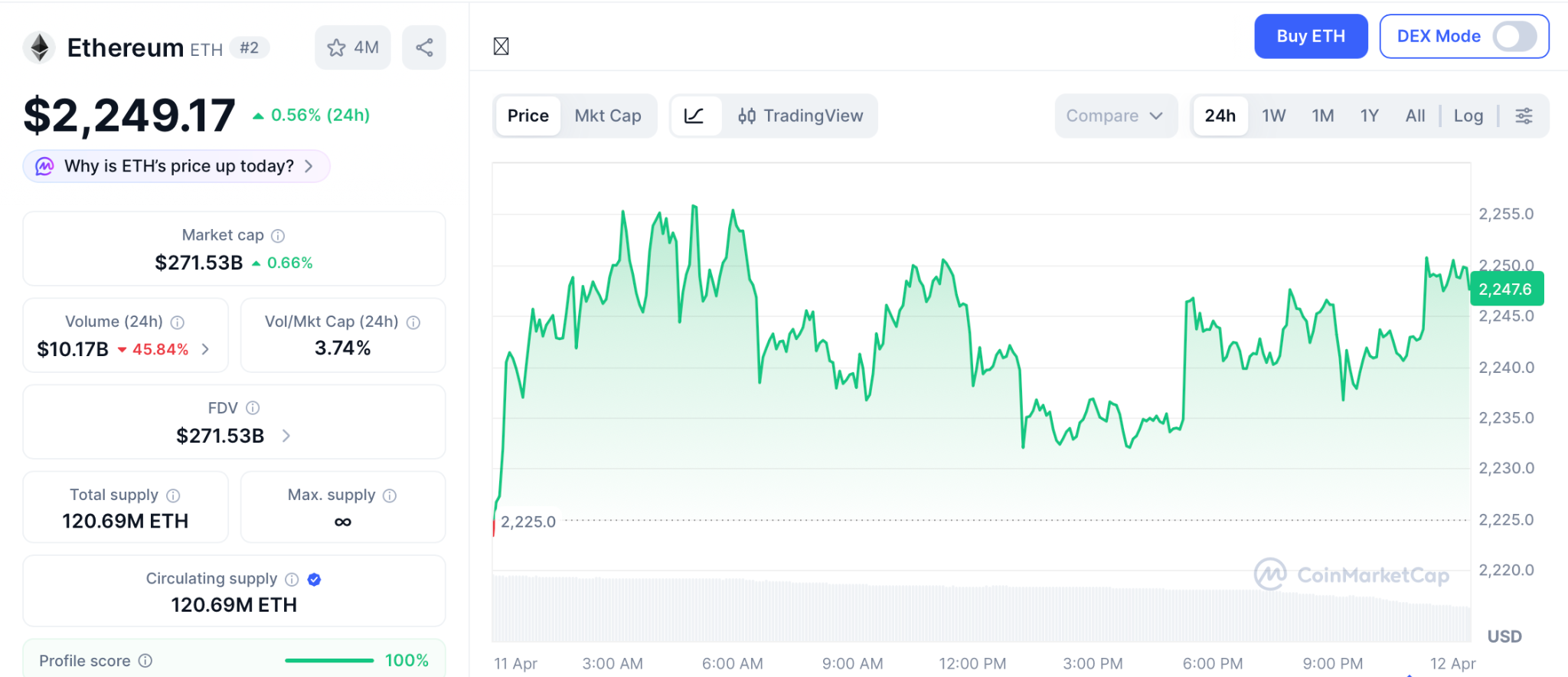
Ethereum (ETH) trades at $2,249 according to CoinMarketCap, holding above the $2,200 support that stabilized through the correction. The ethereum price prediction turns bullish if the price breaks $2,300 resistance and clears the 50 day SMA near $2,400, which opens a path to $2,600 and then the $3,000 level.
TD Cowen puts ETH at $3,650 by December 2026. The ETH/BTC ratio near 0.031 sits at multi-year lows, showing a wide gap between value and price. By 2027, models target $4,000 to $5,500 if institutional flows from ETFs and staking products pick up. The most bullish ethereum price prediction for 2030 targets $8,000 to $12,000 if ETF adoption mirrors the BTC path. The setup breaks if ETH loses $2,100 and slides toward $1,900.
Conclusion
The ethereum price prediction might not deliver much movement in the short term even though the ETF inflow data shows institutional money is building positions right now. Waiting for the Fed, for the CLARITY Act, and for macro conditions to clear means waiting for permission that might not come this year.
The verified exchange already has everything it needs to deliver from the Binance listing, letting the wallets inside be bullish on their own terms without needing macro permission. Visit Pepeto’s official site while the ethereum price prediction stalls, because entering now means you are the one who made the right move at the right time, and Pepe’s explosion from presale to $11 billion proved that early wallets changed their whole life while everyone who waited spent the cycle wishing they had acted when the entry was still open.
Click To Visit Pepeto Website To Enter The Presale

FAQs
What does the record ETH ETF inflow mean for the ethereum price prediction?
Spot Ethereum ETFs absorbed 23,039 ETH on April 10, adding over $51 million in institutional demand that pulls supply off the market. ETH still needs to break $2,300 and hold the 50 day SMA near $2,400 for the bullish target of $3,650 to open up.
How does Ethereum’s price at $2,249 compare to Pepeto’s expected listing return?
Ethereum needs to gain roughly 63% from $2,249 to reach TD Cowen’s $3,650 target over eight months. Pepeto’s Binance listing carries analyst projections of 100x to 300x from the presale price of $0.000000186.
Disclaimer: This is a Press Release provided by a third party who is responsible for the content. Please conduct your own research before taking any action based on the content.
TLDR:
- Strategy holds approximately 761,000 BTC, trailing BlackRock’s IBIT by roughly 40,000 BTC currently.
- MSTR raises capital via equity and debt to buy Bitcoin directly, bypassing ETF demand dependency entirely.
- Strategy added 40,332 BTC in the first two weeks of March 2026, posting a 3.0% BTC yield.
- Bitcoin recorded eight straight days of gains, with past streaks delivering a median 30-day return of 19%.
Michael Saylor’s strategy has narrowed the Bitcoin holdings gap with BlackRock’s iShares Bitcoin Trust to roughly 40,000 BTC through relentless capital raises and direct purchases. With Bitcoin recovering steadily from February lows, the distance between the two could vanish within weeks.
Strategy’s Accumulation Model Sets It Apart
MSTR Bitcoin holdings currently stand at approximately 761,000 BTC. BlackRock’s iShares Bitcoin Trust holds roughly 781,000 BTC, leaving a gap of around 40,000 BTC.
Investor Mark Harvey noted that the difference has tightened considerably in recent weeks. Strategy raises capital through equity and preferred share issuance to fund direct Bitcoin purchases.
This model allows it to accumulate Bitcoin independent of ETF demand cycles. IBIT, by contrast, grows only when investor inflows are strong.
The company completed two multibillion-dollar Bitcoin purchases in March. Last week alone, it acquired 2,337 BTC for approximately $1.57 billion.
Over the first two weeks of March 2026, Strategy added 40,332 BTC and recorded a 3.0% BTC yield. Michael Saylor shared the firm’s year-to-date figures via X, noting sustained momentum behind its treasury approach.
Strategy frames Bitcoin accumulation as its core performance measure, using “BTC Gain” as a proxy for net income. Its long-term holding approach also removes coins from active circulation, gradually tightening available market supply.
Bitcoin’s Recovery Strengthens the Backdrop
Bitcoin bottomed near $63,000 in February amid geopolitical tensions tied to the Iran–Israel War. Prices recovered steadily after macroeconomic conditions stabilised and investor confidence returned.
The asset recently climbed from below $66,000 to $76,000 before easing near $73,800. Bitcoin has now recorded eight consecutive days of price gains.
According to Bitcoin Magazine Pro data, this streak has occurred only 15 times since Bitcoin’s creation. Past instances produced a median 30-day return of roughly 19%, though sharp pullbacks have also followed such runs.
Markets received a further boost over the weekend after signs of easing tensions around the Strait of Hormuz. Bitcoin also outperformed gold and the S&P 500 during this period.
Traders are now watching whether prices can hold above $72,000, a level that could open the path toward $80,000.
TLDR:
- Iran’s Strait of Hormuz Management Plan, passed in late March 2026, mandates Bitcoin toll payments.
- Each fully laden tanker carrying 2 million barrels faces a Bitcoin toll of up to $2 million.
- Bitcoin surged toward $73,000 as shipping firms faced the prospect of stockpiling BTC for tolls.
- Stablecoins were rejected due to freeze functions and GENIUS framework compliance requirements.
Iran Bitcoin oil toll reports are drawing wide attention across crypto and energy markets globally. Iran has reportedly implemented a mandatory Bitcoin-based payment system for oil tankers transiting the Strait of Hormuz to bypass international sanctions.
Iran’s Bitcoin Toll Structure and Payment Mechanics at the Strait of Hormuz
Financial Times report stated that Iran was considering Bitcoin payments for oil tanker tolls using the Strait of Hormuz, which handles roughly 20% of the global oil supply.
The Strait of Hormuz Management Plan, passed in late March 2026, formally codifies Bitcoin as the primary payment method.
Under this system, tankers must submit cargo details, crew lists, and destination ports to Iranian authorities up to 96 hours before arrival. A toll of $1 per barrel of crude oil is then charged, which amounts to $2 million for a fully laden Very Large Crude Carrier carrying 2 million barrels.
Vessels attempting to pass without authorization have been warned via VHF radio of serious consequences.
The original report cited officials saying ships would have only a few seconds to complete a Bitcoin payment, pointing toward the Lightning Network as the likely mechanism. However, Alex Thorn of Galaxy noted the largest known Lightning transaction to date has reached $1 million.
Given toll amounts ranging up to $2 million, Thorn suggested Iranian authorities would more likely provide a QR code or Bitcoin address upon transit approval instead.
Bitcoin’s Structure Makes It Iran’s Preferred Choice Over Stablecoins
Iran’s decision to use Bitcoin rather than stablecoins reflects a clear strategic rationale. BTC advocate Justin Bechler noted that stablecoins like USDT and USDC carry built-in blacklist functions at the smart contract level.
When an address is flagged, issuers can freeze tokens entirely, making them completely illiquid and unusable.
Bechler further noted that the GENIUS stablecoin regulatory framework introduced compliance controls that make dollar-pegged stablecoins impractical for a sanctioned nation.
Bitcoin has no issuer, no compliance officer, and no freeze function, removing any central point of control. The Iranian system also explicitly excludes the US dollar, though some reports suggest limited yuan acceptance for select nations.
Market reaction followed quickly after the reports emerged. Bitcoin prices moved toward $73,000 as shipping companies faced the prospect of holding BTC for transit payments.
Hundreds of tankers have reportedly been waiting in the Persian Gulf, navigating the new requirements, while analysts suggest similar digital toll systems could emerge at other critical waterways globally.

Pavel Durov, the co-founder of the Telegram messaging application, said that push notifications create a persistent, critical vulnerability to user privacy, allowing data retrieval even after messages and messaging applications that allow push notification data storage have been deleted from a device.
Durov cited a recent report, originally published by 404 Media, that the United States Federal Bureau of Investigation (FBI) was able to retrieve deleted messages from a Signal user by accessing device notification logs on an Apple iPhone. Durov said on Friday:
“Turning off notification previews won’t make you safe if you use those applications, because you never know whether the people you message have done the same.”

Cointelegraph reached out to Signal about the FBI’s data retrieval but did not receive a response by the time of publication.
The recent reports highlight how investigators and those with sufficient technical skills can circumvent end-to-end encryption and breach user privacy by accessing metadata and other information generated by applications, prompting a need for decentralized messaging applications that do not collect such data.
Related: Telegram founder Pavel Durov says Iranian government’s ban backfired
Alternative messaging application use surges amid spikes in civil unrest and geopolitical turmoil
Decentralized messaging applications and social media platforms experienced a surge in user interest since 2025, amid geopolitical tensions, nationwide communication blackouts and civil unrest.

Bitchat, a decentralized peer-to-peer messaging application that uses Bluetooth mesh networks to relay information between mobile devices, allows users to circumvent the internet and centralized communication networks entirely.
More than 48,000 users in Nepal downloaded the Bitchat application amid a nationwide social media ban in September 2025.
Individuals are also finding ways to circumvent national firewalls and bans on privacy-preserving applications by using virtual private networks (VPNs) and other tools that mask or obscure IP addresses and geolocation, according to Durov.
Government bans on Telegram have backfired, as users circumvent state-imposed restrictions through VPNs, allowing them to access and download banned platforms, Durov said.
“The government hoped for mass adoption of its surveillance messaging apps, but got mass adoption of VPNs instead,” he continued, adding that over 50 million users in Iran have downloaded the Telegram application, despite a years-long government ban.
Magazine: EU’s privacy-killing Chat Control bill delayed — but fight isn’t over
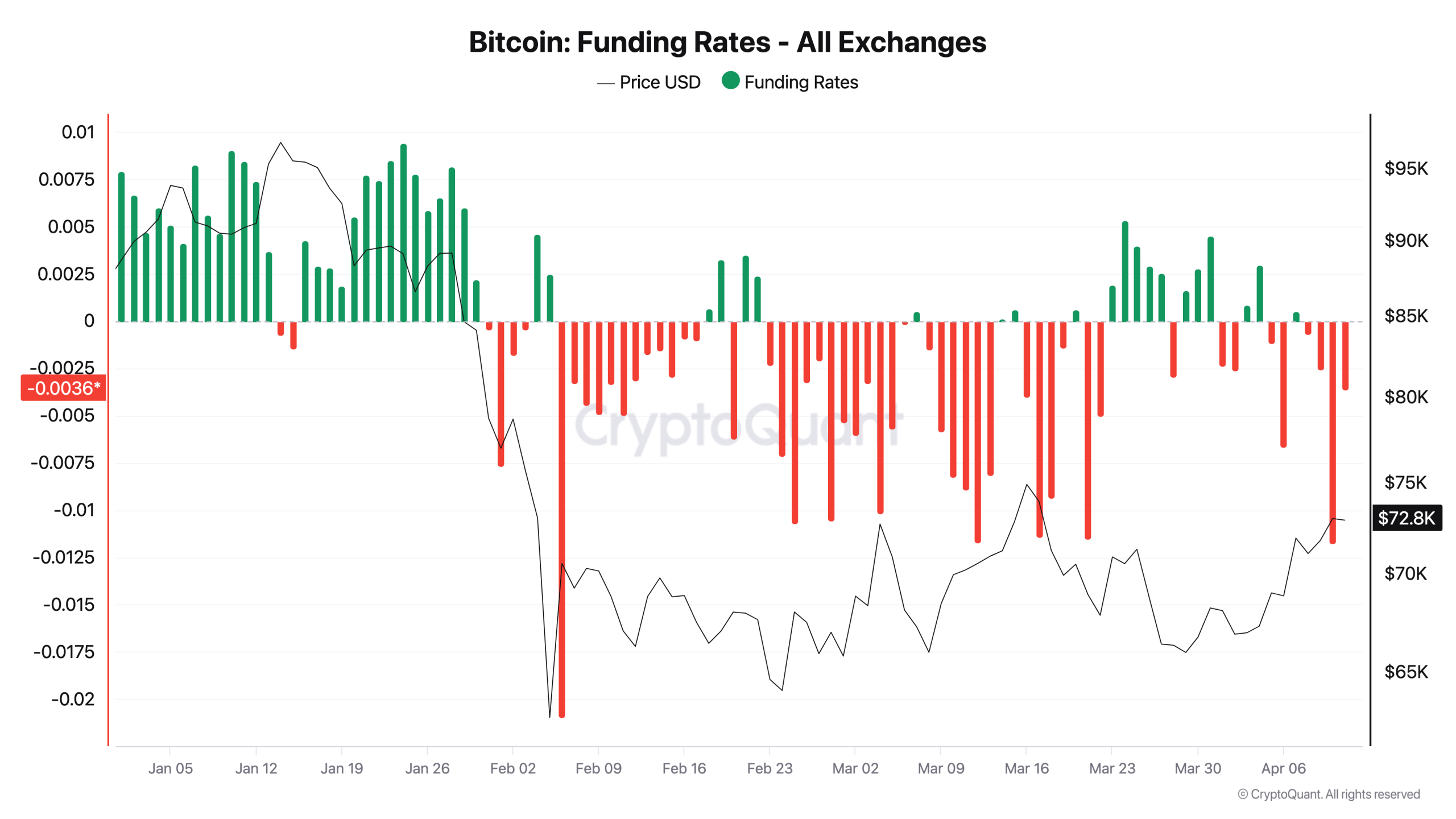
Bitcoin (BTC) is due a classic “short squeeze” as open interest hits five-week highs, says new analysis.
Key points:
-
Bitcoin is seeing a combination of rising open interest and negative funding rates.
-
The result could punish short positions, with funding rates at the most negative since early February.
-
Large-scale Bitcoin speculators are net long BTC again.
Bitcoin short squeeze likelihood “increasing”
In one of its “Quicktake” blog posts on Saturday, onchain analytics platform CryptoQuant said that Bitcoin was “crowded” with short positions.
“BTC is flowing out of exchanges while funding rates remain strongly negative, creating an increasingly crowded short positioning environment where the potential for a short squeeze is building,” contributor CoinNiel summarized.
After BTC/USD passed $73,000 on Friday, traders appeared eager to trap those entering the market who were betting on continued price upside. Funding rates stayed negative on exchanges, while open interest grew to $24.2 billion — its highest since early March.
“Since March, negative funding has become more frequent, and throughout April it has remained in negative territory without flipping positive,” the post continued.
“This indicates that short positions dominate the market, with shorts paying longs, and such extreme positioning can act as a trigger for a reversal through forced liquidations.”

CoinNiel said that the combination of rising open interest and negative funding rates “suggests that leveraged short positions have been rapidly accumulating.”
“The slight decrease does not yet indicate a meaningful deleveraging phase,” he acknowledged.

Fellow contributor Gaah agreed, noting that funding rates had hit their deepest negative value since Bitcoin’s dip to multiyear lows at the start of February.
“Caution is needed when establishing positions in current range, since it represents an area of buying demand,” he wrote in a further Quicktake post.
“Bears trapped? Likelihood of a short squeeze is increasing.”
Trader: Bitcoin speculators copying 2023 rebound
Earlier, Cointelegraph reported on short liquidations staying modest despite the BTC price upside.
Related: Bitcoin analysis sees $55K BTC price ‘iron bottom’ by December 2026
Data from CoinGlass showed that over the 24 hours to the time of writing, cross-crypto liquidations totaled less than $100 million.

Sentiment among market participants, meanwhile, has gradually begun to favor fresh upside, with targets including $80,000 and higher.
On Saturday, crypto trader Michaël Van de Poppe eyed increasing belief in a BTC price rebound among large-volume speculators.
“Speculators are net long on Bitcoin. Very similar to previous cases where we’ve seen the same before a big breakout in 2023,” he wrote in a post on X.

This article is produced in accordance with Cointelegraph’s Editorial Policy and is intended for informational purposes only. It does not constitute investment advice or recommendations. All investments and trades carry risk; readers are encouraged to conduct independent research before making any decisions. Cointelegraph makes no guarantees regarding the accuracy or completeness of the information presented, including forward-looking statements, and will not be liable for any loss or damage arising from reliance on this content.
TLDR:
- Nearly 38.9M ETH worth $85B is now staked, removing one in three tokens from open market circulation.
- Lido, Binance, Coinbase, and Kraken collectively control the bulk of all staked Ethereum holdings.
- ETH climbed from $2,050 to $2,260 in seven days, with buyers absorbing dips after the April 7 breakout.
- Reduced liquid supply means demand-driven price moves face less resistance and tend to extend further.
Ethereum staking milestone data shows that 31.29% of the total ETH supply is now locked across major staking platforms. Nearly 38.9 million ETH, valued at approximately $85 billion, has been committed by institutional and retail participants alike.
This marks a notable structural shift in how capital is engaging with the network. Rather than cycling through short-term trades, holders are locking funds for extended periods, collecting yield, and securing the Ethereum blockchain for the long term.
Institutional Capital and Staking Platforms Drive Ethereum’s Supply Contraction
Ethereum staking milestone figures confirm that roughly 38.9 million ETH is currently locked across staking platforms. That accounts for nearly one in every three ETH tokens removed from open market circulation.
At current valuations, this committed capital totals approximately $85 billion. This is not speculative money rotating through short-term positions.
Staking requires extended lock-up periods, delayed exits, and gradual reward accumulation. That structure attracts holders with longer time horizons rather than traders seeking quick returns.
The composition of staked ETH further sharpens this picture. Lido alone holds over 9 million ETH, while Binance, Coinbase, and Kraken account for substantial additional portions.
This reflects coordinated, yield-focused capital flowing through established infrastructure rather than scattered retail activity.
Platforms such as ether.fi are also redeploying staked ETH across emerging yield layers within the ecosystem. ETH is no longer sitting idle — it is working inside structured financial systems built on Ethereum.
This moves the asset from pure speculation toward active, yield-bearing participation. However, concentration among a handful of platforms raises governance considerations that the network will need to monitor closely over time.
ETH Price Action Mirrors the Conviction Reflected in Staking Data
Ethereum’s 7-day chart shows ETH climbing from roughly $2,050 to the $2,240–$2,260 range. A clear breakout occurred around April 7, after which prices held above $2,200 without any sharp retracement.
That resilience after the surge is notable on its own. Higher lows followed the breakout consistently, with dips toward $2,180 absorbed relatively quickly by buyers.
This points to a market where participants hold through short-term volatility rather than sell into strength. Staking yields appear to anchor behavior more than near-term price targets do.
Reduced circulating supply directly shapes these dynamics. When demand enters a market where a third of the supply is locked, upward moves face less resistance and extend further.
The absence of aggressive selling after the April 7 breakout reflects what stakeholder data already shows. Holders are not positioning to exit — they are building income streams while staying committed to the network.
TLDR:
- Private credit funds saw sharp redemption requests in Q1 2026, affecting every major fund segment
- Carlyle and Blue Owl funds reported high withdrawal demand, with strict caps limiting investor payouts
- Major firms imposed withdrawal limits to manage liquidity amid rising investor exit pressure
- Concerns over software borrowers and tighter lending standards drove increased redemption activity
Private credit markets faced rising redemption pressure in the first quarter of 2026, as investors accelerated withdrawals.
Several major funds limited withdrawals, reflecting growing strain across a market valued between $1.8 trillion and $2.0 trillion.
Redemption Pressure Builds Across Private Credit Funds
Recent data shared in a widely circulated market update on social media pointed to sharp increases in redemption requests across leading private credit funds. Carlyle’s $7 billion Tactical Private Credit Fund reported requests totaling 16% of its shares during the first quarter.
That figure placed Carlyle among the most affected funds, though it trailed two Blue Owl vehicles. Blue Owl Technology Income recorded redemption requests at 41%, while Blue Owl Credit Income reached 22%. These figures placed both funds at the top of the industry in terms of withdrawal demand.
Despite the surge, Carlyle fulfilled only a portion of investor requests. The fund capped withdrawals at 5%, which translated to roughly $240 million paid out. Investors had sought to redeem close to $750 million during the same period.
The update noted that such restrictions were not isolated. Other major firms, including Apollo, Ares, Morgan Stanley, and BlackRock, also introduced similar limits on withdrawals. These measures appeared across multiple private credit business development companies and interval funds.
At the same time, the broader industry experienced a uniform trend. Every private credit BDC and interval fund reported elevated redemption requests during the quarter. No fund segment avoided the wave of withdrawal activity.
Market Strains Linked to Borrower Risks and Lending Conditions
The same market update connected the surge in redemptions to growing concerns around borrower stability. In particular, attention centered on software companies that rely heavily on private credit financing. Investors expressed caution as artificial intelligence developments began to reshape the sector.
As a result, fears around potential disruption to software revenue models gained traction. This shift raised questions about the strength of loan portfolios tied to such borrowers. Consequently, investor sentiment turned more cautious across private credit allocations.
At the same time, lending conditions tightened across the market. Funds adopted stricter standards, which limited new credit issuance. This approach reflected efforts to manage risk exposure while addressing rising uncertainty in borrower performance.
The combination of redemption demand and tighter lending created additional pressure. Funds needed to balance liquidity management with maintaining portfolio stability. Withdrawal caps became a common response, allowing managers to control outflows.
Meanwhile, the broader private credit market faced conditions not seen before. The scale of redemption requests, combined with sector-specific concerns, contributed to heightened stress levels. Market participants continued to monitor developments closely as conditions evolved.
These dynamics placed private credit under sustained scrutiny during the opening months of 2026. Investors adjusted positions while fund managers implemented measures to manage liquidity and risk exposure within their portfolios.

Tyson Fury vs Anthony Joshua fight details ‘leaked’ by promoter – ‘Have I put my foot in it?’

Musk’s SpaceX holds $603 million in bitcoin despite $5 billion loss stemming from xAI
The Pitt’s Shawn Hatosy ‘Disappointed’ by Supriya Ganesh Exit


-

 Business6 days ago
Three Gulf funds agree to back Paramount’s $81 billion takeover of Warner, WSJ reports
-

 Sports7 days ago
India men’s 4x400m and mixed 4x100m relay teams register big progress | Other Sports News
-

 Politics1 day ago
US brings back mandatory military draft registration
-

 Fashion1 day ago
Weekend Open Thread: Veronica Beard
-

 Tech4 days ago
How Long Can You Drive With Expired Registration? What Florida Law Says
-

 Business6 days ago
No Jackpot Winner, Prize to Climb to $231 Million
-

 Fashion5 days ago
Massimo Dutti Offers Inspiration for Your Summer Mood Board
-
 Sports1 day ago
Man United discover Nico Schlotterbeck transfer fee as defender reaches Dortmund agreement
-

 Fashion4 days ago
Let’s Discuss: DEI in 2026
-

 Crypto World3 days ago
Bitcoin recovers as US and Iran Agree a Ceasefire Deal
-

 Crypto World2 days ago
Canary Capital Files SEC Registration for PEPE ETF
-

 Politics2 days ago
Malcolm In The Middle OG Turned Down ‘Buckets Of Money’ To Appear In Reboot
-

 Business22 hours ago
Tesla Model Y Tops China Auto Sales in March 2026 With 39,827 Registrations, Beating Cheaper EVs and Gas Cars
-

 Business7 days ago
Akebia Therapeutics, Inc. (AKBA) Discusses Pipeline Progress and Strategic Focus on Kidney Disease Treatments at R&D Day – Slideshow
-

 Business1 day ago
OpenAI Halts Stargate UK Data Centre Project Over Energy Costs and Copyright Row
-

 Business3 hours ago
Ireland Fuel Protests Enter Day 5 as Blockades Spark Shortages and Government Prepares Support Package
-

 Tech5 days ago
Haier is betting big that your next TV purchase will be one of these
-

 Tech5 days ago
Gamer Restores the Original PlayStation Portal From Two Decades Ago
-

 Tech5 days ago
The Xiaomi 17 Ultra has some impressive add-ons that make snapping photos really fun
-

 Tech5 days ago
Samsung just gave up on its own Messages app
You must be logged in to post a comment Login