Connect with us

Crypto World

Karoline Leavitt’s Most Memorable Moments as White House Press Secretary

Published

on

Karoline Leavitt’s Most Memorable Moments as White House Press Secretary

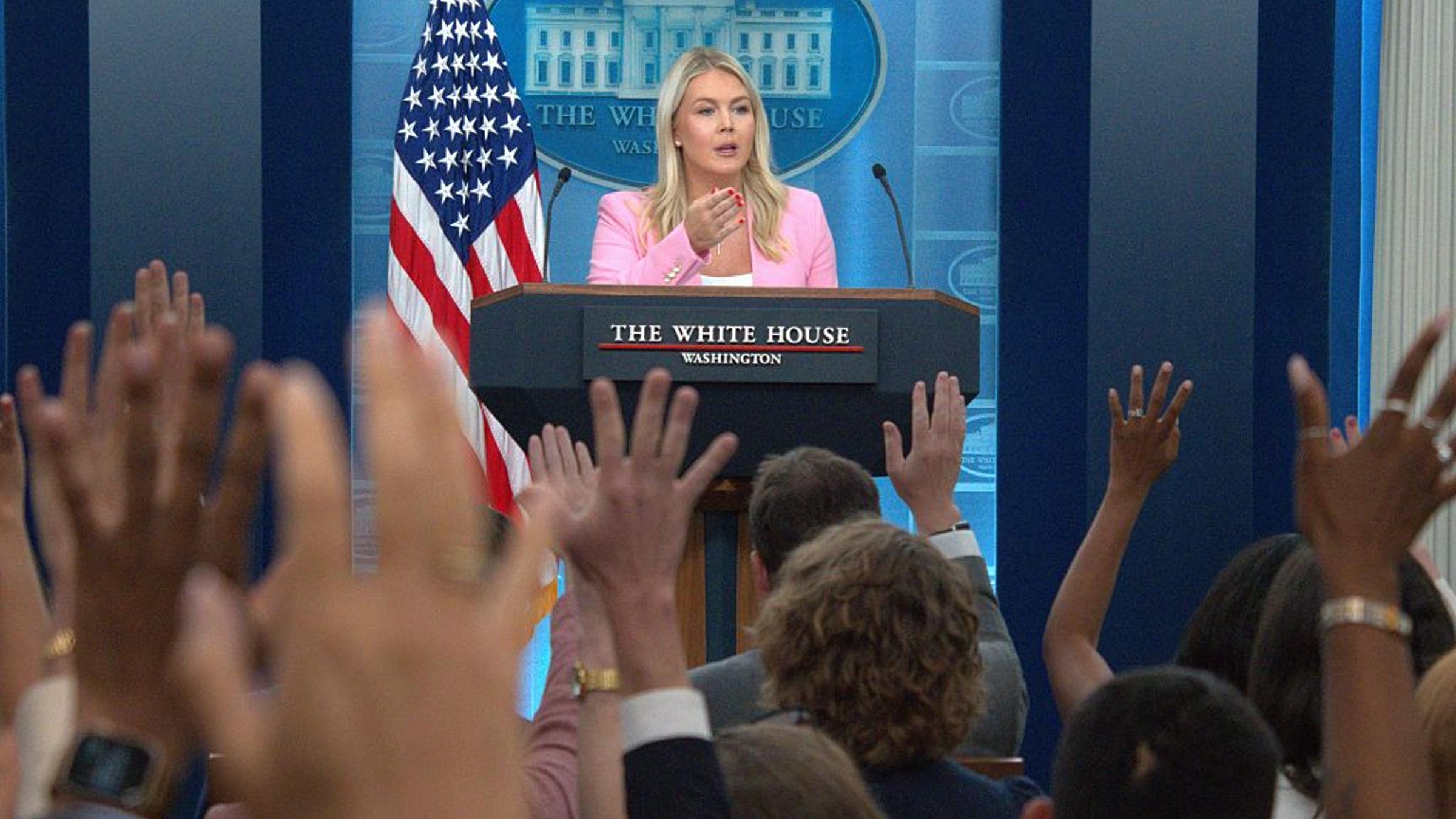
During her time behind the White House podium, departing Press Secretary Karoline Leavitt has gained a reputation for her sharp retorts to reporters, an echo of President Donald Trump’s contentious relationship with the press.

Leavitt will step down from her role at the White House at the end of the month to spend more time with her family, Trump announced on Wednesday—”a decision,” he said in a Truth Social post, “I totally understand and respect!” He added that she “will now be one of my top outside advisors, and an influential voice within the Republican Party.” 

In her own social media post on Wednesday, Leavitt called the White House Press Secretary role “the honor and adventure of a lifetime” and went on to thank the President.

“Most of all, I am thankful to the President for entrusting me with the distinct privilege of speaking on his behalf at the White House podium,” she said. “I have relished holding the liberal media accountable and ensuring the American people hear the truth about President Trump’s successes.”

Advertisement

Here are some of the most notable moments of Leavitt going head-to-head with the press in the year and a half she has served in her role.

When she said she regretted giving a question to The Associated Press

During a press briefing in March 2025, Leavitt had a heated exchange with Josh Boak, a reporter at The Associated Press, after he asked why Trump was prioritizing “tax hikes in the form of tariffs” rather than the tax cuts he vowed to enact while he was campaigning during the 2024 election.

“He’s actually not implementing tax hikes. Tariffs are a tax hike on foreign countries that, again, have been ripping us off,” Leavitt replied. “Tariffs are a tax cut for the American people, and the President is a staunch advocate of tax cuts.”

Advertisement

Boak pushed back by saying: “I’m sorry, have you ever paid a tariff? Because I have. They don’t get charged on foreign companies; they get charged on the importers.”

Leavitt responded by arguing that tariffs would be beneficial for Americans, before adding that Boak was being “insulting.”

“I think it’s insulting that you’re trying to test my knowledge of economics, and the decision that this President has made,” she said. “I now regret giving a question to The Associated Press.”

When she said a reporter asked a “stupid question”

Advertisement

At a White House press briefing in June 2025, NOTUS reporter Jasmine Wright asked Leavitt to “clarify what kind of protest President Trump does support or find acceptable.” The question came after Trump had issued a warning to potential protesters ahead of the upcoming military parade in the nation’s capital: “For those people that want to protest, they’re going to be met with very big force.”

Leavitt said that Trump “absolutely supports peaceful protests. He supports the First Amendment,” but added that “he does not support violence of any kind.”

Wright then asked whether the President would allow peaceful protests the day of the military parade in the nation’s capital. Leavitt shot back: “Of course the President supports peaceful protests. What a stupid question.”

When she abruptly ended a press briefing after a question about the Commerce Secretary’s Epstein ties

Advertisement

In February, Leavitt abruptly ended a White House press briefing after a reporter asked whether the White House supported Commerce Secretary Howard Lutnick. The question came after Lutnick said earlier that same day in front of a Senate panel that he had visited the private island of the late convicted sex offender Jeffrey Epstein in 2012—despite the fact that he had previously claimed to have ended his relationship with Epstein years before.

Leavitt responded by saying that the Commerce Secretary is “a very important member of President Trump’s team” and that Trump “fully supports” him. She then slammed the journalists in the room for their questions.

“I will just point out that there are a lot of wins in the news this week that people in this room have not asked about because you continue to ask questions about the same subject so let me point them out for you,” Leavitt said, before she began reading off other news that the Trump Administration was celebrating as victories, including recent stock market results.

“So,” she said when she finished, “we’re going to get back to business. The President is very busy today and you will see him all tomorrow at the event in the East Room touting his Administration’s energy policy.” She then walked off the stage.

Advertisement

When she accused a journalist of being a “leftwing activist”

During a press briefing in January—just a week after Renee Nicole Good was shot and killed by a federal immigration agent—The Hill columnist Niall Stanage asked Leavitt a question about ICE’s tactics. He cited then-Homeland Security Secretary Kristi Noem’s claim that ICE officers are “doing everything correctly.” He went on to list statistics that 32 people died while in ICE custody in 2025 and more than 170 Americans were detained by the agency last year, before referencing Good’s death.

“How does that equate to them doing everything correctly?” he asked Leavitt.

Leavitt replied: “Why was Renee Good unfortunately and tragically killed?” 

Advertisement

When Stanage clarified whether she was asking him for his opinion, she replied in the affirmative.

“Because an ICE agent acted recklessly and killed her unjustifiably,” he said.

“Okay, so you’re a biased reporter with a leftwing opinion,” Leavitt said. “Because you’re a leftwing hack. You’re not a reporter, you’re posing in this room as a journalist. And it’s so clear by the premise of your question. And you and the people of the media who have such biases but fake like you’re a journalist—you shouldn’t even be sitting in that seat.”

“You’re pretending like you’re a journalist, but you’re a leftwing activist,” she continued. “The question that you just raised and your answer proves you’re biased. You should be reporting on the facts.”

Advertisement

When she told a journalist “You’re a reporter—you should find out” in response to a query

In March 2025, CNN anchor Kaitlan Collins asked Leavitt whether there was any evidence to support Trump’s claim that some of the pardons issued by former President Joe Biden were signed by an autopen without his knowledge. In response, Leavitt said: “You’re a reporter—you should find out.”

The moment was one of several heated exchanges Leavitt and Collins have had since Trump took office for a second term. Also in March 2025, Leavitt refused to take a follow-up question from Collins, saying twice: “Kaitlan, I’m not taking your follow-up.”

Source link

Advertisement
Continue Reading
Click to comment

You must be logged in to post a comment Login

Leave a Reply

Crypto World

Bitcoin Price Holds Steady as US July CPI Comes in as Expected

Published

on

The US Bureau of Labor Statistics just published the Consumer Price Index data for July, which has essentially matched most expectations, with the regular CPI coming in at 3.3% to 3.4%.

The substantial increase in the CORE CPI of 2.5% was official, given the decline in June due to the decreasing energy costs at the time, which were considered misleading given the brief de-escalation in the Middle East war.

Reports ahead of the CPI release claimed that a modest increase would continue to reduce the chances for a Federal Reserve rate hike in September.

This narrative received further validation at the end of the previous business week when the US jobs report showed a substantial decline in non-farm payrolls, starkly contrasting with market expectations.

Advertisement

Although reality matched expectations for the July data, bitcoin’s price reacted with a small price decline. The asset had recovered from yesterday’s low at 63,200 and jumped to $64,400 minutes before the data was released.

However, it was stopped there, and its initial reaction has been quite modest, as it has dipped by a few hundred dollars. Nevertheless, analysts remain adamant that the CPI data is key to understanding the cryptocurrency’s next big move.

The post Bitcoin Price Holds Steady as US July CPI Comes in as Expected appeared first on CryptoPotato.

Source link

Advertisement
Continue Reading

Crypto World

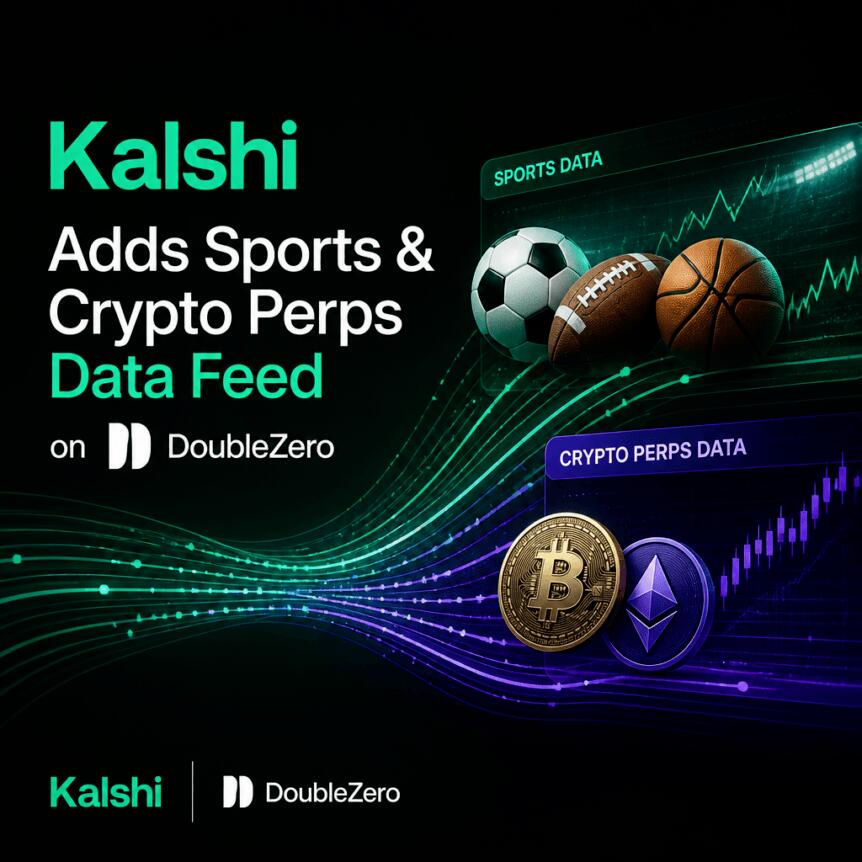
Kalshi Adds Sports & Crypto Perps Data Feed on DoubleZero

Published

on

Crypto Breaking News

Prediction market operator Kalshi is expanding how its real-time trading information reaches market participants by partnering with DoubleZero Edge for distribution via DoubleZero’s dedicated fiber network. In a Wednesday announcement shared with Cointelegraph, the companies said Kalshi’s live order book feed for certain sports and crypto perpetuals event contracts will be made available to new DoubleZero Edge subscribers.

The integration targets a long-standing gap in prediction market infrastructure: access to fast, machine-readable market data. Rather than building bespoke systems that reconstruct order books from raw exchange screens or parse multiple API endpoints, subscribers can consume a dedicated data feed designed to deliver order book data directly.

Key takeaways

  • Kalshi’s real-time order book for sports and crypto perpetuals event contracts is now distributed through DoubleZero Edge’s fiber network.
  • DoubleZero Edge positions the feed as a way to avoid rebuilding infrastructure from order books and API responses.
  • Sports appears as one of Kalshi’s biggest demand categories, with crypto also ranking among the top segments by weekly notional volume.
  • The rollout arrives as Kalshi remains involved in ongoing regulatory disputes over whether its event contracts are sports wagers or CFTC-regulated derivatives.

Dedicated fiber distribution for prediction market order books

Kalshi said the new offering makes it the first prediction market to distribute its live order book data through DoubleZero Edge’s dedicated fiber network for sports and crypto perpetuals event contracts. For institutional and technical users, the practical value is straightforward: lower latency pathways and a consistent, machine-friendly way to ingest market depth and price levels as trades happen.

DoubleZero co-founder Austin Federa described data access as a core component of market structure, arguing that infrastructure has lagged behind “new financial paradigms” that include crypto, perpetuals, and prediction markets. The pitch here is that the industry has continued to grow without matching the data distribution capabilities usually expected in traditional, high-speed markets—especially for participants who run automated strategies.

Where Kalshi’s volumes come from

Kalshi’s focus areas are not limited to crypto. According to Dune data cited in the announcement, sports accounts for 37.8% of Kalshi’s weekly notional volume, while crypto ranks third at 20.3%. Exotics, meanwhile, lead the mix at 39.4% of weekly notional trading volume.

Advertisement

Those proportions matter because they suggest the network-based data distribution may reach more than a niche slice of traders. A dedicated feed for sports-linked markets could be particularly relevant for participants who need to track changing probabilities and liquidity across event timelines, while crypto perpetuals event contracts add additional complexity that favors fast data ingestion.

Broader visibility, including ChatGPT search

The order book distribution comes amid increasing visibility of Kalshi markets in mainstream discovery channels. In early July, Cointelegraph reported that OpenAI began displaying Kalshi’s prediction market odds for FIFA World Cup matches in ChatGPT search results.

While that development relates more to consumer-facing access than to institutional infrastructure, it underscores how prediction markets are becoming more embedded in the information layer that users interact with—creating more pressure for robust, reliable data pathways underneath.

Regulatory pressure remains a central backdrop

Kalshi’s sports event contracts continue to sit at the center of a regulatory dispute involving state regulators and the U.S. Commodity Futures Trading Commission (CFTC). The disagreement centers on how the contracts should be classified.

Advertisement

State authorities argue the products are essentially wagers subject to state gambling laws. Kalshi and the CFTC, by contrast, contend that these event contracts are derivatives that fall under the CFTC’s exclusive jurisdiction.

The legal conflict has already produced concrete restrictions. On June 29, a Michigan judge temporarily blocked Kalshi from allowing residents to place bets on sporting events. Earlier, Kentucky sued five prediction market platforms—including Kalshi and Polymarket—accusing them of operating unlicensed sports betting platforms. Nevada also issued a temporary ban on Kalshi earlier in March.

Meanwhile, the CFTC has taken an offensive stance as well, suing several states—arguing that federally regulated event contracts should fall under its authority. According to earlier Cointelegraph reporting, the CFTC’s legal actions are aimed at reinforcing the agency’s jurisdiction over products it views as derivatives.

In that context, better market data infrastructure may help participants operate more effectively, but it does not resolve the classification question that determines where and how these markets can be offered. Traders and developers looking at the space may therefore see two parallel tracks: technical maturation through data distribution, and legal outcomes that determine geographic reach.

Advertisement

Looking ahead, readers should watch whether improved access to real-time order book feeds accelerates participation from professional market makers and automated traders—and whether regulatory decisions continue to constrain Kalshi’s ability to offer sports-linked contracts in key jurisdictions.

Risk & affiliate notice: Crypto assets are volatile and capital is at risk. This article may contain affiliate links. Read full disclosure

Source link

Advertisement
Continue Reading

Crypto World

Attention Binance Users: Some Services Will Be Temporarily Stopped This Week

Published

on

The world’s leading crypto exchange will briefly halt certain trading services later this week to successfully perform a scheduled upgrade.

It will also delist trading pairs and digital assets that no longer meet the necessary standards.

TRX Investors, Take Note

Binance will conduct wallet maintenance for the Tron Network on August 13, which is expected to take about one hour. During this time, it will suspend TRX deposits and withdrawals and resume operations once everything is wrapped up.

As usual, the company assured that trading of tokens on the aforementioned network will not be impacted and promised to handle all technical requirements involving users.

Advertisement

“Deposits and withdrawals for token(s) on the aforementioned network will be reopened once the network is deemed to be stable. No further announcement will be posted,” the disclosure reads.

Less than a month ago, Binance once again halted TRX deposits and withdrawals to perform wallet maintenance. There haven’t been any complaints or reports of complications, meaning traders and investors shouldn’t be overly concerned about the upcoming disruption.

Over the years, the exchange has taken similar action to support improvements across many other ecosystems, including Bitcoin (BTC), Ethereum (ETH), Cardano (ADA), and others.

The Delistings

The company regularly checks all cryptocurrencies and trading pairs listed on its platform and has the habit of removing those that fail to comply with the required criteria, such as adequate liquidity and trading volume.

Based on its latest analysis, it decided to scrap APT/BTC, AR/BTC, A/USDC, BTTC/TRY, CYBER/USDC, LPT/BTC, and WAL/FDUSD, with the actual delisting scheduled for August 14.

Advertisement

The affected tokens did not witness major volatility following the news, yet it is a completely different story when Binance terminates all services for a certain cryptocurrency.

At the start of August, it triggered a double-digit price collapse for Across Protocol (ACX), Hashflow (HFT), PIVX (PIVX), Vulcan Forged PYR (PYR), Vanar (VANRY), and Viction (VIC) after completely withdrawing support for them. A similar reaction was observed at the end of June when Binance said goodbye to Alchemix (ALCX), Ardor (ARDR), NFPrompt Token (NFP), and Marlin (POND).

In addition to the aforementioned move, the exchange said it will delist and cease trading on all margin trading pairs for BitTorrent (BTT) and Poweledger (POWR) on August 14.

The post Attention Binance Users: Some Services Will Be Temporarily Stopped This Week appeared first on CryptoPotato.

Advertisement

Source link

Continue Reading

Crypto World

Trump sued over Truth Social’s $100K paid feed

Published

on

David Schwartz criticizes lawsuit tied to Satoshi, Mt. Gox BTC

The Intercept and Freedom of the Press Foundation have sued President Donald Trump over a Truth Social service charging up to $100,000 monthly for faster access to posts that may move U.S. financial markets.

Summary

  • Truth API subscriptions reportedly cost $60,000 to $100,000 per month.
  • More than 10 customers, mainly high-frequency trading firms, have signed agreements.
  • The lawsuit alleges violations of the First and Fifth Amendments.
  • Trump’s revocable trust holds about 41% of Trump Media, a Nasdaq-listed company.

Truth Social lawsuit targets preferential access

The Intercept and Freedom of the Press Foundation filed the complaint Wednesday in the U.S. District Court for the Southern District of New York, according to an Associated Press report. The case names Trump, Trump Media & Technology Group, and White House aides Daniel Scavino and Natalie Harp among the defendants.

Seeking declaratory and injunctive relief, the plaintiffs want the court to stop the administration from giving paying Truth API customers preferential access to presidential posts containing official U.S. policy announcements. The complaint also challenges what the plaintiffs describe as an exclusive arrangement under which Trump uses Truth Social to release government information.

Advertisement

Trump Media introduced Truth API in July and opened it to institutional customers on Aug. 1. As crypto.news previously reported, the company markets the low-latency feed to algorithmic trading firms, financial data providers, and media companies that need machine-readable posts within milliseconds.

Interim CEO Kevin McGurn has said monthly contracts range from about $60,000 to $100,000. Trump Media disclosed in its latest earnings materials that it had signed more than 10 customer agreements and was already earning revenue from the product, although it has not identified the subscribers.

Most customers are high-frequency trading firms, according to reports cited in the lawsuit. Such companies use automated systems capable of reading information and placing trades faster than ordinary investors who depend on Truth Social’s website, mobile notifications, or reports from news organizations.

Advertisement

Trump Media has described Truth API as a licensed alternative to companies scraping data from social platforms. McGurn previously said, “Markets already move on Truth Social posts,” while presenting the service as a new source of recurring revenue for the company.

Plaintiffs say presidential statements are a public benefit

Under its First Amendment claim, the lawsuit argues that the president cannot give paying customers an advantage in accessing official announcements while journalists and members of the public receive the same information later. The plaintiffs allege that the arrangement interferes with the press’s ability to report government news on equal terms.

Trump routinely uses Truth Social to announce or discuss tariffs, appointments, foreign policy, and other federal decisions. According to the complaint, statements covering those subjects can affect stocks, currencies, commodities, and digital assets, making even a short delivery advantage valuable to automated trading firms.

The Fifth Amendment claim rests on a separate argument. The plaintiffs contend that the government cannot place an unreasonable financial condition on access to a public benefit, including official presidential information. No court has ruled on the merits of either constitutional claim, and the allegations remain unproven.

Advertisement

“Nothing could be more antithetical to the free, independent press than the president charging for early access to his public announcements,” The Intercept Chief Legal Officer David Bralow said.

Trump Media rejected the allegations in a statement reported by the Associated Press. The company compared its product with subscription data services offered across the media industry and accused the groups behind the case of trying to silence Trump and harm the company’s shareholders.

The $100,000 feed raises U.S. market questions

For American investors, the dispute concerns whether all market participants receive presidential information at the same time. Truth API’s customers can send posts directly into automated trading systems, while a retail investor may need to open the platform, read the statement, and place an order manually.

A faster data feed does not, by itself, establish insider trading under U.S. law. In its Aug. 2 coverage, crypto.news noted that federal insider-trading cases generally require evidence involving material nonpublic information and a breach of duty, while Truth Media maintains that the underlying posts remain publicly available.

Advertisement

Sens. Elizabeth Warren and Adam Schiff had already asked Securities and Exchange Commission Chair Paul Atkins to examine whether the product conflicts with federal securities law or damages market fairness. The SEC acknowledged receiving their letter but had not publicly announced an investigation, enforcement action or legal finding when Truth API launched.

Lawmakers focused partly on the timing of delivery. Their letter asked whether paying subscribers receive any information before regular Truth Social users and whether the president’s financial connection to the platform creates a conflict when official statements generate commercial revenue.

A separate case has shown why access to government information matters to U.S. trading regulators. In July, the Commodity Futures Trading Commission began examining a White House teleprompter operator who allegedly earned more than $90,000 from Kalshi contracts tied to words Trump would use during speeches, according to earlier Kalshi coverage. Kalshi reportedly froze most of the gains after flagging the activity.

No regulator or court has found that Truth API customers traded on confidential information. The lawsuit instead asks whether the administration may route official communications through a president-linked company that sells faster delivery to firms equipped to act on them.

Advertisement

Trump Media ownership forms part of the complaint

Trump’s financial interest in Trump Media is another part of the plaintiffs’ case. Company disclosures show that the Donald J. Trump Revocable Trust holds about 41% of Trump Media’s shares, while Trump serves as the trust’s settlor and sole beneficiary. Donald Trump Jr. is the trust’s sole trustee.

The holding has recently been valued at more than $1 billion, although its value changes with the price of Trump Media shares. Revenue from Truth API goes to the Nasdaq-listed company rather than directly to Trump, but the complaint argues that a successful paid feed could benefit a business in which his trust owns a large stake.

Trump Media’s financial position gives the service added importance. According to recent earnings coverage, the company recorded a $238.1 million second-quarter net loss and generated $1.67 million in revenue. Its quarterly results also included $190.4 million in unrealized losses across digital assets and securities.

Alongside Truth Social, the company operates Truth+ and Truth.Fi, and holds Bitcoin and Cronos on its balance sheet. Its reported Bitcoin holdings reached 14,139 BTC by July 31, while some coins were pledged against convertible notes or used in an options strategy.

Advertisement

None of Truth API’s revenue appeared in the second-quarter figures because the service began operating after June 30. Trump Media said in its earnings materials that signed customer agreements were producing revenue, but it did not disclose the amount earned or the duration of individual contracts.

The lawsuit asks the Manhattan federal court to declare the preferential arrangement unlawful and prevent Trump and White House staff from supplying paid customers with faster access to official announcements. Citizens for Responsibility and Ethics in Washington, Yale Law School’s Media Freedom and Information Access Clinic, the Public Integrity Project, and Altshuler Berzon LLP represent the plaintiffs.

Source link

Advertisement
Continue Reading

Crypto World

Anchorpoint names HashKey as distributor for Hong Kong dollar stablecoin HKDAP

Published

on

Anchorpoint names HashKey as distributor for Hong Kong dollar stablecoin HKDAP

Anchorpoint Financial has appointed HashKey Exchange as an authorized distributor for its Hong Kong dollar-backed stablecoin HKDAP, giving eligible institutions and professional investors access to minting, redemption, and fiat conversion during the token’s beta rollout.

Summary

  • HashKey has joined HKDAP Beta Access as an authorized distribution partner.
  • Eligible institutions and professional investors can access HKDAP through HashKey and supported channels.
  • HashKey has completed its first HKDAP minting and redemption transaction with eligible clients.
  • Anchorpoint plans to test HKDAP in payments, settlement, and tokenized finance.

HashKey opens HKDAP access to eligible investors

According to an Aug. 12 announcement from HashKey Exchange and Anchorpoint Financial, HashKey will support the distribution, trading, and related services for HKDAP as one of the stablecoin’s authorized distributors.

Access remains limited during the beta stage. Eligible institutions and professional investors can obtain the token through HashKey’s app and other supported channels, while retail customers have not yet been included in the rollout.

Advertisement

HashKey has also processed its first HKDAP minting and redemption transaction with eligible clients. The completed transaction covered the conversion of fiat currency into HKDAP and the redemption of the stablecoin back into fiat, providing an initial test of the token’s on- and off-ramp process.

Authorized distributors serve as an operational link between Anchorpoint, which issues HKDAP, and approved customers seeking to use or redeem it. Under the distribution model, HashKey can use its existing institutional network and licensed exchange infrastructure instead of Anchorpoint serving every client directly.

Haiyang Ru, CEO of HashKey Exchange, said the platform would connect the issuer with financial institutions and market participants while providing “compliant, secure, and convenient market access and circulation support for HKDAP.”

Advertisement

As demand and operational capacity develop, both companies plan to introduce other access channels. Their announcement identified cross-border payments, settlement services, and tokenized finance as areas where HKDAP could be tested.

HKDAP rollout follows Anchorpoint’s phased launch

HKDAP, short for HKD At Par, is designed as tokenized Hong Kong dollar money for financial and commercial transactions. Anchorpoint describes the stablecoin as a payment and settlement instrument rather than a token created primarily for speculative trading.

Anchorpoint began the first stage of the HKDAP rollout with access limited to institutional distributors, corporate users, and professional investors. Dominic Maffei, the company’s CEO and co-founder, said its immediate focus was on commercial applications involving “regulated tokenised money in real-world settings, including payments and settlement use cases.”

The issuer is using a business-to-business-to-consumer structure under which distributors and application partners connect HKDAP with potential users. Reuters reported on Aug. 12 that Anchorpoint could extend access to retail customers by the end of 2026, depending on market conditions.

Advertisement

HashKey’s appointment follows months of technical and regulatory preparation. On Aug. 3, crypto.news reported on Anchorpoint’s rollout after the project moved past its earlier second-quarter and end-of-July schedules.

During those preparations, Anchorpoint worked with OSL Group and PantherTrade on an Ethereum mainnet test in May. The trial covered fiat funding, issuance, transfer, and redemption, testing a complete transaction cycle on public blockchain infrastructure.

OSL has also been identified as an authorized HKDAP distributor, according to separate company announcements. The use of multiple distributors gives approved institutions more than one channel for minting and redeeming the stablecoin during its controlled release.

Anchorpoint was created by Standard Chartered Bank (Hong Kong), telecommunications company HKT, and Web3 investment firm Animoca Brands. The three companies established the joint venture in February 2025 after taking part in the Hong Kong Monetary Authority’s stablecoin issuer sandbox.

Advertisement

Standard Chartered contributes banking and payment infrastructure to the project, while HKT brings telecommunications and mobile-payment experience. Animoca provides digital-asset and Web3 expertise, including potential links to tokenized assets and blockchain applications.

Hong Kong stablecoin rules govern HKDAP distribution

Anchorpoint received one of Hong Kong’s first stablecoin issuer licenses from the HKMA in April 2026, alongside HSBC. The approvals allowed both companies to issue fiat-referenced stablecoins under the Stablecoins Ordinance, which took effect on Aug. 1, 2025.

As previously covered by crypto.news, Hong Kong officials expected the first licensed tokens to enter circulation between the middle and second half of 2026. The timetable depended on each issuer’s business plan and readiness to meet continuing regulatory requirements.

Under the city’s framework, an issuer must obtain HKMA authorization to issue a covered stablecoin in Hong Kong or a token tied to the Hong Kong dollar outside the territory. The regulator also requires licensed issuers to maintain eligible reserve assets, process redemptions at par, and operate risk-management, governance and anti-money laundering controls.

Advertisement

HKDAP is intended to maintain a one-to-one value against the Hong Kong dollar using liquid Hong Kong dollar-denominated reserve assets. Anchorpoint has said those reserves will be held separately in line with the requirements applied to licensed fiat-referenced stablecoin issuers.

Only stablecoins issued by licensed firms can be offered to retail customers in Hong Kong under the ordinance. Authorized institutions, licensed virtual-asset trading platforms, and other approved entities may offer covered tokens, subject to the applicable distribution rules.

Hong Kong authorities have already warned users to distinguish official HKDAP channels from unauthorized tokens. In April, the HKMA said counterfeit assets using the names of HSBC and HKDAP had appeared before either licensed issuer began circulation.

Anchorpoint responded by asking users to rely on verified sources and regulated acquisition channels. The earlier counterfeit token warning also noted that the regulator can investigate misconduct, impose fines, suspend operations, or revoke an issuer’s license for regulatory failures.

Advertisement

HashKey’s authorized status gives approved users an identified channel for accessing HKDAP during the beta stage. The companies have not disclosed the stablecoin’s current circulation, the value of HashKey’s first transaction, or the number of clients admitted to the program.

U.S. rules limit automatic access to foreign stablecoins

HKDAP’s Hong Kong license does not automatically authorize its sale or distribution in the United States. American access would depend on whether Anchorpoint and any participating platform meet the requirements governing foreign-issued payment stablecoins under U.S. law.

The GENIUS Act created a federal framework for payment stablecoins in July 2025. According to an April 2026 U.S. Treasury proposal, permitted payment stablecoin issuers must meet Bank Secrecy Act obligations and maintain effective anti-money laundering and sanctions compliance programs.

Federal implementation materials also state that foreign payment stablecoin issuers may offer tokens in the United States only when they satisfy the law’s applicable conditions. Anchorpoint and HashKey have not announced U.S. distribution for HKDAP, and the beta program described in their statement covers eligible investors using supported channels.

Advertisement

Dollar-linked tokens continue to control most of the global stablecoin market, leaving Hong Kong dollar products with a much smaller starting base. Reliable public figures for licensed HKD stablecoin circulation remain limited because the first products have only entered their initial distribution phases.

Citi estimated in a 2025 report that stablecoins circulating through Hong Kong platforms could eventually reach about $16 billion, or HK$124.8 billion, although the bank attached a range of roughly $8 billion around its estimate. The projection was based partly on the experience of payment institutions in mainland China rather than established HKDAP circulation data.

Meanwhile, Bernstein reported that adjusted transaction volume for Tether’s USDT and Circle’s USDC reached about $3.8 trillion during the first quarter of 2026, illustrating the transaction base already held by the two leading U.S. dollar-pegged stablecoins.

Advertisement

Source link

Continue Reading

Crypto World

‘A High Potential for Abuse’: Plan to Equip ICE Agents With Electric Shock Gloves Draws Alarm From Former Officials

Published

on

‘A High Potential for Abuse’: Plan to Equip ICE Agents With Electric Shock Gloves Draws Alarm From Former Officials

And in addition to being less effective, she also argues that the gloves would pose a greater threat of harming people who have encounters with immigration officials, while making it more difficult to hold officers accountable. 

Unlike a taser, which incapacitates its target by temporarily locking up their muscles and inhibiting bodily control, the gloves “are only about pain compliance,” Schlanger says.

“They don’t incapacitate. They just hurt, and so what that means is that they’re not only used in a situation when a person is posing a risk to a law enforcement officer,” she says to TIME. “Pain compliance is a method of painful domination. Because of that, it’s very subject to being misused. It can be used in circumstances where it’s not needed. It can be used to excess.”

A taser is also more effective, safe, and humane, she contends, because it can be brandished from a distance before it is used.

Advertisement

Source link

Continue Reading

Crypto World

Hawaii crypto ATM cash deposits banned from Oct. 1

Published

on

Hawaii crypto ATM cash deposits banned from Oct. 1

Hawaii has enacted an October 1 ban on cash-to-crypto kiosk transactions after the FBI recorded 92 related complaints and $3.85 million in adjusted losses among state residents in 2025.

Summary

  • Cash purchases of crypto at Hawaii kiosks will become illegal on Oct. 1, 2026.
  • The FBI recorded 92 Hawaii kiosk complaints and $3.85 million in adjusted losses during 2025.
  • Hawaii had 57 crypto ATMs across four islands as of Aug. 12.
  • Operators may still offer crypto-to-cash and crypto-to-crypto transactions under the law.

Hawaii’s enacted House Bill 1642, signed by Governor Josh Green on July 9 as Act 224, prohibits operators from owning, managing, or running a kiosk that accepts U.S. currency in return for a digital financial asset.

The restriction will apply from Oct. 1, with each prohibited transaction treated as a separate offense under the state’s consumer protection law. Hawaii lawmakers passed the final version on May 6 before sending it to Green.

Advertisement

Although some reports have described the measure as a total crypto ATM ban, the enacted text covers deposits used to buy digital assets rather than every service offered by the machines. Operators may continue running kiosks that accept crypto in exchange for another digital asset or U.S. currency.

As a result, Hawaii residents will no longer be able to insert cash into a kiosk to purchase Bitcoin or another cryptocurrency, but the law does not prevent them from selling crypto for dollars at an eligible machine. It also does not prohibit buying, selling, or holding digital assets through online platforms that remain legally available in the state.

Hawaii crypto ATM law targets cash deposits

Under Act 224, a digital financial asset transaction kiosk means an electronic device that can accept or dispense U.S. currency through cash or a payment card in exchange for a digital asset. The definition excludes certain merchant rewards, assets used only within online games, and securities registered or exempt from registration under federal or Hawaii securities law.

Advertisement

Hawaii lawmakers focused on the cash deposit function because scammers commonly direct victims to withdraw banknotes and send the money through a kiosk. According to the legislature’s findings, criminals often pose as government officers, bank workers, technical support staff, or company representatives before giving victims step-by-step payment instructions.

Once a victim reaches a machine, the scammer may remain on the phone, supply a wallet address or QR code, and explain how to get past warnings displayed by the operator, the findings said. After the transaction clears, criminals can route the digital assets through other wallets or offshore platforms, limiting the victim’s chance of recovering the money.

The legislature cited investigations by the attorneys general of Iowa and the District of Columbia, which found that fraudulent activity accounted for a large share of transactions at some operators. Lawmakers said findings from those investigations placed the rate as high as 90%, although the figure does not represent every kiosk or transaction in the United States.

CoinATMRadar data showed that Hawaii had 57 cryptocurrency ATMs and kiosks operating across four main islands as of Aug. 12. Operators will need to disable the affected deposit function or stop offering machines that accept dollars for crypto before the October deadline.

Advertisement

FBI data put Hawaii kiosk losses at $3.85 million

The FBI’s Internet Crime Complaint Center reported in May that Hawaii residents filed 92 complaints involving cryptocurrency kiosks in 2025, producing about $3.85 million in adjusted losses.

Nationally, IC3 received 13,460 kiosk-related complaints involving $388.98 million in adjusted losses during the same year. Complaint numbers increased by 23% from 2024, while reported losses rose by 58%.

More than half of the 2025 complaints came from people older than 50, with their reported losses exceeding $302 million, according to the bureau. The age data support Hawaii lawmakers’ finding that scammers often target older residents with urgent payment demands and impersonation schemes.

IC3 cautioned that its state totals cover complaints in which a cryptocurrency kiosk appeared somewhere in the fraud. A case may also involve bank transfers, payment apps, or other transaction methods, meaning the full loss listed in a complaint cannot always be attributed only to the kiosk.

Advertisement

Separate figures from the FBI’s 2025 annual report showed that Americans submitted 826 cryptocurrency-related complaints from Hawaii, with losses of approximately $80 million. Unlike the kiosk table, the annual state figure covers several forms of crypto-enabled crime and should not be treated as a measure of ATM fraud alone.

For U.S. consumers, the bureau advises against sending cryptocurrency to anyone known only through phone calls or online messages. It also tells users not to scan a QR code supplied by a stranger or provide funds to callers claiming to represent a government agency, bank, or company without independently verifying the request.

State crypto ATM rules have split between bans and limits

Hawaii has chosen a narrower transaction ban than Indiana, Tennessee, and Minnesota, where state laws prohibit crypto kiosk operations rather than only cash-to-crypto deposits.

Minnesota’s statewide prohibition took effect on Aug. 1 after state authorities recorded 134 complaints and nearly $1 million in losses over three years, as crypto.news reported earlier this month. Existing machines had to stop processing transactions, while operators have until Dec. 31 to remove kiosks accessible to the public.

Advertisement

Tennessee began enforcing its own prohibition on July 1. Georgia took a different route on the same date by retaining the machines under transaction caps, customer warnings, and refund duties for some fraud victims, according to earlier state coverage.

Indiana’s ban had already entered into force in March. Delaware and New Jersey lawmakers have also advanced proposals to prohibit crypto ATMs, though neither proposal had become law as of August.

Other states permit the machines but require licensing, warning screens, receipts, holding periods, daily limits or refunds in defined fraud cases. A crypto.news state rule review published Aug. 3 found that U.S. kiosk oversight ranged from complete prohibitions to states without a dedicated regulatory system.

At the federal level, crypto kiosk operators that qualify as money services businesses must register with the Financial Crimes Enforcement Network and comply with Bank Secrecy Act duties. According to FinCEN, those obligations include an anti-money laundering program, transaction records, suspicious activity reports, and sanctions controls, but federal registration does not prevent states from imposing stricter operating rules.

Advertisement

Enforcement begins with each prohibited transaction

Hawaii placed the new provision in Chapter 481B of its Revised Statutes, which governs unfair and deceptive business practices. The law classifies every cash-to-crypto transaction conducted in breach of the restriction as its own offense, rather than treating continued operation as a single violation.

The final version removed the need for a complete shutdown when a machine can support permitted services. Operators may retain crypto-to-cash withdrawals and exchanges between digital assets, provided they do not accept U.S. currency from customers purchasing crypto after Oct. 1.

Source link

Advertisement
Continue Reading

Crypto World

Arizona Crypto ATM Law Helps Victims Recover $171K

Published

on

Arizona Crypto ATM Law Helps Victims Recover $171K

Cointelegraph is committed to providing independent, high-quality journalism across the crypto, blockchain, AI, and fintech industries.

All news, reviews, and analyses are produced with full journalistic independence and integrity. For more details on our standards and processes, please read our Editorial Policy.

Source link

Advertisement
Continue Reading

Crypto World

ETFs Are Buying, But Who Is Selling? Inside Bitcoin’s Tug-of-War

Published

on

Bitcoin moved toward the top of its range last week as institutional demand through U.S. spot ETFs strengthened. Cooler employment data reduced expectations for an immediate Federal Reserve rate hike, but persistent selling pressure kept the move contained.

The stronger ETF demand was reflected in $865.3 million of net inflows across five straight sessions, the funds’ strongest weekly showing since April. According to a recent Bitfinex Alpha report, the funds absorbed about 13,300 BTC during the period. That was more than four times the roughly 3,150 BTC newly created by the network.

ETF Inflows Return, But Sellers Push Back

BlackRock’s IBIT and Fidelity’s FBTC accounted for much of the ETF activity. Ether-focused ETFs also recorded $243.7 million in inflows, extending their weekly streak and showing that demand was not limited to Bitcoin.

The renewed demand came as broader risk assets also moved higher amid easing tensions and falling oil prices. The S&P 500 rose 3.58% for the week, while Bitcoin gained slightly more than 2%, indicating that other sources of supply continued to weigh on its price.

Advertisement

One notable source of that supply came from Strategy, which disclosed the sale of 1,638 BTC for approximately $104.7 million. The company sold the coins at an average price of about $63,957 and said it would use the proceeds for preferred dividends and a discounted share repurchase.

Strategy’s sale adds to a broader supply overhang visible on-chain around Bitcoin’s current trading range. An estimated 1.79 million BTC have cost bases between $62,000 and $65,000, creating potential selling pressure as the price moves through the band.

Why the Macro Picture Remains Mixed

U.S. labor data added to the macro backdrop, with July payrolls falling by 23,000 and earlier figures revised lower. The three-month average job gain dropped to about 20,000, while unemployment reached 4.1% as participation declined.

Initial jobless claims remained low, indicating that the labor market was cooling rather than collapsing. Futures markets lowered the probability of a September rate hike to 43.9%, while Treasury yields and the dollar eased.

Advertisement

However, long-term borrowing costs stayed high, with the 30-year Treasury yield above 5.2% amid inflation concerns and heavy government borrowing. Bitfinex said Bitcoin could break above $65,000 if ETF demand remains strong while inflation and long-term yields ease.

The post ETFs Are Buying, But Who Is Selling? Inside Bitcoin’s Tug-of-War appeared first on CryptoPotato.

Source link

Advertisement
Continue Reading

Crypto World

BofA Exec Still Calls For 3 Fed Rate Hikes After July CPI

Published

on

The ECB’s Rate Hike Could Force the Fed’s Hand

Bank of America (BofA) economist Aditya Bhave is holding firm on his forecast for three Federal Reserve rate hikes this year, even after July’s inflation report matched Wall Street’s expectations.

The Consumer Price Index (CPI) rose 0.1% in July, holding the annual rate at 3.4%. The reading came in exactly as economists forecast.

The Fed’s Reversal Faces A Test

BofA reversed its stance in June, abandoning a hold forecast for its original three-hike call. The bank pointed to inflation that had grown steadily worse under new Fed Chair Kevin Warsh.

Bhave argues the Fed cut rates too aggressively last year, guarding against labor weakness that never fully materialized. He says the Federal Open Market Committee (FOMC) now needs to unwind 75 basis points of those cuts.

Advertisement

“We think they need to take back those 75 basis points of cuts. They were hedging against downside risks to labor that didn’t really materialize.”

Aditya Bhave, CNBC

Bhave Downplays The Jobs Scare

Bhave pushed back against the idea that July’s shock jobs report signals real labor market trouble. He called the monthly figures noisy and pointed to seasonal patterns that typically weaken data this time of year.

Averaged over a full year, job growth still runs near 50,000 positions a month, he said. He described that pace as healthy, given a labor force that is barely expanding.

Long-term borrowing costs add urgency to his case. He noted the 30-year Treasury yield sits near 5.25%. That mirrors levels seen after the Fed’s rate hold that backfired on bond markets earlier this year.

Advertisement

Bhave warned that skipping a hike now risks leaving those long-end yields unanchored if inflation reaccelerates. He also expects politics to shape the timing. Bhave doubts the Fed will move in October, just before the midterm elections.

He instead expects the first hike in September, with a possible delayed start in December.

Wall Street Remains Split

Not every economist agrees. Wells Fargo chief economist Tom Porcelli has argued the Fed should hold rates through 2026. That view clashes directly with BofA’s hawkish call.

Traders lean toward caution too. The CME Group’s FedWatch tool tracks trader bets on Fed moves. It showed the odds of a September hike falling to 42% after July’s report.

Advertisement

Bhave remains unconvinced. He argues that even if every remaining data point breaks in the Fed’s favor, core inflation still overshoots target. That overshoot arrives with the labor market already near equilibrium, he said. Whether the central bank agrees may become clear as soon as September.

The post BofA Exec Still Calls For 3 Fed Rate Hikes After July CPI appeared first on BeInCrypto.

Source link

Advertisement
Continue Reading

Trending

Copyright © 2025