

Crypto World
LayerZero details $292M KelpDAO exploit and tightens bridge security



LayerZero Labs has released its incident report on the KelpDAO bridge attack, saying about $292 million in rsETH was stolen after attackers poisoned RPC infrastructure used by its verification network and forcing policy changes around single-signer configurations.
Summary
- LayerZero said KelpDAO was exploited for about $290 million, or roughly 116,500 rsETH, in an attack isolated to rsETH’s single-DVN setup.
- The company said preliminary indicators point to North Korea-linked TraderTraitor and described the exploit as an infrastructure compromise rather than a protocol flaw.
- LayerZero said it will stop signing messages for applications using 1/1 DVN configurations and is pushing affected integrators toward multi-DVN redundancy.
LayerZero Labs has published a detailed account of the KelpDAO exploit, confirming that attackers stole roughly 116,500 rsETH, worth about $292 million, by compromising downstream infrastructure tied to the verification layer used in KelpDAO’s cross-chain configuration.
The company said the incident was limited to KelpDAO’s rsETH setup because the application relied on a 1-of-1 DVN configuration with LayerZero Labs as the sole verifier, a design LayerZero said directly contradicted its standing recommendation that applications use diversified multi-DVN setups with redundancy.
In its statement, LayerZero said there was “zero contagion to any other cross-chain assets or applications,” arguing that the protocol’s modular security architecture contained the blast radius even as a single application-level configuration failed.
How the attack worked
According to LayerZero’s report, the April 18, 2026 attack targeted the RPC infrastructure relied on by the LayerZero Labs DVN rather than exploiting the LayerZero protocol, key management, or the DVN software itself.
The company said the attackers gained access to the list of RPCs used by the DVN, compromised two nodes running on separate clusters, replaced binaries on op-geth nodes, and then used malicious payloads to feed forged transaction data to the verifier while returning truthful data to other endpoints, including internal monitoring services.
To complete the exploit, the attackers also launched DDoS attacks on uncompromised RPC endpoints, which triggered failover toward the poisoned nodes and allowed the LayerZero Labs DVN to confirm transactions that had never actually occurred.
Outside forensic work broadly matches that description. Chainalysis said the attackers linked to North Korea’s Lazarus Group, specifically TraderTraitor, did not exploit a smart contract bug but instead forged a cross-chain message by poisoning internal RPC nodes and overwhelming external ones in a single-point-of-failure verification setup.
Security changes
LayerZero said the immediate response included deprecating and replacing all affected RPC nodes, restoring the LayerZero Labs DVN to operation and contacting law enforcement agencies while working with industry partners and Seal911 to trace the stolen funds.
More importantly, the company is changing how it handles risky configurations. In the statement, LayerZero said its DVN “will not sign or attest messages from any applications that utilize a 1/1 configuration,” a direct policy shift aimed at preventing a repeat of the KelpDAO failure mode.
The company is also reaching out to projects still using 1/1 configurations to migrate them to multi-DVN models with redundancy, effectively admitting that configuration flexibility without enforced safety rails was too permissive in practice.
The attribution picture has also hardened. Chainalysis linked the exploit to North Korea’s Lazarus Group and specifically TraderTraitor, while Nexus Mutual said the forged message drained $292 million from KelpDAO’s bridge in under 46 minutes, making it one of 2026’s biggest DeFi losses.
The result is a familiar but brutal lesson for cross-chain infrastructure: the smart contracts can survive intact and the protocol can still fail in practice if the off-chain trust layer is weak enough. LayerZero is now trying to prove that the right takeaway from a $292 million bridge theft is not that modular security failed, but that letting anyone run a single-signer setup was the real mistake.



In the last few years, the AI conversation has been dominated by a single question: whose model is better? That framing made sense when capability gaps were wide and performance gains were visible with each new release. Today, that gap is narrowing fast. Models across providers are improving at a similar pace, costs are declining, and access is becoming increasingly uniform.
The next phase of competition will be defined by how reliably AI can act in real environments and conditions. This transition introduces a layer of value that is less visible than raw model performance, but more defensible over time because it compounds with use instead of depreciating through replication. It lives in execution, outcomes, and the feedback loops that connect the two.
When AI systems begin executing tasks, every action produces a trail. Decisions are made, tools are called, constraints are applied, and outcomes are recorded. These form structured records of intent, behavior, and result that reveal not only what happened, but why, and whether it should be repeated. Over time, this accumulation becomes institutional knowledge as a record of consequential decisions and their real-world effects that cannot simply be copied or acquired externally.
This is also where the next durable advantage is forming. Models can be trained, fine-tuned, and swapped out. Execution data tied to real workflows is a different category altogether. Generating it requires access to live systems, consistent usage at scale, and the kind of evaluation infrastructure, audit trails, outcome tracking, and structured feedback loops that turn raw activity into something a system can actually learn from. Without that, feedback remains subjective and improvement plateaus.
Financial markets offer one of the clearest illustrations of this dynamic. Trading decisions are continuous, outcomes are near-immediate, and performance can be assessed across multiple dimensions simultaneously. Profit and loss is only one lens. Execution quality, risk exposure, adherence to strategy, behavior under stress, and consistency across correlated events contribute to a fuller picture of how a system actually performs. Every trade becomes part of a longer trajectory that can be analyzed, refined, and fed into future decisions. A 2026 study on hybrid AI trading systems reported returns exceeding 135% over a 24-month testing period, outperforming benchmark equity indices through adaptive strategy selection and continuous market feedback integrated.
As execution data accumulates, the compounding effect becomes significant in ways that pure model scaling cannot replicate. Systems improve not through abstract reasoning alone, but via repeated exposure to real outcomes under real conditions, developing forms of pattern recognition that emerge only through consequential repetition. The pace of this transition is already visible across crypto markets. Early trading bots largely operated through fixed, rule-based prompts with limited adaptability. Today’s AI systems are increasingly capable of coordinating across strategies, operating through live integrations, and adapting based on market feedback. The progression from conversational assistants toward agents participating directly in execution workflows represents a meaningful shift in how AI interacts with markets. The infrastructure supporting that transition is scaling quickly. As of early 2026, the x402, an emerging payment rails for autonomous agent activity, had processed more than $600 million in transaction volume while supporting nearly 500,000 active AI wallets. These are no longer experimental systems operating in isolated environments. They reflect infrastructure that is beginning to move from demonstration into production-scale usage.” Strategies grow more disciplined, risk controls become more responsive to edge cases that simulations rarely anticipate, and decision-making becomes more grounded in observed behavior across thousands of scenarios rather than static predictions. That feedback loop, once established, becomes a structural advantage that is difficult to displace because it cannot be reconstructed from first principles.
The implication extends well beyond financial markets. Any domain where actions carry observable consequences, whether healthcare decisions, logistics routing, or legal workflows, will generate similar dynamics as AI systems become more deeply embedded in execution. What matters is not access to data alone, but the ability to structure it for learning: pairing raw activity with context, constraints, and systematic outcome evaluation until it becomes genuinely useful.
For platforms operating at the center of these workflows, the opportunity is more structural than incremental. They sit closest to the moment of execution, observing both actions and outcomes as they unfold, which positions them to capture the full cycle of execution and feedback. The challenge is significant: designing systems capable of turning that proximity into coherent, high-quality datasets while maintaining serious standards around permissions, privacy, and user control. Getting that architecture right is the product.
The industry’s attention will continue to flow toward model capability, because that is where announcements are loudest and benchmarks are easiest to read. But the more durable advantage is being built somewhere quieter, in the systems that connect intelligence to execution and in the data that emerges from that connection. The companies that grasp this early will not merely build better AI; they will build systems that improve through execution itself, compounding at a pace competitors will struggle to match.
The post AI’s Next Moat Won’t Be Models. It Will Be Execution Data appeared first on BeInCrypto.


- Coins.ph adds BTC and ETH payments to the Philippines QRPh system.
- Users can spend crypto at 700,000 QRPh-enabled merchants.
- Stablecoins remain key for remittances and daily crypto payments.
Coins.ph has expanded its QRPh crypto payment functionality to support Bitcoin and Ethereum transactions, broadening the use of digital assets within the Philippines’ national QR payment infrastructure.
The Manila-based crypto platform announced on May 19 that users can now pay merchants nationwide using Bitcoin (BTC) and Ethereum (ETH) through QRPh, the national QR code standard developed by the Bangko Sentral ng Pilipinas (BSP).
The expansion builds on Coins.ph’s earlier rollout of QRPh-compatible stablecoin payments, which introduced support for USDT earlier this year.
Under the system, crypto balances are automatically converted into Philippine pesos during checkout, allowing users to pay merchants directly without manually converting digital assets into local currency beforehand.
Coins.ph estimates that the integration enables crypto payments across approximately 700,000 QRPh-enabled merchants throughout the country.
Crypto payments expand within national QR infrastructure
The latest update broadens the range of cryptocurrencies supported within the Philippines’ existing QR payment ecosystem.
QRPh serves as the national QR code standard designed to enable interoperable digital payments between financial institutions and merchants across the country.
Earlier this year, Coins.ph became the first digital wallet provider in the Philippines to integrate direct crypto payments into the national QR infrastructure through stablecoin support.
The company said the earlier USDT rollout generated substantial transaction volume and demonstrated growing consumer demand for crypto-based payments integrated into everyday financial activity.
With the addition of Bitcoin and Ethereum, Coins.ph is now extending access to two of the world’s largest cryptocurrencies while maintaining the same checkout experience used for stablecoin payments.
The company said the process allows users to scan QRPh codes at merchants while the system automatically converts crypto into Philippine pesos in real time.
Stablecoins remain central to remittance use cases
Coins.ph said stablecoins continue to play a key role within the broader payment infrastructure, particularly given the Philippines’ position as one of the world’s largest remittance markets.
The country receives approximately $38 billion in annual remittance inflows, according to the company.
Stablecoins have increasingly become part of cross-border payment flows, allowing recipients to receive and hold digital dollar-denominated assets before converting or spending them locally.
Coins.ph said the QRPh integration enables users to move between fiat currency and digital assets within a single payment flow, removing additional conversion steps that are often required in crypto transactions.
The addition of Bitcoin and Ethereum broadens supported payment assets while preserving what the company described as a unified payment experience focused on practical daily use.
Coins.ph highlights broader crypto adoption growth
Coins.ph operates as a licensed Virtual Asset Service Provider and Electronic Money Issuer under BSP regulation.
The Philippines remains one of the fastest-growing crypto markets globally. According to estimates cited by the company, the country now has more than 15 million crypto users, representing roughly 13.4% of the population.
Wei Zhou, CEO of Coins.ph, said:
“The addition of new tokens to our QRPH crypto payments feature is a great achievement following the landmark introduction of USDT payments for the Philippine financial landscape. We aren’t just adding new tokens; we are redefining what a digital wallet can do. This is the future of finance in action and we’re making the world’s most popular cryptocurrencies a functional part of the Filipino daily life.”
Coins.ph said its broader platform combines digital assets, payments infrastructure, remittances, foreign exchange services, investments, and treasury products into a unified financial ecosystem designed to support both businesses and consumers.
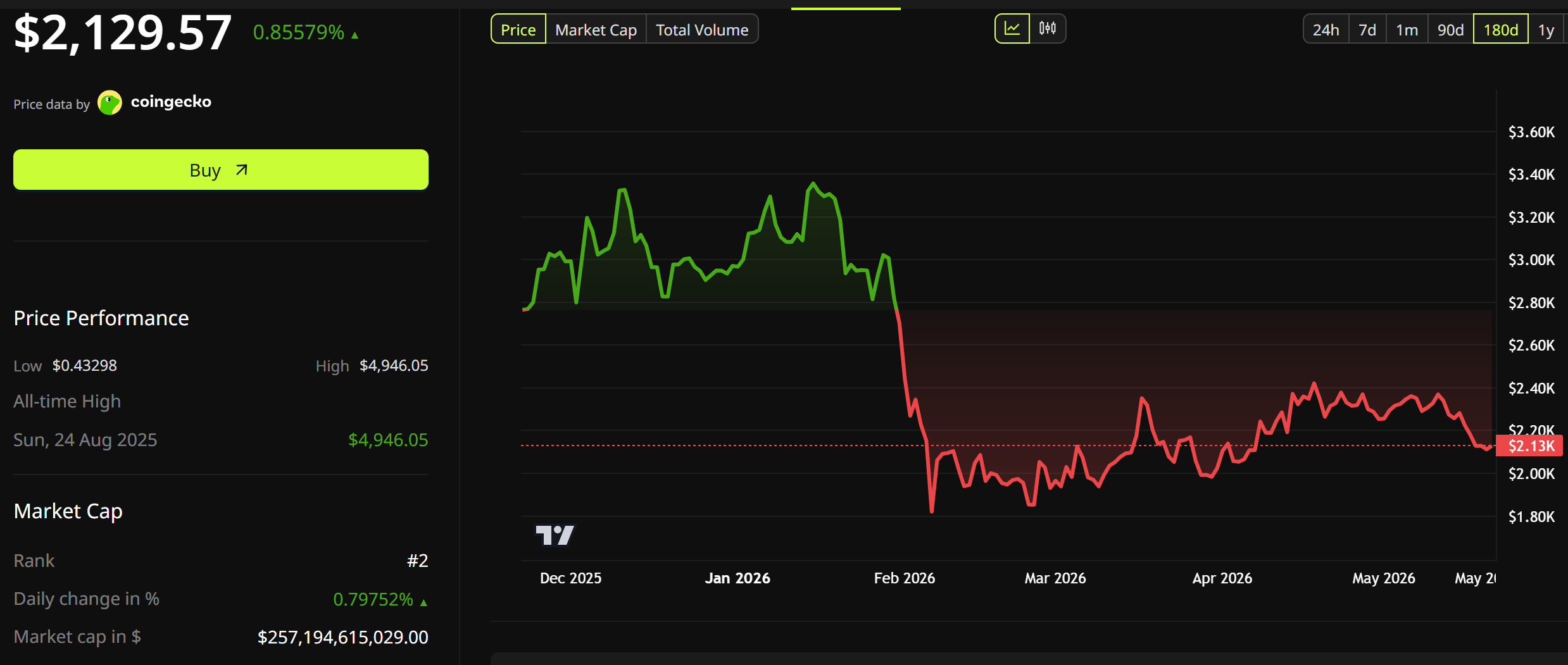
South Korean funeral firm Bumo Sarang has booked an unrealized $33 million loss on a leveraged crypto bet. The country’s seventh-largest provider channeled around $40 million of customers’ prepaid funds into a 2x leveraged BitMine ETF.
The disclosure appeared in Bumo Sarang’s 2025 audit filed with South Korea’s Fair Trade Commission. The company called the shortfall a temporary market move that it can absorb from its financial buffer.
How the leveraged BitMine ETF Bet Collapsed
Local media reported that Bumo Sarang routed 59.5 billion won, near $40 million, into the T-REX 2X Long BMNR Daily Target ETF.
The U.S.-listed REX Shares product targets a return twice that of BitMine Immersion Technologies (BMNR). By the end of 2025, the holding’s book value had fallen to 10.2 billion won, around $6.8 million.
BitMine operates as an Ethereum treasury, holding millions of ether as its primary asset. That exposure left the ETF directly tied to the altcoin’s slide this year.

Daily leveraged products also lose value through volatility decay in choppy markets.
A Regulatory Blind Spot in Prepaid Funeral Funds
The episode has exposed how loosely South Korea polices prepaid funeral funds. The sector sits under the Fair Trade Commission as a prepaid installment business, not any financial regulator.
The only binding rule requires firms to hold half of customer prepayments in reserve. The remaining half can be deployed in almost anything, including high-risk securities.
“This should be illegal,” said analyst Bull Theory.
A Korea Economic Daily review of 75 providers found 43% hold fewer assets than prepayments owed.
Six bills now sit in the National Assembly to ban speculative investments and related-party lending in the sector.
Bumo Sarang has not signaled any plan to unwind the position. Customer prepayments now hang on whatever BitMine and ether do next.
The case strengthens calls in Seoul for tighter rules before the next funeral firm chases similar returns.
The post South Korean Funeral Firm Loses $33 Million on BitMine Ethereum ETF appeared first on BeInCrypto.
Meme punch is a play-to-earn crypto game built around one of the easiest crypto concepts to understand. Players are able to choose a meme-inspired knight, fight in a medieval arena, climb the leaderboard, and earn MEPU tokens through battle rewards.
It’s important to note that the project is not built solely as a passive meme coin. Meme Punch gives MEPU a role within the game itself. Players can use it to buy weapons, skins, special powers, and other in-game upgrades.
The game is built on Ethereum, and it supports multiple ways to buy during the presale. Buyers can use ETH, BNB, SOL, USDT, OSDC, or a bank card. This gives both crypto users and newer buyers a very straightforward way to join the presale.

Turning Meme Coins into Arena Gameplay
The broad majority of meme coins depend on culture, timing, and community attention. Meme Punch, on the other hand, is designed not only to keep the same energy but also to add a game loop that gives players something to do beyond simply holding a token.

The game is set in a medieval arena. There, meme characters fight for dominance. Players get to select from five meme-inspired fighters, including popular crypto mascots such as Pepe, Doge, Floki, Brett, and Pudgy Penguins. Each one is dressed as a knight, ready for battle.
This setup gives the game a clear identity by using characters that crypto traders already recognize.
How the Meme Punch Game Works
Meme Punch is built around three simple mechanics. Each part connects directly to how players use $MEPU inside the game.
- Choose Your Knight. Players select Pepe, Doge, Floki, Brett, or Pudgy Penguin before entering the arena.
- Fight in the Arena. Players battle rivals, climb the leaderboard, and compete for $MEPU rewards.
- Spend and Grow. Players use $MEPU to buy weapons, skins, and special powers.

This makes the game easy to follow for both meme coin fans and new crypto gamers. The more active the arena becomes, the more important the $MEPU game economy can become.
MEPU and Its In-Game Utility
As you already know, MEPU is the in-game official token of the entire ecosystem. It is designed for rewards, player upgrades, and in-game purchases. It’s not just a token designed for presale speculation.
Players are able to earn MEPU by winning battles and climbing the leaderboard. They can also spend it on different items, which can change how their knight looks. It can also change its performance.
To summarize, some of the main use cases include:
- Skisn for character customization.
- Staking through the Meme Punch widget.
- Battle rewards for those who win in the arena.
- Weapons for stronger gameplay.
- Special powers for more advantages in-game.
How the Meme Punch Presale Works
The presale is handled through the widget of the official website. It allows anyone to connect a wallet, choose a payment method, enter the amount of tokens they want to purchase, buy them, and view their current MEPU balance.
As mentioned above, the project supports both crypto and card payment options.
However, it’s important to note that crypto payments give wallet users a faster route because they can buy directly with assets they may already hold. On the other hand, card payment gives newer buyers a simpler and more familiar avenue to acquire MEPU tokens.
MEPU Tokenomics
Meme Punch has a total supply of 10 billion $MEPU. The supply is split across presale access, liquidity, marketing, rewards, staking, and project funds.
- Presale receives 40%.
- DEX/CEX liquidity receives 12%.
- Marketing receives 16.5%.
- Game rewards receive 9.5%.
- Staking receives 14.5%.
- Project funds receive 7.5%.

This structure gives the presale the largest share while also setting aside tokens for liquidity and game rewards. That fits the project’s plan because $MEPU needs both market access and in-game reward supply.
Roadmap: What’s Coming Next?
The roadmap starts with the presale and moves on toward development, testing, and launching. The first stage is focused on fundraising, auditing the contracts, marketing, and kicking off the development process.

Later stages include listing the coin on a DEX, testing the game, releasing a beta version, launching the full game, airdropping tokens to the community, and listing on centralized exchanges.
The roadmap helps explain why the project is using this particular funding model. The early sale funds the path toward game development, exchange access, and wider player activity.
Final Take
The game attempts to bring a more active format to the meme coin market. Instead of simply relying on community jokes or on price speculation, it turns meme characters into actual playable fighters with upgrades, rewards, and leaderboard competition.
MEPU is designed to give the arena its economic layer because every player is able to earn it, spend it, stake it, and use it across the ecosystem.
For now, Meme Punch stands out as a meme coin project built around a simple idea with clear gameplay, recognizable characters, and multiple payment options through ETH, BNB, SOL, USDT, USDC, and a card.
The post What Is Meme Punch? The Medieval Meme Battle Game That Pays You to Play appeared first on CryptoPotato.
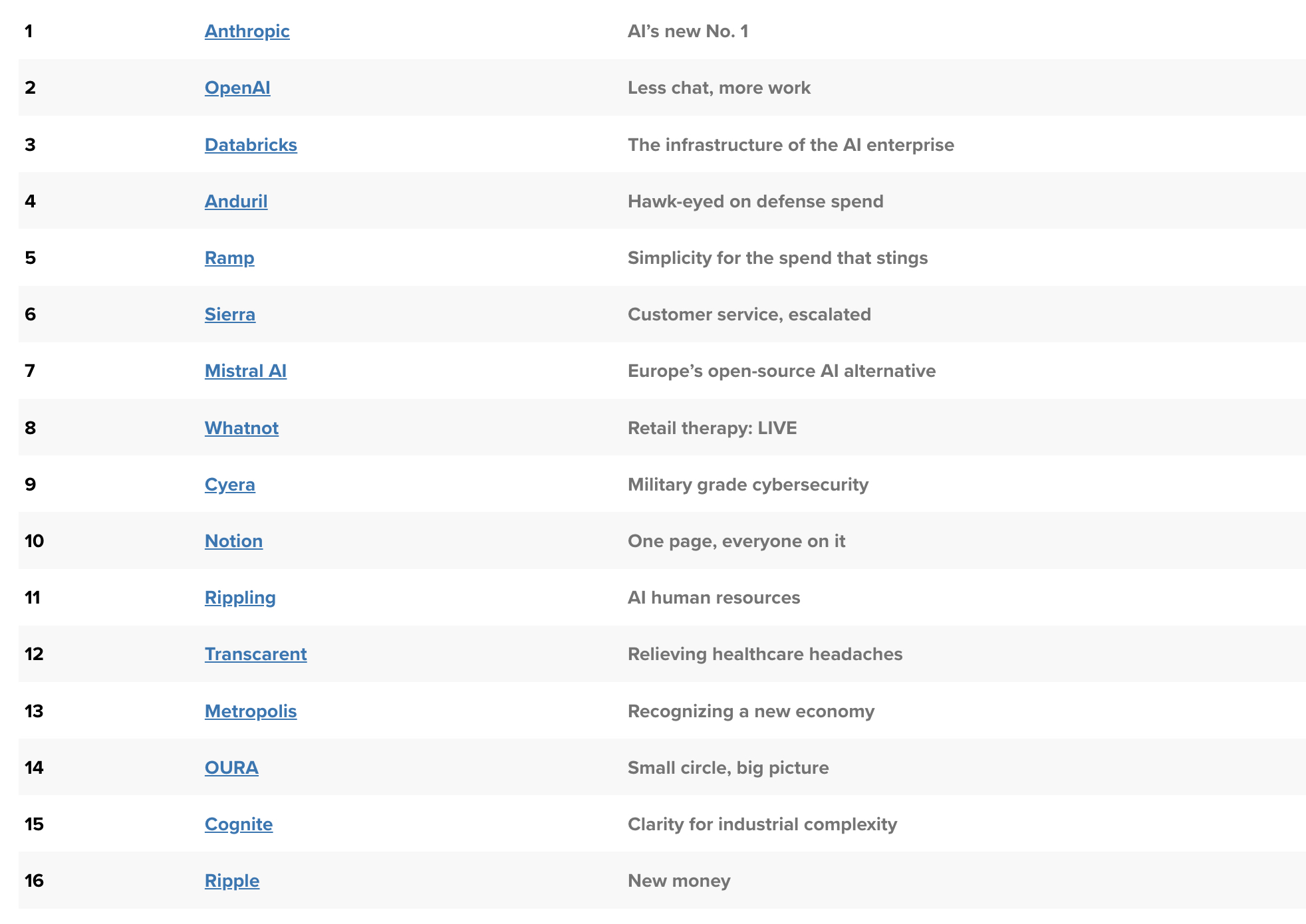
CNBC just ranked Ripple the 16th most disruptive company on the planet, beating out Revolut, Perplexity, Kalshi, Polymarket, and Canva. But its token, XRP, has been falling from its price high of mid last year.
CNBC’s updated Disruptor 50 list for 2026 names Ripple as the sole crypto or blockchain firm to make the cut, labeled as “new money.” The company climbed from 38th place in 2021 to 16th today, steadily overtaking fintechs and deep-tech firms alike.
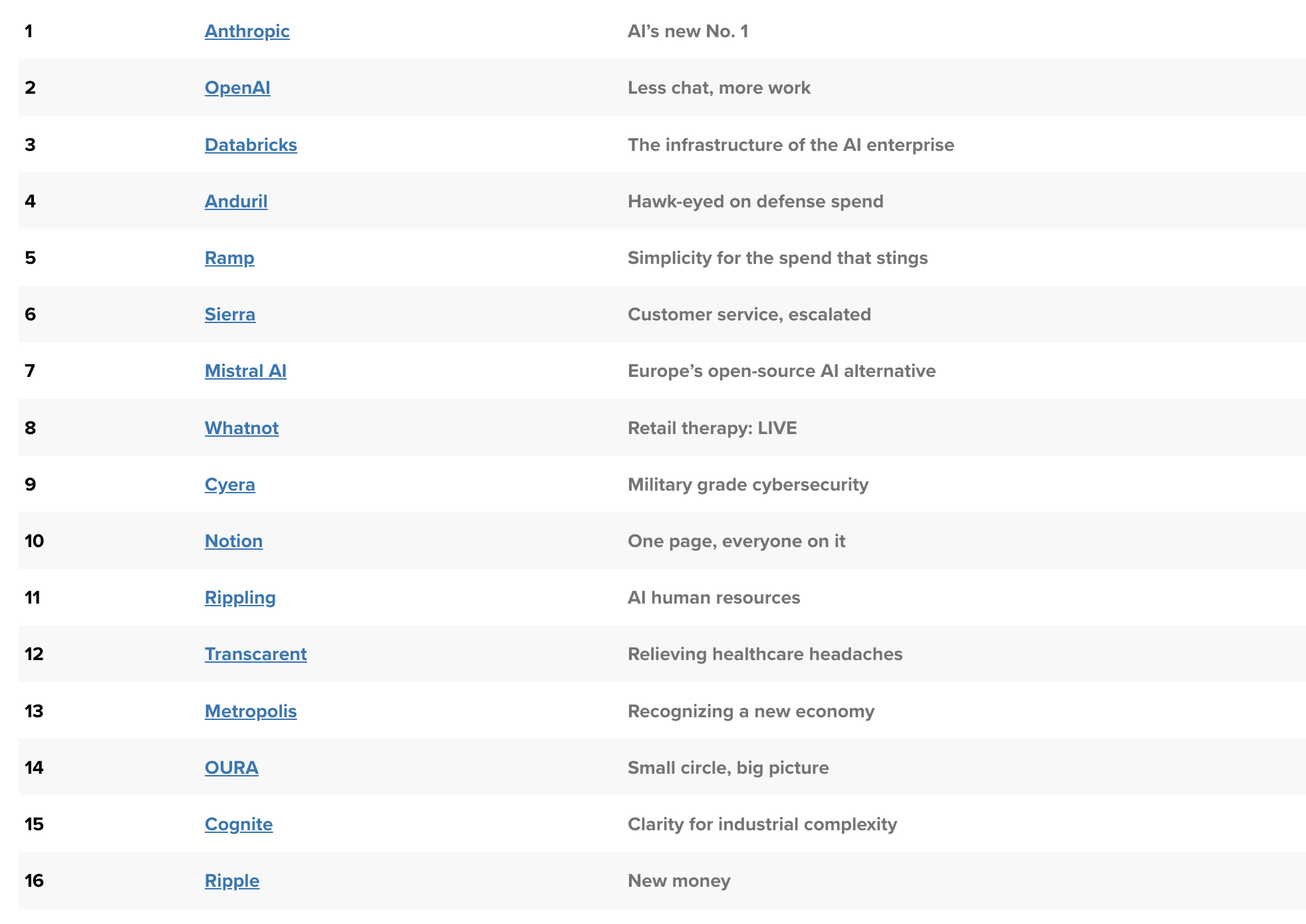
Santiment Intelligence followed the announcement with a post citing XRP’s “long-term role in cross-border payments versus replacement by stablecoins or alternative rails” as the core thesis driving social volume.
Total implied valuation across all 50 Disruptor companies hit $2.4 trillion, up from $798 billion last year as capital is chasing disruptive infrastructure plays right now.
Discover: The best pre-launch token sales
Can XRP Price Hit $5?
At the moment, support sits in the $1.30–$1.35 zone, where recent lows have held on major aggregators. Resistance layers are around $1.40-$1.42, an area that has capped upside since forever. Until XRP closes and holds above $1.50 on volume, the structure reads as consolidation inside a multi-week range.
The XRP spot ETF has been showing a healthy flow despite the big outflows that Bitcoin and Ethereum are experiencing. Community projects XRP to reach $5 by late 2025 with growing institutional flows. That target sits above XRP’s all-time high of $3.84.

Right now, XRP bulls want ETF flows to continue their green streak, and a price break above $1.50 with volume targets the $2.50–$300 range. Consolidation could also continue between $1.35 and $1.45 as the market waits for macro news.
XRP is doing well; it just needs to hold, or a loss of $1.30 support could reopen a retest of sub-$1.00 levels. The Clarity Act remains a wildcard that could accelerate either scenario.
Discover: The best crypto to diversify your portfolio with
LiquidChain Targets Early-Mover Upside as XRP Tests Key Levels
XRP’s CNBC ranking validates the cross-chain payments thesis, but at the current spot price and a market cap already in the tens of billions, the asymmetric upside window has narrowed considerably. For traders watching XRP stall at resistance while the institutional narrative builds, the trade-off becomes clear: established recognition versus early-stage entry.
LiquidChain ($LIQUID) is a Layer 3 infrastructure project building what it calls the cross-chain liquidity layer. Liquid is developing a single execution environment that fuses Bitcoin, Ethereum, and Solana liquidity simultaneously.
Three Thrones for Three Kings. — LiquidChain (@getliquidchain) May 19, 2026

All wrapped in the world's greatest L3. ⟁ https://t.co/vqvBcdSQYC pic.twitter.com/j6dG8ZoHZd
The architecture eliminates the multi-step bridging problem that fragments DeFi capital across ecosystems, or something that XRP’s payment rails still can’t solve at the smart contract layer. With Liquid, developers deploy once and access all three ecosystems.
The presale is live at $0.01461 per $LIQUID, with $780K raised to date, and a bonus of 1400% APY staking for early buyers.
Explore the LiquidChain presale here.
The post XRP Price Barely Moves: CNBC Places Ripple Above Revolut appeared first on Cryptonews.
Crypto World
LayerZero's Incident Report Says Kelp Downgraded From 2-of-2 to 1-of-1 DVN Before $292M Exploit


Detailed May 18 post-mortem traces a six-week breach to DPRK group TraderTraitor and locks in a new 3-of-3 DVN protocol default. Kelp says LayerZero approved the configuration and has migrated rsETH bridging to Chainlink.


The crypto market is higher today as total capitalization rebounds toward $2.7 trillion, with money rotating into Bitcoin and large-cap altcoins while bond and equity markets flash mixed signals.
Summary
- The global crypto market cap has risen about 2% in 24 hours to roughly $2.7 trillion.
- Bitcoin, Ethereum, and XRP lead top-10 price action, with BTC holding near $77,000.
- Outside the top 10, Solana and Internet Computer are among the stronger gainers on rising volumes.
The total cryptocurrency market cap is around $2.7 trillion, up roughly 2.0% on the day, with Bitcoin dominance hovering near 58%, according to CoinGecko and Crypto.com. That bounce comes as traditional markets wobble around rates and macro headlines, and as flows rotate back into liquid crypto majors after a choppy first half of May. Coinbase data shows aggregate market cap near $2.47 trillion with a sharp jump in 24-hour trading volume, underscoring that today’s move is being driven by fresh turnover rather than illiquid grind.
Macro context is doing some of the heavy lifting. A recent Yahoo Finance analysis of market conditions framed the latest crypto strength as a rotation out of stressed bond markets and a softening stock tape, with digital assets absorbing some of the risk capital that had been parked on the sidelines. Meanwhile, Bitcoin-related stocks on U.S. exchanges have been catching a bid whenever Washington inches closer to regulatory clarity, as a recent CNBC update highlighted when Senate committee activity around crypto rules pushed BTC-exposed equities higher.finance.
Bitcoin, Ethereum, XRP: what is driving the majors?
Bitcoin (BTC) remains the anchor of the move, trading around $76,500–$77,500 after a week of consolidation, according to price feeds from CoinMarketCap and Fortune. BTC’s market cap stands near $1.5 trillion, with dominance just under 58%, meaning Bitcoin alone accounts for well over half of today’s crypto value. Sentiment indicators compiled by Changelly show a “fear” reading even as BTC trades near all-time-high territory, suggesting that positioning is still relatively cautious compared with the levels typically seen near blow-off tops.
Under the hood, this leg up looks more like a grinding repricing than an overheated squeeze. Coinbase estimates that Bitcoin’s 24-hour trading volume has jumped more than 50% in the last day, while total market turnover is up over 100%, reinforcing the idea that today’s gains are being driven by genuine two-way activity rather than thin books. A Binance research note added that Bitcoin’s structural share of the market, plus persistent institutional flows, continues to make it the “default” risk-on expression whenever regulatory headlines break in crypto’s favor.
Ethereum (ETH) is lagging slightly but still participating. ETH trades around $2,100–$2,150 with a market cap in the $250–$260 billion range, per CoinMarketCap and Coinbase’s Ethereum dashboard, and has added roughly 1%–2% over the last 24 hours. Earlier in May, Fortune noted that one ETH was worth about $2,246.79, up more than $300 versus a year before, and recent technical analysis from CryptoRank pointed to resistance in the $2,250–$2,350 area after ETH broke out of a contracting triangle. Changelly’s latest forecast sees Ethereum averaging about $2,378 in 2026, with a projected range of $2,206–$2,549, implying that current levels sit in the middle of its expected band rather than at euphoric extremes.
XRP (XRP) is the standout among top 10 non-stablecoins today. The token trades around $1.37 with a market cap north of $80 billion, according to Crypto.com, and has posted a much stronger year-on-year performance than most large assets. A recent Forbes breakdown noted that XRP’s market cap sat around $181.2 billion with a 502% year-over-year return as of early 2025, and while those exact figures have shifted, the structural story is the same: regulatory clarity and deep liquidity make XRP a favored high-beta proxy whenever the broader market turns risk-on.
Solana and Internet Computer surge as liquidity hunts beta
Outside the very top of the table, Solana (SOL) and Internet Computer (ICP) are two of today’s more interesting movers. Solana, currently a top-10 coin with a price near $85 and a market cap close to $49 billion, has edged higher on the day after a strong run earlier this year, according to Crypto.com. Forbes previously highlighted that SOL’s market cap was about $114.8 billion with a 145% year-over-year return as of January 2025, and traders still treat it as the go-to high-beta Layer 1 whenever momentum rotates down the market-cap stack.
Internet Computer (ICP) is another name catching flows. Coinbase’s global dashboard lists ICP among the day’s “top performing cryptocurrencies by price,” with 24-hour trading volume up sharply alongside the broader market. While ICP sits outside the top 10 by market cap, its float and liquidity profile mean relatively modest net inflows can drive outsized moves compared to giants like Bitcoin or Ethereum. That dynamic is playing out again today as traders look beyond mega-caps for additional upside.
In short, the market is up today because macro nerves and a messy bond tape are steering risk capital back into the most liquid corners of crypto, with Bitcoin anchoring the move, Ethereum grinding higher through resistance zones, and high-beta names like XRP, Solana, and ICP amplifying the trend as traders hunt for relative strength.

XRP News: Flare Network has completed a significant infrastructure milestone, integrating native XRP support directly into its wallet architecture and enabling XRP holders to access the full suite of DeFi primitives, lending, borrowing, liquidity provision, and yield farming, without relying on centralized custodians or permissioned bridges.
The mechanism is Flare’s FAssets protocol, which uses the network’s State Connector to verify transactions on the XRP Ledger, allowing XRP to be minted as FXRP on Flare in a trustless, overcollateralized format.
XRP in cold storage shouldn't sit idle. — Flare
Flare Smart Accounts now live in @DCENTwallets.
Two signatures on XRPL → FXRP minted → Monarq XRP Yield Vault. Self-custodied the whole way through.
$55K campaign reward pool for D'CENT users and early depositors. pic.twitter.com/tevApnUyBO
 (@FlareNetworks) May 19, 2026
The structural implication is a direct answer to XRP’s long-standing utility gap: a token with deep liquidity and institutional reach that has historically been locked out of the smart-contract DeFi stack.
On-chain data points to a 20% increase in Flare’s Total Value Locked following the integration announcement, with large wallets, those holding more than 10 million XRP, identified as the primary movers.
The open question is whether that initial inflow represents durable capital migration or opportunistic positioning ahead of anticipated catalysts.
XRP holders moving assets off the XRPL onto Flare accept smart-contract risk and bridging complexity in exchange for yield exposure that the native ledger cannot currently match. Whether the yield rates justify that trade-off, and whether crypto liquidity deepens quickly enough to sustain the ecosystem, is what the market is now pricing.
Discover: The best crypto to diversify your portfolio with
XRP News: How Flare’s FAssets and FXRP Actually Work, and Why the State Connector Is the Real Story
The mechanism here is worth understanding precisely. Flare’s State Connector protocol monitors the XRP Ledger for confirmed transactions and relays cryptographic proof of those transactions to Flare’s EVM-compatible execution layer.
When an XRP holder initiates a mint, agents on the Flare side provide overcollateralized backing, denominated in FLR, and FXRP is issued on a 1:1 basis against the locked XRP.
Agents earn minting and redemption fees; the overcollateral provides a liquidation buffer if FLR prices drop.
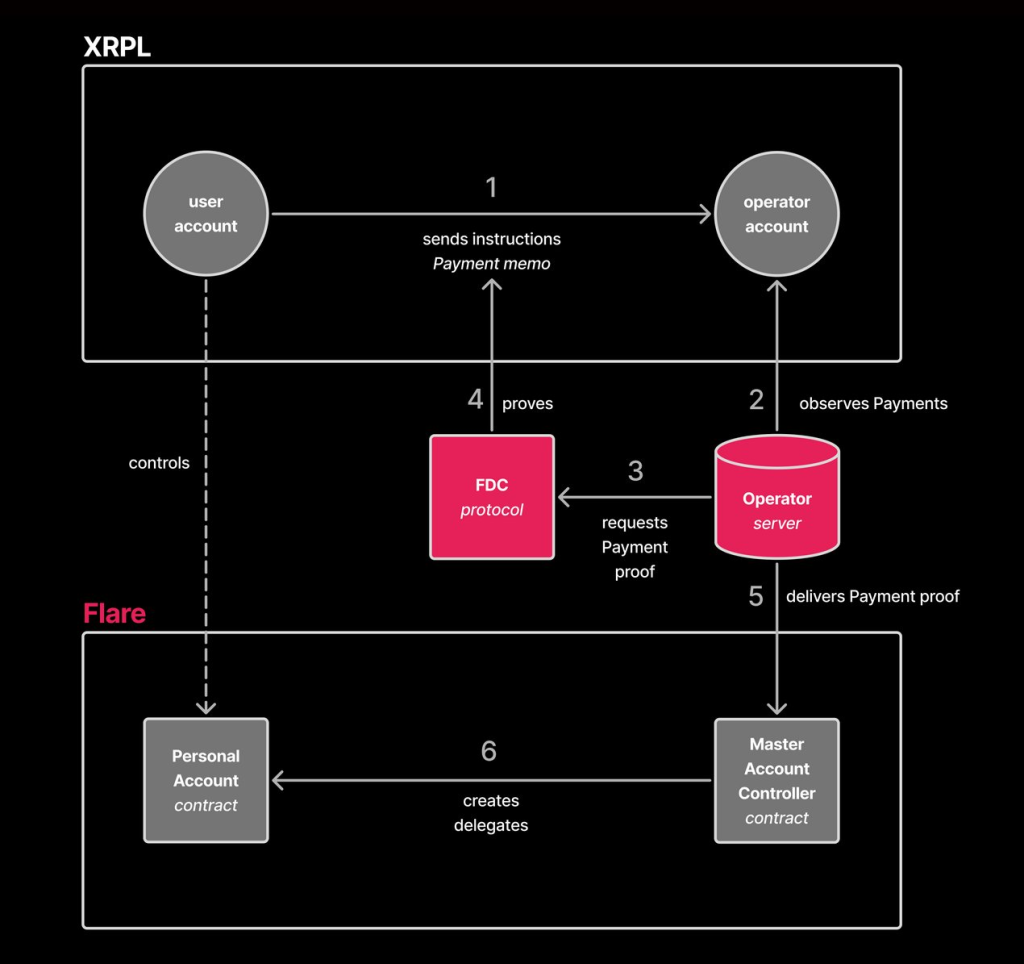
This structure, first outlined in Flare’s introduction to XRP DeFi, is what differentiates FXRP from custodial wrapped-token approaches.
There is no single bridge operator to compromise; the collateral backstop is enforced by Flare’s proof-of-stake consensus, where 98% of stake is community-held and no single data provider can exceed 3.3% of total stake.
The network achieves 1.2-second average block time with single-slot finality, which matters for DeFi protocols where price feeds and liquidation triggers operate in near-real time.
Once minted, FXRP becomes a composable DeFi asset. Holders can deploy it across lending protocols, supply it to automated market maker pools on SparkDex (Flare’s native DEX), or route it into yieldoptimizers being developed under Flare’s developer incentive program.’
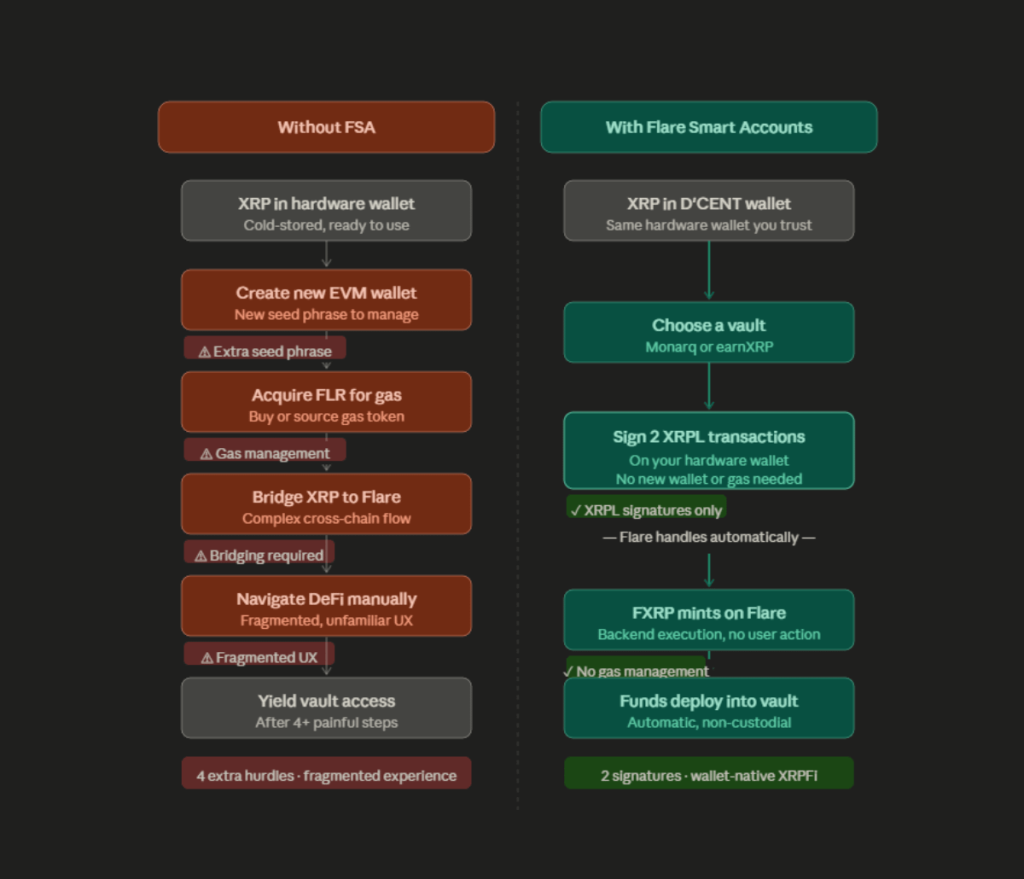
The Firelight protocol, currently in rollout, extends this further by introducing Economically Secured Services, where FXRP stakers underwrite security for third-party applications and earn a share of the fees those applications pay.
Liquid staking tokens issued through Firelight act as receipts that can themselves be redeployed in additional XRP DeFi strategies, creating compounding yield loops without sacrificing the base staking position.
What was previously impossible for XRP holders, accessing a full-stack DeFi environment with native collateral, decentralized price feeds via Flare’s FTSO, and programmable yield, is now accessible through a single wallet integration. That is the structural shift the TVL data is reflecting.
XRP is currently trading near $1.36, consolidating after a sharp rally that followed the Clarity Act’s passage through the Senate Banking Committee. The token has held above the $1.30 support band for 11 consecutive sessions, a level the market is treating as near-term structural floor.
Discover: The best pre-launch token sales
The post XRP News: Flare Wallet Integration Unlocks Native XRP DeFi appeared first on Cryptonews.


Why this matters: Pal argued that AI and blockchain are converging into a new infrastructure layer for the global economy.
- Pal said humanity is approaching a moment where AI systems become “apex intelligence,” fundamentally changing labor, finance and daily life.
- He described crypto as the ownership layer for that future economy, allowing individuals to “front-run Wall Street” by owning blockchain infrastructure before institutions fully arrive.
- “We can own the infrastructure layer for the first time in history,” Pal said during the interview.
The big picture: Pal framed the current moment as a historic acceleration point for technology adoption.
- He said AI adoption is moving faster than the internet era and compared it to “Metcalfe’s law squared,” referencing network effects.
- Pal pointed to AI-generated content growth as evidence of the shift, citing data showing AI now produces more words annually than humans.
- “Since COVID, we’ve hyperaccelerated everything,” Pal said.
- He also highlighted rapid adoption of GLP-1 weight-loss drugs as another example of exponential technological change.
What this means for crypto: Pal said institutional adoption does not undermine crypto’s original mission.
- He argued tokenization and blockchain rails expand access to financial markets for people globally who were previously excluded.
- “Everybody’s on the same equal footing,” Pal said, referencing the ability for users worldwide to access crypto assets.
- Pal said tokenized equities could allow investors in countries like Nigeria to access assets previously unavailable to them.
- He described stablecoins, tokenization and blockchain-based finance as “a better system for everybody.”
Reading between the lines: Pal sees crypto speculation as a feature, not a bug.
- He argued meme coins and NFTs served as stress tests for broader technological ideas.
- “Crypto’s hilarious because we hyper-speculate everything as the way of testing it,” Pal said.
- Pal said meme coins demonstrated how online attention can rapidly form capital.
- He also predicted NFTs eventually become foundational digital contracts underpinning parts of the future economy.
On AI: Pal described AI as both a productivity accelerator and a societal disruption.
- He said he already uses AI tools like Claude, ChatGPT and Grok daily as “thought partners” for research, writing and idea generation.
- Pal said AI has reduced tasks that once took days into workflows lasting only hours.
- He warned that AI could threaten parts of the labor market but argued human creativity, community and experiences will become more valuable.
- “The currency of humans is attention,” Pal said.
Worth watching: Pal predicted crypto markets and AI-driven systems continue converging over the next decade.
- He forecast the crypto market could eventually grow from roughly $2.7 trillion today to $100 trillion within a decade.
- Pal argued that wealth creation from crypto will increasingly flow into digital culture, including NFT-based art.
- He cited digital artist XCOPY as an example of crypto-native culture gaining value alongside traditional art markets.
- Asked what could derail crypto adoption, Pal replied: “Nothing stops this train.”
Bitcoin (BTC) continues to trade in a tight range around $77,000 in morning U.S. action on Wednesday. The major stock indices are posting small gains after three consecutive negative sessions.
Minutes from the Fed’s last policy meeting are due to be released at 2:00 pm ET. That April meeting was notable as it was the last to be headed by Jerome Powell, with Kevin Warsh due to be sworn in as Fed chair on Friday.
The meeting was also important for having four dissents — one from Stephen Miran, who wanted the central bank to trim rates, and three from board members who urged the Fed to drop any language suggesting an easing bias.
In the weeks since, bond markets globally have taken a major tumble as unexpected economic strength has combined with resurgent inflation to force a major reassessment from rate traders.
Nvidia (NVDA) reports its quarterly results after the close on Wednesday. A large stock price move in the tech bellwether is likely to lead to a sizable move in the Nasdaq. Traders accustomed to crypto’s correlation with that index will be keeping a close eye.

AI’s Next Moat Won’t Be Models. It Will Be Execution Data

Andy Burnham’s role with Iain Duncan Smith’s think tank just shows he’s more of the same

Mikel Arteta: How a former Gunner ended Arsenal’s 22-year title drought | Football News


-

 Crypto World5 days ago
BloFin War of Whales 2026 Grand Prix opens registration for $5M trading championship
-

 Fashion5 days ago
Weekend Open Thread: Theory – Corporette.com
-

 Crypto World5 days ago
E-Estate Announces 1 Year Live: Washington DC Summit as Real Estate Tokenization Enters Its Next Phase
-

 Tech5 days ago
Tech Moves: Microsoft AI leader jumps to OpenAI; former AI2 exec joins Meta; and more
-

 Tech5 days ago
Google reimburses Register sources who were victims of API fraud
-
 Crypto World6 days ago
Google’s Gemini AI Predicts Incredible Solana Price by the End of 2026
-

 Business5 days ago
H&R Real Estate Investment Trust (HR.UN:CA) Q1 2026 Earnings Call Transcript
-

 Sports5 days ago
Napoleonic enters 2026 Doomben 10,000 field via Abounding withdrawal
-
 Entertainment6 days ago
Zara Larsson Has Blunt Response To Chris Brown Diss
-
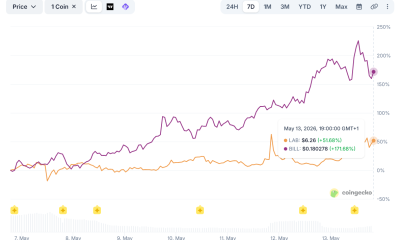
 Crypto World7 days ago
Two AI Tokens Lead May Rally, But Risks Are Rising
-

 Crypto World5 days ago
BeInCrypto 100 Institutional Awards Nomination: KAST for Best Digital Assets Neobank and Best Digital Assets Fintech
-

 Fashion4 days ago
On the Scene at Gucci’s Cruise Show in New York City: Mariah Carey, Kim Kardashian, Lindsay Lohan, Iman, and More!
-
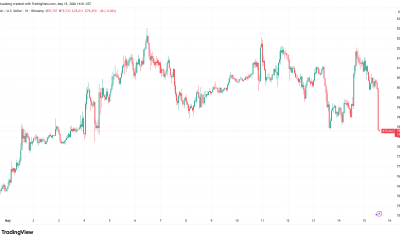
 Crypto World5 days ago
Bitcoin Battles US Bond Nerves With BTC Price Dip Toward New May Lows
-
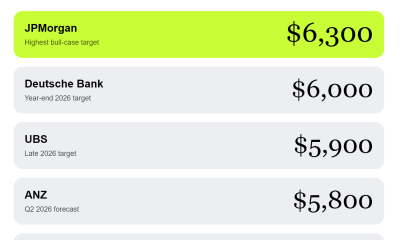
 Crypto World5 days ago
Wall Street’s Boldest Gold Prediction Has Russians Rushing to Buy
-

 Fashion4 days ago
Trending Western Style Vests Perfect for Summer
-

 Crypto World5 days ago
ICE and CME urge US regulators to curb Hyperliquid energy trading
-

 Politics6 days ago
DWP PIP Timms review continues to be an absolute farce
-

 Entertainment5 days ago
David Letterman Returns to Late Show, Blasts Cancellation
-

 Fashion3 days ago
Amazon Sundays: Memorial Day Hosting
-
 Crypto World6 days ago
Lido Finance Selects Chainlink CCIP as the Official Cross-Chain Infrastructure for wstETH Security
You must be logged in to post a comment Login