
Crypto World
llinois 0.2% crypto tax faces new industry lawsuit



Two U.S. crypto trade groups have sued three Illinois officials to stop a 0.2% digital asset tax from taking effect on Jan. 1, 2027.
Summary
- The Blockchain Association and Crypto Council for Innovation want the court to block the tax before its 2027 start.
- The complaint alleges violations of the U.S. Constitution, the Illinois Constitution, and the federal Internet Tax Freedom Act.
- Brokers could face registration, collection, reporting, and recordkeeping duties backed by civil and criminal penalties.
- The Digital Chamber filed a separate lawsuit against the same tax in July.
Illinois crypto tax faces six legal claims
The 39-page complaint, filed by the Blockchain Association and Crypto Council for Innovation in Sangamon County Circuit Court, seeks declaratory and injunctive relief against the Digital Asset Tax Act.
Filed against Illinois Department of Revenue Director David Harris, Attorney General Kwame Raoul, and Sangamon County State’s Attorney John Milhiser, the case challenges the officials responsible for implementing, collecting, and enforcing the tax.
According to the filing, Illinois would impose the levy on the full value of a customer’s digital assets whenever a covered broker exchanges, transfers, or stores them. The groups said a customer could owe the tax even without selling an asset, transferring ownership, or earning a profit.
The complaint sets out six counts under federal and state law. CCI and the Blockchain Association allege that the measure violates the federal Internet Tax Freedom Act, the Commerce Clause, and due process protections under the U.S. Constitution.
At the state level, the groups claim the tax violates Illinois’ Uniformity Clause, unlawfully delegates tax policy to an administrative agency, and fails to meet a state constitutional rule requiring bills to be read by title on three separate days in each legislative chamber.
Calling the measure “unconstitutionally vague,” the plaintiffs said brokers and Illinois customers cannot determine with enough certainty which activities fall under the law or who must collect and remit the tax. The groups argued that the uncertainty carries serious consequences because statutory violations could expose a broker to a Class 3 felony.
The filing also claims that some association members are already spending money on outside legal and tax advice and changing their systems to calculate, collect, and record the levy. According to the plaintiffs, withholding court review would leave affected firms with a choice between limiting service to Illinois customers and risking criminal liability.
Groups say interstate transactions could be taxed twice
Under its Commerce Clause claim, the complaint argues that Illinois has not fairly limited the tax to economic activity within the state. The law allows officials to treat a transaction as occurring in Illinois by relying on details such as a customer’s address, account records, or IP address.
The groups said another state could use its own location test for the same transaction, raising the possibility that two jurisdictions would tax one transfer. A customer with an Illinois address who completes an online transaction while visiting another state could therefore create competing tax claims if both states adopted similar rules, according to the filing.
Illinois also lacks a credit for comparable tax paid to another state, the complaint said. On that basis, the plaintiffs allege that the measure could place interstate digital asset activity at a disadvantage compared with transactions conducted entirely within one state.
Summer Mersinger, CEO of the Blockchain Association and a former Commodity Futures Trading Commission member, said states can support new industries but must remain within constitutional limits.
“Illinois cannot impose a novel tax regime that discriminates against digital commerce, creates uncertainty for consumers and businesses, and threatens to fragment a rapidly growing national market.”
The Internet Tax Freedom Act claim focuses on the tax treatment of online commerce. According to the complaint, the federal law prevents states from imposing discriminatory taxes on electronic transactions when equivalent offline activity receives more favorable treatment.
Illinois does not impose the same levy on the exchange, transfer, or storage of cash, stocks, bonds, or precious metals, the plaintiffs said. The filing gives the example of an Illinois resident who can store gold in a safe deposit box without paying the new tax but would face the 0.2% charge when using a service to hold Bitcoin.
Brokers and Illinois customers could both owe duties
As crypto.news reported in June, Governor JB Pritzker signed the tax into law as part of Illinois’ $55.9 billion fiscal 2027 budget. State budget documents estimated that the levy could generate about $60 million annually.
The law places a 0.2% “privilege tax” on the value of digital assets tied to covered business activity received by an Illinois customer. Covered services include exchanging, transferring, and storing digital assets through a broker.
According to tax advisory firm BDO USA, certain out-of-state brokers can fall under the law when they receive at least $100,000 from Illinois customers during a 12-month period. Location tests can draw on billing details, customer records, mailing addresses, and IP information.
Covered brokers must register with the Illinois Department of Revenue, collect the tax from customers as a separate charge, keep transaction records, and submit monthly filings. When a broker does not collect the levy, the statute directs the customer to assess the amount and pay the department by the 20th day of the following month.
The latest complaint says different sections of the law create uncertainty over which firms must follow each requirement. While one part places collection duties on brokers with an Illinois place of business, another appears to require the broker completing a sale to collect the levy without applying the same revenue threshold, according to the plaintiffs.
CCI and the Blockchain Association also challenged how lawmakers passed the measure. Their filing said Senate Bill 3019 began in January as a two-page proposal concerning loans for agricultural property before lawmakers replaced its contents on the final day of the legislative session.
Two amendments expanded the legislation into a 1,624-page package covering subjects ranging from vehicle weight rules to sports wagering. The complaint said the digital asset provisions took up fewer than 20 pages and contained no legislative findings explaining the tax.
According to the groups, House and Senate committees gave the public about an hour or less of notice before hearings, while both chambers passed the rewritten bill within 24 hours. Pritzker signed it on June 16 as Public Act 104-468.
A second lawsuit targets the same 0.2% levy
The case is the second industry challenge filed against the Illinois tax. In July, the Digital Chamber filed its own lawsuit in the same state court, arguing that Illinois had taxed digital asset services differently from economically similar transactions involving traditional assets.
The Digital Chamber asked the court to declare the law void and unenforceable. Its complaint also alleged violations of federal and state constitutional protections and challenged the state’s decision to base tax treatment on the technology used to record or move an asset.
Public objections began before the budget became law. The Crypto Council for Innovation asked Pritzker to remove the digital asset provisions through a line-item veto, while the Digital Chamber and Illinois Blockchain Association said lawmakers gave affected businesses no meaningful notice.
Strategy co-founder Michael Saylor later called the law a “Big Mistake.” Miles Jennings, general counsel and head of policy at a16z Crypto, said in June that no comparable state financial transaction tax applied to stocks, bonds, or derivatives.
Illinois has also faced a separate court fight over prediction markets. Kalshi challenged a state law that treats sports event contracts as wagers and requires operators to obtain state licenses.
In its federal complaint, Kalshi argued that the Commodity Exchange Act gives the CFTC exclusive authority over contracts listed by federally regulated markets. The company said complying with the Illinois licensing system would create additional expenses, while blocking state residents could require new geofencing systems.
Pritzker had earlier signed Executive Order 2026-04 restricting state employee trading on prediction platforms when nonpublic information obtained through official duties could be used to make a profit or avoid a loss.

Crypto World
DOGE Whales Quietly Dumped 280M Tokens While ETF Inflows Cooled: Is Rally Losing Its Real Buyers?
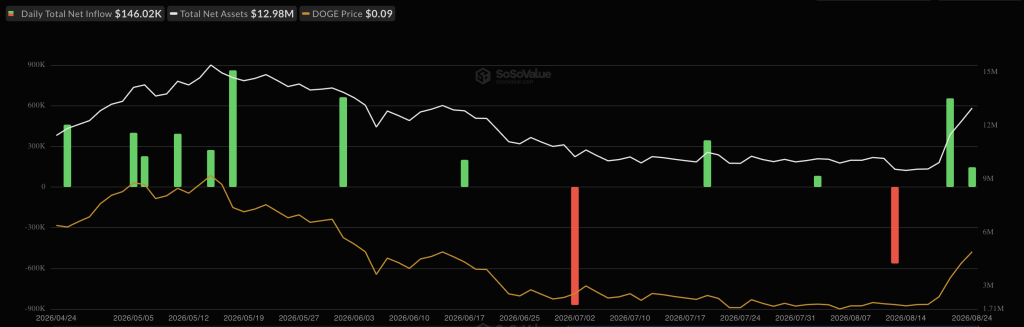
Whales are quietly stepping back right as retail gets excited again. Dogecoin (DOGE) has bounced 3.02% over the last 24 hours to $0.090, a level analysts have flagged as decisive. Can DOGE price push through, or does this stall into another leg down? The signals beneath the bounce suggest the answer might not be what the bulls want.
Spot Dogecoin ETFs pulled in a modest $146,020 inflow Monday, down sharply from the prior week’s $653,420. Institutional interest is present but cooling.

Whale behavior is even less encouraging. Wallets holding between 1 million and 100 million DOGE have shed a combined 280 million tokens since Friday. That is whales quietly de-risking into strength, not a vote of confidence after last week’s 34% rally.
Broader crypto sentiment remains choppy, with Bitcoin’s own price action still setting the tone for beta plays like DOGE. Macro liquidity conditions add another layer that traders should not ignore this week.

Discover: The Best Crypto to Diversify Your Portfolio
Can Dogecoin Price Hit $0.10 This Week?
The chart says bullish. The positioning data says caution.
DOGE at $0.090 sits above both its 50-day EMA near $0.076 and 100-day EMA near $0.081, a structurally bullish setup on paper. The reclaimed downtrend line near $0.070 now acts as support, with immediate protection sitting at the $0.088 horizontal level.
Momentum tells a different story. RSI reads near 77, deep overbought territory, while the long-to-short ratio sits at 0.93, close to a one-month low. Traders are positioning for a pullback even as the price holds up.
A clean break above $0.094, with sustained ETF inflows, could trigger a run toward $0.10 to $0.104. Consolidation between $0.088 and $0.094, as overbought conditions cool off, is the base case. A break below $0.088 exposes the 100-day EMA near $0.081, then $0.076.
Discover: The Best Token Presales
Maxi Doge Targets Early Mover Upside as Dogecoin Tests Key Levels
DOGE holders riding last week’s 34% rally have reason to feel good, but at a market cap in the billions, a repeat of that move gets harder every time.
Whale distribution and a sub-1 long-short ratio suggest the easy gains here may already be priced in. That’s pushing more traders toward earlier-stage plays where upside isn’t capped by nine-figure liquidity.
Maxi Doge (MAXI) is one of those plays, an Ethereum-based meme token built around gym-bro trading culture and “1000x leverage” energy, literally personified as a 240-lb canine mascot.
The presale has raised $4,848,993.00 so far, with tokens priced at $0.0002835 and dynamic APY staking live for holders. Standout features include holder-only trading competitions with leaderboard rewards and a Maxi Fund treasury earmarked for liquidity and partnerships.
Get Ahead of Next Meme Coin Launch Here
The post DOGE Whales Quietly Dumped 280M Tokens While ETF Inflows Cooled: Is Rally Losing Its Real Buyers? appeared first on Cryptonews.
Less than 24 hours after joining Pump Fun, the two memecoins tied most closely to Martin Shkreli are down 94%.
On Monday, Shkreli drew over 700,000 views on his announcement that he would join the Solana memecoin launchpad and start livestreaming his trades.
Elated, PumpFun’s official account welcomed him, claiming he already had a 6,263% gain and $1.6 million in his wallet within one day.
At time of writing, CITRINI, which he created, and MARTIN, a namesake coin that topped Shkreli’s trading history before his CITRINI transactions, have each crashed at least 94% since their highs yesterday.
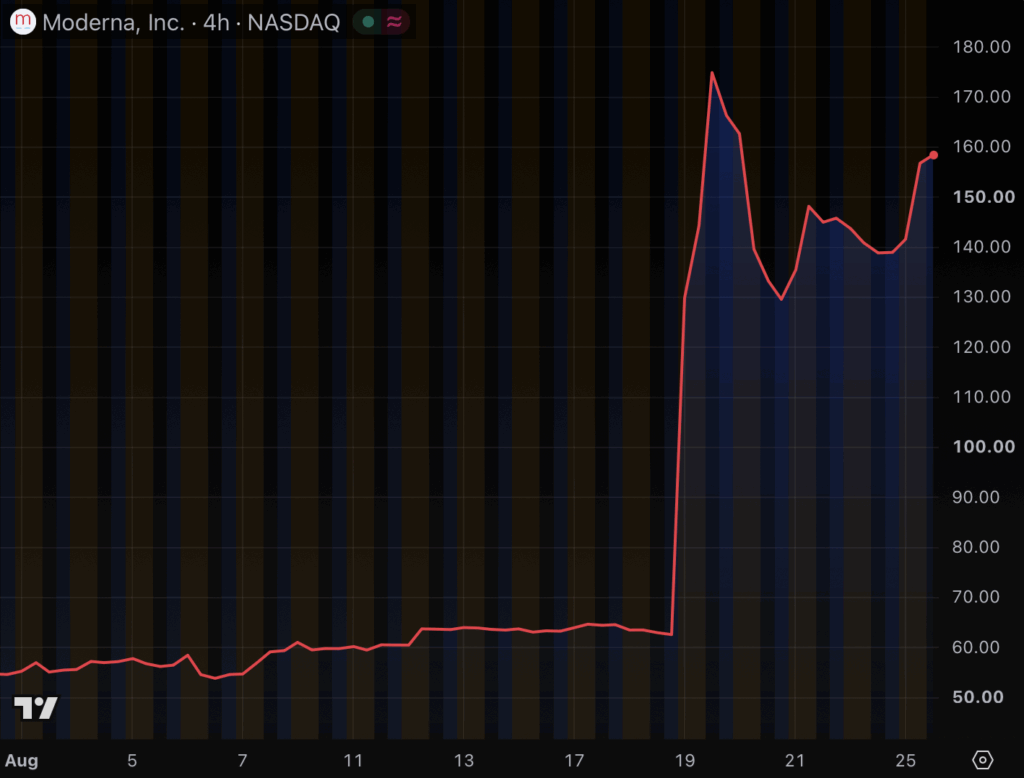
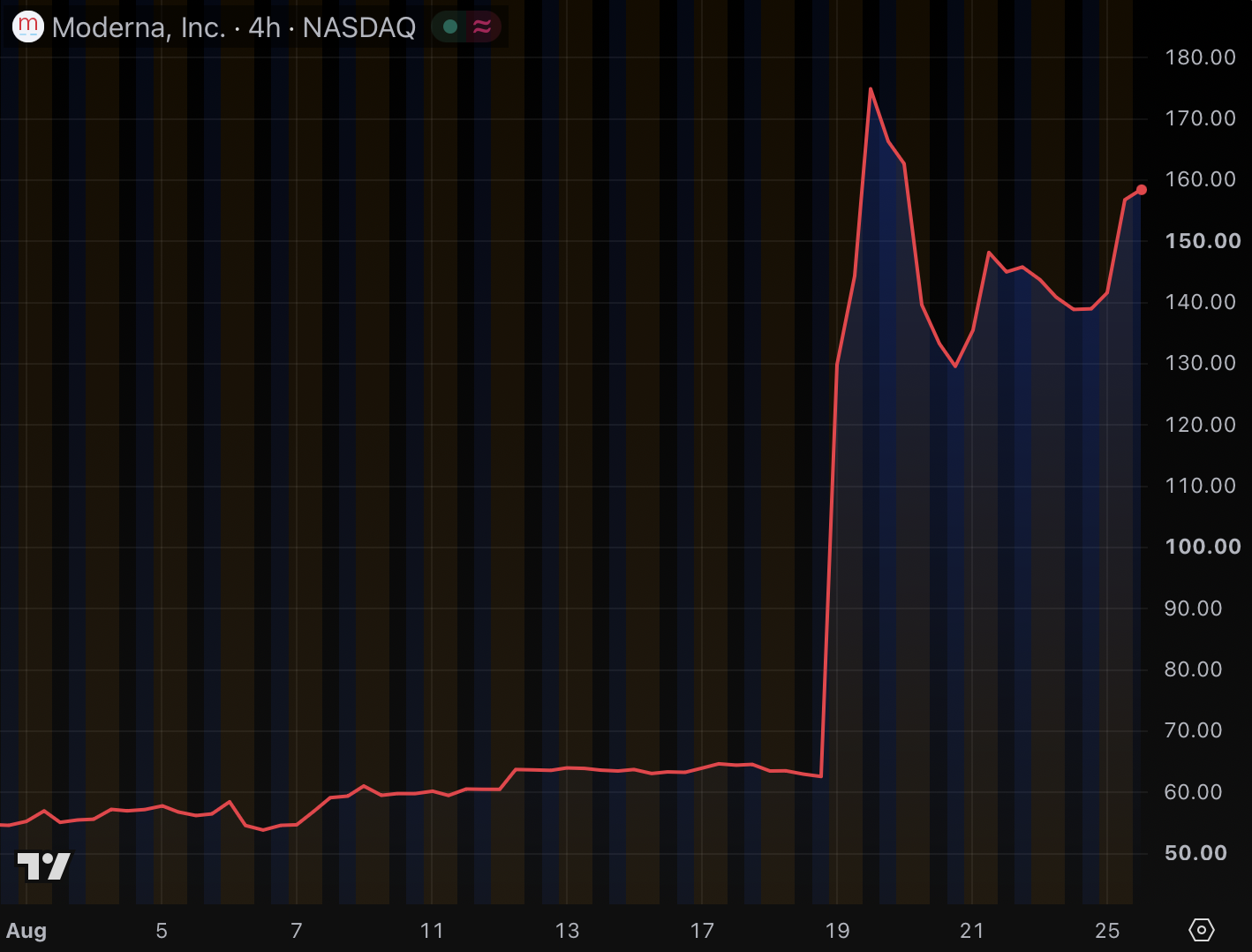
Traders have been paying particular attention to Shkreli recently after he made headlines talking about a short-sale of Moderna earlier this month.
Unfortunately, the pharmaceutical maker skyrocketed higher on positive FDA Phase 3 results shortly after he “was playing around shorting this thing at 80 bucks.”
Moderna currently trades precisely 100% higher than Shkreli’s $80 per share.
MARTIN, CITRINI, DJT, and MSI
A downward-sloping chart is a familiar shape for Shkreli.
Another Solana memecoin tied to him in 2024, DJT, also collapsed after a wallet dumped tokens on buyers.
An Ethereum token linked to him in 2022, MSI, performed even worse. His pattern of losses exceeding 90% for his followers keeps repeating.
Shkreli launched CITRINI live on air. Several viewers described it as a joke, even though it lost people real money.
Yesterday and today, he has spent hours livestreaming trades to tens of thousands of cumulative viewers via X and his PumpFun profile.
The buyers on the other side of those trades were mostly anonymous wallets trying to ride the momentary pump on his endorsements.
The MARTIN memecoin peaked at $0.0031 on Monday, the same day it launched. It then fell to $0.00016 by Tuesday morning. Its market capitalization has fallen to roughly $150,000.
CITRINI has followed the same path. It has traded from $0.0031 to $0.000087, a decline of 97%.
Martin Shkreli’s followers keep losing money
In a reply thread under Shkreli’s join announcement, a user posted a screenshot showing a 95% loss, accusing Shkreli of endorsing a scam.
Shkreli’s responses to complaints on social media follow his typical, cagey communication style, often single words, symbols, quips, or questions that admit nothing.
A follower complained about losses in his replies. With no remorse, he simply asked a rhetorical question, “How are you down 97%?”
As countless followers lose money on Shkreli-themed memecoins, almost every response from Shkreli carries an element of plausible deniability.
Read more: No one surprised as DJT token has finally rugged
A pattern of losses
CITRINI was not the first collapsed token that Shkreli created. In July 2022, he launched Martin Shkreli Inu (MSI), which hit an all-time high near $0.0000343.
On August 12 that year, a wallet linked to Shkreli dumped more than 160 billion MSI tokens in a session. The price crashed more than 90% in a day, according to Bloomberg.
In his own defense, Shkreli told Futurism that he was a hack victim, not the seller. Regardless, MSI now trades more than 95% below that peak.
Two years later, in June 2024, Shkreli surfaced as the figure behind another memecoin, DJT. That Solana memecoin surged on rumors that Barron Trump was involved, even though the son of the president never publicly joined the project.
On August 6, 2024, a wallet tied to the deployer dumped roughly $2 million in DJT. That erased the bulk of its $55 million market cap within minutes, a crash Protos covered at the time.
DJT now trades below $0.000033, down more than 98% from its all-time high.
Got a tip? Send us an email securely via Protos Leaks. For more informed news and investigations, follow us on X, Bluesky, and Google News, or subscribe to our YouTube channel.
The cryptocurrency market continues its impressive performance, with Solana (SOL) being among the biggest gainers today (August 25).
The asset finally reclaimed the $100 psychological level, and now many analysts believe the path is clear for a much more substantial surge. At the same time, certain indicators suggest that a short-term pullback may also be on the way.
Major Uptrend Incoming?
SOL has rocketed by roughly 32% over the past week and hovers around $100: something last observed in February this year. Its market capitalization has increased to nearly $60 billion, solidifying the token’s position as the seventh-largest in the crypto sector.
The most obvious catalyst for the ascent is the broader market boom following the US monetary policy changes announced by the Treasury Department. As a result, Bitcoin (BTC) briefly surpassed $81,000, while Ethereum (ETH) exceeded $2,500.
For Solana, there seems to be another factor: rising institutional interest. Spot SOL ETFs have recently attracted significant capital, signaling that conservative investors have renewed their appetite for the asset. Inflows into such products over the past 24 hours have soared past $33 million, marking the strongest day since mid-December 2025.

As expected, the green wave has sparked huge enthusiasm among traders and analysts, with optimistic forecasts flooding X. Ivan on Tech claimed that SOL has flipped bullish for the first time since Q4 and expects a rise to $300 and above. For his part, David Gokhshtein said he wouldn’t be surprised if the asset’s valuation rises to as high as $800.
Einstein is also generally positive on SOL, anticipating a short-term pump to $150 if $88 holds as support. The analyst is extremely bullish for the long run, predicting an eventual explosion to $1,000.
The Worrying Signals
Despite the positive sentiment, traders and investors should closely monitor two key factors that suggest a correction might be on the horizon.
The first is SOL’s Relative Strength Index (RSI), which has risen to 70. This means the asset has entered overbought territory, which could be a precursor to a move south. The ratio ranges from 0 to 100, where anything below 30 is considered a buying opportunity.

Next on the list is Solana’s recent exchange netflow. According to CoinGlass, inflows have far outpaced outflows over the past several days, suggesting that many investors have shifted from self-custody to centralized platforms. This, in turn, increased immediate selling pressure.

The post Solana (SOL) Climbs to a 6-Month High: The Start of a Mega Rally or a Bull Trap? appeared first on CryptoPotato.
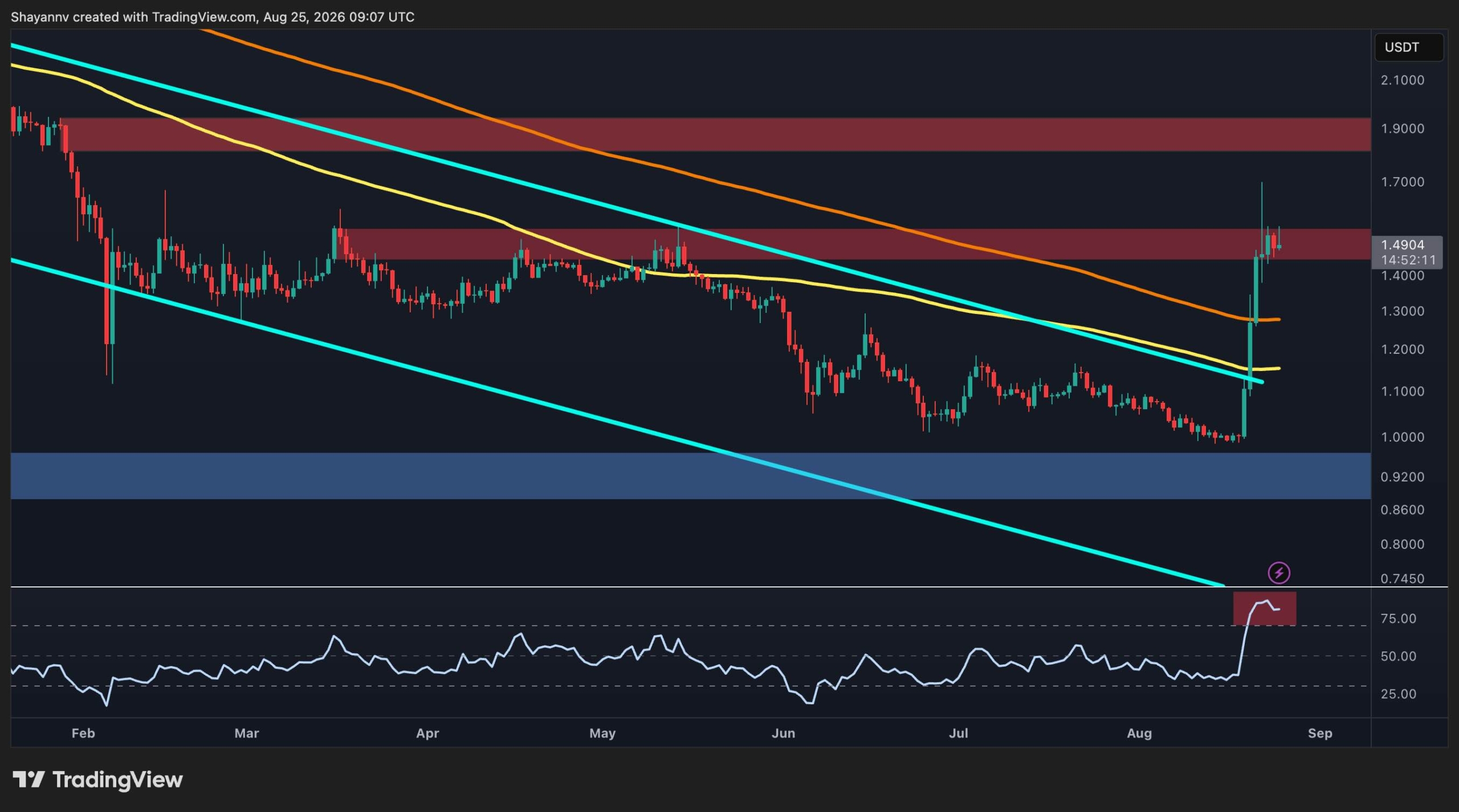
XRP has staged a sharp recovery from the $1.00 area, breaking above its long-standing descending structures on both the USD and BTC charts. However, the rally has now reached major resistance, making the current levels critical for the next directional move.
Ripple Price Analysis: The USDT Pair
The asset broke above its broad descending channel after finding support around $1.00. It has since reclaimed the 100-day and 200-day moving averages, located around $1.2 and $1.3, respectively. The move above $1.3 has turned both of these former resistance elements into near-term support.
The rally is now testing the critical $1.50 resistance zone, where the price has started to consolidate. A daily breakout above $1.50 could open the door toward the $1.80-$1.90 area. Conversely, a rejection followed by a move below $1.30 would weaken the breakout structure and raise the risk of a deeper correction, and even potentially back toward the $1 area.
The RSI has also surged above 70 and still remains extremely elevated in the overbought region. This highlights strong momentum but also leaves room for a short-term cooldown, which could lead to a retest of the 200-day moving average.
The BTC Pair
On the XRP/BTC daily chart, it is evident that the price has attempted to break out of its broad descending channel after bottoming near 1,500 sats. However, unlike the USDT pair, the breakout has so far failed. The pair briefly pushed above the channel’s upper boundary before printing a large rejection wick, signaling that sellers remain active around this resistance.
XRP/BTC is now retracing toward the previously broken 200-day moving average, which is being tested as potential support. The reaction around this moving average could be important for the next move. If XRP/BTC manages to hold above it and establishes the former breakout area as support, another attempt at the 2,000 sats resistance zone could follow.
A successful break above 2,000 sats would strengthen the relative-strength outlook, while a decisive loss of the 200-day moving average would suggest that the recent breakout attempt was a false move and could expose the pair to further downside. The RSI has also pulled back after briefly moving above 70, reflecting the loss of momentum following the failed breakout, and indicating that a further consolidation or correction could materialize in the coming weeks.

The post Ripple Price Analysis: Has XRP Run Out of Steam After the $1.70 Rejection? appeared first on CryptoPotato.
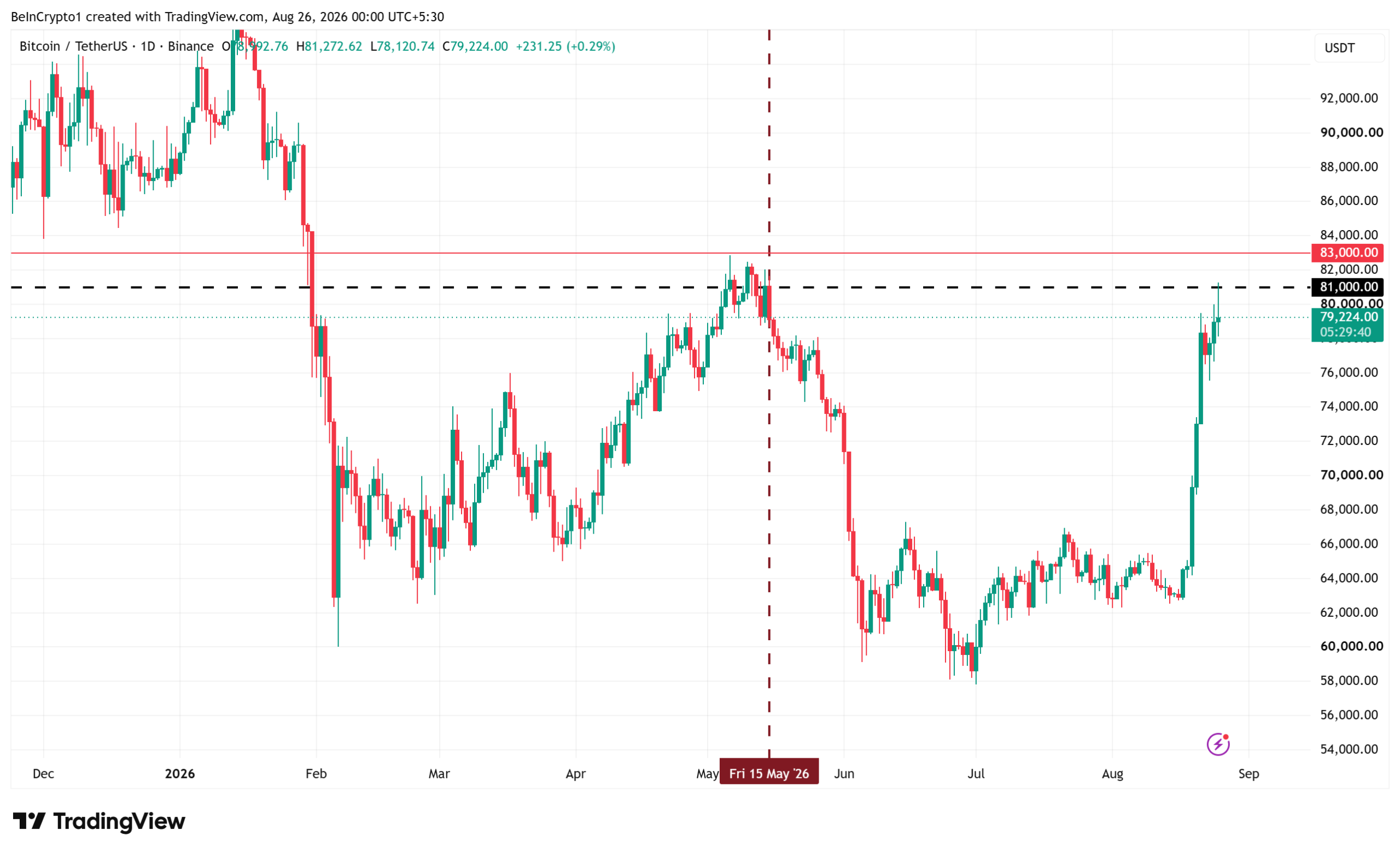
Bitcoin (BTC) has flipped into a new bull market regime, according to CryptoQuant, after its Bull Score surged from 30 to 80 in a single week. The firm calls it the fastest reversal in a year.
One hurdle remains before the shift becomes official. Bitcoin must close above its 365-day moving average, which sits near $83,000 today.
Follow us on X to get the latest news as it happens
A 24% Rally Rebuilds the Bitcoin Bull Market Case
Bitcoin has climbed 24% since Monday, August 17, touching an intraday peak of $81,272 on Binance. That marks its highest level since May 15, 2026. At press time, BTC traded near $79,224, up 1.9% over 24 hours, according to BeInCrypto market data.

Two macro catalysts drove the move. The US Treasury said it will double long-term bond buybacks to at least $4 billion per operation from September 9. Markets also rallied after Trump’s Bitcoin purchase hint suggested Washington may buy BTC directly.
CryptoQuant’s Bull Score, a composite of 10 on-chain and market metrics, now reads its most bullish since October 6, 2025, when Bitcoin traded at $124,000. Eight of the 10 inputs currently flash green.

Demand data supports the shift. Apparent spot demand is growing at its fastest monthly pace since late December. Spot and futures demand are also expanding together for the first time since early October 2025. BeInCrypto recently examined similar crypto demand signals that had yet to confirm
“Market regime has switched to Bull for Bitcoin. Basically all metrics are pointing to the initial phase of a new bull market… Bitcoin’s price still has to cross above its 365-day MA ($83K today) for the bull market to be ‘officially’ confirmed,” Julio Moreno, head of research at CryptoQuant, added, suggesting that the data looks constructive but incomplete.
Overheating Signals Cloud the $83,000 Confirmation Test
The same report warns that the market looks stretched in the short term. Trader unrealized profit margins spiked to 20.5%, the highest since June 2025.
Meanwhile, whales realized a record $614 million in profits on August 20. Exchange inflows for BTC, Ethereum (ETH), and XRP have also jumped, a pattern that often precedes selling pressure.

Broader risk appetite also leans bullish, with asset managers holding nearly $375 billion in long S&P 500 futures, close to record highs. Their emerging and developed market exposure also sits at or near records.
The rally follows Bitcoin’s strongest weekly close since 2024. Confirmation now depends on a decisive close above $83,000. The other question is whether rising exchange inflows deliver the correction Moreno flagged.
The post Fastest Bitcoin Bull Flip in a Year Has One $83,000 Problem, Analyst Says appeared first on BeInCrypto.


Tokenized real-world assets on Solana are nearing $4 billion as network activity accelerates alongside a broader recovery in crypto markets.
Crypto World
South Korea trade giant POSCO brings trade receivables to Avalanche in latest tokenization move


The $22 billion trading company worked with Olea and Intain on the transaction, following an Injective pilot with LG CNS last month.
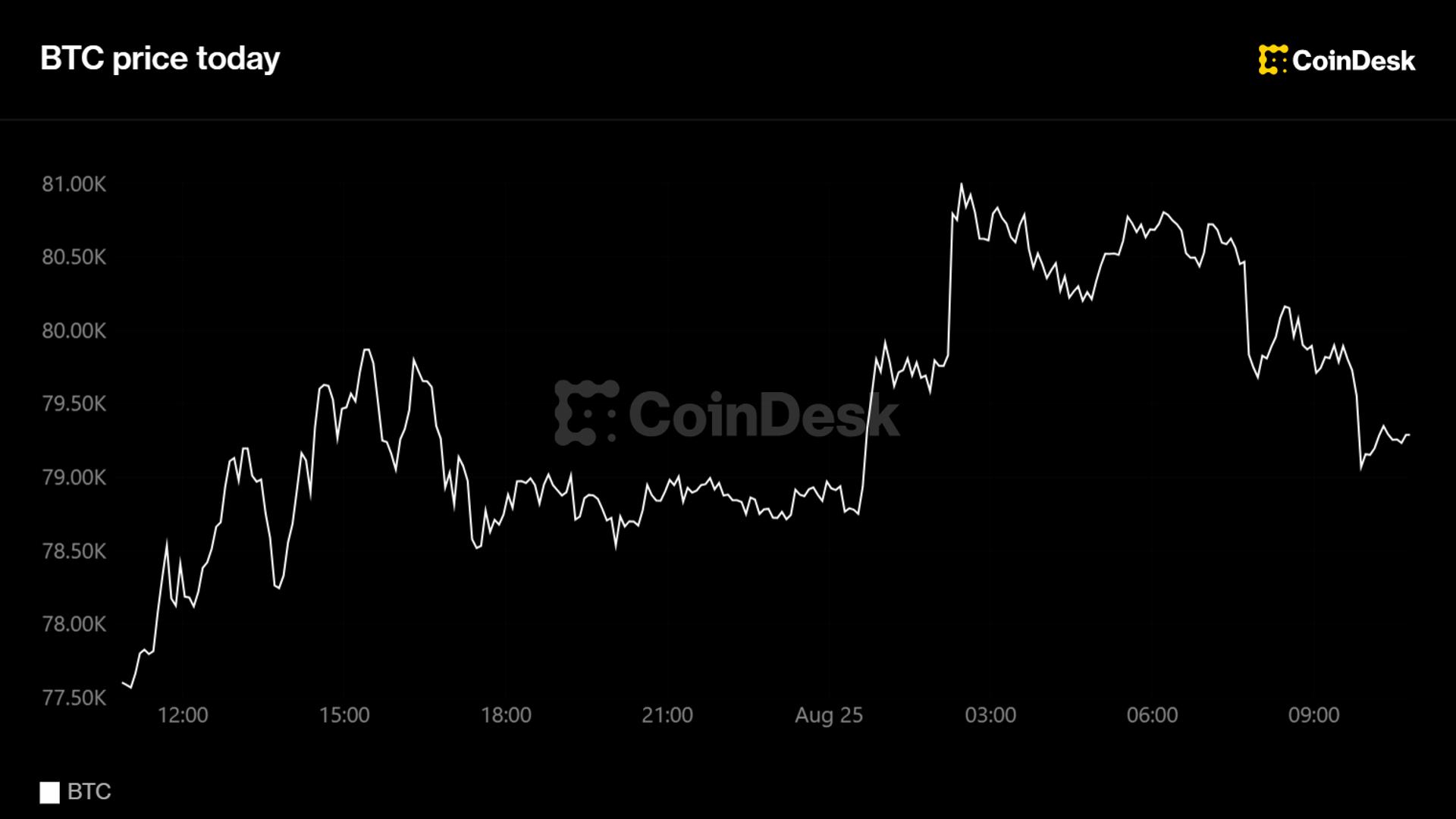
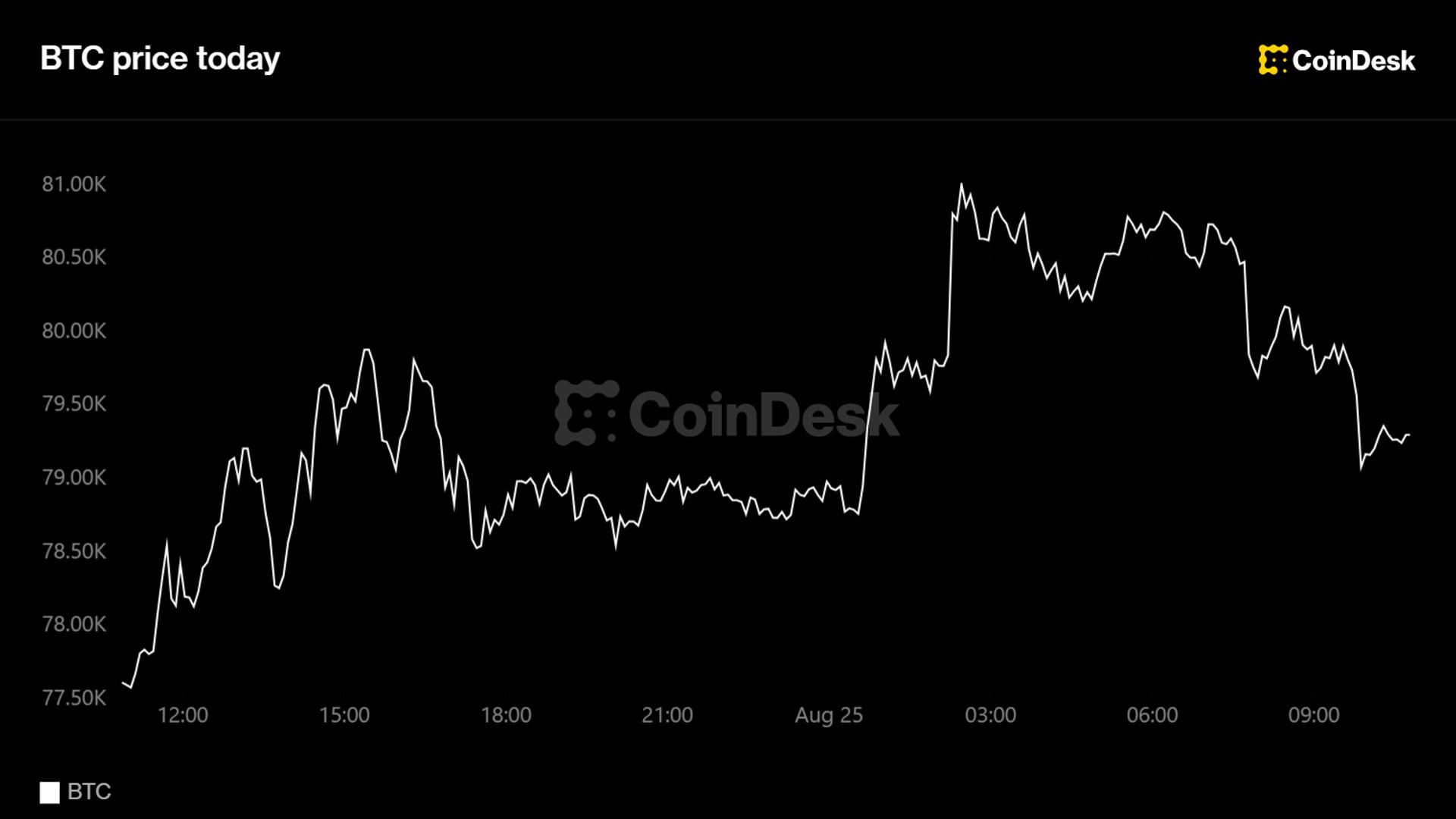
Bitcoin crossed $80,000 for the first time since May, extending its seven-day advance to roughly 25%.

“Together, there could be a possibility they’re quite lethal,” Trump said of the combined shot, which has been in use for more than 50 years and has a strong safety and efficacy record.
Doctors and vaccine scientists said Trump’s executive order and comments were unscientific and misleading. “As measles cases reach a 35-year high in the U.S. and with cold and flu season quickly approaching, [the] executive order on vaccines is not only disheartening but dangerous,” Dr. Andrew Racine, president of the American Academy of Pediatrics (AAP), said in a statement at the time.
An additional early dose of the vaccine can also be given to children aged 6 to 11 months under some circumstances, says Dr. Elizabeth Murray, a pediatric emergency medicine physician in Rochester, N.Y. “With the ongoing measles outbreak, make sure your children are immunized. If your child is under age 1, talk to your doctor. Depending on how much measles is circulating where you live, your doctor may recommend an earlier dose,” she says.

Bitcoin (BTC) broke higher last week, ending a multi-month range and closing near $77,700. The move followed a $62,750 weekly low, marking a nearly 24% rise as the leading cryptocurrency topped $71,000 on August 20.
The rally came despite August’s historically weak performance for Bitcoin, according to the Bitfinex Alpha report. The report noted that August has typically delivered negative median returns, making last week’s move a notable shift from the month’s historical pattern.
Liquidity and ETF Demand Strengthen Bitcoin’s Breakout
A key catalyst was the U.S. Treasury’s expansion of its bond buyback program. The announcement triggered a liquidity response, while $3 billion in Bitcoin short positions were liquidated over two days, marking the largest short-side wipeout on record.
Long liquidations remained limited, while futures open interest rose to $51 billion. That combination suggests fresh positions entered the market rather than the rally coming only from traders closing leverage.
Beyond the derivatives market, spot demand provided another source of support. U.S. Bitcoin exchange-traded funds (ETFs) posted about $1.92 billion in weekly net inflows, their strongest weekly total since October 2025. That lifted assets under management above $96 billion.
Corporate activity, however, remained subdued. Strategy, the largest publicly traded corporate Bitcoin holder, reported no BTC purchases or sales in its filing. The pause came after a period of activity and left its average acquisition price at around $75,385, below the market price. With BTC now above that level, the company has moved from a $9.5 billion paper loss to a $4.7 billion paper profit.
Mixed Signals Emerge Beneath the Breakout
Bitfinex analysts said Strategy could influence whether Bitcoin maintains the breakout because the company stopped selling shortly before BTC moved beyond its summer range. The shift removes one source of supply pressure that had been present during the consolidation.
Meanwhile, on-chain activity presents a more cautious picture. Bitcoin transfer volumes remain close to eight-year lows, suggesting network activity has not matched the price move. At the same time, short-term holders with cost bases near $64,500 and $73,500 have moved into profit.
Those holders could help turn previous resistance into support if the breakout holds. Bitfinex identified thin supply between current prices and a heavier concentration around $84,000 to $85,000, creating a potential next hurdle.
The broader liquidity backdrop also supports this interpretation. Mortgage rates fell for a second week while housing activity remained weak. Builders kept cutting prices as housing starts fell, suggesting easier financial conditions may reach asset markets before the wider economy.
The post Bitcoin’s Massive Breakout: Here’s Why Analysts Say This Rally Is Different appeared first on CryptoPotato.

Perla Nera in Crook to close after ‘difficult decision’

innoscripta SE (INNTF) Q2 2026 Earnings Call Transcript

DOGE Whales Quietly Dumped 280M Tokens While ETF Inflows Cooled: Is Rally Losing Its Real Buyers?





-

 Fashion4 days ago
Weekend Open Thread: Madewell – Corporette.com
-

 Business3 days ago
Musk’s Tesla, SpaceX Confirm $16.8 Billion ‘Terafab’ Chip Plant as World’s Largest Building in Texas
-

 Crypto World4 days ago
anatomy of crypto’s biggest liquidation event since 2021
-

 Politics3 days ago
6 months on, Irish renters crushed by effects of government housing bill
-
 NewsBeat3 days ago
The ‘Lucky Dip Gang’ causing carnage for clicks: After five thugs were killed speeding in the wrong direction on a motorway, GUY ADAMS investigates a sick new trend… and why police aren’t even allowed to pursue them
-

 Tech6 days ago
GLM-5.3 hits the API at $1.4/$4.4 per million tokens
-

 Crypto World20 hours ago
A $30 Billion AI Fund Implodes, Now the SEC Is Investigating Wall Street’s Role
-

 Business2 days ago
Mystery AI Model ‘Ox Alpha’ Draws Developers With Free Access as Chinese Lab Origins Remain Debated
-

 News Videos6 days ago
Don’t Leave Your Financial Future To Chance | August 19, 2026
-

 Business6 days ago
Marvell Shares Jump 7% as Google Chip Deal Confirms Custom AI Silicon Partnership, Analysts
-

 Business5 days ago
Five Below: Kids Discount Retailer Reaps Rich Rewards
-

 Business4 days ago
UK firms in critical financial distress rise 9% to 53,756
-

 Sports3 days ago
Deshaun Watson fires back at Browns fans after being booed: ‘It’s a disrespectful thing’
-

 Fashion6 days ago
Jimmy Choo Autumn 2026 collection
-

 Tech6 days ago
OpenAI confirms ChatGPT is down as logins and signups fail
-

 Crypto World5 days ago
Optimism-funded team's deciding vote shifts $49 million in OP tokens away from users
-

 Crypto World2 days ago
Google Gemini AI Predicts Ethereum Could Become the Trade Retail Misses in 2026
-

 Business6 days ago
PayPal and Venmo now accepted for tuition at several universities
-
 Sports6 days ago
Chaos! Daniil Medvedev loses cool, breaks two advertising boards at Cincinnati Open – Watch | Tennis News
-
 Entertainment6 days ago
10 Most Perfect Fantasy Shows of the Last 25 Years
You must be logged in to post a comment Login