
Crypto World
MARA Posts Q2 Loss as Bitcoin Declines Despite Higher Output


Bitcoin miner Marathon Digital Holdings, commonly known as MARA, reported a sharp swing from profit to a large net loss in the second quarter of 2026, even as it achieved its highest quarterly Bitcoin production in more than a year. The company’s results underscore how tightly miners remain tied to Bitcoin’s market price—especially when the accounting reflects changes in the fair value of Bitcoin held on balance sheets.
In its Q2 2026 SEC Form 10-Q, MARA said it recorded a net loss of $611.3 million, or $1.60 per diluted share, compared with net income of $808.2 million, or $1.84 per diluted share, in the second quarter of 2025. According to the filing, MARA mined 2,422 Bitcoin in the quarter, up 3% year over year, but that increase was more than offset by a 28% decline in the average Bitcoin price.
Key takeaways
- MARA posted a $611.3 million Q2 net loss, with the decline largely attributed to changes in the value of its Bitcoin holdings.
- Bitcoin production rose to 2,422 BTC in Q2 2026, but the revenue impact was overwhelmed by a 28% drop in the average Bitcoin price.
- As of June 30, MARA held 35,577 Bitcoin valued at $2.1 billion, placing it fourth among public Bitcoin holders cited in the company’s reporting context.
- The company used the quarter to restructure its power portfolio and capital position, while pushing further into AI and high-performance computing (HPC) infrastructure.
- MARA is targeting at least two AI/HPC data center lease signings by year-end, alongside additional Texas and Ohio expansion plans.
Profit-to-loss driven by Bitcoin’s price and holding valuation
The headline shift in MARA’s second-quarter performance is stark: profit in Q2 2025 gave way to a net loss in Q2 2026. In its 10-Q, MARA attributes the swing primarily to the impact of Bitcoin price movement on the accounting value of Bitcoin it holds, rather than to a deterioration in mining output.
That distinction matters for how investors interpret miner fundamentals. Production volumes increased, but the company’s overall earnings were pressured by weaker realized economics tied to Bitcoin’s price environment. Put simply, even better operational throughput did not translate into higher net earnings when the fair-value effects and average pricing moved against the company.
During an earnings call on Thursday, MARA CFO Salman Khan said, according to the company’s remarks, that “Two things defined Q2 for MARA. Bitcoin prices created a challenging revenue environment [and] we used the quarter to fundamentally transform our power portfolio and capital structure.”
Higher output, weaker average price
MARA’s mining performance in Q2 2026 was comparatively strong on the operational side. The company mined 2,422 Bitcoin, about 3% more than the year-ago quarter. However, the average Bitcoin price fell 28% over the same comparison period, which directly undermined revenue tied to the mined BTC and other Bitcoin-linked line items.
This is a recurring tension in the miner model: when BTC prices move lower, output growth can be muted by pricing and valuation effects. MARA’s quarter illustrates that point—production strength alone was not enough to counteract the market-driven decline in average pricing.
Beyond the mining figures, the company’s Bitcoin balance sheet also remained significant. As of June 30, MARA reported total holdings of 35,577 Bitcoin with a total fair value of $2.1 billion, reflecting both continued treasury accumulation and the sensitivity of the financial statements to BTC valuation changes. In that snapshot, the company was described as the fourth-largest public Bitcoin holder after Strategy, Twenty One Capital and Metaplanet.
MARA presses ahead with AI and HPC infrastructure deals
While mining remains central to MARA’s business, the company continues to frame its longer-term growth around expanding computational infrastructure for AI and high-performance workloads. Earlier in 2026, it acquired a majority stake in Exaion SaS, which operates high-performance computing data centers and secure cloud and AI infrastructure.
MARA also moved to accelerate data center development through partnerships. In February, it announced a strategic partnership with Starwood Capital Group and Starwood Digital Ventures aimed at enabling conversion of select MARA sites to meet demand from “enterprise, hyperscale and AI customers.”
On Thursday, MARA reiterated that it is pursuing near-term commercial milestones tied to those plans. The company said it is targeting at least two AI/HPC lease signings by year-end. CEO Fred Thiel said, according to the earnings call, that lease discussions are progressing across multiple sites and that MARA remains confident it can sign at least two leases before year-end.
Texas land plans and Ohio energy acquisition expand the runway
MARA’s infrastructure buildout includes both new land and additional power resources. In July, the company agreed to acquire a 1,200-acre powered site in Matagorda County, Texas, with expected access to up to 2 gigawatts of grid capacity by April 2028. MARA said the site is intended for AI and HPC workloads as well as Bitcoin mining.
The company also continues to pursue power capacity through a pending acquisition of Long Ridge Energy & Power in Ohio. MARA described the $1.5 billion deal as a potential source of up to 600 megawatts of AI and critical-IT load over time, indicating that it views energy access as a key enabler for both traditional mining operations and new revenue streams linked to enterprise computing.
Mining still the core—AI described as a complement, not a replacement
In a shareholder letter released alongside its quarterly results, Thiel said that Bitcoin mining remains the foundation of MARA’s business and that the cash flow generated by mining will continue to support other investments.
He also pushed back on the notion that MARA is shifting away from mining. “Ultimately, we do not view Bitcoin mining and AI infrastructure as competing businesses,” Thiel said, according to the letter. He further emphasized a capital allocation principle focused on deploying each megawatt into what he described as its highest-value application—sometimes mining in certain markets, and in others AI infrastructure, sovereign cloud, or enterprise computing.
For readers tracking MARA, the key question is how quickly these AI/HPC efforts can contribute stable cash flows that are less dependent on Bitcoin’s spot price. Near-term, the company’s targets—like at least two AI/HPC lease signings by year-end—will offer a clearer datapoint on whether the operational transformation hinted at in Q2 can translate into measurable commercial traction. Investors will also want to watch how future quarters reflect both mining output and the impact of Bitcoin price moves on the valuation of holdings, since that remains the dominant factor in the recent earnings swing.

Cointelegraph is committed to providing independent, high-quality journalism across the crypto, blockchain, AI, and fintech industries.
All news, reviews, and analyses are produced with full journalistic independence and integrity. For more details on our standards and processes, please read our Editorial Policy.


A bipartisan ethics proposal pitched to US President Donald Trump to secure passage of the crypto market structure bill in Congress could create a significant tax benefit for the president, Bloomberg reported Thursday.
The ethics addendum, which has not been made public, includes a provision requiring the president to divest from crypto-related businesses, according to people familiar with the matter. The proposal would reportedly allow Trump to defer capital gains taxes on any required divestitures, potentially leading to tax savings in the millions.
Democratic concerns over Trump’s crypto conflicts have been a central obstacle to passing the market-structure bill. Senators have been working on an ethics addendum meant to break that impasse, though the reported tax-deferral benefit could become another point of contention for Democrats to question whether the president’s financial interests are genuinely curbed.
Cointelegraph reached out to the White House for comment but did not receive an immediate response.
Related: US Senate pushes CLARITY Act vote to September: Report
Trump’s annual financial disclosure report for 2025, released at the end of June, revealed the US president saw $1.4 billion in income from crypto-related ventures last year.
According to the 927-page disclosure, the licensing and sale of memecoins such as Official Trump (TRUMP) generated the most income for Trump, with about $635 million coming from “royalties” in a “license agreement with Celebration Coins.”
Meanwhile, the Trump family’s DeFi platform, World Liberty Financial, was the second-biggest earner, generating about $588 million from “proceeds from token sales.”
The disclosure also revealed that Trump earned $197 from the sale of an equity interest in a stablecoin venture.
Meanwhile, disclosures on World Liberty’s website show that DT Marks DEFI LLC, an entity affiliated with Trump and certain family members, owns “approximately 38% of the equity interests” in World Liberty’s parent company.
Magazine: CLARITY hopes fade, BitMEX shuts as lawsuit looms: Hodler’s Digest, July 26
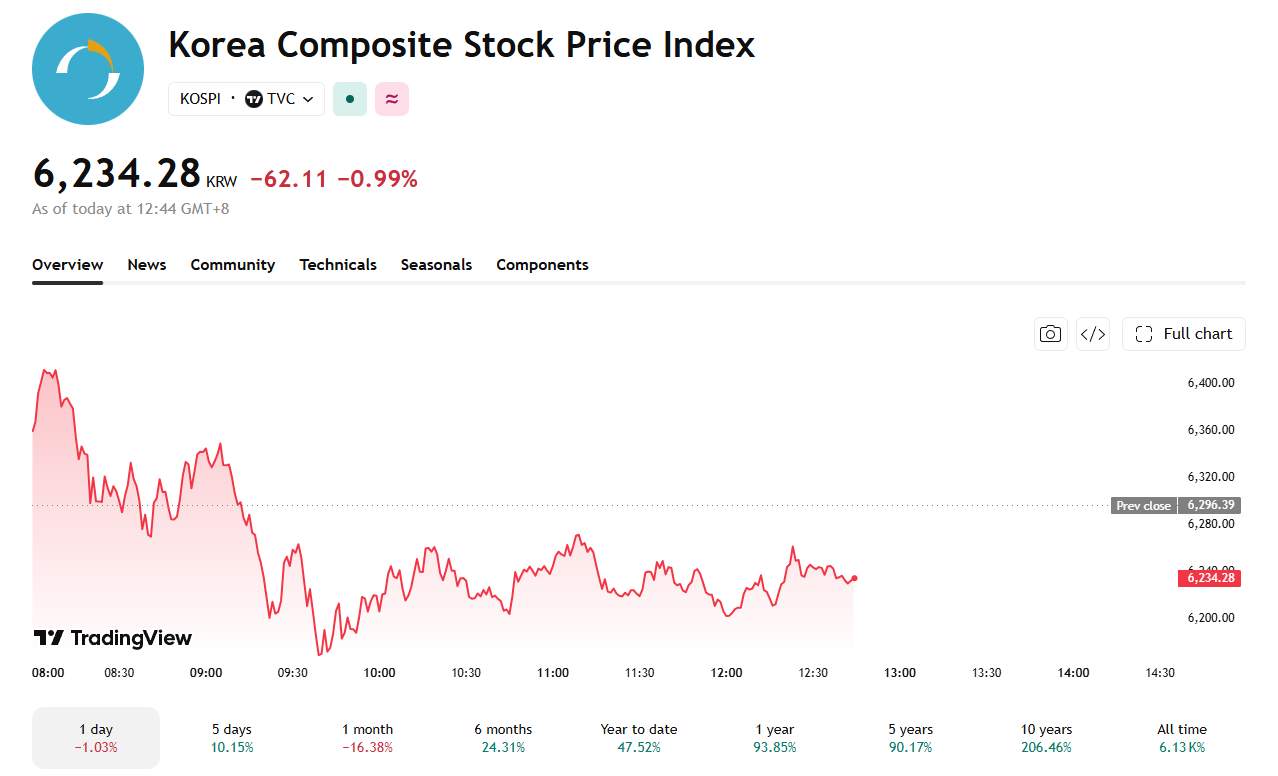
Japanese and South Korean equities reversed early gains on Friday. The KOSPI fell over 1%, while the Nikkei 225 dropped slightly as well, as memory chip stocks extended a multi-week selloff.
SoftBank Group slid 3.69% and SK Hynix sank 4.82%, pressuring both benchmarks. Weak overnight trading on Wall Street compounded the pullback across Asian markets.
Asian Indexes Give Back Early Gains
The KOSPI opened 1.1% higher at 6,365.07 points. It rose as high as 6,415.60 before sellers took control. The index then fell to 6,221.60, down 74.79 points, or 1.19%, from Thursday’s close of 6,296.39.

Japan’s Nikkei 225 followed a similar pattern. It opened higher at 65,746.13, above Thursday’s close of 65,683.04, then reversed to 65,193.16, down 489.88 points, or 0.75%. The session ranged between 64,651.49 and 65,990.72.

SoftBank Group, a top Nikkei 225 constituent, slid 3.69% to 5,485 yen. SK Hynix led KOSPI decliners, sinking 4.82% to 1,423,000 won. Samsung Electronics bucked the trend, adding 0.43% to 231,500 won.
Memory Chip Selloff Weighs on Sentiment
The declines extended a broader repricing that has driven a sharp SanDisk stock selloff over the past month. Kioxia, a Japanese flash-memory maker, dropped 2.03% to 47,750 yen earlier in Friday’s session.
Citigroup and Jefferies cut price targets on memory stocks this week. The move followed conservative guidance from SanDisk, whose quarterly results beat estimates but failed to lift its outlook.
Goldman Sachs said fully priced valuations leave chipmakers vulnerable to sharp drops. Even slightly conservative guidance can trigger a selloff despite strong headline results, the bank noted.
Wall Street closed lower across the board Thursday, weighing on Asian sentiment. The Nasdaq Composite slipped 0.06% and the S&P 500 fell 0.18%. The Dow Jones Industrial Average snapped a five-session winning streak with a 0.85% drop.
US jobless claims for the week ending August 1 came in at 199,000, slightly below forecasts. That points to continued labor market strength. Traders were also watching the Middle East. The United States and Iran have not yet finalized terms to reopen the Strait of Hormuz.
Whether the KOSPI and Nikkei stabilize may hinge on memory chip earnings and progress in the Hormuz talks.
The post KOSPI, Nikkei Reverse Gains as SoftBank, SK Hynix Both Drop appeared first on BeInCrypto.


Morpho, the DeFi lending protocol with about $7.6 billion in total value locked, will complete a full deployment on HashKey's HSK Chain and become the network's official onchain credit partner, HSK Chain said in a post on X on Tuesday. The deal gives Morpho its first anchor in Hong Kong, one of the… Read the full story at The Defiant


Upbit will add Block Street (BSB) to its Korean won, Bitcoin and USDT markets on Aug. 7, giving the token three new spot pairs in South Korea.
Summary
- Upbit will open Block Street trading across KRW, BTC and USDT markets on August 7.
- BSB deposits and withdrawals will use Ethereum, with other networks unsupported for Upbit transfers initially.
- Upbit will restrict buy orders for five minutes and non-limit orders for roughly two hours.
- Block Street says BSB supports governance, staking and incentives across its tokenized asset infrastructure ecosystem.
- Block Street documentation fixes BSB supply at one billion tokens across Ethereum and BNB Chain.
According to Upbit’s official listing notice, the exchange scheduled trading for 3:00 p.m. Korea Standard Time and said deposits and withdrawals would initially be supported only through Ethereum.
Upbit also warned that the trading start could be delayed if adequate liquidity is not secured. The exchange said users should verify the supported network before transferring BSB because deposits sent through unsupported networks may require a lengthy return process.
Upbit will impose temporary BSB trading limits
Upbit plans several restrictions during BSB’s opening period. Buy orders will be blocked for about five minutes after trading begins. During the same period, sell orders priced more than 10% below the previous day’s closing price will also be restricted.
In addition, Upbit will allow only limit orders for roughly two hours after trading support starts. The exchange cited a previous closing price of 211.09 KRW and a recent reference price of 222.34 KRW at 11:45 a.m. KST on Aug. 7. Those figures were published before Upbit trading opened and therefore do not represent a post-listing market reaction.
The listing notice identified BSB’s supported Ethereum contract as 0xdb6ba5d510f114f9b2ea08bea7d30e32eee33411. Users are expected to verify that contract before making deposits or withdrawals.
The structure resembles other recent Upbit additions. Upbit added Derive’s DRV token to KRW, BTC and USDT markets while also applying temporary trading controls around the launch.
Block Street targets tokenized asset liquidity
Block Street describes itself as infrastructure for on-chain capital markets focused on tokenized equities and real-world assets. According to the project’s official documentation, its architecture is intended to connect fragmented liquidity across issuers, blockchains and trading venues.
The protocol calls this infrastructure a “Unified Liquidity Layer.” Block Street says the system is designed to improve execution and capital efficiency for tokenized assets while supporting functions such as borrowing, margin, hedging and arbitrage.
BSB serves as the protocol’s utility and governance token. According to Block Street’s BSB documentation, holders can use the token for governance participation, staking and ecosystem incentives.
The project’s whitepaper fixes total BSB supply at 1 billion tokens. Block Street said 207.75 million BSB, equivalent to 20.775% of supply, were expected to circulate around the token generation event.
The project has also raised outside capital to build its infrastructure. Block Street announced an $11.5 million strategic funding round in October 2025, led by Hack VC with participation from Generative Venture, DWF Labs, StudioB and Bridge34.
Meanwhile, tokenized equities have become a broader market theme. In related coverage, tokenized equity activity increased as crypto companies and traditional market participants expanded blockchain-based stock infrastructure.
What happens when BSB trading opens
The immediate event to watch is Upbit’s planned 3:00 p.m. KST trading start on Aug. 7. Because the exchange made the launch conditional on sufficient liquidity, the announced time remains subject to change.
Once trading begins, Upbit’s initial restrictions will expire in stages. The five-minute controls on buy orders and low-priced sell orders will end first, while the exchange plans to maintain its limit-order-only restriction for roughly two hours.
At the time covered by the announcement, there was no verified Upbit market reaction because trading had not yet begun. As a result, price movements on other exchanges before the scheduled launch should not be described as an Upbit listing reaction without time-matched market data.
For deposits, users must continue using the Ethereum network and verify the contract address specified in the Upbit announcement. Although Block Street’s whitepaper describes BSB deployments across Ethereum and BNB Chain, Upbit’s listing notice supports Ethereum only.
That distinction will remain important once deposits, withdrawals and trading are active because transfers made through unsupported networks may not be automatically credited.
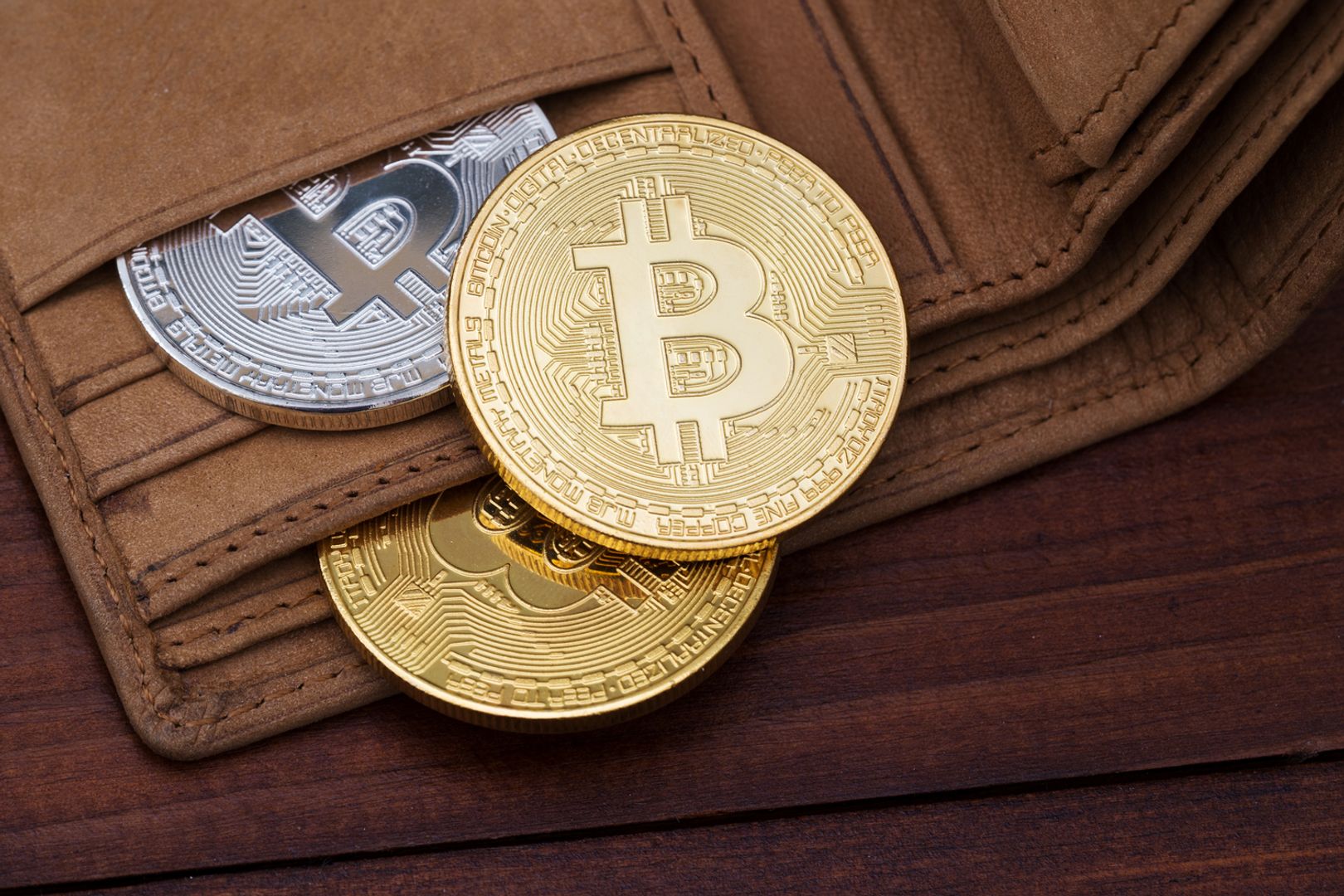
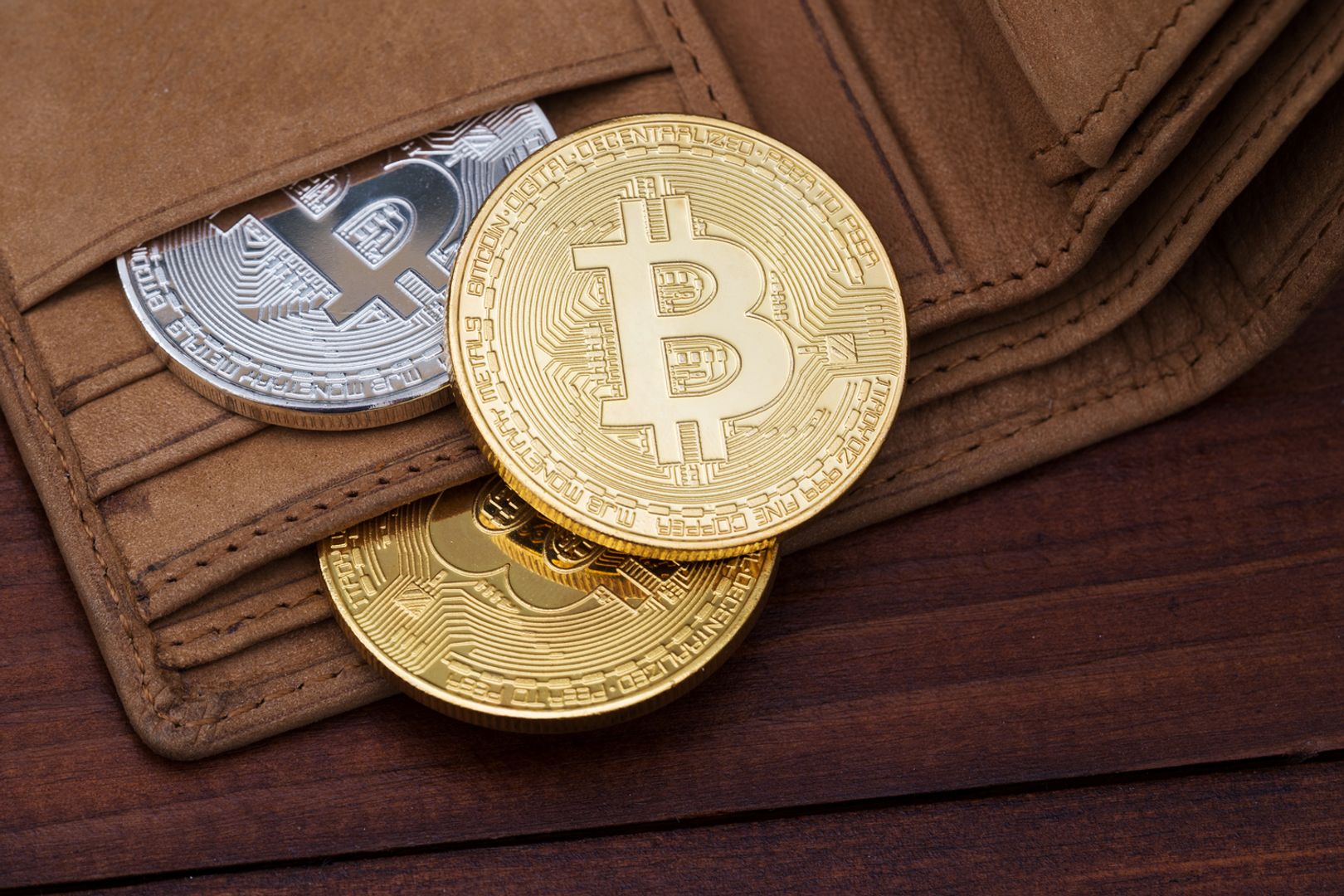
A bitcoin wallet that had been dormant since 2011 moved nearly 50 BTC worth about $3.2 million on Thursday, shifting the coins to an address with a history of sending bitcoin to institutional crypto brokerage FalconX.
The wallet received the coins on July 16, 2011, when bitcoin traded around $10, and had not spent them since, according to Galaxy Research. The 49.97 BTC position is now worth roughly $3.2 million after surviving more than a decade of bitcoin booms, crashes and exchange failures.
The transaction, included in block 961331 at 20:14 UTC on Aug. 6, combined four inputs from the dormant address totaling 49.97 BTC with two smaller inputs from other addresses. Exactly 50 BTC was sent to a SegWit address, while a second output received about 0.00116 BTC after fees.
SegWit is a newer Bitcoin address format that makes transactions more space-efficient and generally cheaper to send. Addresses beginning with bc1 use it.
The destination is not a fresh wallet, however. Arkham data show the address has been active for several years and previously sent 6.336 BTC and 16.131 BTC to addresses the analytics platform labels as FalconX deposits.
SoFi Technologies, the digital bank with 15.8 million members, said commercial clients have begun settling transactions in real time through its SoFiUSD stablecoin, according to the company's second-quarter results published Wednesday. The milestone moves SoFiUSD from launch announcement to… Read the full story at The Defiant
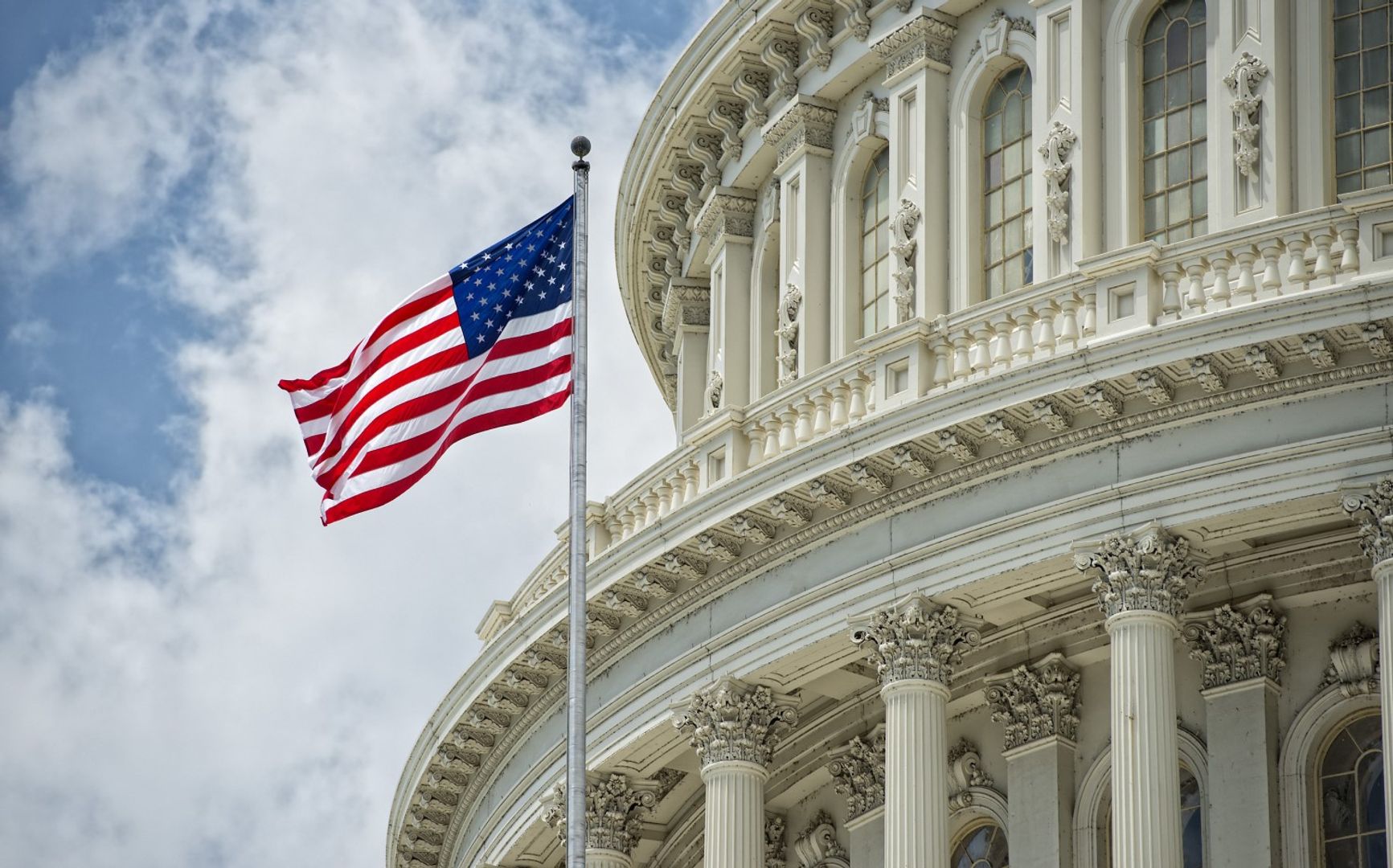
Trump disclosed more than $1 billion in income from his crypto ventures in 2025. Senate Majority Leader John Thune said a vote would come in September, when lawmakers return on Sept. 14 with three weeks to work through a backlog that also includes government funding and a Russia sanctions bill.
Spot bitcoin funds took in about $626 million between Aug. 3 and Aug. 5, enough to defend the $63,000 to $64,000 area but not enough to push through resistance between $66,000 and $66,600.
Next week brings the U.S. employment report and July inflation data. The Federal Reserve held rates at 3.50% to 3.75% in July, though three officials voted to raise them. A strong jobs number or sticky inflation would strengthen the case for tighter policy, which typically weighs on bitcoin.
Bitcoin has not managed to break $66,000 even with money coming in all week. Next week’s jobs and inflation reports decide whether it gets another try or slips back toward $63,000.
Bitcoin’s recent price action has been unremarkable and boring, the kind that sends traders looking for excitement elsewhere.
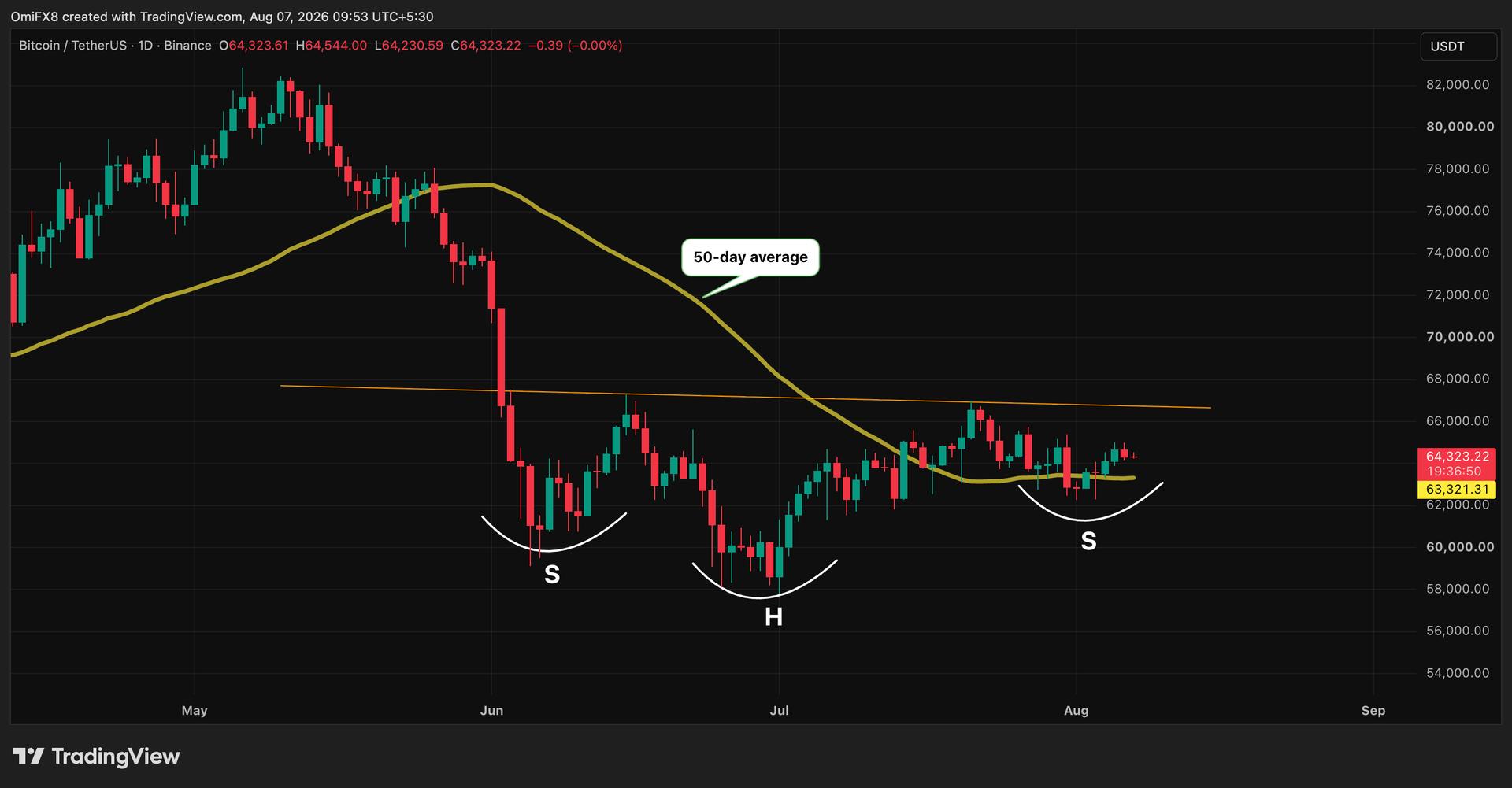
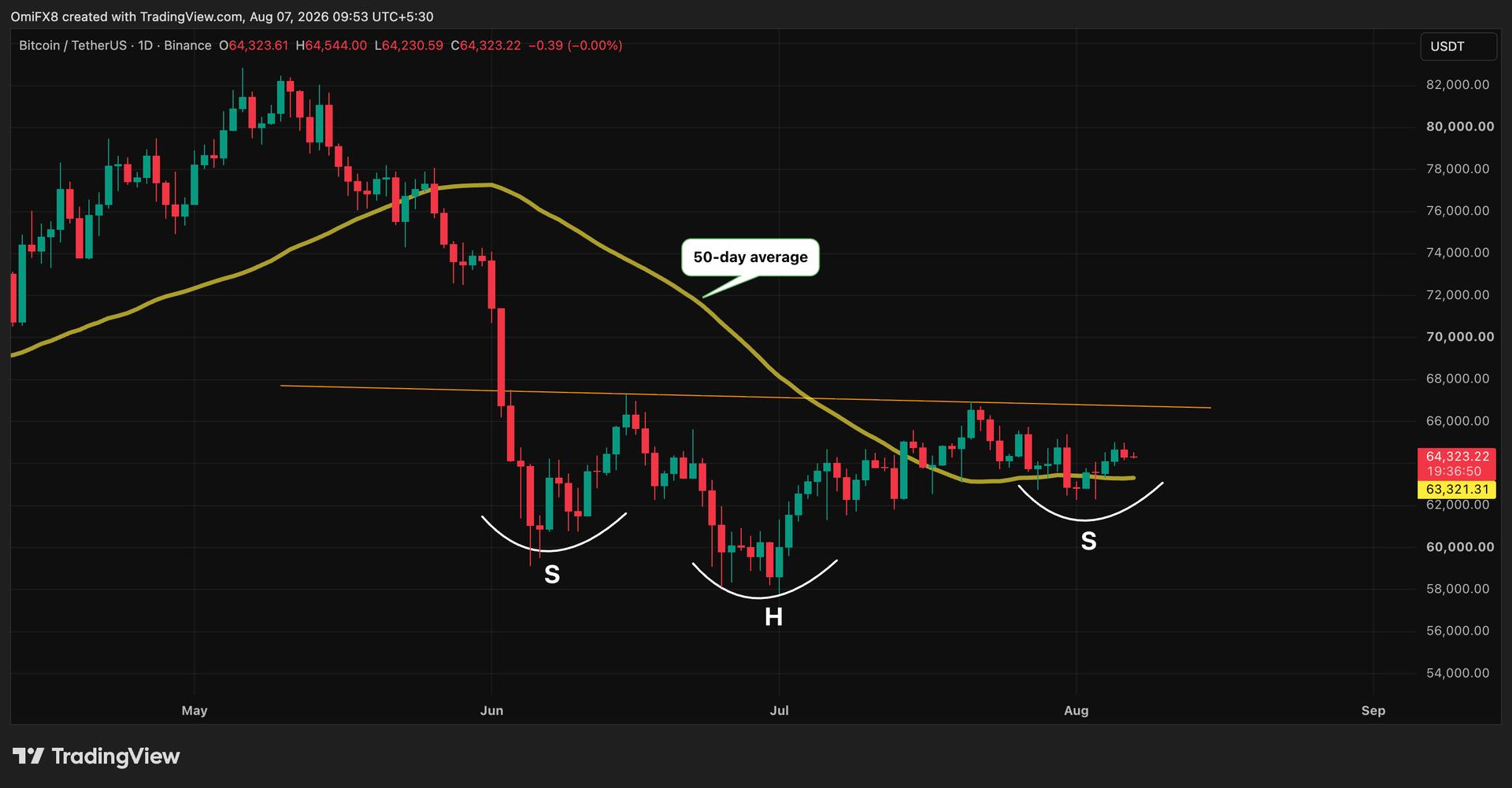
But look closer, through a technical analyst’s lens, and the token appears to be hammering out a bullish pattern, which, if confirmed, could suggest a rally to $76,000.
That pattern is the popular inverse head-and-shoulders (H&S) setup, typically seen at the end of a downtrend rather than in the middle of one. It involves three troughs separated by temporary price recoveries. The middle trough is the deepest, marking peak bearishness or selling, while the shallower trough that follows is the first sign of seller, or downtrend, exhaustion.
A completed pattern, marked by prices rising through a line connecting the interim recoveries, called the neckline, is said to confirm a bullish trend revival.
The pattern is visible on bitcoin’s daily chart: a low near $60,000 in early June formed the left shoulder, a deeper trough near $57,700 in late June or early July marked the head, and the recent bounce from around $62,500 formed the right shoulder. Each trough was followed by a rebound toward a similar resistance zone.
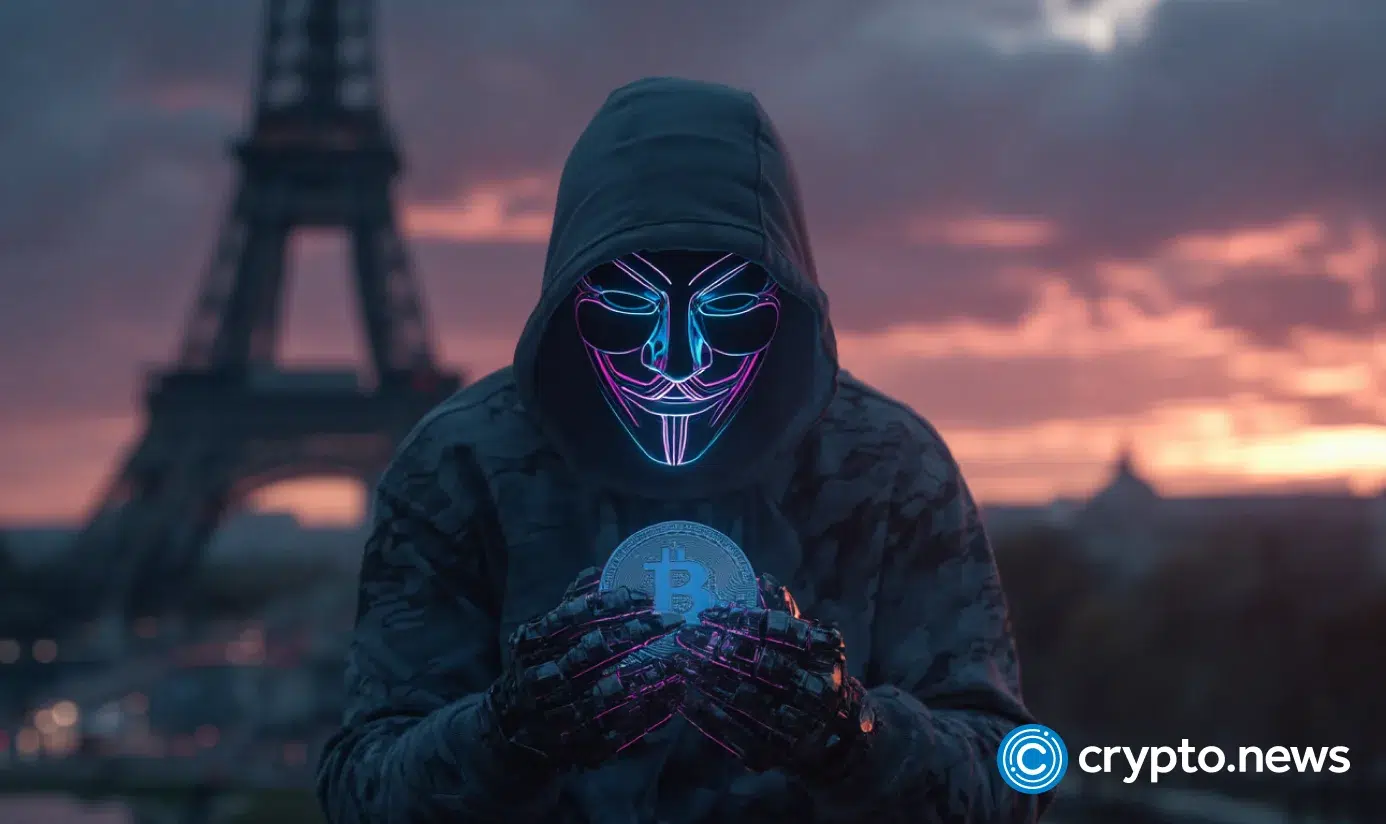
Violent attacks against crypto holders extracted more than $30 million worldwide through late June 2026, according to an Aug. 6 report.
Summary
- Crypto wrench attacks stole more than $30 million globally during 2026’s first half, Chainalysis estimates.
- Only 12 of 46 documented attacks produced payments, cutting attackers’ success rate to 26% worldwide.
- France recorded 30 publicly known incidents, while officials counted 77 crypto-linked kidnappings and detentions nationally.
- Home invasions represented 37% of documented attacks, rising sharply from 14% during 2025 worldwide overall.
- Family members or acquaintances became targets in roughly 25% to 30% of documented cases globally.
The firm documented 46 kidnappings, home invasions, hostage situations and related attempts, compared with 40 during the same period in 2025.
The total places 2026 on pace to challenge the record $58 million stolen during 2025. However, Chainalysis said its figures cover reported cases and likely undercount the true scale. Attempted extractions, including blocked transfers, unpaid ransom demands and recovered funds, reached an estimated $107 million during the first half.
Crypto wrench attacks put 2026 on record pace
Only 12 of the 46 documented attempts resulted in payment, producing a 26% success rate. That was down from 49% in 2025 and 67% in 2024, even as the number of known attacks increased.
Chainalysis said 2026 “could become the single-worst year” for violent crypto theft if the first-half pace continues.
The projection is conditional rather than a confirmed year-end outcome. The report covers known cases through late June, and both reporting rates and the size of individual thefts can change sharply during the second half.
The attack mix also changed. Home invasions represented 37% of incidents, up from 14% in 2025. Kidnappings accounted for 52%. Chainalysis said some cases overlap because an intrusion can develop into detention or forced movement, so classification depends on the dominant outcome.
France’s surge points to data exposure and organized crime
France recorded 30 publicly known cases by midyear, compared with 19 throughout 2025. French authorities have counted a much larger total. The national Gendarmerie said on July 7 that 77 crypto-linked kidnappings and detentions had been recorded since January.
As previously reported in France’s crypto kidnapping crackdown, authorities have expanded intelligence sharing and coordination with digital asset companies. Chainalysis said the French response had produced roughly 200 arrests, 88 indictments and 75 suspects held before trial by midyear.
Official case records show the size of individual investigations. In March, more than 450 officers arrested 18 people over a 2025 kidnapping, with 12 suspects later indicted. Three were placed in pretrial detention and nine under judicial supervision.
In May, authorities detained three additional suspects after a victim was forced to transfer about €68,000 in crypto. One suspect allegedly described being recruited by the DZ Mafia criminal organization. The suspects were indicted and held in pretrial detention, while the investigation remained open.
Chainalysis called compromised personal data the “likeliest culprit” behind the French surge. It cited allegations that a tax official sold dossiers containing investors’ identities, addresses, holdings and tax information. Those claims remain allegations and have not been established by a final judgment.
The report also cited Waltio’s January security breach, which it said affected about 50,000 users. Waltio confirmed unauthorized access to data connected to 2024 tax reports, but said the exposed information excluded names, postal addresses, phone numbers, passwords, wallet addresses, API keys and detailed transaction histories. A direct causal link between that breach and physical attacks has not been proven.
Relatives and homes become bigger targets
Attackers increasingly target people close to crypto holders. Relatives or acquaintances represented about 25% to 30% of documented cases by early 2026, up from almost none in 2021. In France, more than 40% of incidents targeted a relation rather than the holder directly.
In related coverage of a failed family kidnapping, neighbors disrupted an attempt involving the wife of a Sandbox cofounder. Earlier, Ledger cofounder David Balland’s kidnapping showed how attackers may use relatives, executives and public visibility to identify targets.
Most victims were local residents, suggesting prior reconnaissance rather than opportunistic attacks on tourists. Chainalysis said known-residency cases involved locals in 93% of French incidents and 77% of U.S. incidents. It identified the U.S. as a long-running outlier for home invasions.
Onchain trails give investigators leverage
Chainalysis divided attackers into three broad groups based on how they moved stolen assets. Less experienced criminals sent funds directly to centralized exchanges, creating clear compliance and subpoena points. More capable groups used bridges, decentralized exchanges and intermediary wallets to delay identification.
The most advanced cases appeared connected to wider criminal networks and laundering services. One traced flow reached an alleged over-the-counter laundering service that had interacted with cartel-linked wallets, terrorist financing clusters and Southeast Asian laundering networks. These connections describe blockchain exposure, not proof that every connected party participated in the original attack.
The next focus will be whether France’s rapid-alert system, industry coordination and organized-crime prosecutions reduce the attack rate. Investigators will also watch whether centralized exchanges freeze funds quickly and whether cross-chain tracing can identify local crews and their organizers.
For holders, Chainalysis recommended limiting public disclosure of wealth, separating real-world identities from onchain activity and strengthening physical security alongside wallet custody. The report also called for wider blockchain training among frontline police because these cases often begin as conventional kidnappings, home invasions or extortion investigations.

Solanke Promises CAF, FIFA Tournaments for Nigeria

China launches mysterious probe into security of Palo Alto Networks’ products

Chanakya’s Money Rule: Master These 3 Things & Build Wealth Faster #tamilmotivation #tamilshorts

Renter of Home in Anne Heche Crash Denies Settlement With Son

No Jackpot Winner as $257 Million Prize Rolls Over to $269 Million Monday Draw

Weekend Open Thread: Staud – Corporette.com
Chanakya’s Money Rule: Master These 3 Things & Build Wealth Faster #tamilmotivation #tamilshorts

Thank you letter for financial help #thankyouletter #thankyou #financialhelp

Crypto Gold Live Trading 31 JULY | Market Trader | #goldtrading #cryptotrading #bitcoin
-

 Fashion6 days ago
Weekend Open Thread: Wit & Wisdom
-

 Politics6 days ago
Meta enters AI-training agreement with far-right ‘propaganda rag’ Newsmax
-

 Politics5 days ago
Zack Polanski: an incitement to murder Nigel Farage?
-

 Crypto World6 days ago
MicroStrategy Post-Earnings CLARITY Act Push Could Add New Catalyst for Its Stock
-

 Crypto World6 days ago
XRP Ledger v3.3.0 brings five institutional features
-

 Crypto World6 days ago
New York sues Kalshi over prediction market gambling
-

 Crypto World5 days ago
Crypto PAC spending tops $2M in Michigan House race
-

 Business7 days ago
Trump Announces Hamas Disarmament Agreement as Iran Strikes Kuwait Air Base and US Attacks Pause Overnight
-

 Business4 days ago
DTCR: Deleveraging And A Hedge Fund Collapse Point To A Possible AI Bottom
-
 Crypto World6 days ago
3 Fed Officials Just Explained Their Rate Hike Vote: Is Inflation Winning?
-

 Tech5 days ago
ESET tracks rise in malicious AI skills and adaptable malware
-
Crypto World5 days ago
XRP Ledger urges node upgrade after manifest flood
-

 Tech7 days ago
Gemini Spark can now use Chrome logins and saved passwords to run errands on your behalf
-
 Tech7 days ago
Building A Reproduction PlayStation Motherboard
-

 Sports6 days ago
France Cricket implodes: letters hidden in a drawer and a board at war
-

 Crypto World6 days ago
Moneyflip CEO charged in $40K murder-for-hire plot
-
 Sports6 days ago
Bruno Fernandes decision made as Man United ‘discuss’ striker transfer option
-

 News Videos5 days ago
Financial Crash Expert: The 90-Day Collapse Timeline They Are Desperately Hiding.
-

 Sports6 days ago
Commonwealth Games 2026 Live Updates | Day 9 CWG 2026: Lovlina Borgohain, Sachin Siwach Enter Final After Indian Judokas Script History
-

 Sports1 day ago
Jordan Coyle & Cordiamo take Laya Arena Stakes at RDS
You must be logged in to post a comment Login