

Crypto World
Market Analysis: Gold Builds Momentum While WTI Crude Oil Faces Renewed Selling Pressure

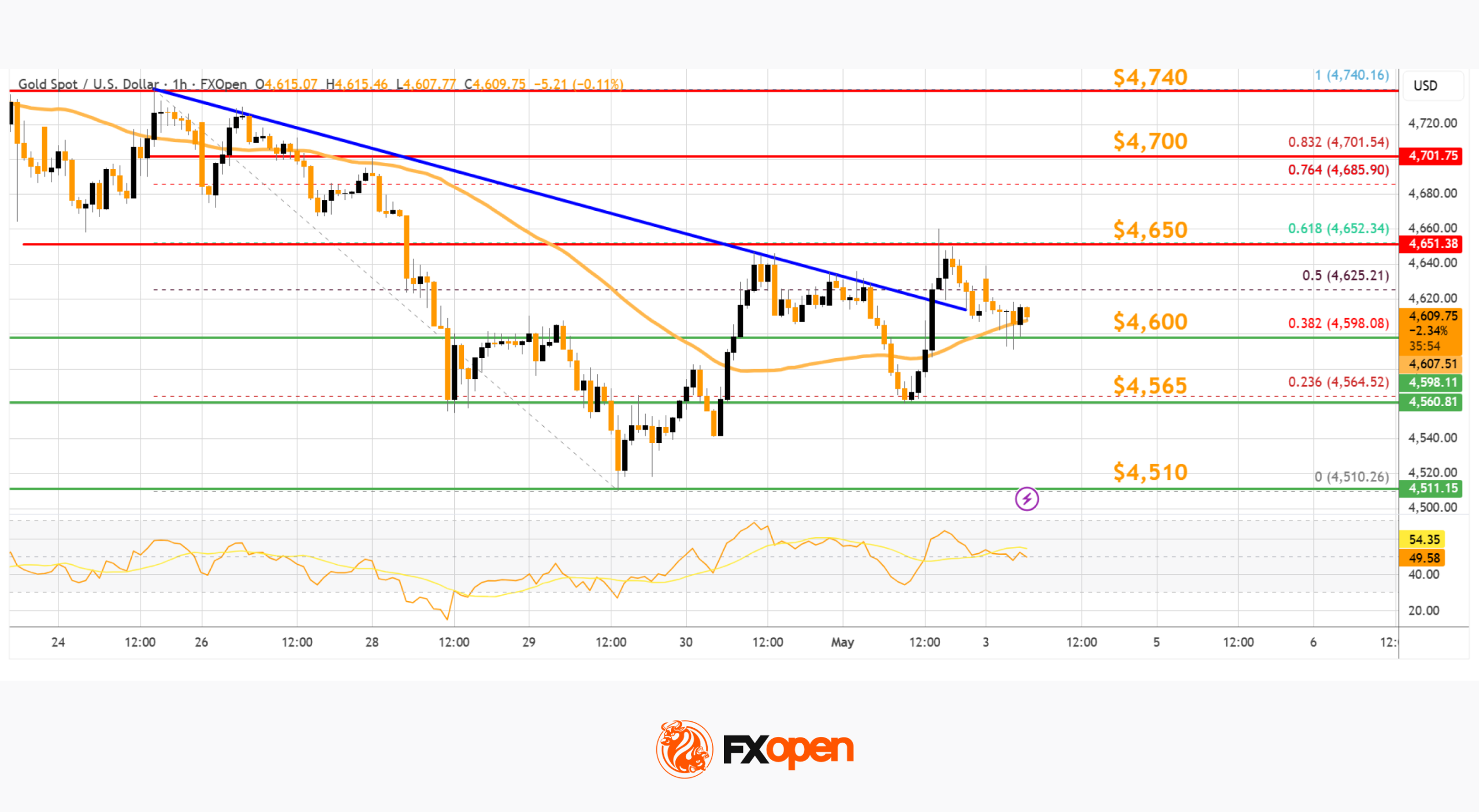
Gold price is consolidating above the $2,565 support zone. Crude oil is showing bearish signs and might decline below $96.50.
Important Takeaways for Gold and WTI Crude Oil Prices Analysis Today
· Gold price started a recovery wave from $4,500 against the US Dollar.
· It cleared a key bearish trend line with resistance at $4,620 on the hourly chart of gold at FXOpen.
· Crude oil prices failed to clear the $108 region and started a fresh decline.
· There is a connecting bearish trend line forming with resistance at $100.45 on the hourly chart of XTI/USD at FXOpen.
Gold Price Technical Analysis
On the hourly chart of Gold at FXOpen, the price found bids near the $4,500 zone. The price remained in a bullish zone and started a recovery wave above $4,550.
There was a decent move above the 50-hour simple moving average and $4,600. The bulls pushed the price above the 50% Fib retracement level of the downward move from the $4,740 swing high to the $4,510 low.
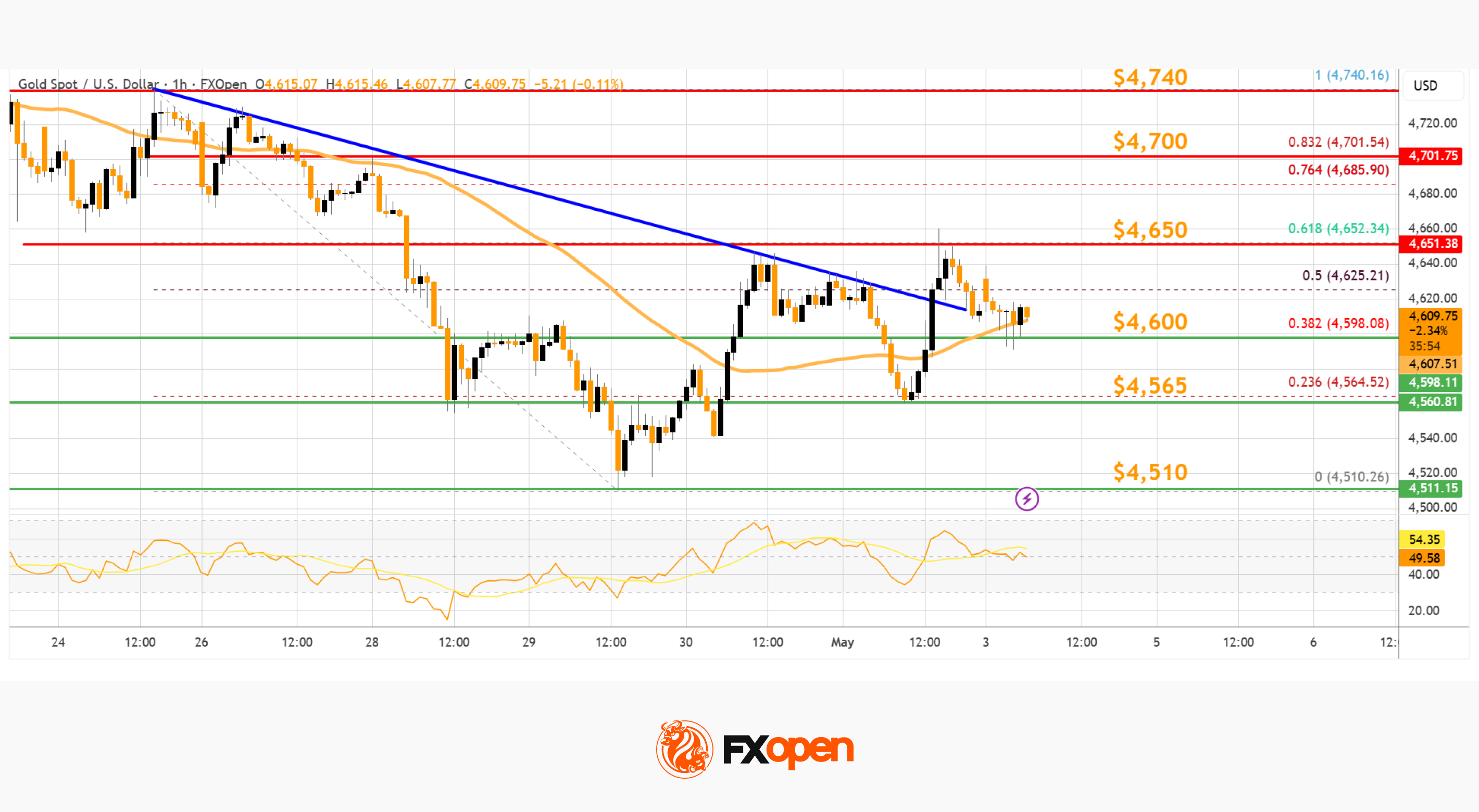
Besides, the price cleared a key bearish trend line with resistance at $4,620. Immediate hurdle is near the 61.8% Fib retracement at $4,650.
The next key breakout level sits at $4,700. An upside break above $4,700 could send Gold price toward $4,740. Any more gains may perhaps set the pace for an increase toward $4,850.
Initial bid zone on the downside could be $4,600. The first major buy zone sits at $4,565. If there is a downside break below $4,565, the price might decline further. In the stated case, the price might drop toward $4,510. Any more losses might push the price toward the $4,420 level.
WTI Crude Oil Price Technical Analysis
On the hourly chart of WTI Crude Oil at FXOpen, the price struggled to clear the $108 barrier against the US Dollar. The price started a fresh decline below $105.
The price even dipped below $100 and the 50-hour simple moving average. The bulls are now active near $96.00. A low was formed at $96.04, and the price is now consolidating losses. If there is a fresh increase, it could face sellers near the 23.6% Fib retracement level of the downward move from the $107.62 swing high to the $96.04 low.
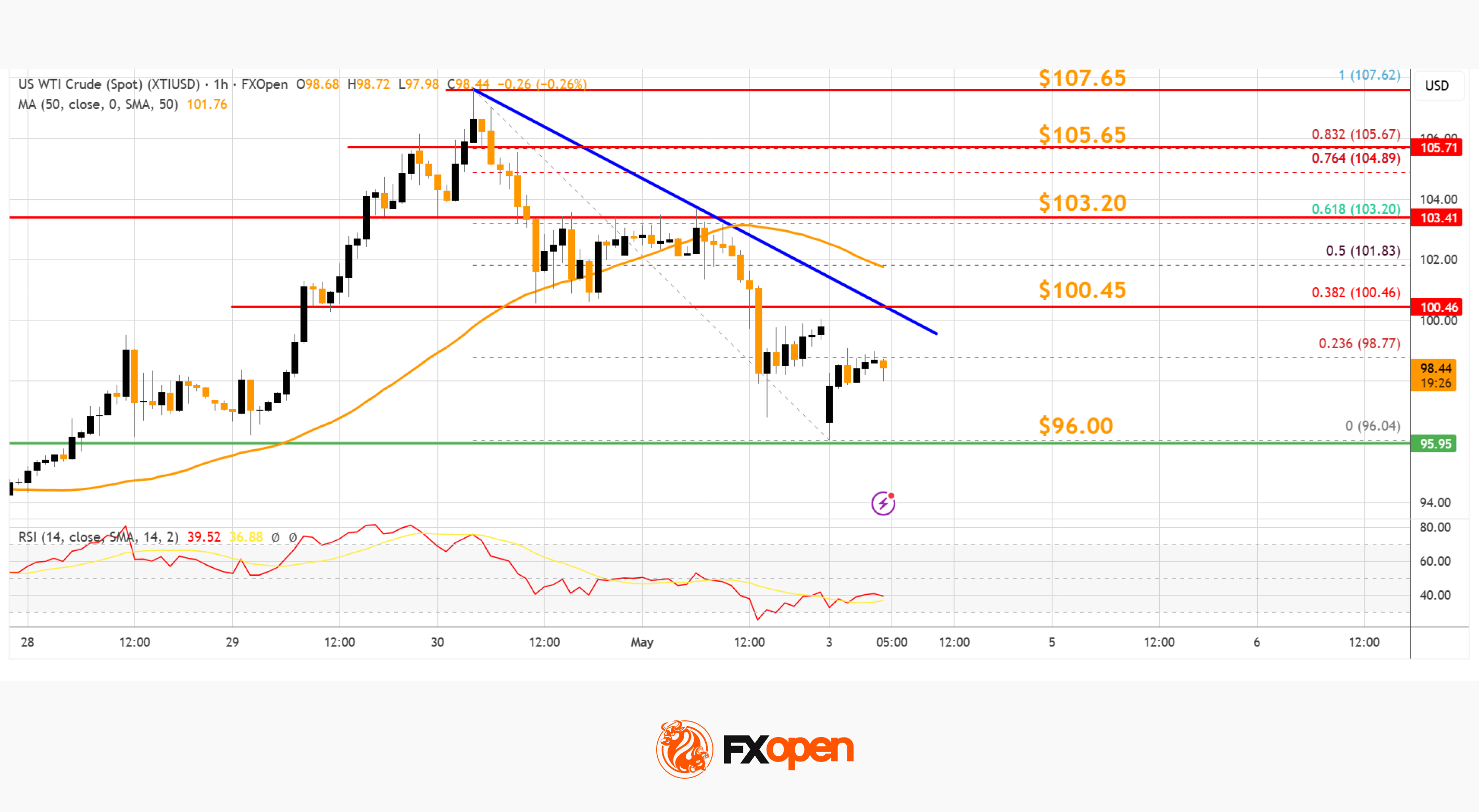
The first major hurdle for the bulls could be near a connecting bearish trend line at $100.45, above which the price could rise and test the 61.8% Fib retracement level at $103.20.
Any more gains might send the price toward $105.65. The main breakout zone sits at $108. Conversely, the price might continue to move down and revisit $96.00. The next major pivot zone on the WTI crude oil chart is $92.00.
If there is a downside break, the price might decline toward $90.00. Any more losses may perhaps open the doors for a move toward the $86.50 support zone.
FXOpen offers the world’s most popular cryptocurrency CFDs*, including Bitcoin and Ethereum. Floating spreads, 1:2 leverage — at your service (additional fees may apply). Open your trading account now or learn more about crypto CFD trading with FXOpen.
*Important: At FXOpen UK, Cryptocurrency trading via CFDs is only available to our Professional clients. They are not available for trading by Retail clients. To find out more information about how this may affect you, please get in touch with our team.
Start trading commodity CFDs with tight spreads (additional fees may apply). Open your trading account now or learn more about trading commodity CFDs with FXOpen.
This article represents the opinion of the Companies operating under the FXOpen brand only. It is not to be construed as an offer, solicitation, or recommendation with respect to products and services provided by the Companies operating under the FXOpen brand, nor is it to be considered financial advice.

A monthly research report from Bitwise’s European arm published this week pegs bitcoin’s theoretical “fair value” at roughly $224,000 if the asset were widely adopted as portfolio insurance against G20 sovereign debt defaults.
The research team described the figure as a “model-implied illustrative figure, not a price target or forecast,” however.
The figure stems from a theoretical framework first proposed by analyst Greg Foss in 2021, which treats bitcoin as a credit default swap on sovereign bonds.
Because the bitcoin network has no central issuer and operates without a sovereign backstop, the Foss model frames it as a non-correlated hedge against the possibility of major sovereign defaults.
The implied $224,000 fair value depends on the weighted default probability across group of 20 (G20) sovereigns and the market capitalization of the bonds being notionally insured.
It built the case around stress in sovereign bond markets. Japanese 30-year government bond yields have hit record highs while 10-year JGB yields sit at multi-decade peaks.
The International Monetary Fund and OECD have warned that governments and companies are set to borrow $29 trillion from bond markets this year, 17% higher than 2024, with the IMF describing markets as becoming less forgiving and investors as increasingly questioning the limits of sovereign borrowing capacity.
Bitwise singled out Japan’s JGB market as particularly vulnerable, citing its roughly $7.5 trillion size as the world’s second-largest sovereign bond market, Japanese investors’ approximately $1.2 trillion in U.S. Treasury holdings, and Japan’s roughly 230% debt-to-GDP ratio.
It noted that 10-year swap spreads, which measure sovereign risk premia, are at their highest levels since the 2011-2012 European debt crisis across major sovereign bonds.
But the report flagged some near-term headwinds for bitcoin as well.
Higher global bond yields have made Strategy’s (MSTR) STRC perpetual preferred equity dividends less attractive to investors, and STRC has recently traded below par.
Strategy buys have accounted for roughly two-thirds of institutional bitcoin demand via global treasury companies and bitcoin ETPs through 2026 to date, per Bitwise’s count, meaning a stall in Strategy’s STRC-funded accumulation could materially dent the flow.
The upside scenarios Bitwise outlines hinge on monetary policy and sovereign stress.
A Fed pause under newly confirmed chair Kevin Warsh against rising inflation could push real yields lower, which the report cited as a historical tailwind for bitcoin. A sovereign bond capitulation that forces central bank intervention to safeguard financial stability could validate bitcoin’s role as a decentralized hedge against sovereign counterparty risk.
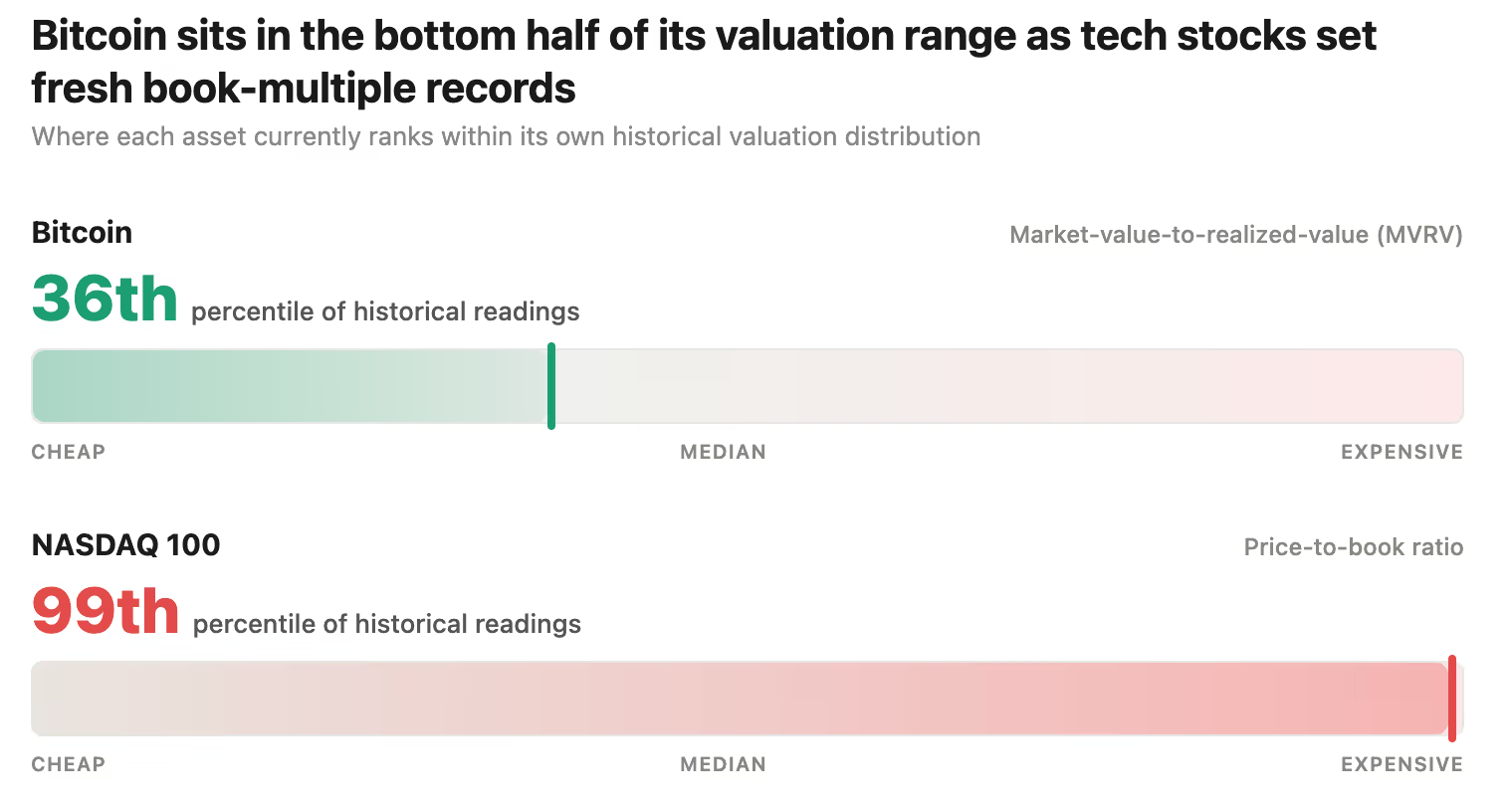
On valuation, the report flagged one of the most extreme divergences between bitcoin and U.S. large-cap tech it has observed. Bitcoin’s market-value-to-realized-value ratio sits in the lower half of its historical distribution, with only 36% of historical readings below the current level.

The NASDAQ 100’s price-to-book ratio, by contrast, is at its highest level on record, with 99% of historical readings below the current level.
Bitcoin was trading near $66,300 on Wednesday after sliding from above $71,000 earlier this week.

The European Union’s Markets in Crypto Assets Regulation (MiCA) reaches a pivotal juncture on July 1, when the transitional regime concludes and crypto asset service providers operating under national regimes must hold a MiCA licence or discontinue EU operations. According to ESMA, non-authorized entities will not be permitted to operate within the bloc from that date and should implement wind-down plans and client migrations rather than rely on an open-ended transitional status while awaiting a decision.
The deadline raises the prospect that some firms will suspend EU activities while their MiCA applications are under review, potentially disrupting access for millions of EU-based users who continue to engage with platforms not yet authorized under MiCA.
Key takeaways
- Effective July 1, any crypto asset service provider without a MiCA licence, operating under national exemptions, must cease EU operations or risk enforcement actions.
- Regulators have explicit enforcement tools to halt services, force client offboarding, publish firm names, and impose administrative fines for unauthorized activity under MiCA.
- France has authorised 19 CASPs so far, with about 25 additional applications under review, while unauthorized providers face criminal penalties (up to two years in prison and a 30,000 euro fine).
- Germany requires that providers previously operating under exemptions obtain licence by June 30, with enforcement measures possible where appropriate.
- Austria did not extend grandfathering under its pre-MiCA regime; no exchanges are operating without a licence in the country, with nine CASPs licensed by the FMA and a significant volume of MiCA applications still in process.
- Industry estimates suggest a sizable share of European users may still interact with non-MiCA-authorized platforms; OKX Europe’s analysis indicates that a substantial portion of active users may be on non-authorized exchanges.
- Major exchanges remain in the licensing process, including Bitget (Austria) and Binance (Greece); neither is currently listed among MiCA-authorized providers in the EU, with statuses evolving as regulators review applications.
National enforcement landscapes and licensing progress
France’s Autorité des marchés financiers (AMF) has authorised 19 crypto asset service providers to operate under MiCA, with roughly 25 applications still under review. The AMF emphasizes that from July 1, providers not licensed under MiCA must cease their activities within the French market. The regulator has also signaled that it can blacklist firms, issue public warnings, and seek court orders to block access to sites targeting French users. Unauthorized activity is treated as a criminal offence with potential penalties including prison time and fines.
Germany has adopted a national implementation approach that includes a licensing requirement for providers previously operating under exemptions. BaFin, its national regulator, indicated that a licensing window closes by June 30, and enforcement may be applied where appropriate as regulators review ongoing applications. The German stance aligns with MiCA’s directive for national authorities to grant immediate enforcement powers against unauthorised services.
Austria presents a stricter posture by choosing not to extend any grandfathering for virtual asset service providers under its pre-MiCA regime. The post-transition environment is designed so that no exchanges operate without a licence. The Finanzmarktaufsicht (FMA) has licensed nine CASPs to date, and it notes that MiCA-related applications are significant, though it does not disclose pending figures.
Legal risk, enforcement tools, and what the end of transitional periods means for providers
Industry legal counsel stress that simply having a MiCA application in progress does not shield a CASP from the July 1 deadline. Firms continuing to serve EU clients without an authorised MiCA framework will be operating unlawfully and cannot expect business-as-usual treatment once transitional protections lapse. MiCA itself equips member states with clear authorities to order an immediate halt to services, mandate client offboarding, publicly name non-compliant firms, and impose administrative fines for unauthorized activity. This creates a path for rapid, targeted action by regulators against non-compliant platforms.
These enforcement provisions bear significantly on the operational dynamics across the EU, potentially triggering abrupt wind-downs, forced migrations of clients to compliant platforms, and heightened scrutiny of cross-border service provision. The end of transitional periods also intersects with broader regulatory expectations around AML/KYC compliance, consumer protection, and ongoing supervisory oversight of licensing practices across member states.
Impact on users and market structure
The potential disruption extends beyond the regulated landscape into user access and liquidity across the European market. Analysis shared with Cointelegraph by OKX Europe suggests a sizable portion of European crypto users may still be active on platforms that are not MiCA-authenticated. OKX Europe quantified a period from May 2025 to May 2026 during which 18.5 million crypto app downloads occurred in Europe; approximately 7.6 million of those downloads, or 41%, were for exchanges not appearing on the independent MiCA-authorized provider register maintained from ESMA and national datapoints. OKX cautions that app-install data undercounts user activity due to browsers or earlier-app usage, and thus estimates may not capture all active users. OKX Europe CEO Erald Ghoos described this as a meaningful exposure, noting that many users may still rely on non-authorized platforms through multiple access channels.
The European Securities and Markets Authority (ESMA) has not provided a public estimate of how many EU users remain on unauthorised platforms, citing the absence of non-public information. The regulatory framing underscores a transition in market structure: as MiCA entrants consolidate, a period of adjustment is expected where users migrate to licensed venues or where enforcement narrows the field of available services. This shift has potential implications for cross-border banking relationships, stablecoin integration within regulated rails, and the standardization of licensing and supervisory practices across jurisdictions.
Active applicants and ongoing licensing momentum
Not all major exchanges have achieved MiCA licensure. Bitget has applied for a MiCA licence in Austria in 2025 and indicated it expects regulatory approval in the second quarter of 2026; it has stated it will refrain from offering EEA services until authorization is granted. Binance has pursued a MiCA licence in Greece via the Hellenic Capital Market Commission and is not listed among MiCA-authorized providers in the EU as of now. Binance did not respond to requests for comment on its application status. The ongoing review processes for these and other providers will shape the pace at which non-localized regional operations convert to fully MiCA-compliant activity.
These licensing trajectories illustrate how enforcement timelines, national regulatory interpretations, and the resources available to review applications will influence the competitive landscape. For exchanges of scale, the MiCA licensing process functions not merely as a compliance hurdle but as a potential market access gate that can determine cross-border growth and consumer reach within the EU’s single market framework.
Closing perspective
As the July 1 deadline approaches, the EU’s MiCA framework moves from principle to practice, pushing providers toward formal licensing, wind-down planning, or exit from the EU market. The evolution will test regulatory coordination among member states, map user exposure across compliant and non-compliant platforms, and redefine the structural dynamics of crypto service provision in Europe. Forward-looking vigilance will be essential for institutions tracking licensing trajectories, enforcement actions, and the practical implications for compliance, risk management, and customer continuity in a transitioning market.

On-chain data confirmed that the Zcash network is down, it has been producing no blocks for over 4 hours, a catastrophic deviation from the protocol’s 2.5-minute block target that left thousands of transactions stranded in the mempool with zero confirmations.
— Coin Bureau (@coinbureau) June 3, 2026
 JUST IN: Zcash reportedly down after failing to produce any block in the past 4 hours, per InfinityHedge. pic.twitter.com/KdijaSlbCQ
ZEC dropped 2% in the hour following the four-hour mark of the halt, with exchange deposit services on Binance and Kraken effectively frozen as no block confirmations cleared. This could be a consensus bug, a mining coordination failure, or something uglier has not been confirmed.
Discover: The Best Crypto to Diversify Your Portfolio
Zcash Down: Blockchain Halt
Block explorers monitoring the Zcash chain confirm the halt is real and sustained. Under normal operation, the network targets a new block every 2.5 minutes via its Equihash proof-of-work consensus, and these four hours of silence have likely brought 96 missed blocks.
Community developers active on the Zcash Foundation and Electric Coin Co. (ECC) forums have circulated two primary theories: a consensus bug triggered by a recent minor node update, or an unforeseen interaction with the network’s difficulty adjustment algorithm.
As of now, a standard 51% attack has been largely ruled out as the signature here is total cessation of block production, and not chain reorganization.
INTEL: Zcash coordinated a network upgrade due to an Orchard pool soundness vulnerability.
Multiple block explorers, including the official explorer, still appear to be catching up after the upgrade, while block production is reportedly continuing, as seen on ZecMiningPool.
We… https://t.co/743lwfwqJ7 pic.twitter.com/eW3tJNz6Tf— Solid Intel
(@solidintel_x) June 3, 2026
What the data does NOT yet confirm is the precise block height at which production stopped, if the halt is affecting both Zcashd and ECC’s Zebra client simultaneously, or if a hotfix is imminent.
This is not the first time Zcash’s dual-client architecture has created consensus-layer stress, in early June 2026, an emergency Zebra consensus patch was required to prevent a network split, and a separate Emergency Orchard Upgrade temporarily paused shielded private transactions to address a pool vulnerability.
The pattern of rapid-response emergency patches is becoming a feature rather than an anomaly. Until ECC or the Zcash Foundation issues an official post-mortem, the cause sits in an uncomfortable grey zone. Miners are clearly not producing. The reason why remains unconfirmed.
ZEC Price Slides as Network Outage Triggers Confidence Selloff
ZEC was trading in the range of around 2% lower from an hour ago, with selling pressure accelerating precisely as the four-hour mark of the blockchain halt became apparent to broader market participants. The move mirrors the pattern seen across other network disruption events, slow initial reaction, then a sharp leg down once the duration makes denial impossible.

ZEC had staged an extraordinary recovery from its July 2024 lows under a dollar, surging over 16x to the $250 range by April 2026, with a 16% single-day spike to $372 recorded on April 9, 2026, and another sharp 30% move in May that put the coin at above $600.
The structural read is bearish until block production resumes and an official explanation confirms the halt is contained.
Discover: The Best Token Presales
The post Zcash Down: No Blocks Produced in 4 Hours appeared first on Cryptonews.
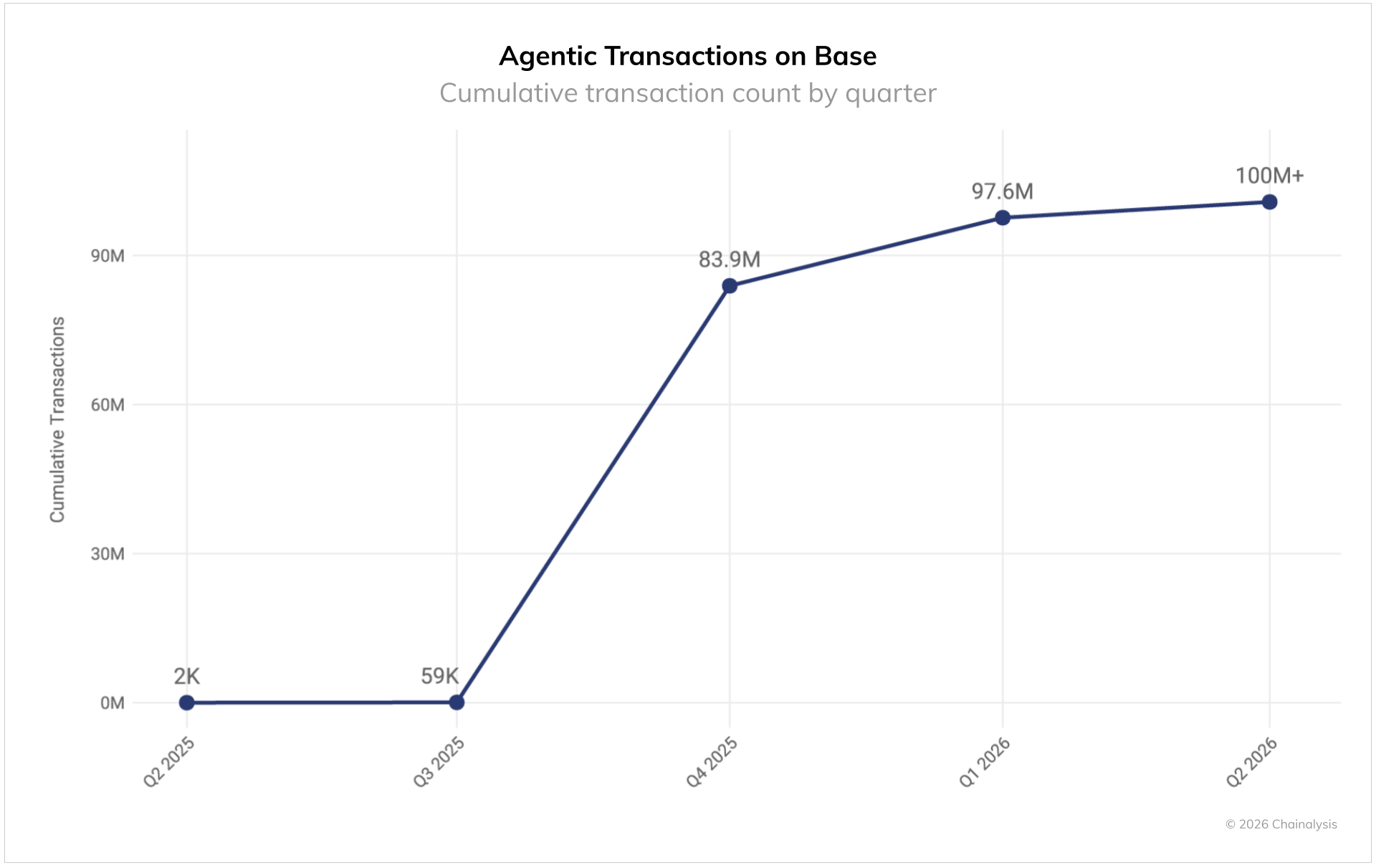
Agentic payment activity on Coinbase’s Base network has surpassed 100 million transactions, signaling that machine-to-machine payments are moving beyond the proof-of-concept stage in onchain environments.
According to a new Chainalysis report, wallets interacting with Coinbase’s x402 protocol generated more than 100 million transactions on Base within roughly nine months of launch.
The x402 protocol allows software agents to make onchain payments directly through web requests. When an agent requests access to a resource, such as a data feed or API, it can automatically complete a stablecoin payment without human authorization.
Much of x402’s early growth was driven by a memecoin experiment called PING, which required users to make a payment through the protocol to mint tokens. The project attracted large numbers of users looking to acquire the token, triggering a surge in transaction activity.
Although activity moderated after the PING frenzy subsided, usage did not collapse. According to Chainalysis, transaction volumes have stabilized while the value of transfers has increased.
In early 2025, transactions worth more than $1 accounted for roughly 49% of total value transferred through x402. By early 2026, that figure had climbed to 95%, suggesting that the protocol was moving beyond micropayments.
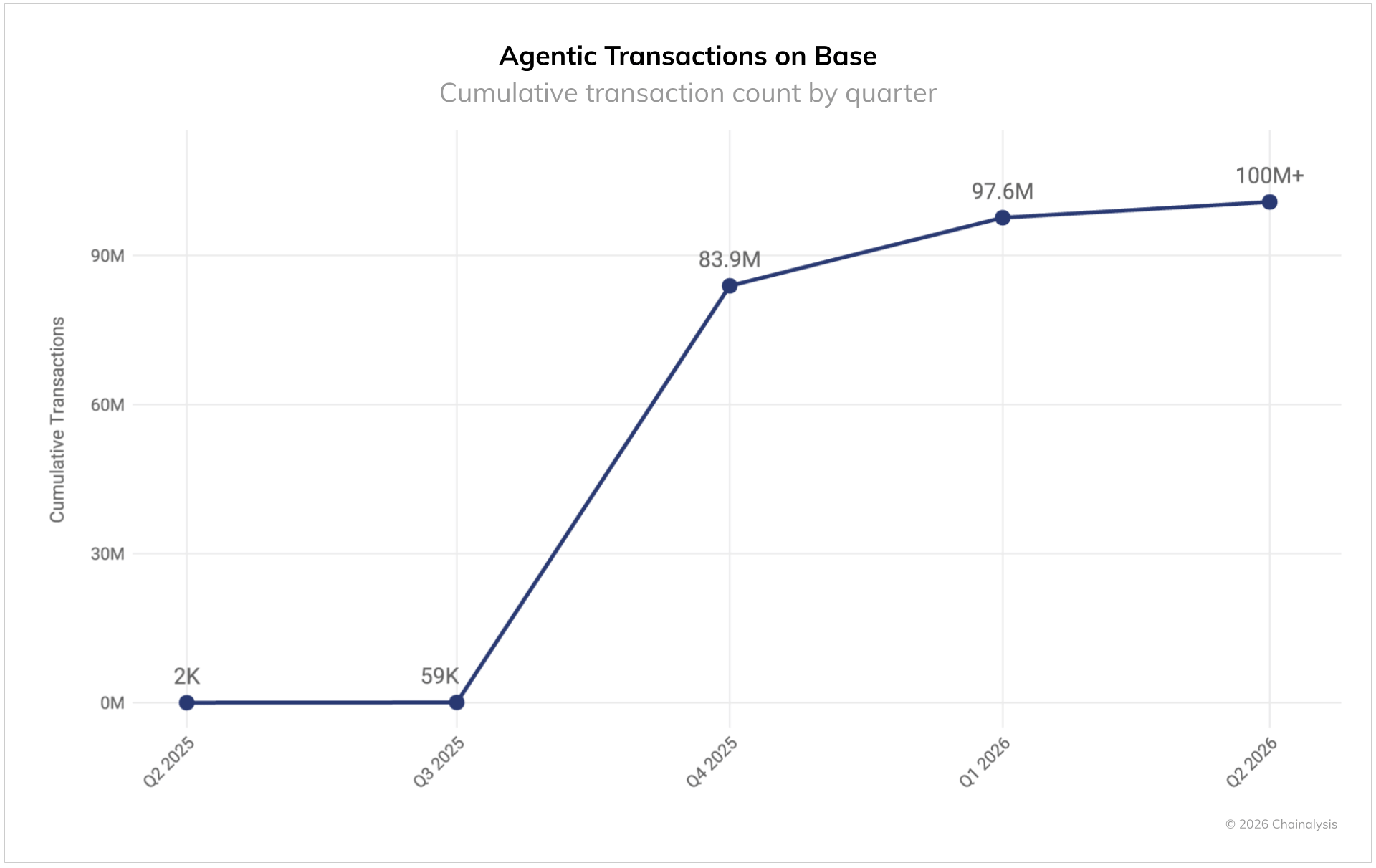
Cumulative agentic transfer volumes on Base. Source: Chainalysis
Related: How AI agents can reshape arbitrage in prediction markets
Onchain data points to a growing use case for agentic payments
The rise of AI tools has sparked renewed interest in agentic payments. Supporters say crypto networks are well-suited for these transactions because they can move money around the clock and process payments automatically, without requiring a user to approve every purchase.
Several crypto industry leaders, including Coinbase CEO Brian Armstrong and Circle CEO Jeremy Allaire, have argued that AI agents could soon account for a significant share of onchain activity. Former Binance CEO Changpeng Zhao has expressed a similar view, describing cryptocurrency as the “native currency” of AI agents.
Early versions of machine-to-machine payments already exist in crypto. Decentralized computing networks allow users and applications to pay for GPU resources on demand, while decentralized data marketplaces enable applications to purchase datasets and blockchain information through automated transactions.
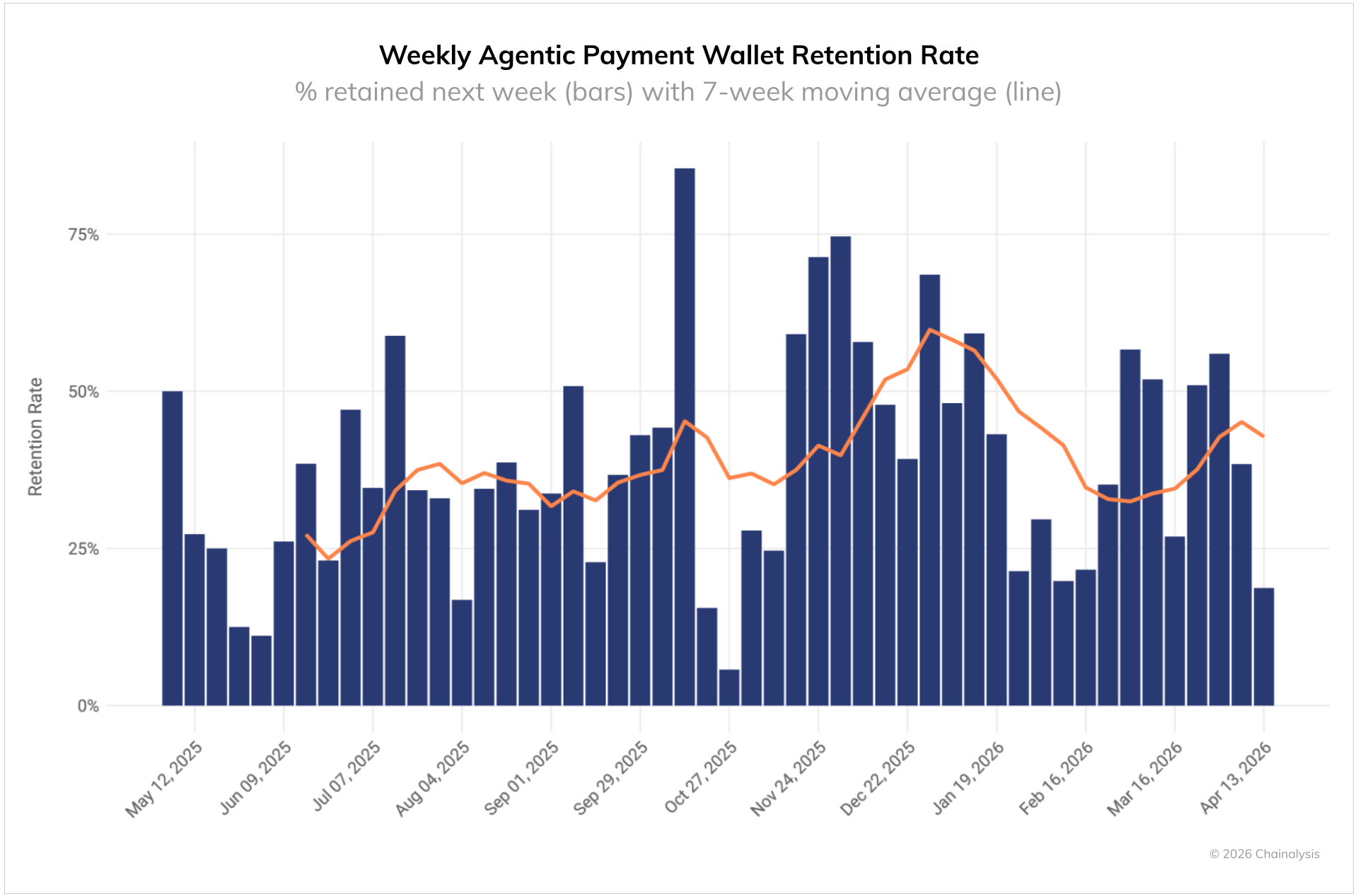
Weekly wallet retention for agentic payments on Base has been trending upward. Source: Chainalysis
Interest in the concept extends beyond crypto. A recent Forrester report highlighted Stripe’s Machine Payments Protocol as a potential catalyst for reviving micropayments through AI agents.
Bernstein analysts said AI agents could boost demand for stablecoins, which are well-suited to frequent, low-value payments, highlighting Coinbase’s x402 protocol.
Magazine: AI-driven hacks could kill DeFi — unless projects act now
The leading cryptocurrency has been in a clear decline lately, with its price tumbling well below $70,000.
Certain analysts and well-known financiers think the bottom during this cycle has yet to be reached, while waning institutional interest in the asset intensifies fears of a more substantial sell-off.
Red Days for the ETFs
Several hours ago, BTC dropped to nearly $65,000, its lowest level since March this year. The analyst Ali Martinez recently predicted that slipping below the $71,300-$73,000 range could lead to a decline of that magnitude, while X user Ted envisioned a deeper crash to as low as $55,000.
Of course, Peter Schiff also added his name to the pessimists. The well-known crypto critic and gold proponent forecasted a major collapse to $20,000 if BTC breaks $50,000. In his view, such a catastrophe would shake the conviction of the long-term HODLers and cause them “to finally throw in the towel.”
Recent netflows in spot BTC ETFs serve as a warning that conditions for the primary cryptocurrency could worsen in the near future. Over the past 12 days, outflows have surpassed inflows, suggesting that institutional investors (such as pension funds and hedge funds) have reduced their exposure to the asset.
This, in turn, has prompted ETF issuers (BlackRock, Fidelity, and other financial giants) to sell real BTC, adding even more downward pressure on an already fragile market. It is important to note that spot Bitcoin ETFs have not experienced 12 consecutive red days since their launch.

The rising amount of BTC stored on centralized exchanges is another concerning factor. There are now more than 2.72 million coins held on such trading venues, the highest point since March. The development doesn’t guarantee a further price crash, but it does increase selling pressure.

Is the Bottom Close?
Another popular X user who touched upon the matter is bee. They believe that BTC is in the final stage of the bear cycle, yet this doesn’t rule out an additional decline. The analyst forecasted a plunge to $47,000-$51,000 by October this year, after which the bulls are expected to regain control.
For their part, Max Crypto noted that BTC’s Relative Strength Index (RSI) has dropped under 30, which has historically been followed by a bottom and a subsequent rally by nearly 40%.
The post 12 Days of Red: Are Bitcoin (BTC) ETFs Signaling a Deeper Price Collapse Ahead? appeared first on CryptoPotato.

Key Takeaways
- Timothy Horan from Oppenheimer downgraded AT&T shares from Outperform to Perform, eliminating his previous $32 price target.
- Shares of AT&T declined 4.4% to $23.56 on Wednesday, marking the steepest single-session decline since October 2025, with year-to-date losses now at 5.2%.
- The analyst’s bearish stance stems from increasing competition in satellite broadband, particularly from SpaceX’s Starlink and Amazon’s Leo platforms, which could threaten AT&T’s internet customer base.
- The anticipated SpaceX initial public offering next week is expected to amplify concerns about satellite-based threats to conventional broadband companies.
- Satellite LEO operators are forecast to acquire more than 2 million new subscribers annually, potentially commanding 10% of the market by 2030, with Starlink’s pricing now competitive with traditional broadband services.
AT&T (T) Shares Tumble 4.4% Following Analyst Downgrade on Satellite Broadband Threat
Shares of AT&T plunged 4.4% to close at $23.56 on Wednesday following Oppenheimer analyst Timothy Horan’s decision to downgrade the telecommunications company from Outperform to Perform, while simultaneously withdrawing his previous $32 price target. The decline represented the stock’s steepest intraday loss since October 2025.
The downgrade wasn’t triggered by operational missteps at AT&T. Rather, Horan’s concerns focus on an emerging competitive threat originating from space.
The analyst’s primary worry revolves around escalating competition from satellite low-earth-orbit (LEO) broadband services, especially SpaceX’s Starlink and Amazon’s Leo platforms. Horan contends that the telecommunications sector is significantly undervaluing the disruptive potential of satellite internet on traditional broadband services, mirroring how cable providers previously miscalculated the impact of fixed wireless technology.
“We are concerned the industry is underestimating the risk of satellite as cable did with [fixed wireless access],” Horan stated in his research note.
Upcoming SpaceX IPO Could Amplify Competitive Concerns
The timing of Horan’s downgrade carries strategic significance. With SpaceX scheduled to debut on public markets next week, the analyst anticipates that the IPO will intensify scrutiny on the competitive challenges satellite technology presents to established telecom operators like AT&T.
Horan’s projections suggest satellite providers will add over 2 million subscribers annually and potentially capture 10% of the broadband market by 2030. He further observes that Starlink’s pricing has achieved parity with conventional broadband services, while capacity is projected to expand tenfold through V3 satellite deployment.
Among major carriers including AT&T, Verizon, and T-Mobile, Horan identifies AT&T as facing the greatest exposure. The analyst points to AT&T’s substantial wireline infrastructure and slower adoption of fixed wireless technology compared to competitors as primary weaknesses. He also anticipates downward pressure on average revenue per user (ARPU), with T-Mobile and Verizon’s superior cost structures intensifying competitive dynamics.
AT&T CEO John Stankey has disputed the severity of the satellite threat. During the company’s annual shareholder meeting in May, he recognized satellite’s utility for underserved locations but argued: “I don’t think satellite is a substitute for the speed, reliability and capability of our assets that we’ve been investing in for decades.”
AT&T’s $250 Billion Infrastructure Initiative
The telecommunications giant is actively responding to competitive pressures. This past March, AT&T unveiled plans for a $250 billion investment spanning five years to accelerate fiber optic, 5G, and wireless infrastructure deployment nationwide.
During the Q1 earnings call in April, Stankey disclosed that AT&T’s fiber network currently serves more than 37 million customer locations and is projected to expand to over 60 million by decade’s end.
The company has also introduced a promotional offering bundling home internet and wireless service starting at just $35 monthly.
Wall Street analysts and Seeking Alpha contributors currently assign AT&T a Buy rating, while Seeking Alpha’s Quant system rates the stock as a Hold with a 3.42 out of 5 score, recognizing strong profitability metrics but noting weakness in growth potential.
AT&T stock has declined 5.2% year-to-date in 2026.

Bitcoin has suffered a decisive breakdown from its multi-month rising channel, triggering a sharp sell-off that pushed the price toward a major support cluster around $65K. The rejection from the 100-day moving average and the inability to reclaim lost support levels suggest sellers remain in control in the near term, although BTC is now approaching an area where demand previously emerged.
Bitcoin Price Analysis: The Daily Chart
On the daily timeframe, Bitcoin has invalidated the ascending channel structure that guided the price action for several months. After failing to hold above the channel’s lower boundary, BTC accelerated lower and lost the 100-day moving average around $73.5K, which had acted as an important dynamic support throughout the recovery phase.
The breakdown below the $73K-$74K region confirms a bearish structural shift and increases the probability of a deeper correction. The asset is currently testing a key support zone around $65K-$66K, marked by a notable horizontal demand area that previously triggered strong buying interest.
Any recovery attempt is likely to face significant selling pressure between $70K and $73K, while a broader relief rally could target the former channel support and the 200-day MA near $80K-$82K. If the current support fails to hold, the next major demand zone appears around $59K-$62K, which aligns with the lower blue support area visible on the chart.

BTC/USDT 4-Hour Chart
The 4-hour chart provides a clearer view of the breakdown. Bitcoin consolidated beneath the former support region around $73K-$74K before sellers regained control and initiated another impulsive leg lower. The recent price action resembles a textbook breakdown and retest sequence.
Following the rejection from the highlighted pullback region near $71K-$74K, Bitcoin experienced an aggressive liquidation-driven decline toward the $65K support zone. The current reaction from this area suggests buyers are attempting to defend the level, but the market remains vulnerable while trading below the broken support cluster. For bulls to regain momentum, Bitcoin would need to reclaim the $71K-$74K range and establish acceptance above it.
Failure to do so will likely confirm a pullback and could leave the market exposed to additional downside pressure, with the $65K support acting as the final major defense before a potential move toward the low-$60K region.

Sentiment Analysis
The 3-day liquidation heatmap highlights a significant concentration of short-term liquidity above the current market price. This liquidation cluster is located around $70K, with additional dense pockets extending toward the $75K region. This positioning suggests that, after such an aggressive decline, Bitcoin may eventually attempt a relief bounce to target overhead liquidity. Markets frequently gravitate toward high-liquidity zones, especially after major liquidation cascades have cleared nearby long positions.
However, the heatmap also shows that most of the attractive liquidity currently sits above price rather than below it. This creates the potential for a short-squeeze recovery toward the $70K-$75K region if buyers successfully defend the $65K support area. For now, the broader trend remains bearish following the channel breakdown and the loss of the 100-day moving average.
The $65K-$66K zone is the key level to monitor. Holding above it could allow Bitcoin to stage a corrective rebound toward overhead liquidity, while a decisive breakdown would likely open the door for a move toward the $60K-$62K support region.

The post Bitcoin Price Analysis: What’s Next for BTC After 11% Weekly Crash? appeared first on CryptoPotato.

As the European Union’s Markets in Crypto Assets Regulation (MiCA) reaches a pivotal juncture, July 1 marks the end of the transitional period. Crypto asset service providers operating under national regimes must either secure a MiCA licence or halt EU activities. Regulators are signaling strict enforcement once the clock runs out, with potential consequences for millions of users still active on platforms awaiting authorisation.
According to the European Securities and Markets Authority (ESMA), from July 1 non-authorised entities “will not be allowed to operate within the EU” and should implement wind-down and client-migration plans rather than rely on a rolling transitional status. The hard deadline amplifies the risk that some platforms could suspend services mid-review as they race to obtain authorisation or exit the market altogether, a scenario that could disrupt access for a substantial user base.
In France, the Autorité des marchés financiers (AMF) has granted licences to 19 crypto asset service providers so far, with roughly 25 applications still under review, an AMF spokesperson told Cointelegraph. From July 1, providers that are not MiCA-authorised must cease their activities. The AMF notes that continuing to operate without a MiCA licence is considered a criminal offence punishable by up to two years in prison and a fine of up to €30,000. The regulator also has tools to blacklist unauthorised firms, issue public warnings and seek court orders to block access to websites targeting French users.
Germany’s regulator BaFin said that the national implementation requires licensing of providers that had benefited from exemptions, with a deadline set for June 30. Regulators typically align with EU timelines but emphasise that enforcement will be used where appropriate, and some applications remain under review.
Austria presents a tougher stance on grandfathering, opting not to extend pre-MiCA relief. The post-transitional regime in Austria ended on December 31, 2025, and as a result, no exchanges are operating without a licence. The Financial Market Authority (FMA) has licensed nine crypto asset service providers to date, and it notes that MiCA application volume is significant, though it does not disclose how many applications are still pending.
Key takeaways
- The MiCA transitional period ends on July 1, requiring MiCA authorisation for EU-facing services or cessation of activities for unapproved providers.
- France has authorised 19 CASPs so far, with about 25 more under review; unauthorised platforms face criminal penalties and enforcement actions.
- Germany requires licensing by June 30 for entities formerly operating under transitional exemptions, with enforcement powers available where appropriate.
- Austria has ended grandfathering under its pre-MiCA regime; nine CASPs have been licensed, and MiCA applications remain significant but undisclosed in total.
- The FTSE-style of market disruption: a substantial portion of users may still rely on non-MiCA platforms, underscoring looming liquidity and access risks for EU traders and consumers.
MiCA deadline and its enforcement posture
The end of the transitional periods under MiCA centralises oversight and raises the stakes for providers still servicing EU clients without a licence. ESMA’s guidance underscores that member states must empower authorities to halt services immediately, force offboarding of clients, publicly name non-compliant firms and impose administrative fines for unauthorized activity. This framework aims to curb user exposure to unregistered platforms and to bolster supervisory coherence across the bloc.
The enforcement landscape could translate into rapid action against platforms that fail to secure authorisation in time. In France, for instance, the AMF’s authority to publish warnings and to block sites demonstrates how regulators intend to protect users who may not fully grasp the regulatory status of their chosen platform. For users, that means a potentially abrupt migration to MiCA-compliant providers or a shift to regulated alternatives, depending on who receives licencing and who does not.
OKX Europe provided a stark view of the potential scale of dislocation. In a briefing shared with Cointelegraph, the firm noted that, based on their analysis, about 41% of Europe’s 18.5 million crypto app downloads between May 2025 and May 2026 were for exchanges that do not appear on the independent MiCA-registered list compiled from ESMA and national data. While ESMA did not provide an estimate of how many EU users remain on non-authorised platforms, the implication is clear: many users may still be exposed to platforms that fall outside the MiCA umbrella as the deadline nears.
OKX Europe’s assessment goes beyond downloads. CEO Erald Ghoos told Cointelegraph that app-download data underrepresents the true user base, as many individuals access exchanges via web browsers or previously installed apps. By augmenting app-store data with web traffic and search trends, OKX estimates that roughly 60% of European crypto users are actively engaging with platforms that do not hold MiCA authorisation. The statistic, while not independently verified by regulators, highlights the potential scale of non-compliant activity across the region.
License applications in motion: Bitget, Binance and others
Not all major platforms have completed MiCA licencing, and several are still navigating the review process in member states. Bitget, for example, applied for a MiCA licence in Austria in 2025 and has projected a regulatory decision in the second quarter of 2026. The exchange has said it will refrain from offering services in the European Economic Area until it obtains authorisation.
Binance has pursued MiCA licensing in Greece through the Hellenic Capital Market Commission. As of now, the company is not listed among MiCA-authorised providers in the EU, and Binance did not respond to Cointelegraph requests for comment on the status of its application. The Greek filing illustrates how high-profile platforms are continuing to seek licensure even as the July deadline approaches and enforcement actions loom for unauthorised operators.
The ongoing licensing activity reflects a broader regulatory push across Europe to consolidate oversight, align with a unified standard, and reduce risk for users who may be exposed to unregistered platforms. While some firms move toward compliance, others face questions about how quickly they can secure approvals and what operational adjustments may be required to meet MiCA’s conditions.
What this means for users and market dynamics
The July deadline has been cast by many observers as a test of regulatory readiness and industry resilience. For users, the risk lies in potential service interruptions, forced migration to MiCA-compliant platforms, and the need to confirm the licencing status of exchanges they use. Regulators have signaled that where necessary they will intervene, including actions to block access or to publish warnings to protect consumers from unauthorised activities.
Industry participants have highlighted the difficulty of mapping the exact scope of non-compliant activity. The ESMA register, while informative, does not capture every active user or platform, particularly as usage patterns shift between apps, web interfaces and regional services. The regulatory push is designed to reduce this ambiguity by ensuring that a clear roster of licensed providers exists and that cross-border supervision can be enforced more effectively.
For investors and builders, the MiCA phase-out raises questions about market liquidity, who will hold custody rights, and how fast new entrants can scale under licencing conditions. While some major exchanges are actively pursuing MiCA licences, others may opt to wind down operations in the EU. The ultimate mix of licensed entrants and wind-downs will shape EU crypto adoption in the coming quarters, with implications for competitive positioning and regulatory alignment across the bloc.
As regulators move to close transitional gaps, readers should monitor forthcoming licencing decisions, enforcement actions and the pace at which platforms migrate user bases to MiCA-compliant services. The July 1 deadline is not the end of MiCA’s rollout, but a turning point that will reveal how quickly and effectively the industry can harmonise with Europe’s unified regulatory framework.
The next phase will likely hinge on how swiftly national authorities deploy their powers to halt non-compliant operations, how many providers secure licences, and how users respond to shifts in platform availability. The landscape remains in flux, and stakeholders should stay tuned for updates on licensing outcomes, enforcement actions and the evolving mix of compliant exchanges serving EU customers.


Kalshi has launched CFTC-approved bitcoin perpetual futures in the United States, giving American traders access to a regulated version of a product that has long been dominated by offshore crypto exchanges.
Summary
- Kalshi has launched CFTC-approved bitcoin perpetual futures for U.S. traders.
- The BTCPERP contract tracks bitcoin’s spot price and has no expiration date.
- The CFTC approved Kalshi’s bitcoin perpetual futures contract on May 29, 2026.
- Kalshi CEO Tarek Mansour said regulated onshore perps can improve risk management for American businesses.
Kalshi announced on X that its bitcoin perpetual futures contract is now live on the platform, describing the launch as one of the first openings for U.S. investors to trade regulated crypto perps on domestic soil. The product, listed as BTCPERP, follows approval from the Commodity Futures Trading Commission on May 29, 2026, under Commission Regulation 40.3.
The CFTC order approved KalshiEX, LLC to list a contract tied to the spot price of bitcoin. Unlike traditional futures contracts, the contract has no expiration date, giving traders continuous exposure without a fixed settlement price.
Kalshi moves into regulated crypto perps
Kalshi CEO Tarek Mansour told CNBC’s Squawk on the Street that perpetual futures are “the purest form of trading.” He also framed the launch as part of Kalshi’s move beyond prediction markets and into a fuller derivatives exchange model.
Mansour said regulated onshore perps would help improve capital allocation and risk management for American businesses. His comments placed the product within a domestic market-structure debate that has grown as U.S. firms push to bring crypto products previously concentrated offshore to the U.S. market.
According to Kalshi, the platform shows funding rate history in transaction records, giving users access to one of the main pricing tools behind perpetual futures.
Offshore volumes put pressure on U.S. venues
Perpetual futures have become one of crypto’s largest trading markets. Reuters reported that perpetual futures volume reached $61.7 trillion in 2025, up 29% from 2024. Other market data cited by Kalshi placed offshore perpetual futures volume at $92.9 trillion in 2025.
Much of that activity has taken place on offshore platforms such as Binance and Hyperliquid. Those venues built large markets while U.S. institutions had limited access to regulated domestic products with similar structures.
A perpetual futures contract stays open without a set expiry date. The funding rate, usually adjusted every eight hours, helps keep the contract price close to the underlying spot market.
CFTC approval follows policy comments
CFTC Chairman Michael Selig, appointed by President Donald Trump, had previewed the regulatory opening in March 2026. Speaking at the Milken Institute, Selig said U.S.-listed perpetual futures were expected “in the next month or so.”
After the Kalshi approval, Selig called the move “a major step forward” in President Trump’s plan to make the United States the crypto capital of the world.
The CFTC said it will review additional perpetual futures contracts individually. Kalshi, valued at $22 billion after a May 2026 funding round, plans to add more than a dozen cryptocurrencies if regulators approve them. Agricultural commodities are not included in its planned product list.
Competition is already building around regulated crypto perps. Kraken said it plans to list CFTC-regulated perpetual futures within 30 days of Kalshi’s approval, including BTC and other crypto assets.
Robinhood and Gemini have also expressed interest in entering the market. Their plans suggest that regulated perpetual futures could become a major new battleground among U.S. crypto trading platforms.


Bitcoin slid below $66,000 in early Wednesday trading and traded as low as $65,372 before rebounding above $67,000, capping a 6% one-day drop that has erased the price action of the last two months and pushed the world's largest cryptocurrency 47% below its October all-time high. BTC spot was… Read the full story at The Defiant

Reform’s Kenyon vows to ‘save’ library Labour already saved
![MORAD - NO MONEY [VIDEO OFICIAL]](https://wordupnews.com/wp-content/uploads/2026/02/1771006117_maxresdefault-80x80.jpg)
MORAD – NO MONEY [VIDEO OFICIAL]

Body found beside busy Bristol road thought to be missing man



-

 Tech6 days ago
Waymo dominates autonomous vehicle registrations as Tesla trails behind
-

 News Videos5 days ago
This is BROKEN! INSANE 5x MONEY CAR WASH WEEK! The NEW GTA Online UPDATE Today! (GTA5 New Update)
-
 Tech4 days ago
SpaceX just won a second Golden Dome contract. This one is $4.16 billion.
-

 News Videos5 days ago
SHE IS KILLING XRP!!! WATCH URGENT AND ACT FAST
-

 Business2 days ago
Jade Biosciences, Inc. (JBIO) Discusses Positive Interim Results From JADE101 Phase I Healthy Volunteer Study and Development Plans Transcript
-
 NewsBeat5 days ago
FIRST NIGHT REVIEW: Take That bring the Circus back to life in spectacular sun-soaked style
-
 Crypto World5 days ago
CFTC Has Approved the First Regulated Bitcoin Perpetual Contract in the U.S.
-

 Business4 days ago
Is the Spurs Phenom Already Better Than Prime Diesel?
-
 NewsBeat5 days ago
Novak Djokovic v Joao Fonseca LIVE: French Open latest scores and results after Jannik Sinner’s shocking collapse
-
 Crypto World5 days ago
Snowflake (SNOW) Stock Rallies on Strong Q1 Results and AI Product Growth
-
 Entertainment5 days ago
Weak ‘Supergirl’ Box Office Tracking Amid Milly Alcock Backlash
-

 Business4 days ago
Demand Conditions Improve In Chemicals Sector In April 2026
-

 Crypto World5 days ago
MicroStrategy Moves $30 Million in BTC to Coinbase Prime: Is the Bitcoin Sell-Off Already Here?
-

 Politics4 days ago
The House | Inside Andy Burnham’s Makerfield Campaign: “Nobody Thinks This Is In The Bag”
-

 Tech5 days ago
This Week In Security: Ubiquiti Fixes, And FreeBSD Joins The Club You Don’t Want To Join
-
 Entertainment4 days ago
One of the Greatest Sitcoms of All Time Shoots Up Apple TV’s Charts 11 Years Later
-

 Entertainment5 days ago
Maddox Jolie-Pitt Legally Requests to Drop Brad’s Surname
-
 Crypto World1 day ago
Seagate (STX) Stock Surges to Record High on AI Boom and Legal Settlement
-
 Entertainment4 days ago
Britney Spears Shares Troubling Update After Hard Year
-
 Entertainment5 days ago
Bruce Willis’ Generosity Resurfaces Amid His Dementia
You must be logged in to post a comment Login