
Crypto World
Meta Stablecoin Move Brings USDC Payouts to Select Creators

US tech giant Meta has launched USDC payouts for creators on its platforms in the Philippines and Colombia, with plans to expand to additional markets.
Creators who opt into the service will receive payments directly into crypto wallets on the Solana and Polygon blockchains. However, Meta does not offer a built-in conversion option, so an external exchange is required to convert USDC into fiat currency, according to the announcement on Wednesday.
The service is currently available only to select creators in Colombia and the Philippines, but Polygon said Wednesday that the stablecoin rollout is expected to expand to more jurisdictions soon.
“Live in Colombia and the Philippines, with 160+ markets coming, users now get faster settlement with USDC while gaining access to dollar-denominated assets,” Polygon said. “This is how creators’ lives are improved.”
Source: Polygon
Stablecoins have emerged as a key use case for crypto. Lamine Brahimi, co-founder and managing partner at crypto custody provider Taurus, told Cointelegraph earlier this month that financial institutions across Europe are actively selecting infrastructure partners to support stablecoin adoption.
Facebook creators were paid $3 billion last year
Creators who opt for Meta’s stablecoin payout can connect their third-party crypto wallet to Facebook’s payout platform. However, Meta said it “reserves the right to pay” in an alternate payment method in the “event of technical difficulties or unforeseen circumstances.”
Meta creators include influencers, educators, and entertainers who earn money by posting content on the company’s platforms, such as Facebook and Instagram. Facebook paid creators nearly $3 billion in 2025, a 35% increase from the previous year, according to the company.
Related: Visa adds Polygon, Base support as stablecoin settlement run rate hits $7B
Circle’s USDC is currently the second-largest stablecoin by market capitalization with over $77.3 billion as of Thursday, according to decentralized finance analytics platform DefiLlama. The market leader is Tether’s USDt (USDT) with a market cap of $189.4 billion.
Meta’s first stablecoin project scrapped in 2022
The stablecoin creator payments come years after the company scrapped its open-source stablecoin project Diem, due to friction with regulators.
The project faced opposition over privacy and antitrust concerns. Central banks and lawmakers also objected, citing concerns about financial stability, consumer protections and the lack of a clear regulatory framework for crypto at the time.
In a January 2022 statement, the project said it was “clear from our dialogue with federal regulators that the project could not move ahead,” and all its assets were sold to Silvergate Capital Corporation.
Magazine: Singapore isn’t a ‘crypto hub’ — it’s something better: StraitsX CEO

Bitcoin (BTC) failed to recover new support on Thursday as oil hit its highest levels in nearly four years.
Key points:
- Bitcoin struggles to recoup recent lost ground as geopolitical factors weigh on momentum.
- UK Brent crude oil spot markets record their highest levels since June 2022.
- The Federal Reserve’s interest-rate decision is called Chair Jerome Powell’s “most hawkish in years.”
Bitcoin falls on “most hawkish” Fed meeting
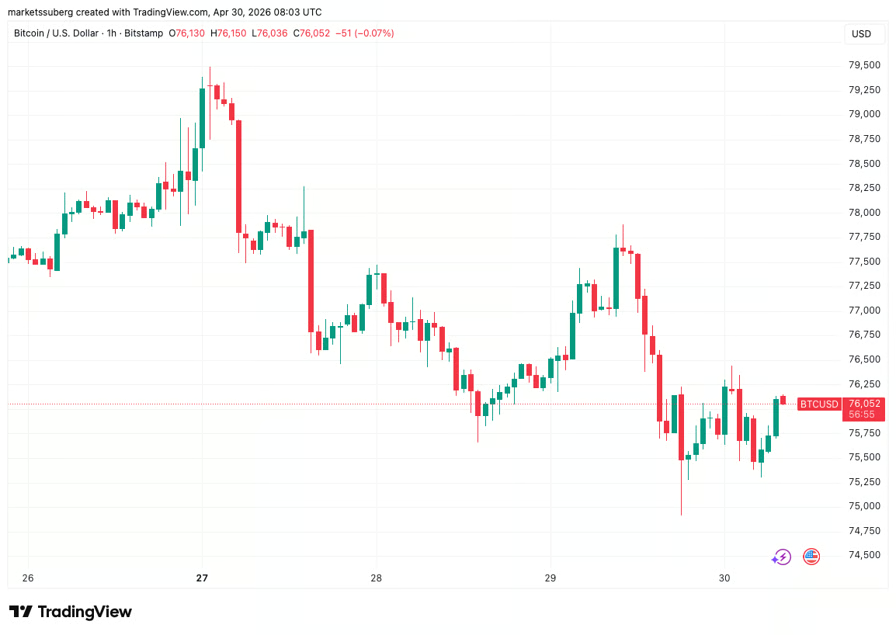
Data from TradingView showed BTC/USD circling $76,000, down around 2% from the previous day’s high.
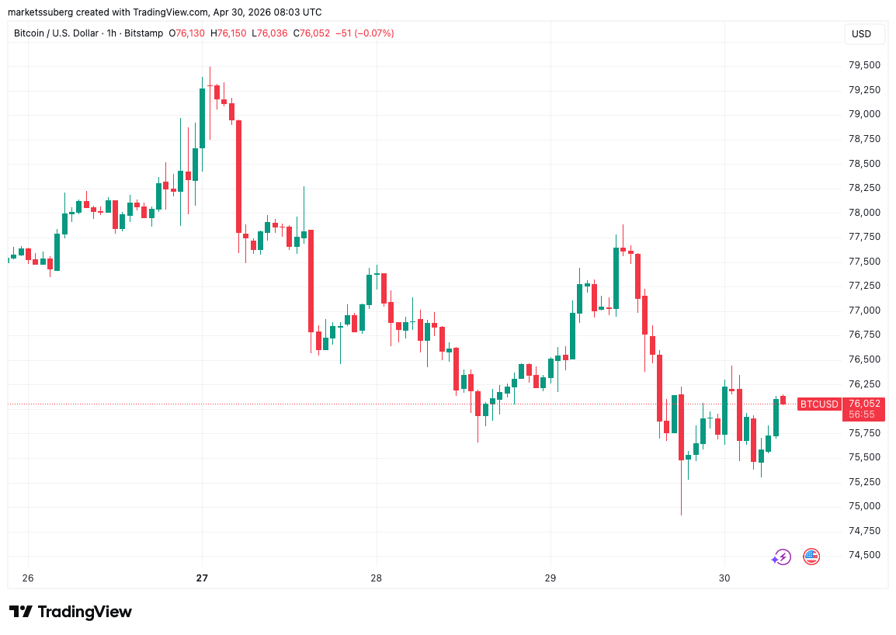
BTC/USD one-hour chart. Source: Cointelegraph/TradingView
A combination of high oil prices and the US Federal Reserve’s “most hawkish” meeting in years kept risk-asset optimism low.
Both were a result of the ongoing US-Iran war, which showed no sign of resolution.
“Iran can’t get their act together. They don’t know how to sign a nonnuclear deal. They better get smart soon!” US President Donald Trump wrote in one of his latest posts on Truth Social.

Source: Truth Social
Amid the tensions, spot Brent crude oil passed $120 per barrel for the first time since June 2022.
“Asia is facing its worst even crisis in history and Europe has just weeks worth of jet fuel left. The US is exporting record amounts of oil as a result,” trading resource The Kobeissi Letter responded in a post on X.
“Inflation is back.”
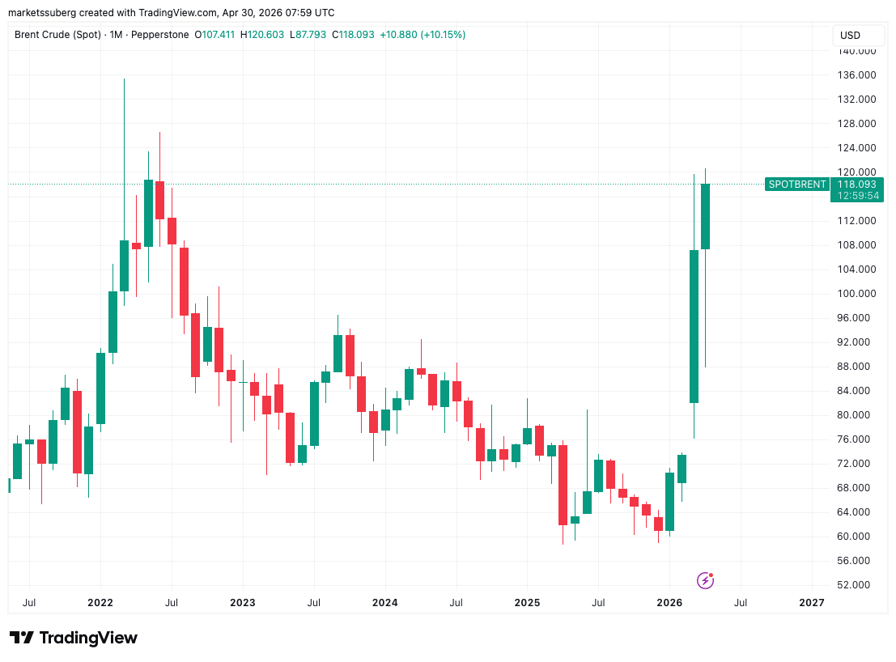
Spot Brent crude oil one-month chart. Source: Cointelegraph/TradingView
Inflation worries were among the guiding factors for Fed officials at Wednesday’s Federal Open Market Committee (FOMC) meeting, where they left interest rates unchanged.
While markets expected that outcome, commentators noted a worsening outlook for risk appetite due to changing Fed policy.
Nic Puckrin, CEO and cofounder of crypto education platform Coin Bureau, described the FOMC meeting — the last with Jerome Powell as Chair — as his “most hawkish in years.”
“For the first time since 1992, 4 Federal Reserve members dissented the decision,” he noted.
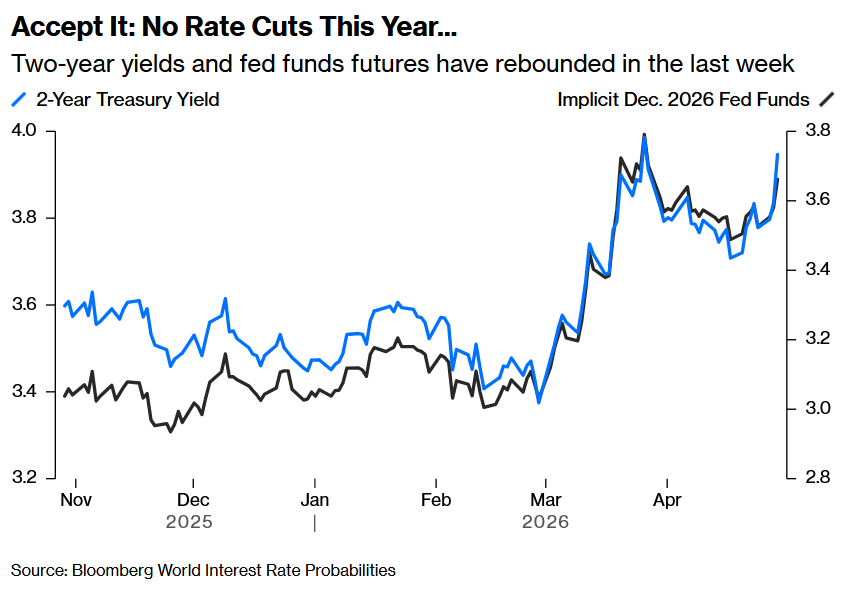
US two-year Treasury yield versus Fed funds rate futures. Source: Nic Puckrin/X
Puckrin suggested that the Fed’s “soft landing” policy on inflation had also gone.
“Rates held for the third straight meeting, but the direction of travel just changed,” he summarized.
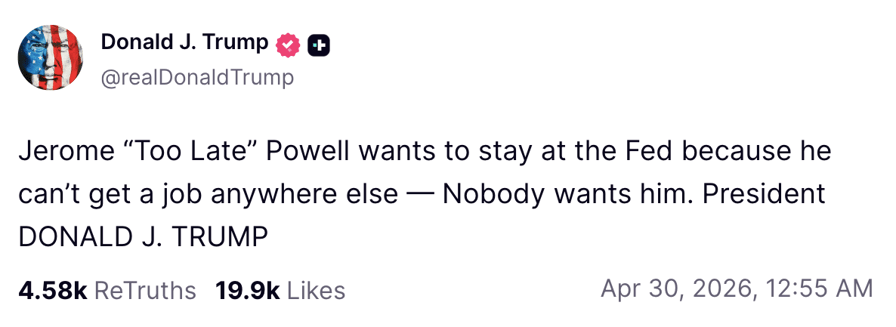
Source: Truth Social
Trump repeated attacks on Powell after the decision, calling him “too late” in cutting rates ahead of the likely takeover by Kevin Warsh.
As Cointelegraph reported, Trump said that he “would” be disappointed if Warsh did not cut rates at his first FOMC meeting in June.
BTC price 21-day trend line hangs in the balance
BTC price action still managed to respect the 21-day simple moving average (SMA) near $75,500 overnight.
Related: First 21-week trend line reclaim since October 2025: Five things to know in Bitcoin this week
That support line was the key question for trading resource Material Indicators on low time frames.
“Will support hold?” it queried in an X post alongside order-book liquidity data for Binance.
The data showed whale order classes broadly buying the dip, while smaller order classes reduced exposure.
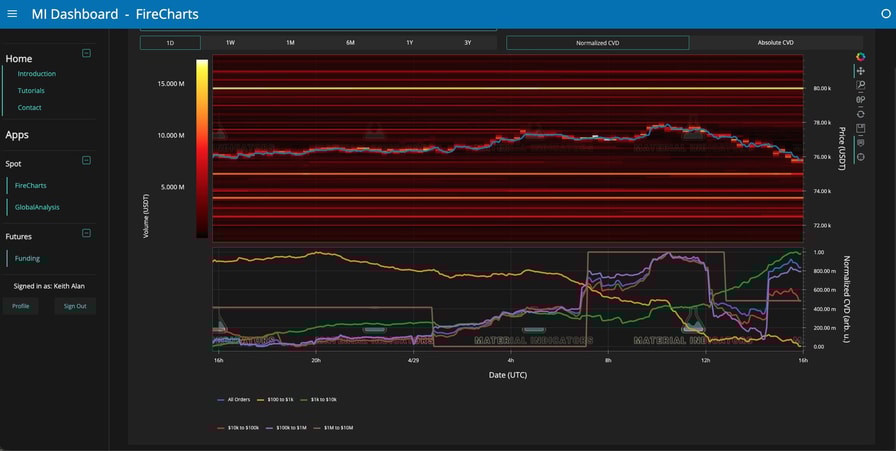
BTC/USDT order-book data (Binance) with whale orders. Source: Material Indicators/X
Bybit has been removed from Malaysia’s Investor Alert List, just as the exchange has reinforced its local strategy through a fresh investment in a regulated exchange.
Summary
- Bybit has been removed from Malaysia’s Investor Alert List after engaging with regulators and aligning its operations with local compliance expectations.
- Founder Ben Zhou said the exchange also led an $8 million funding round in Hata to support regulated infrastructure and build user trust in the market.
- Hata plans to use the funds to improve liquidity and expand its user base.
According to Ben Zhou, the exchange achieved this outcome after “constructive engagement and alignment with local regulatory expectations,” while also leading funding into Hata, a dual-licensed crypto platform operating in the country.
“We believe regulated local infrastructure matters for long-term industry growth and user trust,” said Bybit founder Ben Zhou, describing it as a compliance-first approach that ties directly to user trust and long-term market development.
Details from Bybit and Hata show the exchange led an $8 million Series A round, following its earlier participation in a $4.2 million seed raise, forming a partnership focused on expanding Malaysia’s regulated digital asset market.
Malaysia’s regulatory framework has required platforms to meet strict licensing and investor protection standards before gaining access to users.
“Bybit’s decision to lead this round and partner with us strategically is a strong validation of our belief that crypto should be built the right way, with proper licensing, rigorous compliance, and an unwavering commitment to investor protection,” said Hata CEO David Low.
The collaboration between Bybit and Hata extends beyond funding into operational expansion within Malaysia’s regulated environment. Hata said it plans to deploy the capital to improve platform liquidity, expand its user base through ecosystem and marketing efforts, and build new digital asset products alongside Bybit.
The company also stated it operates under two licenses from the Securities Commission Malaysia and the Labuan Financial Services Authority, positioning itself as the country’s only dual-licensed exchange.
Hata reported that since launching in 2023, it has onboarded more than 209,000 users and processed 1.04 billion Malaysian ringgits, or about $225 million, in transaction volume in 2025.
Zhou has previously described Malaysia as “a strategically important market… with one of the most digitally engaged populations in Southeast Asia and strong long-term potential for digital asset adoption,” linking Bybit’s continued investment to local demand and long-term positioning.
Regulatory developments in Malaysia have accelerated over the past months alongside these corporate moves. Authorities are building infrastructure for tokenized finance and stablecoin use cases.
Malaysia has launched a Digital Asset Innovation Hub as a sandbox for programmable payments, ringgit-backed stablecoins, and supply chain financing under central bank oversight.
Meanwhile, Bank Negara Malaysia has also outlined a three-year roadmap to study tokenized deposits, stablecoins, and cross-border settlement, while confirming that sandbox programs are underway with institutions including Standard Chartered, CIMB Group, and Maybank.


*** NOT FOR PUBLICATION – EMBARGOED TILL 5AM ET APRIL 30 ****
XO Market is betting that the future of prediction markets won’t be dictated by centralized teams deciding what people can trade on, but by users themselves.
The startup, which just closed a $6 million seed round led by 20VC, Picus Capital, Coinbase Ventures, Venture Together and a group of angels including Australian cricket captain Pat Cummins, is positioning itself as the “YouTube of prediction markets,” according to co-founder Ali Habbabeh.
“Today’s major platforms like Kalshi and Polymarket act more like Netflix,” Habbabeh told CoinDesk in an interview. “They decide what markets exist. We’ve flipped that model entirely. On XO, users create the markets themselves.”
The distinction is critical. While incumbents rely on internal teams to curate and list prediction markets, XO allows individuals or companies to spin up their own markets, set parameters and fees, and let others trade on them. The result, Habbabeh said, is a broader, and often more creative, set of opportunities.
“We believe the future of prediction markets is user-generated. The best markets aren’t decided by a platform, they emerge from the community.”
Mainnet beta launch
The model appears to be gaining traction. Since starting its mainnet beta in mid-November, XO has generated more than $150 million in trading volume, attracted over 30,000 users and seen more than 600 user-created markets. An earlier pilot began in April 2025 with a testnet rollout.
“The metrics look strong because the incentives are aligned,” Habbabeh said. “If you create a compelling market, people trade on it. If you don’t, it dies naturally.”
That “natural selection” dynamic may be a double-edged sword. Even Habbabeh points out that competing user-generated platforms like Nine Lives and Warm Protocol struggled to convert the concept into meaningful liquidity, resulting in inactive markets or minimal trading activity.
It is unlikely that Polymarket or Kalshi will offer user-generated markets, according to Habbabeh, because they would need to find market makers willing to provide liquidity for thousands of different events and would have to alter their infrastructure. Their current models are also extremely profitable, he added.
Prediction markets are gaining traction beyond their niche origins, drawing increased interest from retail traders and institutional participants alike as a new venue for pricing uncertainty. Advances in digital-asset infrastructure have lowered barriers to entry, while a series of high-profile political and economic events has underscored the limitations of traditional forecasting tools.
The result is a growing number of platforms where contracts tied to real-world outcomes are traded with increasing liquidity, positioning prediction markets as an emerging, and lightly regulated, complement to conventional financial markets.
Total industry volume jumped roughly fourfold to more than $60 billion in 2025, up from about $15 billion–$16 billion the year before, with platforms like Polymarket driving much of that growth.
On Polymarket specifically, monthly trading exploded from just $54 million at the start of 2024 to over $2.6 billion the following November, helping push cumulative volume past $9 billion in a single year.
XO Vaults
Alongside its core platform, XO is preparing a new product aimed at “democratizing” another key part of the ecosystem: market making.
The forthcoming “XO Vaults” will allow users to pool capital into strategies that provide liquidity across prediction markets, something traditionally dominated by professional firms.
“On platforms like Kalshi or Polymarket, liquidity is controlled by a handful of large market makers,” Habbabeh said. “With XO Vaults, anyone can become a market maker.”
Users will be able to create vaults tied to specific strategies or categories, such as sports or politics, and earn fees by supplying liquidity. Others can invest in those vaults, effectively gaining exposure to market-making returns without actively trading.
“It’s similar to copy trading, but for liquidity provision,” Habbabeh said. “We’re targeting yields of around 8% to 10% annually based on what market makers typically earn.”
The product, expected to debut within weeks, could introduce a new yield primitive in decentralized finance, blending prediction markets with passive income strategies.
“Not everyone wants to bet on outcomes,” Habbabeh said. “Some people just want to earn from the activity around those markets.”
Parlays
The XO team is also developing a feature it says could reshape how parlays work in prediction markets.
“It’s not your typical copy-paste of sportsbook parlays into prediction markets,” said Habbabeh.
The feature, tentatively named “XO Stories,” aims to give users more creative control by linking multiple outcomes beyond traditional parlays. Though details remain limited, the team says pricing will be dynamic, offering a new take on prediction markets.
Built on XO Vaults, the system is meant to support complex, multi-outcome structures without simply aggregating existing trades. Habbabeh shared few details, but suggested it could reshape how users think about and use parlays.
The best content comes from users
Despite increased regulatory scrutiny around prediction markets, particularly in the U.S., Habbabeh said he believes XO’s onchain, permissionless design could offer advantages.
“Everything on XO is transparent and onchain,” he said. “That puts us in a different category compared to more centralized platforms.”
For now, the focus remains on growth and product expansion.
As XO builds out its ecosystem, Habbabeh is confident the user-generated model will continue to differentiate it.
“The internet showed us that the best content doesn’t come from centralized studios, it comes from users,” he said. “We think prediction markets will follow the same path.”
Read more: AI agents are quietly rewriting prediction market trading
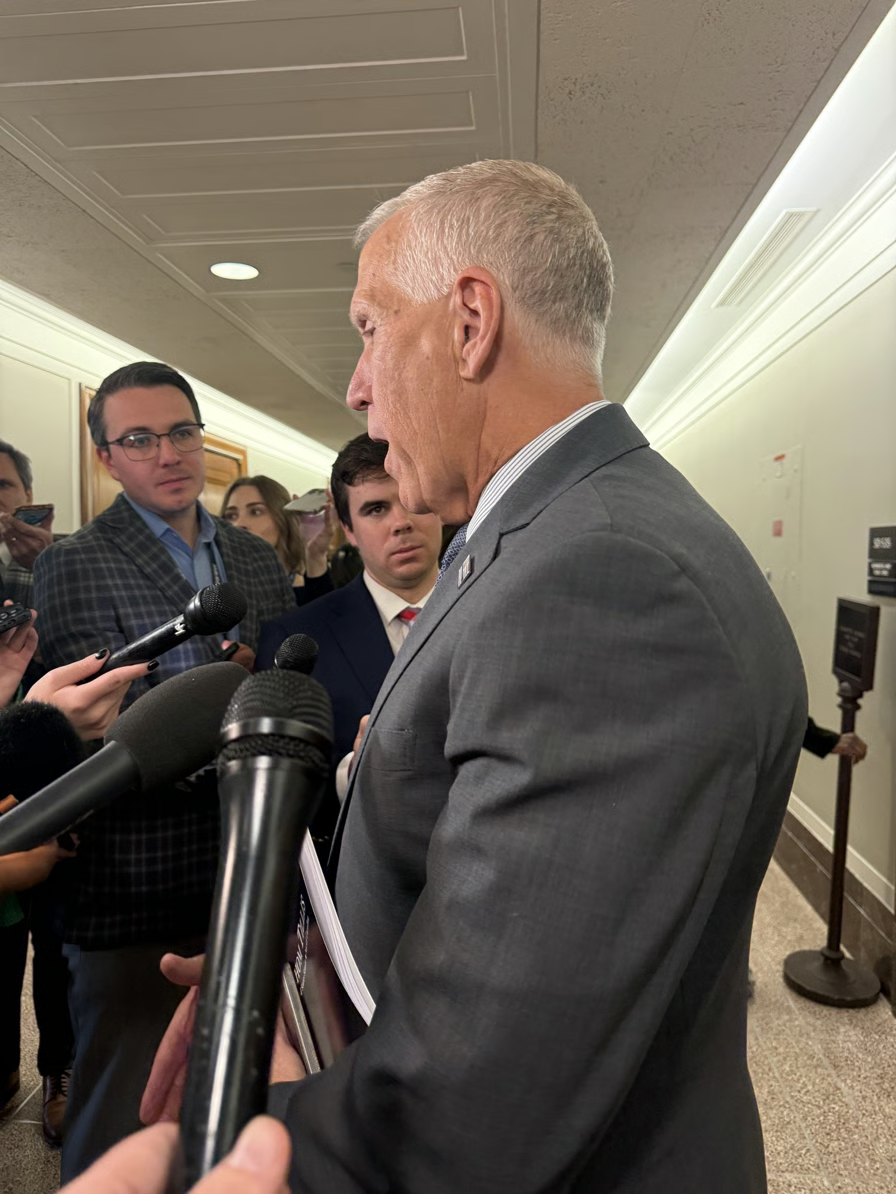
US Senator Thom Tillis says he will push the Senate Banking Committee to advance the stalled crypto market structure bill, as the text of the bill has made progress and is ready for another vote.
Tillis, a key Senate Banking Republican, told reporters on Wednesday that he would ask Senate Banking Committee Chairman Tim Scott “to move forward with scheduling a markup” when the Senate is back in session on May 11.
“I think that we’ve made a lot of progress,” Tillis said. “But at the end of the day, until you have a forcing mechanism of a markup, everybody that really doesn’t want it done is going to have one more thing that they want to talk about, and I think it’s time to get it before the committee, move it forward.”
The Senate’s crypto market structure bill would lay out how the US’s two most influential financial market regulators would oversee crypto. The House passed its version of the bill, the CLARITY Act, in July, but the Senate’s version has been plagued by delays as lawmakers and lobbyists have sought to edit provisions.
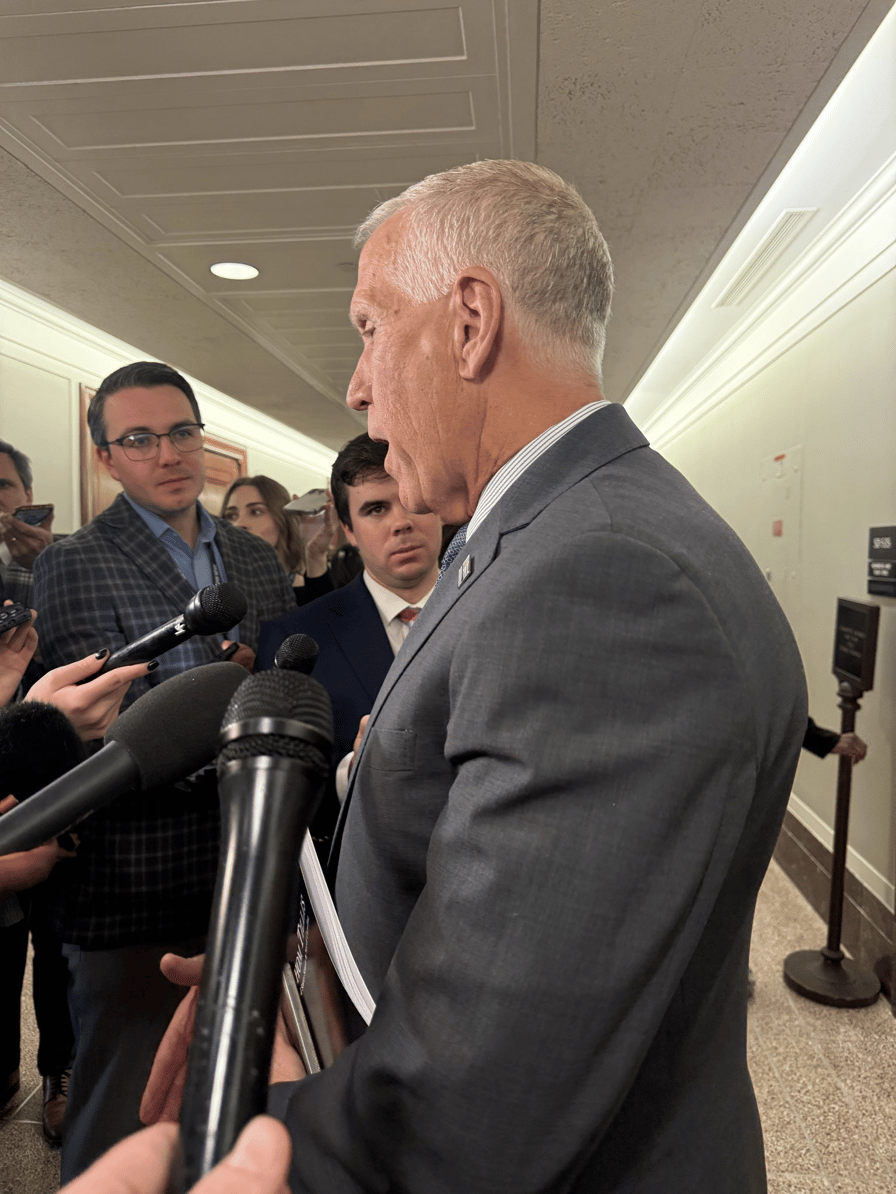
Thom Tillis holding a press gaggle with reporters on Wednesday. Source: Chase Williams
The Senate Banking Committee delayed the bill’s markup in January after major crypto lobbyist Coinbase pulled its support over a provision banning crypto exchanges from paying stablecoin yields.
Banking lobbyists have fought to keep the provision in the legislation, arguing that banning third parties from paying stablecoin yields closes a perceived loophole in the GENIUS Act, which prohibits stablecoin issuers from paying yield.
“I believe we’ve heard the concerns [and] addressed a lot of the concerns of the bank,” Tillis said. “There may be a few more that we can get there if they want to come and work in good faith; otherwise, I’m going to encourage the chair to move forward with the markup.”
Related: Key US senator lifts block on Trump’s Fed pick Kevin Warsh
Tillis added that he hoped to publicly release the legislative text at least four days before the markup, after crypto and banking stakeholders are given a preview.
Other provisions at issue in the bill, which senators have worked to resolve, concern ethics and protecting software developers.
On Tuesday, Politico reported that Tillis said the crypto bill would “need to address the law enforcement concerns” around a provision that would protect crypto software developers from prosecution if others commit illegal activity on their platforms.
Tillis told reporters on Wednesday that he was “generally in support” of the progress Senator Cynthia Lummis had made on the provision.
On Monday, Tillis backed a demand popular among Senate Banking Democrats, saying he wouldn’t support the bill unless it included ethics provisions limiting how government officials can use and promote crypto.
“There has to be ethics language in the bill before it leaves the Senate, or I’ll go from one of the people working on negotiating it to voting against it,” Tillis said.
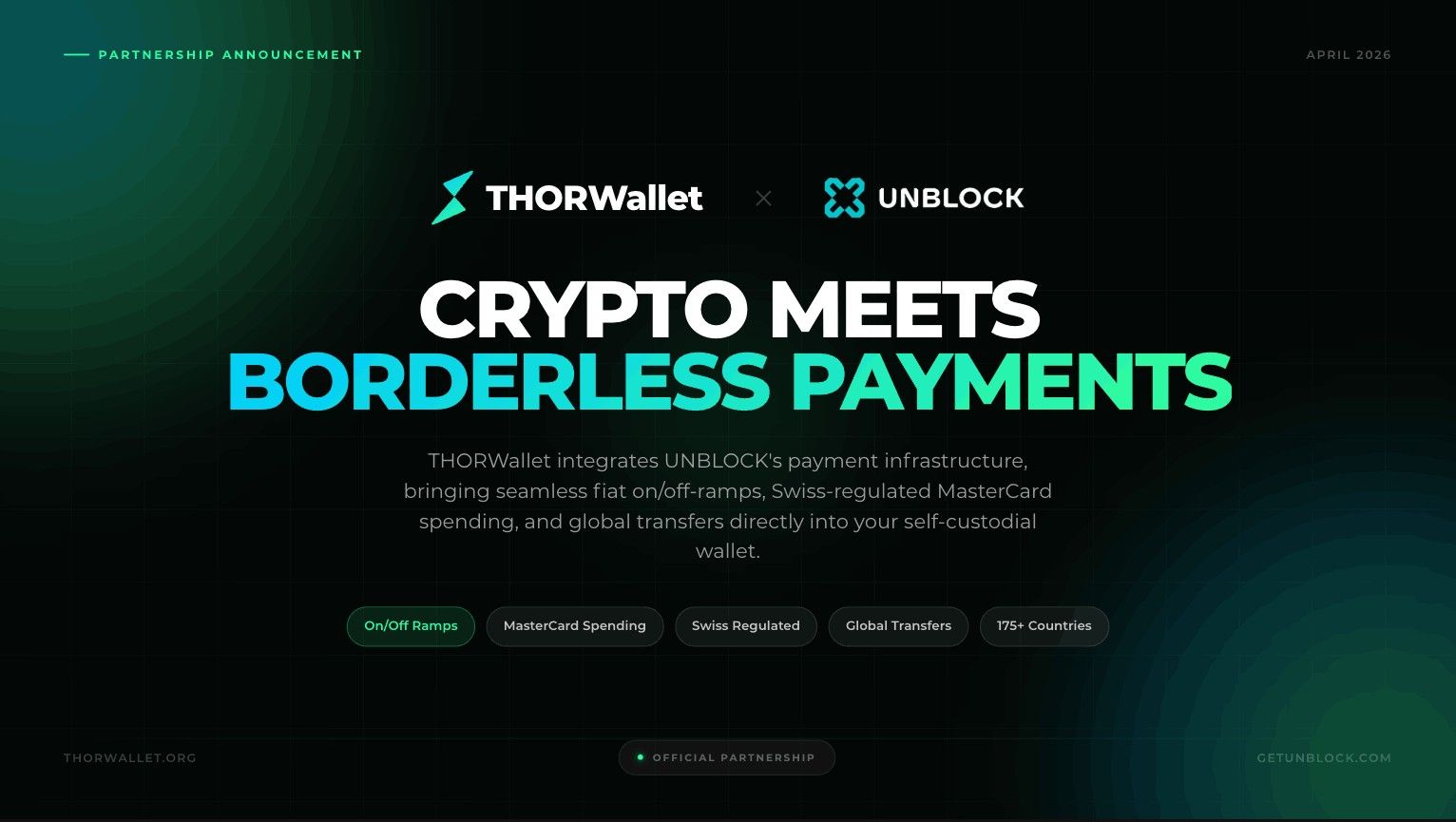
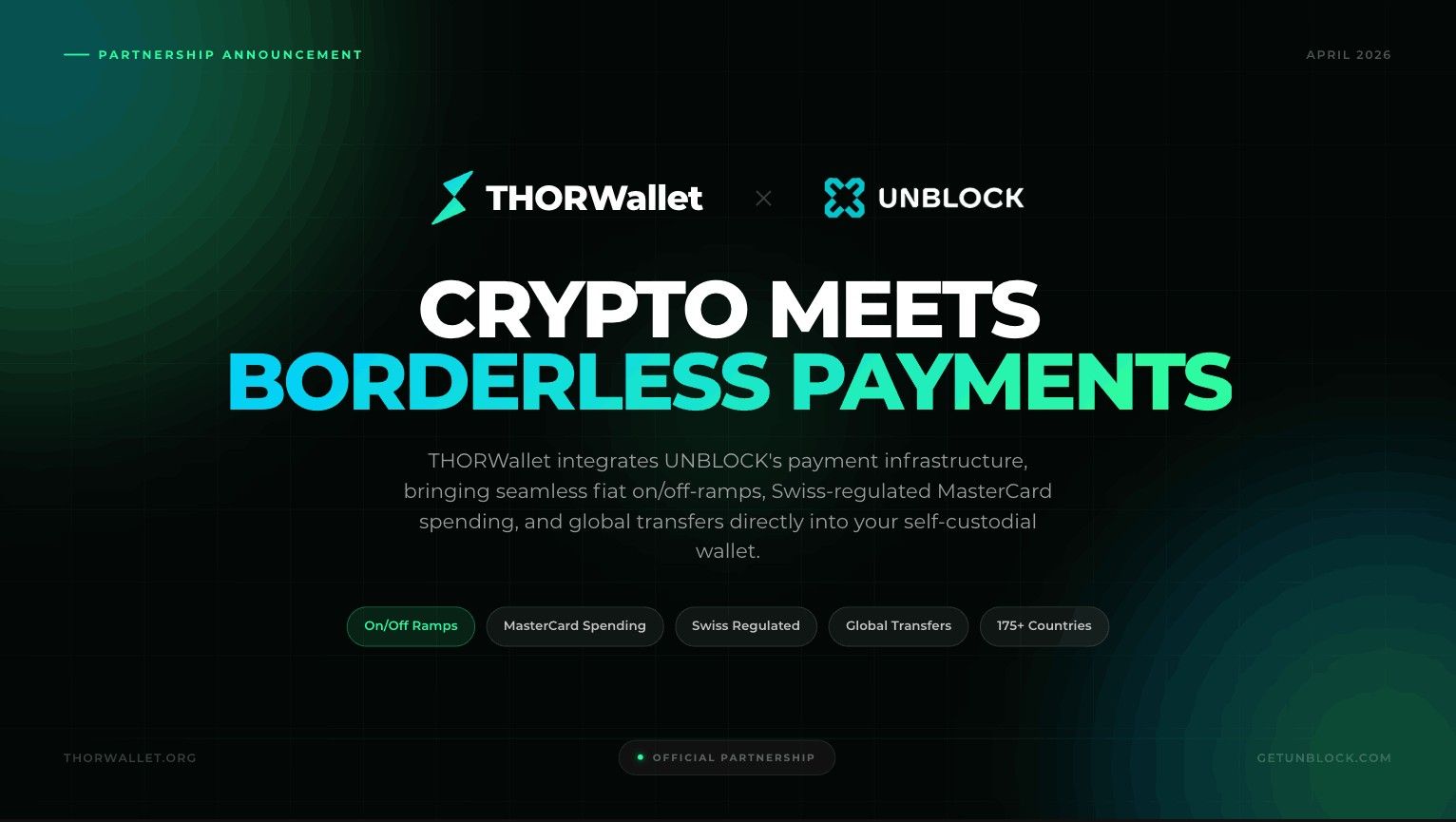
The Web3 neobank narrative is accelerating fast. Stablecoins, crypto cards, self-custody finance and stablecoin settlements are moving from niche crypto products into everyday payment infrastructure. Recent market activity shows how serious traditional payment networks and fintech players have become about stablecoin-powered finance, with global payment companies increasingly investing in crypto settlement, wallet infrastructure and digital asset payment rails.
THORWallet is now taking another major step in this direction through a strategic partnership with Unblock, a Swiss-regulated payment infrastructure provider with a global footprint across Switzerland, Latin America, and the United States.
Rather than choosing one of the larger established crypto card players such as ether.fi or Kulipa, THORWallet selected Unblock for a very specific reason: flexibility, regulatory alignment, and global reach.
Unblock is headquartered in Switzerland, operates under a Swiss regulatory framework and maintains offices in Panama, Medellin, and Miami. This international setup allows the company to support efficient card issuance and delivery across more than 175 countries, giving THORWallet the ability to serve users in almost every region of the world.Unblock is headquartered in Switzerland, operates under a Swiss regulatory framework and maintains offices in Panama, Medellin, and Miami. This international setup allows the company to support efficient card issuance and delivery across more than 175 countries, giving THORWallet the ability to serve users in almost every region of the world. With this extensive reach, we are uniquely positioned to scale globally with speed and efficiency, reaching users in markets that remain inaccessible to most competitors.
For THORWallet, the partnership is especially strategic because it is Unblock’s first non-custodial wallet partnership. This means both teams can build the product from a clean slate, instead of adapting THORWallet to an existing custodial model. The result is significantly more flexibility around user experience, card functionality, stablecoin rails and future premium features.
THORWallet was among the first wallets to offer a real non-custodial Mastercard experience. With Unblock, the company is now expanding that offering into a much broader global payment and remittance product.
The vision is clear: allow users to hold assets in self-custody, access stablecoin rails and spend through virtual and physical Mastercard products almost anywhere in the world.
For users in emerging markets, freelancers, digital nomads, crypto native teams and global businesses, this combination could become especially powerful. Stablecoins already provide fast global settlement. Mastercard acceptance adds everyday usability. THORWallet’s non-custodial infrastructure keeps users in control of their assets.
Together, THORWallet and Unblock aim to turn crypto from something users hold into something they can actually use daily.
As stablecoin payments continue to gain traction and Web3 neobanks become one of the strongest narratives in crypto, THORWallet’s partnership with Unblock positions the company to become a global payment and remittance powerhouse built on self-custody, stablecoins and real-world card access.
About THORWallet
THORWallet is a Swiss-based non-custodial DeFi wallet built to bring on-chain finance to everyday users.
The platform combines self-custody, cross-chain swaps, DeFi access, stablecoin rails and card-based spending in one mobile-first application. THORWallet allows users to swap native assets across multiple blockchains without relying on wrapped assets, centralized exchanges or traditional bridge infrastructure.
Since launching, THORWallet has positioned itself as one of the leading mobile gateways for cross-chain DeFi, giving users access to protocols such as THORChain, Maya Protocol and other decentralized liquidity networks. The app also offers real-world finance features, including Swiss IBAN account access, crypto card functionality and DeFi yield opportunities.
THORWallet’s long-term vision is to become a self-custodial on-chain finance platform where users can hold, swap, earn and spend digital assets globally while remaining in control of their funds.
About Unblock
Unblock is a Swiss regulated payment infrastructure provider building crypto enabled financial services for users and businesses worldwide.
Headquartered in Switzerland, with offices in Panama, Medellin and Miami, Unblock combines regulatory alignment with international operational reach. Its infrastructure supports fiat and crypto payment flows, card issuance and global distribution across more than 175 countries.
Unblock provides the payment and card infrastructure needed to connect digital assets with real world spending. Through its global setup, Unblock enables partners to launch virtual and physical card products, support stablecoin based payment flows and reach users across both developed and emerging markets.
Through its partnership with THORWallet, Unblock is entering the non custodial wallet sector for the first time, helping build a new generation of payment products where users can access global spending infrastructure while maintaining self custody of their assets.
The post THORWallet Partners with Unblock to Expand Global Non-Custodial Mastercard Access appeared first on BeInCrypto.

US Treasury Secretary Scott Bessent announced sanctions on a network of Iran-linked Bitcoin crypto wallets this week, freezing $344 million in crypto. This is one of the largest single enforcement actions targeting Tehran’s on-chain infrastructure.
The move came as the Trump administration escalates economic pressure on Iran during active nuclear negotiations, and it signals that the Treasury is no longer treating crypto as a peripheral sanctions enforcement problem.
Iran’s crypto ecosystem was valued at more than $7.78 billion last year, growing faster than in 2024, and the Islamic Revolutionary Guard Corps now accounts for half of all on-chain activity.
How Iran Turned USDT and State Bitcoin Mining Into a Sanctions Bypass Machine
The Central Bank of Iran bought more than $500 million in USDT last year. Allegedly and systematically routing reserves through a US dollar-pegged stablecoin to circumvent SWIFT-dependent banking rails. Elliptic flagged the purchases in a January report, calling it part of a deliberate strategy to access dollar liquidity without touching the correspondent banking system.
BREAKING: — Ash Crypto (@AshCrypto) January 21, 2026
 Central Bank of Iran has bought over $500 million in USDT to support its currency and its trade, per Elliptic. pic.twitter.com/VnSxhvcuyO
USDT’s appeal is structural. It carries dollar stability without requiring a US bank account, settles on public blockchains in minutes, and moves freely across borders. Iran has been exploiting that window aggressively.
Geopolitical flashpoints like the Strait of Hormuz dispute have only accelerated the integration: in early April, Iranian authorities announced they would require oil ships transiting the strait to pay tolls in bitcoin, formalizing crypto’s role in sovereign trade infrastructure.
— Crypto Rover (@cryptorover) April 9, 2026
 BREAKING: European Union says navigation through Strait of Hormuz should be with 'no payment or toll whatsoever'
Meanwhile Iran is cashing in $2,000,000 in Bitcoin or Yuan per tanker! pic.twitter.com/cDc3CLOLZR
The IRGC’s parallel operation is harder to trace. By using subsidized electricity, the IRGC engages in crypto mining and is effectively converting energy into non-sanctionable money, according to a Tehran-based cryptocurrency and blockchain researcher.
Freshly mined Bitcoin carries no transaction history; it is clean of any address exposure that on-chain analytics firms can flag. That makes it far more useful than coins circulating through sanctioned exchanges, and it means the IRGC is generating hard currency from energy assets that no enforcement action can retroactively freeze.
Discover: The best crypto to diversify your portfolio with
On-Chain Loopholes Multiplying?
OFAC tied the frozen $344 million specifically to USDT wallets to Iran’s oil payment masking operations, with Tether blacklisting the flagged addresses.
“We will follow the money that Tehran is desperately attempting to move outside of the country and target all financial lifelines tied to the regime,” Bessent posted on X.
But the gaps remain visible in the transaction data. Between February 28 and March 2, following US-Israel strikes, on-chain analytics detected $10.3 million in cryptoasset outflows from Iran linked Bitcoin wallets. Chainalysis confirmed that some of those wallets had historical exposure to IRGC-identified addresses, indicating state-level fund movement in real time.
Before Israel’s 12-day war in June 2025, TRM Labs identified a 150 percent spike in outflows from Nobitex. Within minutes of the first strike, outgoing volumes surged 700 percent. Even when $90 million was stolen from Nobitex in a June 18 cyberattack attributed to Israel-linked group Predatory Sparrow, the platform’s 11 million users kept trading. The ecosystem absorbed the hit.
Martin said regulators “are coming to understand” that cryptocurrencies are being used at scale for sanctions evasion, and more designations are coming. If Treasury coordinates its next wave of actions with DOJ and FinCEN to target virtual asset service providers processing Iranian flows, and pressures stablecoin issuers to implement proactive blocking rather than reactive blacklisting.
Discover: The best pre-launch token sales
The post US Treasury vs. Tehran: Iran in Bitcoin Cat and Mouse Game appeared first on Cryptonews.

Quick Summary
- Meta exceeded Q1 2026 profit forecasts, reporting EPS of $10.44 compared to analyst estimates of $6.67
- Quarterly revenue reached $56.3 billion, representing a 33% year-over-year increase
- 2026 capital expenditure forecast elevated to $125B–$145B range from prior $115B–$135B outlook
- Shares declined approximately 8% during premarket hours following the earnings announcement
- The company executed zero share buybacks this quarter, contrasting with nearly $13B in repurchases last year
Meta Platforms delivered impressive first-quarter results, yet investors responded with a selloff. Shares tumbled roughly 8% in Thursday’s premarket session after the social media giant announced an upward revision to its annual capital spending forecast.
The financial results themselves were undeniably robust. Meta reported earnings of $10.44 per share alongside revenue totaling $56.31 billion. Analyst consensus had projected $6.65 earnings per share on $55.52 billion in sales. The top line represented a 33% surge versus the year-ago period.
One important caveat: the earnings figure received a substantial lift from an $8.03 billion tax benefit. Excluding this one-time gain, adjusted earnings per share lands at $7.31—still comfortably above forecasts, but representing a more modest beat than the headline figure suggests.
The primary concern driving the stock decline centered on capital expenditure projections. Meta increased its 2026 spending outlook to a bracket of $125 billion to $145 billion, elevated from the previously communicated $115 billion to $135 billion range. The new midpoint of $135 billion represents a $10 billion jump from the prior forecast.
Management attributed the spending increase to rising costs for hardware components and expanded data center infrastructure. The Wall Street Journal previously reported that Meta had been extending the operational lifespan of certain server hardware due to memory chip supply constraints.
Rising Investments Compress Cash Generation
The accelerated spending trajectory is creating pressure on free cash flow generation. Additionally, Meta abstained from any stock repurchase activity during the quarter. This marks a significant departure from typical behavior—the company allocated nearly $13 billion toward buybacks throughout 2025.
Truist Securities analyst Youssef Squali noted that Meta “continues to earn the right to invest as long as it delivers faster top line growth for longer near-term and higher free cash flows long-term.”
Regarding user metrics, Meta’s family of applications recorded an average of 3.56 billion daily active users during March, reflecting 4% annual growth. The figure experienced a modest sequential decline, which Meta explained was due to internet connectivity issues in Iran and limited WhatsApp availability in Russia.
Advertising metrics delivered encouraging trends. Meta increased ad impressions by 19% while simultaneously achieving 12% higher average prices per ad. This dual improvement underscores the effectiveness of its AI-powered engagement algorithms and targeting capabilities.
CEO Commentary
Mark Zuckerberg characterized the period as a “milestone quarter,” highlighting robust engagement across applications and the debut of the initial model from Meta Superintelligence Labs.
Full-year operating expense guidance remains unchanged at $162 billion to $169 billion. Looking to Q2 2026, Meta projected revenue between $58 billion and $61 billion—with the midpoint of $59.5 billion trailing slightly behind Wall Street’s $59.6 billion consensus estimate.
Meta also acknowledged continuing legal and regulatory challenges across both European Union and United States jurisdictions as potential obstacles to business operations and financial performance.
The second-quarter revenue guidance midpoint of $59.5 billion falls marginally short of analyst expectations.



Ripple has expanded its presence in the UAE by opening a new Middle East and Africa headquarters in Dubai, increasing its capacity to grow its regional operations.
Summary
- Ripple has opened a new Middle East and Africa headquarters in Dubai, with capacity to double its regional team as demand for regulated blockchain payments grows.
- The company said the Middle East now accounts for a significant share of its global customer base, with clients including Zand Bank, Garanti BBVA, Absa Bank, and Chipper Cash.
According to Ripple, the office is based in the Dubai International Financial Centre and is intended to support rising demand for regulated blockchain payment and custody services across the region.
Ripple said the new facility provides space to double the size of its regional team as it scales support for clients and partners across the Middle East and Africa.
The company stated that its presence in Dubai dates back to 2020, with the region now accounting for a significant share of its global customer base, including institutions such as Zand Bank, Ctrl Alt, Garanti BBVA, Absa Bank, and Chipper Cash.
“In recent years the Middle East has become an increasingly vital driver of Ripple’s global growth. From our earliest days in the UAE, we have seen first-hand the appetite from local businesses for regulated, blockchain-powered payment infrastructure, an appetite that is only growing,” said Reece Merrick, Managing Director for Middle East and Africa at Ripple.
Dubai officials have positioned Ripple’s expansion as evidence of growing institutional confidence in the emirate’s digital asset framework.
“Ripple’s expansion within DIFC is a strong signal of the confidence that world-leading digital asset firms have in Dubai as a global hub for blockchain technology,” said His Excellency Arif Amiri, Chief Executive Officer of the DIFC Authority, adding that the company has operated with “ambition and accountability” while connecting institutions to regulated and scalable financial infrastructure.
Ripple’s regional growth has been supported by regulatory approvals tied to its operations in Dubai. The company stated it became the first blockchain payments provider to receive a full license from the Dubai Financial Services Authority in March 2025, allowing it to offer regulated cross-border digital payment services from within DIFC.
Ripple also confirmed that RLUSD, its dollar-backed stablecoin, has been approved by the DFSA as a recognised crypto token, enabling regulated firms within DIFC to use the asset.
Ripple said the expansion will allow it to deepen support for clients and partners across the Middle East and Africa as adoption of regulated blockchain infrastructure continues to grow. The company added that a larger Dubai-based team will help extend its reach in the region while building on existing relationships with financial institutions already using its services.
XRP traders are showing stronger risk appetite on Binance as funding rates move higher. The shift comes as large holders continue to buy the dip, even as XRP trades below its recent April high.
Summary
- XRP’s 30-day Binance funding rate reached its highest level since early February.
- Whales bought 1.15 billion XRP in 11 days as price pulled back.
- XRP traded at $1.37 despite stronger sentiment and rising derivatives demand.
CryptoQuant analyst Arab Chain said XRP’s 30-day average funding rate on Binance has reached 0.0002. This marks its highest level since early February.
Funding rates had stayed negative for months and fell as low as -0.0007. That period showed stronger short positioning and weaker confidence among derivatives traders.
Long positions gain momentum
The move into positive territory suggests more traders are opening long positions. The 30-day moving average also helps filter short-term market noise.
Arab Chain said the rise may show a broader change in trader behavior. It could point to early accumulation or continued upside momentum if demand holds.
XRP whales have also increased their holdings during the recent price pullback. Wallets holding 10 million to 100 million XRP bought 420 million tokens.
Addresses holding at least 1 billion XRP added another 730 million XRP. Together, these groups acquired 1.15 billion XRP in 11 days.
XRP price remains under pressure
According to crypto.news data, XRP traded at $1.37 at the time of reporting. The token fell 1.22% in 24 hours and 3.66% over the past week.
The price has also corrected nearly 10% from its April 17 peak of $1.51. XRP’s market cap stood at about $84.42 billion, with 62 billion tokens in circulation.
Santiment also reported that XRP has reached its second-highest bullish social sentiment in two years. The firm linked part of the rise to Rakuten’s XRP integration in Japan.
However, Santiment said adoption news does not often trigger instant price breakouts. It noted that market moves may appear after the first wave of excitement cools.
Disclosure: This article does not represent investment advice. The content and materials featured on this page are for educational purposes only.
Crypto World
Ethereum Pulls $1B in Buy Volume on Binance as ETH Drops Below $2,300 Amid Fed Rate Hold

TLDR:
- Ethereum taker buy volume surpassed $1B on Binance within one hour after ETH dropped below $2,300.
- OKX recorded nearly $20M in ETH buying flows in the same one-hour window following the price decline.
- The Federal Reserve held interest rates unchanged at 3.5%–3.75% and flagged rising short-term inflation risks.
- ETH was trading at $2,256.46, reflecting a 3.01% drop in 24 hours and a 3.77% decline over seven days.
Ethereum recorded a sharp surge in buying activity as prices fell below the $2,300 mark. Within a single hour, taker buy volume on Binance crossed $1 billion. A comparable reaction was also logged on OKX, where nearly $20 million in buying flows were recorded.
This buying wave came even as the Federal Reserve held interest rates unchanged. At the time of writing, ETH was changing hands at $2,256.46.
Traders Step In as ETH Falls Below Key Price Zone
Ethereum had previously rebounded above $2,450 before pulling back by roughly 10%. The drop below $2,300 triggered a wave of aggressive long positions from active traders.
This price level appeared to draw buyers who viewed the pullback as a short-term entry point. The response was fast, with large volume recorded within a single hour across major platforms.
Crypto analyst Darkfost drew attention to the buying activity, noting that taker buy volume surged above $1B on Binance alone. Nearly $20M in buying flows were also recorded on OKX over the same period.
According to Darkfost, some investors aggressively stepped in on the long side at these price levels. The move reflected renewed short-term interest in ETH among active market participants.
At the time of writing, Ethereum was down 3.01% over the past 24 hours. Over the prior seven days, the asset had declined by 3.77%.
Despite recent price weakness, the buying response showed traders remained engaged at lower levels. The 24-hour trading volume stood at over $19.4 billion.
Ethereum remains within a broader range structure, with no confirmed breakout in either direction. The pullback from $2,450 kept the asset in a zone closely watched by traders.
Market participants continued to monitor buy and sell pressure at current levels. Any sustained increase in volume could influence the next directional move for ETH.
Fed’s Rate Decision Adds Pressure on Broader Risk Assets
The Federal Reserve held interest rates unchanged within the 3.5% to 3.75% range at its latest meeting. The central bank also noted that short-term inflation could rise again, partly due to higher energy prices.
Many market observers read this tone as relatively hawkish. Risk assets, including cryptocurrencies, often face headwinds when the Fed signals a cautious policy outlook.
However, some traders appeared undeterred by the Fed’s messaging on Wednesday. The buying surge in Ethereum came directly after the rate decision was announced.
A portion of the market still held a constructive short-term view on ETH despite the macro backdrop. This reaction stood in contrast to the broader caution introduced by the Fed’s statement.
ETH trading at $2,256.46 reflected a market navigating mixed signals from both monetary policy and on-chain demand. Traders continued to watch the $2,300 level as a key reference zone.
A reclaim of that level could shift near-term sentiment back toward buyers. Until then, the range-bound structure is likely to remain in place.
The broader context of rising energy prices and a cautious Fed adds uncertainty to crypto markets in the near term.
Nevertheless, the buying volume data shows that institutional and retail appetite for ETH persists at lower price levels.
How the market responds to the next macro catalyst will likely determine whether this buying pressure holds. For now, the $2,300 zone remains the focal point for traders watching ETH closely.

Antero Resources: Another Storm Fern Beneficiary
Bitcoin Juggles $120 Oil and Fed’s ‘Most Hawkish’ Interest-Rate Pause

Kyle Richards Calls Divorcing Mauricio ‘Scary’

Manchester United reach agreement with Casemiro over contract clause amid transfer speculation

US brings back mandatory military draft registration

Steven Gerrard disagrees with Gary Neville over ‘shock’ Chelsea and Arsenal claim | Football


-

 Tech3 days ago
Register Renaming | Hackaday
-

 Fashion6 days ago
Weekend Open Thread – Corporette.com
-
Crypto World5 days ago
Hyperliquid $HYPE Rally Builds Momentum as AI Sector Enters Prove-It Phase
-

 Business6 days ago
Patterson-UTI Energy, Inc. (PTEN) Q1 2026 Earnings Call Transcript
-
 Sports4 days ago
IPL 2026: Ruturaj Gaikwad registers slowest fifty of the season, enters all-time unwanted list | Cricket News
-

 Politics3 days ago
Drax board avoid their own AGM, accused of greenwashing & environmental racism
-

 NewsBeat4 days ago
LK Bennett closes all stores after entering administration
-

 Crypto World6 days ago
Michael Saylor says BTC winter is over. Market analyst disagrees, says bitcoin was in a pullback
-

 Fashion1 day ago
Kylie Jenner’s KHY Enters a New Era with ‘Born in LA’
-

 Tech3 days ago
Images of Samsung’s rumored smart glasses have leaked
-
Entertainment7 days ago
Michael B. Jordan and Austin Butler's “Miami Vice” movie will bring the action back to the '80s
-
 Entertainment5 days ago
Mariah Carey Slams Deposition Claims In Brother’s Lawsuit
-

 Business1 day ago
Most Commercial Energy Audits Miss the Real Losses
-
Entertainment7 days ago
Russell Brand Had Sex With 16 Year Old When He Was 30
-
Crypto World6 days ago
Is Algorand One of the Few Quantum-Resistant Blockchains? Here’s What the Data Shows
-
 NewsBeat6 days ago
Trump threatens to review UK’s claim to Falkland Islands and punish Nato allies over Iran war disagreement
-

 Sports7 days ago
2026 NFL Draft tonight: Time, TV channel, where to watch, order
-

 Sports7 days ago
Bayern Munich on the brink of historic ‘double treble’
-
 Business6 days ago
Jeanine Pirro announces closure of Federal Reserve building cost probe
-

 Business3 days ago
(VIDEO) Charlize Theron Climbs Times Square Billboard to Promote New Netflix Thriller ‘Apex’
You must be logged in to post a comment Login