

Crypto World
MEXC Adds Ondo Finance Listings to Tokenized Stock Offerings


Tokenized equities are gaining traction on crypto trading venues as MEXC deepens its collaboration with Ondo Finance, expanding on-chain access to mainstream U.S. stocks. In a March 3 update, the exchange said it would list 17 additional spot tokenized stock pairs and seven new tokens tied to defense and energy firms, all trading against USDT on its platform. The underlying equities remain held in regulated trust accounts and are subject to quarterly audits, designed to mirror ownership of the corresponding shares. The expansion marks the ninth wave of listings since the product’s initial rollout in September 2025, underscoring the accelerating push into tokenized traditional assets.
Key takeaways
- The MEXC–Ondo Finance partnership adds 17 new tokenized stock pairs and seven defense/energy-linked tokens, broadening on-chain exposure to U.S. equities.
- Tokens are issued as ERC-20 assets on Ethereum and trade against USDT (CRYPTO: USDT) pairs on the exchange, with the underlying shares held in regulated trusts and audited quarterly.
- Trading fees for the 17 new pairs are waived for the first 30 days, a post-launch incentive designed to spur onboarding and liquidity.
- Among the newly listed tokens are representations tied to Lockheed Martin (EXCHANGE: LMT), RTX (EXCHANGE: RTX), ConocoPhillips (EXCHANGE: COP) and Occidental Petroleum (EXCHANGE: OXY); withdrawals for the new tokens are set to commence on March 5.
- This expansion continues a multi-month cadence of tokenized-equity launches, illustrating sustained interest from exchanges in on‑chain access to traditional assets.
Tickers mentioned: $LMT, $RTX, $COP, $OXY, $USDT
Sentiment: Neutral
Price impact: Neutral. The piece centers on new listings and fee waivers rather than explicit price movements or market reactions.
Market context: Tokenized equities are increasingly appearing across crypto venues as platforms seek to bridge traditional asset access with on-chain infrastructure, even as regulatory guidance remains nuanced in the United States. The trend is underscored by multiple exchanges expanding their tokenized stock catalogs and by ongoing industry chatter about how on-chain representations can coexist with conventional securities frameworks.
Why it matters
The MEXC–Ondo Finance collaboration is emblematic of a broader push to tokenize traditional assets and to deliver them in a blockchain-native format. By representing ownership of real shares as ERC-20 tokens, the partners aim to offer investors near-instant settlement, programmable governance features, and 24/7 trading availability across global markets. The underlying shares are held in regulated trust accounts and are subject to quarterly third-party audits, offering a degree of regulatory comfort that is often cited as a barrier in earlier tokenized-stock experiments.
Significantly, the expansion includes defense and energy sector equities. The addition of tokens tied to Lockheed Martin, RTX, ConocoPhillips and Occidental Petroleum alongside broader tech, healthcare and financials exposure broadens the potential use cases for tokenized assets—from hedging and diversification to access for non-traditional audiences who prefer crypto-friendly platforms. For participants, the ability to trade tokenized stock pairings against USDT on an exchange known for its liquidity could reduce the friction and settlement times historically associated with traditional stock trading venues.
Ondo Finance’s role as the on-chain issuer remains central. Based in New York, Ondo focuses on bringing traditional financial assets on-chain, and its current asset base totals around $2.66 billion in tokenized value. This scale underscores the practical viability of maintaining regulated custody and audits while delivering on-chain representations. The partnership’s track record—nine expansions since the product’s September 2025 launch—signals a deliberate strategy to normalize tokenized equities as a complement to, rather than a replacement for, conventional stock markets. In the broader market, such expansions occur amid rising interest in tokenized assets, even as market participants monitor regulatory developments and the potential implications for liquidity, custody, and investor protections.
Additionally, the initiative sits within a backdrop of exchanges experimenting with tokenized-stock pipelines beyond the United States. Other platforms have rolled out tokenized stock trading or perpetual futures tied to US-listed equities, illustrating a growing ecosystem of on-chain representations that appeal to crypto-native traders seeking cross-asset exposure. The combination of regulated custody, periodic audits and 30-day fee waivers creates a practical path for onboarding new users who may be evaluating the stability and reliability of tokenized equities as part of diversified crypto portfolios.
What to watch next
- Withdrawals for the seven new tokenized equities, including LMT, RTX, COP and OXY, begin on March 5, opening the door for user-access and potential liquidity ramps.
- The ongoing cadence of tokenized-equity expansions—now at nine total—could foretell further category diversification, including additional sectors or international listings.
- Regulatory developments in the U.S. and elsewhere could influence product design, custody standards, and eligibility for retail participation in tokenized securities.
- Any updates on trading volumes, liquidity metrics, or auditing cadence could shape investor confidence and platform competitiveness relative to other tokenized-equity offerings.
Sources & verification
- PR Newswire: MEXC and Ondo Finance expand tokenized stock partnership with 17 new spot pairs and zero-fee trading (March 3)
- Newswire Canada: MEXC partners with Ondo Finance to launch tokenized U.S. equities in defense and energy sectors (seven new equities)
- RWA.xyz: Ondo platform data showing tokenized asset totals
- CoinMarketCap: Exchange data corroborating MEXC’s ranking and activity
- Cointelegraph coverage on related tokenized-equity developments (Kraken) for context on industry movements
Expanded tokenized equities deepen MEXC-Ondo collaboration
On March 3, MEXC, a centralized crypto exchange founded in 2018, announced a widened on-chain representation of U.S. equities through its partnership with Ondo Finance. The update confirms 17 additional tokenized stock pairs and seven new tokens connected to the defense and energy sectors. Trading occurs as ERC-20 tokens on Ethereum and exchanges against USDT (CRYPTO: USDT) pairs on the platform, with the underlying shares held in regulated trust accounts and subjected to quarterly audits to help ensure parity with the actual securities. The issuance framework emphasizes custody and compliance, distinguishing it from more speculative on-chain assets by anchoring tokens to registered equities.
The new batch expands a product line that Ondo and MEXC have iterated since September 2025, reflecting a deliberate effort to scale tokenized equities across multiple sectors. The seven defense- and energy-linked tokens—led by shares tied to major names such as Lockheed Martin, RTX, ConocoPhillips and Occidental Petroleum—underscore a broadening approach to sectoral diversification. Investors will see these tokens trade on the same venue as other tokenized assets, with withdrawals scheduled to start on March 5, a procedural milestone that enables on-exchange redemption and on-platform liquidity adjustments. The first appearances of these equities are designed to resemble the same ownership logic that governs traditional shares, backed by regulated custody, audit regimes and outside oversight.
From a structural standpoint, Ondo Finance positions itself as a New York–based firm focused on bringing traditional assets on-chain. Its portfolio footprint—about $2.66 billion in tokenized value—serves as a crucial reference point for the perceived reliability of tokenized equities in live markets. By modularizing the tokenization process (ERC-20 representations) and integrating with established exchanges that already handle high trading volumes, the collaboration aims to deliver familiar equity exposure through the lens of decentralized finance rails. While the technology stack enables on-chain settlement and programmable features, the governance and compliance layers remain anchored in traditional regulatory or custodial frameworks, an arrangement designed to reassure participants wary of unregulated digitized securities.
For observers, the expansion highlights a broader trend: crypto venues are increasingly courting mainstream assets via tokenization, even as the regulatory climate remains a work in progress. The combination of regulated trust custody, periodic audits, and time-bound promotional incentives (such as 30-day trading-fee waivers) signals a practical approach to onboarding a broader audience—investors who want the flexibility and 24/7 access of crypto platforms while still acknowledging the underlying equity rights. In this evolving landscape, the MEXC–Ondo collaboration stands as a notable example of how traditional finance and blockchain-enabled markets are converging, with the potential to redefine liquidity access and cross-asset trading strategies for retail and institutional participants alike.

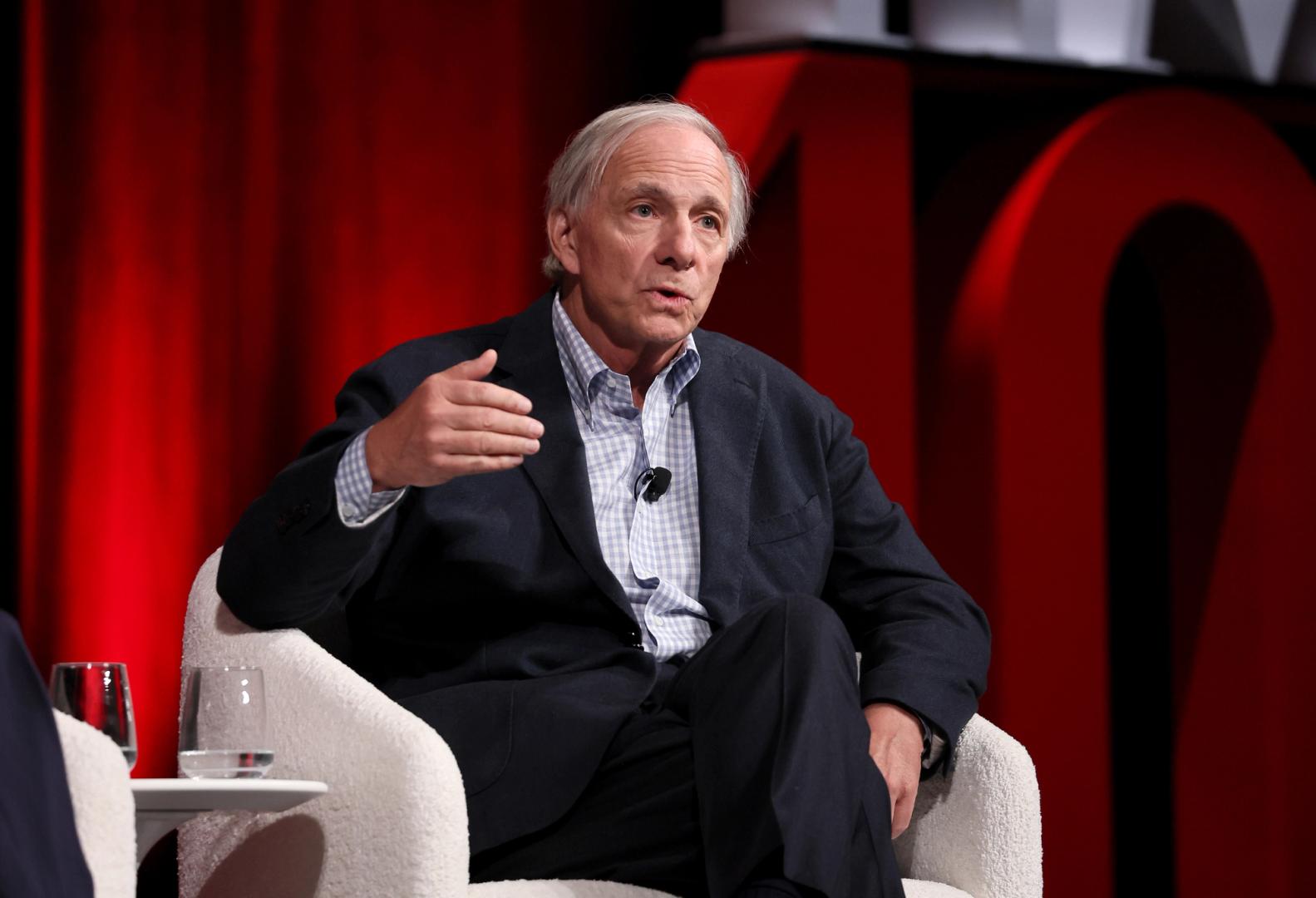
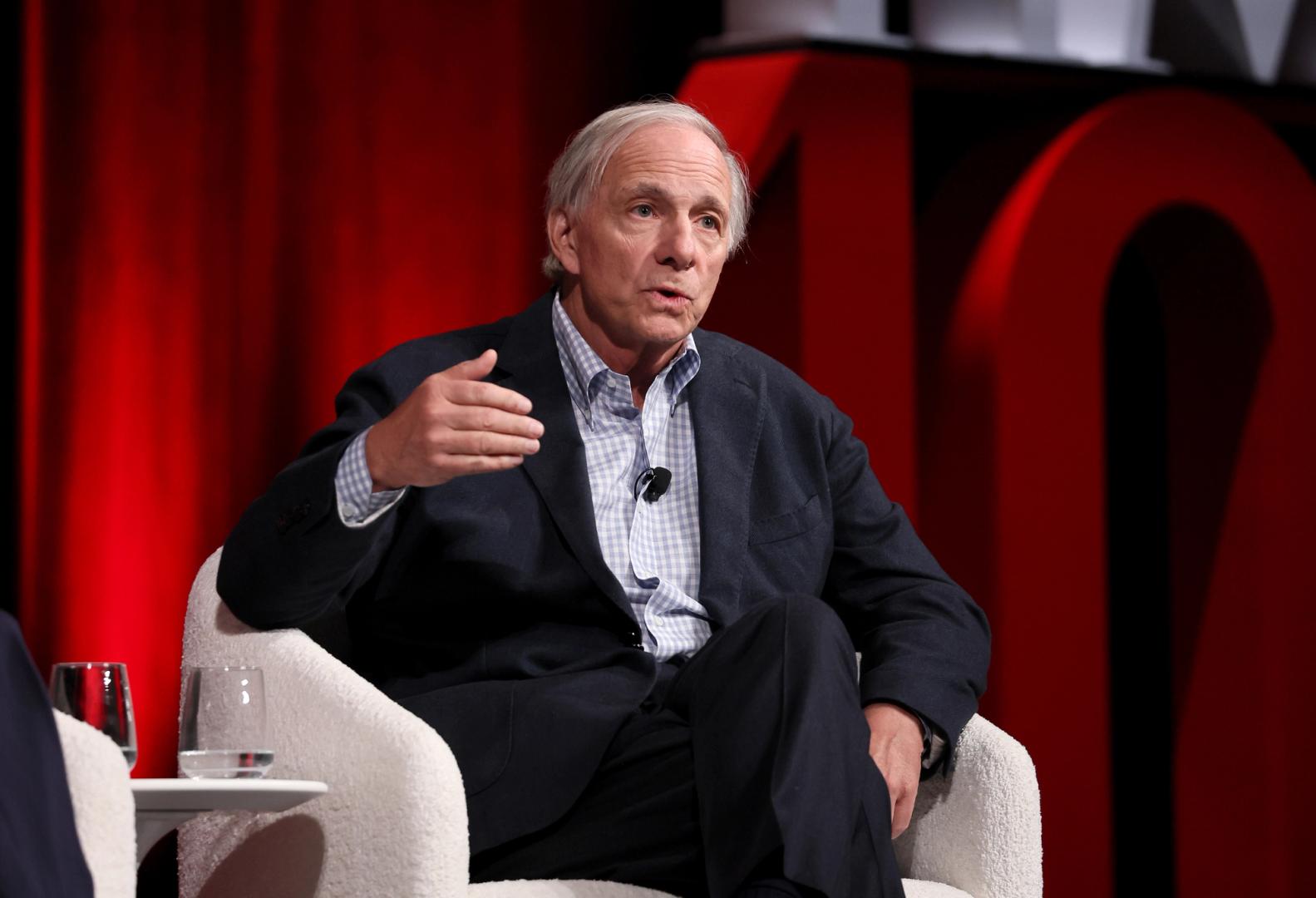
Crypto experts are pushing back after billionaire hedge fund manager Ray Dalio renewed his skepticism about bitcoin , arguing that the largest and oldest cryptocurrency lacks the qualities that make gold a reliable store of value.
Speaking on the All-In Podcast, the Bridgewater Associates founder said bitcoin should not be compared to gold because it lacks central bank backing, offers limited privacy and could face an existential threat from future advances in quantum computing. Dalio also pointed to the asset’s public ledger, suggesting transactions can be monitored and potentially controlled.
Dalio, who said last year that he has about a 1% allocation to bitcoin, isn’t new to the criticism of the digital asset. At the time, he said bitcoin faces challenges as a global reserve asset due to its traceability and potential vulnerabilities from quantum computing.
However, industry figures say those critiques reflect longstanding debates around bitcoin, and that the risks Dalio highlighted are already reflected in bitcoin’s much smaller market value compared to gold.
Bitcoin’s risks are also its upside
However, some analysts say those critiques are exactly why bitcoin is worth buying.
“Dalio’s not ‘wrong’ in an absolute sense,” Matt Hougan, chief investment officer at asset manager Bitwise, told CoinDesk. “There really is some risk with quantum and central banks really aren’t buying bitcoin yet.”
But Hougan said those concerns are precisely why bitcoin still trades far below, roughly 4%, of gold’s total market size. Bitcoin’s market cap currently stands at around $1.4 trillion, compared to gold’s estimated $35 trillion
“These criticisms are quite literally the opportunity,” he said. “We invest in bitcoin because we think these things will change over time; that developers will solve quantum risk and central banks will come around.”
“If these critiques did not exist, bitcoin would already be at $1 million a coin,” he added.
‘Tired’ old narratives
Alex Thorn, Galaxy’s head of research, said Dalio’s arguments echo older narratives from bitcoin’s early years.
“Ray Dalio’s Bitcoin critiques are reminiscent of tired narratives from the pre-2017 era,” Thorn said in an email, adding that quantum risks are already being addressed by developers.
Read more: Here’s why the quantum threat for bitcoin may be smaller than people fear
He also said that comparing bitcoin to gold is fair but overlooks how the two assets differ in practice. “Gold might function well stored in a bunker or at the New York Fed, but Bitcoin has actual real-world utility in ways that gold could never match,” he said, pointing to the asset’s growing adoption by both individuals and institutions over nearly two decades.
Monetary shift
Matthew Sigel, head of digital assets research at VanEck, said both gold and bitcoin “have a role” as they represent hard assets from different monetary eras.
“Ultimately, this is a debate between the monetary architecture of the last century and the one emerging in this one,” he said in an email.
Gold, in his view, solved the trust problem in an “analog” financial system built around reported reserves and custodians. Meanwhile, bitcoin addresses that in a digital environment through open-source development and verifiable transactions.
He added that central banks — like the Czech National Bank — are already beginning to experiment with digital asset exposure and that privacy improvements are emerging through better wallet practices and second-layer networks.
Sigel also pushed back on the quantum computing concern, saying the issue affects the entire financial system rather than bitcoin alone. “Quantum risk is a broader cryptography challenge facing the entire financial system, not a flaw unique to bitcoin,” he said.
Investor surveys, he said, also show that younger investors increasingly favor bitcoin, suggesting a gradual shift in “monetary center.”
Read more: ‘Big Short’ Micheal Burry spots 2022 vibes in bitcoin crash


Disclosure: This article does not represent investment advice. The content and materials featured on this page are for educational purposes only.
Hyperdrive launches Leverage Markets to address structural instability and cascading liquidations in crypto trading.
Summary
- Hyperdrive launches Leverage Markets to tackle crypto’s long-standing liquidation and volatility risks.
- The new model replaces real-time price feeds with redemption-based collateral values to prevent cascades.
- Built for tokenized treasuries and LSTs, Hyperdrive aims to make on-chain leverage more stable and usable.
Today, Hyperdrive announced the launch of its Leverage Markets, designed to combat the structural risks that make leverage on cryptoassets unstable.
Crypto leverage relies on real-time market pricing and continuous liquidity. That architecture creates extreme volatility, which may trigger forced and cascading liquidations. The fragile nature of on-chain leverage has resulted in the reluctance of traders to use credit, one of the fundamental drivers of economic expansion and growth.
Hyperdrive’s Leverage Markets protocol says it removes these vulnerabilities by designing leverage around known redemption prices rather than fluctuating market values. The goal is to create leverage that works more than structural credit than margin trading, with no crashes or no liquidations.
The protocol has emerged at a time when over $180 billion in tokenized treasuries and private credit are live, but can’t be used as collateral safely in existing lending protocols, more than $50 billion in LSTs (stETH, rETH, HYPED etc.) need better capital efficiency than current 70% LTVs allow, and TradFi players need leverage that doesn’t blow up during volatility
Traditional crypto leverage (Aave, Compound, Morpho) values collateral using real-time market prices. When prices drop, liquidators must sell collateral into thin markets, often triggering cascades that wipe out entire positions. Hyperdrive’s model operates differently. Instead of finding out what a token is worth on a DEX at a particular moment, it seeks to know what a particular token can be redeemed for contractually.
For instance, a tokenized treasury fund that’s redeemable for $1.05 USDC is worth $1.05 — even if secondary markets show $0.80 during a panic. According to Hyperdrive, its value is at the redemption rate, not the market price.
When a position needs to close, the protocol executes the actual redemption process (T+30, T+90, whatever the asset specifies) rather than dumping into a DEX. Liquidations become settlements, not emergencies.
According to Cain O’Sullivan, Co-founder of Hyperdrive, the issue isn’t leverage itself, but how the company has built it. When collateral has a contractual redemption path, traders don’t need oracles or DEX liquidity. Positions close deterministically, not by force.
Hyperdrive’s leverage model introduces three concepts that collectively address the fragility of conventional on-chain lending. Collateral is valued using its redemption rate (contractual NAV), not secondary market prices. This aims to eliminate oracle manipulation risk and NAV-market divergence.
When positions become unhealthy, the protocol initiates redemptions through the asset’s native redemption mechanism.
The self-liquidation concept allows borrowers to close positions atomically by paying a fixed fee, enabling deleveraging without relying on external liquidity. This could be a more cost-effective method than unwinding through DEX liquidity and much faster than manual deleveraging.
Hyperdrive’s leverage can be applied to a range of use cases, including Liquid Staking Tokens (LSTs), tokenized credit, and treasury products.
Hyperdrive’s initial markets are live in testnet, with mainnet launch following security audits. The production deployment is planned for Q2 2026 on Ethereum, with expansion to Avalanche and Hyperliquid expected to follow afterward.
Disclosure: This content is provided by a third party. Neither crypto.news nor the author of this article endorses any product mentioned on this page. Users should conduct their own research before taking any action related to the company.
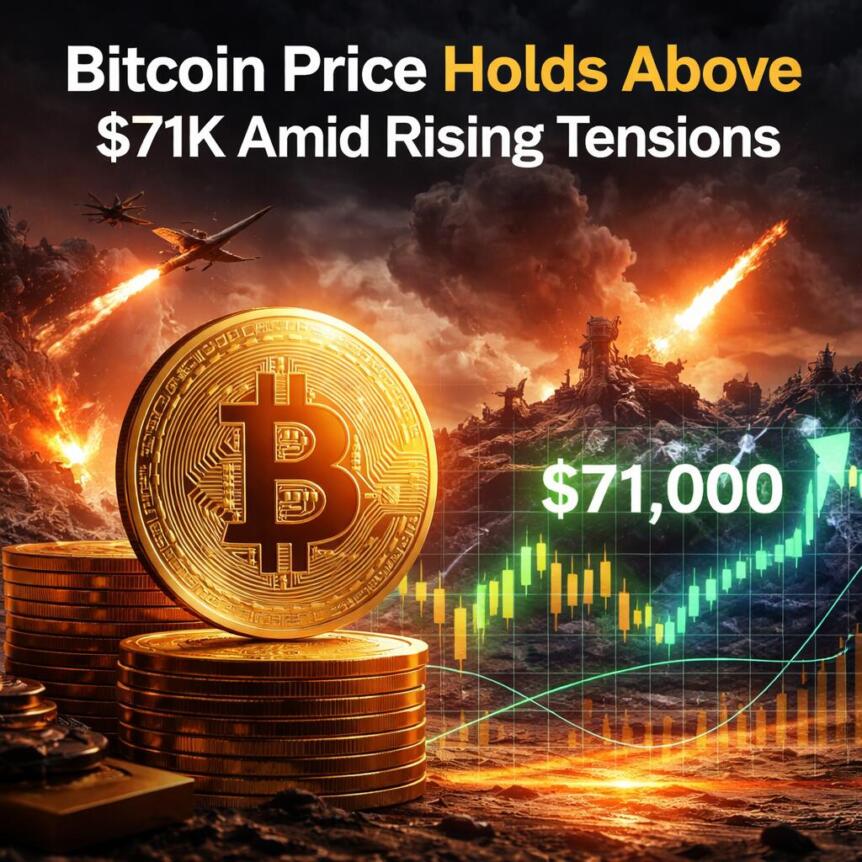
Bitcoin Price Holds Above $71K Amid Rising Tensions
Rising geopolitical tensions and steady ETF inflows are shaping crypto markets this week. Bitcoin trades above $71,000 while analysts assess risks tied to US-Iran hostilities. Meanwhile, capital flows into spot exchange-traded funds signal sustained institutional demand.
everyone said war = crypto dump.$BTC just hit $72,000.
here’s what actually happened:
→ investors sold the rumor (Iran war fears)
→ $BTC held while stocks bled
→ institutions noticed
→ 5 straight days of ETF inflows
→ Binance buy/sell ratio: 1.18 (highest this year)
→… pic.twitter.com/gHp54vvBZ2— Onchain Daily (previously One Click Contracts) (@OnchainDaily_) March 4, 2026
BTC back above 71K.
✅ Weekly reclaimed EMA200 (68,343)
But don’t get drunk on green candles:
⚠️ CVD still -454K (move looks mechanical)
⚠️ OI ~89.8K + funding 0.0025 (leverage is back)
Levels: 72 → 74K, fail 70/69 → 66K. pic.twitter.com/2r1YlgLf38— Fred Velez (@Fredvelezcrypto) March 4, 2026
Bitcoin trades at $71,223 during early Wednesday sessions. The price has gained 7% over the past 24 hours. However, it still struggles to secure a firm break above $70,000 resistance.
The cryptocurrency remains within a narrow range between $65,000 support and $70,000 resistance. Buyers are pushing price action toward the upper boundary of consolidation. Momentum indicators show strength as MACD lines stay above the signal line.
The Relative Strength Index stands near 66, which reflects bullish pressure without overbought conditions. A confirmed breakout above $70,000 could drive price toward $72,000. Conversely, a rejection may pull Bitcoin back toward $67,000 or even $65,000.
Market sentiment also reflects broader geopolitical developments. Tensions between the United States and Iran intensified after military operations in early 2026. Energy markets reacted sharply as oil and gas prices recorded rapid swings.
A Beijing-based historian, Jiang Xueqin, had earlier predicted escalating conflict under a second Donald Trump administration. He argued that Washington could face a prolonged and costly confrontation with Tehran. His projection gained renewed attention after clashes including the 12-Day War of 2025.
The United States and Israel launched Operation Epic Fury in February 2026. Iran responded with missile attacks and expanded regional proxy engagement. As a result, global trade routes and shipping lanes faced renewed security threats.
Ethereum Price Steady Above $1,900 Despite ETF Outflows
Ethereum trades slightly above $1,900 in recent sessions. The asset shows modest gains while broader market capitalization increases. However, spot Ethereum ETFs recorded a net outflow of $10.75 million on March 3.
Despite the net outflow, BlackRock’s ETHA product posted a daily inflow of $41.92 million. This performance indicates selective demand within Ethereum-linked funds. Therefore, capital rotation remains visible across crypto investment products.
Ethereum has faced pressure during Bitcoin’s consolidation phase. Still, it maintains relative stability compared to previous corrections. The broader crypto market cap rose 0.53% to reach $2.34 trillion.
Regulatory developments have also supported digital asset valuations. Lawmakers in Washington continue discussions on clearer frameworks for crypto oversight. Consequently, market participants are weighing both policy direction and geopolitical risk.
US-Iran tensions add complexity to global financial conditions. Energy price volatility often influences inflation expectations and monetary policy outlooks. Such macro factors continue to shape demand for alternative assets including cryptocurrencies.
XRP Gains Modest ETF Inflows as Market Consolidates
XRP-related spot ETFs recorded $7.53 million in daily net inflows. Although smaller than Bitcoin flows, the figure signals steady product interest. XRP price action remains aligned with broader market consolidation.
Bitcoin spot ETFs registered a combined $225 million net inflow on March 3. BlackRock’s IBIT led the market with $322 million in inflows. These figures underscore continued capital allocation into Bitcoin-focused products.
ETF demand has become a significant driver of crypto liquidity. Since regulatory approval, spot products have attracted both institutional and retail capital. This structural shift continues to influence price stability during volatility.
Meanwhile, debate persists over US military strategy and global positioning. Jiang argues that reliance on airpower and precision strikes may not secure long-term dominance. Critics counter that American military capacity remains unmatched despite extended commitments.
Ethereum Price Steady Above $1,900 Despite ETF Outflows
Ethereum trades slightly above $1,900 in recent sessions. The asset shows modest gains while broader market capitalization increases. However, spot Ethereum ETFs recorded a net outflow of $10.75 million on March 3.
Despite the net outflow, BlackRock’s ETHA product posted a daily inflow of $41.92 million. This performance indicates selective demand within Ethereum-linked funds. Therefore, capital rotation remains visible across crypto investment products.
Ethereum has faced pressure during Bitcoin’s consolidation phase. Still, it maintains relative stability compared to previous corrections. The broader crypto market cap rose 0.53% to reach $2.34 trillion.
Regulatory developments have also supported digital asset valuations. Lawmakers in Washington continue discussions on clearer frameworks for crypto oversight. Consequently, market participants are weighing both policy direction and geopolitical risk.
US-Iran tensions add complexity to global financial conditions. Energy price volatility often influences inflation expectations and monetary policy outlooks. Such macro factors continue to shape demand for alternative assets including cryptocurrencies.
XRP Gains Modest ETF Inflows as Market Consolidates
XRP-related spot ETFs recorded $7.53 million in daily net inflows. Although smaller than Bitcoin flows, the figure signals steady product interest. XRP price action remains aligned with broader market consolidation.
Bitcoin spot ETFs registered a combined $225 million net inflow on March 3. BlackRock’s IBIT led the market with $322 million in inflows. These figures underscore continued capital allocation into Bitcoin-focused products.
ETF demand has become a significant driver of crypto liquidity. Since regulatory approval, spot products have attracted both institutional and retail capital. This structural shift continues to influence price stability during volatility.
Meanwhile, debate persists over US military strategy and global positioning. Jiang argues that reliance on airpower and precision strikes may not secure long-term dominance. Critics counter that American military capacity remains unmatched despite extended commitments.
The renewed conflict narrative intersects with financial markets through energy and trade channels. Oil price spikes increase transport and production costs worldwide. As a result, risk assets including cryptocurrencies reflect broader macro uncertainty.
Overall, Bitcoin holds key levels while ETF inflows provide support. Ethereum and XRP show mixed but stable capital flows. Geopolitical tensions, however, remain a defining variable for near-term crypto direction.
Key takeaways:
-
Derivatives and onchain data show a lack of bullish conviction, as 43% of Bitcoin holders remain at a loss despite recent price gains.
-
Surging AI energy demand is squeezing miner profits to record lows, forcing major listed firms to offload BTC and pivot to computing.
-
Traders face a psychological hurdle at $76,000, the average cost basis for major corporate holders like Strategy.
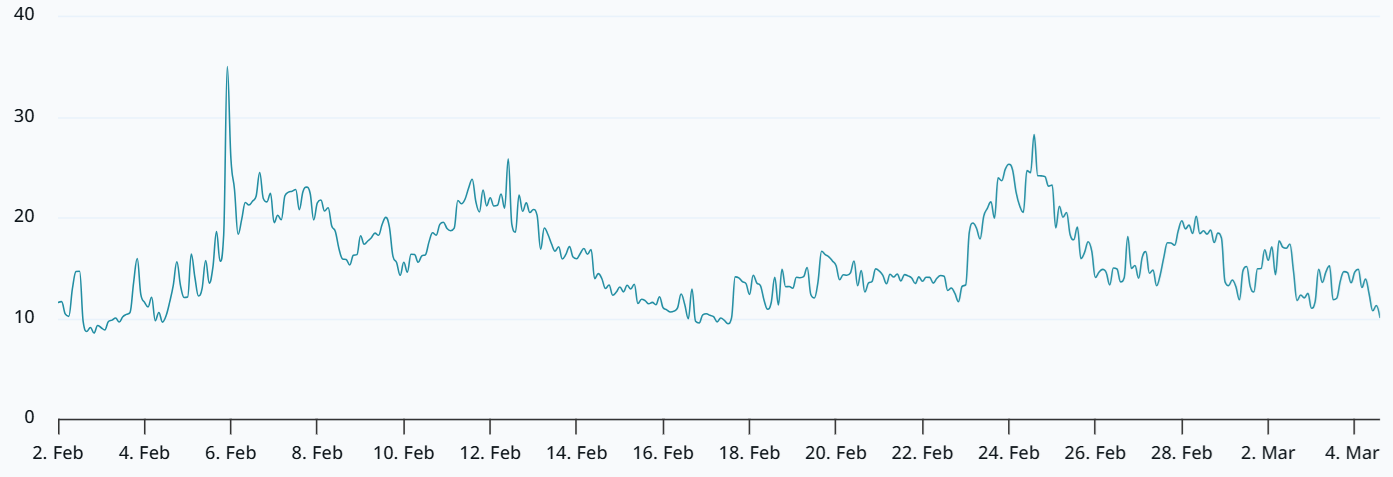
Bitcoin (BTC) surged to a four-week high on Wednesday, potentially clearing a path for a recovery toward the $78,700 monthly close recorded in January. Despite a 22% rally from the $60,000 local bottom on Feb. 6, several onchain and derivatives metrics suggest bears remain comfortable.
Demand for downside protection through Bitcoin options continues to dominate the market.

Put (sell) options recently traded at a 10% premium relative to equivalent call (buy) instruments. In neutral market conditions, this indicator typically ranges between -6% and 6%, a level last observed in mid-January when Bitcoin traded near $95,000.
Professional traders appear to fear further downside, while demand for bullish BTC futures remains stagnant; the annualized premium, or basis rate, currently sits below the neutral 5% threshold.
The weakness in Bitcoin derivatives reflects the month-long consolidation following the 32% crash during the first week of February. However, the lack of conviction from bulls even as prices move above $73,000 suggests a deeper hesitation. This cautious mood likely comes from the fact that a significant portion of holders are still stuck in the red.

Currently, 43% of the supply is held at a loss based on the price coins last moved, according to Glassnode data. This share of holders sustaining losses spiked from 30% when Bitcoin traded at $90,000 in late January. Traders fear that investors sitting on these losses will gradually exit their positions as the price recovers, creating persistent overhead sell pressure that could cap further gains.
Another source of concern stems from the Bitcoin mining sector, which has faced significant pressure due to the exponential growth in artificial intelligence demand. Rising energy costs and declining demand for the Bitcoin blockchain registry have pushed miner profitability toward all-time lows. Several major listed mining firms have pivoted toward AI computing, offloading their Bitcoin holdings in the process.

The Bitcoin Hashprice index, which measures the expected daily value of one terahash per second of hashing power, plummeted to $30 on Tuesday, down from $39 three months ago. Investors fear that miners may transition into net sellers after a prolonged period of accumulation.
Mining companies that previously maintained a Bitcoin strategic reserve are now reportedly eyeing more profitable opportunities in alternative high-performance computing sectors.
Related: MARA exec pushes back on Bitcoin treasury sell-off narrative
Strategy’s $76,000 cost basis could be the turning point for Bitcoin momentum
Strategy (MSTR US) remains the primary example of a Bitcoin-centered balance sheet strategy. After purchasing 720,737 BTC since its initial deployment in August 2020, the company faced scrutiny as Bitcoin dropped below its average acquisition price of approximately $76,000.
Other publicly traded entities, including Metaplanet (3350 JP) and Twenty One Capital (XXI US), have encountered similar valuation challenges during the current bear market conditions.

While Strategy does not face imminent liquidation risks or a lack of cash for interest payments on yield-bearing assets like STRC, bears recognize that prices above the Bitcoin cost basis incentivize stock issuance without diluting current holders.
Essentially, market participants looking to suppress the price have strong incentives to keep Bitcoin pegged below $76,000. Therefore, a recovery toward $78,700 may take longer than expected, though momentum could shift in favor of bulls once that key level is breached.
This article does not contain investment advice or recommendations. Every investment and trading move involves risk, and readers should conduct their own research when making a decision. While we strive to provide accurate and timely information, Cointelegraph does not guarantee the accuracy, completeness, or reliability of any information in this article. This article may contain forward-looking statements that are subject to risks and uncertainties. Cointelegraph will not be liable for any loss or damage arising from your reliance on this information.
error code: 524
This article was originally published as Bitcoin Bulls Rally as Momentum Surges, Still Tough to Top $78K on Crypto Breaking News – your trusted source for crypto news, Bitcoin news, and blockchain updates.

- PAC Fairshake secured early victories in the 2026 U.S. congressional primaries by backing several candidates in key states.
- Jessica Steinmann won nearly 70 percent of the vote in Texas’ 8th District with financial support from Fairshake.
- Fairshake spent 1.5 million dollars opposing Democratic Representative Al Green, forcing his race into a runoff.
- Republican candidates Chris Gober and Trever Nehls also won their Texas primaries with Fairshake support.
- The PAC reported 193 million dollars in cash on hand at the start of the 2026 campaign season.
Crypto-backed political spending shaped several early outcomes in the 2026 U.S. congressional primaries. Fairshake supported multiple candidates in Texas, Arkansas, and North Carolina. The results now position the group to expand its allies after November.
PAC Fairshake Backs Primary Winners in Texas and Beyond
PAC Fairshake supported Jessica Steinmann in Texas’s 8th District, and she won nearly 70% of the vote. State results confirmed her dominant finish in the Republican primary. Federal Election Commission filings show the PAC spent more than $750,000 on her race.
Steinmann previously worked as a Department of Justice lawyer, and President Donald Trump backed her candidacy. Her campaign website states she supports digital assets and blockchain innovation. Fairshake said voters responded to her economic message and focus on emerging technology.
In Texas’s 10th District, Fairshake supported Republican Chris Gober, and he secured more than 50% in a crowded field. Gober founded Lex Politica and focuses on political litigation and government investigations. In the 22nd District, Trever Nehls won 76% of the vote after receiving Fairshake support.
Nehls is an Army veteran and a Trump loyalist, and he seeks to replace his identical twin brother. Both Texas districts lean Republican, and general election prospects appear favorable. Fairshake also supported Representative French Hill in Arkansas, and he won 77% of his primary vote.
Hill chairs the House Financial Services Committee and leads crypto legislation efforts in the House. Fairshake spent more than $400,000 on advertising in his race. In North Carolina, Republican Representative Tim Moore won 83% of the vote with PAC backing.
Texas Runoff Shapes Key Test for Fairshake Strategy
Fairshake also targeted longtime Texas Democrat Al Green in a newly redrawn district. The PAC spent $1.5 million on ads opposing Green. Green trailed pro-blockchain Democrat Christian Menefee, yet neither candidate secured more than half the vote.
Both candidates will now compete in a runoff election. Green has voted against crypto legislation and holds an “F” rating from Stand With Crypto. Menefee supports blockchain policy, and he advanced alongside Green into the next round.
Fairshake stated that its advertisements focus on political messages rather than digital asset policy. The group does not coordinate directly with candidate campaigns. It reported $193 million in cash on hand at the start of the campaign season.
The PAC and its affiliates rank among the largest political spenders in the country. During the 2024 cycle, Fairshake supported 53 candidates who now serve in Congress. The latest primary victories add to that list as the 2026 general election approaches.


South Korea’s stock market suffered one of its fastest declines in history this week, with the Kospi falling about 20% in two trading days, as geopolitical tensions have, for the moment, shattered what might be termed a speculative bubble in popular AI-related names.
The rapid decline followed months of aggressive buying by retail investors that had sent the Kospi — dominated by Samsung and SK Hynix — higher by nearly 180% in about 10 months.
The timing has drawn attention to activity in Korea’s crypto markets, where trading volumes have begun to climb again.
South Korea is one of the few markets where retail traders play a major role in both equities and digital assets. Analysts have long observed that local traders often rotate between speculative markets, rather than exiting risk assets entirely.
In November, a CoinDesk analysis described what was dubbed the “Great Korean Pivot,” noting trading volumes on domestic crypto exchanges fell as retail traders moved into technology stocks tied to artificial intelligence.
That equity rally, however, has now stalled or reversed.
When one market cools, South Korean trader attention frequently shifts to another. That’s perhaps benefiting crypto, which has seen bitcoin climb 7% in the past 24 hours to above $73,000. Ether (ETH), solana (SOL) and XRP (XRP) are up similar amounts.
Retail signals remain moderate
While crypto trading volumes have moved higher, for the moment, at least, activity does not yet resemble the frenzied speculative surges seen in earlier Korean market cycles.
One key metric is the Kimchi premium, which measures the difference between bitcoin prices on Korean exchanges and global markets. When domestic demand surges, bitcoin often trades at a noticeable premium in Korean won markets.
That premium currently remains modest, with data from CryptoQuant showing the Korea Premium Index near 1%, well below levels seen during previous retail-driven rallies. There is, however, a modest uptick in retail sentiment as the Kimchi premium had dipped into negative territory in mid-January.
Crypto exchange Kraken has secured approval for a Federal Reserve master account, advancing digital asset integration into the U.S. banking system. The approval grants Kraken Financial direct access to the central bank’s core payment infrastructure. The decision also positions the firm at the center of a pilot program for proposed skinny master accounts.
Kraken Secures Federal Reserve Master Account Access
Kraken Financial obtained approval for a Federal Reserve master account after applying to the Kansas City Fed in 2020. As a result, the firm can access the central bank’s payment rails used by banks and credit unions. The development marks a structural shift in how crypto firms connect to the U.S. financial system.
With this approval, Kraken Financial can settle transactions through Fedwire and other core systems. Consequently, the firm can move funds faster and manage liquidity with greater precision. The access supports large clients and professional traders who require direct settlement infrastructure.
However, the Federal Reserve will limit the scope of services available to Kraken Financial. The firm cannot earn interest on reserves held at the central bank. In addition, it cannot access lending facilities or operate as a full-service commercial bank.
The approval arrives as Kraken prepares for a potential U.S. public offering. The company has already submitted a confidential draft S-1 filing. Therefore, the master account strengthens its institutional profile ahead of a possible listing.
Pro-crypto lawmakers have acknowledged the development as a milestone for digital assets. Senator Cynthia Lummis described it as a watershed moment for the sector. The approval also signals that regulators may consider structured integration models for crypto firms.
Pilot Program Advances Skinny Master Account Framework
The Federal Reserve structured Kraken’s approval as a pilot for proposed skinny master accounts. Governor Chris Waller introduced this framework to expand payment access without extending full banking privileges. The central bank aims to finalize the initiative before the end of the year.
Under this structure, approved entities can hold reserves and settle transactions through the central bank. However, they cannot lend, access the discount window, or provide traditional commercial banking services. Therefore, the framework separates payment access from broader banking authority.
Banking groups have raised concerns about regulatory consistency and oversight standards. The American Bankers Association warned that some applicants lack extensive supervisory histories. It also emphasized the need for uniform safety and soundness requirements across all participants.
Despite these concerns, the pilot reflects an effort to balance innovation and financial stability. The Federal Reserve continues to evaluate how digital asset firms fit within existing rules. At the same time, policymakers seek to maintain safeguards within the banking system.
The approval also demonstrates coordination among multiple regulators. Officials have indicated that agencies are working together on digital asset oversight. As a result, the pilot may influence how other applications progress in the coming months.
Ripple and Circle Stand to Benefit From Regulatory Shift
Other crypto firms have pursued similar access to the Federal Reserve system. Ripple, Anchorage, and Custodia Bank have each filed applications for master accounts. Custodia submitted its request around the same time Kraken filed its application.
The proposed skinny master accounts could benefit stablecoin issuers such as Ripple and Circle. These firms rely on secure reserve management and efficient settlement processes. Therefore, direct access to central bank payment rails could strengthen their operational models.
The Office of the Comptroller of the Currency has also expanded its engagement with crypto firms. The OCC has conditionally approved national trust charters for Ripple, Crypto.com, Circle, and Paxos. In addition, it recently broadened Trust Bank’s services within the federal framework.
Federal Reserve Governor Michelle Bowman has addressed coordination efforts tied to digital asset legislation. She stated that regulators are working to implement the GENIUS Act alongside other agencies. The initiative aims to clarify digital asset treatment within the banking system.
Overall, Kraken’s approval establishes a precedent within the evolving regulatory landscape. The pilot program offers a controlled pathway for payment access without full banking powers. Consequently, the decision may shape how digital asset firms integrate with the U.S. financial system in the years ahead.


This partnership aims to leverage Solana’s speed and Western Union’s extensive network to facilitate seamless cross-border money transfers.
Crossmint has announced a partnership with Western Union to support the rollout of USDPT, a U.S. dollar-denominated stablecoin, on the Solana blockchain. According to the Crossmint website, USDPT aims to provide a seamless, fast, and cost-effective way to transfer funds globally.
Western Union will integrate its Digital Asset Network with Crossmint, allowing the conversion of digital dollars into local currency through more than 360,000 collection points worldwide.
Malcolm Clarke, Western Union’s Vice President of Digital Assets, emphasized the strategic value of the partnership, stating, “Working with partners like Crossmint helps to seamlessly connect global wallets and digital platforms to Western Union’s trusted payment infrastructure… enabling Crossmint’s customers to enjoy reliable cash pick‑up options in more than 200 countries globally.”
The selection of Solana underscores its reputation for fast transaction speeds and low costs, further enhancing the efficiency of digital payments.
This strategic collaboration between Crossmint and Western Union not only enhances the efficiency of digital payments but also represents a pivotal moment in the adoption of blockchain technology for global money movement. As stablecoins become integral to financial transactions, partnerships like this are expected to drive further innovations and expansions in the digital payments landscape.
This article was generated with the assistance of AI workflows.
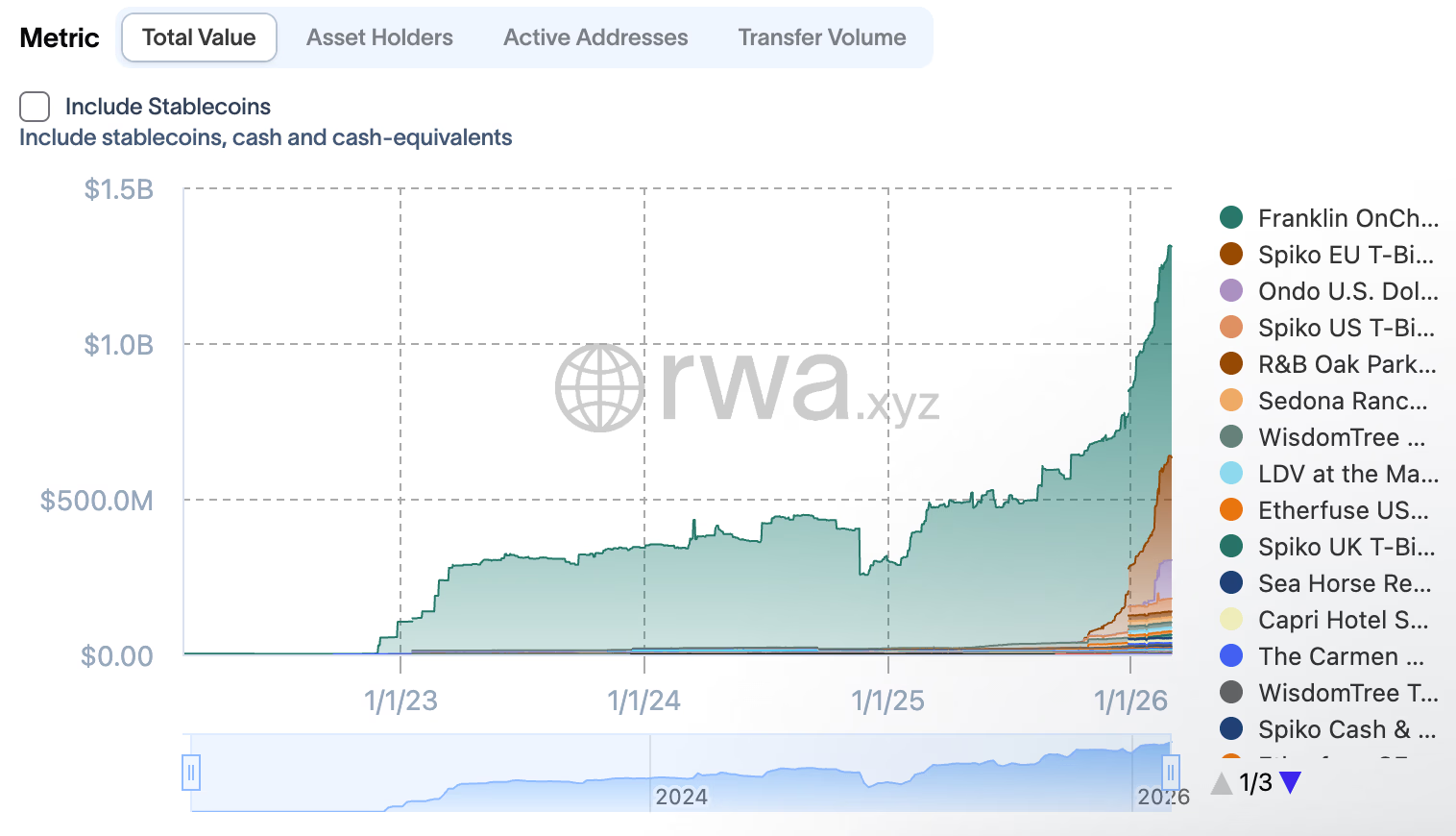
RWA distributed asset value on Stellar recently crossed the $1.3 billion mark.
Blockchain oracle provider RedStone has officially launched its price feed infrastructure on the Stellar blockchain.
In an X post on Wednesday, March 4, RedStone said that the integration aims to scale the decentralized finance ecosystem on Stellar, which is broadly used for payments and is one of the largest chains by real-world asset (RWA) value.
The deployment by RedStone introduces new layers of data for DeFi applications, focusing on delivering precise and reliable price feeds suitable for institutionally-focused tokenized RWAs.
“Lending protocols need reliable price feeds. DEXs need accurate data. RWA platforms need institutional infrastructure. You can’t build financial products without trusted oracles,” RedStone said on X today.
Stellar is currently the fifth-largest blockchain network in terms of RWA value on-chain, per data from RWAxyz. Distributed asset value on Stellar recently reached over $1.3 billion for the first time, up 25% in the past 30 days and 50% since the start of 2026.

By far the largest RWA on the network is Franklin Templeton’s on-chain money market fund, BENJI, with $678 million in distributed asset value on Stellar.
In its announcement today, RedStone noted that it will provide the BENJI fund feed as part of the integration “bringing institutional-grade price feeds of real-world assets to the Stellar DeFi ecosystem.”
Stellar, which launched in 2014, has a market cap of about $5.2 billion, ranking it 21st among cryptocurrencies, per The Defiant’s price page. XLM is up 6% in the past 24 hours as the broader crypto markets rally.
On-chain RWAs as a broader sector saw massive growth last year, bringing billions of dollars on-chain as an increasing number of large, global financial institutions launched tokenized funds and other assets.
This article was generated with the assistance of AI workflows.

‘Huge danger’: Stuart Broad flags Hardik Pandya as England’s biggest semifinal threat | Cricket News

Soft Life Finance Tips Every Woman Should Know

Newcastle vs Manchester United LIVE: Premier League result, latest updates and fan reaction


-

 Politics6 days ago
ITV enters Gaza with IDF amid ongoing genocide
-

 Politics2 days ago
Alan Cumming Brands Baftas Ceremony A ‘Triggering S**tshow’
-

 Fashion5 days ago
Weekend Open Thread: Iris Top
-

 NewsBeat7 days ago
Cuba says its forces have killed four on US-registered speedboat | World News
-

 Tech4 days ago
Unihertz’s Titan 2 Elite Arrives Just as Physical Keyboards Refuse to Fade Away
-
Sports5 days ago
The Vikings Need a Duck
-
 NewsBeat4 days ago
Dubai flights cancelled as Brit told airspace closed ’10 minutes after boarding’
-

 NewsBeat3 days ago
‘Significant’ damage to boarded-up Horden house after fire
-
 NewsBeat4 days ago
The empty pub on busy Cambridge road that has been boarded up for years
-

 NewsBeat4 days ago
Abusive parents will now be treated like sex offenders and placed on a ‘child cruelty register’ | News UK
-

 Entertainment3 days ago
Baby Gear Guide: Strollers, Car Seats
-

 Business7 days ago
Discord Pushes Implementation of Global Age Checks to Second Half of 2026
-
 Tech5 days ago
NASA Reveals Identity of Astronaut Who Suffered Medical Incident Aboard ISS
-

 Business6 days ago
Only 4% of women globally reside in countries that offer almost complete legal equality
-
 NewsBeat4 days ago
Emirates confirms when flights will resume amid Dubai airport chaos
-
Politics4 days ago
FIFA hypocrisy after Israel murder over 400 Palestinian footballers
-

 Crypto World6 days ago
From Crypto Treasury to RWA: ETHZilla Retreats and Relaunches as Forum Markets on Nasdaq
-

 NewsBeat2 days ago
Is it acceptable to comment on the appearance of strangers in public? Readers discuss
-

 Tech4 days ago
Viral ad shows aged Musk, Altman, and Bezos using jobless humans to power AI
-

 Business6 days ago
World Economic Forum boss Borge Brende quits after review of Jeffrey Epstein links