
Crypto World
Microsoft Stock Price Drops Sharply After OpenAI Revises Partnership

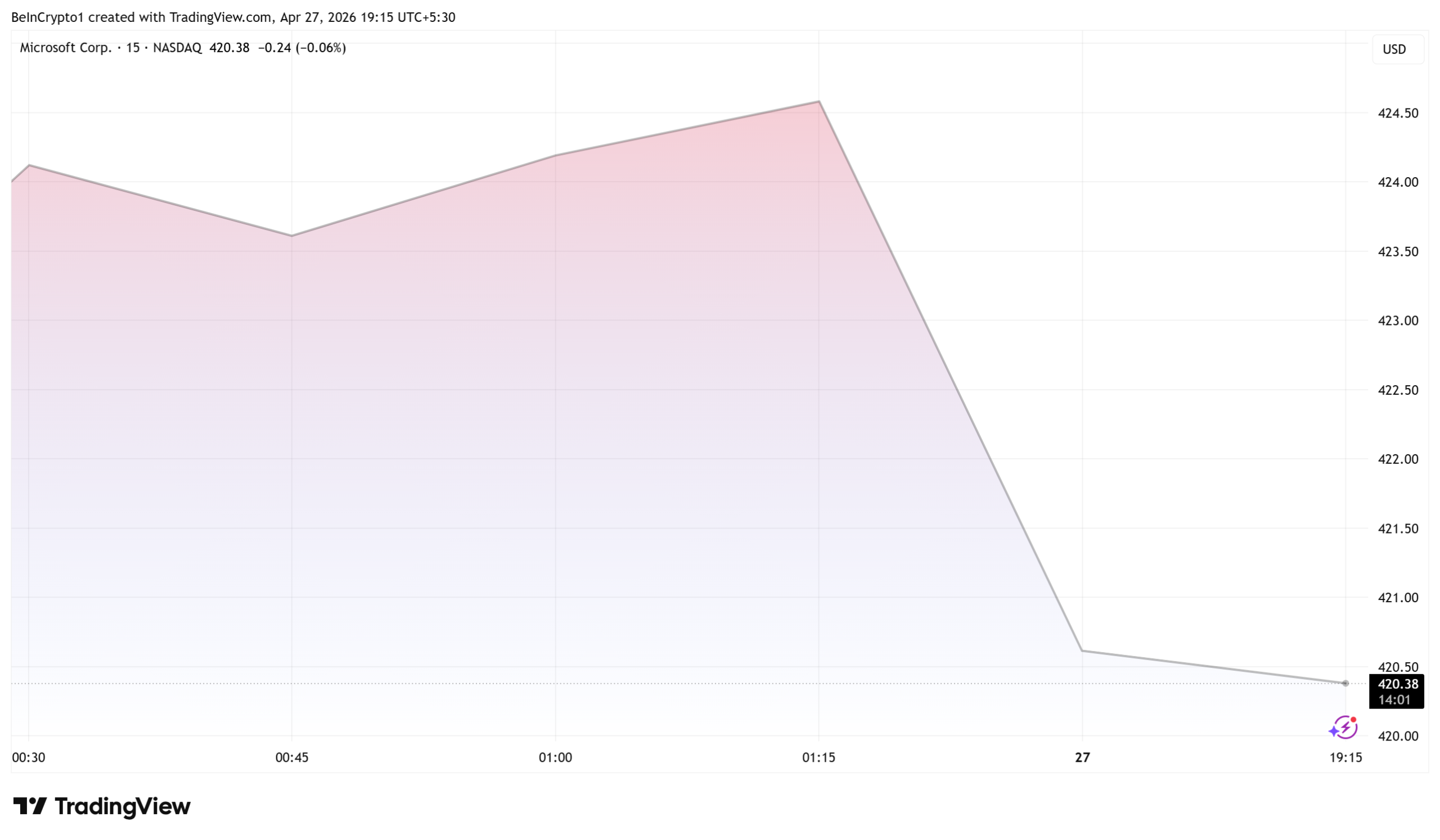
OpenAI CEO Sam Altman said that the company has updated its partnership with Microsoft (MSFT), ending Azure cloud exclusivity and clearing OpenAI to sell products across competing providers.
Microsoft stock slipped on the news, with traders citing the loss of an Azure-only edge for OpenAI’s flagship artificial intelligence (AI) products.
What Changed in the Updated Partnership
Per Altman’s post, Microsoft remains OpenAI’s primary cloud partner, but the license is now non-exclusive. OpenAI can offer models through Amazon Web Services, Google Cloud, Oracle, and other rivals.
The terms keep cash flowing both ways. OpenAI will supply Microsoft with models through 2032 and pay a revenue share to its largest backer through 2030.
Microsoft will no longer pay a revenue share back to OpenAI, removing one outflow from its income statement.
Why MSFT Stock Sold Off
MSFT shares dropped as much as 5% intraday before paring losses, with the chart still pointed lower into the close.
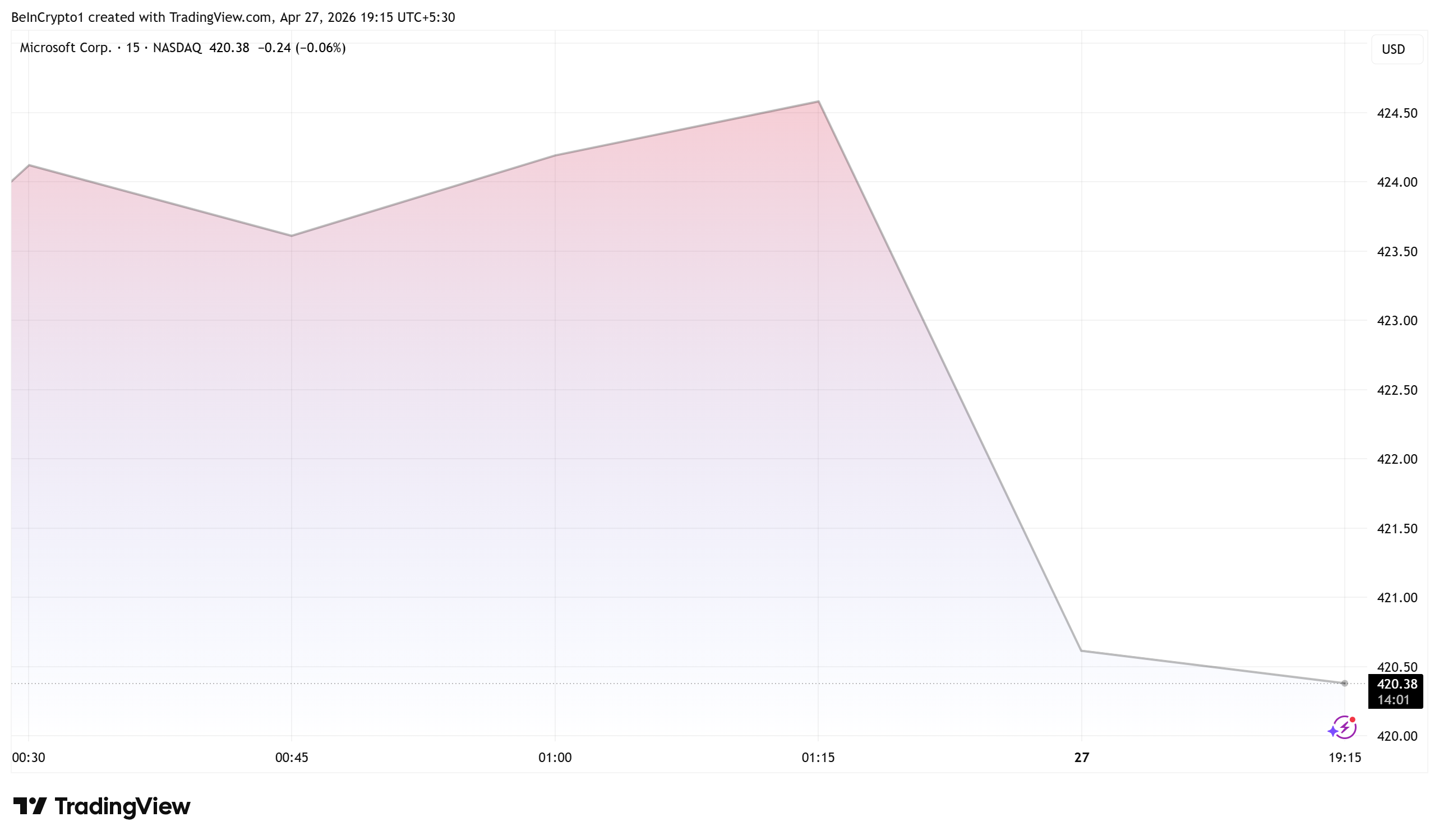
Investors had treated OpenAI workloads as a structural Azure differentiator. Removing exclusivity opens that book of business to AWS, Google Cloud, and Oracle, each of which has courted frontier AI labs.
Not every analyst read the move as bearish. CFA Palwinder Singh argued that the selloff overlooked the value Microsoft retains as the lab’s largest equity holder.
“Investors are crying about exclusivity while ignoring that Microsoft still has a 27% stake in OpenAI valued at $135 Billion, This 5% dip is a gift for anyone who can read a balance sheet instead of just a headline,” wrote Singh.
Microsoft keeps ChatGPT’s intellectual property rights through 2032 alongside that equity stake.
Investors must weigh whether discontinued payments and a longer model runway can offset the cloud-exclusivity hit across the broader AI sector, including Altman-linked projects such as Worldcoin.
The post Microsoft Stock Price Drops Sharply After OpenAI Revises Partnership appeared first on BeInCrypto.

Cryptocurrency investment products continued their run of inflows last week as Bitcoin traded at its highest levels since early February.
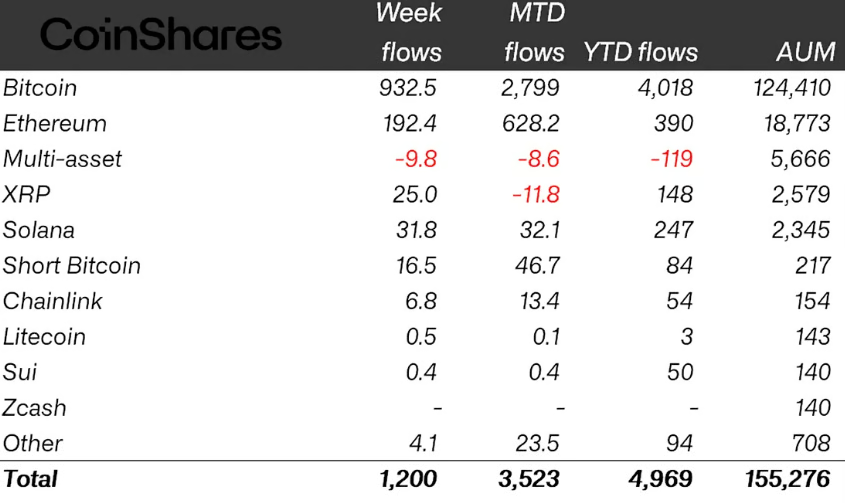
Crypto exchange-traded products (ETPs) recorded $1.2 billion in inflows last week, marking their fourth consecutive week of gains, CoinShares reported Monday.
The inflow streak is the largest so far this year, as the four-week total has reached about $3.9 billion, surpassing the previous four-week run of $2.9 billion in March.
Total assets under management rose to $155 billion, the highest level since Feb. 1, supported by Bitcoin trading above $76,000 for the first time since its February correction, CoinShares head of research James Butterfill said.
He said that crypto ETP growth likely reflects improving institutional demand against a backdrop of a Bitcoin surge. “The market now turns to the FOMC decision on April 28–29, which is likely contributing to caution at the margin,” Butterfill added.
Bitcoin leads inflows as most assets see gains
Bitcoin led last week’s ETP inflows, drawing $932.5 million and lifting year-to-date flows to $4 billion. A large share of these inflows came from US-listed spot Bitcoin exchange-traded funds, which recorded about $824 million in inflows last week, according to SoSoValue.
Ether ETPs ranked second with $192 million of inflows, marking the third consecutive week of gains above $190 million, with year-to-date inflows now at $390 million.
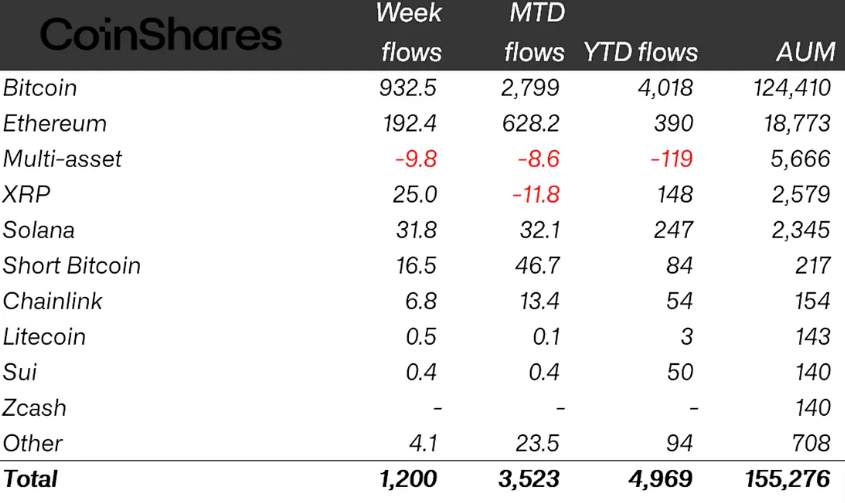
Crypto ETP flows by asset (in millions of US dollars). Source: CoinShares
XRP funds returned to inflows after recording $56 million in outflows the previous week.
Despite the positive trend, short-Bitcoin products also recorded modest inflows of $16.5 million. That was broadly in line with the prior month’s average, suggesting persistent but not elevated hedging demand, Butterfill said.
Blockchain equity ETFs hit record weekly inflows.
The analyst also noted that blockchain equity ETFs recorded a record week of inflows.
The ETFs have seen $617 million in inflows over the past three weeks, Butterfill said, highlighting rising demand for exposure to the broader technology and digital asset sector.
Related: Morgan Stanley launches stablecoin offering through money market fund
Regionally, the US dominated with $1.1 billion of inflows. Germany saw around $62 million, more than double the prior week, while Switzerland reversed last week’s $138 million of outflows with $35 million of inflows.
Magazine: XRP hints at 30% spike, Bitcoin ETFs post 9-day inflow streak: Hodler’s Digest, April 19 – 25


The Solana Foundation says it has a plan for dealing with future quantum computing risks, outlining in a new blog post how its developers are already aligned on a potential solution.
The foundation said on Monday two of the network’s core developer teams, Anza and Jump Crypto’s Firedancer, have independently landed on the same solution, a new type of digital signature called Falcon designed to withstand quantum computing, and have already started building early versions of it.
The alignment is notable given Solana’s technical constraints. The network’s high-speed, low-latency design has raised questions about whether more computationally intensive post-quantum cryptography could be adopted without trade-offs. The foundation said, however, that any eventual migration would be manageable and unlikely to significantly impact performance.
The blog post comes as debate intensifies across the crypto industry about whether advances in quantum computing could eventually undermine blockchain security. The Solana Foundation’s position: the risk is real but still distant.
“Quantum is still years away,” the foundation said, adding that migration plans are “well-researched, understood, and ready to deploy.”
Beyond core protocol work, the foundation pointed to existing efforts within the ecosystem, including Blueshift’s “Winternitz Vault,” a quantum-resistant primitive that has been live on Solana for more than two years and was recently cited by Google Quantum AI.
For now, no immediate changes are planned. Solana outlined a phased roadmap that includes continued research into Falcon and alternatives, introducing post-quantum schemes for new wallets if needed, and eventually migrating existing wallets.
Read more: Solana’s quantum-threat readiness reveals harsh tradeoff: security vs speed
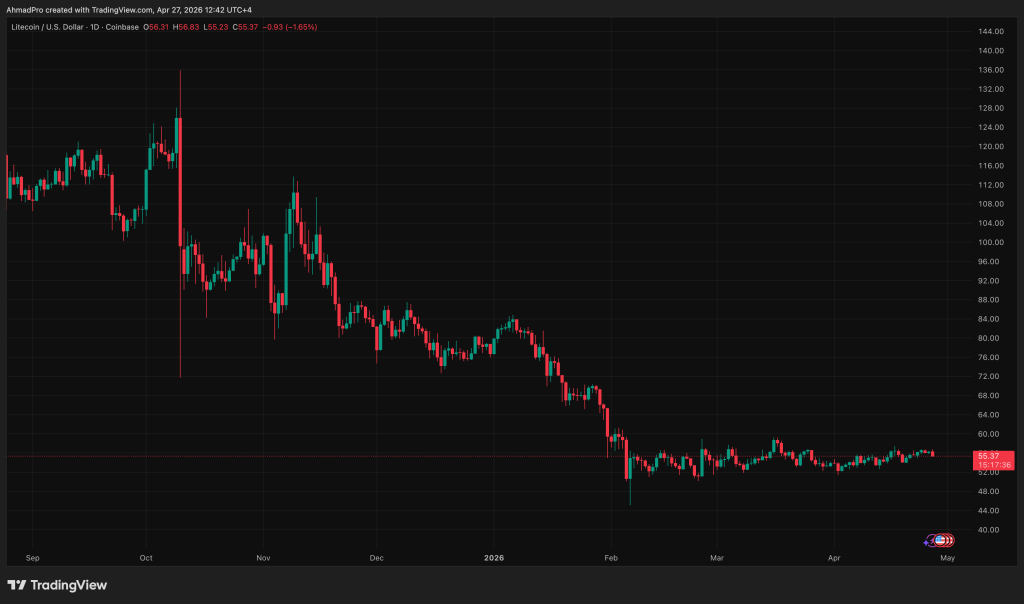
Litecoin (LTC) took a hit on April 25, and not a small one. What exactly triggered the chaos, and whether the hack damage is truly contained, deserves a closer look.
A zero-day vulnerability in Litecoin’s codebase was exploited on April 25, triggering a 13-block reorganization that temporarily halted transaction finality across major mining pools.
The attack vector: un-updated nodes incorrectly accepted invalid MWEB (MimbleWimble Extension Block) transactions, which a Denial-of-Service attack exploited to flood the network.
The Litecoin team confirmed the bug on their official X account and stated a patch has been fully deployed, with node operators urged to update immediately.
No user funds were lost, but the reorg reversed transactions across those 13 blocks, a depth that qualifies as a serious network event by any measure.
A 13-block reorg isn’t a rounding error. Broader crypto markets are already navigating fragile sentiment around Bitcoin stalling near key levels, and a security incident on a top-20 chain adds pressure that technical analysis alone can’t absorb.
Can Litecoin Price Recover to $94 After the Hack Incident?
LTC holding up after the incident is actually the story, not the dip. Price bounced despite negative headlines, which tells you sellers did not fully take control.
But it is not strong either, it is just stable. Volume is messy across exchanges, which points to fragmentation, not a clean trend.
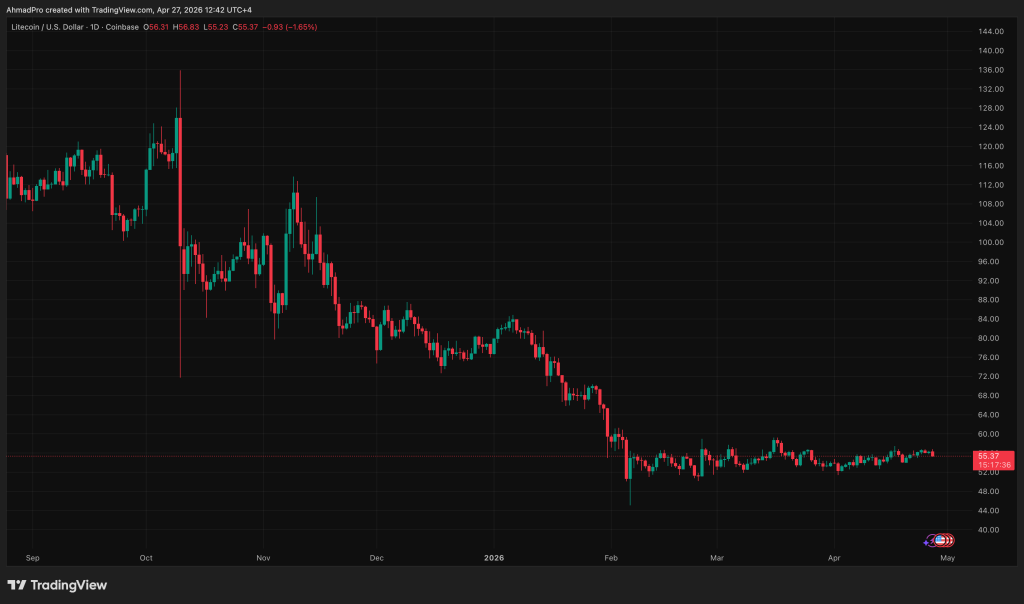
Right now, everything comes down to $60. That is the level that flips the structure if it breaks with volume.
If that happens, LTC can move back toward the top of its range and regain momentum.
More realistically, this just stays sideways between roughly $56 and $59 while the market moves on and the news fades.
The risk is if issues resurface or sentiment weakens, because $52 is the floor, and if that breaks, downside opens quickly.
So this is a neutral setup, holding steady for now, but still waiting for a real direction.
Here is Why LiquidChain Could Be Replacing OG Coins Like Litecoin
LiquidChain is positioning around that idea, aiming to connect Bitcoin, Ethereum, and Solana liquidity into one layer so developers and users are not tied to a single ecosystem.
The pitch is about reducing fragmentation and making execution smoother across chains.

The presale is still early, around $0.01453 with just over $700K raised, which means it is in the early accumulation phase rather than widely priced.
But that also comes with the trade-off. Early-stage projects carry real execution risk, and liquidity only comes after launch.
So the contrast is simple, LTC offers stability with limited upside, while something like LiquidChain offers higher potential, but with much higher uncertainty.
The post A Zero-Day Hack Triggered a 13-Block Reorg on Litecoin: Are User Funds Actually Safe? appeared first on Cryptonews.


The plan allows trapped lenders to sell tokenized claims on deposits, offering buyers an option-like bet on CRV’s recovery.


Banking Circle’s stablecoin settlement launch follows its CASP approval, entering a crowded market with SocGen, Sygnum and a 12-bank euro stablecoin consortium.
Crypto World
MicroStrategy Purchases 3,273 Bitcoin for ~$255 Million; Polymarket Odds Show 10% Chance of Sale This Year


MicroStrategy has acquired an additional 3,273 Bitcoin in a new purchase valued at approximately $255 million, while prediction market Polymarket sets 10% odds on the company selling any Bitcoin before year-end.
MicroStrategy purchased an additional 3,273 Bitcoin for approximately $255 million, according to a Polymarket announcement on April 27, 2026. The acquisition marks the latest expansion of MicroStrategy’s Bitcoin holdings, which have become a cornerstone of the company’s treasury strategy.
Polymarket, a cryptocurrency prediction market, has priced the odds of MicroStrategy selling any Bitcoin in 2026 at 10%, indicating strong market confidence in the company’s continued hodling stance. MicroStrategy has been one of the largest corporate Bitcoin accumulators since 2020, using the digital asset as a primary vehicle for treasury management.
Sources: Polymarket | Polymarket
This article was generated automatically by The Defiant’s AI news system from publicly available sources.


South Korean internet-only bank Kbank has signed a strategic partnership with blockchain payments company Ripple to test blockchain-based overseas remittances.
According to local media outlets like News1, The Korea Herald and Maeil Business, Kbank CEO Choi Woo-hyung and Fiona Murray, Ripple’s Asia-Pacific managing director signed the agreement at Kbank’s Seoul headquarters. The bank said the partnership will use Ripple’s global network and blockchain infrastructure to test whether overseas remittances can be made faster, cheaper and more transparent.
The companies are already conducting a phased technical verification. The first phase reportedly tested a separate app-based remittance structure, while the second phase is digitally linking customer accounts and internal systems to test remittance stability. It includes onchain transfers to countries such as the United Arab Emirates and Thailand, according to local reports.
The tie-up comes as South Korean financial companies test blockchain-based cross-border payment infrastructure while the country’s stablecoin and digital asset rules remain under discussion.
South Korea companies prepare for stablecoin rules
South Korea is weighing how to regulate stablecoins under broader digital asset legislation. On April 8, South Korea’s ruling Democratic Party prepared a draft bill that would classify stablecoins as foreign exchange payment instruments and require tokenized real-world assets to be backed by assets held in trust.
Citing an integrated draft of the proposed Digital Asset Basic Act, the Seoul Economic Daily previously reported that stablecoins used in cross-border transactions would be treated as a “means of payment” under the country’s Foreign Exchange Transactions Act.
Related: South Korea tightens crypto withdrawal-delay exemptions after scam losses
The policy backdrop may explain why stablecoin and blockchain-payment tie-ups are accelerating before the rules are final. Banks, card companies and payment firms appear to be testing infrastructure, partners and use cases while avoiding full commercial launches ahead of legislation.
On March 16, Hana Financial Group, one of South Korea’s largest financial conglomerates, signed a business agreement with the United Kingdom’s Standard Chartered Group for cooperation on various sectors, including foreign exchange and digital assets.
The South Korean conglomerate also previously partnered with USDC-issuer Circle and major US crypto exchange Crypto.com to promote stablecoin-based payments for foreign visitors in the country, according to The Korea Times.
On March 5, Asia Business Daily reported that South Korean payments company Danal will officially launch a digital asset payments service for foreign visitors in Korea in partnership with Binance Pay.
Magazine: Adam Back says current demand is ‘almost’ enough to send Bitcoin to $1M


A new Blockchain for Europe report says MiCA has made euro stablecoins safer but less competitive, and urges targeted reforms to reserves and remuneration.


International stablecoin payments among businesses will total $5 trillion by 2035, fintech analysts Juniper Research said in a new report.
That figure would be 373 times greater than the estimated total value of $13.4 this year.
“Stablecoins are increasingly embedded in cross-border business-to-business (B2B) transactions, treasury operations, and supply chain settlements, where their programmability and 24/7 settlement finality offers advantages over correspondent banking rails,” the research firm said, adding they are “causing disruption to correspondent banking channels.”
Juniper said the growth is driven by stablecoins increasingly addressing the current inefficiencies within cross-border payments that traditional finance handles.
The firm estimates that 85% of the total stablecoin transaction value in 2035 will come from B2B, with the fiat-pegged cryptocurrencies shifting from a speculative asset to a foundational layer of institutional payment infrastructure.
Stablecoins are increasingly integrated in international payments among businesses, treasury operations, and supply chain settlements, because their speedy 24/7 settlement finality offers advantages over correspondent banking rails, the firm said.
“Stablecoins are not replacing payments infrastructure; they are being adopted where the advantages are most pronounced,” said Juniper Research Analyst Jawad Jahan. “Cross-border B2B is where those advantages are greatest, and where we expect the most sustained volume growth over the forecast period.”
He suggested stablecoin issuers should focus on enterprise integrations and treasury partnerships to capture the majority of this value.
Earlier this month, Chainalysis said stablecoins were on track to become a foundational layer of global finance, with adjusted transaction volumes projected to reach $719 trillion by 2035. The blockchain intelligence firm also said that when crypto becomes the default for the next generation, “the question is no longer if stablecoins compete with traditional rails, but how quickly they replace them.”


The Ethereum Economic Zone aims to unify fragmented rollups, but its broader goal is to extend interoperability to other blockchains, says Ernst.

Bowers & Wilkins Px8 S2, Px7 S3, and Pi8 get new colors and they are summer-ready
Danaos Corp stock hits 52-week high at $120.03
Crypto ETPs Extend Inflow Streak as BTC Trades Above $76K

Manchester United reach agreement with Casemiro over contract clause amid transfer speculation

US brings back mandatory military draft registration

Steven Gerrard disagrees with Gary Neville over ‘shock’ Chelsea and Arsenal claim | Football


-

 Politics7 days ago
Gary Stevenson delivers timely reminder to register to vote as deadline TODAY
-

 Fashion3 days ago
Weekend Open Thread – Corporette.com
-
 Crypto World2 days ago
Hyperliquid $HYPE Rally Builds Momentum as AI Sector Enters Prove-It Phase
-
Crypto World7 days ago
Bank of Hawai’i (BOH) Q1 2026: Net Income Drops to $57.4M as Net Interest Margin Expands
-

 Politics5 days ago
Making troops accountable for war crimes threatens US alliance, ex-SAS colonel warns
-

 Politics5 days ago
Disabled people challenge government SEND proposals over segregation concerns
-

 Business5 days ago
Rolls-Royce Voted UK’s Most Iconic Trade Mark as IPO Register Hits 150
-

 Business4 days ago
Patterson-UTI Energy, Inc. (PTEN) Q1 2026 Earnings Call Transcript
-

 Politics5 days ago
Zack Polanski responds to home secretary’s taser threat
-
 Crypto World6 days ago
Five Value Stocks with Recovery Potential in 2026: PayPal (PYPL), Nike (NKE), and More
-

 Politics5 days ago
Starmer handler McSweeney to be dragged from shadows by Foreign Affairs Committee
-
 Sports1 day ago
IPL 2026: Ruturaj Gaikwad registers slowest fifty of the season, enters all-time unwanted list | Cricket News
-
Politics5 days ago
Wings Over Scotland | How To Get Away With Crimes
-

 Crypto World6 days ago
New York sues Coinbase, Gemini over prediction market offerings
-
Entertainment6 days ago
Sydney Sweeney cameo cut from “The Devil Wears Prada 2”, source explains why (exclusive)
-
 Business5 days ago
HCL Tech share price tank over 9% after weak Q4. JPMorgan, HSBC & 3 others cut target price
-

 Politics5 days ago
‘Iran is still a nuclear threat’
-

 Crypto World6 days ago
Crypto’s great hope in Senate’s Clarity Act still has a path to survive tight calendar
-
 Sports5 days ago
Tim Bradley names the current best in the world: “Better than Inoue and Usyk”
-

 NewsBeat1 day ago
LK Bennett closes all stores after entering administration
You must be logged in to post a comment Login