

Crypto World
Most Traders Will Scroll Past This Grok AI Bitcoin Predicts, Big Mistake

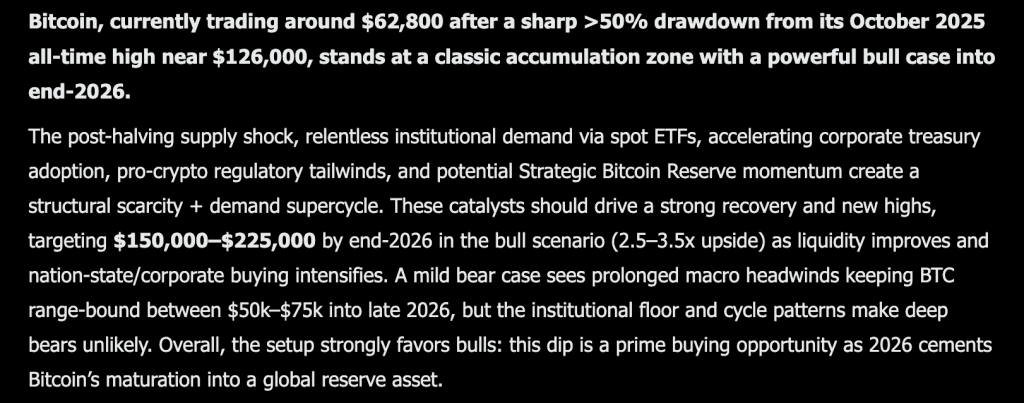
Elon Musk Grok AI just looked at a Bitcoin chart down more than 50% and predicts it’s a classic accumulation zone, targeting $150,000 to $225,000 by the end of 2026.
With BTC price trading around $62,800 right now, that is a 2.5x to 3.5x call built on the idea that the worst of the pain is also the best of the opportunity.
The core thesis is structural scarcity meeting relentless demand. The read is that Bitcoin is not just dipping, it is setting up a supply and demand supercycle.
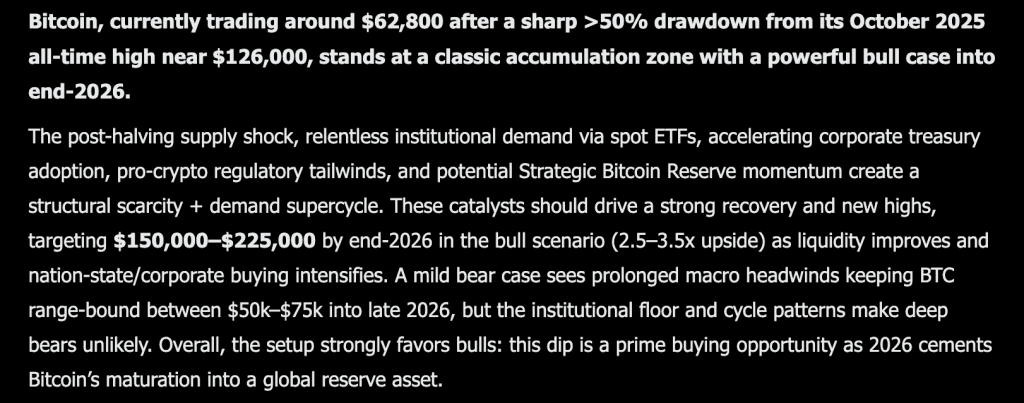
The post-halving supply shock chokes new issuance while spot ETFs, corporate treasuries, and potential Strategic Bitcoin Reserve momentum all pull on a shrinking float.
When supply tightens, and demand intensifies at the same time, price tends to rise violently to the upside. That is the engine behind the whole call.
The bull case stacks those catalysts into a recovery. Post-halving scarcity, relentless institutional demand through spot ETFs, accelerating corporate treasury adoption, and pro-crypto regulatory tailwinds drive a strong recovery and new highs.
The target lands at $150,000 to $225,000 by the end of 2026, a 2.5x to 3.5x move as liquidity improves and nation-state and corporate buying intensifies. This is the scenario where the dip gets remembered as the last cheap entry before maturation.

The bear case is mild by comparison. Prolonged macro headwinds could keep BTC range-bound between $50,000 and $75,000 into late 2026. But the institutional floor and repeating cycle patterns make a deep bear market unlikely from here.
That is the key distinction. This reads like a correction inside a bigger uptrend, not the start of a multi-year winter. Overall, the setup strongly favors bulls, and the dip looks like a prime buying opportunity.
Discover: The best pre-launch token sales
Bitcoin Price Prediction: A Supply Shock Meeting A Demand Supercycle
Now the chart. BTC is on the weekly and price sits at $62,857 after a sharp drop from the $126,000 all-time high set in October 2025.
The structure is a deep correction, more than 50% off the top, with price now sliding into a major prior accumulation shelf. Pattern-wise, this is a return to the wide $55,000 to $70,000 band that served as the launchpad before the last big leg up.
Key support sits at $60,000, with the next floor near $55,000 and deeper demand around $50,000. Resistance stacks at $70,000, then $80,000, and the heavier ceiling at $90,000.
RSI is reading 33.97 with its signal line at 40.40. So momentum is sitting well below its average and pressing toward oversold on the high timeframe.
That wide gap of about 6.4 points shows real selling pressure short term, but on the weekly, this kind of stretch has marked major cycle lows before.
When RSI curls back above that 40.40 signal, it flips the long-term read bullish again. Tie it together, and the chart is sitting right on the accumulation zone that has historically launched the next leg.
Hold this $55,000 to $70,000 band and the path back toward six figures, and that $150,000 to $225,000 target opens up exactly like the prediction lays out.
Discover: The best pre-launch token sales
You Might Like What Grok AI Predicts About LiquidChain
Large caps are not in trouble. They are just out of the room. Bitcoin, Ethereum, and XRP have been testing the same ceilings for weeks with nothing breaking through.
Every macro catalyst has a new arrival date. Every institutional wave has a new quarter attached to it. Holding assets where the next leg depends entirely on someone else’s decision is not a trade. It is a waiting room.
The money that wins cycles never announces where it is going.
The capital that actually moves in cycles relocates before the destination has a name.
Small market cap infrastructure plays operate on physics that large caps simply cannot replicate. A rotation that would not register as a rounding error at Bitcoin’s scale can reprice an undiscovered project by multiples.
The opportunity lies in the distance between what something is genuinely worth and what the market has assigned it so far. That distance shrinks to zero the moment discovery happens. Before that moment, it is fully capturable.
Multi-chain fragmentation is one of the most consistently expensive problems in DeFi, and it has never been solved. Bitcoin, Ethereum, and Solana exist as completely isolated systems. No shared architecture. No native interoperability. Every time value moves between them, the disconnection extracts its cost in fees, slippage, and failed transactions. That cost hits every single crossing every single time.
LiquidChain makes the crossing free as Grok AI predicts. All 3 networks inside one execution environment. Single deployment. Complete ecosystem access. No tax on any interaction.
The presale is at $0.01454 with just over $830,000 raised. Early and undiscovered.
Execution is unproven. Adoption is unknown. Established assets offer predictability toward a ceiling that the market already sees. LiquidChain is an entry point that does not exist once the market finds it.
Explore the LiquidChain Presale
The post Most Traders Will Scroll Past This Grok AI Bitcoin Predicts, Big Mistake appeared first on Cryptonews.

Digital Asset Holdings has secured a fresh $355 million financing round led by Andreessen Horowitz’s crypto arm, signaling a growing appetite on Wall Street for permissioned blockchain infrastructure. The round also includes participation from 7RIDGE, the Abu Dhabi Investment Authority, Citadel Securities and Optiver, valuing Digital Asset at roughly $2 billion, according to Bloomberg Law’s reporting citing people familiar with the matter.
The capital will be deployed to scale the Canton Network, Digital Asset’s privacy-focused platform designed to enable institutions to tokenize and settle traditional securities while keeping commercially sensitive data protected. Canton has already been piloted by a slate of major financial institutions, including Goldman Sachs, BNY Mellon, BNP Paribas, Standard Chartered, Société Générale and Deutsche Börse.
Bloomberg’s reporting last month indicated Digital Asset had initially sought around $300 million at a similar valuation and expected to close the round within weeks. Co-founder and CEO Yuval Rooz summarized the journey in a post on X after the announcement: “We knew institutional adoption was the path. We failed. We made bad decisions… But we never let go of our North Star.”
Key takeaways
- Digital Asset raises $355 million at about a $2 billion valuation, led by Andreessen Horowitz’s crypto arm, with 7RIDGE, ADIA, Citadel Securities and Optiver among participants.
- The funds will accelerate Canton Network’s expansion as a privacy-preserving, tokenization-and-settlement layer for traditional securities used by large financial institutions.
- Today’s round extends a multi-year funding trajectory, building on prior capital events in 2025 and 2021 that have reinforced Wall Street’s backing for Digital Asset.
- The ongoing investor support underscores a broader industry push toward institutional-grade blockchain infrastructure, though deployment timelines and regulatory clarity remain in focus.
A new round, a maturing vision for Canton
Digital Asset’s latest financing centers on the Canton Network, the company’s distributed ledger framework intended to facilitate the private issuance, tokenization and settlement of traditional securities without exposing sensitive data to counterparties. By preserving privacy while enabling cross-institutional settlement, Canton aims to modernize aspects of the capital markets ecosystem that rely on high-security data handling and compliance controls.
The round’s participants reflect a convergence of traditional finance and crypto-native firms seeking durable, scalable infrastructure. Andreessen Horowitz’s crypto affiliate led the funding with a$100 million allocation, while strategic contributors include 7RIDGE, the Abu Dhabi Investment Authority, Citadel Securities and Optiver. The infusion values Digital Asset at approximately $2 billion, according to the Bloomberg Law report.
“The path to real institutional adoption is clear,” Rooz said in his post. “We have spent nearly a dozen years evolving from a DRW spin-out into a platform that can support real-world securities workflows with privacy baked in.”
The Canton Network has already attracted real-world pilots with several marquee banks and market operators, a testament to the architecture’s potential to address regulatory and data-access concerns that have long constrained cross-border and multi-venue settlements. The ecosystem page for Canton highlights participation and collaboration across major financial players, illustrating a practical, industry-aligned roadmap rather than a niche crypto use case.
Canton Network gains institutional traction
The collaboration slate for Canton underscores a trend: big financial institutions are increasingly willing to experiment with permissioned blockchains that promise data confidentiality alongside the efficiencies of tokenized settlement. Goldman Sachs, BNY Mellon, BNP Paribas, Standard Chartered, Société Générale and Deutsche Börse have all piloted Canton’s capabilities, marking a meaningful adoption signal for permissioned networks in capital markets.
Observers have noted that the new funding aligns with the industry’s broader move toward tokenized, regulated securities and the infrastructure required to support it. The round’s scale and the caliber of backers suggest a longer-term commitment to building an interoperable, institutional-grade platform that can operate within existing compliance regimes while unlocking new liquidity and settlement efficiency.
Meanwhile, Digital Asset’s public communication about the financing emphasizes the importance of “institutional adoption” as a strategic North Star. The company has framed Canton not merely as a technology demonstration but as a practical highway for asset tokenization, secured collateralized lending, and structured outcomes that demand privacy and security at scale. The new funding will accelerate Canton’s rollout and its network effects among banks, custodians, and other market participants.
In parallel, the funding history paints a picture of sustained investor confidence in Digital Asset’s approach. Earlier this year, Digital Asset disclosed a $135 million round led by DRW Venture Capital with participation from Tradeweb, Citadel Securities, IMC, Optiver, Goldman Sachs, Virtu and others, followed by a $50 million strategic round in December from BNY Mellon, Nasdaq, S&P Global and iCapital. These successive rounds reflect a coordinated, multi-faceted push from both traditional financial powerhouses and crypto-focused investors toward the Canton framework.
A multi-year funding runway and strategic implications
Digital Asset’s fundraising trajectory extends beyond the recent rounds. In 2021, the company raised more than $120 million from investors including 7RIDGE and Eldridge, following earlier investments from JPMorgan, Citi, Deutsche Börse, Goldman Sachs, IBM, Samsung and Salesforce. Taken together, the financing stack signals a deepened industry belief that permissioned, privacy-preserving blockchain networks can complement, or in some cases augment, existing post-trade infrastructure.
For market participants, the implication is twofold. First, the backing by a broad coalition of Wall Street players could help catalyze broader adoption of Canton’s platform, potentially lowering the cost and risk of tokenizing traditional assets. Second, as regulatory clarity evolves around tokenized securities, Canton’s architecture—designed to keep transaction data private among counterparties—may address concerns about data exposure and compliance in cross-institution workflows. However, timing remains uncertain, and Digital Asset has not disclosed a definitive deployment schedule for a broad, live rollout beyond its existing pilots.
Cointelegraph reached out to Digital Asset for comment but did not receive a reply by publication time. The company’s leadership has publicly framed the current funding as a vindication of a long-term strategy, even amid earlier missteps, underscoring a commitment to the “North Star” of institutional-grade tokenization.
Magazine: Bitcoin will not hit $1M by 2030, says veteran trader Peter Brandt
What to watch next: as Canton scales, market observers will be watching for concrete evidence of scalable tokenized securities settlement within regulated frameworks, concrete client wins, and a clearer regulatory path that could accelerate or delay the network’s expansion. The coming quarters should reveal whether Canton can translate pilots into durable, revenue-generating services for the traditional financial system.
[PRESS RELEASE – Fort Worth, Texas, June 11th, 2026]
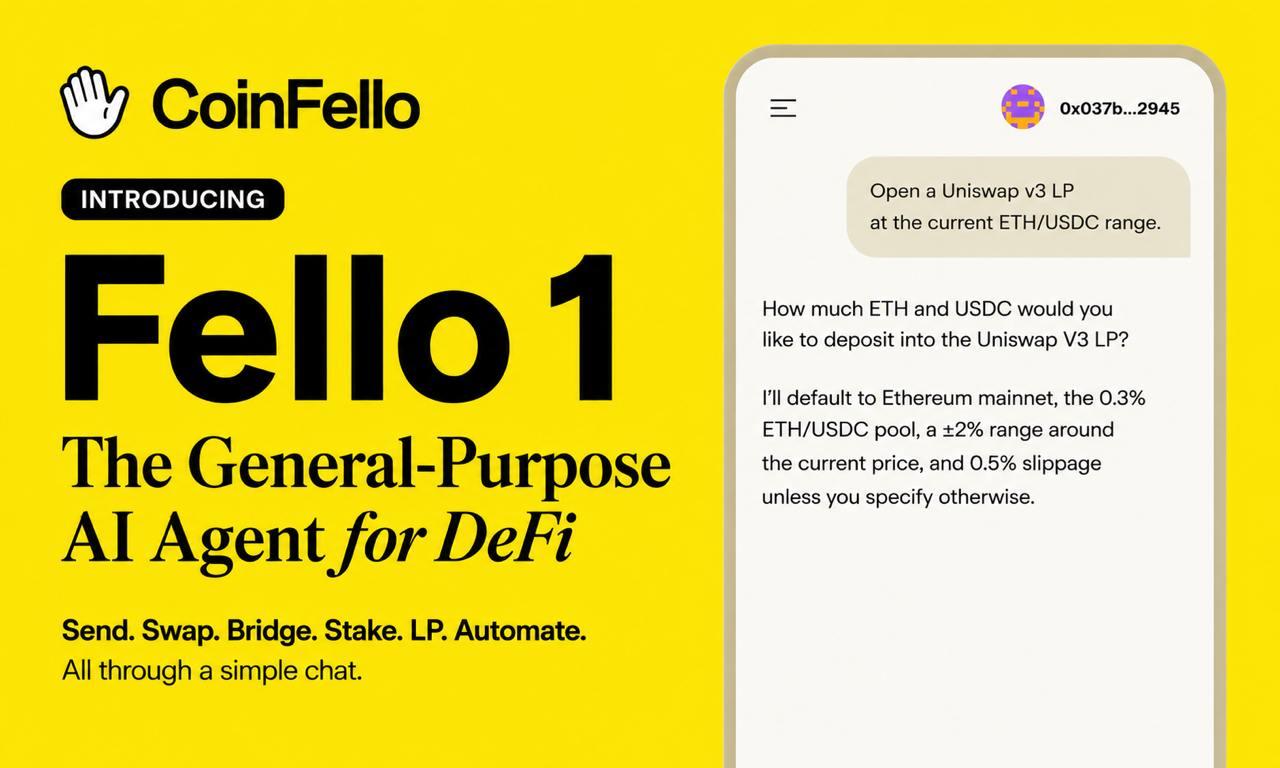
CoinFello, the first self-sovereign AI agent for executing and automating DeFi, today announced the launch of Fello 1, a major upgrade to its agent that enables users to interact with any EVM-compatible smart contract whilst providing new capabilities, new pools, and new protocols to arrive without code releases. The launch expands CoinFello from a special-purpose into a general-purpose AI crypto agent focused first and foremost on simplifying the DeFi experience of providing liquidity (LP).
Beyond its core capabilities of sending, swapping, bridging, and staking, Fello 1 can now help users open LP positions in Uniswap V2, V3, and V4 and execute multi-step DeFi transactions without requiring protocol-specific interfaces or pre-built integrations. The system operates through a self-custodial delegation model, allowing users to maintain control of their wallets and private keys while granting agents limited permissions based on user-defined rules.
The release builds on CoinFello’s earlier launches, including Fello 0 and the CoinFello agent skill, a wallet delegation framework that enables secure agent permissions. Fello 1 is built using MetaMask Smart Accounts standards, including ERC-7710 and ERC-7715 delegation capabilities.
In addition to being general-purpose, Fello 1 improves the LP experience for DeFi users. Fello 1 does all the math, monitors the live position, and demonstrates in/out-of-range and recommendations and impermanent loss clearly so users see the real return.
“Concentrated liquidity has been one of the highest-yield opportunities in DeFi for years, but the complexity kept most people out,” said jacobc.eth. Co-Founder & CEO. Tick math, fee tiers, position monitoring, impermanent loss: it takes real work to do it well. Fello 1 takes all of that on directly, so users get the yield without needing to manage the mechanics themselves. And they keep their keys the entire time.”
Unlike narrowly integrated DeFi assistants, Fello 1 is designed to interact directly with EVM smart contracts through generalized execution capabilities. The company said this enables broader protocol coverage and faster expansion of supported functionality without requiring dedicated integrations for every new application.
Current live capabilities include liquidity position management, multi-step transaction execution, ERC-4626 vault interactions, and integrations with protocols including Aave, Uniswap V2, Uniswap V3, and Uniswap V4. CoinFello said additional improvements to other protocols, including Pancakeswap and Aerodrome, are expected in future updates.
The launch comes amid growing interest in AI-powered crypto infrastructure and conversational blockchain interfaces. CoinFello positions Fello 1 as an execution layer for users seeking simplified access to decentralized finance while maintaining direct control over transaction approvals and wallet permissions.
“Many AI agents in crypto today either rely on custodial systems or are limited to narrow workflows,” said MinChi, Co-Founder & COO. “We believe the next phase of onchain AI will require systems that can operate across the full breadth of EVM applications while keeping users directly involved in every transaction decision.”
CoinFello emphasized that Fello 1 is not designed as an autonomous trading bot. Users review and approve each transaction before execution, and delegation permissions can be modified or revoked at any time.
The Fello 1 launch campaign is live today. Existing CoinFello users can access Fello 1 immediately, while new users can create accounts through the CoinFello application.
About CoinFello
CoinFello is an AI agent platform for researching, executing, and automating onchain actions. Using plain language, users can send, swap, bridge, stake, create LPs, and automate crypto activity across EVM-compatible networks while maintaining full custody of their wallets and private keys. CoinFello uses a delegation model that gives AI agents only the permissions users choose to grant.
The post CoinFello Publicly Launches Fello 1 for General-Purpose DeFi appeared first on CryptoPotato.
Bitso is expanding its payments partnership with Ripple by bringing its Mexican peso-backed MXNB stablecoin onto the XRP Ledger, where it will be used alongside Ripple USD (RLUSD) to support enterprise cross-border settlement between the United States and Mexico.
Mexico City-based Bitso said it will issue MXNB on the XRP Ledger where it will be integrated into Ripple’s Payments on DEX infrastructure and paired with RLUSD stablecoin for dollar- and peso-denominated settlement of enterprise payments.
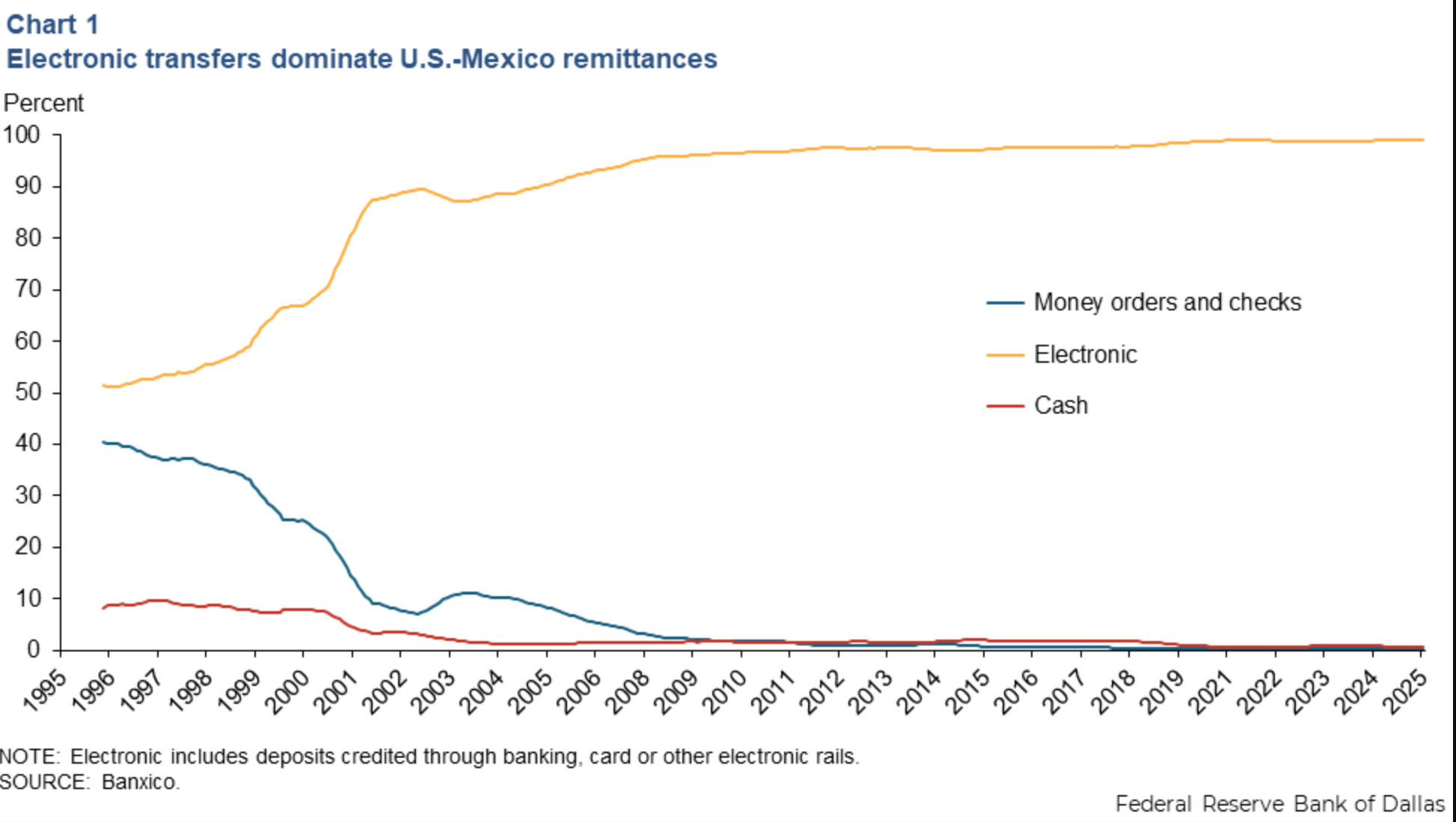
Money transfers between the US and Mexico comprise the single largest remittance corridor in the world, according to the US Federal Reserve. American goods and services trade with Mexico totaled an estimated $935.1 billion in 2024, up 5.5% from 2023, according to the White House Office of the US Trade Representative.
MXNB will also be integrated into the XRP Ledger’s Permissioned DEX, a platform designed for verified participants that enables access to onchain liquidity and settlement infrastructure.
The companies have partnered on cross-border payment services in Latin America for several years, setting the stage for this latest expansion.
Electronic transfers dominated the $65 billion in US-Mexico remittances made by individuals in 2024.
Source: Federal Reserve Bank of Dallas
Related: MassPay taps Coinbase to expand stablecoin payouts
Stablecoins continue to gain ground in cross-border payments
Stablecoin adoption continues to grow across Latin America where Bitso operates directly, including in Mexico, Brazil, Argentina and Colombia, with institutional connectivity in Chile and Peru.
Dollar-backed tokens represented 40% of crypto purchases on Bitso’s platform in 2025, exceeding purchases of any other digital asset category.
Financial institutions and remittance companies have also expanded stablecoin-based payment infrastructure in recent months. In May, Anchorage Digital partnered with Mexico’s Grupo Salinas to support cross-border settlement and treasury operations using stablecoins. The companies said the initiative would use blockchain-based payment rails to facilitate international dollar transfers for financial institutions and businesses.
Earlier this month, MoneyGram unveiled its dollar-backed MGUSD stablecoin on the Stellar blockchain. The company said the token will be integrated into its app via a self-custodial wallet, allowing users to hold dollar-denominated balances, move funds globally and convert them into local currencies.
The push toward stablecoin-based payments comes as cross-border transfers remain expensive. World Bank data showed that sending $200 internationally cost an average of 6.36% in the third quarter of 2025, while blockchain-based settlement can be completed for a fraction of a cent.
Stablecoin adoption has accelerated over the past year, with total market capitalization climbing from around $251 billion in mid-2025 to more than $316 billion in June 2026, according to DefiLlama data.
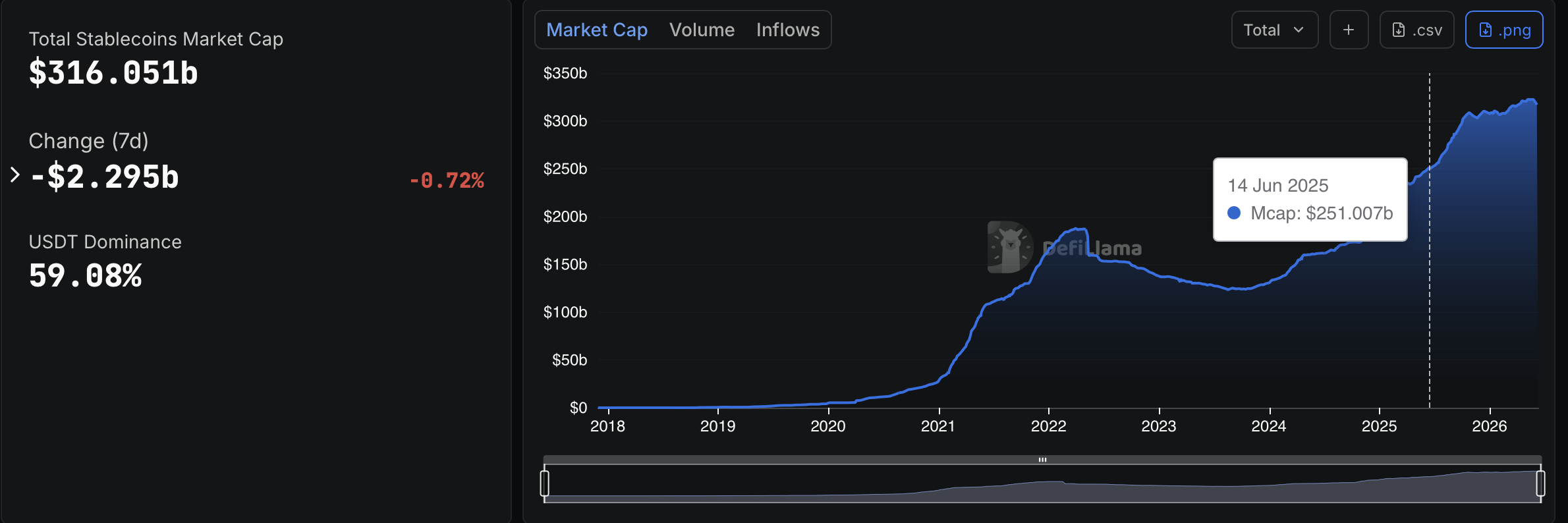
The global market cap of stablecoins is now more than $316 billion. Source: DefiLlama
Magazine: Bitcoin copying 2022 ‘almost perfectly,’ Ether to $4K in 2026: Market Moves

Risk assets tumbled as macro pressures intensified, pushing traders to reassess the path for monetary policy and growth. The Nasdaq 100 fell 7.5% in the week through June 10, erasing roughly $2.7 trillion in market value and highlighting how equities and risk assets can move in lockstep under a tightening financing backdrop. In crypto markets, Bitcoin faced renewed scrutiny as investors weighed whether the sector could still function as a hedge in a wobbling stock environment.
Oil rallying above $90 a barrel on concerns about supply disruption from geopolitical tensions in the Middle East added to the pressure. Traders increasingly priced in a longer period of restrictive policy even as job-market momentum remained in focus elsewhere. The broader energy and inflation dynamics fed a narrative that central banks could stay tighter for longer, complicating bets on risk assets, including digital assets.
On the inflation front, the U.S. Labor Department reported the producer price index (PPI) rose 6.5% year over year in May, the strongest pace since 2022. The data reinforced expectations among traders that the Federal Reserve could keep policy restrictive, with the CME FedWatch Tool showing about a 40% probability of a rate increase by September, up from around 5% just a month earlier.
Bitcoin derivatives reflected a cautious mood. Two-month Bitcoin futures traded with a relatively subdued annualized basis, slipping below levels that would indicate strong appetite for bullish leverage. In parallel, spot Bitcoin exchange-traded funds (ETFs) continued to experience outflows for a second consecutive month, with about $1.9 billion leaving spot BTC ETFs in June—signaling a cooling of institutional demand at a time when macro headwinds persist.
Amid this macro backdrop, investors also watched the tech and growth backdrop for clues about risk appetite. The market awaited the SpaceX initial public offering, which was oversubscribed by more than two times, underscoring that while investors remain selective, there remains a willingness to fund marquee tech and aerospace names. At the same time, heavyweight AI infrastructure spend signaled continued strategic investment in high-growth tech platforms, with Google unveiling plans to raise around $80 billion and Oracle and Super Micro Computer pursuing substantial fundraising rounds of $40 billion and $7 billion, respectively. The Friday debut of SpaceX stock could set the tone for a crowded pipeline of tech listings in the months ahead.
Meanwhile, the crypto market narrative was shaped by a series of balance-sheet moves and strategic repositioning. MicroStrategy (MSTR US) signaled a pause in new Bitcoin accumulation as it reoriented to reduce convertible debt, a move that weighed on the company’s cash position and highlighted the environment for corporate treasury strategies within the sector. Investors tracked the implications for Bitcoin’s liquidity and potential hedging properties during periods of outsized equity volatility.
Bitcoin-focused liquidity trackers and market data highlighted how the current cycle differs from prior episodes. Spot ETF outflows, now near the $2 billion mark for June, serve as a proxy for institutionally driven demand and suggest that BTC has not easily functioned as a hedge against broad stock-market declines during this cycle. As a result, traders remain cautious about a potential test of support near $60,000, even as some market participants keep eyes on longer-term macro dynamics and the evolving regulatory and policy backdrop.
Key takeaways
- Nasdaq 100 declined 7.5% over seven days to June 10, with roughly $2.7 trillion wiped from market value, underscoring broad risk-off sentiment that reverberates into crypto markets.
- June spot Bitcoin ETF outflows totaled about $1.9 billion, signaling persistent but selective institutional demand and questioning Bitcoin’s role as a hedge during a risk‑off cycle.
- U.S. PPI rose 6.5% year over year in May, the strongest pace since 2022, helping lift expectations for tighter monetary policy and a higher probability of a September rate hike (around 40%), according to CME FedWatch.
- Bitcoin futures showed a modestly negative impulse in the near term, with the annualized basis rate hovering near neutral, indicating limited demand for bullish leverage amid macro uncertainty.
- The SpaceX IPO drew oversubscription of more than 2x, signaling durable investor interest in marquee tech bets even as the broader market weighs inflation and policy trajectory; AI infrastructure funding also remained active, with major tech groups pursuing sizable capital raises.
Macro turbulence and the crypto lens
The week’s risk-off dynamics centered on a confluence of rising inflation signals, higher energy costs, and concerns about a slower growth impulse if monetary policy remains tight for longer. The 7.5% Nasdaq decline measured over seven days culminated in a market environment where traders questioned whether equities would stabilize before crypto assets could find durable footing. Oil’s move above $90 a barrel fed into those concerns by amplifying fears of a prolonged period of restrained consumer spending and investment activity, even as geopolitical developments remained fluid.
From a policy perspective, the PPI data added to the narrative that inflation could prove persistent, potentially forcing the Fed to maintain higher-for-longer rates. The market-implied probability of a rate increase by September rising toward 40% marked a notable shift from a month earlier, complicating the path for risk assets that are sensitive to discount rates and growth expectations. As policymakers weigh these signals, traders are scrutinizing where the next wave of liquidity and risk appetite might emerge, including the evolving relationship between traditional markets and crypto instruments.
Bitcoin, hedging, and the derivatives backdrop
Bitcoin’s reaction to the broader macro pressure remains a key focal point for traders. While spot ETF outflows hint at weaker institutional demand, the near-term futures market painted a more nuanced picture. Two-month BTC futures displayed an annualized basis rate that suggested limited appetite for aggressive leverage or a rapid price recovery, aligning with a cautious posture among market participants.
At the same time, the persistent outflows from spot BTC ETFs in June underscored a broader question about Bitcoin’s role as a macro hedge. Some investors have historically viewed BTC as a diversifier or inflation hedge, but this cycle has shown a more nuanced dynamic, with flows and price action often diverging from equity drawdowns. Market readers will want to monitor ETF activity alongside price action, on-chain signals, and macro indicators to better gauge Bitcoin’s hedging potential in the current environment.
Capital markets activity: SpaceX, AI, and the tech funding cycle
Beyond crypto, the tech funding cycle remained active, with a looming SpaceX IPO attracting attention as a potential gauge for tech market sentiment. Oversubscription by more than double indicates continued investor interest in high-growth, capital-intensive platforms, even as a broad equity pullback persists. The broader AI infrastructure space also drew attention, with major players signaling substantial fundraising activity. Google’s plan to raise around $80 billion, followed by Oracle’s and Super Micro Computer’s respective rounds of $40 billion and $7 billion, illustrates a continued appetite for large-scale investment in infrastructure and platforms that underpin AI and cloud ecosystems.
Industry observers noted that while the AI space has faced its share of volatility, the underlying demand for compute power, data processing, and specialized hardware persists. The timing and pricing of these fundraising efforts could influence how technology equities trade in the near term and may shape funding environments for similar companies seeking to scale infrastructure projects in the coming quarters.
What to watch next
Readers should keep a close eye on several developing threads. First, the Fed’s policy trajectory remains a primary driver of risk assets, and the market will be watching for new inflation signals, wage data, and energy prices that could alter rate expectations. Second, Bitcoin’s ETF flows and on-chain metrics will be worth tracking for clues about institutional participation and liquidity dynamics. Third, the pace and reception of SpaceX’s IPO, along with ongoing AI infrastructure funding, will help map the health of the broader tech investment cycle and how it interacts with macro uncertainty. Finally, corporate treasury moves—like MicroStrategy’s pause on new Bitcoin accumulation—will continue to shape the perceived balance between leverage, liquidity, and crypto exposure in corporate books.
In the near term, the path for Bitcoin and other digital assets will likely hinge on how quickly inflation cools, how oil prices evolve, and whether policy makers signal a clearer path toward normalization. For readers active in trading or investment, the coming weeks will be a test of whether Bitcoin can reassert a hedge-like role or remain tethered to broader risk-off dynamics in traditional markets.
Next developments to watch include updates on the Fed’s communications, fresh U.S. inflation data, and the continued reception of major tech IPOs and AI infrastructure capital raises. These factors will shape both macro sentiment and the subtle ways crypto markets respond to shifting risk appetite.

Citigroup is launching a blockchain-driven marketplace for private company shares, aiming to give wealthy and institutional investors a new route to pre-IPO exposure through tokenized instruments.
According to The Wall Street Journal, the platform will issue tokenized depositary receipts that represent ownership interests in private firms. The rollout will start with foreign investors, with a U.S. access plan to follow. Citi executives described the approach as enabling investors to hold private-company shares “right next to” their Apple stock within a familiar brokerage framework.
The project hinges on tokenization to modernize private markets. Citi argues that structuring private investments through tokenized depositary receipts can offer greater transparency than traditional private structures such as special-purpose vehicles, which have grown pervasive but exposed to opaque governance and limited visibility for investors.
The infrastructure behind the venture will be provided by SIX Digital Exchange, a subsidiary of SIX Group, the operator of Switzerland’s stock market. Citi said it is already in discussions with several large private companies about listing their shares on the platform, signaling a potential early slate of listings once the platform launches.
Key takeaways
- Platform mechanics on a familiar rails: Citi will issue tokenized depositary receipts backed by private-company ownership; foreign-investor access is planned first, with a U.S. rollout later; SIX Digital Exchange will power the blockchain layer.
- Transparency over opacity: Citi positions tokenized receipts as a more transparent alternative to SPV-based access to private equity and late-stage private stakes.
- Private markets’ long-run outperformance: PitchBook data summarized by the American Investment Council indicate private equity has outperformed the S&P 500 across 5-, 10-, 15-, and 20-year horizons, underscoring why market participants want broader access to pre-IPO exposure.
- Rising demand tempered by caution: Demand for tokenized pre-IPO exposure is rising—exemplified by high-profile IPO fervor—but investors should heed warnings about tokenized stock structures not representing equity, as OpenAI has cautioned.
Platform mechanics and governance
The reported plan frames Citi’s new marketplace as a direct on-ramp to private ownership through blockchain-enabled receipts. Tokenized depositary receipts will represent genuine ownership interests in private companies, with SIX Digital Exchange providing the underlying ledger and settlement infrastructure. Citi indicates it has engaged with several large private firms about listing their shares on the platform, signaling that the first wave of offerings could include substantial pre-IPO stakes.
While tokenization promises streamlined ownership records and potentially clearer governance, advocates acknowledge that valuation and liquidity dynamics for private shares remain complex. The platform’s success will hinge on how readily investors can buy, sell, and reconcile these receipts in real time, how dividends or distributions (if any) are handled, and how regulators oversee tokenized private equity transactions as they intersect with traditional markets.
Private markets in the spotlight
The broader appeal of pre-IPO investing has intensified as fintechs and traditional financial players explore tokenized access to private assets. Long-run performance trends in private markets have reinforced the appeal: data cited by the American Investment Council, drawing on PitchBook, show private equity delivering stronger returns than the S&P 500 across five-, ten-, fifteen-, and twenty-year horizons. Will Dunham, president and CEO of the council, has argued that this long-run outperformance strengthens the case for expanding retail access to private markets through regulated investment vehicles, including those tied to retirement portfolios.
Beyond Citi’s venture, the ecosystem is already experimenting with tokenized exposure to private companies. Some platforms offer tokenized representations that provide economic exposure, rather than direct equity ownership. OpenAI’s tokenized-stock warnings—issued last year—underscore a critical caveat: tokenized securities may not confer actual equity rights in the underlying company, a nuance that has important implications for investors seeking true ownership or voting rights.
Market signals and the road ahead
The appetite for tokenized and private-market access is underscored by high-profile IPO dynamics. Bloomberg has reported that SpaceX’s upcoming public listing has drawn substantial retail interest, with reported orders exceeding $70 billion ahead of the offering. This level of activity highlights a broader shift in how investors approach large-valuation, high-profile listings, and it echoes the growing willingness of retail and institutional buyers to participate in tokenized or blended private-to-public journeys.
At the same time, the ecosystem remains nuanced. Platforms like Kraken’s xStocks have seen significant on-chain activity as part of the push toward tokenized equities, illustrating how retail participants are experimenting with tokenized exposure to private and public offerings. Yet the landscape is not without risk: OpenAI’s caution about tokenized stocks remains a salient reminder that tokenized formats can diverge from direct equity rights, potentially affecting valuation, voting, and rights to dividends.
As Citi advances toward a potential rollout, observers will watch regulatory clarity, liquidity dynamics, and valuation standards to determine whether tokenized private-share platforms can scale into durable capital-formation channels or whether they remain a niche instrument tied to select institutions.
Watch for regulatory updates and liquidity progress in the coming months, as markets weigh whether tokenized private shares can meaningfully broaden access to private markets while preserving investor protections and price discovery. The outcome could shape how banks and fintechs collaborate to reframe private equity access for a broader audience.
Crypto World
DOJ and CFTC Open Insider-Trading Probes of George Santos Over Kalshi Bets on His Own State of the Union Appearance


The Department of Justice and the Commodity Futures Trading Commission have opened insider-trading investigations into former Republican congressman George Santos over trades placed on the prediction-market exchange Kalshi tied to his own February appearance at President Trump's State of the Union… Read the full story at The Defiant

TLDR
- XRP Ledger recorded under $400 in daily fees based on on-chain data from DefiLlama.
- Around 327 XRP were burned in 24 hours, valued at less than $400.
- Weekly fees stood near $3,100, while monthly fees reached about $16,000.
- Bitcoin, Ethereum, Solana, and Tron generated far higher daily fee revenue.
- XRPL uses a fixed fee model of 0.00001 XRP per transaction as a spam control measure.
The XRP Ledger recorded under $400 in chain fees in a single day as network activity remained low across key metrics. Data from DefiLlama showed minimal fee generation compared with major blockchains. Meanwhile, explorers reported only 327 XRP burned within 24 hours, reinforcing weak transaction value.
XRP Ledger Fee Activity Overview
The XRP Ledger generated roughly $3,100 in weekly fees, while monthly totals stayed near $16,000. Bithomp data confirmed that daily activity translated into less than $400 in burned XRP value. At the same time, the network processed over one million transactions daily.
DefiLlama tracked the fee levels across major chains and showed XRPL far below peers. Bitcoin generated about $183,000 in miner fees in one day. Ethereum posted over $323,000 in the same period, while Solana reached $358,000.
Tron recorded more than $1 million in daily chain fees, widening the gap further. XRPL activity stayed focused on low-cost transfers and automated network operations. The fee structure remained fixed at 0.00001 XRP per transaction.
The network design burned fees instead of paying validators or miners. This structure limited direct income from transaction demand. As a result, fee value reflected only anti-spam cost.
XRP Ledger Network Structure and Transaction Costs
The XRP Ledger processed high transaction volumes but maintained very low cost per transfer. The protocol required 10 drops per transaction as a base fee. At current prices near $1.11, the cost stayed near one-thousandth of a cent.
Analysts noted that a million transactions only burned around 10 XRP. This equaled under $20 in total network cost. The system kept fees stable even during higher usage periods.
Glassnode data showed a decline of about 89% in daily fees during 2025. December levels dropped to lows not seen since 2020. Network address activity also fell sharply over the same period.
Active addresses declined by roughly 80% in the first half of 2025. Market data showed reduced engagement across payment and data functions. The trend aligned with lower fee capture across the ledger.
Market Comparison Across Major Blockchains
Bitcoin users paid $183,000 in fees within a single day, according to market trackers. Ethereum recorded over $323,000 during the same session. Solana followed closely with $358,000 in daily fees.
Tron surpassed $1 million in chain fees over the same timeframe. These networks linked fees directly to transaction demand and execution priority. XRPL maintained a fixed-cost model independent of market pressure.
Over twelve months, XRPL fees remained lower than a single day on Tron. The gap highlighted differences in fee design across networks. XRP traded near $1.11 while the ledger continued processing steady but low-value transactions.

After suffering one of its steepest corrections in recent months, Bitcoin is showing early signs of stabilization above a major demand zone. However, with the price still trading below several important resistance levels, the recent bounce may simply represent a temporary relief rally within a broader corrective phase.
Bitcoin Price Analysis: The Daily Chart
On the daily timeframe, BTC has found support around the critical $60K psychological support range. The blue demand zone is currently acting as the market’s primary support, as buyers have managed to defend the region so far, preventing a deeper breakdown. However, the recovery remains weak and lacks convincing bullish follow-through.
As long as Bitcoin remains below the broken support area at $65K-$66.5K and the larger supply zone around $72K-$74K, rallies are likely to be viewed as corrective rather than trend-changing. A failure to reclaim these levels could open the door for another test of the $60K region and potentially the lower boundary of the demand zone.
On the upside, BTC would need to reclaim the $66K-$67K area first before targeting the more significant resistance cluster near $73K-$74K.
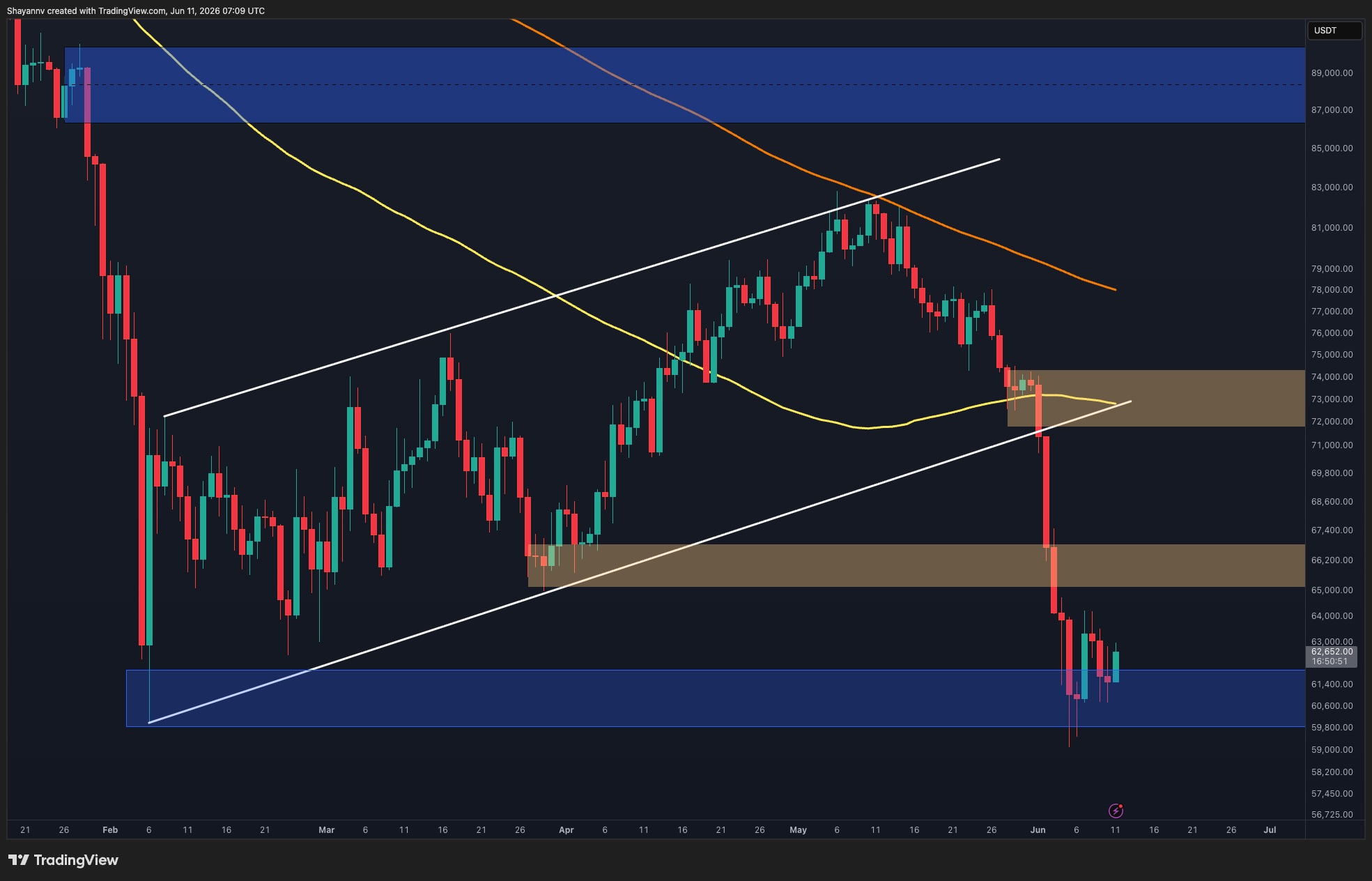
BTC/USDT 4-Hour Chart
The 4-hour chart provides a clearer picture of the ongoing consolidation. Following the steep decline from above $73K, Bitcoin found support inside the $59K-$62K demand zone and has since developed a rising wedge formation.
While the pattern reflects short-term recovery efforts, rising wedges frequently act as bearish continuation structures when they emerge after strong downtrends. Price is currently trading near $62.7K while approaching the wedge’s lower support line.
This creates an important short-term inflection point. A breakdown below the rising wedge could trigger another wave of selling pressure, potentially sending BTC back toward the $60K support area and possibly the lower boundary near $59K.
Meanwhile, any recovery attempt is likely to encounter significant resistance around $65K-$68K, where a fresh supply zone has formed following the recent breakdown. This area represents the first major obstacle for bulls and could attract renewed selling interest if tested.
From a short-term perspective, the structure currently favors a pullback scenario unless buyers can invalidate the bearish setup by breaking above the wedge resistance and reclaiming the nearby supply zone.
Onchain Analysis
The Bitcoin Realized Price metric continues to provide an important perspective on the broader market cycle. Realized Price, which represents the average acquisition cost of all circulating BTC, currently sits around $53.5K, while spot price remains near $62.5K.
Historically, Bitcoin tends to maintain bullish market conditions while trading above its realized price. Despite the recent correction, BTC still holds a meaningful premium above this level, suggesting that the broader cycle structure remains constructive.
However, the chart also shows that the realized price has flattened in recent months after a strong rise throughout 2024 and 2025. This slowdown reflects reduced capital inflows and a cooling phase in investor activity.
As a result, although the long-term on-chain picture remains supportive, it does not necessarily prevent additional short-term downside. Similar periods in previous cycles often saw prolonged consolidations and multiple retests of support before a stronger trend resumed.
For now, the combination of weakening technical structure and a still-positive on-chain backdrop suggests that Bitcoin may experience further pullbacks toward the $60K support region before attempting a more sustainable recovery.
The post Bitcoin Price Analysis: BTC Must Reclaim This Level to Avoid Fresh Sub-$60K Breakdown appeared first on CryptoPotato.


US lawmakers have introduced legislation to create a federal task force focused on cryptocurrency theft, fraud, and hacking investigations.
Summary
- Bipartisan lawmakers introduced a bill creating a federal crypto crime task force.
- The proposed unit would include the DOJ, FBI, DHS, and Treasury Department.
- The legislation aims to improve investigations, victim reporting, and law enforcement coordination.
The proposal follows a year in which Americans reported more than $11 billion in crypto-related losses. If approved, the measure would establish a coordinated reporting and enforcement framework across multiple federal agencies.
Crypto fraud losses drive call for coordinated enforcement
Bipartisan lawmakers introduced the Federal Cryptocurrency Theft Enforcement and Coordination Act in Congress. The proposal would create a task force led by the attorney general. Officials from the Department of Justice, FBI, Department of Homeland Security, and Treasury would participate.
The bill arrives after a sharp rise in crypto-related complaints across the United States. According to the FBI’s 2025 Internet Crime Report, Americans filed 181,565 cryptocurrency complaints. Those reports resulted in more than $11.3 billion in recorded losses. Investment fraud generated the largest share of those losses. FBI data showed investment scams accounted for approximately $7.2 billion. Complaint volume also increased 21% compared with the previous year.
Older Americans reported the highest losses among all age groups. People over 60 filed 44,555 complaints during 2025. The FBI said those victims lost roughly $4.43 billion through crypto-related schemes. Meanwhile, blockchain analytics firm TRM Labs reported rising criminal activity involving digital assets. According to the firm, wallets linked to illicit activity received $158 billion in cryptocurrency during 2025. The figure stood at $64.5 billion in 2024.
Bill seeks single reporting channel for victims
Representative Lance Gooden and Representative Josh Gottheimer introduced the legislation. The lawmakers said victims currently lack a central place to report crypto-related crimes. The proposal aims to establish a more coordinated response structure.
Gooden said Americans need a unified strategy against cryptocurrency criminals. He argued that fragmented enforcement leaves victims without clear support options. The bill seeks to improve communication between agencies handling crypto investigations.
Under the proposal, the task force would coordinate investigations across participating agencies. It would also develop standardized guidance for local law enforcement departments. Officials would create procedures for handling cryptocurrency theft and fraud cases. The legislation also focuses on victim assistance. Lawmakers said the framework would provide a clearer reporting process. Support services would operate through a centralized federal structure.
Proposal follows changes in federal crypto enforcement
The bill arrives after the Department of Justice disbanded the National Cryptocurrency Enforcement Team in 2025. Officials said the previous unit relied heavily on enforcement actions against industry participants. The current proposal instead focuses on criminal investigations and victim support. Federal agencies already operate several programs targeting digital asset crime.
The FBI’s Operation Level Up identifies scam victims before losses escalate. According to the bureau, the initiative saved more than $225.8 million during 2025. Other agencies also continue crypto enforcement efforts. The Treasury Department’s Scam Center Strike Force has targeted overseas fraud networks. Authorities said the program seized more than $700 million linked to scam operations.
Industry groups have expressed support for the proposal. The Digital Chamber said law enforcement agencies need stronger tools and training. Satoshi Action Fund CEO Dennis Porter said the legislation would provide a coordinated federal response for victims and investigators. The measure must still advance through congressional committees before becoming law. Lawmakers could also attach the proposal to a broader legislative package during the current session.
Archax has introduced real-time yield payments on Hedera, enabling interest generated by tokenized securities to be distributed continuously in USDC.
The system allows interest payments to update automatically as tokenized securities move between wallets. According to Archax, cash flows are transferred alongside the underlying asset, allowing yield to follow ownership in real time.
Most tokenized securities continue to distribute interest through periodic payments, similar to traditional financial products. Archax said its system allows cash flows to accrue and settle continuously, supporting applications such as real-time coupon payments and revenue-sharing arrangements.
The launch builds on Archax’s earlier work on tokenized investment products. In September, the company introduced Pool Tokens on Hedera, allowing multiple tokenized assets to be bundled into a single onchain instrument, including a product backed by money market funds from several major asset managers.
Graham Rodford, CEO and co-founder of Archax, said tokenization was “the first step,” while real-time cash flows could allow tokenized assets to support yield streams and reduce market inefficiencies.
Archax is a UK-regulated digital asset exchange and custodian, while Hedera is a public distributed ledger network used by financial institutions developing tokenized asset products. According to Hedera, Archax’s platform hosts more than $300 million in tokenized assets from six asset managers.
Related: Franklin Templeton, BNP Paribas see tokenization boosting EU’s capital efficiency
Yield-bearing tokenized assets gain traction
Financial institutions are increasingly bringing yield-bearing assets onto blockchain networks, with tokenized money market funds becoming a growing segment of the real-world asset market.
In April, OKX added BlackRock’s BUIDL tokenized Treasury fund to a collateral framework with Standard Chartered, allowing institutional clients to use the yield-bearing asset as trading margin while it remains in regulated custody.
Weeks later, JPMorgan filed to launch a tokenized money market fund on Ethereum designed for stablecoin issuers. The fund will invest in Treasury bills and overnight repurchase agreements, allowing issuers to earn yield on reserves backing their stablecoins.
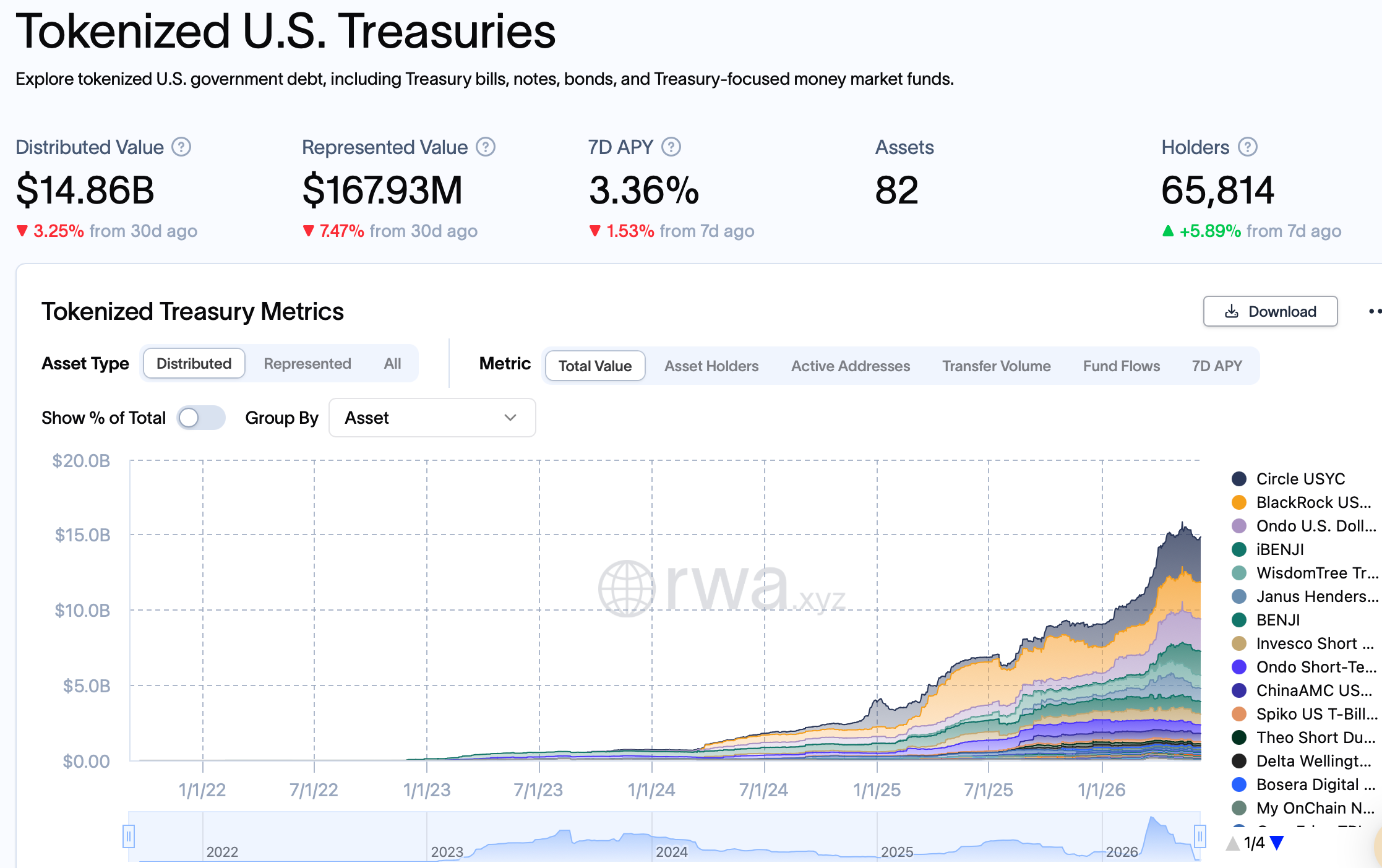
The push comes as tokenized real-world assets continue to expand, bucking broader weakness in the crypto market. According to Binance Research, the value of active tokenized RWAs has increased 589% since early 2025, with tokenized bonds and money market funds adding roughly $6.5 billion in value over the period.
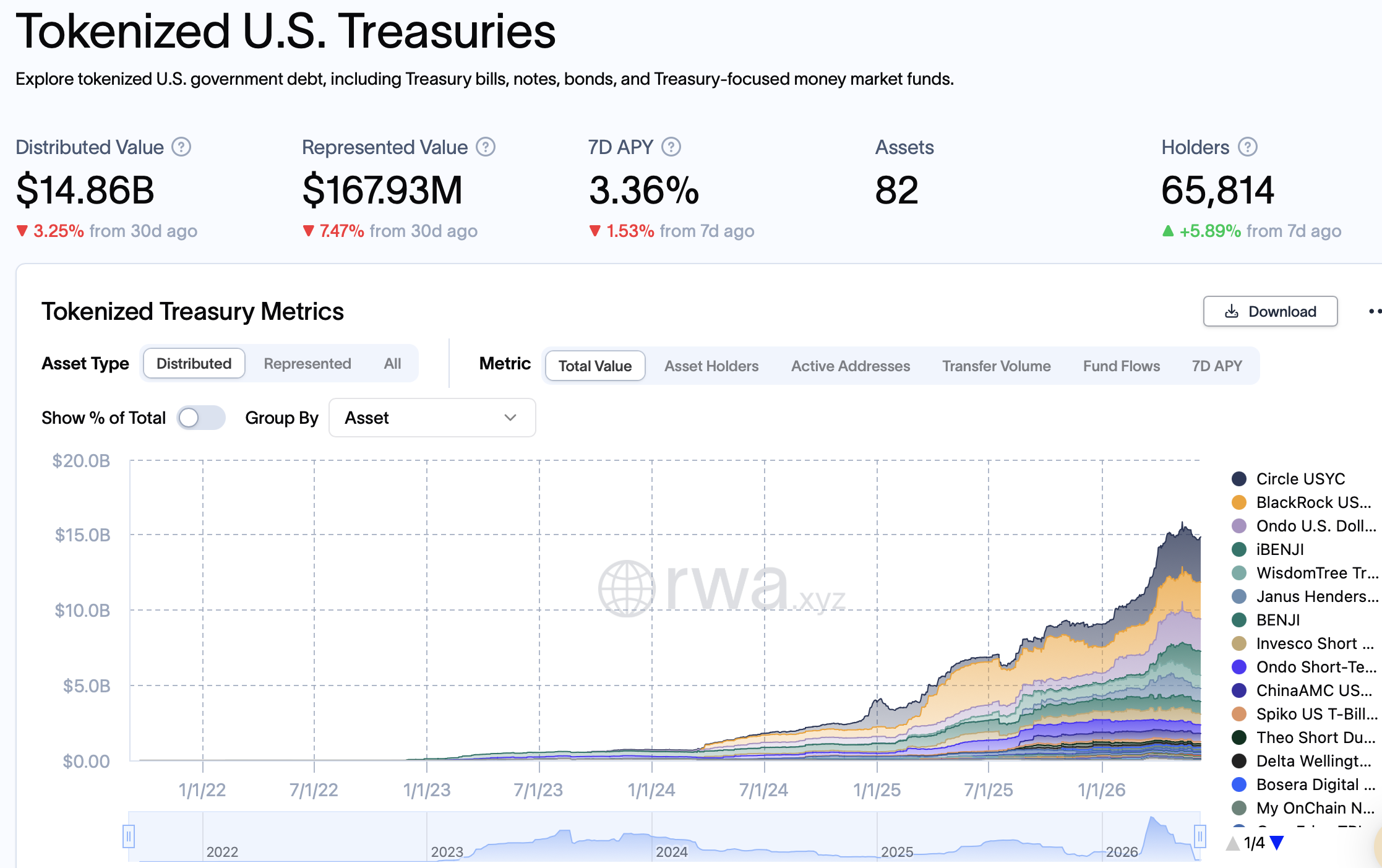
Growth in tokenized US Treasurys began climbing in early 2025. Source: RWA.xyz
Magazine: Does ‘Paper Bitcoin’ mean there’s an unlimited supply of BTC?

Police find abandoned car in search for missing Cambs man, 61

Applied Optoelectronics: An Optical Supercycle Is Here

Digital Asset lands $355M as a16z doubles down on Wall Street rails



-

 Fashion6 days ago
Weekend Open Thread: Evereve – Corporette.com
-
 Crypto World7 days ago
Jensen Huang Approves Samsung, SK Hynix, and Micron for NVIDIA (NVDA) HBM4 Memory Supply
-

 Crypto World4 days ago
Anatomy of the June crypto crash: Fed, Iran, Saylor
-
 Entertainment5 days ago
The Best Mystery Series of All Time Is Surging on Streaming 30 Years After It Ended
-

 NewsBeat4 days ago
Alexander Zverev wins the French Open to finally earn a 1st Grand Slam title
-

 Tech6 days ago
Suspicious Polyfill login prompts pop up on Toshiba, Muji websites
-
Crypto World5 days ago
Senator Cynthia Lummis Calls CLARITY Act the Most Consequential Financial Legislation of This Generation
-

 Tech7 days ago
Microsoft launches MXC, an OS-level sandbox for AI agents, with OpenAI and Nvidia already on board
-

 Tech5 days ago
Microsoft unveils seven homegrown AI models in new bid for ‘long term self-sufficiency’
-

 Business7 days ago
(VIDEO) Justin Bieber Delivers Surprise Happy Birthday Serenade to Diners at Los Angeles Mexican Restaurant
-
 NewsBeat4 days ago
Alexander Zverev conquers demons and outlasts Flavio Cobolli to win French Open for first major title
-
 Business5 days ago
The Pain Points Taking a Fragile Tech Rally Down a Notch
-

 Business4 days ago
High Stakes for Wembanyama as New York Pushes for 3-0 Lead
-
 Crypto World4 days ago
Eli Lilly (LLY) Stock Surges 4% Following Breakthrough Sleep Apnea Trial Results
-

 Tech6 days ago
Von der Leyen’s AI envoy pick draws conflict-of-interest fire
-

 Tech7 days ago
Meta steals a tactic from Tesla and builds data centers in tents
-
Crypto World7 days ago
LBank Surpasses 25 Million Users Worldwide as AFA Partnership Continues to Drive Global Growth
-

 Tech6 days ago
Hackers now exploit SolarWinds Serv-U flaw to crash servers
-

 Crypto World5 days ago
Trump’s AI Ownership Plan Could Benefit Anthropic at OpenAI’s Expense
-
 Sports2 days ago
Bangladesh beat Australia after 20 years in ODIs, register only their second win over six-time world champions | Cricket News
You must be logged in to post a comment Login