
Crypto World
Multichain Is Breaking DeFi – Smart Liquidity Research


Introduction
For years, the dominant narrative in decentralised finance has been clear: more chains mean more scalability, more innovation, and more opportunity. Multichain has been framed as the inevitable evolution of Web3—a future where users seamlessly move assets across ecosystems, tapping into the best each network has to offer.
That vision sounds compelling. It just doesn’t match reality.
Instead of scaling DeFi, the multichain paradigm is quietly undermining it. Beneath the surface of expansion lies a growing set of inefficiencies—fragmented liquidity, duplicated capital, fragile infrastructure, and a user experience that feels anything but revolutionary.
The Illusion of Growth
At first glance, Multichain looks like explosive growth. New chains launch, total value locked (TVL) spreads across ecosystems, and protocols proudly announce deployments on multiple networks.
But this “growth” is often misleading.
What appears to be expansion is frequently just redistribution. The same capital is stretched thinner across more environments, creating the illusion of a larger system while actually weakening its core. Instead of deep, efficient liquidity pools, we get shallow replicas scattered across chains.
In traditional finance, liquidity consolidation is a strength. In DeFi, we’ve normalised fragmentation—and we’re paying the price for it.
Liquidity Fragmentation: A Silent Killer
Liquidity is the lifeblood of DeFi. Without it, markets become inefficient, slippage increases, and trading becomes more expensive.
Multichain fractures liquidity across dozens of ecosystems. A token that once had deep liquidity on a single chain is now split across multiple networks, each with its own isolated pool. The result?
- Worse pricing for traders
- Higher slippage
- Reduced capital efficiency
Instead of one robust market, we get many weaker ones. Protocols attempt to compensate with incentives, but this only creates mercenary capital—liquidity that disappears as soon as rewards dry up.
In trying to be everywhere, DeFi has become strong nowhere.
Capital Duplication: Inefficiency at Scale
Multichain doesn’t just fragment liquidity—it duplicates capital.
To operate across chains, users often need to replicate positions: holding assets, providing liquidity, or maintaining collateral on multiple networks simultaneously. This leads to idle capital that could otherwise be deployed more productively.
Bridging adds another layer of inefficiency. Assets are locked on one chain and minted on another, creating synthetic representations that rely on external systems to maintain parity. This isn’t true interoperability—it’s a workaround with trade-offs.
Capital that should be fluid becomes constrained, fragmented, and less effective.
Bridging Risks: The Weakest Link
Bridges are the backbone of the multichain ecosystem—and its most vulnerable point.
They introduce additional trust assumptions, complex smart contract logic, and significant attack surfaces. History has shown that bridges are frequent targets for exploits, often resulting in massive losses.
Even when they work as intended, bridges add friction:
- Multiple steps to move assets
- Delays in confirmation
- Confusing interfaces for users
For newcomers, this complexity is a barrier. For experienced users, it’s a constant risk calculation.
A system that requires users to repeatedly expose themselves to fragile infrastructure isn’t scalable—it’s brittle.
The UX Problem No One Wants to Admit
DeFi promised to remove friction. Multichain has reintroduced it in new forms.
Users must navigate:
- Different wallets and RPC configurations
- Network switching
- Bridging interfaces
- Inconsistent token standards and naming
What should be a simple transaction often becomes a multi-step process across multiple platforms. Each step increases the chance of error—sending assets to the wrong chain, interacting with the wrong contract, or losing funds entirely.
This isn’t the future of finance. It’s a maze.
Incentives Are Masking the Problem
Why hasn’t the multichain model been widely challenged?
Because incentives are hiding the cracks.
Protocols use token rewards to attract liquidity across chains, temporarily solving fragmentation by subsidising it. Users chase yields, moving capital wherever returns are highest, reinforcing the multichain narrative.
But incentives are not a sustainable foundation. When rewards decline, liquidity disappears, exposing the underlying inefficiencies.
What looks like a thriving ecosystem is often just a heavily incentivised one.
Rethinking the Path Forward
None of this means cross-chain innovation is inherently flawed. The idea of interoperability is still powerful—but the current implementation is far from optimal.
The industry needs to shift focus:
- From chain proliferation to liquidity consolidation
- From bridging workarounds to native interoperability
- From incentive-driven growth to structural efficiency
Solutions like shared liquidity layers, intent-based systems, and unified execution environments are emerging—but they must prioritise simplicity and capital efficiency over expansion for its own sake.
Conclusion
Multichain was supposed to scale DeFi. Instead, it has diluted liquidity, duplicated capital, and introduced systemic risks that are impossible to ignore.
The uncomfortable truth is this: more chains didn’t make DeFi better—they made it more complicated, less efficient, and harder to use.
Until the industry confronts these issues head-on, multichain will remain less of a breakthrough and more of a bottleneck.
And the longer we pretend otherwise, the more expensive that illusion becomes.
REQUEST AN ARTICLE

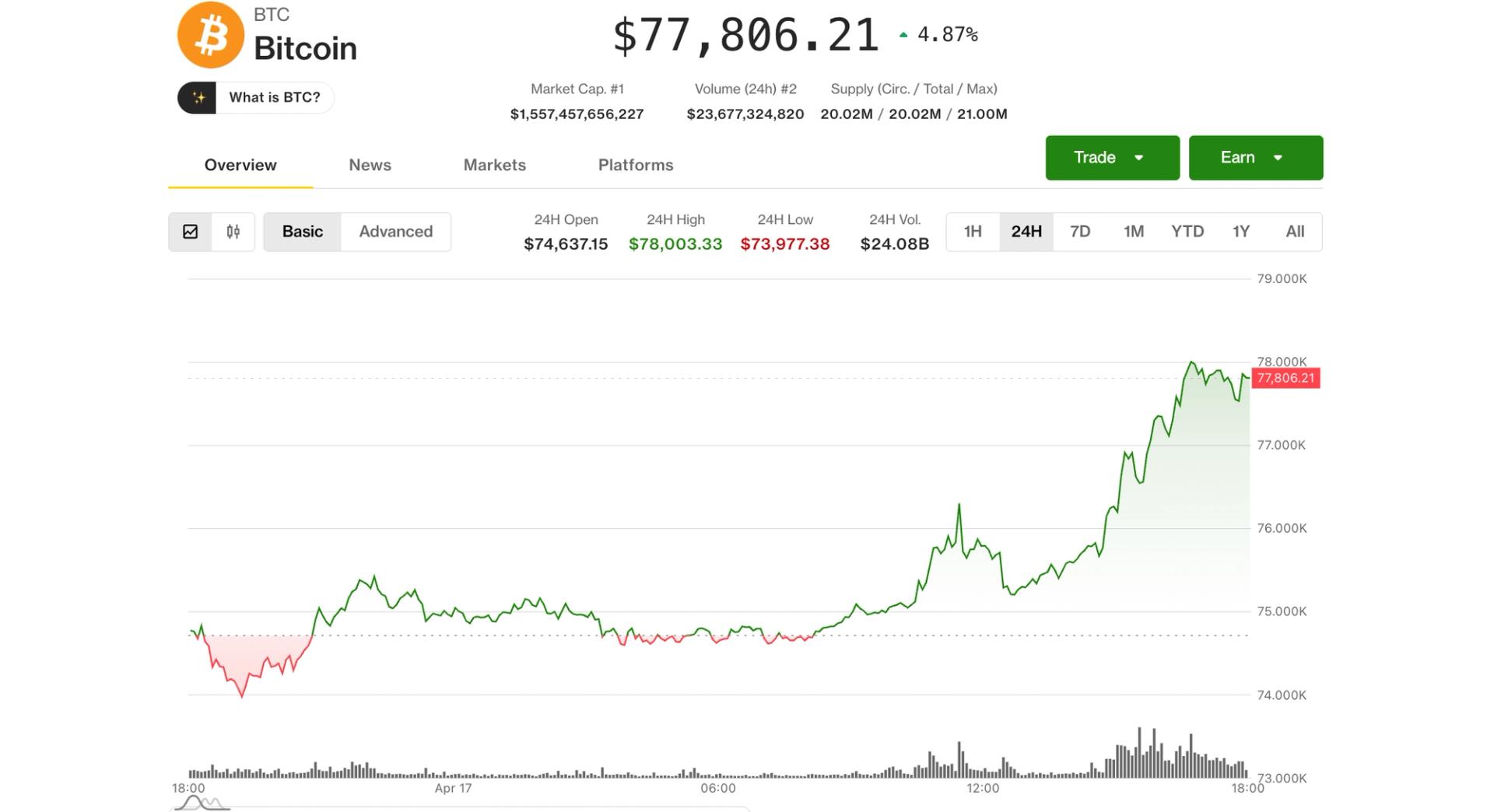
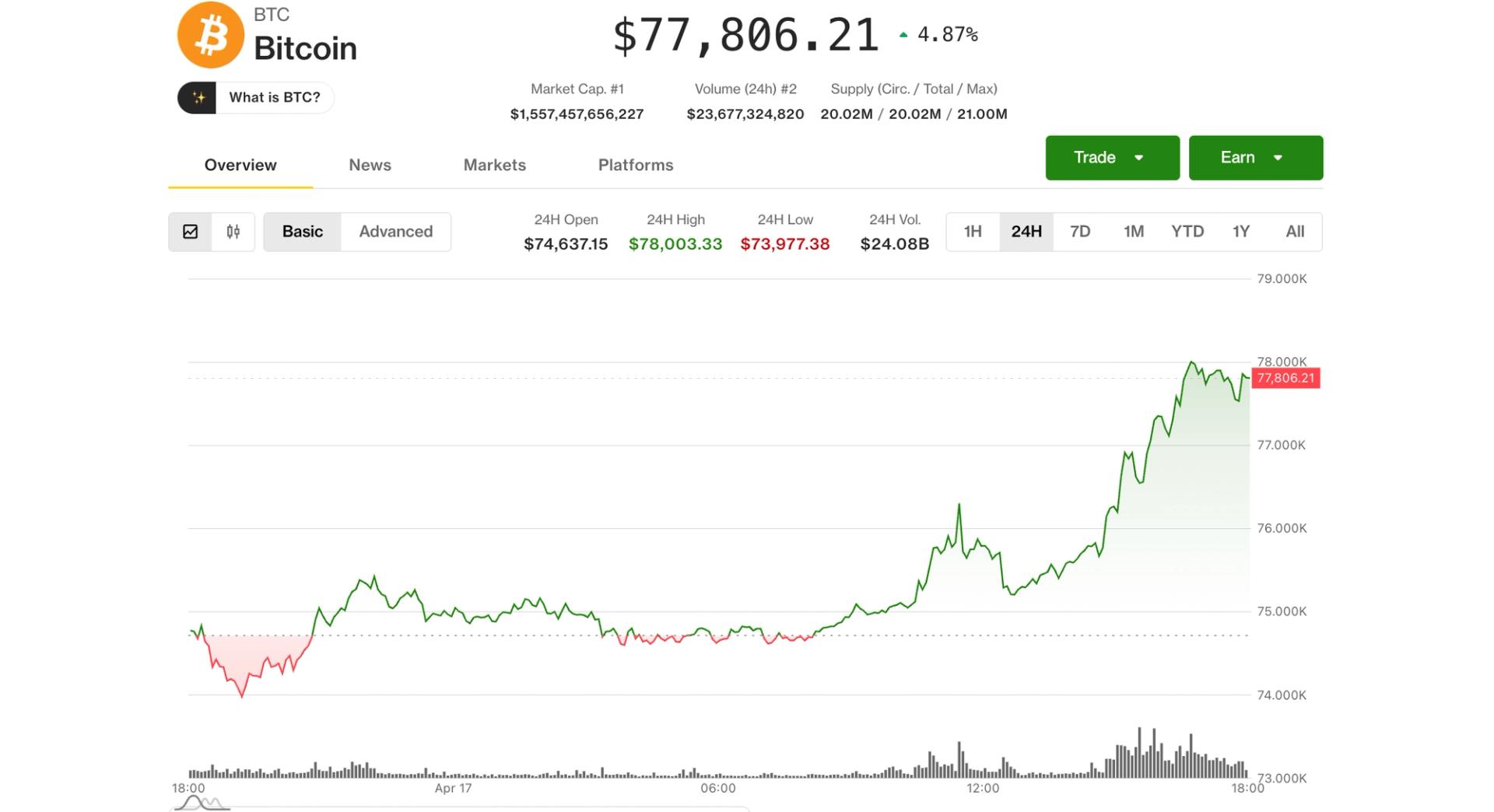
Crypto-linked stocks surged Friday, led by a sharp rally in beaten-down digital asset treasury firms, as progress toward ending the Iran war jolted risk assets, sending bitcoin to a two-month high of $78,000.
U.S. President Donald Trump said in a Truth Social post that Iran committed to keeping open the Strait of Hormuz, a key artery for global energy markets.
“Iran has just announced that the Strait… is fully open and ready for full passage,” Trump said in a Truth Social post, adding that peace talks between the countries were progressing. Reports that the U.S. is considering unfreezing $20 billion in Iranian assets and Trump’s remarks about acquiring Iran’s enriched uranium further boosted sentiment.
As the headlines helped calm fears of a prolonged energy shock, crude oil tanked 13% to near $80 per barrel.
Risk-on signal
“The reopening of the Strait of Hormuz is the risk-on signal the global markets have been waiting for,” said Matt Mena, senior crypto research strategist at digital 21shares.
“By removing one of the most significant geopolitical chokepoints in the world, Iran has effectively uncorked a massive wave of liquidity and investor confidence,” he added. “With oil nose diving below $85 for the first time in a month, inflation fears may finally come to an end.”
Bitcoin climbed to $78,000, breaking out from a two-month range that capped prices since early February and up nearly 5% over the past 24 hours.
The move rippled across the broader cryptocurrency prices higher, with major altcoins ether (ETH), Solana (SOL) and XRP (XRP) posting 4%-5% gains.
Looking at crypto-related equities, the biggest winners were crypto treasury firms — companies that hold digital assets on their balance sheets — which had been heavily battered in recent months.
Trump-family-backed American Bitcoin (ABTC) jumped more than 21%, while Strategy (MSTR) surged 13%. Strive (ASST) and ProCap (BRR) added around 10%-11% as investors rotated back into high-beta bitcoin exposure.
Similar moves played out across altcoin-linked equities. Forum Markets (FRMM), an Ethereum-focused treasury firm that pivoted to tokenization, climbed 19%, while Solana-linked names like Solmate (SLMT) and Upexi (UPXI) gained 12%-11%.
Other digital asset-related stocks also advanced: Coinbase (COIN) rose more than 6%, Galaxy (GLXY) gained 8%, and Bullish (BLSH) rose 4.5%.
Just after the noon hour on the East Coast, the Nasdaq and S&P 500 were each higher by about 1.4%, both jumping to new record levels.

TLDR:
- Payward plans to acquire Bitnomial for up to $550M using a mix of cash and stock.
- Bitnomial holds rare U.S. licenses enabling trading, clearing, and brokerage services.
- The deal allows Payward to bypass years of regulatory approvals and setup delays.
- Acquisition strengthens Kraken’s position in the regulated U.S. derivatives market.
Kraken’s parent company, Payward, has agreed to acquire Bitnomial in a deal valued at up to $550 million. The transaction combines cash and stock, positioning Payward to expand its regulated derivatives capabilities within the United States market.
Payward Targets Licensed Infrastructure to Accelerate Growth
Details of the acquisition surfaced through a report shared by CoinDesk, later amplified by Wu Blockchain on X. The structure of the deal reflects a calculated expansion strategy rather than a defensive move.
Payward is leveraging its valuation to secure critical infrastructure instead of building internally over time.
The agreement places Payward’s valuation at approximately $20 billion. This valuation provides the company flexibility to pursue acquisitions that support long-term positioning. The use of both cash and stock signals a balance between liquidity management and equity utilization.
Bitnomial stands out due to its regulatory approvals. It operates with a Designated Contract Market, a Derivatives Clearing Organization, and a Futures Commission Merchant license. This combination is rare within the crypto sector, particularly among firms built within the industry.
Bitnomial is the first crypto-native platform to secure all three licenses. These approvals enable a fully integrated derivatives operation under U.S. regulatory oversight. As a result, Payward gains immediate access to a compliant framework.
This approach reduces the need for prolonged regulatory applications. Building such a structure independently often requires years of legal preparation and operational planning. By acquiring Bitnomial, Payward bypasses those delays and gains a ready-to-use system.
U.S. Market Entry Anchored in Compliance and Scale
The acquisition reflects a focused effort to expand within the United States derivatives market. This market remains tightly regulated, with strict entry requirements for both trading and clearing operations. Many crypto firms face challenges when attempting to meet these standards.
With Bitnomial’s licenses, Payward can operate within an established regulatory perimeter. This positions the company to compete with existing regulated entities. It also opens pathways for offering derivatives products to institutional participants.
The CoinDesk report noted that the deal was shared exclusively with the publication. This approach indicates a controlled release of information aimed at a targeted audience. The messaging aligns with efforts to reinforce credibility within both crypto-native and institutional circles.
Institutional demand for regulated crypto products continues to shape market strategies. Firms with compliant infrastructure are better placed to attract this segment. Payward’s move reflects a broader shift toward structured and regulated offerings.
Furthermore, the acquisition supports deeper liquidity development in compliant markets. Access to brokerage, clearing, and exchange functions within one framework creates operational efficiency. It also reduces reliance on third-party providers for critical services.
The coverage framed the deal as a strategic step toward regulatory positioning. The emphasis remained on access, speed, and operational readiness. These factors contribute to Payward’s ability to expand without extended delays.
Overall, the transaction combines market access, licensing, and infrastructure within a single move. Payward secures a pathway into a regulated derivatives environment while maintaining its global presence. The acquisition aligns with a structured approach to scaling within the United States.


Key Highlights
- Energy Focus (EFOI) shares experienced a dramatic 300% surge on Friday following the revelation of two significant data center infrastructure agreements.
- Project G reached completion in 2025, delivering approximately $0.5 million in revenue through a UPS system installation for a Taiwan-based electronics firm.
- Project Y represents a multi-year contract (2026–2027) with a leading Asian data center developer, carrying an estimated value of $6.6 million.
- The aggregate value of both agreements totals roughly $7.1 million.
- Insider activity over the past year shows two purchases with no reported sales.
Energy Focus (EFOI) shares skyrocketed approximately 300% on Friday after the firm announced developments regarding two major data center infrastructure initiatives, designated as Project G and Project Y.
The total contract value spanning both initiatives reaches approximately $7.1 million. Considering the company’s market capitalization stands at merely $13.18 million, this figure represents substantial potential impact.
Project G concluded in 2025. The initiative centered on deploying a large-scale Uninterruptible Power Supply infrastructure for a Taiwan-based electronics producer with operations in the Southern Taiwan Science Park. This project contributed roughly $0.5 million to EFOI’s 2025 revenue stream.
While this figure appears modest in isolation, it demonstrates operational capability for a company that has struggled to capture investor enthusiasm historically.
Project Y: The Major Catalyst
Project Y represents the primary catalyst behind investor enthusiasm. This multi-year infrastructure rollout spans 2026 through 2027, executed in partnership with one of Asia’s premier data center development organizations.
The initiative encompasses large-scale UPS installations with capacities spanning 250kW to 1,250kW, complemented by advanced Fan Wall Units designed for thermal regulation.
The total projected contract value for Project Y amounts to approximately $6.6 million throughout the deployment timeline. This represents a significant commitment given the company’s current scale.
Energy Focus indicated these initiatives demonstrate growing market demand for high-capacity UPS infrastructure and advanced cooling technologies within large-scale, AI-powered data environments.
The organization stated it stands strategically positioned to capitalize on hyper-scale data center expansion, AI-driven computational density increases, and escalating power demands across facilities.
Important Considerations for Investors
A balanced perspective requires acknowledging certain realities. Energy Focus maintains a GF Score of 42 out of 100, highlighting difficulties with profitability and expansion. The profitability ranking sits at merely 1 out of 10.
Shares traded at $2.09 preceding Friday’s movement, establishing a market capitalization of $13.18 million. The organization currently operates without generating profits, reflected in a P/E ratio of 0.
Regarding financial stability, there’s a more encouraging indicator. EFOI maintains a current ratio of 5.04, demonstrating solid capacity to meet near-term obligations.
Over the trailing 12 months, company insiders executed two purchase transactions with zero sales — a modest yet encouraging indicator.
The firm’s forward project pipeline now stretches through 2027, with supplementary opportunities reportedly under consideration.
As disclosed on April 17, 2026, Project G has reached completion while Project Y remains in active execution phase.
Key Takeaways
- DeepSeek is pursuing a minimum of $300 million in external capital for the first time in its history
- The AI company from China aims for a valuation starting at $10 billion
- High-Flyer Capital Management, a Chinese hedge fund that owns DeepSeek, has been its sole financial backer
- The startup rejected numerous investment proposals from leading Chinese venture firms and tech corporations in the past
- American venture investors may show reluctance toward the opportunity given DeepSeek’s Chinese background
The Chinese artificial intelligence company DeepSeek, which created the budget-friendly R1 model that disrupted the tech world, is opening itself to external investors for the first time.
According to a report from The Information, the organization is negotiating to secure a minimum of $300 million with a baseline valuation of $10 billion. Four individuals with knowledge of the discussions provided this information.
Up until this point, DeepSeek has relied exclusively on financial support from High-Flyer Capital Management, its parent hedge fund based in China.
The company had consistently declined investment opportunities from China’s most prominent venture capital organizations and influential technology corporations. This fundraising initiative represents a significant departure from that strategy.
When DeepSeek unveiled its R1 model, it captured substantial attention from both financial markets and the technology sector. Industry observers viewed the model as comparable to leading Western artificial intelligence systems while requiring significantly less capital to develop.
The model’s introduction created turbulence in equity markets and sparked debates about the extensive investment strategies of American AI corporations.
The Case for External Investment
Developing and maintaining cutting-edge AI models demands increasingly substantial financial resources. The emergence of reasoning-based models and agentic AI applications has elevated capital demands throughout the sector.
DeepSeek’s decision to pursue external funding reflects its need to maintain competitiveness in this challenging landscape.
The organization did not provide a response to Reuters’ inquiry for comment, and Reuters indicated it was unable to independently confirm the report’s specifics.
American Investment Firms Face Dilemma
Given DeepSeek’s Chinese origins, several American venture capital firms are anticipated to approach the funding opportunity with caution, The Information notes.
This hesitation mirrors wider geopolitical friction surrounding technological competition between the United States and China.
Earlier reporting from Reuters revealed that DeepSeek utilized Nvidia’s most sophisticated chip to train one of its recent models, even though that particular chip falls under US export control measures for sales to China.
Additionally, DeepSeek chose not to provide its primary model to American chip manufacturers for performance enhancement purposes, according to Reuters’ reporting.
China has been encouraging domestic technology companies to adopt locally produced processors and minimize reliance on international technology, creating additional complications for DeepSeek’s strategic positioning.
The proposed $10 billion valuation would position DeepSeek among the most highly valued artificial intelligence startups worldwide, particularly notable given its comparatively brief operational track record relative to American competitors.
DeepSeek has not made any public statements confirming these fundraising discussions. The Information’s reporting draws from individuals with direct knowledge of the situation, and no formal agreement has been disclosed.
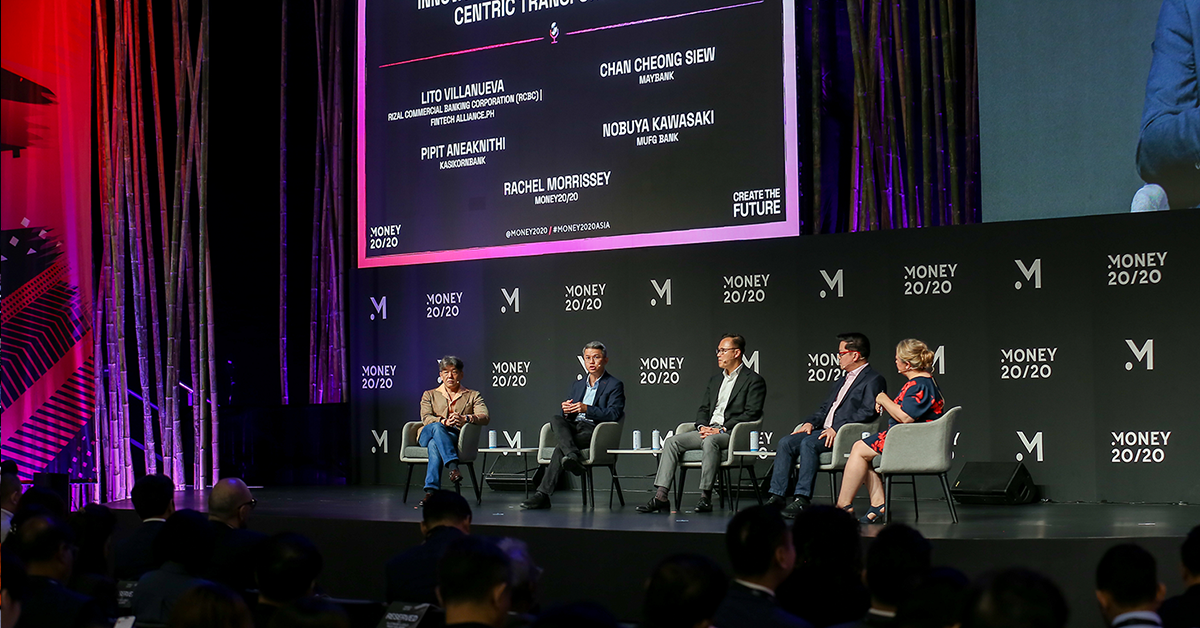
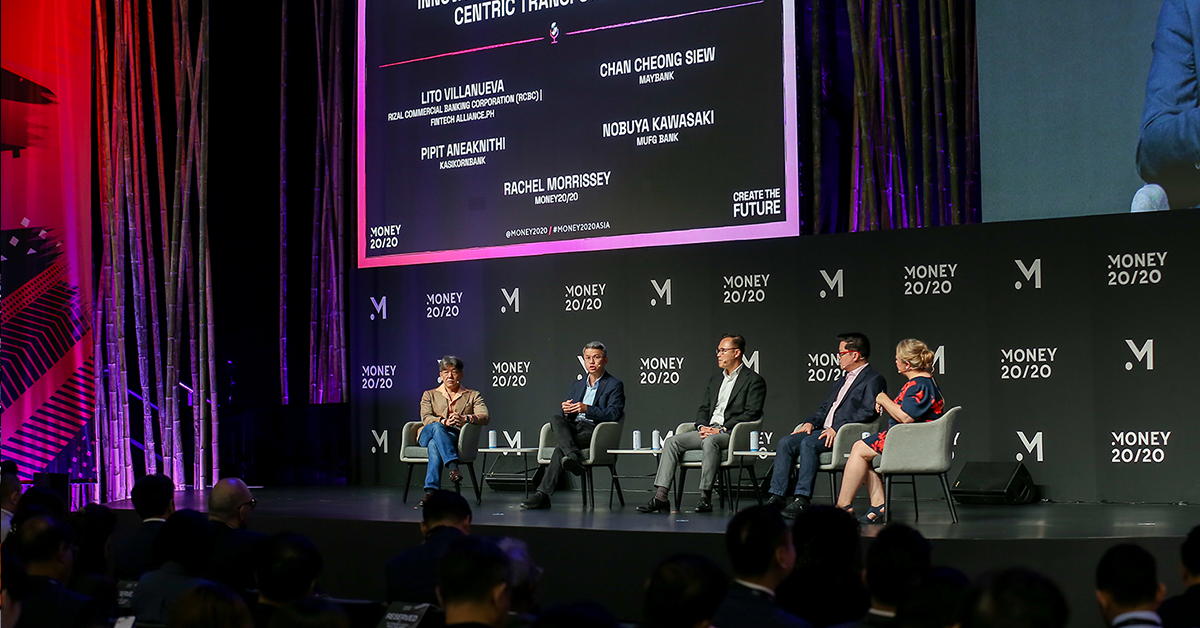
Industry Leaders, Regulators, and Innovators to Convene in Bangkok at the Intersection Where Digital Assets and Traditional Banking Enter New Era of Collaboration
Bangkok, Thailand, March 31, 2026: Money20/20, one of the world’s largest fintech events, today announced the introduction of The Intersection Stage at Money20/20 Asia happening on April 21-23 at the Queen Sirikit National Convention Center in Bangkok bringing together the region’s most powerful voices across banking, payments, digital assets, and financial innovation.
The Intersection Stage is dedicated to the global convergence of Traditional Finance (TradFi) and Decentralized Finance (DeFi) marking the beginning of a unified global activation across Money20/20’s platforms in Asia, Europe, and the United States. Together, these stages will showcase the most influential companies, the biggest players in TradFi and DeFi, and the conversations shaping the future of money.
For decades, Traditional Finance aimed to protect the system while Decentralized Finance wanted to reinvent it. Now, these two worlds are converging at a pivotal moment where digital money crosses borders faster than ever and decision-makers are setting frameworks that will guide the next decade. Asia is leading this transformation, and the Intersection Stage brings together the leaders, innovators, and regulators driving this shift with the ideas, technologies, and regulatory reforms that are reshaping global finance,” said Danny Levy, EVP & Managing Director for APAC & the Middle East at Money20/20.
From the Genius Act in the US, to MiCA in Europe, to Asia’s pioneering regulatory sandboxes and CBDC initiatives, TradFi and DeFi are now converging to shape a shared future. Regulated institutions like AMINA Bank are at the forefront of this transformation, particularly in navigating the evolving regulatory landscape across key markets.
Cora Ang, Head of Legal & Compliance APAC, AMINA Bank said, “Asia is demonstrating what responsible innovation truly looks like. As digital assets, tokenization, and new payment rails gain momentum, strong legal and compliance frameworks are essential to scaling them safely. At AMINA Bank, we see the region embracing this balance with clarity and ambition. The Intersection Stage at Money20/20 Asia is the perfect forum to advance these conversations and align the industry on what the next generation of financial infrastructure should be.”
Asia has become the proving ground for the next era of financial infrastructure. From advanced CBDC deployments to real-time cross-border payment corridors and institutional tokenization pilots, the region is demonstrating what the future of money looks like when innovation and regulation move in tandem. The Intersection Stage addresses this critical need by convening the leaders shaping this transformation.
Siva Kumar, APAC Legal Director, Sumsub: “The convergence of TradFi and DeFi will only scale if trust is underpinned by robust digital identity verification, effective fraud prevention, and compliance that can keep pace with innovation. Asia is at the forefront of this shift, with regulators and institutions piloting risk‑based frameworks that enable new business models without lowering the bar on security. At Sumsub, we’re seeing banks, digital asset service providers, exchanges and fintechs embrace full‑cycle verification and reusable digital identities to secure every step of the customer journey, from onboarding to ongoing transactions. The Intersection Stage brings regulators, incumbents and Web3 builders together to turn regulatory progress into actionable standards that protect users and unlock growth across the region.”
Key Sessions on The Intersection Stage
- Day 1: Tuesday, April 21, 2026 at 11:35 – How Do You Integrate Blockchain into Traditional Finance Systems?
By Chee Keong Teo, Associate Partner, Ernst & Young
- Day 1: Tuesday, April 21, 2026 at 12:00 – Building the Golden Record for Tokenised Asset Markets
By Etelka Bogardi, Partner, Reed Smith Singapore, Aaron Gwak, CEO & Founder, Libeara, Alvin Chia, Head of Digital Assets Innovation APAC, Northern Trust, moderated by Tanzeel Akhtar, Journalist, Morley Sterling LLC
- Day 1: Tuesday, April 21, 2026 at 14:40 Cross-Border by Design: Regulation as the Great Connector
By Siddharth Gupta, MD APAC & Co‑Head Global Non‑Bank FI, Bank of America, Siva Kumar, APAC Legal Director, Sumsub, Michelle Virgiany, Partner, Herbert Smith Freehills Kramer and Cora Ang, Head of Legal & Compliance APAC, AMINA Bank
- Day 2: Wednesday, 22 April 2026 at 10:00 – The Rise of Blockchain and Stablecoin Payment Rails
By Maggie Wu, CEO & Co‑Founder, VelaFi, Amanda Pecanha, Chief Compliance Officer, Trace Finance, Tran Hung, CEO, Uquid, Laura Estefania Lopez, Founder & CEO, Conquista PR and Paul Veradittakit, Managing Partner, Pantera Capital
- Day 2: Wednesday, 22 April 2026 at 10:00 – Institutional Digital Asset Payments Move from Concept to Capability
By Deborah Algeo, Managing Director, Singapore & Hong Kong, Zodia Custody, Daren Guo, Reap, Co-Founder, Jess Houlgrave, CEO, WalletConnect, Kaushik Sthankiya, Board, Global Head Banking & Payments, Kraken, and Delane Foo, APAC Managing Director, Nethermind.io
Attending media can register for a press pass: HERE
About Money20/20
Launched by industry insiders in 2012, Money20/20 has rapidly become the heartbeat of the global fintech ecosystem. Over the last decade, the most innovative, fastmoving ideas and companies have driven their growth on our platform.
Mastercard, Airwallex, J.P. Morgan, SHIELD, GCash, Stripe, Google, Visa, Adyen, and more make transformational deals and raise their global profile with us. Money20/20 attracts leaders from the world’s greatest banks, payments companies, VC firms, regulators, and media platforms, convening to cut industry shaping deals, build world changing partnerships, and unlock future defining opportunities in Las Vegas (October 18–21, 2026), Amsterdam (June 2–4, 2026), Riyadh (September 14–16, 2026), and Bangkok (April 21–23, 2026). Money20/20 is where the world’s fintech leaders convene to grow their brands. Money20/20 is part of Informa PLC. Follow Money20/20 on X and LinkedIn for show developments and updates.
The post Money20/20 Asia Launches the Intersection Stage in Bangkok appeared first on BeInCrypto.


The dominance of centralized exchanges in early crypto wasn’t accidental or irrational. It was a practical response to real constraints, technical, commercial, and user experience constraints that the alternatives of the time couldn’t adequately address.
Early crypto users needed somewhere to convert assets, discover prices, and execute trades with reasonable reliability.
Centralized exchanges provided all of this in a familiar package, an interface that looked and worked roughly like a traditional brokerage, custody handled by the platform, and liquidity sufficient for the asset range that existed at the time.
For users coming from traditional finance, the mental model translated. For new users, the learning curve was manageable. For a nascent market, it worked.
The centralized model also solved the bootstrapping problem that decentralized alternatives struggle with fundamentally, liquidity. A centralized exchange could onboard market makers, manage order books actively, and ensure that users could actually execute trades rather than posting orders into thin books and waiting.
In the early market, this wasn’t a minor convenience. It was the difference between a functional trading venue and an unusable one.
The Architectural Shifts That Followed
 The response to centralized exchange limitations came in waves, each wave addressing specific failure modes of the centralized model, each wave introducing its own set of tradeoffs.
The first wave was technical hardening of centralized exchanges themselves. Better security practices, cold storage for user funds, proof-of-reserves mechanisms, improved audit procedures.
These improvements reduced but didn’t eliminate the structural risks inherent in centralized custody, because the fundamental architecture remained the same. A more secure centralized exchange is still a centralized exchange, with all the single-point-of-failure characteristics that implies.
The second wave was the emergence of decentralized exchanges, platforms where trading happened through smart contracts rather than centralized order books, where users retained custody of their assets throughout the trading process, and where no central operator could freeze accounts or misappropriate funds.
The promise was significant. The execution, particularly in early iterations, was uneven. A crypto exchange solution that emerged from this period of architectural experimentation looked quite different depending on when in the cycle it was built and what specific problems its designers prioritized.
Solutions built primarily in response to security concerns looked different from those built primarily in response to user experience concerns or liquidity concerns.
The diversity of approaches produced a rich ecosystem of alternatives, and, eventually, the conditions for a synthesis. The synthesis, what the market increasingly calls the hybrid model, didn’t emerge from a single design decision or a single team.
It emerged from accumulated recognition that centralized and decentralized approaches each had genuine strengths and genuine weaknesses, and that the most useful exchange infrastructure would find ways to combine the strengths while mitigating the weaknesses.
That recognition, translated into actual architecture, is what defines the current frontier of exchange infrastructure development.
The Cracks That Appeared – What Centralized Models Got Wrong?
The problems with centralized exchange infrastructure didn’t announce themselves dramatically at first. They accumulated, in security incidents, in operational failures, in the gradual recognition that certain structural characteristics of the centralized model created risks that couldn’t be engineered away.
Custody risk was the most consequential. Centralized exchanges hold user funds, which means they’re attractive targets, and when security fails, user funds disappear.
The history of centralized exchange hacks is long and expensive. Mt. Gox. Bitfinex. Coincheck. FTX, in a different but related category of failure. Each incident represented real user losses and a real erosion of trust in centralized custody as a model.
The FTX collapse in particular clarified something that security-focused critics had been arguing for years, that centralized custody creates not just security risk but operational and governance risk that users have no visibility into and no control over.
Funds held on a centralized exchange are not your funds in any meaningful sense. They’re IOUs from an institution whose internal operations you can’t audit and whose solvency you can’t verify.
For users in jurisdictions with restrictive financial regulations, or users whose assets became politically inconvenient, the centralized model’s single point of control became a single point of failure for their access to the market. Opacity around fees, execution quality, and order flow created a third category of concern.
Centralized exchanges have information advantages over their users, they see order flow before execution, they can adjust fee structures in ways that aren’t always transparent, and they’re not subject to best-execution obligations that apply to regulated financial venues.
Whether these advantages were systematically exploited varied by exchange. That they existed at all was a structural feature of the model.
Decentralized Exchanges – The Promise, The Reality, And The Gap
 Decentralized exchanges arrived with genuinely compelling architecture. No custody risk. No single operator to freeze accounts or misappropriate funds.
Transparent execution through auditable smart contracts. Self-sovereign asset control throughout the trading process. On paper, these properties addressed precisely the failure modes that centralized exchange history had exposed.
The reality of early DEX experience was more complicated. Liquidity was thin outside major pairs on established networks. Slippage on anything beyond the most common swaps was significant enough to make execution economically unattractive.
Gas costs on Ethereum-based DEXs added a fee layer that made small transactions uneconomical entirely. The user experience, connecting wallets, approving transactions, managing gas, understanding slippage tolerance, assumed a technical sophistication that most users didn’t have and shouldn’t need.
Speed was the other gap. Blockchain transaction finality times meant that DEX execution was measured in seconds to minutes rather than milliseconds.
For users accustomed to centralized exchange execution speeds, this felt like regression. For use cases requiring time-sensitive execution during volatile markets, it was a genuine functional limitation.
AMM-based DEXs improved on some of these dimensions – providing passive liquidity through pooling mechanisms that didn’t require active market making. But AMMs introduced their own set of issues. Impermanent loss for liquidity providers.
Sandwich attacks and MEV extraction that reduced execution quality for traders. Price impact curves that made large trades expensive relative to centralized alternatives.
None of this made DEXs without value. For specific use cases, privacy-sensitive transactions, access from jurisdictions where centralized options were unavailable, trading of assets not listed on centralized platforms, DEXs provided genuine utility that centralized alternatives couldn’t match.
The point is that DEXs as a complete replacement for centralized infrastructure faced real obstacles that pure decentralization couldn’t fully resolve.
The Hybrid Model – Combining The Best Of Both
The hybrid exchange model didn’t emerge from a manifesto or a whitepaper. It emerged from practitioners recognizing specific combinations of centralized and decentralized characteristics that produced better outcomes than either approach alone.
The core insight is straightforward: custody and execution are separable. A centralized exchange bundles them together, the platform holds your assets and executes your trades. But there’s no technical reason these functions need to be coupled.
Non-custodial architecture keeps assets under user control throughout the exchange process, while centralized infrastructure handles the rate aggregation, liquidity matching, and execution optimization that decentralized systems struggle with at scale.
This separation produces something genuinely useful. The user retains asset control – reducing custody risk to near zero – while getting execution quality and speed that DEX-only infrastructure can’t match.
The platform handles the operational complexity of liquidity aggregation and routing without ever touching user funds in a custodial sense. Both parties get the properties they most care about without accepting the downsides of either pure model.
Order matching in hybrid systems varies by implementation. Some use centralized order books with on-chain settlement, the speed and depth of centralized matching with the transparency and finality guarantees of blockchain settlement.
Others use aggregated liquidity across both centralized and decentralized sources, routing to whichever provides better execution for a specific transaction.
The architectural choices at this layer significantly affect the rate quality and execution reliability that users experience. The regulatory positioning of hybrid models is also more tractable than pure DEX architecture in many jurisdictions.
Non-custodial infrastructure reduces the regulatory surface area associated with holding user funds, while the presence of identifiable operating entities, unlike fully decentralized protocols, provides regulatory counterparties that can engage with evolving compliance requirements.
This isn’t a complete regulatory solution, but it’s a meaningfully better starting position than either extreme.
What Modern Hybrid Infrastructure Actually Looks Like?
 Theory is useful. What hybrid exchange infrastructure looks like in actual production deployments is more instructive.
LetsExchange operates as a practical example of what mature hybrid architecture delivers at scale, non-custodial exchange across hundreds of cryptocurrency pairs, with liquidity aggregated across multiple sources to produce competitive rates without requiring users to surrender asset custody at any point in the transaction flow https://letsexchange.io/.
Assets move directly between user wallets. The platform handles rate discovery, liquidity routing, and execution optimization in the middle. No funds held, no custody risk, no single point of failure for user assets.
The breadth of asset coverage in modern hybrid systems reflects the aggregation architecture underneath them. Single-source systems are limited to whatever their one liquidity provider supports.
Aggregated hybrid infrastructure can support the union of all supported assets across all connected sources, which in practice means hundreds of tradeable pairs including assets that no individual centralized exchange lists.
For users with diverse portfolio needs, this coverage breadth has real practical value. Transaction speed in hybrid systems has converged toward centralized exchange performance for most use cases.
The multi-minute execution times of early DEX infrastructure are not characteristic of well-built hybrid systems, rate confirmation and transaction initiation happen in seconds, with settlement times determined by the underlying blockchain networks involved rather than by the exchange infrastructure itself.
Fee transparency in hybrid architecture tends to be cleaner than in centralized alternatives. No hidden order flow revenue, no opaque spread manipulation, no custody-related fee structures.
What the user sees in the rate quote is what the transaction costs. For businesses with margin calculations that depend on accurate exchange cost modeling, this transparency has operational value beyond the immediate transaction.
Where The Evolution Goes Next?
The trajectory from centralized to hybrid is clear in retrospect. Where the evolution goes from the current hybrid frontier involves more uncertainty, but the directional forces are identifiable.
Cross-chain hybrid infrastructure is the most significant near-term development. Current hybrid systems generally operate within chain boundaries, aggregating liquidity on a specific network or between networks through defined bridge infrastructure.
Truly seamless cross-chain hybrid execution, where the user requests a swap and the system routes across chain boundaries as naturally as it routes within them, is technically achievable and commercially compelling. The infrastructure complexity is substantial. The user experience improvement it enables justifies that complexity.
Regulatory clarity will shape hybrid architecture development significantly over the next several years. Jurisdictions that develop clear frameworks for non-custodial exchange infrastructure will see hybrid platforms optimize for compliance within those frameworks.
Jurisdictions that remain ambiguous will see hybrid platforms designed for maximum flexibility. The regulatory environment is a design constraint that the best hybrid infrastructure builders are already building around rather than ignoring.
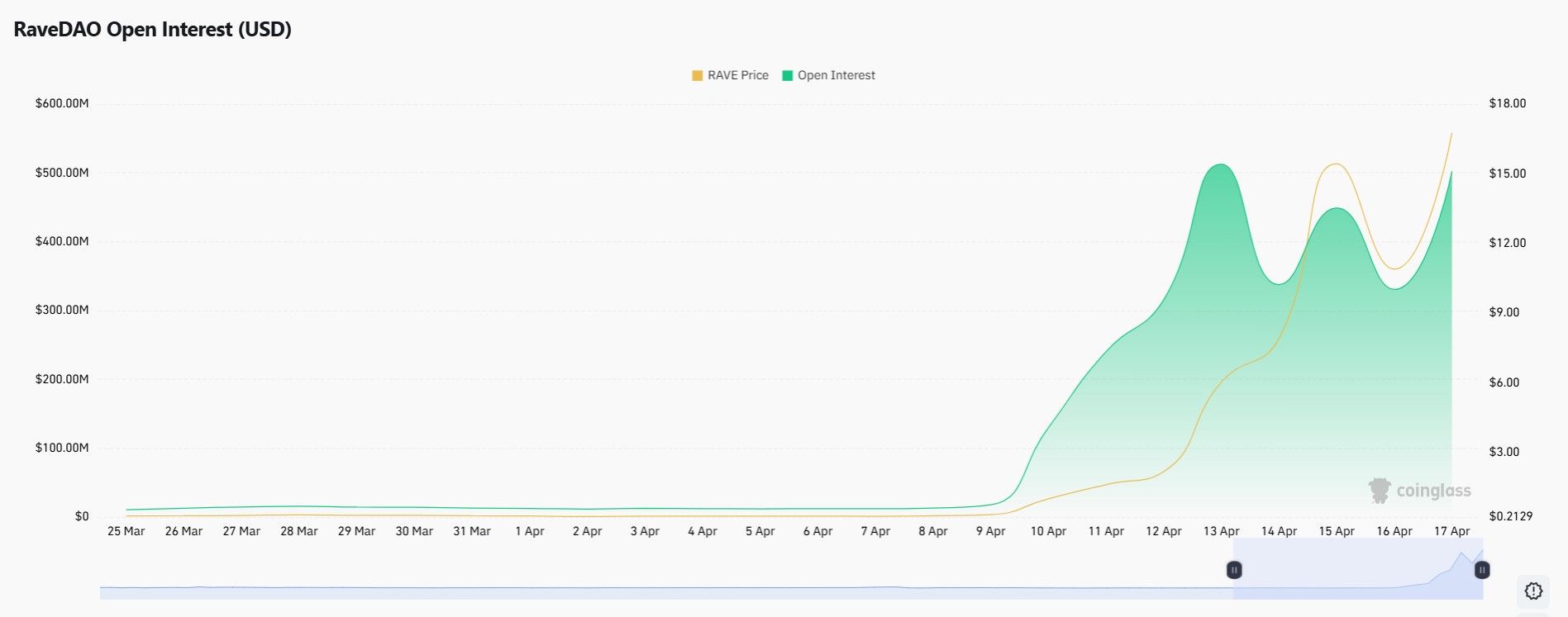
RaveDAO (RAVE) price is retesting the $20 peak after a rebound. A potential double peak could hand bears control within hours as momentum weakens.
Momentum indicators have softened, open interest sits near record highs, and on-chain data points to distribution. Each signal independently raises the odds of a pullback toward mid-cycle Fibonacci support.
Open Interest Flashes Late-Cycle Warning
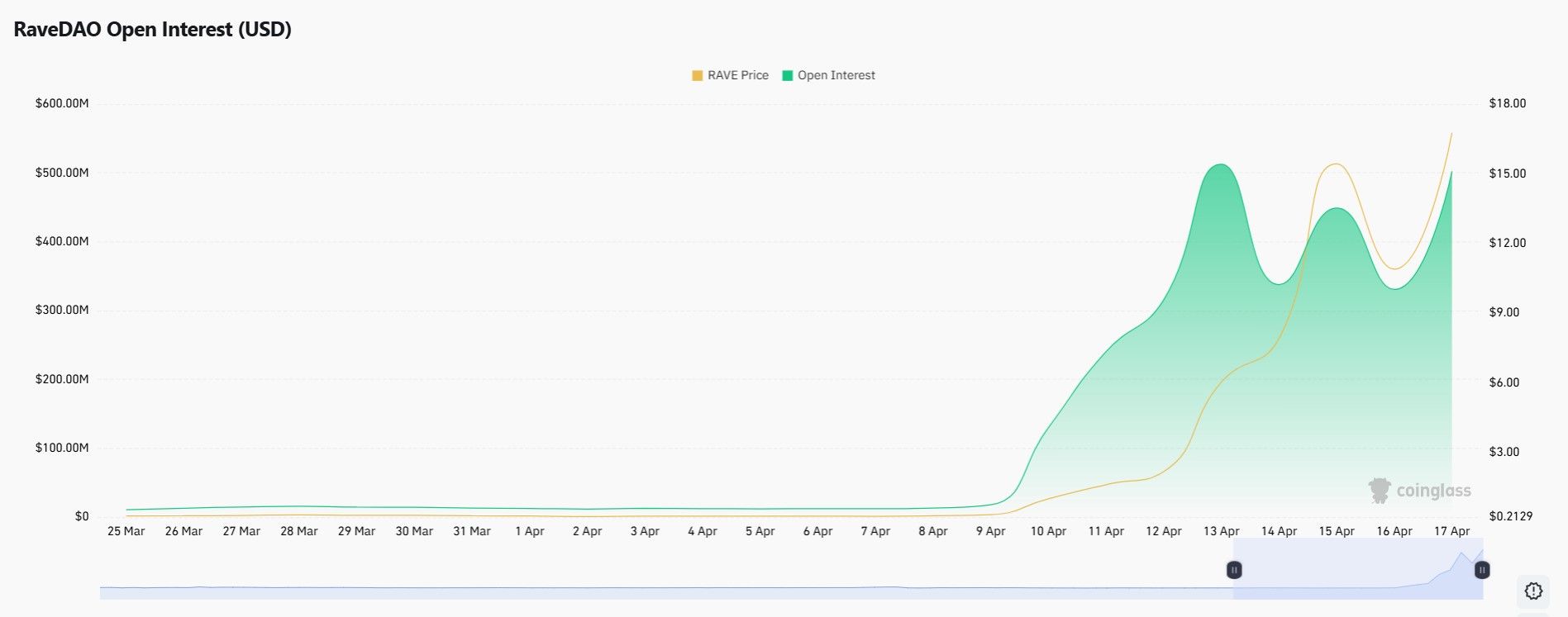
RaveDAO open interest climbed from near zero on April 9 to a peak of $510 million on April 13. Coinglass data shows the explosive buildup has since split into two lower highs.
The current reading sits close to $500 million as RAVE price pushes back toward $19. However, the figure remains slightly below the April 13 record even though spot price is printing fresh highs.
That divergence suggests leverage participation is thinning on each rally attempt. In perpetual markets, declining marginal OI into rising price often precedes long liquidation cascades.
For the thesis to flip, open interest must break above $510 million with a decisive move through $20. Until then, positioning risk stays skewed to the downside.
Exchange Outflows Look Bullish But May Hide Distribution
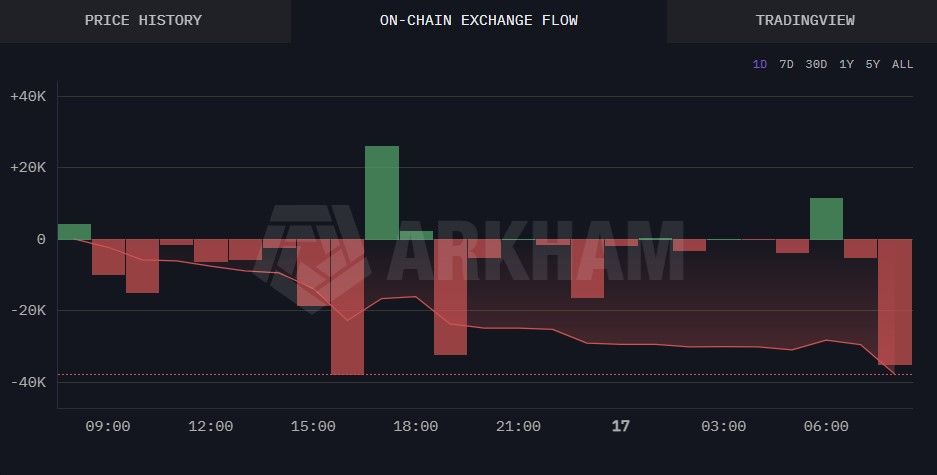
The on-chain picture at first appears to support the bulls. Arkham data shows RAVE leaving exchanges nearly every hour for 24 straight sessions. Cumulative net outflows reached roughly 40,000 tokens.
At current prices near $17.89, those withdrawals represent around $700,000 in spot moving off trading venues. Historically, outflows signal accumulation and reduced sell-side inventory.
However, context complicates that read. An earlier BIC analysis flagged the same $20 retest. The token has surged more than 6,000% in 7 days, and large holders frequently rotate profits to cold storage near local tops.
The $700,000 outflow figure is also small relative to the $500 million in open interest. That gap confirms perpetuals, not spot demand, are driving price right now.
RAVE Price Targets $15.34 if Double Peak Confirms
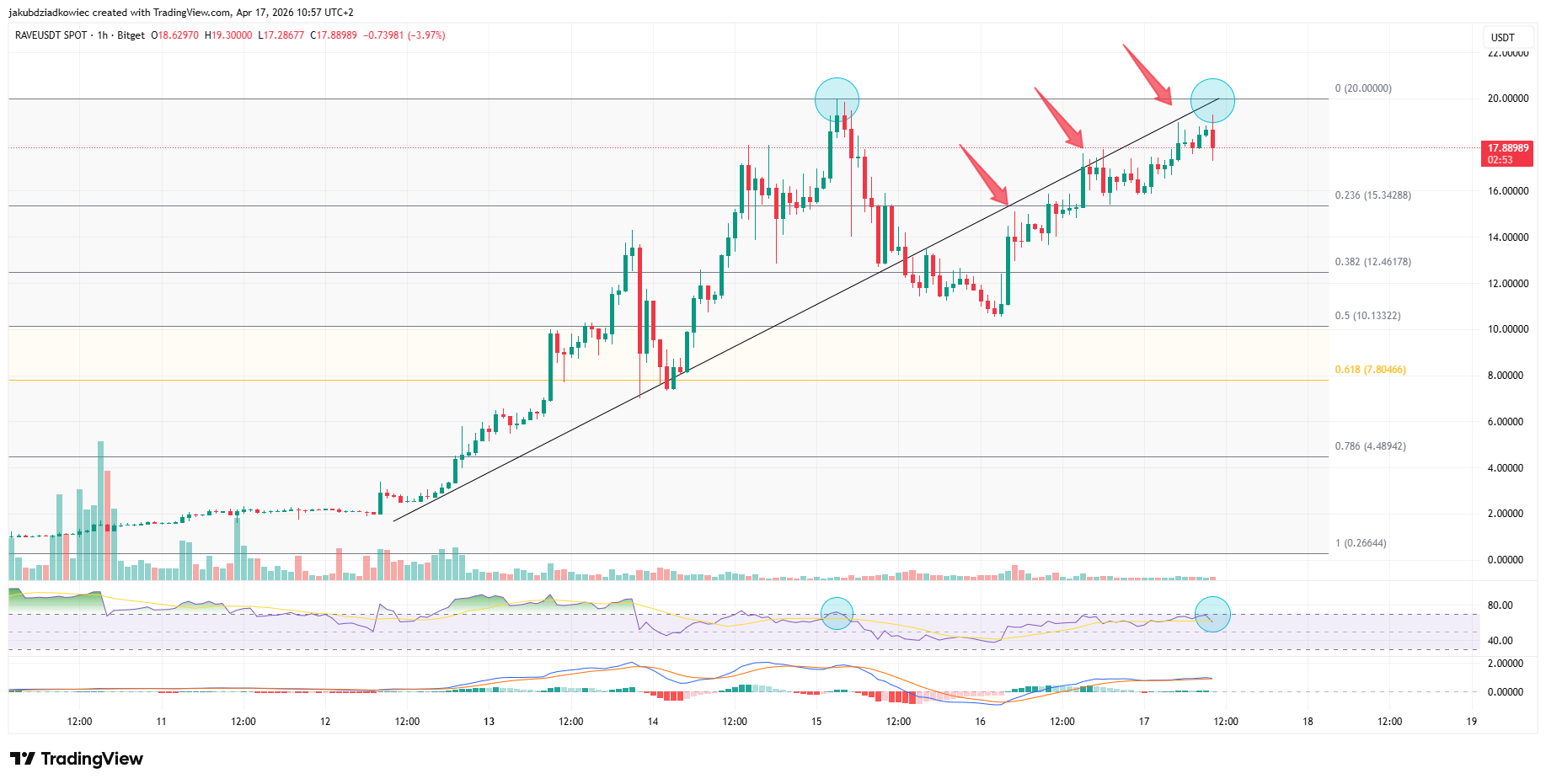
RAVE price is retesting $20 on the Bitget 1H chart. A prior ascending trendline broke on April 15 and has since acted as resistance three times. Price reached an intraday high of $19.30 in the latest attempt.
The relative strength index now reads 68.5, softer than the 72 print during the first peak at $20. The hourly Moving Average Convergence Divergence also shows a bearish cross. Both indicators point to weakening momentum.
If the double peak (blue circles) confirms, measured move targets align with Fibonacci retracement levels on the chart. The 0.236 level sits at $15.34, offering an initial flush target.
A deeper leg could drag RAVE toward the 0.382 retracement at $12.46 or the 0.5 pivot at $10.13. Any of those levels would mark a meaningful reset from current price and offer clearer context for the token forecast.
The bearish thesis invalidates on a clean 1H close above $20. Fresh open interest expansion through $510 million would confirm that flip. Without both, the burden of proof stays with the bulls.
The post RAVE Price Double Peak Near $20 Risks Flush to $15.34 appeared first on BeInCrypto.
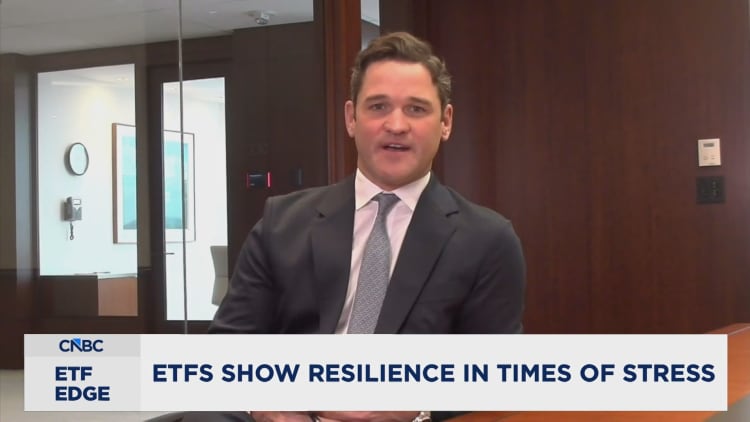

New innovation in the exchange-traded fund industry could come at a cost to investors during extreme conditions.
According to MFS Investment Management’s Jamie Harrison, ETFs involved in increasingly complex derivatives and less transparent markets may be in uncharted territory when it comes to violent downturns.
“Those would be something that you’d want to keep an eye on as volatility ramps up,” the firm’s head of ETF capital markets told CNBC’s “ETF Edge” this week. “As innovation continues to increase at a rapid pace within the ETF wrapper, [it’s] definitely something that we advise our clients to be really front-footed about… Lack of transparency could absolutely be an issue if we’re going to start seeing some deep sell-offs.”
His firm has been around since 1924 and is known for inventing the open-end mutual fund. Last year, ETF.com named MFS Investment Management as the best new ETF issuer.
“It’s important to do due diligence on the portfolio,” he said. “Having a firm that has deep partnerships, deep bench of subject matter experts that plays with the A-team in terms of the Street and liquidity providers available [are] super important.”
Liquidity as the real issue?
Harrison suggested the real issue is liquidity, particularly during a steep sell-off.
“We’ve all seen the news and the headlines around potential private credit ETFs. That picture becomes much more murky,” he added. “It’s up to advisors, to investors [and] to clients to really dig in and look under the hood and engage with their issuers.”
He noted investors will have to ask some tough questions.
“What does this look like in a 20% drawdown? How does this liquidity facility work? Am I going to be able to get in? Am I going to be able to get out? And if I’m able to get out, am I able to get out at a price that’s tight to NAV [net asset value], and what’s the infrastructure at your shop in terms of managing that consideration for me,” said Harrison.
Amplify ETFs’ Christian Magoon is also concerned about these newer ETF strategies could weather a monster drawdown. He listed private credit as a red flag.
“If your ETF owns private credit, I think it’s worth taking a look at, kind of what the standards are around liquidity and how that ETF is trading, because that should be a bit of a mismatch between the trading pace of ETFs and the underlying asset,” the firm’s CEO said in the same interview.
Magoon also highlighted potential issues surrounding equity-linked notes. The notes provide fixed income security while offering potentially higher returns linked to stocks or equity indexes.
“Those could potentially be in stress due to redemptions and the underlying credit risk. That’s another kind of unique derivative,” Magoon said. “I would very closely look at any ETF that has equity-linked notes should we get into a major drawdown or there be a contagion in private credit or something related to the banking system.”
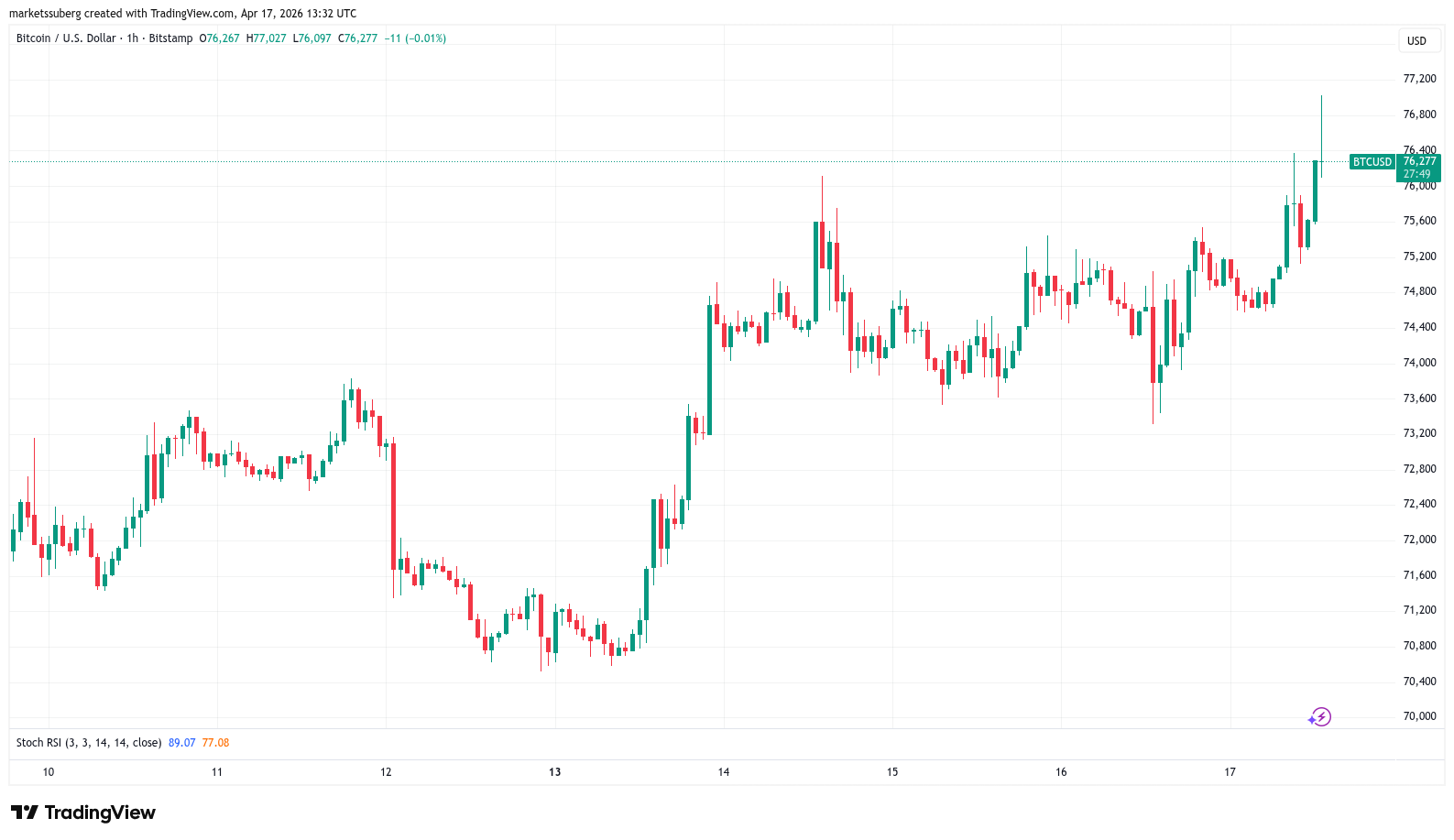
Bitcoin (BTC) refreshed February highs on Friday as attention focused on the upcoming weekly close and a longer-term rally to $88,000.
Key points:
-
Bitcoin hits its highest levels in ten weeks as markets abandon geopolitical nerves.
-
BTC price strength may bring back $88,000 in just two to four weeks, a trader predicts.
-
$72,800 becomes the level to watch for the next weekly candle close.
Bitcoin price local peak brings hope of $88,000
Data from TradingView confirmed new ten-week highs of $77,027 on Bitstamp.

BTC price action attempted to capitalize on recent strength across risk assets, with geopolitical tensions and uncertainty over global oil supplies increasingly priced in. A ceasefire between Israel and Lebanon appeared to further boost market confidence.
On Thursday, the S&P 500 hit 7,050 points for the first time in history, sealing its highest-ever close and its second all-time high of the week.

Commenting, crypto trader Michaël van de Poppe said that Bitcoin should soon gain more thanks to reduced macro volatility, notably in the VIX volatility index.
“As long as the VIX continues to fall, and we’re in a new equilibrium, where oil volatility goes down, Gold volatility significantly drops,” he wrote in a post on X.
“What will you start to see? More inflows in the $BTC ETF as allocators can allocate more towards Bitcoin.”

Van de Poppe referred to the US spot Bitcoin exchange-traded funds (ETFs), which have seen $330 million in net inflows week-to-date, per data from UK-based investment firm Farside Investors.
“That would also benefit altcoins and $ETH, as they’ll follow the path of Bitcoin,” he added.
“In that case, I see a strong case for Bitcoin continuing the rally to $85-88K in coming 2-4 weeks.”

Trader and analyst Rekt Capital, meanwhile, put $72,800 as the “pivotal” level to reclaim at the upcoming weekly candle close for BTC/USD.
“If Bitcoin wants to Weekly Close above the Weekly resistance ($72,810, blue), then price would need to hold the blue level as support on any upcoming dip,” he explained alongside a chart showing key price points.
“The last time Bitcoin rejected from the black resistance in mid-March, price also lost the blue level as support. Which is why a Daily Close below the blue level after any upcoming dip could see price drop back into the blue-blue Weekly Range.”

Trader warns of volume-led BTC price downside
Bearish perspectives included that of trader Roman, who maintained expectations of lower levels next.
Related: Bitcoin can grow ‘probably a lot bigger’ than $30T+ gold market — Analysis
Declining trading volume into the highs, he warned, was a telltale sign of fading momentum.
“We’re in a macro downtrend which when we see high volume continues downward. Low volume implies consolidation/correction to continue the overall trend,” he explained on X.
“The next high volume move likely takes us lower.”

As Cointelegraph reported, sub-$50,000 price levels remain a popular bet for Bitcoin’s next macro bottom.
This article is produced in accordance with Cointelegraph’s Editorial Policy and is intended for informational purposes only. It does not constitute investment advice or recommendations. All investments and trades carry risk; readers are encouraged to conduct independent research before making any decisions. Cointelegraph makes no guarantees regarding the accuracy or completeness of the information presented, including forward-looking statements, and will not be liable for any loss or damage arising from reliance on this content.

Kidnapping-for-ransom attempts targeting prominent crypto executives have surged in recent years, a trend insiders refer to as a “$5 wrench attack.” The rise has drawn attention from policymakers and insurers as the crypto industry grapples with how to secure wealth that is both highly valuable and highly liquid. During Paris Blockchain Week, French officials announced measures aimed at preventing such incidents and improving security coordination, signaling a shift from reactive responses to proactive risk management. In parallel, the private sector is expanding personal security offerings, including bespoke insurance coverage designed to mitigate both the financial and operational fallout of crypto-related kidnap and ransom (K&R) events.
The phenomenon isn’t confined to one corner of the globe, but France has emerged as a focal point in the current wave of attacks. The crypto ecosystem has long faced security challenges, yet the combination of rapid wealth accumulation and high public visibility has made executives tempting targets for criminals. The broader crypto landscape has also faced a long-running toll of incidents documented by researchers and enthusiasts who track physical attacks on crypto holders.
Key takeaways
- Escalating K&R activity against crypto leaders: 316 attacks recorded since 2014 in Jameson Lopp’s public repository, with 79 ransom-focused incidents in 2025 and media reporting 27 attacks in 2026 to date.
- France, and Paris in particular, has become a high-risk region for crypto executives, with authorities signaling more coordinated security measures and a rising police presence at industry events.
- Industry and insurer responses are expanding. Coinbase’s security spending reached about $6.2 million in 2024, and Relm Insurance has begun offering K&R coverage as demand from crypto clients grows; training and prevention are central to many policies.
- Policy and enforcement efforts are moving from ad hoc protections to structured programs. France launched a prevention platform to improve security coordination, and public statements emphasize heightened risk awareness and practical security guidance.
- Crypto executives are rethinking personal security, with private dwellings, travel, and event security increasingly integrated into risk management programs.
A rising threat landscape for crypto executives
The risk is not new, but the scale and visibility have surged as crypto wealth has grown. Jameson Lopp, a veteran cryptography advocate and former Bitcoin core developer, maintains a GitHub repository that tracks “physical-bitcoin” attacks. The repository, though not exhaustive, documents at least 316 incidents since 2014 and has become a reference point for risk awareness within the community.
Historical perspective from within the industry shows a long-standing concern with varied attack vectors—from impersonation and social engineering to home invasions and kidnappings. In 2019, Rigel Walsh of Swan Bitcoin delivered lectures that explored these vectors in depth, underscoring that as wealth concentrates, attackers evolve their methods. In 2025, the repository counted 79 ransom-focused attacks, and by 2026, media reporting has signaled 27 attacks.
Notably, the crypto ecosystem is both highly liquid and highly connected, which means that even if a crime is contained locally, the downstream effects—loss of trust, cyber and physical security costs, and regulatory scrutiny—can be widespread. In practice, criminals can exploit gaps in personal security or reach within the ecosystem to leverage a ransom scenario, creating a persistent incentive for better protective measures across the sector.
“Instead, in crypto, some people go from zero to hundreds of billions of net worth in weeks or months.”
As Davie Davies, a security-focused voice in the industry, has noted, the social fabric of crypto projects often places executives in informal networks where personal and professional boundaries blur. Crypto’s culture—marked by frequent dinners and open collaboration—can inadvertently create opportunities for targeted criminals who know when and where crypto leaders are likely to gather or travel.
France and Paris: a focal point for crypto crime
France has become a conspicuous hotspot for crypto ransom activity, with Paris described as eclipsing other regions by a wide margin. The concentration is partly attributed to a combination of high visitor traffic, dense hospitality and entertainment zones, and the portability of digital assets that criminals view as attractive targets. In the wake of high-profile incidents, one of the most cited cases is the 2025 kidnapping of Ledger Wallet co-founder David Balland. For context, Balland’s incident prompted public commentary from his co-founder, Eric Larchevêque, who suggested French regulatory and registration requirements may have unintentionally facilitated the exposure of crypto executives to risk.
France’s security posture at Paris Blockchain Week reflected a proactive stance. Public officials announced a prevention platform designed to improve security coordination across agencies and private partners. The platform aims to connect risk assessment, rapid response, and information sharing, with the interior ministry indicating continued collaboration in the weeks ahead. Observers noted a visible police presence at the event, and security vessels as commentators highlighted the transition from purely reactive policing to more preventive, data-driven approaches.
These developments come amid broader cross-border concerns about illicit finance and sanctions enforcement. Even as authorities intensify monitoring, the liquidity and cross-border nature of crypto assets complicate enforcement, underscoring the need for multi-stakeholder collaboration that includes policymakers, insurers, and industry participants.
Industry responses: insurance, training, and risk governance
As the risk environment expands, executives and firms are elevating personal security budgets and pursuing more comprehensive risk-management tools. A notable development is the surge in interest in bespoke K&R insurance products. Relm Insurance’s head of distribution pointed to growing demand among crypto clients and explained that the company launched a K&R policy in response to case studies and client inquiries. The program blends security advisory services with financial indemnification, but its core emphasis is on preventing situations that could trigger a payout.
In parallel, the private-sector trend toward heightened personal security spending is evident at the executive level. Coinbase, the largest U.S. crypto exchange by trading volume, reportedly spent about $6.2 million on executive protection for CEO Brian Armstrong in 2024, a figure that TechCrunch described as exceeding the security expenditures of several traditional financial giants combined. This level of spend signals a shift in risk appetite and a growing market for specialized protection services in the crypto economy.
On the ground, Larchevêque has publicly disclosed personal security costs that amount to tens of thousands of dollars per month for himself and his family, including at-home security measures. He has publicly advocated for greater allowances to permit firearms for protection in the crypto context, highlighting the intensity of perceived risk and the lengths to which some executives will go to secure their families.
Beyond private insurance, the market is expanding toward preventive training. Insurance providers and risk consultants emphasize that most successful mitigation hinges on education—knowing what to say, who to contact, how to respond, and which routes to avoid. The emphasis on early, proactive training aligns with the idea that the best protection often starts long before a ransom demand is ever issued.
Policy responses from governments reflect this preventive tilt. During Paris Blockchain Week, France’s interior office announced the launch of a prevention platform designed to bolster cooperation among police, security professionals, and private firms. Officials indicated that thousands of sign-ups had already occurred, signaling substantial interest in formalized security coordination. Public commentary from law enforcement and policymakers underscored the importance of practical steps—routing attendees along secure paths, coordinating with local police, and increasing security visibility at industry gatherings.
As stakeholders race to close security gaps, the crypto-insurance ecosystem remains a critical piece of the puzzle. Brokers serving the sector report that a growing share of clients now requests risk-transfer solutions that combine coverage with training and ongoing advisory services. The emphasis remains on preventing incidents by improving situational awareness, rather than emphasizing payouts after the fact.
What comes next for security and risk governance
The accelerating frequency of kidnap and ransom threats against crypto leaders is shaping a broader discussion about risk governance, personal security, and industry resilience. The pattern—high-value, liquid assets, and a socially dense but potentially risky ecosystem—suggests that both the public and private sectors will continue to invest in protective infrastructure. Expect continued development of prevention platforms, expanded K&R insurance options, and more rigorous private security programs tied to corporate governance practices.
Investors, builders, and executives should watch how the French platform evolves in the coming weeks and whether other jurisdictions adopt similar proactive frameworks. The balance between enabling innovation and mitigating risk will likely become a more prominent feature of corporate strategy in the crypto space, influencing how teams plan travel, host events, and structure personal-security budgets. As risk programs mature, the sector may also see a shift toward standardized best practices in personal-security training and incident-response playbooks.
In the near term, readers should monitor updates from policymakers in France and other crypto-hotspots, as well as insurer product announcements and case studies from major players like Coinbase and Relm. The evolving ecosystem will determine how effectively the industry can reduce exposure without dampening growth or innovation.
Where the story goes next will hinge on whether coordinated prevention platforms can translate into tangible reductions in risk, and whether the crypto sector can sustain its growth trajectory while making personal-security considerations a core element of corporate culture.

Inside York’s new indy bar – The Middle Bar & Bottle Shop

Tesla: More Good News, And Markets Noticed (NASDAQ:TSLA)
3 Best New Hulu Movies to Watch This Weekend (April 17-19)

Why Israel is blocking foreign journalists from entering

Bitcoin: We’re Entering The Most Dangerous Phase

Alan Cumming Brands Baftas Ceremony A ‘Triggering S**tshow’

Crypto Trading LIVE: BTC Live Trading Bitcoin Analysis | 12 APR #crypto #bitcoin #btc

Live Gold, Crypto Trading | 17 April | #goldtrading #cryptotrading #bitcoin – MANSI

Every woman needs to understand these investments #investing #women #finance #moneymindset #money
-

 Politics7 days ago
US brings back mandatory military draft registration
-
 Sports7 days ago
Man United discover Nico Schlotterbeck transfer fee as defender reaches Dortmund agreement
-

 Fashion7 days ago
Weekend Open Thread: Veronica Beard
-

 Politics5 days ago
World Cup exit makes Italy enter crisis mode
-

 Business7 days ago
Tesla Model Y Tops China Auto Sales in March 2026 With 39,827 Registrations, Beating Cheaper EVs and Gas Cars
-

 Crypto World4 days ago
The SEC Conditionalises DeFi Platforms to Be Avoided for Broker Registration
-

 Crypto World4 days ago
SEC Signals Exemption for Crypto Interfaces From Broker Registration
-

 News Videos2 days ago
Secure crypto trading starts with an FIU-registered
-
 NewsBeat5 days ago
Pep Guardiola and Gary Neville agree over Arsenal title problem that benefits Man City
-

 Sports7 hours ago
NWFL Suspends Two Players Over Post-Match Clash in Ado-Ekiti
-

 Crypto World3 days ago
SEC Proposes Certain Crypto Interfaces Don’t Need to Register as Brokers
-

 Business6 days ago
Ireland Fuel Protests Enter Day 5 as Blockades Spark Shortages and Government Prepares Support Package
-

 NewsBeat3 days ago
Trump and Pope Leo: Behind their disagreement over Iran war
-

 Crypto World7 days ago
Federal judge blocks Arizona from bringing criminal charges against Kalshi
-
 NewsBeat5 days ago
JD Vance announces ‘no agreement’ with Iran over nuclear weapons fear
-

 Business7 days ago
IMF retains floor for precautionary balances at SDR 20 billion
-

 Business7 days ago
Former Liverpool CEO eviscerates FIFA for World Cup ticket pricing
-
Crypto World5 days ago
Sei Network Enters Quiet Reset Phase as On-Chain Metrics Signal a Slowdown in 2026
-

 Crypto World4 days ago
Trump whales load up ahead of Mar-a-Lago luncheon.
-
Business7 days ago
Coreweave CSO Venturo sells $5.5m in class a common stock
You must be logged in to post a comment Login