

Crypto World
NFLX Stock Climbs 3.95% as Valuation and Ad Growth Lift Demand Now


TLDR
- Netflix shares rose 3.95% on July 2, outperforming the Software & IT Services sector, which fell 1.01%.
- Market sentiment improved after concerns eased around possible Warner Bros Discovery and NBCUniversal acquisition activity.
- NFLX stock gained support from a lower valuation, which attracted buyers after recent selling pressure.
- Netflix’s advertising tier remained a major growth driver, supported by its Omnicom partnership and wider distribution reach.
- The $400 million Radford Studio Center acquisition signaled Netflix’s continued focus on production efficiency and cost control.
Netflix (NFLX) stock rose 3.95% on July 2, while Software & IT Services fell 1.01%, showing clear market outperformance. The move came with strong turnover, intraday swings, and confidence after weak sessions. NFLX stock also beat major sector peers.
Microsoft rose 1.24%, Meta fell 4.09%, and Palantir gained 2.72% among the sector’s busiest names. However, Netflix drew stronger attention because buyers entered after recent selling pressure. The price action showed renewed demand near depressed valuation levels.
NFLX stock benefited as traders shifted focus back to Netflix’s core business and away from deal speculation. The company faced concerns over large media deals that could raise leverage. Yet management avoided costly merger risks and preserved capital discipline during a volatile backdrop.
Deal Concerns Ease Around Netflix
Market sentiment improved after Netflix moved away from major acquisition speculation. Reports had linked the company with Warner Bros Discovery, but concerns eased after the overhang faded. Management also saw NBCUniversal rumors denied, which reduced deal pressure and stabilized expectations.
The market viewed that restraint as positive for NFLX stock because it reduced concern over large commitments. Large media mergers often create debt concerns, integration risks, and uncertainty over earnings. Therefore, Netflix’s decision helped restore attention to subscriber growth, advertising revenue, and content returns.
NFLX stock gained momentum as deal risks faded and organic growth returned to focus. Netflix did not issue a fresh statement on the move, and the stock traded on market interpretation. Still, the reduced deal noise supported a cleaner investment case for NFLX stock and strengthened the recovery.
Valuation and Ads Support Momentum
NFLX stock also attracted demand after trading near its 52-week low and a cheaper forward earnings multiple. The lower valuation encouraged dip buying from funds and active traders before the next earnings update. Technical signals also improved after earlier oversold readings, which helped short-term momentum.
The advertising business added another growth driver for NFLX stock as Netflix expands beyond standard subscription revenue. Its Omnicom partnership strengthens ad targeting, campaign tools, and monetization across the ad-supported base. The company also expands access through Spectrum’s app store distribution deal, which may support wider reach.
NFLX stock gained further support from cost controls and studio investments. Netflix bought Radford Studio Center for $400 million to improve production efficiency and manage content costs. Together, ads, valuation, and spending discipline drove the 3.95% move in NFLX stock.


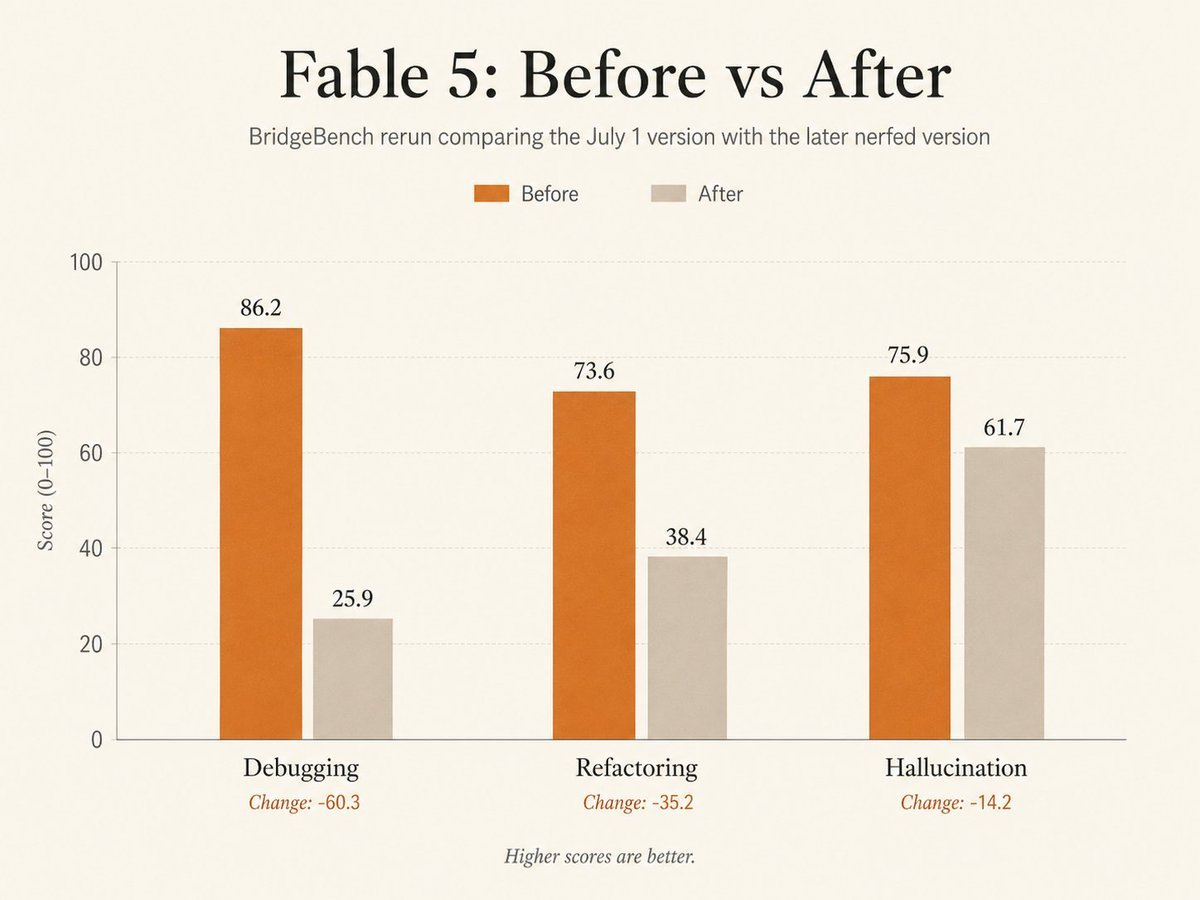
Anthropic’s Claude Fable 5 faces growing backlash after its July 1 re-release. Users claim stricter guardrails have crippled the flagship model’s coding, debugging, and agentic performance.
Benchmark group BridgeMind reported steep score drops across its BridgeBench suite. Meanwhile, Anthropic maintains the underlying model is unchanged and attributes the friction to tighter safety classifiers.
Claude Fable 5 Benchmark Scores Collapse After Re-Release
BridgeMind re-ran the July 1 version of Fable 5 and recorded sharp declines. Debugging fell from 86.2 to 25.9, refactoring dropped from 73.6 to 38.4, and hallucination handling slipped from 75.9 to 61.7.

The mechanics behind those numbers matter. Only three of 12 debugging tasks were completed without falling back to Claude Opus 4.8, and every fallback scored zero.
Therefore, the collapse reflects blocked tasks rather than weaker reasoning.
BridgeMind stressed that Fable 5 matches its June form when a task runs to completion.
“The model did not get worse. It got caged,” they indicated.
Follow us on X to get the latest news as it happens
The timeline explains the tension. Anthropic launched Fable 5 on June 9, and Washington pulled it offline three days later. Regulators lifted its export controls on June 30, four days after they restored Mythos 5 access for roughly 100 US institutions.
Restored access also carries limits. Fable 5 draws from just 50% of weekly usage caps through July 7, then shifts to paid usage credits.
Anthropic Defends Its Wider Safety Margin
Anthropic addressed the trade-off in a June 30 statement. The company said it deliberately widened its safety margin, meaning classifiers now block requests that are probably benign. An improved filter stops the bypass technique, Amazon researchers reported in over 99% of attempts.
Blocked requests route to Opus 4.8, and users receive a notification. However, Anthropic conceded the filter flags more legitimate coding and debugging work than before.
Its own tests also showed Fable 5 posed no unique risk. Rival models, including GPT-5.5 and Kimi K2.7, identified the same vulnerabilities.
Anthropic says US Commerce Department researchers tested both safeguard versions and judged them extraordinarily strong.
The stakes reach beyond one product cycle. The suspension pushed Europe to court Anthropic, while Chinese AI models gain ground on US frontier labs.
Anthropic is now drafting a jailbreak severity framework with Amazon, Microsoft, and Google. Whether classifiers shed false positives quickly may determine whether power users stay or defect.
The post Claude Fable 5 Backlash Grows as Users Say Anthropic ‘Caged’ Its Flagship AI appeared first on BeInCrypto.

Quick Overview
-
Ondo introduces blockchain versions of IVV ETF and Micron stock following SEC guidelines.
-
Each digital token maintains 1:1 correspondence with traditionally custodied U.S. securities.
-
Broadridge integration enables proxy voting capabilities for token holders.
-
Platform leverages Ethereum infrastructure while maintaining regulated asset custody.
-
Initiative represents significant expansion of Ondo’s U.S. tokenized securities operations.
Ondo has introduced blockchain-based representations of BlackRock’s iShares Core S&P 500 ETF and Micron Technology stock for U.S. investors. The offering operates within a third-party custodial framework outlined by the SEC in January 2026. This development integrates tokenized U.S. securities into established regulatory and market infrastructure.
Ondo deploys tokenized S&P 500 ETF within U.S. regulatory framework
Ondo has released an Ethereum-based tokenized product tracking BlackRock’s iShares Core S&P 500 ETF. This offering mirrors IVV, a major exchange-traded fund benchmarked against the S&P 500 index. The actual ETF shares continue residing within conventional U.S. custodial arrangements.
Oasis Pro TA, operating as Ondo’s SEC-registered transfer agent subsidiary, creates the corresponding digital tokens. Every token maintains complete 1:1 correspondence with its underlying ETF shares. Qualified custodians secure the tokens, while traditional financial custodians safeguard the physical securities.
This architecture aligns with the SEC’s January 2026 guidance regarding tokenized securities. That guidance outlined an approach where third parties maintain securities while issuing associated crypto instruments. Ondo applied this regulatory blueprint to deliver an operational U.S. tokenized ETF offering.
Micron stock joins Ondo’s tokenized equity portfolio
Ondo has simultaneously introduced a tokenized representation of Micron Technology stock using identical structural principles. Micron shares remain within standard U.S. custody infrastructure. Token holders gain exposure through Ethereum-recorded ownership positions.
The Micron offering advances Ondo’s broader initiative into tokenized equities with full regulatory compliance. This approach eliminates offshore issuance requirements and functions independently of individual issuer sponsorship. Implementation occurs through pre-existing broker-dealer, transfer agent, and custody relationships.
Transfer restrictions operate via participating broker-dealers, custodians, and the transfer agent network. These mechanisms ensure token transactions align with prevailing regulatory standards. Consequently, Ondo bridges blockchain settlement capabilities with traditional U.S. securities frameworks.
Broadridge enables shareholder voting for tokenized equity owners
Broadridge facilitates the rollout by delivering governance infrastructure for tokenized equity participants. Token holders gain access to issuer communications and regulatory filings through conventional distribution channels. Additionally, they can exercise voting rights via ProxyVote.com for blockchain-recorded proxy votes.
Ondo indicates token holders obtain shareholder rights and safeguards comparable to traditional brokerage account owners. These privileges encompass issuer notifications and voting participation linked to underlying securities. This configuration strengthens tokenized securities’ integration with public market governance structures.
The initiative also provides context for Ondo’s comprehensive real-world asset approach. Beyond U.S. borders, its Global Markets infrastructure handles over $1 billion in tokenized securities. That platform encompasses more than 430 equities and ETFs across various supported jurisdictions.
Ondo has simultaneously grown through strategic collaborations in recent periods. In June, the company partnered with Exodus to establish Exodus Markets on Solana. This platform provides qualified users with tokenized stock, ETF, and real-world asset access.
This recent product launch positions Ondo more prominently within U.S. tokenization markets. The implementation merges Ethereum-based issuance with conventional custody, voting mechanisms, and compliance frameworks. This integration creates a more defined pathway for tokenized securities under current U.S. market regulations.
Key Highlights
-
Microsoft shares increased 1.86% following the announcement of its Frontier AI business division worth $2.5B.
-
The division will assist corporate customers in selecting and implementing AI technologies.
-
6,000 Microsoft employees will be stationed at client locations through this initiative.
-
The strategy emphasizes adaptable AI frameworks and integration with proprietary client data.
-
This initiative intensifies Microsoft’s competition in the corporate AI consulting market.
Microsoft (MSFT) shares advanced 1.86% to reach $391.42 as the technology company announced plans to expand its corporate AI offerings. After opening lower, the stock reversed course and maintained gains close to its session peak. The upward movement came after Microsoft revealed its intention to establish a $2.5 billion AI-focused business division.
Tech Giant Establishes Frontier Division for Corporate AI Solutions
Microsoft announced the creation of Microsoft Frontier Company, a new operational division designed to assist enterprises in navigating AI technology selection and implementation. The division will serve prominent clients such as Unilever and Novo Nordisk, concentrating on AI frameworks that deliver measurable returns and practical business applications.
The Redmond-based company is allocating $2.5 billion to this initiative as corporate appetite for AI solutions continues expanding. The plan involves deploying 6,000 personnel directly at client sites through a forward deployed engineering model. These deployment teams will comprise technical advisors, customer support professionals, account managers, and vertical market experts.
Rodrigo Kede Lima, previously overseeing Microsoft’s operations across Asia, has been appointed as president of the division. The organization will merge Microsoft’s current AI consulting teams with on-site engineering resources. This shift represents Microsoft’s evolution from merely selling software to actively assisting clients in constructing operational AI infrastructures.
Strategy Focuses on Multi-Model AI Implementation
Enterprise organizations increasingly deploy multiple AI frameworks rather than relying exclusively on a single vendor. Numerous corporations now blend Microsoft platforms, third-party models, and open-source solutions tailored to distinct operational requirements. Consequently, AI implementation has become more expensive and complex to administer.
The Microsoft Frontier Company will guide customers through selecting, integrating, and transitioning between various AI frameworks. Additionally, the division will facilitate connections between these frameworks and each organization’s confidential internal information. Importantly, clients will retain ownership of all outputs and associated intellectual property within their own infrastructure.
Microsoft developed this methodology based on lessons learned from Copilot and other enterprise AI offerings. Initially, the company depended substantially on OpenAI’s technology when developing its AI assistant. However, emerging frameworks from Anthropic, Google, DeepSeek, and competing providers have driven demand for platform-agnostic solutions.
Shares Rise Amid Intensifying AI Consulting Competition
Microsoft’s equity value increased following the disclosure, though shares have struggled year-to-date. The corporation has allocated substantial capital toward data center expansion and generative AI capabilities. Despite these investments, certain AI products have experienced modest uptake among business customers.
This new division positions Microsoft in direct competition with Amazon, Palantir, OpenAI, Anthropic, Accenture, and EY. Amazon recently announced a comparable $1 billion field engineering program targeting AI customers. Palantir has established expertise deploying engineering personnel to serve government agencies and corporate accounts.
Microsoft currently generates income from enterprise consulting and channel partner programs throughout its software portfolio. The company disclosed approximately $2.1 billion in enterprise and partner services revenue during the March quarter. As such, the Frontier division represents an expansion of proven business practices into the broader AI services marketplace.


Digital-first Erebor Bank has entered fundraising talks that could value the lender at at least $8 billion, nearly doubling its $4.35 billion valuation from the end of last year.
Summary
- Erebor Bank is seeking a new funding round that could value the digital lender at at least $8 billion.
- Deposits have grown from $1.1 billion to over $4 billion since March, with nearly 400 new customers added.
- The bank’s crypto-focused strategy and national bank charter have strengthened its position among AI and technology firms.
Bloomberg, citing people familiar with the discussions, reported that the proposed funding round comes as Erebor’s deposits have expanded rapidly only months after the bank began operating. If completed at the reported valuation, the raise would rank among the largest recent funding events for a U.S. digital bank serving the technology and crypto sectors.
Founded by Oculus creator Palmer Luckey, Erebor has attracted backing from major Silicon Valley investors including Andreessen Horowitz, Peter Thiel’s Founders Fund, and Lux Capital.
The bank has focused on defense technology companies, hard-tech businesses, artificial intelligence infrastructure, and crypto firms, offering services such as blockchain-enabled payments, crypto-backed lending, and financing for industrial projects.
Deposit growth has strengthened Erebor’s fundraising case
According to Bloomberg, customer deposits have climbed to more than $4 billion from $1.1 billion at the end of March. During the same period, the startup added nearly 400 customers, giving investors fresh evidence of early demand for its banking platform.
Luckey told Bloomberg that the recent increase in deposits has come from hundreds of new customers rather than companies he controls, pushing back against suggestions that growth depended on affiliated businesses.
The funding discussions follow the bank’s launch earlier this year, with the reported deposit expansion becoming a central factor in its latest fundraising effort. Bloomberg noted that the proposed round remains under discussion and no final terms have been announced.
National charter cleared the path for crypto banking services
Erebor’s fundraising talks also come after the bank secured regulatory progress that allows it to expand its business under a federal banking framework.
As previously reported by crypto.news, the Office of the Comptroller of the Currency granted Erebor preliminary conditional approval for a national bank charter, positioning the lender to serve the innovation economy, including crypto and AI startups. The approval made Erebor the first de novo bank to receive such authorization since Comptroller Jonathan V. Gould took office in July, 2025.
In a statement released by the OCC, Gould described the approval as part of his commitment to maintaining a “dynamic and diverse federal banking system.” He also said the regulator would not place “blanket barriers” on banks engaging in digital asset activities, provided they operate in a “safe and sound manner.”
Earlier this year, Erebor received approval to become the first new national bank chartered during President Donald Trump’s second term, further strengthening its regulatory position as it expanded its digital banking business.
With its focus on crypto companies, AI infrastructure developers, defense technology firms, and industrial businesses, Erebor has sought to fill part of the gap left after the collapse of Silicon Valley Bank, offering banking and lending products tailored to sectors that have often faced limited access to traditional financial services.
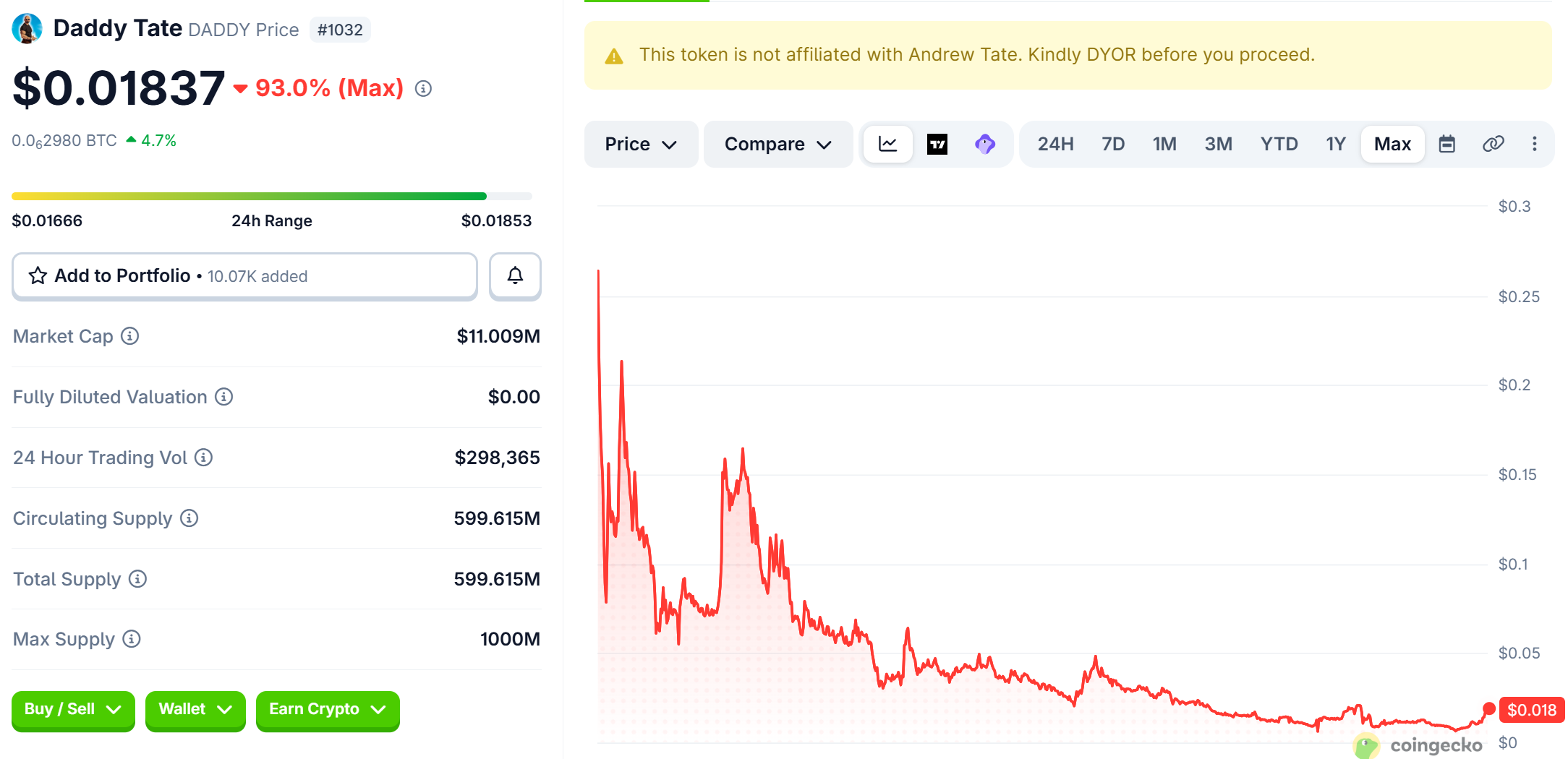
Andrew Tate sold his entire 650 million $TATE token airdrop for roughly $23,000, on-chain data shows. The sale contradicts his repeated public pledges to hold, burn, and never sell tokens sent to his wallet.
The exit adds to a punishing run for the influencer, who lost about $95,000 on a 40x leveraged Bitcoin (BTC) position in June.
Diamond Hands Vow Ends in a $23,000 Exit
On-chain tracker WhaleInsider reported that Tate’s wallet swapped the full allocation through Jupiter for $23,264. The tokens represented roughly 65% of the total supply.
Follow us on X to get the latest news as it happens
A stake covering two-thirds of the supply cleared for less than $24,000, pointing to almost nonexistent liquidity. The exit also clashes with Tate’s no-sell persona, a stance he repeated in October and April posts.
“Sell it for what? Money? lol I dont Jeet. Diamond Hands -” Tate wrote in December 2024.
During the $DADDY era, he also pointed to his public wallet as proof he had never sold.
Traders See Echoes of the $DADDY Playbook
Some traders noted that Tate reposted the same image he shared before $DADDY’s community takeover and rally. They argue the cleared seller overhang leaves room for a rebound. However, past celebrity token crashes show such recoveries rarely hold.
The precedent cuts both ways. DADDY peaked at $0.29 in June 2024 and has since lost about 94% of its value, CoinGecko data shows.

Experts have repeatedly flagged the risks of celebrity meme coins, citing thin liquidity and concentrated supply.
The dump also follows Tate’s fresh 40x Bitcoin bet, a $3.76 million long that Hyperliquid liquidated eight times in 24 hours. He closed the position at a $95,478 loss. Lookonchain data places his career record at 107 liquidations and roughly $800,000 in cumulative losses.
The coming days will show whether the cleared supply revives $TATE or confirms its brief run has already topped.
The post Andrew Tate Dumps 650 Million $TATE Tokens Despite ‘Diamond Hands’ Vow appeared first on BeInCrypto.
TL;DR
- Bitcoin climbed above $62,000 after rebounding from a recent low near $57,700.
- Whale wallets accumulated roughly 270,000 BTC, supporting bullish sentiment.
- More than $606 million in leveraged positions were liquidated, with shorts suffering heavy losses.
- Analysts see strong resistance between $62,000 and $65,000 despite improving momentum.
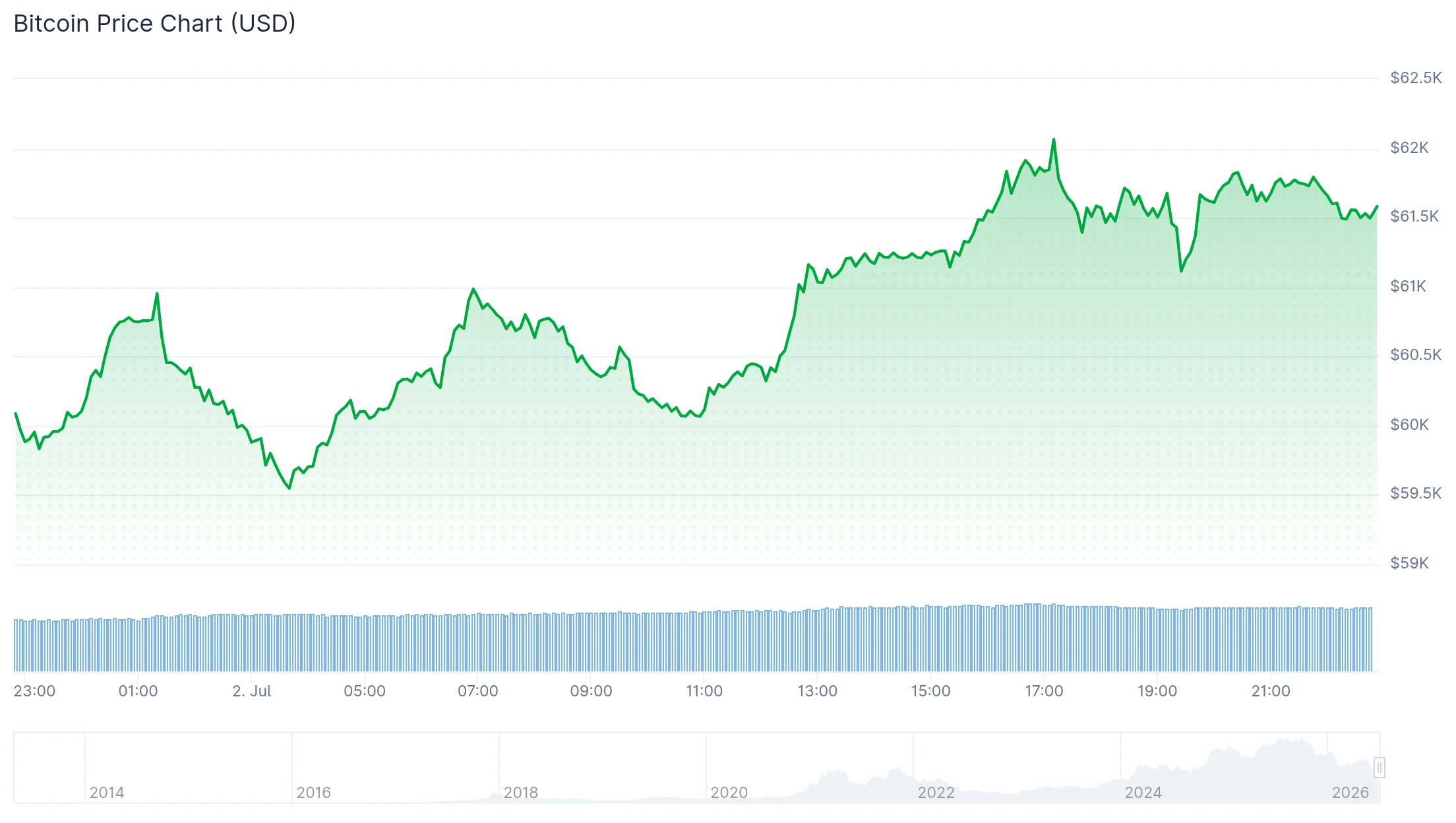
Bitcoin price regained momentum on Wednesday, rising above $62,000 after a sharp rebound from recent lows. The recovery followed renewed whale accumulation and a wave of short liquidations that accelerated the rally.
However, analysts remain cautious as persistent inflation concerns, Federal Reserve policy uncertainty, and weakening institutional flows continue to weigh on the broader crypto market.
Bitcoin reached an intraday high of approximately $62,137, gaining about 3% over the past 24 hours after bouncing from a local bottom near $57,735. The move marked one of the strongest daily recoveries since the recent market pullback.
Whale Accumulation Fuels Bitcoin Price Recovery
On-chain data shows large Bitcoin holders accumulated roughly 270,000 BTC during the recent market weakness. The buying activity has strengthened confidence that long-term investors continue viewing current prices as attractive accumulation levels.
The rebound also triggered widespread liquidations across derivatives markets. According to Coinglass, more than $606 million in leveraged positions were wiped out over the past day, with bearish traders accounting for most of the losses. Short liquidations helped push Bitcoin higher as traders rushed to close positions.
Market analyst Scott Melker believes the aggressive whale accumulation could indicate Bitcoin is forming a local bottom. Meanwhile, order book data shows notable selling pressure between $62,000 and $65,000, where traders have placed significant sell orders.
Conversely, strong buy orders remain concentrated between $55,000 and $57,000, creating a potential support zone if Bitcoin experiences another pullback.
Analysts argue that if Bitcoin breaks decisively above $65,000 with strong spot market demand, the cryptocurrency could rally another 8% to 10% in a relatively short period.
Macro Headwinds Continue to Challenge Crypto Market
Despite the recent rebound, macroeconomic conditions remain a significant risk for the crypto market.
Persistent inflation concerns have increased expectations that the U.S. Federal Reserve could keep interest rates elevated for longer than previously anticipated. Higher Treasury yields and a stronger U.S. dollar generally reduce demand for risk assets such as cryptocurrencies.
At the same time, capital continues flowing into artificial intelligence-related equities, limiting fresh investment entering digital assets.
Institutional demand has also softened. Continued outflows from U.S. spot Bitcoin ETFs suggest some large investors remain cautious despite Bitcoin’s recovery above $60,000.
Several analysts warn that broader equity market weakness, particularly within the S&P 500, could spill over into cryptocurrencies if macroeconomic conditions deteriorate further.
Bitcoin has reclaimed an important psychological level above $60,000, but traders continue watching whether buyers can overcome the heavy resistance between $62,000 and $65,000 while maintaining strong spot demand.
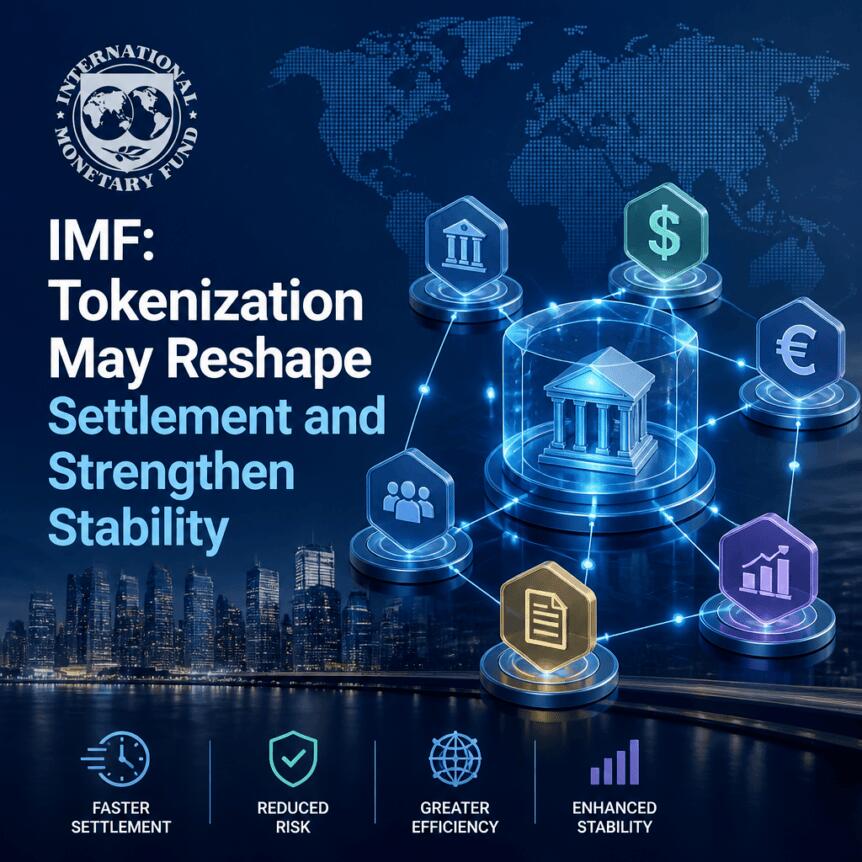
The International Monetary Fund has issued one of its most direct endorsements yet of tokenization’s potential to reshape traditional finance, arguing that moving assets, settlement, and recordkeeping onto shared ledgers could dramatically shorten today’s typically multi-day settlement cycles.
In a blog post published Thursday, Tobias Adrian—financial counselor and director of the IMF’s Monetary and Capital Markets Department—stated that tokenization should be viewed as more than a niche crypto concept. He also cautioned that the same shift that could improve efficiency may move critical financial risk away from familiar intermediaries and toward the underlying infrastructure, including smart contracts, distributed ledgers, and the service providers that operate them.
Key takeaways
- The IMF argues tokenization can streamline settlement and recordkeeping by using shared ledgers, potentially reducing multi-day processes to near-instant transactions.
- Adrian warns that tokenization changes the location of risk, with vulnerabilities potentially shifting from banks and brokers to blockchain and infrastructure layers.
- The IMF highlights a regulatory gap: without common standards and coordinated oversight, tokenized markets could fragment across incompatible platforms.
- Market institutions are already preparing for tokenized finance, with major players reportedly working on tokenized deposit infrastructure.
- U.S. regulators are moving to apply existing securities rules to tokenized assets while discussing potential experimental pathways.
Why the IMF’s stance matters for tokenized markets
The IMF’s position is notable because it frames tokenization as an architectural change to how financial markets function, not simply a technological upgrade. Adrian’s central claim is structural: when the same system handles asset representation, transfers, settlement, and recordkeeping, the industry can reduce operational handoffs that currently add time and friction.
That “compressed settlement” argument is a key reason tokenization attracts attention from both technology teams and incumbent financial institutions. In practical terms, shorter settlement windows can support faster settlement finality, reduce certain operational dependencies, and improve liquidity dynamics by making transfers easier to complete.
Risk migration and the standards problem
Alongside the efficiency thesis, Adrian introduced a counterweight: tokenization may shift where systemic risk lives. In traditional setups, intermediaries play a dominant role in managing settlement and operational dependencies. With tokenized infrastructure, Adrian argued that risks can move toward the underlying technology stack—smart contracts, distributed ledger mechanics, and the organizations providing related services.
He further warned that if regulators and industry participants do not establish common standards and coordinate regulation, tokenized markets could splinter. Fragmentation across incompatible platforms would not just create inconvenience; it could also introduce new forms of systemic risk by increasing complexity and reducing transparency around how assets move and settle in different ecosystems.
This is where the IMF’s message goes beyond general technology optimism. Tokenization can only deliver its promise if networks interoperate safely and if the governance, compliance expectations, and operational controls are consistent enough to support market-wide confidence.
Institutional momentum: tokenized deposits and broader research
The IMF’s comments arrive as traditional finance accelerates its own tokenization programs. Earlier coverage from The Clearing House—a payments and banking group whose owners include JPMorgan Chase, Bank of America, and Barclays—has been reported as planning a tokenized deposit network in early 2027. The reported goal is to keep deposits within the regulated banking system while enabling faster, programmable payment flows.
The IMF’s thinking also aligns with research highlighted by the report’s surrounding context. According to PwC research, tokenization could address long-running inefficiencies in traditional finance, including payment settlement and the transfer of asset ownership. In addition, a May report from Moody’s pointed to growing preparations among traditional institutions for a shift toward tokenized finance.
Taken together, these threads suggest tokenization is moving from concept to execution inside mainstream institutions—making the IMF’s emphasis on standards and coordinated regulation more urgent, not less.
Regulators trying to define tokenized finance in real time
A major theme in Adrian’s post is that policymakers have a narrow window to influence how tokenized markets develop. He argued that key design choices—such as what settlement assets are used, how governance works, whether interoperability is supported, and what role central banks should play—will largely determine whether tokenization improves system performance or adds systemic fragility.
In the United States, the Securities and Exchange Commission has taken steps to clarify how existing securities laws apply to tokenized assets rather than building a completely separate framework. The debate also includes potential mechanisms for supervised experimentation, with Cointelegraph noting that the SEC has signaled it is considering an “innovation exemption” that could allow market participants to test blockchain-based trading platforms for tokenized securities while a broader regulatory approach is developed.
For market participants, this matters because the regulatory path influences product design and compliance strategy. Tokenized markets are not only software deployments; they also require durable interpretations of custody, disclosure, trading conduct, and market structure rules—especially as assets migrate from legacy rails to programmable settlement systems.
As institutions push forward with tokenized network initiatives and regulators work through existing laws and possible pilot pathways, the next phase to watch is whether industry standards and interoperability efforts keep pace—because the IMF’s warning about fragmentation is likely to become the deciding factor between tokenization becoming a mainstream efficiency upgrade or a patchwork of systems with rising operational and systemic risk.
The cryptocurrency market has staged an evident rebound over the past 24 hours, with Bitcoin (BTC) rising by 4% and Solana (SOL) surging by 9%.
MemeCore (M), though, has outperformed all top 100 digital assets by skyrocketing 80% in a single day. Following the rally, it has become the third-biggest meme coin and could soon overtake Shiba Inu (SHIB) if it maintains momentum.
Is the Rally Sustainable?
The meme coin is currently worth around $1.50 and has a market capitalization of just under $2 billion, making it the 40th-largest cryptocurrency (according to CoinGecko). It is important to note that the major revival comes just days after M crashed by 76% following allegations of manipulation.
Just hours ago, the team behind the meme coin addressed the issue and informed that following “a comprehensive internal and on-chain review,” it has not found anything suspicious related to the matter.
“Our review confirms:
– No issues affecting the protocol or infrastructure.
– All core systems continue to operate normally.
– No token sales were conducted by the MemeCore Foundation.
– No unusual activity has been identified regarding the Foundation’s treasury or project operations,” the announcement reads.
Perhaps this has become the primary catalyst driving M’s price higher today (July 2). Despite the evident jump, many analysts remain skeptical of the token, warning investors to be extremely cautious.
X user Suf claimed that the price climbed “not because of bullish buyers, but from the traders who shorted, being forced to buy.” For his part, CryptoBuffett said he will short M “to infinity.”
“I will DCA all the way up to $3 and beyond. My whole reputation and net worth will go into shorting this manipulative team and coin to ZERO. It’s worth ZERO; they want to rug you twice. If you’re buying, you will be REKT,” he added.
Additional Red Signals
MemeCore’s Relative Strength Index (RSI) also suggests the price might head south soon. The ratio has risen to 82, representing an extreme overbought condition, which is often a precursor of an impending pullback.

The token has been labeled a scam by numerous well-known analysts in recent months. In April, lockchain investigator ZachXBT openly questioned MemeCore’s valuation and token distribution, claiming that insiders control more than 90% of its supply.
The post Viral Meme Coin Challenges Shiba Inu (SHIB) After Exploding 80% Daily: Details appeared first on CryptoPotato.
Crypto World
eToro Takes Strategic Stake in Onchain Derivatives Exchange Extended, Plans Zengo Tie-Up


EToro has become a strategic investor in Extended, an onchain perpetual futures exchange, and said the funding round marks the start of a partnership between Extended and Zengo, the self-custody wallet eToro acquired earlier this year, according to a post from Extended. Extended said on X that… Read the full story at The Defiant

The Solana Foundation, the Swiss organization that supports the Solana network’s development, launched a new framework for protocol-level governance that enables proposing and voting on governance decisions for the Solana blockchain.
The Solana Governance Proposals (SGPs) establish a standard that enables validators to submit core protocol proposals and vote onchain, with voting power based on their delegated Solana (SOL) stake, the Foundation announced in a Thursday X post.
“An SGP captures a stake-weighted directional decision. It records what the community wants. It is not strictly focused on the technical detail of how to build the feature,” according to the GitHub repository, launched on Thursday.
The new framework offers Solana a transparent, community-driven way to make major protocol decisions, reducing reliance on centralized coordination while keeping technical implementations, or Solana Improvement Documents (SIMDs), separate from community governance.
Other blockchain networks with similar stake-weighted governance mechanisms include Polkadot, Cosmos, Cardano, Tezos and Avalanche.

Source: Solana Foundation on X.com
Proposals require minimum 15% support
A proposal must receive endorsements from validators representing at least 15% of actively staked Solana tokens to qualify for a formal onchain vote, a measure that seeks to filter out low-quality proposals.
Validators with at least 100,000 SOL delegated can open a new governance proposal via SGP. SOL stakers can delegate their stake to validators, allowing them to participate in the governance process on their behalf.
Delegators who disagree with how their validator has voted can now override the validator and submit their own vote on the proposal, hence overriding the validator’s vote for that proposal.
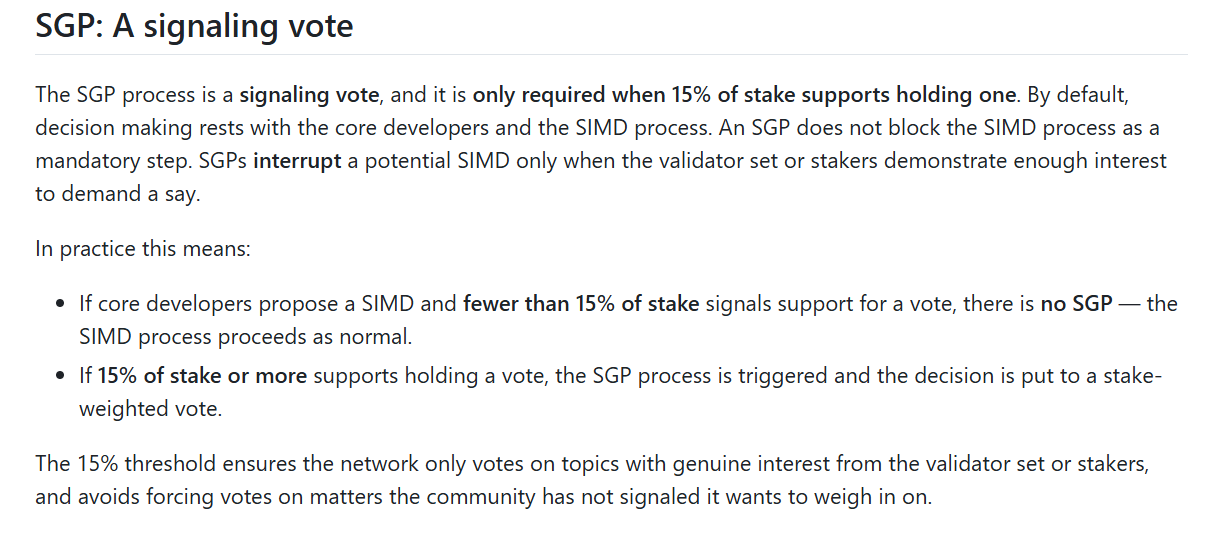
SGP voting information, minimum threshold. Source: GitHub
The Solana Foundation said that governance-level proposals will be SGPs, while smaller SIMD proposals will focus on technical protocol upgrades.
“SIMDs should focus on protocol changes, SGPs should be signals from the ecosystem,” wrote the Foundation.
Related: South Korea’s Shinhan Card taps Solana to test real-world stablecoin payments
In April, the Solana Foundation introduced a new security auditing framework and incident-response network for Solana-based protocols, in partnership with Web3 security firm Asymmetric Research.
The new initiative, the Solana Trust, Resilience and Infrastructure for DeFi Enterprises (STRIDE), is a “structured program for evaluating, monitoring and escalating security across Solana projects,” according to the April announcement.
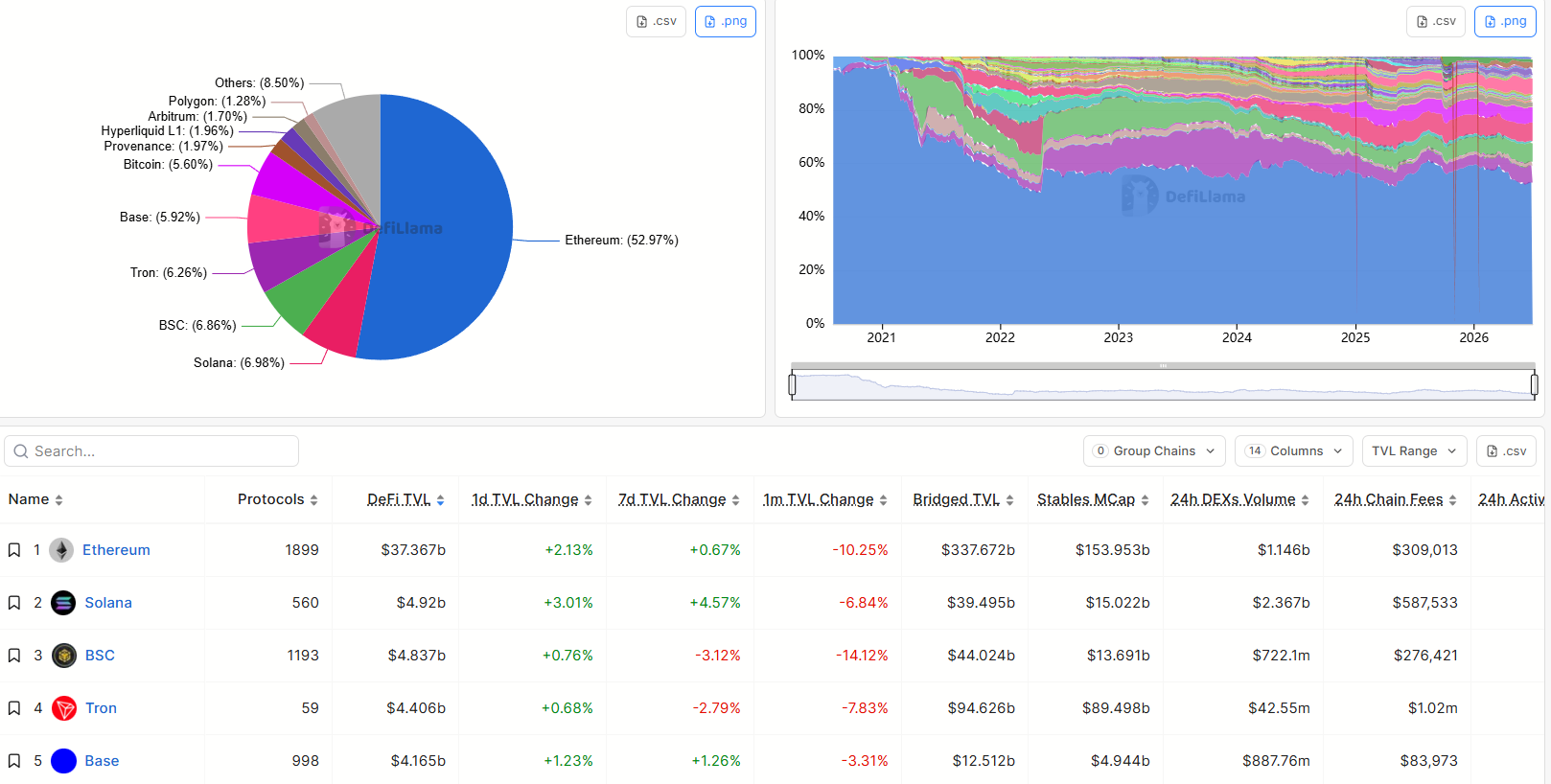
Top blockchain networks by TVL. Source: DefiLlama
Solana ranks as the second-largest blockchain network with $4.92 billion in total value locked (TVL), behind Ethereum’s $37.3 billion. Solana generated over $587,000 in blockchain fees during the past 24 hours, according to DefiLlama at last look.
Magazine: ‘If you want to be great, make enemies’: Solana economist Max Resnick

Claude Fable 5 Backlash Grows as Users Say Anthropic ‘Caged’ Its Flagship AI

World Cup 2026: Spain cruise into last 16 with win over Austria

Nvidia recruits longtime Microsoft sales leader Nick Parker with $40M+ pay package


-

 Fashion6 days ago
Weekend Open Thread: Staud – Corporette.com
-

 Politics7 days ago
The House | Manchesterism won’t survive the painful trade-offs unless it gets citizens on board
-

 Crypto World3 days ago
Strategy authorizes up to $1.25B in Bitcoin sales under new capital plan
-

 Politics7 days ago
Potential 2028er World Cup attendee leaderboard
-

 Business7 days ago
Asia stock markets slide as tech shares slump
-

 News Videos4 days ago
MAJOR BITCOIN & MARKET UPDATE!!!! (MUST WATCH ASAP!!!)
-

 Crypto World5 days ago
Coinbase, Circle Deepen Crypto Stock Losses Despite Resilient S&P 500
-

 Tech3 days ago
Anonymous researcher drops 0-day ‘exploitarium’ repo
-

 Business3 days ago
Australia treasurer says alleged access of prime minister’s bank data ’incredibly concerning’
-

 Crypto World6 days ago
Kraken's xStocks Opens Bending Spoons IPO Registration to EEA Retail
-

 Crypto World7 days ago
Bitcoin Sparks $600M Hourly Liquidations With $65,000 Set To Become Resistance
-

 Sports6 days ago
FIH Pro League: India defeat Pakistan 7-1, register biggest win of campaign | Other Sports News
-

 Tech5 days ago
Bluekit phishing kit adopts browser-in-the-middle for login theft
-

 Tech5 days ago
Russian hackers now target Signal backup recovery keys
-
Crypto World6 days ago
Hyperliquid Named on Singapore MAS Investor Alert Register
-

 Crypto World6 days ago
RTX holders must register wallets before token distribution begins
-

 Crypto World7 days ago
Tether (USDT) Passes Ether in Market Cap as ETH Drops Toward $1.5K
-

 Sports1 day ago
Broncos roster: OL Ben Powers (No. 74) entering final year of contract
-
 Business3 days ago
The AI boom won’t burst all at once. It will pop in ‘rolling bubbles’: Macquarie
-

 Tech5 days ago
Silicon Valley paid to kill AI regulation, now it wants the rules back
You must be logged in to post a comment Login