

Crypto World
Nvidia’s $20B Debt Push Signals Shift Toward AI for Bitcoin Miners

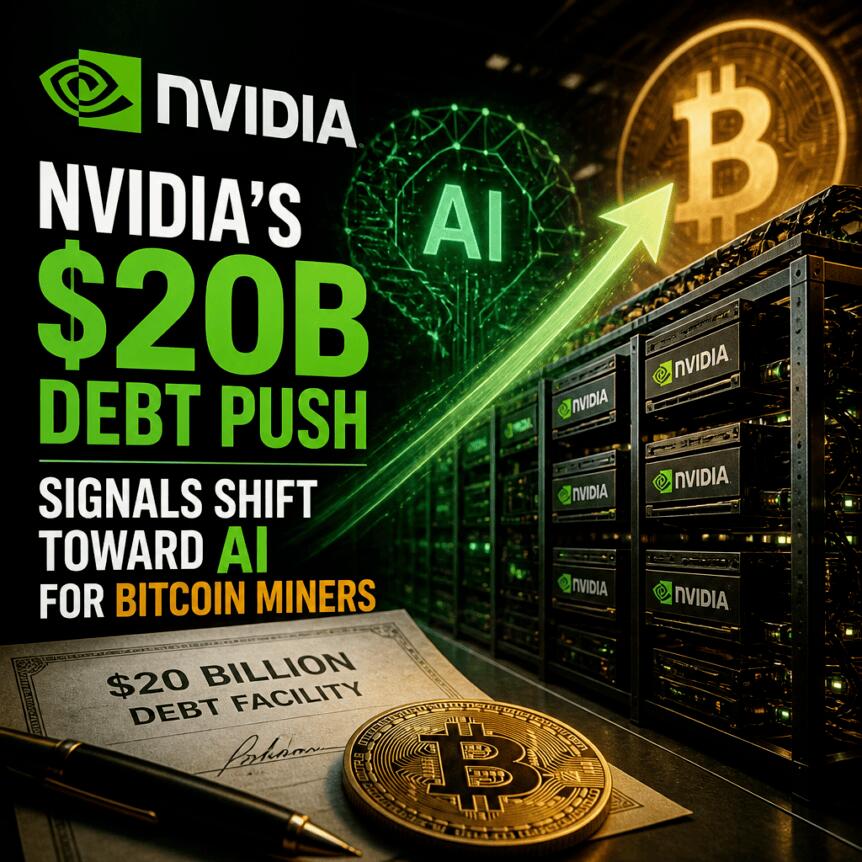
Nvidia is reported to be preparing a large bond sale tied to its AI spending plans, a move that reinforces how aggressively the global tech sector is funding new compute capacity. According to Bloomberg, the chipmaker is seeking to raise at least $20 billion through a multi-part offering to finance AI-related investments and refinance existing obligations.
The report also frames Nvidia’s capital markets push as another signal of sustained demand for AI infrastructure—demand that has, in turn, opened a door for some Bitcoin miners to explore business models beyond crypto. As miners face tighter margins after the 2024 halving, the search for alternative revenue streams is becoming more prominent alongside the AI buildout.
Key takeaways
- Nvidia is reportedly aiming to raise $20 billion via a bond sale spanning seven maturities from two to 30 years.
- The longest-dated notes are expected to yield about 0.9 percentage points above comparable U.S. Treasuries, according to Bloomberg.
- Nvidia’s dominance in AI hardware means its spending plans are closely watched by the broader AI infrastructure industry.
- Bitcoin miners have increasingly used their power and data-center assets for high-performance computing and AI hosting as crypto mining economics remain under pressure.
- Research cited by Cointelegraph indicates miners have been selling off portions of their Bitcoin holdings, including more than 15,000 BTC between October and March, per TheEnergyMag.
Nvidia’s bond plan spotlights AI-funding momentum
Bloomberg reported on Monday that Nvidia is pursuing a high-grade bond offering after identifying the financing needs for its AI expansion. The plan, as described by people familiar with the matter, includes issuing notes across seven maturities, ranging from two years to 30 years.
Pricing details matter for investors because they reflect how the market is currently valuing long-term risk and growth. Bloomberg said the longest-dated bonds are expected to yield roughly 0.9 percentage points above comparable U.S. Treasury securities. While the exact deal terms weren’t finalized in the coverage, the structure suggests Nvidia is looking to lock in funding across a broad time horizon.
For the AI supply chain, the significance is straightforward: Nvidia is positioned at the center of large language model infrastructure through its GPUs, which are widely used by hyperscalers and cloud providers. When such a major platform vendor seeks debt financing at scale, it can be read as a vote of confidence in continued AI investment cycles.
Why this matters for Bitcoin miners’ diversification
Even though Nvidia’s bond offering is not a crypto story on its own, it arrives at a moment when parts of the mining sector are searching for stability outside Bitcoin block rewards. The shared thread is infrastructure: data centers, power capacity, and computing hardware utilization.
Cointelegraph noted that an increasing number of Bitcoin miners have started repurposing energy-intensive facilities for high-performance computing and AI hosting. Instead of relying solely on mining revenue, companies are positioning existing infrastructure—especially power and hosting capabilities—as assets that can serve the AI buildout.
The reporting points to miners that have historically been more closely associated with crypto, including HIVE Digital, TeraWulf, Hut 8, and CleanSpark. Each is described as exploring data center capacity offerings by leveraging internal infrastructure and power agreements to capture demand for computing resources.
This shift is not merely strategic branding. For miners, the practical advantage is that they already operate or control sites where electricity costs and uptime are key—two variables that are also central to operating AI workloads. If the demand for compute remains strong, data-center-led diversification can reduce reliance on a single revenue stream.
Bitcoin mining economics stay tough after the 2024 halving
The push toward AI-adjacent services is happening against a difficult backdrop for core mining economics. According to Cointelegraph’s coverage, the industry has faced heightened margin pressure following the April 2024 halving, which lowered reward issuance and intensified strain when mining difficulty and operating costs remain elevated.
Cointelegraph characterizes the environment using language attributed by analysts as among the harshest in history—an environment that has encouraged miners to take actions such as selling parts of their Bitcoin treasuries, reducing leverage, and looking for non-crypto revenue streams.
To illustrate how widespread the treasury selloff has been, Cointelegraph cited data from TheEnergyMag, stating that Bitcoin miners collectively sold more than 15,000 BTC between October and March. Another reference in the piece points to a timeline acceleration: sales reportedly became faster after BTC peaked above $126,000 in October, based on reporting from TheEnergyMag via MinerWeekly.
That combination—continued sell pressure alongside diversification plans—suggests miners are trying to balance short-term liquidity needs with longer-term repositioning. It also underlines why external funding and infrastructure demand can matter to miners even if the catalyst is coming from traditional tech capital markets.
From mining to AI infrastructure: the next valuation test
As miners explore new roles, investors are likely to focus on whether those businesses can offset weaker mining margins over time. In Cointelegraph’s reporting, analysts at Bernstein are referenced as expecting IREN to derive the vast majority of its value from AI infrastructure, tied to growth in the company’s cloud AI business. The point is less about instant profitability and more about the direction of future cash-flow drivers—an increasingly important question for companies that once relied almost entirely on Bitcoin mining revenue.
What remains uncertain is whether these AI-focused operations can scale quickly enough and on favorable economics to fully compensate for the cyclical nature of mining. The near-term treasury actions highlighted by TheEnergyMag indicate that many miners still need financial support and flexibility as they transition.
Readers should watch whether large-scale AI compute demand continues to translate into sustained demand for hosting and infrastructure services—especially given how much of that ecosystem depends on hardware providers like Nvidia. If AI spending remains robust, it may create a clearer bridge between traditional infrastructure financing and the longer arc of miners’ diversification; if it weakens, the transition will likely face harsher economic tests.


Kevin Warsh opens his first Federal Reserve meeting on June 16, and for crypto traders, the stakes are real. The new Fed Chair is hawkish on inflation, personally divested of all crypto, and committed to saying less than his predecessor.
Warsh took over from Jerome Powell in May, and his financial disclosures showed more than 20 crypto-linked investments, including Solana, Compound, dYdX, and a stake in Bitcoin payments startup Flashnet. Under Federal Reserve ethics rules, he sold all of it before taking the job.
The Dot Plot and Rate Hike Risk
Markets price in a near-certain rate hold at 3.50% to 3.75% for June 17, but the updated Summary of Economic Projections, the dot plot, is the real signal. May CPI came in at 4.2%, with energy prices surging due to the Iran conflict and Strait of Hormuz disruptions accounting for most of the monthly rise.
If the dot plot shows Fed officials penciling in a hike rather than a cut, Bitcoin faces a familiar headwind: tighter liquidity moves traders away from risk assets. Prediction markets currently put the odds of at least one 2026 rate hike at 50%-65%, and the dot plot could reprice it quickly.
Warsh Plans to Talk Less
Warsh has long criticized the Fed’s habit of over-communicating. Charles Schwab’s analysis of his policy stance notes he sees excessive forward guidance as a credibility risk, not a market service. His first post-meeting press conference will likely be shorter, less prescriptive, and less generous with rate-path hints than Powell’s.
Crypto markets move sharply on Fed signals, and when that anchor disappears, volatility tends to follow. The Fed’s standard signal that its next move is more likely a cut than a hike, known as an easing bias, may be the first thing to disappear from the statement, and markets will read its absence as hawkish.
The Pro-Crypto Paradox
Warsh sold all of his digital asset holdings, confirmed by Bloomberg in a certificate of divestiture from the Office of Government Ethics, before taking the job. The crypto-fluent Fed Chair many expected is now constrained by macro orthodoxy and ethics rules.
What actually matters for the industry is whether his worldview, which includes an anti-central bank digital currency (CBDC) position and openness to stablecoin legislation, translates into formal policy. Crypto’s clearest tailwind from Warsh will come not from rate cuts but from stablecoin oversight and approvals for banks to issue tokenized assets.
Warsh’s first press conference on June 17 is the test: if he signals rates higher for longer, crypto will feel it fast.
The post Kevin Warsh Opens First Fed Meeting: What Crypto Traders Must Watch appeared first on BeInCrypto.

On-chain leverage ratio across Decentralized Finance (DeFi) has climbed to levels last seen in 2021, according to Binance Research.
While the metric may suggest elevated risk, the increase was driven largely by a decline in total value locked (TVL) rather than a surge in borrowing demand.
What Pushed DeFi Leverage to 2021 Levels
The on-chain leverage ratio measures the extent of borrowing and leveraged activity relative to the capital locked in DeFi protocols (TVL). It rose to about 38%, driven by TVL compression.
Follow us on X to get the latest news as it happens

The drop in TVL followed a series of major DeFi security incidents in April. BeInCrypto reported that hackers stole about $606 million during the month.
Most of the damage came from attacks targeting Kelp DAO and Drift Protocol, with the Kelp DAO exploit alone resulting in losses of approximately $292 million.
The breaches prompted investors to withdraw capital from DeFi platforms, leading to a sharp contraction in value locked across multiple blockchain ecosystems.
“April’s DeFi exploits triggered ~US$13B in TVL outflows,” the post read.
Consequently, the rise in the on-chain leverage ratio reflected a shrinking pool of collateral rather than a fresh increase in borrowing activity or in traders’ risk-taking.
Despite the broader market pullback, meaningful deleveraging has yet to materialize, Binance Research said.
As leverage remains elevated relative to a shrinking DeFi capital base, the market could remain vulnerable to further liquidations and position unwinds if prices weaken further.
For now, DeFi sits in a fragile balance. Leverage looks elevated even as borrowing activity has not risen proportionally, and the system has yet to reset after the spring outflows.
Subscribe to our YouTube channel to watch leaders and journalists provide expert insights
The post Exploit-Driven TVL Drop Pushes DeFi Leverage Back to 2021 Levels appeared first on BeInCrypto.

The U.S. Government Accountability Office (GAO) has urged the Federal Deposit Insurance Corporation (FDIC) to strengthen coordination with other federal regulators to manage risks associated with blockchain-based financial products. In a letter made public on June 8, GAO recommended that the FDIC develop an ongoing mechanism to help agencies identify, assess, and respond to emerging blockchain-related threats more consistently.
GAO also pressed the FDIC to revisit how it assigns supervisors to institutions, arguing that changes to case manager rotation could improve supervisory independence and reduce the risk that oversight outcomes are compromised. The recommendations arrive as lawmakers and regulators continue to work through the supervisory gaps created by the cross-border and rapidly evolving nature of crypto and stablecoin activities.
Key takeaways
- GAO urged the FDIC to coordinate with other federal agencies through an ongoing mechanism for addressing blockchain risks.
- GAO cited findings from 2023 that regulators lacked a continuous coordination structure while blockchain-related financial services grew significantly.
- GAO recommended rotating FDIC case managers to strengthen supervisory independence.
- GAO linked supervisory questions to the 2023 failures of several crypto-exposed banks, in the aftermath of the FTX collapse.
- Policy developments under the GENIUS Act and proposed broader crypto legislation shape the regulatory context for stablecoin and wider crypto market oversight.
GAO calls for cross-agency coordination on blockchain risk
In its June 8 letter to FDIC Chairman Travis Hill, GAO said it first raised the issue of blockchain risk coordination as a priority matter in May of the prior year. GAO described blockchain technology as an area of concern that it placed on its “High Risk List,” reflecting difficulties regulators face in overseeing blockchain-based financial products and the potential effects on U.S. markets.
GAO’s position is grounded in an earlier assessment it conducted in 2023. The agency found that financial regulators did not have an “ongoing coordination mechanism for addressing blockchain risks,” despite the growing scale of blockchain-related products and services. In practice, GAO argued that without a durable coordination channel, agencies may identify similar risks at different times or respond inconsistently—an issue that becomes more acute when crypto-related activities span multiple regulated entities and regulatory authorities.
GAO maintained that establishing the coordination mechanism it recommended would enable the FDIC and other regulators to collectively identify risks and implement regulatory responses in a timely manner. The emphasis on timeliness is particularly relevant for compliance monitoring: blockchain-linked products can evolve quickly, and regulatory responses often depend on rapid information-sharing across agencies responsible for distinct parts of the financial system.
Stablecoin oversight under GENIUS and the broader legislative push
The FDIC’s role in blockchain-related oversight is closely tied to stablecoins. Under the GENIUS Act passed last year, the FDIC serves as the main regulator for stablecoin issuers that are subsidiaries of banks under FDIC supervision. That framework positions the FDIC as a key gatekeeper for a segment of the crypto market that directly intersects with the banking system.
GAO’s call for coordination therefore has both immediate supervisory implications and longer-term policy relevance. The letter comes as Senate lawmakers consider a bill intended to clarify how federal agencies would regulate the wider crypto market beyond the stablecoin context. As described by Cointelegraph, lawmakers are looking to pass legislation that would outline the regulatory approach across federal bodies—an effort that underscores the current fragmentation problem regulators face when crypto activity cuts across agency mandates.
For institutional stakeholders, the coordination question is not only about enforcement readiness; it also affects compliance design. Firms operating stablecoin-related products, custody services, or other blockchain-based financial offerings may need to map evolving obligations across regulators. A clearer coordination mechanism could reduce the chance of duplicative requests, shifting interpretations, or gaps where risks fall between agencies.
Supervisory independence: GAO urges rotation of case managers
Beyond coordination, GAO recommended a supervisory process change: rotating case managers assigned to banks. GAO said that in 2024 it found the FDIC did not require supervisors to rotate to different banks. According to GAO, a lack of rotation could compromise supervisor independence and interfere with supervision outcomes.
GAO further reasoned that a rotation requirement could mitigate threats to independence. While the specifics of supervisory staffing and governance vary by institution, independence concerns are central to bank oversight. If supervisors become too closely embedded with particular institutions over extended periods, the ability to challenge management assessments and respond objectively to emerging risks may be weakened.
GAO also linked the staffing concern to what it described as unanswered questions raised by bank failures in 2023, particularly whether bank watchdogs took sufficient action to ensure institutions “promptly addressed supervisory concerns.”
Lessons cited from 2023 bank failures tied to crypto exposure
GAO pointed to the collapse of several banks in 2023—Silicon Valley Bank, Silvergate Bank, and Signature Bank—as events that raised questions about the robustness and timeliness of supervisory actions. All three failed in less than a week in March 2023, following the bankruptcy of FTX, which contributed to severe disruption across crypto markets.
From a policy and enforcement standpoint, GAO’s emphasis suggests that supervisors may face heightened risk signals when banks have significant exposure to crypto-linked counterparties, custody arrangements, or related liquidity and asset-liability pressures. GAO’s recommendation to strengthen oversight processes—through both improved interagency coordination and enhanced supervisory independence—aims to address systemic vulnerabilities that can surface during periods of market stress.
At the same time, unresolved questions remain. GAO’s findings do not automatically specify what a “blockchain risk response” should look like in every scenario, nor do they replace the need for agency-specific rulemaking or supervisory guidance. For compliance teams, this means expectations may evolve incrementally as regulators operationalize coordination mechanisms and adjust supervisory staffing practices.
What to watch next
GAO’s letter adds pressure for measurable procedural follow-through at the FDIC, including how coordination with other regulators will be structured and how supervisory staffing will be implemented in practice. The trajectory of broader federal crypto legislation will also influence how these recommendations interact with stablecoin-specific oversight and the wider regulatory landscape.


India has blocked Telegram nationwide until June 22 after the National Testing Agency said cheating rackets allegedly used the platform to defraud candidates ahead of the NEET medical entrance re-examination set for June 21.
The Ministry of Electronics and Information Technology issued the order under Section 69A of the Information Technology Act. That provision lets the union government restrict online access in the interest of national sovereignty and integrity.
Telegram Banned in India Ahead of NEET 2026 Re-Examination
The National Eligibility cum Entrance Test (NEET) carries enormous weight in India. It decides admission to the country’s undergraduate medical and dental seats. About 2.2 million people sat in the original round on May 3.
However, the National Testing Agency (NTA) cancelled that test on May 12. Officials scrapped that round due to an alleged paper leak. A fresh examination was then scheduled for June 21.
Follow us on X to get the latest news as it happens
In addition to the restriction, the government has also ordered Telegram to turn off message editing in India until June 30. The NTA framed both steps as public-order measures, prompted by “organised use of the platform by cheating rackets to defraud candidates.”
“NTA acknowledges that the access restriction issued by MeitY affects lakhs of citizens who use the Telegram platform for legitimate personal, educational, professional, and informational purposes, and sincerely regrets the inconvenience caused to them. The access restriction is, by its express terms, confined to the period ending 22 June 2026 – i.e., the day after the examination,” the statement read.
The government has moved aggressively to keep the June 21 retest on track. Notably, officials have deployed the Indian Air Force to transport the question papers.
Whether the measures hold back exam fraud will become clearer once the June 21 retest concludes. BeInCrypto has reached out to Telegram for comment.
Subscribe to our YouTube channel to watch leaders and journalists provide expert insights
The post India Restricts Telegram Access Until June 22 Ahead of NEET Re-Exam appeared first on BeInCrypto.


The Bank of Japan (BOJ) raised its policy rate by 25 basis points on June 16, moving the target for the uncollateralized overnight call rate to around 1.0%.
Summary
- BOJ raised rates to 1.0%, putting yen liquidity and crypto market exposure back in focus.
- Oil-driven inflation risks pushed Japan’s central bank toward another step away from easy monetary policy.
- BOJ tightening adds pressure to yen carry trades, putting Bitcoin and wider digital assets back in focus.
The new rate takes effect on June 17 after a 7–1 vote by the Policy Board. The move lifted Japanese rates further from the ultra-low levels that shaped local and global markets for years.
“The Bank will encourage the uncollateralized overnight call rate to remain at around 1.0 percent,” the BOJ said in its policy statement.
The central bank also raised the interest rate on the complementary deposit facility to 1.0% and set the basic loan rate at 1.25%. 1.0% marks Japan’s highest policy rate since 1995. Market participants now watch how the move shapes the yen, bonds, and crypto risk appetite in coming sessions.
Inflation risk drives the BOJ decision
The BOJ said Japan’s economy continues to recover at a moderate pace, even as higher crude oil prices weigh on activity. It said strong corporate profits, better jobs data, and income growth still support the economy. The bank also said government steps to reduce the household burden from energy costs will continue to help demand.
The central bank also pointed to rising price pressure. It said price pass-through from higher crude oil costs has moved at a relatively fast pace in business-to-business transactions. It added that this pressure may spread to consumer prices across many items. The BOJ said underlying CPI inflation may move above its 2% price stability target if medium- to long-term inflation expectations keep rising.
Meanwhile, crypto.news reported before the decision that a move to 1.0% could bring renewed attention to global liquidity and the yen carry trade. The carry trade uses cheap yen borrowing to fund higher-yielding assets. Higher Japanese rates can make that trade less attractive and may push investors to reduce exposure to risk assets.
In addition, that matters for Bitcoin and other digital assets because crypto markets trade around the clock and can react quickly when leveraged positions unwind. Bitcoin fell roughly 3% within hours after the BOJ raised rates to 0.75% in January 2026. The report also said Bitcoin would likely face the first wave of selling because of its deeper liquidity, while smaller tokens may see sharper moves.
Japan’s crypto policy remains active
The rate hike comes as Japan continues to reshape its digital asset rules. Crypto.news reported on June 11 that Japan advanced a bill that would cut crypto gains tax to 20%, open a path for crypto ETFs, and treat digital assets more like stocks. That policy track gives Japan a second crypto story beyond monetary tightening.
In May, Japan’s ruling Liberal Democratic Party advanced an AI-blockchain finance plan focused on tokenized deposits, yen stablecoins, and programmable settlement.
These reforms show that Japan is tightening monetary policy while still building clearer digital finance rules. “The Bank will continue to raise the policy interest rate and adjust the degree of monetary accommodation,” the BOJ said, while noting that future moves will depend on economic activity, prices, and financial conditions.


The U.S. Commodity Futures Trading Commission has responded to four common criticisms of perpetual futures contracts, citing more than 100 public comments submitted during a 2025 consultation process as regulators continue expanding oversight of digital asset markets.
Summary
- CFTC Chair Michael Selig said perpetual futures contracts do not require a fixed expiration date under existing U.S. law or regulatory interpretations.
- Selig stated that CFTC regulated perpetual futures face the same leverage limits as other U.S. futures contracts, rejecting claims that they permit 250x leverage.
- More than 100 public comments were submitted during the CFTC’s 2025 consultation on perpetual contracts, while the agency said funding rates help keep prices aligned with spot markets.
According to a post published on X by CFTC Chair Michael Selig, several misconceptions have emerged around perpetual futures contracts and the agency’s recent approvals of such products, including concerns related to contract duration, leverage, public consultation, and funding rates.
Among the issues addressed was the argument that perpetual futures fall outside the legal definition of a futures contract because they do not have a fixed expiration date. Selig said neither the Commodity Exchange Act nor CFTC regulations explicitly define the term “futures contract” in a way that requires a fixed expiration or delivery date.
Instead, he said the criteria used to determine whether an instrument qualifies as a futures contract come from court decisions and commission interpretations, neither of which requires a contract to expire on a predetermined date.
CFTC defends leverage limits and funding mechanism
Attention has also focused on leverage after some critics claimed the agency had approved a product that would allow U.S. traders to access leverage of up to 250x through the recently approved BTCPERP contract.
Addressing those concerns, Selig said extreme leverage has historically been associated with offshore trading venues rather than the perpetual futures structure itself. Perpetual contracts operating under CFTC oversight, he said, remain subject to the same leverage restrictions that apply to other regulated futures products in the United States.
Questions surrounding industry participation were also raised following the approval process. In response, Selig pointed to an April 2025 request for comment covering both perpetual contracts and 24/7 trading, which drew more than 100 responses from market participants, including numerous firms already registered with the commission.
Funding rates, another frequently debated feature of perpetual futures, received separate attention in the statement. According to Selig, critics have argued that the mechanism creates high costs for traders and encourages harmful market behavior.
His explanation was that carrying a position in traditional futures contracts can generate similar annualized costs once traders account for the expenses associated with repeatedly opening and rolling expiring contracts. He added that funding rates help keep perpetual futures aligned with the underlying spot market rather than encouraging misconduct.
The comments arrive as the CFTC continues to take a prominent role in digital asset regulation while Congress debates legislation that could redefine the responsibilities of the CFTC and SEC.
As previously reported by crypto.news, the commission recently appointed former SEC crypto task force adviser Donald Battle as chief data innovation officer. In announcing the hire, the agency highlighted Battle’s experience in blockchain analytics, financial investigations, artificial intelligence, and data science.
Beyond cryptocurrency markets, the commission has remained active in disputes involving prediction markets and event contracts. Court filings cited by the agency show it recently challenged New Mexico officials over efforts to apply state gaming laws to contracts listed on Kalshi, arguing that federally regulated event contracts fall under CFTC jurisdiction.
At the same time, the regulator is collecting public feedback on a proposed framework for sports event contracts, a process that could influence how federal authorities oversee sports-related prediction markets in the future.
Anthropic’s decision to shut down access to its latest artificial intelligence models after a US order to suspend access to foreign nationals highlights the risks of centralized control in AI, which could increase demand for decentralized alternatives, says Grayscale.
Grayscale head of research Zach Pandl said in a note on Monday that the order to cut access to Anthropic’s Fable 5 and Mythos 5 shows “the centralized control of frontier AI technology and drives home the need for decentralized alternatives.”
“We expect demand for decentralized AI, like Bittensor and its TAO token, to continue to rise as investors seek alternatives,” Pandl said.
The US government on Friday directed Anthropic to suspend access to the models for foreign nationals over national security concerns. Anthropic subsequently disabled access to Fable 5 and Mythos 5 for all users to comply with the order.
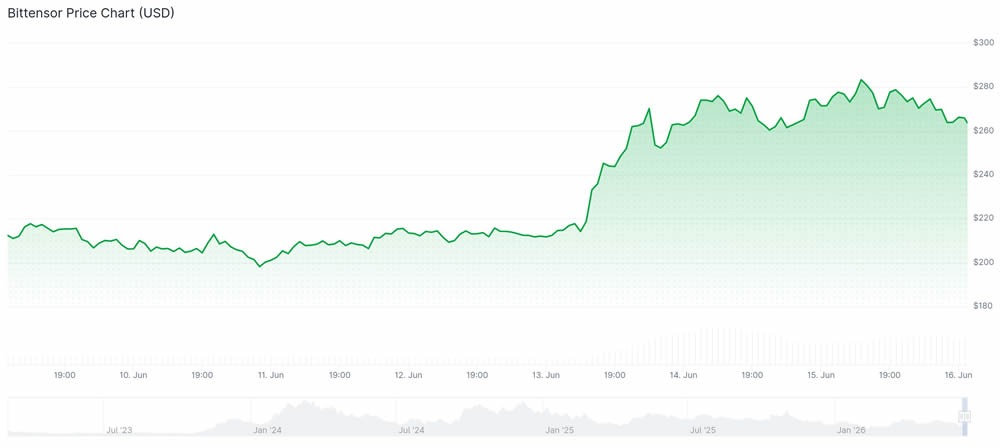
Pandl noted that in the 12 hours after Anthropic cut access to its latest models, Bittensor’s TAO token climbed 30% as users sought out a decentralized alternative, climbing to a three-week high of $283 on Monday.
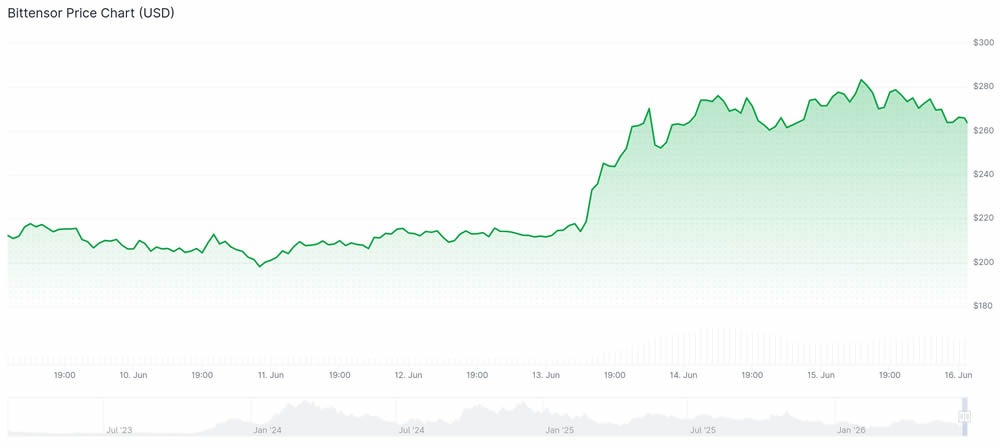
TAO has outperformed the wider crypto market over the past week. Source: CoinGecko
Pandl explained that Bittensor offers an “alternative vision for AI based on decentralized principles,” aiming to provide access to AI resources through an open, global, decentralized network.
“Think of it as Bitcoin for AI.”
“Access to artificial intelligence is becoming an increasingly important economic resource,” Pandl added. “As AI capabilities continue to improve, governments and AI labs will play an increasingly important role in determining who can access these tools and under what conditions.”
Anthropic suspension sets a precedent
Colton Malkerson, co-founder of EdgeRunner AI, argued that this event is a breaking point for corporate data independence.
“We’ve been saying for a while that companies are ‘renting’ their intelligence from the big labs, but this is even worse,” he said in a note to Cointelegraph.
“It’s like renting your intelligence, just like if you’re renting a house and the landlord can cancel your lease whenever they want, kick you out, and look at all your property while you’re a tenant.”
Related: Amazon warning triggered US crackdown on Anthropic AI models: Reports
Tech entrepreneur and author Brett Hurt said in a note to Cointelegraph that the US order for Anthropic to cut off access to its models “was a precedent.”
“The moment a government can silence a commercial AI model overnight, with no public hearing, no technical disclosure, and no appeals process, every lab in America is now operating under an invisible ceiling.”
Magazine: How AI just dramatically sped up the quantum risk for Bitcoin


Uniswap’s UNI token has been projected to climb from about $2.70 to $100 by the end of 2030 as tokenized assets increasingly enter decentralized finance, according to a new forecast from Standard Chartered Bank.
Summary
- Standard Chartered has projected UNI could reach $100 by 2030 as tokenized assets and DeFi activity continue to expand.
- The bank estimates assets locked in DeFi could grow to $2.7 trillion by the end of the decade, positioning Uniswap to benefit from rising onchain trading volume.
- Standard Chartered said Uniswap’s fee burn model, declining token supply, and potential partnerships with traditional finance firms could support higher valuations over time.
Standard Chartered Bank initiated coverage of Uniswap (UNI) on Monday and said the decentralized exchange could be one of the biggest beneficiaries of growth in tokenized assets and on-chain financial activity over the rest of the decade.
The bank expects tokenized assets on public blockchains to expand from roughly $340 billion today to $4 trillion by the end of 2028. At the same time, Standard Chartered projects the share of those assets being used in DeFi applications to rise from 3.5% to 30% by the end of 2030. Combined with growth in crypto-native assets, the bank estimates total assets locked in DeFi could reach about $2.7 trillion, nearly 37 times current levels.
Geoffrey Kendrick, Global Head of Digital Assets Research at Standard Chartered Bank, said he sees decentralized finance as the next major wealth-creation opportunity in digital assets. Based on that outlook, the bank believes Uniswap’s liquidity pools could eventually have access to roughly 37 times more assets for trading than they do today.
Under Standard Chartered’s forecast, UNI could reach $6.50 by the end of 2026, $20 by the end of 2027, $40 by the end of 2028, $65 by the end of 2029, and $100 by the end of 2030. The bank also expects UNI to outperform both Bitcoin and Ether during that period.
Fee burns and token supply changes support the thesis
Part of the bank’s optimism comes from changes made to Uniswap’s economic model over the past year. Before December 2025, swap fees generated on the protocol were distributed entirely to liquidity providers. A protocol upgrade known as UNIfication introduced protocol fees and a mechanism that burns UNI tokens, while later governance decisions expanded fee collection across additional liquidity pools.
According to Standard Chartered, Uniswap has generated roughly $21 million in protocol fees since the fee switch was activated and has burned about 5 million UNI tokens, equivalent to an annual burn rate near 1%.
Token supply has also declined. The bank noted that a one-time burn of 100 million UNI, combined with ongoing burns, has reduced total supply from 1 billion to 895 million tokens, while circulating supply has fallen to about 622 million.
Recent activity on the network has reinforced that trend. Earlier this month, the UNI Burn Bot reported a record daily burn of 134,000 UNI through the UNIfication system. The mechanism requires users claiming protocol fees from TokenJar contracts to burn an equivalent value of UNI through the Firepit contract, permanently removing those tokens from circulation.
Uniswap governance has also expanded the burn framework. Proposal 96, approved in May, extended fee collection and UNI burns to BNB Chain, Polygon, and Celo, increasing the number of supported chains to 11.
Alongside those governance changes, Uniswap Labs has rolled out wallet services, cross-chain swaps, portfolio tracking tools, and multichain portfolio views. The company said nearly half of new traders on Ethereum, Arbitrum, and Base who completed swaps in 2026 made their first transaction through Uniswap.
Bank sees valuation gap with Coinbase narrowing
In its report, Standard Chartered compared Uniswap’s business model with Coinbase and argued that the decentralized exchange remains undervalued relative to the volume it processes.
The bank described Uniswap as similar to YouTube because users create and supply liquidity, while Coinbase was compared to Netflix because it operates and manages its own centralized platform infrastructure.
According to the report, that structure gives Uniswap lower capital requirements since liquidity comes from users rather than the protocol itself. The bank also expects the platform to remain competitive in markets involving closely related assets such as stablecoins, liquid staking tokens, and eventually tokenized real-world assets.
Although Uniswap handles transaction volumes that are comparable to Coinbase, Standard Chartered said the protocol trades at a much lower market capitalization-to-transaction fee multiple. Geoffrey Kendrick said stronger commercialization efforts and partnerships with traditional financial institutions could help narrow that gap over time if Uniswap successfully scales its business.
Risks remain. Standard Chartered warned that specialized decentralized exchanges could develop products better suited for certain markets, while capturing tokenized asset activity will require stronger relationships with traditional finance firms. The bank also noted that Uniswap V4’s hook system has not yet been tested at the scale anticipated in its long-term projections.
Looking ahead, Standard Chartered said regulatory developments such as the expected passage of the U.S. Clarity Act or future guidance from the Securities and Exchange Commission could help address some of those challenges and support wider adoption of decentralized finance infrastructure.

Three of crypto’s largest exchanges canceled their SpaceX products on the biggest IPO day in history, blaming share shortages and hidden lockups. Hyperliquid cleared $1.4 billion in SPCX perpetual futures without owning a single share.
Bybit, Binance, and Bitget had all offered tokenized SpaceX products ahead of the listing, but canceled them on the day when they could not source enough real shares. A separate issue caught preStocks users off-guard: a 180-day lockup on their allocations that only became visible after trading opened.
Why Tokenized Products Failed
Hyperliquid’s SPCX perpetual contract, a synthetic instrument that tracks the share price without requiring actual stock, had no such problem.
Yet three major exchanges that canceled on SpaceX day were relying on xStocks, a Kraken product that converts real equities into blockchain tokens. When xStocks received no IPO allocation, all three platforms collapsed simultaneously.
The preStocks problem was different as the platform had sold exposure to SpaceX shares ahead of the IPO, but buyers discovered the lockup restriction after trading opened, meaning they could watch the stock gain 19% without being able to touch it.
How Crypto Perps Avoided the Chaos
Hyperliquid’s SPCX perpetual contract had no allocation problem to solve. The contract uses funding rates to stay anchored to the real market price. No shares needed, no lockup possible.
On IPO day, SPCX perps generated $1.4 billion in volume on Hyperliquid, around 30% of all HIP-3 ecosystem trading that session. HYPE, Hyperliquid’s native token, gained roughly 10% on the day. HIP-3 stock perps had already posted $18.8 billion in volume in the first half of June, outpacing WTI and Brent crude perpetuals on the same platform.

$1.4B: Decent Volume, Not a Nasdaq Rival
SpaceX’s Nasdaq debut saw around 500 million shares change hands. At an average price near $161, that translates to roughly $80 billion in equity volume on day one. The $1.4 billion in Hyperliquid perps represents about 1.7% of that, decent for a single decentralized product, but not a rival to equity markets.
What the number does show is which crypto model held up when the alternative broke. Synthetic perpetual futures cannot run out of shares because they never needed them. Tokenized equity, built on real-share custody, carries a structural ceiling that showed up exactly when demand peaked.
ICE CEO Jeffrey Sprecher called Hyperliquid “bigger than Nasdaq” earlier this year, a claim that overstates the case, but the SpaceX episode offered concrete evidence of one genuine structural advantage: when there are no real shares to source, synthetic perps cannot run out.
The post How Hyperliquid Did $1.4 Billion in SpaceX as 3 Major Exchanges Ran Out of Shares appeared first on BeInCrypto.


The U.S. Government Accountability Office (GAO) has urged the Federal Deposit Insurance Corporation (FDIC) to coordinate more closely with other federal regulators on blockchain risks.
Summary
- GAO said regulators still lack a standing process for coordinated oversight of blockchain financial risks.
- FDIC faces fresh pressure as GENIUS Act rules expand its role over stablecoin issuers nationally.
- The watchdog also urged case manager rotation after 2023 bank failures raised supervision questions again.
The watchdog made its June 8 letter to FDIC Chairman Travis Hill public on June 15.
Meanwhile, the GAO said blockchain-related financial products and services have grown in recent years. It said regulators “lacked an ongoing coordination mechanism” for blockchain risks when it reviewed the issue in 2023. The office said such a process would help agencies identify risks and respond faster.
FDIC role grows under stablecoin law
The recommendation arrives as the FDIC’s crypto role grows under the GENIUS Act. As crypto.news reported in April, the FDIC proposed rules for stablecoin issuers operating through the banking system. The proposal covers reserves, redemption, capital, risk management, and custody standards.
Under that framework, reserve deposits backing stablecoins may qualify for deposit insurance if they sit inside insured banks. Stablecoin holders would not receive federal deposit protection. That difference keeps the FDIC at the center of a debate over how bank rules should apply to tokenized payment products.
In addition, the GAO also urged the FDIC to strengthen bank supervision. It said the 2023 bank failures raised questions about whether regulators acted quickly enough when institutions showed weak liquidity and risk management. Silicon Valley Bank, Signature Bank, and Silvergate Bank all became part of the wider debate over banking exposure to crypto and tech clients.
The watchdog also repeated a recommendation that the FDIC rotate certain case managers assigned to banks. It said the agency did not require periodic rotation, which could weaken independence and affect supervision outcomes. The GAO said rotation rules could support evidence-based escalation decisions.
Broader crypto rulemaking continues
The GAO letter comes as Congress and federal agencies continue work on crypto rules. As previously reported, the Senate Banking Committee advanced the CLARITY Act in a 15 to 9 vote in May. The bill would divide digital assets across SEC and CFTC oversight and create a separate framework for payment stablecoins.
The FDIC has also changed its approach to bank crypto activity. In 2025, the agency said FDIC-supervised banks could engage in permitted crypto-related work without prior agency approval, if they manage the risks. Travis Hill said the agency was “turning the page” on the past approach.
Lawmakers have questioned stablecoin issuers, bank charter reviews, customer identification rules, and whether crypto firms should face bank-like safeguards when their products resemble deposits.
For the FDIC, the request now sits beside its stablecoin rulemaking and its bank supervision duties. The GAO did not call for a ban on blockchain products. It asked for a standing process that lets agencies work together before risks spread across markets.
The letter frames crypto oversight as a coordination problem at a time when stablecoins, bank charters, and market structure bills are moving through Washington. The report lists blockchain risk oversight and bank supervision as the two areas needing timely attention from the FDIC.

A mother wanted to keep her six children connected forever. The unique names she gave them became a symbol of their success

Kevin Warsh Opens First Fed Meeting: What Crypto Traders Must Watch

MLB roundup: Cardinals’ Dustin May fires 1-hit shutout vs. Padres


-

 Business2 days ago
No Jackpot Winner as $257 Million Prize Rolls Over to $269 Million Monday Draw
-

 Crypto World5 days ago
Oppenheimer backs SpaceX as $70 billion retail frenzy builds
-

 Fashion4 days ago
Weekend Open Thread: Tuckernuck – Corporette.com
-

 Crypto World5 days ago
Markets Rally as SpaceX IPO Looms Amid Iran Tensions and Inflation Surge
-
 Crypto World1 day ago
Zimbabwe Requires Crypto Businesses to Register Annually Under New FIU Regulations
-

 Entertainment7 days ago
The Ryan Gosling True Crime Thriller On Netflix That Gets Even Stranger, Stream It Now
-

 Tech3 days ago
NanoClaw integrates JFrog registries to secure AI agent downloads
-
 Sports7 days ago
Bangladesh beat Australia after 20 years in ODIs, register only their second win over six-time world champions | Cricket News
-

 Crypto World3 days ago
Bitget enters Argentina’s regulated crypto market through PSAV registration
-

 Tech4 days ago
This Week In Security: Microsoft On Microsoft, Register Your Domains, Linux On ARM, And FreeBSD Joins The File Cache Club
-

 NewsBeat4 days ago
El Nino has formed in the Pacific and could set records, forecasters say
-
 Tech5 days ago
Dutton Ranch star claims they ‘didn’t see any disruption’ on set following Chad Feehan’s exit from Yellowstone spinoff fueled by Taylor Sheridan clash rumors
-

 Politics5 days ago
Politics Home | Healey Resignation Is “Colossal Failure Of Government”, Says Former Labour Defence Secretary
-
 Tech6 days ago
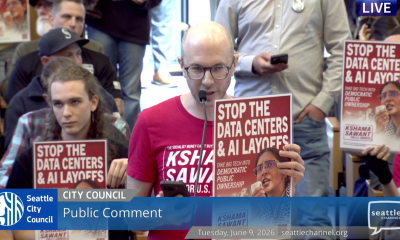
‘This is Seattle’s position on AI’: City Council votes unanimously to pause big new data centers
-

 Business6 days ago
Thailand Ranks Second Worldwide for AI Adoption Growth, Microsoft Reports
-
 Entertainment5 days ago
Donnie Wahlberg & More Heat Up Las Vegas at Circa’s Barry’s Downtown Prime
-
 Tech5 days ago
Opendoor Ends India Operations, Fueling a Bigger Conversation About AI and Outsourcing
-

 Sports5 days ago
First Time Since 1971: Australia Register Historic Low In ODI Cricket
-

 Politics5 days ago
Belfast burns, while Met chief points finger at Iran and Russia
-

 NewsBeat4 days ago
FBI searches office of Ohio voter registration group
You must be logged in to post a comment Login