

Crypto World
Ondo drops blockchain plans for private, high-speed trading network

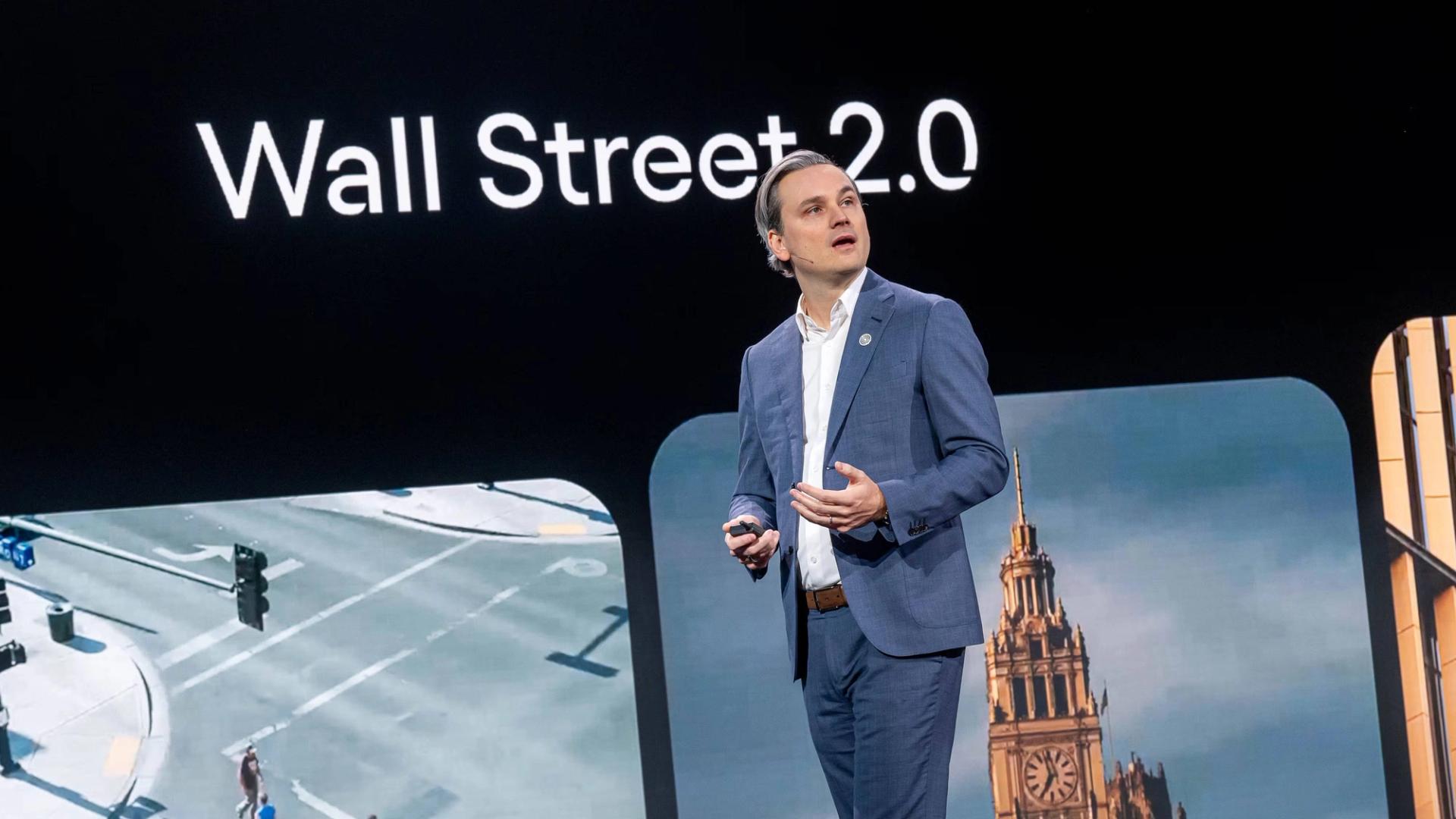
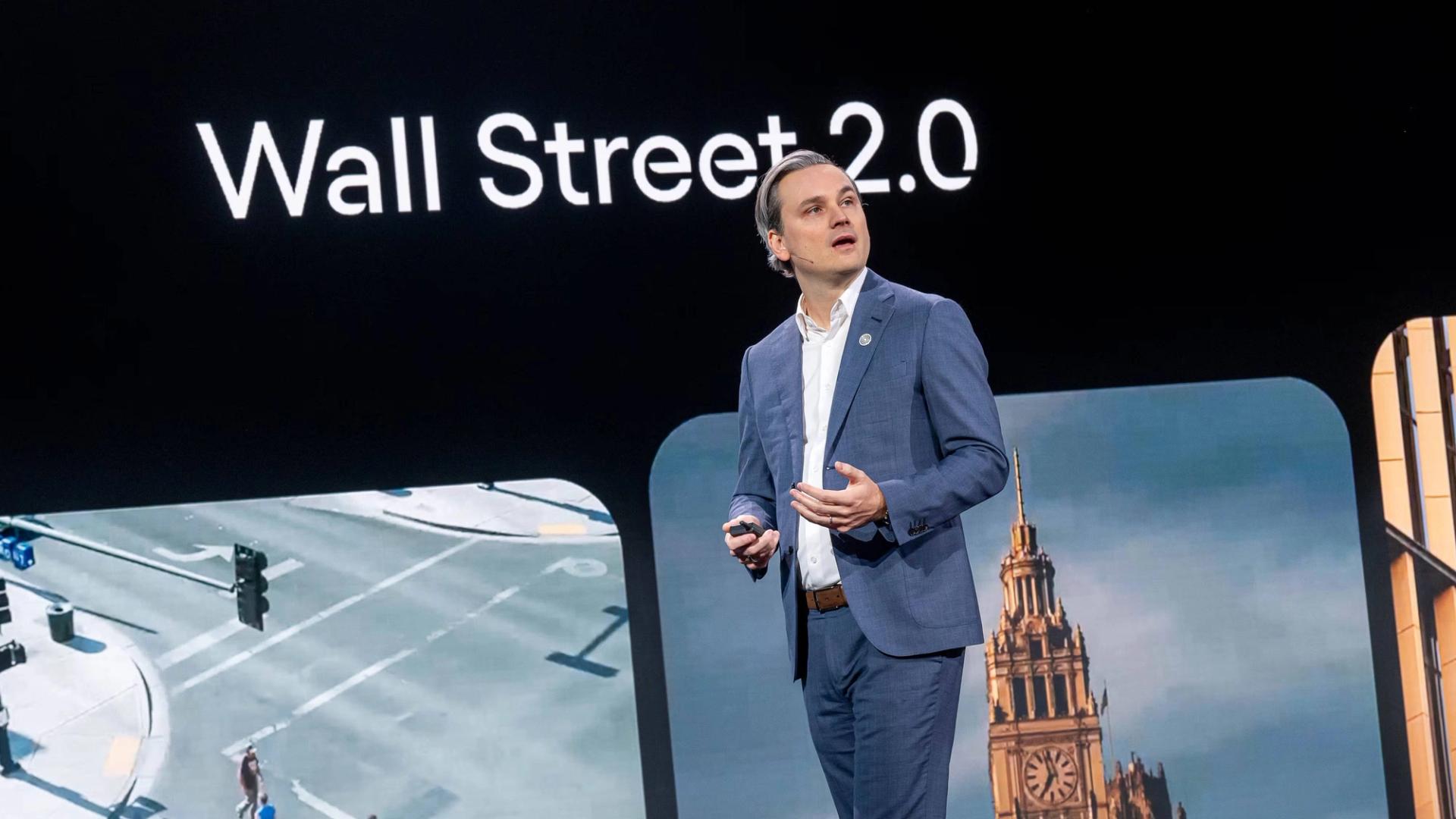
Tokenized asset specialist Ondo Finance has abandoned plans to build a conventional layer-1 blockchain, instead introducing a trading network it says is better suited for the next wave of onchain financial assets.
Dubbed Ondo Network, the system marks a shift from the company’s February 2025 vision for Ondo Chain, a blockchain for institutional finance and tokenized real-world assets. After building its new perpetual futures platform, Ondo Perps, the firm said it concluded that a traditional blockchain wasn’t the best tool for handling the speed and privacy institutional trading requires.
Ondo Perps is the first application using the network, with plans to offer tokenized assets as collateral for trading.
The pivot comes as tokenization gathers momentum across Wall Street. Tokenization — the process of representing traditional assets such as stocks, bonds and funds as blockchain-based tokens — is gaining traction as firms look to modernize capital markets with faster settlement and around-the-clock trading. At the same time, perpetual futures, once largely confined to crypto markets, are expanding to traditional assets such as stocks and commodities like oil and gold.
Beyond issuing tokenized assets
Ondo has emerged as one of the sector’s largest issuers, with about $2.6 billion in tokenized U.S. Treasury products across OUSG and USDY and roughly $850 million in tokenized equities, according to rwa.xyz. The firm’s broker-dealer obtained last week FINRA approval to launch regulated markets and services for tokenized securities.

Ethereum has paused after its recent recovery, with the price action compressing beneath a key resistance area while still holding above higher lows. The current structure suggests that the market is approaching an inflection point where the next breakout or breakdown could determine the short-term direction.
Ethereum Price Analysis: The Daily Chart
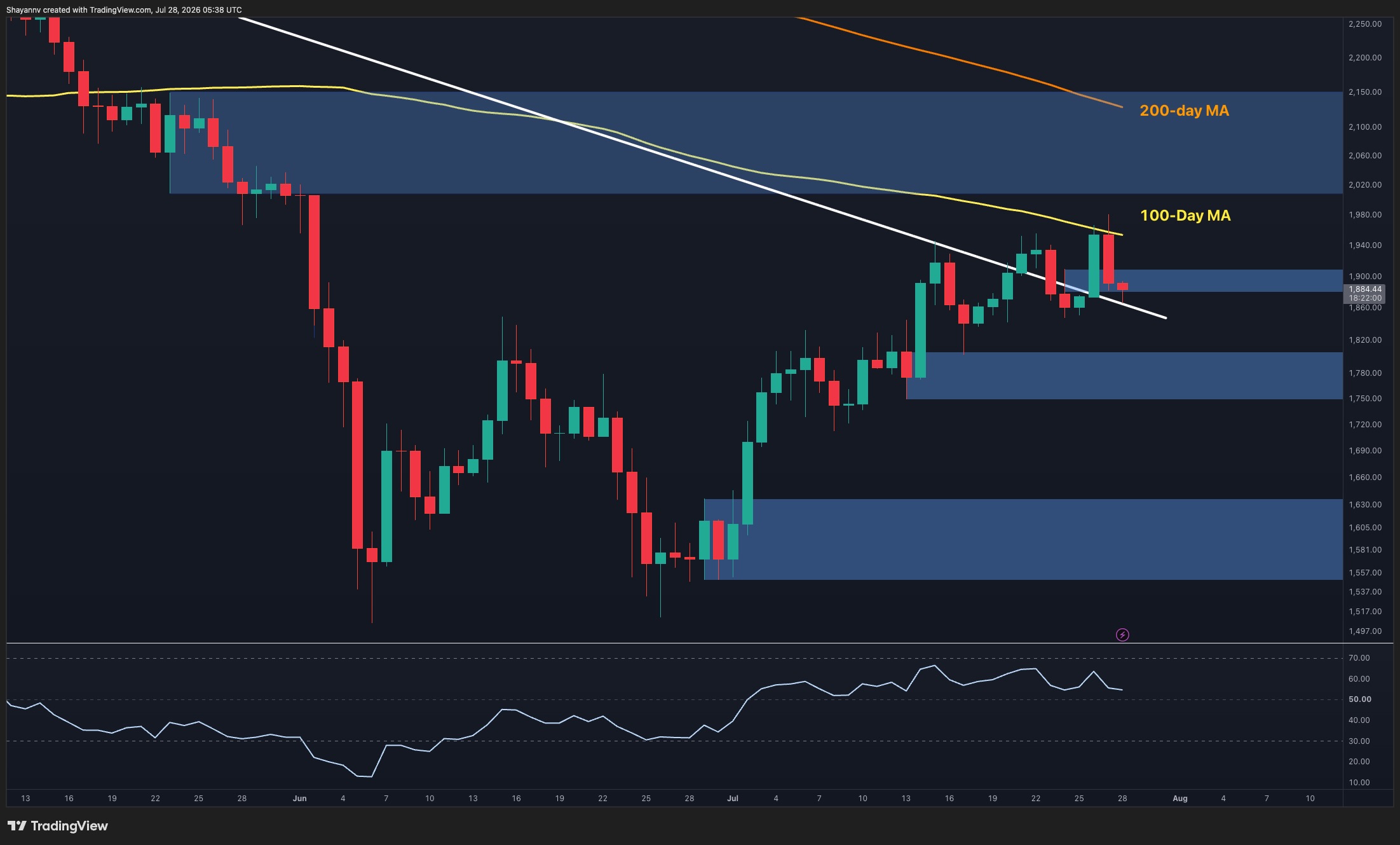
On the daily timeframe, ETH remains below the long-term resistance zone between $2K and $2.15K, where the 100-day moving average continues to reinforce selling pressure. Although buyers managed to recover strongly from the June lows, the latest rejection near the 100-day MA highlights that the broader bearish structure has not yet been invalidated.
The recent pullback has brought the asset back into the $1.88K to $1.91K support zone, which now serves as the first line of defense for buyers. Holding above this area could allow another attempt toward the $2K to $2.15K resistance region, while losing it would expose the next demand zone around $1.75K to $1.8K. A deeper correction could eventually extend toward the stronger support around $1.56K to $1.65K.
ETH/USDT 4-Hour Chart
The 4-hour chart shows Ethereum consolidating inside a narrowing range between the white ascending trendline, acting as dynamic support, and the yellow descending trendline overhead. This compression reflects increasing indecision as buyers and sellers battle near the $1.88K to $1.91K supply zone.
As long as the price remains confined between these two trendlines, short-term volatility may stay limited. However, a breakdown below the white ascending trendline would invalidate the series of higher lows and likely trigger a decline toward the $1.75K to $1.8K demand zone. If that support also fails, the next downside target would be the broader demand area around $1.56K to $1.65K.
Conversely, a decisive breakout above the yellow trendline and the nearby supply zone would improve the short-term outlook and increase the probability of another move toward the major daily resistance overhead.

Sentiment Analysis
The Spot Average Order Size metric shows that large spot orders from whale-sized participants have become increasingly active during Ethereum’s recent recovery. Given that ETH is still trading relatively close to its yearly lows, this behavior is more consistent with accumulation than aggressive distribution.
Historically, increased participation from large spot buyers near depressed price levels has often reflected long-term positioning rather than short-term speculation. While this does not guarantee an immediate trend reversal, it suggests that larger market participants are gradually accumulating exposure as Ethereum trades well below its previous cycle highs.

The post ETH Price Analysis: What Does the $2K Rejection Mean for Ethereum’s Future? appeared first on CryptoPotato.


Michael Saylor has warned that changes to Bitcoin’s consensus rules pose a greater long-term threat than rival cryptocurrencies, governments, or external competition.
Summary
- Saylor called internal rule changes Bitcoin’s “gravest threat” after the asset gained broad market recognition.
- He argued that consensus rules protect property rights, scarcity, settlement, and limits on power.
- Saylor said proposals such as BIP-110 could weaken block-space scarcity and miners’ fee revenue.
- Strategy recently joined eight companies pledging $15 million toward Bitcoin security research.
Saylor warns against capturing Bitcoin consensus
Strategy Executive Chairman Michael Saylor issued the warning in a series of X posts on Tuesday, describing Bitcoin’s consensus rules as its constitution. Those rules determine how ownership is recognized, how scarcity is maintained, how transactions settle, and what network participants can change.
“Bitcoin has won. Now it must survive victory,” Saylor wrote. “Its gravest threat is not an enemy at the gates, but corruption from within.”
He argued that changing the protocol to serve one group would infringe on the economic rights of miners, developers, investors, companies, custodians, and other users. Once one faction gains enough influence to rewrite the rules, he warned, competing groups may pursue changes through the same process.
That outcome could make protocol disputes permanent, according to Saylor. He said prolonged governance conflicts would drive away capital, slow development, weaken security, and leave Bitcoin with only a fraction of its potential.
Saylor expects Bitcoin could grow 100-fold and become part of the infrastructure supporting global capital markets. From that perspective, he argued that a poorly designed rule introduced today could restrict financial products, technologies, and economic activity that do not yet exist.
Why Saylor opposes BIP-110
Saylor’s latest comments extend his opposition to Bitcoin Improvement Proposal 110, a proposed temporary soft fork intended to reduce arbitrary data stored on the blockchain.
BIP-110 supporters argue that limiting some forms of data would ease storage and verification burdens for node operators. They also want Bitcoin to remain focused on monetary transactions rather than inscriptions, tokens, or file storage.
Saylor accepts that some on-chain data may have little value or could be linked to harmful activity. However, he argues that Bitcoin cannot reliably determine the purpose behind transaction data and should not use consensus rules to decide which valid, fee-paying transactions deserve block space.
“Bitcoin does not need guardians of purity,” Saylor wrote in his July 18 article. “It needs guardians of neutrality.”
His latest X thread widened that argument beyond BIP-110. Saylor also criticized proposals that add covenant functionality or increase block capacity, saying each approach creates different risks for Bitcoin’s base layer.
Bitcoin fee market and network security at stake
According to Saylor, restrictions on valid transactions could reduce competition for block space and weaken the fee market. Larger blocks, meanwhile, could dilute block-space scarcity while raising the bandwidth and hardware costs required to operate a node.
He also argued that covenants would make Bitcoin’s consensus rules more complex and introduce additional attack surfaces. These claims represent Saylor’s assessment of the proposals rather than an established consensus among Bitcoin developers.
Transaction fees will become increasingly important to miners as the block subsidy falls by half roughly every 210,000 blocks. Saylor warned that suppressing fee demand could reduce the income available to miners and weaken the financial incentives protecting the network.
His preferred approach is to keep the base layer simple, neutral, scarce, and secure. Developers can then build new functions through second-layer networks and applications, where adoption remains voluntary and failures have a more limited effect.
Strategy backs $15 million security effort
Saylor’s stance carries added relevance for US investors because Strategy has built its corporate model around holding Bitcoin and promoting enterprise adoption. He recently argued that companies are necessary for Bitcoin to develop into a global monetary network, placing corporate participation at the center of its next stage.
Strategy also joined Anchorage Digital, ARK Invest, BlackRock, Block, Blockstream, Coinbase, Fidelity Digital Assets, and Galaxy in forming the Bitcoin Security Consortium.
The nine firms pledged a combined $15 million over three years to support developers and researchers working on Bitcoin security, including preparations for potential quantum-computing threats. Members will direct their funding independently, while the consortium says it will neither control Bitcoin development nor take positions on individual protocol changes.
Saylor said upgrades should remain rare, conservative, and driven by necessity. His latest intervention places protocol restraint alongside corporate adoption and security funding as central parts of his long-term Bitcoin strategy.
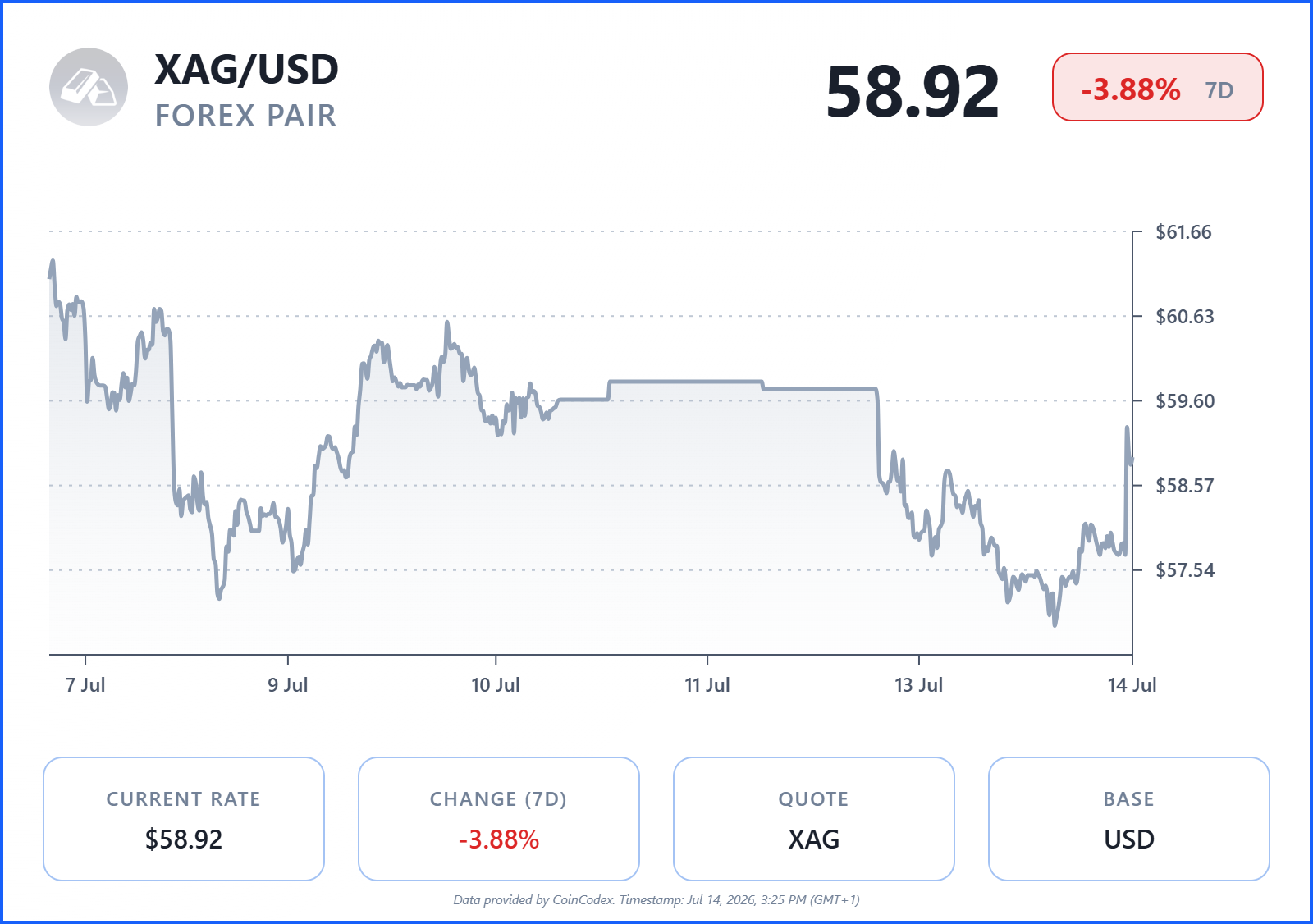
Silver prices have regained strong upward momentum, climbing toward multi-year highs as investors return to safe-haven assets amid renewed geopolitical tensions. The precious metal recently surged more than 3% to around $58.92 per ounce, reversing an earlier pullback and moving back within striking distance of the key $60 psychological level.
The latest rally has been fueled by escalating tensions between the United States and Iran, while investors are also preparing for fresh US inflation data and comments from Federal Reserve officials. Together, these developments could determine whether silver extends its rally or pauses after one of its strongest advances in recent weeks.

Geopolitical Tensions Lift Silver Back Toward Multi-Year Highs
Silver rallied sharply after reports of renewed instability surrounding the US-Iran conflict increased demand for defensive assets. Spot prices climbed above $59 after briefly falling to around $58 earlier in the week, highlighting how quickly sentiment shifted back in favor of precious metals.
The rebound places silver comfortably above the important $58 to $56 support zone, an area that has become increasingly significant from a technical standpoint. Holding above this range suggests buyers remain active despite heightened volatility across financial markets.
Concerns surrounding the Strait of Hormuz and rising oil prices have also supported precious metals. As geopolitical uncertainty increases, investors often seek assets that can preserve value during periods of market stress, and silver has benefited alongside gold.
Although industrial demand continues to play an important role in silver’s long-term outlook, the latest gains have largely been driven by safe-haven buying. If geopolitical tensions continue to escalate, the metal could make another attempt to break above the recent highs near $61.
CoinCodex Silver Price Prediction
According to the latest CoinCodex Silver price prediction, the precious metal could transition from its current period of strength into a prolonged correction throughout late 2026 and 2027.
The forecast remains relatively constructive in July 2026, with prices projected to fluctuate between $45.84 and $57.67 and average levels near $51.75. While that would represent only a modest decline from current prices, the model suggests downside pressure gradually builds as the year progresses.

Momentum is expected to weaken considerably during the second half of 2026. Average prices are projected to fall into the mid-$40 range in August before declining toward roughly $35 in September. October and November continue that trend, with forecasts pointing to average prices around $32 as bearish momentum strengthens.
The outlook becomes even more cautious during 2027. CoinCodex projects average prices falling below $26 in January before slipping toward the low-$20 range during the spring months. By June and July 2027, the model forecasts average prices between approximately $15 and $17, making it the weakest period of the entire projection.
The post Silver Price Prediction: Can Safe-Haven Demand Push Silver Above $60? appeared first on BeInCrypto.


Cointelegraph is committed to providing independent, high-quality journalism across the crypto, blockchain, AI, and fintech industries.
All news, reviews, and analyses are produced with full journalistic independence and integrity. For more details on our standards and processes, please read our Editorial Policy.

Changpeng Zhao (CZ Binance) publicly backed a crypto license passporting system across ASEAN at the ASEAN Tech Summit Manila 2026 on July 28, arguing that firms already licensed in one member state should face only a streamlined approval process, not a full re-application, to operate across the rest of the bloc.
The proposal, if adopted, would materially reduce compliance overhead for crypto and stablecoin service providers targeting Southeast Asia’s fragmented regulatory landscape.
Speaking during the “One ASEAN, One Digital Economy” fireside chat alongside FinTech Alliance PH founding chair Lito Villanueva, CZ endorsed Villanueva’s idea of license portability across the region.
Regulators would retain the right to review applicants entering their jurisdiction, but the threshold would be fundamentally lower than starting from scratch in every market.
See you all tmr, in Manila
https://t.co/KOkXZmVoea
— CZ
BNB (@cz_binance) July 26, 2026
“I think that’s mostly a political problem,” Zhao said of cross-border regulatory coordination, adding that the underlying technology posed no meaningful obstacle.
He argued that allowing more licensed platforms to compete regionally would improve services and reduce costs for consumers, a straightforward pro-competition case that sidesteps the harder question of how to get nine politically distinct regulators to agree on mutual recognition standards.
Bitcoin News: Why Regulatory Fragmentation Is a Real Cost for ASEAN Crypto Firms
The problem Zhao is identifying is structural. Southeast Asia currently has no bloc-wide passport for crypto companies – each ASEAN member state runs its own digital asset licensing regime, with separate AML requirements, conduct rules, and capital standards.
A firm seeking a genuine regional presence must run parallel licensing processes across multiple jurisdictions simultaneously, which scales compliance costs in a way that disadvantages smaller, well-regulated operators relative to larger incumbents.
The regulatory framework Zhao described mirrors the EU’s MiCA model directly. Under the Markets in Crypto-Assets Regulation, a crypto-asset service provider authorized in one EU member state can passport its services across all 27 member states by notifying its home regulator of the countries and services involved, no fresh application required.

CZ referenced the MiCA architecture as the functional template for what ASEAN could build, and the comparison is structurally apt even if the political dynamics differ substantially between a treaty-based union and a looser regional grouping.
The ESMA implementation timeline for the Markets in Crypto-Assets Regulation (MiCA).
The argument around Crypto regulation fragmentation being primarily political rather than technical carries weight here. Brad Garlinghouse has made a parallel case in the US context, framing regulatory incoherence as the primary drag on institutional crypto adoption, a problem of legislative will, not technical incapacity.
Discover: The Best Crypto to Diversify Your Portfolio
ASEAN Already Has Passporting Precedents in Adjacent Markets
The idea is not without regional precedent. The ASEAN Capital Markets Forum’s Collective Investment Schemes Framework, operationalized in Malaysia, Singapore, and Thailand in 2014, with the Philippines joining in 2021, allows a fund authorized in its home jurisdiction to be offered in participating host markets through a streamlined authorization process rather than full reregistration.
The ACMF Pass extends a similar fast-track model to investment advisers across participating jurisdictions.

These frameworks are narrower than those proposed by Zhao and Villanueva and remain subject to host-market requirements, but they establish that ASEAN regulators have already accepted the logic of mutual recognition in principle. Crypto-specific passporting would require agreement on supervision standards and consumer protection floors that don’t yet exist at the bloc level, but the institutional machinery for building them does.
For traders watching Binance’s regulatory trajectory, the Manila remarks fit a broader pattern of the exchange positioning itself in Asia as its primary licensing growth market. Ripple’s multi-jurisdictional expansion strategy illustrates the same operational reality CZ is addressing: operating at scale across Southeast Asia requires either accepting full licensing overhead in every market or pushing regulators toward a lighter mutual-recognition model.
Trade Ripple XRP on Bybit and Get a Chance to Win Our $1,000 USDT Airdrop
The post Inside CZ Binance Plan to Turn ASEAN Into Crypto Federation appeared first on Cryptonews.


JPMorgan Chase, Bank of America, Citigroup and Wells Fargo are developing a shared tokenized deposit network that could bring round-the-clock blockchain payments to the regulated US banking system.
Summary
- Four major US banks are jointly developing an interbank tokenized deposit network.
- The Clearing House is targeting a launch in the first half of 2027.
- Multinational companies will initially receive access to programmable treasury and cross-border payment tools.
- Banking groups are separately seeking tighter stablecoin reward rules under the CLARITY Act.
Four US banks move tokenized deposits onto one network
The Clearing House, a payments company jointly owned by major commercial banks, will operate the planned network. It aims to let participating institutions clear and settle tokenized deposits at any time while connecting blockchain-based activity with existing payment rails.
Tokenized deposits represent claims against money held at a commercial bank. Unlike stablecoins, the underlying funds remain within the regulated banking system and receive the same legal treatment as conventional deposits.
The network will initially serve multinational corporations. Its proposed uses include programmable treasury operations, real-time liquidity management, automated payments and cross-border transfers.
“This is a big move for the banks,” The Clearing House CEO David Watson said while discussing the project.
The initiative has support from more than a dozen other institutions, including BNY, HSBC, PNC, Santander, TD Bank, Truist and U.S. Bank. A blockchain provider has not yet been selected, according to earlier reporting.
Shared deposit tokens create a bank-led stablecoin rival
JPMorgan and Citigroup already operate separate blockchain payment services, but the new project would allow tokenized money to move between different banks.
JPMorgan’s Kinexys platform processes more than $7 billion in average daily volume and has handled over $40 trillion since its launch. Citi Token Services operates in the United States, United Kingdom, Singapore and Hong Kong, where it has transferred billions of dollars through Citigroup’s network.
A shared system could remove the limits of these closed networks. JPMorgan Payments co-head Max Neukirchen said a regulated market-infrastructure solution for clearing and settling tokenized deposits was needed to scale institutional on-chain payments.
Stablecoins already provide 24-hour transfers, programmable settlement and access across blockchain networks. About $263 billion in stablecoins are in circulation, giving crypto-native payment providers an established market that banks must now address.
Deposit tokens would offer similar settlement functions while keeping customers’ money on bank balance sheets. However, the banks must agree on common technical and operating standards despite competing for many of the same corporate clients.
CLARITY Act dispute raises the stakes for US banks
The network is taking shape as US banking groups pressure the Senate to tighten stablecoin provisions in the CLARITY Act.
The American Bankers Association, Independent Community Bankers of America and 76 state banking associations have asked lawmakers to prevent crypto platforms from offering incentives that function like interest on deposits.
Current language would prohibit interest-like returns on stablecoins held passively but permit rewards tied to payments and other qualifying activity. Banking groups argue that crypto companies could use these incentives to draw money away from banks, reducing the deposits available for consumer and business lending.
Goldman Sachs has split from the wider banking lobby over whether that disagreement should delay the bill. CEO David Solomon supports advancing the CLARITY Act despite calling it imperfect, arguing that establishing a federal market structure would provide greater certainty for digital asset development.
His position contrasts with JPMorgan CEO Jamie Dimon and other banking executives who have warned that the reward provisions could place regulated banks at a competitive disadvantage. Goldman’s support for advancing the bill does not necessarily mean it endorses every stablecoin provision.
Tokenized deposit network targets first-half 2027 launch
The Clearing House plans to make the system available to US financial institutions beyond its initial participants, potentially allowing smaller banks to access shared blockchain payment infrastructure.
Development will now depend on selecting the underlying technology, agreeing on operating standards and connecting the network with existing bank systems. The target remains the first half of 2027, although the participating institutions have not announced a specific launch date.
Multinational companies will provide the first test of whether regulated deposit tokens can match the speed and programmability of stablecoins without moving funds outside the banking sector.
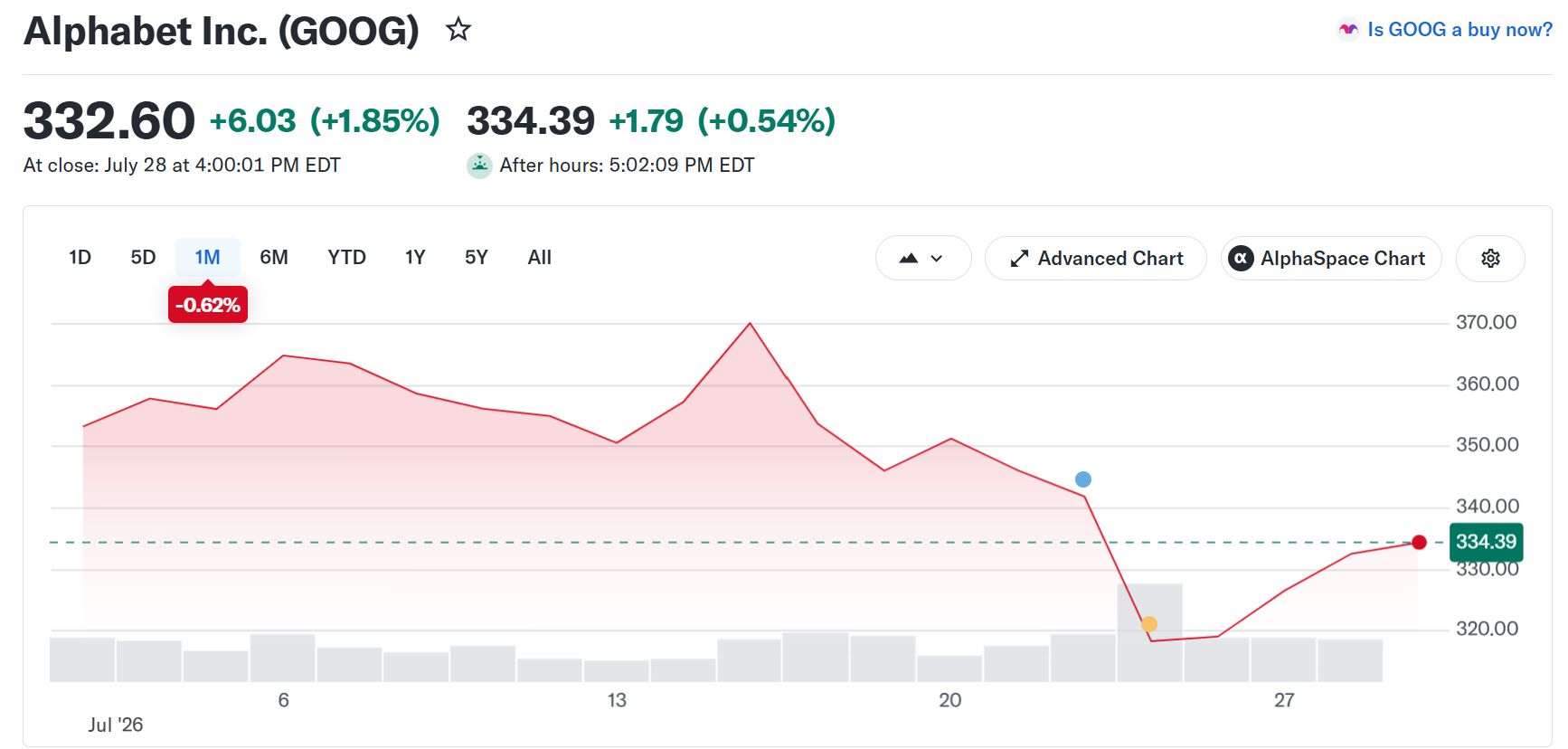
Google is no longer racing OpenAI and Anthropic to the same finish line. Its rivals want AI that improves itself. Google wants AI that understands the real world.
The split is easy to miss, because Google still ships models and still makes money. But its newest release landed 10th on one independent ranking.
What Google Has and Has Not Said About the AI Race
Google released Gemini 3.6 Flash on July 21. The pitch was speed and cost, not raw power.
Follow us on X to get the latest news as it happens
The model produces 17% fewer tokens than the version before it, Google’s blog said. Tokens are the small chunks of text an AI writes. Fewer tokens means a cheaper answer.
Power is another matter. One published reading of the Artificial Analysis index placed the model 10th. Every other major lab ranked above it.
Google is not standing still. It has begun its biggest training run yet, for Gemini 4. A larger model, Gemini 3.5 Pro, is still in testing with partners.
Sundar Pichai has pointed to a different prize. He has tied the roadmap to personalized agents rather than leaderboard wins.
Investors are less relaxed. Alphabet shares fell 6% in June after two senior researchers left for rivals.

Inside DeepMind’s Bet on World Models
A world model is AI that learns how physical things behave. Gravity, motion, cause and effect. It predicts what happens next in a room, not the next word in a sentence.
DeepMind’s own website shows the bet. It files Genie 3 and Gemini Robotics under a heading for world models and embodied AI, meaning software that controls machines.
In May the lab extended Project Genie to Street View. It also released SIMA 2, an agent that learns by playing inside virtual 3D worlds.
OpenAI and Anthropic are aiming somewhere else entirely. They want recursive self-improvement, shortened to RSI.
In plain terms, that is AI clever enough to build the next, better AI. Then that one builds the one after it.
Writer Alberto Romero argued on Tuesday that Google left this race on purpose.
“Hassabis is betting on something else: world models. Models that can understand and simulate the real world, not just predict the next token,” Alberto Romero wrote in a recent analysis.
Google has said no such thing. Demis Hassabis, who runs Google DeepMind, has never ruled out RSI in public.
Why a Rival Co-Founder Says DeepMind Is the Outlier
The sharpest outside read came from a rival, months earlier.
Jack Clark co-founded Anthropic. On May 4 he published an essay on where AI is heading.
He gave a 60% chance that AI can run its own research by the end of 2028. He put 2027 at 30%.
Clark then asked which labs are chasing that goal. DeepMind, he wrote, “appears to be the most circumspect of the big three.” Circumspect means cautious.
His evidence came from DeepMind itself. He cited its 2025 paper on AI safety, co-written by co-founder Shane Legg.
Anthropic is far bolder. It reported in a recursive self-improvement study that Claude wrote more than 80% of the code it ships by May 2026.
Before February 2025, that share was near zero.
The firm has documented AI building better AI. On one speed test, its models delivered a 52-fold gain in April, against 2.9-fold a year earlier.
A skilled engineer needs four to eight hours to manage a fourfold gain on the same task.
Why Google Might Not Have Quit the AI Race at All
Two facts cut against the whole idea:
- Google leads the test that comes closest to measuring AI research skill.
MLE-Bench asks a model to build machine-learning systems on its own. A Gemini 3 model scored 64.4% in February. That was the best result at the time. Google put 3.6 Flash at 63.9% in July.
Labs that quit a field rarely top its scoreboard.
- Google is nowhere near absent from the market.
Pichai told investors the Gemini app has 950 million monthly users. Google did skip NVIDIA’s open AI alliance this month. So did OpenAI and Anthropic.
Can Google Afford to Wait?
The case for patience is simple. Search ads pay for everything else, so DeepMind can take its time.
Alphabet’s own filing shows that cushion getting thinner.
Revenue reached $119.8 billion in the June quarter, up 24%, according to results filed July 22. Search alone brought in $63.3 billion.
Then comes the spending. Alphabet poured $44.9 billion into data centers and equipment in three months. That is roughly double a year earlier.
The result was negative free cash flow of $5.86 billion. Free cash flow is what is left after the building bills are paid.
That figure was positive $10.1 billion in March. In December it was positive $24.6 billion.
Alphabet covered the gap by selling $49.6 billion of new shares in June. It borrowed another $20.3 billion.
Long-term debt doubled in six months, from $46.5 billion to $98.2 billion.
A line in the accounts covering shared AI research lost $5.79 billion, up from $3.37 billion. Patience now carries a price tag.
What to Watch Over the Next 30 Days
- Whether Gemini 3.5 Pro ships, and how it ranks
- Whether DeepMind shows world-model results tied to Gemini 4
- Whether Alphabet cash flow turns positive again in September
- Whether Hassabis answers the self-improvement question directly
Gemini 4 is the real test. If world models work where coding agents stall, the slow pace will look smart rather than scared.
The next earnings report will show how long Alphabet can keep paying to find out.
The post Why Google May Have Quietly Left the AI Race to OpenAI and Anthropic appeared first on BeInCrypto.

Crypto figures are warning that government control over what AI systems can know or discuss could create a dangerous precedent, after Erik Voorhees argued on X on July 28 that states should not decide what forms of intelligence are “safe.”
The post landed in the middle of a fresh debate over how much oversight AI companies should accept, a debate that picked back up after Anthropic laid out its own position on open-weights models.
Erik Voorhees Warns Against State Control of AI Knowledge
Voorhees, a longtime Bitcoin advocate and founder of the ShapeShift crypto exchange, posted his comment after Anthropic published a statement from CEO Dario Amodei pushing back on claims that the AI giant was advocating for the banning of Chinese open-weight models.
Amodei insisted that his company has “never advocated a ban on open-weight models” and argued that such systems can provide value for developers, businesses, and researchers when they do not have dangerous capabilities.
According to the executive, Anthropic’s main concerns involved authoritarian governments developing advanced AI for military or surveillance uses, along with the possibility of misuse in cyberattacks or biological threats. The company said it supports restrictions on access to advanced chips and action against industrial-scale distillation, as well as safety testing for highly capable AI systems.
The Information recently reported that the Trump administration was finalizing a framework for AI companies to voluntarily submit their most advanced models to the government for testing.
But Voorhees was not having it, saying that allowing governments to define acceptable AI knowledge could expand beyond its original purpose. In his post, he walked through a hypothetical progression starting from a seemingly reasonable rule against discussing bioweapons, then dangerous weapons generally, then anything contrary to public health and public safety, then anything that undermines financial solvency, and ending with the banning of unapproved encryption and a requirement that AI not obstruct government orders.
“Civilization must not permit the state to determine what manner of intelligence is ‘safe,’” he wrote, adding that only the United States has the cultural character to resist that outcome over time, and if it fails, then “nowhere will it be preserved.”
Ripple CTO Emeritus David Schwartz replied to Voorhees’ post with “Yes, this. Exactly this,” showing support for the argument. XRP community member Bird also responded, asking, “The moment someone gets to decide what knowledge is ‘safe,’ where does it stop?”
AI Safety Debate Expands Beyond Open Models
The same tension over who gets to police AI showed up earlier this month when Google DeepMind CEO Demis Hassabis proposed a federally backed body to test and certify frontier models before release, an idea that OpenAI’s Sam Altman called “thoughtful” and Microsoft’s Satya Nadella welcomed as a way to keep any model from doing serious harm.
However, Coinbase CEO Brian Armstrong rejected the idea, arguing that a new body would just add another approval process on top of existing regulators. “Why design regulation around a hypothetical problem,” he said, pointing to fraud, tort, and consumer protection laws that already exist as being enough cover for any harm that might be caused by a model.
The post Crypto Pioneers Sound Alarm Over Government Control of AI Knowledge appeared first on CryptoPotato.
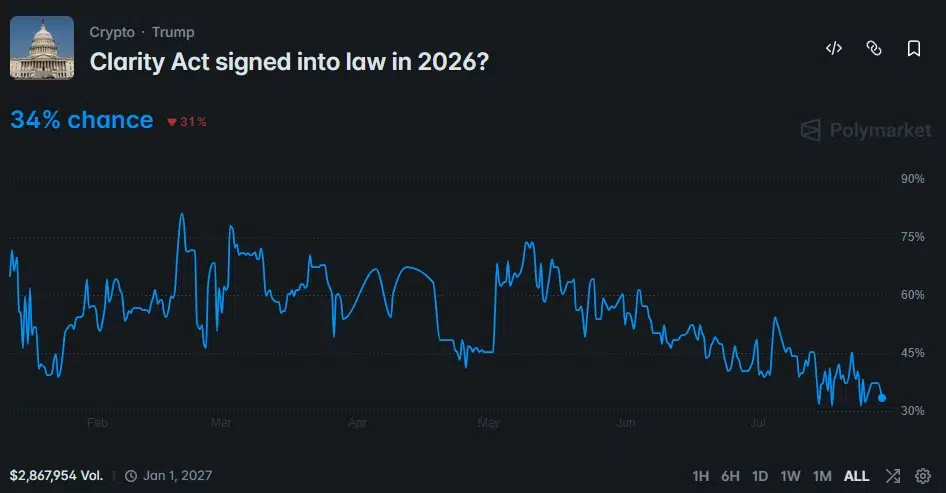
Prediction markets are lowering the chances of the CLARITY Act becoming law in 2026 as the Senate turns to Russia sanctions and federal nominations before its August recess.
Summary
- Polymarket traders place the bill’s 2026 passage odds at about 34%, down from 53% on July 21.
- Galaxy Digital’s Alex Thorn estimates a 30% chance of passage, citing vote math and limited floor time.
- Republicans may need support from at least 10 Democrats if three GOP senators remain unavailable or opposed.
- Bitcoin traded near $63,800 as regulatory uncertainty added to broader pressure across crypto markets.
CLARITY Act loses its place on the Senate schedule
Senate Majority Leader John Thune has not scheduled immediate action on the CLARITY Act, narrowing the path for the crypto market structure bill before lawmakers leave Washington.
The Senate is instead moving forward with federal nominations and legislation imposing sanctions on Russia and Iran. Preliminary action on the crypto bill remains possible during the week of Aug. 3, but the chamber is scheduled to begin its summer recess after Aug. 7.
According to Galaxy Digital head of research Alex Thorn, the timetable has become the main threat to passage.
“The calendar is no longer merely an obstacle. It is now the enemy.”
Thorn estimated that lawmakers needed to begin the floor process by July 30 to leave enough time for procedural votes and debate. The Senate’s decision to prioritize other legislation makes that timeline increasingly difficult.
A vote after the recess is still possible. However, senators would return closer to the November midterm elections, when campaigning could displace complicated legislation requiring bipartisan negotiations.
Senate vote math leaves little room for defections
Most legislation needs 60 votes to overcome the Senate filibuster, while Republicans control 53 seats.
Thorn argues that the bill’s effective Republican support may be closer to 50. Senators Josh Hawley and Rand Paul have not committed to voting for the measure, while Mitch McConnell’s hospitalization could prevent him from participating.
Under that scenario, Republicans would need 10 Democratic votes to advance the bill.
The Senate Banking Committee approved its version of the CLARITY Act in May by a 15-9 vote, with two Democrats joining Republicans. Both Democratic supporters warned that their committee votes did not guarantee backing on the floor without further changes, particularly to ethics provisions governing public officials’ crypto interests.
President Donald Trump later accepted the inclusion of ethics restrictions, helping Polymarket odds reach 53% on July 21. Those gains have since reversed, with the market showing roughly 34% odds at the time of publication.
Kalshi showed traders assigning a 42% probability to crypto market structure legislation becoming law before the end of 2026.
Trump ties deepen the partisan divide
SkyBridge Capital founder Anthony Scaramucci said Democratic opposition may persist because Trump has made the bill part of his political agenda.
“They will do everything they can to block it because he wants it,” Scaramucci said.
Cardano founder Charles Hoskinson has made a similar argument, warning that the “Trump narrative” has turned crypto regulation into a partisan dispute.
Democrats have raised concerns about the adequacy of the proposed ethics rules, citing Trump’s family-linked crypto activities. They have also sought stronger consumer protections, enforcement powers and restrictions covering officials’ indirect financial interests.
Republicans have made several concessions to attract Democratic votes, but the revised language has not produced enough public commitments to clear the 60-vote threshold. The bill would also return to the House if the Senate approves a materially different version, adding another step before it could reach Trump’s desk.
Bitcoin slips as US regulatory uncertainty continues
Bitcoin traded near $63,800 at the time of publication, down about 1.6% over the previous session after moving between roughly $62,772 and $64,953.
The decline coincided with the Senate delay, though the timing alone does not establish that the CLARITY Act caused the broader market pullback. Macro conditions, derivatives positioning and weaker demand can also affect daily price movements.
US spot Bitcoin ETFs recorded $11.64 million in net outflows on July 27, led by an $8.82 million withdrawal from BlackRock’s IBIT. Ether funds attracted $9.23 million, while XRP ETFs added about $592,000.
For US investors, another delay would preserve the existing mix of SEC and CFTC oversight, court decisions and state-level rules instead of creating a single federal market structure. The bill is not dead, but failure to begin the Senate process before the August recess would leave its 2026 prospects dependent on a narrower post-election legislative window.
Crypto critic Ben McKenzie has urged Congress to block the CLARITY Act due to President Trump’s financial ties to the digital asset industry.
McKenzie joined Senate Democrats like Richard Blumenthal and Chris Van Hollen at a Capitol Hill anti-corruption forum on Monday to lobby against the bill.
Trump Crypto Concerns
The actor argued that lawmakers could not oppose “Trump’s crypto corruption” while supporting the CLARITY Act, saying the legislation would only allow it to continue. He urged Democrats to reject the bill, warning that only a handful of votes could be enough for it to go through.
His comments come as Democrats continue to push for stronger ethics rules, consumer protections and national security safeguards in the bill. While Republicans added language banning the president and other public officials from issuing or sponsoring cryptocurrencies, Blumenthal believes the updated version still leaves loopholes that could allow Trump to profit from his crypto ventures.
“Donald Trump made $2 billion last year, and $1.4 billion of his income last year consists of cryptocurrency profits that exploit weaknesses in the current law,” he said.
He explained that the current CLARITY Act does not require Trump to divest his crypto holdings and that its ethics provisions would expire in 2029, leaving enforcement to the Department of Justice, which, according to him, would not be enough.
As for what they are doing to stop this, the Democrats said they plan on using their bargaining power to push for changes to the legislation before it comes up for a vote. This is especially important because the Senate will need at least 60 votes to advance the legislation.
New York AG Warns Legislation Could Weaken Oversight
On the same day, New York Attorney General Letitia James warned that the CLARITY Act could weaken state enforcement against crypto fraud, saying stronger regulations are needed to protect investors.
The proposal, she said, would limit the state’s ability to hold digital asset platforms accountable even as crypto scams continue to cost Americans billions of dollars a year.
James finished by saying that strict rules are needed to maintain trust in the financial markets, and warned that without sufficient laws and oversight, there would be financial crises. She therefore urged Congress to strengthen investor protections and safeguard the economy and national security.
Meanwhile, Senate Majority Leader John Thune has put the CLARITY Act on hold for now as the Senate focuses on confirming government nominees and debating a Russia sanctions bill. This now pushes the crypto bill off the pre-recess agenda, with September now the earliest it is expected to return for consideration.
The post ‘OC’ Actor Ben McKenzie Urges Congress to Block CLARITY Act Over Trump Ties appeared first on CryptoPotato.

TDAQ: The New Kid On The Nasdaq Block
ETH Price Analysis: What Does the $2K Rejection Mean for Ethereum’s Future?

Signalis and Dying Light 2 Dominate PlayStation Plus’s Free August Games


-

 Fashion4 days ago
Weekend Open Thread: Brooks Brothers
-
 Business7 days ago
New Jersey voter registration controversy explained: How 6,600 noncitizens got on the rolls, and what happens next
-

 Tech2 days ago
Intel is reversing course and bringing hyper-threading back to its server chips
-
 Sports2 days ago
Commonwealth Games boxing: Jadumani Singh seals dominant 5-0 win over Pakistan’s Sumama Rehman to enter quarter-finals | Commonwealth Games News
-

 Crypto World6 days ago
Ethics, other provisions in crypto Clarity Act to be further discussed
-

 Politics1 day ago
Luke Littler dismantles Gerwyn Price to retain title in Blackpool
-

 Sports5 days ago
2026 3M Open leaderboard: Scottie Scheffler finds putter in Round 1, sits three back
-

 Fashion5 days ago
16 Dresses for the High Summer Event
-

 Politics13 hours ago
The Part of the Electric Transition Nobody Wants to Discuss
-

 News Videos2 days ago
BITCOIN JUST ENTERED THIS CRITICAL ZONE…
-

 News Videos5 days ago
The Peugeot Family: How 200 Years of an “Old Money” Dynasty Died in A Boardroom
-

 Politics2 days ago
Spain sweeps the board at 2026 World Cup with individual awards
-
 Entertainment4 days ago
A New Post-Apocalyptic Gundam Anime Series Blasts Into SDCC
-

 Crypto World3 days ago
Ripple bought a bank in pieces. The $4 billion audit
-

 Crypto World3 days ago
XRP Ledger adds $2.6B as RWA inflows rank second
-

 Crypto World5 days ago
Uniswap (UNI) pushes deeper into tokenized RWAs with permissioned trading pools
-

 Tech4 days ago
Anthropic launches Claude Opus 5, a cheaper AI model for coding, agents and enterprise workflows
-

 Entertainment3 days ago
Sara Gilson Killed By Husband After Viral “Pedophile” TikTok Video
-
 Entertainment3 hours ago
‘Stargate’ Creator’s New Sci-Fi Series Returns for Season 3 Tomorrow
-

 Crypto World7 days ago
Sablier Labs Enters Maintenance Mode, Halts Development
You must be logged in to post a comment Login