
Crypto World
Ondo Expands Perps Collateral as Tokenized Stocks Gain a Second Use


A tokenized stock can now remain part of a trader’s market exposure while funding a leveraged position. Selling it for USDC first is no longer required.
Ondo Perps has added tokenized Circle (CRCLon), SpaceX (SPCXon) and SanDisk (SNDKon) as eligible collateral. Traders can retain exposure to those assets while using them to support perpetual futures trades.
The addition arrives during a strong year for onchain equities. Tokenized stocks reached roughly $1.8 billion in market capitalization in August and accounted for about 15% of the tracked real-world asset market, three times their share at the start of 2026.
Ondo held the largest slice at roughly $957 million on August 17.
Collateral Changes Things
Spot tokenization gives investors blockchain-based exposure to equities. Collateral lets the same capital support another trade while the investor retains market exposure.
Ondo designed Perps so that traders can use tokenized securities alongside stablecoins as multi-asset collateral, including an equity token linked to one company to support a perpetual contract linked to another. The company also pitches the combination of spot assets and perps as an early form of onchain prime brokerage.
The immediate use case is hedging. A trader holding a tokenized equity can open an offsetting perpetual trade on the same venue. Basis strategies add another use, where investors can hold the spot token, short its perpetual future and collect funding when rates are positive.
Of course, collateral quality is important. Perpetual markets depend on reliable pricing and enough liquidity to manage liquidations during volatile periods. Equities also bring dividends, stock splits and other corporate actions into the risk model.
Ondo says its tokenized stocks and ETFs are backed by corresponding securities and cash in transit, with underlying holdings kept at US-registered broker-dealers or US-chartered national trust companies. An independent verification agent reviews the backing each business day.
Tokenized Equities are Already Entering Credit Markets
In February, Ondo brought SPYon and QQQon into Morpho lending markets, allowing the tokenized S&P 500 and Nasdaq-100 ETF products to serve as collateral for borrowing. Gauntlet provides risk management for the markets.
Chainlink data feeds for Ondo assets including SPYon, QQQon and TSLAon also went live earlier this year, supporting collateral valuation across DeFi applications.
Euler was among the first integrations, allowing users to borrow stablecoins against eligible tokenized stocks and ETFs.
So, a tokenized security can begin as market exposure to a stock, then become lending collateral and support derivatives trading. Each additional use gives holders more ways to deploy the same asset across onchain finance.
A $2.8 Billion Market Finds More Uses
Ondo Stocks now offers more than 440 tokenized stocks and ETFs across Ethereum, BNB Chain and Solana. The platform has also passed $1 billion in TVL, according to Ondo and comments from managing director John Hoffman.
Usage is certainly becoming more sophisticated. The tokenized equity market now spans spot trading, credit and leveraged derivatives, giving issuers a larger arena in which to compete.
The addition of Circle, SpaceX and SanDisk means each asset can serve as market exposure and trading collateral inside the same system.
Collateral gives tokenized assets financial utility after issuance, turning equities into components of onchain portfolio management.
The post Ondo Expands Perps Collateral as Tokenized Stocks Gain a Second Use appeared first on BeInCrypto.



RockawayX has begun seeking $150 million for a new fund focused on undervalued tokens and crypto-related stocks after acquiring Relayer Capital.
Summary
- RockawayX is seeking $150 million for a new liquid opportunities fund.
- Relayer Capital founder Austin Barack will reportedly manage the investment vehicle.
- Relayer returned about 70% in 2026, according to sources cited by Forbes.
- RockawayX says it oversees about $2 billion across several investment and infrastructure divisions.
RockawayX targets undervalued tokens and crypto stocks
On Aug. 25, Forbes reported that RockawayX is seeking $150 million for a new liquid opportunities fund following its acquisition of crypto hedge fund Relayer Capital.
Citing people familiar with the matter, the report said the fund will invest in “undervalued tokens and crypto-related equities.” The planned strategy would give RockawayX exposure to assets that can be traded more easily than private investments held through its existing venture funds.
RockawayX has not publicly announced the acquisition or disclosed the transaction’s financial terms. The company also has not confirmed the fundraising timetable, minimum investment, fee structure, or jurisdictions in which the new fund will be offered.
Relayer founder Austin Barack will remain with RockawayX and manage the vehicle, according to Forbes. Before starting Relayer in 2024, Barack worked as a partner at CoinFund, where his responsibilities included venture and liquid investments.
Relayer describes itself as a thesis-driven cryptoasset investment fund supporting blockchain infrastructure, protocols, and applications. Its public company profile lists Barack as its founder and managing partner and identifies him as the firm’s only employee.
Relayer’s reported 70% return supported the acquisition
Relayer returned approximately 70% during 2026, according to the unnamed sources cited in the report. Positions in Hyperliquid and the decentralized artificial intelligence platform Venice AI reportedly contributed to its performance.
Forbes said Hyperliquid’s HYPE token had gained 219% during the year, while Venice AI’s VVV token had risen 1,006%. At the time of the report, HYPE had a market value of approximately $18 billion, and VVV was valued at more than $800 million.
Neither RockawayX nor Relayer has released audited results confirming the reported 70% return. Details such as the fund’s starting asset value, position sizes, and whether the performance figure accounts for fees also remain undisclosed.
Hyperliquid operates an on-chain derivatives exchange that offers perpetual futures and spot trading. Its token reached a fresh all-time high above $83 in August after a strong weekly advance, while rising trading activity and demand for perpetual futures supported the move.
Venice AI provides private access to generative artificial intelligence tools and uses VVV as its native token. Barack discussed Venice and other decentralized AI projects during a May interview about the investment case for crypto-linked AI infrastructure.
The fund’s reported focus would differ from RockawayX’s venture strategy because liquid tokens and public equities can be bought or sold without waiting for a private company exit or token vesting schedule. Price swings, limited token liquidity, and changes in listed crypto stocks could still affect the value of its positions.
RockawayX has expanded beyond venture investing
RockawayX says it oversees approximately $2 billion across its investment, liquidity, and blockchain infrastructure divisions. The Prague-founded firm operates venture funds, a market-neutral credit strategy, validator infrastructure and an on-chain liquidity business.
Its existing market-neutral fund has operated since April 2022 and has delivered a 42.59% absolute return since inception, net of fees, according to RockawayX’s fund disclosures. The open-ended vehicle offers monthly liquidity and charges a 1.6% management fee and a 15% performance fee.
RockawayX lists the fund as available only to qualified investors. Its approved distribution markets include Liechtenstein, Switzerland, the Czech Republic, Austria, Germany, France, Slovakia, and the Netherlands.
No comparable eligibility information has been released for the new $150 million fund. Forbes also did not say whether U.S. investors would be allowed to participate, although its planned investments in crypto-related equities could include exposure to publicly traded companies available through U.S. markets.
Alongside its liquid strategies, RockawayX closed a $125 million second venture fund in the first quarter of 2025. The fund backs early-stage blockchain companies and protocols, with an emphasis on Solana, decentralized finance, and infrastructure.
RockawayX said its first venture fund had produced a 2.1-times distributed-to-paid-in ratio and a 5.4-times multiple on invested capital. Its investments included Solana, Wintermute, and Morpho Labs.
Explaining the 2025 raise, founder and CEO Viktor Fischer said the first fund had returned cash to investors while retaining exposure to other portfolio positions.
“We closed this raise because our 2021 fund has delivered cash returns to LPs, while retaining long-term upside in key positions,” Fischer said.
In May, RockawayX and Forward Industries also backed a $5 million round for OnRe, a Solana-based reinsurance infrastructure company. Forward Industries separately planned to invest up to $25 million in OnRe’s yield-bearing token.
RockawayX moved into crypto-vault management through another acquisition in February, Forbes reported. The acquired business manages noncustodial smart contracts that pool capital and deploy it across yield strategies, with deposits reportedly exceeding $200 million since the transaction.
Crypto venture firms add AI and robotics exposure
RockawayX’s planned fund remains centered on digital assets while several major crypto venture firms have added other technology sectors to their mandates.
Paradigm closed a $1.2 billion fourth fund in July to invest in crypto, artificial intelligence, robotics, and other technology businesses. As crypto.news reported in July, the firm said it would continue backing crypto companies while investing in areas including aerospace, manufacturing and open-source AI.
Framework Ventures took a similar route with a $400 million fourth fund announced in June. Approximately half of the capital had already been committed when the fund was disclosed, with its investment mandate covering crypto, AI, robotics and energy. The firm received support from investors, including sovereign wealth funds, endowments, nonprofit organizations, and funds of funds.
RockawayX’s expansion has also followed the breakdown of its proposed combination with Nasdaq-listed Solmate Infrastructure. The companies announced a nonbinding all-stock transaction in December 2025 that was expected to combine RockawayX’s infrastructure, liquidity and asset-management operations with Solmate’s Solana treasury business.
A regulatory filing associated with the proposal valued RockawayX’s first venture fund at approximately $771 million and its second fund at $162 million as of Sept. 30, 2025. Its credit fund held about $103 million as of Oct. 31, while approximately $1.1 billion was staked through RockawayX validators.
Part of the staked amount overlapped with the venture assets because the validator total included approximately $107 million from Fund I. The filing, therefore, does not support adding every figure together as separate assets.
After acquisition talks collapsed, RockawayX-linked investment vehicle RBCH sued Solmate directors in New York state court, alleging self-dealing and shareholder dilution. Solmate denied the allegations and filed separate claims against RockawayX and Fischer concerning the failed negotiations, while RockawayX rejected Solmate’s accusations as retaliatory. Both cases remain pending.

XRP has flipped the script this week, emerging as one of the market’s strongest performers after weeks of lackluster performance. The crypto asset briefly tapped $1.76 before stabilizing near $1.50.
A sharp rise in network participation has now added fresh weight to the rally.
Higher Levels
Ali Martinez reported that active addresses climbed from 47,180 to 356,070, an astonishing 654.71% increase in days. A spike of this size usually reflects a sharp rise in participation and can come alongside increased volatility in the token’s price.
If this is really the start of a new XRP trend, analyst Casi Trades said that the $1.20 level could soon become a thing of the past. She expects the asset to first move toward $1.78, followed by a pullback to roughly $1.30 before another push to $2.57.
The full five-wave structure could eventually take XRP to around $2.90, according to the analysis, completing Wave 1 of a much larger macro Wave 3. A later correction may bring the asset back toward $1.65, which could turn the resistance seen today into support. In that scenario, the important point is not just how high XRP could go, but whether the token ever gets another chance to trade below $1.20.
As the Ripple token cleared seven months of resistance with a roughly 70% gain in one weekly candle from the accumulation zone, Crypto Patel said that the focus is now turning to $1.55. Holding above that level could set up another bullish move, while a break below may lead to retracement or re-accumulation. The $5-$10 range remains the long-term target.
Strong Week For ETFs
On the institutional front, US-based spot XRP ETFs began last week quietly, recording zero flows on Monday, but the numbers quickly changed. Flows reached $5.81 million on Tuesday before coming in at $2.35 million on Wednesday.
From there, activity picked up following the US Treasury Department’s announcement that it would double the maximum size of liquidity-support buybacks for longer-dated government debt. Thursday saw $13.24 million, while Friday reached $18.38 million, which was the strongest level since mid-May.
The buying trend has continued into this week. $13.82 million in inflows were recorded on August 25th. Bitwise’s fund led the chart with $8.25 million, followed by Franklin and Canary’s ETFs with $4 million and $1.57 million, respectively.
The post Ripple (XRP) Just Posted a Huge Network Jump: Here’s the Level That Matters Now appeared first on CryptoPotato.


Japan is preparing to study a blockchain settlement system capable of processing stock and government bond transactions around the clock, according to an Aug. 26 report from Nikkei.
Summary
- Japan plans a study group examining blockchain settlement for government bonds and publicly traded stocks.
- Financial regulators, the Finance Ministry, BOJ and financial institutions would participate under the reported proposal.
- A development plan could arrive in early 2027, with operations potentially beginning during the 2030s.
- Japanese stock transactions currently settle after two days, while government bond trades settle next-day domestically.
- BOJ already operates a sandbox testing blockchain settlement using central-bank current account deposits for institutions.
The Financial Services Agency, Ministry of Finance, Bank of Japan and participating financial institutions are expected to establish a study group during summer 2026. The group would aim to complete an initial development plan in early 2027.
None of the three government institutions had published a formal announcement confirming the reported study group when checked Wednesday.
Japan’s blockchain settlement plan targets existing delays
Japanese stock transactions currently use a T+2 settlement cycle, meaning cash settlement occurs two business days after a trade. Japanese government bond transactions generally settle on the following business day.
The proposed blockchain infrastructure would connect the securities transfer and corresponding cash payment more closely. Investors could gain access to sale proceeds faster and potentially reinvest the funds almost immediately.
A development plan is expected to examine the blockchain architecture, responsibilities assigned to public and private participants and the system’s implementation timetable. International remittances could eventually become another use case.
The infrastructure “could” become operational in the early 2030s if the plan receives formal approval, according to Nikkei. No final implementation decision has been announced.
Real-time settlement can reduce the period during which counterparties remain exposed to each other. However, removing settlement delays also reduces the time available to secure cash or securities, creating new liquidity and operational requirements for market participants.
BOJ is already testing central-bank money on blockchain
The reported initiative builds on existing Bank of Japan experiments. Governor Kazuo Ueda said in March that the central bank was testing settlements using commercial banks’ current account deposits on blockchain infrastructure.
The sandbox project is examining how blockchain networks could connect with existing systems. Its potential use cases include domestic interbank transfers and securities settlement.
BOJ Executive Director Kazushige Kamiyama later described the work as an examination of tokenized central-bank account deposits, sometimes called wholesale central bank digital currency. The design could support delivery-versus-payment settlement, where securities and cash move simultaneously.
This work remains separate from Japan’s retail digital-yen pilot. The BOJ continues technical research on a retail central bank digital currency, but the government has not decided whether to issue one.
Tokenized securities already operate in Japan
Japan’s private financial sector has already developed blockchain platforms for regulated securities. Progmat recently migrated ¥452 billion in managed tokenized securities to a dedicated Avalanche network.
SBI Holdings and Startale are also building Strium, a blockchain designed for round-the-clock tokenized securities trading. A public test network is planned for 2026.
These private systems demonstrate the issuance and transfer of tokenized assets. The government proposal is broader because it could involve the infrastructure supporting mainstream Japanese stocks, government debt and central-bank money.
Japan’s three largest banks are separately preparing a shared yen stablecoin framework. The project targets live transactions by March 2027 and follows an FSA-supported corporate payment pilot.
The 2027 plan will determine the project’s scope
The planned study group must decide whether Japan will create a new blockchain, connect several regulated networks or link distributed ledgers with existing market systems.
It will also need to address governance, cybersecurity, transaction privacy, operational resilience and procedures for reversing erroneous or unauthorized transfers. Around-the-clock operation would require financial institutions and regulators to maintain support beyond current market hours.
The next confirmed milestone would be an official announcement naming the participating institutions and the study group’s mandate. Its early-2027 development plan should then clarify technical architecture, funding, testing stages and any legislative changes.
Until those documents appear, the timetable and early-2030s launch remain reported targets rather than approved government deadlines.
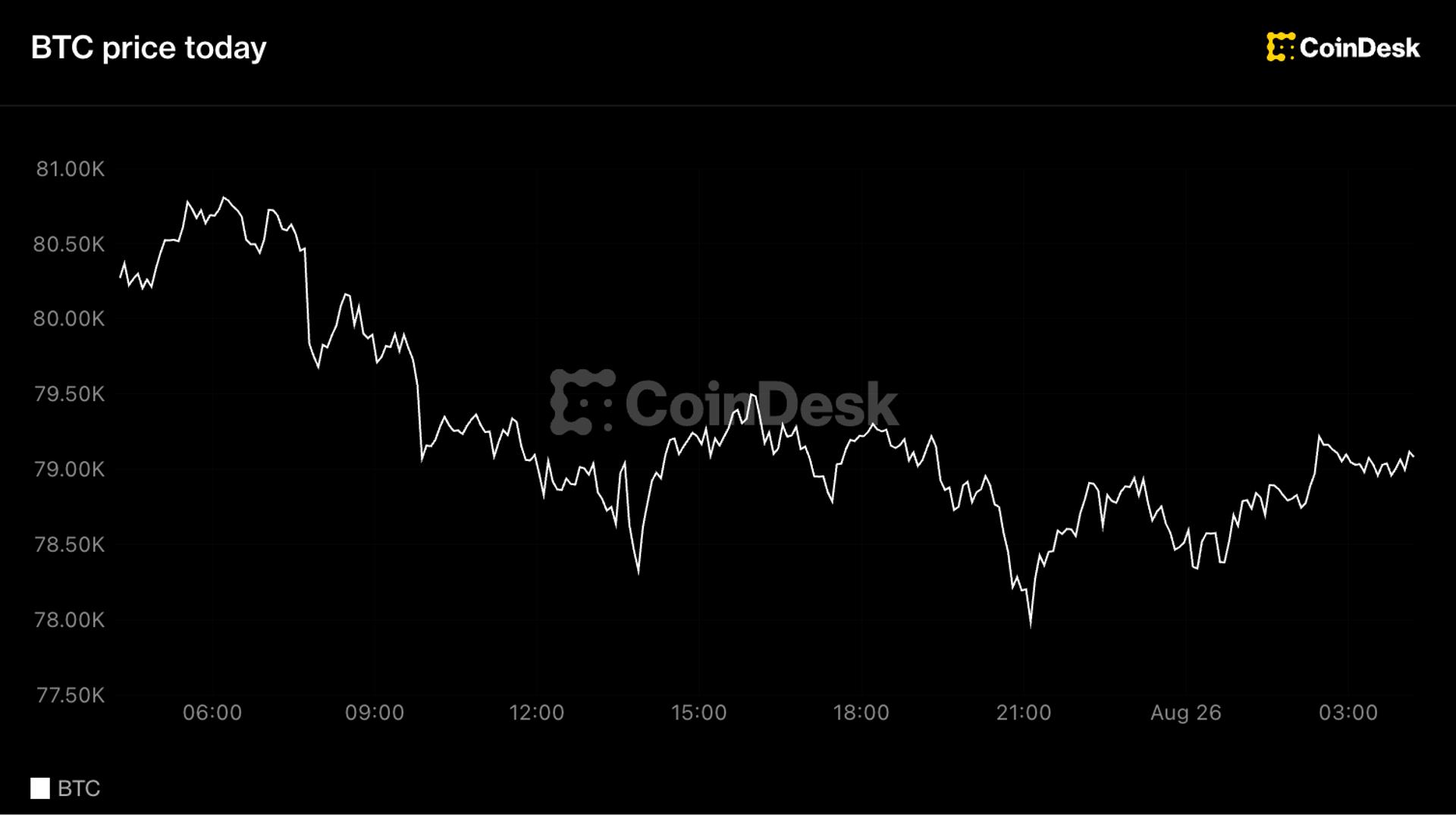
Every major token fell over 24 hours except HYPE, though bitcoin holds a 23% weekly gain and XRP almost 45%.


Galaxy Research’s latest tally shows that more than half of 221 Coldcard hack victim reports involved individual losses exceeding 1 Bitcoin.


Thailand’s Securities and Exchange Commission (SEC) has advanced its framework for locally listed spot Bitcoin and Ether exchange-traded funds (ETFs) from proposed principles to draft regulations while revising its approach to foreign digital asset custodians.
The regulator said Monday it is seeking feedback on two consultation papers. One contains draft regulations for Thai crypto ETFs, while the other proposes principles governing the qualifications of foreign digital asset custodians engaged by mutual and private funds investing in digital assets.
During the initial stage, asset managers could establish passive ETFs tracking Bitcoin (BTC) or Ether (ETH), the only two eligible crypto assets.
The draft regulations follow an April consultation on the framework’s broader principles. The SEC said most respondents supported the framework but provided feedback on custody arrangements, prompting the regulator to revise its proposed approach.
The framework forms part of Thailand’s ambition to become a global digital asset hub for institutions.
Bitcoin and Ether ETFs would trade on Thai stock exchange
Under the proposed rules, Bitcoin and Ether ETFs would trade exclusively on the Stock Exchange of Thailand (SET). Each ETF would track a single crypto asset and would need to maintain average net exposure of at least 80% of its net asset value to that asset over each accounting year.
Related: Bitcoin ETF inflows hit $1.9B in strongest week since October 2025
The proposed rules would also allow mutual funds and private funds to invest in Thai-domiciled crypto ETFs, alongside foreign crypto ETFs in which they are already permitted to invest, subject to existing investment limits.
During the initial phase, however, the regulator would not allow alternative products tied to foreign crypto ETFs, including depositary receipts tracking them.
Thailand revises crypto custody proposal
The revised approach would retain onshore digital asset custodians as the primary providers for crypto ETFs during the initial phase.
“Under the revised approach, crypto ETFs will continue to be primarily required to use onshore DA [digital asset] custodians, while the SEC may permit the use of qualified foreign DA custodians when necessary and appropriate in light of prevailing circumstances,” the SEC said.
Under the separate custodian proposal, foreign providers serving mutual and private funds investing in digital assets would need to be supervised by a regulatory authority with legal powers. They would also have to operate under regulatory and investor asset protection standards that the Thai SEC considers adequate.
The SEC will accept public comments on both consultation papers until Sept. 20.
Magazine: Korean bank taps Ripple for payments, Pakistan opens crypto licensing: Asia Express
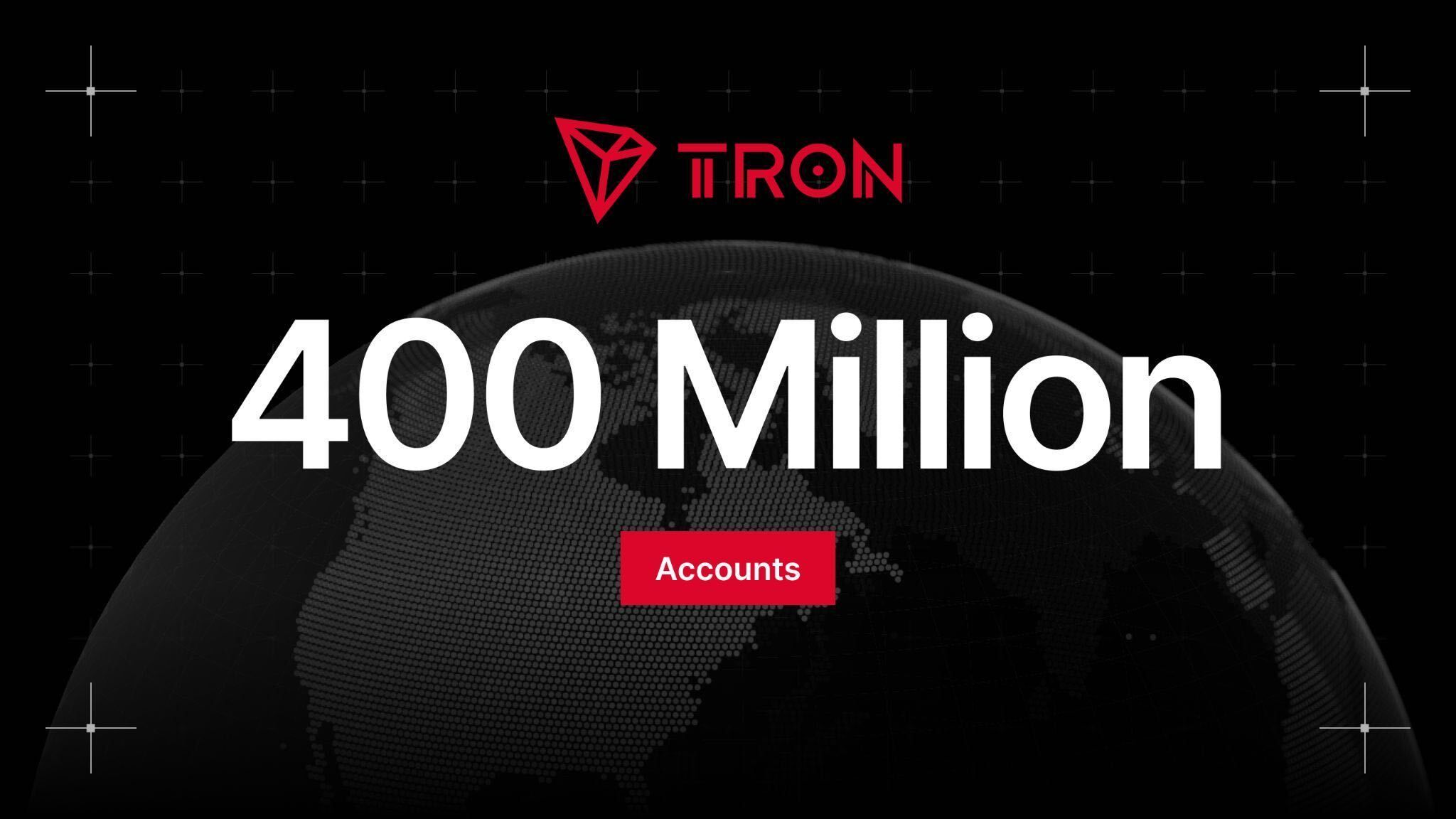

TRON DAO, the community-governed DAO dedicated to accelerating the decentralization of the internet through blockchain technology and decentralized applications (dApps), announced today that the number of total accounts on the TRON blockchain has exceeded 400 million. The milestone reflects sustained activity across the network and reinforces TRON’s position as one of the world’s most actively used blockchain networks, with usage powering real-world economic activity on-chain.
The pace of account growth accelerated significantly after TRON reached its first 100 million accounts, a milestone that took four years from the launch of its genesis block on June 25, 2018. The network reached 200 million accounts approximately 17 months later, on December 7, 2023. From there, TRON doubled its total number of accounts in less than three years, surpassing 300 million on April 12, 2025, before crossing 400 million on August 23, 2026.
TRON’s expanding user base is reflected in the scale and volume of activity taking place on the network. With more than 15.2 billion transactions processed and total transfer volume surpassing $29 trillion, TRON has emerged as critical infrastructure for the movement of digital assets at global scale. Its combination of high throughput, low transaction costs, and deep liquidity has made the network a leading settlement layer for stablecoin payments, cross-border transfers, and an expanding range of on-chain financial activity.
“Reaching 400 million accounts is a meaningful milestone for the TRON ecosystem and a reflection of the growing demand for accessible blockchain infrastructure,” said Justin Sun, founder of TRON. “From payments and stablecoins to decentralized applications and tokenized assets, TRON continues to provide the infrastructure that enables users around the world to participate in the digital economy. As adoption grows, we remain focused on building a network that is efficient, accessible, and capable of supporting the next generation of blockchain use cases.”
The milestone comes as TRON continues to expand its presence across the digital asset ecosystem, with growing applications in institutional asset tokenization. Recent developments include the launch of the S&P Pantera Digital Asset Index, which recognized the TRON blockchain among the top protocols in the benchmark, based on protocol utility, onchain liquidity, and network activity. Collaborations with Anchorage Digital, Securitize, and Bitnomial have also expanded institutional access to the TRON ecosystem.
TRON remains focused on building reliable, efficient infrastructure that supports the continued growth of its user base and the expanding role of blockchain technology in the global digital economy.
About TRON DAO
TRON DAO is a community-governed DAO dedicated to accelerating the decentralization of the internet via blockchain technology and dApps.
Founded in September 2017, the TRON blockchain has experienced significant growth since its Mainnet launch in May 2018. TRON currently hosts the largest circulating supply of USD Tether (USDT) stablecoin, which currently exceeds $94 billion. As of August 2026, the TRON blockchain has recorded over 400 million in total user accounts, more than 15 billion in total transactions, and over $28 billion in total value locked (TVL), according to TRONSCAN. Recognized as the global settlement layer for stablecoin transactions and everyday purchases with proven success, TRON is “Moving Trillions, Empowering Billions.”
TRONNetwork | TRONDAO | X | YouTube | Telegram | Discord | Reddit | GitHub | Medium | Forum
The post TRON Surpasses 400 Million Accounts as Total Transfer Volume Nears $30 Trillion appeared first on BeInCrypto.
Crypto World
Bitcoin Dominance on the Rise Again as BTC Tapped 15-Week Peak Above $81K: Market Watch
Bitcoin’s price initiated another leg up in the past several hours, blasting past $80,000 and $81,000 for the first time since the middle of May.
BTC even outperformed many larger-cap altcoins, which resulted in an uptick in its dominance over the market.
Bitcoin Exceeded $81K
It was just a week ago when we were wondering what would be the new (old) thing that we could write about the crypto market, as bitcoin had stalled below $65,000 for a long, long time. However, Wednesday afternoon changed the trend. Whether it was the US Treasury Department’s announcement, the White House Crypto Summit, or something else, BTC exploded out of the gate with force.
It went to $70,000 within a few hours, dipped back to $68,000, and then skyrocketed once again to $75,000 by Thursday. The bulls took it a step further on Friday, helping BTC climb to almost $80,000 for the first time since mid-May.
After gaining $15,000 in days, the asset was due for a correction, which took place during the weekend with a price slip to $75,500. Nevertheless, the bull returned in full force at the start of the new business week, pushing bitcoin to over $81,000 earlier today to mark a 15-week peak.
It was stopped there and now sits inches below $80,000, but its market cap has risen to $1.6 trillion. Its dominance over the alts has rocketed to 58% on CG and to almost 60% on CMC after its latest run.

SOL Touches $100
Solana’s native token is the top performer among the larger-cap alts today, surging by 7% to over $100 for the first time in months. HYPE has neared its all-time high of $83, marked a few days ago, once again, as it now sits close to $82. ZEC has surpassed DOGE as the 10th-largest cryptocurrency by market cap.
XMR and RAIN are the other top performers from this cohort of assets, while MORPHO, AAVE, and LTC have dropped the most. Meanwhile, ETH remains inches below $2,500, XRP is stuck at $1.50, and BNB is back above $700.
The total crypto market cap has added nearly $100 billion since yesterday and is up to $2.770 trillion on CG.

The post Bitcoin Dominance on the Rise Again as BTC Tapped 15-Week Peak Above $81K: Market Watch appeared first on CryptoPotato.
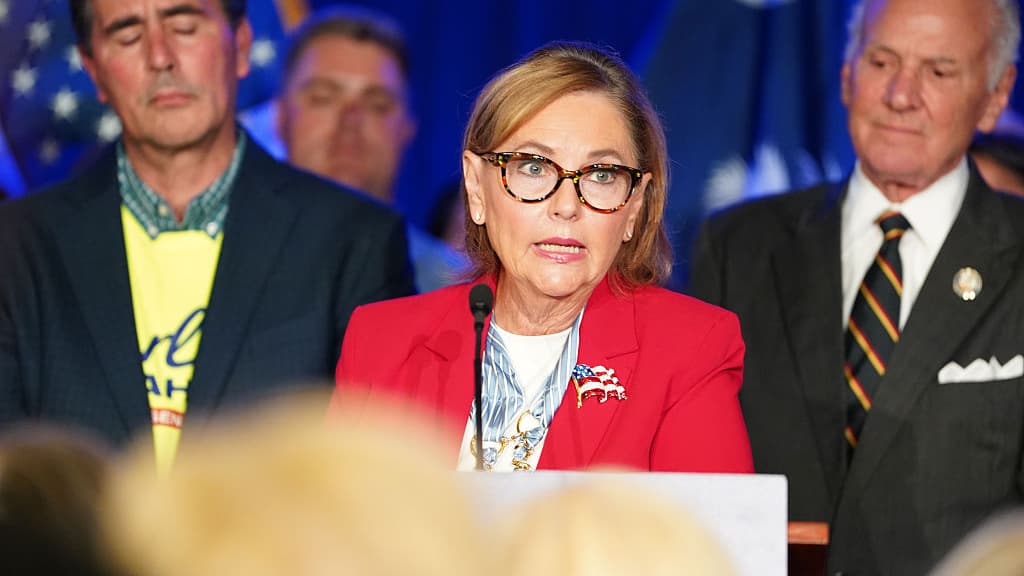
“There is still a big hole in my heart,” Nordone told supporters at a rally, “but I know he’s looking down right now very proud of everyone in this room.”
Nordone will next face off against the Democratic candidate Annie Andrews, a pediatrician who won her primary in June. The upper chamber seat, though, is unlikely to flip in Democrats’ favor; the Cook Political Report rates the race as “Solid Republican.”
In June, Graham won the Republican primary race to compete for his fifth term as Senator, but after his death the following month, a special primary election was called for Aug. 11. While Nordone, who was appointed by South Carolina’s Governor to serve out the remainder of her brother’s term, earned the highest share of the vote on Aug. 11, she fell short of the majority she needed to win the race, triggering the runoff. Nordone earned nearly 33% of the vote on Aug. 11, while her opponent, U.S. Rep. Ralph Norman, came in second, with nearly 25%, sending both candidates to the runoff race.
Bitcoin completed a remarkable turnaround in the past week, surging from under $65,000 on Wednesday to a three-month high above $81,000 earlier this morning.
The move began abruptly on August 19, accelerated in the following days, and, unlike the previous breakout attempts, was not halted painfully in its tracks. Obviously, something changed in the market, but the question is what precisely.
Who Lit the Fuse
The most talked-about reason behind the initial leg up was the US Treasury Department’s announcement last Wednesday that the government would at least double buybacks of longer-dated Treasury securities. This meant an increase in 10- to 30-year debt from $2 billion to at least $4 billion per operation.
At its core, the move was aimed at improving liquidity and easing pressure in the long end of the bond market, where borrowing costs had skyrocketed. Risk-on assets like BTC, alongside gold, reacted immediately with a surge from $64,000 to $70,000, while Treasury yields declined initially.
Here’s where this narrative breaks down. Long-term yields rebounded almost immediately, while BTC’s price rocketed by another $10,000-$11,000. According to analysts from the Kobeissi Letter, this suggested that investors were interpreting the Treasury intervention not merely as lower-yield support but as evidence of growing pressure surrounding the US’s fiscal policy.
As previously reported, US federal debt recently surpassed $40 trillion, while persistent deficits and massive refinancing requirements intensified uncertainty about how the government will manage the situation.
Debasement Trade Returns
The US dollar is the second macro piece in this equation. Treasury intervention pressured the greenback and revived Wall Street calls for the debasement trade: capital moving toward scarce assets, like BTC and gold, when investors fear that fiscal and monetary policies could gradually erode fiat purchasing power.
The precious metal exceeded $4,600 per ounce during bitcoin’s rally past $81,000. This synchronized move strengthened the argument that investors are treating both assets as alternatives to government-issued money.
Ray Dalio added fuel to that fire a few days ago, warning of a potential US debt crisis and recommending investors own gold and a ‘bit of bitcoin,’ while the dollar fell to a multi-month low.
Changes in Liquidity Expectations
The Treasury Department’s move led to another important change as markets are increasingly debating whether the government could use its enormous Treasury General Account more aggressively to support the bond market. The account recently stood at around $950 billion, and speculation that some of this liquidity could effectively be deployed through expanded Treasury operations has gained significant attention.
Although this is not quantitative easing, in fact, it’s very far away from it, if Treasury actions reduce pressure on long-term borrowing costs, weaken the dollar, or inject additional liquidity into financial markets, the broader environment becomes considerably more favorable for scarce and risk-sensitive assets such as BTC.
Who Amplified the Move
Appetite for BTC through the spot Bitcoin ETFs returned with vengeance last week as the figures showed a massive resurgence: almost $2 billion entered the funds in just five days, hitting a ten-month record. Expectedly, the demand accelerated after Wednesday.
Separately, the rapid move from under $65,000 to $70,000 first and $75,000 a day later forced heavily leveraged bearish trades to close positions. More than $4 billion in shorts were liquidated in less than two days, which helps explain the extreme nature of the reaction.
The Treasury announcement was the initial spark, followed by falling confidence in the dollar, which, alongside America’s fiscal trajectory, strengthened demand for scarce assets. ETF inflows added genuine spot demand, while short liquidations accelerated an already powerful surge.
The post Why Did Bitcoin Explode Past $81K? 4 Macro Factors Behind the Rally appeared first on CryptoPotato.

RockawayX seeks $150M for crypto hedge fund

7 Greatest Series to Stream With 20 Episodes or Less
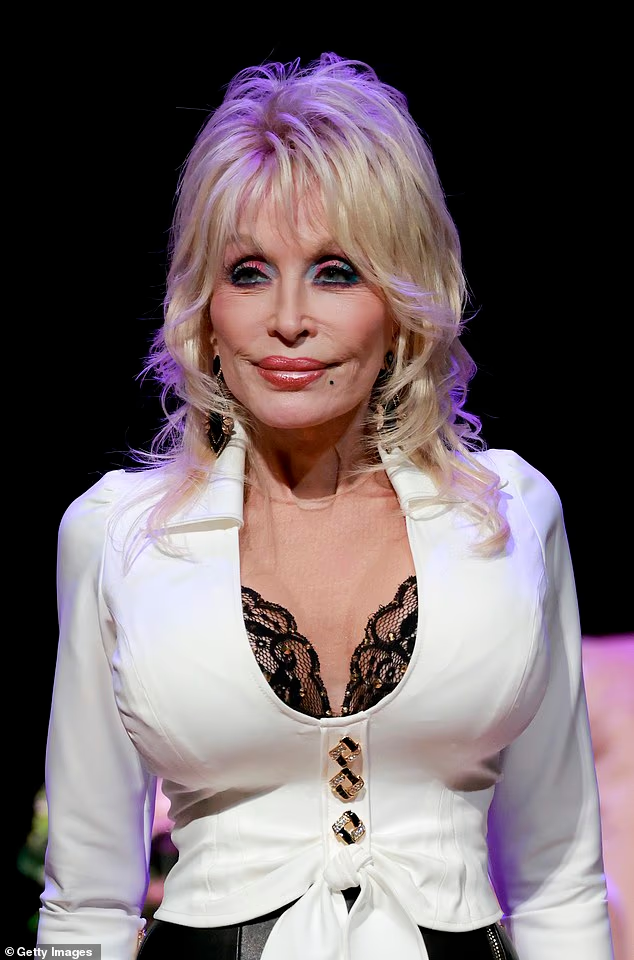
Dolly Parton’s devastating final interview just FOUR DAYS before her death: ‘I still have so many things I want to achieve’





-

 Fashion4 days ago
Weekend Open Thread: Madewell – Corporette.com
-

 Business4 days ago
Musk’s Tesla, SpaceX Confirm $16.8 Billion ‘Terafab’ Chip Plant as World’s Largest Building in Texas
-

 Crypto World4 days ago
anatomy of crypto’s biggest liquidation event since 2021
-

 Crypto World1 day ago
A $30 Billion AI Fund Implodes, Now the SEC Is Investigating Wall Street’s Role
-

 Politics4 days ago
6 months on, Irish renters crushed by effects of government housing bill
-
 NewsBeat4 days ago
The ‘Lucky Dip Gang’ causing carnage for clicks: After five thugs were killed speeding in the wrong direction on a motorway, GUY ADAMS investigates a sick new trend… and why police aren’t even allowed to pursue them
-

 Tech7 days ago
GLM-5.3 hits the API at $1.4/$4.4 per million tokens
-

 Business3 days ago
Mystery AI Model ‘Ox Alpha’ Draws Developers With Free Access as Chinese Lab Origins Remain Debated
-

 News Videos6 days ago
Don’t Leave Your Financial Future To Chance | August 19, 2026
-

 Business6 days ago
Marvell Shares Jump 7% as Google Chip Deal Confirms Custom AI Silicon Partnership, Analysts
-

 Business5 days ago
Five Below: Kids Discount Retailer Reaps Rich Rewards
-

 Business1 day ago
Moderna CEO warns China is pouring state money into mRNA technology
-

 Business5 days ago
UK firms in critical financial distress rise 9% to 53,756
-

 Business1 day ago
NVIDIA Stock Drops Nearly 2 Percent to $210 on Seventh Losing Day Ahead of Critical AI Earnings
-

 Fashion7 days ago
Jimmy Choo Autumn 2026 collection
-

 Sports3 days ago
Deshaun Watson fires back at Browns fans after being booed: ‘It’s a disrespectful thing’
-
 Entertainment6 days ago
10 Most Perfect Fantasy Shows of the Last 25 Years
-

 Tech6 days ago
OpenAI confirms ChatGPT is down as logins and signups fail
-

 Business6 days ago
PayPal and Venmo now accepted for tuition at several universities
-

 Crypto World6 days ago
Optimism-funded team's deciding vote shifts $49 million in OP tokens away from users
You must be logged in to post a comment Login