
Crypto World
Pauline Peirce Says SEC’s Draft Crypto Rules Are a Key Improvement

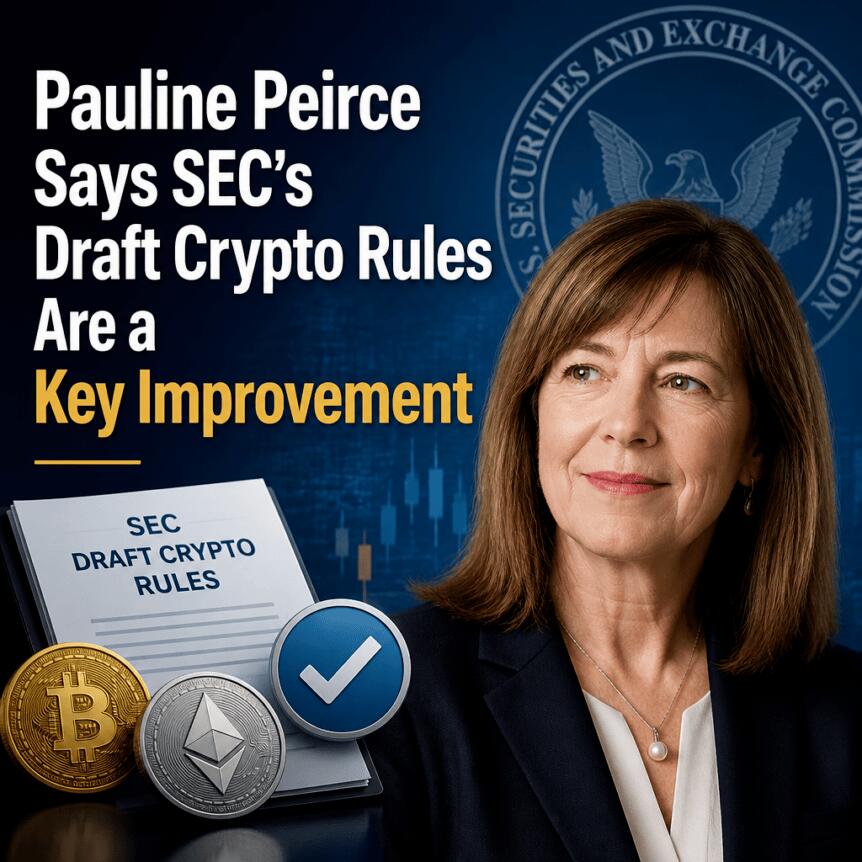
The U.S. Securities and Exchange Commission has unveiled a new regulatory proposal aimed at giving crypto issuers a clearer path to raising capital—while attempting to keep investor protections intact. In remarks accompanying the initiative, SEC Commissioner Hester M. Peirce said the move represents progress away from what she characterized as the agency’s prior reliance on “inapt” rules for digital asset offerings.
SEC Chair Paul S. Atkins, in a separate statement, argued that the SEC’s earlier enforcement-led posture has pushed some investment activity “offshore,” potentially limiting the protections the regulator can offer to investors in the U.S. Taken together, the statements position the proposal as an attempt to shift from case-by-case litigation to a more predictable framework for certain crypto-related investment contracts.
Key takeaways
- SEC Commissioner Hester Peirce called the new proposal a step toward “clear, sensible, enforceable” rules for crypto offerings.
- SEC Chair Paul Atkins linked prior enforcement emphasis to capital shifting “offshore,” reducing investor protections available domestically.
- The SEC’s Tuesday notice outlines a “clear and fit-for-purpose” framework for certain investment contracts involving crypto assets.
- The proposal arrives after the U.S. Senate failed to advance the broader Digital Asset Market Clarity (CLARITY) Act.
- SEC leadership signaled willingness to proceed with rules even without CLARITY’s passage, according to Atkins’s recent comments.
SEC proposal seeks a dedicated framework for crypto investment contracts
In a Tuesday notice, the SEC proposed new rules intended to establish what the agency described as a “clear and fit-for-purpose framework for certain investment contracts involving crypto assets.” The core goal is to allow qualified entities to raise capital with rules that are tailored to how these offerings are structured, rather than attempting to force crypto into existing categories that may not map cleanly to modern digital asset arrangements.
Peirce’s remarks framed the proposal as a meaningful improvement over the SEC’s previous approach. She pointed to the challenges faced by market participants under the agency’s tendency to apply a set of rules she called “inapt” to crypto. Her emphasis was not merely on regulatory activity, but on the shift toward guidance that market participants can interpret and comply with in advance—an issue that affects how issuers plan compliance, structure token sales, and manage investor disclosures.
For investors and traders, the stakes are similarly practical. A clearer framework can reduce uncertainty around which offerings fall within enforceable boundaries, potentially improving the quality and consistency of disclosures rather than leaving compliance largely determined by enforcement outcomes after the fact.
Atkins: enforcement pressure may have driven activity abroad
Atkins’s separate statement added a policy argument for why the SEC is moving toward rulemaking. He said the SEC’s prior enforcement-heavy approach has “driven investment offshore,” which he argued can limit the protections investors receive “here.”
That perspective effectively reframes the regulatory debate: rather than focusing only on whether the SEC can prove violations in court, Atkins suggested that a rules-based system is better positioned to provide investor safeguards within the U.S. market. The underlying tension is that strict enforcement without corresponding guidance can leave firms uncertain about compliance boundaries, encouraging them to seek alternatives—potentially in jurisdictions with different regulatory approaches.
While the proposal’s details were not laid out in the statements themselves, the framing indicates a shift in emphasis: the SEC is trying to offer a workable regulatory runway so capital raising can occur under an established structure, rather than depending primarily on enforcement-driven clarity.
Rulemaking comes after CLARITY Act stumbles in the Senate
The timing of the SEC’s action matters. According to the reporting referenced in the article, the proposal was announced days after the U.S. Senate failed to advance the Digital Asset Market Clarity (CLARITY) Act—legislation intended to provide a broader regulatory framework for financial regulators overseeing the crypto industry.
In addition, the article notes that SEC leadership had previously indicated the agency would not wait indefinitely for congressional action. On July 27, Atkins told CNBC that the SEC was “ready, willing, and able to come out with rules” on digital assets if the Senate failed to pass the CLARITY Act.
That backdrop helps explain the strategic logic of the SEC’s proposal. When comprehensive statutory changes stall, regulators often face pressure to fill gaps through rulemaking. The SEC’s approach can also be read as an attempt to create interim structure—particularly for crypto offerings that the SEC views as falling under “investment contract” analysis—while Congress considers whether and how broader market-wide definitions should be codified.
Market participants weigh odds for CLARITY, and watch the SEC’s next steps
Beyond the SEC’s statements, the article references Galaxy Digital’s assessment of CLARITY’s prospects. It says Galaxy cut its odds on passage in 2026 to 10%, warning that multiple political issues remain unresolved. The referenced note also suggests the Senate would have only about two to three weeks to pass the bill when it reconvenes on Sept. 14.
That kind of uncertainty underscores why the SEC’s move may carry outsized significance for the market. If investors and issuers see congressional action as unlikely in the near term, rulemaking becomes the main mechanism shaping how crypto offerings are regulated in the U.S.
Still, what happens next will likely determine how meaningful the proposal is for day-to-day compliance. Investors, issuers, and compliance teams should watch for how the SEC defines the scope of “certain investment contracts involving crypto assets,” how it structures registration and disclosure requirements under the framework, and what the timeline looks like for finalization. Equally important will be whether market participants interpret the rules as reducing uncertainty enough to outweigh remaining legal and political risks.
For now, the SEC’s proposal—and the leadership’s explicit comments about the limitations of earlier “enforcement-first” strategy—sets up an important test: can clearer, fit-for-purpose rules deliver the predictability both regulators and market participants have been seeking, especially in the absence of a comprehensive CLARITY pathway?

Bitcoin (BTC) falling more than 50% from its $126,200 all-time high was a “positioning correction,” BlackRock says.
Key points:
- A BlackRock report attributes Bitcoin’s decline below $60,000 to cascading liquidations as leverage was purged from the market.
- The long-term BTC investment thesis as a “low-correlation diversifier” remains intact, analysts confirm.
- BlackRock sees Bitcoin’s risk-asset correlation declining as time goes on.
BlackRock predicts falling correlation of BTC with risk assets
In a report published this week, the world’s largest asset manager preserved its bull thesis despite waves of outflows from its spot Bitcoin exchange-traded fund (ETF) in 2026.
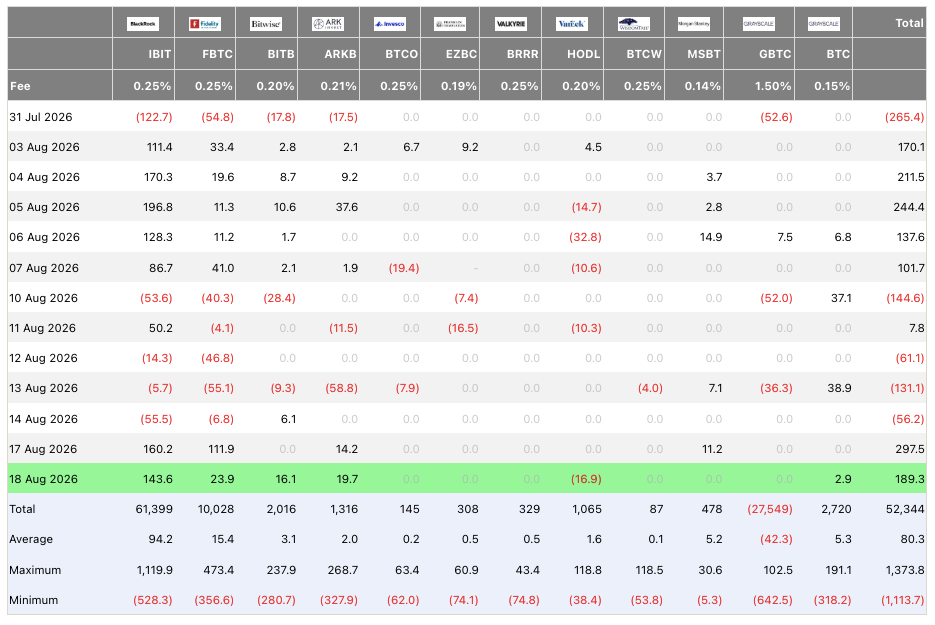
BlackRock’s iShares Bitcoin Trust (IBIT) saw net outflows of $78.9 million in the week through Aug. 14. Across all ETF products, outflows totaled $267.2 million.
“We view bitcoin’s ~50% pullback from October 2025 highs as a positioning correction rather than a change in its investment case. A historically overleveraged market, enabled by perpetual futures, suffered cascading liquidations compounded by slowing ETP outflows and digital asset treasury demand,” the report states.
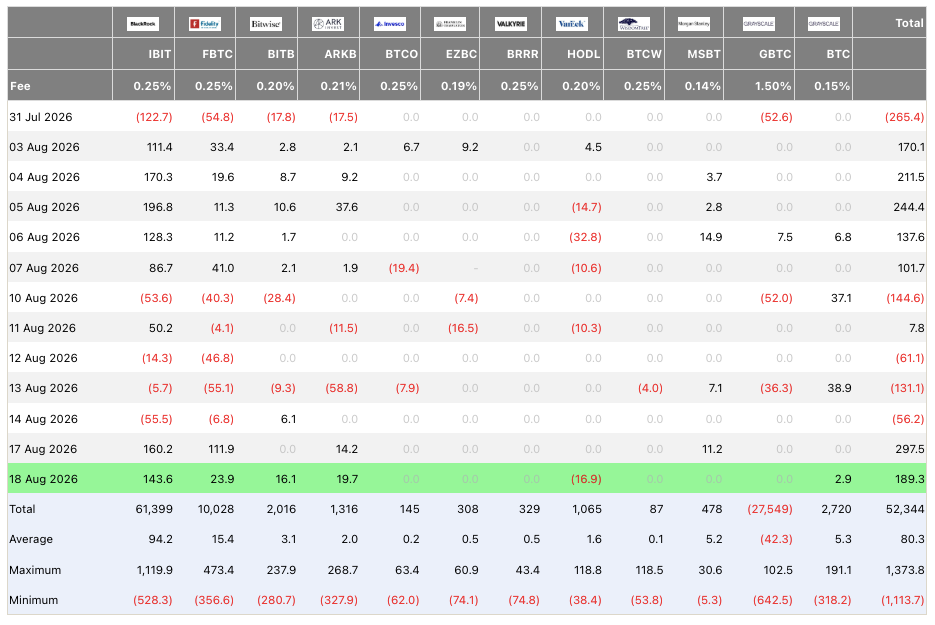
US spot Bitcoin ETF netflows (screenshot). Source: Farside Investors
During last year’s peak, Bitcoin experienced a surge in speculative positioning. BlackRock pointed to open interest on Bitcoin derivatives markets passing $90 billion in early October amid heavy use of leverage. The unwinding of these positions increased the correlation between BTC/USD and risk assets more broadly.
“A macro-driven risk-off catalyst (China tariff headlines) triggered large-scale deleveraging across precious metals and crypto markets. The resulting liquidation waves drove prices down to cycle lows below $60,000 per bitcoin by June 2026,” it explained.
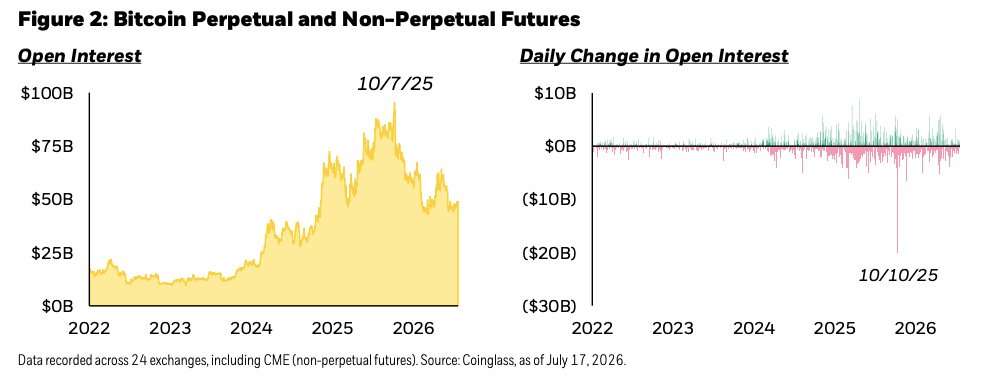
Bitcoin futures open interest data (screenshot). Source: BlackRock
Institutional Bitcoin demand has suffered this year as a combination of geopolitical uncertainty and growing inflation pressures saw capital flowing into established risk-asset classes, among them US equities, with the S&P 500 hitting record highs last week. Bitcoin has failed to follow suit, but BlackRock forecasts that this may change.
“With speculative excess now largely purged, we believe bitcoin’s recent episodes of elevated risk correlation should normalize lower, consistent with its longer-term record as a low-correlation diversifier,” it continued.
Longer-term resilience of BTC stands out
The report highlights that long-term BTC investment returns follow key political and macro events. These include the COVID-19 outbreak in March 2020, the US presidential election the same year, as well as the regional banking crisis and president Donald Trump’s multiple international trade-tariff declarations.
Related: Bitcoin price spike to $64.5K was ‘low-volume liquidity trap’: Analysis
While it initially struggled following some of these events, Bitcoin produced solid returns on a 60-day basis. In the case of the 2020 election, these hit as high as 113%.
“Through multiple shocks in recent years, bitcoin often outperformed both the S&P 500 and gold in the weeks and months following the onset of disruptions,” BlackRock commented.
“This pattern has held true thus far in 2026 amid ongoing conflict between the U.S. and Iran, with bitcoin delivering positive returns and outperforming equities and gold following the onset of hostilities in February and the end of the ceasefire agreement in July.”
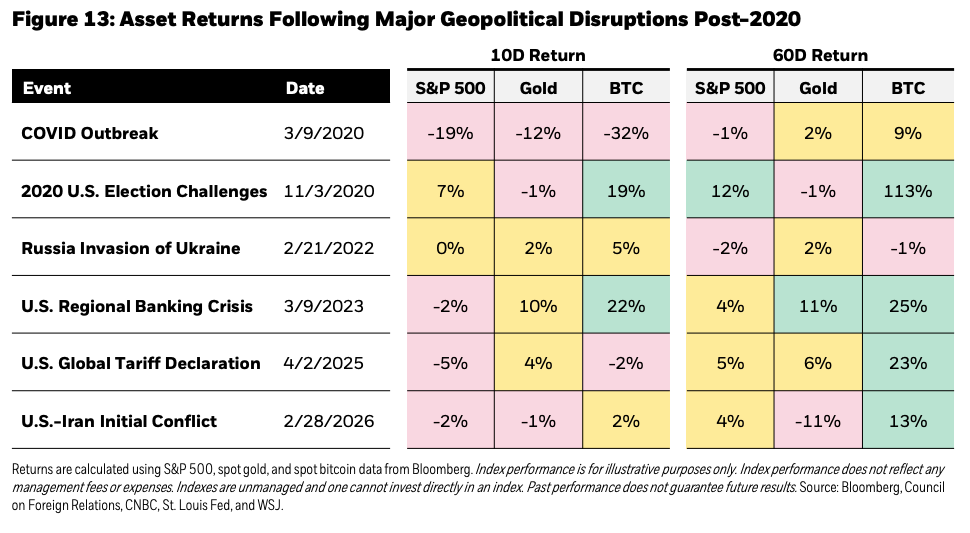
Macro asset returns comparison (screenshot). Source: BlackRock
Further data puts Bitcoin’s 12-month realized volatility at 40% compared to 26% for gold and 12% for the S&P 500. The rolling six-month correlation between Bitcoin and the S&P, presented as a 10-year average, is now 0.18 — still notably higher than gold’s 0.06 reading.
“Bitcoin’s underlying investment case aligns more closely with that of gold — as a global monetary alternative and a hedge against inflation, global disorder, and declining trust in fiat currencies. Even for gold, which tends to be viewed as a standard uncorrelated, store-of-value asset, brief periods of high equity correlation exist, including COVID in 2020-2021 and the monetary easing cycle in 2023,” the report added.
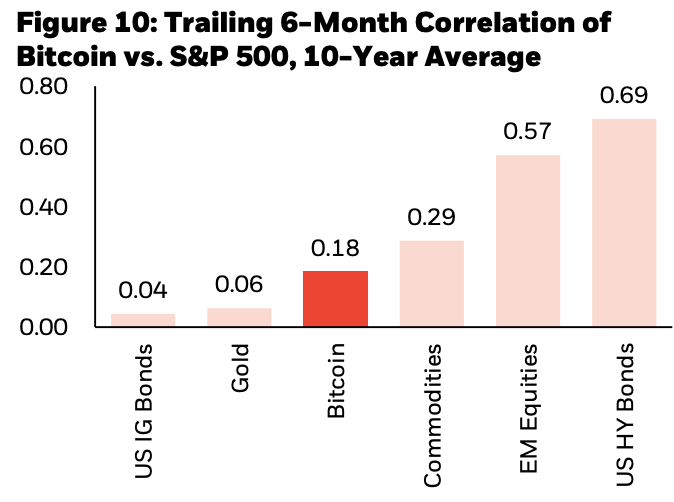
Bitcoin vs. S&P 500 correlation data (screenshot). Source: BlackRock
Since October 2025, BTC price performance has led some to question its role as a form of “digital gold.” In a Q1 report, asset manager Grayscale described short-term behavior as being more like a growth stock than gold, noting its low correlation to the latter.


Every major except tron posted double-digit weekly gains, with nearly $1.4 billion of short positions wiped out after the Treasury doubled its bond buybacks.

What’s unlikely to help, meanwhile, is glaring, recoiling, kicking someone under the table, or making snide remarks. “Jokes, sarcasm, public corrections, or visibly expressing disgust probably won’t change the behavior in the long run,” Wagner says. “But it will damage the relationship.”
Even the most tactful conversation might embarrass the person; there’s no magic phrase that makes criticism delightful to receive. “The goal is to not intentionally embarrass or insult them,” Wagner says.
Know when to adapt instead
Sometimes the kindest and easiest choice is to work around the behavior. Wagner has encountered friends and colleagues who double-dipped, for example, but she never corrected them. She simply ordered her own appetizer or transferred what she wanted to a separate plate before they began eating. The behavior bothered her, but she decided the relationships mattered more.
That calculus changes when the offender is a partner and the habit makes you dread eating together. If you’ve raised the issue respectfully and the person repeatedly dismisses your discomfort, the problem may no longer be their chewing. It may be that you don’t feel heard or considered—and that’s a larger conversation.


Democratic Senator Ruben Gallego warned that rushing the CLARITY Act to a Senate vote before lawmakers resolve disputes over ethics and stablecoin yield could set United States crypto market structure legislation back.
Speaking at the SALT Wyoming Blockchain Symposium on Wednesday, Gallego said the crypto industry should encourage Senate Democrats and Republicans to continue negotiating instead of pushing for an immediate vote. He said lawmakers still had to address the bill’s Agriculture Committee portion, assemble the broader package and determine how to send it to the House.
The warning complicates the Trump administration’s push for swift passage by suggesting that a procedural vote could arrive before negotiators have assembled the bipartisan coalition needed to reach the Senate’s 60-vote threshold.
“Don’t go for a fast vote,” Gallego said. “A fast vote gets you a fast result, but I’m not sure it’s the result you want.” He added that Congress still had a lot of steps to complete and that “any premature movement is going to set it back further.”
Gallego says White House has not answered ethics proposal
Gallego said he and Republican Senator Thom Tillis submitted compromise ethics language to the White House before the congressional recess but had not received a point-by-point response. He said that sufficiently strong ethics restrictions were necessary to attract Democratic support and advance the bill.
“We’ve been sending offers over and over again to the White House, and they’ve been coming back either blank, or they’ve come back even slightly further back, or we’ve heard nothing,” Gallego said.
Cointelegraph reached out to the White House for comment but did not receive a response before publication.
Related: CLARITY Act delay gives Asian financial hubs an opening: First Digital CEO
The remarks follow renewed pressure from the administration. On Wednesday, Trump urged Congress to pass a “fair version” of the CLARITY Act during a White House appearance with crypto executives.
Senate leaders have delayed action until September. On Aug. 7, Senate Majority Leader John Thune confirmed to Cointelegraph that the chamber was “punting” the vote and said CLARITY would be queued up “first thing” after lawmakers returned from recess.
White House crypto adviser Patrick Witt previously said the administration would negotiate with Democrats until the September vote but “can’t afford to wait forever.”
Magazine: ‘Fabricated rumors’ about BitMart founder, Binance bStocks dominate: Asia Express
Crypto World
Tech Stocks Fall On War, Macro Woes. Is Anthropic Revenue Projection Also A Factor? Tech Stocks Fall. Is Anthropic Revenue News A Factor?

Tech stocks tumbled Tuesday, joining a broad market sell-off triggered by ongoing worries about the U.S.-Iran conflict which led to higher Treasury Yields and oil prices. One analyst also pointed to a potential culprit: reports of Anthropic projected revenue run rate, which is lower than speculation. The Nasdaq shed roughly 278 points or around 1%, as chip stocks, led by…
Copyright ©2026 Investor’s Business Daily, LLC. All rights reserved. 87990cbe856818d5eddac44c7b1cdeb8


Traders betting against crypto lost $2.74 billion in a day, more than the short side of the October 2025 crash that remains the biggest liquidation event in the market’s history.
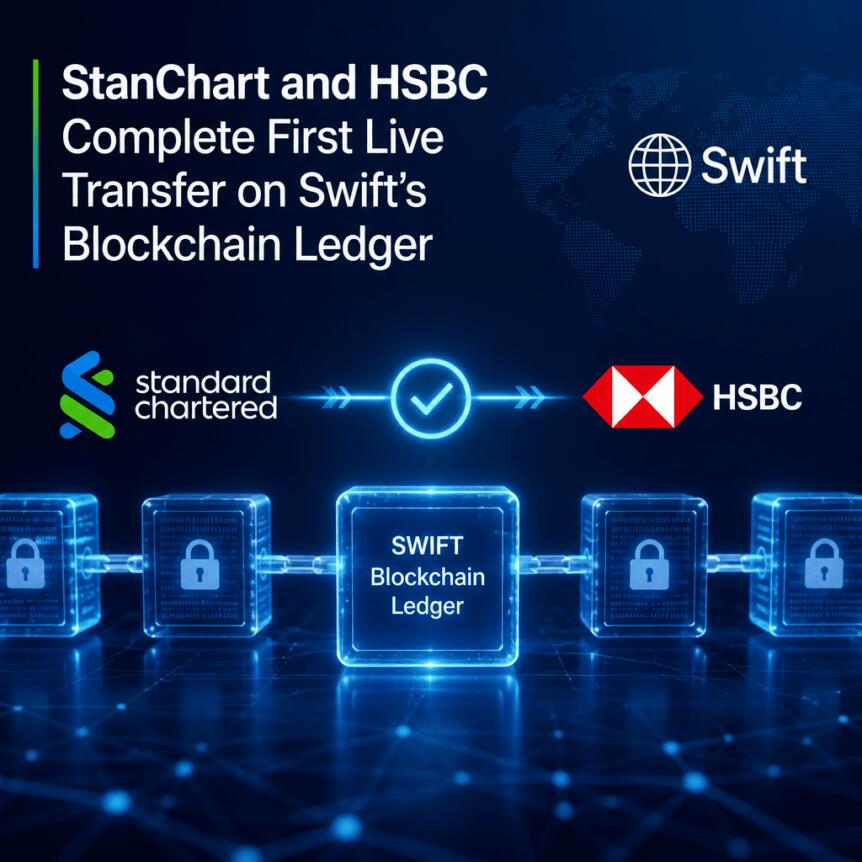
Standard Chartered and HSBC have completed what they describe as the first live cross-border transaction using Swift’s blockchain-based ledger, marking an early interoperability milestone for banks experimenting with tokenized deposits. The test took place about a month after Swift said the ledger was ready for initial use.
According to the details of the transaction, payment messages were exchanged between the two banks via Swift’s ledger, while the resulting obligations were recorded on HSBC’s Tokenised Deposit Service and StanChart’s tokenized deposit infrastructure. Swift’s ledger then acted as an orchestration layer—matching and netting obligations between the banks before final settlement through existing payment systems.
Key takeaways
- HSBC and Standard Chartered report the first live cross-border trade on Swift’s blockchain-based ledger.
- Swift’s ledger is positioned as an orchestration and netting layer, with settlement still tied to existing payment infrastructure.
- The test builds on Swift’s July announcement that 17 banks would pilot live transactions using tokenized deposits.
- The approach targets 24/7 cross-border settlement while keeping established compliance, risk, and settlement controls in place.
- Interoperable tokenized deposits are increasingly being tested across jurisdictions, with broader industry trials also underway.
What happened in the first live transaction
Swift’s blockchain-based ledger is designed to connect tokenized deposits issued on separate bank infrastructure. In the live transaction between HSBC and Standard Chartered, the mechanics were centered on messaging, obligation recording, and settlement orchestration rather than a full replacement of the banks’ existing settlement rails.
Rather than moving funds end-to-end solely on-chain, the transaction used Swift’s ledger to handle the exchange of payment messages between the banks. The obligations that resulted from those messages were captured within each bank’s own tokenized deposit setup—HSBC’s Tokenised Deposit Service for HSBC and Standard Chartered’s tokenized deposit infrastructure for StanChart.
Swift’s ledger then netted and matched the obligations between the two counterparties, after which settlement proceeded through existing payment systems. That structure is significant for banks that want faster and more continuous execution without abandoning the operational, legal, and risk frameworks already embedded in traditional payment workflows.
How Swift’s ledger fits into the broader tokenized-deposit push
The live report follows Swift’s July announcement that its blockchain-based ledger was ready for initial use. Swift said it would support a pilot involving 17 banks spanning six continents, preparing to conduct live transactions using tokenized deposits.
The banks named as part of that pilot include Citi, BNP Paribas, BNY, Wells Fargo, UBS, MUFG, DBS, and ANZ, alongside HSBC and Standard Chartered. Swift has framed the ledger as a way to enable interoperability between tokenized deposits across different institutions, while still respecting the settlement, compliance, and risk controls that financial institutions require.
For investors and market participants watching the “tokenization” trend, the key signal is not only that banks are testing digital assets, but that they’re working toward connectivity between separate tokenized systems. Interoperability is often the hardest problem: tokenized value can exist inside a silo, but cross-border payment usefulness rises substantially when institutions can transact across siloed infrastructures.
Why orchestration and netting matter for adoption
Swift describes its ledger as an orchestration layer that matches and nets obligations before final settlement. That design choice can reduce the operational complexity of cross-border payments between different tokenized deposit environments—each bank can maintain its own infrastructure while relying on Swift’s ledger to coordinate the interaction.
The emphasis on netting also reflects a practical reality: cross-border payment systems must handle large numbers of transactions without turning every transfer into a fully independent settlement event. By pairing messaging with netting, banks can potentially reduce friction and execution overhead—while still settling obligations via established payment rails.
Swift’s positioning is also relevant to a wider debate in crypto-adjacent payments about how far blockchain should be used in the payment stack. This pilot suggests a hybrid direction: blockchain-based infrastructure for coordination and continuity, alongside conventional settlement processes where required.
Industry momentum beyond Swift’s pilot
The Swift-anchored cross-border transaction is occurring as other major institutions pursue tokenized deposit and “real-value” settlement trials.
HSBC previously indicated plans to expand its Tokenised Deposit Service to corporate clients in the US and UAE in the first half of 2026, building on deployments in Hong Kong, Singapore, the UK, and Luxembourg. The service was also launched in the US in April, with coverage for eligible corporate and institutional clients seeking 24/7 domestic and cross-border transfers using tokenized deposits.
Standard Chartered has participated in broader efforts to test tokenized bank money across institutions. In July, it was among 28 financial institutions and central banks involved in the Bank for International Settlements’ Project Agorá, which conducted real-value settlement trials using tokenized commercial bank deposits and central bank reserves across six currencies.
Meanwhile, the US payments landscape is also moving toward connectivity between legacy systems and tokenized rails. The Clearing House has reportedly discussed plans to launch a tokenized deposit network in the first half of 2027, connecting traditional payment networks with digital asset infrastructure for around-the-clock settlement.
Taken together, these efforts point to a broader pattern: rather than treating tokenized deposits as isolated experiments, major players are working toward networks and coordination layers that can make tokenized money function across boundaries—geographic, institutional, and regulatory.
Next, market participants will want to track how quickly the Swift ledger pilot expands beyond initial counterparties, and whether additional banks can complete similar end-to-end workflows with the same level of operational readiness—particularly around reliability, compliance processes, and how netting and orchestration behave as transaction volumes increase.
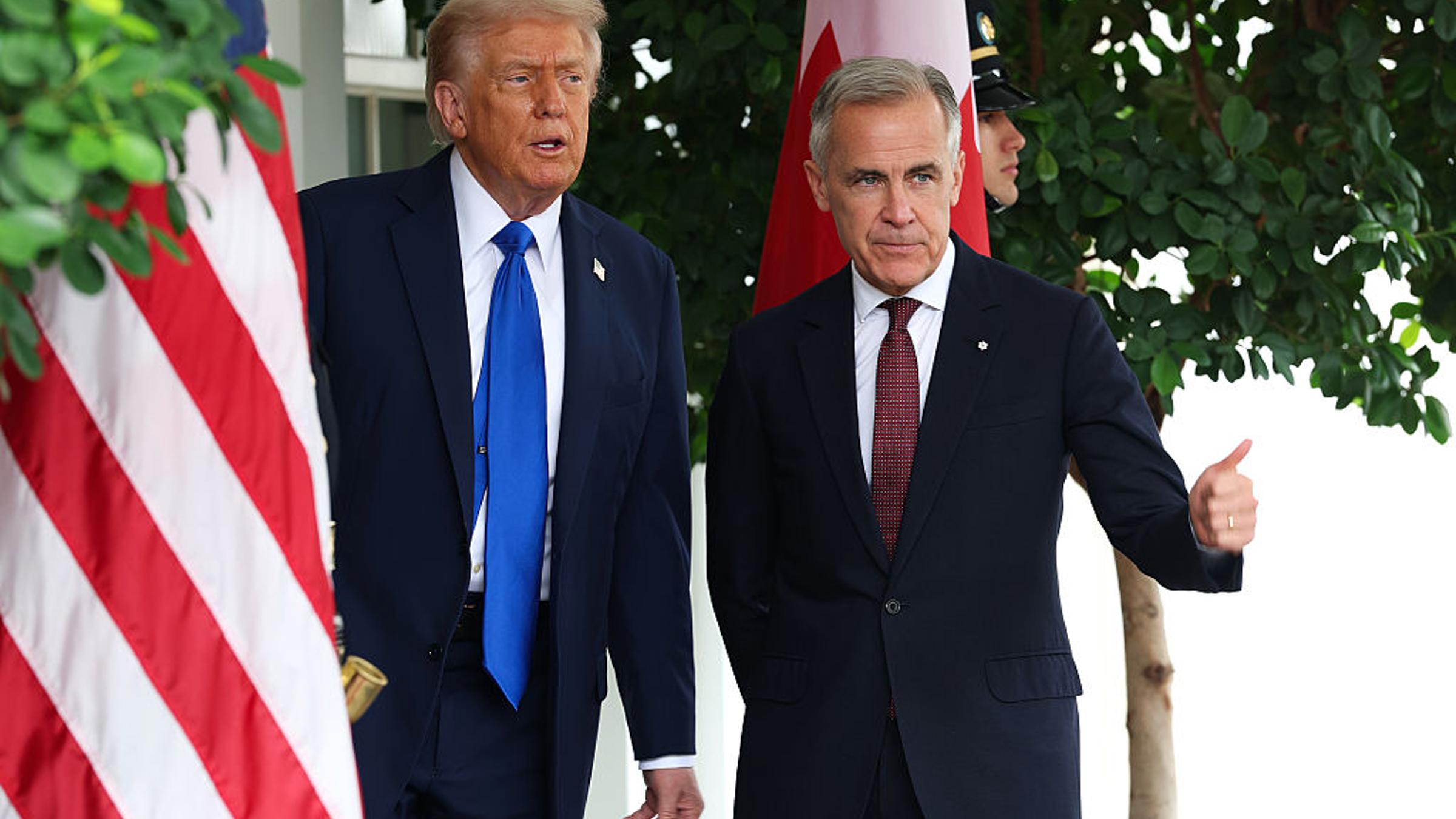
The 50% tariff hike on a range of Canadian goods was announced in July, with Trump signing a series of proclamations citing Canada’s “discriminatory treatment” of American products.
The new levy, a retaliation for Canada’s tariffs, would apply to a range of Canadian goods, including electronics, sports equipment, and essential oils.
According to economists, the tariffs could have had significant economic consequences if enacted. TD Economics estimated that, if maintained, they could reduce Canadian GDP growth by 0.3 to 0.6 percentage points over the following year.
A Canadian Federation of Independent Business survey of 1,833 firms found that 77% of affected exporters expected revenue losses, while 35% expected their revenue to fall by at least half.
In a new proclamation issued Tuesday suspending the tariffs, Trump said: “Canada has expressed a commitment to remove the discriminations or unreasonable and unequal impositions.”


Sweden’s H100 reported a $26 million loss for the first half of the year, as it completed its acquisitions to become Europe’s second-largest Bitcoin treasury by holdings.


BitGo Korea has secured VASP registration from South Korea’s Financial Intelligence Unit, becoming the first local entity owned by an overseas crypto company to complete the process directly.
Summary
- The FIU accepted BitGo Korea’s VASP registration filing on Aug. 18.
- BitGo Korea plans to provide custody and transfer services to institutions and companies.
- Hana Financial owns 25% of the business, while SK Telecom holds a 10% stake.
- Stricter registration checks covering VASPs and major shareholders took effect on Aug. 20.
Yonhap News Agency reported on Aug. 20 that the Financial Intelligence Unit, an agency under South Korea’s Financial Services Commission, had accepted BitGo Korea’s virtual asset service provider registration two days earlier.
BitGo Korea plans institutional custody services
Established in 2024, BitGo Korea chose to meet the country’s regulatory requirements through its own entity rather than acquire a company that already held VASP registration, according to the Yonhap report.
The company plans to use the registration to establish cryptocurrency custody and transfer services in South Korea. BitGo said its local business will focus on financial institutions and corporate customers, although the company did not provide a launch date.
Details about the assets supported by the service, custody charges, and insurance coverage were also absent from the announcement. BitGo did not identify any customers or disclose how much it expects to hold in custody through the Korean entity.
BitGo CEO Mike Belshe described the registration as an important step in the company’s plan to establish regulated infrastructure in major markets.
“We will focus on connecting global virtual asset infrastructure with the Korean market,” Belshe said, according to a translation of his statement carried by Yonhap.
The reported first applies specifically to a Korean subsidiary of an overseas virtual asset company obtaining VASP registration directly. BitGo’s announcement does not establish that it is the first foreign-linked crypto business of any type to operate legally in the country.
South Korea treats VASP approval as a registration rather than a general financial services license. The approval lets BitGo Korea build its stated custody and transfer operations, but the announcement did not say that the company can operate a won-based retail cryptocurrency exchange.
Hana and SK Telecom hold stakes in BitGo Korea
BitGo’s entry has been supported by two large Korean companies. Hana Financial Group acquired a 25% interest in BitGo Korea in 2024, while SK Telecom purchased a 10% stake and joined the venture as a strategic partner.
In May, crypto.news reported Hana Bank’s planned 930 billion won, or roughly $670 million, investment in Dunamu, the operator of Upbit. The report also noted that Hana and SK Telecom had helped establish BitGo Korea as part of the bank’s activity in digital assets.
Hana Bank began working with BitGo on cryptocurrency custody services in 2023. Under the later ownership arrangement, Hana was expected to contribute its financial-sector experience, while SK Telecom would provide knowledge related to authentication, identity checks, and security.
Alongside its BitGo investment, Hana has pursued other crypto-related projects. A March 2026 report detailed cooperation between Hana Financial and Standard Chartered on tokenized deposits, stablecoins, custody, and payment infrastructure.
BitGo said in 2024 that its Korean partners would help develop an institutional market for digital assets. The latest announcement did not state whether Hana, SK Telecom, or their subsidiaries will become paying customers of the newly registered business.
BitGo follows regulated custody paths in Korea and the US
Founded in the United States in 2013, BitGo provides custody, wallets, trading, settlement, staking, and other digital-asset services through entities operating in several jurisdictions.
In Europe, BitGo holds authorization from Germany’s Federal Financial Supervisory Authority under the Markets in Crypto-Assets framework. Its other regulated operations include entities in Singapore, Dubai, Denmark, and Switzerland, according to the company’s licensing information.
For US institutions, BitGo’s Korean registration follows a separate federal banking process. A July 2026 report said BitGo had received full approval from the Office of the Comptroller of the Currency to convert its state-chartered trust company into a national trust bank.
A national trust bank may provide custody, fiduciary, and approved asset-servicing functions under federal supervision. It does not operate like a commercial bank that accepts ordinary insured deposits and issues conventional consumer loans.
BitGo states on its website that BitGo Bank & Trust, National Association, is regulated by the OCC. The company also warns that digital assets held in custody are not protected by the Federal Deposit Insurance Corporation or Securities Investor Protection Corporation insurance.
The Korean approval therefore does not extend the protections or permissions attached to BitGo’s US-regulated entity. Services offered in South Korea will remain subject to local rules, customer eligibility requirements, and the authority of Korean regulators.
South Korea has tightened VASP registration checks
BitGo Korea received its approval shortly before stricter entry checks took effect on Aug. 20. The Financial Services Commission said the revised rules expand regulatory reviews to the chief executive or controlling shareholder of a VASP.
When a company is the largest shareholder, the FIU may also examine that company’s largest shareholder and representative. BitGo Korea’s shareholder structure includes Hana Financial and SK Telecom, although neither the FSC nor BitGo said whether the new tests applied to the application accepted on Aug. 18.
Under the updated framework, applicants must maintain a debt ratio of no more than 200% and must not have defaulted during the previous three years. A company may also be rejected if it was previously declared an insolvent financial institution or lost a registration or operating license for violating financial laws.
Executives must satisfy the qualifications established under South Korea’s rules for the governance of financial companies. The FSC said applicants also need suitable staff, cybersecurity systems, physical infrastructure, and internal controls covering anti-money-laundering duties and customer protection.
South Korea has previously acted against overseas platforms that served local customers without registration. In January, Google Play restrictions required crypto exchanges and wallet providers targeting South Korean users to show proof of an accepted VASP filing to remain available through the local app store.
Transfer controls will become stricter under another part of the revised framework. The FSC said South Korea will remove the existing 1 million won threshold for Travel Rule checks between registered domestic VASPs, requiring sender information to accompany transfers of every value.
Transfers involving foreign exchanges or personal wallet providers will be permitted under risk-based conditions. Six months after the revised rules are promulgated, registered providers must also report transfers of at least 10 million won to overseas VASPs or wallet services to the FIU, regardless of the assessed transaction risk.

The next Apple TV could come with an upgraded Siri remote

You Will Attract A Financial Miracle Just By Hearing This Prayer 1 Time || Kenneth e hagin

Russian missile barrage kills at least 6 in Kyiv





-

 Fashion5 days ago
Weekend Open Thread: Ann Taylor
-
 Sports6 days ago
This U.S. Amateur is a glimpse into golf’s future in more ways than you think
-
 Tech6 days ago
11 Ways to Rank Your Videos
-
 NewsBeat5 days ago
Myanmar says over 300,000 Rohingya refugees verified for repatriation as exodus enters ninth year
-

 Sports5 days ago
Birmingham 2026: Day 6 Timetable for Irish Athletes
-

 Politics5 days ago
SEQ Code: The Three Letter Boarding Pass Code That Could Give You The Worst Seat
-

 Tech6 days ago
DeepSeek Harness launches as open source rival to Claude Code, alongside V4-Pro on API with higher prices
-

 Tech2 days ago
Qwen3.8-27B runs frontier-class coding agents and reasoning locally, no cloud API required
-

 Crypto World2 days ago
OCC Greenlights Trump Family Crypto Firm for Trust Charter
-

 Fashion5 days ago
Weekly News Update, 8.14.26 – Corporette.com
-
 Tech5 days ago
Every fusion startup that has raised over $100M
-
 Entertainment6 days ago
10 Netflix Shows That Quietly Became Modern Classics
-
 Entertainment5 days ago
Marvel Studios Reveals New X-Men Cast Including Adam Driver and Sadie Sink
-

 Business6 days ago
15 Ways to Make Money From Your Phone (2026 Guide)
-

 Crypto World5 days ago
Pi Network Protocol 27 endgame: last upgrade before what?
-

 Business5 days ago
Facebook Down Now? Users Report Login And Loading Problems As Outage Trackers Monitor Ongoing Issues
-

 Business2 days ago
SMA Solar Technology AG (SMTGY) Q2 2026 Earnings Call Transcript
-

 Crypto World6 days ago
Robinhood Chain Approaches $1B TVL as Uniswap Integration Boosts Liquidity
-

 Fashion6 days ago
Cart Confidential Vol. 44 – Julia Berolzheimer
-
 Business5 days ago
Monarch Mutual Fund set to enter MF space with maiden overnight fund; files draft with Sebi
You must be logged in to post a comment Login