

Crypto World
Perplexity AI Predicts Explosive Solana Price Prediction by End of 2026

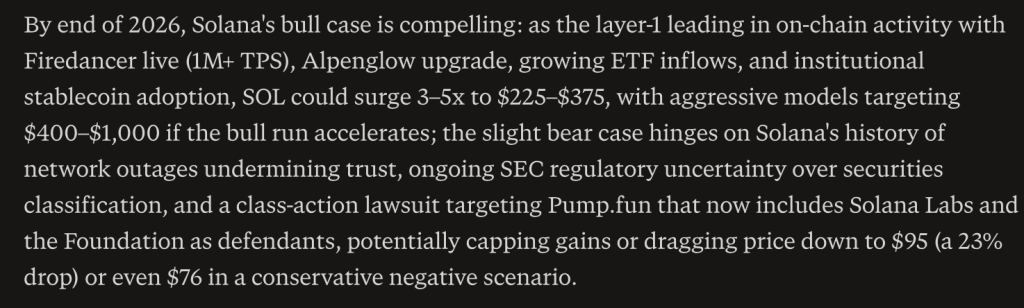
Perplexity AI is back with another Solana predicts, and this time it went further. The base case is $225 to $375 by end of 2026, a 3x to 5x from the current $74.93, with aggressive models stretching all the way to $400 to $1,000 if the bull run really accelerates.
That upper range is not a typo. Perplexity is genuinely entertaining the idea of a 13x Solana by year end, which puts it in a category of prediction that demands the underlying argument be airtight.
The foundation is Firedancer, going live at 1 million plus TPS alongside the Alpenglow upgrade, a combination that does not just make Solana faster but puts it in a performance tier no other Layer-1 can currently compete with.
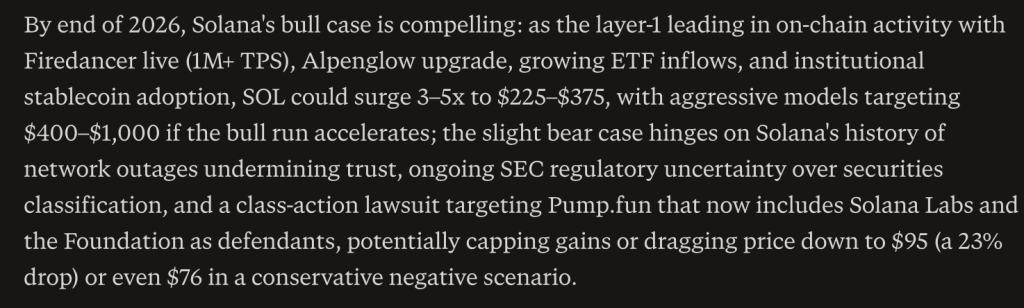
Add growing ETF inflows and institutional stablecoin adoption building on top of a network already leading all chains in on-chain activity, and the bull case starts to feel less like optimism and more like a technology gap compounding.
When a chain is measurably ahead on throughput and real usage, and institutions start flowing capital in through regulated vehicles, the price tends to follow eventually.
What makes this prediction more interesting than a simple number is the specificity of the bear case.

Perplexity is not just saying macro could be bad. It names the Pump.fun class-action lawsuit that now includes Solana Labs and the Foundation as defendants as a genuine risk, alongside the network’s historical outage problem and ongoing SEC classification uncertainty.
A bear scenario landing at $76 to $95 is actually the most grounded part of this entire outlook, and notably, the current price of $74.93 sits right at the edge of that range, which tells you exactly how much risk the market has already priced in.
Solana Price Prediction: When The Tech Finally Catches The Price
SOL price is at $74.93 today after a textbook V-shaped recovery off the $60 low printed earlier this month, and the daily chart is doing something it has not done convincingly since March.
It is making a higher low. The June bottom at $60 sits above the February flash low near $65 on an intraday basis, and the recovery since then has been sharper and more sustained than any of the failed bounces between March and May.
That structural shift from lower lows to potential higher lows is the first technical ingredient any meaningful trend reversal needs.
The $80 level is now the critical short-term decision point, the same shelf that broke down in late May and where the overhead supply from that breakdown now sits.
Getting through $80 on a daily close and holding it would be the first genuine sign that this recovery has legs rather than just momentum.
Above it the $90 to $100 region becomes the next meaningful test, and clearing that opens the path toward the $120 to $140 zone where Perplexity’s base case starts to become visible on the chart.
The RSI is the most striking element of the current picture. At 51.62 with the signal line at 31.23, the gap between them is over 20 points, the widest divergence in this entire series of predictions today.
Momentum was absolutely buried during the June flush and has now rocketed all the way back to the midline, crossing neutral territory faster than at any point in the past several months. An RSI that recovers this aggressively from deeply oversold levels and crosses 50 without pausing tends to signal the beginning of a new directional phase rather than just a bounce.
Perplexity’s $225 to $375 target requires Solana to sustain that momentum for months. The RSI is suggesting the fuel is there. The chart just needs $80 to confirm it.
You Might Like What Perplexity AI Predicts About This New Layer 3 Called LiquidChain
Large caps are not in trouble. They are just out of the room. Bitcoin, Ethereum, and XRP have been testing the same ceilings for weeks with nothing breaking through.
Every macro catalyst has a new arrival date. Every institutional wave has a new quarter attached to it. Holding assets where the next leg depends entirely on someone else’s decision is not a trade. It is a waiting room.
The money that wins cycles never announces where it is going.
The capital that actually moves in cycles relocates before the destination has a name.
Small market cap infrastructure plays operate on physics that large caps simply cannot replicate. A rotation that would not register as a rounding error at Bitcoin’s scale can reprice an undiscovered project by multiples.
The opportunity lies in the distance between what something is genuinely worth and what the market has assigned it so far. That distance shrinks to zero the moment discovery happens. Before that moment, it is fully capturable.
Multi-chain fragmentation is one of the most consistently expensive problems in DeFi, and it has never been solved. Bitcoin, Ethereum, and Solana exist as completely isolated systems. No shared architecture. No native interoperability. Every time value moves between them, the disconnection extracts its cost in fees, slippage, and failed transactions. That cost hits every single crossing every single time.
LiquidChain makes the crossing free, as Perplexity AI predicts. All 3 networks inside one execution environment. Single deployment. Complete ecosystem access. No tax on any interaction.
The presale is at $0.01454 with just over $840,000 raised. Early and undiscovered.
Execution is unproven. Adoption is unknown. Established assets offer predictability toward a ceiling that the market already sees. LiquidChain is an entry point that does not exist once the market finds it.
Explore the LiquidChain Presale
The post Perplexity AI Predicts Explosive Solana Price Prediction by End of 2026 appeared first on Cryptonews.

Bitcoin’s recovery following Trump’s statement about a deal with Iran continued in the past 24 hours as the asset exceeded $67,000 for the first time in two weeks before it was stopped.
Ethereum jumped past $1,800 before the bears stepped up, while HYPE and XLM have marked the most significant gains from the larger-cap alts today.
BTC Tapped $67K
After dumping below $60,000 during the first week of June, bitcoin began its gradual recovery with a quick reclaim of that level. The following week was somewhat sluggish, as the asset spent it trading sideways between $61,000 and $64,000. It moved mostly when there was news about the war in the Middle East.
As such, Trump’s promise on Saturday that the US and Iran would announce a deal on Sunday brought some hope in the market. However, there were new attacks from Israel on the following day against Lebanon, which put further doubt on the already fragile situation.
Nevertheless, the POTUS indeed announced a deal with Iran on Sunday evening, which sent BTC higher immediately. The asset traded just under $64,000 before it shot up to $66,000. It kept climbing on Monday and briefly jumped past $67,000 for the first time in two weeks.
Although it has been stopped there, it still trades above $66,000 now. Its market cap has climbed to $1.330 trillion, while its dominance over the alts is at 56.5%.

HYPE Keeps Pumping
Most altcoins followed the green wave, including ETH, which tapped $1,850 for the first time since the start of the month. Ripple’s XRP also charted notable gains, surging to nearly $1.30 amid improved sentiment. SOL is up to $74, while HYPE continues to outperform. Hyperliquid’s native token has stolen the show again by surging past $70 after another double-digit pump.
XLM and UNI have risen by over 12% each as well. The former has tapped $0.21, while the latter is close to $3. ZEC is up to $523 after a 5% increase. In contrast, TON and TAO have dropped by over 5%.
The total crypto market cap is up by another $25 billion in a day to over $2.350 trillion on CG.

The post HYPE Soars Again by Double Digits, BTC Reached $67K: Market Watch appeared first on CryptoPotato.
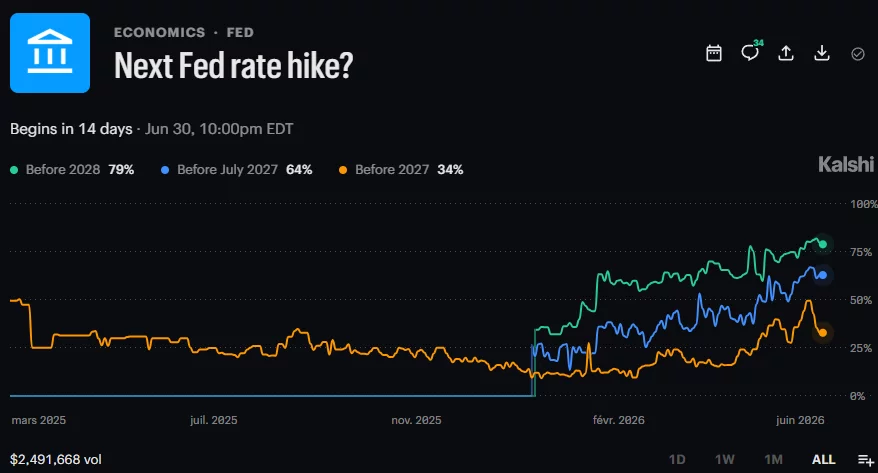
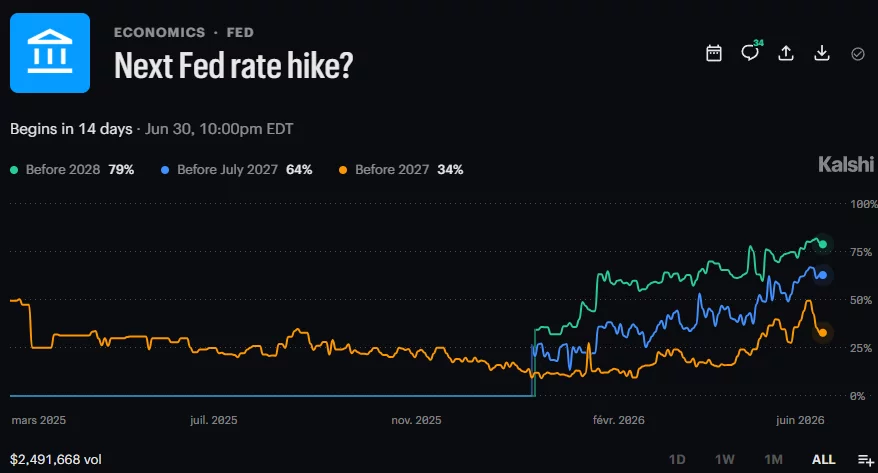
Markets have increasingly priced in a future Federal Reserve rate hike ahead of this week’s FOMC meeting, with prediction markets assigning a 64% chance of tighter policy before July 2027.
Summary
- Markets now price a 64% probability of a Fed rate hike before July 2027.
- Economists expect the Fed to leave rates unchanged at this week’s FOMC meeting.
- Persistent inflation and higher energy prices have reduced expectations for future rate cuts.
According to Kalshi prediction market data, traders currently assign a 64% probability to the Federal Reserve raising interest rates before July 2027. The growing expectation comes as inflation remains elevated and energy prices have risen following tensions between the United States and Iran.
Investors are now turning their attention to the Federal Open Market Committee meeting on June 17, where CME FedWatch data shows a 99.4% probability that officials will keep benchmark rates unchanged.
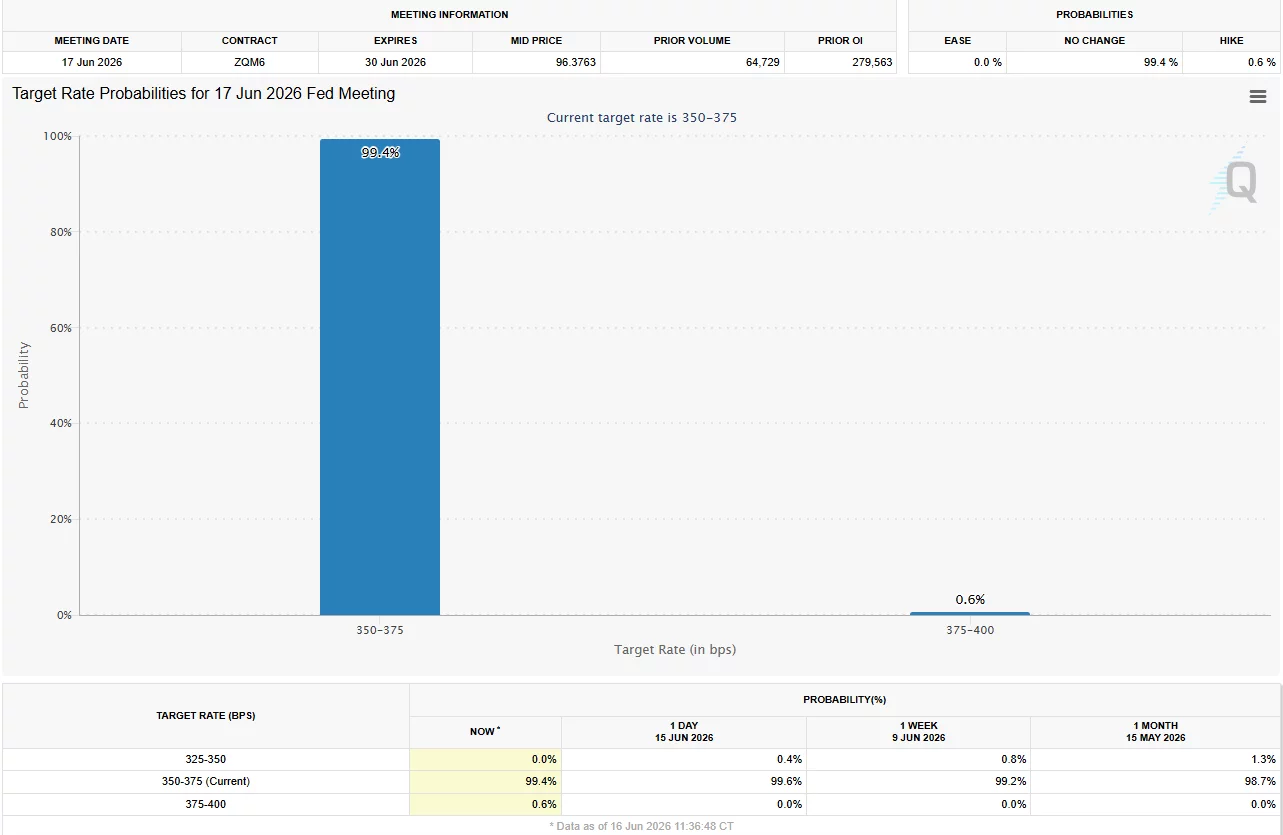
While no immediate policy move is expected, market participants are closely watching for signals about the direction of future monetary policy.
A recent Bank of America fund manager survey showed that nearly 40% of respondents expect at least one rate hike within the next 12 months, up from 16% a month earlier. At the same time, only 28% anticipate rate cuts, indicating a notable change in investor expectations as inflation pressures persist.
Markets expect policymakers to abandon easing bias
Fresh insight from CNBC’s latest Fed Survey points to a similar outlook. Among 32 economists, strategists, and fund managers surveyed by the network, none expect the Federal Reserve to change rates at this week’s meeting or at any point through 2027.
CNBC also cited Gregory Daco, chief economist at EY, who said Warsh may face a different policy environment than many investors expected.
“While Warsh is generally perceived as dovish, he will inherit a committee that has become noticeably more hawkish.”
While respondents do not anticipate an outright rate increase, CNBC reported that 88% expect the Fed to remove language suggesting that its next move would likely be a rate cut. Such a change would signal that policymakers are no longer leaning toward easing monetary policy.
Kevin Warsh, who is chairing his first FOMC meeting after being appointed by President Donald Trump, enters the meeting at a time when inflation has complicated the outlook for lower rates.
CNBC noted that Trump has long pushed for rate cuts, but higher inflation linked in part to tariffs and the conflict with Iran has pushed those expectations further into the future.
Fed funds futures markets have also moved in the same direction. According to CNBC, traders no longer expect meaningful policy easing over the next several years and instead see interest rates remaining close to current levels.
Inflation and oil prices keep pressure on rate outlook
Recent economic data has reinforced those concerns. As reported by crypto.news earlier, U.S. consumer prices rose 0.5% in May from the previous month, while annual inflation accelerated to 4.2% from 3.8% in April.
Rising energy costs have contributed to the inflation outlook. Oil prices moved higher in recent months as tensions between Washington and Tehran raised concerns about supply disruptions through the Strait of Hormuz.
Even so, CNBC’s survey found little support for the idea that the Federal Reserve would respond with immediate rate hikes. Instead, respondents expect the federal funds rate to remain close to its current 3.62% level through 2027.
Additional uncertainty surrounds how recent geopolitical developments may affect policy decisions. CNBC reported that a potential agreement between the United States and Iran, announced after its survey was completed, could ease pressure from energy prices and give policymakers more flexibility if inflation begins to cool.
According to CNBC, a person familiar with the matter said Warsh may also have more freedom in setting monetary policy because President Trump trusts him, potentially reducing political pressure around future rate decisions.
Disclosure: This article does not represent investment advice. The content and materials featured on this page are for educational purposes only.

Key Takeaways
-
Coinbase launches asset-backed tokenized equities, driving COIN interest
-
COIN stock registers modest uptick following tokenized stock announcement
-
Exchange aims to democratize U.S. equity access through blockchain technology
-
Real share backing distinguishes Coinbase’s offering from synthetic products
-
Platform extends tokenization efforts with new equity-backed digital assets
Coinbase Global (COIN) registered a modest uptick as its newly announced tokenized stock initiative drew investor attention to its expanding market approach. COIN shares traded at $170.13, reflecting a 0.30% increase, following a session marked by price fluctuations. The stock briefly climbed past $172 during mid-morning hours before settling near opening prices.
COIN Shares Rise Following Tokenized Stock Product Reveal
Coinbase revealed its intention to introduce tokenized U.S. equities with complete one-to-one backing by actual shares. The offering will encompass prominent corporations such as SpaceX, Nvidia, Google, Strategy, and Bitmine. According to the platform, customers will be able to buy, sell, hold, redeem, and move these digital shares on blockchain networks.
The crypto exchange characterized this initiative as an integral component of its comprehensive “Everything Exchange” vision. Coinbase has systematically expanded beyond basic cryptocurrency transactions into derivatives trading, prediction markets, and diverse financial instruments. Consequently, the tokenized equity product represents an additional milestone in diversifying its service offerings.
The stock’s subdued price movement reflected a cautious market response to the news. COIN maintained positive momentum despite experiencing notable intraday volatility. Nevertheless, the development sustained investor focus on Coinbase as tokenization continues gaining prominence throughout financial sectors.
Platform Emphasizes Genuine Ownership in Tokenized Products
Coinbase emphasized that every tokenized equity will correspond to an authentic underlying U.S. stock share. The exchange distinguished its structure from derivatives, synthetic constructs, or promissory instruments. Additionally, the company confirmed that qualified participants will receive ownership benefits such as dividend distributions.
Chief Executive Brian Armstrong stated the offering provides customers with legitimate ownership through blockchain infrastructure. He further explained the framework merges traditional shareholder privileges with blockchain-enabled transfers. His statements positioned Coinbase’s product apart from competing tokenized equity offerings that merely mirror price movements.
The service will initially target qualified international customers. Coinbase noted that numerous individuals outside U.S. borders continue experiencing restricted access to American stock markets. Accordingly, the platform seeks to leverage blockchain settlement mechanisms to broaden availability while maintaining complete asset backing.
COIN Performance Mirrors Industry Tokenization Trend
Coinbase’s product launch arrives amid growing enthusiasm for tokenization throughout cryptocurrency and conventional finance sectors. Multiple exchanges and blockchain enterprises have pursued bringing equities, funds, and private market instruments onto blockchain networks. This evolution has intensified competition for regulated, asset-secured tokenized offerings.
The new product also emerges following recent developments surrounding tokenized securities connected to the SpaceX IPO. Several crypto platforms terminated related initiatives after tokenization partners couldn’t secure underlying shares. That incident heightened pressure on platforms to demonstrate robust asset backing and redemption capabilities.
Coinbase is leveraging its reputation, custody infrastructure, and regulatory compliance to distinguish its offering from inferior alternatives. The exchange also continues diversifying through pre-IPO perpetual contracts and additional financial products. For COIN investors, the tokenized equity initiative provides further evidence of its strategic diversification approach.

Crypto World
BlockDAG’s $0.00000044 Entry Price Has Traders Watching Closely as 5,000 TPS Upgrade Goes Live

Crypto investors spend a lot of time searching for the next breakout opportunity, but timing is often the hardest part. Many projects attract attention only after prices have already moved significantly higher, leaving late entrants wondering whether the biggest gains have already happened. That is why BlockDAG is generating fresh discussion across the market right now. The project is entering a new phase with a live 5,000 transactions-per-second network upgrade, a growing ecosystem of utility products, and a Legacy Sale price of just $0.00000044.
What is making people pay attention is not simply the low entry price. It is the combination of infrastructure, utility, and a published Buyback Programme that currently offers a direct swap rate of $0.10 per BDAG. According to programme details, more than 1 billion coins have already moved through the system at that rate. In a market where many projects rely on future promises, BlockDAG is presenting users with a live network, active products, and an established mechanism that participants can already use.
With a major network upgrade now operational and utility demand expanding, many investors are asking whether this could be one of the more overlooked opportunities in the current crypto cycle.
The 5,000 TPS Upgrade Changes the Conversation
BlockDAG’s latest milestone is the successful deployment of its new network upgrade, increasing throughput to 5,000 transactions per second. For blockchain networks, scalability has always been one of the biggest challenges. As user activity grows, networks often face congestion, higher costs, and slower transaction processing.
The new upgrade is designed to strengthen the foundation for the broader BlockDAG ecosystem. Faster transactions and higher throughput are not simply technical achievements. They create the capacity needed to support real-world applications across gaming, payments, stablecoins, lending, borrowing, and other services being built on the network.
This matters because crypto adoption increasingly depends on usability. Networks that cannot efficiently handle growing activity often struggle to maintain momentum. By contrast, BlockDAG is positioning itself to support larger transaction volumes while continuing to expand its ecosystem.
For investors watching infrastructure projects, the upgrade signals that development is continuing beyond token sales and marketing campaigns. The focus is shifting toward network performance and practical utility.
Utility Demand Is Already Operating
One reason some market participants are paying close attention is the growth of BlockDAG’s utility ecosystem. The BlockDAG Casino, which launched on May 14, represents one of the most visible examples. The platform supports 25 payment methods, including Visa, Mastercard, Google Pay, and Apple Pay, while offering access to more than 30 sports.
More importantly, the casino creates a direct utility loop for the token itself. Users acquire BDAG to participate, and winnings are distributed back in BDAG. This creates a recurring cycle of token demand that is linked to platform activity rather than purely market speculation.

Unlike projects that depend entirely on social media attention or market sentiment, utility-driven demand can continue operating regardless of whether the broader crypto market is bullish or bearish. Every active product expands the reasons users may want to hold or use the token.
The ecosystem extends beyond gaming. BlockDAG’s BDUSD stablecoin introduces another layer of demand by requiring BDAG to be locked as collateral during the minting process. As more stablecoin activity occurs on the network, additional BDAG can become locked within the system, reducing the amount available in circulation.
For investors evaluating long-term sustainability, these utility mechanisms are becoming increasingly important. They demonstrate how demand can be generated through product usage rather than relying entirely on speculative trading activity.
Why the Legacy Sale Is Creating Urgency
Perhaps the biggest reason for the recent attention is the gap between the current Legacy Sale price and the Buyback Programme rate.
At present, users can access BDAG through the Legacy Sale at $0.00000044. The published Buyback Programme offers a direct swap at $0.10 per BDAG, creating a documented 56X spread between entry and exit values.
That figure has become a major talking point because it is tied to an active programme rather than a future price prediction. Over 1 billion BDAG have already moved through the system at the stated buyback rate, providing evidence that the mechanism is operating in practice rather than existing only as a theoretical roadmap item.

The combination of a live buyback programme, a functioning direct swap system, and a newly upgraded network has created a sense of urgency among market observers. Many investors understand that opportunities attracting widespread attention rarely remain undiscovered for long.
At the same time, BlockDAG’s infrastructure continues expanding. The project operates as a Layer-1 Proof-of-Work blockchain with both EVM and WASM compatibility, providing flexibility for developers building decentralized applications. Some analysts have even drawn comparisons to the early accumulation stages of Kaspa due to its focus on scalable infrastructure and network growth. Meanwhile, the project’s X1 mining application has already attracted 4 million users, giving the ecosystem a substantial existing community base that many younger blockchain projects lack.
The Last Line
As the 5,000 TPS network upgrade goes live and utility products continue expanding, BlockDAG is entering a phase where investors may increasingly evaluate it based on active infrastructure rather than future promises. Whether that attention accelerates further remains to be seen, but with a live network, functioning utility ecosystem, and a Legacy Sale entry of $0.00000044, it is easy to understand why many market participants are watching closely before this phase comes to an end.

Presale: https://purchase.blockdag.network
Website: https://blockdag.network
Telegram: https://t.me/blockDAGnetworkOfficial
Discord: https://discord.gg/Q7BxghMVyu
Disclaimer: This is a Press Release provided by a third party who is responsible for the content. Please conduct your own research before taking any action based on the content.

Bitcoin traded near $106,000 on Tuesday as Michael Saylor presented a new framework for Bitcoin-based finance. The Strategy chairman placed Bitcoin at the center of a five-layer asset structure. Meanwhile, the company continued expanding its Bitcoin treasury through additional purchases.
The framework keeps Bitcoin unchanged and places financial products above the asset. As a result, Saylor rejected staking models and protocol-based yield mechanisms. Instead, he promoted capital markets products that use Bitcoin as collateral and reserve capital.
Bitcoin Remains the Foundation of the Digital Asset Stack
Saylor organized the framework into five layers that begin with Bitcoin as digital capital. Above Bitcoin sit digital credit, digital money, digital yield, and digital equity. Consequently, the structure separates different financial functions without changing Bitcoin’s core design.
The model treats Bitcoin as a reserve asset that supports other financial instruments. Credit and equity products then provide different risk and return profiles. Therefore, users can choose exposure levels without altering Bitcoin itself.
The proposal also presents Bitcoin volatility as a feature rather than a weakness. According to the framework, volatility creates opportunities for structured financial products. At the same time, Bitcoin remains scarce, neutral, and independent from additional issuance mechanisms.
Digital Credit Products Take Center Stage
Digital credit forms the first layer above Bitcoin in Saylor’s structure. These instruments use Bitcoin holdings as collateral while assigning different risks across the capital structure. As a result, credit products may behave differently from direct Bitcoin ownership.
Strategy’s preferred stock products serve as examples of this approach. In this arrangement, equity absorbs more price fluctuations while credit products target steadier performance. However, market conditions, liquidity, and demand can still affect outcomes.
Saylor also emphasized that credit products do not maintain a fixed volatility profile. Their performance changes based on financial conditions and capital market activity. Therefore, the structure redistributes risk rather than eliminating it entirely.
The discussion also connects to Strategy’s treasury metrics. The company uses measurements that account for debt and preferred stock obligations. Consequently, shareholders can assess Bitcoin exposure after senior claims receive consideration.
Strategy Expands Bitcoin Holdings While Testing the Model
Strategy remains the largest public corporate holder of Bitcoin. The company recently acquired 1,587 BTC for approximately $100 million. As a result, total holdings increased to 846,842 BTC.
The purchase followed scrutiny surrounding an earlier sale of 32 BTC. That transaction raised questions about how Bitcoin sales fit within Strategy’s treasury strategy. Nevertheless, Saylor has maintained that occasional sales can support broader capital management objectives.
The framework attempts to bridge Bitcoin and traditional finance through structured products. Digital money products could combine Bitcoin-backed credit with cash equivalents and government securities. Consequently, the model seeks to offer stability, liquidity, and income while preserving Bitcoin’s role as the underlying capital base.
The broader debate now focuses on whether Bitcoin-backed credit structures can perform consistently across different market environments. Supporters view the model as a pathway toward wider financial adoption. Meanwhile, critics continue to highlight debt obligations, preferred dividend commitments, and the pressure that sharp Bitcoin price movements could place on the overall structure.
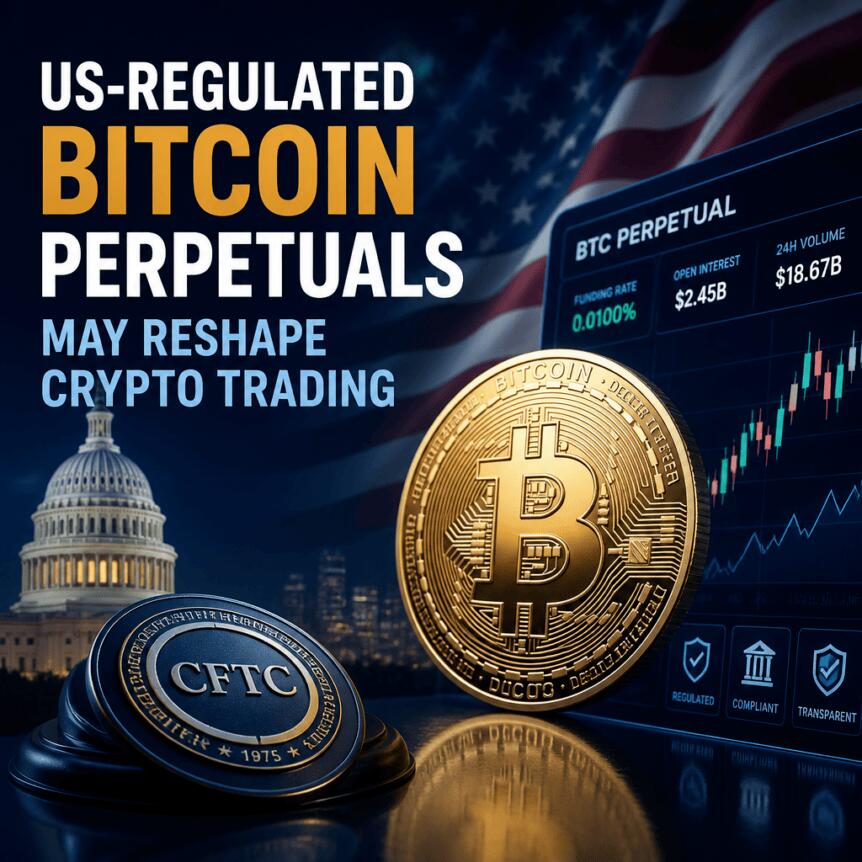
Perpetual futures have long been one of crypto’s most important trading tools, but for much of the industry’s growth they largely operated outside regulated US markets. That is starting to change: in late May 2026, the US Commodity Futures Trading Commission (CFTC) approved KalshiEX to list the BTCPERP contract, a Bitcoin perpetual futures product tied to the spot price of Bitcoin.
The approval matters beyond the contract itself. It signals that one of crypto’s most widely used leverage instruments may finally gain a clearer path within the federal regulatory framework—potentially reshaping how both retail and institutional participants access leveraged Bitcoin exposure in the United States.
Key takeaways
- The CFTC approved KalshiEX to list BTCPERP, bringing a Bitcoin perpetual futures product under a US-regulated listing framework.
- Perpetual futures differ from traditional futures in that they have no set expiration date, relying on funding payments to stay aligned with spot prices.
- US-regulated venues are expected to impose stricter compliance and risk controls than many offshore platforms, including KYC/AML and enhanced oversight.
- For institutions, regulated perps may remove some compliance barriers that previously limited participation in offshore markets.
- Crypto exchanges may face a new competitive dynamic as onshore regulated perpetuals potentially draw some liquidity over time.
Why BTCPERP’s approval is a market-structure milestone
According to the CFTC’s press release from late May 2026, the regulator approved KalshiEX to list BTCPERP. While regulated US derivatives have existed for years, perpetual contracts—popular across crypto markets globally—have historically been harder to place cleanly within traditional rulesets.
The regulatory move provides a specific reference point for how perpetual products can fit under existing futures market oversight, rather than being treated as an entirely separate category that regulators must address from scratch. It also increases “market clarity” around the treatment of perpetual contracts, including how they can be listed when safeguards are in place. That broader clarity is reflected in a federal register policy statement concerning the listing of perpetual contracts, published in early June 2026.
For traders, that distinction is important. Perpetuals are not just a niche product; they are a core mechanism for leverage, hedging, and short-term positioning. Bringing them into a more regulated US environment could change how risk is managed and how market participants decide between US and offshore execution.
Perpetual futures: how they work and why they spread
Perpetual futures, commonly called “perps,” are derivatives that let traders take exposure to Bitcoin’s price movement without holding the underlying asset. Unlike traditional futures, perpetual contracts do not come with a fixed expiration date—positions can remain open as long as margin requirements are met.
To prevent the contract price from drifting too far from Bitcoin’s spot price, perpetuals typically use a funding rate mechanism. Depending on prevailing market conditions, traders holding long positions may pay shorts (or vice versa) at periodic intervals. This funding exchange helps keep perp prices closer to spot.
That design has helped explain why perpetuals became a dominant product in crypto trading. They provide leverage and allow traders to express both bullish and bearish views without the operational friction of rolling expiring futures contracts. Over time, speculators, hedge funds, market makers, and arbitrage traders all adopted perps as a key part of their strategy toolkits.
What kept US markets on the sidelines—and what changes now
For years, US regulators were cautious about approving products that resembled the perpetuals widely offered on offshore crypto platforms. The concern was not about derivatives trading in general—regulated futures markets already exist in the United States. Instead, the hesitancy centered on features commonly associated with certain offshore venues, including very high leverage, limited customer protections, weaker transparency, and risks related to market manipulation.
As a result, many US participants had fewer options. They could either use offshore platforms where permitted, rely on other regulated derivatives such as CME Bitcoin futures, or use alternative regulated exposure such as spot Bitcoin exchange-traded funds (ETFs). This created an unusual imbalance: one of the most widely used crypto trading products stayed largely outside the mainstream of regulated US financial infrastructure.
BTCPERP’s approval is a step toward closing that gap. It also raises an immediate question for market participants: will regulated perpetuals offer enough liquidity and competitive execution to justify switching, particularly for strategies that rely on tight spreads and reliable order-book depth?
How regulated perps may differ for traders and institutions
While regulated perpetual contracts and offshore versions may appear similar from a distance—both can provide leveraged exposure to Bitcoin without requiring traders to hold BTC—US-regulated products are expected to operate under stricter market and compliance standards.
Under US regulatory oversight, exchanges are generally required to implement safeguards such as know-your-customer (KYC) and anti-money laundering (AML) checks, along with monitoring for potential abuse and regulatory review of risk management practices. Margin rules are also commonly more conservative than those found on many offshore venues, which can matter significantly for traders accustomed to very high leverage.
That trade-off is particularly relevant for retail participants. Regulation does not eliminate the core risk that perpetual futures carry: high leverage can amplify losses and lead to rapid liquidations during volatility spikes. The shift toward regulated venues may reduce certain market-structure risks, but it does not change that perpetuals remain leveraged derivatives where adverse moves can happen quickly.
For institutions, the impact could be more pronounced. Hedge funds, asset managers, and proprietary trading firms have often been constrained by internal compliance and risk policies when it comes to offshore derivatives exposure. A US-regulated listing framework may lower those barriers and help institutions build strategies that combine leveraged tools with more traditional oversight.
The potential upside for market quality is also tied to participation. If more institutional capital can access Bitcoin perps through regulated channels, that can improve liquidity and potentially make market pricing more efficient—though the timing and scale of any shift remain uncertain.
Competition may intensify as derivatives access becomes more “onshore”
BTCPERP’s approval also sets up a competitive test for trading platforms. Cointelegraph previously reported that KalshiEX secured the first approval for a regulated Bitcoin perpetual contract, and it is unlikely to be the last if the CFTC continues reviewing perpetual products under this framework.
Some exchanges have already been positioning for derivatives expansion and regulatory engagement. Cointelegraph coverage has noted Coinbase’s activity in crypto derivatives and its broader regulatory efforts connected to CFTC-regulated frameworks, including through a futures commission merchant arrangement.
Whether liquidity moves from offshore venues to regulated US platforms is not straightforward. Offshore exchanges still offer deep liquidity and established user bases. Any migration is likely to occur gradually—driven by factors such as available leverage, trading costs, market depth, institutional participation, and the predictability of the regulatory environment.
What regulators are still focused on
Even with approval, regulators’ concerns about perpetual futures remain. Leverage is at the center of the risk debate: during fast and large market swings, heavily leveraged positions can trigger liquidation cascades that can worsen volatility. Regulated venues may add safeguards around market structure, but they cannot remove the fundamental risks embedded in leveraged trading.
For readers, the key takeaway is that regulation primarily targets how the market operates—who is allowed to trade, how platforms are supervised, and what protections and controls exist—rather than guaranteeing that the investment outcome will be safe.
Traders and investors should watch how BTCPERP launches in practice: the contract’s terms, the depth of liquidity it attracts, and whether additional regulated perpetual approvals follow. Those developments will help determine whether regulated Bitcoin perps become a meaningful “mainstream” venue in the US—or whether offshore platforms retain their dominance for much of the market.

[PRESS RELEASE – BELIZE City, Belize, June 16th, 2026]
BC.GAME is integrating Polymarket, the world’s largest prediction market, to launch a new Prediction Center across sports, crypto and real-world event.
BC.GAME today announced the launch of its new Prediction Center, powered by Polymarket, bringing prediction markets directly into the BC.GAME platform. Through the new Prediction Center, users will be able to explore and participate in prediction markets related to sports events, crypto asset prices and major real-world events within BC.GAME.
Polymarket is one of the world’s largest prediction market platforms and one of the most representative crypto-native consumer applications in recent years. It turns news, market sentiment and collective judgment into real-time prices, allowing users to express their views on future outcomes through market activity. Polymarket covers topics across sports, crypto, politics, culture, global events and more.
What’s New
Through the Prediction Center, powered by Polymarket, BC.GAME users can explore and participate in multiple types of prediction markets, including:
- Sports-related predictions
- Crypto asset price predictions, including BTC, ETH and SOL
- Predictions around major events and market trends
Users can move from watching sports and following market movements to participating in prediction markets without leaving BC.GAME. This makes prediction markets part of the BC.GAME experience, rather than a separate external tool.
Why It Matters
Prediction markets are becoming one of the most important consumer applications in crypto.
Unlike traditional sports betting, which is mainly built around match outcomes, or standard market tools, which simply display price movements, prediction markets turn “what do you think will happen?” into an activity that can be priced by the market in real time. For users following sports, crypto and global events, this creates a faster and more engaging way to participate.
By integrating Polymarket’s infrastructure, BC.GAME adds a new interaction layer beyond sportsbook and casino games. Users are not only watching or placing bets; they can also form views on real-world events and express those views through prediction markets.
The integration also makes BC.GAME’s 2026 football season experience more complete. As global football momentum continues to build, users can interact around match progress, team performance and related market movements, instead of only focusing on pre-match bets or final results.
A More Complete Crypto Entertainment Layer
BC.GAME has continued to extend its crypto-first product experience across entertainment and sports. From crypto payments and sportsbook to the BC Engine rewards mechanism, the platform is building a more complete user participation loop.
The Prediction Center, powered by Polymarket, adds a mature, market-driven interaction layer to that loop.
“Polymarket has already shown that prediction markets can become one of crypto’s truly mainstream consumer applications,” said Kar Kheng Giam, CEO of BC.GAME. “Through this integration, we are bringing that mature experience seamlessly into BC.GAME, allowing users to follow sports, track markets, make predictions and take part in more real-time interaction all in one place.”
About BC.GAME
BC.GAME is a crypto iGaming platform offering sportsbook, casino, crypto payments and reward-driven user experiences across multiple markets where permitted.
About Polymarket
Polymarket is the world’s largest prediction market, allowing users to trade on the outcomes of real-world events across sports, crypto, finance, politics, culture and more. Its markets reflect real-time probabilities based on user activity and market pricing.
The post BC.GAME Launches Prediction Center, Powered by Polymarket appeared first on CryptoPotato.
A bipartisan group of US senators led by Republican Senator Cynthia Lummis has urged the Treasury to ensure that state authorities are given the ability to regulate stablecoin issuers as the department considers how to implement the GENIUS Act.
In a letter to Treasury Secretary Scott Bessent on Tuesday, the lawmakers said it was critical that the Treasury implement a section of the law giving a pathway for certain issuers to be regulated by the states “in a manner that preserves and promotes State participation.”
The GENIUS Act allows issuers that have a stablecoin with a market value of $10 billion or less to be regulated by a state authority if that state has laws largely similar to the bill.
Currently, that would mean all stablecoins but three, Tether (USDt), USDC (USDC) and USDS (USDS), formerly Dai (DAI), could be regulated by the states, as all have a market value above $10 billion, according to CoinGecko.
In April, the Treasury sought public input for how it plans to implement the GENIUS Act at the state level, rules that President Donald Trump signed into law in July that regulate stablecoins and their issuers.
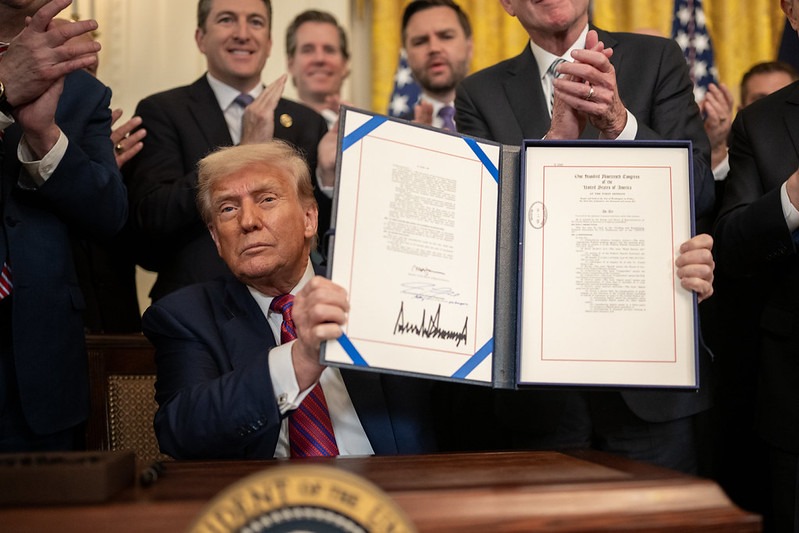
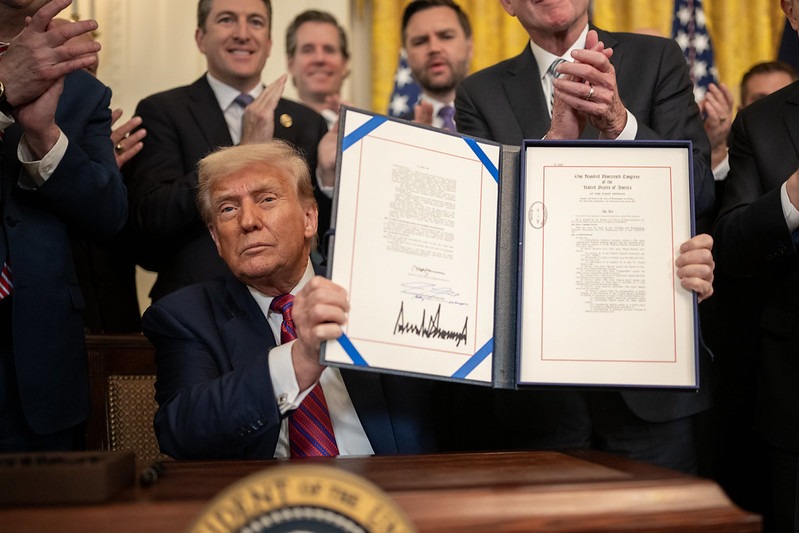
President Donald Trump signing the GENIUS Act in July 2025. Source: The White House
“Congress clearly sought to preserve the dual banking system and the crucial role of State banking agencies in supervising this market,” the senators said in their letter.
They added that the Treasury’s proposal “did not address the timeline and procedural requirements related to State certification.” They argued this created “uncertainty for States” and could be interpreted as the process being “a one-time window that effectively bars future certifications.”
The lawmakers said that state legislatures vary, and a flexible certification framework was needed to ensure that states can participate when they have rules implementing the GENIUS Act.
Related: Anchorage backs Treasury’s GENIUS AML rules, seeks secondary-market sanctions clarity
“States must be able to develop and seek certification of stablecoin regulatory regimes as demand for these charters materializes and as legislative schedules permit,” the letter said.
Republican Senators Bill Hagerty, Kevin Cramer and Pete Ricketts, along with Democratic Senators Kirsten Gillibrand, Angela Alsobrooks, and Catherine Cortez Masto, also signed the letter.
Public comments on the Treasury’s proposal closed on June 2, and it will now draft a final rule for publication in the Federal Register.
Magazine: Guide to the top and emerging global crypto hubs: Mid-2026


State Street has launched a government money market fund tailored for stablecoin issuers as new U.S. regulations begin to define how reserve assets can be managed under the GENIUS Act.
Summary
- State Street launches a stablecoin reserve fund designed to comply with GENIUS Act requirements.
- Anchorage Digital and State Street Bank back the new money market fund for stablecoin issuers.
- State Street projects global stablecoin issuance could reach $1.9 trillion to $4 trillion by 2030.
According to State Street, the newly introduced State Street Stablecoin Reserves Money Market Fund is structured as a registered Rule 2a-7 government money market fund and is designed to help stablecoin issuers meet reserve requirements established under the Guiding and Establishing National Innovation for U.S. Stablecoins (GENIUS) Act, which became law in July 2025.
The product represents one of the earliest efforts by a major traditional asset manager to create an investment vehicle specifically aligned with the federal stablecoin framework. State Street Bank and Trust Company and crypto-focused bank Anchorage Digital are serving as initial backers of the fund.
Commenting on the launch, State Street Chief Executive Officer Yie-Hsin Hung said:
“With the GENIUS Act, a clear framework has been established for how stablecoin reserves can be invested.”
Hung added that the firm’s cash management business has historically focused on principal preservation, liquidity, and income.
Stablecoin issuers gain new reserve option
For stablecoin companies, reserve quality is becoming increasingly important as regulatory standards evolve.
Anchorage Digital co-founder and Chief Executive Officer Nathan McCauley described stablecoins as core financial infrastructure and said reserve management will play a larger role as the sector expands.
According to McCauley, the fund combines State Street Investment Management’s experience in cash management with Anchorage Digital’s regulated digital asset infrastructure under the new regulatory framework.
The launch arrives as large financial institutions continue introducing products tied to tokenized cash and digital asset settlement. Earlier this year, JPMorgan unveiled a similar fund structure intended to place stablecoin reserves on-chain.
BlackRock has also entered the segment through a tokenized money market fund that provides an option for stablecoin-related liquidity management.
Recent activity suggests State Street has been steadily building its digital asset presence. As reported by crypto.news in January, the firm unveiled a platform supporting tokenized deposits, stablecoins, and crypto-backed funds for institutional clients.
At the time, the Boston-based custodian said it planned to develop and manage money market funds and exchange-traded funds alongside its asset management division and third-party managers.
The announcement followed State Street’s December 2025 partnership with Galaxy Digital to launch a tokenized fund for institutional investors.
Stablecoin market growth attracts major institutions
State Street’s latest launch comes as market participants project significant growth in stablecoin issuance over the coming years.
According to estimates cited by the company, global stablecoin issuance could grow to between $1.9 trillion and $4 trillion by 2030. The forecast has encouraged both traditional financial firms and crypto-native companies to develop infrastructure designed to support reserve management, liquidity, and settlement services.
Alongside the new reserve fund, State Street recently introduced the State Street Galaxy Onchain Liquidity Sweep Fund, or WEEP, a tokenized liquidity vehicle built to support around-the-clock on-chain cash management.
Institutional interest in digital assets has also appeared in other parts of State Street’s portfolio. In May, regulatory filings showed the firm increased its exposure to Bitcoin-focused asset manager Strive Asset Management by approximately 770% after purchasing nearly one million shares of the company’s publicly traded stock.
The transaction was valued at roughly $17.7 million and lifted State Street’s total stake to nearly one million shares, according to the filing.
Binance has launched tokenized SpaceX shares as trading demand pushes the company’s valuation above $3 trillion and drives a surge in SpaceX-linked crypto products.
Summary
- Binance launched SpaceX bStocks with zero maker fees and automated trading support.
- SpaceX perpetual futures are now Binance’s second-most traded derivatives product after Bitcoin.
- SpaceX stock surged 12%, lifting the company’s valuation above $3 trillion.
According to a June 12 announcement from Binance, the exchange has listed SPCXB, a tokenized version of SpaceX stock, on its spot market, with trading for the SPCXB/USDT pair going live at 17:00 UTC.
Binance also enabled automated trading tools for the new pair from launch and introduced a zero maker fee promotion that will remain in effect through the end of August 2026.
A few days after trading opened, deposits and withdrawals for the token became available, allowing users to move the asset on and off the platform.
The listing arrives as investor interest in SpaceX-related products continues to grow across both traditional and crypto markets. According to Binance data cited in its announcement, the exchange now controls more than 60% of the market for SpaceX perpetual futures trading.
SpaceX products dominate Binance trading activity
Activity in derivatives markets has increased even faster than spot demand. Binance data shows that its SPCXUSDT perpetual futures contract has become the second-most traded futures product on the platform, ranking behind only Bitcoin futures.
The rapid rise in trading volumes highlights strong demand from traders seeking exposure to SpaceX through crypto-native products. Binance has increasingly expanded its tokenized equity lineup as investors look for alternative ways to access high-profile technology and private-market companies.
Recent additions to the exchange’s bStocks program include tokenized versions of Circle, Nvidia, Tesla, Micron, and Sandisk. The SpaceX launch adds one of the world’s most closely watched private companies to that growing list.
Competition intensifies in tokenized equity markets
The rollout also comes shortly after rival exchanges encountered difficulties offering SpaceX-linked tokenized products.
As previously reported by crypto.news, Coinbase recently launched tokenized shares backed one-for-one by underlying stock for companies including SpaceX, Nvidia, Google, Strategy, and Bitmine.
According to Coinbase, those assets provide direct ownership rights, allow holders to receive dividends linked to the underlying shares, and can be bought, sold, redeemed, and held on-chain.
Coinbase’s launch followed problems faced by competing platforms during the highly anticipated SpaceX public listing. Binance and Bybit had earlier promoted SpaceX-related tokenized offerings, but those initiatives were later withdrawn after tokenization provider xStocks failed to deliver the underlying SPCX shares required to support the products.
Positioning its own service differently, Coinbase stated that its infrastructure was designed to support ownership rights and dividend payments through fully backed tokenized equities.
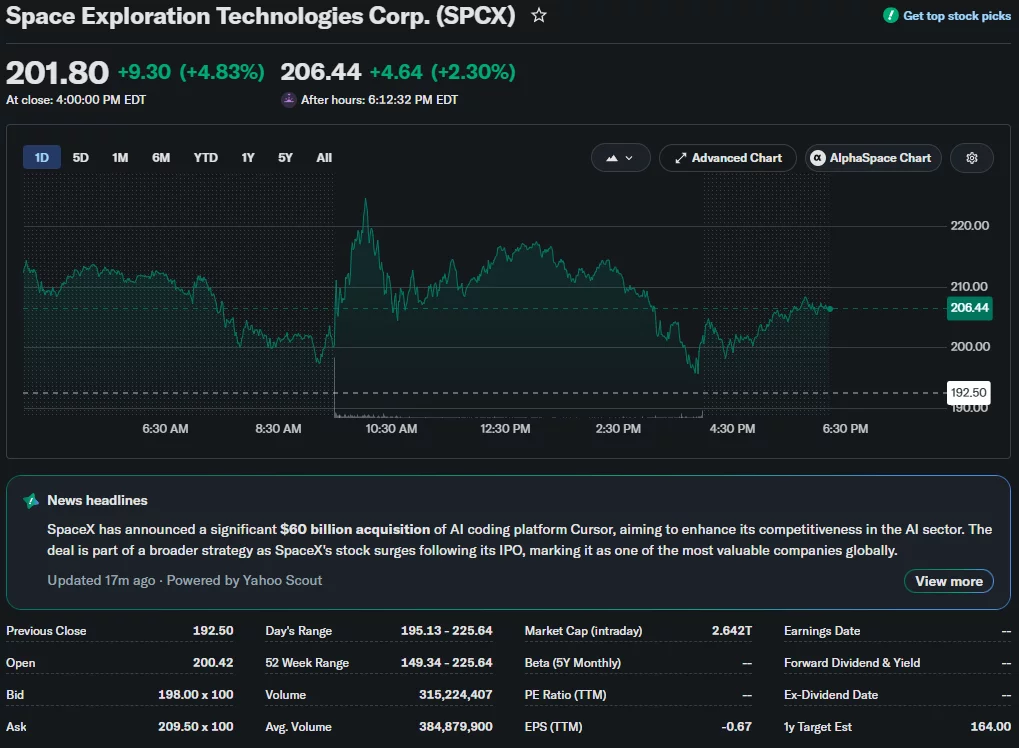
Meanwhile, enthusiasm surrounding SpaceX remained strong. According to Yahoo Finance data, SpaceX shares traded around $206.44, up roughly 5% on the session after earlier climbing as much as 17.2% to an intraday high of $225.64. The stock also touched a session low of $195.13 before giving back part of its gains.
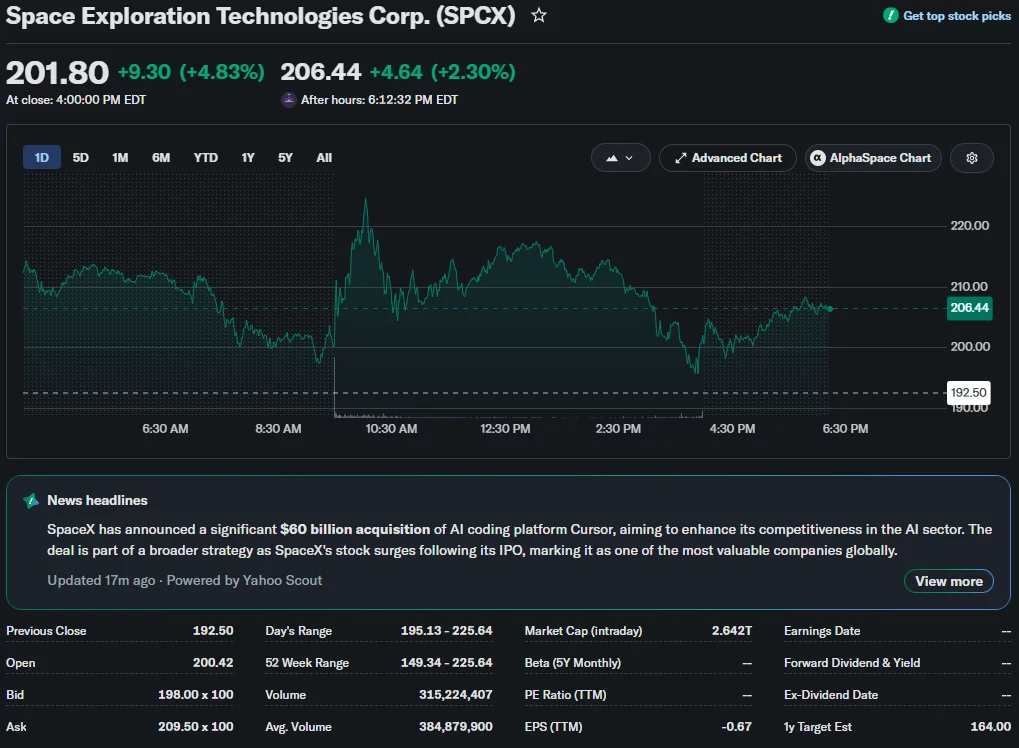
The move briefly lifted SpaceX’s valuation above $3 trillion, extending the gains recorded since its public market debut and further increasing the value of Elon Musk’s stake in the company.
Disclosure: This article does not represent investment advice. The content and materials featured on this page are for educational purposes only.

Former World Champion wrestles first WWE match in 3 months

The Webb Telescope Has Captured Its First ‘Bulge Fossil Fragment’

Man drank half bottle of vodka after work before ‘getting swept up in’ Newtownabbey riot, court hears

Blockchain.com files with SEC for U.S. IPO

Israel says it has killed new Hamas military leader in Gaza City airstrikes

NYT Strands Answers May 24 2026 Revealed for Puzzle No. 812 Theme Summer Essentials

Full video on the channel #finance #stockmarket #europe #market #business #geopolitics

AMAZING NO TAXES ON CRYPTO AND BITCOIN PAYMENTS?! WARREN TO STOP SPACEX IPO?!

Align With Financial Freedom! #ytshort #affirmations #shortvideo #shorts #ytviral #freedom #yt
-

 Business2 days ago
No Jackpot Winner as $257 Million Prize Rolls Over to $269 Million Monday Draw
-

 Crypto World5 days ago
Oppenheimer backs SpaceX as $70 billion retail frenzy builds
-

 Fashion4 days ago
Weekend Open Thread: Tuckernuck – Corporette.com
-

 Crypto World5 days ago
Markets Rally as SpaceX IPO Looms Amid Iran Tensions and Inflation Surge
-
Crypto World2 days ago
Zimbabwe Requires Crypto Businesses to Register Annually Under New FIU Regulations
-

 Business7 days ago
Thailand Ranks Second Worldwide for AI Adoption Growth, Microsoft Reports
-

 Tech4 days ago
NanoClaw integrates JFrog registries to secure AI agent downloads
-

 Tech5 days ago
This Week In Security: Microsoft On Microsoft, Register Your Domains, Linux On ARM, And FreeBSD Joins The File Cache Club
-

 Crypto World4 days ago
Bitget enters Argentina’s regulated crypto market through PSAV registration
-
 Tech5 days ago
Dutton Ranch star claims they ‘didn’t see any disruption’ on set following Chad Feehan’s exit from Yellowstone spinoff fueled by Taylor Sheridan clash rumors
-

 NewsBeat5 days ago
El Nino has formed in the Pacific and could set records, forecasters say
-

 Politics6 days ago
Politics Home | Healey Resignation Is “Colossal Failure Of Government”, Says Former Labour Defence Secretary
-

 Tech7 days ago
‘This is Seattle’s position on AI’: City Council votes unanimously to pause big new data centers
-
 Entertainment5 days ago
Donnie Wahlberg & More Heat Up Las Vegas at Circa’s Barry’s Downtown Prime
-
 Tech5 days ago
Opendoor Ends India Operations, Fueling a Bigger Conversation About AI and Outsourcing
-

 Sports6 days ago
First Time Since 1971: Australia Register Historic Low In ODI Cricket
-

 Politics5 days ago
Belfast burns, while Met chief points finger at Iran and Russia
-

 NewsBeat4 days ago
FBI searches office of Ohio voter registration group
-

 Business5 days ago
AT&T: Verizon's 27% Outperformance Sets Up A Solid Entry Point
-

 Politics6 days ago
Modi thanks Trump for wishes as US attacks Indian seafarers
You must be logged in to post a comment Login