

Crypto World
Philippine SEC Says It’s Ready to Enable RWA Tokenization


The Philippine Securities and Exchange Commission (SEC) has indicated it is prepared to regulate the tokenization of real-world assets (RWAs), arguing that the legal and supervisory framework needed for the next wave of capital-markets infrastructure is already in place. Speaking at Philippine Blockchain Week 2026, SEC Commissioner Rogelio Quevedo said he believes the regulator now has the “proper law” and the “proper regulatory mind and background” to support asset tokenization.
Quevedo’s comments also tied tokenization to a consumer-protection goal: expanding legitimate investment channels for overseas Filipino workers (OFWs), who often have capital but limited avenues to put it to work safely. He said enhanced enforcement—including the use of artificial intelligence—has improved the SEC’s ability to respond to scams, and that the agency is working with major online platforms to remove illegal offerings.
Key takeaways
- The Philippine SEC signaled readiness for regulated RWA tokenization, with Commissioner Rogelio Quevedo saying the legal and regulatory groundwork is in place.
- Quevedo framed tokenized products as a potential way to offer more legitimate investment options for OFWs amid persistent scam activity.
- The SEC is leveraging enforcement tools, including AI, and collaborating with online platforms to target fraudulent investment promotions.
- The SEC’s Strategic Sandbox (StratBox) provides a controlled environment for fintech firms to test new models while remaining subject to existing laws.
Tokenization positioned as innovation—and protection
Quevedo said the SEC’s confidence in tokenized assets stems from both legal authority and operational capacity. In his remarks, he suggested that asset tokenization could stimulate broader innovation within the capital markets and potentially reshape how exchanges function, describing the technology as having the potential to “revolutionize” stock exchange activity.
Just as important to the commissioner’s framing was investor protection. According to Quevedo, many OFWs have funds available but may struggle to identify credible investment routes. He pointed to scams that promise returns and target Filipinos looking for ways to grow their money. By supporting tokenized investment products within a regulatory structure, the SEC appears to be aiming to reduce the gap between where investors want to deploy capital and the quality of products available to them.
Quevedo also highlighted the regulator’s enforcement evolution. He said the SEC is using artificial intelligence to pursue “unscrupulous scams” and is coordinating with platforms such as Google and TikTok to remove illegal investment offerings. That combination—technology-assisted monitoring alongside platform-level takedowns—signals a more aggressive approach to combating fraudulent activity in parallel with any move toward tokenization.
StratBox: testing new models under SEC supervision
Quevedo’s statements build on the SEC’s existing sandbox mechanism, known as the Strategic Sandbox (StratBox). The framework, described in an SEC memorandum circular, is designed to let fintech companies test new products and business models in a live environment while remaining under regulatory supervision. The SEC may waive or modify certain regulatory requirements for individual sandbox participants—within the boundaries of its legal authority.
Just as the sandbox can offer flexibility, it does not create a blanket exemption. Participation does not automatically excuse firms from complying with applicable laws, and the sandbox cannot be used to sidestep legal or regulatory obligations. For investors and market participants, that distinction is crucial: tokenization may be explored in controlled conditions, but compliance expectations remain in view.
Earlier sandbox admissions hint at tokenization’s direction
The SEC’s sandbox approach has already included test cases relevant to tokenization and digital-finance workflows. In November 2025, the SEC said four companies were admitted to the StratBox, including one testing a tokenized real estate offering. Other participants were reported to be testing access to United States equities, while BlockShoals Technologies received in-principle approval to test crypto-related products and services, as described in coverage of the SEC sandbox process.
These prior admissions suggest the SEC’s sandbox is being used not only to observe digital finance features in isolation, but to evaluate how tokenized or crypto-adjacent models might interact with traditional investment access and regulatory expectations. At the same time, the commissioner’s 2026 remarks indicate that tokenization is no longer just an experimental topic—it is now being discussed as a policy priority backed by institutional readiness.
Why the SEC’s position matters for Philippine capital markets
If the SEC follows through on its readiness narrative, tokenization could become a more structured part of the Philippines’ capital-market development rather than a purely offshore or unregulated trend. For potential issuers, the key takeaway is that the regulator is signaling willingness to accommodate asset tokenization under a framework that includes legal structure, supervision, and enforcement capability.
For investors—especially those with cross-border ties—this could translate into a wider menu of regulated investment options. Quevedo’s remarks about OFWs underscore that the SEC is explicitly thinking about who is most exposed to scam targeting and what kinds of legitimate products might reduce that vulnerability. The enforcement emphasis, including AI-assisted pursuit of fraudulent schemes and engagement with large social and search platforms, also signals that the SEC is trying to close the channel through which illegal offerings are often promoted.
However, the sandbox model also implies a measured pace. Because StratBox participants are expected to remain subject to existing laws, tokenization in practice will likely advance through controlled pilots and specific approvals rather than open-ended experimentation. The details of how specific tokenized products would be authorized and supervised—especially across categories such as real estate, equities access, and other RWAs—remain for future regulatory guidance and individual approvals.
Readers should watch for how the SEC translates commissioner-level confidence into concrete licensing, product rules, and sandbox outcomes—particularly whether tokenized real estate and tokenized market access cases move from controlled testing toward broader authorization. Equally, the SEC’s use of AI and platform cooperation will be a key indicator of how quickly enforcement can keep pace with any expansion of tokenized offerings.

Crypto World
CoreWeave (CRWV) Stock: Jim Cramer Believes Hidden Revenue Pipeline Exceeds Reported Figures

Key Takeaways
- Jim Cramer suggests CoreWeave’s actual contracted revenue pipeline may surpass the disclosed $99.4 billion figure, referencing analysis of third-party debt filings.
- The company delivered $2.08 billion in Q1 2026 revenue, marking a 112% year-over-year increase, though net losses reached $740 million.
- Contracted backlog surged from $30.1 billion in Q2 2025 to nearly $100 billion by March 2026, fueled by major deals with Meta and OpenAI.
- Institutional heavyweights like Vanguard significantly expanded their stakes, even as the CEO and CFO executed stock sales through pre-established trading plans.
- The stock currently trades around $117.95, with Wall Street analysts setting an average price target of $131.52 and assigning a Moderate Buy rating.
During his June 16 Mad Money broadcast, Jim Cramer argued that CoreWeave (CRWV) may be sitting on more locked-in customer commitments than currently reflected in market expectations — and the upcoming quarterly report could validate his thesis.
CoreWeave, Inc. Class A Common Stock, CRWV
Cramer referenced analysis from a third-party research firm that examined CoreWeave’s debt documentation, indicating the $99.4 billion backlog revealed in Q1 2026 might understate actual commitments. “The backlog may be much greater when they report,” he noted.
CRWV began trading Friday at $117.95. Shares have climbed 49% since the start of the year, though they remain approximately 28% below their level from twelve months ago. The 52-week trading band spans from $63.80 to $187.00.
The $99.4 billion contracted backlog reported as of March 31, 2026 represents a substantial figure by any measure. This total includes a $21 billion agreement with Meta inked in March alongside approximately $22.4 billion in combined commitments from OpenAI. CEO Michael Intrator described it as “the strongest bookings quarter in CoreWeave’s history.”
The growth trajectory leading to this milestone is equally remarkable. The backlog measured $30.1 billion in Q2 2025, advanced to $55.6 billion in Q3, reached $66.8 billion in Q4, before vaulting to nearly $100 billion in the most recent quarter.
Should Cramer’s information prove accurate and the debt documentation reveals additional contracted obligations, the number announced during the next earnings release — tentatively scheduled for approximately August 13, 2026 — could show meaningful upward movement.
Cramer framed it plainly: “If you want to put a rocket into space with a data center… you might at least peruse CoreWeave’s work, because that’s the one that knows how to build them fast.”
Why Bulls Remain Optimistic
Revenue figures reinforce the rapid-deployment narrative. Q1 2026 sales reached $2.078 billion, representing a 112% year-over-year surge and exceeding analyst estimates by 6%. For the full 2025 calendar year, revenue totaled $5.131 billion, up 168% — positioning CoreWeave as the fastest cloud infrastructure provider in history to achieve $5 billion in annual sales.
The organization surpassed 1 GW of operational power capacity in Q1 2026 and maintains contracts for over 3.5 GW of power, with ambitions to exceed 8 GW by 2030. NVIDIA deployed $2 billion into Class A shares and established an $8.5 billion non-recourse delayed draw term loan facility. CoreWeave also earned designation as NVIDIA Exemplar Cloud for inference workloads utilizing GB200 NVL72 infrastructure.
Institutional ownership trends show growing conviction. Vanguard expanded its position by 275.6% during Q4 to 27.9 million shares valued at roughly $2 billion. Deutsche Bank increased its stake by more than 22,000%. Caitong International boosted holdings by 35.8%, elevating CRWV to its sixth-largest position at approximately $9.99 million.
Challenges and Warning Signs
The Q1 results also highlight why the optimistic narrative faces headwinds. CoreWeave recorded a $740 million net loss. Earnings per share landed at -$1.40, falling short of the -$1.20 consensus projection. Interest expenses doubled to $536 million, while capital expenditures consumed $7.695 billion in just one quarter. Total liabilities now measure $50.814 billion, producing a debt-to-equity ratio of 3.68.
CEO Michael Intrator divested 200,000 shares on June 16 at an average price of $116.65, generating $23.33 million in proceeds. CFO Nitin Agrawal sold 58,429 shares at $116.70 for $6.82 million. Both sales occurred through pre-established 10b5-1 trading arrangements.
A pending securities fraud class action lawsuit alleging undisclosed data center construction setbacks continues to linger.
Wall Street maintains a Moderate Buy consensus, derived from 20 Buy recommendations, 12 Hold ratings, and 2 Sell opinions. The mean price target stands at $131.52.


TLDR:
- Repo averages $12.6 trillion in daily U.S. exposures, the largest market V4 targets
- Aave V4 uses hubs and spokes to isolate risk across asset categories and venues
- Lending agents currently keep 20-30% of revenue that could instead reach owners
- Tokenized real-world assets are projected to reach $16 trillion in value by 2030
Aave founder Stani Kulechov outlined a plan to bring securities finance on-chain using Aave V4. The proposal targets repo, securities-based lending, and securities lending markets.
These markets move tens of trillions of dollars through layers of intermediaries. Kulechov says Aave V4 can replace that stack with shared liquidity and transparent settlement.
Market Size And Current Structure
Securities finance covers some of the largest credit markets in traditional finance. Repo alone averages roughly $12.6 trillion in daily exposures across the United States.
Margin lending has reached a record $1.3 trillion, while wealth-management securities-based loans add more than $400 billion. Securities lending keeps about $4.6 trillion of assets on loan and generated $15 billion in revenue during 2025.
Almost none of this activity currently touches a blockchain. Kulechov described the layers sitting between borrowers and lenders, noting that “each layer of the stack takes a fee, adds a settlement delay, and obscures information.” Collateral often gets locked inside bilateral relationships with little visibility into how it moves.
Kulechov argues that onchain rails are already large enough to absorb this volume. The stablecoin market has crossed $322 billion in total supply.
Aave secures close to $23 billion in liquidity, and its native stablecoin GHO is live across the protocol. Aave Horizon, which supports real-world-asset-backed loans, has surpassed half a billion dollars in deposits.
How Aave V4 Organizes The Market
Aave V4 separates its system into liquidity hubs and spokes. A hub holds deep, shared capital, while spokes are modular venues with their own risk parameters and asset scope. This structure mirrors how securities financing already separates collateral pools from specific trading venues.
Three flows are proposed to run through this structure. Securities-backed lending lets owners post tokenized securities as collateral and borrow stablecoins or GHO without selling assets.
Repo becomes short-dated, collateralized cash borrowing against tokenized Treasuries, settled atomically rather than over one or two days.
Securities lending turns tokenized securities into borrowable assets, with fees routed directly to suppliers instead of intermediaries.
Kulechov called repo the largest opportunity in the proposal, writing that “the market that most needs clean settlement and live collateral visibility is the one V4 serves best.”
He proposed two structural options for organizing liquidity. One design uses a single shared hub for maximum depth and simplified accounting.
The other splits liquidity into multiple hubs by asset category and risk level, such as separate pools for Treasuries, credit instruments, and equities.
Roles And Settlement Changes
Under this model, traditional finance roles shift into protocol functions. Lending agents become risk managers tuning hub parameters.
Tri-party collateral managers become the protocol’s accounting and liquidation engine. Prime brokers and clearing houses become operators running permissioned venues, while custodial ledgers move onto the blockchain itself.
Settlement speed changes substantially under this structure. Securities in the United States currently settle one day after a trade, while European markets often take two days.
The recent industry shift to one-day settlement cost market participants close to $30 billion to implement, according to the proposal.
Kulechov summarized the broader shift in roles, stating that under this structure “the work survives while the rent does not.”
Lending agents currently keep roughly 20 to 30 percent of securities-lending revenue before asset owners receive any return, a share Aave V4 aims to route back to owners instead.
The proposal frames real-world asset tokenization as a growth driver for this system. Tokenized assets are projected to reach $16 trillion by 2030, expanding the pool of collateral available for onchain securities finance.
Aave Horizon’s existing deposit growth is cited as early evidence of institutional demand for this type of infrastructure.
Crypto World
Market Movers This Week: SpaceX’s Mega IPO, OpenAI Filing, and Intel’s Apple Partnership
Quick Overview
- SpaceX completed a historic public offering worth approximately $75 billion, momentarily approaching a $2 trillion market cap
- OpenAI has allegedly submitted confidential IPO paperwork, setting up what could be a landmark tech debut
- Intel stock rallied on news of a strategic chip manufacturing partnership with Apple
- Crude oil prices declined amid increasing hopes for U.S.-Iran negotiations and expanded supply
- Equity markets maintained positions near all-time peaks despite persistent inflation and rate worries
Investors had plenty to digest this week. From a landmark aerospace company entering public markets to energy price movements, here are the five key developments that influenced trading.
SpaceX Achieves Unprecedented IPO
SpaceX made Wall Street history this week by executing the largest initial public offering ever recorded, securing approximately $75 billion in capital. The aerospace giant momentarily reached a valuation approaching $2 trillion, generating extraordinary investor enthusiasm worldwide.
The landmark debut thrust the entire space industry into the investment spotlight. Firms such as Rocket Lab, AST SpaceMobile, Planet Labs, and Intuitive Machines experienced heightened investor interest as market participants sought opportunities in space technology.
Market experts suggest the overwhelming success of SpaceX’s public entry may encourage additional major private enterprises to pursue listings in coming years.
The offering immediately became a defining Wall Street moment for 2026.
OpenAI Reportedly Prepares for Public Markets
News surfaced this week indicating that OpenAI has submitted confidential documentation for a potential IPO. Should the company proceed, it would represent one of the most significant technology market debuts in history.
OpenAI has gained prominence through ChatGPT while simultaneously developing a rapidly expanding enterprise platform.
Currently, investors seeking artificial intelligence exposure typically turn to companies such as Nvidia, Microsoft, and Broadcom. An OpenAI public offering would provide investors with direct access to a premier AI innovator.
The development ensured artificial intelligence remained a dominant theme in market discussions throughout the week.
Intel Stock Rallies Following Apple Collaboration Report
Intel shares experienced significant gains this week following reports that Apple intends to collaborate with the chipmaker on domestic semiconductor production and advanced chip design.
The collaboration represents a significant milestone for Intel’s ongoing initiative to restore its leadership position in cutting-edge chip manufacturing.
The partnership also aligns with broader governmental objectives to expand American semiconductor capacity and reduce reliance on foreign production.
Intel concluded the week among the top performers in large-capitalization technology equities.
Crude Prices Decline on Diplomatic Progress
Crude oil markets saw prices retreat this week as optimism increased regarding potential diplomatic breakthroughs in U.S.-Iran discussions.
The possibility of additional Iranian crude entering worldwide markets helped alleviate supply concerns and contributed to the price decline.
Decreasing oil prices typically provide advantages to airlines, hospitality sectors, and consumer-focused businesses through reduced operational expenses.
The energy price movement also contributed to improved overall market sentiment entering the weekend.
Equity Markets Maintain Record Territory
Despite continuing uncertainties surrounding inflation metrics and monetary policy, major stock indexes remained positioned near historic peaks throughout the week.
Robust corporate financial results, sustained artificial intelligence capital deployment, and favorable sector dynamics helped support market stability.
Investors maintained capital allocation toward artificial intelligence, semiconductor technology, enterprise software, and aerospace sectors across the trading period.
The market’s strength as the second half of 2026 progresses demonstrates the substantial confidence investors maintain regarding sustained expansion in transformative technology sectors.

Donald Trump told The Axios Show that he viewed Anthropic as a national security threat just one week ago.
However, the president signaled that relations have improved after CEO Dario Amodei responded quickly to the administration’s strong concerns.
What Trump Said About Anthropic
Axios journalist Marc Caputo asked Trump during a wide-ranging White House interview whether he viewed Anthropic, or its CEO, Dario Amodei, as a threat to national security. The exclusive moment now defines the entire ongoing controversy surrounding the Claude family.
“Well, not now, but a week ago, maybe,” the president responded. Trump added that he walked away from the recent G7 summit with the impression that Amodei was “nice” and “smart” during their meeting and direct conversations.
Trump explained the rapid resolution. “He responded to us very quickly because you know it’s a tremendous liability,” he said. Furthermore, the president stressed that “people get put in prison immediately for that. You can’t play games with that.”
Follow us on X to get the latest news as it happens
The controversy stems from the US export ban on Claude Fable 5 and Mythos 5 models. The Commerce Department restricted any country outside the US and foreign nationals within the country from accessing Anthropic’s most advanced AI models last week.
“I would, but I’m not sure I have to do that. I think so far it’s been very responsible,” Trump said, answering a question on if he would use the Defense Production act to control national AI. “Actually it was a competitor, and a part owner, that turned Anthropic in. They didn’t like what they were doing. They were very concerned. Think of it, it’s a part owner, and I think it worked out very well. I think.”
Trump revealed that Amazon, both a competitor and part-owner of Anthropic, alerted the administration. “It was a competitor and a part owner that turned Anthropic in,” he said.
Amazon’s report on a serious vulnerability allegedly alarmed the entire White House.
How the White House and Anthropic are Building New Rules
According to Politico, the White House and Anthropic are now drafting a joint risk framework. The shared standard will assess the severity of AI security flaws and guide when the government should intervene across future incidents involving frontier AI models.
The framework follows the export controls imposed over a so-called jailbreak in Fable 5 and Mythos 5. As a result, the two sides have moved from open confrontation to direct technical collaboration on common benchmarks for judging future critical incidents.
Negotiators aim to define how far safeguards were bypassed, what capabilities were exposed, and the real-world consequences of any breach. Furthermore, the framework could serve as a template for all future interactions between governments and AI developers across the industry.
The talks offer a clear pathway toward restoring access to Fable 5 and Mythos 5. Moreover, the framework could provide a White House mechanism for evaluating future AI risks without resorting to emergency interventions each time a vulnerability is discovered.
Trump also confirmed that the US’s race to beat China in AI outweighs political clashes with Anthropic or its peers. “I was with President Xi. We talked about it. We’re beating China by a lot,” he said during the exclusive Axios interview.
For now, the relationship between the White House and Anthropic appears to be on the mend. However, the technical work of setting AI safety standards and what international cooperation should look like remains far less certain over the coming months.
The post Donald Trump Speaks on Anthropic and Claude Fable 5 Controversy appeared first on BeInCrypto.
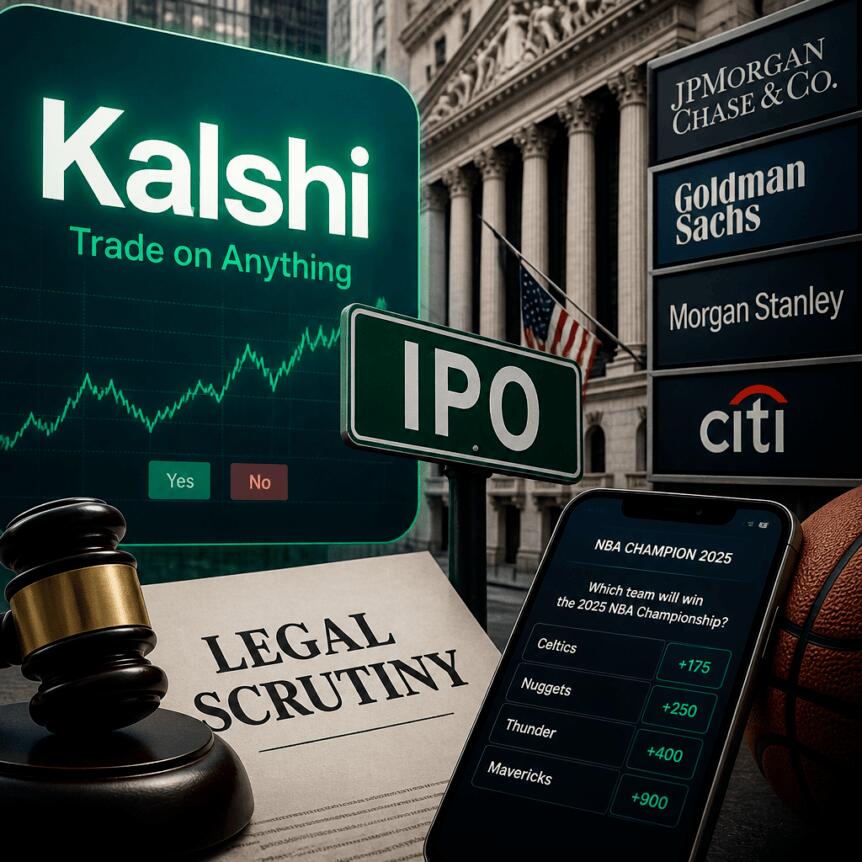
Kalshi, one of the best-known US prediction market platforms, is reportedly in early, informal discussions with investment banks about pursuing an initial public offering (IPO), according to a Friday report by The Information.
The same report says Kalshi is exploring an IPO after surpassing $2 billion in annualized revenue. A Kalshi spokesperson declined to comment on the matter.
Key takeaways
- Kalshi is reportedly in early, informal talks with investment banks about an IPO after reaching more than $2 billion in annualized revenue.
- Sports betting-related contracts appear to be the platform’s largest trading category, making regulatory risk especially prominent.
- Multiple US states are suing prediction market operators, arguing the platforms operate illegal or unlicensed sports betting.
- Regulators and operators disagree on whether these event contracts should be treated as swaps under federal commodities law or as sports betting needing state licensing.
- The CFTC has attempted to clarify reporting rules through no-action relief and has pursued litigation to establish its oversight authority.
IPO discussions amid rapid revenue growth
If the reported IPO talks progress, Kalshi would be testing a path from venture-backed fintech to public markets at a time when regulators are actively challenging how prediction market platforms structure their offerings.
Per The Information, Kalshi’s IPO discussions are at an early, informal stage and are tied to the platform crossing $2 billion in annualized revenue. While the company did not comment, the figure matters because IPO readiness typically depends on sustained performance, investor interest, and a clearer risk picture—particularly around legal exposure.
Sports contracts drive most trading volume
Kalshi’s public-market ambitions come with a specific business concentration: sports event contracts. According to Dune data cited in the report, sports betting contracts represent about 53% of Kalshi’s weekly notional trading volume, making them the leading category on the platform.
The same Dune-based breakdown also places sports at the center of Polymarket’s activity, where sport-related betting accounts for about 69% of weekly trading volume, based on the article’s referenced figures.
This concentration creates a practical tension for Kalshi’s near-term outlook. As sports-related contracts draw the most attention from regulators and litigants, any restrictions or adverse rulings could disproportionately affect revenue and volume—two core inputs markets typically scrutinize ahead of public listings.
States vs. prediction markets: licensing and legality disputes
The legal pressure on prediction markets has intensified, especially where sports events are involved. Cointelegraph reported that Kentucky became the latest state to sue five prediction market operators, including Kalshi and Polymarket. The lawsuit alleges they are “operating unlicensed and illegal sports betting and gambling platforms.”
Beyond Kentucky, the article notes that at least 17 other states have pursued legal action against prediction market operators, and the US Commodity Futures Trading Commission (CFTC) has been pulled into parts of this dispute.
The core disagreement is straightforward but consequential. State authorities argue that contracts tied to sports events require state-level licenses. Prediction market operators argue that their event contracts are structured as swaps governed by federal commodities law.
CFTC attempts to define federal oversight
As the state-level lawsuits accumulate, the federal regulator’s stance becomes increasingly central to the industry’s long-term viability. The article says the CFTC has argued that event contracts qualify as “swaps” because they are based on binary outcomes.
In a bid to address market operations while disputes continue, the CFTC issued a no-action letter on May 14 aimed at easing event contract reporting requirements. The reporting relief is intended to reduce immediate compliance pressure, but it does not resolve the broader question of whether these products should be regulated primarily as swaps under federal oversight or treated like state-licensed gambling.
The article also notes that the CFTC has sued multiple states, seeking to cement its authority over prediction markets. It references actions involving Wisconsin, New York, Arizona, Connecticut, and Illinois.
What investors should watch next
If Kalshi’s IPO talks move from informal discussions to formal planning, investors will likely focus on how ongoing sports betting litigation evolves—particularly whether courts clarify that event contracts are swaps under federal law, and how any rulings or settlements might affect the portion of trading tied to sports.
Crypto World
Constellation Energy (CEG) Stock Surges on Three Mile Island Approval and Calpine Merger

Key Takeaways
- Three Mile Island nuclear facility received early regulatory clearance for restart operations, bolstering data center power supply agreements
- The Calpine acquisition has been finalized, positioning Constellation Energy as America’s top electricity generator
- A $335 million accelerated share repurchase program was initiated following an 11 million share secondary offering by existing stockholders
- Shares currently trade at $274.06, approximately 24% under the Wall Street consensus price target of $360.00
- CNBC’s Jim Cramer recommended purchasing CEG stock, highlighting the recent decline and nuclear-focused asset base
Constellation Energy (CEG) experienced several significant catalysts this week. Shares settled at $274.06, gaining 8% over the trailing seven-day period, despite posting a 25.2% decline year-to-date.
Constellation Energy Corporation, CEG
Three pivotal announcements emerged simultaneously: the green light for Three Mile Island’s accelerated restart timeline, finalization of the Calpine transaction, and initiation of a substantial share repurchase initiative.
The Three Mile Island regulatory approval represents the most significant catalyst. Federal authorities authorized an expedited restart schedule, which directly underpins Constellation’s extended power purchase agreements with data center operators requiring constant, dependable electricity.
This contracted capacity pipeline forms a fundamental element of the CEG investment thesis. Cloud computing giants and major industrial consumers are aggressively pursuing stable, emissions-free electricity sources, and nuclear generation addresses these requirements more effectively than most competing options.
The Calpine transaction closure marks another transformative development. Following this strategic acquisition, Constellation now holds the position of the nation’s largest electricity producer. This expansion significantly enhances both generation capacity and market presence across multiple regions.
Share Repurchase Program Launched After Secondary Offering
Regarding capital allocation, current shareholders divested 11 million shares via a secondary stock offering. Constellation itself did not receive any cash from this transaction.
As a countermeasure, CEG implemented an accelerated $335 million repurchase initiative, acquiring shares through open market transactions and directly from offering underwriters. This action reduces outstanding shares and partially counteracts the dilutive impact of the secondary sale.
Concurrently with the buyback, Constellation allocated $180 million toward infrastructure enhancements at its Limerick and Calvert Cliffs nuclear stations. These capital expenditures focus on maintaining fleet reliability for long-term contracted clients.
Cramer’s Latest Commentary
During a recent Mad Money lightning round segment, Jim Cramer addressed CEG with a clear recommendation: “Oh man, Constellation… buy, buy, buy. It’s come down a lot.”
Cramer previously highlighted CEG earlier this year when it ranked among the month’s worst-performing equities, plummeting over 20% following the Trump administration’s proposal for energy pricing limitations in Mid-Atlantic markets.
His assessment at that time emphasized that constructing new generation facilities requires excessive lead time for such policies to materially damage Constellation, and that predatory pricing was never part of their business model. Trading at 24 times forward earnings, he expressed favorable sentiment toward the shares.
Wall Street analysts generally concur on valuation metrics. The consensus price objective stands at $360.00, positioning CEG approximately 24% beneath that benchmark at present levels. One independent valuation analysis suggests the stock trades 43.4% under its calculated intrinsic value.
The leverage profile warrants monitoring. Financial analysts have identified elevated debt levels as a concern, and the combined financial commitments from the buyback program and nuclear infrastructure investments create additional balance sheet pressures.
Nevertheless, the Three Mile Island restart authorization and Calpine integration both materialized within the same week, providing the corporation with enhanced visibility into expanding its contracted nuclear generation portfolio.
CEG has appreciated roughly threefold during the past three years, although the trailing twelve-month performance registers at -9.6%.


Jake Chervinsky has accused CME Group of using a lawsuit against U.S. crypto perpetual futures to protect its position in a market where the exchange reportedly controls about 92% of exchange-traded derivatives volume.
Summary
- Jake Chervinsky called CME’s lawsuit against the CFTC a “shocking miscalculation” and an “unforced error.”
- Hyperliquid Policy Center cited Better Markets data showing CME controls about 92% of U.S. exchange-traded derivatives volume.
- CME argues crypto perpetual futures should be regulated as swaps, while regulators are reviewing derivatives definitions under Dodd-Frank.
According to Jake Chervinsky, chief executive of the Hyperliquid Policy Center, CME’s legal challenge against the U.S. Commodity Futures Trading Commission has exposed what he views as resistance to growing competition in the derivatives market.
In a June 19 post on X, Chervinsky called CME’s lawsuit against the CFTC a “shocking miscalculation” and “an unforced error.” He wrote that the exchange had revealed itself as “a petty incumbent monopolist afraid of competition” after being viewed for years as a dominant force in U.S. derivatives markets.
His comments came after CME Group sued the CFTC and Chairman Michael Selig over the regulator’s approval of crypto perpetual futures products in the United States. As crypto.news previously reported, CME argues the agency incorrectly classified perpetual contracts as futures instead of swaps under the framework established by the Dodd-Frank Act.
The case follows the launch of regulated perpetual futures products that, according to earlier crypto.news reporting has already generated more than $1 billion in trading volume.
Hyperliquid argues CME is resisting new competition
In its June 18 X post, the Hyperliquid Policy Center cited Better Markets data estimating that CME accounts for roughly 92% of U.S. exchange-traded derivatives volume.
“CME runs about 92% of U.S. exchange-traded derivatives. When one venue holds that much volume, everyone else carries the cost. Less choice, higher prices.”
Pointing to the history of perpetual futures trading, the group said U.S. traders were forced for years to access similar products through offshore venues while regulated versions remained unavailable domestically. The statement added that regulators only recently created a compliant pathway for those products to enter the U.S. market.
Chervinsky argued that CME’s decision to sue the regulator showed the exchange was attempting to defend its incumbent position as competition entered the market. According to the Hyperliquid Policy Center, perpetual futures represent the first genuinely new derivatives product to reach regulated U.S. markets in more than a decade.
Citing remarks from CFTC Chairman Michael Selig, the Hyperliquid Policy Center also argued that established firms often resist new competition. The organization quoted Selig as saying that “vested interests always fear the future” while maintaining that market participants should not fear incumbent firms.
CME says perpetual contracts belong under swap rules
CME has presented a different view in court filings and public statements.
As reported by crypto.news earlier, the exchange contends that perpetual futures should be regulated as swaps rather than conventional futures contracts.
Earlier this week, outgoing CME Chief Executive Terrence Duffy told CNBC that the company planned legal action after the CFTC cleared platforms including Coinbase and Kalshi to offer regulated crypto perpetual futures.
Duffy argued that perpetual contracts fit within the swap category created by Dodd-Frank. In its complaint, CME further claimed the CFTC departed from its historical treatment of similar instruments and approved a new type of product without following the rulemaking process established by Congress.
At the same time, the dispute is unfolding as U.S. regulators revisit the definitions at the center of the lawsuit. The CFTC and the Securities and Exchange Commission have now opened a joint public consultation seeking feedback on how swaps, security-based swaps, mixed swaps, and other derivatives products should be classified under Title VII of Dodd-Frank.
CFTC Chairman Michael Selig said the review could help resolve “longstanding ambiguities” in the law, while SEC Chairman Paul Atkins stated that additional clarification is overdue.
The consultation remains open for public comment for 60 days after publication in the Federal Register, with regulators seeking input on how modern derivatives products should be treated under existing rules.

TLDR
- ARK Invest divested $26.65M worth of Robinhood stock following the company’s workforce reduction announcement that drove share prices higher
- Approximately $77M in Roku holdings were liquidated across ARK’s funds after Fox’s $22B buyout deal was announced at $160/share
- ARK purchased $46.18M in Eli Lilly stock during a price dip, capitalizing on the company’s 4E Therapeutics acquisition
- Coinbase saw $18.92M in fresh ARK investment as the platform expands into tokenized equities and AI-powered investment products
- ARK Innovation ETF maintains Tesla as its top allocation at 9.50%, while SpaceX has entered the fund’s top five positions
On June 18, Cathie Wood’s ARK Invest executed significant portfolio adjustments, offloading between $60 million and $77 million in Robinhood and Roku stock while simultaneously establishing positions in Eli Lilly, Coinbase, and additional growth-oriented companies.
The strategic repositioning occurred as both exited stocks experienced rally momentum tied to specific corporate developments, creating an opportune moment for ARK to realize profits.
Through its ARK Innovation ETF, the firm liquidated 275,572 Robinhood shares valued at approximately $26.65 million. This divestment followed Robinhood’s disclosure of plans to eliminate roughly 10% of its permanent staff—approximately 290 positions—as part of CEO Vlad Tenev’s efficiency initiative. The restructuring announcement propelled the stock higher and prompted several analysts to revise their price targets upward.
Regarding Roku, ARK disposed of between 239,267 and 561,800 shares distributed across ARKK, ARKW, and ARKF, representing $33 million to $77.57 million in total value depending on specific fund allocations. These sales transpired immediately after Fox’s announcement of its $22 billion acquisition agreement at $160 per share, which drove Roku’s trading price toward that threshold. With a definitive buyout price established, the stock’s potential for additional appreciation became severely limited.
Capital Redeployment Focuses on Eli Lilly and Coinbase
ARK channeled the liquidated capital into positions where the firm identifies emerging growth catalysts.
Eli Lilly represented the most substantial acquisition. ARK accumulated 41,138 shares via its ARK Genomic Revolution ETF, deploying approximately $46.18 million into the pharmaceutical giant during a price correction. Lilly recently completed its acquisition of 4E Therapeutics, a neuroscience-focused firm developing non-opioid chronic pain therapies. This transaction expands Lilly’s development pipeline beyond its established obesity and diabetes pharmaceutical franchises.
Coinbase emerged as the second-largest purchase. ARK acquired 111,799 shares distributed across several funds, totaling roughly $18.92 million. Coinbase has been introducing tokenized U.S. equity products for international clients alongside AI-powered investment platforms, transitioning from a pure cryptocurrency exchange toward a comprehensive financial services provider.
ARK additionally invested $17.68 million in Block shares while establishing smaller positions in biotechnology companies.
SpaceX Secures Position Among Top Five Holdings
This portfolio realignment occurred within a broader strategic context. Earlier during the same week, ARK established a substantial post-IPO stake in SpaceX, purchasing nearly 3.3 million shares valued at approximately $531 million by the conclusion of the initial trading session.
Concurrently, Tesla CEO Elon Musk executed stock options in a transaction disclosed through SEC filings, acquiring approximately 303.96 million shares at a $23.34 strike price while relinquishing around 17.53 million shares to satisfy a $7.09 billion tax obligation. Musk’s current holdings total approximately 699.58 million shares, constituting a 19.9% voting interest in Tesla.
Tesla maintains its position as ARK Innovation ETF’s largest allocation at 9.50%. Robinhood ranks second at 4.93%, with CRISPR Therapeutics at 4.87%, Tempus AI at 4.83%, and SpaceX at 4.71% rounding out the top five.
These recent transactions indicate ARK is reallocating capital from equities where immediate catalysts have materialized toward companies positioned for upcoming developments.

Cardano News: Charles Hoskinson spent three videos in mid-June 2026 laying out what he frames as a structural rescue plan for Cardano, a governance overhaul, a DRep voting bloc, a revised constitution, and a commercial growth push anchored by Leios and Midnight.
The market has not treated it as a turning point. ADA is trading near $0.16, down roughly 32% over the past 30 days, and sits at levels last seen in 2020. The gap between narrative activity and price signal is the central question Hoskinson’s plan has to answer.
The plan has four distinct layers: migrate governance discussion off X and onto a moderated Discord, form a DRep voting bloc with an automatic rejection rule for non-participants, draft a new Cardano constitution with clearer executive authority and defined growth targets, and push a commercial pipeline that includes Leios scaling, Midnight, cross-chain DeFi via the Pogan protocol, and a treasury investment model that takes equity-like stakes in ecosystem projects.

That is a broad scope. Whether the parts are mutually reinforcing or individually underpowered is the structural question the next 90 days will answer.
While Cardano wrestles with governance gridlock, Solana is achieving institutional credibility milestones that are reshaping Layer 1 competitive positioning – a dynamic that gives ADA’s current stagnation additional strategic weight beyond the immediate price chart.
Cardano News: Hoskinson’s Cardano Plan, What the Governance Overhaul Actually Proposes
The governance Discord is the foundation piece. Hoskinson argues that X functions as a broadcast channel that structurally rewards conflict and buries compromise – not a platform failure, but an incentive design problem.
His proposed alternative is a moderated server modeled on the Midnight community Discord, which reached approximately 49,000 members after bad-faith actors were removed.
The Cardano version would apply zero-knowledge technology so participants can speak and vote without public attribution, insulating early governance proposals from coordinated harassment.
The constitutional layer targets a structural gap that the Chang hard fork exposed. The shift to community-led governance under CIP-1694 – DReps, SPOs, and the Constitutional Committee – created accountability mechanisms but left executive function undefined.
Hoskinson wants a revised Cardano constitution that names elected roles, sets growth KPIs, and establishes a framework for reconciling competing budget proposals. Without agreed definitions of success, he argued, every treasury vote collapses into a proxy fight over roadmap philosophy.
The funding overhaul runs in parallel. Hoskinson’s broader 2026 model proposes a three-layer approach: infrastructure funding for core protocol work, utility investment where the Cardano treasury takes 10–30% token stakes in key ecosystem projects, and experience-layer support for wallets and on-ramps.
Funded projects would accept oversight, cut salaries, and commit 10% of protocol revenue to buying ADA and returning it to the treasury – a structural demand loop rather than a grant-and-exit model.
Discover: The Best Crypto to Diversify Your Portfolio
ADA Near 5-Year Lows: What the Market Is Signalling About Execution Risk
ADA broke below the $0.20 support level on June 2 and reached $0.157 by June 6, a price last printed in 2020. The heaviest volume came on the way down, suggesting capitulation rather than orderly rotation.
The governance videos landed during a brief bounce toward $0.18, after which ADA slipped back toward $0.16. The $0.20 level that was support is now resistance. Cardano’s market cap sits at approximately $5.8 billion.
Hoskinson acknowledged the price directly, “Of course, I care about the price of ADA. The price of ADA is directly connected to the security and the utility of Cardano,” he said.
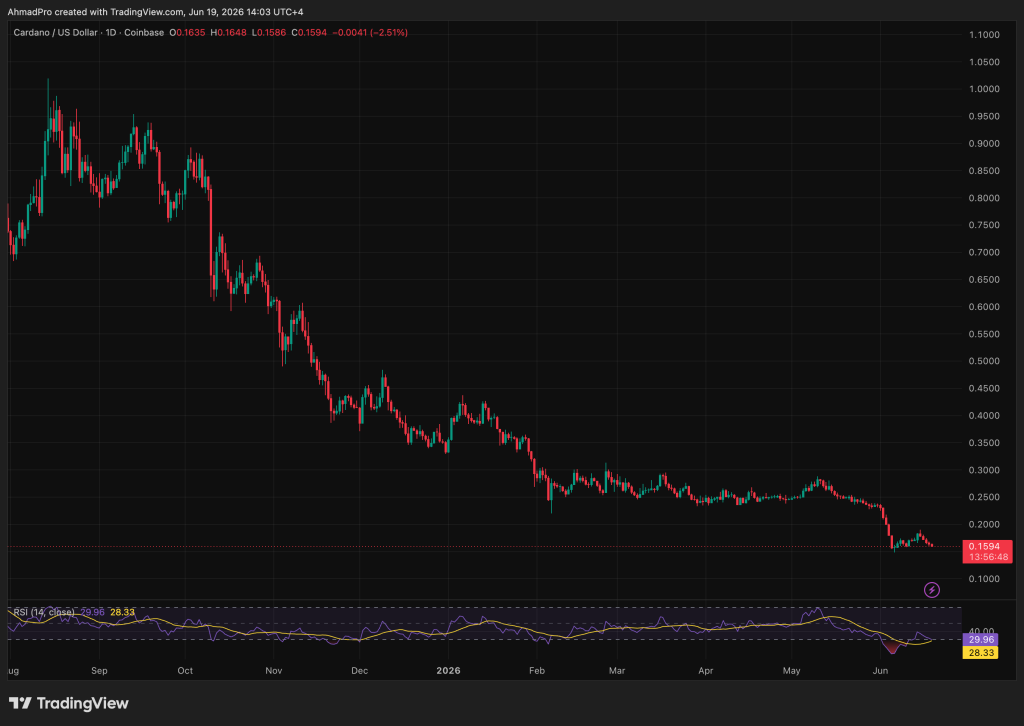
That connection is precisely what the market is pricing: governance proposals do not improve network security or utility until they are implemented and adopted.
The announcement premium has already been absorbed, and it was thin. Ethereum’s own experience shows that strong development fundamentals don’t automatically translate into price recovery, the market requires visible execution, not roadmap density.
A re-rating of ADA price requires at least one of the following to materialize: the governance Discord launching with meaningful DRep participation, the Leios testnet hitting its June 23 date and generating developer traction, the Cardano treasury investment model producing its first equity-stake deals, or the voting bloc demonstrating it can resolve the 600 million ADA funding backlog without triggering a governance split.
None of those are narrative events. All of them are execution events. The market is waiting for evidence of the latter.
Discover: The Best Token Presales
The post Can Charles Hoskinson Really Rescue Cardano? appeared first on Cryptonews.
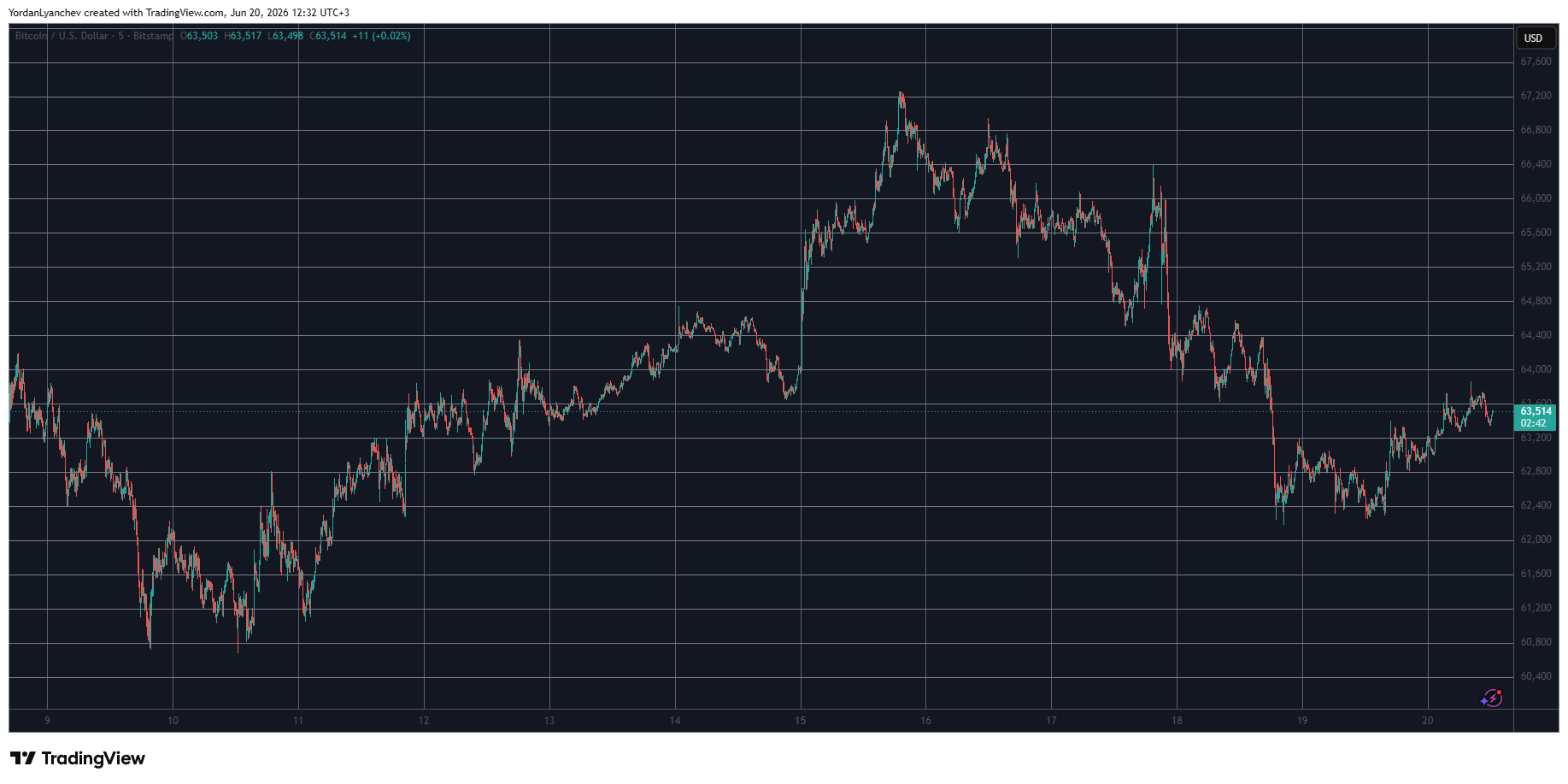
Bitcoin’s price was rejected at $67,000 earlier this week, and the intense pressure from sellers brought the asset south toward $62,000 on Friday, where it finally found some support.
Many of the larger-cap alts have posted more impressive gains today, including SOL, which has reclaimed the $70 level, and HYPE, which trades at essentially the same price tag.
BTC Rebounds Above $63K
The business week began on the right foot for bitcoin. After a sluggish weekend but a big promise from Trump about a deal between the US and Iran to be announced on Sunday, the POTUS indeed outlined such an agreement from both sides that was expected to be signed by the end of the week.
BTC jumped immediately, going from under $64,000 to $66,000 and then to over $67,200 on Monday morning. However, its rally was halted at this point, and the asset was rejected twice at $67,000. More volatility ensued before and after the first FOMC meeting with Kevin Warsh leading the Fed. Bitcoin pumped to $66,400 before it was driven south to under $64,000 after the Fed maintained the rates and Warsh was quite hawkish.
The cryptocurrency fell further amid mounting fears that Strategy might start selling BTC soon to under $62,400 on Friday. Although the promised deal has not been signed yet, bitcoin still jumped toward $63,500 as of now, perhaps driven by the ceasefire announced by Israel and Lebanon.
Its market capitalization has climbed to $1.270 trillion on CG, while its dominance over the alts barely hinges above 56%.
SOL, HYPE Hit $70
Ethereum has risen past $1,700 despite Arthur Hayes’ new sell-offs. BNB is still below $590, while XRP fights for $1.15. SOL and HYPE have increased by similar percentages and now trade at essentially the same level, at around $70. ZEC is also up by 4% and sits above $470.
The other big privacy coin, Monero, has dipped by 4.4% to under $315. WLD has slipped to $0.60 after a 4.7% decline. MORPHO has lost 3.6% of value and now trades below $1.90.
The total crypto market cap has increased by around $40 billion since yesterday’s low and is above $2.270 trillion on CG.

The post SOL, HYPE, and ZEC Post Substantial Gains as BTC Reclaims $63K: Weekend Watch appeared first on CryptoPotato.
Grow a Garden 2 Megaphone guide

Best Weekend Ever? Playing Pokemon Go With 717,000 Fans of the Game

How To ACTUALLY Make Money Using AI


-

 Business6 days ago
No Jackpot Winner as $257 Million Prize Rolls Over to $269 Million Monday Draw
-
Crypto World5 days ago
Zimbabwe Requires Crypto Businesses to Register Annually Under New FIU Regulations
-

 Fashion18 hours ago
Weekend Open Thread: Miami – Corporette.com
-
 Entertainment6 days ago
Matt Damon’s Viral Sci-Fi Thriller Has Taken Over HBO Max
-

 Tech6 days ago
As AI companies race to go public, who else is along for the ride?
-

 Business6 days ago
Anthropic staff to meet White House officials next week, Axios reports
-
 Crypto World6 days ago
Bitcoin could crash to $48,000, if this historical pattern is triggered
-
 NewsBeat6 days ago
what doctors are seeing in ebike crashes
-
 NewsBeat6 days ago
Warning of disruption as Cardiff Crossrail works to start
-
 NewsBeat6 days ago
Tributes to former deputy head teacher at Cambridge school among death and funeral notices
-

 Entertainment6 days ago
Deion Sanders Shares Powerful Post After Viral Advice To Deiondra
-

 Politics6 days ago
“Israel’s” ban on ICRC visits ruled illegal, but Knesset moves to stop them permanently
-

 News Videos6 days ago
Financial Accounting | Last Day Revision Strategy and Booster | CMA Inter – June 2026
-
 Entertainment6 days ago
Kate Middleton Glare Goes Viral After Kids Booed At Royal Event
-

 Tech5 days ago
Over 400 Arch Linux packages compromised to push rootkit, infostealer
-
 Crypto World6 days ago
XRP ETFs Outperform As Bitcoin And Ethereum Funds Extend Outflow Trend
-

 Business6 days ago
Invesco Quality Income Fund Q1 2026 Commentary
-
 Crypto World6 days ago
Market Preview: SpaceX (SPCX) IPO Record, Federal Reserve Meeting, and Iran Nuclear Agreement
-

 NewsBeat6 days ago
Singer Oliver Tree dies aged 32 in helicopter crash in Brazil
-

 Sports6 days ago
Dick Advocaat’s Curacao scores first-ever World Cup goal against Germany
You must be logged in to post a comment Login