

Crypto World
Pi Network tops $0.1500 following mainnet upgrade



Key takeaways
- PI has reclaimed the $0.1500 level after dropping below this critical area on Tuesday.
- The positive performance comes following the mainnet upgrade.
Pi Network has reversed its downward trend on Wednesday, climbing above the $0.1500 level following a major infrastructure upgrade to its mainnet nodes.
At press time, PI traded around $0.1518, extending recent losses while technical indicators hinted at the possibility of a short-term rebound.
Pi Core team completes major mainnet upgrade
The Pi Core Team announced that major mainnet nodes have successfully upgraded to Stellar protocol version 23, reflecting the project’s reliance on the Stellar blockchain infrastructure.
The update also included several backend improvements, such as migrating the operating system from Ubuntu 20 to Ubuntu 24 and upgrading the database engine from PostgreSQL 12 to PostgreSQL 16.
The latest upgrade is aimed at improving network performance, security, and long-term scalability as the ecosystem continues to evolve.
PI price outlook: Technical indicators suggest a possible recovery
The PI/USD 4-hour chart is still bearish and efficient as PI has underperformed over the past few days.
The bearish performance comes despite the infrastructure progress. The token is currently trading below both the 50-period Exponential Moving Average (EMA) near $0.1605 and the 200-period EMA around $0.1709, maintaining a broader bearish outlook.
However, momentum indicators suggest selling pressure may be weakening. The Relative Strength Index (RSI) has dropped to near 29, signaling oversold conditions while also forming a positive divergence as price approaches Tuesday’s low of $0.1463.
This type of divergence often points to a potential reversal or short-term bounce. If buying momentum increases, PI could attempt to retest a descending trendline resistance near $0.1519.
Meanwhile, the Moving Average Convergence Divergence (MACD) indicator remains flat below the zero line, indicating fading bearish momentum but not yet confirming a bullish recovery.

A successful breakout above the $0.1519 resistance level could open the door for a stronger recovery toward the 50-EMA at $0.1605, followed by the 200-EMA near $0.1709.
On the downside, the recent low at $0.1463 remains a critical support zone. A daily close below that level could invalidate rebound expectations and potentially trigger additional downside pressure for Pi Network.



Security researchers warn that deprecated smart contracts can remain vulnerable long after projects stop maintaining them.
Crypto World
Bitcoin market cap rebound to take '5-10 years' after dropping 10 places since mid-2025


Bitcoin could be absent from the world’s top five assets by market cap until 2036, despite an estimate seeing the BTC bear market being nearly 70% complete.

Key Takeaways
- Shares of Tesco declined more than 2% following Q1 UK like-for-like sales growth of only 1.8%, below market expectations
- Total group like-for-like sales reached £16.83 billion, with UK food sales advancing 2.6% and fresh food climbing 3.6%
- The Booker wholesale division struggled with like-for-like sales declining 3.2%, worse than the anticipated 2.4% drop
- Company reaffirmed full-year outlook: adjusted operating profit between £3–£3.3 billion and free cash flow of £1.5–£2 billion
- Chief Executive Ken Murphy attributed the weakness to challenging weather-related comparisons versus the prior year period
Shares of Tesco tumbled over 2% during Thursday’s trading session, hovering near 445p, following the release of first-quarter results that showed sales expansion trailing market forecasts for Britain’s leading grocery retailer.
For the 13-week period concluding May 30, UK like-for-like sales advanced 1.8%. This figure fell at the lower boundary of consensus estimates and trailed Visible Alpha projections by approximately 50 basis points, representing a notable deceleration from the previous year’s growth trajectory.
Chief Executive Ken Murphy moved swiftly to downplay concerns. During a media briefing, he emphasized that weather patterns played a significant role in the outcome, noting that the comparison period from last year benefited from “outstanding” climatic conditions that unusually elevated performance.
“I wouldn’t be reading too much into it,” Murphy stated.
Overall group like-for-like sales similarly increased 1.8%, totaling £16.83 billion. Within the UK market, food sales posted a 2.6% gain, while fresh food categories delivered a stronger 3.6% uptick.
Analysts at Bernstein echoed Murphy’s assessment, characterizing the deceleration as likely seasonal and transitory. The firm identified moderating food price inflation, more difficult year-over-year comparisons, and weaker non-food category demand as primary drivers — rather than any fundamental deterioration in Tesco’s market standing.
Wholesale Division Struggles
The Booker wholesale operation emerged as an additional area of concern. Like-for-like sales in this segment contracted 3.2%, falling short of analyst projections for a 2.4% decrease.
Core retail sales within Booker declined 1.5%, partially attributable to the loss of a significant national customer account. The catering segment experienced a 3.3% downturn, which management linked to adverse weather conditions and Easter calendar timing.
Notwithstanding the top-line shortfall, Tesco maintained its full-year financial guidance. The company continues to project adjusted operating profit in the £3 billion to £3.3 billion range, alongside free cash flow between £1.5 billion and £2 billion for fiscal 2026/27.
Positive Developments Emerge
Beyond UK borders, Tesco’s Republic of Ireland operations delivered like-for-like growth of 3.3%, surpassing analyst expectations. Central European markets contributed 0.8% growth. Digital sales throughout international markets surged 17.4%.
Customer sentiment indicators also showed improvement. Tesco’s UK net promoter score advanced six points on a year-over-year basis. The retailer expanded its Aldi Price Match program into convenience store locations as part of its value-focused competitive strategy.
Management noted that Middle East geopolitical tensions have not materially impacted operations to date, though acknowledged the situation could potentially contribute to inflationary headwinds in subsequent quarters.
Regarding capital allocation, Tesco has executed £341 million in share repurchases since initiating its £750 million buyback program in April.


The recent market volatility, mostly prompted by the Federal Reserve’s FOMC meeting and the hawkish tone of the new Chairman, liquidated roughly 100,000 traders yesterday, with one of them being the famous social media personality and former boxer, Andrew Tate.
In this quick-bits article, we will also explore Arthur Hayes’ recent bullish pivot toward the second-largest cryptocurrency by market cap.
Tate Wrecked Again
CryptoPotato reported yesterday that Andrew Tate had returned to crypto futures trading. Although his track record was quite painful, as Lookonchain stated he had been liquidated 107 times in the past, he opened a long BTC position. More specifically, his long was for 57.36 BTC (valued at around $3.76 million at the time) and had a liquidation price of $65,216.
As mentioned above, BTC experienced significant volatility before and after the FOMC meeting, which included a few drops below Tate’s wipe-out price. The cryptocurrency dropped further after the hawkish press conference by the new Fed chair, dumping below $64,000 earlier today.
Lookonchain updated that his success rate only worsened, as he was liquidated 8 times in the last 16 hours. He flipped between longs and shorts, but was still wrecked, the analysts said. As of the time of their post, he was left with just $14,219.
Andrew Tate (@Cobratate) has been liquidated 8 times in the past 16 hours.
He got liquidated on a $BTC long, then flipped to a $BTC short and got liquidated again.
His account now has only $14,219 left.https://t.co/2bAiThkXwS pic.twitter.com/ySSUWhFIYV
— Lookonchain (@lookonchain) June 18, 2026
Hayes Buys More ETH
In an accumulation piece from yesterday, we informed that Arthur Hayes has turned bullish on ETH, purchasing 1,400 tokens. This came after the intense backlash he faced for shilling and then dumping some popular altcoins, such as HYPE, NEAR, ZEC, and WLD.
This time, though, he hasn’t sold ETH the next day, as some critics claimed below the post. Instead, Lookonchain said he doubled down on his Ethereum bet by buying another 1,500 ETH for $2.63 million. Thus, he has acquired 2,900 ETH (worth over $5 million at current prices) in just a couple of days.
Arthur Hayes(@CryptoHayes) just bought 1,500 $ETH($2.63M)!https://t.co/gau6egd7Vm pic.twitter.com/mZVUAIialo
— Lookonchain (@lookonchain) June 18, 2026
The post Andrew Tate Liquidated 8 Times in 16 Hours, Arthur Hayes Buys More ETH: Quick Bits appeared first on CryptoPotato.

Ethereum is trading under pressure, with spot prices clustering at $1,750 price level as its chart prediction tumbles bearish. But if we look closer at what’s building off-chain, it’s not so bearish after all; it’s coiling.
Stablecoin net inflows to Binance are now averaging $138M per day over the past week, a figure running 289% above the three-month baseline. That’s dry powder ready to be deployed.
The supply side of the equation is tightening simultaneously, too. Exchange-held ETH continues to drain, compressing the available float at precisely the moment when bid-side liquidity is accumulating.
As of now, the current weakness is “cautious” after the Federal Reserve decision, as traders are parking capital in stablecoins and not committing to spot.
Discover: The Best Crypto to Diversify Your Portfolio
Ethereum Price Prediction: $2,000?
ETH is currently sitting near the lower band of a defined range. We place the trading corridor at $1,730–$1,920, with short-term technicals tilting bearish. The nearest structural support levels are $1,740 and $1,700, with each progressively getting uglier for finding a floor.
Resistance stacks at $1,830, then $1,900, and a clean break above that opens the conversation toward $2,200. That’s a meaningful reclaim, but it requires a catalyst. The stablecoin inflow data is the most credible candidate on the table right now.

With the hawkish Fed signal, the macro catalyst is clocked, and the drop is likely priced in. If a percentage of the stablecoin dry powder is deployed into spot ETH, the price could reclaim $1,800, targeting the $1,900 prediction.
ETH’s response to the FOMC remains the single most important short-term variable. Stablecoin positioning means the move, when it comes, could be fast and violent.
Discover: The Best Token Presales
Bitcoin Hyper Targets Early Mover Upside as Ethereum Tests Key Levels
ETH sitting at $1,750 with 289% above-average stablecoin inflows means capital is looking for somewhere to go. The stablecoin buildup confirms appetite, but the hesitation is about the entry point, not conviction.
For traders who see limited near-term upside in large-caps at current valuations (ETH would need to more than double from here just to retest its 2025 high), early-stage infrastructure plays offer a different risk-reward profile entirely.
Bitcoin Hyper is positioning as the first Bitcoin Layer 2 with Solana Virtual Machine (SVM) integration, meaning it brings fast, programmable smart contracts to Bitcoin’s base layer without sacrificing Bitcoin’s security model.
The project has raised $32.8 million at a current presale price of $0.0136, with staking available during the raise. The core technical pitch, sub-second finality on a Bitcoin-secured L2, a decentralized canonical bridge for BTC transfers, and SVM-speed execution, addresses Bitcoin’s three structural gaps.
Research the project at the Bitcoin Hyper presale page before the presale ends.
The post Ethereum Price Prediction: Stablecoins Dry Powder as Exchange Supply Shrinking appeared first on Cryptonews.


Anthropic’s AI models have lost another major banking user group in Hong Kong after JPMorgan restricted employee access to Claude under the company’s licensing terms.
Summary
- JPMorgan has restricted employee access to Anthropic’s Claude models in Hong Kong, following a similar decision by Goldman Sachs.
- The reported restriction stems from Anthropic’s licensing terms, which exclude usage across Greater China, including Hong Kong.
The Financial Times reported that JPMorgan Chase employees in Hong Kong can no longer select Anthropic’s Claude models from the bank’s internal list of approved large language models.
Three people familiar with the matter told the publication that the restriction stems from language in Anthropic’s licensing agreement. One person familiar with the decision said JPMorgan based the move on terms governing where the models can be used.
The development follows a similar decision by Goldman Sachs earlier this year. The Financial Times previously reported that Goldman blocked bankers in Hong Kong from using Anthropic models after determining that Anthropic’s terms of service exclude usage across Greater China, including Hong Kong.
Anthropic has not issued an official statement, but the company has previously told The Financial Times that Claude had never been officially supported in Hong Kong. JPMorgan declined to comment.
Hong Kong access faces new constraints
Western AI companies have generally restricted direct access to their most advanced models in mainland China. OpenAI’s ChatGPT and Anthropic’s Claude are unavailable there because of a combination of company policies and China’s internet controls.
Hong Kong has historically operated with fewer internet restrictions than mainland China. International firms have often obtained access to frontier AI models through global enterprise agreements and infrastructure hosted outside China.
The Financial Times reported that access limitations at major financial institutions have renewed concerns about Hong Kong’s ability to remain competitive as AI tools become more deeply integrated into software development, research, and financial services workflows.
Anthropic’s approach to geographic restrictions comes as U.S. AI companies face increasing scrutiny over how advanced models are used outside the United States. Industry observers and policymakers have expressed concerns that foreign users could employ frontier systems to accelerate domestic AI development through a process commonly known as model distillation.
Anthropic navigates multiple challenges
The banking restrictions arrive less than a week after Anthropic suspended access to its newly released Fable 5 and Mythos 5 models.
Anthropic announced on June 13 that it had disabled both systems after receiving a U.S. government export-control directive. The company said authorities instructed it to block access to the models for all foreign nationals, including foreign-national employees working within the United States.
Anthropic stated at the time that officials were concerned about a potential jailbreak technique that could allow the models to identify or repair software vulnerabilities. The company disputed the significance of the reported issue and said it believed the government action may have resulted from a misunderstanding.
Only two days later, Anthropic became the target of a proposed class-action lawsuit filed in the U.S. District Court for the Northern District of California. The complaint alleges that subscribers to the company’s $100-per-month Max 5x and $200-per-month Max 20x Claude plans received substantially less usage than marketing materials led customers to expect.
Plaintiff Karl Kahn seeks class-action status on behalf of customers who paid for Anthropic’s premium Claude subscriptions since April 2024. The filing argues that usage limits imposed on subscribers did not match the multipliers promoted for the plans.
Those disputes emerged shortly after Anthropic publicly called for stronger regulation of frontier AI systems. In its June 11 “Policy on the AI Exponential” proposal, the company urged governments to establish testing requirements, independent evaluations, cybersecurity standards, and enforcement mechanisms for the most advanced AI models.
Anthropic argued in that proposal that frontier systems can introduce biological, cybersecurity, and operational risks that require closer oversight as AI capabilities continue to advance.
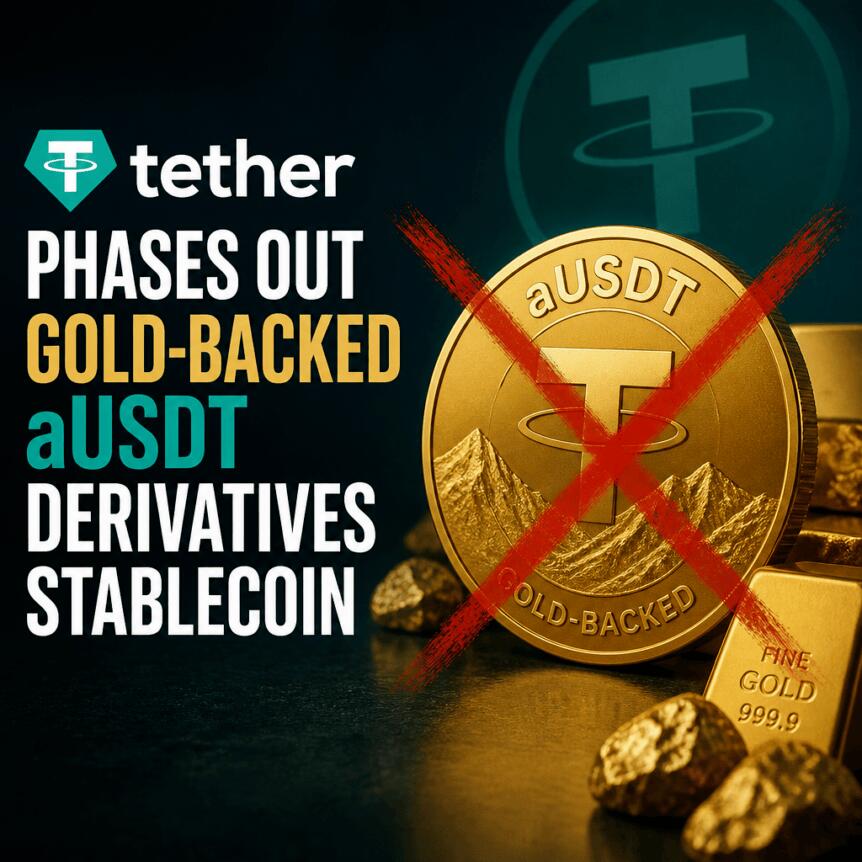
Tether is winding down Alloy by Tether and its gold-backed, overcollateralized aUSDT stablecoin after a short run of about two years. In a statement posted Wednesday, the stablecoin issuer said the move follows an internal review of user activity, market demand, and the company’s “broader priorities,” adding that it wants to concentrate resources where it sees stronger demand and more enduring opportunities.
The shutdown is designed to be gradual. Tether will immediately stop new Alloy positions by preventing fresh aUSDT minting, and it is giving existing users a window to unwind their exposure by returning aUSDT and reclaiming the underlying XAUT by a cutoff date of Sept. 17.
Key takeaways
- Alloy by Tether is being phased out after Tether says demand and strategic fit are weaker than for other products.
- Tether is blocking new aUSDT minting immediately and sets Sept. 17 as the deadline for users to unwind their positions.
- aUSDT was built as an overcollateralized derivative of XAUT, using Ethereum smart contracts.
- XAUT remains active and is described by Tether as substantially larger in market capitalization than Alloy.
- 2025 also saw Tether discontinue CNHT (yuan) and EURT (euro) stablecoins, while it has continued to push tokenized real-world assets such as XAUT.
Why Alloy is shutting down now
Alloy by Tether was positioned as a bridge between gold exposure and dollar-like liquidity. According to Tether, it allows users to deposit XAUT—Tether’s gold-backed token—as collateral in order to mint or borrow against aUSDT. The design aims to keep the value of XAUT locked higher than the value of aUSDT issued, reflecting the overcollateralization model typical of collateralized synthetic assets.
In its announcement of “strategic changes,” Tether said it would focus on “stronger user demand, deeper liquidity and broader long-term market opportunity,” while continuing work across its broader ecosystem. The company explicitly pointed to XAUT—along with other core products—as areas it expects to be more central to its roadmap.
For users, the practical implication is that one of the most straightforward ways to convert gold token exposure into aUSDT liquidity will no longer be available. Traders and DeFi participants who used Alloy to avoid selling XAUT outright will now have to exit through Tether’s wind-down process rather than rolling positions forward.
How the wind-down works for aUSDT holders
Tether said the process will unfold in phases. The first phase begins immediately: users will not be able to open new positions and will be unable to mint additional aUSDT. Existing users will then have time to redeem their aUSDT and retrieve their XAUT.
Tether’s timeline gives users three months to return their aUSDT and reclaim their XAUT before the cut-off on Sept. 17. After that point, Alloy’s function as a collateral-to-aUSDT minting and borrowing mechanism will effectively be closed.
The key uncertainty for remaining participants is how smoothly the redemption process will be operationally handled at the cutoff. While Tether’s statement outlines the deadline and the general redemption mechanism, it does not provide additional details in the supplied text about any operational steps beyond users returning aUSDT to reclaim XAUT.
XAUT stays in focus as tokenized gold appears to drive demand
Even as Alloy is being wound down, Tether says its underlying gold token, XAUT, continues to attract users. In Tether’s framing, XAUT is “popular,” with market capitalization of about $3 billion and physical backing of 22,169 kilograms of gold, according to the company.
By contrast, Tether said Alloy by Tether currently has a market capitalization of $1.2 million and is backed by 14.73 kilograms of gold worth around $2.2 million, based on Tether information from Alloy’s site. That disparity helps explain the stated rationale: while stablecoins remain Tether’s core business, the company is reallocating resources toward products it sees as attracting more liquidity and sustained participation.
Tether has also been leaning into tokenized gold strategically. Earlier this year, Cointelegraph reported that the market capitalization of tether’s gold token surged when gold hit record highs of a little over $5,300 per ounce, and that the token later pulled back after that peak. Tether also bought a 12% stake in precious metals platform Gold.com for $150 million in February, with plans to integrate XAUT into the platform.
Broader pullback: CNHT and EURT discontinued
Alloy’s wind-down is part of a broader pattern in 2025: Tether has shelved multiple stablecoin products. In February, the company announced it would discontinue its Chinese yuan stablecoin, CNHT, citing “evolving market conditions, low interest in the product, and limited sustained community demand” relative to other supported assets.
Later in the year, Tether wound down its euro stablecoin, EURT, pointing to European regulatory issues and stating that it wanted to direct attention toward other initiatives such as Hadron, its asset tokenization platform launched in 2024.
At the same time, Tether has not entirely stepped away from fiat-linked tokens. In May, it announced plans to launch a Georgian lari stablecoin (GELT) in cooperation with the government of Georgia.
Taken together, the discontinuations suggest Tether is actively pruning products that do not meet internal benchmarks for sustained adoption or regulatory certainty, even if stablecoins remain the company’s core business. Alloy’s wind-down reinforces this approach by removing a specialized collateralized derivative product with comparatively small scale.
Going forward, investors and users should watch whether XAUT’s traction continues to translate into new demand for liquidity tooling around tokenized real-world assets—and whether Tether’s future stablecoin or tokenization launches similarly emphasize regulatory clarity and long-term liquidity, rather than short-lived product experiments.

Key Highlights
- Avalanche blockchain powers FIFA’s innovative ticketing infrastructure for the 2026 World Cup to combat scalping and fraud
- Two distinct digital tokens enable the system: Right-to-Buy (RTB) for purchase priority and Right-to-Ticket (RTT) for conversion to actual tickets
- More than 100,000 RTBs distributed with secondary trading volume exceeding $25 million across both token types
- The platform allows FIFA to capture valuable fan data and reduce dependence on external resale marketplaces like StubHub and SeatGeek
- On the pitch, Colombia sits atop Group K following a commanding 3-1 victory against Uzbekistan
The 2026 FIFA World Cup represents a landmark moment for blockchain adoption in global sports events. FIFA has partnered with the Avalanche network and technology provider Modex to deploy an advanced ticketing infrastructure designed to combat scalping operations, automated bots, and fraudulent ticket transactions.
This innovative system operates on a dedicated Avalanche Layer-1 blockchain network branded as the FIFA blockchain. At its core are two distinctive digital assets: the Right-to-Buy (RTB) and the Right-to-Ticket (RTT).
The RTB token grants fans early access privileges to purchase tickets for specific matches before they become available to the general public. Fans maintain the ability to buy and sell RTBs through secondary marketplaces. Upon deciding to finalize their purchase, the RTB transforms into an RTT, which then facilitates the actual ticket acquisition through FIFA’s established purchasing channels.
This approach aims to internalize secondary market transactions within FIFA’s controlled environment, preventing revenue and activity from migrating to third-party platforms such as StubHub, SeatGeek, or Vivid Seats.
Dominic Carbonaro from Ava Labs, the primary development team behind Avalanche, drew parallels to challenges experienced by major performers like Taylor Swift. Automated bots overwhelm ticketing systems at launch, excluding genuine fans while driving up resale market prices.
“It shifts where the secondary sales market takes place,” Carbonaro explained.
The deployment has already seen impressive adoption numbers. Over 100,000 RTBs have been distributed to date. More than 50,000 Club World Cup tickets have been packaged together with RTBs. Trading volume for RTTs has surpassed $15 million independently, while total combined RTB and RTT trading volume has crossed the $25 million threshold.
FIFA’s Strategic Benefits
While eliminating scalper activity is a primary objective, the system delivers FIFA an additional crucial asset: comprehensive data intelligence.
Under conventional ticketing frameworks, FIFA maintains minimal insight into the actual attendees of its matches. This critical information typically remains with third-party resale operators. The RTB and RTT framework enables FIFA to monitor how ticket ownership transfers within its proprietary ecosystem.
“The actual administrator of those tickets, FIFA, has no idea who the people are buying,” Carbonaro noted.
The blockchain infrastructure handles ownership verification and transaction records, while sensitive personal information remains stored offchain. This architecture allows FIFA to develop direct fan relationships and gather valuable data without requiring users to navigate cryptocurrency wallets or blockchain interfaces.
Tournament Updates from the Field
Meanwhile, competitive action continues on the pitch, where Colombia currently leads Group K standings after securing a decisive 3-1 triumph over Uzbekistan in their opening match. Portugal and DR Congo battled to a 1-1 stalemate, leaving both nations with a single point. Uzbekistan occupies the bottom position with no points. The top two finishers from each group will progress to the knockout rounds.
According to Ava Labs, the system architecture deliberately shields users from blockchain complexity. The ticketing interface resembles any conventional consumer application, requiring no specialized technical knowledge.
The broader adoption of this model for future sporting events will ultimately depend on the execution quality and operational performance demonstrated during this World Cup implementation.
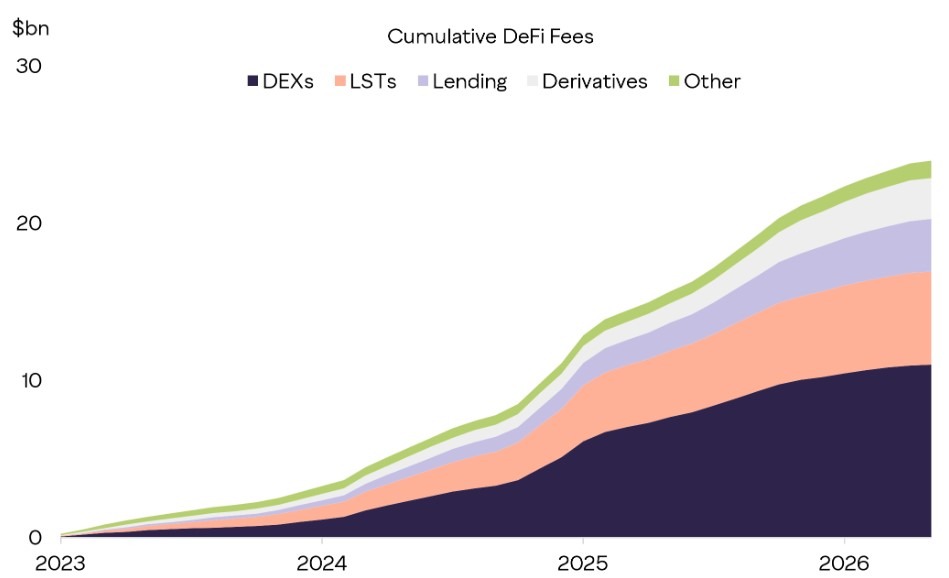
Aave’s native cryptocurrency could reach $175 under a one-year base-case scenario as asset managers increasingly apply traditional finance valuation models to decentralized finance (DeFi) tokens, according to a new report by Grayscale Research.
The digital asset manager said Aave could generate about $60 million in net income in 2026 and placed the token’s current fair value at $80 to $100. The analysis used discounted cash flows, earnings multiples and comparisons with banks and fintech companies. Aave traded at $75 on Thursday, according to CoinGecko.
Grayscale said Aave’s revenue rose more than sixfold between 2023 and 2025, while the protocol operates at an estimated 50% margin. It argued that Aave’s lending activity, GHO stablecoin and institutional products could support future earnings growth.
However, protocol revenue alone doesn’t guarantee token value, the research added. Fees may be paid to liquidity providers, used for operating costs or retained by a decentralized autonomous organization, while token holders generally lack legally enforceable claims held by shareholders.
Grayscale’s analysis applies valuation methods commonly used for equities, banks and fintech companies to a DeFi protocol, reflecting the firm’s view that some crypto assets generate sufficiently measurable revenue and earnings to be evaluated using traditional financial frameworks.
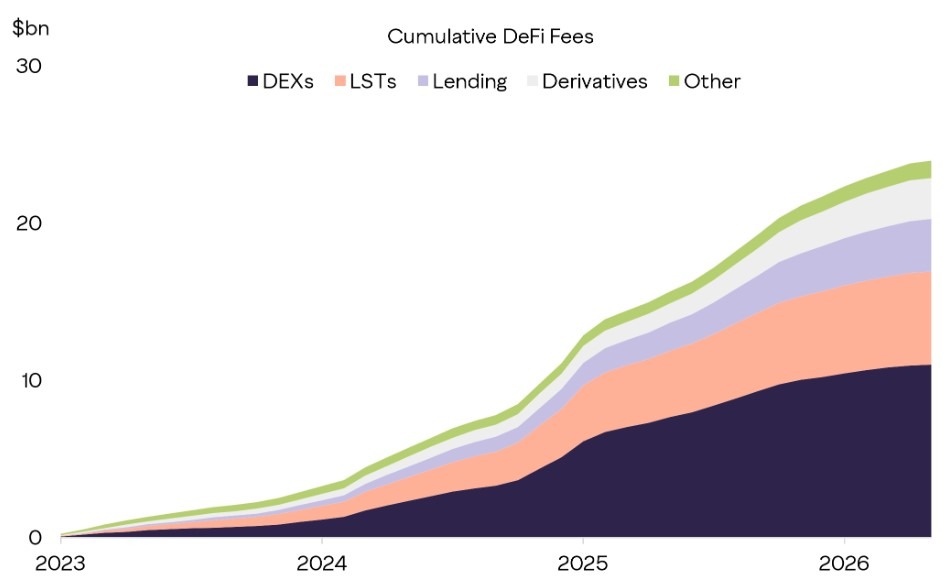
Cumulative DeFi fees. Source: Grayscale Research
CoinShares applies long-term valuation models to HYPE and Ether
CoinShares has taken a similar approach to Hyperliquid’s HYPE token and Ether (ETH), using protocol fees, buybacks and other economic drivers to create long-term valuation frameworks. The asset manager’s 2031 base case values HYPE at $147 and ETH at $4,935, although most of the projected ETH value comes from the token’s collateral and monetary role rather than cash flows.
CoinShares described Hyperliquid as a more direct example of token-level value accrual because 99% of protocol fees are used to buy back HYPE through its Assistance Fund. For Ether, it used a sum-of-the-parts framework combining projected cash flows with a larger monetary and collateral premium.
Related: Botanix to shut down after 4 years, cites weak demand for Bitcoin DeFi
The valuation work by Grayscale and CoinShares comes as some financial institutions forecast stronger growth in DeFi markets.
Standard Chartered forecasts that tokenized assets could lift DeFi assets to $2.7 trillion by 2030. The bank said Uniswap is positioned to become a major venue for tokenized markets, adding that traditional finance partnerships could help Uniswap attract more activity.
Magazine: The end of anon? AI could unmask crypto’s hidden identities

The Core Team behind the popular yet controversial project just published a new update on the state of the Pi Launchpad testing period, including the brand-new test token, SLICE.
In the meantime, the underlying asset’s troubles have intensified, with the asset close to breaking below $0.13 once again.
Pioneers Help and Can Help Further
CryptoPotato reported last week that Pi Network’s team had updated the participation and flow model for the Pi launchpad, opening the door for all users (Pioneers) to participate in testing the second such token, called SLICE.
Those who wanted to take advantage needed to open the Pi Launchpad in the Pi Browser, review the new test token and project, choose a commitment amount in Test-Pi, confirm the participation, and engage with the Slice of Pi App and provide feedback. The initiative will run for 10 more days, until Pi2Day (June 28).
The new update on the matter informed that the first such testing token provided “useful data and highlighted areas where the Launchpad experience needed improvement,” hence Pioneers’ help. The updated participation flow has become “simpler and clearer” as a result. The team said participation is now “centered around the commitment amount, which has the direct effect on token acquisition.”
Users can choose how much Test-Pi they need to commit, and the Launchpad automatically calculates the related ‘fair-access hold.’ Then, the Pioneer is shown the commitment amount, hold amount, and the total before confirmation.
“The goal is to make it easier to understand and use the Pi Launchpad, and preserve the intended fair-access effect of the hold,” said the team.
PI Price Slides Again
The non-testing token of the Pi Network ecosystem has had its fair share of failures lately. Its price tumbled below $0.12 on June 6, marking a new all-time low. Thus, it had plunged by 96% since its all-time high marked in February 2025.
Its recovery was swift at first, pushing the asset toward $0.14 as the broader market sentiment improved. However, the FOMC meeting and the subsequent press conference yesterday brought more uncertainty, with BTC sliding below $64,000 and many altcoins, including PI, following suit.
PI has dropped toward $0.13 as of now, down by more than 3% on a 24-hour scale. It remains outside the top 50 alts by market cap as its own is at $1.420 billion.
The post Here’s How Pi Network Pioneers Can Support the Ecosystem During PI’s Slump appeared first on CryptoPotato.

Spanish media reaction on Marcus Rashford speaks volumes for Man United after Barcelona decision

Nintendo DS Port Of Super Mario 64 Released With Multiplayer Support

Helmsley and Leyburn given host roles in 2026 Lloyds Tour of Britain


-

 Business4 days ago
No Jackpot Winner as $257 Million Prize Rolls Over to $269 Million Monday Draw
-

 Fashion6 days ago
Weekend Open Thread: Tuckernuck – Corporette.com
-

 Crypto World7 days ago
Oppenheimer backs SpaceX as $70 billion retail frenzy builds
-

 Crypto World7 days ago
Markets Rally as SpaceX IPO Looms Amid Iran Tensions and Inflation Surge
-
Crypto World3 days ago
Zimbabwe Requires Crypto Businesses to Register Annually Under New FIU Regulations
-

 Crypto World5 days ago
Bitget enters Argentina’s regulated crypto market through PSAV registration
-

 Tech5 days ago
NanoClaw integrates JFrog registries to secure AI agent downloads
-

 Tech6 days ago
This Week In Security: Microsoft On Microsoft, Register Your Domains, Linux On ARM, And FreeBSD Joins The File Cache Club
-

 NewsBeat6 days ago
El Nino has formed in the Pacific and could set records, forecasters say
-
 Tech7 days ago
Dutton Ranch star claims they ‘didn’t see any disruption’ on set following Chad Feehan’s exit from Yellowstone spinoff fueled by Taylor Sheridan clash rumors
-

 Politics7 days ago
Politics Home | Healey Resignation Is “Colossal Failure Of Government”, Says Former Labour Defence Secretary
-
 Entertainment7 days ago
Donnie Wahlberg & More Heat Up Las Vegas at Circa’s Barry’s Downtown Prime
-

 Sports7 days ago
First Time Since 1971: Australia Register Historic Low In ODI Cricket
-
 Tech7 days ago
Opendoor Ends India Operations, Fueling a Bigger Conversation About AI and Outsourcing
-

 Politics7 days ago
Belfast burns, while Met chief points finger at Iran and Russia
-

 NewsBeat6 days ago
FBI searches office of Ohio voter registration group
-

 Business7 days ago
AT&T: Verizon's 27% Outperformance Sets Up A Solid Entry Point
-
 Tech6 days ago
Anthropic is spending $150M to embed 1,000 AI fellows inside nonprofits. No degree required.
-

 Politics7 days ago
Modi thanks Trump for wishes as US attacks Indian seafarers
-
 Entertainment6 days ago
‘The Pitt’s Fan-Favorite Doctor Confirms Noah Wyle Gave His Blessing to Return [Exclusive]
You must be logged in to post a comment Login