

Crypto World
Pi Network’s PI Finally Rebounds as Bitcoin (BTC) Eyes $65K: Market Watch

Bitcoin’s price was positively impacted by the lower-than-expected US CPI numbers for June and pumped to a three-week peak of $65,000 before it was stopped.
Most altcoins have turned green as well, with ETH climbing toward $1,900. ZEC, CC, LINK, and HYPE have marked big gains daily.
BTC Flies After CPI Numbers
After the intense volatility experienced at the start of the previous business week following Strategy’s biggest BTC sale to date and the broken ceasefire between the US and Iran, bitcoin began its gradual recovery on Wednesday from a then-low at $61,600. The bulls managed to help it rebound to $64,000 during the weekend, where it spent most of its time trading sideways.
However, the quickly intensifying and worsening situation in the Middle East took its toll on Monday morning, and the asset fell below $62,000 once again. All eyes then turned to the US CPI numbers for June, which were scheduled to be announced on Tuesday.
The general expectations showed a significant decline from the May record, but the actual data was even lower, with just a 3.5% increase. Although this number might be more misleading than it sounds, BTC’s price reacted with an immediate surge to just over $65,000 earlier today, which became a three-week peak.
It has retreated to $64,500 as of press time, but its market cap has climbed to almost $1.3 trillion. Its dominance over the alts remains stagnant at 56.7% on CG.

PI Finally Bounces
Pi Network’s native token was the poorest performer over the past couple of days, charting consecutive all-time lows. The latest came yesterday morning at just over $0.07. However, that key support provided the necessary assistance for the asset to bounce hard in the past day. PI now stands with a major 16% daily surge and trades above $0.085.
PUMP is the other double-digit gainer, surging by 14% to $0.0166. ZEC has risen the most from the larger caps, adding 9% of value and trading above $550. CC follows suit, while LINK and HYPE are up by around 5% each.
Ethereum has also posted a similar gain, and now trades above $1,870. BNB, XRP, SOL, and RAIN have marked more modest gains.
The total crypto market cap has increased by over $60 billion in a day and now sits at $2.280 trillion.

The post Pi Network’s PI Finally Rebounds as Bitcoin (BTC) Eyes $65K: Market Watch appeared first on CryptoPotato.

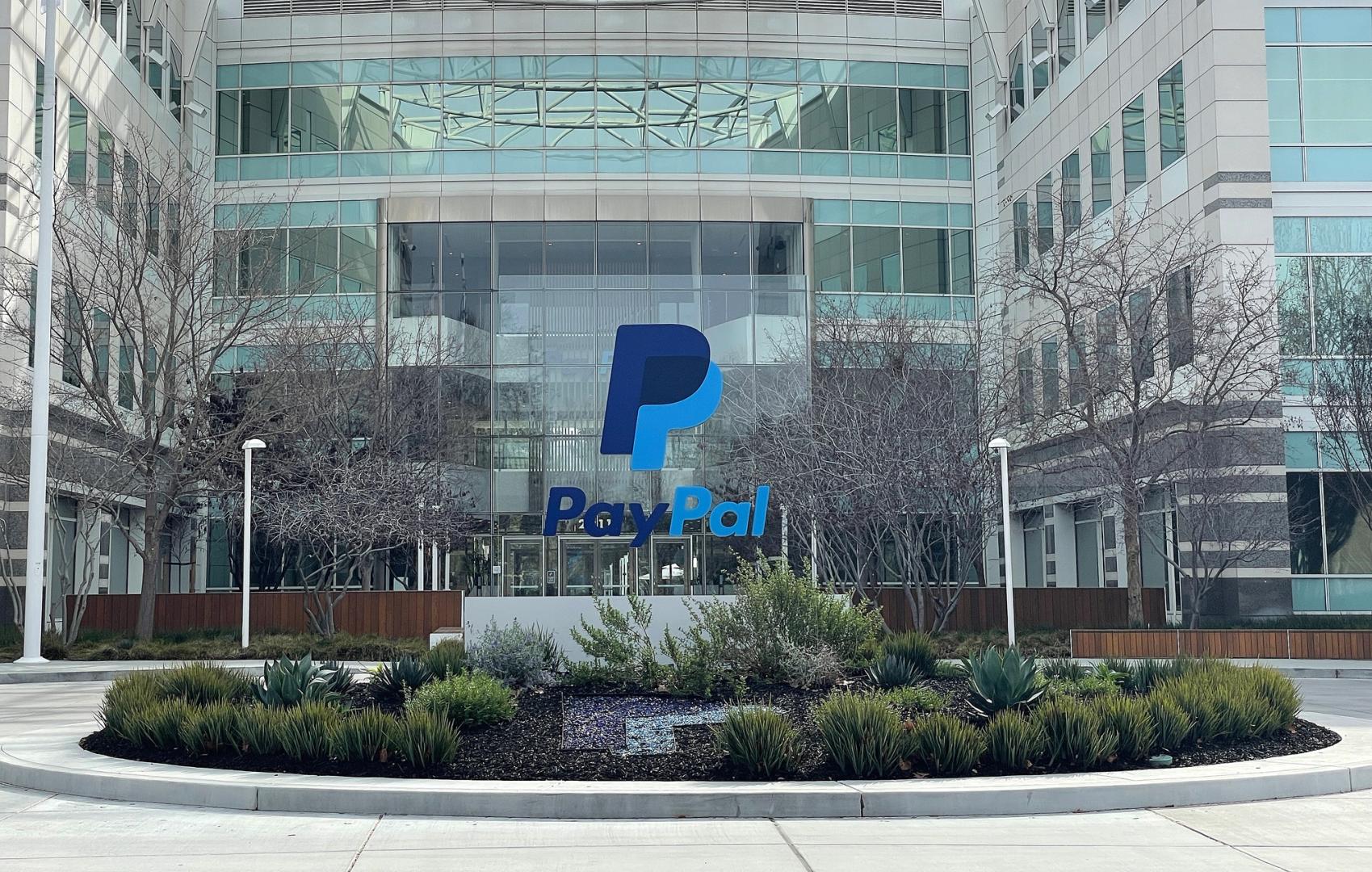
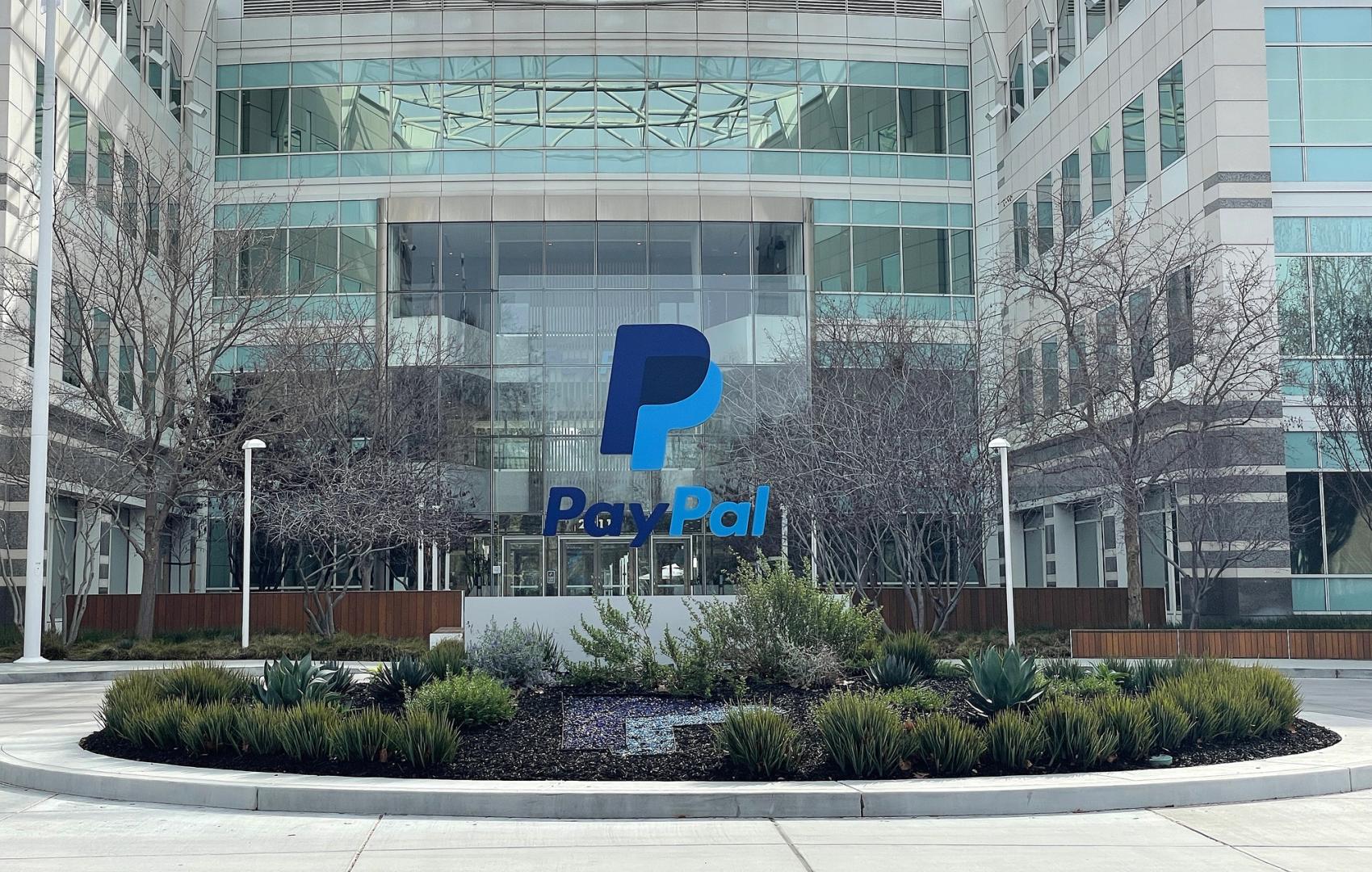
Payments giant Stripe offered to buy PayPal (PYPL) in a deal worth $53 billion, the Financial Times reported on Wednesday.
San Francisco-based Stripe made the $60.50-a-share offer in tandem with private equity firm Advent International, according to the report, which cited two people familiar with the matter.
The bid represents a premium of around 28% on PayPal’s closing price of $47.37 on Tuesday. The New York-listed payments provider’s shares have surged over 18% to $56.10 in pre-market trading.
The bid follows an earlier expression of interest, though PayPal has been reluctant to engage with the offer thus far, the FT said.
Neither PayPal, Stripe nor Advent immediately responded to CoinDesk’s request for comment.
Stripe and PayPal are among the most prominent mainstream financial companies bringing stablecoins to traditional payment mechanisms. Stablecoins are digital tokens pegged to the value of a traditional financial asset, usually a fiat currency.
PayPal’s stablecoin PYUSD is the eighth-largest in the sector with a market capitalization of $185 million, according to CoinGecko data. The industry is dominated by Tether’s USDT at $184 billion.
Stripe’s historical focus was on embedding the second-largest stablecoin, Circle Internet’s USDC, into its payments infrastructure.
It has recently moved toward offering stablecoin and other blockchain-based services more independently, developing with its own mainnet, Tempo. The company also joined the Open USD venture alongside Mastercard, Visa and BlackRock to develop a new stablecoin, which could pose a serious challenge USDC.


Japan has enacted sweeping amendments to its financial laws that classify cryptocurrencies as financial products, opening the door to lower crypto taxes, domestic exchange-traded funds and stricter market oversight.
Summary
- Japan has passed a law classifying cryptocurrencies as financial products under the Financial Instruments and Exchange Act.
- The legislation creates a path for a 20% crypto tax rate, domestic crypto ETFs and stricter insider trading rules.
- Penalties for unregistered crypto businesses will increase, with implementation set to begin after the law is promulgated.
According to Japan’s public broadcaster NHK, the House of Councillors approved the amendments to the Financial Instruments and Exchange Act on Wednesday, completing the bill’s passage through both chambers of the Diet.
The legislation creates a separate legal category for crypto assets alongside traditional financial products such as stocks and bonds. Until now, cryptocurrencies had been regulated under the Payment Services Act as a payment method rather than as investment products.
Among the changes, the amended law introduces insider trading restrictions for crypto transactions, requires annual disclosures from issuers of certain crypto assets, and increases penalties for unregistered businesses.
CoinPost reported that the maximum prison sentence for operating without registration will increase from three years to 10 years, while the maximum fine will rise from 3 million yen to 10 million yen, or about $18,500 to $61,600.
Tax changes and ETF framework move forward
Beyond market conduct rules, the amendments establish the legal basis for separate taxation of crypto gains at an effective rate of about 20%, together with a three-year loss carry-forward deduction. Japan currently treats crypto profits as miscellaneous income, with tax rates reaching as high as 55%.
According to CoinPost, those tax provisions are expected to take effect in January 2028 because enforcement is scheduled to begin during the 2027 fiscal year.
The legislation also creates the foundation for issuing domestic spot cryptocurrency exchange-traded funds. CoinPost said the Japan Exchange Group is considering the first local crypto ETF listings as early as 2027, with traditional financial institutions expected to serve as issuers. The report added that approval of spot bitcoin ETFs has not yet been confirmed.
Following promulgation, the law is expected to take effect within one year, while cabinet ordinances and supervisory guidelines will determine how the new rules are implemented.
Crypto reforms accompany Japan’s Web3 strategy
The legislation follows a series of government efforts to strengthen Japan’s digital asset sector alongside its startup agenda.
Earlier this month, Prime Minister Sanae Takaichi told attendees at WebX 2026 that Web3 forms part of Japan’s national innovation strategy rather than a standalone crypto initiative. As previously reported by crypto.news, she said the conference gives founders, investors and companies opportunities to build new business partnerships, although her address did not announce new funding or immediate regulatory measures.
The government’s Comprehensive Startup Support Package, introduced in 2025, seeks to expand startup financing through public and private institutions, while Japan’s five-year startup plan targets annual startup investment of about 10 trillion yen by fiscal 2027. Alongside those initiatives, lawmakers have continued advancing crypto reforms designed to bring digital assets closer to traditional financial markets through tax changes and an ETF framework.

Coinbase head of platform, Rob Witoff, said that the company estimates between 95% and 100% of its code is written by or with large language models. It is a figure that stood at 40% just five months ago in February. The jump represents one of the strongest public disclosures of AI adoption from a major publicly listed financial technology company.
Witoff described AI coding as effectively universal across the company, with employees using LLM-powered tools daily for drafting, refactoring, testing, reviewing, debugging, and generating boilerplate.
For sensitive infrastructures like cryptography and core security systems, Witoff acknowledged that human oversight remains central. Coinbase operates trading systems, custody infrastructure, wallets, compliance tools, and blockchain integrations where software errors carry direct financial and regulatory consequences.
Don’t Miss Out on Our $1,000 USDT Airdrop on ByBit
Armstrong’s Leaner Operating Model
The disclosure follows Coinbase’s May 2026 restructuring, which cut approximately 14% of the company’s workforce, or around 700 employees. CEO Brian Armstrong linked the change to AI, saying AI had “dramatically” changed how work gets done and that Coinbase needed to return to startup speed with AI at its core. Armstrong also stated that engineers were using AI to accomplish in days what previously required entire teams working for weeks.

Coinbase’s earlier estimate in February was that AI was involved in about 40% of its code, and the company says it has since moved to nearly all-code AI assistance in a matter of months.
Supporters argue that AI-assisted development could improve COIN’s operating leverage if a smaller engineering team can ship and maintain products at equivalent or greater velocity.
Under that scenario, margins could improve while development cycles become shorter. What remains unquantified is the long-term maintenance and security cost of running financial infrastructure increasingly developed with AI assistance, a variable that critics argue the industry has not yet stress-tested at scale.
Discover: The Best Token Presales
The 40% to 95% Coinbase Vibe Coding Shift
The term vibe coding describes developers accepting AI output with minimal scrutiny. Coinbase’s model, as Witoff described it, emphasizes supervised AI assistance rather than unreviewed production output: AI can be used for drafting, refactoring, testing, reviewing, debugging, and generating boilerplate, while engineers remain responsible for oversight and deployment in production environments.
That nuance is easy to lose in the headline number. Coinbase’s claim is that code is written by or with LLMs, with engineers retaining responsibility for oversight and deployment. The adoption of AI tools across the crypto industry continues to accelerate, while formal guidance and governance frameworks are still evolving.
Coinbase adoption curve, from experimental productivity tool to near-universal operating model in under a year, mirrors the pattern seen at AI-native startups, but at the scale of a regulated, publicly listed exchange.
The competitive implication for peers is not trivial: a crypto exchange that can prototype, iterate, and ship with fewer employees has a structural speed advantage in a market where product velocity directly correlates with user acquisition and trading volume.
The layoffs complicate the narrative. Connecting 700 job cuts to AI productivity gains is exactly the kind of framing that draws regulatory and political scrutiny. Today, Armstrong has leaned into it explicitly rather than softened the connection.
For now, the primary variable is whether Coinbase’s supervised AI-assisted model holds up at scale, and whether the company’s security and reliability record supports the productivity claims once audited under pressure.
Discover: The Best Crypto to Diversify Your Portfolio
The post Brian Armstrong Reveals Coinbase is 95% Vibe Coded By AI appeared first on Cryptonews.
Bitcoin (BTC) can hit up to $80,000 by August, a new prediction says as data lays out key nearby BTC price levels.
Key points:
- Bitcoin can continue to $70,000 and higher next month if it clears nearby resistance, says new analysis.
- Market participants identify the most significant support and resistance levels now circling spot price.
- A macro tide could be the spark to ignite the next move higher this week.
BTC price roadmap sees $68,000 within two weeks
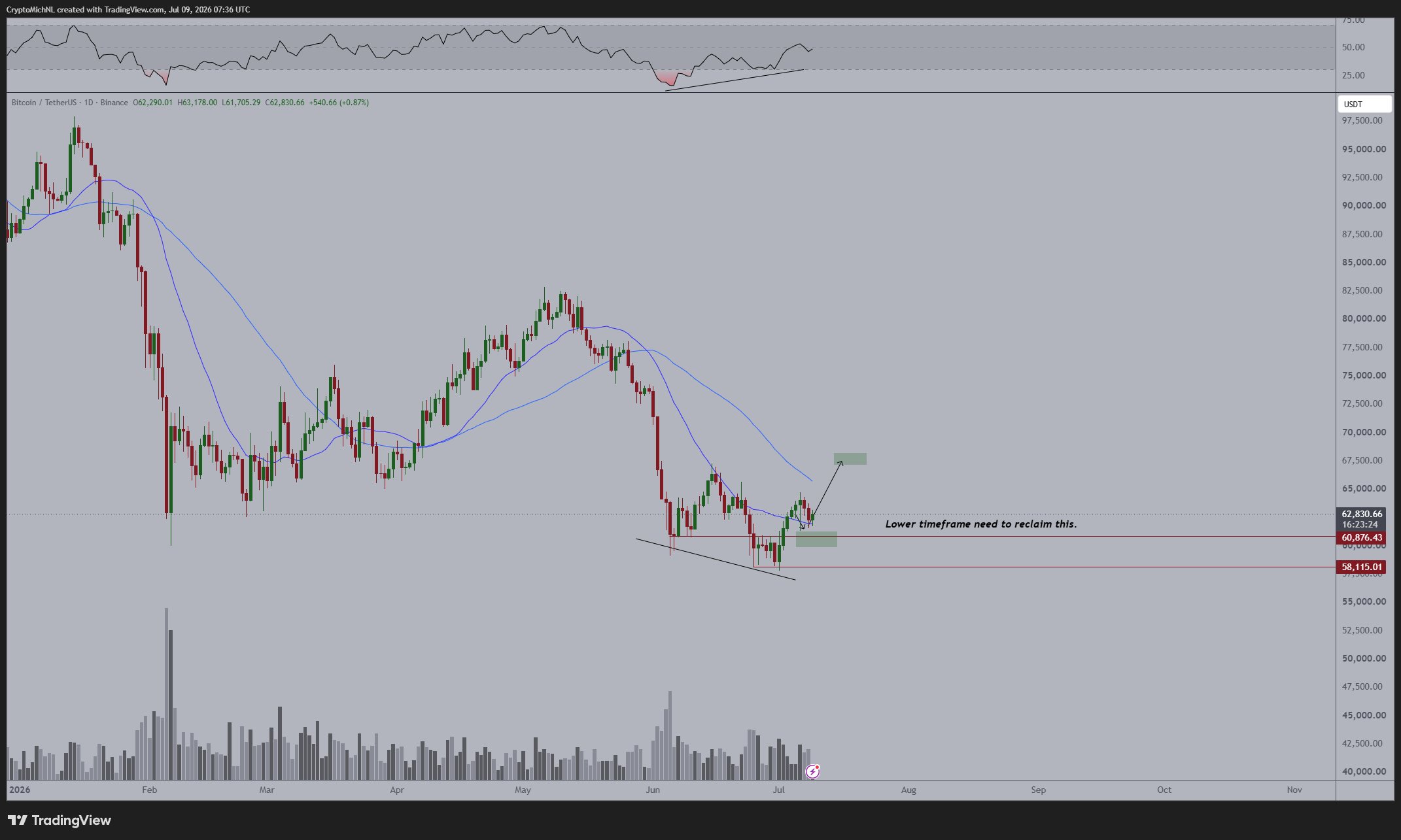
In an X update on Wednesday, crypto trader and analyst Michaël van de Poppe said that BTC/USD was successfully defending “crucial” support.
“It’s holding the crucial level at $61,000 and flipping important MAs for support, indicating that there’s more momentum on the horizon,” he wrote, referring to moving average trend lines.
“I’m expecting to see a rally to $68,000 in the next 1-2 weeks, followed by a continuation towards $75,000-80,000 in August.”
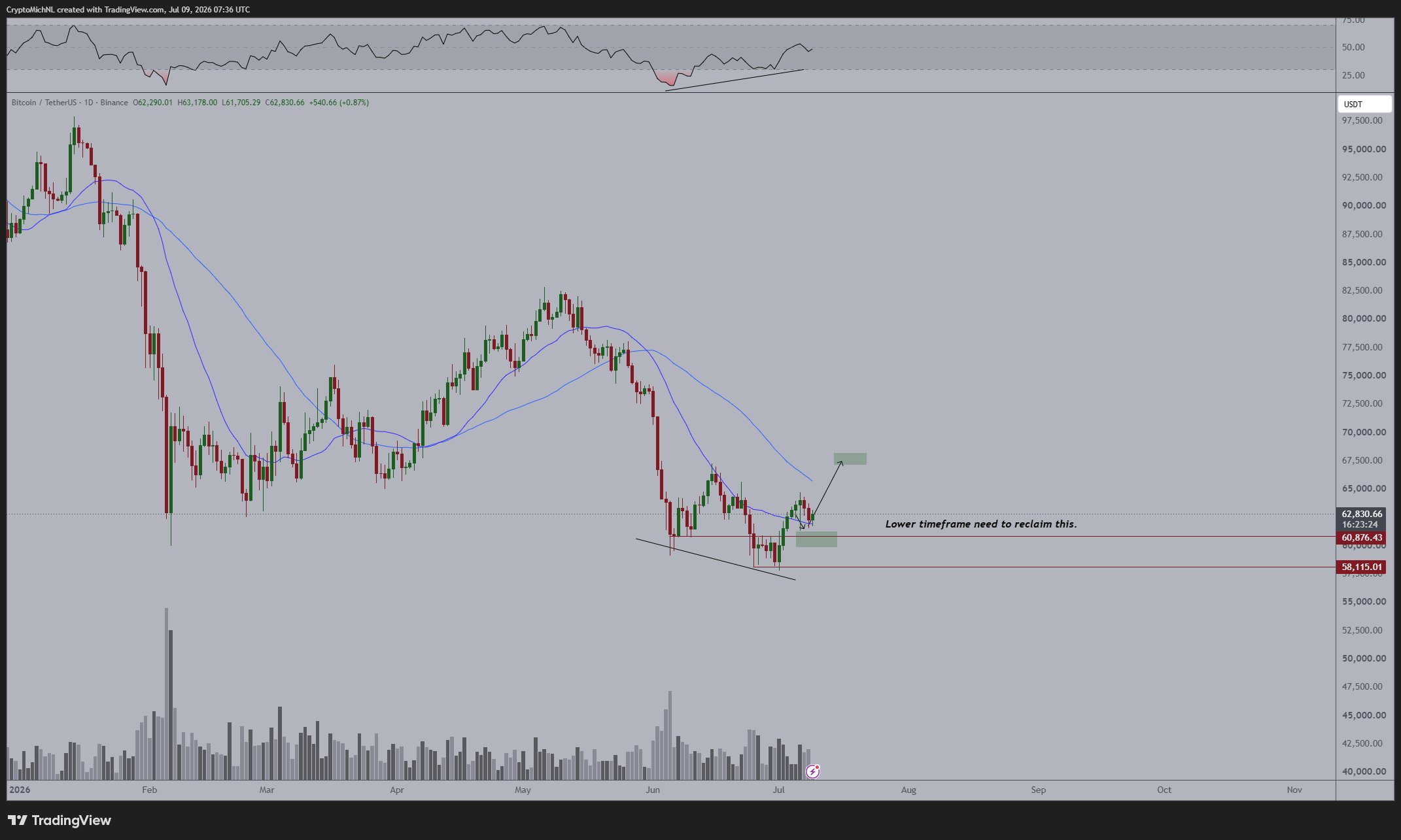
BTC/USDT one-day chart. Source: Michaël van de Poppe/X
Van de Poppe’s first target coincides with exchange order-book liquidity hurdles that price would encounter if it were to break out of its local range.
Updating X followers on whale orders, monitoring resource CoinGlass showed the area at $67,000 and above as key for the cohort. Support, meanwhile, sat principally between $63,500 and $63,800.
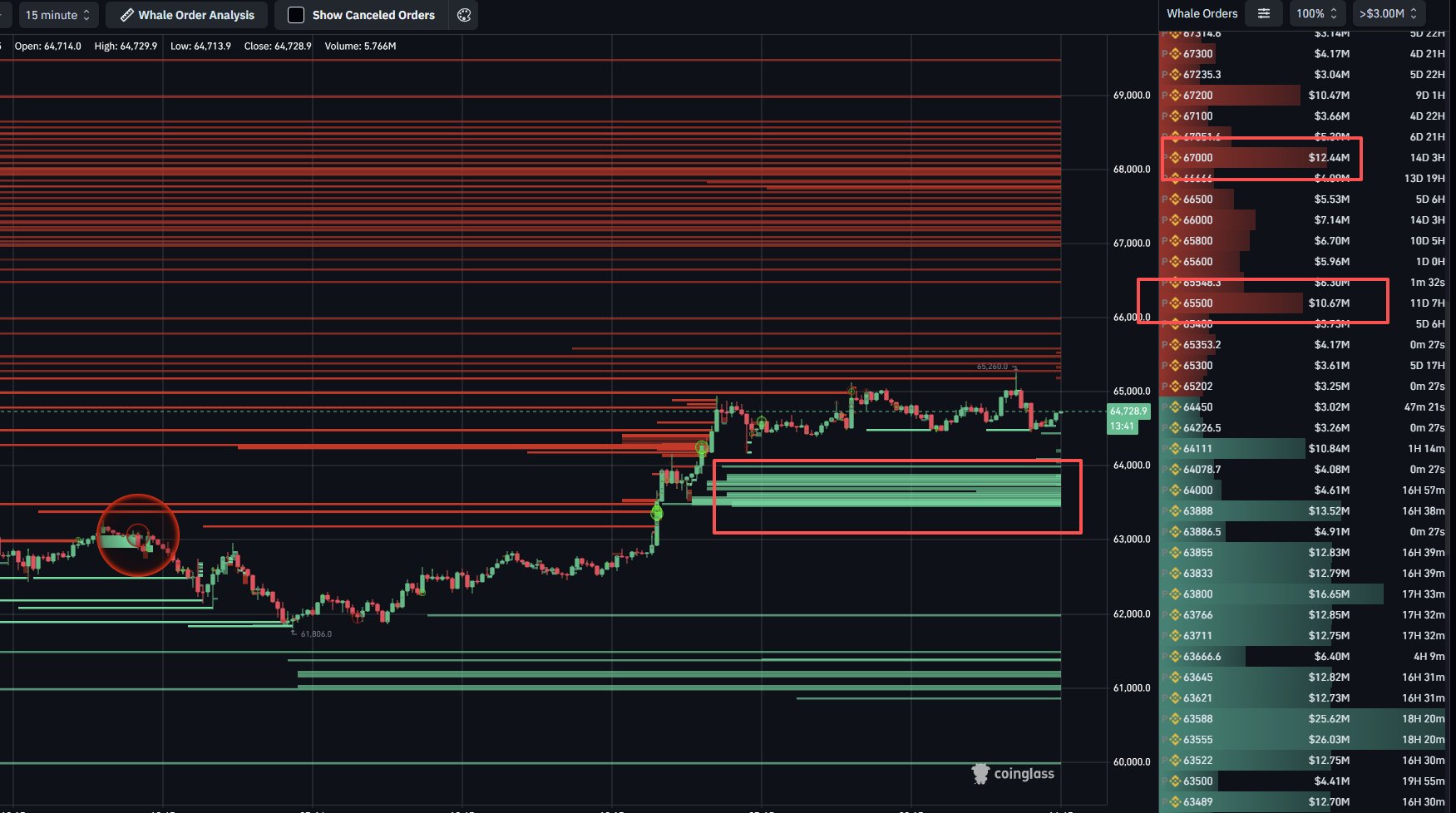
BTC/USDT 15-minute chart with whale orders. Source: CoinGlass
Others remained cautious, with declining spot-market volume causing suspicion about the strength of the latest gains.
“Wouldn’t get excited about this pump, this can easily end up being a failed auction above value area,” commentator Exitpump warned on Tuesday.
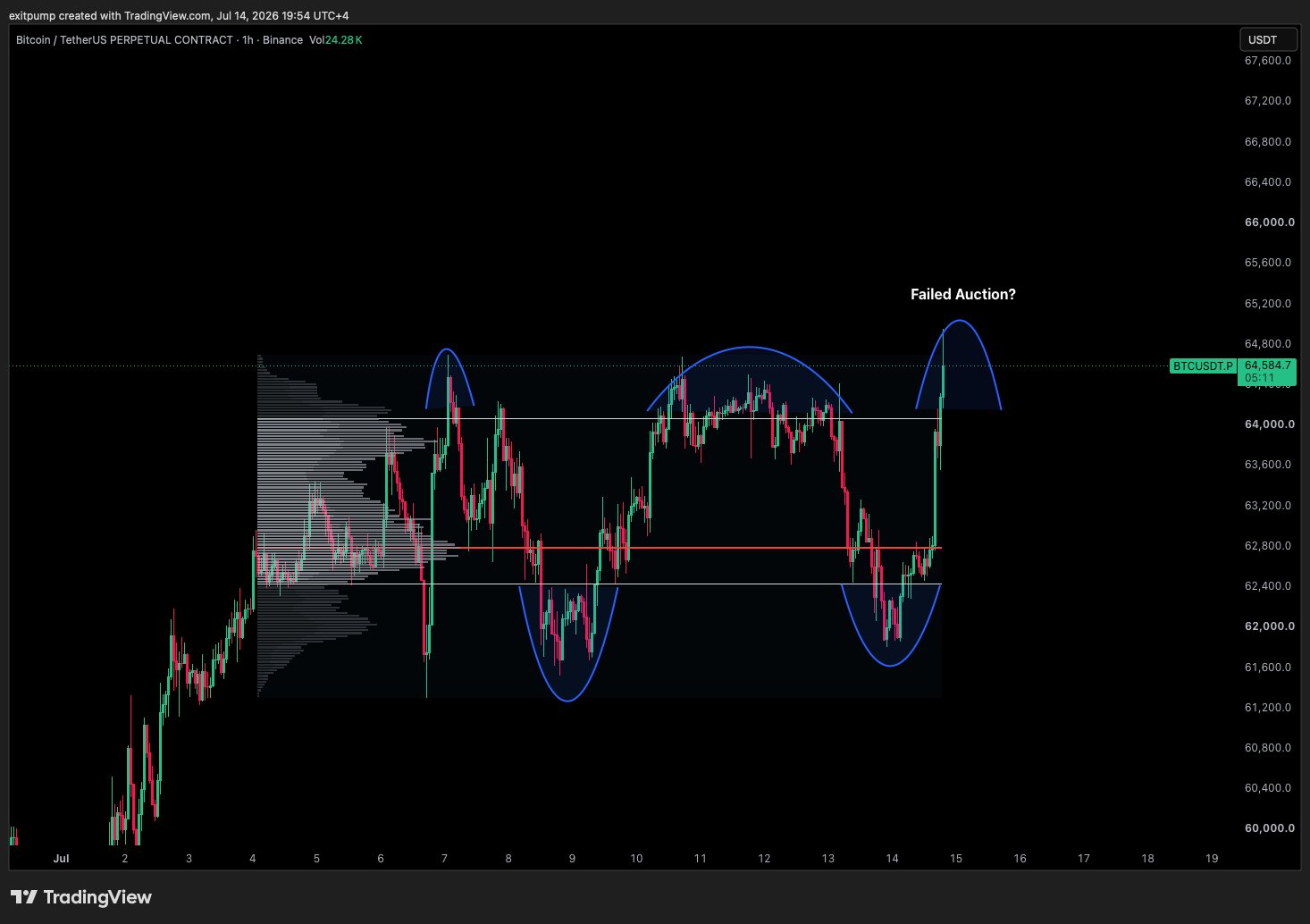
BTC/USDT perpetual contract one-hour chart. Source: Exitpump/X
Previously, trader and analyst Rekt Capital warned that July strength should reverse by August as Bitcoin repeats standard bear-market behavior.
QCP Capital: Crypto market still needs “conviction”
In market research issued on Monday, trading company QCP Capital suggested that a macro “catalyst” could be all that was needed to propel crypto higher.
Related: Bitcoin bear market will bottom when two-month RSI metric hits zero, trader predicts
As Cointelegraph reported, the coming days will see the release of key US inflation data prior to the Federal Reserve’s decision on interest-rate changes at the end of the month. Tuesday’s data came in below expectations, helping to send Bitcoin back toward $65,000.
“Should this week’s macro data and earnings continue to validate the bullish narrative, improving risk sentiment could spill over into digital assets as investors rotate into markets that have lagged the broader equity rally,” QCP wrote.
“Until then, crypto appears caught between supportive long-term fundamentals and a market still waiting for conviction.”
Commodity-linked currencies strengthened after US inflation data came in weaker than expected. The Consumer Price Index (CPI) slowed to 3.5% year-on-year in June, below the 3.8% forecast, while core inflation eased to 2.6% versus expectations of 2.8%. On a monthly basis, headline CPI unexpectedly fell by 0.4%, while core CPI was unchanged. The moderation in inflationary pressure increased expectations that the Federal Reserve may adopt a more accommodative policy stance, putting pressure on the US dollar and supporting both the Australian and Canadian dollars against the greenback.
However, despite the weaker US dollar, the next move in USD/CAD will largely depend on the Bank of Canada’s policy decision. Later today, the central bank will announce its interest rate decision, publish its updated Monetary Policy Report, and hold a press conference with the Governor. If policymakers maintain a cautiously hawkish tone on inflation, the Canadian dollar could receive additional support. Conversely, a more dovish message may limit CAD gains despite the broader weakness in the US dollar.
Market participants will also focus on the release of the US Producer Price Index (PPI), which will provide further insight into inflation trends following the softer CPI report. In addition, US crude oil inventory data could influence USD/CAD, as oil prices traditionally have a significant impact on the Canadian dollar.
AUD/USD
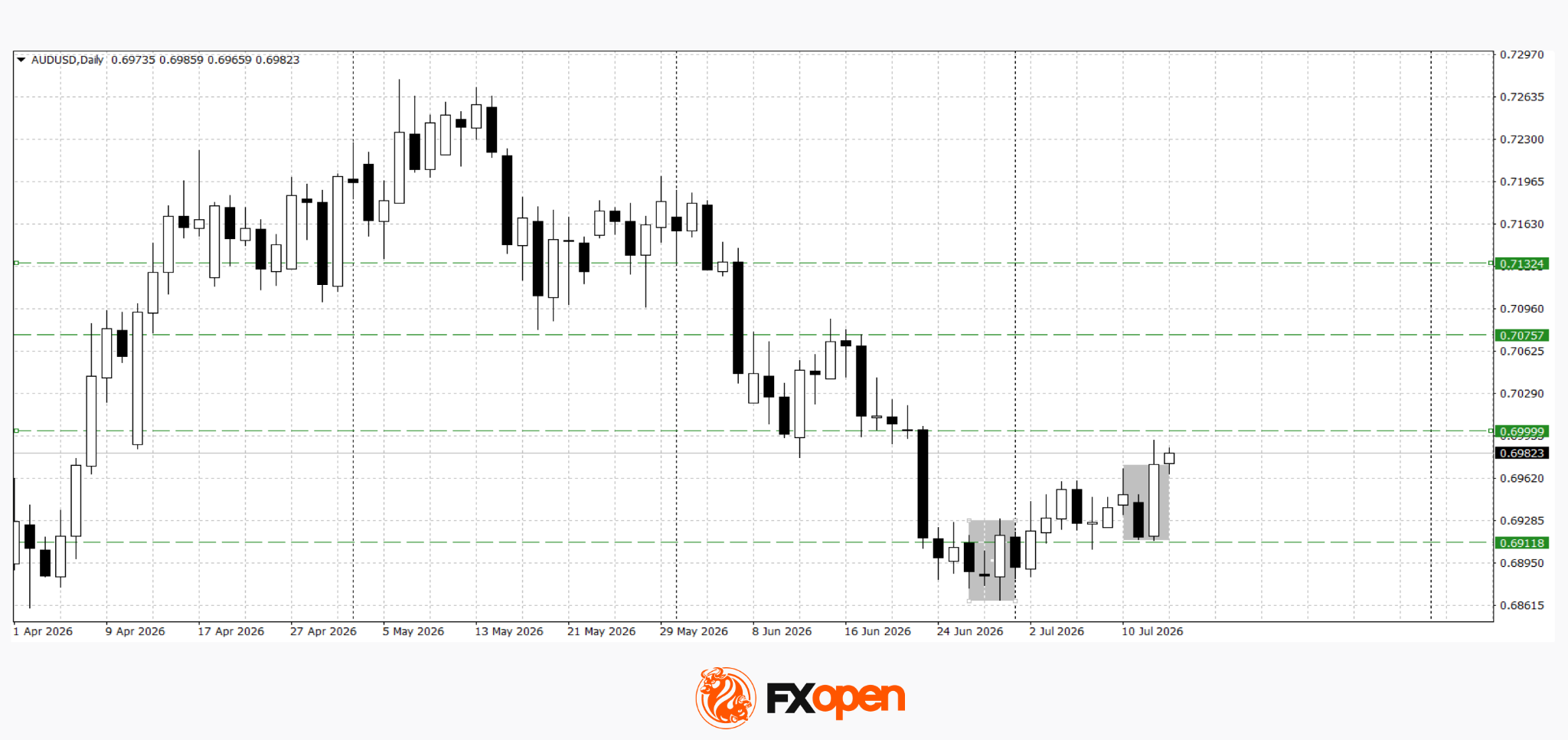
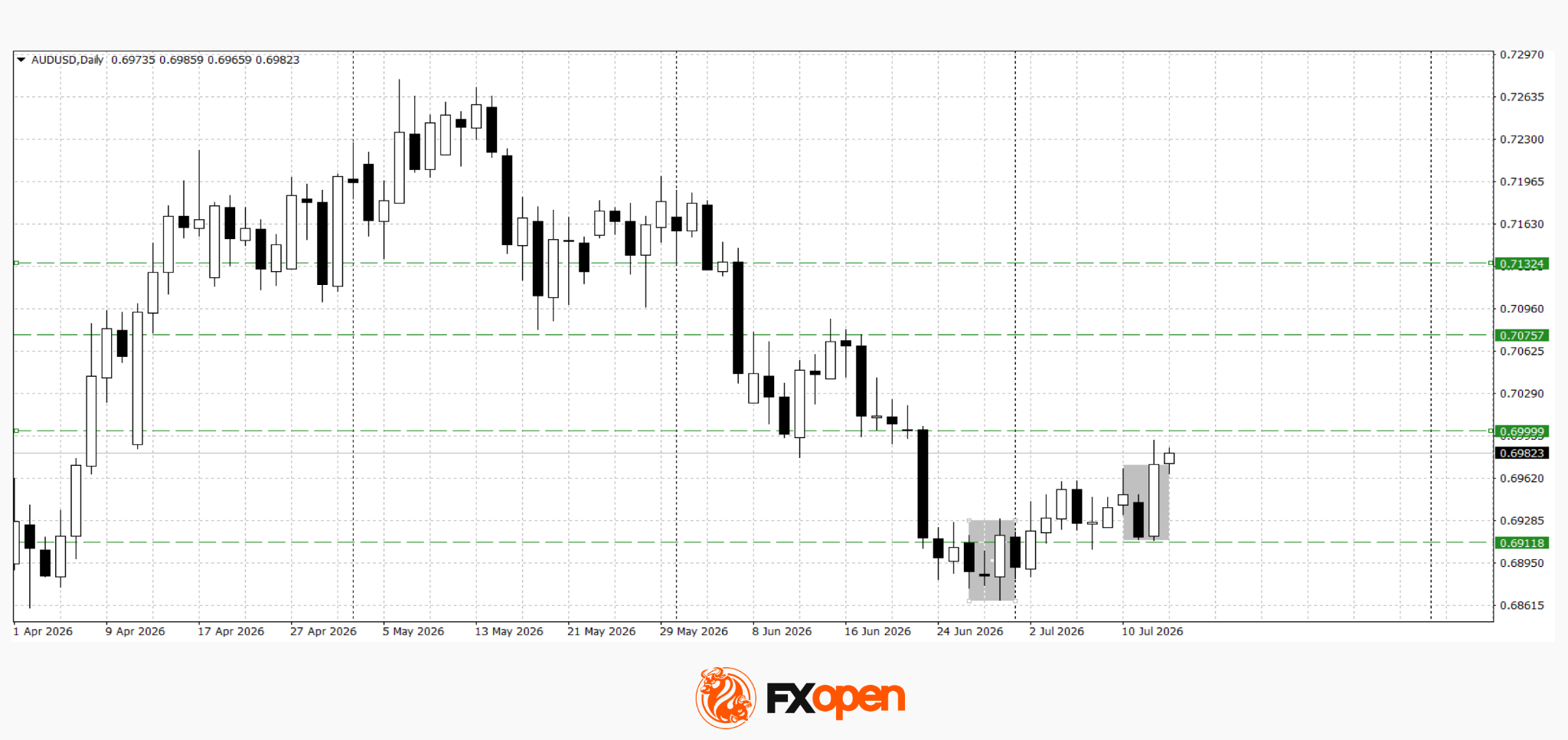
The AUD/USD pair continues to develop the bullish engulfing reversal pattern. Yesterday, buyers managed to test the key resistance level around 0.7000. If the pair secures a sustained break above this level, the rally could extend towards the 0.7080–0.7130 area. The bullish scenario would be invalidated by a move below 0.6900.
Key events for AUD/USD:
- Today at 14:00 (GMT+3): US MBA Mortgage Market Index
- Today at 15:30 (GMT+3): US Producer Price Index (PPI)
- Today at 15:45 (GMT+3): Speech by FOMC member John Williams
USD/CAD
Following confirmation of the bearish tower top reversal pattern, selling pressure on USD/CAD intensified, reinforced by the weaker-than-expected US inflation data. As a result, the pair declined below 1.4100. Technical analysis suggests there is scope for a further move lower towards the 1.3960–1.4020 area. A decisive break back above 1.4120 could revive the bullish outlook.
Key events for USD/CAD:
- Today at 16:45 (GMT+3): Bank of Canada interest rate decision
- Today at 17:30 (GMT+3): US Crude Oil Inventories
- Today at 17:30 (GMT+3): Bank of Canada press conference
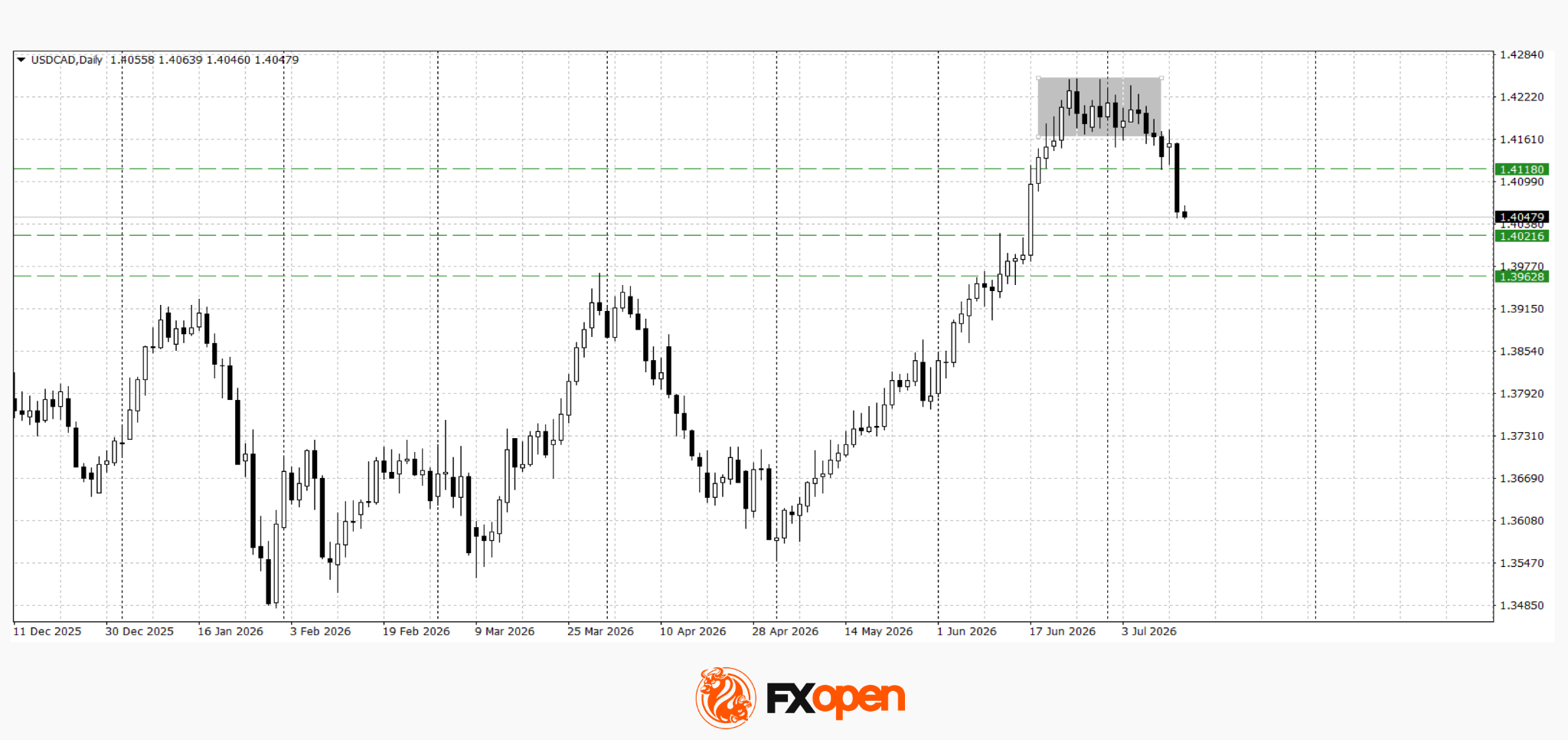
Overall, the weaker US inflation report strengthened expectations of a more accommodative Federal Reserve, weighing on the US dollar and supporting commodity-linked currencies. However, the next moves in AUD/USD and USD/CAD will depend on upcoming economic data and the Bank of Canada’s policy guidance.
Trade over 50 forex markets 24 hours a day with FXOpen. Take advantage of low commissions, deep liquidity, and spreads from 0.0 pips (additional fees may apply). Open your FXOpen account now or learn more about trading forex with FXOpen.
This article represents the opinion of the Companies operating under the FXOpen brand only. It is not to be construed as an offer, solicitation, or recommendation with respect to products and services provided by the Companies operating under the FXOpen brand, nor is it to be considered financial advice.
Just a few short years ago, the crypto hype was strong. VCs were eager to pour money into solutions for scalability, data availability, and any number of buzzwords.
Since then, the advent of powerful AI models and prolonged bear markets have taken the wind out of crypto’s sails and many chains which promised the future are now as good as forgotten.
One keen-eyed X user, crypto marketer Stacy Muur, noted the staggering $500 million invested across six blockchain projects which, together, have produced a total of just $360 in blockchain fees in the past 24 hours.
Read more: AscendEx shutdown: Uncertainty over withdrawals as hot wallets lack funds
The claim caught Protos’ eye, so we took a look at the six companies to see where it all went wrong.
Berachain
Berachain is a blockchain born as a spinoff of the 2021-era Bong Bears NFT collection. It claims to be the first proof-of-liquidity based chain, and aims to be a “growth engine for onchain businesses.”
The project raised a total of $142 million across two rounds in 2023 and 2024.
However, according to its most recent EoY statement, the project has struggled amidst issues with sentiment, shrinking crypto-native TAM and “increased skepticism around the value of infrastructure as a whole.”
Since launching in early 2025, its BERA token is down 98%.
Berachain was among the networks caught up in November’s devastating Balancer hack, leading validators to temporarily halt the network.
Later that same month, it was revealed that one of the backers, Brevan Howard’s Nova Digital, was granted a one year, risk-free refund right on its $25 million investment.
Read more: Balancer exploit drains $129M in DeFi disaster
Celestia
Celestia was seen as a hot ticket back in 2023 when “data availability” was the buzzword du jour.
Part of the Cosmos ecosystem, it promises bespoke, high throughput, modular chains “for companies with internet-scale traffic.”
It raised first $1.5 million in 2021, a further $50 million in 2022 and finally $100 million in 2024.
Its much-hyped token launch was one of the first rays of light following a deep bear market sparked by the catastrophic crypto collapses of 2022.
Despite initially surging around 10x in its first months to an all-time high of over $20, TIA eventually bled approximately 98%, sitting today at $0.40.
Scroll raised a total of $83 million over three funding rounds, the latest of which brought the Ethereum L2 to a $1.8 billion valuation in March 2023.
It made just $24 in fees yesterday.
The zkEVM layer two hit a peak TVL of $585 million as users enthusiastically farmed an ultimately disappointing airdrop. In the aftermath, the network lost around 75% of its TVL within a couple of months.
There’s currently just under $12 million on the chain.
Eclipse
Eclipse billed itself as “Solana on Ethereum,” an SVM layer two network which would pair Solana’s performance with Ethereum’s liquidity.
Developer Eclipse Labs raised a total of $65 million, most of which came in a $50 million Series A, led by Placeholder and Hack VC, in March 2024.
DeFiLlama data shows the chain’s TVL peaking at almost $50 million in late February last year. It’s currently down to just $1.15 million, a drop of approximately 98%.
The project’s most recent blog post is from a year ago, announcing the launch of its token ES, and an airdrop. Eclipse Labs has since pivoted to development of The Human API, a marketplace for AI agents to hire humans.
Sonic
Launched as Fantom by controversial developer Andre Cronje, founder of DeFi stalwart Yearn Finance, the fast, low-cost network migrated to Sonic in 2024. It raised a total of $61 million across six rounds between 2018 and 2024, according to ICODrops.
As Fantom, it took a hit in the Multichain debacle, with many bridged assets depegged from their native versions.
Fantom’s peak TVL reached a staggering $7.9 billion in 2022 and now sits at just under $5 million. Sonic’s hit $1.2 billion last spring, but has since dropped to $16 million.
Cronje’s involvement with Sonic terminated last month and he’s spent much of the last 18 months building Flying Tulip.
Read more: Andre Cronje says someone stole his code to build a $1B DeFi project
Manta
ZK-focused Manta raised a total of $60 million across four rounds between 2021 and 2023.
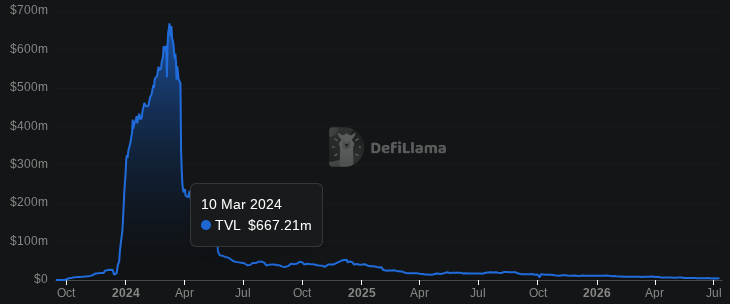
Its TVL chart is dramatic, highlighting an intense, heavily gamified airdrop campaign, which saw over $650 million poured into the chain.
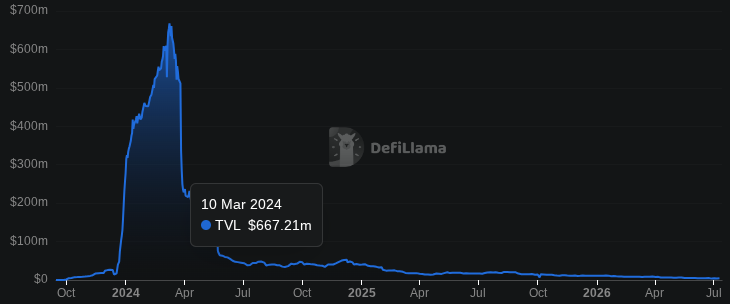
Just a few weeks before its peak, TVL sat at under $20 million. Likewise, within four months, it was back below $50 million once again. Today, just $4 million is held on the chain.
Got a tip? Send us an email securely via Protos Leaks. For more informed news and investigations, follow us on X, Bluesky, and Google News, or subscribe to our YouTube channel.


The United Kingdom has set an early 2027 target to issue its first digital sovereign bond on distributed-ledger infrastructure, becoming the first G7 country to launch government debt in tokenized form.
Summary
- The UK plans to issue its first blockchain based sovereign bond by early 2027 through HSBC’s Orion platform.
- The Digital Gilt Instrument will operate inside the Bank of England and FCA Digital Securities Sandbox.
- The move comes as the UK expands cooperation with the US on stablecoins, tokenized assets and cross border financial markets.
According to Chancellor Rachel Reeves, who announced the plan during her annual Mansion House speech, the government intends to follow the first issuance with additional digital gilt sales if the pilot progresses as expected.
The Digital Gilt Instrument, or DIGIT, will be a sterling-denominated government bond issued on HSBC’s Orion blockchain platform. It will operate within the Bank of England and Financial Conduct Authority’s Digital Securities Sandbox, a testing environment created for digital securities.
The Treasury introduced the pilot in 2024 to examine whether distributed-ledger technology could shorten settlement times, reduce reconciliation work and lower operating costs across government debt markets. HSBC secured the mandate to operate the platform in February after issuing more than $3.5 billion of digital bonds through Orion.
Speaking at the same event, Bank of England Governor Andrew Bailey said the central bank will work toward making DIGIT eligible as collateral in its market operations. According to Bailey, that step could support tokenized repurchase agreements while allowing banks to use the security in central bank funding transactions.
The Treasury has not disclosed the size, maturity, coupon, investor eligibility, or settlement asset for the bond. Officials said the initial issuance will sit outside the government’s conventional gilt financing program.
Digital bond plans follow tokenization push
The planned bond sale comes as the UK expands its work on tokenized financial markets beyond pilot projects.
Earlier this week, the UK and the United States published a joint statement committing to closer cooperation on stablecoin regulation, cross-border payments and tokenized finance through the Transatlantic Taskforce for Markets of the Future.
According to the joint statement, both governments plan to explore how regulated stablecoins issued in one country could access the other market while maintaining separate domestic regulatory frameworks. The two countries also agreed to seek common approaches for tokenized securities settlement and examine whether stablecoins or tokenized money market funds could serve as collateral in clearing markets.
The statement said stablecoins presented as money should maintain at least a one-to-one backing with high-quality liquid assets, while reserve assets should remain separate from issuers’ corporate funds. Officials also said holders should receive timely redemptions and clear legal protections if an issuer fails.
Although the stablecoin agreement does not create automatic market access or mutual recognition, it outlines a framework for regulators to reduce unnecessary barriers to cross-border tokenized financial services while each country completes its own regulatory process.


Key takeaways
- Solana (SOL) has rebounded above its 50-day EMA at $76.82 after a 4% rally.
- Rising futures trading volume and positive funding rates point to growing bullish sentiment among retail traders.
- Solana ETFs have recorded two consecutive days of zero inflows, signaling muted institutional demand.
Solana (SOL) extended its recovery on Wednesday, climbing above its 50-day Exponential Moving Average (EMA) after gaining roughly 4% in the previous session.
The rebound comes as improving sentiment across the cryptocurrency market encourages renewed retail participation, while institutional investors remain cautious despite the broader market rally.
Retail traders return to Solana futures
Recent derivatives data suggests retail traders are becoming more optimistic about Solana’s short-term outlook.
According to CoinGlass, SOL futures open interest has remained stable at approximately $4.91 billion over the past 24 hours, indicating traders are maintaining existing leveraged positions rather than exiting the market.
Meanwhile, futures trading volume jumped 15% to around $6.90 billion, reflecting stronger market activity and continued position building.
Adding to the positive outlook, Solana’s funding rate remains in positive territory at approximately 0.0040%, suggesting traders are willing to pay a premium to maintain long positions—a sign that bullish sentiment is strengthening among retail participants.
While retail activity has improved, institutional demand has yet to show similar strength.
Data from SoSoValue indicates that Solana exchange-traded funds (ETFs) have recorded two consecutive trading sessions with zero net inflows this week.
The lack of fresh ETF investment suggests traditional investors are adopting a wait-and-see approach despite the recent rebound in cryptocurrency prices.
This divergence between retail enthusiasm and institutional caution could influence the sustainability of Solana’s recovery.
Solana price analysis: $81.50 remains key breakout level
From a technical perspective, Solana has strengthened after reclaiming its 50-day EMA at $76.82.
The token is also trading above the 50% Fibonacci retracement level at $76.92, measured from the decline between $98.41 and $60.13, reinforcing the improving short-term structure.
However, SOL continues to face significant resistance from a descending trendline positioned near $81.50, while the 200-day EMA at $94.52 remains a major long-term barrier.
A decisive daily close above $81.50 would confirm a breakout from the prevailing downtrend and could trigger a move toward the $88.56 resistance and the 200-day EMA at $94.52.
Technical indicators suggest bullish momentum is slowly building. The Relative Strength Index (RSI) is hovering around 54, indicating modest buying pressure without entering overbought territory.
Meanwhile, the Moving Average Convergence Divergence (MACD) is approaching a bullish crossover near its signal line, reflecting a neutral-to-positive momentum shift that could support additional upside if buying pressure continues.

If Solana encounters renewed selling pressure, traders will likely monitor the following support levels:
- 50-day EMA: $76.82
- Previous ascending trendline: $68.88
- Cycle low: $60.13
Holding above the 50-day EMA would help preserve the current recovery, while a break below it could expose SOL to a deeper pullback toward the lower support zones.

Cathie Wood’s ARK Invest is continuing to add to its position in Circle Internet Group, the company behind the USDC stablecoin, even as Circle’s stock remains in a long slump.
According to ARK’s daily trade disclosures reviewed by Cointelegraph, the firm bought an additional 220,000 shares of Circle across three actively managed exchange-traded funds on Tuesday. ARK’s most recent purchase was valued at roughly $13.9 million based on Circle’s Tuesday closing price of $63.22 on the New York Stock Exchange.
Key takeaways
- ARK Invest added 220,000 Circle shares on Tuesday, worth about $13.9 million at the NYSE close.
- Through its disclosed July buys, ARK has accumulated 725,517 Circle shares, extending a pattern of additions despite persistent share-price weakness.
- Circle represented about 4.37% of the ARK Fintech Innovation ETF (ARKF) as of Wednesday, and about 3.35% of ARK Innovation ETF (ARKK).
- Analyst 10x Research said it no longer views Circle as a buy after the stock fell back below $80, citing deteriorating fundamentals and slower USDC activity.
Another Circle buy lifts ARK’s July total
ARK’s newest transaction increased the firm’s disclosed July acquisitions to 725,517 Circle shares. The same disclosures show prior buys of 287,609 shares on July 1 and 217,896 shares on July 9.
The buys matter because they highlight a sustained commitment by ARK’s actively managed funds to its thesis on Circle’s role in regulated stablecoin infrastructure—an area where market sentiment has been volatile. Even as Circle’s equity has fallen sharply from its IPO-era high, ARK has continued to build rather than pause.
As of Wednesday, Circle was listed as the seventh-largest holding in ARK Fintech Innovation ETF (ARKF), accounting for 4.37% of the fund. The position was valued at about $33 million, based on the fund’s latest holdings data available on ARK’s official website.
Circle was also a meaningful component of ARK Innovation ETF (ARKK). It represented 3.35% of the flagship fund and ranked as the ninth-largest holding, worth about $218 million, according to ARKK holdings data on ARK’s site.
Circle’s stock under pressure, ARK keeps buying
While ARK’s trading has been steady, Circle shares have struggled. The stock was down about 22% year-to-date and roughly 76% below its post-IPO peak, setting a challenging backdrop for any incremental capital allocation.
That makes ARK’s continued additions notable: the strategy implies ARK sees enough long-term value in Circle—particularly tied to USDC’s position in the stablecoin landscape—to keep increasing exposure during a period when many investors have grown more cautious.
Still, public equity performance can diverge from broader ecosystem adoption, and stablecoin markets are influenced by a mix of regulatory outcomes, competition among issuers, and the pace of on-chain and payment activity.
Analysts warn of deteriorating fundamentals and slower USDC activity
ARK’s latest purchase came as some analysts revisited Circle’s outlook. Digital asset research platform 10x Research said it no longer considers Circle a buy after the stock declined back below $80. In a report published Tuesday, the firm explained that it previously regarded Circle as attractive below that level but now believes Circle’s fundamentals have “meaningfully deteriorated.”
10x Research also pointed to slower USDC activity as a key concern, including a decline in active addresses. While stablecoin usage metrics can fluctuate for a variety of reasons, a sustained slowdown in users interacting with USDC could weigh on expectations for Circle’s growth.
The stablecoin market data adds further context. According to CoinGecko, USDC’s market capitalization had declined roughly 3% year-to-date to $73 billion at the time of publication, though it remained about 17% higher than a year earlier. In other words, USDC’s market size is still larger than it was a year ago, but the near-term trajectory has weakened.
10x Research also left room for two competing interpretations: the recent drop in Circle’s share price could represent a long-term buying opportunity, or it could signal the start of a more prolonged downturn. That uncertainty reflects the broader challenge in assessing equity risk around stablecoin issuers—investors must separate temporary market drawdowns from longer-term changes in transaction demand, regulatory clarity, and competitive dynamics between different stablecoins.
What to watch next for ARK, Circle, and USDC
For investors tracking this story, the immediate focus should be whether Circle can reverse the factors cited by analysts—particularly USDC activity levels—and whether ARK’s continued buying is mirrored by broader capital flows into Circle or remains idiosyncratic. Given how sharply sentiment has swung, the next reports and on-chain usage trends around USDC will likely carry outsized importance.
Crypto World
Crypto News, July 15: Bitcoin and Ethereum Price Jump on Softer CPI and Japan Bitcoin ETF

Bitcoin and Ethereum price climbed after cooler-than-expected U.S. inflation data improved market sentiment. Just hours after, a Japan Bitcoin ETF bill cleared a major committee in the country’s Upper House, raising expectations that spot Bitcoin exchange traded funds could eventually reach Japanese investors. The combination of easing inflation and friendlier regulation gave crypto traders another reason to stay bullish.
Japan’s proposal would classify cryptocurrencies as financial instruments under the Financial Instruments and Exchange Act while lowering crypto taxes to a flat 20%. If passed into law, the framework could allow spot Bitcoin ETFs to launch on the Tokyo Stock Exchange by 2027.
Elsewhere, South Korea advanced plans recognizing virtual assets within national asset rules, while policymakers in India, Europe, and the United States continued debating crypto regulation.

Don’t Miss Out on Our $1,000 USDT Airdrop on ByBit
Japan Bitcoin ETF Sparks Fresh Price Optimism
The Japan Bitcoin ETF proposal has quickly become the day’s biggest story. After years of cautious regulation, lawmakers are now considering a framework that brings digital assets closer to traditional financial markets. Lower taxes and the prospect of regulated investment products could attract both institutional and retail capital once the legislation clears the remaining stages.
— Coin Bureau (@coinbureau) July 15, 2026
 BREAKING: Japan advances landmark bill to legalize Bitcoin ETFs.
Japan’s Upper House committee has approved legislation to reclassify bitcoin and other cryptocurrencies as financial instruments, paving the way for spot crypto ETFs as early as 2027.
The proposal would also… pic.twitter.com/VzTbAUcBBm
Outside Japan, governments are moving at different speeds. India’s Finance Ministry is pushing regulators to strengthen oversight without appearing to endorse cryptocurrencies.
Meanwhile, a joint U.S.-U.K. task force called for greater stablecoin innovation, and banks continue to discuss amendments to the CLARITY Act before lawmakers meet later this week. Europe is also pressing ahead with its Digital Euro pilot.
Markets welcomed the shifting backdrop as Bitcoin price briefly touched above $65,000 before easing back toward the mid $64,000 range. Even so, the move marked a clear breakout from nearly two weeks of muted trading. Softer inflation figures encouraged investors to rotate back into risk assets after fears of additional Federal Reserve tightening faded.

Institutional demand also improved. U.S. spot Bitcoin ETFs recorded $181 million in net inflows after heavy outflows, with BlackRock accounting for the largest share. On-chain data also points to continued accumulation by large holders, suggesting long-term investors remain confident despite recent volatility. Together, stronger ETF demand and the Japan Bitcoin ETF narrative helped keep the Bitcoin price supported.
Discover: The Best Crypto to Diversify Your Portfolio
Ethereum Price Outpaces BTC as ETF Flows Improve
While Bitcoin grabbed the headlines, Ethereum quietly outperformed Bitcoin price. Ethereum recovered faster than Bitcoin and strengthened against BTC, signaling improving momentum after several weeks of weakness. Traders pointed to a healthier ETH/BTC ratio as evidence that buyers are becoming more confident.
Fresh institutional flows reinforced that view. U.S. spot Ethereum ETFs posted about $58 million in net inflows, reversing the mixed trend seen earlier this month. Morgan Stanley also updated filings tied to proposed Ethereum and Solana ETFs, naming Coinbase as custodian and staking provider. Those developments added to growing confidence around regulated crypto investment products.
The Ethereum price continued pushing toward the $1,900 level after reclaiming important technical support. Analysts say maintaining momentum above recent breakout levels could open the door to another test of psychological resistance near $2,000. At the same time, steady ETF demand remains an important tailwind.
Looking ahead, traders will closely watch incoming U.S. economic data alongside political developments in Japan and Washington. The Japan Bitcoin ETF proposal still faces additional legislative steps, yet it already marks one of the strongest pro-crypto signals from a major economy this year. If institutional inflows continue and macro conditions remain favorable, both Bitcoin and Ethereum price could have room to extend their gains.
Don’t Miss Out on Our $1,000 USDT Airdrop on ByBit
Discover: The Best Token Presales
The post Crypto News, July 15: Bitcoin and Ethereum Price Jump on Softer CPI and Japan Bitcoin ETF appeared first on Cryptonews.

Stripe, Advent mount a blockbuster $53 billion bid to buy PayPal (PYPL)

Wings Over Scotland | The Invisible Rabbit

Vikings Get Same Old Verdict in New Power Rankings


-

 Fashion6 days ago
Loro Piana Fall 2026 Enters Houston’s Art Scene
-

 Fashion4 days ago
Weekend Open Thread: Nutriplenish Leave-In Conditioner
-
 Sports6 days ago
2026 Genesis Scottish Open Thursday TV coverage: Round 1
-

 Sports5 days ago
Super Eagles star Moses Simon opens up on Liverpool transfer regret
-

 Tech6 days ago
Character.AI enters the microdrama arena with its own productions, but there’s a twist
-

 News Videos15 hours ago
XRP BOMBSHELL… XRP OMBOARDED FOR TRANSACTIONS!!!
-

 Tech1 day ago
Get Your ESP32 Sunny Side Up With This Solar Dev Board
-

 Tech14 hours ago
Dark Secrets Emerge When Jailbreaking LLMs
-

 News Videos6 days ago
Crypto Just Entered Its Most Important 6-Month Candle (Could Decide Everything!)
-
 NewsBeat6 days ago
Major update after Huntingdon train attack as man enters plea
-

 News Videos2 days ago
how to make coin bank box with cardboard #scienceproject #money #diy #shorts
-

 Sports7 days ago
39-year-old Djokovic wins five-hour thriller to enter Wimbledon semis | Other Sports News
-

 Tech6 days ago
Level Infinite Launches Gangstar Mirage City in India with Pre-Registrations
-
 Tech2 days ago
Cloudflare Precursor Watches Your Mouse and Keyboard To Decide If You Are Human
-

 Tech6 days ago
Entra passkey enrollment vishing targets Microsoft 365 users
-

 Crypto World6 days ago
DeFi Dashboard Zapper to Shut Down After 7 Years
-

 Crypto World6 days ago
Mark Cuban-Backed DeFi Dashboard Zapper Shuts Down After 7 Years
-

 Tech6 days ago
Claude’s New Reflect Dashboard Wants To Help You Log Off Of Claude
-

 Crypto World7 days ago
Fed minutes June 2026: officials split on rates
-
 Tech6 days ago
Hackers can use 9 of the most popular AI tools to assemble massive botnets
You must be logged in to post a comment Login