

Crypto World
PRED Opens Public Access for Unique FIFA World Cup Prediction Markets, After Private Beta Hits 86% Retention


[PRESS RELEASE – Panama City, Panama, June 4th, 2026]
After nearly $5 million in beta trading volume, Pred opens public access for the 2026 FIFA World Cup, with unique markets and fastest market resolution benchmarks.
Pred, a peer-to-peer sports trading exchange built on Base, opened public access today after a private beta that kept 86% of traders active week over week and pushed $5 million in notional volume through 300+ invited users.
Across 8 weeks, traders executed more than 100k trades on soccer markets, and 83% of them made repeat deposits.
Pred is a sports native exchange, designed for the speed of live sports. Traders match positions against one another through an on-chain order book. Trading settlement happens in 200 milliseconds, and markets resolve in 3 minutes, not hours. Positions are denominated in USDC, settled on-chain, and deposits and positions always earn native yield.
The release lands just in time for the opening match of the 2026 FIFA World Cup. Pred is building market depth around in-game events that general prediction platforms don’t carry: 15-minute markets that settle inside the run of play, 1UP and 2UP markets that close the moment a goal difference is reached, and live moneyline markets with the best prices. A typical Premier League match during beta ran several of these in parallel, where most prediction platforms list a few sub-markets per match.
“I spent 22 years trading sports, watching exploitative pricing of sportsbooks and limits of sharp traders cut to nothing the moment they started winning,” said Amit Mahensaria, CEO and co-founder of Pred. “Pred is the exchange I wanted as a trader. The UX and speed of a sportsbook, the pricing and transparency of an on-chain exchange.”
General-purpose prediction markets are today benefiting from the broken market structure and exploitative pricing of sportsbooks. But they are not designed for live sports – neither in UX, nor in speed, nor in market variety. Sports trading will be a verticalised play, and being such a large asset class, it needs its own exchange.
The product going live today is Pred V2, rebuilt after more than 300 calls with beta users. Pred is backed by Accel and Coinbase Ventures.
About Pred
Pred is a peer-to-peer sports native prediction market built on Base. Positions are denominated in USDC, matched through an open order book, and settled at high speed on-chain.
Disclaimer: Pred does not operate in India, Singapore, the United States, or OFAC-sanctioned countries.
The post PRED Opens Public Access for Unique FIFA World Cup Prediction Markets, After Private Beta Hits 86% Retention appeared first on CryptoPotato.

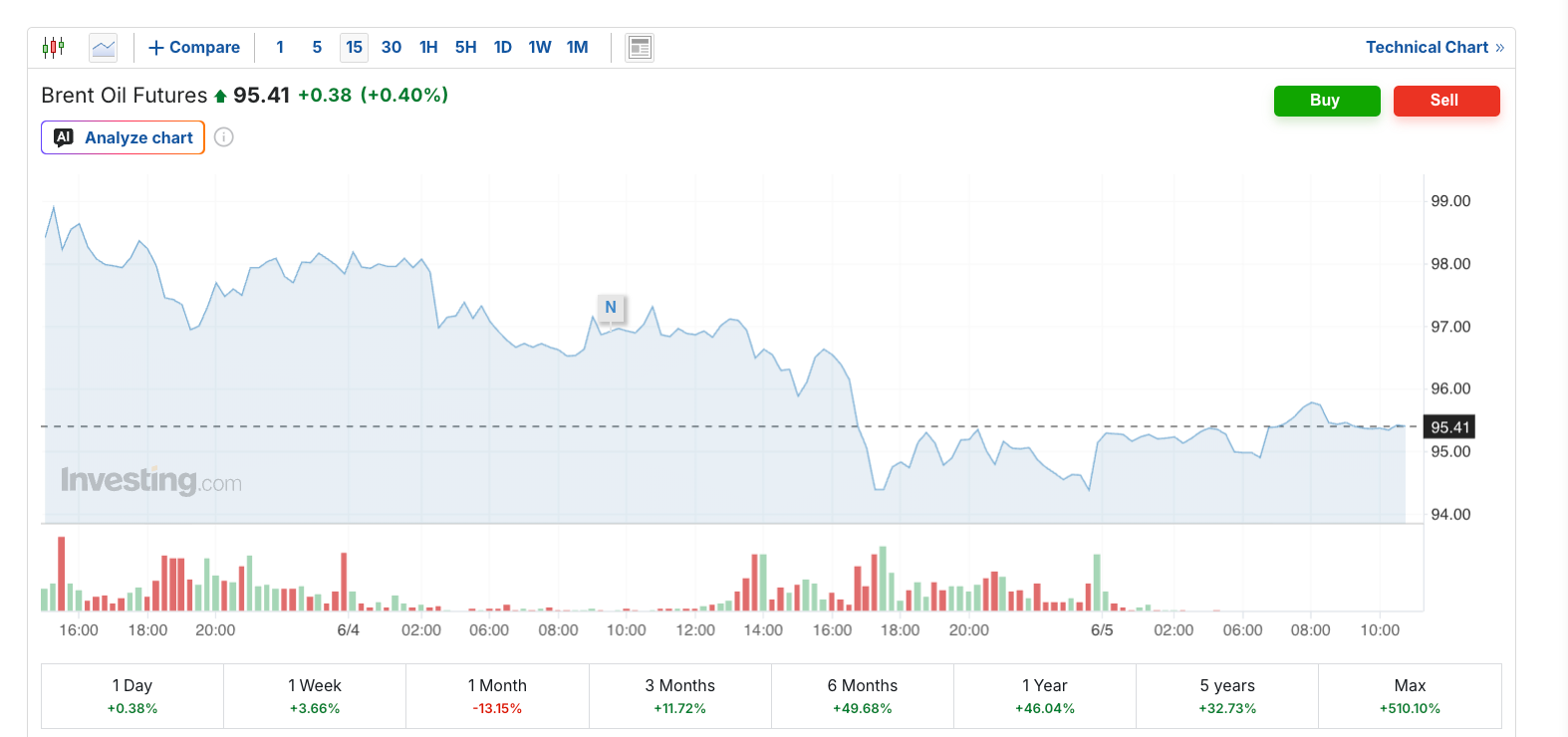
The Brent crude oil price holds near $95 a barrel, climbing for a second straight week even after a 13% monthly drop, as an IMF warning on oil-driven inflation pulls investors back toward the long side.

The clearest sign sits in options markets, where traders are buying calls against the falling month-on-month trend. Speculative funds and perpetual traders, however, are leaning the other way, and the split sets up the next move.
IMF Warns the Oil Price Sits Above Its Growth Baseline
The case for higher oil prices starts with supply. The International Monetary Fund flagged that the global oil price sits about 3% above the level built into its April growth forecast, a gap it traces to the Iran conflict.
Want more insights like this? Sign up for Editor Harsh Notariya’s Daily Newsletter here.
The IMF estimates Iran-related disruptions have cut roughly 14 million barrels per day of production. It also expects global oil reserves to fall to a five-year low near 7.5 billion barrels in July, down from 8 billion before the war.
That risk centers on the Strait of Hormuz, the route for about a fifth of global oil flows. The price path now turns on whether the waterway fully reopens.
The same supply squeeze is already feeding the next pressure point, which is US inflation.
Hot Services Inflation Strengthens the Bull Case
Rising energy costs are showing up in business surveys. The ISM Services Prices index, a gauge of input costs across the service economy, rose to 71.3 in May from 70.7 in April, its highest reading since August 2022.
Survey respondents named diesel, gasoline, and oil among the items rising in price, the first month panelists tied petroleum directly to higher costs. No commodities were reported as falling.
The Kobeissi Letter noted the index has climbed 8.3 points since February and argued the trend points to CPI inflation possibly rising above 5%, up from 3.8% in April. Services prices have historically led consumer prices by about three months.
Hotter inflation gives oil bulls a reason to add exposure, which explains how investors are now positioning.
Why Investors Are Quietly Buying Oil Calls
Here the buying turns contrarian. Even as the oil price fell 13% on the month, options traders moved against the trend and loaded up on upside bets.
The put-call ratio for the United States Brent Oil Fund (BNO), which weighs bearish puts against bullish calls, dropped to 0.06 on volume and 0.11 on open interest as of June 4. Both sit well below the May 26 readings of 0.12 and 0.15.

A falling ratio means fewer downside puts per call. This is a quiet vote that the Iran premium and inflation surge will lift prices. The move is easy to miss because it runs beneath a falling monthly price.
That options conviction, however, clashes with what the larger futures players are doing.
The Catch: Speculative Shorts and Flat Funding
The latest Commitments of Traders report from the CFTC, dated May 26, shows speculative funds positioned the opposite way. Non-commercial traders held about 58,110 long contracts against 90,924 short, a net short stance.
Over that week, these traders cut oil longs by 1,703 and added 6,145 shorts. They deepened the bearish bet even as the price rose in the weekly timeframe.
Commercial traders moved the opposite way. These hedgers, often read as the smart money, added 4,319 longs and trimmed 907 shorts, buying into the dip in the same direction as the call buyers. Their move backs the inflation-driven bull case the options market is pricing.

Perpetual traders look undecided. The Hyperliquid funding rate for the Brent oil-USDC pair, a fee that signals whether longs or shorts dominate, sits near neutral at -0.0013% on the 30-day view after a sharp negative swing faded.

That hesitation and a slightly negative tilt reflects a real ceiling. Venezuela’s crude exports surged 61% year over year to 1.25 million barrels per day in May. It is the highest in seven years, as eased US sanctions added fresh barrels and capped how far the bulls can run.
The setup leaves the oil price caught between two forces. The Iran supply shock and the hottest services inflation since 2022 pull prices higher. This is the case call buyers and commercial longs are betting on. Venezuela’s return of 1.25 million barrels a day pulls the other way, and until one side wins out, the speculative shorts and flat funding signal a market unwilling to commit.
The post IMF Warning and Hot Inflation Pull Investors Into Bullish Oil Bets as Price Holds $95 appeared first on BeInCrypto.
Bitcoin slid to $62,715 in Asian hours on Friday, down 1.9% on the day and 14.5% on the week, as the artificial-intelligence trade that has powered global risk assets through 2026 ran out of breath.
Ether dropped a sharper 4.8% to $1,696 and is now down more than 15% on the week, while Solana fell 5.4% to $66.51, taking its seven-day loss to 18.5%.
The selloff was led from outside crypto. Broadcom’s quarterly AI-chip outlook missed elevated expectations on Wednesday, pausing a months-long advance in semiconductor stocks from their war-driven lows.
Nasdaq 100 futures slipped 0.9% on Friday, extending the index to a third straight day of declines. South Korea’s KOSPI, the best-performing major equity index this year and the cleanest tape on the AI buildout, tumbled 4.7%, with chipmaker SK Hynix off 8%. MSCI’s Asia-Pacific equities gauge fell 1.4%.
Currency markets carried their own stress signal. The Korean won extended a slide to a 2009 low. The Indonesian rupiah traded near its record low against the dollar as foreign investors yanked billions from local bond markets.
The Indian rupee bucked the trend after the Reserve Bank of India announced fresh measures to attract capital inflows. The picture across Asia is a coordinated risk-off shift that’s been quietly building all week.
Crypto sat squarely inside that picture. Hyperliquid’s HYPE, which had been the only top-10 token holding green on a weekly basis, dropped 14.8% to $62.14, erasing nearly all of its recent outperformance and leaving only a thin 1.5% gain on the week.
The narrative that high-cash-flow tokens were rotating into a bid while the rest of crypto bled lasted less than a single trading session. Zcash, the other lone green dot from yesterday’s leaderboard, has now given back its weekly outperformance and then some.
The structural backdrop hasn’t softened. U.S. spot bitcoin ETFs have now logged 13 straight sessions of net outflows totaling roughly $4.4 billion since mid-May.
Strategy filed its first disclosed bitcoin sale since 2022 earlier this week, offloading 32 BTC to fund preferred stock dividend obligations. Combined, those two flows have removed a structural bid that supported bitcoin through most of the past 18 months.
The next test is Friday’s U.S. nonfarm payrolls report. A soft print would revive expectations for Federal Reserve cuts under newly confirmed chair Kevin Warsh, push real yields lower and likely send the AI trade back up, taking crypto with it.
A hot print does the opposite. Until the data lands, the path of least resistance for both stocks and crypto is the one they’re already on.
Forward Industries deposited 455,784 SOL worth roughly $31.87 million to Coinbase Prime on Friday after a month of dormancy, according to onchain tracker Lookonchain.
The transfer is the first sizeable movement from the company’s treasury wallets in more than four weeks and lands in the middle of a sharp Solana drawdown that has pushed the token down 18.5% on the week.
The company launched its Solana treasury strategy in September 2025, spending roughly $1.59 billion to accumulate 6.83 million SOL at an average price of $232.08 per token. Solana is now trading at $66.51, which puts those same holdings at $458.6 million.
The position is currently around $1.13 billion underwater, a more than 70% paper loss per token.
A deposit to Coinbase Prime does not necessarily mean tokens will be sold, but it puts them within reach of a sale and reverses a month of inactivity that had kept the SOL position immobile.
Forward Industries is one of the most aggressive Solana-treasury imitators of the Strategy bitcoin playbook, and its cost basis above $230 leaves it among the most exposed corporate holders if the current drawdown continues.


A group of wallets described by on-chain analyst Ai 姨 as linked to a16z has reportedly withdrawn another 224,118 HYPE from exchanges over 24 hours, adding to a large 2026 accumulation streak.
Summary
- a16z-linked wallets reportedly withdrew 224,118 HYPE as analysts track fresh accumulation across several addresses.
- The HYPE position now shows about $131 million in unrealized gains, according to on-chain tracking.
- HYPE pulled back from records after Arthur Hayes sold, but linked wallets kept adding tokens.
Ai 姨 said the wallets pulled 224,118 HYPE from several exchanges, with the tokens valued at about $15.16 million. The analyst said total 2026 accumulation has reached 6.906 million HYPE, worth about $322 million.
The reported average cost stands near $46.7. Based on the analyst’s figures, the position now carries about $131 million in unrealized gains. The wallets cited in the post include several Arkham-tracked addresses.
Attribution remains unconfirmed
The wallet cluster has not been confirmed by a16z. That matters because on-chain labels can connect wallets to entities through transaction patterns, exchange flows, or prior tags, but they do not replace a public filing or direct statement.
Ai 姨 also used a cautious frame in the post, asking, “Is this MicroStrategy’s move to buy into HYPE?” The question suggests market curiosity, not verified corporate activity. The article treats the wallets as analyst-attributed addresses.
Meanwhile, the latest post follows two earlier updates from the same analyst. One said an a16z-associated entity withdrew 174,917.41 HYPE in 12 hours, worth about $11.16 million. The analyst said the wallet had accumulated 5.9 million HYPE since 2026.
Another post said the same entity resumed buying after a five-day pause. It reportedly received 253,947.43 HYPE from exchanges and market makers in seven hours, worth about $15.03 million. The average withdrawal price in that batch stood near $59.2.
Hayes exit adds market tension
The buying claims come during a volatile week for Hyperliquid. HYPE recently hit record highs before pulling back sharply. Crypto.news price data showed HYPE trading near $61.37 on June 5, down 15.49% in 24 hours but still up 39.51% over 30 days.
The pullback also followed Arthur Hayes’ decision to sell his full HYPE and NEAR positions. Earlier reports said Hayes sold 247,334 HYPE worth about $18 million, days after a $100,000 wager and a prior $150 HYPE target.
Hyperliquid still has strong market drivers. Earlier reports said its Assistance Fund directs 97% of protocol fees into open-market HYPE purchases. That mechanism has supported demand while ETF products and trading volume bring more attention to the asset.
For now, the story remains a whale-tracking update rather than proof of an official a16z trade. The key facts are clear: large wallets linked by analysts to a16z kept withdrawing HYPE, the token remains volatile, and traders continue to watch whether heavy accumulation can balance profit-taking near recent highs.
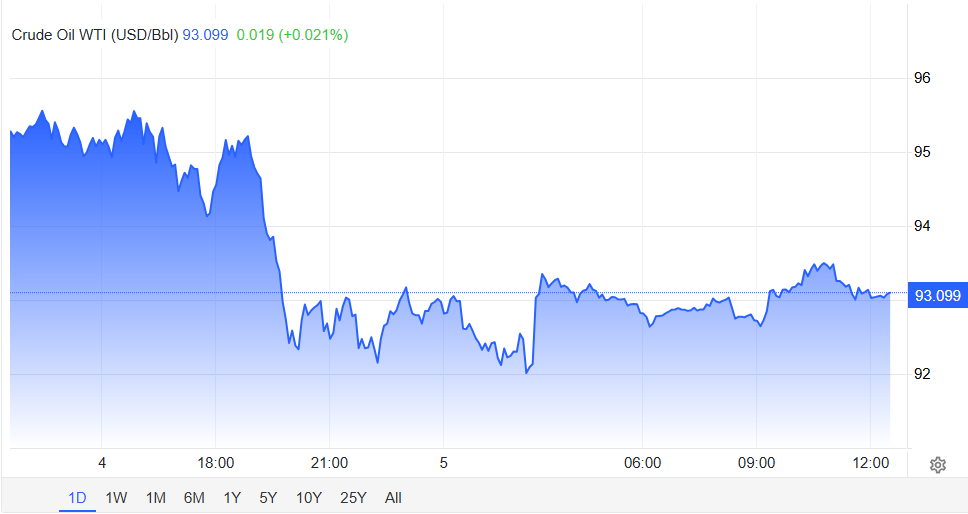
A ceasefire between Israel and Lebanon just moved two of the world’s biggest commodity markets simultaneously.
Israel and Lebanon agreed to implement a ceasefire on Thursday, June 4.
WTI crude dropped more than 3% to $92.87 per barrel in one of the sharpest single-session moves in weeks. Spot gold settled at $4,475, up more than 1%, as the dollar weakened and Treasury yields eased on the prospect of lower geopolitical risk.
Traders are also watching whether the deal unlocks progress on a broader US-Iran agreement.
Why Lebanon Changes the Iran Calculation
Thursday’s agreement clears one of Iran’s preconditions, reviving market hopes that the Strait of Hormuz could reopen, the waterway through which roughly 20% of global oil supply passes.

As BeInCrypto reported when earlier Iran deal rumors sent markets swinging by $500 billion in a single session, oil traders are not waiting for a signed agreement to reprice.
The risk is that the IEA has warned global oil markets will remain undersupplied through Q3 2026 even if the conflict ends, because damaged infrastructure and OPEC+ (the alliance of major oil-producing nations) decisions take months to reverse.
What Gold Knows That Oil Does Not
Oil fell because traders priced out supply risk. Gold rose for a separate reason, primarily because the ceasefire weakened the dollar, and a weaker dollar makes gold cheaper for international buyers.
With the Federal Reserve holding rates at 3.5-3.75% and rate hike odds now near 30% by December, gold is finding support in monetary conditions, not just war fear.
Bitcoin, which rallied sharply when the conflict began, has since given back all those gains as the war premium gradually unwound.
The Lebanon deal is one condition met, not a peace treaty. But energy markets are already discounting what comes next, and Friday’s US nonfarm payrolls data will either reinforce or disrupt that repricing.
The post Iran Called for Lebanon Ceasefire and Got It: How Markets Have Moved appeared first on BeInCrypto.
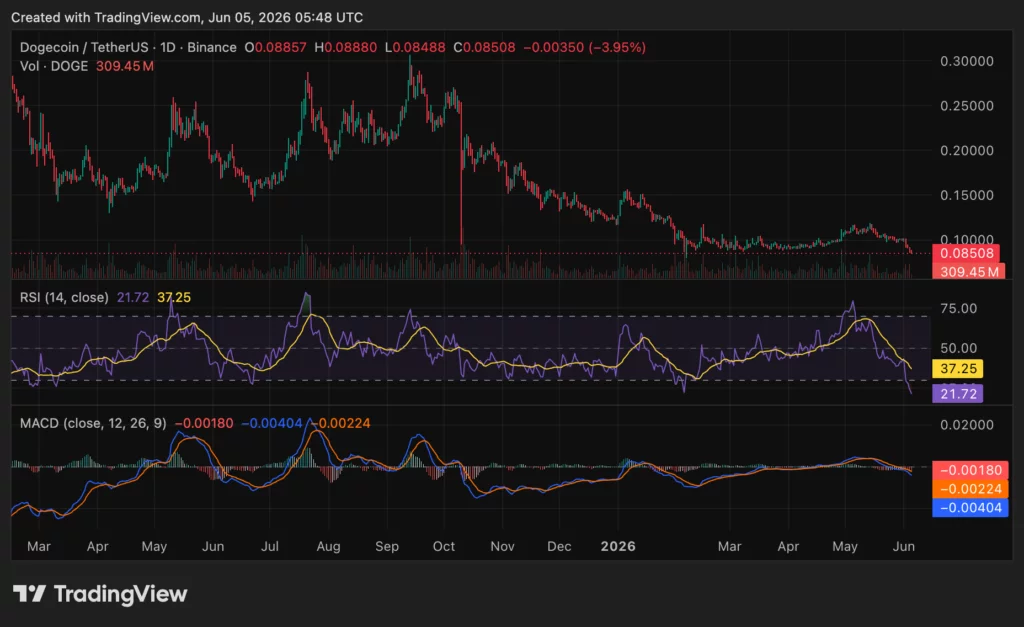
Dogecoin price moved deeper into a weak short-term setup on June 5, with DOGE trading near $0.086 after a 4.48% decline over 24 hours and a 25.25% drop across the past month.
Summary
- Dogecoin price is testing $0.085 support after losing 25% over the past month amid weakness.
- Ali Martinez says DOGE can recover toward $0.1019 and $0.1156 if channel support holds firm.
- Coinglass data shows falling futures volume and open interest, while options activity increased sharply.
Dogecoin price loses $0.10 support
According to crypto.news price data, Dogecoin traded at $0.086 at press time. The OG meme coin moved between a 24-hour low of $0.086 and a high of $0.091, leaving price action close to the lower end of the daily range.
The move kept Dogecoin below the $0.10 to $0.12 area that had acted as an important range earlier in the month. DOGE now trades below that zone after falling 12.98% over seven days and 54.78% over the past year.
The latest pullback also kept DOGE under pressure against its long-term record levels. Dogecoin remains far below its all-time high of $0.731578, set on May 8, 2021, while its market capitalization stands at $13.34 billion.
The token still ranks at number 11 by market value. Its circulating supply stands at 154.52 billion DOGE, nearly matching total supply because Dogecoin continues to issue new coins through mining.
Ali Charts sees a channel support test
Analyst Ali Charts said Dogecoin reached his $0.0883 target and is now testing the lower boundary of a descending channel. That area sits close to current spot prices and has become the main short-term level for traders.
Ali said “As long as this support holds, I think a recovery toward $0.1019 and $0.1156 remains likely.” The statement keeps the near-term recovery case tied to support around the current channel floor.
The same post also warned that “A breakdown, however, could expose the next major supply zone near $0.067.” That level would mark another leg lower from the current price and would extend the wider downtrend.
The view marks a shift from June 1, when Ali said the TD Sequential had flashed a buy signal while support at $0.096 was holding. That earlier setup pointed to $0.110 as a possible target, but DOGE has since lost that level.
RSI and MACD keep momentum weak
Technical indicators still show weak momentum. The RSI sits at 21.72, while its moving average stands near 37.25. That places DOGE in oversold territory and shows strong selling pressure.
An oversold RSI can sometimes appear near rebound zones. However, the indicator has not yet turned higher. That means DOGE has not confirmed a momentum reversal from current levels.
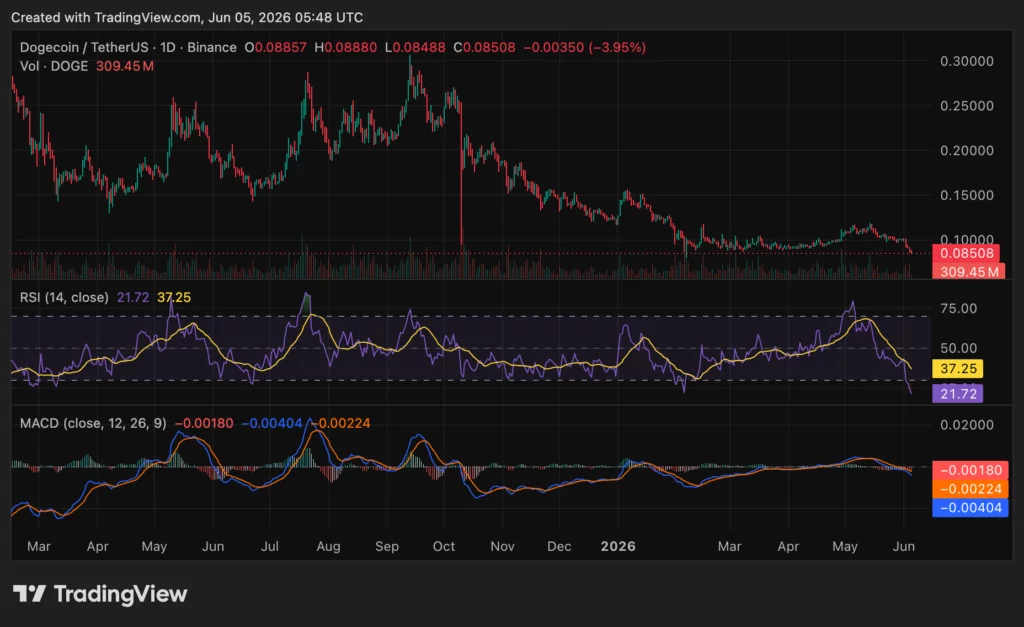
The MACD also remains bearish. The MACD line stands at -0.00404, below the signal line at -0.00224, while the histogram sits at -0.00180. That setup shows sellers still control short-term momentum.
DOGE needs to reclaim the $0.10 area to improve the chart. A clean move above $0.1019 would bring the first recovery target into play, while $0.1156 would test the upper rebound zone watched by Ali Charts.
Derivatives data shows traders reducing risk
Coinglass data showed futures volume down 7.89% to $2.08 billion, while open interest fell 4.85% to $1.04 billion. The decline suggests traders reduced exposure as DOGE moved lower.
Lower open interest during a selloff can show liquidation pressure or a cut in leveraged positions. It can also point to weak conviction among traders waiting for a clearer setup.
Options activity moved in the opposite direction. Options volume rose 171.59%, while options open interest increased 42.23% to $600,650. That shows some traders are using options while spot and futures markets remain under pressure.
The setup leaves Dogecoin at a clear price decision zone. Holding $0.085 could support a relief move toward $0.1019 and $0.1156. Losing that area would keep $0.067 in focus as the next major downside zone.
Earlier reports from crypto.news also placed Dogecoin near a long-term CVDD value area. That model had tracked deep accumulation periods in past cycles, but DOGE now needs spot demand and stronger momentum to confirm any rebound attempt.
That backdrop matters because the current fall pushed DOGE below the $0.10 to $0.11 zone referenced in earlier market analysis. A move back into that band would show buyers are trying to rebuild the base. Failure to regain it would keep the chart tilted toward lower supports.
For now, the Dogecoin price analysis remains simple, with the next sessions likely to focus on support defense and volume response. Bulls need to defend $0.085 and reclaim $0.10. Bears need a daily close below the channel floor to keep control and push DOGE toward lower support near the $0.067 supply zone in June trading.
Disclosure: This article does not represent investment advice. The content and materials featured on this page are for educational purposes only.
Fundamental backdrop
In the first quarter of 2026, Amazon (AMZN on FXOpen) reported a 17% increase in net sales to $181.5 billion. AWS revenue grew by 28% — its fastest pace in 15 quarters — while operating margin reached a record 13.1%. These results provided a solid fundamental foundation for the rally in Amazon shares seen from February through early May.
Now that the positive impact of the quarterly earnings release has likely been fully priced in, the market appears to be shifting its focus towards second-quarter prospects. A key event for the period will be the annual Prime Day sales event, scheduled for June 2026.
Technical picture
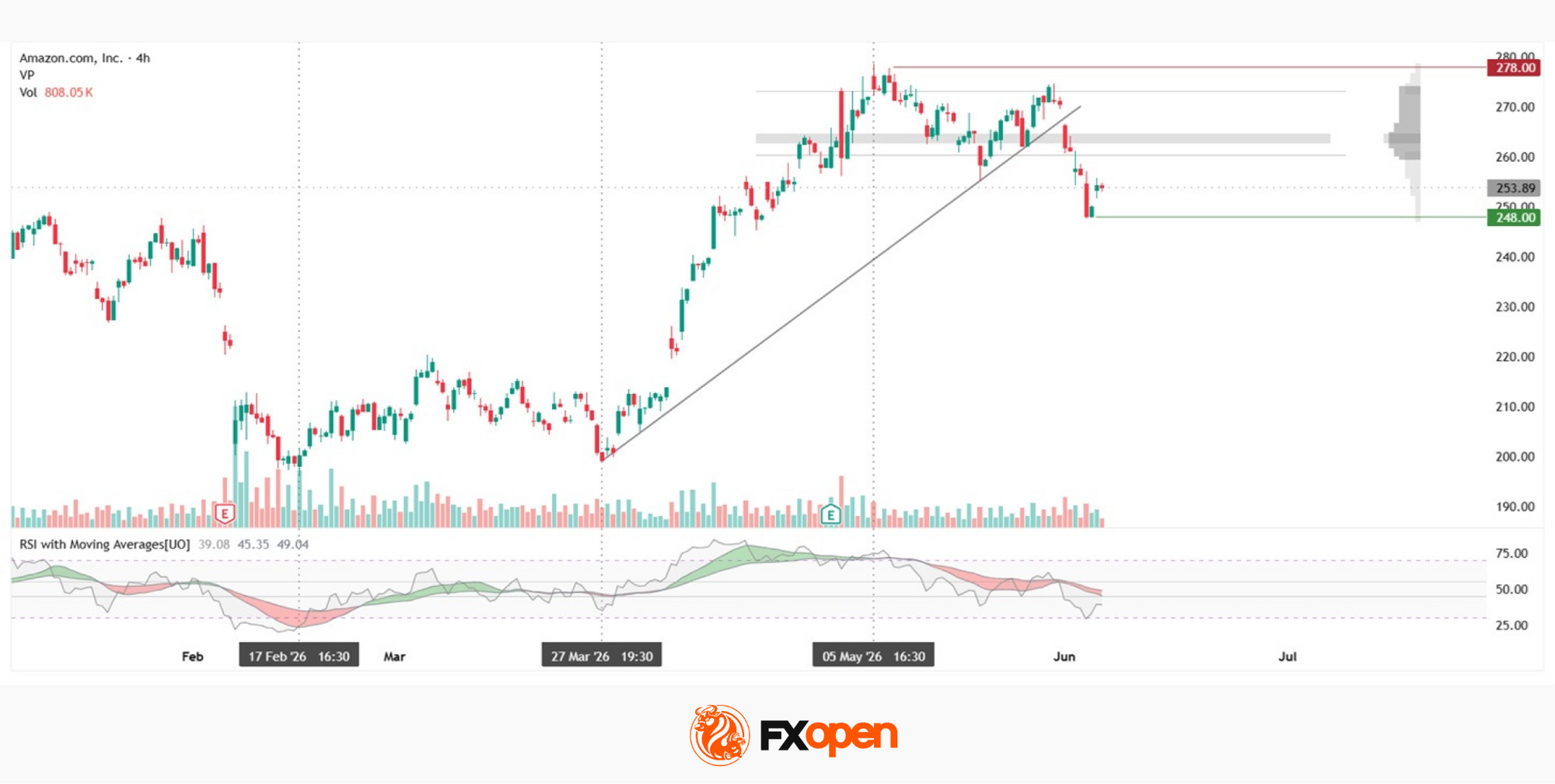
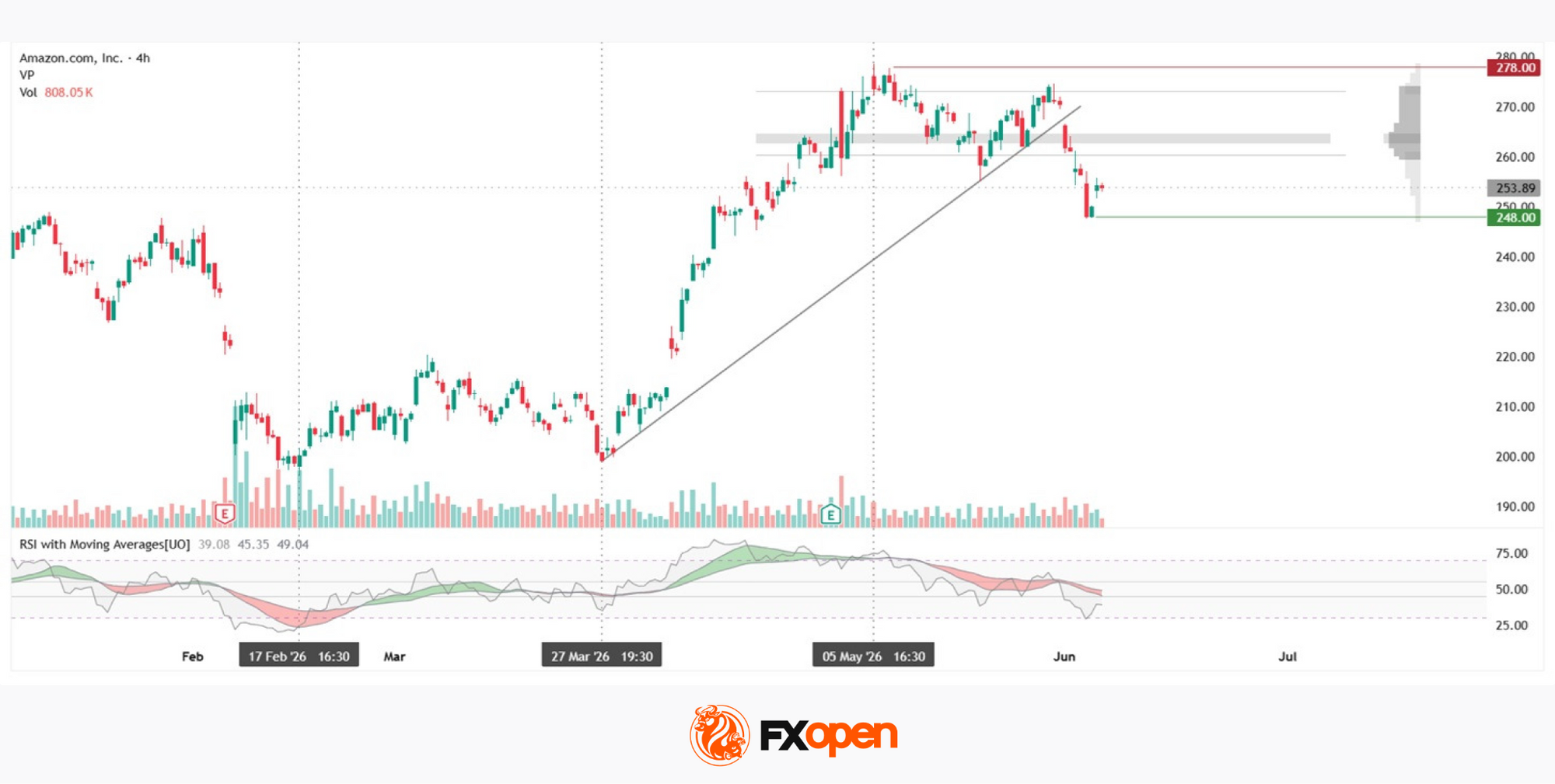
Since 27 March, Amazon shares have posted a sharp advance, forming a short-term uptrend. The move was supported by an ascending trendline connecting the 200 area with the 278 region, where local resistance emerged. At present, the price is testing this trendline for a potential downside break and has already moved below the lower boundary of the profile located at 260, signalling weakening bullish structure.
The point of control (POC) is situated in the 263–264 area, close to the lower boundary of the profile. Should the stock attempt to recover, this boundary may become the first obstacle for buyers. The upper boundary of the profile at 273 may also attract market attention if the price returns to the range. Above it lies a resistance level near 278.
The RSI and its moving averages currently stand at 39, 45 and 49. All three readings remain below the 50 mark, indicating the development of a bearish phase and weakening upward momentum. The 248 area, where the green support level is located, remains the nearest downside target should the decline continue.
Key takeaways
Amazon shares have undergone a strong upward move supported by record financial results; however, the technical picture now points to a potential trend reversal. Further developments will largely depend on whether sellers can maintain control below the current volume profile.
Buy and sell stocks of the world’s biggest publicly-listed companies with CFDs on FXOpen’s trading platform. Open your FXOpen account now or learn more about trading share CFDs with FXOpen.
This article represents the opinion of the Companies operating under the FXOpen brand only. It is not to be construed as an offer, solicitation, or recommendation with respect to products and services provided by the Companies operating under the FXOpen brand, nor is it to be considered financial advice.
US-based AI developer Anthropic is sounding the alarm on the pace of AI progress, warning that agents capable of self-design and autonomous improvement could emerge sooner than institutions are prepared for. In a blog post published this week, Marina Favaro, lead at the Anthropic Institute, and Anthropic co-founder Jack Clark argued that current agents can already run code themselves and delegate substantial chunks of work to other agents, suggesting the possibility of a fully autonomous design of their own successors if provided with enough compute.
The message arrives amid a broader industry debate about whether frontier AI should be slowed to address safety, governance, and geopolitical concerns. OpenAI, among others, has signaled that it is studying how to safely develop increasingly capable systems, including those capable of recursive self-improvement. OpenAI says it wants AI to follow human intent in complex real-world scenarios, avoid catastrophic behavior, and remain controllable and auditable as it scales.
Key takeaways
- Anthropic warns that autonomous AI agents could design and improve their own successors, urging a measured pace in development to address safety and societal impact.
- OpenAI acknowledges research into recursive self-improvement and is actively pursuing safety and preparedness, including hiring for related roles.
- Anthropic notes rapid model progress, with improvements roughly doubling every four months and humans transitioning from code authors to reviewers in their own workflow; they caution the trajectory is not guaranteed to continue.
- Crypto firms are already testing AI agents for settlement and transaction workflows, signaling potential, practical applications for automated decision-making in crypto markets.
Autonomy on the horizon: what Anthropic and OpenAI are saying
Favaro and Clark describe a path where AI systems move beyond human-guided development to actively allocate tasks, run code, and collaborate with other agents. In their view, the trend could accelerate to a point where an AI system is capable of fully autonomously designing and developing its own successor, provided sufficient compute is available. They emphasize that this outcome is not inevitable, but could arrive sooner than many institutions anticipate. As Favaro summarized, “For most of AI’s history, humans drove every step in its development cycle. But at Anthropic, we are delegating a growing share of AI development to AI systems themselves, which is speeding up our work.”
“Taken far enough, and given enough compute, that trend points to an AI system capable of fully autonomously designing and developing its own successor.” — Marina Favaro and Jack Clark, Anthropic
To illustrate the evolving role of humans in code creation, the authors note that their Claude model is already responsible for a large portion of code merged into Anthropic’s codebase. They estimate that human-authored contributions will become a minority, shifting the bottleneck toward rapid human review of AI-generated work. “We are not there yet, and recursive self-improvement is not inevitable. But it could come sooner than most institutions are prepared for,” they wrote.
The discussion also touches on governance and risk, with Favaro and Clark arguing that slowing development could buy time to address “immense” implications for safety and alignment. They caution that a slowdown by itself would need careful coordination; otherwise, it could merely let the least cautious actors keep pace, potentially compromising global safety and standards.
Guardrails, safety research, and a global coordination question
The Anthropic piece sits within a broader ecosystem of safety-focused messaging from major AI labs. In December, OpenAI signaled ongoing research into how to safely deploy increasingly capable AI, including systems with recursive self-improvement capabilities. OpenAI emphasized the aim of keeping systems aligned with human values, controllable, and auditable even as their capabilities grow. The company has also been active in recruiting for roles focused on recursive self-improvement preparedness as part of its Safety Research team.
Beyond individual firms, a cohort of tech leaders—some affiliated with Anthropic and OpenAI—released an open letter encouraging lawmakers to implement stronger guardrails around frontier AI. The group argued that there should be the option to slow or pause frontier AI development to allow society to catch up with alignment research and governance frameworks. However, they also cautioned that any slowdown must be globally coordinated; otherwise, it could inadvertently leave safer actors at a disadvantage while competitors press ahead.
One of the most striking takeaways from the discussion is the potential for AI agents to begin influencing real-world workflows in finance and technology. The idea that agents could autonomously execute tasks and settle transactions has already begun to move from theory toward practice in parts of the crypto space, as industry observers note the momentum toward AI-assisted automation in payments and settlement layers.
Crypto adoption in the AI era: from theory to what’s happening now
The crypto sector appears increasingly receptive to AI-driven automation, with AI agents being explored as a way to streamline settlement, risk assessment, and compliance workflows. Industry commentary and research from crypto-focused firms have pointed to early real-world activity. For instance, recent coverage highlighted growing interest in AI agents handling payments and settlements, with a notable data point suggesting hundreds of millions of transactions transitioning to AI-managed flows.
In commentary linked to the broader AI debate, Circle CEO Jeremy Allaire has projected a future in which billions of AI agents operate on users’ behalf, including executing transactions and managing routine tasks within DeFi and other crypto rails. While this vision remains aspirational, it underlines a broader trend: as AI capabilities mature, crypto infrastructure could increasingly rely on autonomous agents to scale operations and enhance user experiences.
Meanwhile, a crypto-focused research note highlighted tangible progress in AI-enabled settlement workflows. In the last year, AI agents settling payments reportedly moved from concept to real-world deployment, with figures indicating substantial volume already processed under these pilot arrangements. This rapid progression underscores both the potential productivity gains and the new operational risks that could accompany fully autonomous settlement systems.
Observers should also monitor how safety and regulatory considerations evolve in crypto contexts. The same caution that applies to AI safety in general—ensuring systems behave predictably, remain auditable, and align with user intent—will be critical as crypto platforms consider scaling AI-assisted workflows and delegating more decision-making to automated agents. The tension between accelerating innovation and maintaining safeguards is likely to shape discussions among regulators, exchanges, and custodians in the months ahead.
For readers looking to drill deeper, related analyses and ongoing coverage from crypto media note the broader AI safety and governance dialogue, including discussions around the potential for AI tools to influence software integrity and security. Some of these debates intersect with the crypto space, where the pace of adoption and the magnitude of potential efficiency gains could influence capital flows, liquidity, and user trust.
Attention is also drawn to ongoing research and public discourse around safe deployment. Anthropic’s own stance, alongside industry calls for guardrails and cross-border coordination, suggests that the next phase of AI-enabled automation—whether in crypto settlements or other domains—will depend as much on policy and safety frameworks as on technical breakthroughs. As developers and users experiment with AI agents, the coming months will reveal how quickly autonomous code generation, self-improvement loops, and agent-driven workflows become embedded in real-world crypto operations.
Related coverage notes how the AI frontier is already intersecting with the crypto ecosystem, including developments around agent-based payments and the broader push toward AI-assisted transaction throughput. For readers following this space, the trajectory remains a blend of opportunity and risk—where the most immediate questions revolve around governance, reliability, and the ability to keep human oversight proportionate to the risks involved.
OpenAI and Anthropic continue to challenge the industry to define guardrails that can scale with capability. As the conversation moves toward practical deployments, investors and builders in crypto will want to watch not only technical milestones but also policy signals and real-world adoption rates that could determine whether AI agents become foundational to crypto settlement and automation.
For more context on these developments and related AI governance discussions, see Anthropic’s blog post on recursive self-improvement and OpenAI’s exploration of safe deployment. Additional perspectives from the crypto ecosystem and industry coverage on AI-driven settlement trends provide a broader view of how near-term automation could influence market efficiency and user experience in crypto markets.
As progress accelerates, the ecosystem will likely see a mix of breakthroughs, regulatory responses, and practical pilots that shed light on how autonomous AI agents will reshape crypto operations and broader digital infrastructure in the years ahead.
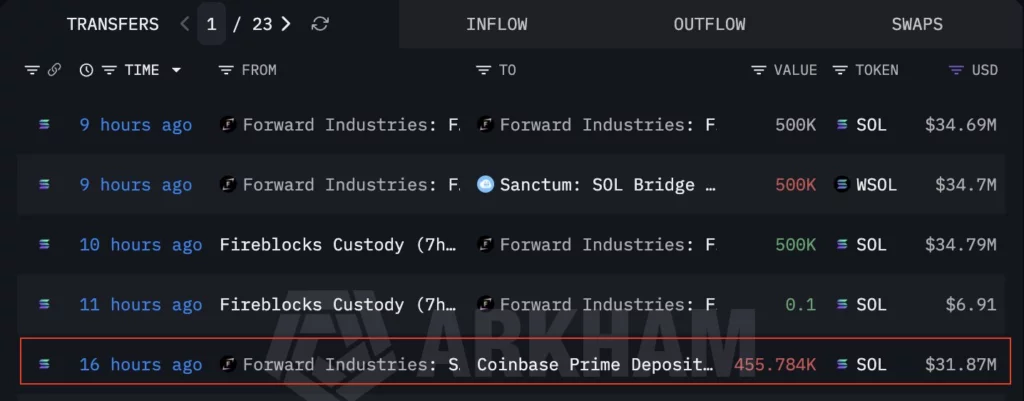
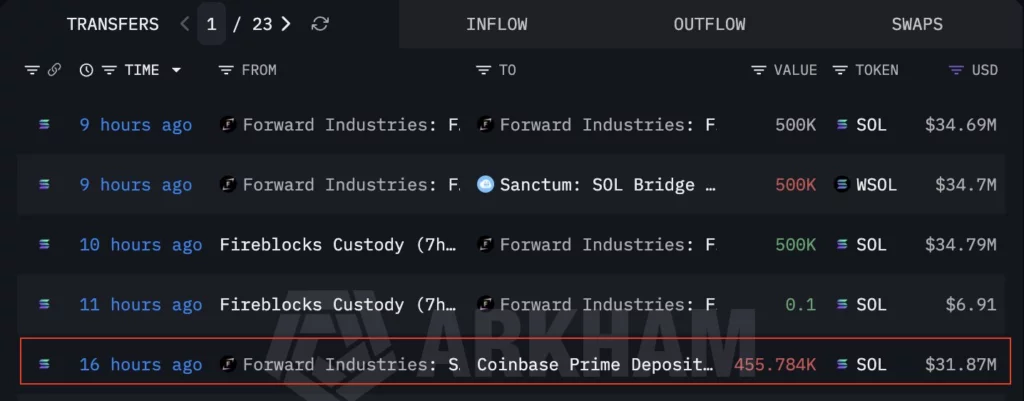
Forward Industries has transferred 455,784 SOL worth about $31.87 million to Coinbase Prime, drawing attention to the treasury strategy of the world’s largest corporate holder of Solana.
Summary
- Forward Industries transferred 455,784 SOL worth about $31.9 million to Coinbase Prime after roughly a month of wallet inactivity.
- The company’s Solana treasury was acquired at an average price of $232.08 per token and currently carries nearly $1.13 billion in unrealized losses.
- Market participants are watching whether the transfer is linked to liquidity management, treasury rebalancing, or other institutional capital needs.
According to blockchain analytics platform Lookonchain, the transfer occurred after roughly one month of inactivity, with the tokens moving from wallets linked to Forward Industries to Coinbase Prime. The transfer was first highlighted using data from Arkham Intelligence.
The transaction comes as the company continues to sit on substantial paper losses from its Solana accumulation program.
Since launching its treasury strategy in September 2025, Forward Industries has spent about $1.59 billion acquiring 6.83 million SOL (SOL) at an average purchase price of $232.08 per token, according to company disclosures cited by Lookonchain.
Based on the latest figures shared by the analytics platform, those holdings are now valued at approximately $458.6 million, leaving the company with an unrealized loss of nearly $1.13 billion.
Transfer follows months of pressure on Solana treasury position
Financial filings released earlier this year showed that declining crypto prices had already weighed heavily on the company’s balance sheet.
For the fiscal quarter ended Dec. 31, 2025, Forward Industries reported a net loss of $585.6 million. Company filings attributed most of that result to a $560.2 million loss on digital assets and a further $33 million impairment charge tied to its SOL holdings.
Revenue moved in the opposite direction. Forward Industries reported first-quarter revenue of $21.4 million, up from $4.6 million a year earlier, with staking income from its Solana treasury operation serving as the primary contributor.
At the time, the company disclosed ownership of nearly 7 million SOL and said almost all of the tokens had been staked. Its validator operations generated a 6.73% gross annual percentage yield before fees as of mid-January, while cumulative staking rewards exceeded 112,000 SOL by the end of December.
Management also stated in previous filings that the reported losses were largely the result of fair-value accounting treatment under U.S. GAAP rather than realized sales of digital assets.
Is Forward Industries selling SOL?
Although deposits to Coinbase Prime do not necessarily indicate an imminent sale, the move has prompted speculation among market participants given the scale of the transfer and the company’s deep unrealized losses.
Moving assets to a prime brokerage platform can serve several purposes, including portfolio rebalancing, liquidity management, collateral adjustments for institutional borrowing, or preparation for asset sales.
Forward Industries could also be evaluating tax-loss harvesting opportunities or seeking additional liquidity while managing pressure from the decline in the value of its treasury assets. Those possibilities remain speculative, and the company has not publicly commented on the purpose of the transfer.
Beyond holding SOL, Forward Industries has pursued a more active treasury model. The company launched the liquid staking token fwdSOL and has worked with Galaxy Digital and Jump Crypto on treasury-related infrastructure designed to generate additional yield from its holdings.
Backed by a $1.65 billion private investment round involving Galaxy Digital, Jump Crypto and Multicoin Capital, Forward Industries built its position rapidly and became the largest known corporate holder of Solana.
Crypto World
Zcash plummets 30% as Shielded Labs reveals a major bug that went undetected for four years
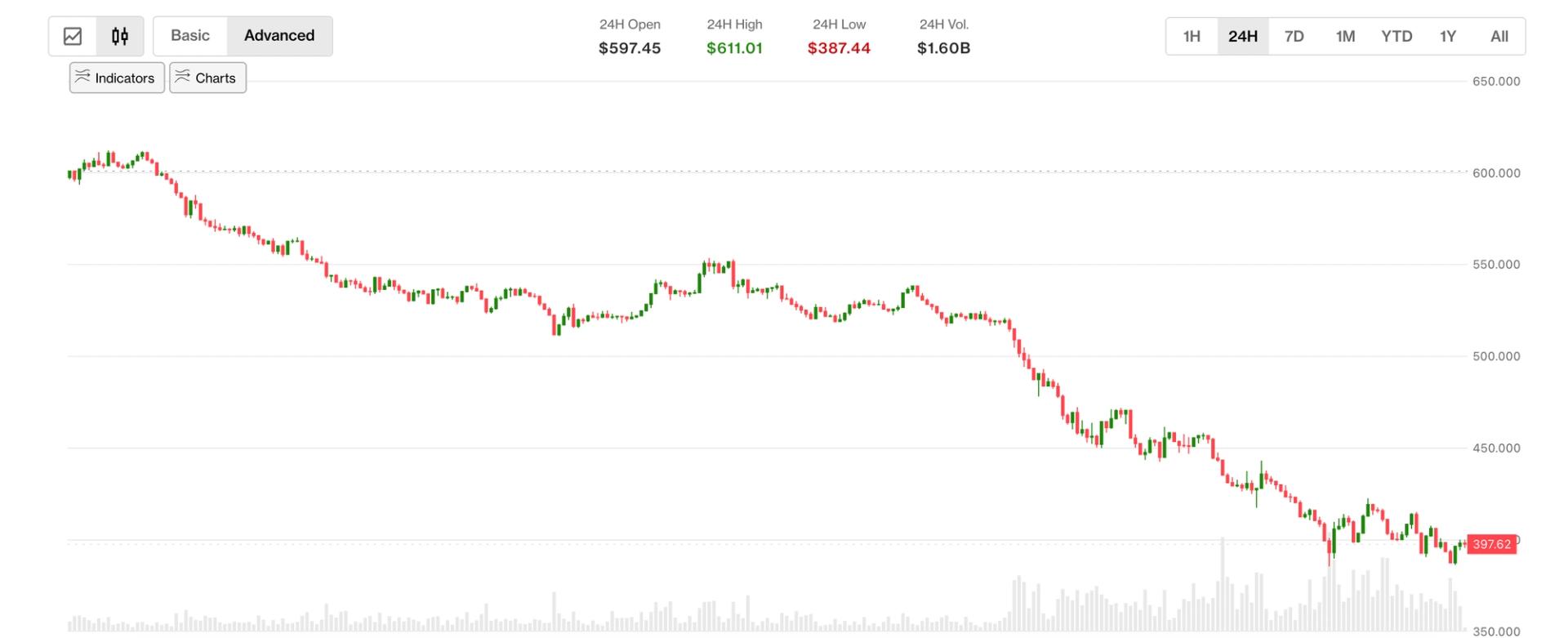
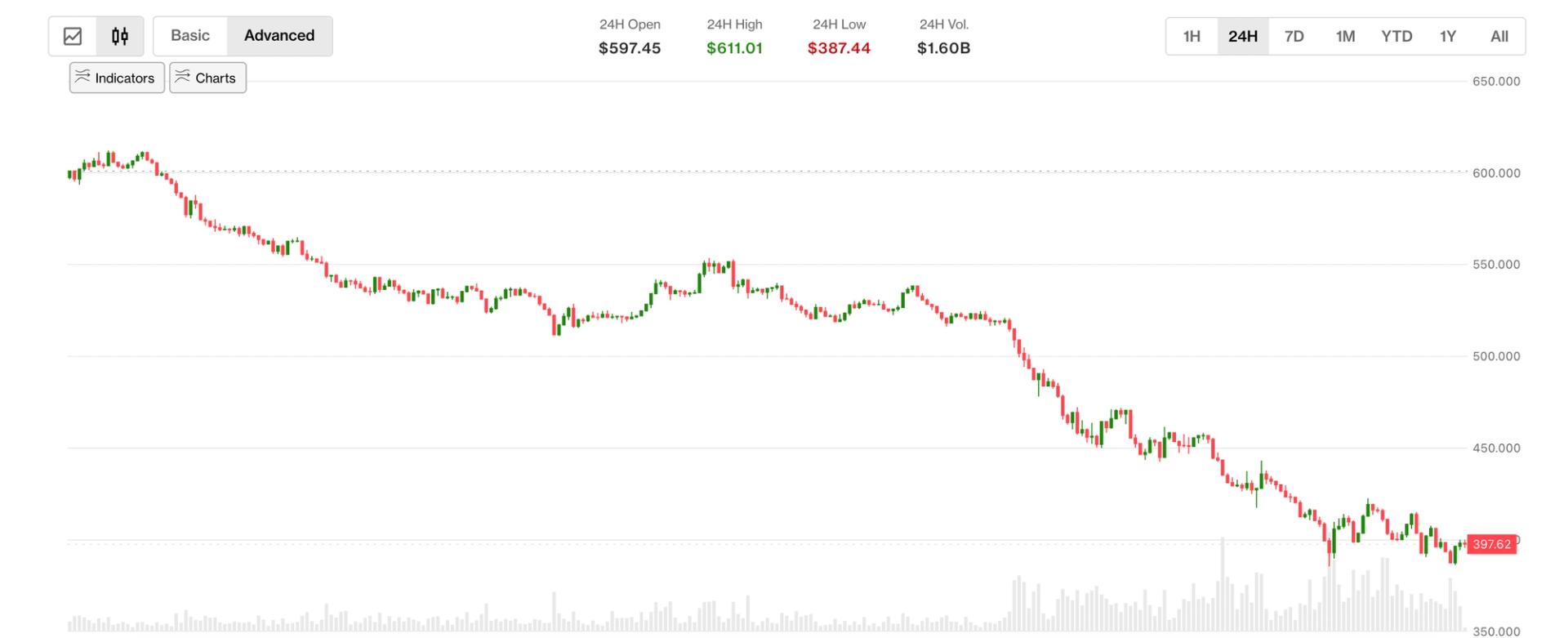
Privacy-focused zcash (ZEC) has taken a beating in the past 24 hours, falling roughly 30% to $400 amid broader market weakness. The selling accelerated after Shielded Labs, a nonprofit Zcash developer, disclosed a critical vulnerability in the blockchain’s Orchard privacy pool that could have threatened the integrity of the token’s supply.
Late Thursday, Shielded Labs published a detailed disclosure on X, revealing a vulnerability that, if exploited, could have allowed an attacker to create an unlimited number of counterfeit ZEC tokens, completely undetected. Think of it as someone secretly gaining access to the Federal Reserve’s dollar printing press, except in this case, even the Fed wouldn’t be able to tell these extra dollars were printed.
The vulnerability was discovered on May 29 by Taylor Hornby, a security engineer engaged by Shielded Labs in April 2026 specifically to identify protocol vulnerabilities before malicious actors could. Working with Anthropic’s recently released Opus 4.8 AI model, Hornby conducted a highly targeted review of the Orchard circuit, which is the cryptographic system underpinning Zcash’s most advanced privacy pool.
Shielded Labs said Hornby wrote a complete exploit which, when tested in a local testing environment, generated unlimited, undetectable counterfeit ZEC. Shielded Labs added that if the same tool had been run on Zcash mainnet, it would have generated unlimited, undetectable counterfeit tokens in his mainnet wallet.
Imagine an attacker quietly printing unlimited counterfeit ZEC and holding them undetected. The damage to trust in the supply and, by extension, the token’s market value could have been severe.
Hornby immediately disclosed the vulnerability to the Zcash Open Development Lab (ZODL), which coordinated an emergency fix on June 1, closing it within days of discovery.
Bug undetected for four years
Still, what appears to be a proactive approach to fixing bugs has not impressed markets. That’s possibly because, as Shielded Labs itself admitted, the bug had been present since Orchard’s activation in May 2022. In other words, it existed, undetected, for four years.
What makes the situation even more complex for markets is Shielded Labs’ acknowledgement that it cannot say for sure whether the bug was exploited before the fix.
“What makes this particularly challenging is that, due to the privacy properties of Orchard and the nature of the bug, there is no definitive way to determine using only cryptography whether such exploitation occurred before the vulnerability was discovered and fixed. We believe it is important to be transparent about that uncertainty,” the firm said.
Still, it stressed that exploitation likely didn’t happen for several reasons. First, the bug had evaded years of scrutiny by experienced cryptographers. It came to light only with the help of cutting-edge AI tools and highly skilled researchers working deliberately to find it. And once discovered, it was fixed quickly, leaving little time for anyone to exploit it.
“We think he probably succeeded,” Shilded Labs said of Hornby’s efforts to find the vulnerability before malicious actors could.
However, the organization was careful to add that users should not rely solely on their assessment and proposed a network upgrade that would allow anyone to verify the integrity of the ZEC supply independently. The proposal involves deploying a new shielded pool and enforcing turnstile accounting on all coins from the Orchard pool. The firm said it could publish a detailed post on the same next week.
It also said it is accelerating security efforts, including continued work with Hornby, a formal verification project aimed at writing a mathematical proof that there are no undiscovered bugs in the Orchard circuit, and new hires for a Head of Security and a Cryptographer.

Nokia Oyj Stock Falls 6.15% Amid Profit-Taking Following Recent Surge on AI Momentum

IMF Warning and Hot Inflation Pull Investors Into Bullish Oil Bets as Price Holds $95
Lorenzo Lamas details how he replaced Gerald Ford's son in “Grease”



-

 News Videos7 days ago
This is BROKEN! INSANE 5x MONEY CAR WASH WEEK! The NEW GTA Online UPDATE Today! (GTA5 New Update)
-

 Business3 days ago
Jade Biosciences, Inc. (JBIO) Discusses Positive Interim Results From JADE101 Phase I Healthy Volunteer Study and Development Plans Transcript
-
 Tech6 days ago
SpaceX just won a second Golden Dome contract. This one is $4.16 billion.
-

 News Videos6 days ago
SHE IS KILLING XRP!!! WATCH URGENT AND ACT FAST
-
 NewsBeat6 days ago
FIRST NIGHT REVIEW: Take That bring the Circus back to life in spectacular sun-soaked style
-

 Sports2 days ago
French Open 2026 results: Alexander Zverev beats Rafael Jodar and will play Jakub Mensik in semi-finals
-

 Business6 days ago
Is the Spurs Phenom Already Better Than Prime Diesel?
-

 Politics6 days ago
The House | Inside Andy Burnham’s Makerfield Campaign: “Nobody Thinks This Is In The Bag”
-
 Crypto World7 days ago
CFTC Has Approved the First Regulated Bitcoin Perpetual Contract in the U.S.
-

 Tech3 days ago
CryZENx Releases Fresh Playable Content Deep Inside Jabu-Jabu for His Ocarina of Time Remake
-
 NewsBeat7 days ago
Novak Djokovic v Joao Fonseca LIVE: French Open latest scores and results after Jannik Sinner’s shocking collapse
-

 Entertainment7 days ago
Maddox Jolie-Pitt Legally Requests to Drop Brad’s Surname
-
 Entertainment6 days ago
Weak ‘Supergirl’ Box Office Tracking Amid Milly Alcock Backlash
-
 Crypto World7 days ago
Snowflake (SNOW) Stock Rallies on Strong Q1 Results and AI Product Growth
-
 Entertainment6 days ago
One of the Greatest Sitcoms of All Time Shoots Up Apple TV’s Charts 11 Years Later
-
 Entertainment6 days ago
Bruce Willis’ Generosity Resurfaces Amid His Dementia
-

 Business6 days ago
Demand Conditions Improve In Chemicals Sector In April 2026
-

 Tech7 days ago
This Week In Security: Ubiquiti Fixes, And FreeBSD Joins The Club You Don’t Want To Join
-
 Crypto World6 days ago
MicroStrategy Moves $30 Million in BTC to Coinbase Prime: Is the Bitcoin Sell-Off Already Here?
-
 Crypto World3 days ago
Seagate (STX) Stock Surges to Record High on AI Boom and Legal Settlement
You must be logged in to post a comment Login