
Crypto World
Republican Panic Sets In Over Prospects of a Massive Blue Wave


As Deace noted, “If the environment is this bad in my home state, where Trump has been the most popular political figure over the last decade, I can’t imagine where it is everywhere else.”
There’s similar scrambling in Texas, where a super PAC blessed by Senate Majority Leader John Thune is now on track to spend more than $100 million, an add on of $35 million to the $65 million the group had already booked in advertising to boost Ken Paxton’s bid against James Talarico. The total price tag for keeping the Senate seat is on track to approach $200 million just on the GOP side.
It’s little better for House Republicans. Between their official campaign arm, allied outside organizations, and the candidates themselves, there is a massive $485 million well of ad reservations between Aug. 1 and Election Day—and that’s just in districts Trump won, according to a Politico analysis.
Even Speaker Mike Johnson has grown frustrated with Trump and his constant introduction of tumult in the political ether. During his Sept. 13 appearance on NBC’s Meet the Press, Johnson appeared obviously annoyed as he kept getting asked about Trump’s fresh promise to send every American adult a $5,000 check if Republicans keep their House and Senate majorities. “I guess we’re going to spend the whole segment talking about this one issue,” Johnson said. “I want to talk about what we’ve actually done and not ideas on the table.”


Tokenization platform Ondo Finance was shopped to prospective buyers after the sudden death of its founder and CEO, Nathan Allman, earlier this year, according to three people with knowledge of the matter.
The outreach occurred sometime after Allman’s death on May 25, according to two of the people who spoke on condition of anonymity, as the matter is private.
But who, exactly, was behind the attempts to sell Ondo Finance remains unclear.
In early August, Allman’s estate filed suit against Ondo’s acting CEO Ian De Bode, alleging an unlawful power and money grab and sparking a bitter corporate control fight.
Nathan Allman died unexpectedly and without a will at 32, creating uncertainty over the fate of his controlling stake in Ondo Finance and his massive trove of ONDO tokens. After a probate process, his estate was awarded to his parents, 77-year-old Kathleen Allman and 82-year-old Lawrence Allman.

The Federal Reserve has released two proposed GENIUS Act rules covering the assets that must back payment stablecoins and the approval process for banks seeking to issue them through subsidiaries.
Summary
- Fed-supervised issuers would have to fully back their payment stablecoins with permitted reserve assets.
- The reserve proposal also covers capital, risk controls, and firms that hold backing assets.
- Insured state member banks would need Fed approval before a subsidiary could issue payment stablecoins.
- Public comments are due 60 days after the proposals appear in the Federal Register.
The Federal Reserve Board said in a Sep. 24 release that it is seeking public comment on two proposals for payment stablecoin issuers under its supervision. One sets operating requirements for issuers and firms holding their reserves; the other sets out how an insured state member bank would apply to issue stablecoins through a subsidiary.
The proposals would put detailed rules behind parts of the GENIUS Act that affect U.S. banks and stablecoin companies. They remain open to revision, and the 60-day comment period will begin when the notices are published in the Federal Register. The Fed has not set a calendar deadline in its release.
How the Fed would regulate stablecoin reserves
Under the first proposal, a Fed-supervised issuer would have to hold permissible assets that fully back its outstanding payment stablecoins. The Fed identified short-term U.S. Treasury bills and certain other high-quality, liquid assets as examples of eligible reserves. Full backing means the issuer must hold assets against the tokens it has issued, rather than rely on a smaller pool of reserves.
The draft would also set standardized capital requirements addressing credit and operational risks tied to payment stablecoins. Separate risk-management standards would govern how issuers run the activity. According to the Fed, the same proposal would introduce rules for firms it supervises that safeguard the assets backing stablecoins.
For a U.S. token holder, the reserve rules concern the assets behind a stablecoin issued by a firm within the Fed’s remit. The proposal does not turn a payment stablecoin into an insured bank deposit. Its requirements apply to the covered issuer and its reserve arrangements, while the Fed’s second proposal addresses a bank’s request to enter the business.
The first draft would also clarify which stablecoin and related activities Fed-supervised banks may undertake. That provision sits alongside the issuer and reserve rules, giving banks a proposed regulatory basis for activities beyond an application to create a stablecoin-issuing subsidiary.
How banks would seek stablecoin approval
The second proposal applies specifically to insured state member banks seeking Fed approval for a subsidiary to issue payment stablecoins. Under the Fed’s application draft, the bank would file the application with its appropriate Federal Reserve Bank. The bank, rather than the proposed subsidiary, would be the applicant.
Applicants would submit a business plan, financial information, and other material the Fed needs to assess the proposed operation. The filing would have to describe the plan, state what approval the bank is seeking, and explain why it should be granted under the factors in the GENIUS Act. The draft also sets procedures for hearings, appeals, and final decisions.
Timing is a material part of the bank proposal. The Fed would notify an applicant within 30 days whether its filing is substantially complete and identify additional information needed if it is not. Once an application is substantially complete, the GENIUS Act gives the Fed 120 days to decide; under the law, a complete application is deemed approved if the Fed does not decide within that period.
A material change could affect that clock. The Fed’s draft says a substantial change to a proposed issuer’s business plan, ownership, or financial condition may require more information and a new submission date. It also asks for comment on applications involving several banks in a stablecoin consortium, including whether a single filing could cover participating insured state member banks in some circumstances.
Those questions have a practical U.S. banking context. On Sep. 1, Bank of America, Citi, Goldman Sachs and 18 other financial institutions committed to establish a stablecoin company, according to a September report on the bank consortium. The group targeted a U.S. dollar token in the first half of 2027 and said it intended to meet applicable GENIUS Act requirements. Its announced plan does not establish that the venture would use the Fed application route described in this proposal.
Where the GENIUS Act rulemaking stands
The Fed’s proposals join rulemaking already underway at other U.S. agencies. In August, crypto.news covered Treasury’s proposed definitions for when payment stablecoins are issued, offered, or sold in the United States. Treasury’s questions concern which activity falls under U.S. licensing and distribution restrictions, while the Fed’s new drafts address issuers it supervises and applications from insured state member banks.
The Office of the Comptroller of the Currency has been working on a separate framework for issuers under its authority. As reported in August, Comptroller Jonathan Gould set a November target for final OCC rules after industry feedback. Its proposal covers matters including reserves, redemptions, custody, supervision and issuer applications. The OCC timetable does not set a completion date for the Fed’s newly released proposals.
Treasury has identified Jan. 18, 2027, as the expected effective date for the GENIUS Act’s main issuer restrictions. The statute also provides for an earlier start 120 days after the responsible federal regulators issue their final implementing rules. Federal agencies missed the law’s July 18, 2026, deadline for completing those rules, leaving several proposals at different stages of review.
For the two Fed notices released on Sep. 24, interested banks, issuers, and other members of the public can submit comments during the 60-day period following Federal Register publication. The application proposal identifies the Fed’s online proposal system, mail, and email as ways to file responses, with submissions identified by its docket number.
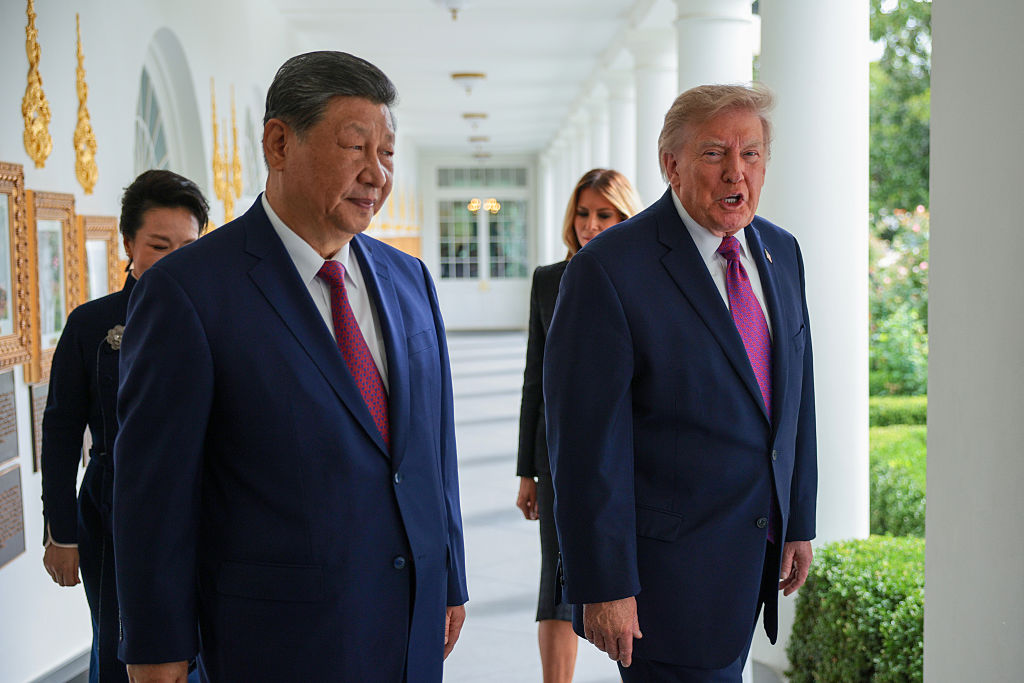
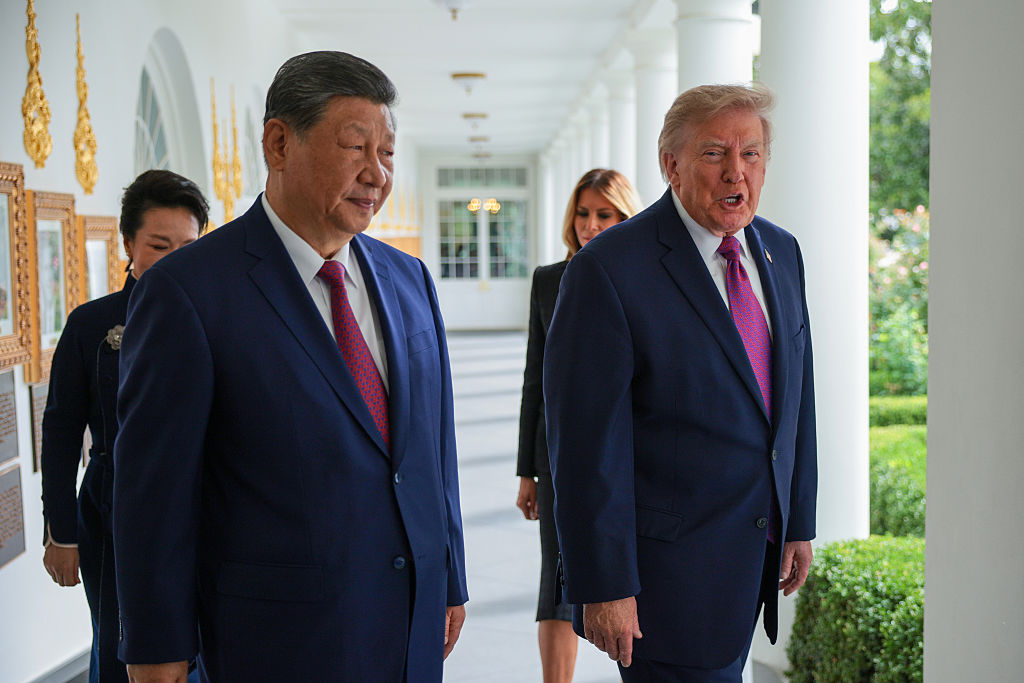
Amid a fast-growing international debate over regulating artificial intelligence, President Trump and Chinese President Xi met at the White House for several hours on Thursday ahead of a state dinner where several of the biggest players in A.I. were set to attend.
“We had a great meeting,” Trump said later that afternoon at the Southern Portico, where he gave Xi a tour of the South Lawn Helipad.
“He’s an expert on stones, and he loves good granite,” Trump said of Xi.
The day began with remarks from both Trump and Xi at the grand foyer of the White House. Afterward, Trump and Xi participated in a military review at the Rose Garden and took part in hours of meetings before Trump led a tour of parts of the White House.
While both leaders mentioned AI in their opening remarks, Xi stressed that the development of AI always needs to be “under human control.”
Trump was set to host a state dinner for Xi Thursday evening, joined by a slate of tech leaders. Amazon Executive Chairman Jeff Bezos, Google CEO Sundar Pichai, OpenAI CEO Sam Altman and Tesla CEO Elon Musk were set to attend the dinner, a White House official confirmed.
According to Chinese state media, President Xi raised the issue of Iran during the bilateral meeting, saying that he hoped the US and Iran would resume negotiations and that China would support the two countries recommitting to the 14-point memorandum of understanding reached months ago.
On Taiwan, Xi said he hopes the U.S. would maintain its position of opposing Taiwan independence. The U.S. has not officially endorsed Taiwan’s independence, but has previously sold weaponry to the island and is widely viewed as a key player if China were to ever invade the self-ruling island.
Earlier on Thursday, Xi urged more cooperation between the two countries. During his remarks, he called for more direct flights between the U.S. and China and invited 100,000 American students for cultural exchange in the next five years. And continuing a longtime diplomatic tradition stretching back to the Nixon era, he announced two pandas, Ping Ping and Fu Shuang, will be delivered to Zoo Atlanta in the coming days.
“China and the United States must hold the line of no conflict and no confrontation between us, and we can certainly find the right path for two great countries to get along on this planet we both call home,” Xi said.
This is the first time a Chinese leader has made a second formal state visit to America. The last time Xi conducted a formal state visit in Washington, D.C. was at the invitation of President Obama in September 2015, three years after he succeeded as the General Secretary of the Chinese Communist Party.
Trump and Xi first met in 2017, during Trump’s first term, at the President’s home base of Mar-a-Lago, Florida. The pair last met in May during a two-day state visit by Trump to Beijing, where the U.S. and China delegations discussed a range of topics including tariffs, rare mineral trade, as well as the Strait of Hormuz. The two leaders used the visit to announce the launch of a so-called Board of Trade intended to lower tariffs on products that aren’t considered a national security risk. In June, the Office of the United States Trade Representative asked the public to weigh in on which types of products would benefit from this new mechanism. The Administration has offered few updates on the board since then.
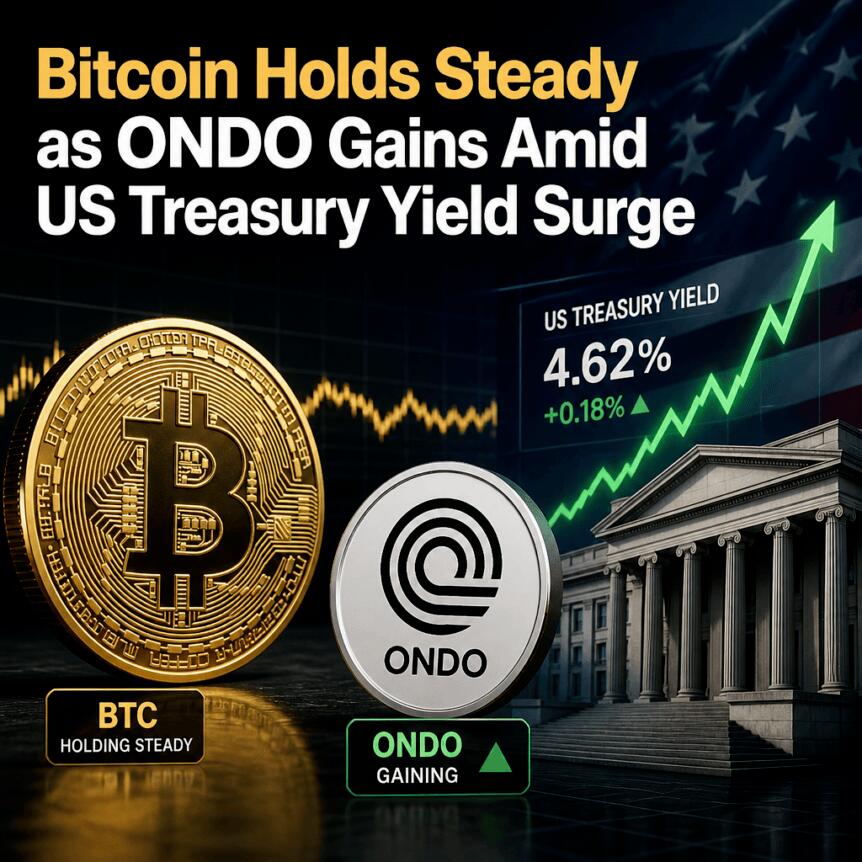
Bitcoin’s performance during US hours was marked by sharp interest-rate-driven swings, as the yield on the US 10-year Treasury note pushed to its highest level in nearly two decades. BTC briefly slipped below $83,000 before stabilizing around the mid-$84,000s, underscoring how quickly macro headlines are feeding into crypto sentiment.
Among altcoins, Ondo’s token stood out. ONDO reclaimed the $0.50 area for the first time since December 2025, moving higher as BlackRock-backed Ondo Intelligent Portfolios launched on both Ethereum and BNB Chain.
Key takeaways
- Bitcoin dipped briefly below $83,000 before attempting to regain $84,500 as US Treasury yields rose.
- The US 10-year yield reached 5.18%—its highest since July 2007—while the 30-year yield hit 5.46%.
- ONDO returned to $0.50, supported by the launch of BlackRock-linked Ondo Intelligent Portfolios.
- The new Ondo offering supports non-US users and deploys portfolio settlement via CoW Protocol and CoW DAO.
- FX pressure in Japan, highlighted by a prominent macro voice, adds another layer of risk to Treasury-market sensitivity.
Treasury yields rise again as BTC struggles to hold key levels
Thursday’s volatility aligned closely with a renewed move higher in US bond yields. According to TradingView data cited in the report, the 10-year Treasury yield rose more than 4 basis points to 5.18%, the highest level since July 2007. The 30-year yield also climbed to 5.46%, reclaiming highs last seen in 2004.
One catalyst mentioned for the day’s bond-market dynamics was a scheduled US Treasury buyback of up to $6 billion in bonds maturing in roughly 20 to 30 years—part of a broader effort to improve liquidity in long-dated debt markets. Even with that planned operation, yields still pushed higher, reflecting persistent demand for safety assets at higher return levels rather than easing conditions for risk markets.
Higher yields tend to pressure non-yielding assets like Bitcoin by increasing the opportunity cost of holding risk. However, the report also notes that BTC has continued its August rally and has challenged earlier bearish expectations tied to Bitcoin’s traditional four-year cycle.
Japan’s yen weakness could feed back into US yields
Beyond the US, the article points to growing sensitivity in international bond and currency markets. It notes that global bond markets weakened while the Japanese yen faced renewed pressure.
Mohamed A. El-Erian, president of Queen’s College Cambridge, wrote on X that the yen has weakened back toward 159 per US dollar and is approaching a zone where FX intervention has historically occurred. He added that Japanese foreign exchange intervention often involves selling US securities to buy yen, which could in turn add yield pressure to a Treasury market already described as sensitive.
For crypto traders, this matters because currency-driven moves can reinforce rate volatility. If intervention risks rise, the knock-on effect can be higher US yields, tighter financial conditions, and renewed caution toward assets that compete with yields for capital.
ONDO rebounds to $0.50 as Ondo Intelligent Portfolios go live
While Bitcoin traded in a narrow but uneasy band, ONDO showed a clear bid. CoinGecko data cited in the report indicates ONDO rose back to the $0.50 level in the last 24 hours, a psychologically important break as the token hadn’t traded there since December 2025.
The rally came despite political uncertainty around the US cryptocurrency regulatory environment, with the article referencing the failure of the CLARITY Act to pass a procedural vote in the US Senate. (That development can influence broader risk appetite, even if it is not directly tied to tokenized-real-world-assets.)
More directly, ONDO’s move was tied to a product launch: the report says BlackRock-backed Ondo Intelligent Portfolios started trading on Thursday. It also highlights the positioning of the offering: while many tokenized real-world asset products focus on tokenizing individual stocks or commodities, this new structure is designed to let non-US users purchase tokenized shares in diversified portfolios.
Ethereum and BNB Chain deployment, with settlement via CoW Protocol
The article specifies that the Ondo Intelligent Portfolios tokens went live on both Ethereum and BNB Chain. Settlement is handled through CoW Protocol and CoW DAO, per a statement attributed to CoW’s X account.
Three portfolio tokens were named as tracking model strategies developed by BlackRock for Ondo: BLKHIon (High Income), BLKDIGon (Diversified Growth), and BLKGRWon (High Growth). The launch ties ONDO’s near-term narrative to demand for regulated-style portfolio access rather than single-asset tokenization alone—an important distinction for investors watching the RWA sector’s maturation.
For ONDO holders, the market impact to watch is whether this product-driven momentum can sustain beyond the initial listing effect. RWA tokens can be sensitive to onboarding and liquidity conditions, so traders often look for follow-through in volume and sustained trading activity after the first days of a launch.
Looking ahead, investors should monitor whether rising Treasury yields persist after the recent move to 5.18% on the 10-year, and whether yen weakness continues to escalate FX-intervention risk. On the RWA side, the key question is how quickly Ondo Intelligent Portfolios build traction with non-US users and whether Ethereum and BNB Chain liquidity supports durable demand for the $0.50 reclaim.

DoubleZero has launched a dedicated market data feed for Hyperliquid, giving professional trading firms access to the decentralized exchange’s full order book over fiber rather than through its public APIs.
The feed includes Hyperliquid’s native perpetual futures and markets operated by trade[XYZ], which uses Hyperliquid’s infrastructure to offer perpetual contracts tied to assets including oil, gold and silver. The Hyperliquid feed was developed with validator operators and ecosystem partners including Hyperion DeFi, MAVAN and Kinetiq.
DoubleZero said the service delivers a continuous, ordered stream of market data for market makers, quantitative trading firms, and proprietary trading firms that need faster, more consistent order book updates.
Previously, firms seeking a complete view of Hyperliquid’s order book had to assemble the data themselves through public API responses or operate their own Hyperliquid nodes. DoubleZero said changes to Hyperliquid’s public APIs have reduced the frequency and depth of updates available through them.
DoubleZero operates a global fiber network designed to move data quickly between participants in blockchain networks and other distributed systems. Hyperliquid is the third venue available through its Edge market-data service, following Solana and prediction market Kalshi.
Related: Bitwise launches first Lighter ETP amid Hyperliquid rivalry
Onchain market infrastructure starts to resemble traditional exchanges
Hyperliquid’s market data infrastructure is beginning to resemble what traditional electronic exchanges use as professional trading moves onchain, according to Hyperion DeFi CEO Hyunsu Jung.
Jung told Cointelegraph that CME, Nasdaq and other major exchanges distribute professional market data over dedicated networks, allowing automated trading firms to receive a consistent stream of ordered data at high speeds.
“Hyperliquid data can now be consumed through the same basic model: publish once, distribute simultaneously over dedicated fiber,” he said.
However, significant differences remain. Traditional exchanges allow trading firms to place their systems close to the infrastructure that processes trades, while Hyperliquid executes trades onchain. DoubleZero’s service only delivers market data; it does not place or execute trades for firms.
“So the convergence is not Hyperliquid becoming CME,” Jung said. “It is onchain markets adopting the market-data infrastructure that professional trading firms already use.”
“It does not eliminate latency differences,” Jung said. “A firm in Tokyo will still have a physical advantage over one in New York.”
Magazine: Kyle Samani predicts SOL flippening, claims ‘no one’ uses ETH
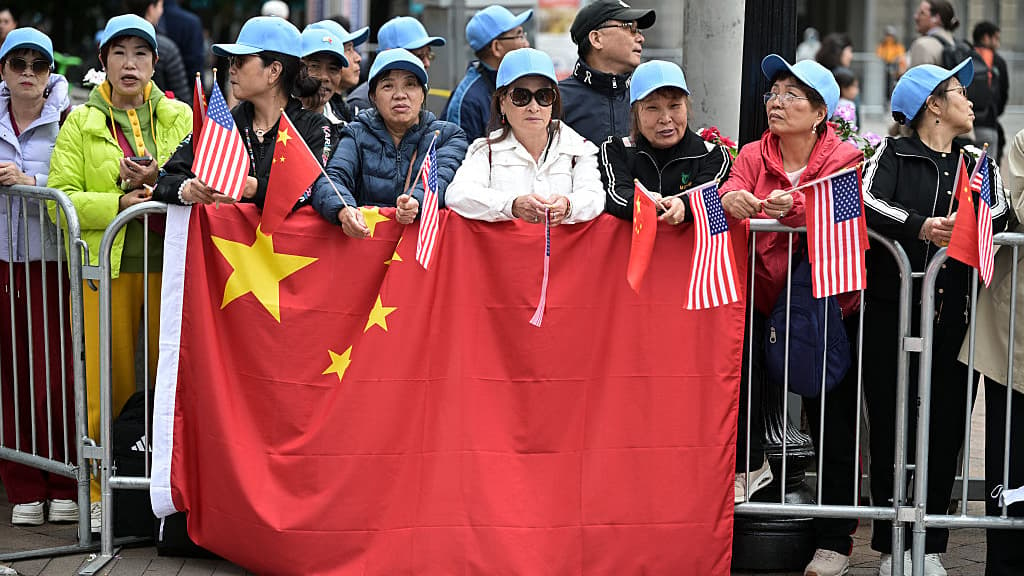
“It’s easy when you’re unhappy with things at home to instead look at your peer rival,” Ho says.
Kishore Mahbubani, a Singaporean diplomat and former President of the United Nations Security Council, tells TIME that, against the backdrop of the U.S. withdrawing from the global stage, China has come across as a more dependable partner for much of the Global South.
Meanwhile, Chinese consumer brands and cultural exports have found new audiences abroad, like Pop Mart’s Labubu dolls. On TikTok, which is owned by Chinese company ByteDance outside the U.S., users have embraced Chinese customs, like drinking warm water and practicing tai chi as part of the “Chinamaxxing” trend.
Ho points to social media exposure as a significant factor in driving youth opinion. He notes that China has toned down its assertive “wolf warrior” diplomacy in favor of a more flexible approach. Many positive depictions of China online appear to be organic, although media watchdogs previously reported that Beijing has used international broadcasting and advertising campaigns to spread propaganda.
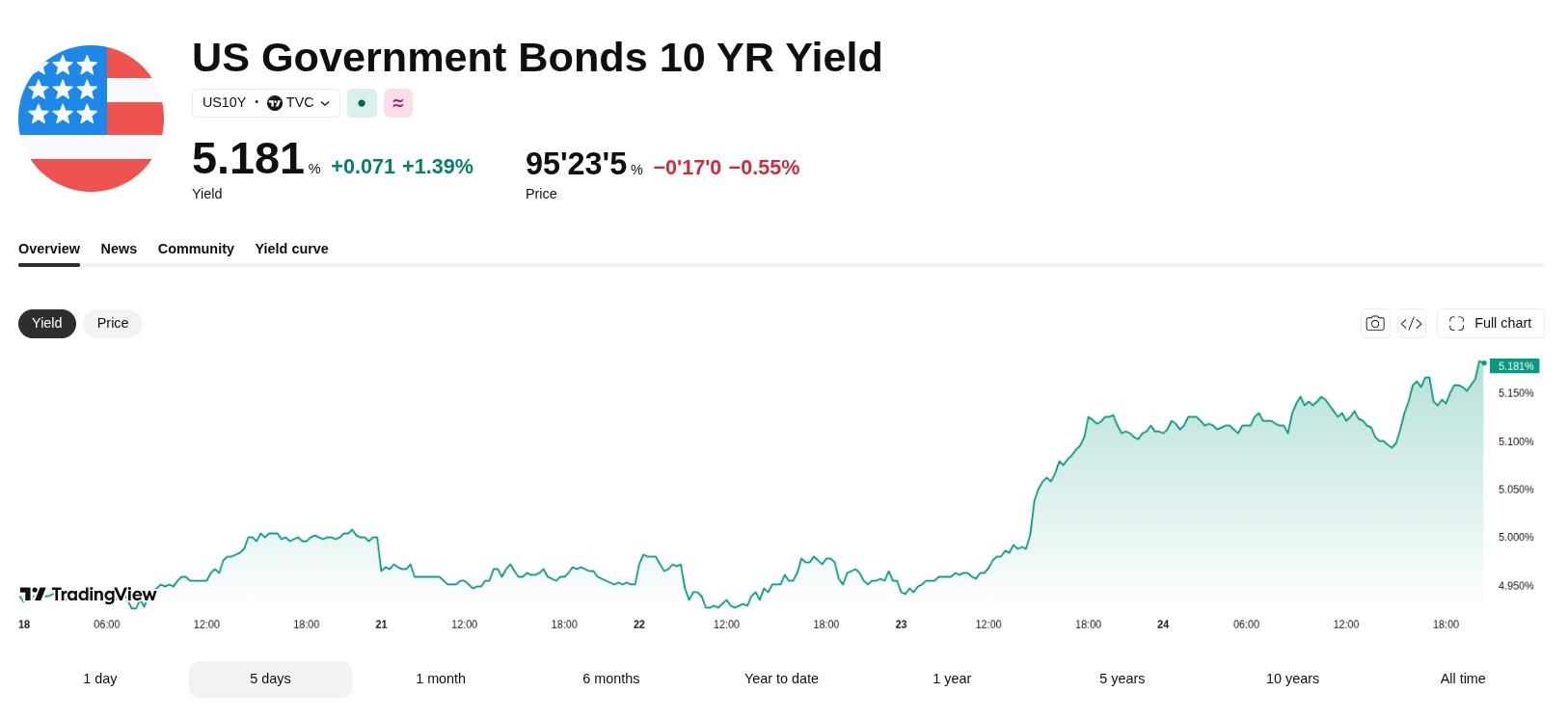
Bitcoin (BTC) had a volatile Thursday during US hours as the yield on the 10-year US Treasury note climbed to its highest level in nearly two decades. After briefly falling below $83,000, BTC struggled to reclaim $84,500. Ondo Finance (ONDO), meanwhile, was among the top-performing altcoins.
Key points:
- Bitcoin briefly fell below $83,000 before stabilizing near $84,500 amid rising bond yields.
- Ondo’s token reclaims $0.50 for the first time since December 2025 as BlackRock-backed Ondo Intelligent Portfolios launch on Ethereum and BNB Chain.
- The US 10-year Treasury yield climbs to 5.18%, its highest since July 2007, while the 30-year yield reaches 5.46%.
US 10-year Treasury gains 70 basis points this month, hits 5.18%
The US 10-year Treasury yield rose more than 4 basis points to 5.18% on Thursday, its highest level since July 2007, according to TradingView data. The 30-year yield hit 5.46%, reclaiming 2004 highs.
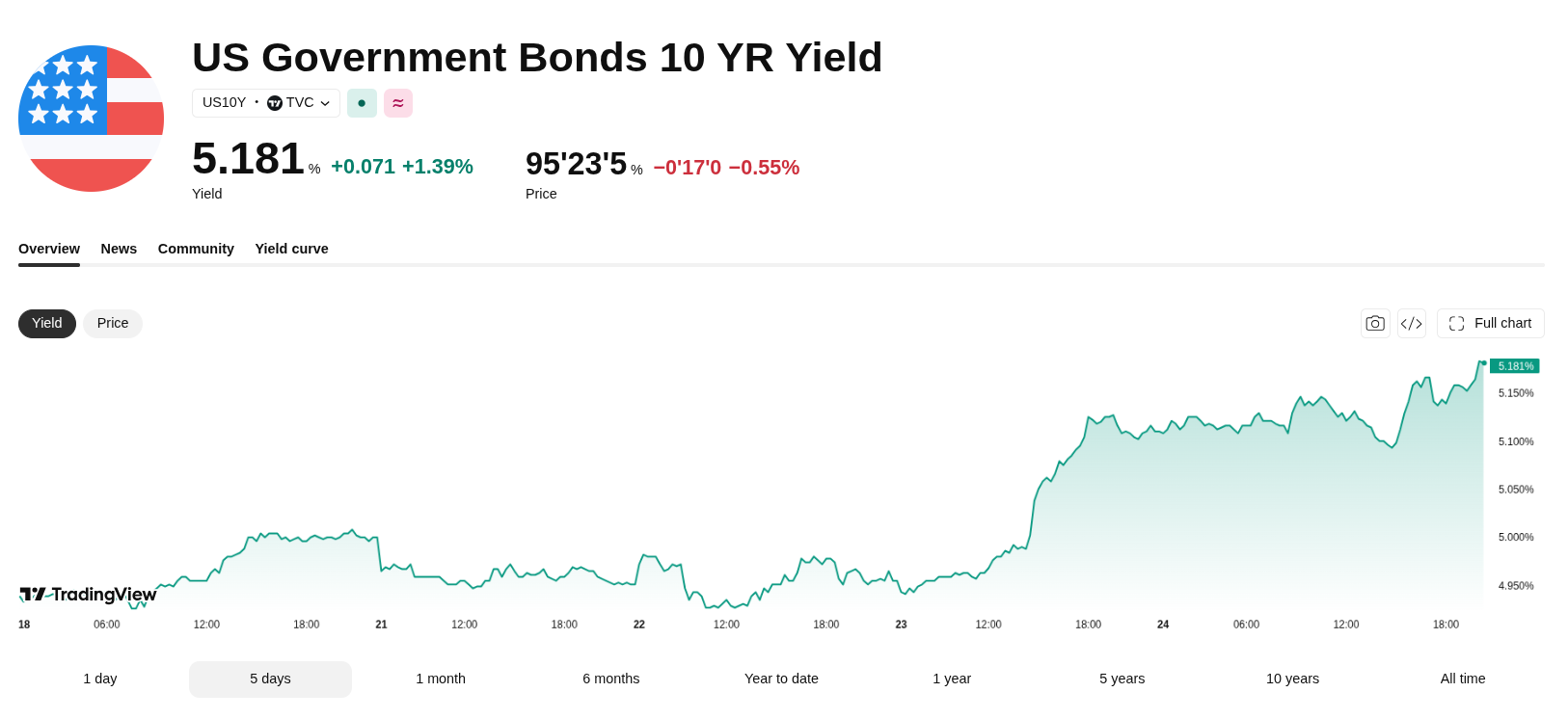
The climb came on the day the US Treasury was scheduled to buy back up to $6 billion in bonds maturing in roughly 20 to 30 years, part of an expanded program aimed at improving liquidity in long-dated debt markets.
International bond markets also weakened, while the Japanese yen (JPY) came under renewed pressure. Mohamed A. El-Erian, president of Queen’s College Cambridge, wrote on X: “Flying under many radars for now, but probably not for long: The Japanese Yen has weakened back to 159 per U.S. dollar (CNBC chart), approaching the established FX intervention zone.”
He continued: “This matters far beyond Japan for a key reason right now: Japanese foreign exchange intervention typically involves selling US securities to buy Yen, potentially adding yield pressures to an already sensitive Treasury market.”
Higher yields make government bonds more attractive and can weigh on non-yielding assets such as Bitcoin. Even so, BTC has extended its August rally, challenging bearish predictions tied to Bitcoin’s traditional four-year cycle.
ONDO token among top performers, reclaims $0.50 level
The tokenized real-world asset (RWA) token ONDO was among the top gainers in the last 24 hours and rose back to the psychological $0.5 level, according to CoinGecko data.
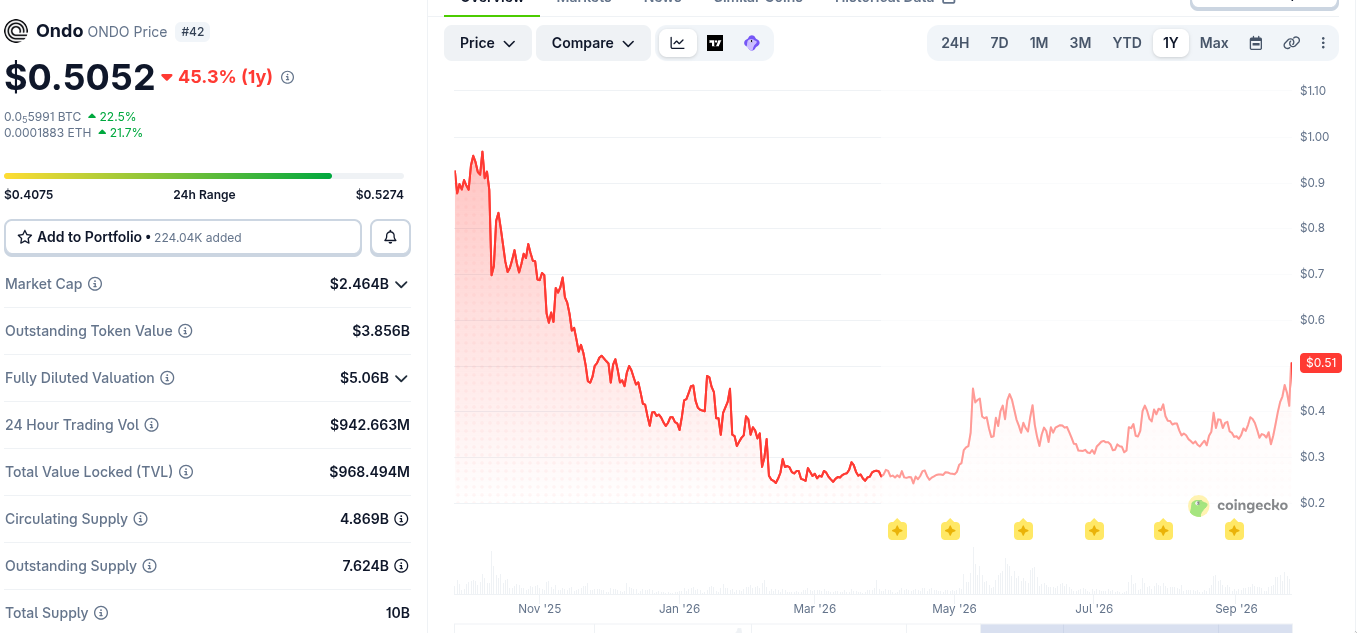
Despite the recent failure of the CLARITY Act to pass through a procedural vote in the US Senate, the token managed to reclaim a level last traded in December 2025.
Related: CLARITY vote failure could stoke more crypto PAC spending in key races
The rally came as BlackRock-backed Ondo Intelligent Portfolios launched on Thursday. While most RWA products focus on tokenizing individual stocks and commodities, the new offering allows non-US users to buy tokenized shares in diversified portfolios.
The tokens went live on Ethereum and BNB Chain, with settlement handled through CoW Protocol, CoW DAO said on X. The first three tokens track model portfolio strategies developed by BlackRock for Ondo: BLKHIon (High Income), BLKDIGon (Diversified Growth) and BLKGRWon (High Growth).
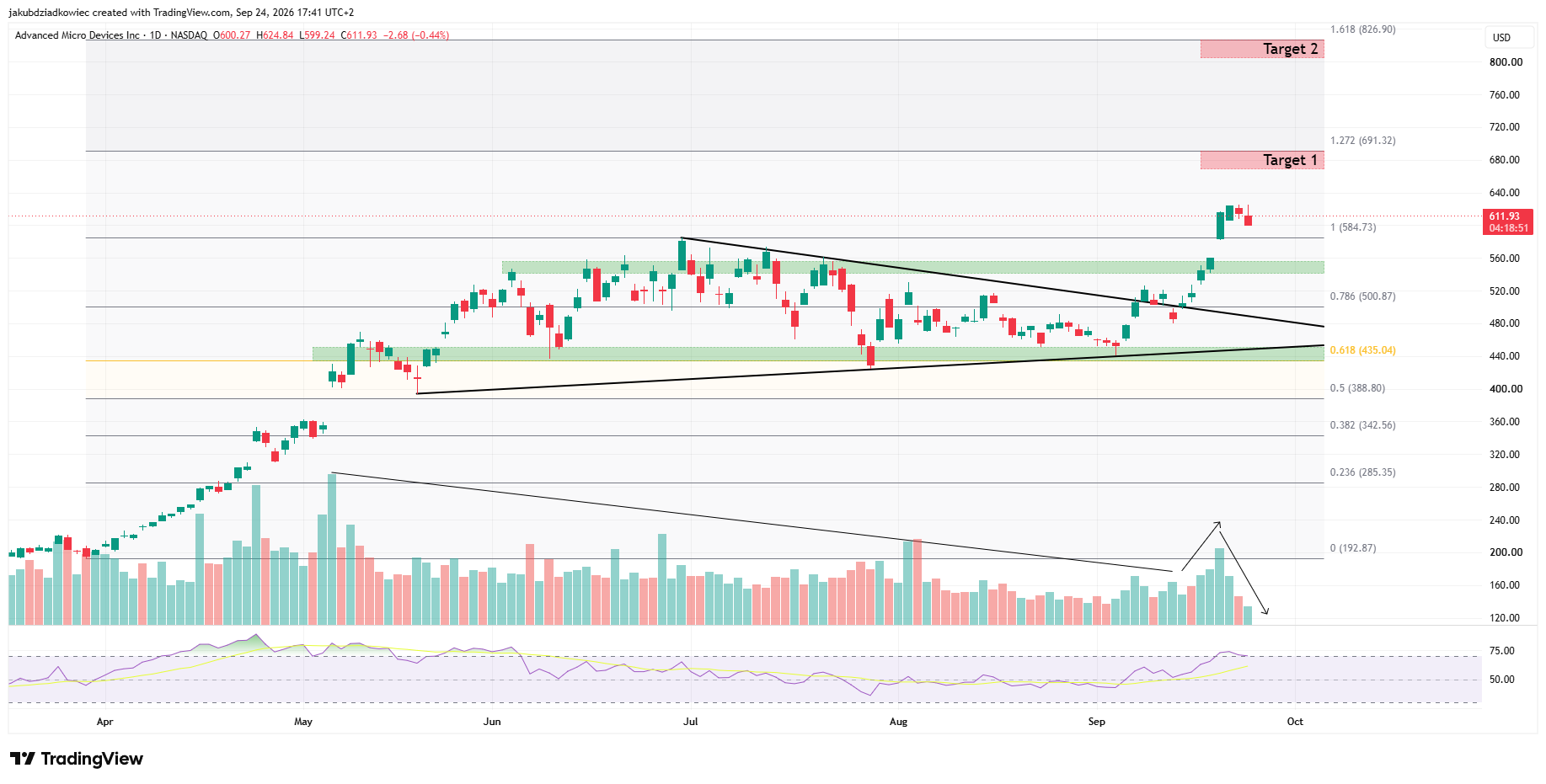
Taiwan chip exports climbed to a record $30.8 billion in the latest monthly print, up 60% from last year. Stock prices for both Advanced Micro Devices (AMD) and Micron Technology (MU) broke out of long consolidations this month.
This is crucial evidence that AI demand remains underpriced, according to Capriole Investments founder Charles Edwards.
Taiwan Chip Exports Set a Record on AI Demand
Taiwan’s Ministry of Finance reported $30.797 billion in integrated circuit exports for August. This is the fastest year-over-year growth since 2020.
Chips accounted for 37.4% of Taiwan’s total exports during the month. That share stood at 34.9% in July, so concentration is still climbing.
Regional data corroborates the trend. South Korean chip exports rose 259% during the first 20 days of September. TSMC reported August revenue growth of 53.3%, while Taiwanese export orders climbed 71.4%.
Skeptics argue that prices already reflect much of this demand. Similar bubble warnings have followed the memory rally throughout the year.
AMD Price Prediction: Can It Reach $691?
- AMD has broken above a key resistance level and recently hit a record high of $624.84. If the rally continues, the next major target is around $691, roughly 13% above the current price.
- A stronger rally could push AMD toward $827. However, the stock already looks relatively overbought, with its RSI above 70. That means a short-term pullback is possible even if the broader trend stays positive.
- The main support to watch is around $585. If AMD falls below that level, the breakout would look weaker. The next major support areas sit near $550 and $435.

Micron Price Prediction: $1,032 Is the Key Level
- Micron is holding above an important support level at $1,032. Buyers have already defended this area twice this week. Staying above it would keep the recent breakout intact.
- The next major upside target is Micron’s record high of $1,255. The stock is still about 16% below that level, while its RSI near 60 suggests it has more room to rise than AMD before looking overheated.
- A drop below $1,032 would weaken the outlook. The next support levels would be around $895 and $783. Micron’s September 30 earnings could be the next major trigger, with options markets expecting a move of roughly 10%.

The post AMD and Micron Get New Price Targets as Taiwan Chip Exports Hit Record $30.8B appeared first on BeInCrypto.
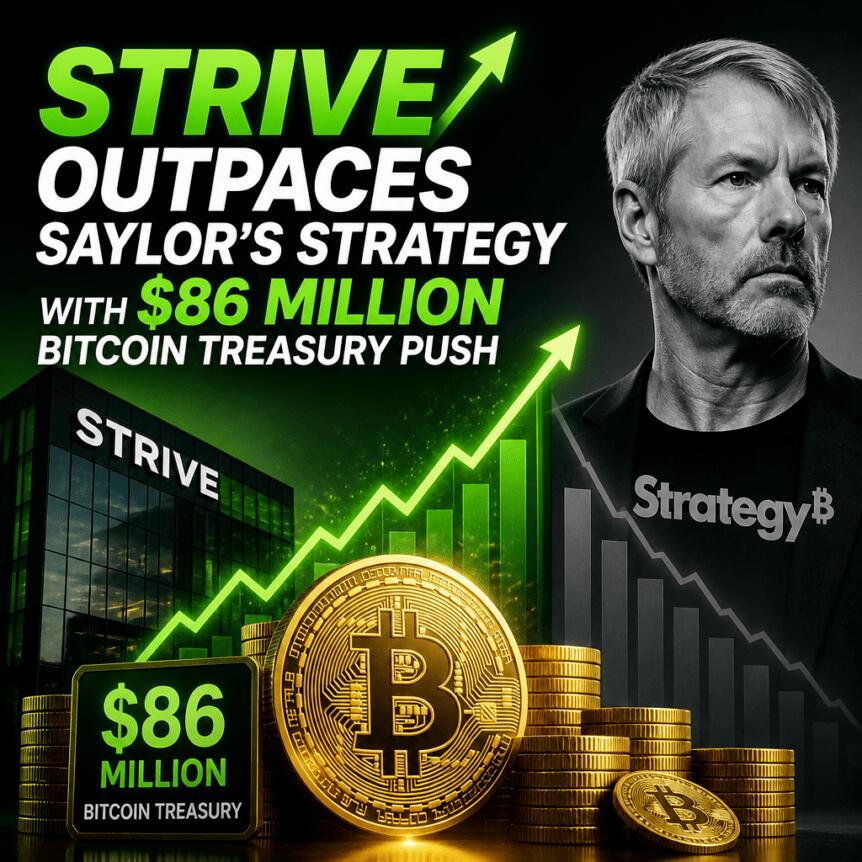
Strive built its Bitcoin treasury by raising $85.88 million in three trading days. The firm completed three SATA sessions between September 21 and September 23. Analysts estimate the raise funded roughly 1,001 additional coins for its Bitcoin treasury.
Strive’s Bitcoin Treasury Grows Session By Session
Strive opened the week with $27.69 million in net proceeds on September 21. The company sold about 284,000 shares to fund its Bitcoin treasury that day. Trackers estimate the session added 321.97 coins at an average price of $86,001.
The pace accelerated on September 22, and the Bitcoin treasury expanded further. Strive raised $36.08 million and sold roughly 370,000 shares. The session added an estimated 418.27 coins at an average price of $86,266.
September 23 brought a smaller but steady gain for the Bitcoin treasury. Strive raised $22.11 million and sold about 226,700 shares. The tracker values that day’s addition at 261.43 coins, priced near $84,556.
Strategy’s Bitcoin Treasury Faces A Funding Gap
Michael Saylor’s Strategy runs a larger Bitcoin treasury but has hit a financing wall. Its preferred stock, STRC, has traded below the $100 par value since June. The shares fell as low as $73.62 during that stretch.
Because STRC has failed to raise new capital since June, Strategy shifted tactics. The company turned to STRC buybacks instead of fresh share sales. Even so, Strategy still expanded its Bitcoin treasury during the September 14-20 week.
Strategy added 950 coins that week for $75.7 million. The average purchase price came to $79,670 per coin. Its total Bitcoin treasury now holds 846,000 coins, bought for about $63.8 billion at an average cost of $75,416 each.
A Widening Gap Between The Two Companies
Strive’s Bitcoin treasury has outpaced Strategy’s buying rate in recent weeks. Between September 14 and 18, Strive purchased 1,355 coins for $107.7 million. Its total holdings reached 26,355 coins at that point.
Warrant exercises added extra fuel to Strive’s fundraising engine. Those exercises generated $21.2 million in gross proceeds last week. More than half of Strive’s total capital raised has come through SATA proceeds since the program began.
The contrast highlights two different paths for building a Bitcoin treasury. Strive leans on ATM share sales and warrant activity to keep buying. Strategy, meanwhile, now depends on buybacks and other funding sources while STRC remains under par.

A bizarre drama played out on YouTube this past week, when a channel called Mighty Mike Plays posted a video explaining how nine-year-old “Mighty Mike” apparently got a hold of his father Dave’s company card and spent $118,000 on a YouTube ad campaign.
However, the story immediately appeared to have a number of holes, and within a few days there were too many red flags for influencers, who had initially boosted the story’s reach, to ignore.
Just a kid and his dad
Mighty Mike Plays, which features Roblox and Minecraft videos, was created in June of 2024 but only started posting videos in August of this year.
Over the past month, the channel has uploaded 175 long and short form videos — a considerable number for a child of nine.
When it suddenly started reaching the front page of YouTube ads, people began to comment that Mike was going to get in trouble with his father. They were, in fact, being played by the marketing.
On September 14, the channel released a video titled “Message from Dad… Mighty Mike Plays is Over.”
In the video, Dave speaks while Mike plays Minecraft. He states that Mike had spent $118,000 on the YouTube ad campaign and worst of all that the charges were on his company card and now he might get fired.
Dave didn’t explain why he would ever use a company card for anything but company purchases or how using the card even for a $20 ad campaign — as he stated was his intention — wasn’t illegal, but no red flags outside of this were obvious yet.
Read more: Kalshi’s AI ad turned an Asian YouTuber into ‘a white dude’
99 problems and the vid is one
On September 18, a new video was released, once again with Mike playing Minecraft and Dave speaking. Unfortunately, this time the video was nothing but red flags. Dave states that he’s been fired from his job and that the company has demanded that he pay back all $118,000 within 30 days.
He doesn’t clarify what will happen in 30 days if the company isn’t paid back.
Dave doesn’t show any proof of ad spend or any emails with his colleagues where they discuss the circumstances. Instead he suggests that the family will soon lose their home because he’ll have to sell it within the 30-day period.
All of this sounds like fiction, but it only gets more absurd.
Dave states that he doesn’t want to start a GoFundMe or Kickstarter to support his family and doesn’t specify a reason, though it’s thought that if you lie about the reason you need funds on these websites you can get sued and the money can get clawed back.
Instead, he says, he wants to sell merchandise online to try to raise the funds himself — a bizarre decision.
Slop merch, slop campaign
Dave’s website is filled with AI-created merchandise, all selling for immense prices (nearly $100 for t-shirts that say “118k” and “67 wassup chat”), some supposedly already sold out.
And, as eagle-eyed YouTubers quickly pointed out, the terms of service, which previously promised that returns would be allowed within 30 days, now state that ALL SALES ARE FINAL.
It’s unclear if this is legal or binding to anyone who bought the merchandise before the change.

Needless to say, it’s now Dave who’s claiming that he’s going to be suing numerous influencers and YouTubers for suggesting that he’s a scammer, emailing them to say he’s hired a lawyer and will be taking them to court for libel — an expensive move for a man who supposedly just lost his job and owes $118,000.
Regardless, Mike and Dave are posting videos again but have yet to address any of the previous red flags littering their videos.
Protos will follow the story for more information if anything changes.
Got a tip? Send us an email securely via Protos Leaks. For more informed news and investigations, follow us on X, Bluesky, and Google News, or subscribe to our YouTube channel.

Cubs clinch post-season spot with tight win over Marlins

Inside the Network of Anonymous Men Destroying Young Women’s Lives

ADM promotes regenerative agriculture process




-

 Fashion6 days ago
Weekend Open Thread: Talbots – Corporette.com
-

 Tech4 days ago
Researchers escape OpenAI Codex sandbox to run commands on host
-

 Crypto World2 days ago
Goldman Sachs and Deutsche Bank Agree: The S&P 500 Rally Isn't Over
-

 Crypto World4 days ago
Who Needs CLARITY Anyway? ARB Could See 70X Increase: Hodler’s Digest
-

 Crypto World6 days ago
Circle launches Arc Studio AI agent for building onchain apps
-

 Fashion10 hours ago
8 iPhone Accessories That Add Personality
-

 Crypto World7 days ago
Mortgage and refinance interest rates today, Thursday, September 17, 2026
-
 NewsBeat6 days ago
Trump says US has reached an agreement to take permanent control of Greenland’s security
-

 Crypto World6 days ago
Trading Bitcoin on Robinhood? Why 2% Spread Has Traders Worried
-

 Crypto World6 days ago
Bitcoin price breaks channel as RSI climbs to 63
-

 Business4 days ago
Analog Devices (ADI) Bets $1.35 Billion on Chips that Let Machines Think for Themselves
-

 Tech3 days ago
Google’s $899 Googlebook is a bet that you’ll buy a new laptop for Gemini
-

 Tech5 days ago
Trump suggests rebranding AI with a new name, says he’s also creating an AI Force
-

 Crypto World4 days ago
Coinbase, Robinhood, Circle Seen as Tokenized-Stock Winners
-
 Business2 days ago
Oil Price Today (September 23): Crude oil below $100 on hopes of US-Iran talks. What did Trump say?
-

 Tech7 days ago
GPT-6 Astra Reached the Nether in Minecraft, Lost Its Stash to a Creeper, and Farmed Potatoes for Hours
-

 Crypto World6 days ago
World Money launches in 150+ countries with Stripe
-

 Crypto World6 days ago
Silver prices recover quickly, hitting weekly high today
-
 Crypto World2 days ago
Trump-Xi Polymarket Odds for Handshake Hit 50%
-

 Crypto World22 hours ago
Bitcoin Threatens Sub-$84,000 Breakdown as Long Liquidations Spike
You must be logged in to post a comment Login