

Crypto World
Revolut Eyes Stablecoin Services Through Future US Bank

Fintech company Revolut plans to offer stablecoins through its future US bank, Reuters reported Wednesday, citing comments from the company’s US CEO, Cetin Duransoy.
Duransoy told the news service that customers of the bank, which is expected to launch next year, will have access to FDIC-insured accounts, multi-currency deposits, stock trading and cryptocurrency services. He said that Revolut plans to initially target retail and business customers with international banking needs, including those managing multiple currencies.
Revolut applied for a US national bank charter in March, which would allow the company to offer federally insured banking products nationwide under a single federal regulatory framework.
That filing marked a change from the company’s earlier plans to acquire a US bank as part of its expansion strategy. Duransoy joined Revolut that same moont to lead its growth in the United States.
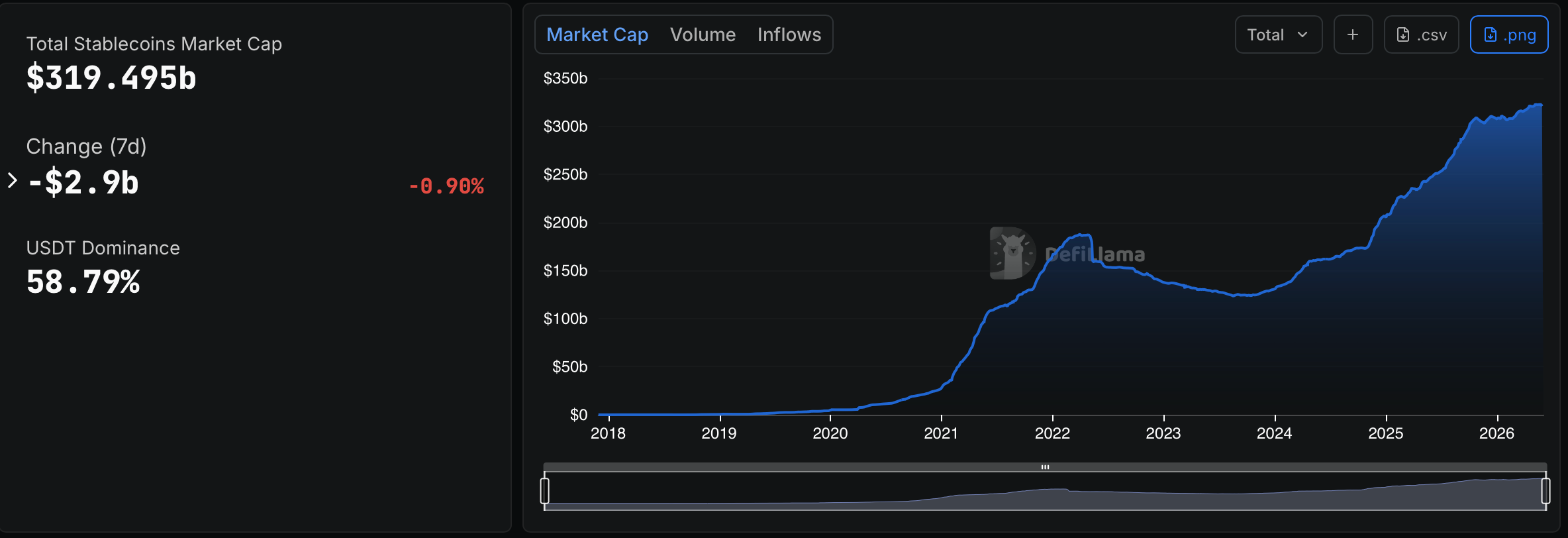
Revolut is looking to get a US foothold in a stablecoin market that has grown to around $319.5 billion, up from about $247 billion a year ago, according to DefiLlama data.
Founded in 2015, Revolut offers digital banking, payments, investing and cryptocurrency products to more than 75 million customers globally, according to its website. Outside of the US, its customers are already able to use their bank cards to make payments with USDT and USDC Stablecoins.
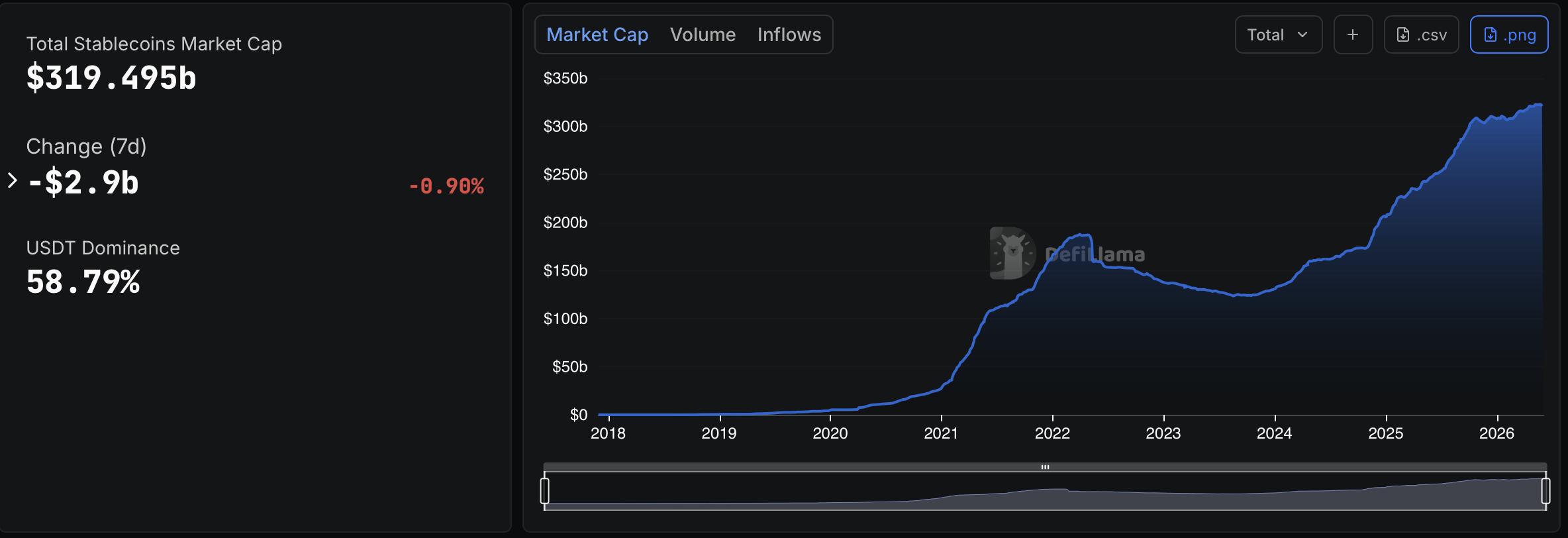
Source: DefiLlama
Related: Mastercard expands support to USDC, PYUSD, RLUSD stablecoin settlement
Stablecoins draw big interest from financial services providers
Revolut’s plans come amid a series of recent stablecoin launches by banks, fintech companies and payment providers as digital-dollar products move deeper into payments and banking services.
In December, digital bank SoFi launched SoFiUSD, a dollar-backed token that enables customers to transact on the Ethereum and Solana networks through the company’s mobile app.
Last week, Falcon Finance introduced the stablecoin fUSD through Anchorage Digital’s regulated issuance platform. The token is backed by cash, repurchase agreements and short-term US government securities and is intended for institutional trading and treasury operations.
On Tuesday, MoneyGram introduced MGUSD in partnership with Bridge, Stripe’s stablecoin platform. The Stellar-based token is integrated into the MoneyGram app and can be used to hold and transfer dollar-denominated balances.
The activity has coincided with a broader push by fintech and digital asset companies to obtain federal banking approvals in the United States. This year, Nubank and Crypto.com received conditional approval to establish national banks, while Circle, Ripple, BitGo, Fidelity Digital Assets and Paxos secured similar approvals from the Office of the Comptroller of the Currency in late 2025.
Source: Crypto.com
Magazine: Big Questions: Do we really only need 2–5 cryptocurrencies?


The U.S. Commodity Futures Trading Commission (CFTC) has rescinded a long-standing policy that barred settlements in enforcement actions when defendants publicly denied the agency’s allegations. The policy, in place since 1998, was criticized for potentially conveying that the regulator could shield itself from scrutiny or rebuttal, a concern the agency said warranted correction.
The move mirrors a similar step taken earlier this year by the U.S. Securities and Exchange Commission (SEC), which rescinded a related no-deny provision in May. CFTC Chair Mike Selig framed the change as restoring parity with other regulators and reducing the risk of misperception about the Commission’s accountability. “For nearly three decades, the Commission has refused to settle cases unless the defendant promised not to publicly deny the Commission’s allegations,” Selig said. “I am pleased that we are rescinding the no-deny policy consistent with regulators throughout the government.”
Crypto firms and industry participants have long argued that the no-deny rule restricted speech rights and constrained settlements. The CFTC’s reversal raises questions about how settlements will be structured going forward, and what facts may still need to be admitted as part of any resolution. The agency stated that the policy change provides greater flexibility when resolving enforcement actions, though it cautioned that it will not automatically void all no-deny provisions and that some settlements may still require admission of certain facts or liabilities.
Source: CFTC
According to Cointelegraph, the policy adjustment arrives amid a broader debate about speech rights in enforcement actions and the balance between public accountability and settlement efficiency.
The policy shift comes with broader regulatory dynamics in the United States. Under the Trump administration, enforcement actions pursued against crypto firms that had been initiated during the Biden administration saw rollback efforts from the administration’s regulators. In a separate development on Thursday, the CFTC moved to vacate its $5 million settlement with the crypto exchange Gemini, a case that the chair described as “politically targeted.”
Former CFTC Chair Tim Massad, who led the agency during the Obama era, characterized the reversal as “extraordinarily unusual,” noting the unusual nature of reopening or reversing settled matters. Massad’s remarks underscore the ongoing scrutiny surrounding how U.S. regulators handle crypto enforcement and the potential implications for settlement architecture and public accountability.
Key takeaways
- The CFTC has scrapped a no-deny settlement policy that required defendants to refrain from publicly denying agency allegations as a condition of resolution.
- The change aligns the CFTC with a comparable move by the SEC and signals a broader regulatory shift toward flexibility in enforcement settlements.
- Existing no-deny provisions are not automatically voided, and some settlements may still require admission of certain facts or liabilities.
- The decision has immediate implications for how crypto-enforcement matters might be settled and how public speech rights are balanced in regulatory actions.
- Separately, the CFTC has sought to vacate the Gemini settlement, prompting debate over political targeting and the stability of settled cases in the crypto enforcement landscape.
Policy change and practical implications for enforcement
The CFTC’s reconsideration of the no-deny policy marks a noteworthy shift in how the agency constructs settlements with regulated entities. Historically, the requirement that defendants refrain from denying allegations served to streamline resolutions but raised concerns about defendants’ free-speech rights and the optics of enforcement agency behavior. By removing the blanket no-deny constraint, the Commission moves toward a settlement framework that emphasizes accountability without automatically constraining public dialogue.
From a regulatory‑compliance perspective, the change introduces greater nuance in the settlement negotiating process. While some settlements may still include agreed representations of fact or liability—as dictated by case specifics—the agency’s broader posture is to permit more flexibility in how disputes are publicly resolved. This could affect how financial firms, exchanges, and blockchain operators assess settlement risk, communications strategies, and the potential need for post-settlement disclosures.
Enforcement landscape, political context, and cross-agency alignment
The policy revision comes amid a broader environment of recalibration among U.S. regulators regarding crypto enforcement. The SEC’s May action to rescind a similar no-deny practice sets a precedent that the CFTC now follows, signaling closer alignment within federal agencies on how settlements should address defendants’ speech rights while maintaining enforcement credibility.
Observers note the political undertones in ongoing regulatory actions. The CFTC’s attempt to vacate Gemini’s $5 million settlement has drawn attention to how enforcement matters may be revisited, especially when they intersect with contemporary political narratives. The agency argued that the Gemini disposition was unusually targeted politically, a charge that underscores the sensitivity of enforcement actions in the crypto sector as administrations transition and policy priorities shift.
In addition to the Gemini development, industry participants continue to weigh how these changes affect licensing, cross-border operations, and the integration of crypto activities with traditional financial infrastructure. As the regulatory framework evolves, firms may reassess risk controls, disclosure protocols, and the interplay between enforcement actions and reputational risk in settlements and regulatory filings.
Regulatory context and potential governance implications
Although the immediate policy change is focused on settlement mechanics, the broader implications extend to governance, compliance, and international considerations. The U.S. stance on settlement language can influence how abroad regulators view consent orders, admissions, and post-settlement obligations, potentially affecting cross-border investigations and cooperation with foreign authorities. For entities operating across jurisdictions, harmonization of settlement practices—while preserving national sovereignty over enforcement—remains a central area of scrutiny for legal counsel and compliance teams.
Looking ahead, observers will monitor how the CFTC and other agencies implement the revised approach in practice. Key questions include whether future settlements will routinely allow denials or require limited admissions, how the public record will reflect those settlements, and how parallel actions across different agencies will be coordinated in multi-agency investigations.
According to Cointelegraph, the evolving approach to settlement denials reflects a broader rebalancing of enforcement strategies and speech rights in the crypto regulatory regime. The emphasis on transparency, accountability, and proportionality in settlements is likely to shape legal risk management and compliance programs across crypto firms, exchanges, and financial institutions engaging with digital assets.
As the regulatory dialogue continues, firms should remain attentive to upcoming guidance or rulemaking initiatives that could further redefine settlement language, admissions standards, and the disclosure requirements that accompany enforcement resolutions.
Closing perspective: The no-deny policy reversal represents a meaningful adjustment in the CFTC’s enforcement toolkit, with potential implications for how settlements are negotiated, disclosed, and perceived by markets and the public. The coming months will reveal how this shift interacts with ongoing enforcement actions and cross‑agency coordination efforts in a rapidly evolving crypto regulatory landscape.
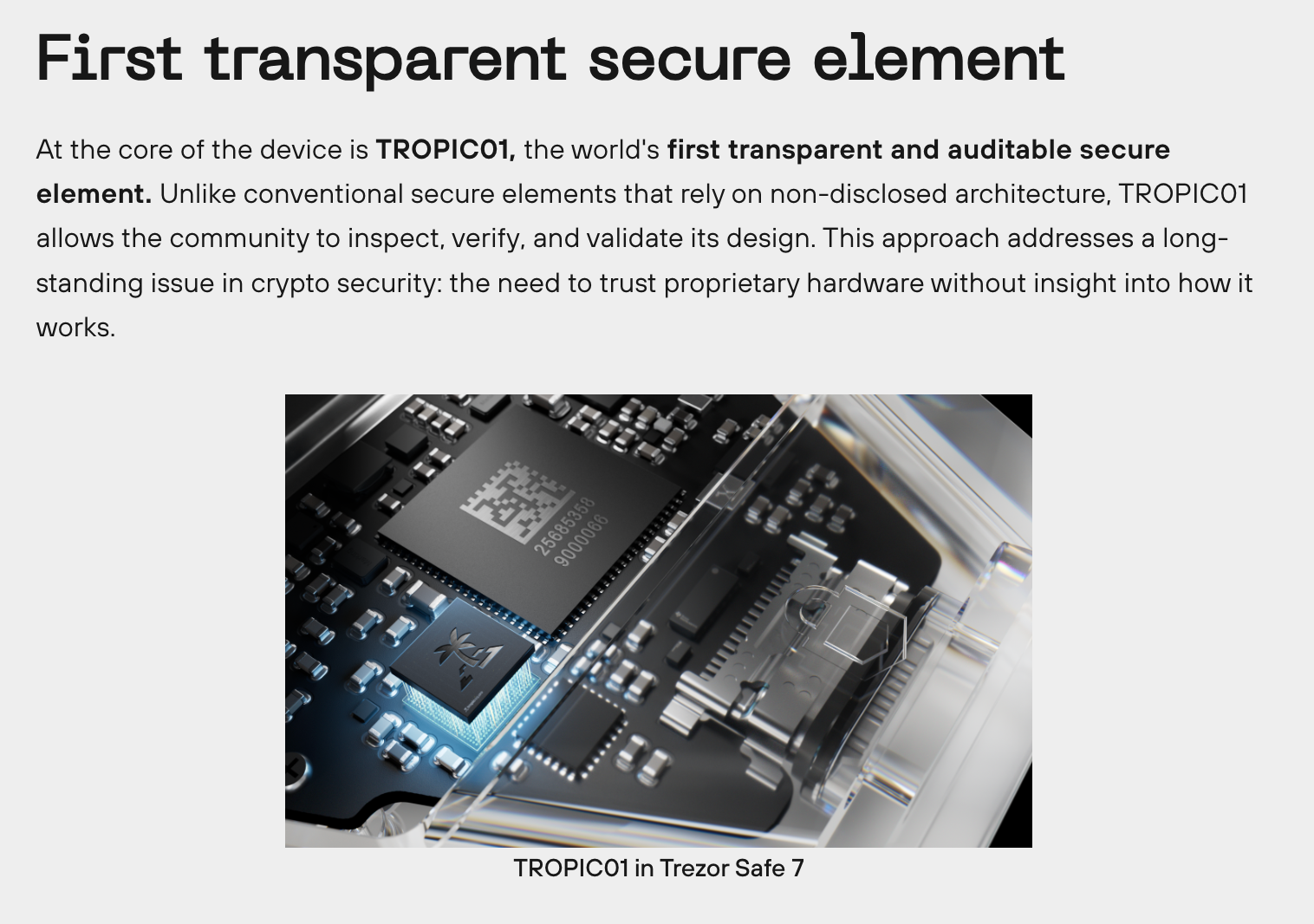
Hardware wallet company Trezor and chipmaker Tropic Square have disclosed a vulnerability in one of the secure elements used in Trezor Safe 7 hardware wallet, saying the flaw does not put user funds at risk because the chip alone cannot expose a wallet.
The vulnerability was identified during an independent security audit conducted by Ledger Donjon, the security research team at rival hardware wallet maker Ledger, according to a Trezor statement.
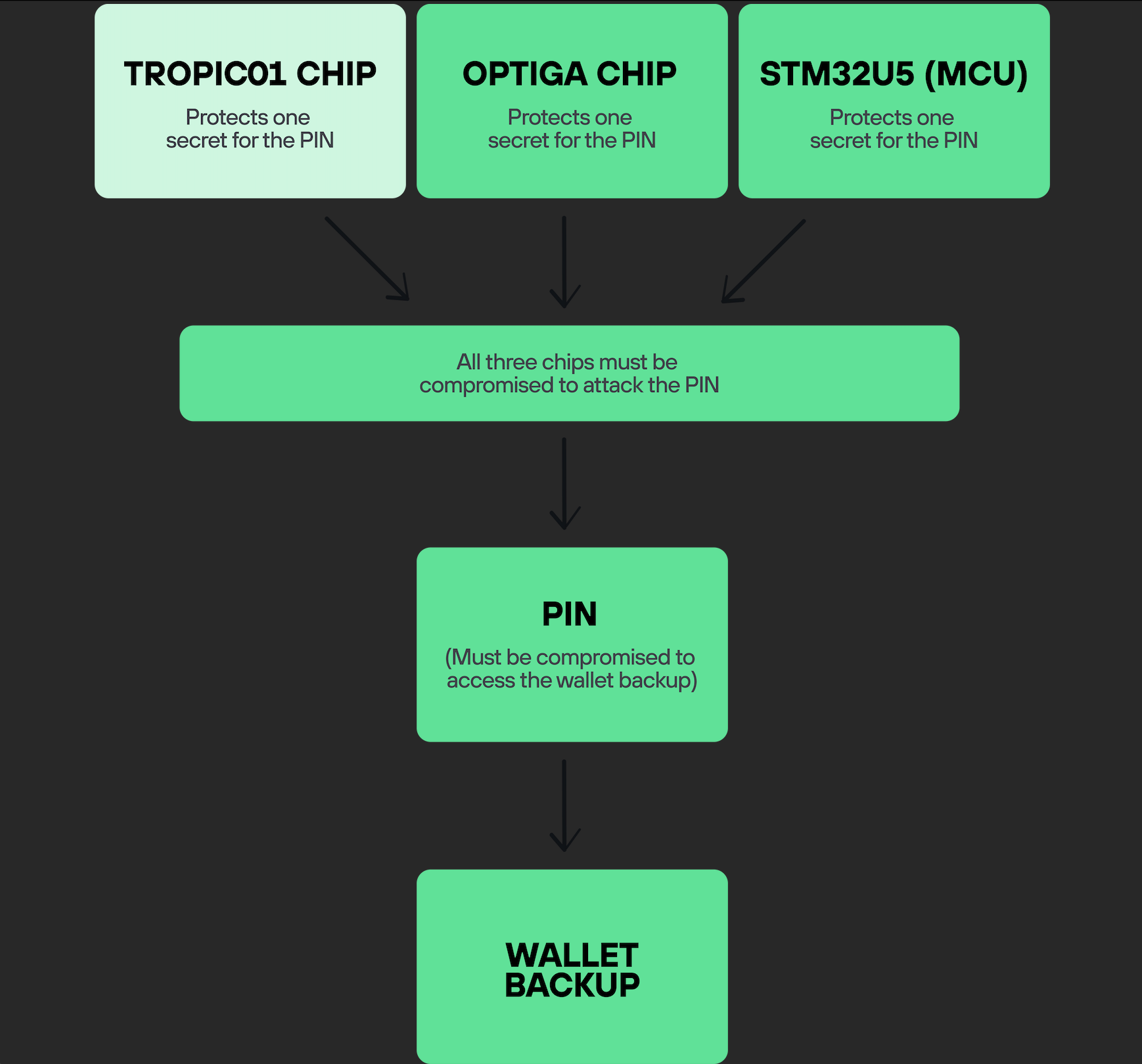
Tropic Square provided the affected TROPIC01 Secure Element chip to the Ledger Donjon team for an independent audit. The companies said compromising TROPIC01 alone would not be enough to access a user’s wallet, PIN or funds.
The disclosure offers a rare public look at how hardware wallet makers handle chip-level security flaws and highlights the growing role of independent researchers in testing crypto custody devices.
Flaw surfaced during independent security testing
According to Trezor, the vulnerability was discovered during an independent security review initiated by Tropic Square after the launch of its TROPIC01 secure element in early 2025.
Ledger’s Donjon informed Tropic Square in January 2026 that it had successfully carried out a laser fault injection attack against the chip, allowing researchers to extract some chip-held secrets and bypass firmware signature verification under lab conditions.
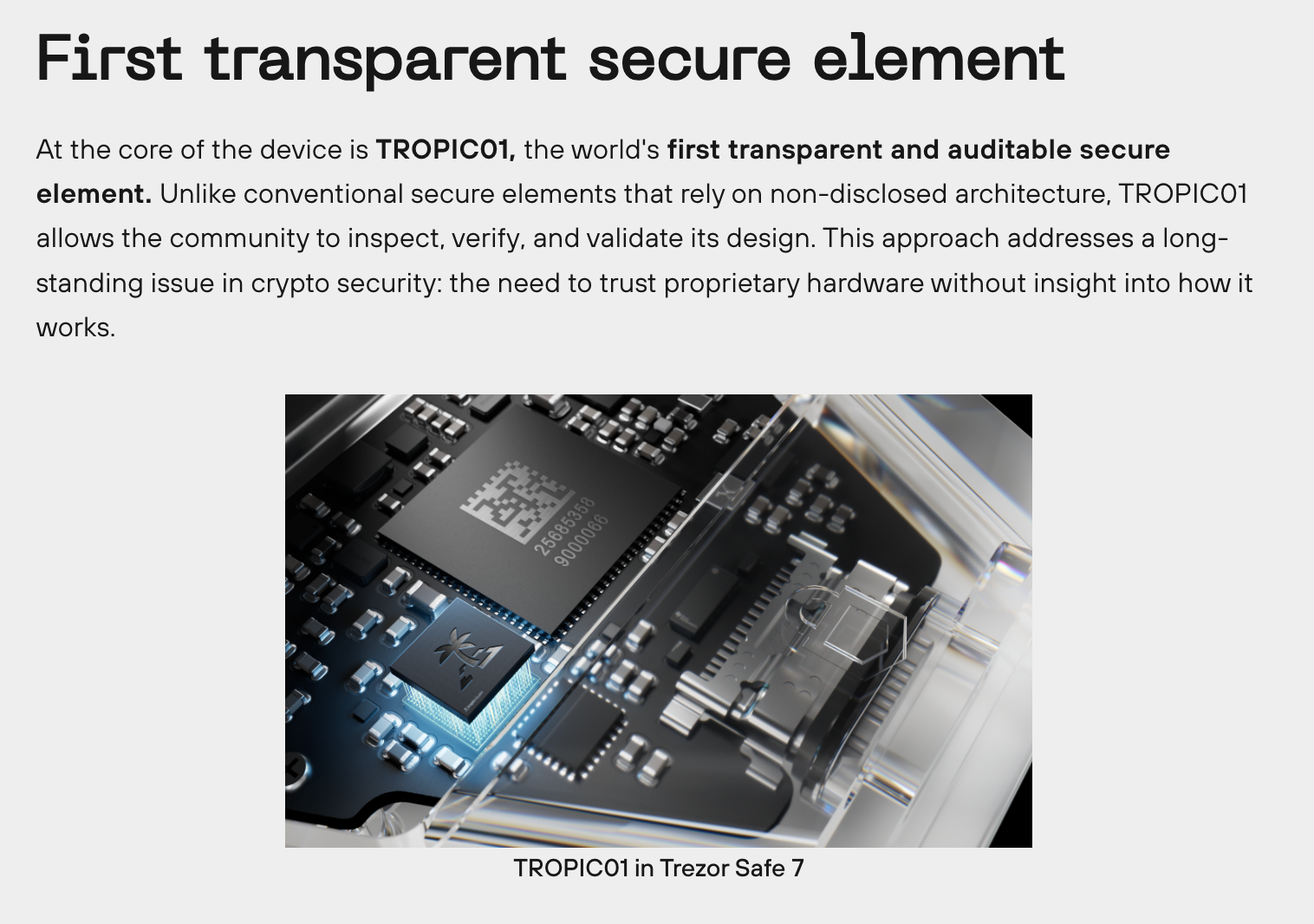
TROPIC01 is one of two secure elements in Trezor Safe 7, which launched in October 2025. Source: SatoshiLabs
After reviewing Ledger Donjon’s findings, Tropic Square engineers identified an additional method of exploiting the weakness that could expose another chip-held secret tied to PIN-related functions.
The company notified its partners, including Trezor, and opted to publicly disclose the vulnerability alongside Donjon’s research.
Related: ‘All DeFi unsafe’ claim sparks AI security debate after April hack surge
Trezor says users do not need to take any action
Trezor said users do not need to take any action following the disclosure, adding that the vulnerability does not affect funds stored on the device because compromising TROPIC01 alone is not enough to access the wallet, PIN or funds.
As the issue exists at the hardware level, it cannot be fixed through a remote firmware update.
“Because the Trezor Safe 7 was built with multiple independent security layers, a vulnerability in TROPIC01 does not put user funds at risk,” Trezor CEO Matej Žák said.
Source: Trezor
Trezor noted that Ledger’s Donjon team has previously published independent security research on its devices, including a report on the Trezor Safe 3 that demonstrated an attack involving supply-chain-style physical interception, desoldering and modification of the device before it reached users.
The company responded publicly at the time and has continued hardening against such attack vectors, adding that it was not aware of any user funds being compromised.
“No Donjon research has identified a vulnerability in the Optiga secure element, and the STM32U5 used in the Safe 7 is a more recent microcontroller with no demonstrated fault-injection attack against it,” a spokesperson for Trezor told Cointelegraph.
Cointelegraph reached out to Ledger Donjon regarding audits of other secure elements used in Trezor hardware wallets, but had not received a response by publication.
Magazine: The legal battle over who can claim DeFi’s stolen millions
BitMine Immersion Technologies (BMNR) announced plans to sell 3 million shares of 9.50% Series A Perpetual Preferred Stock at $100 each.
The structure closely mirrors the financing model used by Michael Saylor’s MicroStrategy to buy crypto.
A Familiar Playbook
Digital asset treasury firms raise capital in public markets, then buy tokens with the proceeds. Strategy (MSTR) pioneered the approach with Bitcoin (BTC), and the firm has increasingly been using its preferred stock STRC to fund its buys.
BitMine’s filing now seeks to replicate the same machinery. The preferred stock carries a $100 stated amount.
The firm intends to direct proceeds toward more ETH purchases, staking, and validator expansion through MAVAN. The company also flagged working capital needs and potential common stock buybacks.
Moelis & Company and Cantor Fitzgerald are serving as joint lead bookrunners. The shares are expected to trade under the ticker BMNP, pending NYSE approval.
Meanwhile, BitMine is not alone in following the format. Bitcoin treasury peer Strive (ASST) also has its own dividend-paying preferred, SATA, at a 13% rate.
Follow us on X to get the latest news as it happens
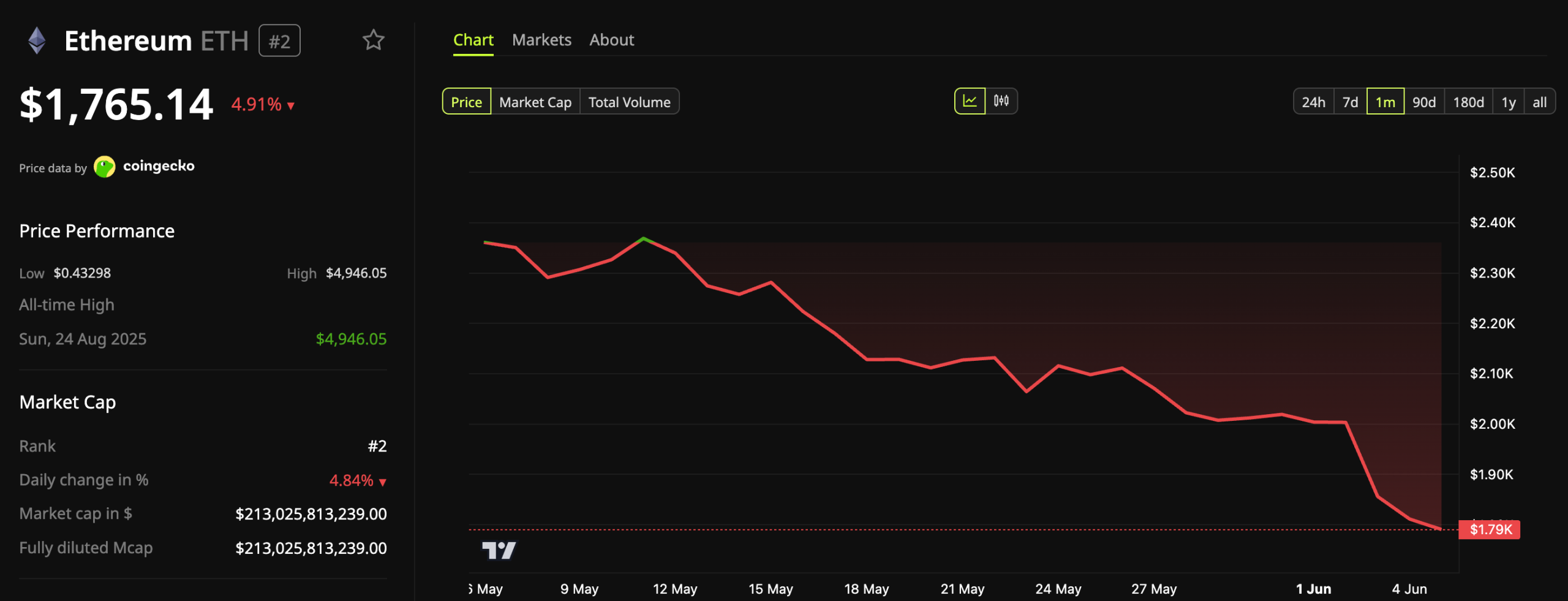
BitMine Preferred Stock Offering Comes as ETH Falls Below $1,800
The timing is notable. Digital asset treasury firms have come under strain as crypto prices retreated, prompting several to seek new funding sources. A 9.50% dividend signals the premium BitMine must pay to attract buyers in a weaker market.
The firm built the largest Ethereum treasury through aggressive accumulation, with holdings exceeding 5 million ETH. Much of that stack is staked.
Ethereum (ETH) traded at $1,765, down nearly 5% over 24 hours, according to BeInCrypto Markets data. At those levels, BitMine sits deep underwater on its average purchase price.

According to data from CryptoQuant, the company’s unrealized losses have exceeded $8 billion. Chairman Tom Lee has previously downplayed the ETH losses, framing them as paper figures that recover with the market.
The coming weeks will test whether investors will fund an Ethereum bet at a steep yield while the underlying asset sits near multi-month lows. The answer may reveal how much appetite remains for the treasury model that Saylor made famous.
Subscribe to our YouTube channel to watch leaders and journalists provide expert insights
The post BitMine Tests Saylor’s Capital Strategy While Sitting on $8 Billion ETH Loss appeared first on BeInCrypto.
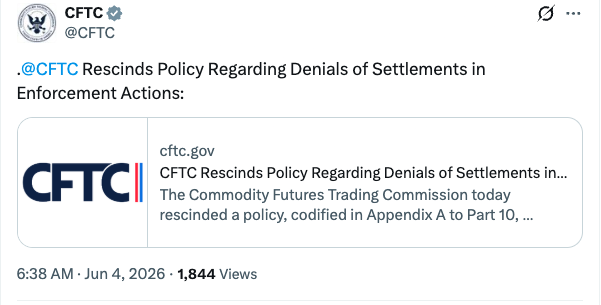
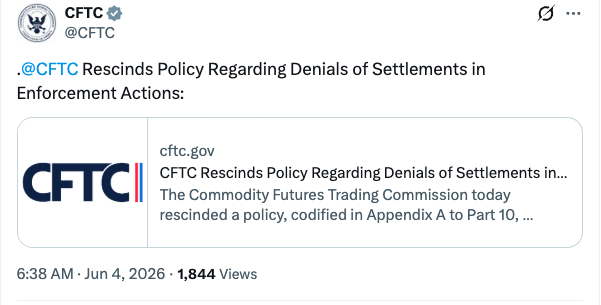
The US Commodity Futures Trading Commission has rescinded a long-standing policy that prevented it from accepting a lawsuit settlement if the defendant denied the agency’s allegations.
The CFTC said on Wednesday that it scrapped the policy, first adopted in 1998, because it “may have created an incorrect impression that the Commission is trying to shield itself from criticism.”
The language was similar to that provided by the US Securities and Exchange Commission when it rescinded a similar policy in May.
“For nearly three decades, the Commission has refused to settle cases unless the defendant promised not to publicly deny the Commission’s allegations,” CFTC Chairman Mike Selig said. “I am pleased that we are rescinding the no-deny policy consistent with regulators throughout the government.”
Crypto companies that have faced enforcement action by the CFTC or SEC have criticized the rule, claiming it restricted their right to free speech.
Source: CFTC
The CFTC said the policy change now gives it more flexibility when settling enforcement actions.
However, it will not enforce existing no-deny provisions and could still require some defendants to admit certain facts or liabilities when settling enforcement actions.
Under the Trump administration, the CFTC and SEC have rolled back enforcement actions taken against crypto companies that were launched under the Biden administration.
On Thursday, the CFTC sought to vacate its $5 million settlement with crypto exchange Gemini, a case that Selig claimed was “politically targeted.”
Tim Massad, who headed the CFTC under the Obama administration, told Cointelegraph on Friday that the agency’s choice to reverse the settlement was “extraordinarily unusual.”
Magazine: The legal battle over who can claim DeFi’s stolen millions

Over 160 former national security, intelligence, and law enforcement officials are pushing the U.S. Senate to advance the CLARITY Act, arguing that it would strengthen efforts to combat illicit finance in the crypto space.
The appeal was made in a letter addressed to Senate Majority Leader John Thune and Democratic Leader Chuck Schumer and was coordinated by the Blockchain Association.
Former Officials Back Crypto Market Rules
The industry group announced the initiative on X, calling digital asset market structure a “law enforcement and national security priority.” The letter argues that as crypto activity continues to grow worldwide, it is becoming really important for the U.S. to put in place a framework to regulate and oversee the industry.
According to the signatories, failing to do this could push more activity offshore and into opaque markets that are harder for U.S. authorities to monitor and investigate, creating gaps that can be exploited for illicit finance.
“It is critical for the United States that this activity occurs under American rules, with American oversight, and subject to American Law,” the letter states.
The ex-officials argue that such a move would improve national security, make law enforcement more visible, and give investigators more tools to fight financial crime, in turn, making it harder for criminal networks to launder money, evade sanctions, and defraud.
Meanwhile, data from the Bank Policy Institute (BPI) shows that illicit crypto flows surged 162% year-on-year last year. The group also said that the Clarity Act is not a deregulatory move but instead aims to improve enforcement, compliance accountability, and coordination across digital asset markets.
The legislation would extend the Bank Secrecy Act and impose compliance requirements on digital commodity brokers, dealers, and exchanges, as well as anti-money laundering obligations, reporting, and monitoring requirements.
Additionally, the bill includes a Treasury-led information-sharing pilot program involving agencies like the DOJ, FBI, and DEA, as well as a permanent interagency working group dedicated to counter-illicit finance efforts.
Senate Meetings and a Town Hall
The Blockchain Association shared that its members and industry participants will be heading to Washington, D.C., for several meetings scheduled across 18 Senate offices.
The group is also planning a virtual town hall later this week to discuss how the CLARITY Act helps law enforcement and national security efforts. Expected to attend the gathering are Cynthia Lummis, House Majority Whip Tom Emmer, and Patrick Witt.
The letter ends with a call for the Senate to pass the CLARITY Act. Meanwhile, the bill has been approved recently by the Senate Banking Committee but is facing strong resistance from some lawmakers and bankers.
The post 160 Security Veterans Urge US Senate to Pass CLARITY Act appeared first on CryptoPotato.

TLDR:
- NEAR Protocol’s Buy/Sell Pressure Delta crossed from deeply negative to +112.107 at $1.50.
- Standard chart signals, funding rates, and derivatives gave no warning ahead of NEAR’s move.
- NEAR Intents now connects 30+ chains, with private transactions making up nearly half of activity.
- Bitwise NEAR Staking ETP inflows point to growing institutional interest in the protocol’s growth.
NEAR Protocol has surged approximately 89% in recent weeks, rising from $1.50 to $2.83. The move attracted attention after on-chain data flagged a shift in buying pressure before any major price action was visible.
Analysts and alert systems that track order flow data caught the rotation early. The broader crypto market largely missed the setup, as traditional chart signals and derivatives data offered little warning ahead of the move.
On-Chain Data Flagged the Move Before Markets Reacted
NEAR’s 90-day Buy/Sell Pressure Delta had remained deeply negative for roughly five months. During that period, sell pressure dominated as price drifted from $4.00 down to $1.50. Most market participants had written off the asset by that point.
The shift came when the delta crossed from negative to positive territory. According to Alphractal, the current reading stands at Buy 7.692 against Sell 2.142, with the delta sitting at +112.107. The crossover was driven by actual aggressive market orders, not sentiment.
Alphractal noted in a post that standard chart signals showed nothing notable at the time the cross fired. CEX volume appeared unremarkable, funding rates were neutral, and derivatives positioning gave no leading signal.
The platform described the Buy/Sell Pressure Delta crossover as one of the cleaner mid-cap rotation signals in its data stack. It tracks order flow directly, making it less susceptible to narrative-driven noise that often misleads traders.
Fundamentals Add Weight to the Technical Picture
Beyond order flow, NEAR Protocol’s underlying activity has also shifted meaningfully. Analyst Rain noted on X that NEAR is up 72% year-to-date, carrying a market cap of approximately $3.36 billion and ranking 28th globally.
NEAR Intents, which connects over 30 chains through automated cross-chain swaps, has expanded the protocol’s cross-chain functionality considerably. This infrastructure development has drawn attention from traders looking at AI agent use cases.
Private transactions went live recently and already account for nearly half of all platform activity. That adoption rate points to substantial existing demand for privacy features within decentralized finance.
On the institutional side, the Bitwise NEAR Staking ETP has recorded growing inflows. That trend suggests institutional capital is beginning to track the protocol’s on-chain developments more closely.
Price Structure and Key Levels to Watch
NEAR broke out from a support base established around $2.10 during May. That level has since become a reference point for traders assessing the sustainability of the current move.
The next resistance level sits at $3.14, according to Rain’s analysis. A clean break above that level could open the door to further upside, though the asset must hold its recent support first.
The price structure following the May breakout reflects a typical mid-cap rotation pattern. Strong initial demand absorbed existing supply before price found a new trading range above prior resistance.
With order flow metrics still positive and institutional products gaining traction, NEAR Protocol remains in focus for market participants watching cross-chain and privacy infrastructure narratives develop.

Zcash developers temporarily suspended Orchard transactions after discovering a critical vulnerability in the privacy-focused blockchain’s latest shielded pool, then restored functionality through an emergency network upgrade.
On Wednesday, the Zcash Foundation said the vulnerability affected Orchard’s zero-knowledge proof circuit and could have allowed invalid state transitions within the pool. However, the Foundation said there was no evidence that the bug was exploited, no unauthorized value creation was detected, and user privacy was not affected.
The fix was carried out through a two-step emergency upgrade. Zebra 4.5.3 temporarily disabled Orchard actions, while Zebra 5.0.0 activated the NU6.2 upgrade to re-enable Orchard with a corrected circuit, according to the Foundation.
The emergency response shows how a bug in core privacy infrastructure can require coordinated action across miners, exchanges and node operators, even when user funds and total supply are not affected.
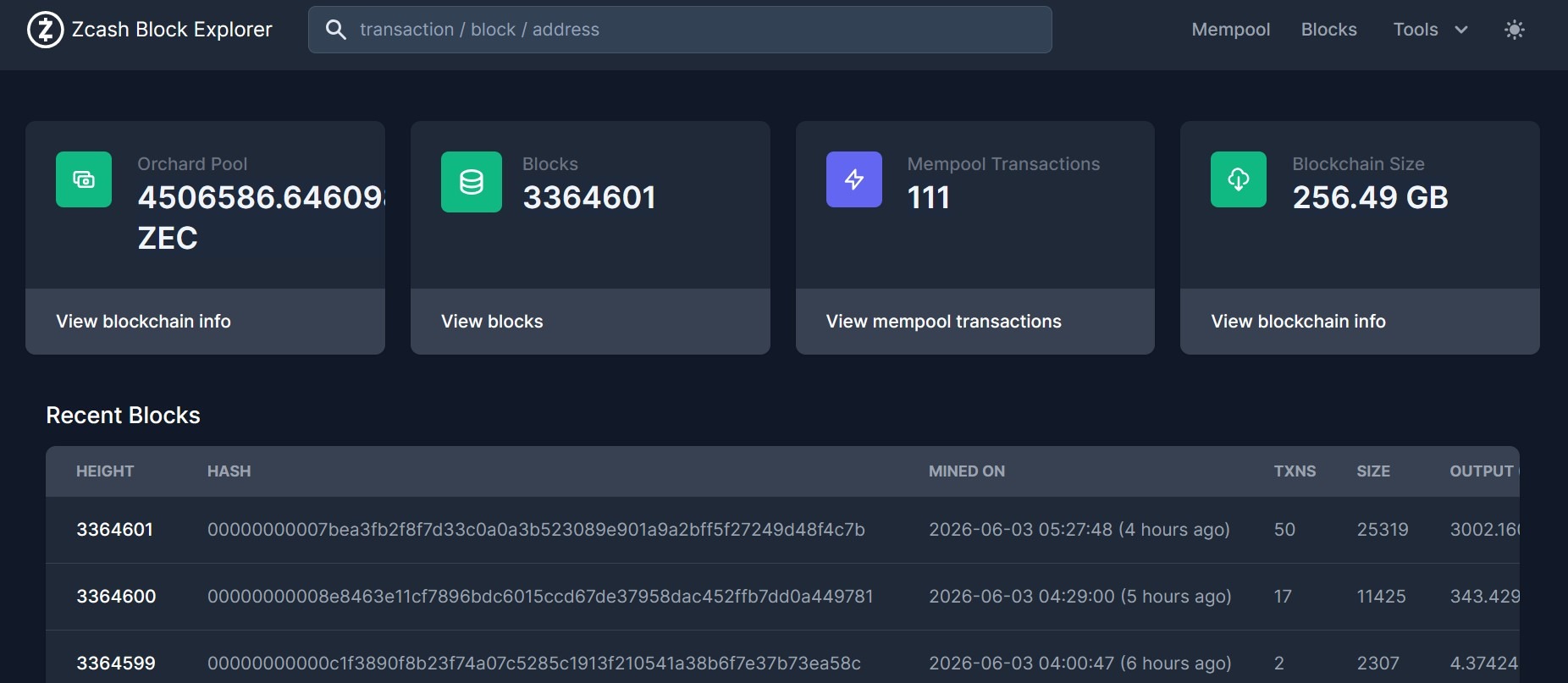
The upgrade also appeared to have caused confusion across parts of the Zcash ecosystem. One Zcash block explorer showed block 3,364,601 as the latest block mined at 5:27 am UTC, while the page listed it as mined about four hours earlier, prompting reports on X that the Zcash network was down.
Zcash Open Development Lab (ZODL)-affiliated contributor Tatyana said the network experienced “a brief period of instability” as miners upgraded and converged on new consensus rules. The post did not directly name the block explorer or wallet issues, but said network stability had been fully restored by about 3:00 am Eastern Time on June 2.
Cointelegraph reached out to the Zcash Foundation for comment but had not received a response by publication.
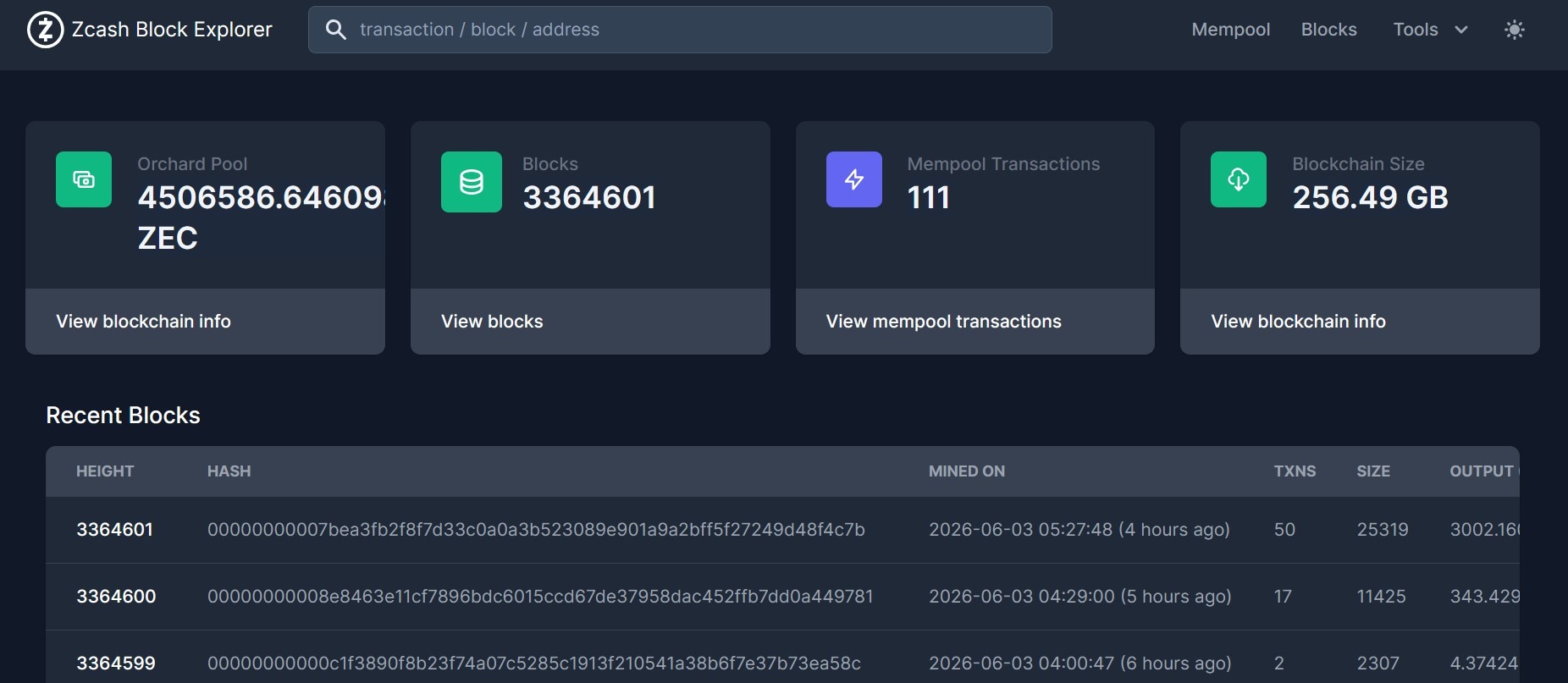
Zcash Block Explorer showing the last mined block four hours ago. Source: Zcash Block Explorer
According to the Zcash Foundation, the vulnerability was discovered on May 29 by independent security researcher Taylor Hornby during an ongoing protocol audit for Shielded Labs. The issue was disclosed to ZODL core engineers, who confirmed it and began preparing remediation options.
Zcash incident sparks confusion among community members
Mert Mumtaz, CEO of Solana infrastructure firm Helius, disputed the reports, saying the network was “not down” and that some explorer apps were connected to a bad node.
Pseudonymous community member Zerodarts echoed the sentiment, saying that “blocks are being mined” and that most block explorers need to update their nodes.
Related: Zcash is ‘running its own bull market’ as ZEC price paints 88% rally setup
However, community member Railgoon said Zcash miners and developers had frozen the Orchard shielded pool to patch a vulnerability before a hard fork. He said the network was therefore “partially intentionally down” at the time, but had since recovered.
Zcash’s ZEC token briefly fell below $600 to $599 after reaching a daily high of $637, according to CoinGecko data. However, it had recovered to $614 at the time of writing.
Magazine: Korea’s first memecoin rug-pull case, China’s crypto rules review: Asia Express
Pi Network just hit a significant technical milestone, but it has not helped the price of $PI at all.
Pi Network officially began rolling out its Protocol 24 upgrade on June 3, designed to enhance core network performance, improve node synchronization, and strengthen overall system stability.
What Protocol 24 Actually Does For Pi Network
The Pi Network upgrade has been one of Pi’s most technically complex updates so far, involving multiple subsystem improvements, internal data reprocessing, and major infrastructure upgrades.
It also includes a move from Ubuntu 20 to 24 and PostgreSQL 12 to 16. All mainnet nodes were required to complete the upgrade by June 2 or risk being disconnected from the network.
Protocol 24 was first completed and synchronized on Testnet 2 before the mainnet rollout, with the next expected step being the full V24 deployment across the live network.
The upgrade is part of a rapid sequencing through June. Protocol v25.1 follows on June 8 and v26.0 on June 22, with the releases targeting node performance, scalability, and smart contract maturation.
For Pi Network, a protocol that has been building toward smart contract functionality for years, three protocol upgrades in a single month represent a significant acceleration.
The Price Is Not Following the Progress
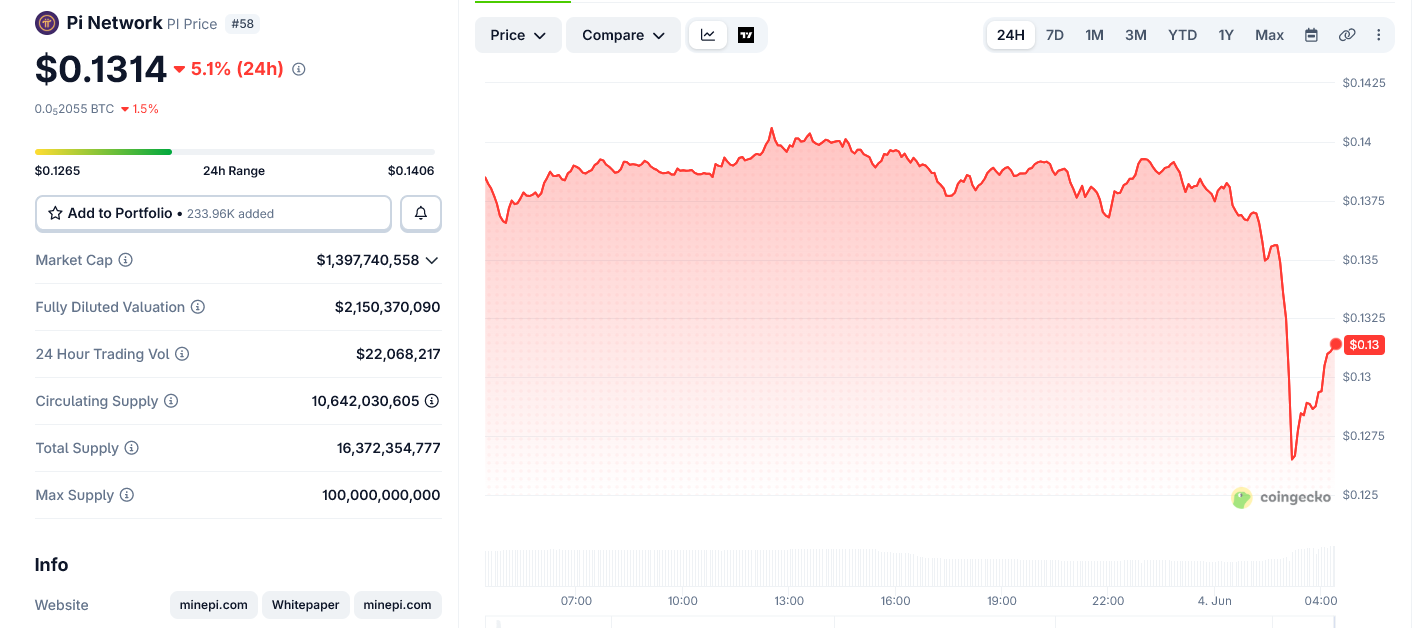
As of June 4, PI trades at $0.127, with a market cap of $1.36 billion. PI has slumped 27% this year, with the token sitting at its lowest level since February 14. It has fallen below all moving averages, a sign that bears remain in control.

The supply pressure is not helping. The Pi network is set to unlock over 174 million tokens worth over $26 million in June alone, adding to ongoing sell pressure in an already thin market.
The Protocol 24 upgrade opens a door for utility-driven demand later in 2026, but in the near term, it unlocks and thins liquidity, favouring continued price pressure.
To read the latest cryptocurrency news from BeInCrypto, click here.
The post Pi Network Activates Protocol 24 as PI Price Hovers Near All-Time Lows appeared first on BeInCrypto.
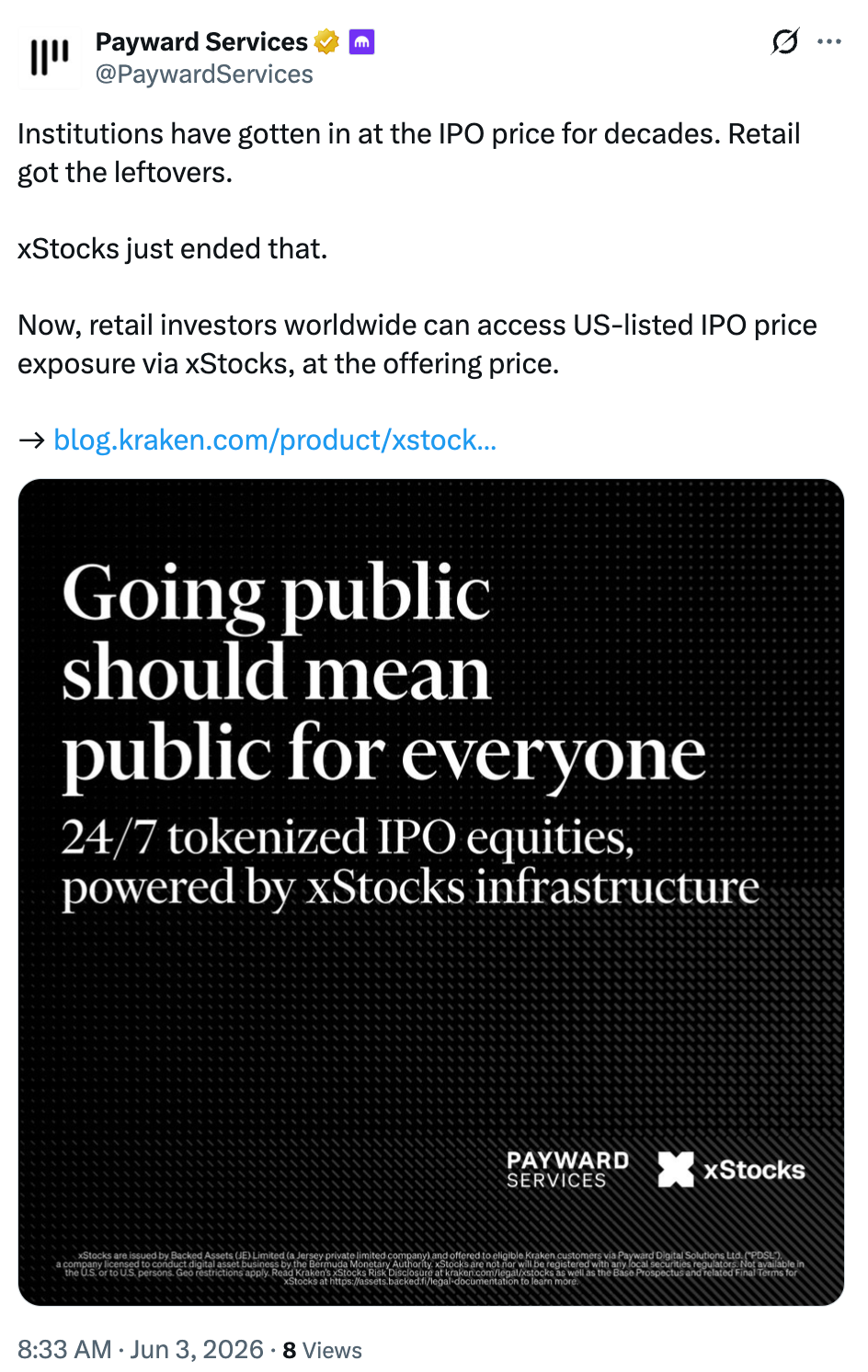
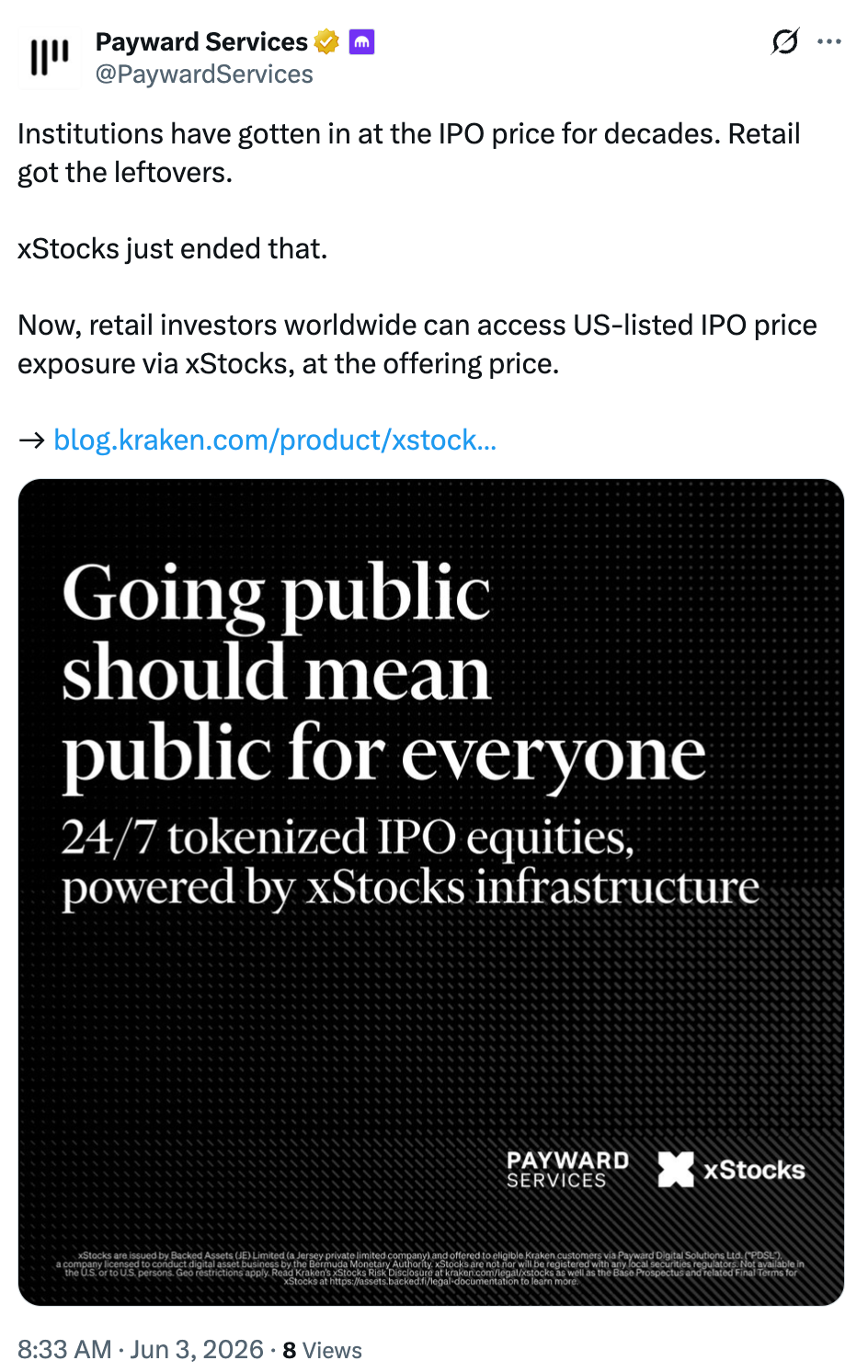
Retail investors will soon be able to participate in US initial public offerings (IPOs) at the offering price through a new tokenized equities program from Payward Services, a Kraken-affiliated company.
In a Wednesday announcement, Payward Services said customers of Kraken and select members of its xStocks Alliance will be able to express interest in US-listed IPOs before companies go public and receive allocations of tokenized shares on listing day.
According to the company, the shares will be issued at the IPO offering price and backed 1:1 by the underlying stock held in custody by a regulated entity, allowing eligible retail investors to access allocations that are typically reserved for institutional clients.
The launch marks one of the latest efforts to use blockchain infrastructure to broaden access to traditional financial products amid a global push for real-world asset (RWA) tokenization.
Bringing IPO allocations onchain
Under the proposed process, participating exchanges will open an indication-of-interest window in the weeks before an IPO, allowing customers to submit non-binding requests to purchase shares within the expected pricing range.
Payward will aggregate demand from participating platforms and work with an underwriting syndicate before allocations are finalized on the company’s public listing day.
Source: Payward Services
The resulting shares will be tokenized and distributed through partner exchanges, enabling investors to receive exposure to newly listed companies without opening accounts with traditional brokerage providers.
First availability expected in coming weeks
The first tokenized IPO offerings are expected to become available to customers of Kraken and other xStocks Alliance members in the coming weeks, with Payward planning to add more launch partners and markets over time.
“Going public should mean public to everyone,” said Mark Greenberg, global head of Payward Services, adding that getting in at the IPO price has been a “privilege of geography and net worth” for decades.
“Now a retail investor in Medellín, Madrid, or Malaysia can have similar access to a US-listed IPO, and Payward Services’ xStocks infrastructure is finally making that possible for the masses,” the executive added.
Related: Binance launches SpaceX-linked perpetual futures ahead of IPO
The announcement comes as interest in tokenized RWAs continues to grow, with Bernstein Research estimating the RWA market has reached $51 billion after expanding 42% this year.
Payward Services said xStocks processed more than $30 billion in transaction volume during its first year, including over $6 billion settled onchain, across more than 125,000 holders globally. Kraken acquired xStocks operator Backed Finance in late 2025.
Magazine: Kraken’s $600M stablecoin firm, Huione scandal deepens: Asia Express

Israel’s voluntary disclosure program for cryptocurrency profits has yet to deliver the revenue uplift anticipated by authorities, even as the policy offers immunity from criminal proceedings for filers who correct their crypto tax reports. The program, launched in August 2025, targets taxpayers with crypto holdings below the equivalent of $522,000 as of December 2024, provided they file accurate reports and settle all taxes by August 31, 2026. However, uptake appears modest relative to projections, with disclosures totaling only about $50 million in crypto capital reported to date, according to a Globes briefing.
Globes’ reporting highlights a widening gap between policy incentives and taxpayer participation. The article notes that the tax authority had anticipated as much as $1 billion in taxes from voluntary disclosures, but current filings suggest a fraction of that potential. Iftach Simhony, a CPA who heads the tax department at the Prof. Bein Law Office, told Globes that the lack of an anonymous track complicates voluntary disclosure in practice. “In the cryptocurrency field, the difficulty of the absence of an anonymous track is even more acute,” he said. “When the risk assessment of some taxpayers is not high, and the procedure itself does not offer certainty or anonymity in the first stage, the incentive to undergo voluntary disclosure is weakened.”
“In the cryptocurrency field, the difficulty of the absence of an anonymous track is even more acute,” said Iftach Simhony, a CPA and head of the tax department at the Prof. Bein Law Office, Globes reported. “When the risk assessment of some taxpayers is not high, and the procedure itself does not offer certainty or anonymity in the first stage, the incentive to undergo voluntary disclosure is weakened.”
The voluntary disclosure framework was announced by the Israel Tax Authority and provides immunity from criminal charges if the reported holdings stay under the threshold and all taxes are paid in full by the deadline. Globes notes that only 58 filers had begun correcting their taxes under this program, indicating a slow pace of engagement amid the policy’s perceived trade-offs between transparency, privacy, and enforcement certainty.
Related context from Israel’s broader crypto policy environment shows continued regulatory interest. For instance, a coverage link discusses how the Israeli crypto industry has pushed for regulatory changes amid strong public support, underscoring ongoing policy evolution as lawmakers weigh how to tax and regulate digital assets.
On the market side, the Bank of Israel’s financial stability report covering January to June 2024 estimated that Israelis held roughly $1 billion in crypto assets, underscoring the potential tax base that could be affected by disclosure policies and future regulatory changes. The figure, cited in the central bank’s report, reflects a sizable household exposure to crypto that regulators are seeking to monitor and regulate as part of broader financial stability considerations.
Key takeaways
- The Israeli voluntary disclosure program offers criminal-immunity incentives for crypto tax corrections, subject to holding thresholds and timely full tax settlement.
- Uptake to date appears modest relative to projections, with disclosures totaling about $50 million in crypto capital and only 58 filers having attempted corrections.
- Experts caution that the absence of anonymity in early stages may blunt participation, even when the policy promises future clarity and enforcement alignment.
- Bank of Israel data indicates a substantial crypto asset base among Israeli households, highlighting potential revenue and policy impact from tax regulatory changes.
- In the United States, proposed de minimis exemptions for crypto transactions signal a contrasting regulatory approach that could influence cross-border compliance and reporting expectations.
Regulatory framing and cross-border considerations
The Israeli case underscores how tax authorities are balancing enforcement with incentives to improve disclosure in the crypto ecosystem. The program’s design—immunity contingent on accurate reporting and timely tax settlement—aims to close gaps in a sector historically characterized by opaque holdings and complex valuation. Yet the early response suggests that the incentive structure may require additional assurances around privacy, data handling, and the perceived certainty of outcomes to overcome taxpayer risk aversion. For tax authorities, this points to a broader challenge: aligning voluntary disclosure with robust AML/KYC standards while preserving taxpayer confidence in the process.
From a compliance perspective, the Israeli example has implications for exchanges, custodians, and other crypto service providers. Firms operating in or with Israeli customers must remain vigilant about evolving reporting obligations, potential KYC augmentation, and the need to support clients who pursue voluntary disclosures through official channels. As the crypto ecosystem grows in scale, regulators may increasingly link tax reporting to on-chain analytics, formal disclosures, and regulatory oversight, reinforcing the importance of rigorous recordkeeping and transparent tax positions for individuals and institutions alike.
On the international stage, the PARITY Act introduced in May by U.S. lawmakers directs the Internal Revenue Service to study establishing a de minimis exemption for digital assets. The proposal would carve out a threshold below which small crypto transactions would not be subject to mandatory reporting. While the aim is to reduce administrative burden and focus limited enforcement resources on material activity, the move also highlights how policy is diverging across jurisdictions. The legislation, noted by Cointelegraph in coverage of the PARITY Act, reflects ongoing debates about how to classify, tax, and report crypto activity in a way that preserves tax integrity while avoiding undue compliance friction for ordinary or incidental transactions.
These developments sit against a broader policy backdrop that includes regulatory oversight and licensing considerations for crypto firms, as well as ongoing dialogue about stablecoins, banking interfaces, and cross-border tax cooperation. For institutional traders, banks, and asset managers with international footprints, such divergences in reporting regimes can complicate global tax planning, compliance programs, and risk assessment frameworks. Analysts and compliance teams will need to monitor how jurisdictions balance transparency with privacy, how enforcement priorities shift, and how prospective exemptions could affect tax revenue, enforcement resources, and investor behavior.
Closing perspective
Israel’s voluntary disclosure initiative illustrates the practical challenges of converting policy promises into measurable tax collection, especially in a market where on-chain activity often outpaces conventional reporting channels. The slow uptake, coupled with robust household exposure to crypto assets, points to an ongoing assessment of how best to align incentives, enforcement, and privacy in a rapidly evolving regulatory landscape. As regulators abroad weigh similar questions—whether to carve out exemptions or tighten reporting—watch for further policy calibrations that could redefine compliance norms for crypto firms and institutional investors alike.

Post-Eagles Simpson opens up on leadership

CFTC Scraps No-Deny Clause in Settlements, Signals Enforcement Shift
Member of “Alaskan Bush People” star Matt Brown's rescue team details emotional mission to find him



-

 Tech6 days ago
Waymo dominates autonomous vehicle registrations as Tesla trails behind
-

 News Videos6 days ago
This is BROKEN! INSANE 5x MONEY CAR WASH WEEK! The NEW GTA Online UPDATE Today! (GTA5 New Update)
-
 Tech5 days ago
SpaceX just won a second Golden Dome contract. This one is $4.16 billion.
-

 Business2 days ago
Jade Biosciences, Inc. (JBIO) Discusses Positive Interim Results From JADE101 Phase I Healthy Volunteer Study and Development Plans Transcript
-

 News Videos5 days ago
SHE IS KILLING XRP!!! WATCH URGENT AND ACT FAST
-
 NewsBeat5 days ago
FIRST NIGHT REVIEW: Take That bring the Circus back to life in spectacular sun-soaked style
-
Crypto World5 days ago
CFTC Has Approved the First Regulated Bitcoin Perpetual Contract in the U.S.
-

 Business5 days ago
Is the Spurs Phenom Already Better Than Prime Diesel?
-

 Politics5 days ago
The House | Inside Andy Burnham’s Makerfield Campaign: “Nobody Thinks This Is In The Bag”
-
 NewsBeat5 days ago
Novak Djokovic v Joao Fonseca LIVE: French Open latest scores and results after Jannik Sinner’s shocking collapse
-
 Entertainment5 days ago
Weak ‘Supergirl’ Box Office Tracking Amid Milly Alcock Backlash
-
 Crypto World5 days ago
Snowflake (SNOW) Stock Rallies on Strong Q1 Results and AI Product Growth
-

 Business5 days ago
Demand Conditions Improve In Chemicals Sector In April 2026
-
 Crypto World5 days ago
MicroStrategy Moves $30 Million in BTC to Coinbase Prime: Is the Bitcoin Sell-Off Already Here?
-

 Entertainment6 days ago
Maddox Jolie-Pitt Legally Requests to Drop Brad’s Surname
-

 Tech6 days ago
This Week In Security: Ubiquiti Fixes, And FreeBSD Joins The Club You Don’t Want To Join
-
 Entertainment5 days ago
One of the Greatest Sitcoms of All Time Shoots Up Apple TV’s Charts 11 Years Later
-
 Crypto World2 days ago
Seagate (STX) Stock Surges to Record High on AI Boom and Legal Settlement
-
 NewsBeat5 days ago
Everything you need to know as Cambridge’s Strawberry Fair returns after cancelled year
-
 Entertainment5 days ago
Britney Spears Shares Troubling Update After Hard Year
You must be logged in to post a comment Login