
Crypto World
Ripple (XRP) Whales Are Pulling Millions Off Binance: The $2 Level Is Back in Focus

XRP briefly surged past $1.7 before stabilizing near $1.4. While the token appears to have hit a wall after a massive rally, whale withdrawals from Binance have surged to their highest level in six months.
According to the latest findings by CryptoQuant analyst Darkfost, more than 231 million XRP have moved off the exchange by large holders.
Whale Accumulation
The withdrawals totaled more than $335 million in a single day, far above the 90-day average of roughly $40 million. Darkfost described the move as both sudden and powerful compared with the recent trend, while pointing to a significant change in behavior among large XRP holders.
The surge in whale outflows comes as the crypto asset’s market capitalization increased by $25 billion over the past week, during which the token gained more than 40%.
According to the analyst, this trend has potentially helped fuel XRP’s strong market performance and renewed attention. If this accumulation trend continues, Darkfost said the asset could potentially test the $2 level within a relatively short period.
This week, Ali Martinez flagged a major jump in XRP network activity, after active addresses rose to 356,070 from 47,180. That represents a surge of well over 654%, a level of activity that typically suggests increased participation and can coincide with sharper price swings.
Trouble Ahead?
But the derivatives market showed short-term pressure for XRP after the token cleared liquidity around resistance and moved back toward a major support zone. Long liquidations were recorded at approximately $4.66 million, a 31.82% daily increase, while short liquidations stood near $1.13 million after rising 61.61%.
Despite the stronger percentage increase in short liquidations, the total volume of long liquidations is nearly four times larger. This indicates that the pullback following the recent rally forced a significant number of leveraged long positions out of the market, meaning that the sell-off was driven by both spot selling and the liquidation of leveraged positions.
While this confirms the current bearish pressure, the clearing of leveraged positions could eventually provide room for a healthier rebound, CryptoQuant explained.
Meanwhile, XRP’s Money Flow Index (MFI) has fallen to 35.89 from around 60, which points to a significant weakening in the buying pressure that supported the earlier price move. However, the MFI remains above 20, which means that the crypto asset has not yet entered technically oversold territory and could still face further downside.
The post Ripple (XRP) Whales Are Pulling Millions Off Binance: The $2 Level Is Back in Focus appeared first on CryptoPotato.

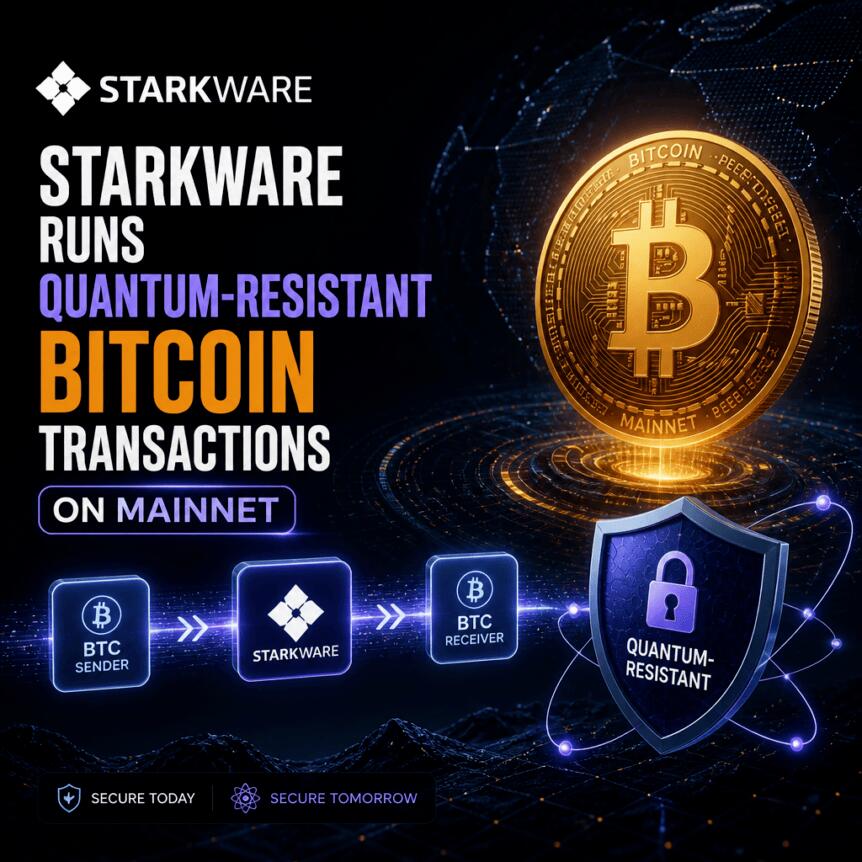
StarkWare researcher Avihu Levy says he has successfully completed what the company describes as the first quantum-resistant Bitcoin transaction on the mainnet—an onchain test of Levy’s Quantum Safe Bitcoin (QSB) approach.
According to StarkWare, the transaction was confirmed Wednesday in Bitcoin block 964,199, and onchain data indicates it spent a 10,000-satoshi output protected using QSB. Block propagation for the test relied on MARA Pool’s Slipstream service, reflecting that the experiment did not follow Bitcoin Core’s default transaction relay rules.
Key takeaways
- First mainnet demonstration: StarkWare reports QSB was confirmed in Bitcoin block 964,199, moving Levy’s April proposal from concept to live spending.
- No consensus upgrade required: StarkWare says the test was compatible with Bitcoin’s existing consensus rules, without changing the protocol.
- Higher compute costs: StarkWare estimates the transaction required “low hundreds of dollars,” with computation taking hours.
- Relay constraints: QSB transactions are treated as nonstandard under Bitcoin Core default policies, so they required direct submission via Slipstream rather than normal peer-to-peer propagation.
- Stops short of a network-wide fix: QSB hardens individual spending, while broader protocol proposals (including BIP-360) aim to reduce quantum exposure more systematically.
QSB reaches mainnet: hash-based signatures plus transaction-bound authorization
Levy’s QSB combines two ideas intended to counter scenarios where quantum computers undermine Bitcoin’s elliptic-curve cryptography. In StarkWare’s description of the scheme, QSB uses hash-based one-time signatures and pairs authorization to a specific transaction through computational searches.
The goal is to prevent forgery even if a quantum computer eventually breaks the cryptographic primitives underpinning Bitcoin’s typical key-path spending. Rather than replacing Bitcoin’s cryptography across the network, QSB is designed as a construction for individual transactions—effectively a “last-resort” safety net that can be used when quantum risk becomes more urgent.
StarkWare points to Levy’s published paper and code repository as the technical basis for the method, with the repository detailing how transaction-specific authorization is bound into the spending conditions.
What changed vs. earlier proposals—and what remains theoretical
The QSB test is best understood against earlier academic and research milestones. In March, researchers at Google estimated that a sufficiently capable quantum computer could theoretically derive a Bitcoin private key within minutes after an attacker learns the corresponding public key from a pending transaction, potentially enabling key replacement during the confirmation window.
In April, Levy introduced QSB in response to that kind of threat model, describing the approach as costly and intended for rare use rather than routine replacement of existing defenses.
StarkWare’s Wednesday mainnet confirmation therefore marks an important shift: it demonstrates that a quantum-resistant spending construction can be executed under Bitcoin’s current consensus rules, at least in this controlled experiment. That matters for investors and builders because it suggests a path for incremental, transaction-level hardening while longer-term protocol changes are debated and implemented.
Cost, computation time, and the reality of running it on Bitcoin
While the concept is aimed at quantum resistance, the test also highlights the practical trade-off: compute intensity. StarkWare previously estimated that generating a QSB transaction would require between $75 and $150 in GPU computation, framing it as a fallback option rather than a universal tool.
For the confirmed mainnet run, StarkWare’s spokesperson Nathan Jeffay told Cointelegraph that the total cost landed in the “low hundreds of dollars,” estimating around $150 to $200. StarkWare’s release also said the process took hours of computation.
That pricing and time profile is critical context for market participants: even if QSB can be made to work without a protocol update, its cost structure will likely limit how often it can be used in practice until either hardware efficiency improves or alternative constructions reduce compute requirements.
Why it required a special submission path: nonstandard relay policies
Beyond cost, StarkWare’s testing approach underscores another bottleneck: Bitcoin nodes may not relay QSB transactions in the same way they handle standard transfers.
Levy’s repository classifies QSB transactions as nonstandard under Bitcoin Core’s default relay policies. StarkWare says this means ordinary nodes would not propagate the transaction before confirmation, so the test needed to be submitted directly through MARA’s Slipstream service.
In practical terms, that implies a two-stage readiness problem. Even if the spending is valid under consensus rules, the transaction’s ability to spread through the network—at least by default—can affect timing, reliability, and user experience. Observing whether QSB can become easier to submit, relay, or include under broader conditions will likely be one of the next milestones builders watch.
QSB as a bridge while protocol-level protection advances
StarkWare’s leadership also positions QSB as incomplete by design. The method applies to individual transactions rather than upgrading cryptography throughout the Bitcoin network. StarkWare CEO Eli Ben-Sasson said, “A soft fork should happen, and I believe it will,” framing QSB as a safety net while protocol-level protections are developed.
That broader effort is already reflected in public proposals discussed in the Bitcoin ecosystem. One example mentioned by StarkWare is BIP-360, a proposed soft fork that would introduce a Pay-to-Merkle-Root output type while removing Taproot’s quantum-vulnerable key-path spend.
The tension here is straightforward: QSB can demonstrate feasibility today, but protocol changes aim to make quantum-resistant spending practical at scale—potentially without requiring specialized submission routes or heavy computation per transaction.
For traders and long-term holders, this also changes how to think about “quantum readiness.” Instead of a single all-or-nothing moment, the landscape appears to be moving toward layered defenses: transaction-level constructions that prove the mechanics, paired with eventual consensus changes that reduce exposure and simplify use.
Going forward, the key question is whether QSB tests like this can be repeated reliably across different infrastructure and whether future improvements—or soft fork proposals such as BIP-360—make quantum-resistant spending cheaper, easier to relay, and more broadly usable without specialized services.
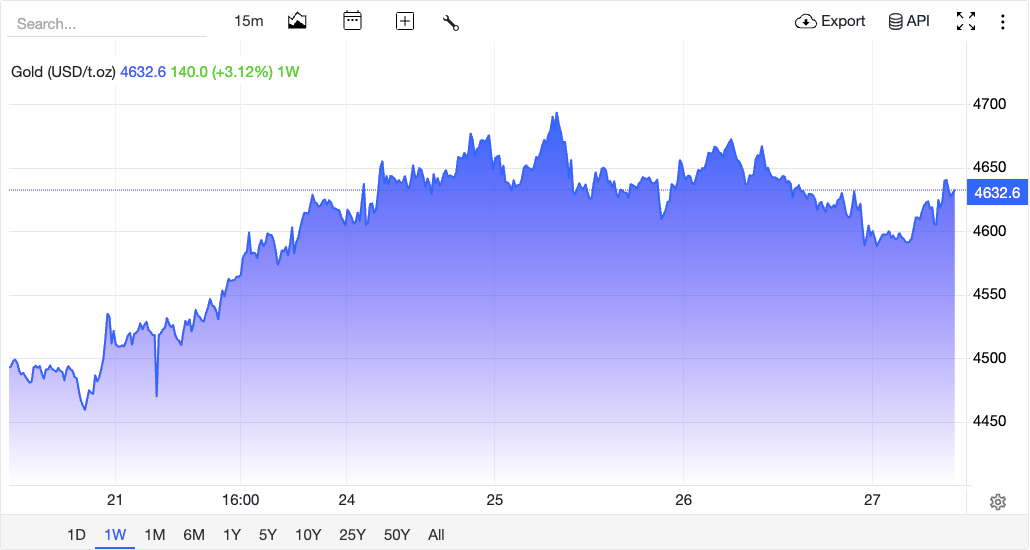
The gold price consolidated above $4,600 an ounce, rising as much as 0.7% and recovering part of Wednesday’s pullback. Investors are weighing the Federal Reserve’s inflation stance ahead of the Jackson Hole symposium this week.
Bullion snapped a five-day winning streak on Wednesday. However, a report showing inflation above the Fed’s target raised rate-hike odds, lifting the dollar and bond yields.
Debasement Trade Drives August Gold Price Rally
Gold is still up roughly 14% this month despite the one-day setback. The US Treasury made an unexpected bond market intervention last week.

That move revived interest in the “debasement trade.” Investors buy hard assets to hedge against expanding deficits and a weaker dollar.
The same trade powered bullion’s record-breaking rally in 2025. It is now driving gold’s best month since 1999.
Gold’s rebound has also pushed it above its 200-day moving average, a signal of shifting momentum that traders watch closely.
Meanwhile, bullion-backed exchange-traded funds tracked by Bloomberg added more than 28 tonnes last week, the most since January. That followed a summer when ETF inflows rebounded from a two-month outflow streak.
Warsh’s Jackson Hole Debut Looms
The Jackson Hole symposium is the Kansas City Fed’s annual gathering of central bankers. Historically, it has been a venue for major policy pivots, including the Fed’s hawkish shift in 2022.
Traders are looking for clues to the Fed’s inflation approach when Chairman Kevin Warsh delivers his first major speech as Fed chairman on Friday. The address gives Warsh a chance to counter criticism that he has been guarded about his economic views.
A hawkish tone from Warsh could lift real yields and the dollar, pressuring gold’s price outlook. In contrast, a dovish signal could extend the rally toward fresh multi-month highs.
The post Gold Price Holds Above $4,600 Ahead of Warsh's Jackson Hole Speech appeared first on BeInCrypto.


The Justice Department and FBI have seized the domains behind QScan and QTRouter, two platforms run by China state-sponsored hackers whose victims include NASA, the Federal Reserve, and the US Senate.
Court documents identify the operators as a group called QTFY, employed by Nanjing Xinjiuwei Network Technology Company.
Court Filings Point to a Chinese Contractor
According to the documents, QTFY sold hacking services to paying clients. Those clients include China’s Ministry of State Security and the People’s Liberation Army. Both sit at the center of Beijing’s intelligence and military structure.
The press release listed several federal entities among the group’s victims. This includes NASA, the Federal Reserve, the Department of Energy, the Department of Justice, the Department of Health and Human Services, the National Institutes of Health, and the Senate.
Follow us on X to get the latest news as it happens
How QScan and QTRouter Worked Together
QScan swept the internet for Internet of Things (IoT) devices and automatically infected thousands of them. Each compromised device then joined the QTRouter network.
QTRouter pooled those devices with commercial proxy services and leased virtual private servers. The result was an obfuscation network that made Chinese intrusions appear to start outside the country.
Investigators found the seized domains hard-coded into both tools for communication and authentication. Removing them left QScan and QTRouter inoperable.
“Federal law enforcement investigated and disabled the PRC’s malicious software, the latest in a series of technical operations to dismantle indiscriminate hacking activities sponsored by the People’s Republic of China,” Attorney General Todd Blanche said.
The operation extends a run of US takedowns. The FBI removed PlugX malware from more than 4,000 American computers in 2025, disabled the Flax Typhoon botnet in 2024, and disrupted the Volt Typhoon infrastructure in 2023.
Meanwhile, the tempo of these intrusions keeps climbing. Chinese state-linked groups have doubled their attack volume since handing routine work to artificial intelligence (AI) models, Taiwanese threat intelligence firm TeamT5 reported this week.
The case sits with prosecutors in the Southern District of California. Whether indictments follow the seizures will show how far the department wants to push past infrastructure takedowns.
Subscribe to our YouTube channel to watch leaders and journalists provide expert insights
The post FBI and DOJ Disrupt Chinese Cyber Group That Hit Fed, NASA, US Senate appeared first on BeInCrypto.
Solana validators and delegators are voting on two economic proposals that could accelerate SOL disinflation and sharply increase transaction-fee burns.
Summary
- SIMD-0550 would double Solana’s annual disinflation rate while preserving the network’s 1.5% terminal floor unchanged.
- The proposal projects 18.9 million fewer SOL issued across six years after eventual technical activation.
- SIMD-0553 would burn resource fees, potentially increasing daily destruction toward 7,500–9,000 SOL at present activity.
- Nominal staking yield could decline toward 2.25% by year three under 21Shares’ modeled network assumptions.
- Governance approval would establish direction, but neither economic change becomes active immediately following the vote.
The formal votes cover SGP-0002 and SGP-0003, which correspond to technical proposals SIMD-0550 and SIMD-0553. Voting runs through epoch 1023, expected to end around 15:30 UTC on Aug. 27, although epoch timing can shift.
Solana disinflation could reach its floor by 2029
SIMD-0550 would double Solana’s annual disinflation rate from 15% to 30%. The proposal would not immediately halve the current inflation rate.
Instead, it would accelerate the annual decline toward Solana’s existing 1.5% terminal rate. The proposal estimates the network would reach that floor in approximately 2.8 years, during the first half of 2029, rather than around 2032.
Its authors project that Solana would issue approximately 18.9 million fewer SOL over six years than under the current schedule. Based on the SOL price used by 21Shares, the difference would be worth approximately $1.4 billion to $1.5 billion.
The dollar estimate is not a guaranteed reduction in value. It changes with SOL’s price, activation timing and the final implementation schedule.
SIMD-0550 remains under review in Solana’s improvement-document repository. Even a successful SGP-0002 vote would provide a governance mandate rather than immediately activate the new inflation curve.
Lower issuance would reduce staking rewards
21Shares estimates that nominal staking yield could fall from around 5.25% to 4.34% in the first year, 3% in the second and 2.25% in the third under the faster schedule.
Those estimates include more than protocol inflation. Validator and delegator returns can also include transaction fees, priority tips and maximal extractable value. Changes in network usage could therefore cause actual yields to differ from the projection.
The lower reward path has divided institutional participants. Solana Company, a Nasdaq-listed SOL treasury operator, voted against both economic proposals, arguing that changing core parameters could make institutional revenue and cost forecasting harder.
As crypto.news reported, staking produced nearly all Solana Company’s quarterly revenue. The company earned $2.512 million from staking during the second quarter, making lower issuance directly relevant to its business.
SIMD-0553 could increase daily SOL burns
SIMD-0553 would replace the existing 5,000-lamport per-signature base fee with two components. A 2,500-lamport inclusion fee would go to the block leader, while a resource fee would be burned completely.
The resource fee would depend on the computing capacity and account data requested by each transaction. Its rate would increase through three feature gates before reaching one-half lamport per requested cost unit.
Temporal, which submitted the design, estimates that the terminal rate could increase daily burns from about 648 SOL to between 7,500 and 9,000 SOL at current activity. That would represent a roughly twelvefold to fourteenfold increase.
The burn estimate assumes current transaction activity continues and the final fee rate becomes active. Actual burns may be lower or higher.
The technical document was merged into the repository on July 20 after review by Anza and Firedancer teams. However, merging the document did not activate the fee system. Implementation is expected in version 4.3, followed by testing and staged feature activation.
Solana vote will not immediately change supply
The proposals need participation from at least one-third of network stake and support from two-thirds of participating stake, excluding abstentions, under the proposed governance rules.
As previously reported, Solana’s earlier 80% inflation-reduction proposal failed despite receiving 61.39% support. It fell below the required 66.67% threshold.
Approval of SGP-0002 and SGP-0003 would authorize continued technical work. Developers would still need to finish code, testing, validator coordination and feature-gate scheduling.
Final vote totals will show whether Solana supports both changes, only one proposal or neither. The eventual supply effect will depend on activation dates, SOL prices, validator economics and future network demand.


StarkWare researcher Avihu Levy has tested an experimental quantum-resistant transaction on the Bitcoin mainnet, in what the company described as the first transaction of its kind.
According to StarkWare, the transaction was confirmed Wednesday in Bitcoin block 964,199. Onchain data shows that it spent a 10,000-satoshi output protected by Levy’s Quantum Safe Bitcoin (QSB) scheme, with MARA Pool mining the block after receiving the transaction through its Slipstream service.
Levy’s paper and code repository said QSB combines hash-based one-time signatures with computational searches that bind an authorization to a specific transaction. The construction is intended to prevent forgery even if a quantum computer breaks the elliptic-curve cryptography Bitcoin uses.
The test moves Levy’s April proposal from theory to an onchain demonstration, showing that Bitcoin’s existing consensus rules can accommodate one form of quantum-resistant spending without a protocol change.
Quantum-resistant Bitcoin method remains costly
In March, Google researchers estimated that a sufficiently capable quantum computer could theoretically derive a Bitcoin private key nine to 12 minutes after its public key becomes visible. Google said that could allow an attacker to replace a pending transaction during Bitcoin’s confirmation window.
Levy then introduced QSB in April, estimating at the time that generating a transaction would require between $75 and $150 in GPU computation. He described it as a last-resort measure rather than a replacement for protocol-level protections.
StarkWare spokesperson Nathan Jeffay told Cointelegraph that the completed transaction cost “low hundreds of dollars,” estimating the expense at around $150 to $200. StarkWare’s release said the process took hours of computation.
Related: Banks, regulators join quantum-resistant crypto transfer pilot
Levy’s repository also classifies QSB transactions as nonstandard under Bitcoin Core’s default relay policies. StarkWare said ordinary nodes therefore would not propagate the transaction before confirmation, requiring it to be submitted directly through MARA’s Slipstream service.
QSB applies to individual Bitcoin transactions rather than upgrading cryptography across the network. “A soft fork should happen, and I believe it will,” StarkWare CEO Eli Ben-Sasson said, adding that QSB provides a safety net while protocol-level protections are developed.
Bitcoin developers are separately considering proposals including BIP-360, a proposed soft fork that would introduce a Pay-to-Merkle-Root output type while removing Taproot’s quantum-vulnerable key-path spend.
Magazine: Supply absorption ‘key question’ as Bitcoin fails to reclaim $80K: Analysis
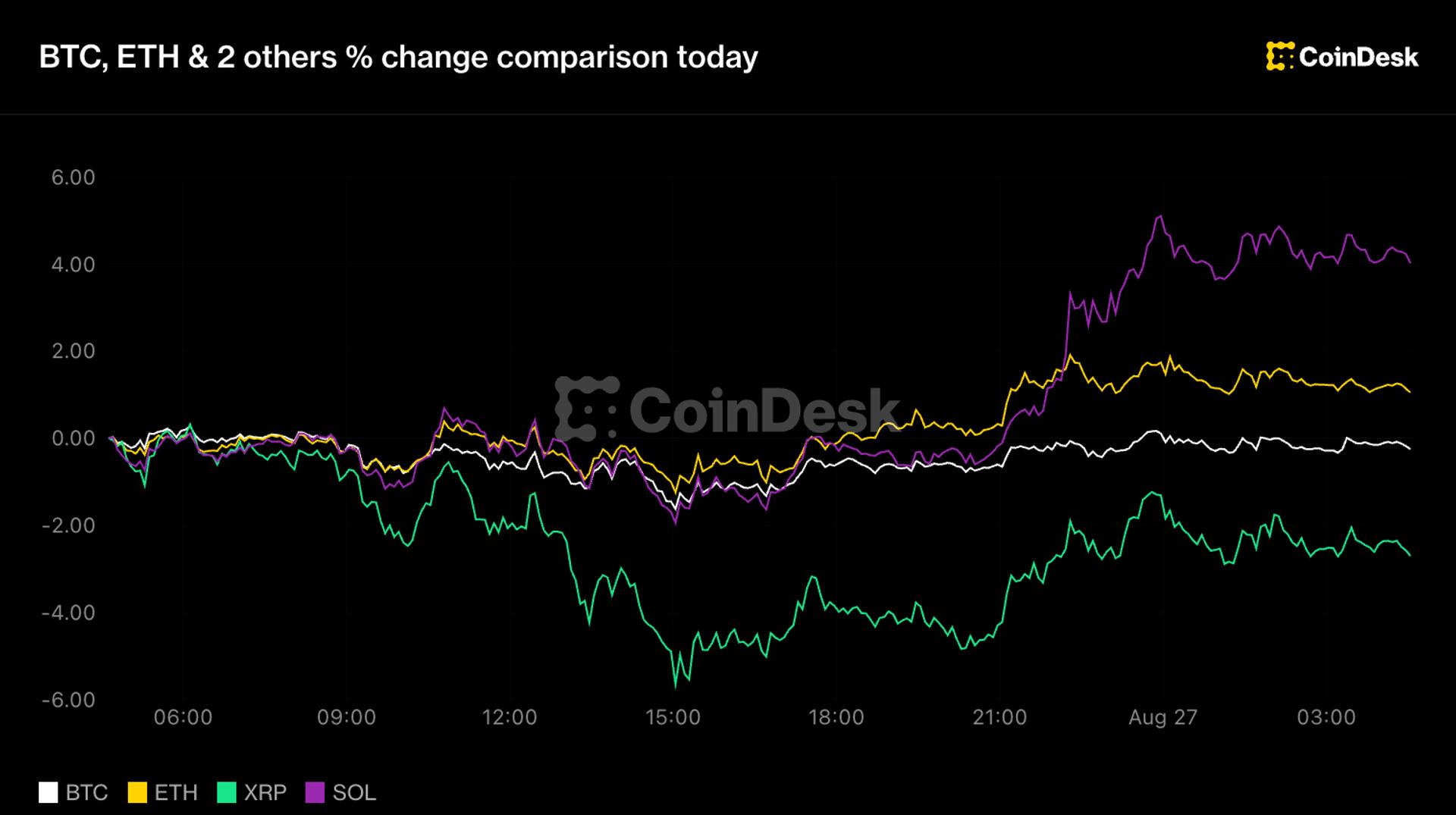
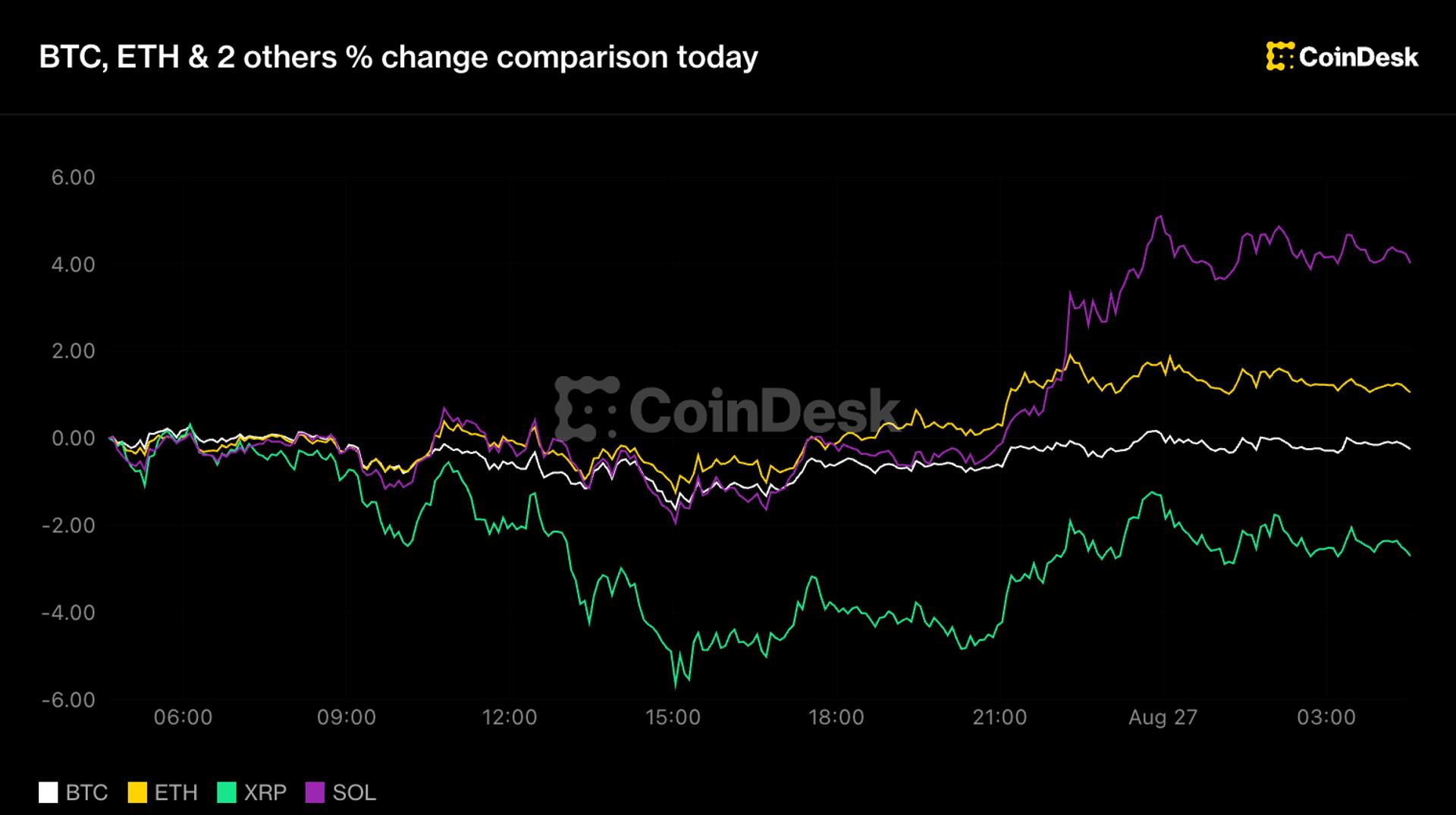
Every major token except solana and BNB is flat or lower over 24 hours, with bitcoin holding a 14% weekly gain and XRP 28%.
South Korean cryptocurrency exchange Upbit announced on Aug. 26 that it will add PolySwarm’s NCT token to its Korean won market.
Summary
- Upbit will open NCT/KRW trading at 9:00 p.m. KST on August 26, barring liquidity delays.
- NCT rose by over 200% over 24 hours before the scheduled Korean won market opened on Upbit.
- Upbit will waive standard NCT/KRW trading fees for the market’s first 24-hour period after launch.
- Ethereum is the only network Upbit currently supports for NCT deposits and withdrawals on launch.
- PolySwarm uses NCT to reward threat intelligence providers and provide access to security data services.
NCT/KRW trading is scheduled to begin at 9:00 p.m. Korea Standard Time.
The listing gives NCT a direct fiat trading route on South Korea’s largest crypto exchange by reported domestic volume. NCT already trades against Bitcoin on Upbit, with the exchange using that market’s previous closing price to set its initial KRW trading controls.
Upbit will open NCT/KRW with temporary restrictions
Upbit’s official notice listed NCT’s previous BTC market close at 0.00000006 BTC, equivalent to approximately 6.55 won. This figure serves as a reference for early order restrictions rather than a guaranteed opening price.
Buy orders will be blocked for approximately five minutes after trading begins. Sell orders priced 10% or more below the reference price will face the same restriction. Only limit orders will be available during the first two hours.
The exchange warned that the opening “may be postponed” if deposits and withdrawals do not produce sufficient liquidity. At the time of research, Upbit had not announced a delay, and the market remained scheduled to open at 9:00 p.m. KST.
These controls follow the structure used for other recent additions. As crypto.news reported, Upbit also restricted early orders after adding LIT to its Korean won market on Aug. 24.
NCT price jumps before the Upbit listing
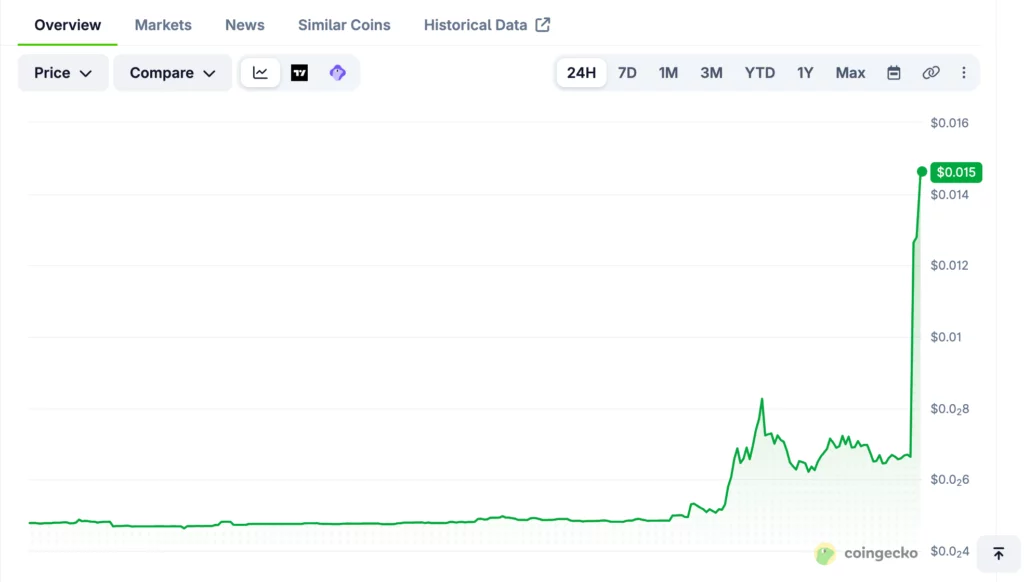
NCT recorded a sharp market response before the Korean won pair opened. The token traded near $0.0146 as of 7:43 p.m. KST, gaining approximately 200% over 24 hours, according to CoinGecko data.
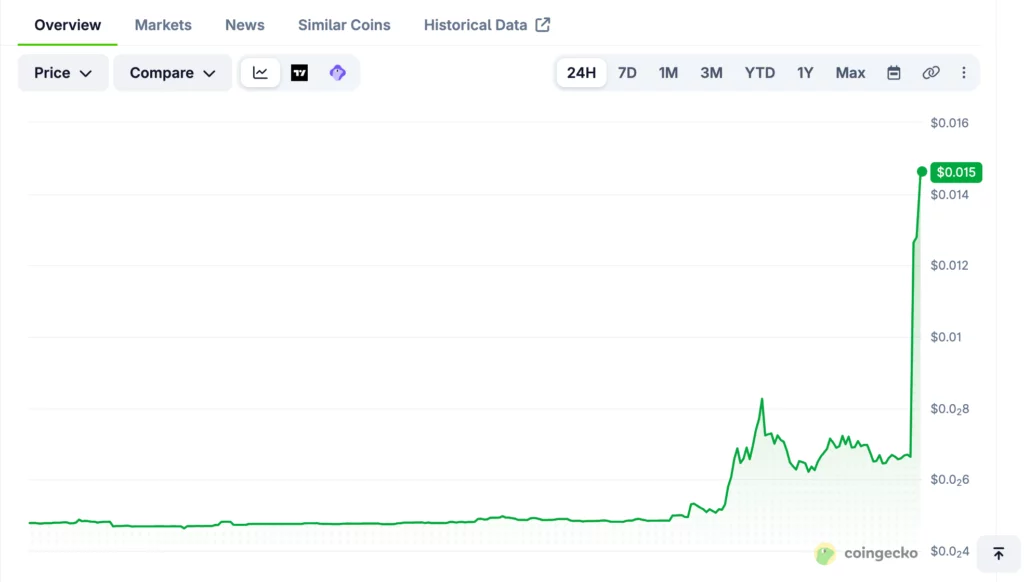
Its 24-hour trading volume reached about $15.36 million, while its market capitalization stood near $24.28 million. NCT traded between approximately $0.004626 and $0.01384 during the period.
The increase occurred after Upbit published its listing announcement, although market data alone cannot prove the exchange decision caused the entire move. NCT was also trading on Bithumb, Coinbase, Gate and smaller venues.
Korean exchange listings have previously coincided with sharp short-term price moves. In related coverage, Upbit’s decision to add three GRVT trading pairs was accompanied by a 23% increase before trading opened.
Upbit will waive NCT/KRW fees for 24 hours
Upbit will reduce its standard NCT/KRW trading fee from 0.05% to 0% during the market’s first 24 hours. The promotion is scheduled to run from 9:00 p.m. on Aug. 26 until 8:59:59 p.m. on Aug. 27.
If Upbit delays the listing, the zero-fee period will instead begin when trading opens. The waiver applies to standard order fees and does not remove the risks associated with rapid price changes or thin liquidity.
NCT deposits and withdrawals will be supported only through Ethereum. Upbit identified the supported contract as 0x9e46a38f5daabe8683e10793b06749eef7d733d1, matching the address shown by Etherscan and major market-data providers.
Transfers through unsupported networks may not be credited automatically. Upbit also requires customers to follow its Travel Rule and personal-wallet ownership verification requirements.
PolySwarm uses NCT in its malware marketplace
PolySwarm describes itself as a decentralized threat-intelligence marketplace. Security engines compete to identify malicious files and receive NCT based on their performance.
Project documentation states that NCT also provides access to threat intelligence generated through the platform. The ERC-20 token has a fixed maximum supply of approximately 1.886 billion NCT, with nearly all tokens reported as circulating.
Attention will now move to the NCT/KRW opening price, early trading volume and whether Upbit extends any restrictions. The zero-fee campaign is scheduled to end on Aug. 27 unless the exchange postpones the market launch.
Disclosure: This article does not represent investment advice. The content and materials featured on this page are for educational purposes only.


Havenex, an Austrian company advised by Sui co-founder Kostas “Kryptos” Chalkias, said on Aug. 26 that its Series A financing round was nearing completion as it pursued regulatory authorization.
Summary
- Havenex says its Series A is nearing completion, although funding size and investors remain undisclosed.
- Havenex is seeking Austrian FMA authorization and cannot provide regulated services before formally receiving approval.
- The platform targets professional institutions offering digital and traditional assets through white-label financial infrastructure services.
- Kostas Chalkias advises Havenex and serves on its supervisory board while remaining with Mysten Labs.
- Havenex proposes continuous solvency proofs, multisignature custody and quantum-resistant keys, but these remain unverified publicly.
Chalkias announced the project through an X post. He described Havenex as infrastructure for financial institutions offering digital and traditional financial assets. The company has not disclosed the round’s size, participating investors, valuation or expected closing date.
Havenex awaits Austrian regulatory authorization
Havenex’s website says the platform is undergoing authorization with Austria’s Financial Market Authority. The company also states that it cannot provide regulated services before receiving approval.
That distinction means Havenex should not yet be described as a licensed exchange. No public authorization number or regulatory approval appears on its website. Chalkias said the company had applied for every required license and some additional permissions, but he did not identify individual license categories.
Havenex AG lists a registered address in Vienna and Austrian company registration number FN 673083d. Its public disclosures identify Gregorios Siourounis as the management board member. Chalkias, Adeniyi Abiodun and Petros Pyloridis sit on the supervisory board.
The company describes its intended customers as professional and institutional clients. Its approval process will determine which services it can provide, the assets it can support and whether it can operate across the European Economic Area.
Series A details remain undisclosed
Chalkias said the Series A allocation was already “quite packed” and invited interested investors to contact him. That statement remains a fundraising update from an adviser rather than confirmation of a completed transaction.
“Series A is underway and closing soon,” Chalkias said.
Havenex has not released supporting documents naming investors or specifying committed capital. It has also not announced a closing deadline. Until the company completes the round, its financing terms remain subject to change.
Chalkias said Havenex originated from his idea but clarified that he would participate as an adviser. He said his main focus would remain Mysten Labs and Sui. His formal position on Havenex’s supervisory board gives him an oversight role, while Siourounis appears responsible for management.
Havenex proposes verifiable institutional custody
Havenex plans to provide white-label infrastructure through which banks and other financial companies could offer crypto and traditional assets. Its proposed services include trading, custody, staking, tokenization, settlement and wallet infrastructure.
The project says it will support verifiable custody, continuous proof of solvency, multisignature controls and hardware-based two-factor authentication. It also plans self-custody and key-recovery protections.
Chalkias called Havenex the “most transparent, safest, institutional-grade, fully regulated exchange possible.”
Those descriptions express the project’s objectives. Havenex has not published an independent security audit, a live proof-of-solvency system, custody addresses or technical documentation demonstrating the planned controls. There is therefore no public on-chain data available to verify the proposed solvency model.
Institutional custody providers are increasingly combining controlled asset storage with blockchain services. As crypto.news reported, HashKey Cloud and BitGo connected institutional staking while keeping customer assets within BitGo’s custody framework.
Sui will form only part of Havenex’s technology
Chalkias said Havenex would use Sui technology where appropriate, but the platform would not operate as a Sui-only exchange. It plans to integrate assets, infrastructure and bridges from multiple blockchain ecosystems.
The promised quantum-resistant key system could connect with Sui’s wider cryptographic work. In related coverage, Sui targeted a 2027 rollout for native quantum-safe account authentication using NIST-approved signature schemes.
However, Havenex has not identified which post-quantum standard it will implement or when the feature will become available. Its use of Sui, bridges and real-world assets also remains under development.
The next verifiable milestones will be an FMA authorization, final Series A disclosures and detailed technical documentation. A launch date has not been announced. Until authorization arrives, Havenex will remain a development-stage infrastructure provider rather than an operating regulated exchange.
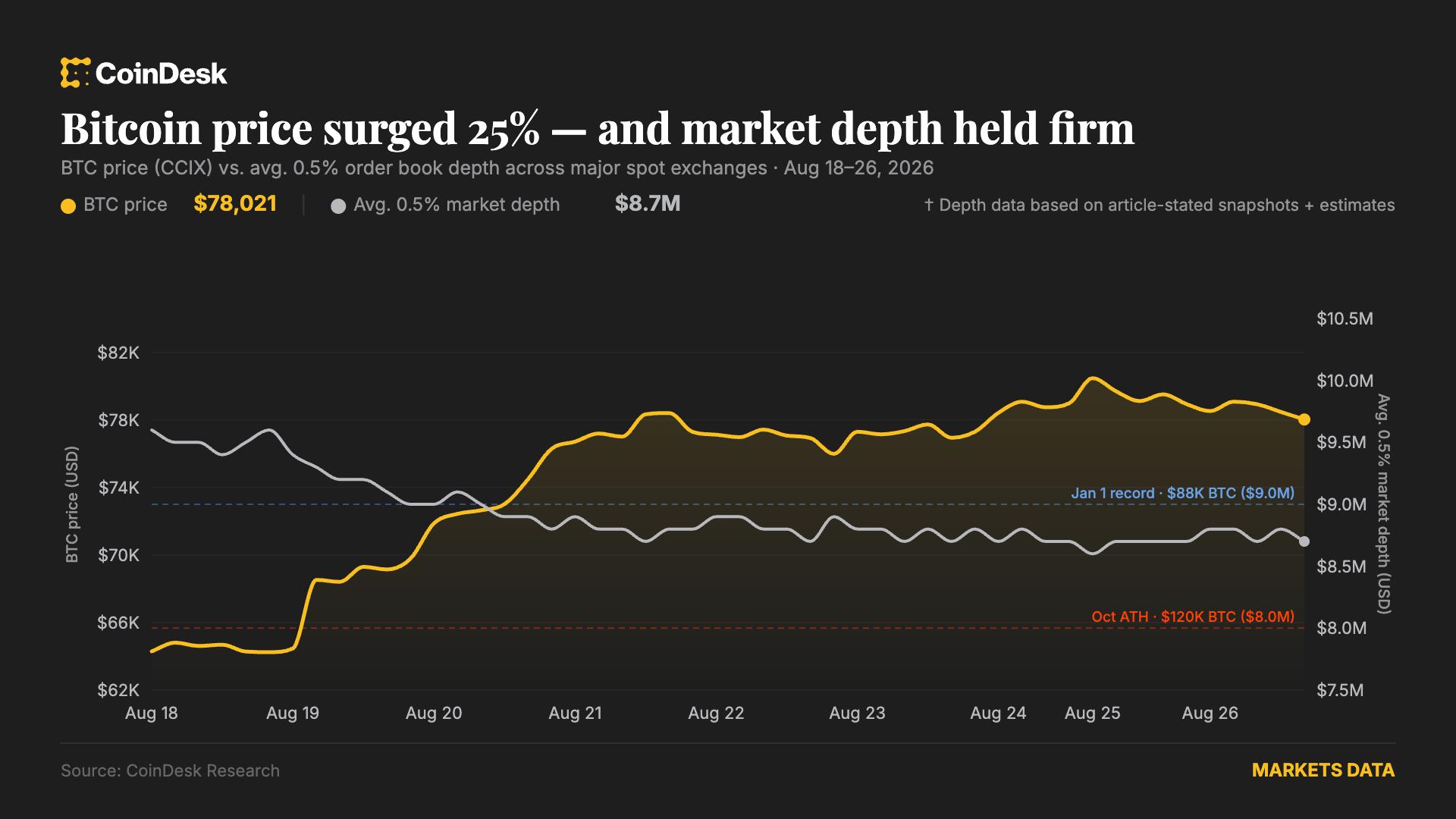
An indicator fundamental to understanding whether capital consistently moved in size to push prices higher is flashing green.
NVIDIA reported fiscal second-quarter 2027 revenue of $96.2 billion on Aug. 26, beating analyst expectations as demand for artificial intelligence infrastructure continued expanding.
Summary
- NVIDIA reported Q2 revenue of $96.2 billion, rising 106% year over year and beating estimates.
- Data Center revenue reached $89.0 billion, increasing 117% as AI infrastructure demand accelerated globally worldwide.
- NVIDIA guided Q3 revenue to $108 billion, excluding Data Center compute sales from China entirely.
- Supply and capacity commitments jumped to $279 billion, primarily reflecting expanded procurement of memory components.
- Vera Rubin entered full production, while NVIDIA returned approximately $26 billion to shareholders during Q2.
Revenue for the quarter ended July 26 increased 18% from the preceding quarter and 106% from one year earlier, according to the company’s official release. Visible Alpha analysts had expected approximately $92.2 billion.
NVIDIA revenue beats estimates as Data Center sales surge
NVIDIA’s Data Center business generated $89 billion, rising 18% quarter over quarter and 117% year over year. The result also surpassed the Visible Alpha estimate of roughly $85.7 billion.
Non-GAAP diluted earnings reached $2.22 per share, compared with analyst expectations near $2.09. GAAP earnings were $2.46 per diluted share, while GAAP net income more than doubled to $59.7 billion.
Both GAAP and non-GAAP gross margins were 75%. NVIDIA returned approximately $26 billion through share repurchases and dividends during the quarter. It retained about $99 billion under its share repurchase authorization.
The results arrive as Bitcoin mining companies increase spending on AI infrastructure. As previously reported, nine public miners spent $5.11 billion on capital assets during the first half of 2026 while recording $341.2 million in AI and high-performance computing revenue.
$108 billion NVIDIA outlook excludes China compute sales
NVIDIA projected fiscal Q3 revenue of $108 billion, plus or minus 2%. That forecast exceeded the approximately $104.2 billion consensus estimate cited before the results.
The company expects both GAAP and non-GAAP gross margins of 74%, plus or minus 50 basis points. Its outlook assumes no Data Center compute revenue from China, reflecting continuing restrictions and uncertainty surrounding sales of advanced AI processors.
NVIDIA shares initially fluctuated following the release as investors considered the lower margin forecast. The stock later rose approximately 4.1% in extended trading after the company’s earnings call.
“Customer forecasts point to NVIDIA’s growth doubling next year,” CFO Colette Kress said, but the company expects approximately 70% growth because available supply may not satisfy all forecast demand.
The 70% figure is management’s fiscal 2028 expectation, not a guaranteed result. Customer forecasts also represent demand indications rather than binding revenue commitments.
Supply commitments rise to $279 billion
NVIDIA’s supply and capacity commitments increased from $119 billion in the preceding quarter to $279 billion as of July 26. Its 10-Q filing attributed the increase mainly to memory and manufacturing capacity required for current and future products.
The commitments include $92 billion due during the remainder of fiscal 2027, $87 billion in fiscal 2028 and $88 billion in fiscal 2029. Some supplier agreements may be canceled, rescheduled or adjusted before firm orders are placed.
The filing also disclosed total future commitments of $366 billion across supply, cloud services, leases, equity investments and capital expenditure. The company had another $29 billion in cloud service agreements and $25 billion in data center leases that had not commenced.
Crypto-linked infrastructure providers are participating in this expansion. In related coverage, IREN signed a $3.4 billion NVIDIA contract covering managed GPU cloud services over five years.
Vera Rubin enters production as capacity expands
The firm said its Vera Rubin platform had entered full production, with systems running at CoreWeave, Google Cloud, Microsoft Azure, Oracle Cloud Infrastructure and Nebius.
Meanwhile, the company also announced partnerships with Apollo, BlackRock, Blackstone, Brookfield, Goldman Sachs and KKR intended to mobilize more than $500 billion for AI infrastructure. The initiative remains subject to definitive agreements and therefore does not represent secured funding.
The company’s next financial test will be converting its expanded supply commitments into delivered systems while protecting margins from higher memory and manufacturing costs. Investors will also watch whether the company can meet its $108 billion Q3 forecast without Data Center compute revenue from China.

Miley Cyrus Mourns Dolly Parton’s Death, More Top Us Stories

Photos show Yayoi Kusama and artwork featuring her signature polka dots

CEO, yacht club clash over speeding claim

Weekend Open Thread – Corporette.com

Weekend Open Thread: Brooks Brothers

London Mayor Sadiq Khan handed a peerage by Keir Starmer alongside 15 other Labour figures… just days before the PM leaves No10

FINANZIELLE KATASTROPHE! Der KREML VERLIERT MILLIARDEN im FLAMMEN-INFERNO

Crypto Live Trading| 19 AUG #vinbullindia #livetrading #vinbulllive #live #trading #cryptotrading

Financial Pressures and Child’s Innocence Spark Viral Social Media Moment #shorts
-

 Fashion5 days ago
Weekend Open Thread: Madewell – Corporette.com
-

 Crypto World1 day ago
SpaceX stock could rise 75% to $240, JPMorgan says
-

 Business5 days ago
Musk’s Tesla, SpaceX Confirm $16.8 Billion ‘Terafab’ Chip Plant as World’s Largest Building in Texas
-

 Crypto World5 days ago
anatomy of crypto’s biggest liquidation event since 2021
-

 Crypto World2 days ago
A $30 Billion AI Fund Implodes, Now the SEC Is Investigating Wall Street’s Role
-

 Politics5 days ago
6 months on, Irish renters crushed by effects of government housing bill
-

 Crypto World1 day ago
Did Trump Just Move SpaceX Stock With One Truth Social Post?
-
 NewsBeat5 days ago
The ‘Lucky Dip Gang’ causing carnage for clicks: After five thugs were killed speeding in the wrong direction on a motorway, GUY ADAMS investigates a sick new trend… and why police aren’t even allowed to pursue them
-

 Business4 days ago
Mystery AI Model ‘Ox Alpha’ Draws Developers With Free Access as Chinese Lab Origins Remain Debated
-

 Business2 days ago
Moderna CEO warns China is pouring state money into mRNA technology
-

 Business6 days ago
Five Below: Kids Discount Retailer Reaps Rich Rewards
-

 Business2 days ago
NVIDIA Stock Drops Nearly 2 Percent to $210 on Seventh Losing Day Ahead of Critical AI Earnings
-

 Business6 days ago
UK firms in critical financial distress rise 9% to 53,756
-
 Crypto World5 days ago
Nvidia Stock Suffers Longest Losing Streak Since 2022: Will Q2 Earnings End It?
-

 Sports4 days ago
Deshaun Watson fires back at Browns fans after being booed: ‘It’s a disrespectful thing’
-

 Crypto World7 days ago
Optimism-funded team's deciding vote shifts $49 million in OP tokens away from users
-
 Crypto World4 days ago
Google Gemini AI Predicts Ethereum Could Become the Trade Retail Misses in 2026
-

 Tech5 days ago
Unitree’s New Superman Robot Claims to Outjump and Outrun Every Human, Usain Bolt Included
-
 Business7 days ago
PayPal and Venmo now accepted for tuition at several universities
-

 Tech5 days ago
Faster chip in a familiar form factor
You must be logged in to post a comment Login