
Crypto World
Saba Capital tender offers for shares are below initial expectations

Blue Owl signage outside the Seagram Building at 375 Park Avenue in New York, US, on Thursday, March 12, 2026.
Michael Nagle | Bloomberg | Getty Images
Saba Capital Management said that the tender offers for shares in non-traded business development companies managed by Blue Owl Capital and Starwood Capital came in “below initial expectations.”
In early March, the hedge fund Saba offered liquidity to locked-up investors in Blue Owl Capital Corporation II (OBDC II), a non-traded private-credit fund, at a 35% discount. It launched a similar program at Starwood Real Estate Income Trust (SREIT) at a 24% or 29% discount, depending on the share class.
On Monday, Saba said that through the tenders, it was able to acquire about $10 million in aggregate face value across 190 separate trades, “substantially all” from SREIT. The tender for Blue Owl shares reportedly failed to garner more than 1% of what was offered.
The disinterest by investors in garnering liquidity at a steep discount comes amid a quarter that saw elevated redemptions across most private-credit, non-traded BDCs. Blue Owl was among the poster children of this phenomenon, halting quarterly redemptions in OBDC II in mid-February, and opting instead to return capital periodically through portfolio asset sales. In early April, investors sought to redeem $5.4 billion from two of its other private-credit funds during the first quarter. Like many of its peers, the fund manager opted to cap these requests at 5%.
In the wake of the OBDC II decision, Saba Capital’s Boaz Weinstein told CNBC that they were “hearing from investors in these funds that they wanted their money back,” which is why the firm saw a market opportunity. As such, Saba announced on Monday that it was “considering providing bids on a number of additional products, including the Cliffwater interval fund and Blue Owl’s OCIC.”
“Saba’s goal is straightforward: retail investors in these products deserve access to liquidity, just as investors in public BDCs have long enjoyed,” Saba said in a statement. “We intend to be a consistent, credible bid in this market.”
The hedge fund said that following its public activity in SREIT, Starwood Chairman and CEO Barry Sternlicht announced a commitment to inject equity capital to fund investor redemptions. Saba said it “commends” Sternlicht for that decision.
“We believe our entry into this market was a catalyst for that outcome and that all SREIT investors have benefitted as a result,” the firm said.
Saba said that in terms of OBDC II, the “pool of illiquid capital available to tender was naturally limited” due to only $332 million remaining in the fund. However, the firm said it sees credit risk accumulating into 2027 and 2028 and believes the “opportunity set for providing liquidity at scale will grow considerably.”
“Saba believes the question is not whether this space will experience significant stress, but when,” the firm said in Monday’s statement. “Hundreds of billions of dollars of private credit are currently held by retail investors in products that offer limited or no secondary liquidity. Saba intends to be a consistent source of that liquidity – and to have the capital deployed and ready when the need intensifies.”



Bitcoin has been rejected at $79,000 three times in eight sessions. The level is now defining the range.
Bitcoin traded at $76,923 on Tuesday morning, down 2.4% over 24 hours after climbing to $79,399 on Monday and reversing through the day. Ether fell 3.7% to $2,290, XRP slipped 3.2% to $1.39, Solana dropped 3.9% to $84.10, and BNB declined 1.8% to $625. The whole top 10 closed red on 24 hours outside Tron and Dogecoin.
Brent crude rose 1% to above $109 a barrel, extending its rally to a seventh day after Iran’s interim deal proposal to reopen the Strait of Hormuz failed to advance over the weekend. The White House said US officials were discussing the latest Iranian proposal but maintained “red lines” on any deal to end the eight-week war.
The MSCI Asia Pacific Index was little changed, with Japanese stocks supported by the Bank of Japan’s 6-3 split decision to keep policy unchanged. The yen strengthened 0.3% to around 159 per dollar.
Two readings of the bitcoin tape are circulating among market analysts.
Mike Novogratz of Galaxy Digital said in a note that US retail investors have returned to the market and the combination of retail demand, institutional capital, and limited supply creates the foundation for further upside. Santiment data shows whales accumulated more than 40,000 BTC over the past two weeks, and the firm flagged a sharp shift in sentiment from fear to fear-of-missing-out over a short period.
Analysis firm CryptoQuant takes the opposite view. Founder Ki Young-Ju said in an X post that bitcoin’s push above $79,000 was driven primarily by a short squeeze in the derivatives market rather than sustained spot demand, and that large-scale short covering leaves the market vulnerable to a reversal once the squeeze exhausts.
Funding rates on perpetual futures across major exchanges remain negative on a 7-day basis at -0.13% per Coinglass, meaning shorts are still paying longs to hold positions, the pattern that historically precedes both squeezes and the unwinding of squeezes.
The two views are not mutually exclusive. Spot demand from retail and institutions can be returning at the same time that the rally toward $79,000 was front-loaded by short covering. The test is whether the next attempt at the level brings fresh spot bids or runs out of shorts to squeeze.
Corporate accumulation continues regardless. Strategy bought $3.9 billion of bitcoin in April per Bloomberg, the firm’s largest monthly accumulation in a year.
Japanese company Metaplanet announced a $50 million bond issuance Tuesday to finance new bitcoin purchases, the latest in a series of yen-denominated debt deals the firm has used to build one of the largest corporate bitcoin treasuries outside the US.
The week’s catalysts arrive Wednesday and Thursday.
The Federal Reserve announces its policy decision Wednesday with traders pricing higher odds of a rate cut after the Justice Department closed its probe into Fed Chair Jerome Powell.
Megacap tech earnings from Alphabet, Microsoft, Amazon, and Meta on Wednesday and Apple on Thursday represent roughly a quarter of the S&P 500’s market capitalization.
Either the Fed or a strong earnings beat could provide the catalyst needed to push bitcoin through $80,000. Without one, the third rejection from the level starts to define the upper end of the range rather than precede a breakout.
Bitcoin miner MARA Holdings launched the MARA Foundation on Monday to support the health of the Bitcoin network and the communities that rely on it as a tool for financial sovereignty.
The MARA Foundation said it plans to implement measures to “harden Bitcoin against security threats,” including quantum computing, while also expanding access to self-custodial Bitcoin (BTC) and offering a range of educational resources, MARA said after announcing the new foundation at the Bitcoin 2026 conference in Las Vegas on Monday.
It also plans to support the “development of a robust and healthy fee market for Bitcoin transactions,” it said.
“We believe Bitcoin embodies the most powerful tool for financial sovereignty, economic resilience, and human freedom in the world,” the Bitcoin miner said, explaining its commitment to protect the “core properties that make Bitcoin sound, durable money.”
Source: MARA Holdings
MARA’s commitment to Bitcoin comes as corporate Bitcoin miners have expanded into AI and high-performance computing in search of higher-revenue opportunities. Bitcoin hashrate, a measure of the computational power employed by miners to secure the Bitcoin network, has fallen 28.8% since September.
MARA has a $100,000 contribution to send out
The newly formed MARA Foundation is set to start with a $100,000 contribution fund and is asking the public to vote on which of three Bitcoin companies should receive the funds.
The three candidates are the open-source Bitcoin mining platform 256 Foundation, the Latin American Bitcoin education platform Libreria de Satoshi and SafeNet, a Bitcoin-powered, community-operated wireless network serving underprivileged communities.
Related: Vitalik Buterin outlines quantum resistance roadmap for Ethereum
MARA said one of the foundation’s missions is to enable “financial sovereignty worldwide,” particularly in the “Global South” — mostly Africa and Latin America — where “Bitcoin is being used as a tool to escape financial oppression in jurisdictions affected by hyperinflation, confiscatory policy, and restrictions on financial freedom.”
“We are committed to supporting communities using Bitcoin to expand access to sound money and strengthen local economies,” it added.
MARA also plans to share a range of educational resources with both Bitcoin developers and policymakers.
Magazine: Bitcoin may take 7 years to upgrade to post-quantum: BIP-360 co-author
Crypto World
WhiteBIT and FC Barcelona announce five-year agreement to drive global innovation in sport

Disclosure: This article does not represent investment advice. The content and materials featured on this page are for educational purposes only.
WhiteBIT and FC Barcelona sign five-year deal to advance fan engagement and digital finance innovation.
Summary
- WhiteBIT signs five-year deal with FC Barcelona to expand crypto integration across teams and fan engagement systems.
- The two have partnered to build real-world crypto use cases through sports, education, and fan experiences.
- WhiteBIT becomes official crypto exchange partner of FC Barcelona, linking digital finance with global sports innovation.

WhiteBIT, the largest European cryptocurrency exchange by traffic, and FC Barcelona have entered a landmark five-year agreement through 2030, bringing together two global leaders to shape the future of fan engagement, digital finance, and sport.
This partnership is a strategic alliance between category leaders, where crypto meets one of the most influential sports institutions in the world to set new standards for how technology integrates into global fan ecosystems.
As the Official Cryptocurrency Exchange Partner of the club, WhiteBIT will take on an expanded role across FC Barcelona’s men’s first team, women’s team, and basketball team, as well as partner with the Barça Innovation Hub. Together, the partners will move beyond visibility to execution — developing real-world crypto applications designed to scale across the sports industry.

At the core of the collaboration is a shared ambition: to turn crypto into a practical, everyday tool for millions of fans worldwide. The partnership will introduce new initiatives in fan engagement, digital education, and interactive experiences — bridging the gap between technology and global audiences.
Commenting on the partnership, Manel del Río, CEO of FC Barcelona, said:
“Continuing to count on WhiteBIT as a partner over the next five years reinforces FC Barcelona’s commitment to strategic alliances with globally leading companies. This renewal highlights the strength and appeal of our brand, as well as our ability to connect with innovative sectors. In this case, the cryptocurrency sector, a growing field with significant strategic potential for the coming years.”
Volodymyr Nosov, President and Founder of W Group, which includes WhiteBIT:
“Our mission is to support the mass adoption of crypto by bringing technology to everyone, everywhere. Together with Barça, we are taking crypto beyond the industry and into everyday life—creating experiences that millions of fans can actually use. This is how adoption happens.”
A new identity for everyday crypto payments
WhiteBIT and FC Barcelona will introduce an FC Barcelona–themed design for the WhiteBIT Nova debit card, allowing fans to personalize their card with the club’s visual identity while using it for everyday payments using crypto.
The new card skin will combine the functionality of the WhiteBIT Nova card with an exclusive FC Barcelona look. In addition to the design update, the card will provide added benefits for fans, including special features and future partner advantages linked to the collaboration.

Over the past three years, the partnership between WhiteBIT and FC Barcelona has become a reference model for bringing web3 into real-world utility. The new agreement builds on this foundation, scaling joint initiatives in fan engagement, education, and digital activations into more integrated, long-term projects within the club’s ecosystem.
Disclosure: This content is provided by a third party. Neither crypto.news nor the author of this article endorses any product mentioned on this page. Users should conduct their own research before taking any action related to the company.


Consensys and Joseph Lubin pledge up to 30K ETH to DeFi United’s rsETH rescue stack, shoring up Aave and DeFi after Kelp DAO’s $293M exploit left deep collateral holes.
Summary
- Consensys and Joseph Lubin will commit up to 30,000 ETH to DeFi United’s rsETH recovery stack.
- The support is pivotal to repairing collateral damage from Kelp DAO’s $293 million exploit.
- Aave has warned that, without this backing, the recovery “would be difficult to advance.”
Ethereum infrastructure firm Consensys and its founder Joseph Lubin have joined the DeFi United recovery initiative, pledging up to 30,000 ETH to help repair rsETH collateral after the Kelp DAO bridge exploit drained roughly $293 million from the ecosystem on April 18. The coordinated rescue effort centers on restoring backing for rsETH positions that were used across major lending markets, including Aave, where cascading liquidations and frozen markets followed the hack.
In a governance update tied to the rsETH incident, contributors to Aave described the Consensys and Lubin commitment as “critical to the recovery plan,” adding that “without this support, the current recovery process would be difficult to advance” given the remaining collateral shortfall. The DeFi United framework, first outlined in an Aave DAO recovery proposal, combines protocol donations, credit lines, and treasury support into a unified playbook for handling systemic collateral failures after large-scale exploits.
DeFi United shores up rsETH after record Kelp DAO exploit
Kelp DAO’s rsETH adapter bridge was exploited for about 116,500 rsETH—worth $293 million at the time—making it the largest DeFi hack of 2026 so far, as noted by security firms and coverage from exchanges including MEXC and aggregators like U.Today. Rather than dumping rsETH on the market, the attacker used the tokens as collateral across Aave, Compound v3, and Euler to borrow an estimated $236 million in ETH and WETH, forcing protocols to pause markets and freezing users’ collateral until a recovery path could be agreed.
To close the deficit, the DeFi United coalition has already secured 14,570 ETH in pledges from ecosystem protocols such as EtherFi, Lido, and Ethena, while Mantle has extended a credit facility of up to 30,000 ETH, according to a recent outline of the plan. Aave DAO is separately weighing a proposal to contribute 25,000 ETH from its own treasury, structured as an “anchored” contribution that will not be scaled back even if further donations arrive, with any excess instead used to repay borrowed capital and limit Aave’s long-term exposure.
Strategic advisory on the recovery architecture is being provided by Sharplink, the digital asset treasury firm chaired by Lubin, which has helped design multi-tranche funding structures and collateral backstops in previous Ethereum ecosystem initiatives. Consensys, meanwhile, is leveraging its position as a core Ethereum infrastructure provider behind products such as MetaMask and Linea to coordinate stakeholder communication and ensure that rsETH users, impacted protocols, and donors share a consistent roadmap for unlocking frozen positions over time.


Israeli regulators have approved the launch of BILS, a shekel-pegged stablecoin issued by local virtual exchange Bits of Gold.
Summary
- BILS became one of Israel’s first shekel-pegged stablecoins after approval from the country’s market regulator.
- Bits of Gold will hold BILS reserves in Israel through designated and separate local accounts.
- The approval follows a two-year Solana pilot as Israel moves to regulate stablecoin activity.
The approval came after a two-year pilot program on the Solana blockchain. The Capital Market, Insurance and Savings Authority granted the approval in a Monday notice. The move places BILS among the first stablecoins linked directly to the Israeli shekel.
According to the announcement, BILS reserve assets will be kept in Israel through designated and separate accounts. This structure aims to support oversight as the country builds rules for digital assets.
The project forms part of a wider push by the Israel Tax Authority and the Finance Ministry to regulate crypto activity. That effort includes allowing selected stablecoin operations under local supervision.
Bits of Gold says BILS links shekel to crypto markets
Bits of Gold founder and CEO Youval Rouach said the stablecoin would connect the Israeli currency with blockchain-based financial services.
“BILS creates a direct bridge between the Israeli shekel and the global digital assets economy, enabling real-time payments, on-chain trading and programmable financial applications based on a regulated local currency,” Rouach said.
The launch also follows rising use of stablecoins in global crypto markets. As of press time, the stablecoin market was valued at more than $320 billion, with U.S. dollar-pegged tokens such as Tether’s USDT leading the sector.
Stablecoin rules remain under review in the U.S.
Israel’s approval comes as other markets continue to debate stablecoin rules. In the United States, lawmakers are still discussing a digital asset market structure bill covering stablecoin yield, tokenized equities, and ethics concerns tied to President Donald Trump’s crypto links.
The bill has remained stalled in the U.S. Senate since July 2025. It still needs a markup from the Senate Banking Committee before it can move toward a possible vote.
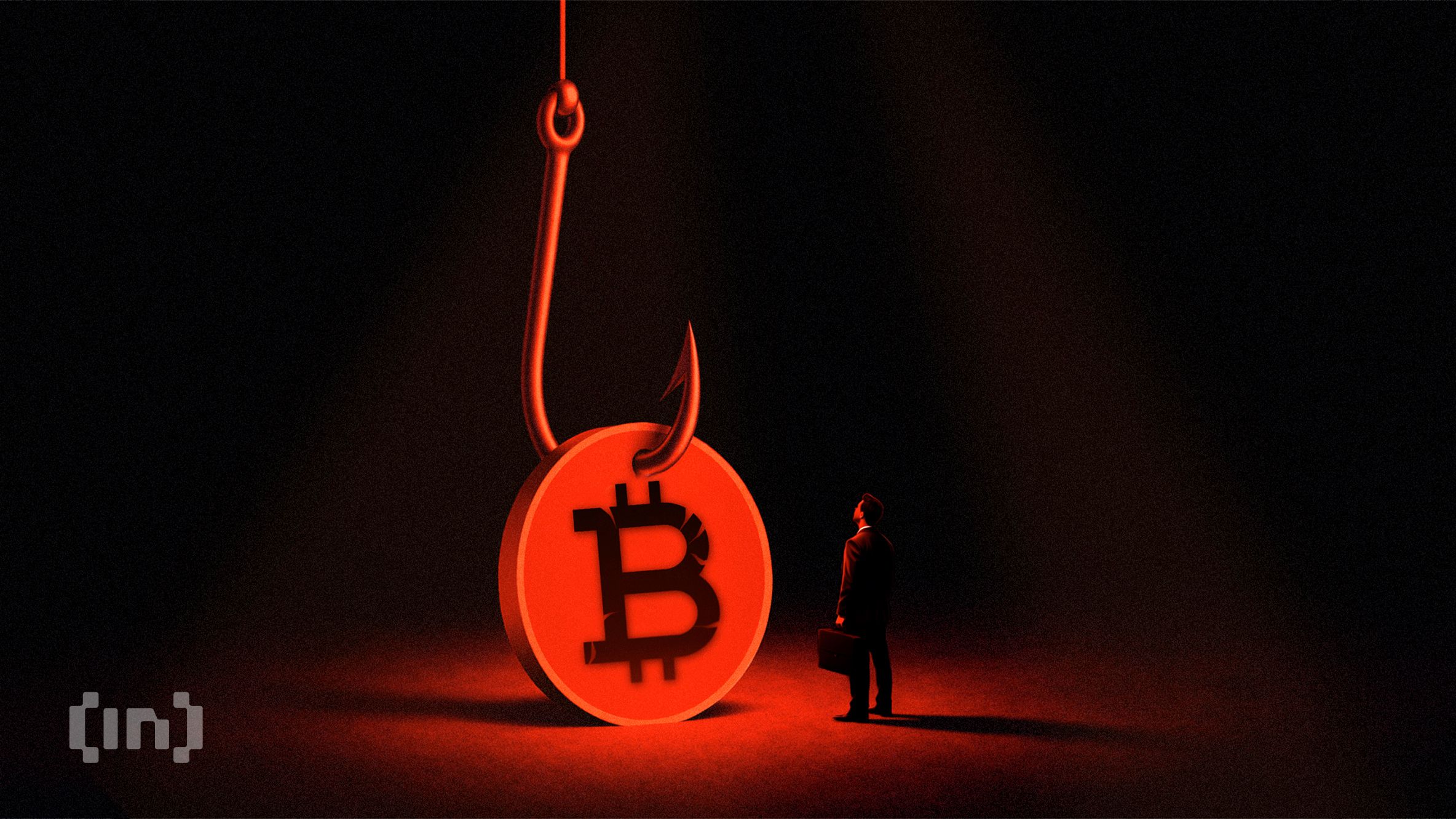
Paul Sztorc, co-founder and CEO of LayerTwo Labs and a Bitcoin developer, has unveiled plans for eCash, a hard fork scheduled to launch in August 2026.
The plan’s treatment of coins linked to Satoshi Nakamoto has sparked backlash across X.
What Sztorc Proposed for the Bitcoin eCash Hardfork
In a post, Sztorc revealed that eCash’s L1 node will be a “near-copy of Bitcoin Core.” The chain will use SHA-256d mining with a one-time difficulty reset.
“I am helping create a **new Bitcoin Hardfork** — dropping this August, called ‘eCash’. Your coins will split. For example, if you have 4.19 BTC, then you will get 4.19 eCash. You may sell your eCash — or keep it. Or ignore it!” Sztorc wrote.
Follow us on X to get the latest news as it happens
The Layer 1 (L1) network will activate Sztorc’s BIP300 and BIP301 proposals via soft fork. Seven drivechains are already in development, including Truthcoin for prediction markets and CoinShift as a decentralized exchange (DEX).
Other L2s include BitNames for identity, BitAssets for non-fungible tokens (NFTs), and Photon for quantum resistance. The team will also release a coin-splitter tool.
Sztorc framed eCash as a permanent fix, unlike the 2017 Bitcoin Cash (BCH) split, which focused on increasing the block size. A notable aspect involves the planned allocation of a portion of coins attributed to Satoshi Nakamoto.
“Satoshi has 1.1M coins in the so called patoshi pattern. We will be manually reassigning some of these coins (fewer than half) to investors today. This will no doubt be a controversial decision. But I think it is necessary, and in fact, ideal,” he added.
In a separate post, the developer clarified that the process does not involve taking any BTC linked to Satoshi Nakamoto. Instead, it would assign 600,000 newly created eCash tokens to Satoshi on the forked chain, less than the 1.1 million coins typically attributed to those holdings, but more than allocations seen in other networks.
“Our coins are not named BTC; they are named eCash. BTC balances are untouched by eCash. To move BTC, you always need BTC software + the BTC private key. We lack both.” he noted. “It is fun to virtue signal about property rights, I get it. But be careful who you listen to and who you get your information from — in the heat of the moment, it may not be reliable!”
Subscribe to our YouTube channel to watch leaders and journalists provide expert insights
Community Calls Satoshi Coin Reassignment
Nonetheless, the plan has already drawn pushback from parts of the crypto community. Commenting on X, Caffè Satoshi urged “extreme caution when receiving this eCash.”
Others were more critical of the distribution model. Podcast host Peter McCormack argued that any attempt to take coins linked to Satoshi Nakamoto is both “theft” and “disrespectful.”
“Taking Satoshi’s coins is a major flaw in this. All the rest is great. Satoshi’s property being taken sets a horrible precedent that will kill your narrative,” another user added.
Follow us on X to get the latest news as it happens
Satoshi Nakamoto’s Bitcoin holdings have long been a source of philosophical tension within the Bitcoin community. Even in debates around potential quantum threats, opinions remain sharply divided.
Some argue the coins should be burned to mitigate future risks, while others oppose any intervention, maintaining that such actions would undermine Bitcoin’s core principles of decentralization and immutability.
The post Critics Push Back Against Developer’s Plan to Reassign Satoshi’s Coins in eCash Fork appeared first on BeInCrypto.


Bitcoin is down 3% in Asian morning trading, holding near $77,000 as markets brace for a week packed with macro catalysts. The move appears driven more by caution than a shift in sentiment.
In a note to CoinDesk, Singapore-based Enflux, a market maker, said traders are reluctant to push bitcoin higher ahead of Wednesday’s rate decision and a cluster of data releases later in the week, including GDP, PCE inflation, and the Employment Cost Index. Together, those prints will shape expectations for when, or if, the Fed can begin cutting rates in the second half of the year.
For now, the biggest constraint is oil. Brent crude remains above $100, complicating the inflation outlook and raising the bar for a dovish signal from Fed Chair Jerome Powell.
According to Enflux, the market is operating under two competing assumptions: that geopolitical tensions will eventually ease, but any resolution will not arrive quickly enough to influence near-term policy. That combination has effectively priced out rate cuts for June (Polymarket bettors give a 95% chance of ‘no change’) and created a more ambiguous backdrop for risk assets.
In that environment, bitcoin has struggled to break above key technical levels. The cryptocurrency is trading roughly 4% below its short-term holder cost basis near $80,700, a level often viewed as a proxy for marginal buyer conviction.
Moving decisively above it would likely require a clear signal from the Fed that oil-driven inflation will prove temporary. Absent that, Enflux expects bitcoin to trade tentatively into Thursday’s data releases, with a sharper move more likely tied to the macro prints than to the Fed statement itself.
Looking beyond this week, a less visible force may also be shaping bitcoin’s next moves. The Wall Street Journal reported Monday that OpenAI has missed key revenue targets, raising questions about the pace of AI demand.
Listed BTC mining companies have taken on significant debt while also selling portions of their treasuries to pivot to hosting AI data centers – a venture believed to be more profitable than mining.
A slowdown in this pivot could, in theory, slow selling.
When demand for compute is strong, miners have both the incentive and the financing to keep building, often leading to continued BTC sales to fund capex and service debt.
But if OpenAI’s miss signals that AI growth may not keep pace with those expectations, the dynamic becomes more complex. A slowdown in AI expansion could ease that miner-driven selling over time, removing a source of supply.
The problem is timing: sell pressure on semiconductor and data stocks, because of weaker tech and risk appetite, would likely bring down the crypto market, while any relief from slower miner selling would come later.
In that sense, the AI story only reinforces Enflux’s broader point. The market is stuck between competing macro forces, and any slowdown in AI demand adds another layer of uncertainty without immediately resolving the ones that matter most for price.
For now, that keeps bitcoin trading in the same narrow band, waiting for a clearer signal.
Circle Ventures snaps up AAVE days after a $293M KelpDAO exploit, shoring up Aave’s bad‑debt shock while Washington weighs a landmark US stablecoin bill.
Summary
- Circle Ventures’ purchase of Aave’s $AAVE token is being framed as “direct support for DeFi infrastructure.”
- The move lands days after Aave absorbed fallout from a $293M KelpDAO exploit and over $170M in bad debt.
- The deal comes as Circle positions itself around a looming U.S. stablecoin bill that could reshape its core USDC business.
Circle Ventures’ decision to accumulate $AAVE tokens sparked immediate debate on Crypto X after CoinDesk described the move as “direct support for DeFi infrastructure,” with the post drawing roughly 2,200 impressions within minutes.
The venture arm of stablecoin issuer Circle is using its own balance sheet to backstop exposure to Aave, just days after the lending protocol was pulled into the $293M KelpDAO exploit that left it with nine-figure bad debt and rattled confidence in DeFi risk models.
The bet lands as Circle jockeys for position around a landmark U.S. stablecoin bill moving through Congress, a framework the company has called a “defining moment for the future of money and the internet financial system.”
In a blog post on the GENIUS Act, Circle said the legislation “signals strong bipartisan support for responsible innovation and sends a clear message that the U.S. will lead in the regulation of dollar-backed payment stablecoins,” underscoring why the firm has an interest in keeping blue‑chip DeFi venues healthy.
Circle’s DeFi signal in a post-hack market
The KelpDAO incident on April 18 saw attackers drain about 116,500 rsETH — worth roughly $293M — via a LayerZero-linked bridge, with on-chain sleuths calling it the largest DeFi exploit of 2026 so far.
Binance researchers estimated that Aave V3 alone is now facing around $177M in bad debt tied to frozen rsETH collateral, while total bad debt across affected protocols has topped $280M.
As risk assets sold off and users rushed to unwind leverage, Aave froze rsETH markets and scrambled to contain contagion, prompting Circle’s chief economist to propose sharply raising the USDC borrowing rate cap “to restore liquidity following the Kelp DAO exploit.”
That intervention, combined with Circle Ventures’ $AAVE purchase, is being read by traders as an institutional vote of confidence in Aave’s long‑term solvency and its central role in the DeFi lending stack.
Stablecoins, Congress, and DeFi optics
The timing also matters in Washington. As Congress advances the GENIUS Act, a bill Circle says will provide “a regulatory foundation that puts consumer protection, financial integrity, and U.S. competitiveness at the forefront,” the company now has a visible stake in demonstrating that the DeFi venues around USDC can weather even the largest exploits.
Institutional demand for tokenized treasuries and stablecoin rails has already helped push RWA deposits in DeFi lending protocols past roughly $840M, according to a recent CoinDesk “Crypto for Advisors” column, and Circle’s latest move suggests it wants Aave firmly in that institutional flow.
If $AAVE recovers alongside the broader DeFi market, Circle’s treasury play may double as both a political signal and a profitable trade on the next wave of on‑chain credit.


Solana is ramping up its preparations for the post-quantum era, with the team disclosing that the migration plan has been thoroughly researched, understood, and is set to roll out when the threat arrives.
Although the quantum threat is still years from materializing, the foundation announced that core developer teams Anza and Firedancer have converged on a post-quantum scheme known as Falcon.
Solana Locks In Post-Quantum Signature Plan
Solana uses Ed25519, an elliptic-curve signature scheme for transaction authorization. Like Bitcoin’s secp256k1, it would be vulnerable to Shor’s algorithm on sufficiently advanced quantum computers.
Notably, Falcon is a high-performance, lattice-based digital signature algorithm. It is also one of the signatures selected by the US National Institute of Standards and Technology (NIST).
This efficiency is particularly important for Solana, since the network’s high-throughput design leaves minimal headroom for cryptographic overhead.
The fact that Anza and Firedancer arrived at this conclusion independently lends additional weight to the approach. Both developers have published their initial Falcon implementations on GitHub.
“The alignment around Falcon reflects extensive research around Solana’s quantum resiliency. While no change is required today or likely anytime soon, there is a clear, well-researched plan that can be activated if and when the time comes. The migration work is manageable, the transition can happen quickly when the time is right, and network performance is not expected to see a meaningful impact,” the blog read.
Follow us on X to get the latest news as it happens
Solana isn’t acting alone in this space. In November 2025, Algorand Foundation’s protocol team carried out the first post-quantum transaction on Algorand, deploying the Falcon signature scheme directly on mainnet.
How the Solana Migration Plan Unfolds
Meanwhile, Solana’s current quantum roadmap lays out a clear three-step path forward. First, researchers will continue evaluating Falcon and alternative schemes.
Second, if the quantum threat becomes credible, newly created wallets will adopt the post-quantum scheme. Finally, existing wallets will be migrated over to the new standard.
The progress isn’t limited to core developer efforts, either. The broader ecosystem has already rolled out working tools, with Blueshift’s Winternitz Vault running live for more than two years. Google Quantum AI even highlighted it in a 2026 paper as a leading example of “proactive post-quantum work in the industry.”
Other major networks are also racing to stake their claim in the post-quantum era. Justin Sun announced that TRON will activate a quantum-resistant network on its mainnet in Q3 2026, positioning it to become the “world’s first quantum-resistant network.”
Subscribe to our YouTube channel to watch leaders and journalists provide expert insights
The post Solana Developers Back Falcon Signature Scheme to Counter Quantum Threats appeared first on BeInCrypto.
Crypto World
The 5 leading free cloud mining platforms to watch in 2026 (easy for beginners to join)


Disclosure: This article does not represent investment advice. The content and materials featured on this page are for educational purposes only.
Cloud mining grows in 2026 as investors seek low-cost access to Bitcoin, Dogecoin, and Litecoin mining.
Summary
- BTCEcosystem gains attention in 2026 with cloud mining, daily settlements, and no-hardware Bitcoin mining access.
- Cloud mining demand rises as BTCEcosystem offers flexible plans, renewable energy farms, and beginner-friendly entry.
- The platform stands out with ASIC-powered mining, free trial access, and automated crypto rewards for new users.
As we enter 2026, cloud mining remains a highly prominent method of participation within the cryptocurrency market — particularly appealing to users who wish to venture into the mining sector without incurring the substantial costs associated with hardware acquisition and operational maintenance. As the digital asset market continues to mature, investors are constantly seeking more convenient, low-barrier entry points to capture potential returns.
In contrast to establishing a traditional, self-managed mining farm, cloud mining aggregates computing power resources and delivers them as a service. This model enables users to participate in the mining of major assets, such as Bitcoin, Dogecoin, and Litecoin, without the need to purchase mining rigs or navigate complex technical intricacies.
“Hashrate-as-a-Service” is progressively emerging as a vital bridge connecting users directly to blockchain infrastructure.
Based on a multi-dimensional assessment encompassing operational background, computing power sources, and market performance, platforms such as BTCEcosystem, BitFuFu, NiceHash, ECOS, and Binance Cloud Mining have distinguished themselves in 2026. Collectively, they exemplify the industry’s ongoing transition from a model of “heavy asset deployment” toward one characterized by “lightweight services and ecosystem-centric operations.”
1. BTCEcosystem — One of the most anticipated cloud mining platforms of 2026.
BTCEcosystem is a professional cloud mining service platform founded in 2022 and headquartered in Australia. Its mining facilities are primarily located in North America and Northern Europe; by utilizing renewable energy systems, it achieves an optimal balance between operational efficiency and sustainability.
The platform primarily offers mining services for Bitcoin, Litecoin, and Dogecoin. Its streamlined operation process eliminates the need for users to deploy mining rigs or handle technical issues, making it ideal for users who wish to participate in mining with a low barrier to entry.
Regarding contract configurations, BTCEcosystem offers various packages ranging from $100 to $60,000, with terms ranging from 1 day to 35 days, catering to users seeking moderate trial investments and those making substantial capital investments.
Key features of BTCEcosystem:
- New users receive a $15 bonus upon registration, plus a free trial of mining.
- Supports daily automatic settlement.
- No additional electricity or maintenance costs required.
- Utilizes advanced ASIC mining hardware.
- Powered by renewable energy sources, including hydro, wind, and solar.
- Equipped with SSL encryption and DDoS protection.
- Features a real-time earnings dashboard for easy monitoring of mining performance.
- Supports multiple contract types, including BTC, LTC, DOGE, BCH, etc.
Affiliate Program: Join the affiliate program and earn up to 4.5% commission rewards.
Why is BTCEcosystem attracting so much attention?
BTCEcosystem strikes a relatively good balance between ease of use, operational convenience, and profit transparency. It offers a low barrier to entry for beginners, while providing ample room for expansion through higher-level contracts for experienced users.
Furthermore, its short-term contracts and automatic settlement mechanism make the platform a particularly attractive option in the 2026 cloud mining market.
Whether users seek flexible short-term returns or prioritize stable long-term rewards, they can find options on the platform that meet their needs.
2. BitFuFu — A hashrate platform backed by Bitmain
BitFuFu’s ability to capture market attention is largely attributable to its strategic partnership with Bitmain. As a globally renowned manufacturer of ASIC mining hardware, Bitmain provides BitFuFu with hardware-level support, thereby granting the platform significant advantages in terms of equipment resources and infrastructure.
Platform Features
- Primarily supports Bitcoin and select other crypto assets
- Offers hashrate-based contract solutions
- Ensures a high degree of data transparency
- Operates a global network of mining facilities
Best suited for users looking to enter a mature and well-established mining ecosystem.
For investors who prioritize professional-grade configurations, hardware performance, and support from mainstream platforms, BitFuFu is a platform well worth considering.
3.NiceHash – Known for its hashrate marketplace model
Unlike traditional platforms that rely on fixed-term contracts, NiceHash is more like a hashrate marketplace. Users can directly buy and sell hashrate on the platform without purchasing pre-set mining packages.
Key Features of NiceHash
- Supports multiple mining algorithms
- Revenue is typically settled in Bitcoin.
- Hashrate can be purchased on demand, offering high flexibility.
- Integrated wallet service is available.
- Emphasis on user-driven configuration and market-based selection.
NiceHash is a unique and compelling platform for users who do not want to be bound by fixed timeframes and seek greater operational freedom.
4. Binance Cloud Mining – A mining solution integrated with your trading account
Binance Cloud Mining leverages the Binance ecosystem to provide users with a more direct and seamless connection between cloud mining activities and their trading accounts. For users already managing assets and trading on Binance, this integration offers a more convenient user experience.
Key Features
- Primarily focused on Bitcoin mining
- Package pricing is based on hash rate, offering relatively flexible pricing.
- Direct connection to your Binance wallet
- Provides smoother asset liquidity and withdrawal processes
For existing Binance users, choosing Binance Cloud Mining makes it easier to get started and facilitates subsequent asset management operations.
5. ECOS – A cloud mining service focused on long-term stability
Headquartered in Armenia, ECOS benefits from the region’s relatively favorable regulatory and energy environment. In addition to its core cloud mining business, the platform integrates a range of complementary tools, including wallets, trading functions, and investment management features.
Platform Overview
- Primarily offers Bitcoin mining services.
- Contract prices start at $100.
- Contract terms typically range from 6 to 50 months.
- Provides wallets and investment management tools.
- Ideal for users who prefer a long-term, stable operating model.
For investors seeking a cloud mining solution with longer-term sustainability and greater predictability, ECOS is a platform worth considering.
Summary
BTCEcosystem stands out among numerous platforms thanks to its overall superior performance, including its Australian operations, daily settlement mechanism, flexible contract models, and support for cryptocurrencies such as BTC, LTC, and DOGE. Furthermore, its ease of use, commitment to clean energy, and user-friendly registration experience make it a worthwhile option.
For users prioritizing long-term contracts, Binance Cloud Mining and ECOS are worth considering; for users more accustomed to exchange ecosystems, Binance Cloud Mining offers greater convenience. For users seeking greater flexibility, NiceHash provides a platform model different from traditional cloud mining, while BTCEcosystem is an ideal platform for a free trial.
In conclusion, if investors are looking for a cloud mining platform that combines transparency, flexibility, and ease of use in 2026, BTCEcosystem remains a worthwhile option to consider.
Disclosure: This content is provided by a third party. Neither crypto.news nor the author of this article endorses any product mentioned on this page. Users should conduct their own research before taking any action related to the company.

What is the release date for Hacks season 5 episodes 4 and 5 on HBO Max?

This Game is Saving Me Money

Line of Duty star’s show claims dad could have killed mum – but I know it was Bible John and I’m angry

Manchester United reach agreement with Casemiro over contract clause amid transfer speculation

US brings back mandatory military draft registration

Steven Gerrard disagrees with Gary Neville over ‘shock’ Chelsea and Arsenal claim | Football


-

 Fashion3 days ago
Weekend Open Thread – Corporette.com
-

 Tech12 hours ago
Register Renaming | Hackaday
-
 Crypto World2 days ago
Hyperliquid $HYPE Rally Builds Momentum as AI Sector Enters Prove-It Phase
-

 Politics5 days ago
Making troops accountable for war crimes threatens US alliance, ex-SAS colonel warns
-

 Politics5 days ago
Disabled people challenge government SEND proposals over segregation concerns
-

 Business4 days ago
Patterson-UTI Energy, Inc. (PTEN) Q1 2026 Earnings Call Transcript
-

 Business6 days ago
Rolls-Royce Voted UK’s Most Iconic Trade Mark as IPO Register Hits 150
-
 Crypto World7 days ago
Five Value Stocks with Recovery Potential in 2026: PayPal (PYPL), Nike (NKE), and More
-
 Sports2 days ago
IPL 2026: Ruturaj Gaikwad registers slowest fifty of the season, enters all-time unwanted list | Cricket News
-

 Politics5 days ago
Starmer handler McSweeney to be dragged from shadows by Foreign Affairs Committee
-

 Politics5 days ago
Zack Polanski responds to home secretary’s taser threat
-
Politics6 days ago
Wings Over Scotland | How To Get Away With Crimes
-

 Crypto World6 days ago
New York sues Coinbase, Gemini over prediction market offerings
-

 Politics8 hours ago
Drax board avoid their own AGM, accused of greenwashing & environmental racism
-
Entertainment7 days ago
Sydney Sweeney cameo cut from “The Devil Wears Prada 2”, source explains why (exclusive)
-

 Crypto World6 days ago
Crypto’s great hope in Senate’s Clarity Act still has a path to survive tight calendar
-
 Business6 days ago
HCL Tech share price tank over 9% after weak Q4. JPMorgan, HSBC & 3 others cut target price
-

 Fashion7 days ago
Kilkenny Design New Beauty Arrivals for Spring 2026
-

 Politics5 days ago
‘Iran is still a nuclear threat’
-
 Sports5 days ago
Tim Bradley names the current best in the world: “Better than Inoue and Usyk”
You must be logged in to post a comment Login