

Crypto World
SEC proposal could open crypto markets to tokenized public stocks



The U.S. Securities and Exchange Commission has reportedly prepared an “innovation exemption” that could allow blockchain platforms to offer tokenized versions of publicly traded stocks, including tokens issued without direct approval from the underlying companies.
Summary
- The SEC is reportedly preparing an exemption that could allow tokenized trading of public company shares on blockchain platforms.
- Bloomberg reported that the proposal may require tokenized stocks to carry the same rights as traditional shares, including dividends and voting access.
Bloomberg reported on Monday, citing people familiar with the discussions, that the exemption could be introduced as early as this week as the agency explores ways to expand tokenized securities trading beyond conventional stock exchanges and into crypto-based markets.
Under the proposal, the SEC has discussed rules that would require tokenized shares issued by third parties to provide the same rights attached to traditional common stock, including voting privileges and dividend access. Sources cited in the report said tokens that fail to meet those standards could face delisting requirements.
People familiar with the matter also told the media outlet that SEC Commissioner Hester Peirce has played a central role in advancing the exemption effort, although the report noted that final details are still being negotiated and could change before any formal announcement.
Wall Street firms are pushing tokenization plans
Across the financial industry, tokenization has gained traction as firms explore blockchain systems that could support round-the-clock trading and faster settlement processes.
Earlier this year, Intercontinental Exchange, the parent company of the New York Stock Exchange, said it was preparing a blockchain-based platform designed for 24/7 trading and settlement of stocks and exchange-traded funds. The company described the project as part of its effort to modernize post-trade infrastructure using distributed ledger technology.
Elsewhere in the sector, crypto exchange Bullish strengthened its tokenization business earlier this month after acquiring transfer agent platform Equiniti in a $4.2 billion deal. Bullish is led by former NYSE president Tom Farley.
Supporters of tokenized equities have argued that blockchain-based shares could allow investors outside the United States, or users without access to traditional brokerage services, to gain exposure to public companies such as Nvidia, Google, and Tesla through crypto platforms.
Concerns emerge over issuer involvement
Even as the SEC considers the exemption, Bloomberg reported that some officials inside the agency remain opposed to allowing tokenized stock trading without direct issuer participation.
“If third parties can tokenize Apple or Amazon without the issuer at the table, there’s no theoretical limit on how many wrappers of the same company exist at once. This could create a whole new level of market fragmentation and could leave investors less certain what their shares are actually worth at any moment,” Brett Redfearn, president of crypto-native tokenization platforms, Securitize, said in a comment.
Tokenized investing has also expanded into private markets, where blockchain platforms have started offering exposure to high-profile startups before public listings.
Several companies tied to those offerings have already objected to the practice. According to previous public statements, both OpenAI and Anthropic have opposed unauthorized tokenized products linked to their valuations.
The SEC’s reported discussions around tokenized securities have surfaced only days after the Senate Banking Committee advanced the CLARITY Act, legislation that would establish a federal framework for parts of the digital asset market before heading to a Senate floor vote next month.


TLDR:
- ETH is testing the $1,650-$1,700 resistance zone as traders closely monitor volume strength.
- U.S. spot Ethereum ETFs recorded weekly outflows, adding pressure to near-term market sentiment.
- Ethereum staking demand remains strong, with nearly 3 million ETH waiting to enter validation.
- The upcoming Glamsterdam upgrade aims to improve scalability while advancing network efficiency.
ETH is trading near a major resistance area while market participants monitor volume, institutional activity, and upcoming network developments.
The asset is holding around $1,674, remaining within a closely watched price range as traders assess the next directional move.
ETH continues to trade above the recent support zone between $1,500 and $1,600. At the same time, market attention has shifted toward a resistance band that could determine short-term price action.
Recent ETF outflows have weighed on sentiment, yet institutional interest in Ethereum remains active.
ETH Faces Major Resistance as Traders Monitor Volume
According to market commentary shared by crypto analyst Gerla on X, ETH is testing what was described as an ultimate resistance level. According to the post, the broader trend depends on the $1,650 to $1,700 supply zone.
The analyst noted that a breakout without strong trading volume could become a bull trap. The post also stated that Ethereum could gain momentum if it breaks out of its current triangle pattern and reclaims the 200 EMA.
According to the analysis, a move above $1,750 would leave little overhead supply, placing the $1,800 level in focus.
Meanwhile, ETH is trading near $1,674 and continues to show limited daily movement. Traders remain focused on whether buying activity can support a sustained move above resistance. As a result, volume remains one of the most closely watched indicators in the market.
Ethereum also reflects mixed market conditions. U.S. spot Ethereum ETFs recorded cumulative net outflows of $14.8 million during the week. In addition, a single-day outflow of $4.95 million was led by BlackRock’s ETHA fund.
Even so, institutional participation remains visible. Bitmine Immersion Technologies expanded its Ethereum holdings, bringing its total position to 5.54 million ETH. This activity suggests that some firms continue accumulating the asset despite recent price pressure.
Staking Demand Grows While Ethereum Prepares New Upgrades
Ethereum includes strong staking activity across the network. The validator exit queue has fallen close to zero, indicating limited withdrawal pressure from existing participants.
At the same time, the staking entry queue has grown to nearly 3 million ETH. New validators are reportedly facing waiting periods of up to 50 days before joining the network. This trend points to continued demand for Ethereum staking.
Ethereum briefly lost its position as the second-largest cryptocurrency by market value. During the week, Tether temporarily moved ahead following aggressive USDT issuance and weaker ETH prices. However, Ethereum later reclaimed its position.
Ethereum news today also focuses on future network development. The planned Glamsterdam hard fork is expected during the first half of 2026.
The upgrade aims to improve network scalability by enshrining Proposer-Builder Separation under EIP-7732 and introducing block-level access lists.
Developers are also exploring additional changes. EIP-8182 is being reviewed as a potential framework for native privacy transfers.
Meanwhile, researchers have started testing SPHINCS-, a quantum-resistant wallet standard designed to strengthen long-term security.
As ETH trades near a critical technical zone, market participants continue monitoring resistance levels, volume trends, staking demand, and network upgrades.
Ethereum news today shows that both market structure and ecosystem development remain key areas of focus for investors and traders.

Crypto World
Aerodrome to Launch Predictive Allocation, Bringing Prediction Market Dynamics to Liquidity Allocation
TLDR:
- Aerodrome will replace its weekly voting system with Predictive Allocation when it launches in July 2026.
- Participants who correctly forecast future liquidity demand will earn a larger share of protocol revenue.
- Dromos Labs founder Alex Cutler describes the mechanism as answering where capital needs to go next.
- The model targets AI-powered agents and trading firms capable of analyzing real-time market conditions.
Aerodrome, the largest DEX on Coinbase’s Base network, will launch Predictive Allocation in July. The upgrade replaces its weekly voting system with a real-time incentive model. Participants will direct liquidity toward pools they expect to generate future demand.
Those who correctly anticipate market needs earn a larger share of protocol revenue. The mechanism borrows from prediction market logic, rewarding foresight over historical performance.
Aerodrome Shifts From Historical to Anticipatory Liquidity Incentives
Aerodrome has operated since 2023 using a model that rewards token holders for directing liquidity incentives. That system helped solve a persistent DeFi problem: bootstrapping liquidity for new assets.
However, it carries an inherent limitation. Decisions rely heavily on past pool performance rather than where demand is heading.
Predictive Allocation addresses that gap directly. Instead of rewarding participants for past results, the system incentivizes forward-looking decisions.
Those who correctly forecast where liquidity will be needed earn more revenue. The protocol shifts from a reactive model to one that moves capital ahead of demand.
Alex Cutler, founder of Dromos Labs, drew a parallel to the original AMM breakthrough. “The big innovation of Automated Market Makers was answering the question: what should the price of an asset be at any particular moment?” he told CoinDesk.
“Predictive allocation is answering the question of where does capital need to go.” The distinction captures how the team views this as a new market primitive, not just a product update.
Cutler also described how capital behavior changes under this model. “The liquidity is now moving in an anticipatory way ahead of where the market is,” he said.
The system is designed to attract AI-powered agents and sophisticated trading firms. Their ability to continuously analyze conditions makes them natural participants in a real-time allocation environment.
Prediction Market Logic Meets Spot Market Infrastructure
Traditional prediction markets let traders speculate on outcomes they cannot influence. Predictive Allocation works differently.
Directing incentives toward a pool actively creates the liquidity that makes that market viable. The prediction and the capital allocation become a single, unified action.
Cutler explained what sets this apart from conventional prediction market design. “It takes that asymmetric upside and truth discovery and brings it into market creation and spot markets for the first time,” he said.
Dromos Labs calls the broader concept a “production market.” It allocates capital toward uncertain opportunities and rewards participants based on decision accuracy.
Cutler has pointed to Hyperliquid’s dominance in perpetual futures as a benchmark for what Aerodrome wants to achieve. “We want to do that for spot markets,” he said.
The DEX is positioning itself as a structural layer rather than just a liquidity venue. Predictive Allocation is central to that ambition.
Looking further ahead, Cutler sees potential well beyond exchange functionality. “The primitive is something that we think could be applied to any scenario where there is a decision that needs to be made under uncertainty,” he said.
For now, the July rollout focuses entirely on exchange operations. How the market responds will shape whether this mechanism becomes a wider DeFi standard.
TLDR:
- HBAR price stays trapped between $0.085 support and $0.095 resistance with low volatility.
- Whale OTC movements and upgrade activity have kept liquidity balanced within a narrow trading range.
- Supply expansion pressures persist, but buyers continue to defend the key support near the $0.085 zone.
- A breakout above $0.095 may trigger a momentum shift, while a loss of $0.085 risks a drop toward the $0.080 level.
HBAR traded near $0.08 while price action remained locked in a tight consolidation range, as whale OTC flows and a recent network upgrade shaped short-term sentiment.
Market behavior reflected balanced pressure between accumulation activity and supply-side token releases.
HBAR price structure and whale-driven range behavior
Large OTC transactions worth $250 million were reported ahead of the Hedera upgrade, aligning with increased positioning around key network changes.
This activity coincided with HBAR trading within a narrow band between $0.085 support and $0.095 resistance.
The price structure showed repeated rejection near the upper boundary, while buyers continued to defend lower levels.
Cheeky Crypto noted in an X post that HBAR whales moved $250 million OTC before the June 10 upgrade. The report connected this movement to positioning ahead of network changes.
Price action remained compressed during this period, with volatility contracting as liquidity concentrated around the mid-range zone.
The behavior suggested accumulation phases often seen before directional expansion.
HBAR price analysis showed that the $0.085 level continued acting as a short-term demand zone.
Each retest of this area attracted buying activity, preventing deeper breakdowns. At the same time, the $0.095 level acted as supply resistance, limiting upward continuation attempts.
The range structure defined intraday movement and reduced breakout momentum in both directions.
Key levels, supply dynamics, and trading range outlook
HBAR price analysis also reflected the influence of ecosystem supply expansion, with nearly 3.97 billion tokens scheduled for circulation through ecosystem funding.
This created periodic supply pressure during sideways trading conditions. Despite this, price stability remained intact above the $0.080 psychological level.
Market participants monitored whether HBAR price analysis would confirm a breakout above $0.095 resistance or a breakdown below $0.085 support.
A sustained close above resistance would open room toward $0.102, while a failure to hold support risked a move toward $0.080. These levels defined the active trading corridor.
HBAR price analysis continued to reflect a neutral-to-range-bound structure, with volatility compression signaling a buildup phase.
Trading activity remained influenced by both enterprise adoption narratives and circulating supply adjustments.
The market structure stayed responsive to liquidity shifts around the established support and resistance zones. Short-term momentum remained tied to whether buyers could sustain accumulation above the mid-range area.
Until a decisive breakout occurs, HBAR price analysis indicated continued sideways movement within the defined range, shaped by alternating pressure between demand absorption and supply release.
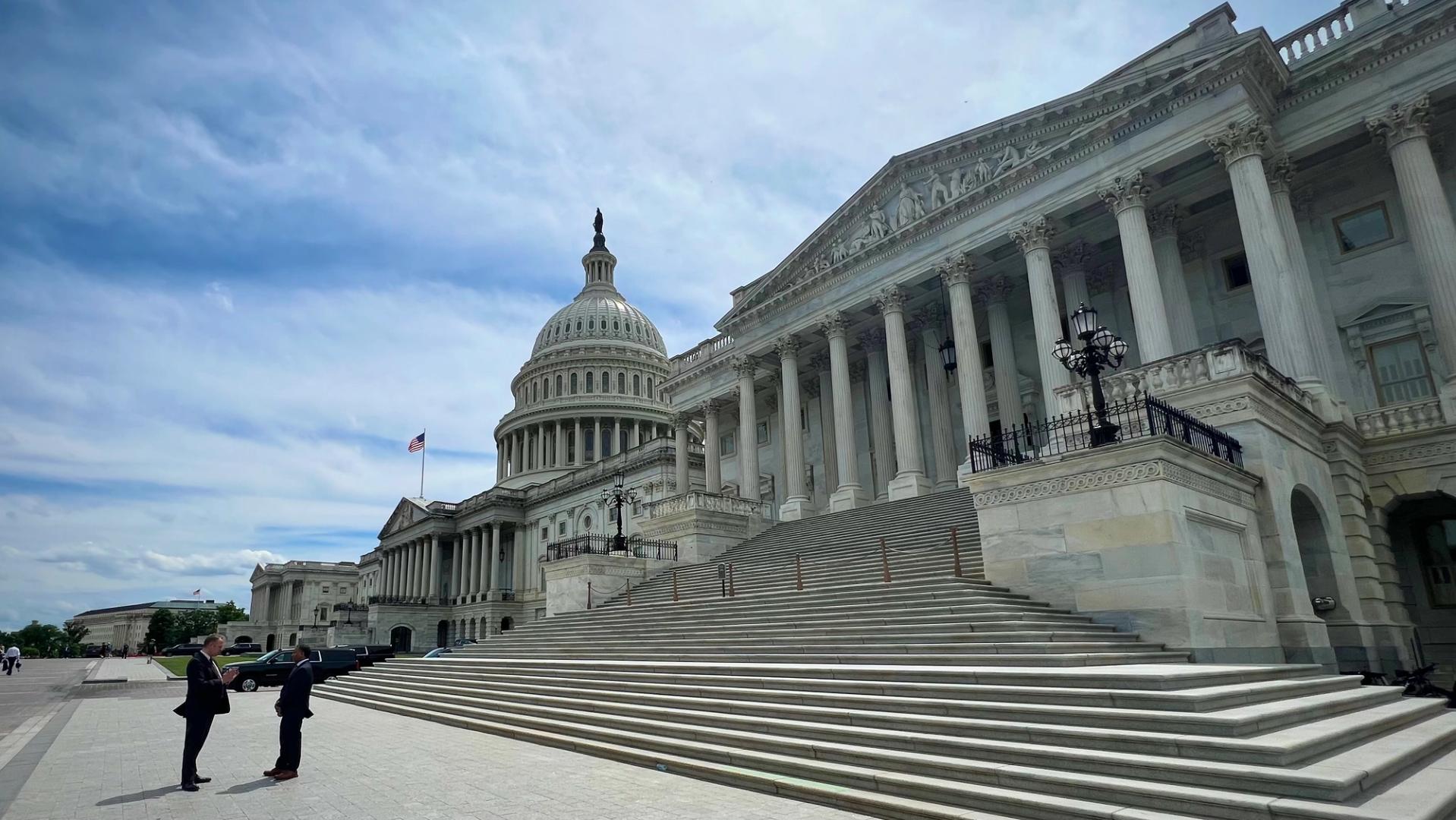
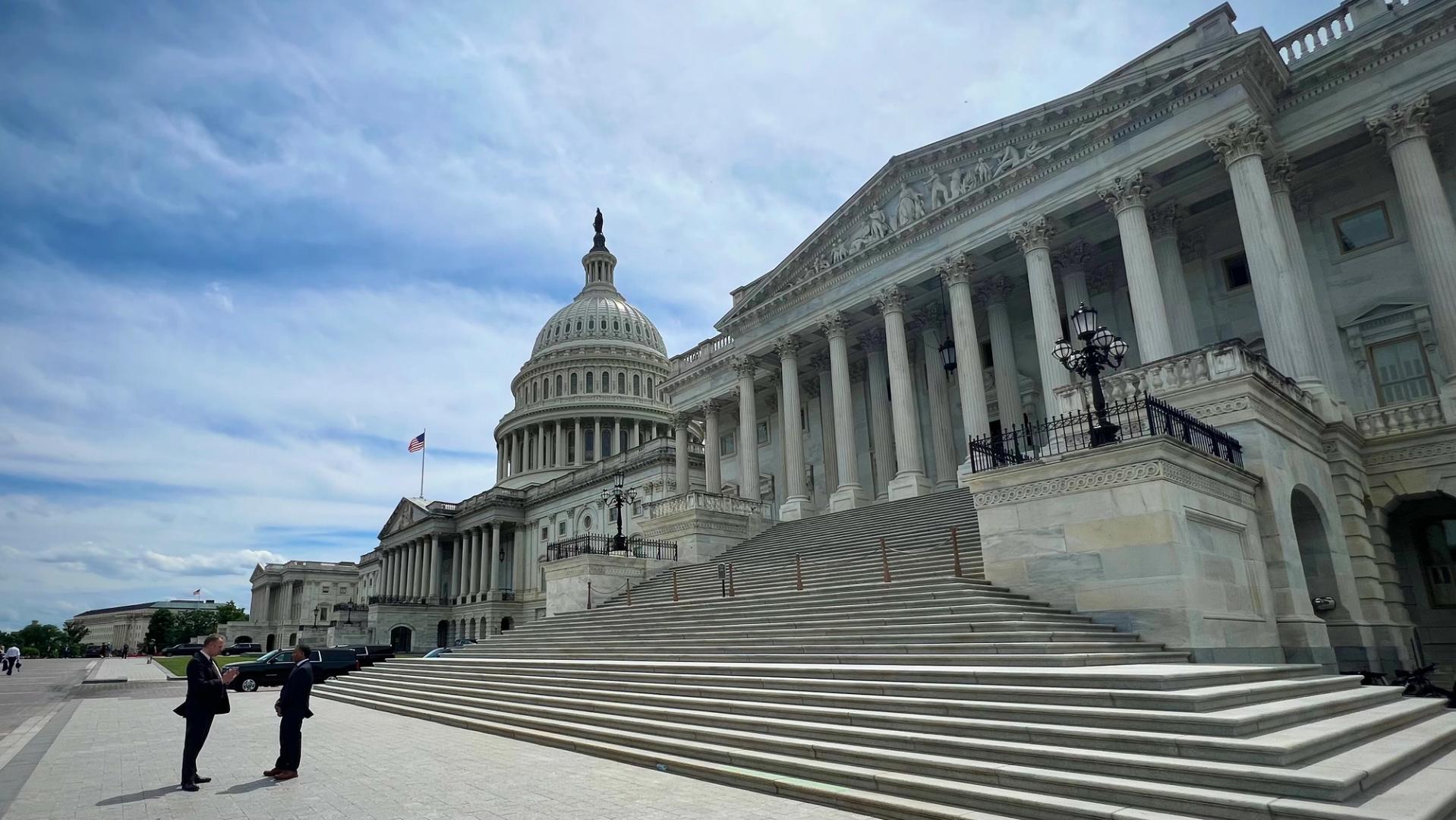
Last Tuesday’s House Ways and Means Committee hearing on digital asset tax bills was pretty straightforward. The members of the committee asked largely substantive questions, seemingly aimed at better understanding both how crypto taxes might work as well as what holes exist in current tax policy. There was no sniping at each other, no real pot shots at President Donald Trump and his family and no major arguments. At most, we had a few lawmakers question whether crypto is really an urgent issue amid current economic conditions.
In agency news, the CFTC published a proposal for better regulating prediction markets, giving the general public some time to weigh in, even as the various legal cases continue.
Why it matters
Crypto taxes are the next big issue after the market structure bill happens (if it happens, anyway). And while the hearing wasn’t exactly spicy, it did suggest that there is a lot of work to be done before crypto tax legislation can proceed through a markup and to the House floor.
The CFTC’s proposal to more closely regulate prediction markets is a first step in this process, and the public comments will be revealing.
Breaking it down
Tuesday’s hearing from the Ways and Means Committee saw lawmakers ask questions about the various discussion draft bills presented for the hearing, addressing the different aspects of the crypto tax debate. It was a remarkably conciliatory hearing, when contrasted with some of the other hearings the crypto industry has watched.

Analysts at the crypto exchange Bybit have highlighted factors that contributed to bitcoin (BTC) recording its worst single-week percentage decline since the FTX collapse in November 2022. According to the report, the decline was not triggered by random panic from the market, but was a result of a structural breakdown that had been building for weeks.
As reported in the Bybit Options Weekly Review, multiple forces hit simultaneously: stronger U.S. jobs data, record outflows from spot Bitcoin exchange-traded funds (ETFs), and Strategy challenging its “never sell BTC” narrative.
BTC Decline Signals Technical Breakdown
During the week ending June 8, BTC fell from $73,760 to $59,130 for the first time since October 2024. Although a wave of dip-buying and short-covering quickly brought the asset’s price back above $61,000, the plunge signaled a technical breakdown that had been brewing beneath the surface.
Ether’s Relative Strength Index (RSI) fell to a reading of 12.78, which is the most extreme oversold reading in history. At the same time, bitcoin’s RSI also fell to 15.45 at the same time.
Combined, this is the most oversold signal this cycle has produced, indicating a market-wide capitulation event. Such moves indicate that investors are panic selling with no regard for prices. Although readings at these levels have historically preceded technical bounces, it does not confirm that the bottom is in.
No Bullish Reversal Confirmed
On the options market front, put options were delivered after a confirmed technical breakdown, and the Deribit Volatility Index (DVOL) spiked from historic lows near 35 to around 55. DVOL measures the 30-day annualized expected implied volatility for Bitcoin and Ethereum options. The metric provides real-time, forward-looking analysis of expected price swings, overall fear and greed, and market uncertainty.
The surge from 35 to 55 gave downside traders a double tailwind from both falling price and rising implied volatility. The metric is now pulling back from the spike and hovering around 48, indicating that the panic volume expansion is fading and the initial shock is absorbed.
On the macro front, stronger U.S. jobs data reignited rate hike fears. With the current labor market strength ruling out any near-term dovish pivot, analysts see every positive employment print as a negative for risk assets that are priced on rate cut expectations.
Moreover, Strategy sold 32 BTC for $2.5 million, breaking the “never sell” belief that gave holders their sense of structural security. Although the company has resumed buying, investors still appear concerned about the systemic signal behind the sale.
Bybit concluded by clarifying that although BTC and ETH are in extreme oversold conditions, the market has not confirmed a reversal. ETF outflows need to stabilize, and macro conditions need to be resolved before a positive outlook is assured.
The post Not Random Panic: Bybit Highlights Factors That Pulled BTC Below $60K appeared first on CryptoPotato.
Charles Hoskinson has given his most detailed account yet of Cardano’s disputed 1,096 Bitcoin (BTC), tracing the funds to a 2016 audit of the original ADA crowdsale.
The Cardano (ADA) founder named three auditors and a Bitcoin price from that year, reframing a question that has shadowed the project since its earliest days.
Hoskinson Traces the 1,096 Bitcoin to a 2016 Audit
During a livestream this weekend, Hoskinson said the disputed sum dates to a March 2016 email from Michael Parsons, then chairman of the Cardano Foundation.
Parsons sought payment for auditing the crowdsale that raised about $62 million between 2015 and 2017, almost entirely from Japanese investors.
He pulled the historical price to argue the bill was smaller than critics imply.
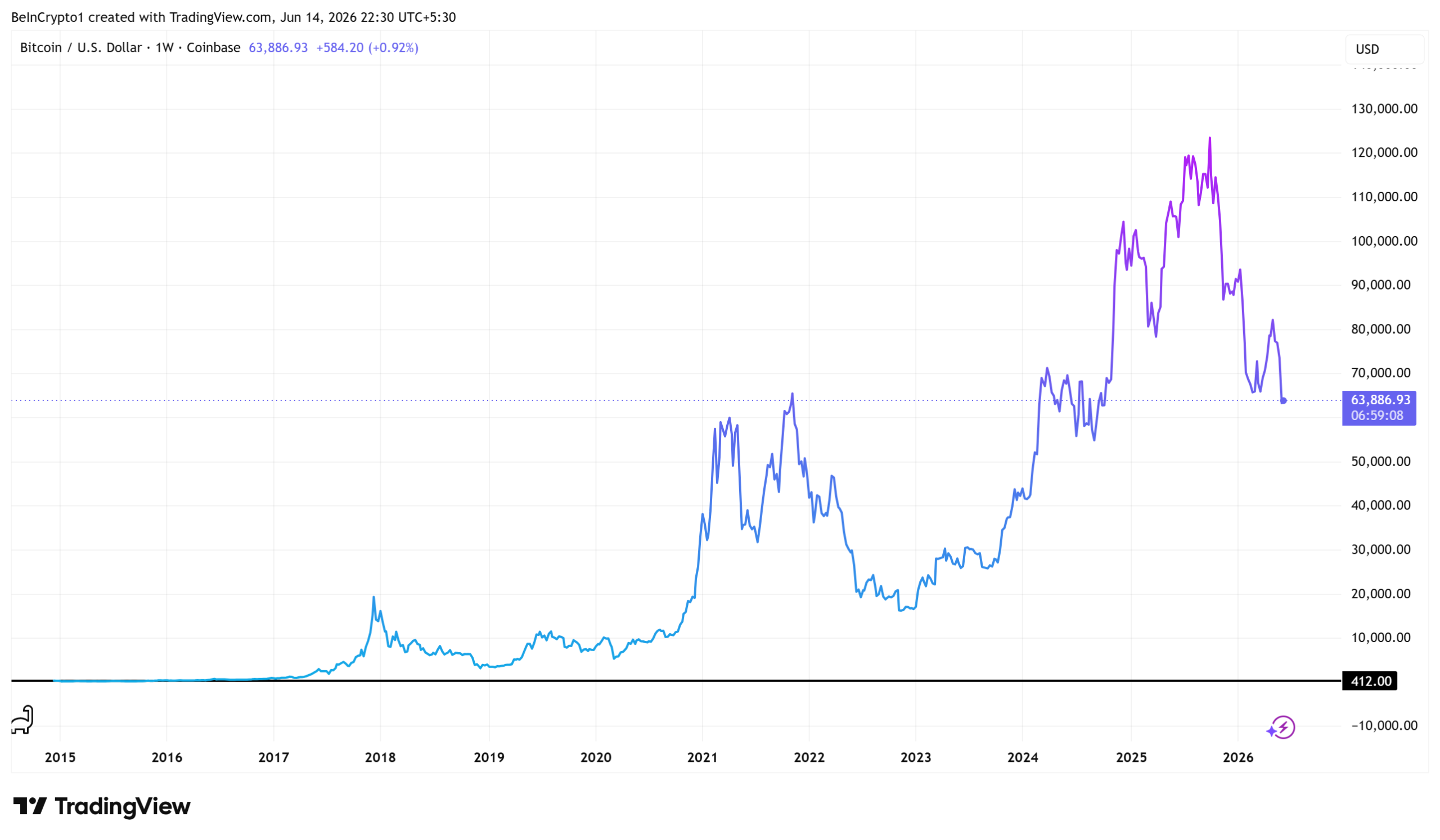
“The closing price of Bitcoin March 13, 2016 was $414,” said Hoskinson.
Independent data places Bitcoin near $412 that day, supporting his figure. By that math, he said, the payment covered three named reviewers.

“So that was about $400,000 for three auditors, Michael Parsons, John Maguire, and Bruce Milligan, to audit a… crowd sale in Japan… to verify there was no waste for abuse.”
Follow us on X to get the latest news as it happens
The same 1,096 BTC would be worth about $70 million today, the gap that keeps the dispute alive.
The sharper detail is who took the payment. Parsons resigned as Foundation chairman in 2018 after IOHK and EMURGO publicly broke with him over transparency and governance failures.
Hoskinson Calls the Questions Bad Faith
Hoskinson argued the recurring demands for transparency aim to inflame rather than resolve.
“The purpose of the allegation isn’t the allegation. It’s the rage.”
He said each answer only triggers the next allegation, draining money that could otherwise grow the ecosystem.
The framing arrives as he has openly criticized the Foundation and stepped back from daily ADA promotion.
Braziel Wants the Receipts
Investor Thomas Braziel said the AMA answered one question but created several more. He called for invoices, approvals, and payment records.
“The question was never whether audits cost money. The question was where 1,096 BTC went, who received it, and why.”
Braziel also questioned how IOHK ended up controlling roughly 95% of the BTC raised while the Foundation kept a fraction.
The pressure builds as the Foundation’s reserves shrink, ADA trades near $0.1669, down about 3% on the day, and the token sits 17th by market value.

The post Charles Hoskinson Tries to Close Cardano’s $70 Million Bitcoin Mystery appeared first on BeInCrypto.
Why These Coins Have Become Popular Amid An Upcoming Bull Market
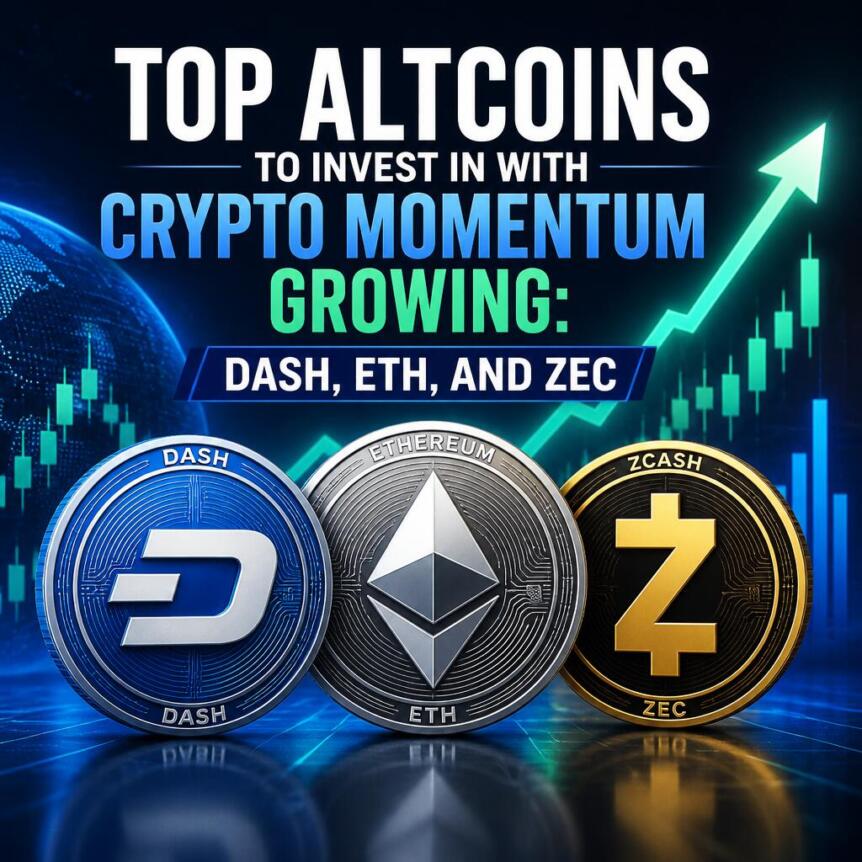
As cryptocurrency market activity picks up again, demand is on altcoins with solid fundamentals and growth prospects. The increase in volume, improvement in sentiment, and return of institutional interest have created a favorable environment for established digital coins. Despite the fact that speculative currencies tend to garner most attention, there remain many traders who prefer coins with real use cases. Dash (DASH), Ethereum (ETH), and ZCash (ZEC) stand out in particular, as each of them plays its own role in the crypto world.
Dash Speed And Utility In Digital Transactions
When developing Dash, the primary objective was to use it as a platform for digital payments. In contrast to some other cryptocurrencies that can be considered an investment tool, Dash is intended to provide users with quick and inexpensive digital cash transactions.
One of the main characteristics of this network is its Instant Send transaction functionality, which enables immediate payment processing. Due to this feature, Dash appears to be especially attractive for making payments in the real world. The network also uses a system of decentralized governance to support further development. As new merchants continue to use Dash and there is an increasing need for reliable payment platforms, it appears that this cryptocurrency deserves attention.
Ethereum The Foundation Of Decentralized Finance
The leading player among blockchains remains Ethereum. As the largest decentralized platform where smart contracts can be deployed, Ethereum supports millions of applications and dApps, DeFi projects, NFTs, and other blockchain solutions for businesses.
ETH performs several roles in the network. It is used to cover transaction fees, helps maintain security by participating in staking, and is required as collateral on a number of DeFi platforms. The underlying infrastructure of the platform is the basis for thousands of digital assets, making Ethereum an influential project in the crypto industry.
There has also been a lot of institutional interest in Ethereum lately. Major corporations explore Ethereum-based solutions, and developers prefer to use the platform for creating innovative blockchain products. With increasing activity in the market, Ethereum attracts huge investments regularly.
ZCash Innovations On The Blockchain That Emphasize Privacy
The unique selling point of ZCash is its privacy aspect. Using cryptography referred to as zero-knowledge proof technology, transactions on this network do not require any information sharing.
Using this technology makes confidential transactions possible, whereby the identities of parties involved in the transactions and the amounts transacted cannot be revealed. Since privacy is increasingly becoming an issue in digital finance, more users are drawn to ZCash due to this feature.
The increased volatility in ZEC is mainly caused by regulatory concerns regarding privacy-based cryptocurrencies. However, the volatility in the price of ZEC could also represent a trading opportunity for those who anticipate that privacy remains vital to blockchain technology.
Dash Ethereum And Zec Are Worth Watching By Investors
Each of these three cryptocurrencies represents a particular category of the market. Dash offers instant transactions, Ethereum drives the decentralized economy, and ZCash gives users enhanced privacy features. Under improved market circumstances, with increasing interest from investors, all three cryptos might continue being on investors’ radar screens for some time to come.
Crypto World
Can Dogecoin Repeat History? Technical Pattern, ETF Exposure, and Whale Demand Fuel Bullish Outlook
TLDR:
- Dogecoin trades near $0.088 after rebounding from a recent sharp drop toward $0.078 level.
- Analysts cite a repeating triangle apex retest pattern seen in 2017 and 2020 cycles.
- Whale activity shows over 200 million DOGE accumulated near key support around $0.081.
- ETF inclusion and Musk-linked market events helped renew attention toward Dogecoin.
Dogecoin remains in focus after stabilizing near key support levels, while traders monitor technical patterns that have previously preceded major price advances.
The meme-based cryptocurrency is trading around $0.088, recovering modestly after a recent decline that pushed its value from $0.113 to $0.078.
Dogecoin Technical Setup Draws Market Attention
Recent market discussion has centered on a long-term chart shared by crypto analyst Trader Tardigrade. The analyst posted a monthly Heikin Ashi chart showing Dogecoin retesting the apex of a multi-year triangle formation.
In the post, Trader Tardigrade compared the current Dogecoin structure with similar setups seen in 2017 and 2020.
According to the chart, both previous cycles featured triangle compression, an apex retest, and a sharp upward move afterward. The analyst stated that Dogecoin has now completed a similar retest, describing the setup as a textbook pattern.
The chart has attracted attention because the same sequence appeared before earlier Dogecoin rallies. As a result, traders are closely watching whether Dogecoin follows the same path during the current cycle.
Meanwhile, Dogecoin has shown signs of stability after a period of heavy selling pressure. The asset rebounded from its recent low near $0.078 and continues to hold above the $0.081 support area.
Market activity has also pointed to increased accumulation. Data cited by market participants showed that large investors purchased more than 200 million Dogecoin during the first week of June.
The buying activity strengthened support near recent lows and contributed to renewed market interest in Dogecoin.
In addition, technical indicators have turned more constructive. Market charts recently flashed a Tom DeMark Sequential buy signal, a pattern that traders often associate with short-term recovery phases.
ETF Inclusion and Musk-Linked Developments Support Interest
Beyond chart activity, Dogecoin has received attention from several developments across the crypto sector. One notable event involved asset manager T. Rowe Price receiving approval from the U.S. Securities and Exchange Commission for its Active Crypto ETF, trading under the ticker TKNZ.
The fund can hold up to 15 digital assets and has included Dogecoin among its selected cryptocurrencies. The addition places Dogecoin within a broader investment vehicle designed to provide exposure to multiple crypto assets.
At the same time, Dogecoin benefited from renewed market speculation following the historic SpaceX Nasdaq IPO. The public listing of SpaceX stock under the ticker SPCX reportedly contributed to a wave of buying activity across assets associated with Elon Musk.
Following the event, Dogecoin recorded a roughly 6% price increase. Traders linked the move to Musk’s growing influence in financial markets after reports identified him as the world’s first trillionaire.
Interest in Dogecoin has also extended to the mining sector. Crypto reviewers recently discussed the launch of the Nexus L1, a compact home mining device priced at about $400.
The unit uses Bitmain Antminer L9 chips and targets low-power Scrypt mining, which supports Dogecoin mining operations.
While market participants continue monitoring price action, Dogecoin remains one of the most closely watched digital assets.
Technical patterns, institutional exposure, whale accumulation, and mining developments have all kept Dogecoin at the center of market discussions.
As trading continues, investors are watching whether Dogecoin can maintain support and build further momentum from current levels.
In times when almost all exchange-traded funds tracking cryptocurrencies are deep in the red, the spot XRP funds have continuously managed to defy the trend by attracting new capital.
Meanwhile, the underlying asset continues to struggle below key support levels, but at least it has remained well above the psychological $1.00.
Ripple ETFs See New Inflows
Data from SoSoValue shows that the financial vehicles tracking XRP attracted $7.44 million on Tuesday, $1.19 million on Wednesday, and $2.04 million on Friday. Although Monday and Thursday were actually no-flow days, with zero reportable data on SoSoValue, the week still ended with more than $10 million in net inflows. Moreover, not a single day has been in the red; a streak that extends to June 3 (-$5.34 million at the time).
Consequently, the cumulative total net inflows for the spot Ripple ETFs have reached a new all-time high of over $1.44 billion. Obviously, these numbers are nowhere near the peak euphoria seen after the funds launched last November, but they are still in the green in very challenging times for all other ETFs.

CryptoPotato reported yesterday that the spot BTC ETFs extended their negative streak to five consecutive weeks in the red, with another $315 million taken out. The situation with the Ethereum funds was quite similar, as investors pulled out almost $15 million despite a strong Monday. Even the SOL ETFs were in the red for a second week in a row.
The spot HYPE funds continued their green streak, on the other hand, but even their $5.87 million in net inflows were below XRP’s numbers.
XRP Price Update
Ripple’s native cross-border token plunged to $1.05 on June 4/5 during the darkest hours of the most recent crash. Although it came inches away from dipping below $1.00 for the first time in almost two years, it managed to maintain that level and has climbed to $1.15 as of press time.
However, analysts are not convinced that the worst is behind it. In fact, Ali Martinez recently outlined the potential price bottoms for BTC, ETH, and XRP, indicating that Ripple’s asset could tank to a new low of somewhere between $0.70 and $0.90.
Nevertheless, such a potential dip could prove a solid buying opportunity, as Martinez and EGRAG CRYPTO envision a massive bounce toward new peaks of $7.00-$8.00 or even higher.
The post Ripple (XRP) Funds Continue to Defy Crypto ETF Downtrend With Fresh Inflows appeared first on CryptoPotato.
TLDR:
- The stablecoin market cap holds near $273B even as Bitcoin and broader crypto markets face correction.
- Monthly USDT and USDC exchange inflows dropped from $5.7B at peak to just $2.9B today, a sharp fall.
- Stablecoin yield strategies now offer returns exceeding 15–20% through looping and lending mechanisms.
- Tokenized assets, prediction markets, and RWA sectors are absorbing stablecoin liquidity internally
Stablecoin liquidity is holding firm near $273 billion even as Bitcoin and the broader crypto market face a prolonged correction.
Under normal conditions, a sustained downturn tends to push capital out of the ecosystem entirely. That is not happening this time.
Instead, the data shows liquidity is staying within crypto, raising a key question about where exactly that capital is being deployed.
Stablecoin Liquidity Is Not Flowing Onto Exchanges
Stablecoin liquidity remaining elevated does not mean investors are buying crypto assets aggressively. CryptoQuant analyst Darkfost noted that exchange stablecoin inflows have been trending consistently lower.
The annual average of USDT and USDC inflows to exchanges dropped from $4.47 billion to $3.87 billion. Monthly inflows fell even harder, from $5.7 billion at the October peak to just $2.9 billion today.
That gap between the annual and monthly averages tells a clear story. Inflows were exceptionally high during the market’s strongest phases, widening the statistical deviation between the two averages.
That deviation pushed the ratio between them down to 0.77, a historically low reading. It confirms that the elevated buying pressure seen earlier in the cycle has largely faded.
There were also distinct outflow periods during this stretch. Early February saw the combined USDT and USDC market cap decline by roughly $8 billion on a monthly basis.
That figure has since moderated to around $4 billion today. These alternating inflow and outflow phases suggest the total stablecoin market cap is broadly stabilizing rather than trending sharply in either direction.
Taken together, the picture is straightforward. Stablecoin liquidity is not exiting the crypto ecosystem, but it is also not rushing onto exchanges to buy digital assets. Capital appears to be finding other destinations within the broader ecosystem itself.
Where Stablecoin Liquidity Is Actually Going
The crypto ecosystem now offers far more ways to deploy stablecoin liquidity than it did in previous cycles. Darkfost pointed out that stablecoins can generate returns exceeding 15% to 20% through looping and lending strategies.
Those yields compete directly with traditional finance products, keeping capital engaged without requiring any asset purchases. That alone accounts for a meaningful share of where liquidity is sitting today.
Beyond yield strategies, tokenized real-world assets have gained considerable traction. Investors can now access exposure to publicly traded equities and credit products without leaving the crypto ecosystem at all.
Prediction markets have also grown sharply, drawing speculative capital across a wide range of event-based bets. Decentralized futures markets and the Real World Asset sector have expanded alongside these developments.
Each of these verticals provides an additional destination for stablecoin liquidity to circulate internally. Capital that might have previously left crypto during a downturn now has enough ecosystem infrastructure to stay active.
The range of options available today reflects how much the industry has matured structurally. Liquidity is no longer binary between buying crypto or exiting entirely.
This internal circulation is now shaping market behavior in a measurable way. The $273 billion in stablecoin liquidity is not idle, nor is it positioned to aggressively push asset prices higher in the near term.
It is spread across yield products, tokenized assets, and derivatives markets, reflecting a more distributed and sophisticated capital base than in earlier cycles.

Warning of disruption as Cardiff Crossrail works to start

Anthropic staff to meet White House officials next week, Axios reports
Ethereum Price Outlook: ETF Outflows Clash with Rising Staking Demand


-

 NewsBeat7 days ago
Alexander Zverev wins the French Open to finally earn a 1st Grand Slam title
-

 Crypto World7 days ago
Anatomy of the June crypto crash: Fed, Iran, Saylor
-

 Crypto World3 days ago
Oppenheimer backs SpaceX as $70 billion retail frenzy builds
-

 Crypto World3 days ago
Markets Rally as SpaceX IPO Looms Amid Iran Tensions and Inflation Surge
-

 Sports6 days ago
FIFA WC 2026 Group C: Morocco, Scotland challenge Brazil’s hunt for glory | FIFA World Cup 2022
-

 Business7 days ago
High Stakes for Wembanyama as New York Pushes for 3-0 Lead
-

 Tech7 days ago
Notion restores access to Anthropic after service disruption
-
 Crypto World6 days ago
Eli Lilly (LLY) Stock Surges 4% Following Breakthrough Sleep Apnea Trial Results
-

 Fashion2 days ago
Weekend Open Thread: Tuckernuck – Corporette.com
-
 Sports5 days ago
Bangladesh beat Australia after 20 years in ODIs, register only their second win over six-time world champions | Cricket News
-

 Tech2 days ago
NanoClaw integrates JFrog registries to secure AI agent downloads
-

 Crypto World2 days ago
Bitget enters Argentina’s regulated crypto market through PSAV registration
-

 Tech2 days ago
This Week In Security: Microsoft On Microsoft, Register Your Domains, Linux On ARM, And FreeBSD Joins The File Cache Club
-

 Politics3 days ago
Politics Home | Healey Resignation Is “Colossal Failure Of Government”, Says Former Labour Defence Secretary
-

 Sports3 days ago
First Time Since 1971: Australia Register Historic Low In ODI Cricket
-
 Entertainment3 days ago
Donnie Wahlberg & More Heat Up Las Vegas at Circa’s Barry’s Downtown Prime
-

 Entertainment5 days ago
The Ryan Gosling True Crime Thriller On Netflix That Gets Even Stranger, Stream It Now
-

 Business3 hours ago
No Jackpot Winner as $257 Million Prize Rolls Over to $269 Million Monday Draw
-
 Tech3 days ago
Opendoor Ends India Operations, Fueling a Bigger Conversation About AI and Outsourcing
-

 Sports7 days ago
Ginebra moves within two more wins of first PBA title in three years
You must be logged in to post a comment Login