

Crypto World
SecondFi to shut down after $2.6M ADA loss tied to wallet flaw

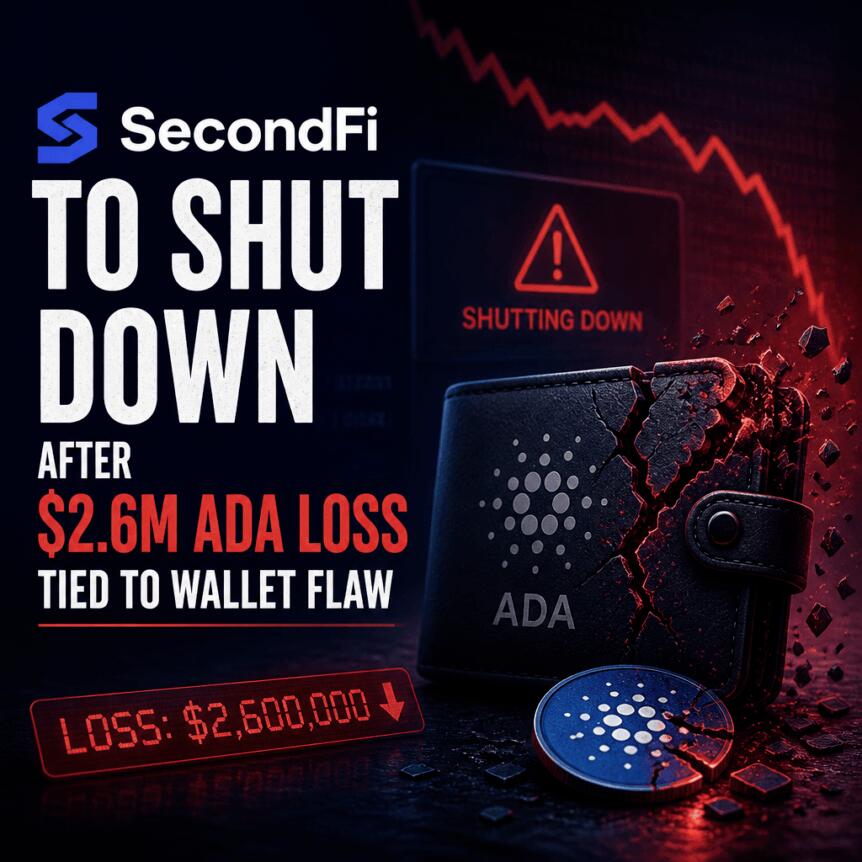
Cardano-focused wallet provider SecondFi says it will shut down its SecondFi and Yoroi wallet services after a security incident exposed a cryptographic weakness in its wallet software. In a public update published Wednesday on X, the company stated that attackers stole about 16.1 million ADA—valued at roughly $2.6 million at the time of disclosure—affecting 374 wallets.
The news arrives nearly a month after SecondFi first disclosed the exploit in late June, when it said it had identified a path toward recovery and expected the process to begin soon after security reviews. Now, users are being told to wait for new tools targeted for release in August, even as the company prepares to wind down operations.
Key takeaways
- SecondFi plans to wind down both its SecondFi and Yoroi wallet services following a cryptographic flaw that enabled theft of about 16.1 million ADA.
- The breach impacted 374 wallets, according to SecondFi, and involved external activity assessed by an independent investigation.
- SecondFi is developing a recovery tool using zero-knowledge proofs, with testing and third-party review before an August launch.
- The company also plans wallet export functionality for migration, but has not announced whether it will reimburse losses.
Shutdown after an ADA theft tied to a wallet weakness
SecondFi’s Wednesday update marks a decisive shift from its earlier stance that recovery would follow after additional work. The company said the attackers exploited a cryptographic flaw in its wallet software to gain access to user funds, resulting in the theft of approximately 16.1 million ADA.
SecondFi’s post further states that an independent investigation conducted with blockchain intelligence provider Groom Lake identified a “sophisticated external actor” and found indicators potentially consistent with North Korea’s Lazarus Group. Importantly, SecondFi’s update does not claim confirmed attribution.
For affected users, the immediate practical consequence is that the wallet services are being phased out rather than remaining fully operational while remediation continues. That increases the urgency for recovery and migration options, since users may no longer be able to rely on the same support channels tied to the compromised service.
Recovery tool planned for August, pending testing and audit
SecondFi said it is building a recovery tool intended to help exploited users retrieve assets while limiting what information they must disclose. According to the company, the approach uses zero-knowledge proofs, a technique designed to prove certain facts without revealing underlying sensitive data.
The wallet provider added that the tool is still in testing and will be reviewed by a third-party auditor before it is released. SecondFi’s stated goal is an August launch, aligning with its broader plan to provide recovery and migration functionality on a delayed timeline.
Alongside recovery, SecondFi said it is also preparing wallet export functionality. The export feature is meant to help users move their assets to another service, giving them a concrete migration path even if SecondFi and Yoroi services are being wound down.
However, SecondFi did not announce any direct reimbursement plan, nor did it specify whether it would compensate users from its own funds. For many in the Cardano ecosystem, that omission matters as much as the technical plan, because wallet recovery typically depends on the quality and timeliness of tooling rather than on centralized discretion.
Timeline criticism: from “two weeks” guidance to an August target
SecondFi’s operational change has been met with frustration from users who say earlier messaging implied a faster recovery window. Nearly a month after the initial disclosure, some users claim they still lack a clear, dependable path to regain or migrate their funds.
In guidance SecondFi posted earlier during the investigation, the company advised affected users not to restore recovery phrases into new Cardano wallets. The stated rationale was that moving funds elsewhere “does not mitigate the risk” while SecondFi investigated the incident.
SecondFi’s recovery expectations were also time-bound during the initial disclosure phase. On June 27, according to earlier reporting by Cointelegraph, the company said it had identified a recovery path and expected to begin the process within roughly two weeks after completing testing and security reviews. Wednesday’s update effectively pushed that horizon further out, saying recovery tools were now targeted for August due to ongoing development and review.
One user response posted to X criticized the mismatch between the earlier “two weeks” expectation and the updated delay, stating that they had been told recovery could occur within that shorter timeframe but are now being asked to wait longer.
Cointelegraph attempted to obtain further details from SecondFi about possible reimbursement plans but did not receive a response by publication time. The report also notes that EMURGO did not respond to earlier requests for comment.
Why this incident matters for Cardano wallet users
Wallet security incidents are often assessed not just by how much was stolen, but by how quickly users can safely regain control of funds and whether the remediation process is both verifiable and operationally feasible. In this case, SecondFi’s plan—recovery via zero-knowledge proofs plus export tools—shows an effort to create a safer workflow for exploited users, particularly by reducing the need to share sensitive material.
At the same time, the decision to wind down wallet services introduces a second challenge: continuity. Even a well-designed recovery tool can become harder to coordinate when a provider is closing down and users need to migrate away during remediation. For impacted users, the next steps hinge on whether SecondFi’s August release aligns with its testing and third-party audit schedule, and whether the export function is available in a way that supports migration without introducing new risk.
For the wider Cardano ecosystem, the incident also underscores the fragility of cryptographic assumptions inside wallet software. The company has not attributed the attack with certainty, but the mention of indicators possibly linked to Lazarus suggests that the event may reflect a persistent, externally driven threat model rather than an isolated bug.
As August approaches, the most important questions for affected users are straightforward: will the recovery tool and wallet export features ship on schedule, will they work reliably for all impacted wallets, and will SecondFi clarify whether any compensation is planned. Until those details are confirmed, the practical recovery timeline—and the safety of any migration steps—remains the central uncertainty.

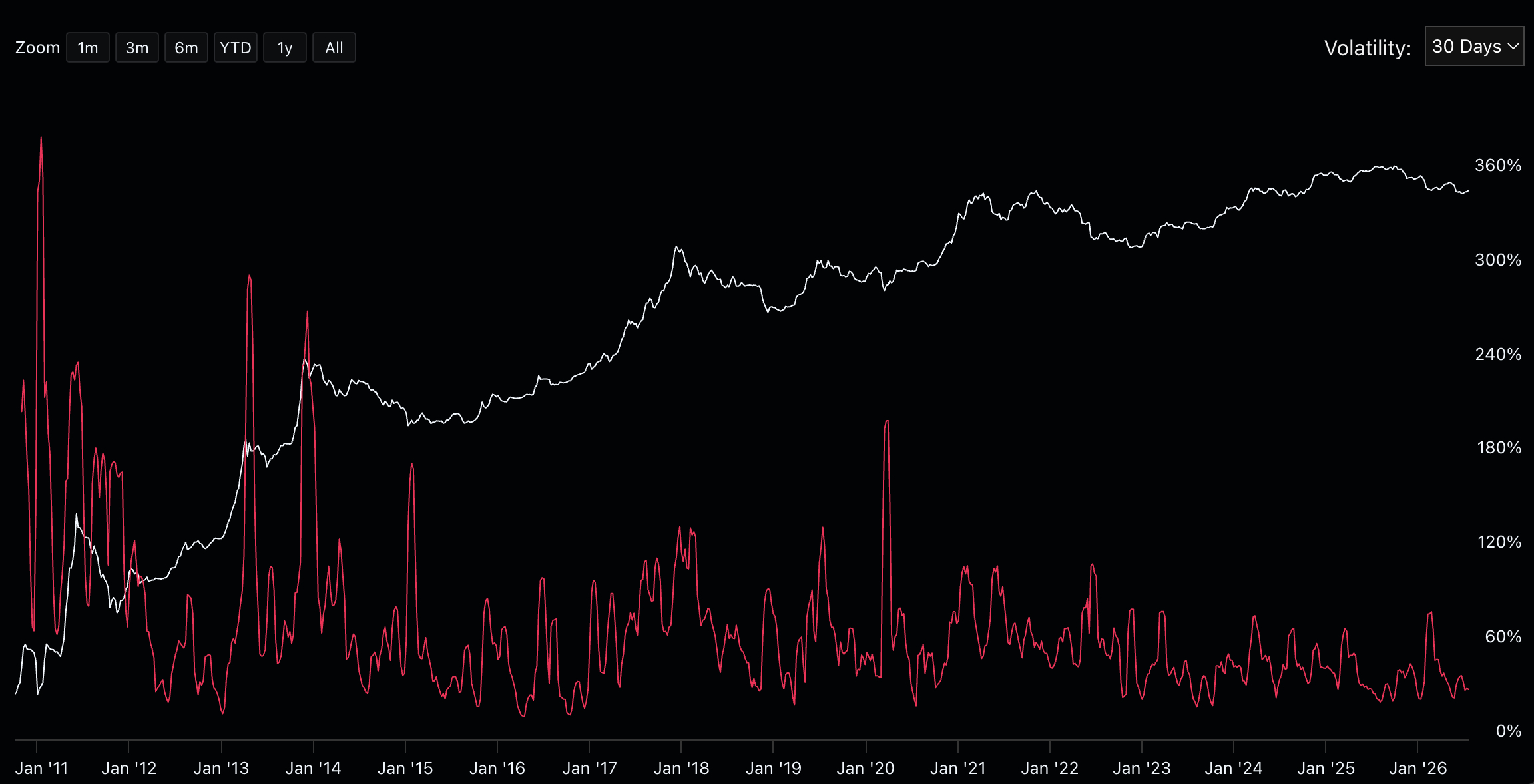
Bitcoin price is trading around $66,100, after climbing above $66,500 earlier in the session, in a bullish prediction environment. Despite the recent rebound, its volatility has compressed to a level not seen since 2016, making many traders uneasy. CryptoQuant contributor Axel Adler Jr. noted on July 22 that Bitcoin’s 30-day realized volatility dropped to 28.3, down from 41.6 on June 25.
That places BTC in the bottom 8% of its volatility range since 2016. In other words, roughly 92% of trading days during that period recorded higher volatility. Such calm conditions rarely last for long, especially after a steady price recovery.
Meanwhile, open interest has not expanded alongside Bitcoin’s recent gains, suggesting leverage remains relatively light. That lowers the immediate risk of large liquidation cascades. However, once volatility returns, price swings can accelerate quickly and catch overleveraged traders off guard.
Now, the market is waiting to see whether this quiet stretch leads to a breakout or a sharp reversal. Key technical levels and macro catalysts will likely decide the next move. Until then, Bitcoin may stay calm on the surface, but history suggests that calm rarely lasts.
Discover: The Best Crypto to Diversify Your Portfolio
Bitcoin Price Prediction: Reclaim $72,000 Before Volatility Forces a Decision?
Bitcoin has gained more than 2% over the past seven days, trading between $64,700 and $66,700. The recovery looks encouraging, but it still falls short of confirming a lasting trend. Meanwhile, the 20-day and 50-day moving averages remain below the spot price, offering near-term support. The 200-day moving average, near $72,700, remains the key resistance.
Adler’s threshold remains straightforward. If realized volatility climbs above 35 while Bitcoin fails to reclaim the 200-day moving average, selling pressure could return. At the same time, the Fear Index remains in fear territory. Gold and Treasury demand also suggest investors have not fully shifted back into risk assets.

Options traders reflect that uncertainty. Instead of making aggressive directional bets, many continue hedging against sharp moves. That cautious positioning fits the current low-volatility environment, where sudden breakouts or breakdowns often come without much warning.
In a bullish scenario, Bitcoin clears $68,000 and builds momentum toward the $72,000 to $72,700 area. A successful move above that zone could open the door to $75,000 and possibly $78,000. In the base case, BTC continues to range between $65,000 and $68,000, while volatility remains muted.
The bearish outlook returns if volatility jumps above 35 and the 200-day moving average rejects another rally. In that case, Bitcoin could revisit $61,800, followed by the $60,000 to $61,000 support area. If that floor breaks, $58,500 becomes the next level that traders will likely watch.
Trade Bitcoin and Altcoins on Bybit and Get a Chance to Win Our $1,000 USDT Airdrop
Bitcoin Hyper Eyes Early-Mover Window as BTC Consolidation Drags On
Bitcoin consolidating in the mid-$60,000s with its 200-day MA nearly $7,000 overhead is not a compelling near-term risk/reward for traders chasing upside.
That ceiling is real, and the timeline to breach it is unclear. That dynamic is pushing some capital toward earlier-stage plays within the Bitcoin ecosystem that don’t require a BTC all-time high to generate returns.
Bitcoin Hyper ($HYPER) is positioning itself as the first Bitcoin Layer 2 with Solana Virtual Machine (SVM) integration. It is targeting Bitcoin’s core bottlenecks: slow transaction finality, high fees, and the near-total absence of programmability.
The SVM integration is the hook here; it’s designed to deliver smart contract execution speeds that reportedly exceed Solana’s own performance, while anchoring to Bitcoin’s security model via a decentralized canonical bridge for BTC transfers.
The presale has raised close to $33 million at a current price of $0.0136835, with staking available at high APY for early participants.
For traders watching BTC stall below a major moving average, research Bitcoin Hyper here to assess whether the infrastructure thesis fits the current cycle context. Also worth reviewing: Bitcoin Hyper’s presale trajectory as BTC and ETH post weekly gains.
Discover: The Best Token Presales
The post Bitcoin Price Prediction: Bitcoin Volatility Hits 2016 Low, Could Trigger Liquidations appeared first on Cryptonews.

Crypto analyst EGRAG CRYPTO posted on X on Wednesday that Bitcoin (BTC) is forming an Adam and Eve double bottom on its weekly chart, a pattern that is not yet confirmed but could open the door to $173,000 if it plays out.
The setup hinges on a decisive weekly close above $83,000, followed by a retest that holds that level as new support.
The Setup the Analyst Is Watching
According to EGRAG, the double bottom is forming inside the $51,000 to $67,000 support band, with an aggressive V-shaped low forming the Adam side and a slower, rounded base forming the Eve side. The neckline sits at $83,000.
Getting there, per EGRAG’s roadmap, means holding the current bottom, reclaiming $68,000, then breaking and retesting $83,000 before the move can extend toward $103,000, then $120,000 to $126,000, and finally $173,000.
“$83K is the gateway,” wrote the analyst. “Break it, hold it, and the Adam & Eve structure can trigger the next major expansion.”
However, he did warn that a weekly close below approximately $51,000 would invalidate the whole setup.
Other traders have also chipped in with numbers of their own, including Ted Pillows, who pointed to Bitcoin’s daily Supertrend flipping green, noting that the last time that happened, BTC gained almost 15% in four weeks, and a repeat would put it near $76,000 by August.
But not everyone agrees the move up will continue, one of them being ChartNerd, who called this rally a countertrend move back in April. According to him, the 200-week EMA near $68,000 could be the local top before a final drop into late Q3 or Q4.
A separate note from Axel Adler Jr. added some nuance: realized volatility has fallen 31% this month to its lowest since 2016, and leverage, measured by open interest against market cap, has declined for 21 straight days, a combination he says makes the current bounce of more than 11% off the June 30 low near $59,000 less prone to a forced liquidation cascade.
Meanwhile, Markus Thielen, in a report for BIT, said implied volatility on Bitcoin and Ethereum options has climbed back to 36% after dropping to 31% from 44%, a shift he read as rising demand for upside calls heading into the usually quieter summer months.
Why Bitcoin Has Been Climbing
BTC was trading near $66,000 at the time of writing, down slightly on the day but up over 2% in the past week and close to 3% in the last month.
Data from CoinGecko shows that at one point, the asset came within touching distance of $67,000 before it was dragged back to its current level, which puts it about 47% below its all-time high from October 2025 when it went past $126,000.
That bounce has come alongside a resumption in inflows for spot Bitcoin ETFs, after eight weeks of outflows, as well as improved sentiment following news that there has been some progress on the CLARITY Act’s ethics language.
Bitfinex has flagged $68,000 as the next test for the OG cryptocurrency. It says there’s a reaction zone between $67,900 and $68,300 where short-term holders may look to sell, and that a real breakout will need spot buying rather than speculation to hold.
The post Bitcoin Could Rally to $173K if This Pattern Plays Out: Analyst appeared first on CryptoPotato.
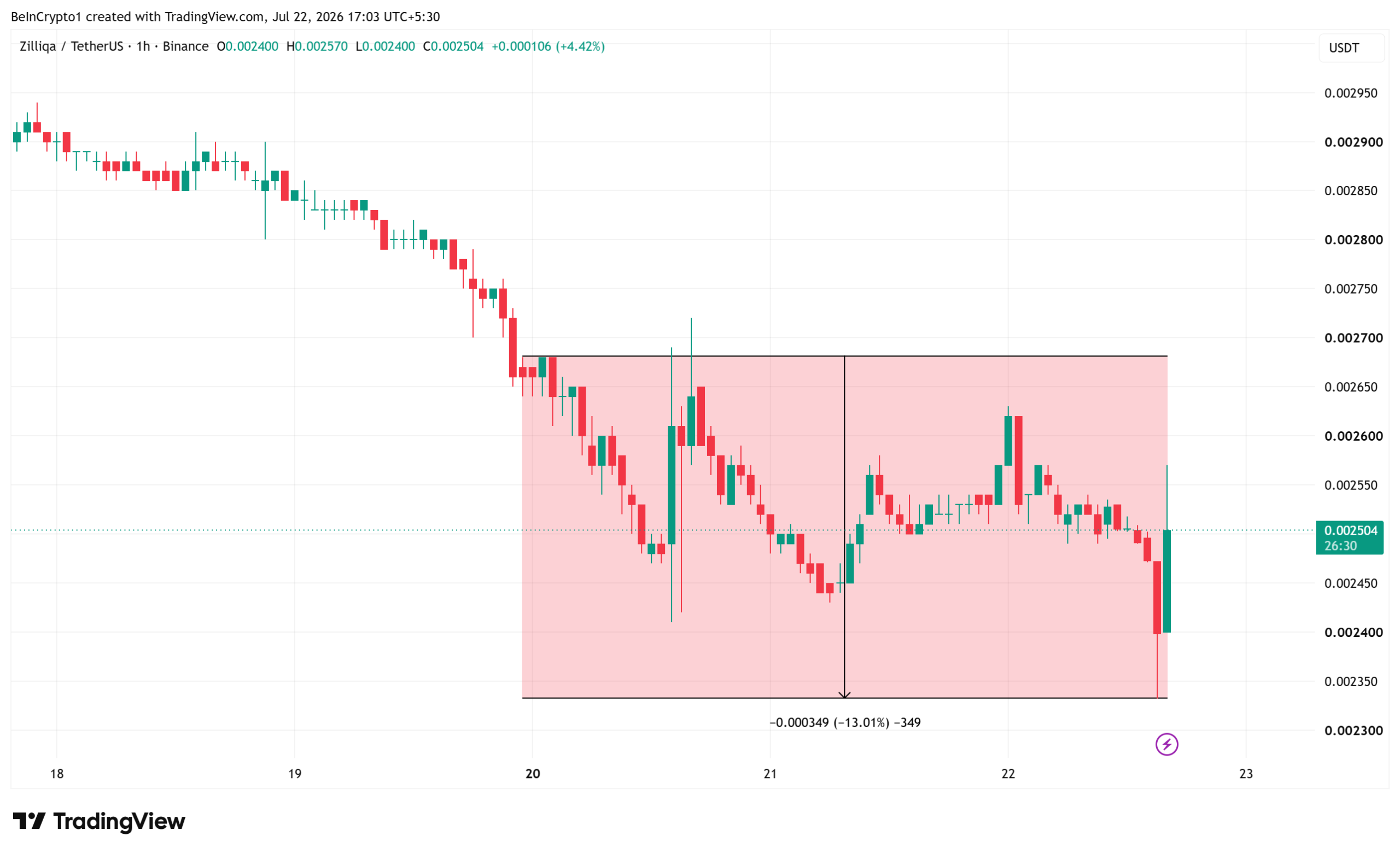
Upbit has put Zilliqa (ZIL) on delisting watch. The trigger was a critical Ledger flaw that exposed users’ private keys. ZIL fell about 10% as traders reacted.
Zilliqa is a layer-1 blockchain that launched in 2019. On Wednesday, it revealed that every version of its Ledger wallet app since launch carried the bug.
How the Ledger Flaw Exposed Zilliqa Private Keys
The app made a simple copying mistake. It zeroed out part of the random number that protects each signature. That leak adds up fast. After roughly five native transactions, attackers can work out a private key in seconds on an ordinary computer.
Exploitation began on July 19. A day later, an exchange partner reported ZIL stolen from a cold wallet. KuCoin then helped trace the bug, confirmed on July 21. The episode joins a string of key compromise attacks this year.
“Any account that has broadcast approximately five or more native transactions signed through the Zilliqa Ledger app should be considered compromised,” Zilliqa said in its disclosure.
Native ZIL transfers are now suspended. Affected keys must be retired because the leaked signatures live on-chain forever. Ethereum Virtual Machine (EVM) transactions and software wallets are safe.

Upbit Review Puts ZIL Trading Support at Risk
Upbit acted under Korea’s Virtual Asset User Protection Act, a 2024 investor safety law. The tag covers the ZIL/KRW and ZIL/BTC pairs. Deposits and withdrawals have been frozen since July 20, per the exchange’s notice. The review runs until the week of August 17.
Risk labels like this often hit prices hard. Wanchain fell 34% after Binance’s monitoring tag. Flow’s backers even went to court over Korean exchange delistings.
ZIL now trades near $0.0025, per ZIL markets data. It hit a record low of $0.00235 on Wednesday. The token is down about 17% in a week and 99% from its May 2021 peak. Its market cap sits near $49 million.

Zilliqa has promised a recovery plan for affected balances. What that plan delivers may decide whether Upbit lifts the watch or ends trading support.
The post Upbit Puts Altcoin at Risk of Delisting Following Critical Ledger Flaw appeared first on BeInCrypto.
Solana has started preparing validators for Alpenglow, a major upgrade that aims to make transactions final much faster.
Today, Solana can take about 12 seconds to fully confirm a block. Alpenglow aims to cut that time to around 150 milliseconds. In simple terms, a payment or trade could become final almost instantly.
The upgrade changes how validators confirm activity on the network. Validators are independent computers that check transactions and agree on the correct version of the blockchain.
How Solana is Changing with Alpenglow
Under the current system, validators send large amounts of voting data to the network. Alpenglow will combine many of those votes into one small digital certificate.
For example, it is similar to replacing hundreds of separate approval letters with one signed document that shows everyone has agreed. This reduces the amount of data Solana needs to process.
As a result, the network should have more space for normal transactions. This could help trading platforms, payment apps, and DeFi services process activity faster during busy periods.
Validators must first register new BLS public keys. Solana expects to roll out the upgrade in stages between August and October 2026, although the timetable could change during testing.
Solana’s Price Reacts Ahead of the Upgrade
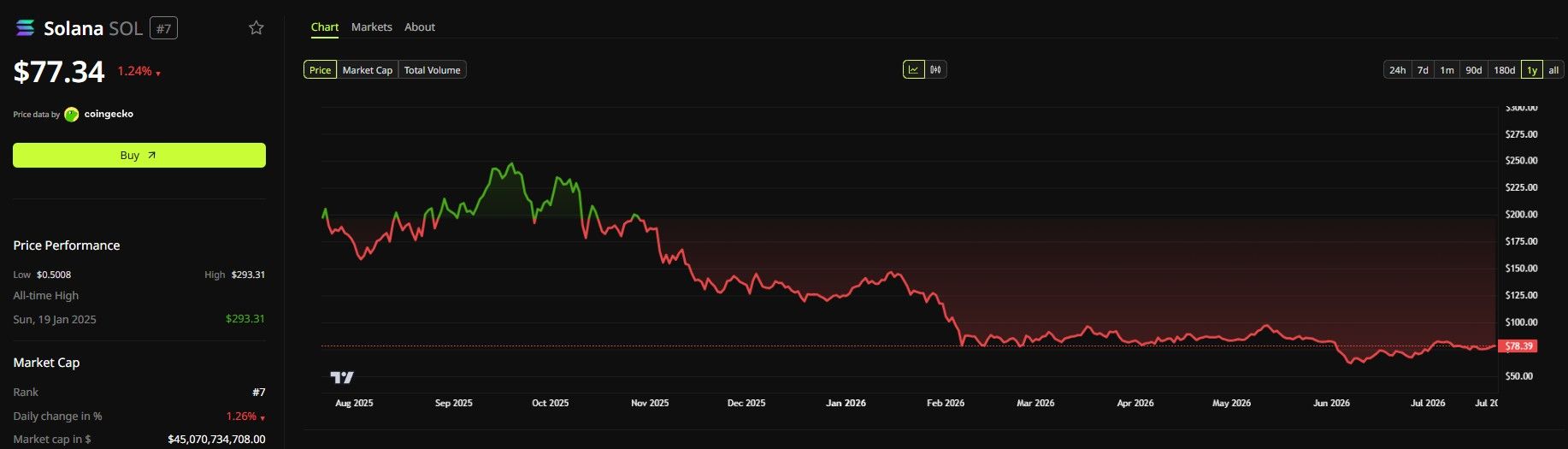
SOL currently trades near $77, giving it a market capitalization of about $45 billion and a rank of seventh among cryptocurrencies.
The token has dropped 61% over the past year. It has still gained nearly 5% over the past month, a mixed setup for its current price outlook.

What Comes Next Before Mainnet Goes Live
Alpenglow’s activation window still runs from August through October 2026, and Solana has not set an exact date within that range.
The upgrade cannot switch on until enough validators register their keys and the Validator Admission Ticket (VAT) is active. The VAT checks each key before a validator can vote under the new system.
Solana also rolled out governance voting tools this month alongside its Securitize listing on the New York Stock Exchange (NYSE).
Analysts tracking Solana’s seasonal price patterns note that past upgrades have sometimes preceded renewed trading activity. That pattern has not held every time. Whether Alpenglow repeats it will depend on how smoothly validators clear registration before the window closes in October.
The post Solana Prepares for the Alpenglow Upgrade. How Will SOL React? appeared first on BeInCrypto.


Gauntlet, a DeFi risk management and vault curation firm with $1.42 billion in assets under advisement, closed a $125 million Series C funding round with SBI Holdings, the Japanese financial conglomerate, as the sole investor, Gauntlet said on X Thursday. The firm, founded by chief executive Tarun… Read the full story at The Defiant


Prediction market platform Kalshi rolled out its U.S. “Midterms Hub” as it seeks to position itself as the primary reference for election odds in the U.S
The new hub will allow users to observe the outcomes speculators expect in individual U.S. Senate and House of Representatives as the country heads to elections in November, Kalshi said in a press release sent Wednesday.
Kalshi said the Midterms Hub will provide a live snapshot of where users are willing to place their bet at any given time. “It’s designed as the one-stop-shop for state and federal election forecasting picture of where a race stands,” Kalshi said.
The outcomes are based on the latest odds for each market and across a map of the U.S., Kalshi said in the statement.
The hub will also feature polling averages, so potential bettors can see how the prediction market odds compare with what statistical surveys of voters are showing, the latest Federal Election Commission fundraising reports for individual candidates, and curated news and analysis from various outlets.
The announcement follows news reports that Kalshi Inc. is seeking regulatory approval with the Commodity Futures Trading Commission to expand its perpetual contracts outside of crypto.


The US Department of Justice (DOJ) has filed five civil forfeiture complaints seeking more than $25 million in crypto allegedly tied to international investment, romance and recovery scams targeting victims in Canada and the United States.
On Tuesday, the US Attorney’s Office for the District of Columbia and the US Secret Service’s Washington Field Office said that the assets were recovered through separate investigations by the Cyber Fraud Task Force. Investigators identified several laundering networks and confirmed thousands of victims worldwide who were misled into believing they were making legitimate digital asset investments.
The action highlights the growing scale of crypto-enabled romance and investment scams, which often combine social engineering with fraudulent trading platforms and layered wallet transfers to conceal stolen funds.
The largest complaint seeks about $12.1 million linked to romance schemes that defrauded more than 200 victims, with proceeds routed through intermediary addresses and commingled with other victim funds. Another seeks $10.4 million traced to more than 270 suspected victim transactions, while three smaller cases involved fake investment accounts and a secondary scam offering to recover previously stolen funds.
The DOJ said the launderers were predominantly located in Southeast Asia, with related IP addresses in China, Malaysia and Cambodia.
Crypto romance scams face global enforcement push
The complaints follow a recent Interpol-coordinated operation targeting social engineering scams and financial networks used to launder their proceeds. Operation First Light 2026 involved 97 countries and territories, resulted in 5,811 arrests and the interception of $283 million in illicit assets. Interpol said the operation identified more than 142,000 victims and blocked more than 31,000 bank accounts.
As part of the operation, Thai authorities uncovered a network that allegedly converted romance-scam proceeds into crypto and used cross-chain token swaps to obscure the trail. A wallet associated with one suspected money launderer processed more than $122.5 million in crypto over 10 months.
Related: DOJ moves to dismiss charges against alleged $722M BitClub fraudster: Report
US authorities have also pursued crypto assets linked to similar schemes. In February, federal agents seized over $61 million in USDT stablecoin from addresses allegedly used to launder proceeds from fraudulent investment platforms.
Investigators said scammers first gained trust through romantic relationships, then directed them to fake trading platforms before moving their money through multiple wallets.
Magazine: Inside the ‘fake police raid’ that forced a $1M Bitcoin transfer
Ethereum price has climbed from $1,800 to an intraday high near $1,945 after a technology-led Wall Street rebound revived risk appetite, although resistance below $2,000 has kept traders cautious.
Summary
- Ethereum price holds above $1,900 after a Nasdaq-led rebound lifted risk appetite.
- Renewed ETF inflows and short liquidations could support a break above $2,000.
- A drop below $1,859 would weaken the recovery and expose $1,828 support.
According to data from crypto.news, Ethereum (ETH) price traded near $1,929 at the time of writing, about 6% above its July 21 low. Buyers initially followed U.S. equities higher as the Nasdaq Composite gained 1.3% and the S&P 500 added 0.9%, led by semiconductor and artificial intelligence stocks. Micron rose 12.2%, while Nvidia advanced 2%. Notably, enthusiasm around upcoming technology earnings drove the session.
Institutional flows supplied another source of demand. U.S. spot Ethereum exchange-traded funds recorded $37.47 million in net inflows during the latest session, according to SoSoValue. BlackRock’s ETHA accounted for $52.7 million, partly offset by outflows from Fidelity’s FETH.
Momentum also improved against Bitcoin. Crypto trader Daan Crypto Trades noted that ETH has outperformed BTC during the third quarter after falling 29.26% in the first quarter and another 25.28% in the second. CoinGlass data shared by the trader showed Ethereum up 22.98% so far in Q3, compared with an average third-quarter return of 8.86% since 2016.
According to Daan, the rebound followed Ethereum’s weakest first half since 2022, making the recovery less unusual despite Q3’s historically slow performance.
“In the end BTC will have to lead the market though,” Daan wrote.
Bitcoin’s ability to retain its recent gains therefore remains relevant to ETH’s next move. A fresh Bitcoin sell-off could drain demand from altcoins even if Ethereum continues to outperform on a relative basis.
Ethereum price has retained a path toward $2,000
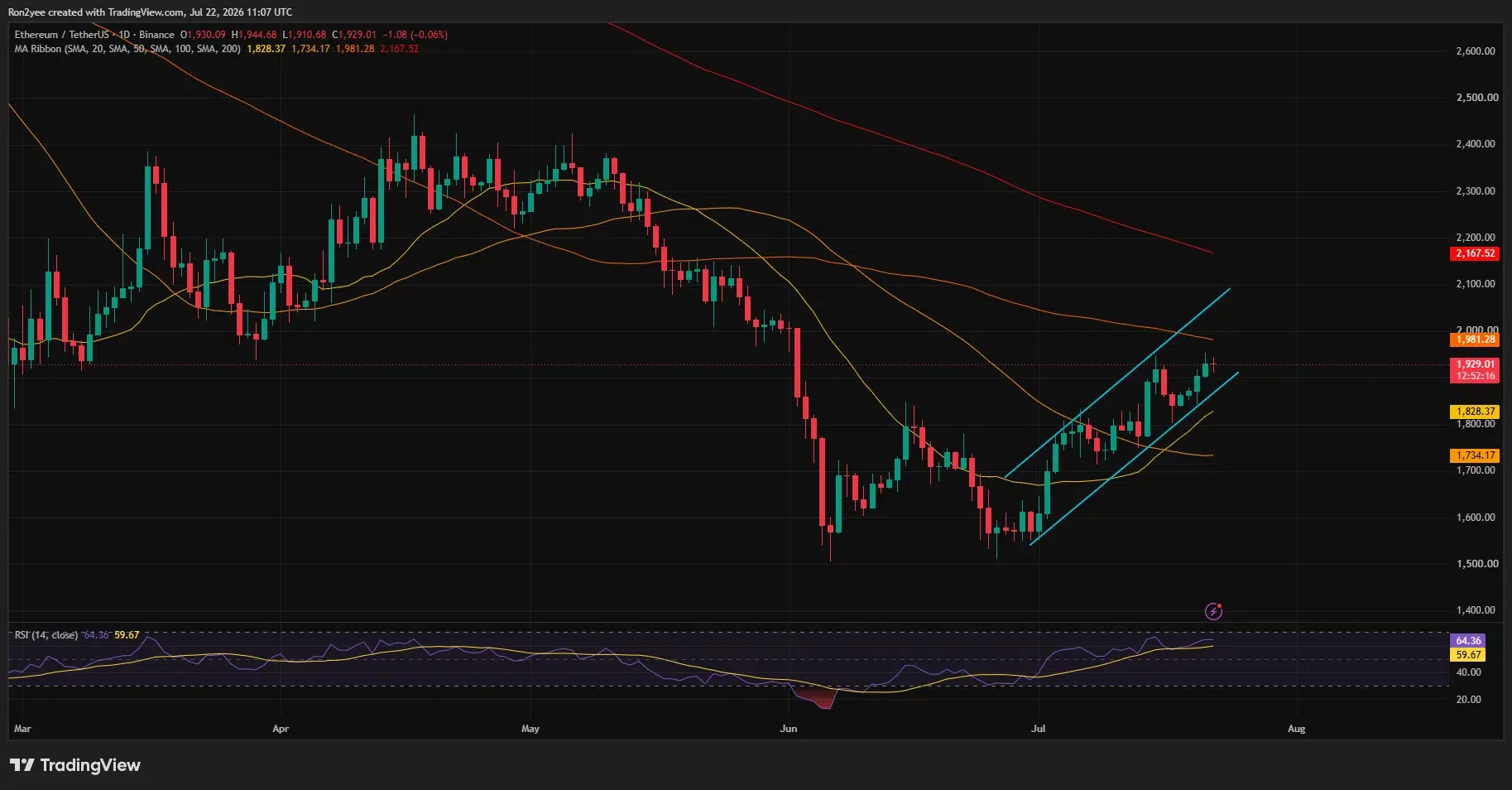
Ethereum’s daily chart has formed an ascending channel from the late-June low near $1,514. Price now trades above the channel’s lower boundary and the 20-day simple moving average at $1,828. The rising support line has produced a sequence of higher lows, while the upper boundary leaves room for a move toward $2,080 if buyers clear the current ceiling.
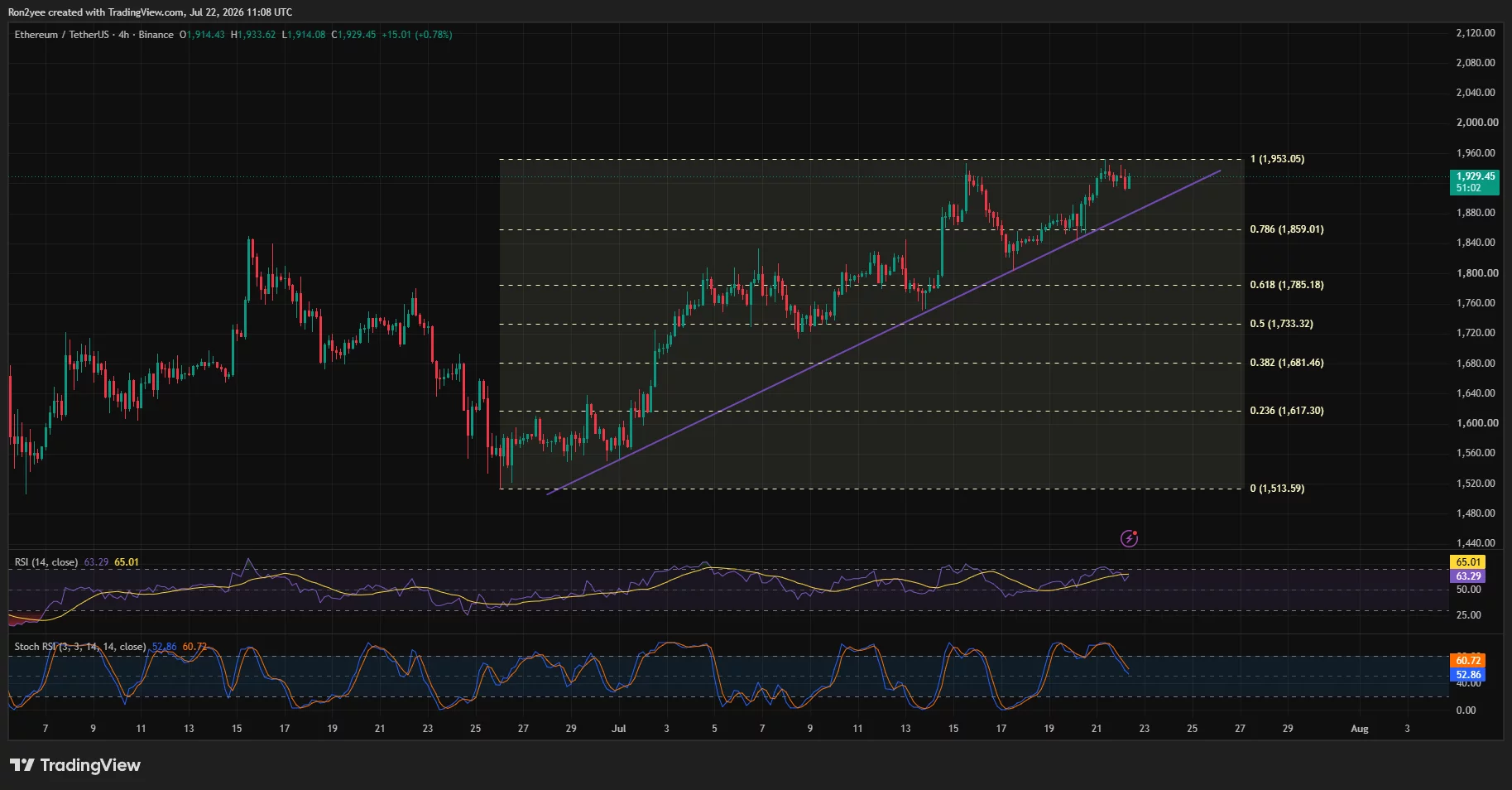
The $1,945–$1,953 area presents the first obstacle. ETH has tested the region twice without securing a daily close above it, and the 4-hour Fibonacci structure places its full recovery level at $1,953. A close beyond that price would expose the $1,981 100-day SMA, followed by the psychological $2,000 level.
Ethereum’s daily RSI has reached 64.36, above its signal average of 59.67 but below the conventional overbought threshold of 70. The reading leaves room for another advance, though buyers no longer have the deeply discounted conditions seen around the June low.
On the 4-hour chart, RSI stands at 63.29, while Stochastic RSI has dropped to 52.86 beneath its 60.72 signal line. The difference shows that the primary advance remains intact even as very short-term momentum has eased after the rejection near $1,945. Consolidation above rising trendline support would preserve the higher-low structure.
Liquidation data places the largest nearby leverage pool between $1,950 and $1,960. CoinGlass’s one-week heatmap shows the band as the brightest concentration above the market, with additional liquidity near $1,980 and $2,000. A break through $1,953 could force short liquidations and accelerate the move toward the round-number target.
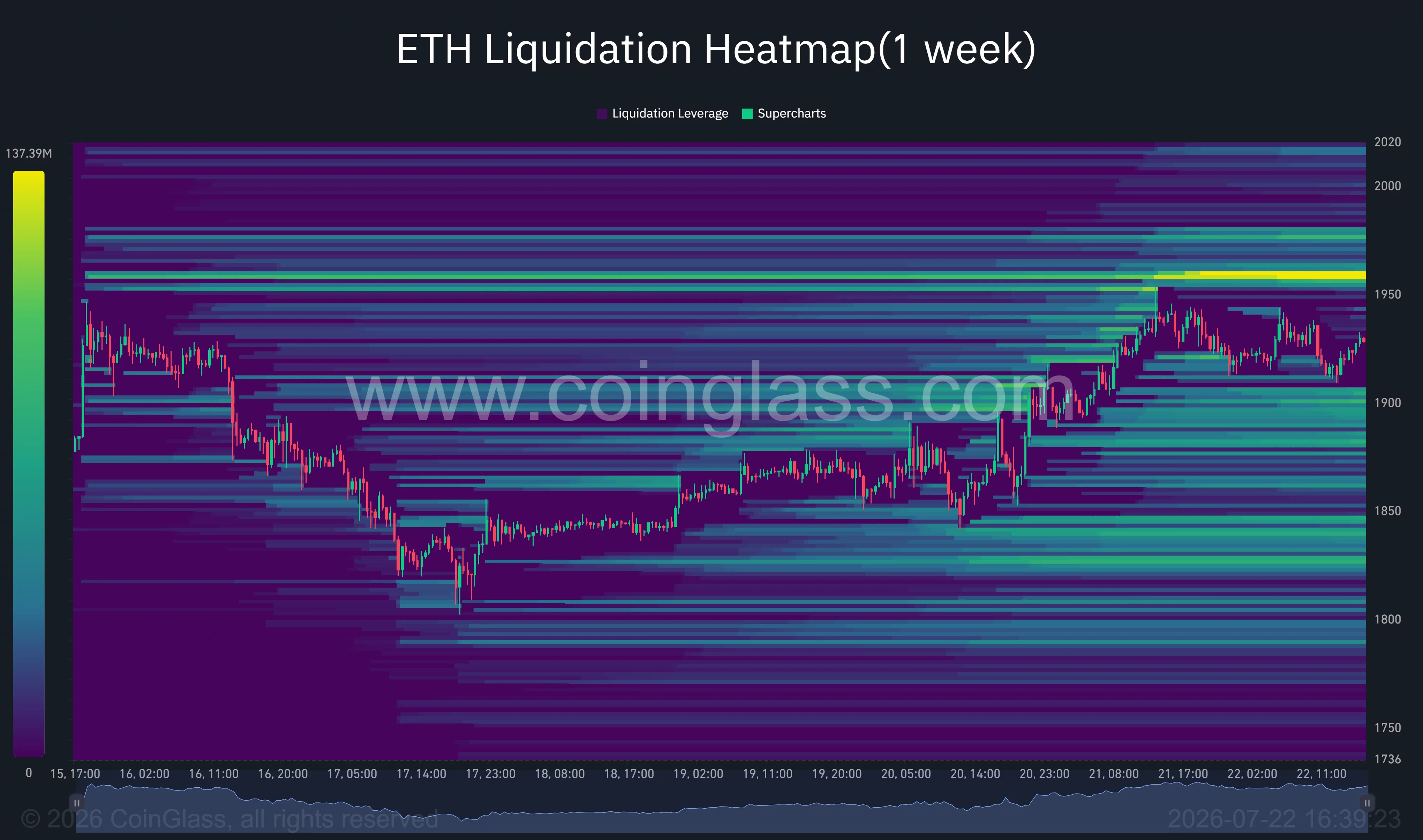
Below the market, leverage clusters sit around $1,900, $1,880 and $1,840. The $1,900 zone has already acted as intraday support, while the 4-hour Fibonacci retracement identifies $1,859 as the next major level. Trader Ted Pillows placed the key support range slightly higher, between $1,870 and $1,900.
“If the $1,870–$1,900 level holds, Ethereum could soon rally above $2,000.”
Loss of $1,859 would weaken Ethereum’s recovery
Ethereum’s bullish setup would lose strength if price closes below the $1,870–$1,900 demand zone and breaks the 4-hour trendline. The next support rests at $1,859, the 78.6% Fibonacci retracement. Failure there would expose the daily 20-day SMA at $1,828 and the lower liquidation pocket near $1,840.
A deeper decline below $1,828 would break the sequence of higher lows and place $1,785 back in view. The 4-hour chart identifies that level as the 61.8% Fibonacci retracement, while the daily 50-day and 50-week averages sit much lower at $1,734. Those levels would become relevant if risk appetite deteriorates sharply.
Macro conditions remain the main external threat. Brent crude reached $91.01 on July 21 as the U.S.-Iran conflict pushed energy prices higher. Expensive oil could revive inflation concerns and lift Treasury yields, which would reduce demand for high-beta assets such as Ethereum.
For now, ETH retains its ascending structure above $1,900. A daily close beyond $1,953 would strengthen the case for $2,000, while a break below $1,859 would invalidate the immediate breakout attempt and increase the risk of a return toward $1,828.
Disclosure: This article does not represent investment advice. The content and materials featured on this page are for educational purposes only.

Bitcoin is trading around $66,000 with muted directional conviction, while Washington has added another variable to the equation. President Trump agreed to ethics language that would bar senior federal officials from issuing crypto or any digital assets. He also backed giving enforcement authority to the Justice Department instead of state attorneys general. That decision is already drawing pushback, and its impact could extend beyond Bitcoin.
The ethics provision, confirmed during a White House industry call with crypto adviser Patrick Witt, would prohibit members of Congress, Donald Trump, and the vice president from issuing cryptocurrencies while in office. However, the DOJ enforcement structure has become the main sticking point. That disagreement could shape the next phase of crypto legislation.
— Coin Bureau (@coinbureau) July 22, 2026
 LATEST: President Trump AGREES to crypto ethics rules in the CLARITY Act.
The proposal would ban the president, members of Congress and other federal officials from issuing crypto while in office.
Bipartisan talks are underway, with updated ethics text expected within days,… https://t.co/UpnjftmRuP pic.twitter.com/H5JrhXmMOf
Sen. Angela Alsobrooks, a key Clarity Act negotiator, dismissed the proposal as “unserious.” She pointed to Trump’s memecoin holdings and reported World Liberty Financial income as reasons why federal self policing would not be enough. As a result, the Clarity Act’s ethics provision has become a central issue that could decide whether the Senate advances the bill.
Meanwhile, Treasury Secretary Scott Bessent has repeated that Congress must establish clear federal rules for digital assets. He argued that regulatory certainty is necessary to keep capital and innovation in the United States. Until lawmakers reach an agreement, institutional investors may remain cautious despite Bitcoin holding near the $66,000 level.
Discover: The Best Token Presales
Can BTC Break Its Range While DOJ Enforcement Clouds Altcoin Flows? Is It a Bullish Trump Crypto Decision?
Bitcoin’s technical setup remains straightforward. Support sits around the low $64,000s, while resistance stands near the upper $66,000s. Price is still trapped inside that range, with no convincing volume surge confirming a breakout. Meanwhile, derivatives paint the same picture. Funding rates remain neutral, and open interest has yet to expand aggressively.
Institutional desks also continue watching Washington. Many still see clearer regulatory language as the catalyst for Bitcoin’s next sustained move. Until then, large players appear comfortable waiting instead of chasing price.
With a clearer US policy or even a partial ethics agreement, sentiment could be lifted. That could send Bitcoin above the upper $66,000s, while Ethereum climbs from around $1,930 toward recent swing highs. Or Bitcoin stays range-bound, with Ethereum holding support until a stronger catalyst appears.

It could also become bearish if the ethics dispute drags on while DOJ enforcement is viewed as excessive. That combination could weaken risk appetite across crypto. Speculative altcoins and presale tokens would likely suffer larger losses than Bitcoin or Ethereum, as institutions often rotate into the largest assets during uncertain periods.
That downside scenario deserves the closest attention from presale investors. Tougher DOJ scrutiny of digital asset issuance by public officials could temporarily cool speculative narratives. For now, watching the Senate vote count before adding exposure to higher beta tokens remains the more cautious approach.
Trade Bitcoin and Altcoins on Bybit and Get a Chance to Win Our $1,000 USDT Airdrop
Bitcoin Hyper Eyes Early Infrastructure Positioning as BTC Consolidates
Range-bound BTC at current levels offers limited near-term upside at large-cap market caps. Early-stage infrastructure plays are where asymmetric exposure still exists.
Bitcoin Hyper ($HYPER) is positioning in that gap. It’s a Bitcoin Layer 2 integrating the Solana Virtual Machine. It’s the first project to do so, targeting the core limitations that have historically kept Bitcoin sidelined from DeFi: slow throughput, high fees, and absent programmability.
The pitch is execution-layer speed on Bitcoin’s security base, with a decentralized canonical bridge for BTC transfers and sub-Solana-latency smart contract processing built into the stack.
Presale figures: $0.0136835 per $HYPER, with $32.9 million raised to date. Staking is live with a high APY. That raise figure at this price implies a meaningful early-mover discount relative to any post-launch liquidity event.
Research Bitcoin Hyper before the next stage opens.
Discover: The Best Crypto to Diversify Your Portfolio
The post Trump Says Yes to Crypto Ethics Rule, Puts DOJ as Enforcer appeared first on Cryptonews.

Dollar-backed stablecoins are beginning to behave like a fast-growing channel for “digital dollarization,” according to new research from the Bank for International Settlements (BIS). In a study spanning more than 130 economies, BIS researchers argue that stablecoin inflows react differently than traditional foreign-currency deposits—especially when governments impose capital controls or tighten foreign-exchange (FX) restrictions.
The implication for policymakers is straightforward but uncomfortable: rules built for banking systems may be less effective in a tokenized world, where part of stablecoin activity appears to move “outside the regulatory perimeter.” While BIS does not conclude that monetary policy transmission is broadly impaired, it warns that stablecoins could still weaken monetary sovereignty by encouraging households and businesses to hold and transact value in dollars outside conventional banking.
Key takeaways
- BIS finds dollar-pegged stablecoin inflows rise during macroeconomic stress, similar to foreign-currency deposits.
- Unlike bank deposits, stablecoin flows show little sensitivity to capital controls and FX restrictions, suggesting activity can sit beyond regulatory reach.
- The study sees limited evidence that deposit dollarization disrupts monetary policy transmission, though higher foreign-currency deposits correlate with somewhat greater inflation risk.
- BIS argues regulators may need new financial-stability tools tailored to tokenized systems rather than relying on frameworks designed for banks and deposits.
“Digital dollarization” that resists capital controls
The BIS paper examines how dollar-denominated value enters and circulates in economies facing pressure—tracking both foreign-currency bank deposits and inflows into dollar-pegged stablecoins across more than 130 countries. The researchers report that both categories tend to increase when macroeconomic conditions worsen.
That overlap matters because it suggests stablecoins are not merely a speculative phenomenon; they can reflect real-world incentives that emerge during periods of uncertainty, such as depreciation expectations, inflation concerns, and restricted access to reliable FX channels.
However, the key difference is in how the two behave under policy barriers. The BIS authors found stablecoin inflows were “largely unaffected by capital controls” and other FX restrictions. In their explanation, they argue this may be because stablecoins “are partly circulating outside the regulatory perimeter”—meaning restrictions designed to shape bank-based capital flows may not fully apply to token-based systems.
Monetary sovereignty concerns remain
BIS stops short of saying stablecoins automatically destabilize monetary systems everywhere, but it highlights a plausible pathway for damage: households and businesses could increasingly shift into dollars without relying on the banking infrastructure that typically channels and constrains foreign-currency holdings.
The risk is especially pronounced in emerging markets, where currency weakness and limited financial service depth can make dollar assets more attractive. In such settings, stablecoins can lower practical friction for users who want dollar-denominated value for saving, payments, or cross-border activity—potentially reducing demand for local-currency balances and moving more financial activity outside standard intermediation.
The BIS study also notes that even if monetary policy transmission is not obviously weakened in aggregate, the broader environment could still become more fragile. The researchers point out that countries with higher foreign-currency deposits face greater inflation risk, suggesting that dollarization—whether through banks or tokens—may still have macroeconomic consequences worth monitoring.
Why investors and builders should care
For market participants, the findings go beyond a theoretical policy debate. If stablecoin adoption is indeed less constrained by capital controls, then stablecoin liquidity may become a more persistent feature of macro stress—potentially affecting funding conditions, FX dynamics, and how quickly cross-border value can move when local conditions deteriorate.
For developers and payment operators, the study reinforces that compliance and risk management cannot be limited to traditional banking assumptions. When stablecoins circulate through rails that fall outside existing supervisory boundaries, regulatory effectiveness depends not only on formal licensing, but also on where tokens are held, transferred, and used in practice.
BIS’s message to policymakers—“regulations designed for traditional banking and foreign-currency deposits may be less effective in a tokenized financial system”—is a signal that future oversight may evolve toward activity-based frameworks or tools targeted at token ecosystems rather than account-based rules alone.
Stablecoin usage keeps expanding in key regions
The BIS research lands at a time when stablecoin usage is rising in multiple emerging markets, supported by both payments utility and the appeal of dollar-denominated value during periods of instability.
In a separate analysis of Nigeria, the International Monetary Fund (IMF) reported that households and small businesses have been using US dollar-pegged stablecoins for cross-border payments, remittances, and access to dollar-denominated assets as inflation, currency depreciation, and FX access constraints drive demand. The IMF also noted that stablecoins can reduce the cost and time of moving money across borders while expanding access to financial services for users outside the traditional banking system. At the same time, it warned that broader adoption could weaken monetary sovereignty by shifting demand away from local currencies and moving more activity outside conventional banking channels.
Stablecoin activity is also accelerating in parts of Latin America. Bitso Business, described as the enterprise payments arm of exchange Bitso, reported an 81% year-on-year increase in stablecoin payment volume during the first half of 2026. The company also said Circle’s USDC and Tether’s USDt accounted for 40% of all crypto purchases in the region in 2025, surpassing Bitcoin for the first time.
Meanwhile, broader market data points to continued growth in overall stablecoin supply. Stablecoin market capitalization has risen to about $309.7 billion, up from roughly $260 billion a year earlier, according to the figures referenced alongside the report. For tracking supply and distribution, the article cites DefiLlama’s stablecoin dashboard: DefiLlama.
What to watch next
The BIS study suggests that capital controls may not fully blunt dollar-pegged stablecoin flows during stress, but it also leaves room for further research on how adoption affects different policy regimes over time. Investors and compliance teams should watch for regulatory approaches that better address token circulation beyond banking channels—especially in emerging markets where local currency vulnerability and limited FX access make stablecoin adoption most likely to accelerate.
Middleton incident LIVE as emergency services swarm town centre
Earnings call transcript: Lonza H1 2026 profit gains fail to lift shares

Bitcoin Price Prediction: Bitcoin Volatility Hits 2016 Low, Could Trigger Liquidations


![Is The Bitcoin & Crypto Cycle Low In? [Here’s The Facts]](https://wordupnews.com/wp-content/uploads/2026/07/1784724876_maxresdefault-80x80.jpg)
-
 NewsBeat6 days ago
London Mayor Sadiq Khan handed a peerage by Keir Starmer alongside 15 other Labour figures… just days before the PM leaves No10
-

 Fashion5 days ago
Weekend Open Thread – Corporette.com
-

 Politics4 days ago
The House | The City of London can help the new chancellor deliver growth in every postcode
-
 Crypto World5 days ago
Two July Windows Left: The CLARITY Act’s Senate Fight and What Failure Means
-

 Crypto World7 days ago
CFTC blocks Kalshi from unwinding Michigan trades after court order
-

 Crypto World4 days ago
Ripple Payments Joins MiCA With 14 Firms, Does It Mean Anything For XRP?
-

 Business6 days ago
Nvidia Stock Slips After Big Tuesday Rally as Huang Confirms Vera Rubin Chip Is Now in Production Today
-

 Politics3 days ago
Democrats look to World Cup watch parties to register thousands of voters
-
 Entertainment7 days ago
Disney’s Most Ambitious Failed Star Wars Attraction Is Coming to SDCC
-

 Crypto World5 days ago
Ripple wins EU-wide access as ESMA adds it to MiCA register
-

 Crypto World1 day ago
Grayscale Files For Worldcoin ETF, WLD Registers Sharp Rise
-

 Business6 days ago
Palantir Shares Rise After Expanded Nvidia Partnership and Fresh Analyst Upgrades Ahead of Earnings Day
-

 Crypto World6 days ago
Injective Submits SEC Transfer-Agent Registration to Onchain Ownership Records
-

 Tech2 days ago
Sail Virtually Aboard The “Itanic” With IA-64 Emulator
-
 Tech1 day ago
Turtle Beach Command Series KB7 review: a nifty screen-equipped gaming keyboard
-

 NewsBeat2 days ago
Unregistered fitter used Gas Safe logo on business flyers
-

 NewsBeat5 days ago
Registration is now open for March for Men with Kev 2026
-
 Sports7 days ago
New Cornerback Enters Vikings Trade Rumor Mill
-
 Business9 hours ago
New Jersey voter registration controversy explained: How 6,600 noncitizens got on the rolls, and what happens next
-

 News Videos5 days ago
Money | Class 12 Economics | CBSE Board Exam 2026-27
You must be logged in to post a comment Login