

Crypto World
SEC’s advisory group backs tokenized securities push, outlines how to keep it safe


A committee that advises the U.S. Securities and Exchange Commission recommended the agency move forward on a tokenized-securities policy that would allow traders to cut out the kind of go-between settlement that Wall Street investment firms have relied on for decades.
The SEC’s Investor Advisory Committee voted Thursday to recommend narrow exemptions for the blockchain-based innovation for the trading of stocks, as long as the activity comes with mandatory disclosures, routine outside supervision and “a requirement that the trading of tokenized equity securities seeks to ensure that all investors receive the best terms for their orders.”
These crypto assets still meet the definition of securities under the law, as SEC Chairman Paul Atkins has regularly contended, which means the activity needs parallel safeguards to the traditional system. Atkins said his agency is working toward formal regulations on tokenization. Now this work has the backing of an official recommendation from the committee, whose members include veterans from major trading firms, institutional investors and academics.
The traditional approach to stock trading features brokers, transfer agents and centralized settlement databases and can take a day or more to execute, but in placing that same stock on-chain, “the delivery of the tokenized security and the payment can happen as a single transaction, with ownership records embedded directly into a single blockchain.”
The group told the commission that the newer approach doesn’t come without risks:
“The most significant risk associated with the tokenization of equity securities is that these reforms or grants of exemptive relief could introduce new risks that investors do not understand and impose higher costs that outweigh the benefits of tokenization,” according to the recommendation document approved by the committee.
In remarks on Thursday, Atkins praised the committee for its “recognition that tokenization can enhance settlement efficiency, reduce settlement risk, and eliminate unnecessary intermediaries.
“I expect the Commission to soon consider an innovation exemption to facilitate limited trading of certain tokenized securities with an eye toward developing a long-term regulatory framework,” he said.

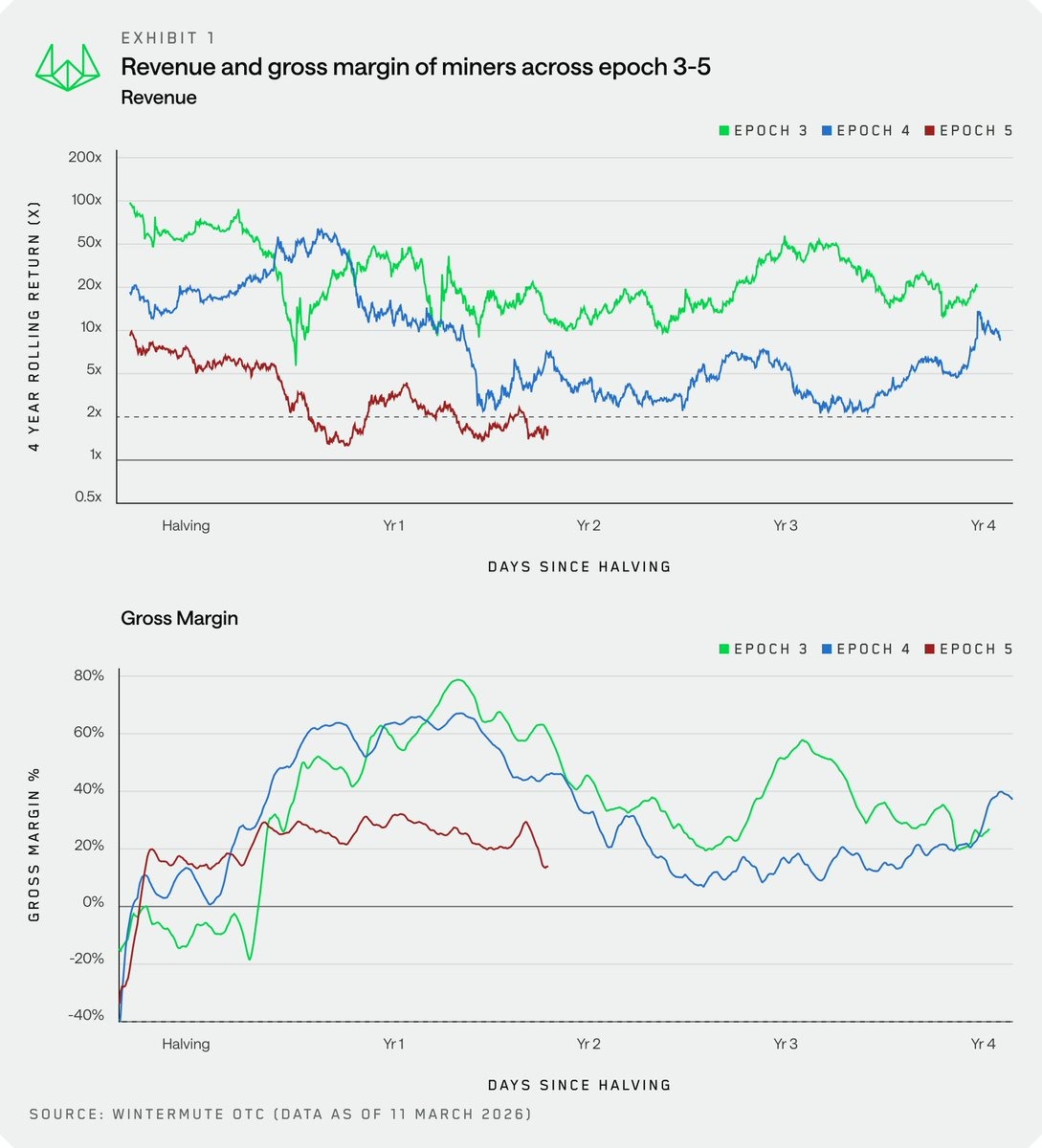
Many Bitcoin miners are struggling to turn a profit this market cycle due to diminishing returns, so they may need to pivot to artificial intelligence hosting or put their holdings to work to generate yields, says market maker Wintermute.
Wintermute said in a blog post on Thursday that Bitcoin (BTC) miners have spent years building large-scale power infrastructure in low-cost energy markets, and they now find themselves “sitting on exactly what the AI industry needs most urgently and cannot easily replicate.”
It said that Bitcoin mining is a “structurally rigid business model,” and while the AI pivot is a compelling one, it is also a “drastic and capital-intensive step.”
The report comes as mining giant MARA Holdings is the latest to eye AI, filing with the SEC on March 3 to signal its intent to sell some of its BTC to pivot to the technology. Meanwhile, publicly listed miners have sold more than 15,000 Bitcoin since October.
Miners hanging onto Bitcoin is “legacy of the HODL era”
Wintermute said that Bitcoin miners are collectively holding close to 1% of the total BTC supply, which it argued was a “legacy of the HODL era,” and that the “full toolkit of treasury management remains largely untapped.”
Crypto yield generation has been traditionally limited to staking and DeFi, but Wintermute said miners could tap yields through active management, such as monetizing market risk through derivatives structures, covered calls, and cash-secured puts.
Passive management options include deploying BTC into lending protocols to earn interest.

“We believe active balance sheet management is the most underutilized lever available to miners and one that deserves far greater strategic attention,” Wintermute said. “The miners who treat their BTC holdings as a working asset rather than a passive reserve will carry a structural edge into the next halving.”
Related: Mining companies move deeper into AI, HPC as MARA may sell Bitcoin
Wintermute said that for the first time in a four-year market cycle, Bitcoin has failed to deliver the two-times price return needed to offset halving-driven revenue cuts, and gross margins have peaked at levels that previously marked bear market floors.
Additionally, the transaction fee market has not filled the gap as it is “episodic” and not structural. At the same time, energy costs continue to squeeze margins.
The company noted that data suggests this squeeze is unlike previous cycles in 2018 and 2022, describing it as a “healthy shakeup” that fits within the design of Bitcoin and will make the mining industry “more efficient as a result.”
Magazine: All 21 million Bitcoin is at risk from quantum computers
This Friday, we examine Ethereum, Ripple, Cardano, Binance Coin, and Hyperliquid in greater detail.
Ethereum (ETH)
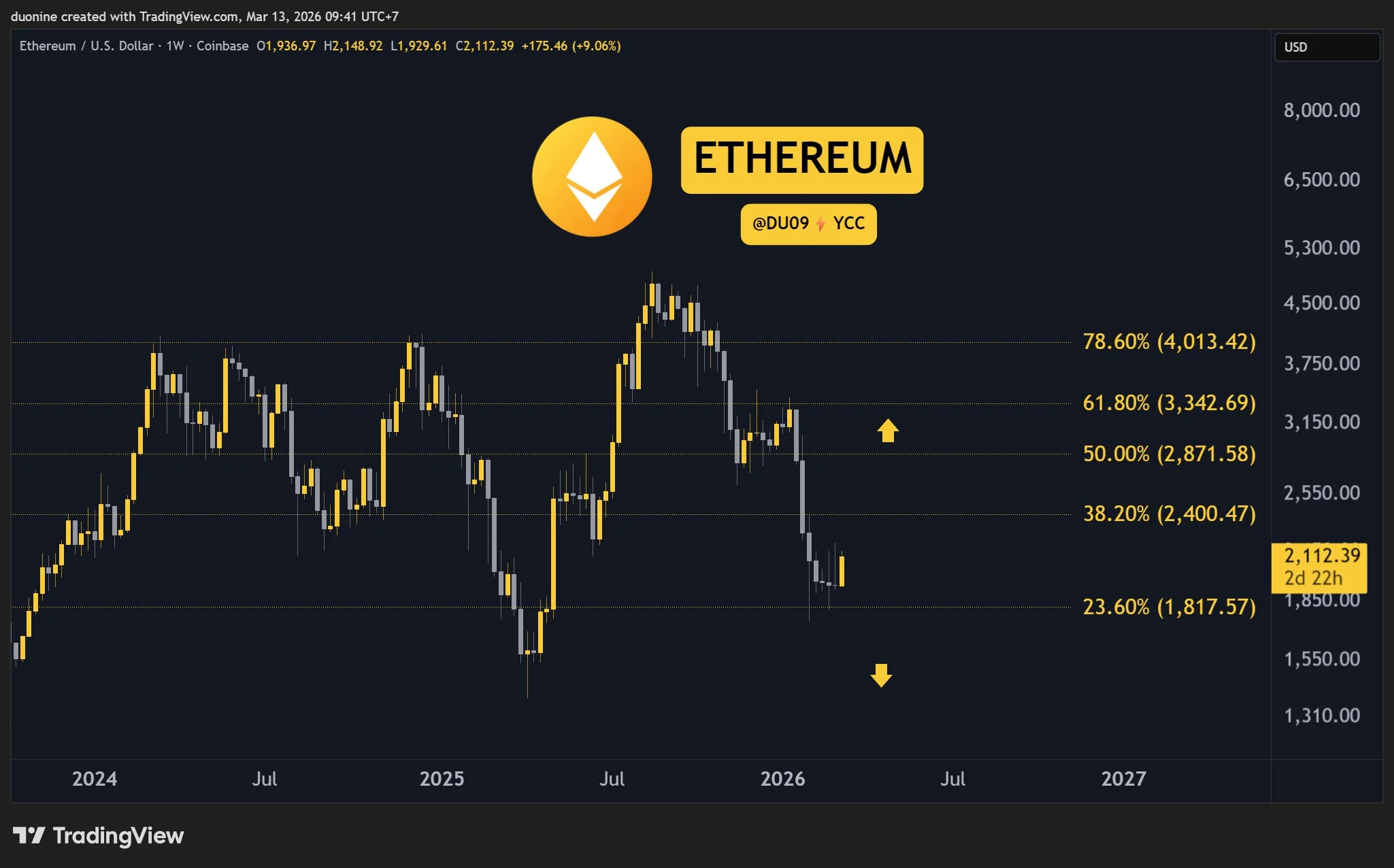
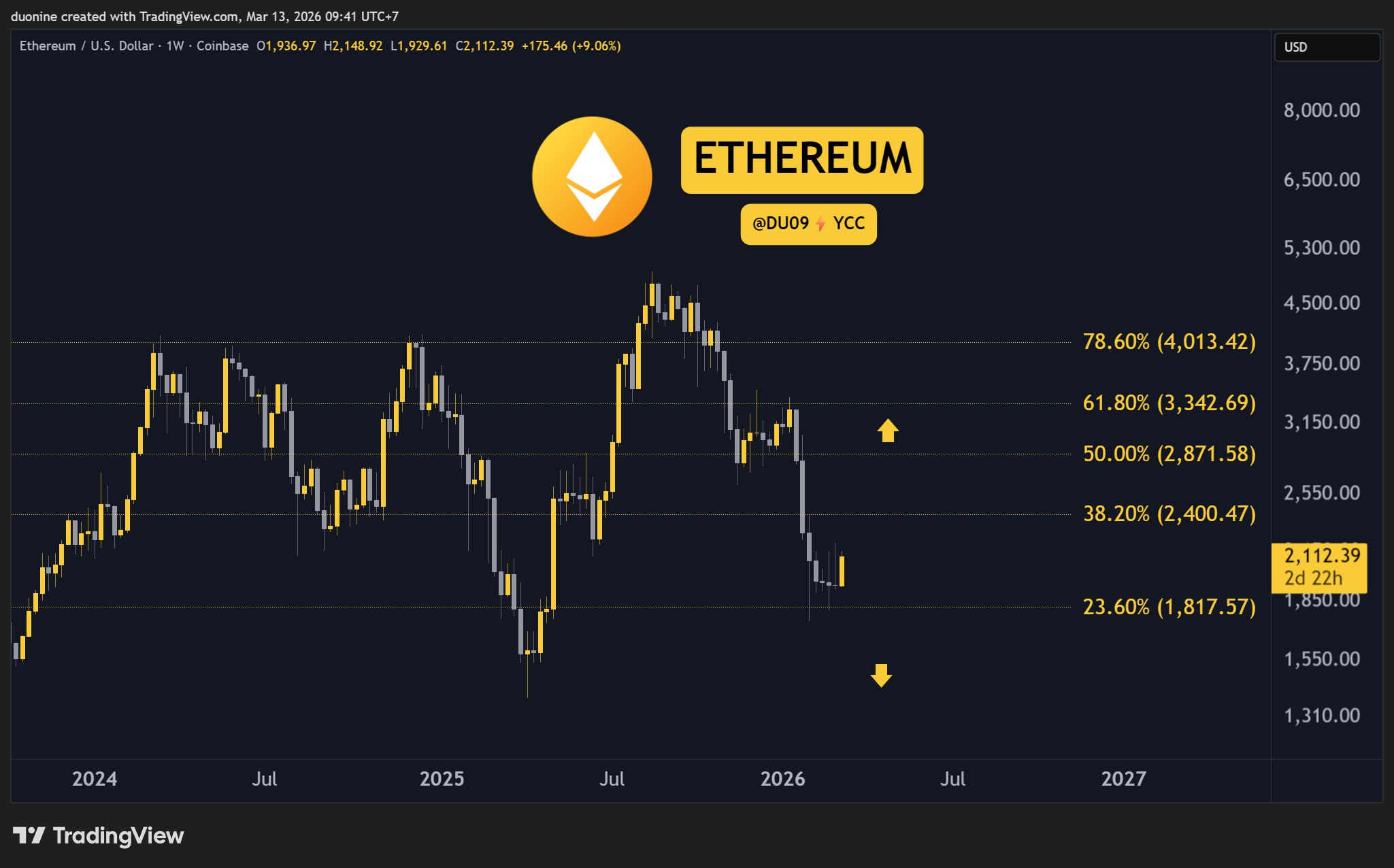
Ethereum continues to hold well above the $2,000 support level and closed the week in the green with a 1% gain. Even if this is small, it shows sellers no longer have control over the price, being unable to push it lower.
The current price action is also giving clear bullish signals, hinting at a major reversal. To confirm it, buyers will need to break through the $2,400 resistance.
Looking ahead, this is the first time in months when Ethereum has a clear shot at moving higher. To sustain a relief rally, the price will have to break $2,400 and then $2,800, which are acting as key resistance levels.
Ripple (XRP)
XRP is flat compared to last week, but it still held well above $1.4. This is somewhat similar to the $2,000 support of Ethereum. As long as $1.4 holds, the bias leans bullish.
The most important resistance on the chart is at $1.6, and if XRP can break above it and turn it into key support, then bulls will have full control over price action, which may allow them to aim for $2 next.
Looking ahead, this cryptocurrency has a good shot at reversing the downtrend here, and that starts with a clean breakout above $1.6. Hopefully, this can take place in the weeks to come.

Cardano (ADA)
Cardano appears ready to turn around, even if the price remains similar to last week. The support at 24 cents held well, and now the resistance at 28 cents is being put under pressure.
Should buyers break above $0.28, ADA has a clear path to $0.40 and beyond. The momentum indicators, such as the MACD, are also turning bullish on the weekly timeframe, encouraging bulls further.
Looking ahead, a sustained relief rally could bring this cryptocurrency back to 50 cents, but for that to happen, the overall market has to turn bullish and remain so for at least a few months.

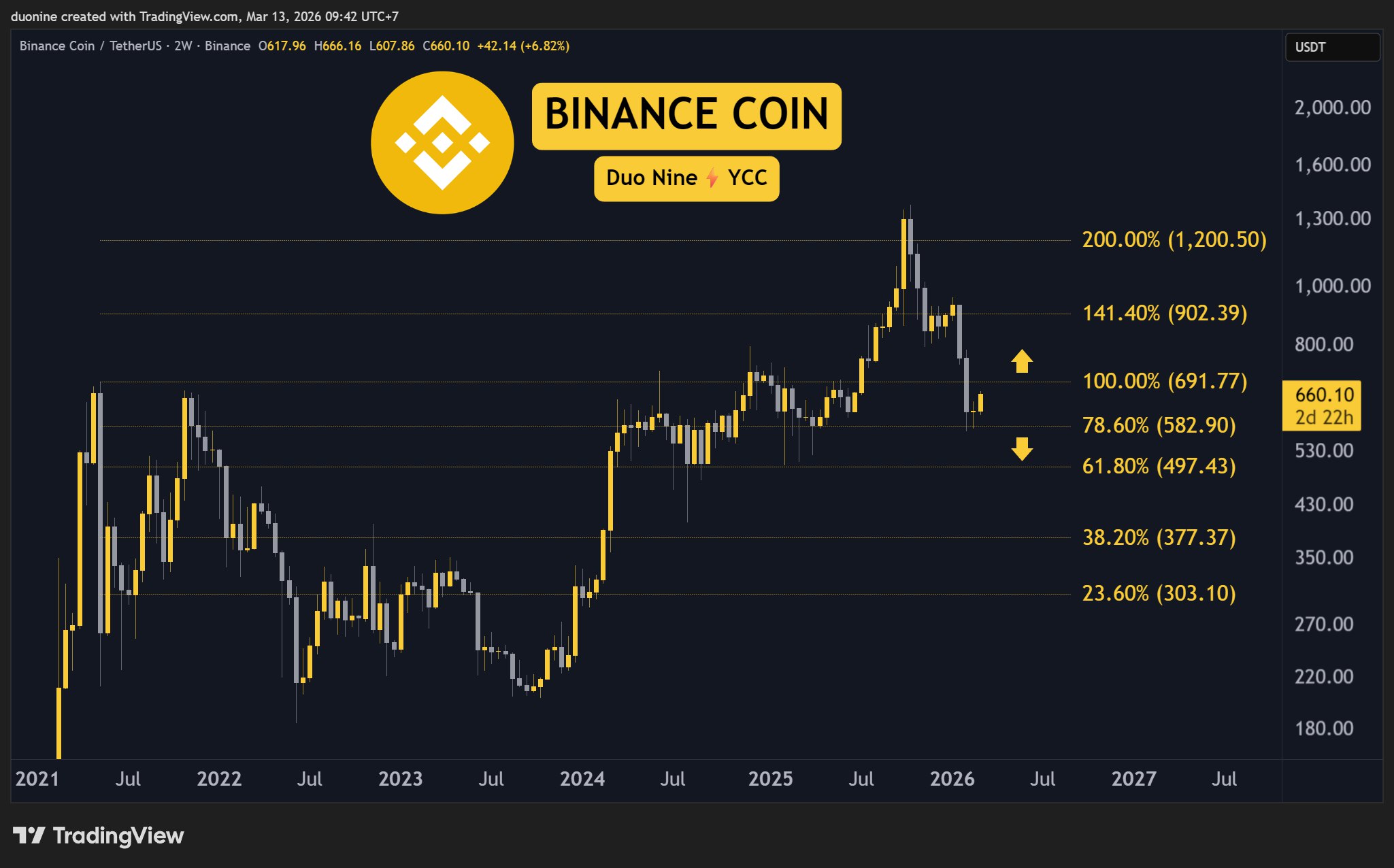
Binance Coin (BNB)
Binance Coin is up 2% this week after finding support at $580. Should this bullish momentum intensify, then a test of the key resistance at $690 appears inevitable in the coming days.
While momentum is positive, the buy volume remains rather low. Any weakness in this rally will likely be easily exposed once the key resistance is tested. Sellers could return there to reverse any recent gains.
Looking ahead, BNB wants to break out of its consolidation above the key support and move higher. To be successful, it will need to break above $690 and defend that level from any sellers.
Hype (HYPE)
HYPE is up by 24% this week, making it the best-performing cryptocurrency on our list and across most of the market. This sustained performance was due to the recent breakout above the $36 resistance.
After the price bottomed around $20 in mid-January, HYPE began a strong rally that is still ongoing with two major impulses up. The first took place in late January and saw the price go above $30, and now the second impulse up in March took the price closer to $40.
Looking ahead, HYPE will face resistance at $40 and $42. If it breaks these levels, its path to $50 will open up. If successful, this would be an impressive achievement in a bear market.

Binance Free $600 (CryptoPotato Exclusive): Use this link to register a new account and receive $600 exclusive welcome offer on Binance (full details).
LIMITED OFFER for CryptoPotato readers at Bybit: Use this link to register and open a $500 FREE position on any coin!
Disclaimer: Information found on CryptoPotato is those of writers quoted. It does not represent the opinions of CryptoPotato on whether to buy, sell, or hold any investments. You are advised to conduct your own research before making any investment decisions. Use provided information at your own risk. See Disclaimer for more information.
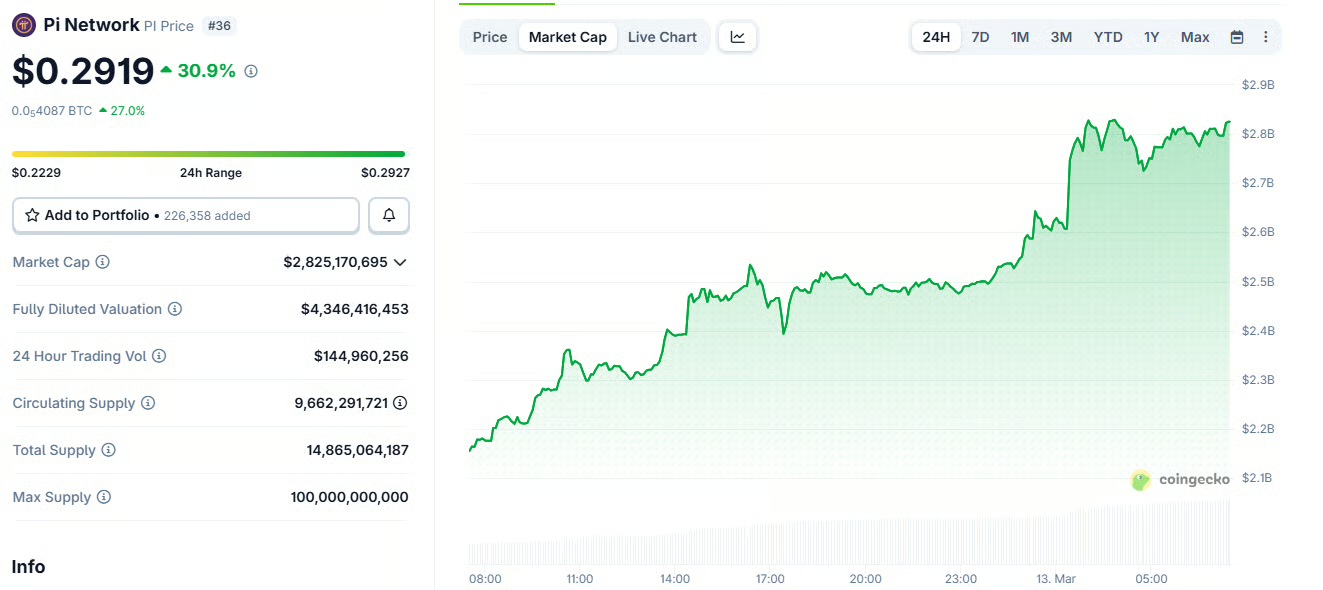
Pi Network’s price explodes 30% daily, adding to a total increase of more than 100% for the past month.
The price of Pi Network’s native cryptocurrency, PI, has exploded by more than 30% over the past 24 hours. This makes it the single best performer among the top 100 coins by total market capitalization, ahead of Render (RENDER) and Bittensor (TAO), which are up 19.4% and 12.9%, respectively.
Pi Network Price Increase: Factors to Consider
As CryptoPotato reported yesterday, one of the leading cryptocurrency exchanges in the United States, Kraken, announced that it will list PI. Per the statement, trading was supposed to start today, on March 13th.
At the time of this writing, trading hasn’t started yet, but anticipation is building. The latest move also comes on the back on a massive 175% increase in 24-hour trading volume, signaling heightened investor interest.
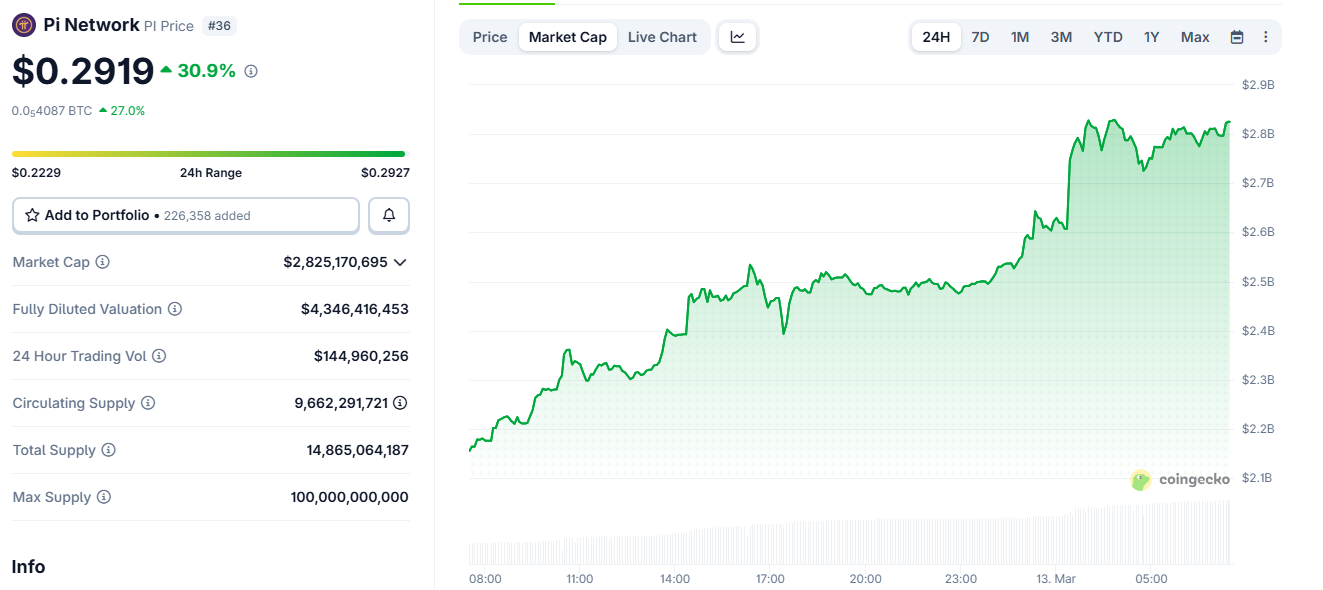
Pi Network’s price increase also puts its total market capitalization at around $2.8 billion, making it the 36th largest project by this metric, although its fully diluted valuation surpasses $4.3 billion.
What’s Next?
It’s interesting to see if the most recent rally can be sustained, given the uncertainty in the crypto and broader markets. However, it’s worth noting that PI’s price has been performing really well in the past month, despite the ongoing turbulence.
The cryptocurrency is up 73.5% in the past 14 days, adding to a combined increase of more than 112% in the past month alone.
This comes ahead of March 14th – a date that’s largely celebrated as Pi Day within the community. Although the celebration is broader and usually associated with the number (not the project), it has become some sort of a tradition.
You may also like:
Binance Free $600 (CryptoPotato Exclusive): Use this link to register a new account and receive $600 exclusive welcome offer on Binance (full details).
LIMITED OFFER for CryptoPotato readers at Bybit: Use this link to register and open a $500 FREE position on any coin!
Disclaimer: Information found on CryptoPotato is those of writers quoted. It does not represent the opinions of CryptoPotato on whether to buy, sell, or hold any investments. You are advised to conduct your own research before making any investment decisions. Use provided information at your own risk. See Disclaimer for more information.

The fresh capital from Kraken’s parent company, Ark Invest, and Bitmine has backed Eightco’s new bets on OpenAI and MrBeast
Shares in Eightco Holdings (ORBS) jumped 12% on Thursday after it raised $125 million to back its bets in blockchain and artificial intelligence.
Eightco said on Wednesday that crypto treasury firm Bitmine led the funding with $75 million, while Ark Invest and Payward, the parent company of crypto exchange Kraken, each chipped in $25 million apiece.
The company added that Bitmine chairman Tom Lee would join Eightco’s board and Ark Invest’s chief futurist Brett Winton also signed on as a board advisor.
Eightco chairman Dan Ives, known for his bullish commentary on the tech sector, also stepped down from his position after being appointed to the role in September.
Eightco said the capital would support its expansion “into investing in technology shaping the next generation of artificial intelligence, blockchain infrastructure, and global digital consumer platforms.”
Eightco bets on MrBeast, OpenAI
Eightco said that it had also closed an initial $50 million strategic investment into OpenAI and another $25 million investment into Beast Industries and its owner and YouTuber James Donaldson, better known as MrBeast.
“These investments position ORBS as a hub at the center of key frontier AI technologies and content creation, expanding its portfolio to include ownership stakes in world-leading innovators,” Eightco said.

Related: Crypto accounting startup Cryptio lands $45M as institutions move onchain
Shares in Eightco ended trading on Thursday up 11.67% to 90 cents in reaction to the announcement. The stock saw a slight fall after hours, dropping by 2.6% to 88 cents.

Shares in Eightco are down over 92.49% in the past six months as stocks tied to crypto have been battered amid a broad market downturn.
Eightco is an e-commerce inventory management platform that made its first crypto play in September, announcing it would buy and hold Worldcoin (WLD), which sent its share price surging by 3,000% in a single day.
Magazine: Human brain cell wetware plays Doom, fly’s mind uploaded: AI Eye
A Singapore court has sentenced a man to two years in jail for his involvement in a crypto theft that resulted in the loss of assets valued at more than $6.9 million.
Summary
- A Singapore man was sentenced to two years in jail for his role in a cryptocurrency theft case.
- The scheme involved unauthorised access to a crypto wallet, resulting in the theft of about US$6.9M in digital assets.
- Authorities recovered some of the stolen cryptocurrency and seized electronic devices during the investigation.
Man sentenced to 2 years in jail over $8.8M crypto theft linked to hacked wallet
The case stemmed from an incident in which hackers gained unauthorised access to a crypto wallet and transferred digital assets out of it without the owner’s consent. Authorities said the accused was part of a group that helped facilitate the crypto theft after the compromised account was accessed through a computer system.
Investigations found that the operation involved several individuals who exploited access to a platform connected to a global cryptocurrency exchange.
Once the account was breached, cryptocurrencies worth roughly US$6.9 million, equivalent to about S$8.8 million, were transferred out of the wallet.
Singapore’s Cybercrime Command launched an investigation after receiving a report about multiple instances of unauthorised access to the wallet. Officers later identified suspects linked to the incident and carried out arrests within days of the complaint being filed.
Authorities were able to recover part of the stolen funds during the probe, along with several electronic devices such as laptops and mobile phones believed to have been used in the operation.
In court, the man admitted to his role in the offence and was sentenced to two years’ imprisonment. Under Singapore law, causing a computer system to perform unauthorised access can carry a jail term of up to two years and a fine for first-time offenders.
The case highlights growing concerns over cyber-enabled crimes targeting digital assets, as law enforcement agencies intensify efforts to track and recover stolen cryptocurrency linked to hacking and fraud schemes.

Decentralized finance was built to remove intermediaries, but one major piece of traditional finance has been missing: credit scoring. In traditional banking, institutions evaluate borrowers based on their financial history before approving loans. In DeFi, however, most lending protocols require overcollateralization, forcing users to deposit more assets than they borrow.
This is where on-chain credit scoring comes into play.
On-chain credit scoring evaluates a wallet’s historical behavior—transactions, repayments, liquidity provision, governance participation, and even social trust signals—to assign a creditworthiness score. Instead of relying purely on collateral, protocols can use these scores to determine borrowing limits, interest rates, and risk levels.
How On-Chain Credit Scoring Works
On-chain credit scoring systems analyze wallet activity across multiple dimensions:
1. Transaction History
Wallets with consistent activity, long transaction histories, and healthy portfolio diversification may receive higher trust scores.
2. Lending & Repayment Behavior
Borrowers who repay loans on time across DeFi lending platforms demonstrate reliability.
3. Liquidity Provision & Staking
Participation in liquidity pools or staking often signals long-term commitment and lower risk.
4. Governance Participation
Active involvement in protocol governance can also be a positive reputation indicator.
5. Network Graph Analysis
Some systems analyze relationships between wallets, detecting suspicious activity or sybil behavior.
Projects Building On-Chain Credit Scoring
1. Spectral Finance
Spectral introduced Macro Score, an AI-driven credit scoring system that evaluates wallet behavior across DeFi protocols.
This score can help lenders assess borrower risk without relying on centralized credit agencies.
2. Goldfinch
Goldfinch focuses on undercollateralized lending, particularly for real-world borrowers.
Instead of relying solely on crypto collateral, the protocol incorporates borrower reputation and community-backed trust.
3. Arcx
Arcx developed DeFi Passport, which gives wallets a reputation score based on on-chain financial behavior.
Protocols can integrate this score to tailor lending conditions.
4. Cred Protocol
Cred Protocol analyzes on-chain and social data to build trust scores that can be used across DeFi ecosystems for credit evaluation.
5. TrueFi
TrueFi enables undercollateralized loans to vetted borrowers, combining on-chain transparency with off-chain credit assessment mechanisms.
Why On-Chain Credit Matters
Capital Efficiency
Overcollateralized loans limit growth. Credit scoring allows larger loans with less collateral, unlocking capital efficiency.
Financial Inclusion
Anyone with a wallet and a strong on-chain track record can build a credit profile—no bank account required.
Risk-Adjusted Lending
Protocols can adjust interest rates dynamically based on borrower reliability.
Portable Reputation
Your credit history becomes portable across DeFi, meaning one good reputation can unlock opportunities across multiple protocols.
Challenges Facing On-Chain Credit Systems
Despite its promise, the concept still faces hurdles.
Sybil Attacks – Users could create multiple wallets to manipulate reputation.
Privacy Concerns – Public credit profiles may reveal financial behavior.
Fragmented Data – Reputation systems often remain siloed across protocols.
Identity Verification – Without optional identity layers, assessing real-world reliability remains difficult.
Solutions such as zero-knowledge proofs, decentralized identity systems, and reputation aggregation layers are being explored to address these issues.
The Future: Reputation-Based DeFi
On-chain credit scoring could fundamentally transform lending in DeFi. Instead of treating every wallet as anonymous and risky, protocols could evaluate behavioral trust signals directly from blockchain data.
In the long run, this could lead to:
-
Undercollateralized crypto loans
-
Reputation-weighted interest rates
-
Cross-protocol credit profiles
-
DeFi-native financial identities
If successful, on-chain credit systems may become the missing bridge between traditional finance and decentralized finance, enabling a truly trust-minimized lending ecosystem where reputation—not just collateral—unlocks financial opportunity.
REQUEST AN ARTICLE


Another Friday has rolled around again, and that means more crypto options contracts are expiring as spot markets post rare gains.
Around 27,000 Bitcoin options contracts will expire on Friday, Mar. 13, with a notional value of roughly $1.9 billion. This event is smaller than usual, so it is unlikely to affect spot markets.
Crypto prices have been flat for most of this week, picking up a little on Friday, with total capitalization gaining $150 billion since Monday, but volatility and volumes have dwindled.
Bitcoin Options Expiry
This week’s batch of Bitcoin options contracts has a put/call ratio of 0.97, meaning that the longs and the shorts are relatively evenly matched. Max pain is around $69,000, according to Coinglass, which is pretty close to current spot prices, so many could be in the money on expiry.
Open interest (OI), or the value or number of Bitcoin options contracts yet to expire, remains highest at the $60,000 strike price on Deribit, with $1.7 billion in bearish bets. Total BTC options OI across all exchanges has been climbing this month, reaching $45.5 billion.
Crypto derivatives provider Greeks Live observed the market rebound, noting that Bitcoin was firmly holding above the $70,000 psychological threshold and is “now poised to challenge $75,000.”
Beyond March, the flat forward implied volatility curve implies no significant term structure premium, suggesting balanced risk pricing for longer-dated options amid stable crypto sentiment, noted Greeks Live this week.
🚨 Options Expiry Alert | 08:00 UTC Friday
~$2.27B in crypto options are set to expire on Deribit.$BTC: 26,889 contracts | $1.89B notional | P/C: 0.97
OI stacked at $55K-$60K puts vs $75K-$80K calls, spot at $70.2K sitting right in no man’s land.
Max Pain: $69K$ETH: 185,268… pic.twitter.com/H9zji7lzbW— Deribit (@DeribitOfficial) March 12, 2026
You may also like:
In addition to today’s batch of Bitcoin options, around 185,000 Ethereum contracts are also expiring, with a notional value of $382 million, max pain at $2,000, and a put/call ratio of 1.2. Total ETH options OI across all exchanges is around $7.9 billion.
This brings the total notional value of crypto options expiries to around $2.3 billion.
Spot Market Outlook
Spot markets have ticked up on Friday morning in Asia, with total capitalization reaching $2.5 trillion again, its highest level for a week.
Bitcoin came just short of $72,000 in early trading but again found resistance there and started to retreat at the time of writing.
Ether prices were faring better with a 4% gain, sending them just above $2,100.
The altcoins were also mostly in the green today with larger moves for Solana, Hyperliquid, Avalanche, and Sui. Meanwhile, Pi Network, PI, skyrocketed 33% on the day to $0.29 following a listing on Kraken.
Binance Free $600 (CryptoPotato Exclusive): Use this link to register a new account and receive $600 exclusive welcome offer on Binance (full details).
LIMITED OFFER for CryptoPotato readers at Bybit: Use this link to register and open a $500 FREE position on any coin!
Donald Trump-linked meme coin Official Trump posted double-digit gains on Friday after the team announced a second exclusive event where top holders will get the chance to attend a luncheon with the president at Mar-a-Lago.
Summary
- The Official Trump meme coin rose after the project announced a second exclusive Mar-a-Lago luncheon for the top 297 token holders.
- Eligibility is based on time-weighted holdings between March 12 and April 10, with the top 29 holders qualifying for a private reception with Donald Trump.
According to the official announcement, the top 297 Official Trump (TRUMP) holders will get a chance to attend the luncheon with the United States President at his Mar-a-Lago residence in Florida, where he will appear as the keynote speaker.
Eligibility, however, would depend on participants’ time-weighted holdings between Mar. 12 and April 10, and attendees would be required to pass a background check. Among the group, the top 29 holders will be allowed a private reception with Trump.
While the meme coin’s website says Trump will attend the event, a White House official told Politico that the luncheon would be taking place alongside the White House Correspondents’ Dinner.
Right after the announcement, the meme coin rallied over 11% and was up over 8% in the past 24 hours as of last check. The meme coin has remained in a downtrend since its launch in early 2025.
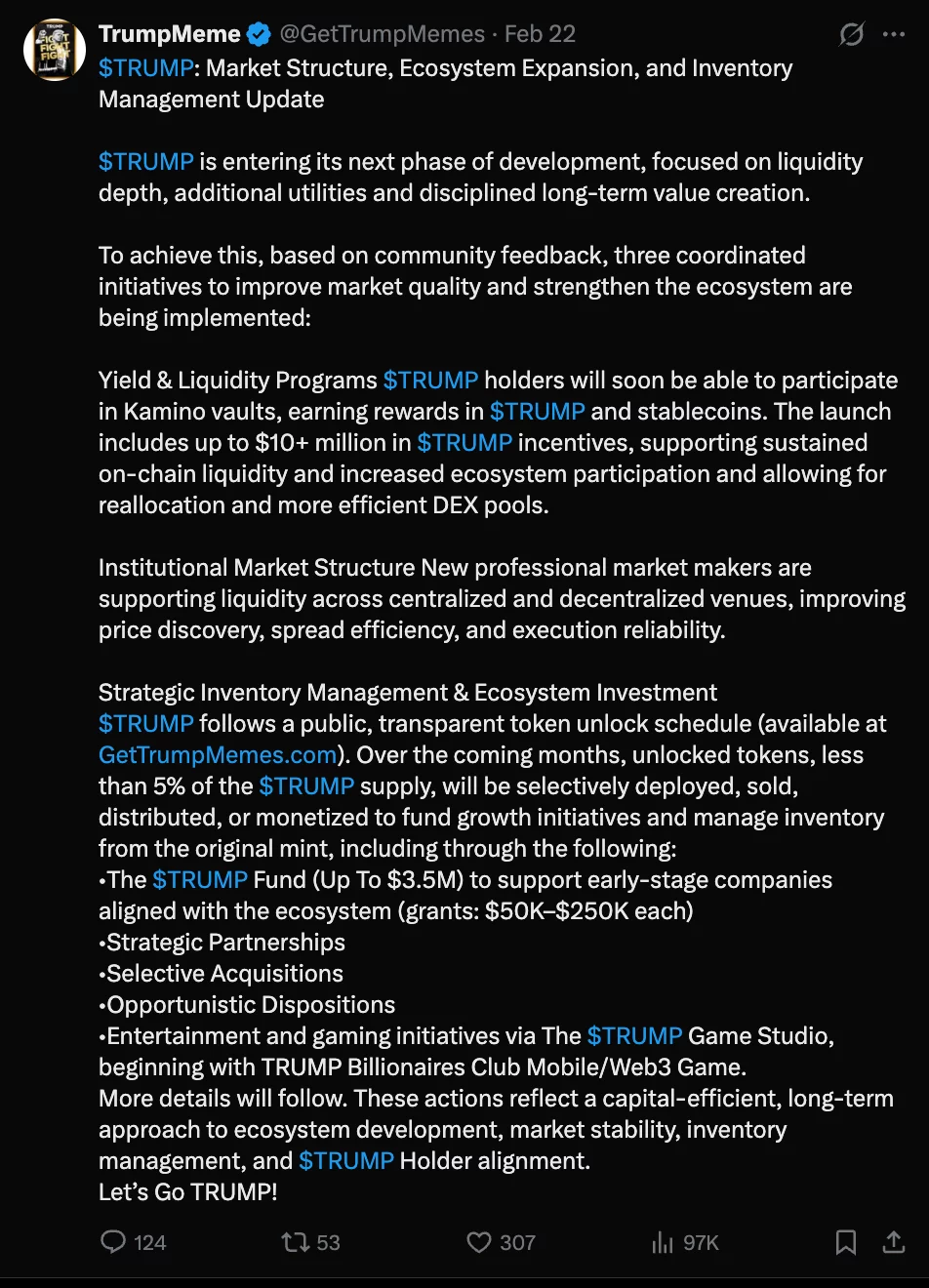
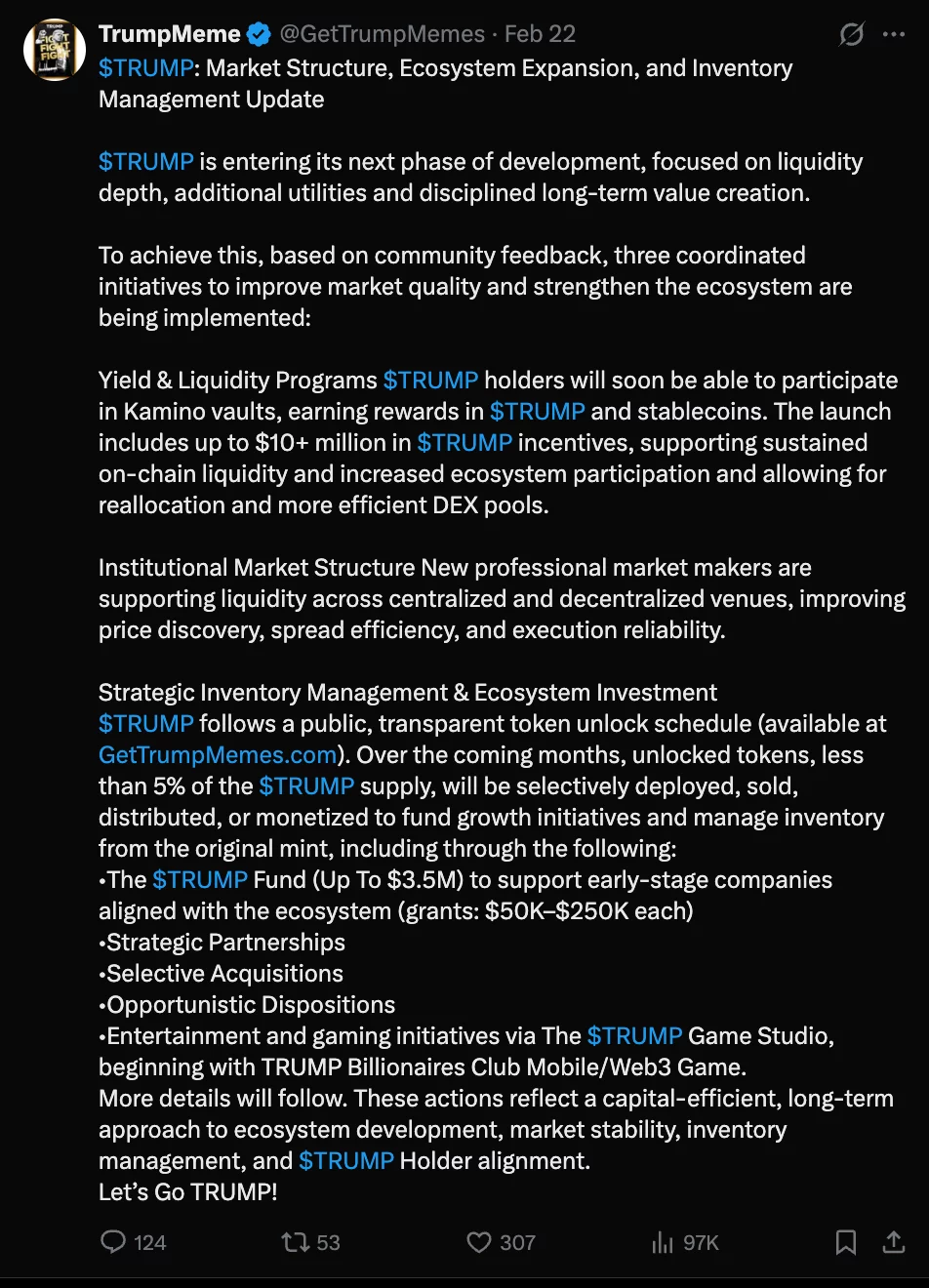
Despite efforts from the team to revive interest through new ecosystem initiatives, investor enthusiasm has remained limited. Last month, the project team outlined plans for yield and liquidity programs through Kamino vaults, new market makers, and a fund to back ecosystem projects, but that did not translate into any meaningful recovery for the meme coin, which remains down over 95% from its all-time high.
This is the second exclusive event hosted by the project following a similar gathering held in May. At the time, Tron founder Justin Sun emerged as the top TRUMP holder among the attendees.
However, the event became a source of controversy, with critics accusing Trump of using his position as president for personal financial gain. Rep. Jamie Raskin, the ranking Democrat on the House Judiciary Committee, launched a probe into the dinner over how the guest list was compiled and whether foreign money may have flowed into the meme coin purchases.
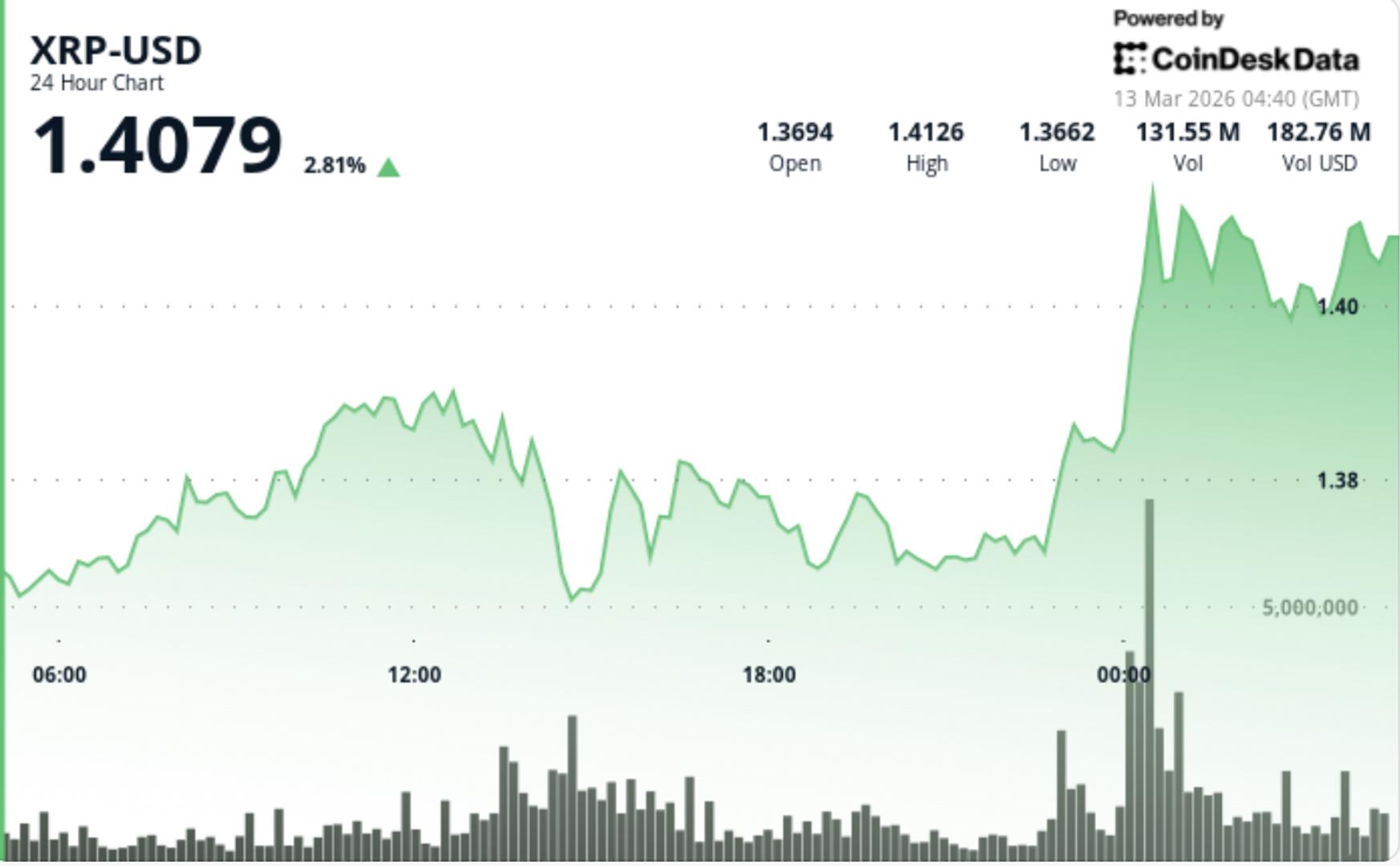
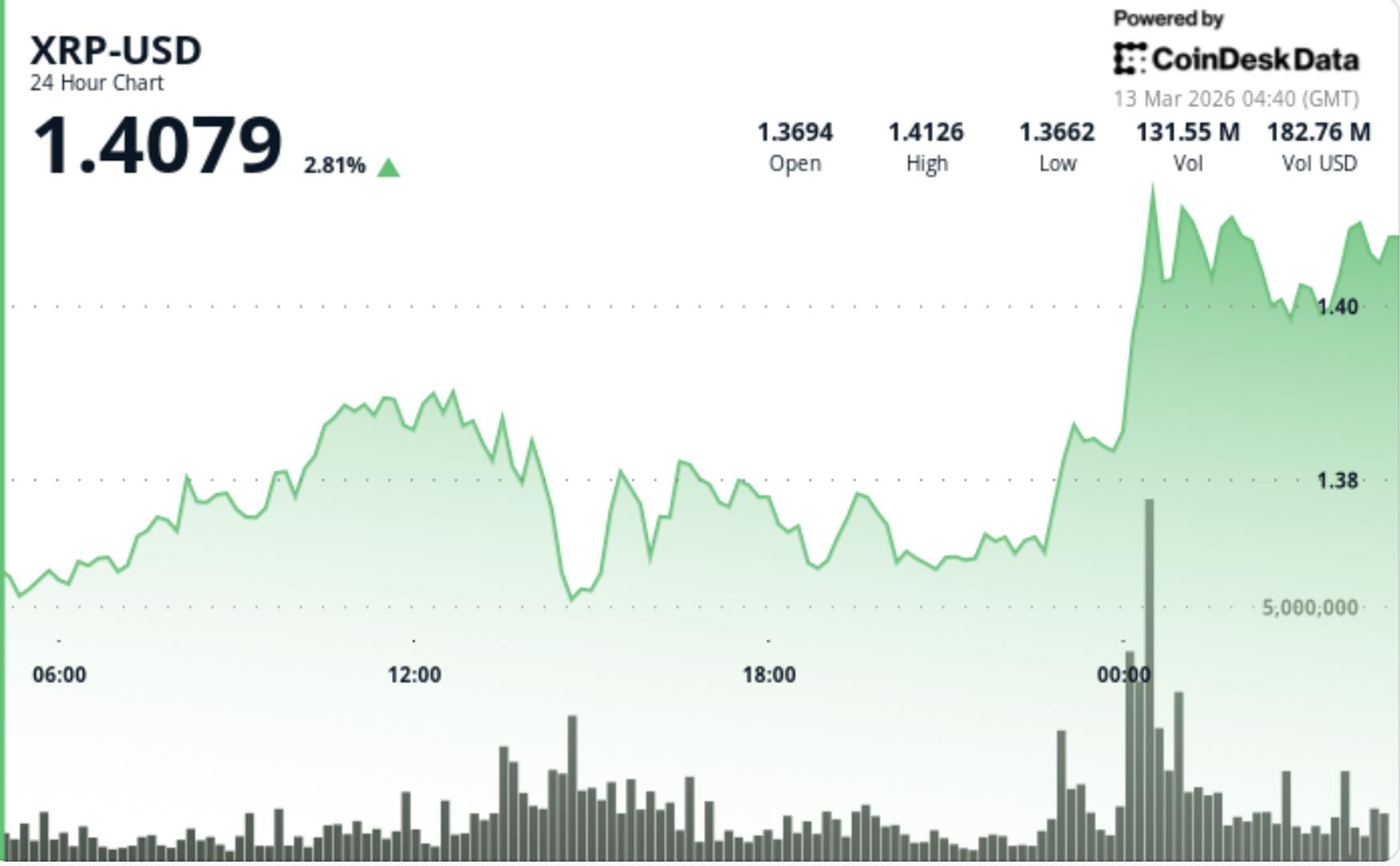
XRP pushed higher after breaking a months-long descending trendline, with a surge in trading volume confirming renewed momentum above the $1.39 resistance zone.
News Background
- XRP has struggled to sustain rallies through early 2026 as sellers repeatedly defended a descending resistance line formed by lower highs since January.
- The latest move marks the first decisive break above that structure, shifting short-term sentiment as traders reassess whether the corrective phase may be ending.
- Fund flows offered a mixed backdrop. U.S.-listed XRP ETFs recorded roughly $3.9 million in outflows during the session, extending a short streak of redemptions even as technical momentum improved.
- Meanwhile, activity on the XRP Ledger continued to rise. Daily transactions recently climbed to around 2.7 million, among the highest levels in recent months, partly driven by projects focused on tokenizing real-world assets.
Price Action Summary
- XRP climbed from about $1.37 to $1.41 during the 24-hour session
- Price cleared the $1.39 resistance zone that capped rallies earlier this year
- Trading volume surged to roughly 205 million tokens, more than triple the recent average
- The token traded within a roughly $0.057 intraday range during the breakout
Technical Analysis
- The key technical development was XRP’s break above the descending trendline that had defined its downtrend since early 2026.
- The move came with a sharp expansion in trading volume, suggesting the breakout reflected active participation rather than thin liquidity.
- After the breakout, price briefly tested the $1.41 area before consolidating slightly lower.
- On shorter timeframes, XRP held above the $1.40 zone, forming a sequence of higher lows that indicates buyers are attempting to establish the former resistance area as support.
- If this structure holds, it would confirm a shift from the previous pattern of lower highs that dominated the past several months.
What traders say is next?
- Traders are now watching whether XRP can hold above the $1.39–$1.40 area.
- Maintaining that level would confirm the trendline breakout and could open the door for a move toward the next resistance zones around $1.44 and $1.50.
- A failure to hold above the breakout level, however, could pull XRP back toward the $1.34–$1.37 support band and signal the move was a short-term liquidity sweep rather than the start of a sustained trend reversal.
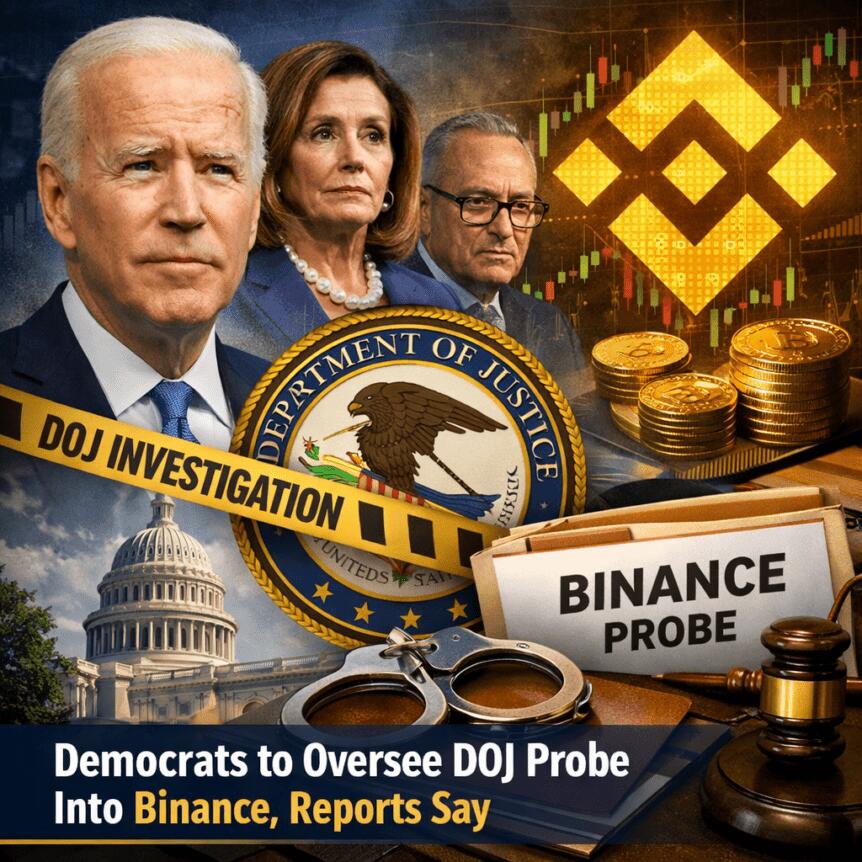
Democratic lawmakers are intensifying oversight as the Department of Justice weighs a probe into Binance’s handling of Iran-related sanctions. In a joint statement, Senators Chris Van Hollen, Elizabeth Warren and Ruben Gallego said they would oversee any DOJ inquiry to ensure the agency conducts a serious review and holds the exchange accountable for potential sanctions violations. The move follows a Wall Street Journal report that cited people familiar with the matter, indicating investigators are examining whether Iran-based entities used Binance to evade sanctions. The disclosure arrives amid broader questions about how crypto platforms enforce U.S. sanctions and how regulators scrutinize exchanges’ risk controls and compliance programs.
The WSJ report, published on a Wednesday, highlighted alleged gaps in verification and monitoring that could have allowed the movement of funds tied to sanctioned actors. In their response, the senators framed Binance as a firm with a documented tendency to place profits ahead of the law and warned that ongoing scrutiny could reveal new sanction-law breaches or reckless assistance to sanctioned networks tied to Iran.
Binance did not respond to a request for comment in this coverage window. A company spokesperson previously told Cointelegraph that the firm was “not aware of any investigations,” adding that Binance is “collaborating with regulators and law enforcement to investigate the facts.”
Last month, the legislators pressed other U.S. authorities—Treasury Secretary Janet Yellen’s successor and the U.S. Attorney General—to probe Binance over concerns about moving Iran-linked funds. The push underscores a concrete shift from high-profile rhetoric toward formal oversight and potential enforcement actions.
Key takeaways
- The Department of Justice is reportedly examining Binance for possible Iran sanctions evasion, per a Wall Street Journal report citing sources familiar with the matter.
- A bipartisan group of U.S. senators vowed to conduct oversight to ensure a serious DOJ investigation and accountability for any wrongdoing by the exchange.
- Binance has publicly stated it is not aware of investigations, while indicating it remains open to regulator and law-enforcement cooperation.
- Binance’s legal history looms over the current scrutiny, including a November 2023 settlement in which the firm pleaded guilty to AML and sanctions violations and agreed to a substantial fine and U.S. oversight.
- Associated twists include a defamation suit Binance filed against the Wall Street Journal over related reporting and past leadership actions by Changpeng Zhao, including a high-profile money-laundering case and a later pardon event.
Market context: The episode sits within a broader climate of tightening regulatory scrutiny over crypto exchanges, with sanctions enforcement and U.S. enforcement actions shaping how platforms implement compliance controls, monitor cross-border flows, and cooperate with authorities. The events also intersect with ongoing debates about how aggressively financial regulators should police crypto-related activities versus fostering innovation.
Why it matters
The unfolding developments are significant for investors, users and builders across the crypto landscape. For users, the episode reinforces the importance of robust know-your-customer and sanctions-screening processes on exchanges, especially those operating with global liquidity pools and complex counterparties. For the market, the alleged Iran-related activity intersects with sanctions enforcement risk—a factor that can influence liquidity, exchange flows and the perceived regulatory exposure of major platforms.
From a policy perspective, the bipartisan call for oversight signals a willingness in Congress to elevate sanction-compliance risk as a central governance issue for crypto businesses. Regulators’ willingness to scrutinize and potentially sanction exchanges for lax controls could accelerate investment in compliance tooling, internal controls, and audit regimes. For Binance, the situation underscores the reputational and legal headwinds that can follow high-stakes enforcement actions, even as the firm continues to court regulatory clarity and operational resilience under scrutiny.
What to watch next
- DOJ conclusions or disclosures stemming from any formal investigation into Binance’s sanctions compliance (dates pending).
- Statements or hearings from the Senate oversight group outlining findings, scope, or requested remedies related to Binance’s conduct.
- Any regulatory actions or consent orders resulting from broader sanctions-enforcement activities involving major crypto exchanges.
- Binance’s public responses or new compliance commitments in response to renewed inquiries and potential legal actions.
- Developments in related legal proceedings, including Binance’s defamation suit against the Wall Street Journal and any outcomes related to prior AML/sanctions settlements.
Sources & verification
- Joint statement by Senators Van Hollen, Warren and Gallego on DOJ investigation into Binance compliance with U.S. sanctions law.
- Wall Street Journal report detailing the DOJ’s potential probe into Iran’s use of Binance to evade sanctions.
- Binance’s public remarks to Cointelegraph about not being aware of investigations and willingness to cooperate with regulators.
- Binance’s defamation suit against the Wall Street Journal over reporting regarding Iran-sanctions-related financing.
Regulatory scrutiny and Binance’s Iran sanctions probe
Regulatory attention on Malta-based, global crypto trading platforms has intensified, and Binance’s case sits squarely at the intersection of sanctions enforcement and exchange governance. The sequence of events paints a picture of a landscape where regulators are elevating sanctions-compliance into a central risk category for platform operators. The Wall Street Journal’s reporting framed the DOJ inquiry as a potential line of inquiry into whether Binance enabled or facilitated transactions linked to Iran-linked entities in breach of U.S. sanctions regimes, including the long-standing restrictions designed to curb financing for designated groups and programs.
The senators’ response underscores the political dimension of the issue. By pledging to oversee the DOJ’s handling of the matter, they are signaling that oversight will extend beyond a single agency or incident, potentially prompting a broader review of Binance’s internal controls, transaction-monitoring capabilities, and cooperation with law enforcement. The public tension between scrutiny and corporate defense is a familiar rhythm in the crypto regulatory era: as investigations surface, exchanges lean on assurances of compliance and collaboration while lawmakers seek concrete accountability measures.
Binance’s public position has consistently emphasized cooperation with regulators and law enforcement, even as it navigates the fallout from earlier enforcement actions. The firm has faced substantial consequences in the past, including a November 2023 settlement that required a record penalty and ongoing oversight to resolve U.S. AML and sanctions concerns. The current inquiry adds another layer of uncertainty around the company’s ability to weather intensified enforcement pressures while maintaining global liquidity and user access. The defamation suit against the Wall Street Journal adds a legal counterpoint to the narrative, illustrating how market participants increasingly engage in strategic communications as investigations unfold.
Beyond Binance, the broader regulatory environment continues to evolve. The developments reflect ongoing efforts to tighten sanctions enforcement, improve compliance in cross-border crypto flows, and align exchange practices with U.S. national security objectives. For market participants, the emphasis on robust due diligence, transparent reporting, and rigorous transaction monitoring could reshape industry norms and drive investment in compliance-focused technologies and procedures. The balance between enabling legitimate crypto activity and enforcing sanctions remains delicate, with outcomes likely to influence how exchanges structure risk controls, governance, and regulatory engagement in the months ahead.
Sprout Social executive chair Howard sells $238k in shares

Bitcoin Miners Need AI, Yield Strategies to Survive
New Landing Spot Emerges for Kirk Cousins


![BITCOIN IS ABOUT TO BREAKOUT!!!!! [GET READY]](https://wordupnews.com/wp-content/uploads/2026/03/1773381137_maxresdefault-80x80.jpg)


-
Business7 days ago
Form 8K Entergy Mississippi LLC For: 6 March
-

 News Videos4 days ago
10th Algebra | Financial Planning | Question Bank Solution | Board Exam 2026
-

 Fashion6 days ago
Weekend Open Thread: Ann Taylor
-

 Crypto World4 days ago
Paradigm, a16z, Winklevoss Capital, Balaji Srinivasan among investors in ZODL
-
 Tech2 days ago
A 1,300-Pound NASA Spacecraft To Re-Enter Earth’s Atmosphere
-

 Politics7 days ago
Top Mamdani aide takes progressive project to the UK
-

 Tech3 days ago
ChatGPT will now generate interactive visuals to help you with math and science concepts
-

 Business3 days ago
ExxonMobil seeks to move corporate registration from New Jersey to Texas
-

 Sports5 days ago
Three share 2-shot lead entering final round in Hong Kong
-

 Sports5 days ago
Braveheart Lakshya downs Lai in epic battle to enter All England Open final | Other Sports News
-

 NewsBeat1 day ago
Residents reaction as Shildon murder probe enters second day
-

 Entertainment6 days ago
Hailey Bieber Poses For Sexy Selfies In New Luscious Lip Thirst Traps
-

 Business5 days ago
Search for Nancy Guthrie Enters 37th Day as FBI Probes Wi-Fi Jammer Theory
-

 Business2 days ago
Search Enters Sixth Week With New Leads in Tucson Abduction Case
-
 NewsBeat3 days ago
Pagazzi Lighting enters administration as 70 jobs lost and 11 stores close across Scotland
-

 Tech4 days ago
Despite challenges, Ireland sixth in EU for board gender diversity
-

 Business3 days ago
Search Enters 39th Day with FBI Tip Line Developments and No Major Breakthroughs
-

 NewsBeat2 days ago
I Entered The Manosphere. Nothing Could Prepare Me For What I Found.
-

 Business6 days ago
Iran war enters second week as Trump demands ’unconditional surrender’
-

 Sports4 days ago
Skateboarding World Championships: Britain’s Sky Brown wins park gold