
Crypto World
Senate Democrats Call for Probe of $500M Trump-UAE Crypto Deal


U.S. Senate Democrats have renewed pressure on Republican leaders to convene hearings into a reported $500 million arrangement connecting Donald Trump’s crypto-linked World Liberty Financial to Abu Dhabi-linked investors. In a letter to the chamber’s leadership, the lawmakers argue that Congress should examine whether the investment—and the administration’s subsequent actions—raised national security concerns or created conflicts of interest.
The request comes amid ongoing U.S. scrutiny of crypto regulatory policy, enforcement priorities, and cross-border dealings. For compliance teams and regulated entities, the episode highlights how crypto commercialization, stablecoin-linked payment structures, and foreign capital flows may intersect with sanctions and national security review frameworks.
Key takeaways
- Senate Democrats are urging Republican leaders to hold “immediate” hearings into a reported UAE-related investment in World Liberty Financial.
- The lawmakers ask for sworn testimony from Trump administration officials and want Congress to evaluate whether the investment influenced presidential actions.
- The letter cites concerns about potential national security exposure tied to U.S.–UAE technology and arms arrangements.
- Democrats also link the matter to broader concerns about weaker crypto enforcement, including exemptions from financial services regulations and dismantling elements of DOJ crypto enforcement.
- Past Democratic inquiries referenced by the letter include calls for CFIUS review and SEC-related questions connected to World Liberty Financial backers.
Democrats demand hearings over reported UAE investment
In their Tuesday letter, Senators Elizabeth Warren, Richard Blumenthal, Gary Peters, Dick Durbin, and Ron Wyden said Republican Senate leadership should convene hearings to examine the reported investment and its implications. The lawmakers asked that administration officials testify under oath, framing the request around what they characterize as unanswered questions regarding what the UAE may have obtained and whether U.S. national security was affected by foreign participation in a Trump-connected crypto enterprise.
The underlying reporting referenced by the senators traces to a January account by The Wall Street Journal, which said an Abu Dhabi investment company backed by Sheikh Tahnoon bin Zayed Al Nahyan—an adviser closely associated with the UAE’s national security apparatus—agreed to buy a 49% stake in World Liberty Financial. The platform is described in the reporting as tied to President Donald Trump.
Democrats argue that Congress has an obligation to investigate whether such foreign investments bear on official decision-making. The thrust is not limited to the transaction itself; it is also aimed at whether subsequent policy or administrative actions could be perceived as favoring connected interests.
National security and technology deal cited as context
Democrats’ letter places the reported World Liberty Financial investment in a broader geopolitical and policy context, pointing to a later U.S.–UAE arms and artificial intelligence chip agreement described as occurring in May. According to the senators, that deal proceeded even after concerns were raised by U.S. national security officials about the possibility that China could access the chips involved.
Although President Trump has denied awareness of the World Liberty Financial investment reported by the press, the senators’ position is that the sequence of events warrants congressional examination. For institutional stakeholders, this is an example of how foreign capital in crypto ventures can become intertwined with national security review considerations—especially where cross-border technology, sensitive supply chains, or strategic industrial relationships are implicated.
The practical compliance implication is clear: regulated firms operating with international counterparties may face heightened oversight when transactions intersect with national security considerations or appear to create improper influence pathways. Even absent proof of wrongdoing, congressional scrutiny can translate into more intense regulatory expectations around governance, disclosures, and documentation.
Enforcement concerns and the committee agenda
Beyond the UAE-related investment, the letter expands to encompass broader worries about U.S. crypto enforcement. The senators said they are concerned about steps they view as weakening enforcement—citing, among other items, efforts to exempt crypto service providers from financial services regulations and reports that the Justice Department’s crypto enforcement team was disbanded.
From a regulatory monitoring perspective, this matters because enforcement posture often drives institutional behavior. When enforcement resources are reduced or compliance obligations appear to be narrowed, entities can face uncertainty about how regulators will interpret risk, monitor market conduct, or pursue investigations. Conversely, high-profile congressional attention can also signal that political and oversight pressure may intensify even if enforcement structures are changing.
The letter therefore functions both as a transaction-specific request and as part of an accountability narrative about the direction of U.S. oversight. It also serves as a signal to compliance departments that congressional inquiries—especially those tied to foreign involvement—may affect reporting requirements, due diligence expectations, and the scrutiny applied to relationships with regulated financial intermediaries.
Prior Democratic probes: CFIUS, SEC scrutiny, and pardons
The letter also situates the new request within a pattern of prior congressional actions and demands for review. The lawmakers note earlier calls by Senator Warren for a national security review of the UAE deal, urging Treasury leadership in February to determine whether it should be subjected to a Committee on Foreign Investment in the United States (CFIUS) probe. CFIUS is a key U.S. interagency process through which foreign investment can be reviewed for national security risks, and the invocation of CFIUS underscores the senators’ view that the World Liberty Financial stake could implicate sensitive interests.
Democrats have previously pressed regulators connected to enforcement outcomes involving World Liberty Financial backers. According to references in the letter, senators pursued questions related to the Securities and Exchange Commission after a fraud case involving Justin Sun—a major World Liberty Financial supporter—was dropped. The letter also cites additional inquiry initiatives earlier in the year that questioned pardons issued during the Trump administration, including a pardon for Binance co-founder Changpeng Zhao.
In the reporting referenced within the article, Democratic lawmakers linked that pardon sequence to Binance’s early-2025 acceptance of a reported $2 billion investment from an Abu Dhabi fund and to an agreement that the funds would be paid in World Liberty Financial’s stablecoin, USD1. These assertions are included in the senators’ broader narrative about whether crypto industry relationships and official actions may be connected.
For institutional readers, the throughline is that congressional oversight is increasingly focused on the governance and regulatory interface of crypto businesses: how foreign investors participate, how stablecoin arrangements are used, and how enforcement decisions are perceived by lawmakers and the public.
Closing perspective
What happens next will likely depend on whether the Senate leadership agrees to convene hearings and the scope of witness testimony, including any discussion of national security review pathways and crypto enforcement policy. For compliance and legal teams, the episode is a reminder that cross-border crypto capital and stablecoin-linked arrangements can rapidly become subject to heightened congressional scrutiny, even when the core facts are still developing in public reporting.

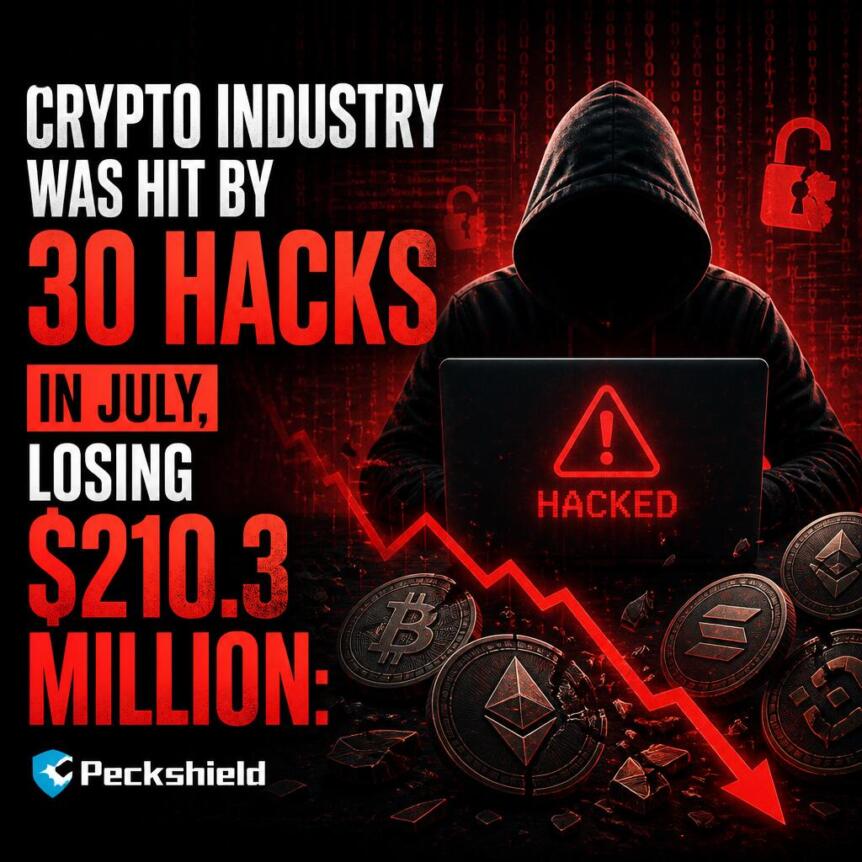
The crypto industry suffered 30 major hacking incidents in July, leading to losses totaling $210.3 million, a significant increase from the $75.87 million reported in June.
The industry has lost $1 billion during the first half of the year, and recorded a record number of hacks within six months, with Ethereum and Solana leading the losses.
Crypto Industry Reports A Surge In Hacking Incidents
PeckShield has reported that the cryptocurrency industry suffered a loss of $210.3 million from 30 major exploits in July, a 177.2% increase from the $75.87 million reported in June. The exploits highlight the persistent security challenges faced by the industry. The losses were driven by a handful of high-profile incidents. The Coldcard Wallet exploit was the largest incident this month, and the third-largest this year, resulting in $70 million in losses.
Other notable security incidents in July include the AFX Trade exploit ($24 million), Ostium ($24 million), BONK ($21.2 million), Wanchain ($13 million), Triple-A ($10 million), Bonzo Lend ($9.05 million), Verus ($7.5 million), WEMIX ($6.25 million), and Summer.fi ($6 million).
Crypto Hacks Cross $1 Billion For 2026
According to Blockaid, an on-chain security platform, the cryptocurrency industry recorded a record number of exploits in the first half of 2026, with losses from these hacks exceeding $1 billion. The attacks were primarily concentrated on Ethereum and Solana, which lost $332 million and $326 million, respectively, to various exploits. Hackers used code exploits to target Ethereum-based protocols, and key and infrastructure breaches on Solana-based protocols.
Hackers Target Ethereum And Solana-Based Applications
Hackers targeted vulnerabilities in Ethereum-based applications. BlockAid stated in its Q2 2026 report that code exploits were the most common tactic used by hackers. However, Ethereum-based protocols such as Humanity Protocol and StablR were targeted through private-key exploits. BlockAid also highlighted other attack vectors on Ethereum, including privilege account exploits, market manipulation, smart contract, and bridge vulnerabilities.
Meanwhile, Drift Protocol, a Solana-based protocol, was targeted through social engineering, with hackers spending months building a relationship with the protocol team before using Solana’s “durable nonces” feature to get members to sign transactions giving them admin control. This allowed the hackers to drain $285 million, over half its TVL, from the protocol. On-chain indicators suggest North Korean hackers were behind the heist. The Step Finance exploit was also attributed to North Korean hackers. The hackers siphoned off $40 million after gaining access to devices belonging to the project’s team. The team then unstaked 261,854 SOL and moved them, causing the value of the STEP token to plummet 80%. However, Solana also saw code-based exploits involving Volo and Raydium.
Disclaimer: This article is provided for informational purposes only. It is not offered or intended to be used as legal, tax, investment, financial, or other advice.
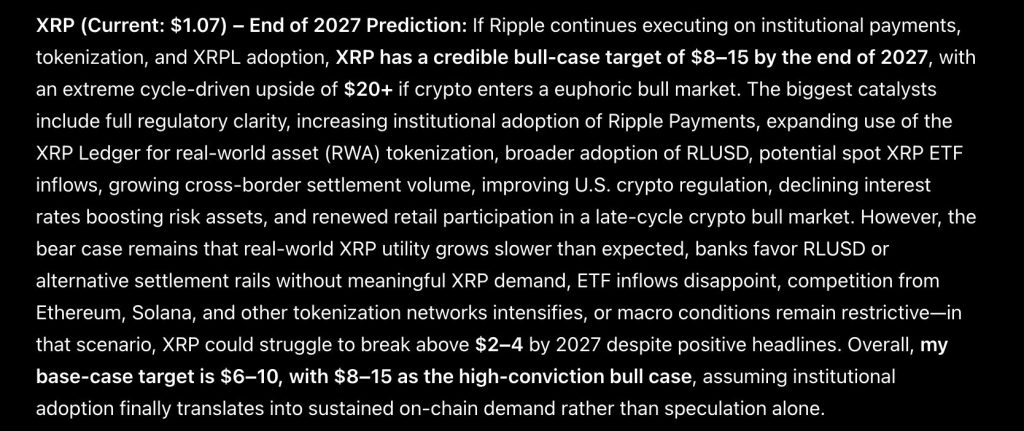
ChatGPT AI predicts a multi-year breakout for XRP, with the price prediction extending all the way to the end of 2027. From today’s $1.07, the model lays out a credible bull-case target of $8 to $15, with an extreme, cycle-driven upside above $20 if crypto enters a genuinely euphoric bull market.
Full regulatory clarity sits at the top of the catalyst list. Increasing institutional adoption of Ripple Payments is cited alongside the expanding use of the XRP Ledger for real-world asset tokenization, the kind of use that would finally give XRP a function beyond speculation.
Broader adoption of RLUSD and potential inflows into a spot XRP ETF are identified as two additional pillars. Growing cross-border settlement volume, improving US crypto regulation, declining interest rates boosting risk assets, and renewed retail participation in a late-cycle bull market round out the full list of tailwinds.
The bear case is treated with real specificity rather than glossed over. Real-world XRP utility could simply grow slower than expected, or banks could favor RLUSD or alternative settlement rails without generating meaningful demand for XRP itself.
ETF inflows being disappointing, intensifying competition from Ethereum, Solana, and other tokenization networks, or macro conditions remaining restrictive are all cited as real risks. In that scenario, ChatGPT sees XRP struggling to break above $2 to $4 by 2027 despite positive headlines along the way.
The overall framing lands on a base-case target of $6 to $10, with $8 to $15 reserved for the high-conviction bull case. ChatGPT is direct that this all assumes institutional adoption finally translates into sustained on-chain demand rather than speculation alone.

Discover: Everyone’s Got a Take. Get Free $25 to Actually Trade Yours
XRP Price Prediction: XRP Has Been In A Downtrend For A Full Year With No Real Break Yet
Price closed at $1.07013, down 1.09%, in a session ranging between $1.06976 and $1.08900. That quiet red day sits at the tail end of one of the longest sustained declines in this coin’s recent history.
Zoom out, and XRP peaked near $3.65 in July 2025, then began a decline that has barely paused since. October brought the first real structural break, gapping down from above $3.10 to under $2.40 in a matter of days, and the slide continued through the rest of the year with only brief, shallow bounces along the way.
February marked a second major leg down, breaking from above $2.00 to under $1.60 before XRP price spent the following months compressing into an increasingly narrow range between roughly $1.30 and $1.60. That range finally broke lower in June, sliding toward current levels near $1.05 to $1.20 where price has been stuck since.
Support sits right at $1.05, the level XRP has tested repeatedly over the past two months. Resistance stacks at $1.20, then $1.40, then the much heavier ceiling near $1.60 that capped every recovery attempt earlier this year.
Momentum here is flat and has been for weeks, with price grinding along a narrow band rather than building toward any real breakout. For ChatGPT’s bull case to have any grounding on this chart, XRP first needs to reclaim $1.60, a level it has not closed above since before the June breakdown, let alone approach the $8 to $15 range this prediction is built around.
Discover: The Best Crypto to Diversify Your Portfolio
Here is What ChatGPT AI Predicts About LiquidChain
Most people will only see this rotation in hindsight. The smart money has already moved.
Large caps are not failing. They are out of room. Bitcoin, Ethereum, and XRP keep pressing against the same ceilings with nothing breaking through. Every macro tailwind has a new arrival date. Every institutional wave lands next quarter. Sitting in assets where the upside depends entirely on someone else’s decision is not a strategy. It is a waiting room.
Capital that has survived enough cycles knows one thing. It moves before the destination becomes obvious.
Early-stage infrastructure plays by completely different rules. A small market cap means that a modest rotation can produce dramatic price movement. The returns live in the gap between what something is genuinely worth and what the market has assigned it so far. That gap exists only while the project remains undiscovered. Once found, it closes permanently.
Multi-chain fragmentation is bleeding DeFi every single day. Bitcoin, Ethereum, and Solana exist as completely isolated systems. No native bridge between them. Every user crossing those boundaries absorbs the cost directly in fees, slippage, and failed transactions. Every single crossing. Every single time.
ChatGPT AI predicts LiquidChain fixes that entirely. All 3 networks within a single execution layer. One deployment reaches everything. Zero cross-chain tax on any interaction.
The presale is at $0.01454 with just over $890,000 raised. The market has not found this yet. That is exactly the point.
Execution is unproven. Adoption is unknown. Established assets offer a predictable ride toward a ceiling everyone can already see. LiquidChain is an entry point that disappears the moment the market looks up.
Trade Memecoins on Bybit and Get a Chance to Win Our $1,000 USDT Airdrop
The post Sam Altman ChatGPT AI Predicts a Historic XRP Price Move Before End of 2026 appeared first on Cryptonews.
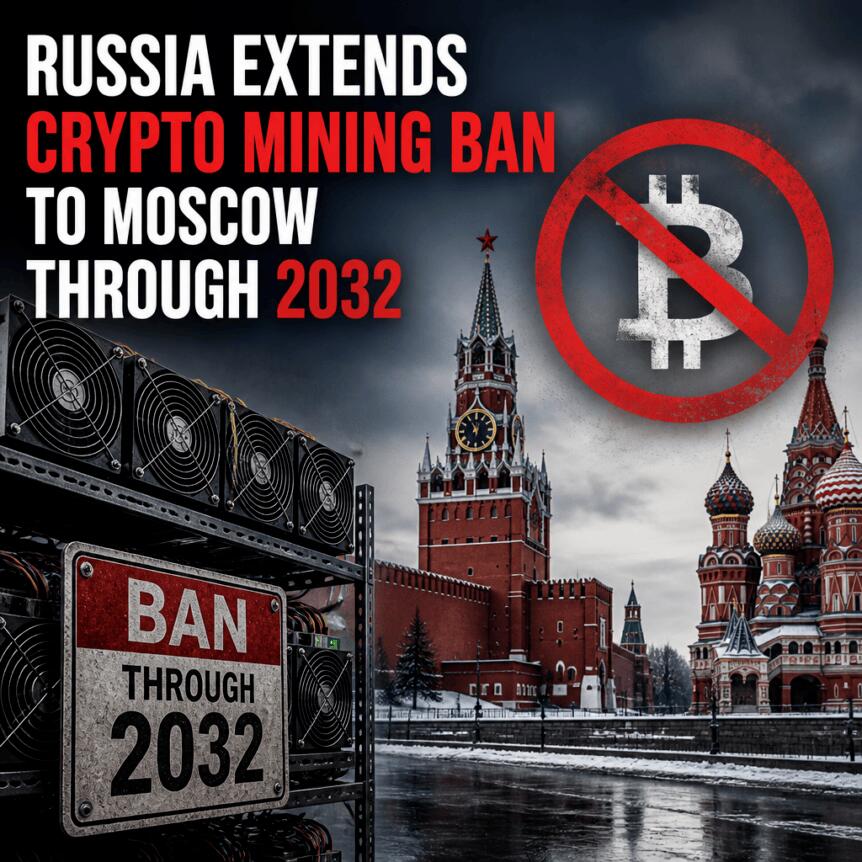
Russia is tightening its cryptocurrency mining rules by expanding a ban that will apply in Moscow and surrounding areas. The restriction takes effect on Aug. 15, 2026, and is scheduled to run through Dec. 31, 2032, according to a government resolution published on Pravo.ru.
The updated measure, signed July 25, 2026 by Prime Minister Mikhail Mishustin, amends earlier restrictions adopted in December 2024. It broadens the list of regions where mining is prohibited, citing electricity supply and demand pressures in power-constrained territories.
Key takeaways
- Russia’s Resolution No. 936 (signed July 25, 2026) extends crypto mining restrictions to Moscow and the Moscow Region.
- The Moscow-area ban starts Aug. 15, 2026 and runs through Dec. 31, 2032.
- Additional affected areas include several territories within Russia’s Kursk Region, plus eight municipal districts and the city of Lgov.
- The Kremlin-linked restrictions build on an earlier Dec. 2024 mining curbs order, and follow region-by-region bans introduced since early 2026.
Resolution expands mining ban into Moscow and nearby territories
Under the revised framework, mining restrictions now include Moscow, the Moscow Region, and multiple areas within Russia’s Kursk Region. The document also lists eight municipal districts and the city of Lgov as part of the restricted zone.
The changes are formalized in Resolution No. 936, referenced in records published on Pravo.ru. The resolution amends an earlier order issued in December 2024, which had already established limitations on cryptocurrency mining in specific parts of Russia.
Electricity demand remains the policy rationale
Russian officials have previously connected mining restrictions to grid strain and rising electricity demand. According to reporting by TASS, the Moscow Region’s energy authorities said a ban was needed as consumption increased.
TASS also cited power infrastructure figures, stating that Moscow and the Moscow Region have 65 data centers linked to the grid with a combined capacity of 734 megawatts (MW). Within that total, 19 data centers are located in the Moscow Region, totaling 233 MW of capacity.
While the new resolution expands the restricted geography, the underlying logic mirrors earlier steps: authorities are attempting to limit additional load from mining activities in areas where power supply and demand are already under pressure.
Earlier regional restrictions set the stage for a broader move
This Moscow-focused expansion follows a broader pattern of state action against crypto mining in selected regions. The updated rules amend the December 2024 restriction order, which had already begun shaping where mining could operate.
Earlier restrictions were also introduced in parts of Russia, including areas in Buryatia and Zabaykalsky Krai. As described in the Pravo.ru records, those bans were set to run from April 1, 2026 through March 15, 2031.
In other words, Russia is not simply imposing a new nationwide approach; it is layering restrictions by region—first in selected territories and now into major urban and power-dependent areas like Moscow and its surrounding region.
What to watch next for miners and operators
For mining companies and energy-intensive operators, the key practical implication is that compliance will depend heavily on location rather than a single countrywide rule. With the start date set for Aug. 15, 2026 and a long time horizon through 2032, operators in or near the newly restricted areas will need to plan for regulatory compliance well ahead of implementation.
Investors, traders, and builders should watch whether authorities continue expanding the banned geography beyond Moscow and Kursk, and whether grid-capacity reporting becomes more central to future policy decisions. Additional region-specific amendments would further reinforce Russia’s approach of using electricity supply constraints as the deciding factor for mining permissions.
In the latest Bitcoin news, Gelephu Mindfulness City, Bhutan’s southern special administrative region, has named Toronto-based 3iQ Corp. as the first institutional manager for a portion of its Bitcoin treasury, formalizing what had been a state-level BTC accumulation strategy into an active, named-mandate arrangement.
The announcement, dated July 30, 2026, marks the first concrete step toward deployment since Bhutan announced in December 2025 that up to 10,000 Bitcoin from its national holdings would be allocated to support GMC’s long-term development.
The mandate grants 3iQ discretionary management over a defined portion of GMC’s Bitcoin reserves, though the press release does not disclose the specific amount of BTC, the custody arrangement, permitted strategies, or the fee structure.
That opacity is notable for a sovereign-linked reserve mandate; operational details that traders would typically expect to accompany an institutional announcement of this scale remain absent.
Discover: Crypto prediction markets, regulated and live
Bitcoin News: What the Mandate Actually Covers
Per the announcement, 3iQ’s role extends beyond conventional asset management. The firm has committed to investing in local talent development, knowledge transfer, and establishing a permanent office in Gelephu, positioning itself as a founding institutional partner in building GMC into what the city describes as “Bhutan’s new digital offshore financial hub.
” 3iQ CEO Pascal St-Jean said the firm would put Bhutan’s capital to work “responsibly, transparently and for the long term.”
Jigdrel Singay, a board director at GMC, described 3iQ as one of the city’s founding institutional partners and specifically cited the firm’s commitment to building local capabilities as a differentiating factor in the selection process, not just its track record in digital asset management.
GMC’s choice of 3iQ reflects a deliberate approach of pairing national capital with institutional-grade external expertise rather than managing reserves purely in-house.
3iQ is a subsidiary of Coincheck Group N.V. (NASDAQ: CNCK), a NASDAQ-listed holding company based in the Netherlands.
Founded in Toronto in 2012, 3iQ built its reputation as Canada’s first regulated digital asset fund manager and was the first to launch a Bitcoin and Ethereum ETP on a major global stock exchange. The Gelephu mandate represents a significant expansion of the firm’s client profile into sovereign and quasi-sovereign territory.
Discover: Turn your market view into a position on Kalshi
Bhutan’s BTC Position and the GMC Build-Out
Bhutan’s Bitcoin reserves were accumulated primarily through hydropower-backed mining and managed by Druk Holding and Investments (DHI), the kingdom’s sovereign investment arm.
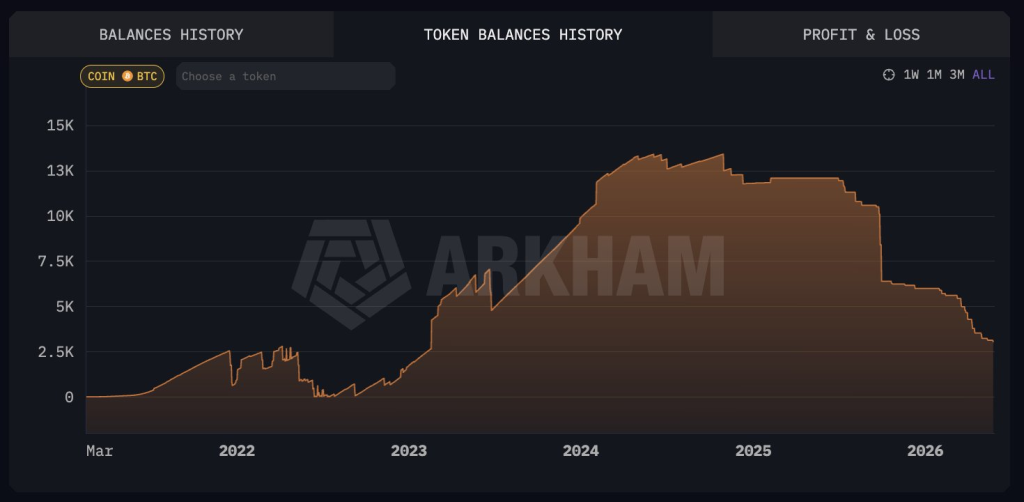
Arkham Intelligence data shows Bhutan’s sovereign holdings have shifted significantly over the past two years – from roughly 13,390 BTC in October 2024 to an estimated 5,600 BTC by mid-2026, with more than $237 million moved out of reserve addresses since January, likely to fund domestic infrastructure priorities, including GMC itself
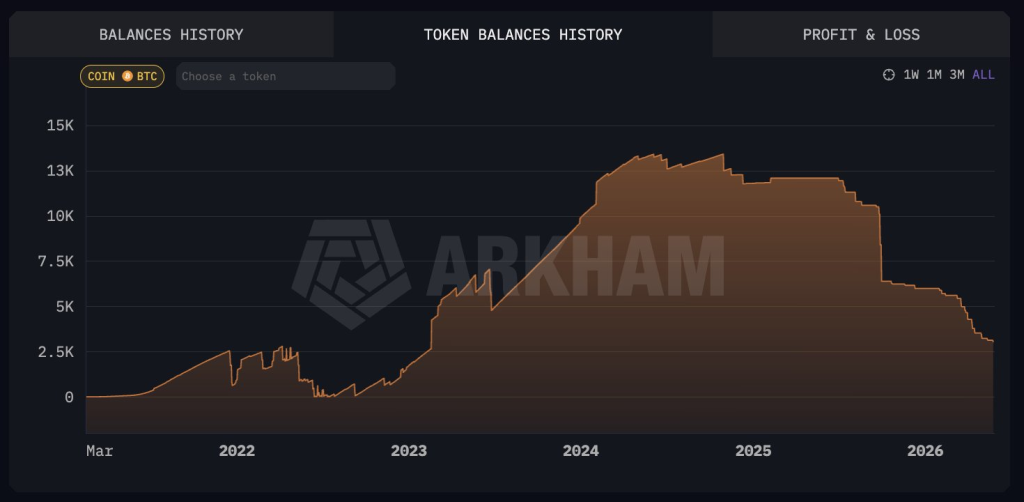
The 3iQ partnership represents what the primary source calls “the next step” in deploying the Bitcoin earmarked for Gelephu, signaling that at least a portion of GMC’s BTC allocation is being held and professionally managed rather than liquidated.
That distinction matters: Bhutan has been simultaneously selling part of its stack while now institutionalizing management of the remainder – a shift from pure accumulation toward active portfolio deployment.
GMC has been constructing the broader regulatory infrastructure to attract additional operators. According to supplementary reporting, the zone introduced a fast-track licensing route for firms already regulated in Singapore, Hong Kong, and Abu Dhabi, offers zero corporate tax in selected sectors, and provides access to banking through DK Bank.
The 3iQ mandate is framed as the first of several milestones the two organizations plan to announce as GMC pursues its goal of becoming a competitive digital offshore financial center, placing it in the same strategic conversation as established hubs, but with a sovereign BTC-mining backstory as its capital base.
Discover: Think you know where this ends up? Trade it on Kalshi
The post 3iQ Corp Named Institutional Manager of Bhutan’s Bitcoin Reserves appeared first on Cryptonews.


Bitget has upgraded its Bitcoin-backed BGBTC asset with daily BTC-denominated rewards, cross-chain transfers through Chainlink CCIP, and independent oversight from Gauntlet.
Summary
- BGBTC holders will receive daily rewards denominated in Bitcoin following the upgrade.
- Chainlink CCIP will serve as BGBTC’s canonical cross-chain infrastructure.
- Gauntlet will independently oversee the asset’s underlying yield strategies.
- BGBTC remains backed by Bitcoin at a 1:1 ratio, according to Bitget.
Bitget adds daily Bitcoin rewards to BGBTC
Bitget said the upgraded BGBTC will distribute daily rewards denominated in BTC to token holders. The asset is designed to maintain a 1:1 peg with Bitcoin while allowing users to earn yield without selling their underlying exposure.
The exchange is positioning BGBTC as an alternative to holding idle Bitcoin or moving BTC into separate yield strategies. Those strategies can require users to transfer assets between platforms, manage additional protocols, or accept reduced liquidity.
BGBTC already has several uses within the Bitget ecosystem. Holders can use the asset as futures margin, lending collateral or for participation in the exchange’s Launchpool and PoolX products.
The upgrade also introduces support for large-volume and faster redemptions, according to Bitget. The company said it has added institutional-grade risk controls and greater transparency, although specific reward rates and redemption thresholds were not provided in the announcement.
Rewards remain tied to the performance and sustainability of the underlying yield strategies. A Bitcoin-backed token can also carry platform, custody, smart-contract and liquidity risks that differ from holding BTC directly.
Chainlink CCIP supports cross-chain BGBTC transfers
Bitget selected Chainlink’s Cross-Chain Interoperability Protocol as the canonical infrastructure for distributing BGBTC across multiple blockchain networks.
CCIP provides the messaging layer needed to move the asset between supported chains. The integration could allow holders to access decentralized applications and financial services outside Bitget’s centralized platform while retaining exposure to the Bitcoin-backed token.
Bitget already uses Chainlink Proof of Reserve to verify the assets supporting BGBTC. Proof of Reserve provides on-chain data intended to help users assess whether sufficient collateral exists behind the issued supply.
Combining Proof of Reserve with CCIP addresses two separate functions. The reserve system focuses on collateral verification, while CCIP handles communication and token transfers across blockchains.
Bitget did not identify every blockchain that will initially support BGBTC through CCIP or provide a schedule for additional network deployments.
Gauntlet will oversee BGBTC yield strategies
Gauntlet has been appointed as BGBTC’s independent curator and will supervise the strategies used to generate rewards for holders.
The quantitative risk-management firm will monitor the underlying portfolio, assess risks and help determine how capital is deployed. Bitget said the framework is intended to support the long-term sustainability of BGBTC’s yield rather than relying on an unmanaged set of strategies.
Independent curation adds another layer of oversight, but it does not eliminate losses. Reward levels may change based on market conditions, available strategies, and the performance of the assets or protocols involved.
Bitget is also working with infrastructure providers, including Chainlink and Morph, as it seeks to connect centralized and decentralized financial services through a broader Bitcoin yield network.
The company cited USDGO Holderyield as another part of its effort to let users earn returns from assets that would otherwise remain idle.
What the upgrade means for Bitcoin holders
BGBTC combines Bitcoin exposure, daily rewards and cross-chain utility in a single token. Users can potentially earn BTC-denominated returns while deploying the asset as collateral, margin or capital in supported decentralized applications.
For US investors, access to BGBTC and related Bitget services may depend on geographic and product restrictions. Users should confirm whether the exchange, token, and associated yield products are available in their jurisdiction before transferring funds.
Yield paid in BTC may also create tax-reporting obligations for US holders, depending on how the rewards are classified and when users gain control of them. Bitget did not announce any US-specific rollout or regulatory approval alongside the upgrade.
Future adoption will depend on the reward rate, redemption performance, supported networks, and transparency around the underlying strategies. Bitget has not yet disclosed a fixed annual yield or a complete cross-chain deployment timeline.
SpaceX stock remained under pressure near a record low as traders prepared for the company’s first post-IPO earnings report and the release of 911.5 million insider shares.
Summary
- SpaceX shares fell 3.41% to $108 on July 31, their lowest close since the June IPO.
- SPCX lost about 36% in July, extending its decline from the July 1 price of $171.
- About 911.5 million insider shares are expected to become eligible for sale on Aug. 6.
- The one-hour chart places immediate support at $107.10, with resistance near $121.09.
SpaceX stock extends its post-IPO decline
SpaceX stock closed July 31 at $108, down 3.41% during the session and about 36% from its July 1 price of $171. The decline left the shares at their lowest closing level since the company’s June 12 initial public offering.
SPCX has now fallen by more than 50% from the record high of $225 reached on June 16. The sustained pullback has raised the prospect of a move below $100 as two major catalysts approach.
SpaceX is scheduled to publish its first quarterly results as a public company on Aug. 4. Two days later, restrictions covering 911.5 million insider shares are expected to expire, allowing their holders to sell the stock.
Those events could produce large price swings because investors must assess the company’s operating performance while preparing for a possible increase in available supply.
Earnings and short sellers drive the move
Wall Street expects SpaceX to report quarterly revenue of between $6.72 billion and $6.9 billion. Results above that range could ease concerns about the company’s valuation and encourage buyers to return after four consecutive weeks of losses.
A revenue miss could have the opposite effect, particularly because the stock has not established a reliable support base. Traders will also watch management’s guidance for Starlink, launch operations, and the company’s emerging data-center business.
Short positioning has added pressure. S3 Partners data showed that investors had shorted 219.3 million shares, representing about 39% of the stock available for public trading.
The large position means short sellers could continue benefiting if SPCX falls. However, unexpectedly strong earnings could force some traders to cover their positions, creating a short-term rebound.
Bernstein recently maintained an outperform rating and a $239 target after SpaceX completed its 13th Starship test flight. William Blair also reportedly increased its adjusted earnings-per-share estimate from $8.20 to $8.60, citing potential growth from the company’s data-center operations.
Share unlock threatens to increase selling
The Aug. 6 unlock represents the main downside risk because it will make 911.5 million insider shares eligible for sale. At a price of about $108, those shares would carry a market value approaching $98.4 billion, although eligibility does not mean that all holders will sell.
S3 Partners research director Sam Pierson argued that the additional supply could outweigh a positive earnings report.
“There won’t be anything announced on earnings that will overcome the volume of unlocked shares coming to market,” Pierson said.
Actual selling will depend on insider decisions, liquidity and market demand. Even so, the scale of the unlock may discourage investors from buying before Aug. 6, particularly while short interest remains elevated.
For US investors, both events fall within the same trading week. That concentration could increase volatility, widen intraday price ranges and make execution prices less predictable around the earnings release and unlock date.
SpaceX stock tests $107.10 support
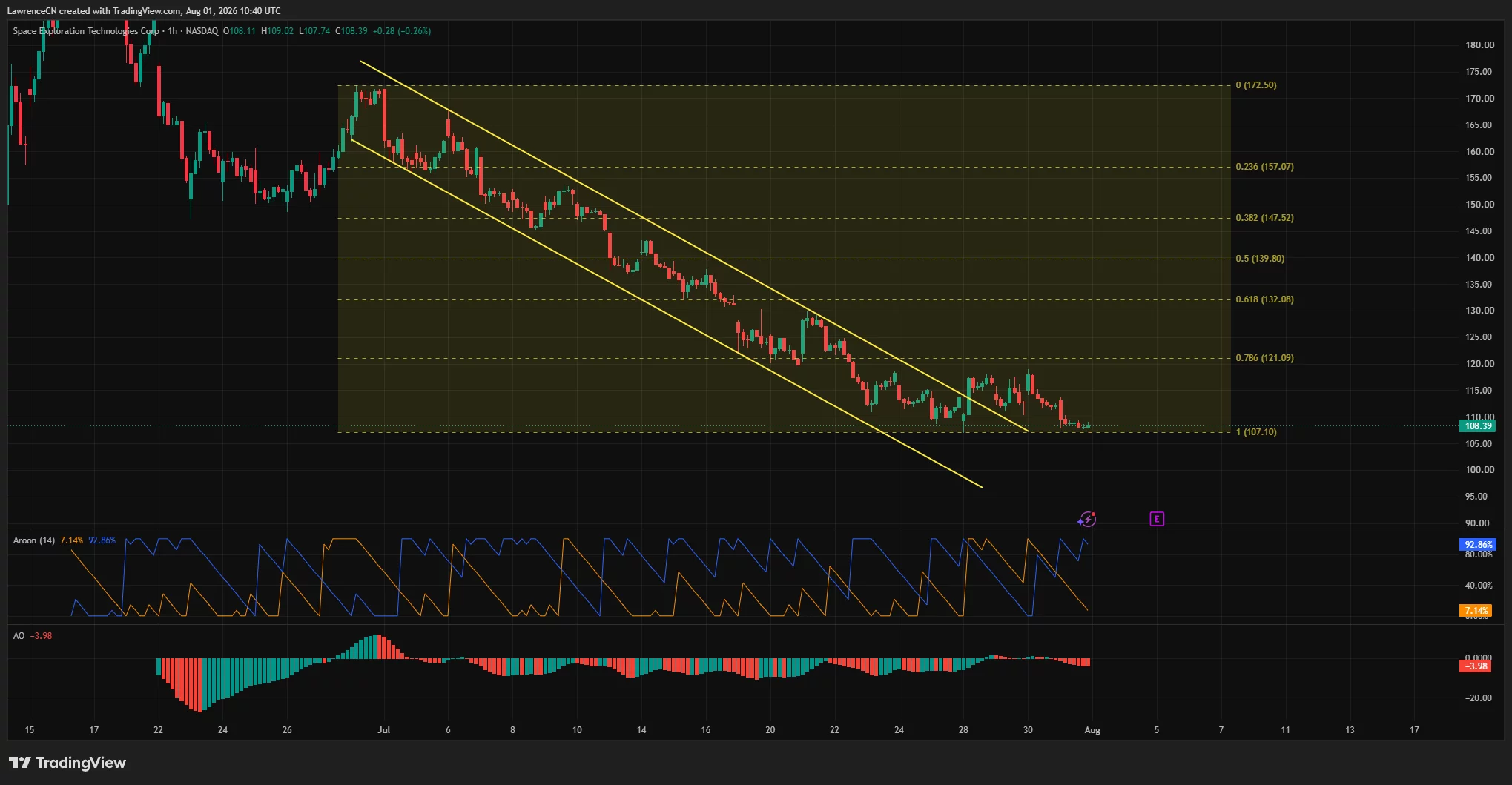
The one-hour SPCX chart shows the stock trading around $108.39 after declining within a broad descending channel. Price is now testing the $107.10 Fibonacci level, which forms the most immediate support.
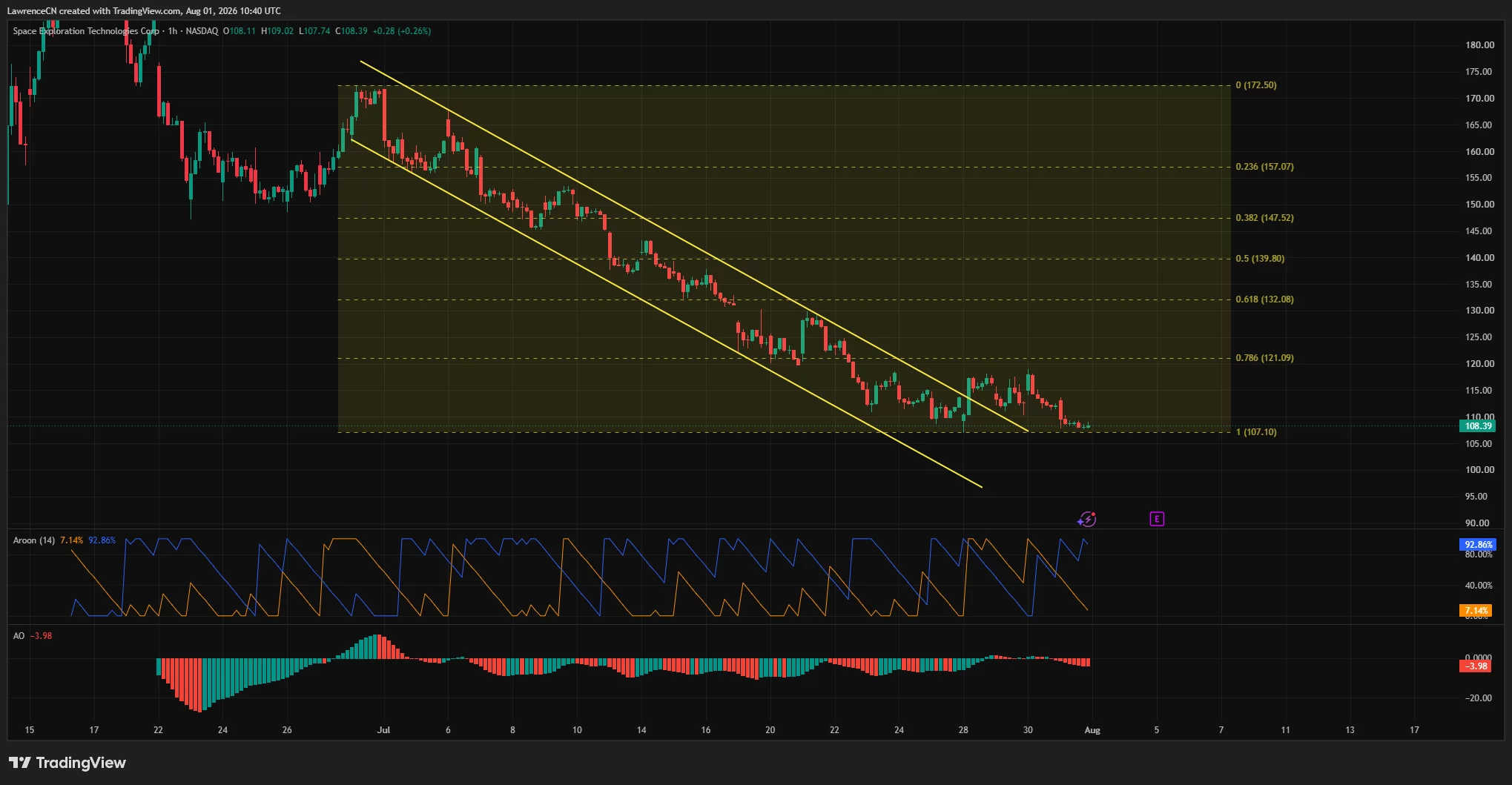
A confirmed break below $107.10 would remove the final marked retracement support on the chart. That could expose the psychological $100 level, followed by the descending channel’s lower boundary near $97.
Trend indicators continue to favor sellers. Aroon Down stands at 92.86%, compared with Aroon Up at 7.14%, showing that recent lows are occurring much more frequently than recent highs.
The Awesome Oscillator is also negative at minus 3.98. Its red histogram bars indicate that bearish momentum remains active as SPCX trades near the bottom of its recent range.
The first upside barrier sits at the 78.6% Fibonacci retracement level of $121.09. Reclaiming that price would weaken the immediate bearish setup, but it would not reverse the broader downtrend.
Further resistance appears at $132.08, corresponding to the 61.8% retracement, followed by $139.80 at the 50% level. SPCX would need to move above the descending channel and hold those levels before the chart supports a more durable recovery.
What comes next for SPCX
The near-term direction will likely depend on whether earnings demand can absorb the potential supply created by the share unlock. A revenue beat and stronger guidance could help SPCX defend $107.10 and challenge $121.09.
Failure to hold $107.10 would increase the risk of a decline below $100. Conversely, a sustained break above $121.09 would provide the first meaningful technical evidence that selling pressure is easing.
With earnings due Aug. 4 and the unlock expected Aug. 6, traders face two separate catalysts capable of moving the stock sharply. Until SPCX reclaims nearby resistance, its descending trend and negative momentum indicators leave sellers in control.
Russia is tightening its cryptocurrency mining policy again, extending restrictions beyond the regions it targeted earlier and adding Moscow and nearby areas to a long-running ban schedule. A new government resolution takes effect on Aug. 15, 2026, with the prohibition set to run through Dec. 31, 2032.
The update is set out in Resolution No. 936, signed by Prime Minister Mikhail Mishustin on July 25, 2026, according to records published on Pravo.ru. It revises an earlier mining restriction order from December 2024 and updates the list of places where mining activities are limited due to local electricity concerns.
Key takeaways
- Resolution No. 936 introduces a mining ban for Moscow, the Moscow Region, and parts of Russia’s Kursk Region, beginning Aug. 15, 2026.
- The restrictions will remain in force through Dec. 31, 2032, effectively creating a multi-year compliance horizon for operators.
- The rules follow earlier regional bans launched in December 2024 and other orders that began in 2026 across select parts of Buryatia and Zabaykalsky Krai.
- Officials have previously justified the approach by citing rising electricity demand and the power grid pressure associated with growing data-center loads.
Moscow and Kursk move into the restricted zone
Under the amended framework, the restricted geography expands to include Moscow, the Moscow Region, and additional territories listed within Russia’s Kursk Region. The rules also cover eight municipal districts and the city of Lgov in that region, broadening the affected footprint beyond the original set of localities.
The stated objective remains consistent with earlier restrictions: to limit cryptocurrency mining in areas considered to be facing strain on electricity supply. For miners and infrastructure providers, the practical impact is straightforward—new or continued mining operations in the designated areas may need to pause or restructure well before the Aug. 15, 2026 start date to avoid enforcement risks.
Resolution No. 936 revises the December 2024 order
Resolution No. 936 was signed on July 25, 2026 and amends an earlier prohibition order issued in December 2024. According to Pravo.ru, the change is not a one-off ban: it updates the list of jurisdictions where mining restrictions apply and extends the same restriction concept to additional regions.
That matters for market participants because Russia’s approach is being refined through successive legal instruments rather than replaced wholesale. In practice, operators are being pushed to manage regulatory uncertainty through long planning windows and contingency plans, especially in data-center-heavy regions where power allocation decisions can determine feasibility.
Why authorities linked the bans to power demand
In an earlier statement covering the Moscow Region’s rationale, the energy ministry said the ban was needed because of growing electricity demand. As reported by TASS, the ministry estimated that Moscow and the Moscow Region have 65 data centers connected to the power grid, with a combined capacity of 734 megawatts (MW). The same reporting cited 19 data centers in the Moscow Region with 233 MW of capacity.
Even though the mining restrictions are aimed at cryptocurrency operations, the logic used by officials is tied to the overall electricity system—particularly the growing load from digital infrastructure. For miners, that creates an indirect but significant link between crypto activity and broader regional power planning: where electricity is already earmarked for data centers and other high-consumption uses, regulators may treat mining as additional pressure that the grid cannot easily absorb.
Not the first wave: bans already planned in other regions
This latest expansion builds on restrictions introduced earlier in other parts of Russia. The earlier framework referenced by Pravo.ru points to mining restrictions being introduced in several regions in a prior phase, including parts of Buryatia and Zabaykalsky Krai.
As indicated in the published records, the bans in those areas are scheduled to run from April 1, 2026 through March 15, 2031. That staggered timing creates a rolling pattern: some jurisdictions begin restrictions in 2026 while others—like Moscow—enter a later phase starting Aug. 15, 2026, but continuing for longer overall through 2032.
Investors and operators watching Russia’s policy direction should note the implication: rather than lifting restrictions once an initial window expires, the government is instead layering in additional territories and sustaining multi-year prohibitions. That tends to shift mining activity away from restricted power grids and toward jurisdictions not covered by the latest legal orders—or toward arrangements that can demonstrate compliance with local limits.
For the next phase, the key question is how enforcement will work in the newly included jurisdictions, and whether regulators will continue expanding the restricted map beyond Moscow and Kursk or refine exemptions for specific infrastructure arrangements. Miners with assets near the updated boundaries should monitor local implementation details closely as Aug. 15, 2026 approaches.
The cryptocurrency market is back in the red after bitcoin’s rejection on Friday and a subsequent drop to a multi-week low, but, as usual, there are some exceptions.
Pi Network’s native token is among those, which might sound surprising given its recent calamity. Nevertheless, PI is up by 5% daily after an important reminder was issued by the team.
The Reminder
The Core Team announced on X that the blockchain has already begun the process of migrating to the next major protocol version, 26. As with previous similar statements, the post highlighted the importance of Pi Validators having to complete the upgrade by the deadline of August 11 to remain connected to the network.
Protocol version 26 will be among the biggest updates implemented by the team, and perhaps the most significant one since v20.2, which laid out the fundamentals for smart contract building. It’s designed to improve contract safety, state management, interoperability, and cryptographic capabilities.
Moreover, it comes before the final planned upgrade, protocol version 27, which is likely to be introduced in late August or September.
Reminder: the Pi Mainnet is upgrading to Protocol v26. All Mainnet node operators must complete the upgrade by August 11 to remain connected to the network.
Protocol v26 is a major milestone that improves contract safety, state management, interoperability, and cryptographic… pic.twitter.com/FXM5A8Tzo9
— Pi Network (@PiCoreTeam) July 31, 2026
The Core Team set the August 11 deadline earlier this week, which essentially meant that protocol version 25 was successfully deployed, even though there was no official confirmation at the time.
PI Rockets
A very small percentage of all the Pi Network updates, product features, redesigned apps, or new developments announced by the team in the past month or so have had a positive impact on the native token. However, the version 26 deadline set from a few days ago and last night’s reminder might be the exception.
PI jumped after the team first announced the upcoming protocol version 26 and has done the same over the past 24 hours. It’s up by 5% daily and now sits at $0.086 after it challenged $0.088 hours ago. This comes despite the broader market’s weakness, led by BTC’s dip to $62,400.
Nevertheless, the broader picture around PI is still very painful. The asset remains down by over 97% since its all-time high from February last year. Its market cap is well below $1 billion, making it the 68th-largest asset by that metric.
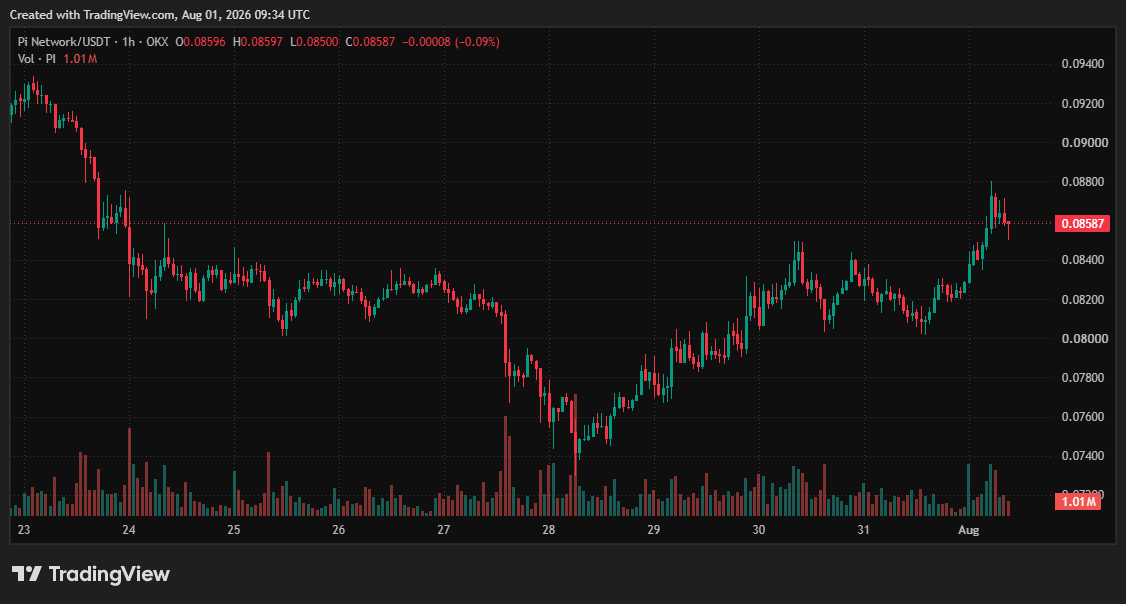
The post PI Surges 5% Despite Market Slump After Important Pi Network Reminder appeared first on CryptoPotato.
Crypto World
Bitcoin Price Prediction: Michael Saylor’s Strategy Posts Massive Q2 Loss Despite Bigger Bitcoin Stack

Bitcoin is trading around $63,000 to $65,000 price range, as Strategy’s weak Q2 earnings add pressure to an already cautious market and prediction. The headline loss grabbed attention, but the filing revealed even deeper concerns. Now, traders are watching whether this sparks another wave of selling or marks a local bottom for institutional buyers.
Strategy reported a Q2 net loss of $8.22 billion, or $24.45 per share, swinging sharply from a $10.02 billion profit a year earlier. The result missed analyst estimates by a wide margin. Management blamed weaker Bitcoin prices and fading market sentiment. Between late June and early July, the company sold about 3,600 BTC for roughly $216 million, realizing an estimated $55 million loss.
STRATEGY’S Q2 EARNINGS REPORT SHOWS AN $8.3B UNREALIZED bitcoin:native LOSS — CryptosRus (@CryptosR_Us) July 30, 2026
Q2 highlights: BTC holdings increased 11% Convertible debt reduced 18% USD reserve increased 12% Bitcoin per share increased 5%
The Bitcoin drawdown hit earnings hard, but Strategy continued… https://t.co/A700cxVsGc pic.twitter.com/rlTmYayxC9
The filing also showed Strategy’s average Bitcoin cost basis remains above current market value across its 843,775 BTC holdings. As a result, the company recorded a full valuation allowance against its deferred tax assets. Preferred stock dividends, effectively funded by the treasury, have also attracted criticism from blockchain analysts and market observers.
That means the focus has shifted beyond another mark-to-market loss. Investors are now assessing what sustained pressure on the market’s largest corporate Bitcoin holder could mean for supply, sentiment, and institutional positioning during the third quarter. While long-term conviction remains intact for many, near-term volatility may keep traders on edge.
Discover: The Best Token Presales
Bitcoin Price Prediction: Reclaim $75,000 or Is the Strategy Overhang a Structural Ceiling?
Bitcoin is trading around $63,000 to $65,000, leaving it 15% to 17% below Strategy’s average purchase price of about $75,500 per BTC. That level has become more than an accounting figure. It is now a psychological hurdle for any sustained recovery. Recent trading between $63,000 and $65,500 suggests consolidation rather than a decisive trend.
Meanwhile, the high $50,000 to low $60,000 area, where Strategy sold part of its holdings, has emerged as an important support zone. A sustained move below $60,000 could encourage additional selling from leveraged holders and weaken institutional sentiment, especially if risk appetite deteriorates further.

The near-term outlook still revolves around three likely paths. In the bullish scenario, Bitcoin holds above $63,000 and gradually climbs toward $69,000 to $71,000 as market sentiment improves. The base case keeps Bitcoin trading between $60,000 and $67,000, while Strategy’s average cost remains a psychological ceiling.
The bearish case begins if Bitcoin loses $60,000 on strong selling pressure. That could expose a move toward the $55,000 to $58,000 region and renew concerns over Strategy’s 843,775 BTC position. Even so, long-term accumulation remains part of the investment thesis. The key question is whether the market can absorb the near-term supply without derailing the larger bull cycle.
Trade Bitcoin on Bybit and Get a Chance to Win Our $1,000 USDT Airdrop
Bitcoin Hyper Targets Early Mover Upside as Bitcoin Tests Key Levels
Bitcoin consolidating below its prior highs, with corporate holders under stress and large-cap upside constrained by the $75,000 overhead resistance, is precisely the environment where early-stage infrastructure plays historically attract rotation capital. The upside math at $63,000 Bitcoin is structurally different from the upside math on a presale priced at fractions of a cent.
Bitcoin Hyper ($HYPER) is positioning itself as the infrastructure layer that addresses Bitcoin’s three core limitations: slow transactions, high fees, and a near-complete lack of programmability.
Hyper is the first Bitcoin Layer 2 with Solana Virtual Machine (SVM) integration, delivering smart contract execution speeds that exceed Solana’s own throughput, while preserving Bitcoin’s underlying security model. The presale has raised close to $33 million at a current price of $0.0136839, with high-APY staking available to early participants.
The decentralized canonical bridge for BTC transfers and low-latency transaction execution are the standout technical differentiators. For traders looking at Bitcoin’s constrained near-term upside, research Bitcoin Hyper as a higher-asymmetry positioning option within the broader Bitcoin ecosystem.
Discover: The Best Crypto to Diversify Your Portfolio
The post Bitcoin Price Prediction: Michael Saylor’s Strategy Posts Massive Q2 Loss Despite Bigger Bitcoin Stack appeared first on Cryptonews.


Cathie Wood’s ARK Invest bought 109,129 Circle shares after the stablecoin issuer secured a limited-purpose trust charter in New York.
Summary
- ARK acquired about $6.83 million in Circle shares across three exchange-traded funds.
- Circle received a limited-purpose trust charter from the New York Department of Financial Services.
- CRCL closed 2.54% lower at $62.61 on July 31 despite the regulatory approval.
- Circle plans to gradually transfer USDC issuance to its New York trust entity.
ARK Invest adds 109,129 Circle shares
ARK purchased 77,103 Circle shares through its flagship ARK Innovation ETF, according to the firm’s daily trade disclosures. The ARK Next Generation Internet ETF added 22,238 shares, while the ARK Fintech Innovation ETF acquired another 9,788.
Together, the purchases totaled 109,129 shares. They were worth approximately $6.83 million based on Circle’s July 31 closing price of $62.61.
The investment extended ARK’s exposure to Circle as the company expands its regulated stablecoin infrastructure in the United States. It also followed ARK’s roughly $40.2 million purchase of Tesla, SpaceX and Nvidia shares on July 28 during a broader technology-sector sell-off.
ARK made several other purchases on July 31, including 298,243 CoreWeave shares, 12,512 shares of the 3iQ Solana Staking ETF, 7,500 Pony AI shares and 2,700 Kodiak AI shares.
The firm reduced its positions in Shopify, Cloudflare, CrowdStrike, Snowflake, 10x Genomics, Komatsu, Brera Holdings, Iridium Communications and Figma.
Circle secures New York trust charter
ARK’s purchase followed Circle’s receipt of a limited-purpose trust charter from the New York Department of Financial Services. The approval covers Circle Internet Trust Company LLC, which will operate as Circle New York Trust.
A New York limited-purpose trust company can conduct approved virtual currency activities and exercise fiduciary powers. Unlike a BitLicense holder, it can also provide money transmission services in the state without obtaining a separate money transmitter license.
Circle said it plans to gradually move USDC issuance to the New York entity. Circle New York Trust will operate alongside Circle National Trust, the federally chartered national trust bank authorized to provide custody and collateral trustee services.
Circle CEO Jeremy Allaire described the New York approval as a long-term objective for the company.
“Earning a New York trust charter has been a longstanding objective for Circle given the regulatory clarity that comes with it.”
He added that the charter places USDC within a strong regulatory framework as digital dollars become more widely used in the global financial system.
Circle builds state and federal oversight
Circle’s New York authorization follows the Office of the Comptroller of the Currency’s final approval on July 10 for the company to establish Circle National Trust.
The federal trust bank will initially provide fiduciary digital asset custody services to Circle and its affiliates. Circle has also identified management of USDC reserves as a possible future capability, subject to its approved business plan and regulatory requirements.
The two charters give Circle separate state and federal regulatory structures. NYDFS will supervise the New York entity’s approved virtual currency and fiduciary activities, while the OCC will oversee the national trust bank.
For U.S. investors, the approvals strengthen Circle’s position within the regulated stablecoin market. However, the charters do not remove risks tied to USDC growth, interest-rate changes, competition or Circle’s share valuation.
Circle stock falls despite regulatory progress
Circle stock ended July 31 at $62.61, falling $1.63, or 2.54%, during the session. The decline suggests investors did not immediately treat the New York charter as a reason to reverse the stock’s recent weakness.
CRCL had gained about 10% on July 10 after Circle announced final OCC approval for its national trust bank. The shares subsequently surrendered those gains as the broader technology and digital-asset sectors came under pressure.
ARK’s latest purchase comes as the investment firm expects consolidation across crypto businesses. ARK digital assets research director Lorenzo Valente said on July 28 that revenue and investment were becoming concentrated among fewer companies.
Valente predicted more acquisitions, bankruptcies, shutdowns and talent-focused deals. However, his post did not identify the dataset, category definitions or measurement period supporting its revenue concentration figures.
Circle is scheduled to report its second-quarter 2026 financial results on Aug. 5, giving investors another measure of whether regulatory progress is translating into stronger USDC activity and company revenue.

Documents reveal contents of the first telegraph message between India & England

Howard Stern’s Layoffs Spark Reported Severance Dispute

Why People are Shifting to Crypto Trading?

Renter of Home in Anne Heche Crash Denies Settlement With Son

No Jackpot Winner as $257 Million Prize Rolls Over to $269 Million Monday Draw

Weekend Open Thread: Staud – Corporette.com
Why People are Shifting to Crypto Trading?

A Family’s Biggest Financial Mistake #trending #viral #youtubeshorts #video #husbandwife #moralstory

Crypto Live Trading| 29 july #vinbullindia #livetrading #vinbulllive #live #trading #cryptotrading
-
 Sports6 days ago
Commonwealth Games boxing: Jadumani Singh seals dominant 5-0 win over Pakistan’s Sumama Rehman to enter quarter-finals | Commonwealth Games News
-

 Business3 days ago
Why Trees Belong on the Risk Register
-

 Fashion19 hours ago
Weekend Open Thread: Wit & Wisdom
-

 Politics15 hours ago
Meta enters AI-training agreement with far-right ‘propaganda rag’ Newsmax
-

 Tech6 days ago
Intel is reversing course and bringing hyper-threading back to its server chips
-

 Crypto World7 days ago
Ripple bought a bank in pieces. The $4 billion audit
-

 Politics5 days ago
Luke Littler dismantles Gerwyn Price to retain title in Blackpool
-

 Politics4 days ago
The Part of the Electric Transition Nobody Wants to Discuss
-

 News Videos6 days ago
BITCOIN JUST ENTERED THIS CRITICAL ZONE…
-
 Entertainment4 days ago
‘Stargate’ Creator’s New Sci-Fi Series Returns for Season 3 Tomorrow
-

 Business3 days ago
Major shareholder moves on Canyon
-

 Crypto World6 days ago
XRP Ledger adds $2.6B as RWA inflows rank second
-

 Politics6 days ago
Spain sweeps the board at 2026 World Cup with individual awards
-

 News Videos2 days ago
Bitcoin Enters the 3rd Stage of the Bear Market
-
Crypto World6 hours ago
XRP Ledger v3.3.0 brings five institutional features
-

 Entertainment6 days ago
Sara Gilson Killed By Husband After Viral “Pedophile” TikTok Video
-

 Crypto World4 days ago
Kraken Enables Retail Access to Jersey Mike’s IPO via Tokenized Shares
-

 News Videos4 days ago
Claude: Build Financial Dashboards in Minutes (2026)
-

 Tech4 days ago
New macOS Sequoia & Sonoma security updates for older Macs
-

 Politics2 days ago
Luke Littler’s dominance sparks GOAT debate
You must be logged in to post a comment Login