

Crypto World
Singapore Tightens Crypto Regulation as Bsquared’s Licence Revoked

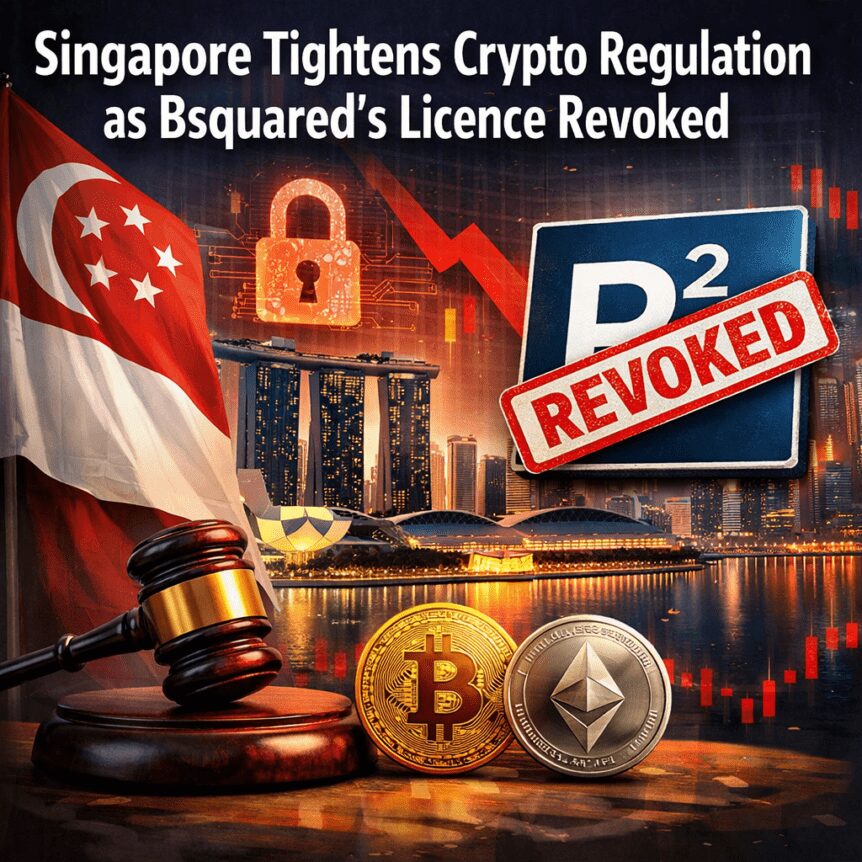
Singapore’s central bank, MAS, has revoked Bsquared Technology Pte Ltd’s Major Payment Institution Licence, removing the firm’s authority to provide digital payment token services under Singapore’s Payments Services Act 2019. The suspension follows an on-site inspection that uncovered weaknesses in governance and control frameworks, including risk management practices, conflict-of-interest policies, and outsourcing oversight.
The regulator also noted that Bsquared provided false or misleading information at multiple points during the license process and the subsequent review. Bsquared, which operates under the name BSQ, received the green light to offer digital payment token services roughly 16 months ago.
MAS has directed Bsquared to obtain a closure certificate from its auditors confirming that all customer funds have been returned to their rightful recipients. Bsquared informed MAS that it held no outstanding customer assets. In its statement, MAS stressed that it takes a serious view of the breaches and indicated it is reviewing the responsibilities of key BSQ officers.
Key takeaways
- MAS revoked Bsquared’s Major Payment Institution Licence after an on-site assessment revealed deficiencies in risk management, conflict-of-interest controls, and outsourcing compliance.
- The regulator criticized Bsquared for supplying false or misleading information during the application and inspection processes.
- The firm must secure a closure certificate from its auditors to demonstrate that all customer funds have been returned; Bsquared claimed no outstanding customer assets.
- Enforcement actions of this nature remain relatively rare in Singapore, where MAS has granted 37 digital payment token licenses to date; past actions include the rejection of AmazingTech’s Tokenize Xchange license and a subsequent probe by the Commercial Affairs Department.
- The case underscores heightened regulatory expectations for digital payment token providers and may influence licensing dynamics, governance standards, and audit requirements across the sector.
Regulatory framework and enforcement signals
The decision reflectsMAS’s ongoing emphasis on robust governance and risk controls for digital payment token services. Under the Payments Services Act 2019, MAS requires licensees to maintain sound risk management, clear conflict-of-interest policies, and proper oversight of outsourcing arrangements. The on-site findings in Bsquared’s case point to a broader enforcement trajectory in which governance failures, misrepresentation, and weak controls can lead to licence termination rather than penalties alone.
MAS’s stance also signals increased scrutiny of the personnel responsible for licensee governance. The authority stated it is reviewing the responsibilities of BSQ’s key officers, a step that could have implications for individual accountability within crypto firms seeking or retaining licences in Singapore.
Within this regulatory environment, the sector has seen relatively few revocations compared with license approvals. To date, MAS has granted 37 digital payment token licenses, and revocation actions remain uncommon. The regulator’s recent actions build on a pattern of careful, standards-based oversight rather than rapid, broad-based sanctions.
Historical context matters here. Last year, MAS rejected AmazingTech’s application to operate Tokenize Xchange, and the Commercial Affairs Department subsequently opened a probe into the company. These developments illustrate a vigilant, multi-agency approach to licensing and enforcement in Singapore’s crypto infrastructure landscape.
Singapore’s broader push into digital asset infrastructure
Singapore continues to position itself as a regional hub for digital assets and crypto infrastructure, hosting regional offices for major players and hosting flagship projects that connect traditional finance with tokenized assets. The regulatory environment in Singapore emphasizes prudent risk management, customer fund protection, and clear accountability for licensed entities as part of broader financial supervisory objectives.
Contextually, Singapore’s regulatory posture sits alongside ongoing global developments in crypto policy. In the European Union, MiCA is advancing a comprehensive framework for crypto assets and service providers, while U.S. authorities—across the SEC, CFTC, and DOJ—continue enforcement and policy evolution in related areas. The Bsquared case thus feeds into a global narrative prioritizing licensing discipline, AML/KYC rigor, and robust governance as prerequisites for institutional participation in crypto markets.
As Singapore strengthens its digital asset infrastructure, institutions and banks operating in or with the city-state may face heightened due diligence and compliance expectations. Initiatives such as banks enabling direct minting and redemption of stablecoins for institutional clients on blockchain rails illustrate the sector’s drive toward regulated, cross-border interoperability—but also underline the importance of clear custodial, settlement, and fund-tracing standards.
According to Cointelegraph, the MAS action against Bsquared reinforces the central bank’s position that licenced entities must meet rigorous governance and disclosure standards to maintain public trust and financial stability within Singapore’s payment and digital asset ecosystems.
Closing perspective
The Bsquared revocation demonstrates Singapore’s willingness to impose stringent consequences for governance and disclosure deficiencies in the digital asset space. For license applicants and existing providers, the case highlights the critical importance of robust risk management, transparent reporting, and strict adherence to outsourcing policies and fund custody requirements. As regulatory scrutiny intensifies, market participants should anticipate tighter officer accountability, more granular due-diligence by upstream partners, and a continuing emphasis on preserving customer fund integrity as a precondition for ongoing participation in Singapore’s crypto infrastructure ecosystem.

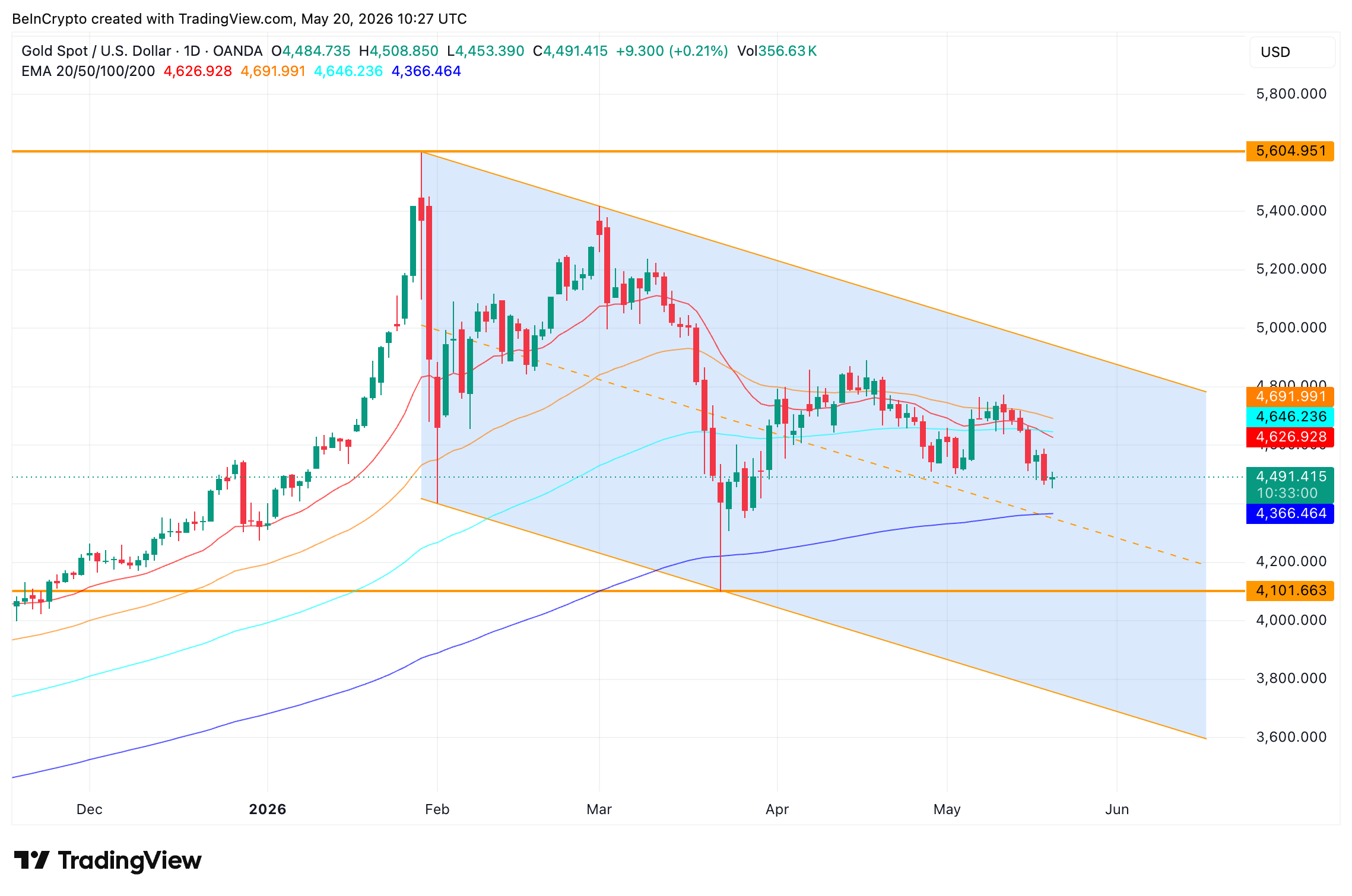
Gold price sits at $4,491 below most of its short-term moving averages, with commercial hedgers stacking shorts at the top while speculators add longs.
The breakdown sits inside a five-month falling channel that has held since January, while options positioning and Iran-oil tension acting on the dollar add layers to the bearish setup.
Gold Slips Below Three Short-Term EMAs Inside Falling Channel
Gold (XAU/USD) has been trading inside a descending channel since January, with the asset bouncing off the lower boundary on March 23 before recovering. The channel’s downward slope confirms the broader trend has been weakening even as buyers defended the floor each time.
Want more insights like this? Sign up for Editor Harsh Notariya’s Daily Newsletter here.
The structure has cracked further in recent weeks. Gold has broken below its 20-day, 50-day, and 100-day exponential moving averages (EMAs), trend indicators that weigh recent prices more heavily than older candles. Only the 200-day EMA still holds, at $4,366, marking the structural line in the sand for the broader uptrend.

The fact that gold lost three short-term EMAs without a clean reclaim suggests sellers control the immediate trend. The 200-day reclaim or hold becomes the next decisive factor, but positioning data adds the next layer of context.
Commercial Hedgers Sell the Top While Speculators Add Longs
The latest Commitments of Traders (COT) report from the CFTC, released on May 12, shows a sharp divergence in gold futures positioning. The COT report tracks commercial hedgers, who are physical-market participants like miners, refiners, and jewelers, against non-commercial speculators, who are typically managed money funds and large traders.
Commercial hedgers added 10,818 short contracts in the week ending May 12 (when the right shoulder top formed), a meaningful increase in bearish hedge positioning. Commercial shorts now make up 71.2% of open interest, the dominant force in the market.
Non-commercial speculators, by contrast, added 7,979 long contracts in the same week. Their net long exposure expanded even as commercials hedged aggressively.

Commercials are usually considered the better-informed money in gold futures, the smart money, This is because they have direct exposure to the physical gold supply chain. Their hedging behavior at price tops has historically been a contrarian bearish signal, and this divergence carries even more weight when options positioning shows hedging building on the other side too.
GLD Put Hedges Climb While Call-Heavy Open Interest Holds
The options market on the SPDR Gold Shares ETF (GLD) shows hedging accumulation that aligns with the COT divergence. The GLD put-call ratio by open interest sits at 0.58, meaning calls still outnumber puts among open contracts overall.
However, the open interest ratio has climbed from 0.47 lows in early February toward 0.58 as of May 19, suggesting put accumulation has accelerated. The volume ratio has also tightened to 0.97, meaning daily put and call volumes are almost evenly matched.

Implied volatility (IV) sits at 23.22% with an IV percentile of 62%, which measures the share of trading days over the past year that IV has been at or below the current reading. The percentile above 60% indicates options pricing is somewhat elevated.
The pattern across both venues lines up. The call-heavy open interest and bullish speculator longs reflect retail and managed money sentiment, while the rising put hedges and aggressive commercial shorts reflect institutional caution. The two venues tell the same story from different angles.
Iran-Oil Tension Pressures the Dollar and Adds to Gold’s Drift
The macro backdrop has been adding to gold’s swings. Iran-related geopolitical tension has kept oil markets unsteady through May, feeding into the dollar through the petrodollar feedback loop.
Higher oil prices lift inflation expectations, which can pressure the dollar but also support it when safe-haven flows dominate. Gold usually benefits from a weaker dollar and rising inflation but has not gained cleanly because the dollar has not moved decisively in either direction.
The metal is down roughly 6.83% over the past month while remaining up 36% year-on-year.

The recent month’s drift mirrors the indecision in the macro chain, where conflicting forces have prevented a clean directional move. With macro forces stuck in equilibrium, the Gold price chart becomes the final decider.
Gold Price Levels That Decide Whether the Pattern Confirms
The gold price action across April and May has carved a head-and-shoulders pattern inside the descending channel. The left shoulder formed in early April. The head peaked near $4,890 in late April. And the right shoulder topped around $4,775 in mid-May. The neckline slopes downward and sits close to $4,308.
For gold price to show strength, the asset needs to hold above $4,539, the 0.618 Fibonacci level of the recent swing. Below that, the chart shows weakening points at $4,474 (the nearest support), $4,393, and the $4,308 neckline.
A confirmed break of $4,308 projects a 6.35% measured move toward $4,038. The $4,308 level also aligns closely with the 200-day EMA we highlighted earlier.
Bullish invalidation begins at $4,775 and completes at $4,890. A clean move above $4,890 voids the pattern and re-engages the speculator long positioning from the COT report.

The pattern nuance worth flagging is that a head-and-shoulders setup only confirms after a clean neckline break with volume. Until $4,308 cracks decisively, the structure remains a forming pattern rather than a confirmed bearish signal.
The $4,308 neckline separates a controlled hold above $4,539 from a 6.35% slide toward $4,038.
The post Gold Price Risks 6% Drop as Smart Money Quietly Sells the Top appeared first on BeInCrypto.


The European Commission said it is seeking feedback on whether the European Union’s landmark crypto framework, the Markets in Crypto-Assets Regulation (MiCA), remains fit for purpose as digital asset markets evolve.
The consultation, which remains open until Aug. 31, invites responses from both the public and industry stakeholders, including crypto firms, financial institutions, technology providers, academics and consumer groups, the executive branch of the EU announced on Wednesday.
MiCA was voted into law in 2023, establishing the EU’s first harmonized regulatory regime for crypto-assets and related services. The framework covers cryptoassets and stablecoins, as well as issuers and cryptoasset service providers operating within the bloc. The first regulations, related to stablecoins, took effect in June 2024, and the rules became fully applicable the following December.
The Commission said it is now reassessing the framework given the rapid changes in digital asset markets and shifts in the international regulatory landscape since MiCA was first developed.
The consultation includes both a public questionnaire and a more technical targeted consultation focused on legal and operational aspects of the regime.
Crypto World
Airfare Jumps 21% Year-Over-Year as Major U.S. Carriers Announce Robust Summer Travel Demand

Key Highlights
- U.S. airline ticket prices increased 20.7% compared to April 2025, accelerating from March’s 14.9% gain.
- Bank of America credit and debit card transaction data reveals double-digit spending growth for airline purchases in May.
- Most carriers have reduced third-quarter domestic capacity plans, though American Airlines continues expanding at 9.3%.
- United Airlines forecasts 53 million travelers during summer months; American Airlines anticipates serving 75 million passengers through early September.
- Aviation sector equities rallied Wednesday, with Allegiant Travel climbing 6.8% following a 4% decline in crude oil prices.
U.S. airline equities experienced significant gains Wednesday following a substantial decline in crude oil prices of approximately 4%, while major carriers confirmed that robust summer travel demand persists. Bank of America published comprehensive industry analytics demonstrating healthy pricing power and consumer spending patterns entering the peak travel period.
Ticket Prices and Consumer Spending Show Upward Momentum
Airline ticket costs have experienced substantial increases throughout 2026. April data from the Airline Fare Consumer Price Index revealed a 20.7% year-over-year surge, marking an acceleration from March’s 14.9% increase. On a monthly basis, fares climbed 6.3%.
The Air Passenger Services Producer Price Index similarly demonstrated strength, posting an 11.1% annual increase in April, surpassing March’s 8.1% gain. Data compiled by the Airline Reporting Corporation indicated average ticket prices rose 16.2% compared to the prior year period.
Proprietary Bank of America payment card analytics revealed airline-related spending reached double-digit growth rates in May. This expansion was primarily attributable to elevated per-transaction amounts rather than increased transaction volume alone.
During Bank of America’s recent Industrials, Transportation and Airlines conference, carrier executives emphasized that both passenger demand and pricing strength remain favorable. Nevertheless, capacity strategies for the latter portion of 2026 maintain flexibility, with fuel cost trajectories playing a central role in planning decisions.
Crude oil valuations have persisted above the $100 per barrel threshold, maintaining pressure on carrier operating expenses. Brent crude traded near $104 Tuesday before declining Wednesday.
Capacity Reductions Underway — With One Notable Exception
Industry-wide domestic capacity growth projections for the third quarter of 2026 have contracted by 200 basis points since mid-April, currently standing at 1.6% growth. A substantial portion of this adjustment followed Spirit Airlines’ operational cessation, which eliminated 160 basis points of system capacity.
United Airlines revised its capacity expansion forecast downward from 9.4% to 5.2%, representing an additional 80-basis-point reduction. American Airlines maintains a contrarian position, preserving its 9.3% growth target and contributing 190 basis points to aggregate industry capacity expansion.
American Airlines Group Inc., AAL
Summer period capacity is projected to remain essentially unchanged year-over-year, with additional reductions anticipated post-Labor Day. September capacity growth currently stands at 4.1%, significantly above the flat trajectory expected between May and August, with industry observers anticipating further downward adjustments in forthcoming announcements.
United Airlines projects serving over 53 million passengers during the June through August timeframe, representing approximately 3 million additional travelers versus the previous summer. American Airlines outlined plans to transport roughly 75 million customers across approximately 750,000 flights between May 21 and September 8, characterizing this as its “centennial summer.” Delta Air Lines reported that domestic demand remains consistent despite elevated fare levels.
United Airlines highlighted that reservation activity in North American cities hosting World Cup Group Stage matches has increased nearly 20%, though carriers broadly indicated they have not yet observed widespread World Cup-driven travel demand.
Regarding international traffic patterns, outbound U.S. leisure travel continues outperforming inbound volumes. Excluding Middle Eastern markets, outbound travel demonstrates 3.7% year-over-year growth while inbound traffic has declined 3.8%.
The U.S. Global Jets ETF advanced 3.3% during Wednesday morning trading. Allegiant Travel commanded sector performance with a 6.8% gain, followed by Frontier Group at 5.9%, United Airlines at 5.9%, Republic Airways at 5.6%, Alaska Air at 4.9%, and JetBlue at 4.4%.



- Real signs partnership with iExec to develop private RWA blockchain infrastructure.
- Companies explore encrypted asset issuance, lending, and compliant financial operations.
- Confidential computing gains attention as the institutional tokenization market continues expanding.
Real has entered into a memorandum of understanding with iExec to explore privacy-focused infrastructure for tokenized assets.
The collaboration will evaluate how institutional RWA issuance, distribution, and on-chain financial activity can be conducted while preserving confidentiality and supporting compliance and audit requirements.
Real provides infrastructure for the full lifecycle of tokenized assets, including onboarding, verification, risk assessment, settlement, and asset management.
iExec contributes confidential computing capabilities through Trusted Execution Environments such as Intel TDX and its Nox Protocol, which enables encrypted data processing, confidential smart contract execution, selective disclosure, and verifiable computation.
As part of the collaboration, the companies will assess how the Nox Protocol can integrate with Real’s Layer 1 blockchain to support confidential tokenized assets, encrypted transaction flows, and private financial operations.
The collaboration will focus on confidential RWA issuance and distribution, including encrypted balances and private transaction flows, as well as financial activities such as subscriptions, redemptions, dividend payments, lending, and structured credit.
“Institutions need more than tokenization. They need infrastructure that protects sensitive financial data while still allowing compliance, oversight, and auditability,” said Ivo Grigorov, CEO, Real.
“Our Partnership with iExec is an important step toward exploring how confidential computing can support the next generation of real-world asset markets.”
The companies will also explore selective disclosure tools for regulators and auditors, while assessing how confidential assets can remain interoperable with custody solutions, settlement systems, and potential secondary markets.
The agreement establishes a framework for evaluating institutional use cases such as tokenized funds and private credit. Planned next steps include technical discussions, identifying pilot opportunities, and aligning infrastructure architecture.
As real-world asset tokenization expands, institutional participation increasingly requires protection for sensitive data such as investor allocations and transaction information.
Real and iExec said they will examine how confidential computing can enable private financial operations while preserving on-chain verification and controlled regulatory access.


In the last few years, the AI conversation has been dominated by a single question: whose model is better? That framing made sense when capability gaps were wide and performance gains were visible with each new release. Today, that gap is narrowing fast. Models across providers are improving at a similar pace, costs are declining, and access is becoming increasingly uniform.
The next phase of competition will be defined by how reliably AI can act in real environments and conditions. This transition introduces a layer of value that is less visible than raw model performance, but more defensible over time because it compounds with use instead of depreciating through replication. It lives in execution, outcomes, and the feedback loops that connect the two.
When AI systems begin executing tasks, every action produces a trail. Decisions are made, tools are called, constraints are applied, and outcomes are recorded. These form structured records of intent, behavior, and result that reveal not only what happened, but why, and whether it should be repeated. Over time, this accumulation becomes institutional knowledge as a record of consequential decisions and their real-world effects that cannot simply be copied or acquired externally.
This is also where the next durable advantage is forming. Models can be trained, fine-tuned, and swapped out. Execution data tied to real workflows is a different category altogether. Generating it requires access to live systems, consistent usage at scale, and the kind of evaluation infrastructure, audit trails, outcome tracking, and structured feedback loops that turn raw activity into something a system can actually learn from. Without that, feedback remains subjective and improvement plateaus.
Financial markets offer one of the clearest illustrations of this dynamic. Trading decisions are continuous, outcomes are near-immediate, and performance can be assessed across multiple dimensions simultaneously. Profit and loss is only one lens. Execution quality, risk exposure, adherence to strategy, behavior under stress, and consistency across correlated events contribute to a fuller picture of how a system actually performs. Every trade becomes part of a longer trajectory that can be analyzed, refined, and fed into future decisions. A 2026 study on hybrid AI trading systems reported returns exceeding 135% over a 24-month testing period, outperforming benchmark equity indices through adaptive strategy selection and continuous market feedback integrated.
As execution data accumulates, the compounding effect becomes significant in ways that pure model scaling cannot replicate. Systems improve not through abstract reasoning alone, but via repeated exposure to real outcomes under real conditions, developing forms of pattern recognition that emerge only through consequential repetition. The pace of this transition is already visible across crypto markets. Early trading bots largely operated through fixed, rule-based prompts with limited adaptability. Today’s AI systems are increasingly capable of coordinating across strategies, operating through live integrations, and adapting based on market feedback. The progression from conversational assistants toward agents participating directly in execution workflows represents a meaningful shift in how AI interacts with markets. The infrastructure supporting that transition is scaling quickly. As of early 2026, the x402, an emerging payment rails for autonomous agent activity, had processed more than $600 million in transaction volume while supporting nearly 500,000 active AI wallets. These are no longer experimental systems operating in isolated environments. They reflect infrastructure that is beginning to move from demonstration into production-scale usage.” Strategies grow more disciplined, risk controls become more responsive to edge cases that simulations rarely anticipate, and decision-making becomes more grounded in observed behavior across thousands of scenarios rather than static predictions. That feedback loop, once established, becomes a structural advantage that is difficult to displace because it cannot be reconstructed from first principles.
The implication extends well beyond financial markets. Any domain where actions carry observable consequences, whether healthcare decisions, logistics routing, or legal workflows, will generate similar dynamics as AI systems become more deeply embedded in execution. What matters is not access to data alone, but the ability to structure it for learning: pairing raw activity with context, constraints, and systematic outcome evaluation until it becomes genuinely useful.
For platforms operating at the center of these workflows, the opportunity is more structural than incremental. They sit closest to the moment of execution, observing both actions and outcomes as they unfold, which positions them to capture the full cycle of execution and feedback. The challenge is significant: designing systems capable of turning that proximity into coherent, high-quality datasets while maintaining serious standards around permissions, privacy, and user control. Getting that architecture right is the product.
The industry’s attention will continue to flow toward model capability, because that is where announcements are loudest and benchmarks are easiest to read. But the more durable advantage is being built somewhere quieter, in the systems that connect intelligence to execution and in the data that emerges from that connection. The companies that grasp this early will not merely build better AI; they will build systems that improve through execution itself, compounding at a pace competitors will struggle to match.
The post AI’s Next Moat Won’t Be Models. It Will Be Execution Data appeared first on BeInCrypto.

- Coins.ph adds BTC and ETH payments to the Philippines QRPh system.
- Users can spend crypto at 700,000 QRPh-enabled merchants.
- Stablecoins remain key for remittances and daily crypto payments.
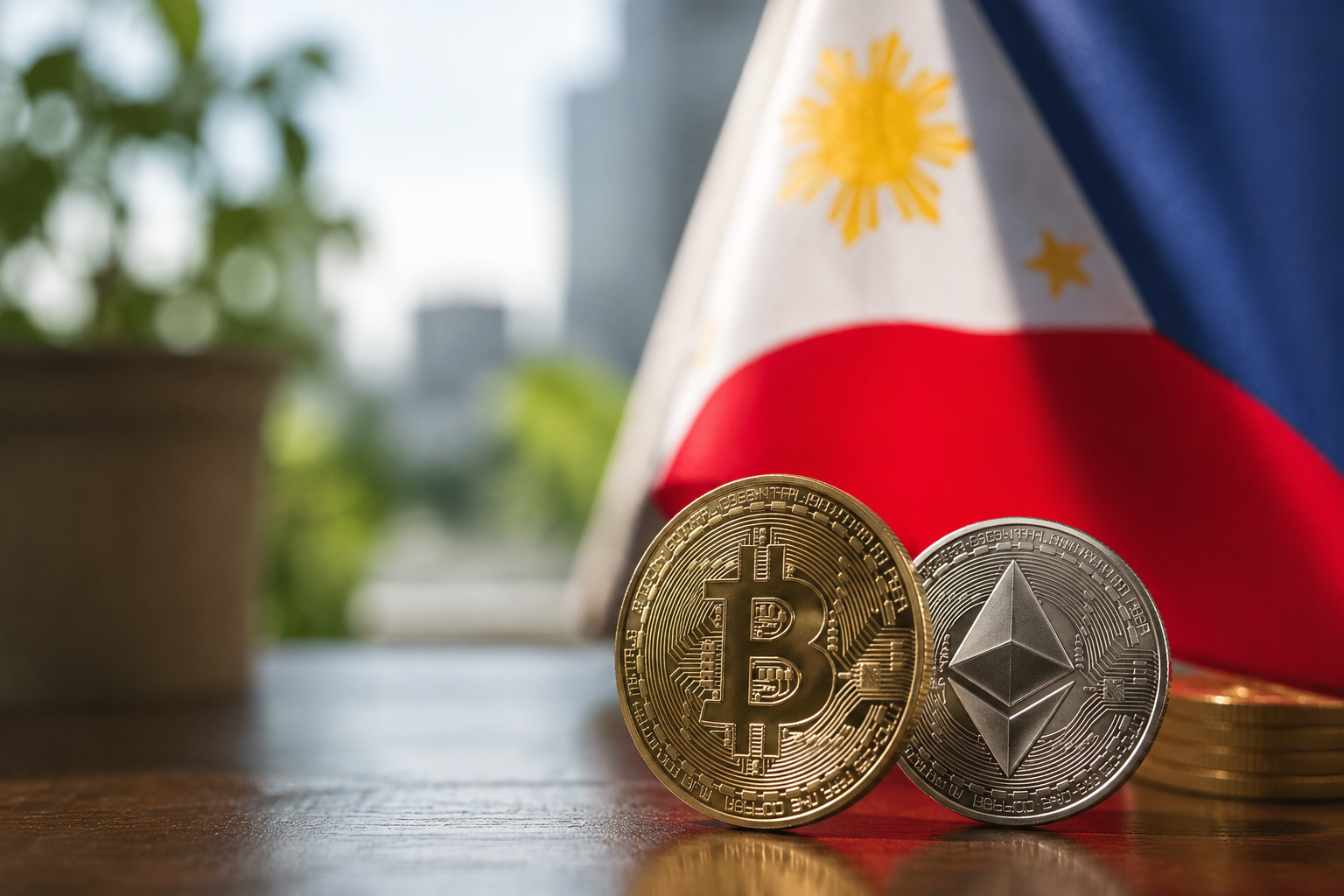
Coins.ph has expanded its QRPh crypto payment functionality to support Bitcoin and Ethereum transactions, broadening the use of digital assets within the Philippines’ national QR payment infrastructure.
The Manila-based crypto platform announced on May 19 that users can now pay merchants nationwide using Bitcoin (BTC) and Ethereum (ETH) through QRPh, the national QR code standard developed by the Bangko Sentral ng Pilipinas (BSP).
The expansion builds on Coins.ph’s earlier rollout of QRPh-compatible stablecoin payments, which introduced support for USDT earlier this year.
Under the system, crypto balances are automatically converted into Philippine pesos during checkout, allowing users to pay merchants directly without manually converting digital assets into local currency beforehand.
Coins.ph estimates that the integration enables crypto payments across approximately 700,000 QRPh-enabled merchants throughout the country.
Crypto payments expand within national QR infrastructure
The latest update broadens the range of cryptocurrencies supported within the Philippines’ existing QR payment ecosystem.
QRPh serves as the national QR code standard designed to enable interoperable digital payments between financial institutions and merchants across the country.
Earlier this year, Coins.ph became the first digital wallet provider in the Philippines to integrate direct crypto payments into the national QR infrastructure through stablecoin support.
The company said the earlier USDT rollout generated substantial transaction volume and demonstrated growing consumer demand for crypto-based payments integrated into everyday financial activity.
With the addition of Bitcoin and Ethereum, Coins.ph is now extending access to two of the world’s largest cryptocurrencies while maintaining the same checkout experience used for stablecoin payments.
The company said the process allows users to scan QRPh codes at merchants while the system automatically converts crypto into Philippine pesos in real time.
Stablecoins remain central to remittance use cases
Coins.ph said stablecoins continue to play a key role within the broader payment infrastructure, particularly given the Philippines’ position as one of the world’s largest remittance markets.
The country receives approximately $38 billion in annual remittance inflows, according to the company.
Stablecoins have increasingly become part of cross-border payment flows, allowing recipients to receive and hold digital dollar-denominated assets before converting or spending them locally.
Coins.ph said the QRPh integration enables users to move between fiat currency and digital assets within a single payment flow, removing additional conversion steps that are often required in crypto transactions.
The addition of Bitcoin and Ethereum broadens supported payment assets while preserving what the company described as a unified payment experience focused on practical daily use.
Coins.ph highlights broader crypto adoption growth
Coins.ph operates as a licensed Virtual Asset Service Provider and Electronic Money Issuer under BSP regulation.
The Philippines remains one of the fastest-growing crypto markets globally. According to estimates cited by the company, the country now has more than 15 million crypto users, representing roughly 13.4% of the population.
Wei Zhou, CEO of Coins.ph, said:
“The addition of new tokens to our QRPH crypto payments feature is a great achievement following the landmark introduction of USDT payments for the Philippine financial landscape. We aren’t just adding new tokens; we are redefining what a digital wallet can do. This is the future of finance in action and we’re making the world’s most popular cryptocurrencies a functional part of the Filipino daily life.”
Coins.ph said its broader platform combines digital assets, payments infrastructure, remittances, foreign exchange services, investments, and treasury products into a unified financial ecosystem designed to support both businesses and consumers.
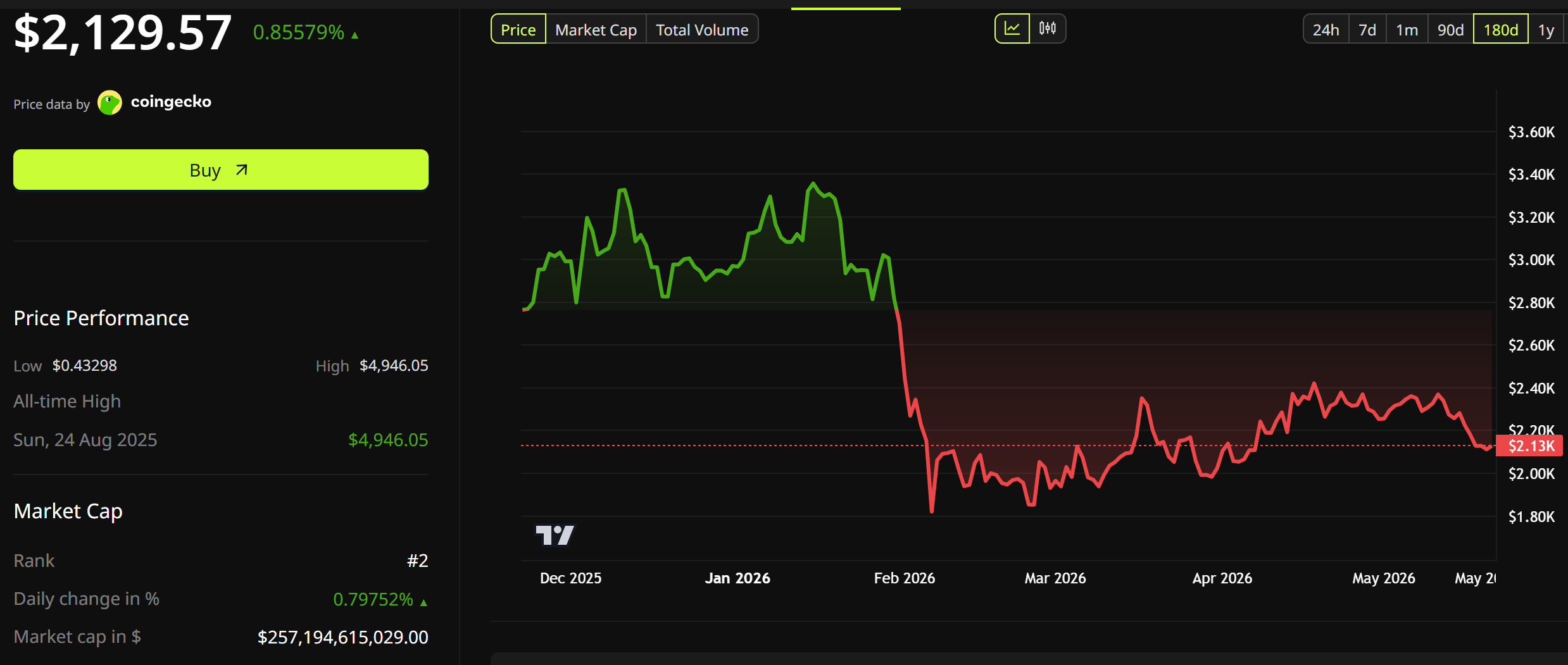
South Korean funeral firm Bumo Sarang has booked an unrealized $33 million loss on a leveraged crypto bet. The country’s seventh-largest provider channeled around $40 million of customers’ prepaid funds into a 2x leveraged BitMine ETF.
The disclosure appeared in Bumo Sarang’s 2025 audit filed with South Korea’s Fair Trade Commission. The company called the shortfall a temporary market move that it can absorb from its financial buffer.
How the leveraged BitMine ETF Bet Collapsed
Local media reported that Bumo Sarang routed 59.5 billion won, near $40 million, into the T-REX 2X Long BMNR Daily Target ETF.
The U.S.-listed REX Shares product targets a return twice that of BitMine Immersion Technologies (BMNR). By the end of 2025, the holding’s book value had fallen to 10.2 billion won, around $6.8 million.
BitMine operates as an Ethereum treasury, holding millions of ether as its primary asset. That exposure left the ETF directly tied to the altcoin’s slide this year.

Daily leveraged products also lose value through volatility decay in choppy markets.
A Regulatory Blind Spot in Prepaid Funeral Funds
The episode has exposed how loosely South Korea polices prepaid funeral funds. The sector sits under the Fair Trade Commission as a prepaid installment business, not any financial regulator.
The only binding rule requires firms to hold half of customer prepayments in reserve. The remaining half can be deployed in almost anything, including high-risk securities.
“This should be illegal,” said analyst Bull Theory.
A Korea Economic Daily review of 75 providers found 43% hold fewer assets than prepayments owed.
Six bills now sit in the National Assembly to ban speculative investments and related-party lending in the sector.
Bumo Sarang has not signaled any plan to unwind the position. Customer prepayments now hang on whatever BitMine and ether do next.
The case strengthens calls in Seoul for tighter rules before the next funeral firm chases similar returns.
The post South Korean Funeral Firm Loses $33 Million on BitMine Ethereum ETF appeared first on BeInCrypto.
Meme punch is a play-to-earn crypto game built around one of the easiest crypto concepts to understand. Players are able to choose a meme-inspired knight, fight in a medieval arena, climb the leaderboard, and earn MEPU tokens through battle rewards.
It’s important to note that the project is not built solely as a passive meme coin. Meme Punch gives MEPU a role within the game itself. Players can use it to buy weapons, skins, special powers, and other in-game upgrades.
The game is built on Ethereum, and it supports multiple ways to buy during the presale. Buyers can use ETH, BNB, SOL, USDT, OSDC, or a bank card. This gives both crypto users and newer buyers a very straightforward way to join the presale.

Turning Meme Coins into Arena Gameplay
The broad majority of meme coins depend on culture, timing, and community attention. Meme Punch, on the other hand, is designed not only to keep the same energy but also to add a game loop that gives players something to do beyond simply holding a token.

The game is set in a medieval arena. There, meme characters fight for dominance. Players get to select from five meme-inspired fighters, including popular crypto mascots such as Pepe, Doge, Floki, Brett, and Pudgy Penguins. Each one is dressed as a knight, ready for battle.
This setup gives the game a clear identity by using characters that crypto traders already recognize.
How the Meme Punch Game Works
Meme Punch is built around three simple mechanics. Each part connects directly to how players use $MEPU inside the game.
- Choose Your Knight. Players select Pepe, Doge, Floki, Brett, or Pudgy Penguin before entering the arena.
- Fight in the Arena. Players battle rivals, climb the leaderboard, and compete for $MEPU rewards.
- Spend and Grow. Players use $MEPU to buy weapons, skins, and special powers.

This makes the game easy to follow for both meme coin fans and new crypto gamers. The more active the arena becomes, the more important the $MEPU game economy can become.
MEPU and Its In-Game Utility
As you already know, MEPU is the in-game official token of the entire ecosystem. It is designed for rewards, player upgrades, and in-game purchases. It’s not just a token designed for presale speculation.
Players are able to earn MEPU by winning battles and climbing the leaderboard. They can also spend it on different items, which can change how their knight looks. It can also change its performance.
To summarize, some of the main use cases include:
- Skisn for character customization.
- Staking through the Meme Punch widget.
- Battle rewards for those who win in the arena.
- Weapons for stronger gameplay.
- Special powers for more advantages in-game.
How the Meme Punch Presale Works
The presale is handled through the widget of the official website. It allows anyone to connect a wallet, choose a payment method, enter the amount of tokens they want to purchase, buy them, and view their current MEPU balance.
As mentioned above, the project supports both crypto and card payment options.
However, it’s important to note that crypto payments give wallet users a faster route because they can buy directly with assets they may already hold. On the other hand, card payment gives newer buyers a simpler and more familiar avenue to acquire MEPU tokens.
MEPU Tokenomics
Meme Punch has a total supply of 10 billion $MEPU. The supply is split across presale access, liquidity, marketing, rewards, staking, and project funds.
- Presale receives 40%.
- DEX/CEX liquidity receives 12%.
- Marketing receives 16.5%.
- Game rewards receive 9.5%.
- Staking receives 14.5%.
- Project funds receive 7.5%.

This structure gives the presale the largest share while also setting aside tokens for liquidity and game rewards. That fits the project’s plan because $MEPU needs both market access and in-game reward supply.
Roadmap: What’s Coming Next?
The roadmap starts with the presale and moves on toward development, testing, and launching. The first stage is focused on fundraising, auditing the contracts, marketing, and kicking off the development process.

Later stages include listing the coin on a DEX, testing the game, releasing a beta version, launching the full game, airdropping tokens to the community, and listing on centralized exchanges.
The roadmap helps explain why the project is using this particular funding model. The early sale funds the path toward game development, exchange access, and wider player activity.
Final Take
The game attempts to bring a more active format to the meme coin market. Instead of simply relying on community jokes or on price speculation, it turns meme characters into actual playable fighters with upgrades, rewards, and leaderboard competition.
MEPU is designed to give the arena its economic layer because every player is able to earn it, spend it, stake it, and use it across the ecosystem.
For now, Meme Punch stands out as a meme coin project built around a simple idea with clear gameplay, recognizable characters, and multiple payment options through ETH, BNB, SOL, USDT, USDC, and a card.
The post What Is Meme Punch? The Medieval Meme Battle Game That Pays You to Play appeared first on CryptoPotato.
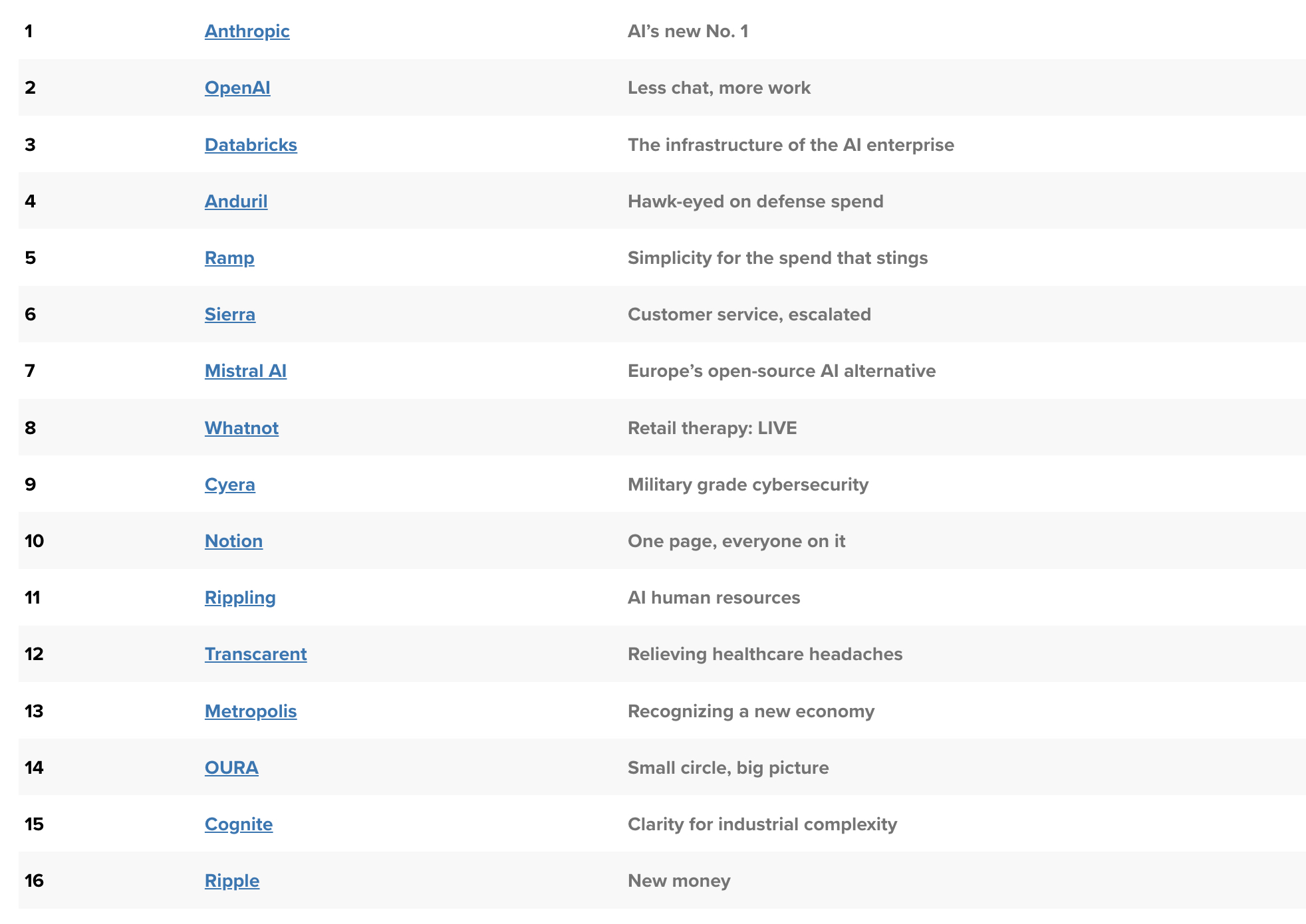
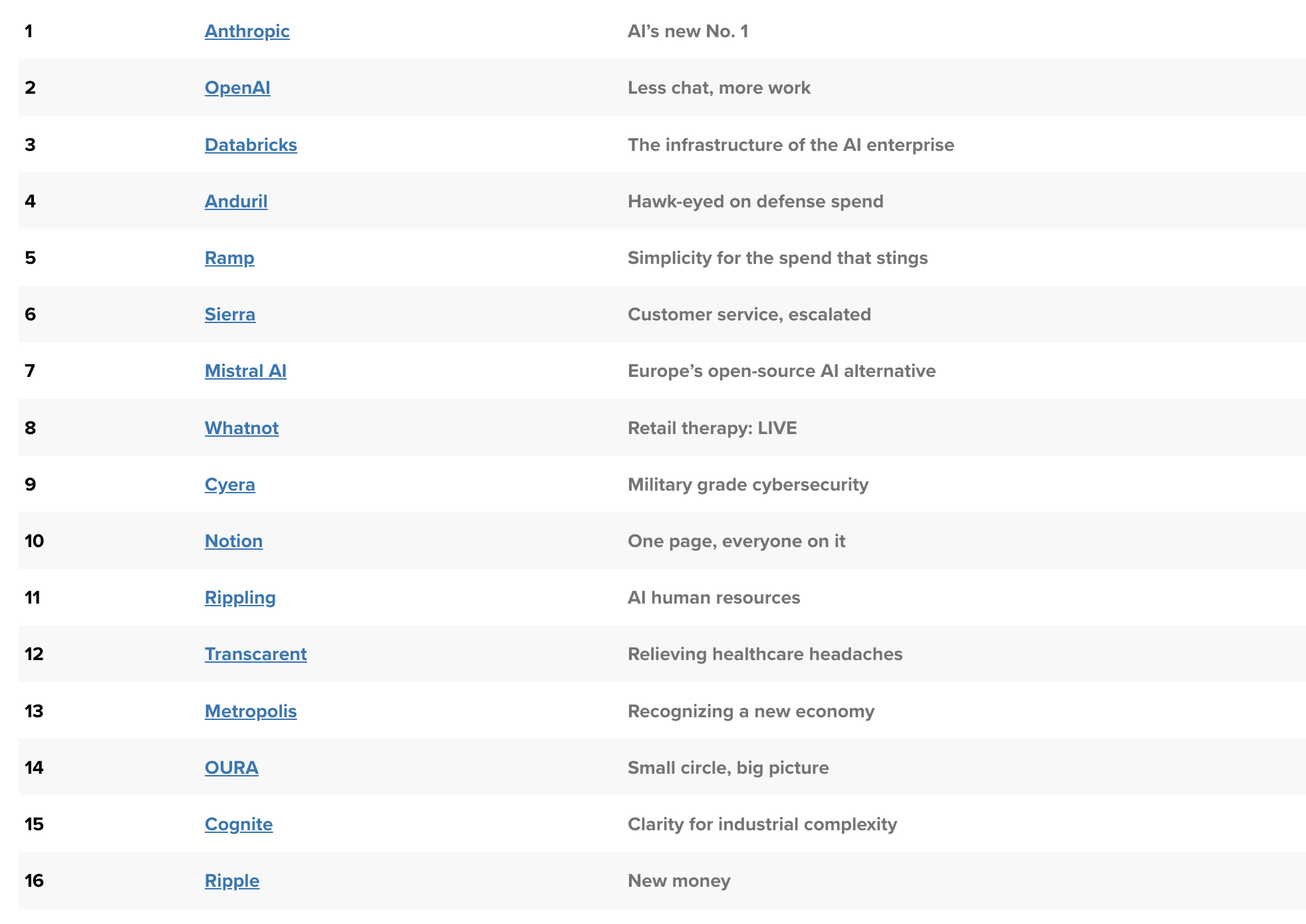
CNBC just ranked Ripple the 16th most disruptive company on the planet, beating out Revolut, Perplexity, Kalshi, Polymarket, and Canva. But its token, XRP, has been falling from its price high of mid last year.
CNBC’s updated Disruptor 50 list for 2026 names Ripple as the sole crypto or blockchain firm to make the cut, labeled as “new money.” The company climbed from 38th place in 2021 to 16th today, steadily overtaking fintechs and deep-tech firms alike.
Santiment Intelligence followed the announcement with a post citing XRP’s “long-term role in cross-border payments versus replacement by stablecoins or alternative rails” as the core thesis driving social volume.
Total implied valuation across all 50 Disruptor companies hit $2.4 trillion, up from $798 billion last year as capital is chasing disruptive infrastructure plays right now.
Discover: The best pre-launch token sales
Can XRP Price Hit $5?
At the moment, support sits in the $1.30–$1.35 zone, where recent lows have held on major aggregators. Resistance layers are around $1.40-$1.42, an area that has capped upside since forever. Until XRP closes and holds above $1.50 on volume, the structure reads as consolidation inside a multi-week range.
The XRP spot ETF has been showing a healthy flow despite the big outflows that Bitcoin and Ethereum are experiencing. Community projects XRP to reach $5 by late 2025 with growing institutional flows. That target sits above XRP’s all-time high of $3.84.

Right now, XRP bulls want ETF flows to continue their green streak, and a price break above $1.50 with volume targets the $2.50–$300 range. Consolidation could also continue between $1.35 and $1.45 as the market waits for macro news.
XRP is doing well; it just needs to hold, or a loss of $1.30 support could reopen a retest of sub-$1.00 levels. The Clarity Act remains a wildcard that could accelerate either scenario.
Discover: The best crypto to diversify your portfolio with
LiquidChain Targets Early-Mover Upside as XRP Tests Key Levels
XRP’s CNBC ranking validates the cross-chain payments thesis, but at the current spot price and a market cap already in the tens of billions, the asymmetric upside window has narrowed considerably. For traders watching XRP stall at resistance while the institutional narrative builds, the trade-off becomes clear: established recognition versus early-stage entry.
LiquidChain ($LIQUID) is a Layer 3 infrastructure project building what it calls the cross-chain liquidity layer. Liquid is developing a single execution environment that fuses Bitcoin, Ethereum, and Solana liquidity simultaneously.
Three Thrones for Three Kings. — LiquidChain (@getliquidchain) May 19, 2026

All wrapped in the world's greatest L3. ⟁ https://t.co/vqvBcdSQYC pic.twitter.com/j6dG8ZoHZd
The architecture eliminates the multi-step bridging problem that fragments DeFi capital across ecosystems, or something that XRP’s payment rails still can’t solve at the smart contract layer. With Liquid, developers deploy once and access all three ecosystems.
The presale is live at $0.01461 per $LIQUID, with $780K raised to date, and a bonus of 1400% APY staking for early buyers.
Explore the LiquidChain presale here.
The post XRP Price Barely Moves: CNBC Places Ripple Above Revolut appeared first on Cryptonews.
Crypto World
LayerZero's Incident Report Says Kelp Downgraded From 2-of-2 to 1-of-1 DVN Before $292M Exploit


Detailed May 18 post-mortem traces a six-week breach to DPRK group TraderTraitor and locks in a new 3-of-3 DVN protocol default. Kelp says LayerZero approved the configuration and has migrated rsETH bridging to Chainlink.

This Forza Horizon 6 UNLIMITED Wheelspins Method is BROKEN (Money Glitch Farm)

Six men charged after multiple thefts occurred across several counties

BakeMark names Sean Leer as CEO


-

 Crypto World5 days ago
BloFin War of Whales 2026 Grand Prix opens registration for $5M trading championship
-

 Fashion5 days ago
Weekend Open Thread: Theory – Corporette.com
-

 Crypto World5 days ago
E-Estate Announces 1 Year Live: Washington DC Summit as Real Estate Tokenization Enters Its Next Phase
-

 Tech5 days ago
Tech Moves: Microsoft AI leader jumps to OpenAI; former AI2 exec joins Meta; and more
-

 Tech5 days ago
Google reimburses Register sources who were victims of API fraud
-
 Crypto World6 days ago
Google’s Gemini AI Predicts Incredible Solana Price by the End of 2026
-

 Business5 days ago
H&R Real Estate Investment Trust (HR.UN:CA) Q1 2026 Earnings Call Transcript
-

 Sports5 days ago
Napoleonic enters 2026 Doomben 10,000 field via Abounding withdrawal
-
 Entertainment6 days ago
Zara Larsson Has Blunt Response To Chris Brown Diss
-
 Crypto World7 days ago
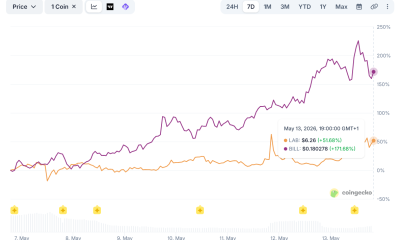
Two AI Tokens Lead May Rally, But Risks Are Rising
-

 Crypto World5 days ago
BeInCrypto 100 Institutional Awards Nomination: KAST for Best Digital Assets Neobank and Best Digital Assets Fintech
-

 Fashion4 days ago
On the Scene at Gucci’s Cruise Show in New York City: Mariah Carey, Kim Kardashian, Lindsay Lohan, Iman, and More!
-
 Crypto World5 days ago
Bitcoin Battles US Bond Nerves With BTC Price Dip Toward New May Lows
-
 Crypto World5 days ago
Wall Street’s Boldest Gold Prediction Has Russians Rushing to Buy
-

 Fashion4 days ago
Trending Western Style Vests Perfect for Summer
-

 Crypto World5 days ago
ICE and CME urge US regulators to curb Hyperliquid energy trading
-

 Politics6 days ago
DWP PIP Timms review continues to be an absolute farce
-

 Entertainment5 days ago
David Letterman Returns to Late Show, Blasts Cancellation
-

 Fashion3 days ago
Amazon Sundays: Memorial Day Hosting
-
 Crypto World6 days ago
Lido Finance Selects Chainlink CCIP as the Official Cross-Chain Infrastructure for wstETH Security
You must be logged in to post a comment Login