
Crypto World
Solana (SOL) Rockets to 7-Month High, Bitcoin (BTC) Taps $80K Again: Market Watch

Bitcoin is on the move again in the right direction, jumping by over $2,000 since yesterday’s low and inching closer to the $80,000 resistance.
Solana has emerged as today’s top performer among the larger caps, surging by 8% to its highest price tag since late January at $105.
BTC Aims at $80K
It was just over a week ago when bitcoin’s major rally commenced, when the asset broke out of the $65,000 resistance and surged to $70,000 within hours. The bulls kept the pressure on, driving the cryptocurrency to $75,000 on Thursday and to a multi-month high at almost $80,000 on Friday morning.
However, it couldn’t breach that level on its first attempt and slipped to $75,500 during the weekend. Nevertheless, the bulls stepped up once again and defended that level. Moreover, BTC started to climb as the new business week progressed and surged past $80,000 and $81,000 on Tuesday morning for the first time since mid-May.
This meant that it had added over $16,000 in value in less than a week. However, it was stopped and couldn’t climb any higher. The next leg down drove it to just under $78,000, but it reacted well in the past few hours and jumped to $80,000 as of press time.
Its market capitalization has risen past $1.6 trillion on CG, while its dominance over the altcoins stands at over 58%.
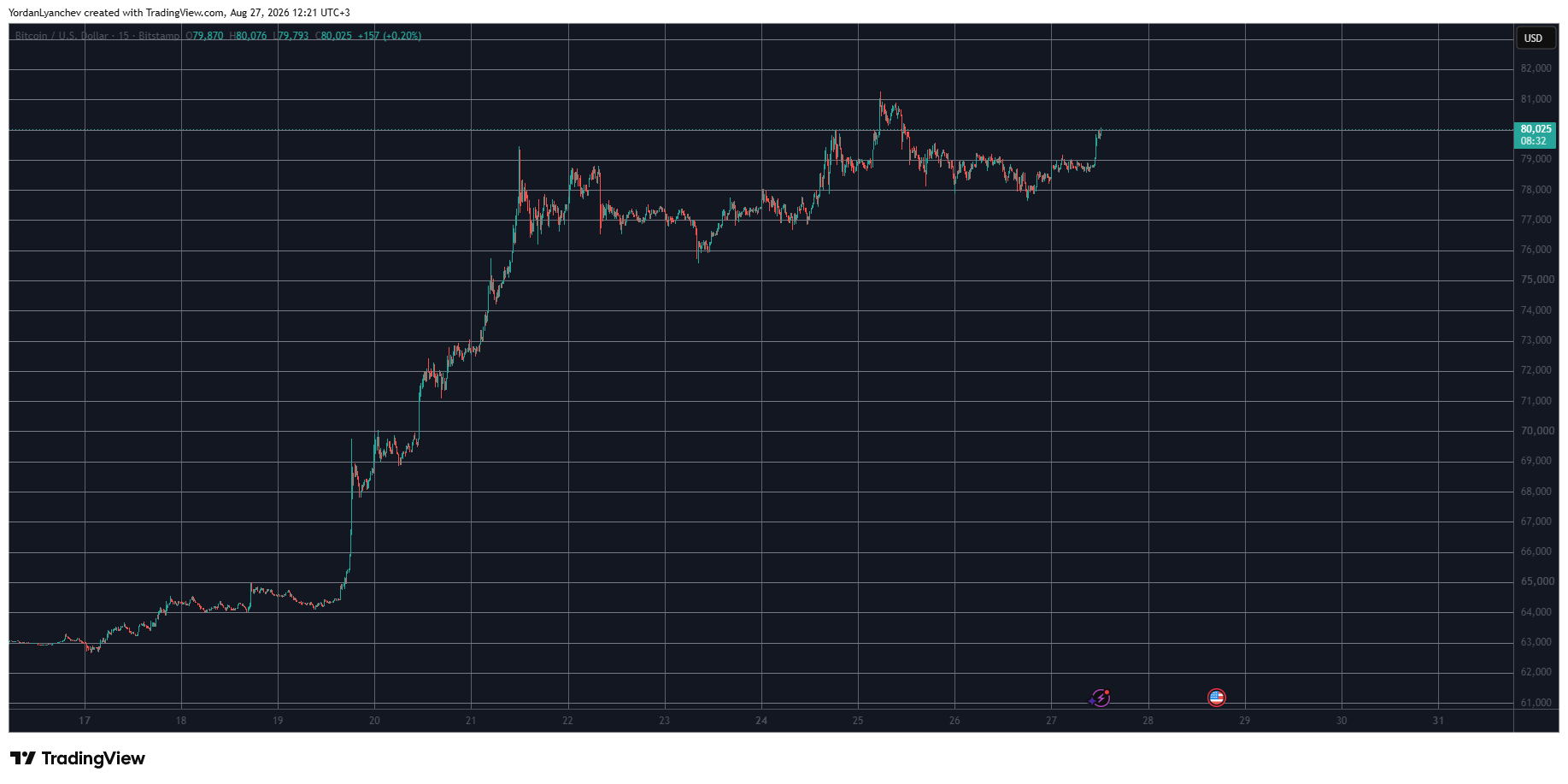
SOL Hits New Local High
Most larger-cap alts have turned green today as well. ETH has seemingly reclaimed the $2,500 level finally after a 3% surge to over $2,550. BNB is above $710, while XRP defended the $1.40 support and is back to $1.45 as of now.
SOL is today’s top performer from this cohort of assets. A 7% pump has driven it to $105 for the first time since January 31. LINK and DOGE are also well in the green, and so are TAO and ENA.
The total crypto market cap has added around $50 billion in a day and is up to $2.780 trillion on CG.

The post Solana (SOL) Rockets to 7-Month High, Bitcoin (BTC) Taps $80K Again: Market Watch appeared first on CryptoPotato.

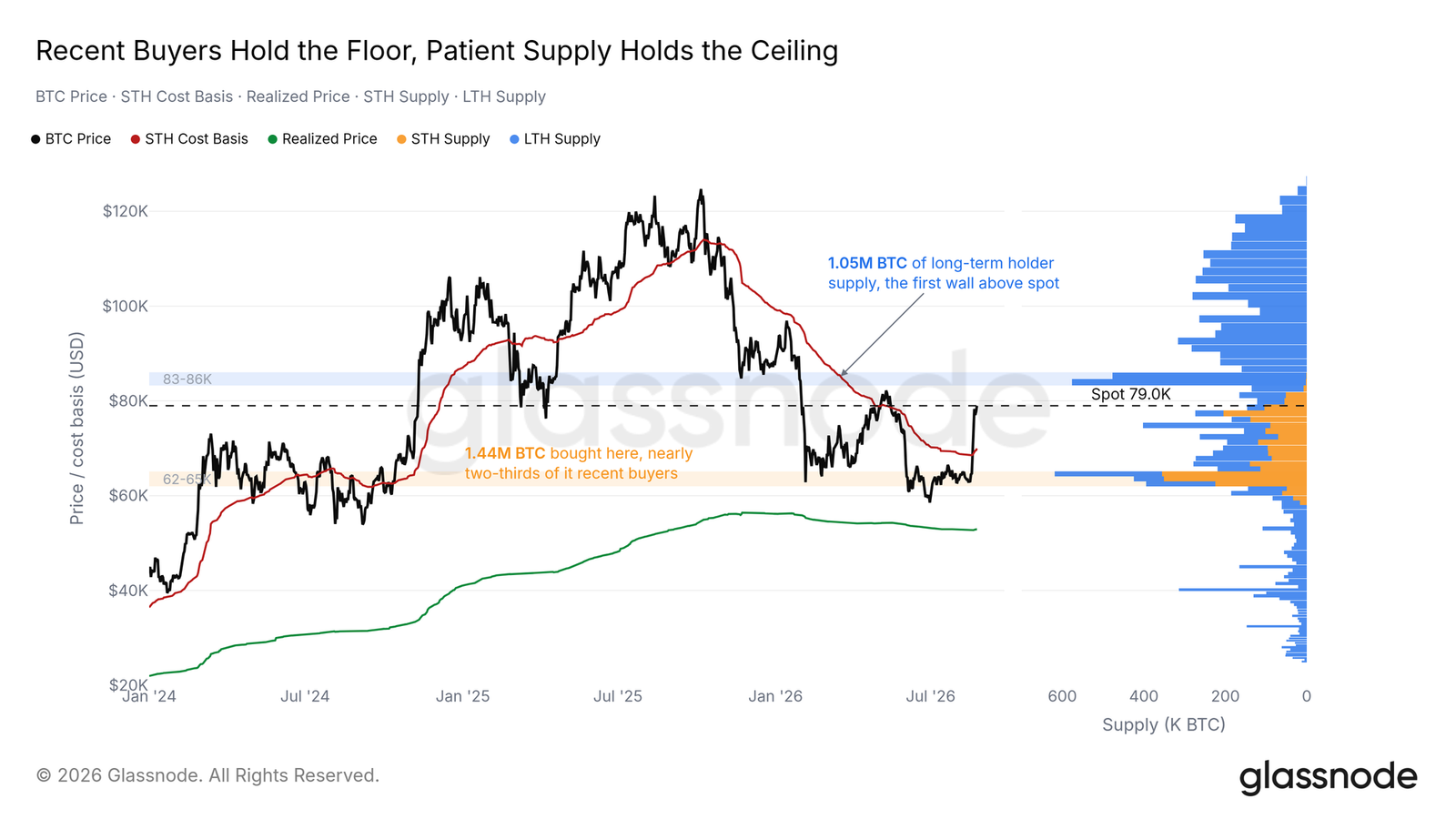
Bitcoin (BTC) has struggled to flip $80,000 into support in recent days, but bulls’ real challenge is still to come, new research says.
Key points:
- Bitcoin long-term holders add to BTC price resistance below $86,000, Glassnode reveals.
- Buyer demand must overcome this area as Bitcoin struggles to advance beyond $80,000.
- Multiple key trend lines sit around spot price, increasing the implications of an eventual loss or reclaim.
Glassnode: Key overhead liquidity structures sit between $81,000 and $86,000
In the latest edition of its regular newsletter, The Week Onchain, crypto analytics platform Glassnode flagged multiple pools of coins that could be released into the market below $86,000.
Of particular interest are long-term holders (LTHs) — wallets holding BTC without selling for at least six months.
“Above, the first heavy structure is $83K-86K, and effectively all of it is long-term holder supply that has sat through the entire drawdown,” it wrote, predicting that reaching $83,000 would test the resolve of the LTH cohort not to sell at breakeven.
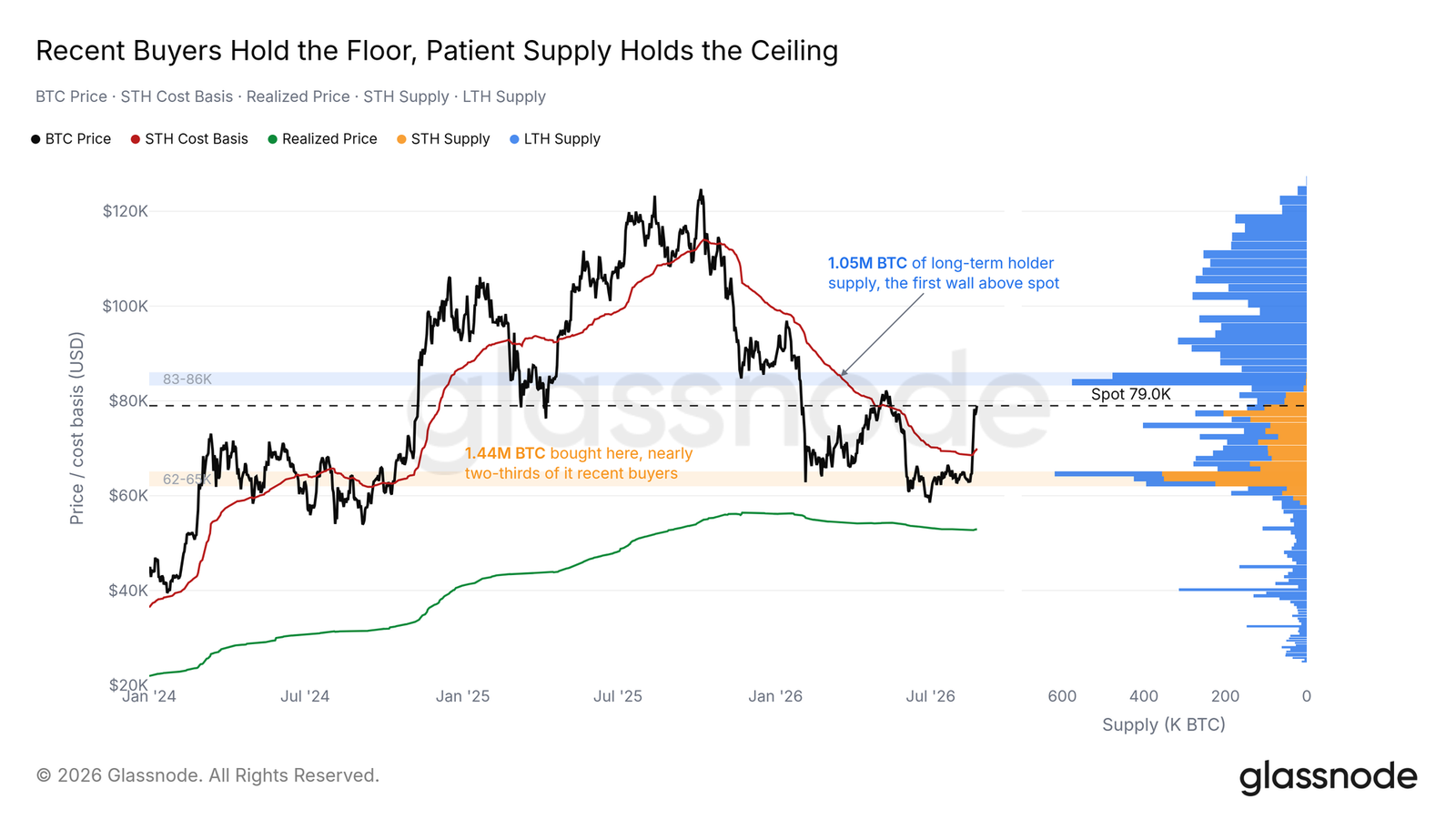
BTC supply distribution by wallet cohort. Source: Glassnode
In the same zone, new ask liquidity has appeared on exchange order books. Its owners, Glassnode notes, may not intend for their orders to be filled, instead aiming to stay above spot price should it rise further.
“The re-laddered asks join a stack of independent structure pointing at one zone. The first self-custody cost-basis shelf begins at $80.8K, dealer gamma flips negative at $82.3K, the surviving liquidation shelf runs to $86K, and the patient-supply wall fills $83K-86K,” it continued.
“Every overhead structure we track now sits between $81K and $86K; that band is where the recovery’s demand meets its test.”
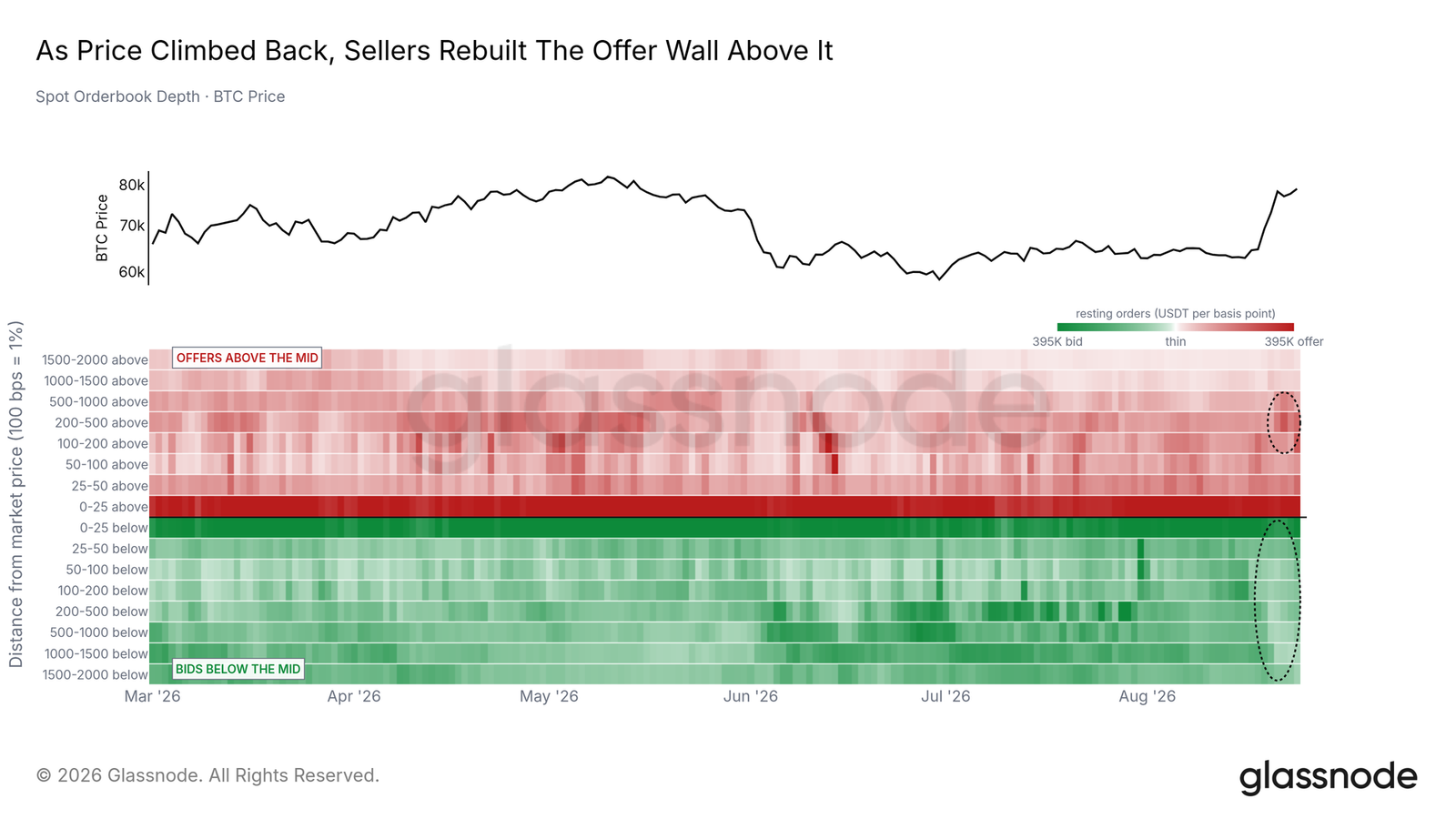
BTC spot order-book heatmap. Source: Glassnode
Trend lines converge on a narrow BTC price corridor
The area around $80,000 has also seen multiple price trend lines converge, strengthening its status as a resistance hurdle.
Related: BTC RSI bullish divergence draws 2022 comparisons as analysis weighs new price trend
Bitcoin’s 50-week and 100-week exponential moving averages (EMAs) currently sit at $77,353 and $78,485, respectively, per data from TradingView. Additionally, Bitcoin’s 365-day volume-weighted average price (VWAP), a moving average that factors in volume, sits around $82,600.
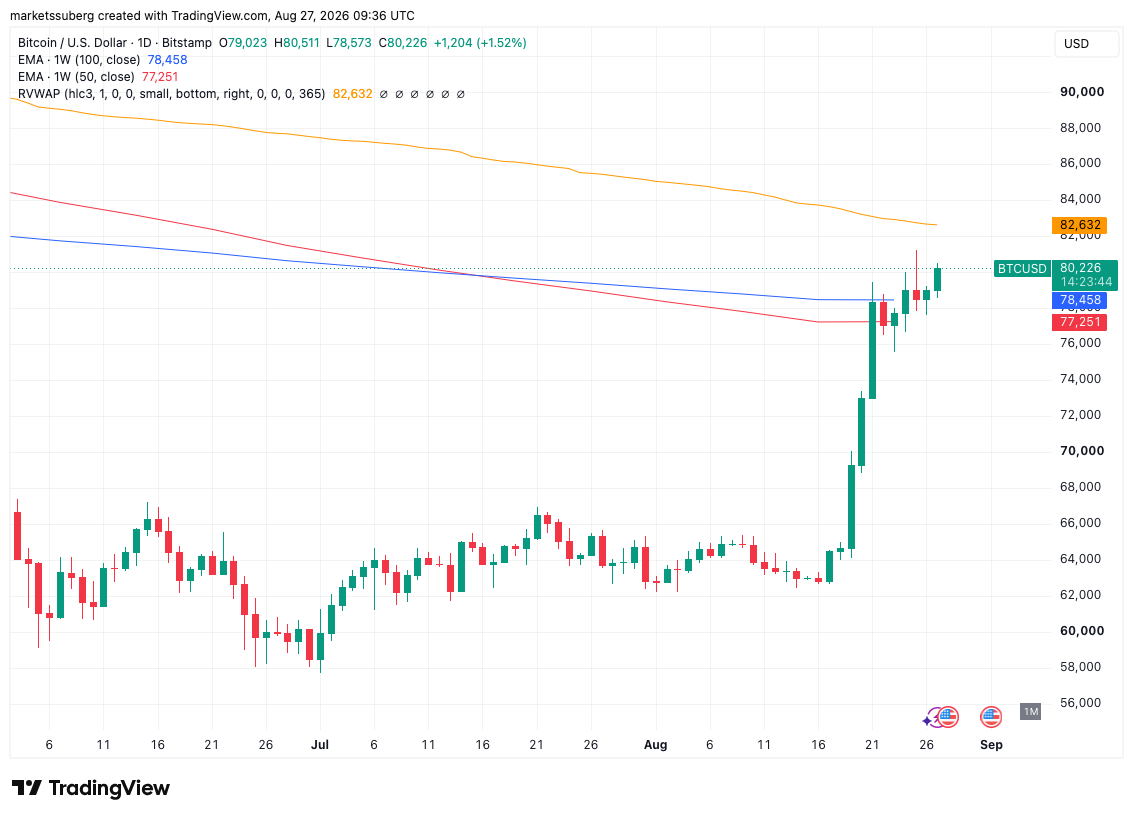
BTC/USD one-day chart with 50-week, 100-week EMA; 365-day rolling VWAP. Source: Cointelegraph/TradingView
Previously, Cointelegraph reported on the skepticism of market participants over whether Bitcoin’s rapid rebound would endure. With regular bear market timing due to continue until the end of 2026, trader and analyst Rekt Capital stressed that price needs to hold the 50-week EMA for longer before a meaningful trend change can be considered.


TRM Labs has appointed former Monetary Authority of Singapore official Ziqing Ang as Head of Policy for Asia-Pacific as the blockchain intelligence firm tracks more than $103 billion in adjusted crypto crime volume in 2025.
Summary
- TRM Labs has appointed former MAS official Ziqing Ang as Head of Policy for Asia Pacific, where she will work with regulators, law enforcement and private institutions.
- TRM tracked adjusted crypto crime volume rising from about $123 million in 2020 to more than $103 billion in 2025.
- Investment scams, including pig butchering schemes, accounted for 62% of fraud inflows last year, while AI enabled scam activity increased 40%.
- Ang spent more than eight years at MAS before moving into institutional digital assets through roles at Sygnum and BPI Financial Group.
- Her appointment follows TRM’s hiring of former MAS regulator Claudia Hui as Head of Compliance Advisory for APAC last month.
According to details shared with crypto.news, Ang will work with regulators, policymakers, law enforcement agencies and private institutions across Asia-Pacific, focusing on illicit financial networks and policy responses as governments develop rules for digital assets and artificial intelligence.
Her appointment comes as criminal groups across the region increasingly use cryptocurrency alongside new technology to run investment scams and other fraud operations. TRM tracked adjusted crypto crime volume rising from about $123 million in 2020 to more than $103 billion in 2025, while investment scams, including pig-butchering schemes, accounted for 62% of fraud inflows last year.
Generative AI has also become part of scam operations, according to TRM, which recorded a 40% increase in AI-enabled scam activity. The company has tracked uses ranging from deepfake recruitment videos to fabricated account dashboards as criminal groups incorporate the technology into operational infrastructure.
TRM Labs puts APAC policy under Ziqing Ang
With more than a decade of experience across regulation, financial markets and digital assets, Ang enters the position after working on both the government and private-sector sides of financial services.
She began her career at the Monetary Authority of Singapore, spending more than eight years across financial markets development and reserve management. During that period, Ang worked with industry and public-sector participants on initiatives involving Singapore’s capital markets and its role as an international financial center.
Her work at MAS later included managing fixed-income portfolios and contributing to macroeconomic and investment research connected with Singapore’s official foreign reserves.
After leaving the regulator, Ang joined Sygnum, which describes itself as the world’s first regulated digital asset bank, as vice president of business development. Her responsibilities there included supporting digital asset adoption among institutional and accredited investors.
Ang most recently served as chief business officer at Bright Point International Digital Assets, part of BPI Financial Group, where she led development of its over-the-counter brokerage operations. Her work covered licensing as well as the institutional infrastructure needed to support the business.
Ari Redbord, TRM Labs’ global head of policy, said Ang’s experience moving between the public and private sectors would support the company’s work with authorities and institutions in Asia-Pacific.
“This is a moment when the public and private sectors must come together to get ahead of the threats emerging in this region,” Redbord said. “Ziqing brings deep expertise and experience working across both the public and private sectors, and the credibility to bring regulators and industry together around this work.”
Hiring officials with regulatory backgrounds has also become common among digital asset companies expanding in Asia. In June, crypto.news previously reported that former TRM executive Angela Ang joined BitGo as managing director for APAC and president of BitGo Singapore after previously spending more than a decade at MAS.
Singapore tightens crypto licensing and oversight
Ang’s appointment also comes while Singapore continues to enforce its licensing rules for digital asset firms.
In May, MAS revoked Bsquared Technology’s Major Payment Institution license after identifying weaknesses in risk management, conflicts of interest and outsourcing arrangements. The regulator also found that the company had provided false or misleading information during its license application and subsequent inspection, with the Bsquared license revocation taking effect on May 14.
The regulator has separately continued using its Investor Alert List to identify companies that consumers could mistakenly view as regulated.
Bybit was added to the list in June, with MAS stating that the exchange was not licensed or regulated to provide services to users in Singapore.
Hyperliquid was also added to the list during the same month. The decentralized trading platform responded that it had never claimed to hold a Singapore license or authorization, while MAS clarified that inclusion on the list was not itself an enforcement action.
By July, Bitget had issued its own notice confirming that it did not hold a license, approval, registration or authorization from MAS and did not offer or target services to people in Singapore. The company also said Singapore remained a restricted market for its platform.
Ang said Asia-Pacific is reaching an important point in the development of rules covering both AI and digital assets.
“Asia-Pacific is at an important stage in how it regulates technology in the age of AI, and the decisions made over the next few years will shape the safety of the ecosystem,” she said.
“I’ve spent my career moving between regulators and the institutions they oversee, and I’ve seen how much good regulation and strong partnerships between the public and private sector can do.”
Crypto scam compounds remain an APAC enforcement target
TRM’s figures on investment fraud come as authorities continue pursuing scam networks operating across Southeast Asia, where pig-butchering operations have been linked to large compounds and human trafficking.
In March, the FBI and Thai police froze about $580 million in cryptocurrency and seized around 8,000 phones during a cross-border fraud operation targeting Southeast Asian pig-butchering groups accused of defrauding U.S. victims.
Authorities said organized groups operating industrial-scale compounds have used fake cryptocurrency investment platforms to obtain funds from victims. Some operations have also relied on trafficking victims who were forced to participate in online scams.
A separate investigation opened in India in July after reports that Indian nationals had been trafficked to Myanmar and forced to work inside crypto scam compounds. Police in Maharashtra registered a criminal case after the wife of a 24-year-old man said he had been taken near the Thailand-Myanmar border after accepting what he believed was a job in Bangkok.
Law enforcement cases have also documented how funds from pig-butchering schemes move through both conventional banking channels and cryptocurrency.
Chinese national Jingliang Su was sentenced to 46 months in a U.S. prison in January after pleading guilty in connection with a network that prosecutors said transferred more than $36.9 million from U.S. bank accounts before converting funds into USDT and sending the assets to Cambodia. Prosecutors said 174 victims had been targeted through social media, text messages and dating platforms and directed toward fake investment services that displayed fabricated profits.
Fake dashboards resembling legitimate trading platforms have also appeared in enforcement actions involving scam compounds. U.S. authorities previously seized a fraudulent website linked to an operation in Burma that displayed false deposits and fabricated investment returns while directing some victims toward malicious mobile applications.
TRM said generative AI is increasing the range of tools available to fraud networks, with deepfakes and fabricated interfaces becoming part of scam operations instead of remaining experimental uses of the technology.
TRM Labs expands its APAC compliance team
Alongside Ang’s appointment, TRM has been building out its regional policy and compliance personnel as governments develop digital asset frameworks.
The company appointed former MAS regulator Claudia Hui as Head of Compliance Advisory for APAC last month. TRM said the hire formed part of its expansion across policy, compliance and go-to-market operations in the region.
Ang said her new role would involve working directly with regulators, law enforcement agencies and industry participants as those frameworks develop.
“TRM’s focus on building a safer world is the kind of work I want to be part of, and I’m looking forward to working with regulators, law enforcement, and industry across the region to support responsible innovation,” she said.
Crypto World
WasabiCard enhances web3 payroll solution, connecting stablecoin funding with local fiat payouts

Disclosure: This article does not represent investment advice. The content and materials featured on this page are for educational purposes only.
WasabiCard is helping web3 businesses streamline global payroll by connecting stablecoin funding, fiat payouts, and card payments.
Summary
- WasabiCard connects stablecoin payroll with global fiat payouts, helping web3 teams pay employees across borders and currencies.
- It enables web3 businesses to fund global payroll with stablecoins while supporting bank payouts, cards, and compliance.
- WasabiCard bridges stablecoin treasury and real-world payments with global payroll, batch payouts, fiat access, and compliance tools.

Web3 companies expand globally, their teams are increasingly distributed across countries and time zones, while corporate funds are often managed and moved on-chain in stablecoins such as USDT and USDC. As both teams and treasury operations become more global, efficiently and compliantly paying a distributed workforce is becoming an increasingly important consideration for web3 businesses looking to scale.
Traditional cross-border payroll often relies on banking networks and multiple intermediaries, involving different currencies, payment rails, and settlement processes. At the same time, simply transferring stablecoins to an employee’s wallet does not fully address how those funds can be converted into local currency, received in a personal bank account, and used for everyday expenses.
For global web3 businesses, the challenge is therefore no longer simply how to send stablecoins. It is how to connect on-chain funds with global fiat payment networks so employees can receive and use their salaries efficiently and compliantly.
Web3 payroll goes beyond stablecoin transfers
Stablecoins provide a new payment rail for global payroll. With 24/7 availability and faster settlement, they can reduce reliance on some of the intermediaries involved in traditional cross-border payments and improve the efficiency of distributing funds to teams across markets and time zones.
However, stablecoins are not simply a replacement for fiat payroll. Requirements around wage payment methods, employment, and taxation vary across jurisdictions, while employees ultimately need their salaries for rent, everyday spending, savings, and other real-world needs.
Scalable web3 payroll therefore requires infrastructure that connects stablecoins, fiat currencies, bank accounts, and card payment networks, with compliance and risk controls embedded throughout the payment flow.
WasabiCard: Building the rails from stablecoins to local fiats
To address the payroll needs of globally distributed web3 businesses, WasabiCard is working with regulated partners to bring stablecoin funding, global fiat payout rails, bank account payouts, and card payment capabilities into a unified payment infrastructure. The goal is to support the journey from stablecoin funding and batch payroll distribution to how employees ultimately receive and use their funds, where available and subject to applicable licensing, partner availability, jurisdictional restrictions, and product terms.
1. Aligning payroll with web3 treasury
Web3 businesses can use stablecoins such as USDT and USDC as a funding source for payroll and distribute funds to global teams through WasabiCard.
According to a 2026 industry analysis by international labor and employment law firm Ogletree Deakins, traditional international payroll can incur fees of 3%–8% and take days to process. Stablecoins, by comparison, can provide a faster and more cost-efficient way to move payroll funds across borders. Their 24/7 availability also makes them well suited to Web3 businesses operating across countries and time zones.
For companies already managing treasury in stablecoins, this creates a payroll model that is more closely aligned with how their funds are held and moved.
2. Global coverage across 200+ countries and regions
Stablecoin-funded payroll does not mean employees have to hold their salaries in digital assets.
WasabiCard’s payment capabilities cover 200+ countries and regions and support 30+ fiat currencies. Businesses can use USDT, USDC, and other supported stablecoins as a funding source for payroll, while employees can, subject to availability and through regulated banking partners, receive funds in supported local currencies directly into bank accounts held in their own names.
Beyond bank account payouts, employees can also access their funds through WasabiCard virtual or physical cards for online and in-store spending, as well as ATM withdrawals, giving them greater flexibility in how they use their salaries.
By connecting stablecoins with global fiat networks, bank accounts, and card payment rails, WasabiCard enables businesses to fund and distribute global payroll with stablecoins while giving employees the flexibility to receive and use their salaries through familiar local payment channels.
3. Scaling global payroll with batch payouts
As web3 teams grow from a handful of employees to hundreds of people across multiple markets, processing individual transfers becomes increasingly difficult to manage.
Through a unified API, batch payouts, and transaction management capabilities, WasabiCard enables businesses to manage payroll across multiple countries, currencies, and recipients without building and maintaining separate payout integrations for each market.
For web3 businesses and payroll platforms, global payroll can therefore be managed as a unified fund distribution operation rather than a collection of individual cross-border transfers.
4. Embedding compliance across the payment flow
Efficiency alone is not enough to scale web3 payroll globally. Compliance is equally important.
WasabiCard integrates KYB, KYC, KYT, and AML controls across key stages of the payment flow, including business onboarding, user verification, fund movement, and transaction execution, supporting appropriate verification and monitoring of businesses, recipients, and transactions.
By bringing compliance controls together with stablecoin payments and global payout capabilities, WasabiCard helps Web3 businesses manage the compliance requirements associated with cross-border payroll while improving the efficiency of global fund distribution.
Borderless Teams need borderless payroll
Web3 businesses are global by nature. As their teams continue to scale, payroll is evolving beyond simple on-chain transfers toward payment infrastructure that connects digital assets with the financial systems employees use every day.
Stablecoins make it possible to move funds efficiently across borders. Global payment infrastructure makes those funds accessible and usable by employees around the world.
By connecting stablecoins, fiat currencies, bank accounts, and card payment networks, WasabiCard is helping bridge on-chain treasury with real-world financial access, providing web3 businesses with a more efficient, flexible, compliant, and scalable infrastructure for global payroll.
About WasabiCard
WasabiCard is a global payment infrastructure platform enabling enterprises, fintechs, and internet-native businesses to issue cards, distribute payouts, and manage cross-border payments through stablecoin-powered financial infrastructure. Its platform supports global card issuing, multi-currency settlement, stablecoin funding, and embedded payment capabilities designed for modern global commerce. WasabiCard powers payment use cases across media buying, SaaS subscriptions, global payroll, treasury management, and digital financial applications.
Follow WasabiCard on X and LinkedIn for the latest updates on product developments, partnerships, and insights into the future of stablecoin-powered payments.
Disclosure: This content is provided by a third party. Neither crypto.news nor the author of this article endorses any product mentioned on this page. Users should conduct their own research before taking any action related to the company.

The event produced several eye-catching moments, including when humanoids beat human records at the high jump and the 400m. Just a few days before Ultra’s race, Lightning, a robot developed by phone company Honor, ran the 100m in 9.39 seconds, again thundering home quicker than Bolt.
But these tumbling records will likely be, in the pop cultural consciousness, eclipsed by something far more entertaining: tumbling robots. Along with the epic wins, there have been some seriously old-school, epic fails. One humanoid at the weightlifting event lost its balance with a weedy 15kg barbell, started jerking and slammed into the judges’ table, its helpless arms aloft, as if to say, “Why me?” Most memorably, a robot ended his dash by careering into a safety mat, Tom and Jerry style, before cartoonishly arching backward and setting on fire. Each spark was like a beautiful firework.
These slapstick scenes are deliciously satisfying. It’s deeply reassuring to watch robots fizzle out into smithereens. I myself have fond memories of watching the fire-hazard creations on Robot Wars in the U.K. (the successor to BattleBots in the U.S.) get shredded into shrapnel. This time, it’s a reassuring reminder that we can beat robot replicants at our own games.
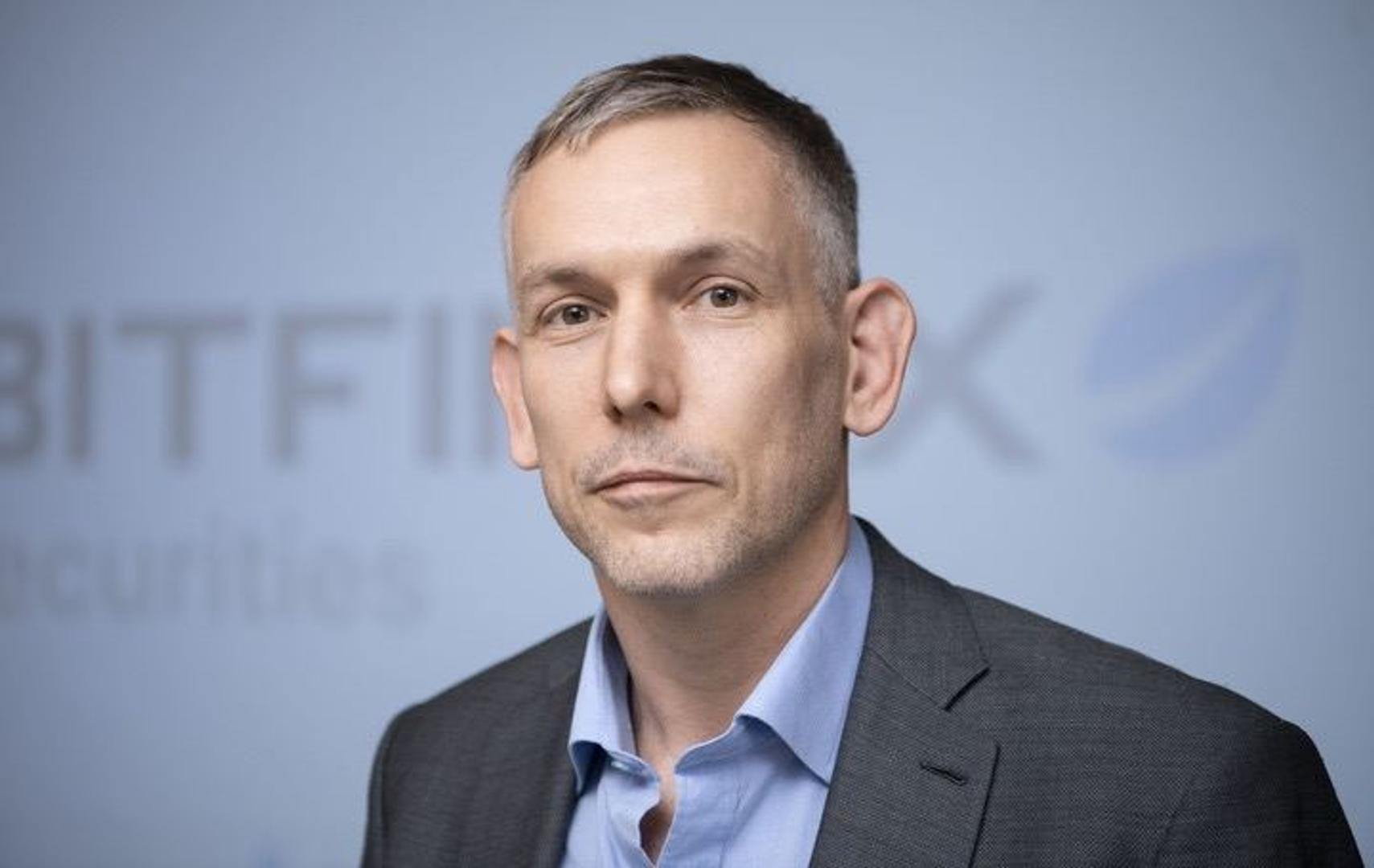
Bitfinex Securities is preparing to list a new security linked to a Luxembourg-based industrial metals platform built around a $1.6 billion stockpile of high-purity nickel wire.
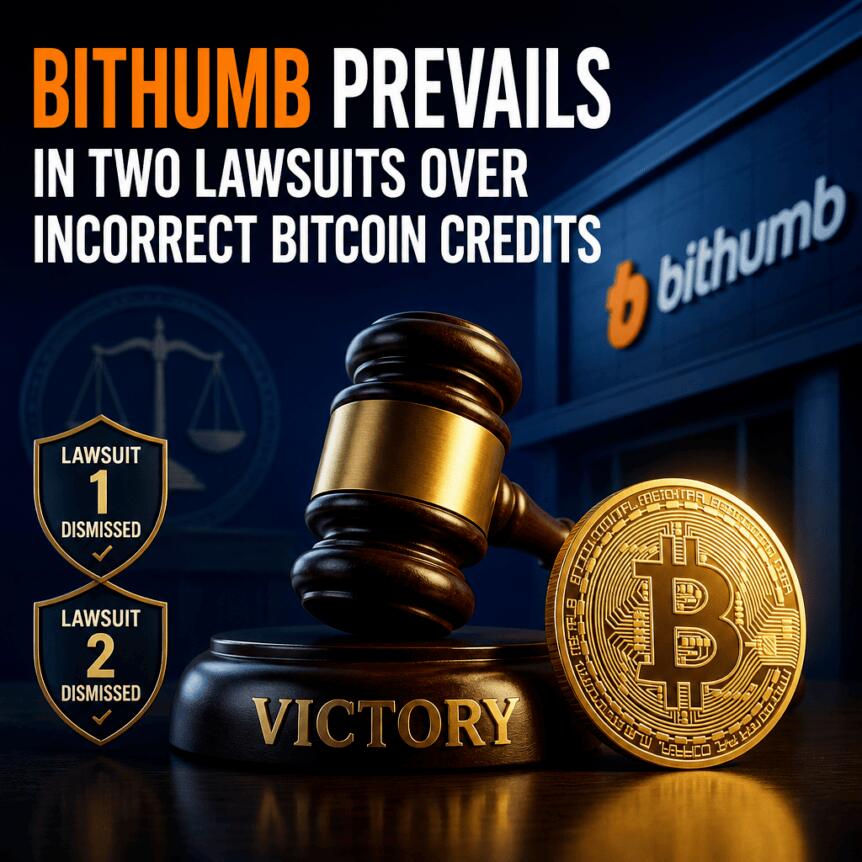
South Korean crypto exchange Bithumb has reportedly secured its first-instance court wins in two of four lawsuits aimed at recovering money from users who sold Bitcoin that was mistakenly credited to their accounts. The decisions, handed down by the Seoul Central District Court, mark another step in the exchange’s attempt to unwind a high-profile accounting error from February 2026.
According to a report by Chosun Biz, the court ruled in favor of Bithumb on Wednesday and Thursday in two separate cases. One decision covered a claim of 5 million won (about $3,600), while the other involved 194 million won (about $140,000). Two additional lawsuits—seeking roughly 14.8 million won (about $10,700) and 500 million won (about $362,000)—remain pending.
Key takeaways
- Bithumb won first-instance rulings in two lawsuits over alleged unjust enrichment tied to mistakenly credited Bitcoin balances.
- The court decisions relate to claims of 5 million won and 194 million won, while two other cases are still before the courts.
- Both cases reportedly proceeded through service by public notice because the exchange could not deliver documents to defendants via standard methods.
- The rulings support Bithumb’s broader recovery effort following its Feb. 6 promotional error involving 620,000 BTC.
- Separately, South Korea’s Financial Supervisory Service (FSS) has begun sanctions-related steps over the incident, though no final penalty has been announced.
Court wins follow Bithumb’s February crediting mistake
The dispute traces back to Bithumb’s February 6, 2026 promotional event, when the exchange intended to distribute rewards denominated in Korean won to a group of users. Cointelegraph previously reported that Bithumb confirmed the error after abnormal Bitcoin trades emerged following the promotion. The company said an employee mistakenly selected Bitcoin as the payment unit instead of Korean won, and credited customer accounts with 620,000 BTC.
At the time of the incident, the mistakenly credited Bitcoin was valued at more than $40 billion, according to the earlier reporting. Even though the amount was enormous on paper, Bithumb took steps to stop the fallout from spreading. Cointelegraph reported that Bithumb later stated it recovered 618,212 BTC (about 99.7% of the erroneously credited amount). However, some users had already converted part of the credited balances by selling 1,788 BTC before Bithumb froze the impacted accounts.
What the lawsuits are trying to recover
Rather than focusing exclusively on returning Bitcoin, the lawsuits reportedly sought cash proceeds derived from users’ sales of the credited funds. In March, Bithumb filed four unjust enrichment lawsuits against users who sold the mistakenly credited Bitcoin and did not return the proceeds, according to the earlier Cointelegraph coverage.
Chosun Biz’s latest report indicates that two cases have now reached first-instance outcomes favorable to Bithumb. The decisions cover different amounts—5 million won and 194 million won—suggesting the court is addressing specific user-by-user claims rather than issuing a single consolidated ruling for the entire promotional error.
The court also reportedly handled notice service via public notice in both cases. This occurred because standard methods for delivering documents were unsuccessful, meaning the procedural pathway relied on court-permitted service when defendants could not be reached through ordinary delivery attempts.
Bigger pressure on Bithumb from regulators
While the civil litigation moves through the courts, the exchange has also faced scrutiny from South Korea’s financial regulator. Cointelegraph previously reported that the Financial Supervisory Service (FSS) investigated Bithumb over the February 6 incident—specifically how the exchange could end up crediting customers with Bitcoin it did not hold.
In that earlier coverage, it was reported that the FSS sent Bithumb an inspection opinion in early August, formally triggering sanctions proceedings. However, as of the time Cointelegraph reached out for an update, there was no announced final penalty. Cointelegraph said it approached the Financial Services Commission (FSC) for additional information but did not receive a response by publication.
The combination of civil court actions and the regulator’s sanctions track is notable for investors and users because it underscores how operational mistakes in crypto market infrastructure can escalate into both contractual/legal disputes and formal oversight measures. Even if Bithumb ultimately recovers most of the misplaced assets, authorities can still assess whether internal controls, monitoring systems, and payment/crediting processes were adequate.
Other legal and compliance challenges add complexity
The Bitcoin crediting error is not the only legal pressure Bithumb has encountered this year. Cointelegraph reported that South Korean police raided Bithumb’s offices in June as part of an unrelated investigation into alleged hiring favoritism involving lawmaker Kim Byung-ki. In addition, Bithumb has been challenging a separate six-month partial business suspension tied to Anti-Money Laundering violations, with a Seoul court temporarily blocking the suspension order in April pending a decision on Bithumb’s challenge.
Against that backdrop, the outcome of the user recovery lawsuits may influence how Bithumb manages risk and customer-facing processes going forward. A pattern of first-instance wins could strengthen the exchange’s position in remaining pending cases, while any reversals on appeal would likely reignite uncertainty around how these errors are treated legally and practically.
Readers should watch next for what happens in the two remaining lawsuits still pending, as well as whether the FSS sanctions process concludes with a specific penalty or additional guidance. The resolution of these cases will also matter for broader market confidence in exchange internal controls, especially in a jurisdiction where regulators have shown willingness to pursue sanctions after operational failures.


Core Lightning developers confirmed that several vulnerabilities in the Bitcoin Lightning Network software are real. The team will publish patched software updates within days, yet the technical details stay secret for two weeks.
Lightning moves small Bitcoin payments off the main blockchain through channels between nodes. Until operators install the fix, money parked in those channels sits behind code the team already knows is flawed.
Bitcoin Lightning Network Vulnerability Emerged From a Flood of AI Reports
Core Lightning (CLN) is one of the main implementations of the Lightning Network, Bitcoin’s payment layer. Blockstream backs the project, and the software has run on Bitcoin’s main network since 2018.
On August 13, the team said it had received a wave of AI-generated vulnerability reports from multiple sources over the previous 10 days. A small group of developers and volunteers then sorted real bugs from noise.
Several reports held up. That result turned routine cleanup into a coordinated security release, and the team dropped its original plan for a quick patch update.
Bitcoin infrastructure has taken repeated hits this year. In August, BTCPay Server warned operators to update after attackers drained user funds through a credential flaw. A Coldcard wallet exploit had surfaced days earlier.
What the Two-Week Embargo Means for Bitcoin Users
Withholding details is the point. Attackers who read a public bug report can often build a working exploit within hours. Therefore, the team ships the fixed software first and publishes the full account in early September.
The updates carry developer signatures confirming reproducibility, so outsiders can check that the release matches the source code. The fixes cover many of the reported flaws, though not every one.
Ordinary Lightning users hold no lever here. Their payments travel through nodes that other people run, so the pace of the rollout rests with those operators.
Operators who skip the upgrade have a fallback. Taking a node offline cuts its links to other nodes while leaving the daemon alive. A daemon is the background program behind a node, watching the blockchain and reacting when a payment channel closes.
The stakes climb as Lightning reaches more people. Recent products have pushed it into self-custodial mobile wallets and chat-app payment tools, which widens the group exposed to a routing failure.
Blockstream chief executive Adam Back has spent much of 2026 in public fights over Bitcoin’s scaling direction. Quiet maintenance work like this rarely draws the same audience.
Nodes left unpatched and online carry risks the developers describe as known but will not yet detail. The embargo lifts in early September, which hands operators a clear runway to update while the details stay out of reach.
The post Is Your Bitcoin Safe on Lightning? Developers Confirm Real Flaws, Patch Coming appeared first on BeInCrypto.


Digital Assets Week will return to London, where capital markets transformation through tokenization is examined in depth, from issuance and market structure to settlement, custody, liquidity and regulatory alignment.
The underlying foundation of Digital Assets Week is Global Asset Digitisation Projects, making it the only venue where the commercialisation of tokenising assets is discussed comprehensively and at scale.
Digital Assets Week is institution-led and designed to support substantive dialogue between market participants, regulators and infrastructure providers on implementation, risk management and market structure as digital assets increasingly intersect with traditional capital markets.
The 2026 edition will focus on how digital assets and tokenisation are moving from experimentation towards practical implementation across traditional financial markets. Discussions will examine the evolution of tokenised private and public markets, 24/7 trading, atomic settlement, fund administration, digital asset custody, stablecoins, payments infrastructure, regulation, liquidity and institutional blockchain adoption.
Key speakers confirmed to join the 2026 agenda include:
- Rachel Blake MP, The Economic Secretary to the Treasury, HM Treasury
- Sasha Mills, Executive Director, Financial Market Infrastructure, Bank of England
- Sumeera Younis, Chief of Operations – Crypto Task Force, U.S. Securities and Exchange Commission
- Anthony Clark-Jones, Head of Digital Assets (Products & Services), UBS Investment Bank
- Sean Mullins, Head of Digital Assets Product, Securities Services, HSBC
- Emma Lovett, Executive Director, Markets Digital Assets, J.P. Morgan
- Anna Matson, Senior Vice President, Head of Digital Assets & Innovation EMEA, Northern Trust
- Waqar Chaudry, Executive Director; Head, Digital Assets. Financing and Securities Services; Corporate & Investment Banking, Standard Chartered Bank
- Sabih Behzad, Head of Digital Assets & Currencies Transformation, Managing Director, Deutsche Bank
- Emilio Anting, VP of Digital Asset Partnerships, Franklin Templeton
- Previn Singh, Digital Assets – Head of Tokenisation Strategy, Fidelity International
- Doug Bambrick, Head of Custody Product – UK and Middle East, BNP Paribas
- David Reed, Director – Digital Assets Product, Invesco
- Deepa Raja Carbon, Managing Director and Vice Chairperson, VARA
- Christoph Hock, Head of Tokenisation and Digital Assets, Union Investment
- Kelly Moffatt, Head of Digital Assets Compliance, Citi
- Rosemary Hanna, Head of Division, Markets and Funds Policy, Central Bank of Ireland
- Ryan Hayward, Head of Digital Assets and Strategic Investments, Barclays
- Christian Lawrence, Chief Cross-Asset Strategist, Head of Americas & Energy Markets Research, Managing Director, Rabobank
- Antoine Scalia, Founder and CEO, Cryptio
- Cameron Drinkwater, Chief Product & Operations Officer, S&P Dow Jones Indices
- Myles Wright, CEO, Finality Services and many more.
This year’s event is already seeing the strongest level of financial institution and regulator registrations at this stage of any previous edition. Financial institutions and regulators confirmed to participate include representatives from Aberdeen, ABN AMRO Bank, AllianceBernstein, ANZ Banking Group, Aviva Investors, Baillie Gifford, Bank of America, Bank of England, Barclays, BlackRock, BNP Paribas, Citi, Deutsche Bank, Fidelity International, Franklin Templeton, Goldman Sachs, HM, Treasury, HSBC, Intesa Sanpaolo, J.P. Morgan, Lloyds Bank, M&G Investments, MUFG Bank, Morgan Stanley, Nomura, Northern Trust, Rabobank, Société Générale, Standard Chartered, State Street, T Rowe Price, TSB Bank, U.S. Securities and Exchange Commission, UBS, Union Investment, VARA, WisdomTree and many more.
Registration for Digital Assets Week London is now open. Tickets can be accessed here
The post Digital Assets Week London Returns with Growing Institutional Lineup appeared first on BeInCrypto.


South Korean cryptocurrency exchange Bithumb has reportedly won first-instance rulings in two lawsuits against its users to recover proceeds from Bitcoin it mistakenly credited to their accounts.
The Seoul Central District Court ruled for Bithumb on Wednesday and Thursday in two of four lawsuits against users who sold Bitcoin mistakenly credited to their accounts, according to a Chosun Biz report.
Thursday’s ruling concerned a claim for 194 million won ($140,000), while Wednesday’s covered a claim for 5 million won ($3,600). Two other lawsuits seeking about 14.8 million won ($10,700) and 500 million won ($362,000) remain pending.
Both cases proceeded through service by public notice because court documents could not be delivered to the defendants through ordinary methods, the report said.
The reported rulings advance Bithumb’s efforts to recover funds from its February error, when the exchange mistakenly credited 620,000 BTC, worth more than $40 billion at the time.
Bithumb goes after Bitcoin sale proceeds
Bithumb said the error occurred during a promotional event on Feb. 6, 2026, when it planned to distribute 620,000 won, or about $420 at the time, in rewards to 249 users. An employee mistakenly selected Bitcoin instead of Korean won as the payment unit and credited customer accounts with 620,000 BTC.
The exchange subsequently said it recovered 618,212 BTC, or 99.7% of the mistakenly credited amount. However, some users had already sold 1,788 BTC worth of the credited balances before Bithumb froze the affected accounts.
Related: Bithumb sets 2028 IPO timetable as it overhauls internal controls
Bithumb filed four unjust enrichment lawsuits in March against users who sold the mistakenly credited Bitcoin and did not return the proceeds. The company was reportedly seeking cash from those sales rather than Bitcoin.
FSS begins sanctions process over Bithumb error
South Korea’s Financial Supervisory Service (FSS) investigated Bithumb over the Feb. 6 Bitcoin error, focusing on how the exchange could credit customers with Bitcoin it did not hold. The regulator reportedly sent Bithumb an inspection opinion in early August, formally beginning sanctions proceedings, but no final penalty has been announced.
Cointelegraph approached South Korea’s Financial Services Commission (FSC), which oversees the FSS, for an update on the investigation and potential sanctions against Bithumb but did not receive a response by the time of publication.
Bithumb has faced other legal scrutiny this year. South Korean police raided its offices in June as part of an unrelated investigation into alleged hiring favoritism involving lawmaker Kim Byung-ki, while the company is challenging a separate six-month partial business suspension over Anti-Money Laundering violations. A Seoul court stayed the suspension in April pending a ruling in Bithumb’s challenge.
Magazine: Korean bank taps Ripple for payments, Pakistan opens crypto licensing: Asia Express
Crypto World
BlackRock's Mitchnick says macro case for bitcoin is strengthening after record trading in positive week
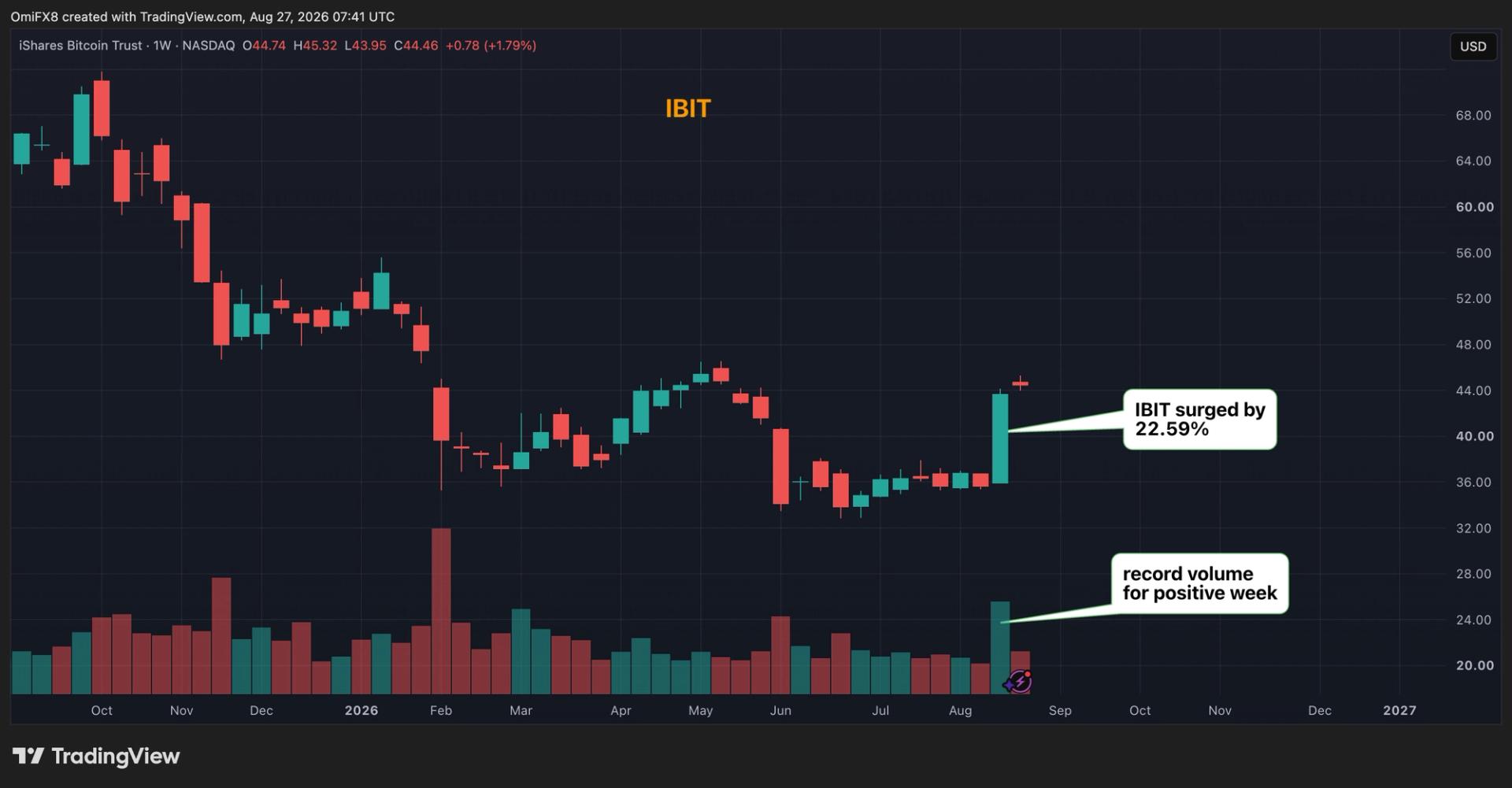
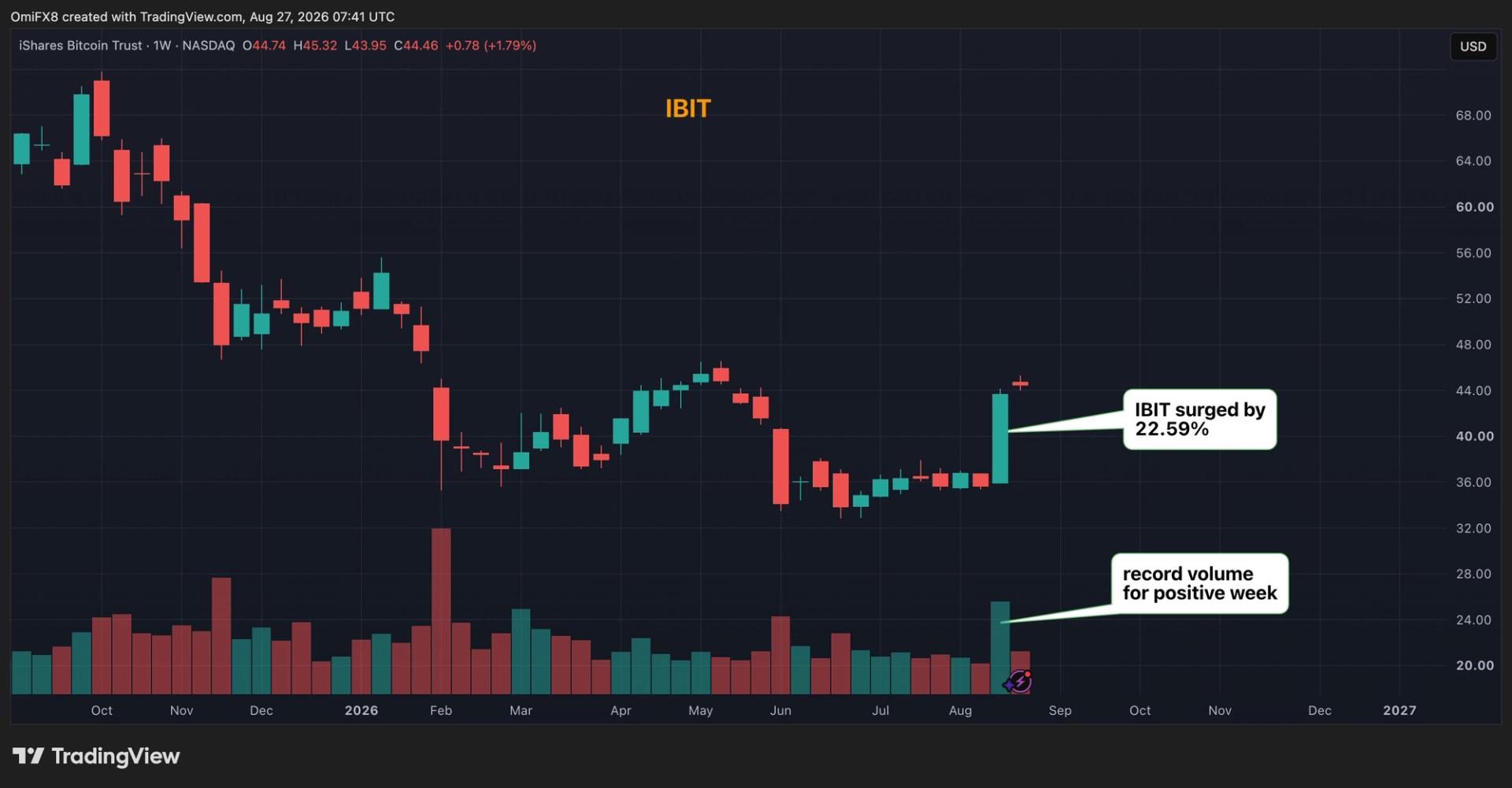
BlackRock’s head of digital assets shared his outlook for bitcoin after the company’s spot BTC ETF, IBIT, hit record volume for a positive week.

McLaughlin: Memphis a Must-Win for UNLV Playoff Hopes

Stop Touching Your Keyboard. Use This AI-Powered Microphone Instead

Top Gear to return after Andrew Flintoff’s crash, BBC confirms





-

 Fashion6 days ago
Weekend Open Thread: Madewell – Corporette.com
-

 Crypto World1 day ago
SpaceX stock could rise 75% to $240, JPMorgan says
-

 Business5 days ago
Musk’s Tesla, SpaceX Confirm $16.8 Billion ‘Terafab’ Chip Plant as World’s Largest Building in Texas
-

 Crypto World5 days ago
anatomy of crypto’s biggest liquidation event since 2021
-

 Crypto World2 days ago
A $30 Billion AI Fund Implodes, Now the SEC Is Investigating Wall Street’s Role
-

 Politics5 days ago
6 months on, Irish renters crushed by effects of government housing bill
-

 Crypto World1 day ago
Did Trump Just Move SpaceX Stock With One Truth Social Post?
-
 NewsBeat5 days ago
The ‘Lucky Dip Gang’ causing carnage for clicks: After five thugs were killed speeding in the wrong direction on a motorway, GUY ADAMS investigates a sick new trend… and why police aren’t even allowed to pursue them
-

 Business4 days ago
Mystery AI Model ‘Ox Alpha’ Draws Developers With Free Access as Chinese Lab Origins Remain Debated
-

 Business3 days ago
Moderna CEO warns China is pouring state money into mRNA technology
-

 Business7 days ago
Five Below: Kids Discount Retailer Reaps Rich Rewards
-

 Business2 days ago
NVIDIA Stock Drops Nearly 2 Percent to $210 on Seventh Losing Day Ahead of Critical AI Earnings
-
 Crypto World5 days ago
Nvidia Stock Suffers Longest Losing Streak Since 2022: Will Q2 Earnings End It?
-

 Sports4 days ago
Deshaun Watson fires back at Browns fans after being booed: ‘It’s a disrespectful thing’
-

 Business6 days ago
UK firms in critical financial distress rise 9% to 53,756
-
 Crypto World4 days ago
Google Gemini AI Predicts Ethereum Could Become the Trade Retail Misses in 2026
-

 Tech6 days ago
Unitree’s New Superman Robot Claims to Outjump and Outrun Every Human, Usain Bolt Included
-

 Crypto World7 days ago
Optimism-funded team's deciding vote shifts $49 million in OP tokens away from users
-

 Tech6 days ago
Faster chip in a familiar form factor
-

 Business5 days ago
Will Tesla Stock Be Higher or Lower a Year From Now? Here’s What Wall Street Analysts Are Saying
You must be logged in to post a comment Login