

Crypto World
Soluna Q1 Revenue Rises 58% as Data Center Hosting Surpasses Crypto Mining

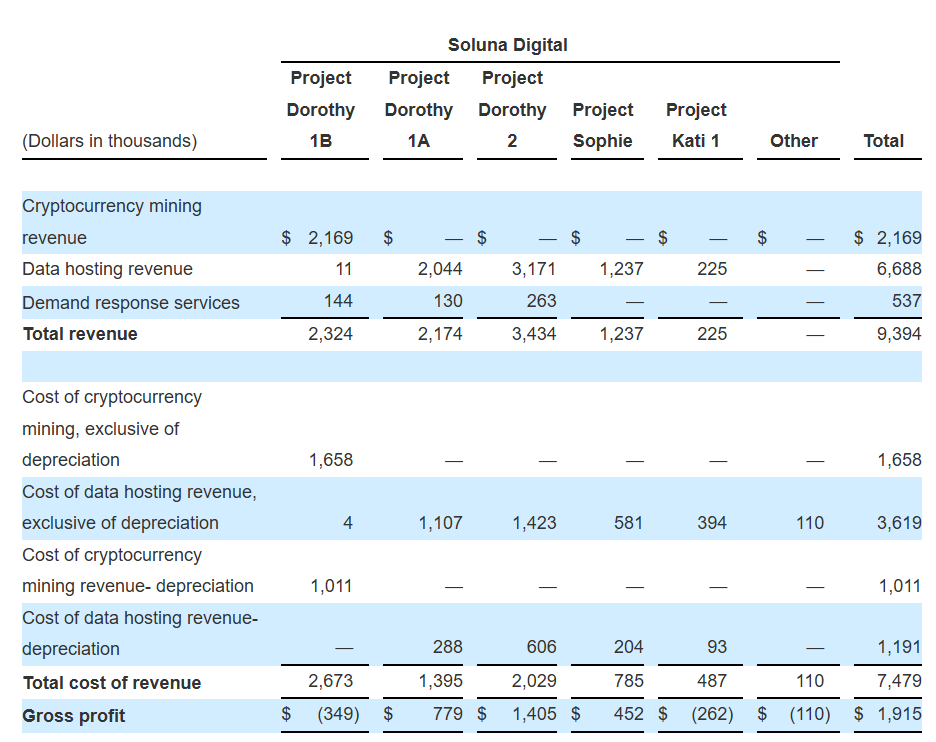
Digital infrastructure company Soluna Holdings reported strong first-quarter revenue growth as expanding data center operations helped offset weaker returns from cryptocurrency mining.
Revenue rose 58% from a year earlier to $9.4 million and increased 2% from the previous quarter, according to the company’s earnings report released Monday. It was Soluna’s fourth-consecutive quarter of sequential revenue growth.
The gains were driven by additional capacity coming online at the company’s Dorothy and Kati sites in Texas. Data center hosting generated $6.7 million in revenue, while cryptocurrency mining contributed roughly $2.2 million, down from nearly $3 million the year before, as Bitcoin mining economics deteriorated.
Despite higher revenue, Soluna remained unprofitable. A net loss widened to $17.9 million from $10.5 million a year earlier, primarily due to higher stock-based compensation, interest expense and financing costs. Adjusted EBITDA loss narrowed modestly to $2.1 million.
Soluna ended the quarter with $68.6 million in cash as it continued to expand its infrastructure footprint, including plans to grow its AI and high-performance computing business.
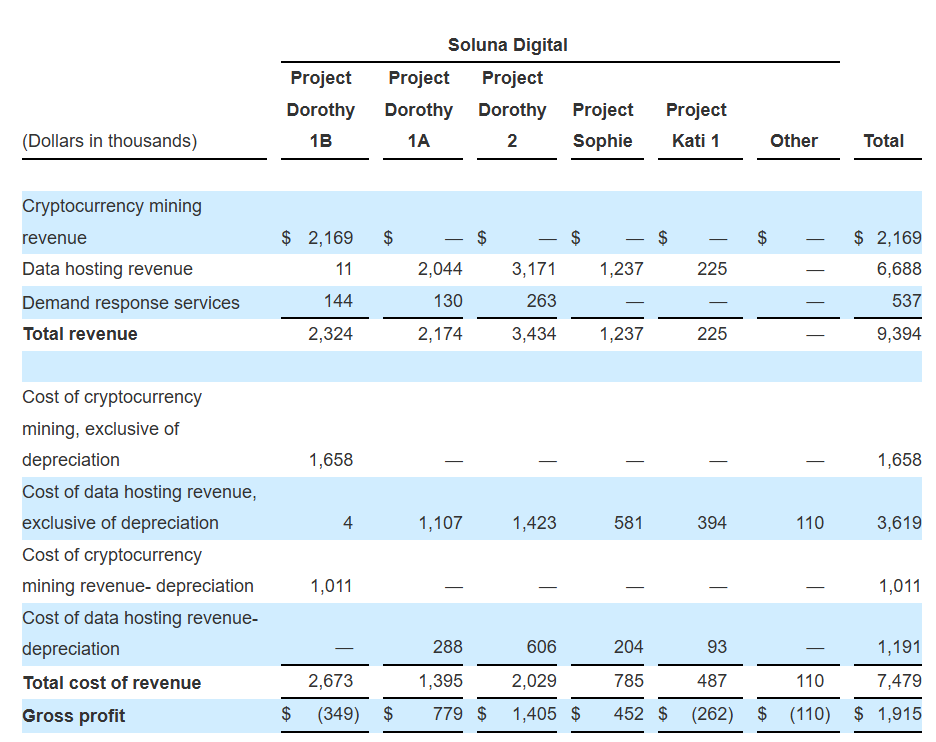
A snapshot of Soluna’s quarterly crypto mining revenues. Source: Soluna Holdings
Related: Paradigm reframes Bitcoin mining as grid asset, not energy drain
Crypto miners pivot toward AI infrastructure
Soluna is participating in a broader shift among Bitcoin (BTC) miners seeking new revenue streams as mining margins come under pressure. Mining economics have tightened significantly since the 2024 halving, with the recent decline in BTC prices adding further strain.
A March report from CoinShares found that as many as 20% of Bitcoin miners could be operating at a loss, particularly those using older, less efficient machines. The report also noted that Bitcoin hashprice — a key measure of miner revenue — fell to a post-halving low in February.
In response, several publicly traded miners, including HIVE Digital Technologies and TeraWulf, have redirected capital toward artificial intelligence and high-performance computing.
Analysts at Bernstein recently said IREN is expected to derive most of its future value from AI infrastructure rather than digital asset mining. The firm cited IREN’s growing AI cloud business and long-term agreement with Microsoft as key drivers of that transition.
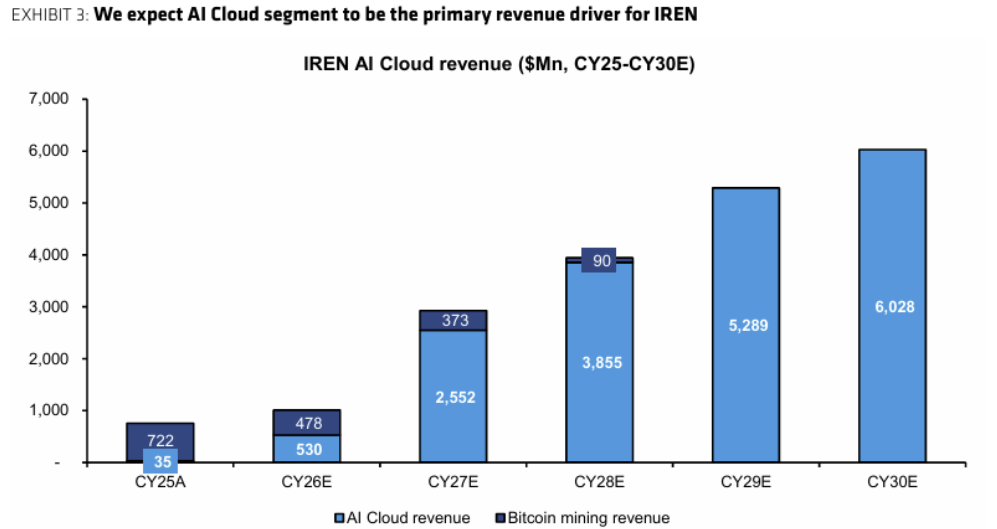
A Bernstein analysis shows how even large-scale miners like IREN are expected to generate the bulk of their revenues from AI. Source: Bernstein
Related: Core Scientific plans $3.3B debt raise to fund AI data center push


The end of another week has arrived, which brings another Bitcoin and Ethereum options expiry event as spot markets remain sideways.
Around 23,400 Bitcoin options contracts will expire on Friday, July 10, with a notional value of roughly $1.4 billion. This one is smaller than usual expiry events, so there is unlikely to be any impact on spot markets.
Crypto markets gained earlier in the week but have fallen back since the escalation of military action in Iran and the Federal Reserve’s meeting on Wednesday. Around $30 billion has left the space since Monday.
Bitcoin Options Expiry
This week’s batch of Bitcoin options contracts has a put/call ratio of 0.97, meaning that sellers of long (call) contracts and short (put) contracts are evenly matched. Max pain is around $62,000, which is a little lower than current spot prices, so some will be out of the money on expiry.
Open interest (OI), or the value or number of Bitcoin options contracts yet to expire, remains highest at the $80,000 strike price on Deribit, with $1.1 billion, but short sellers still have $1 billion in OI at $60,000. Total BTC options OI across all exchanges has ticked up a little to $28.7 billion, according to Coinglass.
The current skew profile reflects a “more normalized term structure” while maintaining a persistent downside bias in options pricing, said derivatives provider Greeks Live this week.
“Compared with the sharp front-end dislocations seen earlier in June, risk pricing is now more evenly distributed across maturities, indicating a less fragmented options market.”
This means that overall, the options market reflects ongoing worry about Bitcoin falling more than rising, though the fear is more evenly spread out than before. In addition to today’s small batch of Bitcoin options, around 141,000 Ethereum contracts are expiring, with a notional value of $237 million, a max pain of $1,700, and a put/call ratio of 1.2.
Total ETH options OI across all exchanges is low at around $4.4 billion. This brings the total notional value of crypto options expirations to around $1.6 billion, a very small event.
Spot Market Outlook
Crypto markets have ticked up a little on Friday morning with total capitalization reaching $2.25 trillion, but they are down slightly on the week.
Bitcoin is up more than 2%, tapping an intraday high of $64,000 during Asian trading on Friday morning. There is heavy resistance just above $64,500, so it needs to break this to push to the next resistance zone around $66,000.
Ether prices made marginal gains but remain below their resistance point at $1,800. The altcoins are seeing small gains after a week in the red, with better performance from Zcash, Stellar, and Canton.
The post Will $1.4B in Bitcoin Options Expiring Today Move the Market? appeared first on CryptoPotato.
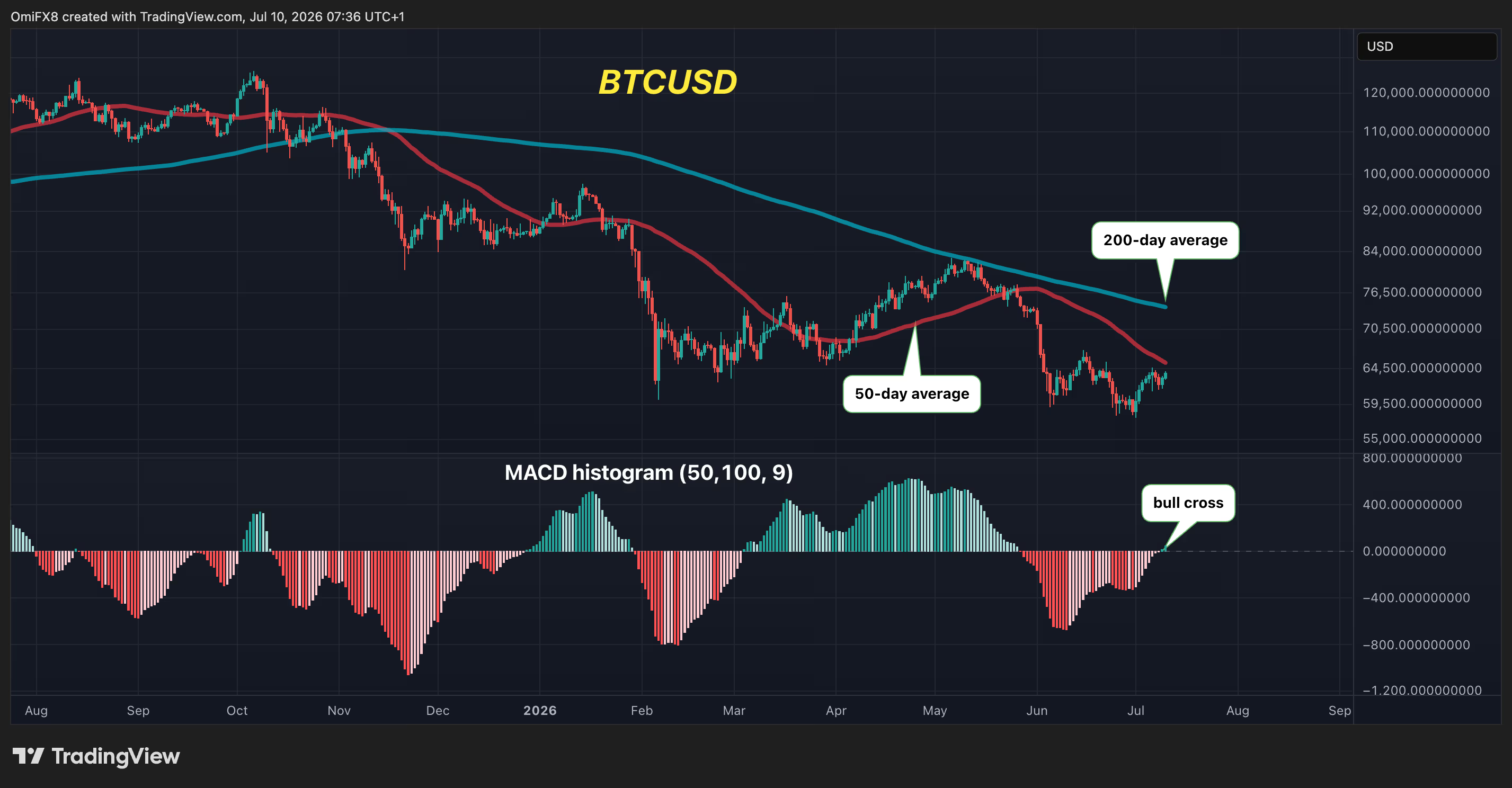
Traders typically do not rely on a single indicator to determine market trends. But this particular MACD has proved reliable as a standalone gauge through the price crash from the record high of $126,000. Since October, negative crossovers have reliably marked the start of steeper declines, while positive crossovers have preceded meaningful recovery rallies – including the December–January bounce and the February–May bounce.

The latest bullish crossover therefore points to a notable bounce ahead, though not necessarily the start of a full-blown new uptrend. That bigger move would need more confirmation, which is why the key resistance levels below are now in focus.
Key levels ahead
The first level to watch is the 50-day simple moving average, currently around $65,434. This is simply the average bitcoin price over the past 50 days (roughly two months).
Traders in both crypto and traditional markets watch this line closely to gauge near-term momentum. A clear move above it is often seen as a sign that upside strength is building.
The second key level is $67,292, which was the mid-June high. This is where bitcoin staged a brief recovery from early June lows near $60,000, only for sellers to step in aggressively. That resistance turned the price lower again. Breaking above $67,292 would be another win for buyers, showing they have overcome the previous area of strong selling pressure.

TLDR
- On July 3, Polymarket submitted regulatory applications to the National Futures Association seeking authorization for U.S. margin trading capabilities.
- PM Derivatives LLC filed for FCM registration, NFA membership, and Swap Firm designation on behalf of the platform.
- Additional approval from the CFTC remains necessary before Polymarket can launch leveraged trading services.
- Competitor Kalshi secured NFA authorization through Kinetic Markets LLC back in March 2026, giving it a significant advantage.
- June 2026 saw both platforms achieve unprecedented trading activity — Kalshi reached $33 billion while Polymarket totaled approximately $14 billion across entities.
The prediction market platform Polymarket has submitted formal applications to the National Futures Association seeking permission to provide margin trading services to American customers. This capability would enable platform users to take positions on real-world outcomes while committing smaller initial capital amounts.
Polymarket Seeks License to Offer Margin Trading Legally in US
According to Bloomberg, Polymarket, the world’s largest prediction market platform, is seeking US regulatory approval to offer margin trading, allowing users to open positions without posting the full amount of… pic.twitter.com/Ah6CL2ZVWj
— Wu Blockchain (@WuBlockchain) July 10, 2026
The regulatory submissions were lodged on July 3 via the entity PM Derivatives LLC. These applications encompass registration as a futures commission merchant, membership in the NFA, and designation as a Swap Firm. A related entity named Coming Home GBA LLC appears in the documentation as well.
Securing NFA authorization represents merely the initial phase. Polymarket must also obtain authorization from the Commodity Futures Trading Commission before American users can access leveraged trading functionality on the platform.
The company has not issued any official statement regarding these regulatory filings. The Block contacted Polymarket representatives for commentary but has not received a response.
Kalshi Maintains Regulatory Advantage
Polymarket’s primary rival, Kalshi, has already advanced considerably further in the approval process. Back in March 2026, Kinetic Markets LLC, an affiliate of Kalshi, obtained NFA authorization as both a registered futures commission merchant and Swap Firm.
This regulatory clearance means Kalshi can currently provide margin trading options to its customer base. Polymarket is now attempting to close this competitive gap.
Both prediction market platforms are experiencing rapid expansion. June brought record-breaking monthly transaction volumes for each service.
Kalshi processed $33 billion in trades during June alone. Polymarket, including its U.S.-focused entity, generated approximately $14 billion in combined volume during the identical timeframe.
What Margin Trading Would Mean for Users
Margin trading enables market participants to control larger positions while committing less upfront capital. Within prediction markets specifically, this functionality would let users place wagers on various events — ranging from political elections to economic data releases — without depositing the complete position value.
This trading structure particularly attracts seasoned traders seeking to manage substantial positions while maintaining capital flexibility.
Polymarket has been actively expanding its presence within the American market. The pursuit of regulated margin trading capabilities represents a significant component of this strategic expansion.
According to Bloomberg’s reporting, the platform aims to draw a more advanced and sophisticated trader demographic.
Polymarket’s regulatory initiatives arrive as prediction markets capture increasing mainstream interest. The record June volumes posted by both Kalshi and Polymarket demonstrate robust user engagement and demand.
These NFA submissions represent a tangible advancement toward providing a service that a direct competitor already offers its users.
The timing and outcome of potential CFTC approval will ultimately dictate whether and when American users gain access to margin trading functionality on Polymarket’s platform.


Zcash’s scheduled Ironwood network upgrade is now set to activate on the mainnet on July 28, according to a statement from Zcash core developer Sean Bowe. The upgrade is designed to address an “infinity” bug tied to the Orchard shielded pool, a problem first disclosed in May and linked to the chain’s private transaction pool behavior.
Ironwood will close the current Orchard pool to new activity and establish a new shielded pool. Crucially, any funds moving out of Orchard would need to pass through an accounting checkpoint before they can enter Ironwood—an approach intended to generate evidence about whether any counterfeit Zcash tokens were produced via the Orchard issue.
Key takeaways
- Zcash core developer Sean Bowe says Ironwood mainnet activation is set for block height 3428143, approximately July 28 at 8:00 a.m. EST.
- Ironwood shuts down new entries to Orchard, forcing subsequent shielded activity into a newly created private pool.
- Withdrawals from Orchard must route through an accounting checkpoint before entering Ironwood, potentially surfacing traces tied to the earlier Orchard bug.
- The upgrade proceeds about a week later than a previously targeted July 21 activation date.
- Zcash reports that more than 80% of its 21 million ZEC maximum supply has already been issued, with a figure posted by ruZCASH showing 16,806,723 ZEC in circulation.
Ironwood activation locked in at a specific mainnet height
In a Thursday update, Bowe said the “Ironwood mainnet activation height has been set and tagged,” adding that major ecosystem organizations are committed to activating NU6.3 at block height 3428143. He described the expected time as approximately July 28 at 8 a.m. EST.
The activation timing matters for Zcash users and service providers because NU6.3 touches how shielded transactions are routed and accounted for. Exchanges, wallets, and other infrastructure operators typically need a predictable window to ensure compatibility—especially when a change involves closing one privacy pool and switching users to another.
How Ironwood changes Orchard and the pathway to the new pool
Ironwood was announced in June as the solution to an “infinity” bug that was identified earlier on Zcash’s Orchard shielded pool. The upgrade’s core operational change is straightforward: Orchard is closed to new activity, and a new private pool is brought online.
Rather than letting funds flow freely from the old shielded pool into the new one, the upgrade requires a checkpoint-based accounting step. Zcash’s design intent, as framed by Shielded Labs when discussing potential implications of Orchard-related activity, is that moving any potentially counterfeit funds through the migration process would force a decision point—either to attempt movement (and risk exposure) or to leave funds behind and risk losing the ability to move them later.
In other words, the checkpoint layer is meant to reduce the odds that problematic funds can move silently during the transition from Orchard to Ironwood.
Why a late-July timeline became a concern
Not everyone had been comfortable with the schedule. Shielded Labs previously floated the possibility of delaying Ironwood, warning that some parts of the ecosystem might not have enough time to prepare for a late-July mainnet activation. That concern included entities such as exchanges, mining pools, and wallet providers—groups that typically need to coordinate software support, operational procedures, and testing.
Bowe’s latest comment now confirms that Ironwood’s launch will occur about a week later than an earlier target date of July 21. The shift underscores how upgrades that alter transaction pathways in privacy systems are as much an infrastructure readiness challenge as they are a protocol change.
For Zcash participants, the practical takeaway is that readiness checks should be centered on the NU6.3 activation height window rather than assuming the previously announced July 21 date holds.
Orchard bug fallout and what investors have been watching
The Orchard vulnerability disclosure in early June had market repercussions. According to Cointelegraph’s earlier coverage of the event, ZEC fell sharply after the June 3 disclosure, dropping by roughly half—from $602.68 to $299.25—before partially recovering in the following weeks.
While token price reactions don’t prove whether a specific vulnerability was exploited, Ironwood’s design is still relevant to holders because it targets the mechanism of how private transactions transition from Orchard to the replacement pool. In this case, the upgrade is not merely cosmetic; it changes how migrated shielded funds are processed and accounted for, with potential forensic value if counterfeit activity ever occurred through the Orchard bug.
Beyond the security work, Zcash is also approaching a different kind of milestone. A post from ruZCASH on Monday stated that Zcash has now issued 16,806,723 ZEC out of a maximum 21 million supply—more than 80% of total issuance. This kind of supply progression matters for long-term stakeholders because it affects the rate at which new supply continues to enter circulation over time.
What to monitor as Ironwood goes live
As July 28 approaches, the most important watchpoints are whether NU6.3 activates cleanly at the announced height and how exchanges and wallets handle the Orchard-to-Ironwood transition operationally. Equally, ecosystem participants will likely focus on whether the accounting checkpoint mechanism delivers the evidence Shielded Labs described—particularly if there is any lingering uncertainty about Orchard’s “infinity” bug and its real-world impact.

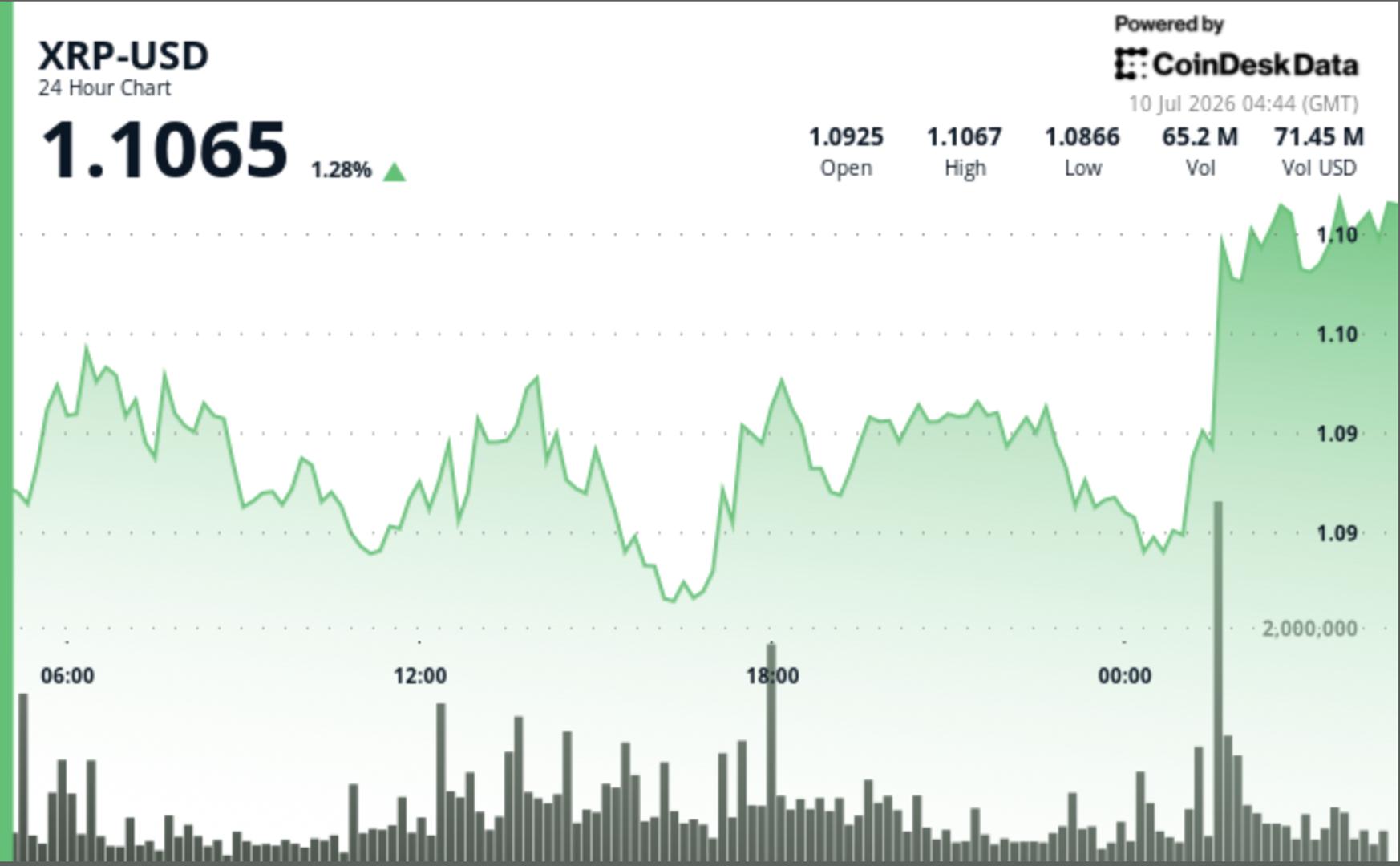
• The main breakout came around 01:00 UTC, when volume jumped to 43.51 million XRP, about 88% above the 24-hour average.
• The move carried XRP to an intraday high of $1.1065 before price stabilized near $1.1020-$1.1040.
• A later 60-minute spike reached 14.17 million in volume, pushing XRP from $1.0958 to $1.1052 before profit-taking slowed the move.
Technical Analysis
• The key development is that XRP cleared the $1.0950-$1.1000 area after several sessions of range-bound trading.
• The breakout was supported by volume, which gives the move more weight than the earlier low-volume attempts above resistance.
• Higher lows through the session show buyers are stepping in earlier, with $1.0880 acting as the main support level during pullbacks.
• The post-breakout hold near $1.1020-$1.1040 is constructive because XRP did not immediately lose the $1.10 area after the spike.
• The next test is whether buyers can keep XRP above $1.10 long enough to challenge $1.1065 and then $1.13.
What traders should watch
• $1.10 is the immediate support level after the breakout.
• $1.0880 is the next level to watch if XRP slips back into its prior range.
• $1.1065 is the first resistance after marking the session high.
• $1.11 is the next psychological level, followed by $1.13 if momentum continues.

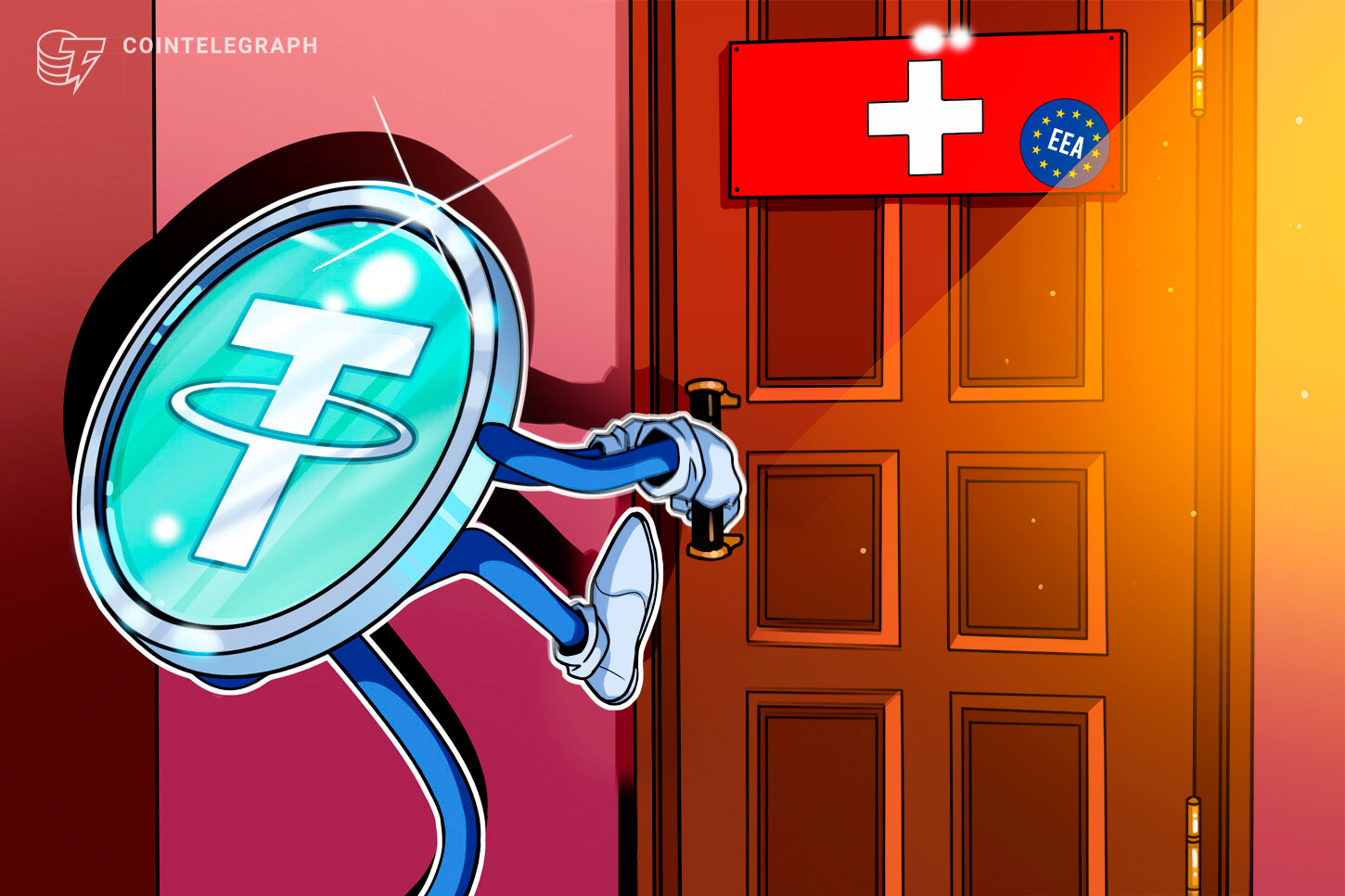
Revolut, a crypto-friendly digital banking platform, said its Tether USDt (USDT) delisting will not affect all customers globally.
The delisting will affect Revolut customers in the European Economic Area (EEA) and Switzerland, while support for the stablecoin will continue in other markets, a spokesperson for the company told Cointelegraph.
Revolut said the decision followed a review of its crypto services and risk considerations under the European Union’s Markets in Crypto-Assets Regulation (MiCA).
“Revolut is discontinuing support for USDT for customers in the EEA following a periodic review of our cryptocurrency offering in light of the evolving EU regulatory framework under MiCA,” the spokesperson said.
Revolut’s decision reflects a broader trend across the EU, where crypto platforms have continued to phase out USDT after Tether, the issuer of the $184 billion stablecoin, chose not to seek authorization under the bloc’s MiCA framework.
News of Revolut’s USDT delisting first surfaced on Friday, when the company notified some European users that it planned to delist the stablecoin from its platform by Aug. 31, 2026.
The company added that the process began earlier, as Revolut had already removed USDT from its Revolut X trading platform for EEA customers. The latest step completes the removal of USDT from its EEA retail offering, the spokesperson said.
MiCA scope raises questions over affected markets
MiCA is an EU regulation marked as having EEA relevance, meaning it is expected to extend to the broader EEA, which includes Norway, Iceland and Liechtenstein alongside EU member states, according to official documents from the European Securities and Markets Authority.
Switzerland, which Revolut included among the affected markets, is not part of the EU or the EEA and is not directly covered by MiCA. Revolut did not explain why Swiss customers were included.
Related: ESMA turns spotlight on crypto custody risks after MiCA transition
Revolut did not provide a list of jurisdictions where it currently offers crypto services, and had not responded to Cointelegraph’s request for clarification on the scope of its offering by the time of publication.
Headquartered in the United Kingdom, Revolut originally launched crypto trading in 2017 and later expanded crypto services in EEA countries in 2024.
Magazine: Has Bitcoin bottomed for this cycle? Analysts say ‘not yet’

PayPal’s US dollar-backed stablecoin, PYUSD, has launched on the Polygon blockchain through a native issuance by Paxos. The latest move allows businesses to use the token for cross-border payments through Polygon’s Open Money Stack.
Companies already processing payments on Polygon can now access PYUSD directly through the wallets, fiat ramps, and compliance services they already use.
PYUSD Goes Native on Polygon
According to the press release shared with CryptoPotato, businesses can now accept funds from cards, bank accounts, or exchange balances, convert and transfer PYUSD internationally, and cash out into local currencies through one integrated system. Polygon Labs said this simplifies the process of deploying stablecoin payments by reducing engineering work, lowering operational costs, and replacing multiple vendor relationships with a single integration.
Polygon noted that its network has already settled more than $2.6 trillion in stablecoin transactions and is used by companies including Revolut and Stripe. The integrated setup is expected to benefit a wide range of businesses, including payroll providers paying contractors across multiple countries, online marketplaces settling with international sellers, and remittance applications sending money into emerging markets.
End users could see faster payouts, fewer failed transactions, and quicker access to local currency while avoiding many of the delays and costs associated with traditional correspondent banking.
PYUSD is issued by Paxos under a national Trust charter supervised by the Office of the Comptroller of the Currency (OCC).
Commenting on the development, Polygon Labs CEO Marc Boiron said,
“Bringing PYUSD natively into the Open Money Stack means a business can take money in, move it across borders, and cash it out in one integration, with compliance built in. When a federally regulated stablecoin is available on infrastructure that already moves money at scale, businesses stop asking whether stablecoin payments are ready and start asking what they can build with them.”
Coinme and Sequence Deals
The development comes amid Polygon Labs’ restructuring and a pivot toward stablecoin-based payments. Earlier this year, the company announced it had signed definitive agreements to acquire Coinme and Sequence for more than $250 million.
The goal was to complete the core infrastructure for regulated stablecoin payments and money movement.
Through Coinme, Polygon also expanded its US presence, gaining operations in 48 states through money-transmitter licenses and compliance infrastructure, a crypto-as-a-service platform, licensed wallet infrastructure, enterprise APIs, and a retail network of about 50,000 locations.
The post PayPal’s Stablecoin Lands on Polygon With Built-In Compliance and Fiat Access appeared first on CryptoPotato.


Hyperliquid Policy Center and Phantom have urged the U.S. Commodity Futures Trading Commission to update its rulebook for onchain trading, arguing that existing regulations built for traditional financial markets do not fit decentralized infrastructure.
Summary
- Hyperliquid Policy Center and Phantom have asked the CFTC to create rules tailored for onchain trading instead of applying legacy market regulations.
- The groups said developers of decentralized trading software and non custodial wallet providers should not face the same registration requirements as traditional intermediaries.
- The proposal comes as U.S. regulators review derivatives rules and CME continues its legal challenge over the CFTC’s treatment of crypto perpetual futures.
According to a joint comment letter submitted on Thursday by the Hyperliquid Policy Center (HPC) and Phantom, the current regulatory framework assumes a market structure where brokers, exchanges and clearinghouses control customer funds throughout the trading process. The organizations said onchain markets operate differently because users retain control of their own assets.
The submission responds to a joint Request for Information (RFI) issued last month by the CFTC and the Securities and Exchange Commission, which invited public feedback on regulations that may be slowing financial innovation and making it harder for new technologies to work with CFTC-regulated firms. As previously reported by crypto.news, the agencies are also reviewing whether existing definitions for swaps and related derivatives remain suitable for newer financial products.
HPC and Phantom seek tailored rules for decentralized markets
In their filing, HPC and Phantom argued that developers of onchain trading software should not automatically be required to register as exchanges or clearinghouses simply because they build decentralized infrastructure. They also said non-custodial wallet interfaces such as Phantom should not be treated as introducing brokers.
The organizations argued that blockchain-based software cannot be regulated in the same way as centralized intermediaries because, unlike traditional market operators, code cannot enter contracts, respond to regulators or exercise legal responsibilities.
Alongside those proposals, the letter said companies already registered with the CFTC should be allowed to use blockchain technology for trading and clearing without facing unnecessary regulatory barriers.
The recommendations arrive as U.S. regulators continue examining how decentralized finance fits within existing derivatives rules. CFTC Chair Michael Selig previously said the agency’s joint review with the SEC could help resolve longstanding uncertainties under the Dodd-Frank Act, while SEC Chair Paul Atkins has called for clearer definitions covering newer financial products.
Filing comes as CME challenges crypto perpetual futures
The proposal also lands while the CFTC faces legal action from CME Group over its approval of regulated crypto perpetual futures.
As previously reported by crypto.news, CME sued the regulator in June after it approved perpetual futures products from platforms including Kalshi and opened a regulated path for similar offerings. The exchange argues that perpetual contracts should be classified as swaps rather than futures under the Dodd-Frank framework and claims the regulator bypassed the legal process required for swap products.
The dispute gained additional attention after Kalshi expanded beyond Bitcoin perpetuals to list contracts linked to Ethereum, XRP and Hyperliquid, while Coinbase also secured a regulated route to offer certain crypto perpetual futures through infrastructure connected to Deribit.
HPC founder Jake Chervinsky has publicly opposed CME’s lawsuit, describing it as a serious mistake and accusing the exchange of trying to block new competitors. One day after CME filed its case, the CFTC and SEC published their joint request for public comment, which specifically asked whether the legal definition of swaps should be updated to account for emerging products such as crypto perpetual contracts.


Early today, traders received Japan’s producer price index for June, which came in at 7.1%, the fastest annual increase since March 2023. The spike in wholesale inflation reinforced expectations for further Bank of Japan rate hikes. A former central bank official said Thursday that the BOJ may hike rates faster, potentially pushing them above 2%.
Note that the Japanese yen and Bitcoin have developed an unusually strong positive correlation, often moving in lockstep against the U.S. dollar. If that correlation holds, yen upswings may ultimately prove positive for bitcoin in general, even as BTC/JPY (and other crypto/JPY) pairs continue to lag in relative terms.
The GPIF Risk
The Government Pension Investment Fund (GPIF) of Japan manages roughly ¥277 trillion ($1.87 trillion) in assets, making it the world’s largest retirement fund. It invests heavily in global stocks and bonds.
Now the Japanese government wants the GPIF and other pension funds to invest more in local assets. Such a rotation could trigger volatility in global financial markets.
“The fund, one of the largest pension pools in the world, held 293.4 trillion yen, or roughly 1.81 trillion dollars, in assets at the end of December, maintaining roughly equal allocations across domestic equities, foreign equities, domestic bonds and foreign bonds,” analysts at InvestingLive said in a market update.

Zcash’s Ironwood network upgrade, the solution to an “infinity” bug discovered in May on the privacy-focused blockchain’s main private transaction pool, Orchard, is set to go live on July 28.
Announced in June, Ironwood closes the current Orchard pool, prevents new activity in it and sets up a new private pool. Funds leaving Orchard would have to pass through an accounting checkpoint before entering Ironwood, which could produce evidence about whether any counterfeit Zcash (ZEC) tokens were produced through the Orchard bug.
“Zcash’s Ironwood mainnet activation height has been set and tagged! All of the major organizations are committed to activation of NU6.3 at height 3428143, which is approximately July 28th at 8AM EST,” Zcash core developer Sean Bowe said on Thursday.
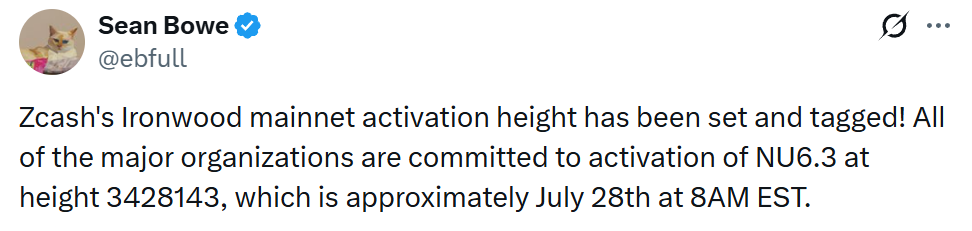
Source: Sean Bowe
Shielded Labs had floated delaying Zcash’s Ironwood upgrade, warning that ecosystem participants such as exchanges, mining pools and wallets would not have enough time to prepare their systems for a late-July mainnet activation. Bowe’s latest comment confirms the upgrade will go ahead one week later than its earlier target date of July 21.
Related: Anthropic’s Mythos AI finds no more ‘serious’ bugs in Zcash: Wilcox
In June, Shielded Labs said Ironwood may provide evidence about whether the Orchard vulnerability was ever exploited.
“As users migrate funds from the existing Orchard pool to the new pool, any hypothetical counterfeiter faces a choice: attempt to move counterfeit funds and risk exposing their existence, or leave them behind and risk being unable to move them in the future.”
ZEC plummeted 50% to $299.25 from $602.68 after the disclosure of the Orchard bug on June 3. The price of ZEC has made a partial recovery in the weeks following and is trading at $492.61 at the time of writing.
Zcash crossed a major monetary milestone this week, with more than 80% of its maximum 21 million ZEC supply now issued. A post from ruZCASH on Monday shows that there is now 16,806,723 ZEC in supply.
Magazine: Bitcoin’s quantum dilemma: Bigger blocks or STARK proofs?
Critics Highlight Flaw In Farages Anti Establishment Claim

France book World Cup semi-final place with win over Morocco thanks to Mbappé, Dembélé – Sports

Fresh Galaxy Z Fold 8 leak suggests US buyers won’t escape a price hike


-

 Fashion7 days ago
Weekend Open Thread: High Hopes
-
 NewsBeat5 days ago
Taylor Swift and Travis Kelce wedding staffer hilariously struggles to keep her cool while checking in megastars
-

 Crypto World7 days ago
Standard Chartered Secures MiCA License as ESMA Adds 37 New Crypto Firms
-

 Fashion4 days ago
Open Thread: What Great Books Have You Read Recently?
-

 Politics7 days ago
The House | “Reframing the debate from a binary discussion of winners and losers”: Yuan Yang reviews ‘We Are Not Machines’
-

 Fashion20 hours ago
Loro Piana Fall 2026 Enters Houston’s Art Scene
-

 News Videos3 days ago
Whats Hidden Inside This Cash Register? #treasure #reselling #money
-
 Tech3 days ago
Anthropic’s new “J-lens” reveals a silent workspace inside Claude that mirrors a leading theory of consciousness
-
Crypto World6 days ago
ESMA Expands Crypto Register by 37 Firms Following MiCA Transition Period
-

 Business4 days ago
AXT Shares Jump Nearly 14% as Semiconductor Materials Maker Rebounds on AI-Linked Indium Phosphide Demand
-

 Sports3 days ago
Joshua Pacio ‘more complete’ ahead of ONE rematch vs Malachiev
-

 Crypto World5 days ago
South Africa proposes crypto tax guidance under existing rules
-
Crypto World3 days ago
SK hynix (000660.KS) Stock Dips as $28B Nasdaq ADR Offering Drives AI Memory Expansion
-

 News Videos4 days ago
Best Time to Enter Small Caps Right Now? Another Bull Run? | Financially Free
-

 Tech5 days ago
Lenovo laptops are now shipping with YMTC SSDs, a sign of Chinese NAND entering the mainstream
-
Sports3 days ago
We have punished the disrespect
-

 News Videos4 days ago
Avoid entering in FOMO #bitcoin #cryptocurrency #trading #scalping
-

 Crypto World7 days ago
Alibaba bans Claude Code over alleged backdoor security concerns
-

 Tech5 days ago
Neuralink Threads Its Way Straight Through the Brain’s Armor
-

 Tech2 days ago
Anthropic brings Claude Cowork to mobile and web as usage data shows most users aren’t coding
You must be logged in to post a comment Login