
Crypto World
South Korea’s Upbit lists HOME as Bithumb adds 2 tokens



South Korea’s two largest crypto exchanges announced four new trading markets on Aug. 4, expanding local access to the HOME, META2 and USDG tokens.
Summary
- Upbit will open HOME trading against KRW and USDT at 17:00 KST on August 4.
- Bithumb scheduled META2 and USDG won markets to open at 16:00 KST on August 4.
- Bithumb changed USDG support from Ethereum to Solana before opening the new Korean won market.
- HOME traded about 32% higher over 24 hours before Upbit’s scheduled Korean market launch Tuesday.
- USDG remained near its dollar peg as Bithumb prepared direct Korean won trading access Tuesday.
Upbit will add Defi App’s HOME token to its Korean won and Tether markets at 17:00 Korea Standard Time. Bithumb plans to open Korean won markets for MetaDAO’s META2 and Global Dollar, or USDG, at 16:00 KST. The exchanges said the opening times could change if they do not secure enough liquidity.
The announcements place a cross chain DeFi token, a market based governance token and a dollar stablecoin in front of South Korea’s active retail market. However, the listings do not change the projects’ underlying technology, token supply or regulatory status.
Upbit gives HOME direct won and USDT access
Upbit said deposits and withdrawals for HOME would open within two hours of its notice. It will support the token through Base only. Users who send HOME through another network may face delays while seeking a return of the unsupported deposit.
The exchange identified the supported HOME contract as 0x4bfaa776991e85e5f8b1255461cbbd216cfc714f. It quoted the previous closing prices at 10.1 won and 0.007069 USDT. Those figures provide reference points for Upbit’s opening restrictions rather than guaranteed launch prices.
Defi App describes itself as a self custody platform for swaps, perpetual contracts and yield products across EVM networks and Solana. Its documentation says the platform connects to outside liquidity sources and protocols while presenting them through one interface. HOME supports governance and staking within the ecosystem.
The HOME token itself uses Base for the market supported by Upbit. The distinction matters because the wider application can interact with several networks, while the exchange accepts deposits only through the chain named in its listing notice.
Bithumb adds META2 and USDG to its won market
Bithumb scheduled both META2 and USDG trading to begin at 16:00 KST. Deposits and withdrawals were expected to open within two hours of the announcement. The exchange set a reference price of 7,558 won for META2 and 1,429 won for USDG.
Both assets will use Solana for deposits and withdrawals. Bithumb initially identified Ethereum as the network for USDG but amended its notice to support Solana instead. Sending either asset through an unsupported network could prevent the deposit from being credited.
MetaDAO uses decision markets, also known as futarchy, for protocol governance. Traders take positions based on whether a proposal would raise or lower a project token’s value. The protocol then uses market prices to determine whether the proposal passes. MetaDAO’s documentation calls its token META, while Korean exchanges use META2 to distinguish it from other assets carrying similar symbols.
USDG is different because it is designed to maintain a stable value rather than deliver market driven price appreciation. Paxos Digital Singapore issues the token and operates under supervision from the Monetary Authority of Singapore. Paxos says holders can redeem USDG for U.S. dollars at a one to one rate.
As crypto.news previously reported, Paxos expanded USDG to Solana to support payments, transfers and treasury uses on the network. The stablecoin is also available on Ethereum, Ink, X Layer and Robinhood Chain.
HOME rises while USDG holds its dollar peg
HOME traded near $0.00872 during research, representing a gain of about 32.1% over 24 hours. Its daily range extended from approximately $0.00617 to $0.00924, while reported volume approached $89.4 million. The timing connects the move with the Upbit announcement, but the listing cannot be confirmed as the only cause.
META traded near $6.39, with its 24 hour trading volume rising about 50.3% to $13.6 million. The token had also gained about 55.1% over seven days. Its earlier Upbit listing and activity within MetaDAO make it difficult to isolate any reaction to Bithumb’s announcement.
USDG remained close to its intended peg at approximately $0.9993. CoinGecko reported a narrow 24 hour range between $0.9976 and $1.00, alongside a market capitalization of about $3.44 billion. Its stablecoin structure means a lasting price surge would not represent the same type of listing reaction seen in HOME or META2.
The listings continue a busy period for Korean exchanges. In related coverage, crypto.news reported that Upbit added Morpho and Euler won markets, while Bithumb has also expanded direct won access for several newer crypto assets.
New listings carry network and order restrictions
Upbit will block HOME buy orders for about five minutes after trading begins. It will also restrict sell orders priced more than 10% below the previous closing price during that period. Only limit orders will be accepted for roughly the first two hours.
Bithumb will apply similar controls to META2 and USDG. Buy orders will be unavailable for five minutes. Sell orders below 90% or above 200% of the stated reference price will also face temporary restrictions, while nonlimit orders will remain unavailable for about two hours.

The preferred shares have recovered nearly 24% from their June closing low as Strategy builds its cash reserve and repurchases STRC.
The pound just closed its strongest week against the dollar in months, ending July up more than 1% and holding just below $1.35. Two factors are driving the move. First, political risk has faded: the UK appointed its seventh prime minister in a decade, and the new government’s pledge of fiscal discipline has reassured markets. Second, the Bank of England surprised with a more hawkish tone than expected—policymakers voted 6-3 to hold rates steady, but three members pushed for a hike, a stronger signal of resolve than markets had priced in.
The dollar, meanwhile, has had a rough few sessions. Following the Fed’s decision to hold rates for a fifth consecutive meeting, Chair Kevin Warsh offered little clarity on the path ahead, leaving investors questioning whether the central bank is doing enough to bring inflation back to target. The dollar index posted its worst weekly performance in three months as a result, though roughly two-thirds of the market still expects a September hike.
With both central banks striking cautiously hawkish tones but offering little forward guidance, GBP/USD’s next move looks set to hinge on incoming US labor data.
Technical Analysis of GBP/USD
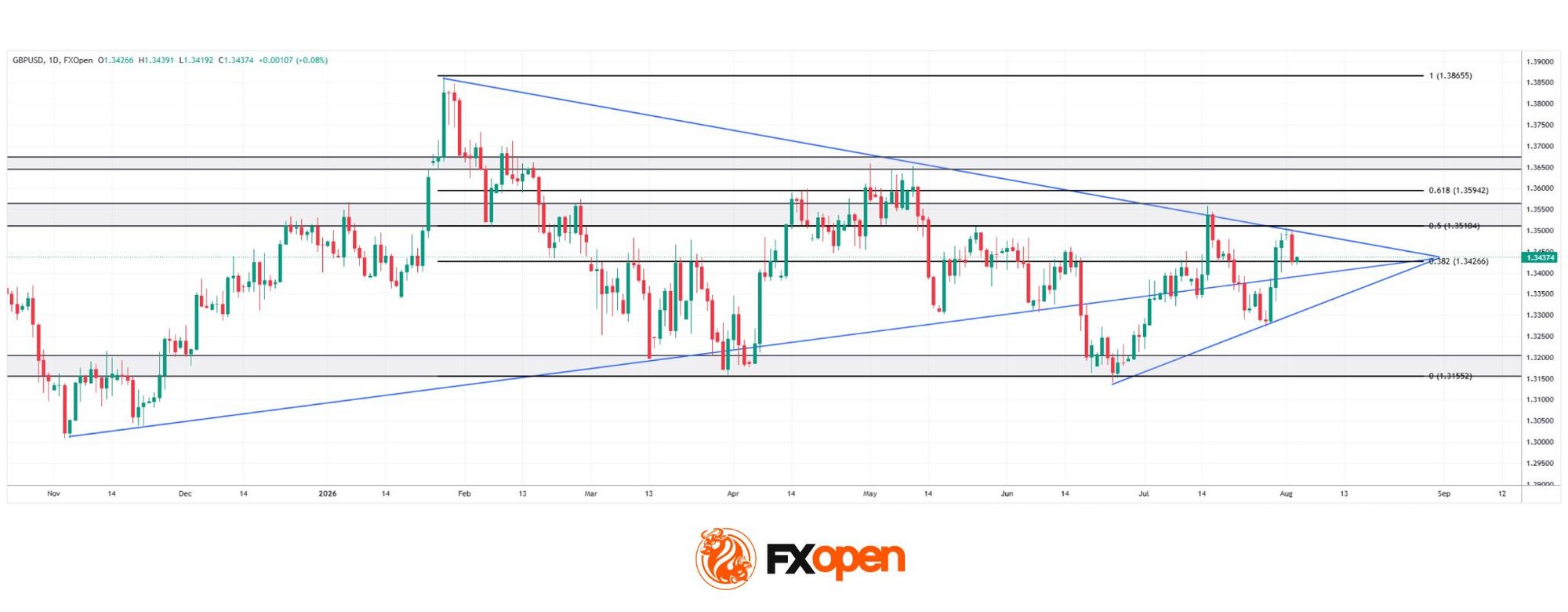
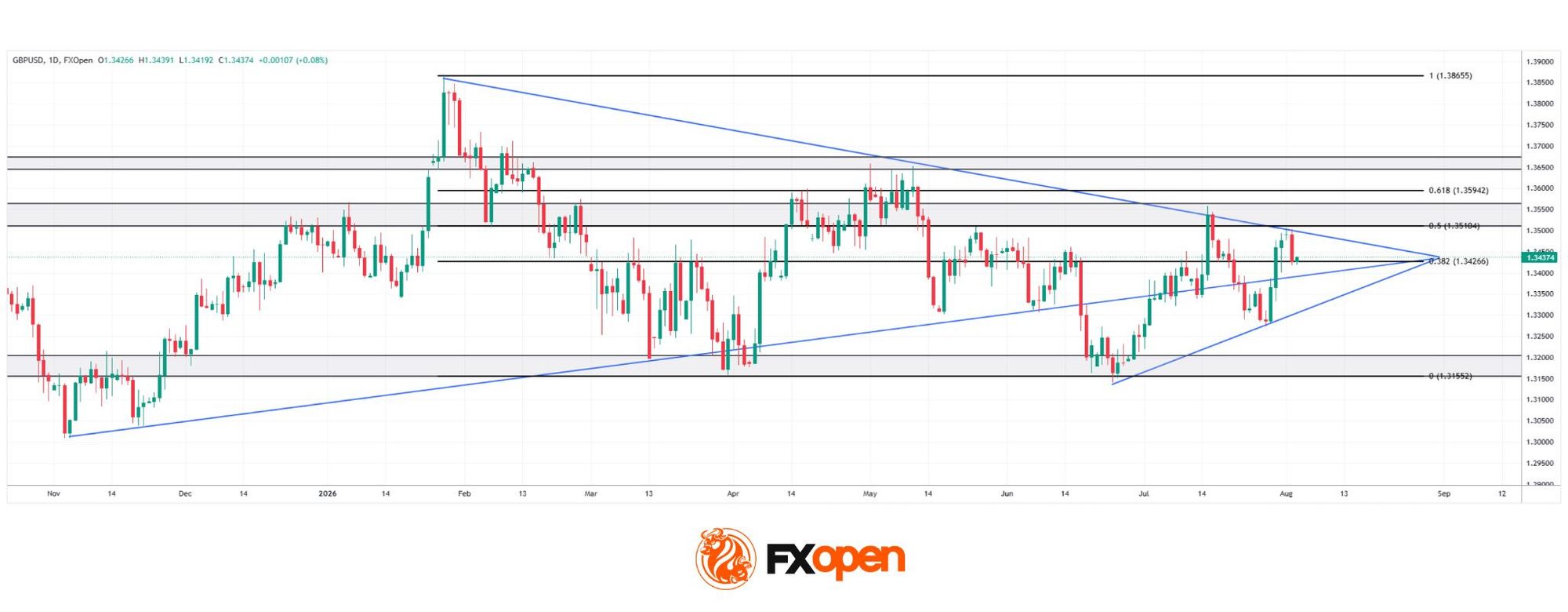
As the GBP/USD chart shows, the pair has been compressing into a broad symmetrical triangle since January’s highs, with price now converging near the 0.382 Fibonacci retracement around 1.3427, exactly where the two trendlines meet. This narrowing structure suggests a decisive breakout may be approaching after months of range-bound trading.
Bullish Scenario
Should buyers push through the descending trendline and reclaim the 0.5 Fibonacci retracement near 1.3510, the path would open toward the 0.618 level around 1.3594, with a stronger move potentially targeting the 1.3865 highs from January if fundamental momentum aligns.
Bearish Scenario
Conversely, a break below the ascending trendline would expose the 1.3200 support zone, with a more significant breakdown risking a retest of the 1.3155 low that anchored this entire triangle formation.
With price coiled right at the apex of this multi-month triangle, and both the Fed and incoming labor data serving as potential catalysts, GBP/USD looks primed for its next major directional move—will the pound extend its recent strength, or is the dollar poised for a comeback?
Trade over 50 forex markets 24 hours a day with FXOpen. Take advantage of low commissions, deep liquidity, and spreads from 0.0 pips (additional fees may apply). Open your FXOpen account now or learn more about trading forex with FXOpen.
This article represents the opinion of the Companies operating under the FXOpen brand only. It is not to be construed as an offer, solicitation, or recommendation with respect to products and services provided by the Companies operating under the FXOpen brand, nor is it to be considered financial advice.
Crypto World
BlackRock (BLK) debuts tokenized access to $311 billion of money market funds in Europe
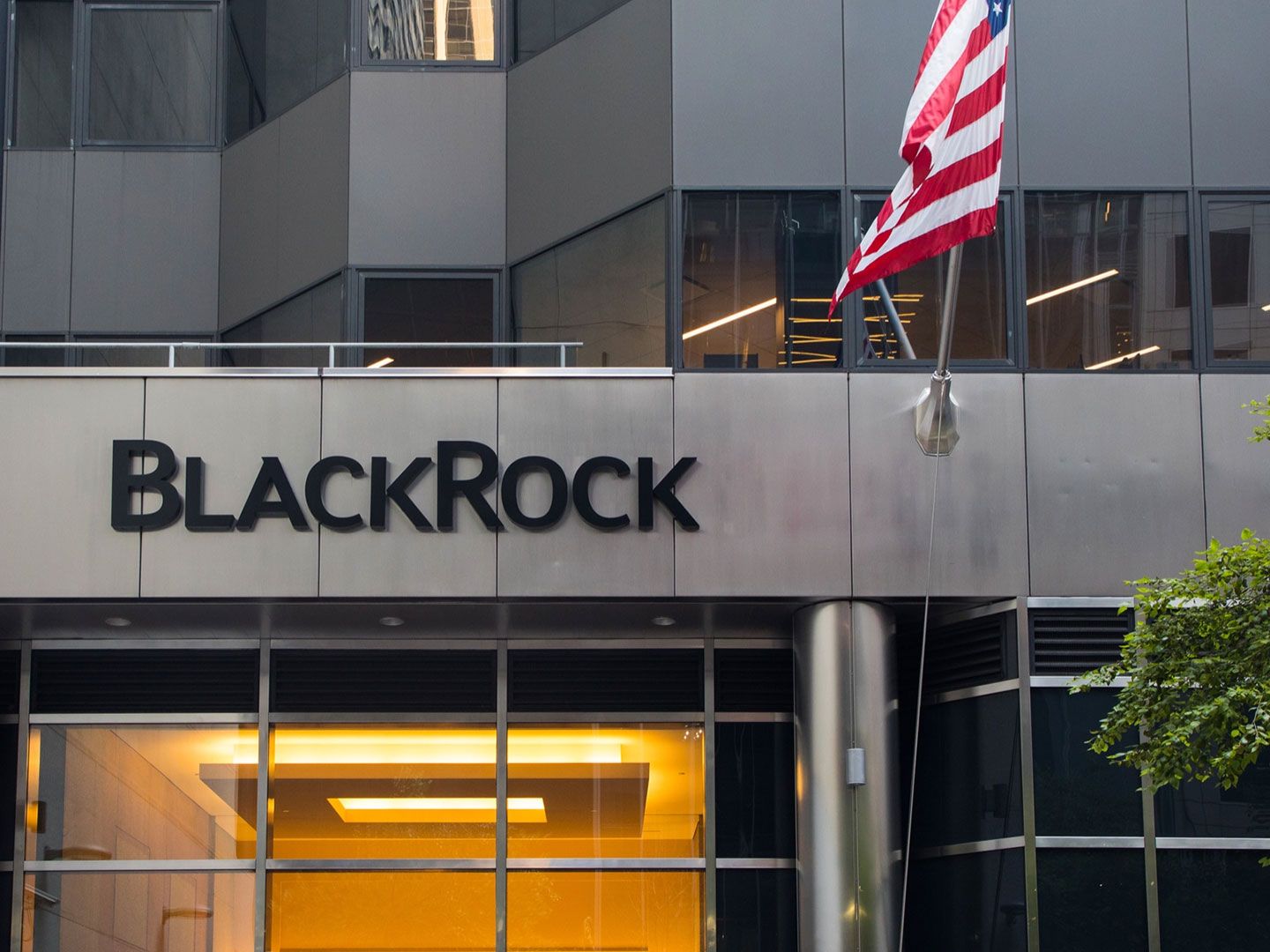
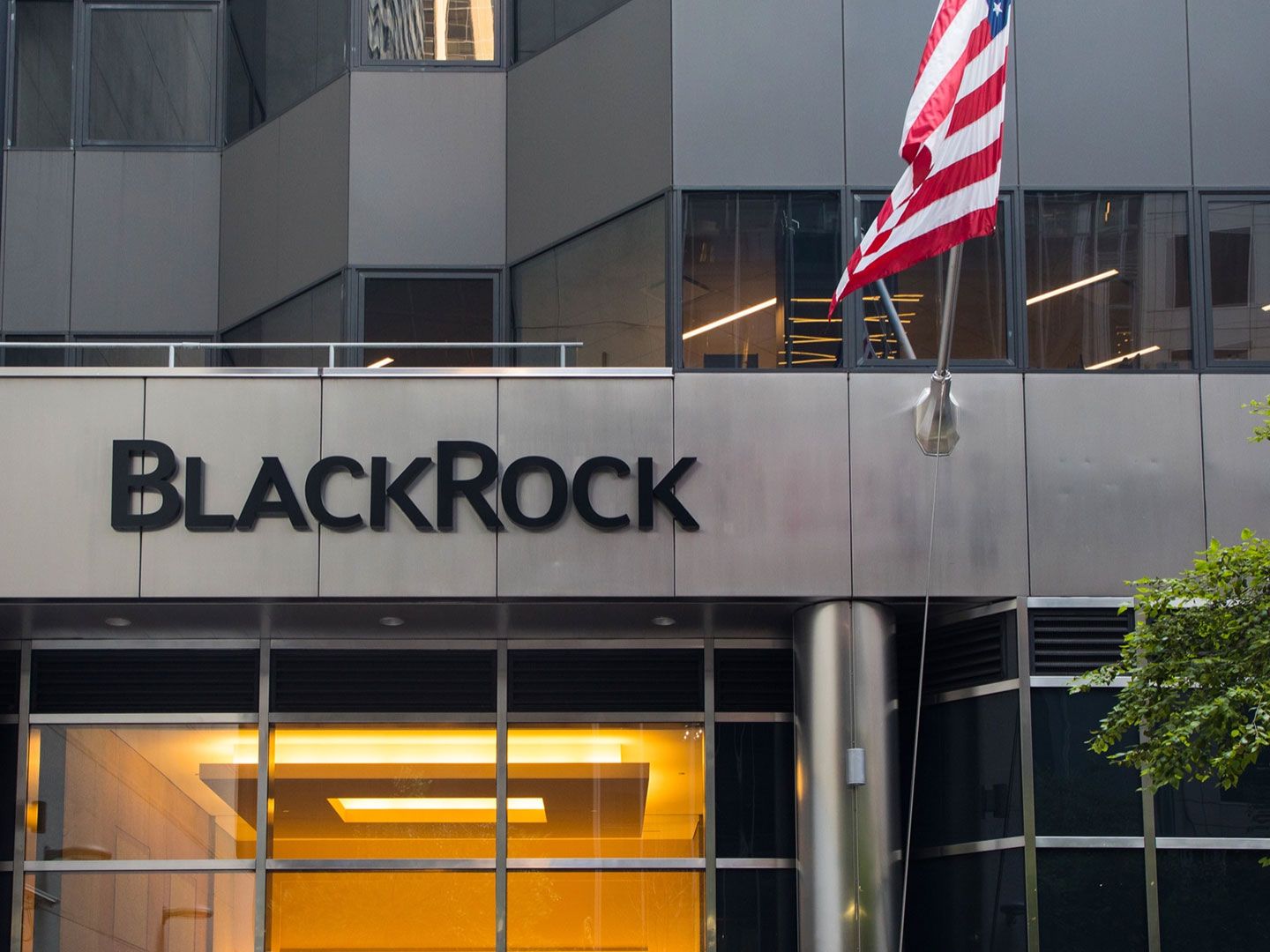
BlackRock (BLK), the world’s largest asset manager, is building on its recent expansion of tokenized cash offerings in the U.S. by tapping into a combined $311 billion of assets under management in European money market funds in a sign of the growing appeal of holding real-world assets on blockchain technology.
BlockRock unveiled 12 new tokenized share classes based on six funds across 15 European markets. The funds, which comply with the European Union’s UCITS regulations, include sterling, euro and dollar share classes, the asset manager said Tuesday. The move comes one day after the firm added two tokenized cash offerings in the U.S.
CEO Larry Fink has repeatedly championed tokenization technology as a way to modernize financial markets. The tokenized real-world asset market has grown more than 200% over the past year to over $30 billion, according to rwa.xyz, while Citi projects tokenized securities could reach $5.5 trillion by 2030.
The tokenized funds are designed for corporate treasurers who already use money market funds to manage operating and reserve cash, as well as at asset managers and investment consultants across traditional and digital markets, BlackRock said.
After a painful end to the previous week (and month), the spot Bitcoin ETFs began August with a bang, attracting over $170 million in net inflows.
This made them the best-performing exchange-traded funds tracking any cryptocurrency on Monday, which has not always been the case lately.
The fresh capital that entered the BTC funds on Monday is almost the same as the entire net positive for July, which was $172.42 million. At the same time, the underlying asset rebounded from another dip to $62,200, and jumped to $64,000 in midday trading.
In contrast, the Ethereum ETFs far outperformed in July, attracting more than $365 million last month. However, SoSoValue data shows that the financial vehicles tracking the largest altcoin were actually in the red on Monday, losing $11.42 million.
The XRP ETFs gained a modest $1.15 million, but extended their non-red streak, as the last day with more withdrawals was July 8.
The Solana funds saw no reportable action, similar to those tracking Dogecoin, but that’s no surprise since they have rarely seen any actual inflows.
The spot HYPE ETFs, which were once the top-performing crypto funds, are on a painful streak. The last time they were in the green was July 15. On Monday, the ETFs lost nearly $1 million again.
The post BTC vs ETH vs XRP: Which ETFs Attracted the Most Money on Monday? appeared first on CryptoPotato.
Crypto asset manager Hashdex is set to close and liquidate its $14.7 million spot bitcoin exchange-traded fund, in what may be the first liquidation of a U.S. spot bitcoin offering.
Bitcoin futures ETFs have closed before, including VanEck’s XBTF in 2024, but no U.S. fund holding bitcoin directly appears to have previously been liquidated.
Hashdex cited an evaluation of the fund’s assets under management, liquidity, operating costs, investor interest and its place within the company’s broader product lineup when announcing the closure.
Flows into the ETFs, which were first approved in January 2024, have dwindled as investors chased the better returns offered by AI-related investments. Taken as a group, the funds have seen net outflows in each of the past three months, according to data from SoSoValue.
“Much of the market views the opportunity cost of holding BTC as too high while anything AI-related soars,” K33 Research head Vetle Lunde wrote in a June report.
BlackRock’s iShares Future AI & Tech ETF gained 39% through July and held $3.6 billion in assets while the crypto market fell roughly 36%, based on the CoinDesk 20 (CD20) Index.
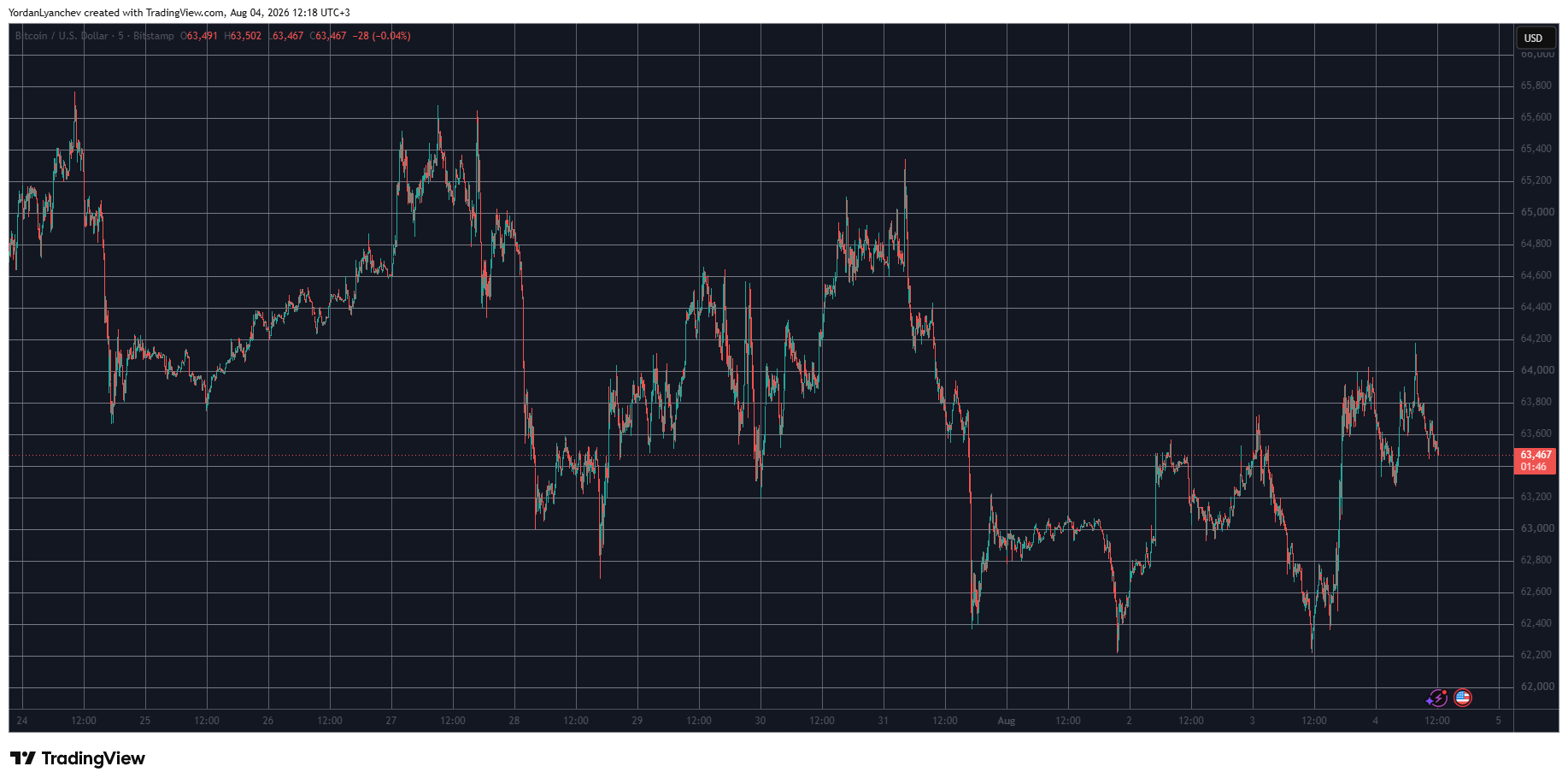
Bitcoin’s price volatility within the $62,000-$64,000 range returned in the past 24 hours as the asset challenged both boundaries, only to be stopped twice.
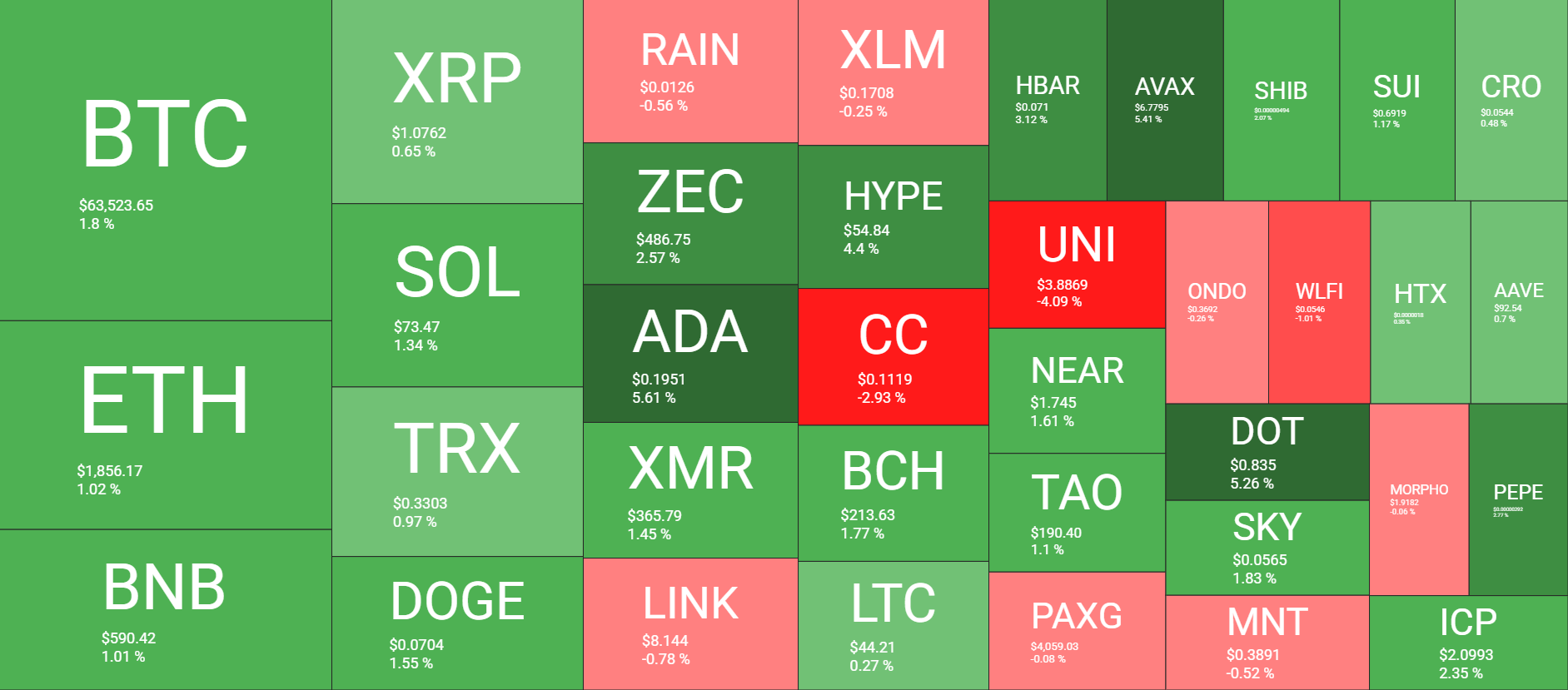
Most larger-cap alts are slightly in the green today, led by ADA’s more impressive 5.5% surge. AVAX, DOT, and HYPE follow suit.
BTC Rebounds to $64K
The previous business week was quite eventful for all financial markets, including BTC. Ahead of the Wednesday conclusion of the Fed FOMC meeting, the cryptocurrency was rejected at $65,600 and dipped below $63,000. Once it became known that the central bank won’t change the rates, which was not as certain as it was for six years, bitcoin’s volatility continued.
Another dip followed, before it rocketed to over $65,000 on Friday when it was rejected once again. This time, it dived to $62,400 on Friday and $62,200 on Saturday. The bulls reemerged on Sunday morning after US President Donald Trump canceled the planned strikes against Iran.
However, the brief surge to $63,800 couldn’t spark a more profound recovery, and BTC quickly dipped back down to $62,200 on Monday. Perhaps the positive net flows into the spot Bitcoin ETFs resurrected the cryptocurrency, and it jumped to $64,000 within hours. It tapped $64,200 earlier today but was halted again and now sits almost a grand lower.
Its market capitalization has rebounded to $1.275 trillion on CG, while its dominance over the alts remains inches below 57%.
BEAT Keeps Diving
Audiera (BEAT) continues to be the most volatile top 100 alt. After a few days of charting double-digit gains, it was rejected yesterday and has slumped by 20% on a 24-hour scale to well under $3. UNI, STABLE, and CC follow suit in terms of daily losses, but are a lot less painful.
In contrast, ADA, AVAX, and DOT have all charted gains of more than 5% daily. Cardano’s native token has defied the overall market sluggishness lately, jumping to a multi-month peak at almost $0.20.
ETH, SOL, BNB, DOGE, and XMR have marked increases of around 1%, while HYPE (4%) and ZEC (2.5%) have jumped slightly more.
The total crypto market cap has recovered $40 billion since yesterday’s low and is up to $2.240 trillion on CG.
The post Audiera (BEAT) Plunges Again, Bitcoin (BTC) Rebounds Above $63K: Market Watch appeared first on CryptoPotato.



Nigeria’s tax authority has laid out detailed rules for how cryptocurrency and other virtual-asset transactions should be taxed, focusing heavily on the compliance role of exchanges and peer-to-peer (P2P) marketplaces. The Nigeria Revenue Service (NRS) says platforms must collect, report, and remit taxes under the country’s existing legal framework—while in some cases paying withheld amounts in digital tokens.
In its Guidelines on Taxation of Virtual Assets, the NRS specifies that income tax deducted at source and stamp duty “shall be remitted to the Service in the originating token of the transaction.” Value-added tax (VAT), however, must be remitted in the currency used for the payment.
Key takeaways
- Exchanges and P2P platforms are positioned as the primary tax “withholding and reporting” gatekeepers under Nigeria’s virtual-asset tax rules.
- Withholding rates differ by activity: 1% applies to taxable disposals, while a 10% rate applies to staking, mining, airdrops, and certain DeFi-related items.
- Stamp duty on token-to-fiat and fiat-to-token transfers is set at 1.5% and must be remitted in the originating token, while VAT is paid in fiat.
- Withheld amounts are treated as advance payments credited against a taxpayer’s final income tax liability, with individuals on progressive rates and most companies at a 30% rate.
- Stablecoin sales are exempt from the 1% withholding tax for taxable disposals.
Withholding rules for exchanges, P2P marketplaces, and service activity
The NRS guidelines assign exchanges and P2P marketplaces central responsibility for withholding, reporting, and remitting tax. Under the framework, platforms must withhold 1% of proceeds from taxable disposals of crypto assets, security tokens, and applicable non-fungible tokens (NFTs).
The document also sets higher withholding for certain forms of virtual-asset income. A 10% withholding rate is applied to proceeds connected to staking, mining, airdrops, and decentralized finance (DeFi) activity where those transactions fall under the rules.
For conversion-related activity, the guidelines address stamp duty for transfers between tokens and fiat. Token-to-fiat and fiat-to-token transfers are subject to a 1.5% stamp duty—again with remittance required in the originating token for the withheld amount—while VAT is remitted in the payment currency.
Practically, these distinctions matter for compliance operations. Different workflows (asset disposal versus yield participation versus token conversion) trigger different withholding and remittance requirements, meaning platforms will need to map transaction types to the appropriate tax treatment and ensure the correct tax is withheld and accounted for at the point of transaction.
How remittances work: “advance” withholding and token-based payment
The guidelines describe withheld amounts as advance payments that are credited against a taxpayer’s final income tax bill. That structure is designed to allow the tax burden to be collected earlier—at the time platforms process transactions—rather than solely through later individual or corporate filings.
Tax outcomes still vary depending on the taxpayer type. Individuals are taxed under progressive rates, while companies other than small companies face a 30% rate, according to the guidelines. The NRS also makes stablecoin sales exempt from the 1% withholding tax tied to taxable disposals, which could reduce withholding friction for certain trading pairs and custody events involving stablecoins.
One of the most operationally sensitive elements is the instruction that certain withheld taxes be remitted in digital tokens, specifically “the originating token of the transaction.” For platforms, this means tax remittance processes must be built to handle crypto-denominated tax obligations rather than relying only on fiat settlements. The guidance’s split—token-based remittance for income tax deducted at source and stamp duty, but fiat remittance for VAT—also increases the need for careful accounting across tax categories.
Nigeria’s tax framework: from executive direction to implementation details
The NRS publication arrives after Nigeria’s government took steps to structure virtual-asset regulation and administrative implementation. An executive order signed by President Bola Tinubu established a Virtual Asset Council chaired by the central bank, with the NRS and the Securities and Exchange Commission serving as vice chairs. Earlier this month, Nigeria’s presidency indicated that the NRS would release a policy to implement the country’s tax laws for virtual assets.
Nigeria’s broader tax overhaul came into force on Jan. 1 under the Nigeria Tax Act, alongside the Nigeria Tax Administration Act of 2025. The legislation treats digital assets as chargeable assets and requires virtual asset service providers to report transaction details, including customers’ names, contact information, and Tax Identification Numbers.
Earlier steps also set the groundwork for taxing crypto gains. Through the Finance Act 2023, Nigeria had already explicitly subjected gains from crypto disposals to taxation via a flat 10% capital gains tax. The 2025 framework did not just continue that approach—it replaced the earlier treatment and, importantly, the guidelines now spell out how gains should be valued and how withholding, remittance, and reconciliation are expected to work.
For investors and traders, the shift from a one-size capital gains treatment toward a withholding-driven model is significant. It changes when tax is effectively collected and how frequently compliance checkpoints occur. Instead of only reflecting tax outcomes at the end of an individual’s or company’s reporting period, platforms may now impose withholding as transactions occur, requiring users to retain adequate records to reconcile advances with final tax liability.
What to watch next for compliance and market participants
As the NRS guidelines take effect, the main question for market participants is execution: how exchanges and P2P operators will implement token-denominated remittances, classify transaction types for the correct withholding rates, and reconcile advance withholding against final tax returns under Nigeria’s progressive and corporate tax rules. Users should expect more documentation and reporting demands, while platforms will need to ensure their transaction monitoring and tax accounting workflows match the categories laid out by the NRS.

Layoffs amid AI-fueled restructuring are making headlines, but companies that rush toward an AI-led future without bringing their employees along will find themselves at a disadvantage.
Instead of cutting jobs, what if companies reimagined them? What if every employee were given the chance and the tools to adapt their role alongside AI?
The builders of tomorrow won’t be who you expect. As AI becomes deeply embedded into our workflows, next-generation builders won’t be just tech experts, they’ll be problem solvers, bold creatives, and strategic thinkers. They’ll come from across your organization, spanning operational leaders, design and systems thinkers, and frontline users who can grasp AI’s potential and turn it into real-world impact.
With 40% of the workforce needing new skills in the next three years to keep pace with AI, leaders across the board will need to rethink how they build their teams. It won’t be as easy as running a few training programs and hoping they stick. Building an AI-first workforce will require a deliberate, top-down shift across the entire organization. Leaders need to embrace change, challenge outdated processes, and invest time and resources to help employees thrive. After all, AI systems are only as strong as the diverse perspectives behind them.
When companies commit to this shift, the potential is unstoppable: productivity, industry-defining customer experiences, and breakthrough solutions to our most mission-critical problems.
Habib is CEO and co-founder of Writer


PreStocks on Solana has captured 78% of all trading volume in pre-IPO OpenAI and Anthropic tokens, according to a new Allium Labs report. The platform has processed $414.7 million in volume since its September 2025 launch.
Three venues track exposure to the two artificial intelligence (AI) labs ahead of expected initial public offerings (IPOs). Rival platform Ventuals wound down its Hyperliquid markets on June 15. Solana now dominates the space that remains.
PreStocks on Solana Widens Its Lead
Combined volume across all three venues reached $532.1 million since inception, Allium Labs found. PreStocks alone accounts for $414.7 million of that total. Ventuals’ Hyperliquid shutdown left it with $114.1 million, or 21% of the combined figure. Positions closed on June 15.
PreStocks generated $2.4 million in fresh trading over the last 30 days. Ventuals’ $11 million figure, in contrast, reflects the one-time unwind of its closing positions rather than new activity. Total volume across all three venues reached $15.2 million over the last 30 days. Active trading alone amounted to just $4.2 million once the Ventuals unwind is excluded.
Meanwhile, the pattern echoes SpaceX tokens on Solana, where onchain venues absorbed trading interest ahead of a Nasdaq listing.
Investor Appetite Builds Around Pre-IPO Exposure
PreStocks tokens track pre-IPO share value through special purpose vehicle (SPV) structures. Holders can trade that exposure around the clock. Solana’s role reflects a broader shift, as tokenized real-world assets increasingly settle there before reaching public markets.
The structure held up better after May 13, when OpenAI and Anthropic both rejected unauthorized transfers of employee shares. As a result, that decision weakened the legal basis for tokens depending on share recognition.
Perpetual futures and prediction markets, however, do not claim underlying shares. The May ruling largely spared them. Traders have shown a similar appetite for pricing SpaceX before its IPO, weighing the same questions SpaceX pre-IPO investors faced before that listing.
Anthropic’s tokenized shares have previously implied valuations far above private funding rounds. That gap underscores how thin these markets remain.
That appetite extends beyond pre-IPO tokens. BlackRock, the world’s largest asset manager with $15 trillion in assets under management (AUM), filed with the SEC to issue tokenized fund shares on Solana. The filing accompanies the launch of the BlackRock Daily Reinvestment Stablecoin Reserve Vehicle, a cash management product built to hold stablecoin reserves onchain.
Institutional demand for Solana-based products now sits alongside the retail appetite driving PreStocks and its rivals.
Allium Labs cautioned that daily volume on quieter days has stayed near $100,000. That is thin enough for prices to diverge sharply from actual funding round terms. Therefore, whether PreStocks on Solana can sustain its lead once an IPO filing arrives remains an open question.
A near-term OpenAI or Anthropic listing would test that thesis directly.
The post Solana Investor Appetite Drives 78% Share of Pre-IPO Tokens appeared first on BeInCrypto.

Huw Edwards criticised for entering Eisteddfod competition

Strategy’s STRC retakes $90 after 24% rebound from June closing low

India’s protests must unite against Rubio’s recolonization project


-

 Business6 days ago
Why Trees Belong on the Risk Register
-

 Fashion4 days ago
Weekend Open Thread: Wit & Wisdom
-

 Politics4 days ago
Meta enters AI-training agreement with far-right ‘propaganda rag’ Newsmax
-
 Entertainment7 days ago
‘Stargate’ Creator’s New Sci-Fi Series Returns for Season 3 Tomorrow
-

 Crypto World3 days ago
MicroStrategy Post-Earnings CLARITY Act Push Could Add New Catalyst for Its Stock
-

 Business6 days ago
Major shareholder moves on Canyon
-

 Politics6 days ago
Reform UK betrays West Mids residents by running from party pledges
-

 Crypto World3 days ago
XRP Ledger v3.3.0 brings five institutional features
-

 News Videos5 days ago
Bitcoin Enters the 3rd Stage of the Bear Market
-

 Crypto World6 days ago
Kraken Enables Retail Access to Jersey Mike’s IPO via Tokenized Shares
-

 Politics5 days ago
Luke Littler’s dominance sparks GOAT debate
-

 Sports4 days ago
Seema Kaliramna Wins Discus Throw Bronze, Takes India’s CWG Medals Tally To 17
-

 News Videos7 days ago
Claude: Build Financial Dashboards in Minutes (2026)
-

 Crypto World2 days ago
Crypto PAC spending tops $2M in Michigan House race
-

 Crypto World3 days ago
New York sues Kalshi over prediction market gambling
-

 Business7 days ago
Johnson & Johnson agrees to $5.5B settlement over talc cancer claims
-

 Business4 days ago
Trump Announces Hamas Disarmament Agreement as Iran Strikes Kuwait Air Base and US Attacks Pause Overnight
-

 Tech6 days ago
Gemini can now summarize the messiest comment threads in Google Docs
-

 Tech2 days ago
ESET tracks rise in malicious AI skills and adaptable malware
-

 NewsBeat5 days ago
Four people die trying to cross Channel in small boats
You must be logged in to post a comment Login