
Crypto World
S&P Global to Buy OpenZeppelin as Blockchain Security Push Grows


S&P Global has announced an agreement to acquire OpenZeppelin, a blockchain security firm known for its open-source smart contract tooling and security review services. The move is designed to broaden S&P Global’s ability to evaluate risk across the digital asset ecosystem, particularly where smart contracts and onchain infrastructure are central to financial activity.
The companies did not disclose financial terms. S&P Global said the transaction is still subject to customary closing conditions.
Key takeaways
- S&P Global’s planned acquisition of OpenZeppelin targets stronger smart contract and onchain technology risk assessment capabilities.
- The deal does not include publicly disclosed pricing; the agreement remains subject to closing conditions.
- OpenZeppelin’s software and contracts library will remain free and publicly maintained on GitHub.
- OpenZeppelin will operate as a separate business unit within S&P Global, with its CEO continuing in a leadership role.
- The acquisition follows S&P Global’s earlier investment activity in crypto market infrastructure, including a strategic investment in Kaiko.
Why the acquisition matters for digital asset risk
In a statement accompanying the announcement, S&P Global’s ratings president Yann Le Pallec said the company’s digital assets strategy focuses on bringing “trusted data, benchmarks and transparent risk assessment” as markets increasingly move onchain. According to the company, OpenZeppelin will deepen its ability to analyze smart contract and other onchain technology risks—an area that has become more important as tokenized products, stablecoin-based rails, and decentralized applications extend into regulated financial contexts.
Smart contract security is often treated as a technical specialty, but for mainstream finance players it can become part of broader credit and operational risk frameworks. By adding OpenZeppelin’s capabilities to its ratings and ecosystem development efforts, S&P Global is positioning itself to assess not only market-related factors, but also the underlying code-related risks that can affect asset safety and system reliability.
OpenZeppelin’s role and what will stay open-source
Founded in 2015, OpenZeppelin develops open-source smart contract software and performs security assessments for blockchain projects and financial institutions. The announcement states that OpenZeppelin’s smart contracts have supported more than $37 trillion in value transferred and that it has completed over 900 security engagements.
Importantly for developers and auditing teams, OpenZeppelin says its contracts library and other open-source applications will remain free and publicly maintained on GitHub. This helps address a common concern when security tooling moves under corporate ownership: whether developers will still be able to rely on transparent, community-auditable code.
Under the proposed structure, OpenZeppelin will operate as a separate S&P Global business unit. The company also stated that OpenZeppelin’s CEO, Demian Brener, will continue to lead and will report to Le Pallec.
How this fits S&P Global’s broader move into crypto infrastructure
S&P Global’s acquisition announcement comes shortly after the company took another step into crypto data infrastructure. Earlier this week, S&P Global led a strategic investment in Kaiko, the Paris-based crypto market data provider. The investment extended Kaiko’s Series B funding to $110 million as the firm expands data infrastructure for tokenized financial markets, according to the prior coverage referenced by Cointelegraph: S&P Global leads $110M Kaiko funding round as Wall Street eyes tokenized markets.
Taken together, the two moves suggest a consistent theme: building a stack around digital asset markets that includes both data and security/risk assessment. Kaiko focuses on market data and related infrastructure for crypto trading and tokenized environments, while OpenZeppelin’s value proposition centers on smart contract security and the evaluation of onchain technology risk.
That pairing may be particularly relevant as more financial products and services attempt to connect legacy risk frameworks with blockchain systems. Market data without security assurance can leave a gap, while security expertise without dependable market benchmarks and transparency can limit how effectively risk is communicated to investors and institutions.
What to watch before the deal closes
With no financial terms disclosed and the transaction still pending closing conditions, the near-term focus for market participants is likely to be procedural rather than operational. OpenZeppelin’s continued open-source maintenance on GitHub is already a meaningful signal for developers, but investors and institutions will also want to monitor how S&P Global integrates the security team into its ratings and ecosystem development processes after closing.
Readers should keep an eye on the final deal timeline and any updates on how OpenZeppelin’s security engagement workflow—especially for financial institutions and blockchain teams—will be maintained or expanded within S&P Global’s broader digital assets strategy.



Top 10 Creations (All ETFs)
|
Ticker |
Name |
Net Flows ($, mm) |
AUM ($, mm) |
AUM % Change |
|
2,719.26 |
169,683.58 |
1.60% |
||
|
1,248.34 |
687,534.29 |
0.18% |
||
|
1,046.61 |
1,081,648.28 |
0.10% |
||
|
1,009.58 |
226,987.84 |
0.44% |
||
|
911.04 |
107,011.88 |
0.85% |
||
|
553.96 |
46,651.80 |
1.19% |
||
|
538.74 |
191,214.84 |
0.28% |
||
|
428.88 |
17,483.18 |
2.45% |
||
|
405.50 |
462.46 |
87.68% |
||
|
391.27 |
144,066.35 |
0.27% |
Top 10 Redemptions (All ETFs)
|
Ticker |
Name |
Net Flows ($, mm) |
AUM ($, mm) |
AUM % Change |
|
-2,358.15 |
800,577.47 |
-0.29% |
||
|
-1,987.27 |
820,628.41 |
-0.24% |
||
|
-534.09 |
47,177.83 |
-1.13% |
||
|
-302.22 |
79,585.21 |
-0.38% |
||
|
-220.17 |
1,417.25 |
-15.54% |
||
|
-212.67 |
27,728.48 |
-0.77% |
||
|
-212.42 |
30,583.75 |
-0.69% |
||
|
-206.93 |
67,897.75 |
-0.30% |
||
|
-187.57 |
3,583.54 |
-5.23% |
||
|
-171.65 |
17,039.23 |
-1.01% |
ETF Daily Flows By Asset Class
|
Net Flows ($, mm) |
AUM ($, mm) |
% of AUM |
|
|
Alternatives |
572.89 |
155,975.51 |
0.37% |
|
Asset Allocation |
74.58 |
47,369.02 |
0.16% |
|
Commodities E T Fs |
978.53 |
344,374.05 |
0.28% |
|
Currency |
350.05 |
129,232.05 |
0.27% |
|
International Equity |
172.31 |
2,946,759.89 |
0.01% |
|
International Fixed Income |
719.37 |
459,622.37 |
0.16% |
|
Inverse |
19.31 |
14,396.50 |
0.13% |
|
Leveraged |
714.10 |
175,868.07 |
0.41% |
|
Us Equity |
5,727.02 |
9,757,886.79 |
0.06% |
|
Us Fixed Income |
1,095.26 |
2,187,929.26 |
0.05% |
|
Total: |
10,423.42 |
16,219,413.52 |
0.06% |
Disclaimer: All data as of 6 a.m. Eastern time the date the article is published. Data is believed to be accurate; however, transient market data is often subject to subsequent revision and correction by the exchanges.
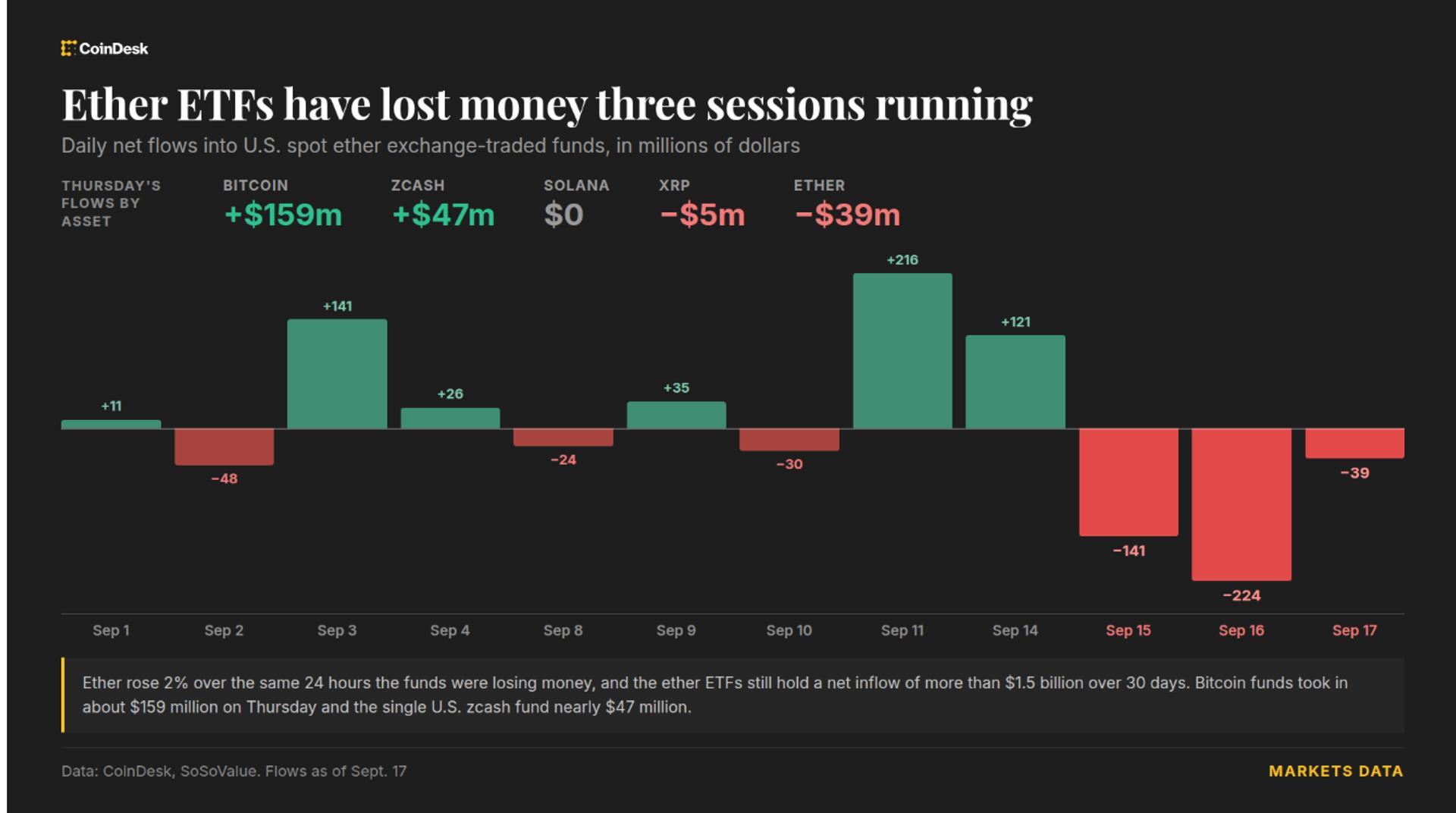
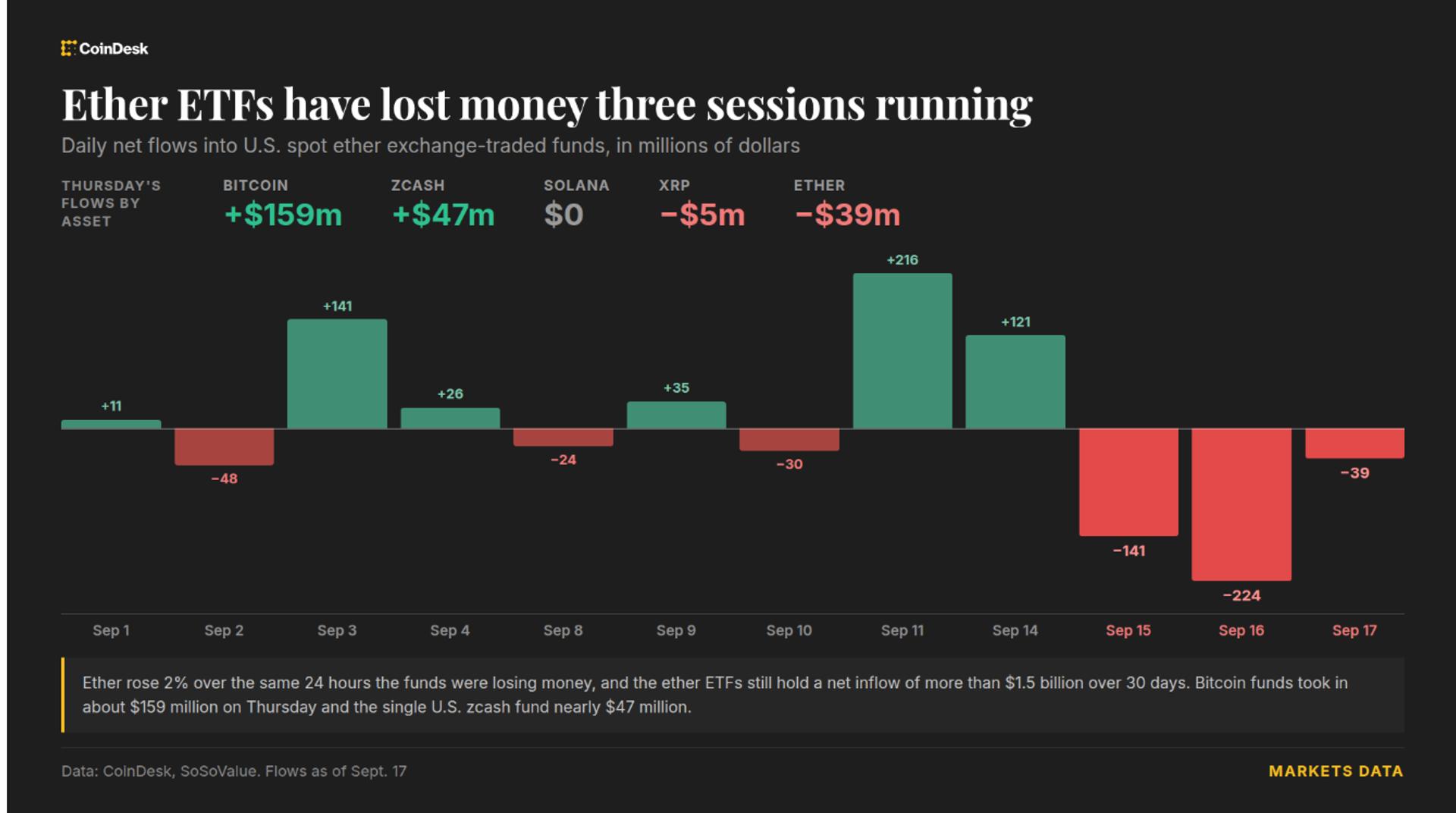
U.S. spot ether exchange-traded funds recorded roughly $39 million of net outflows on Thursday, a third consecutive day of withdrawals after about $224 million left on Wednesday and $141 million on Tuesday, according to SoSoValue. Ether itself rose 2% to about $2,470 over the same stretch.
XRP funds lost about $5 million, reversing a small inflow the day before. Bitcoin ETFs took in roughly $159 million, and the single U.S. Zcash fund added nearly $47 million, its strongest showing yet in a month that has brought it more than $230 million.
Over 30 days the ether funds remain more than $1.5 billion ahead and bitcoin nearly $2.5 billion.
Zcash led the majors again at 10% higher to about $1,488, with hyperliquid’s HYPE close behind at nearly 10% to just above $86. Solana gained 5% to nearly $105 and BNB nearly 4% to about $750. Dogecoin rose about 4%, ether and XRP 2% each, and bitcoin more than 1% to about $77,216, according to CoinDesk data. Tron was the only major that barely moved.


World has launched World Money, a self-custody financial “super app” combining stablecoin payments, digital asset rewards and trading.
The rollout began Thursday in more than 150 countries, World said, with features varying by location. Users can send supported digital assets, including stablecoins, to a recipient’s World username, deposit eligible assets to earn rewards, and buy and sell digital assets through exchanges.
The app lets users access “Mini Apps” such as Kalshi, Credit and Morpho. A partnership with Stripe allows users to fund their accounts and buy stablecoins with Apple Pay, starting with users in the US.
World has been expanding the financial capabilities of World App since its launch in May 2023, when it combined World ID with a crypto wallet, stablecoin transfers and token trading.
In October 2024, World introduced World App 3.0 as a “super app for humans,” adding third-party Mini Apps and a Vault feature for earning on assets. In November 2025, it piloted virtual bank accounts in the US before rolling it out to more countries a month later, allowing paychecks and bank deposits that are converted into USDC.
Related: Tools for Humanity expands World app toward super-app model
With the launch of World Money, World said its identity and financial services are now split across two dedicated apps.
World ID App handles identity verification and credentials, while World Money provides wallet, payment and other financial features. Existing World App and World ID App users can use their existing accounts for World Money, the company said.
World Money is operated by Tools for Humanity, the company co-founded by Sam Altman and Alex Blania that develops technology for the World network.
Magazine: Bitcoin treasury firms can outperform BTC… but is the risk worth taking?
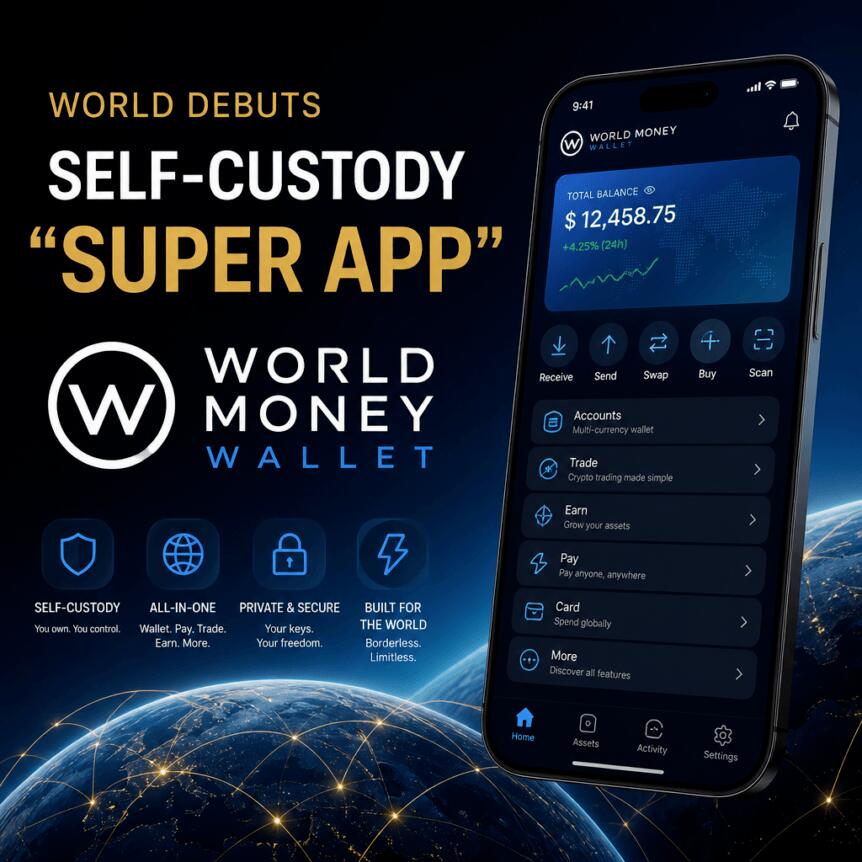
World has rolled out “World Money,” a new self-custody financial super app that combines stablecoin payments, digital asset rewards and in-app trading. The launch began Thursday in more than 150 countries, with some functions varying by region, according to World’s announcement on its website (https://world.org/blog/announcements/world-money).
The app is designed to let users move supported digital assets—such as stablecoins—to recipients using a World username, deposit eligible assets to earn rewards, and buy or sell digital assets via built-in exchange access. World is also positioning the product around its broader ecosystem, including “Mini Apps” that bring third-party services into the same interface.
Key takeaways
- World Money launches in 150+ countries, with feature availability tailored by location.
- Self-custody wallet functions include stablecoin transfers to a World username, rewards for eligible deposits, and trading access.
- Mini Apps extend functionality through third-party integrations such as Kalshi, Credit and Morpho.
- Stripe integration enables funding and stablecoin purchases via Apple Pay initially for users in the US.
- World is splitting responsibilities across apps: World ID App for identity, and World Money for wallet and financial services.
What World Money adds for users
World Money brings together several functions that are typically distributed across different financial apps. World says users can send supported assets—including stablecoins—to another person’s World username. That approach aims to simplify transfers by avoiding traditional address-sharing workflows, while still keeping the process connected to the app’s self-custody wallet experience.
Beyond transfers, the platform includes a rewards mechanism. World states that users can deposit eligible assets to earn rewards, though the specific reward parameters are not detailed in the rollout description. The app also provides access to buy and sell digital assets through exchanges, positioning World Money as more than a payments layer.
World further emphasizes an app-to-app experience through its “Mini Apps.” These third-party modules—named by World as Kalshi, Credit and Morpho—are meant to expand the range of financial actions available without requiring users to leave the World Money interface.
Funding and stablecoin onboarding via Stripe
A key part of any stablecoin “super app” strategy is removing friction from onboarding and account funding. World says it partnered with Stripe to let users fund their accounts and buy stablecoins using Apple Pay, starting with users in the US.
In practice, that means eligible users can convert fiat purchasing power into stablecoins without switching to a separate exchange app for initial funding. For traders and everyday users alike, this can reduce the steps needed to go from payment rails to on-chain asset usage—particularly important for stablecoin payments where timing and convenience matter.
Splitting identity and financial services into two apps
With the introduction of World Money, World says its identity and financial stack is now split across two dedicated applications. The World ID App handles identity verification and credentials, while World Money provides the wallet, payments, trading and other financial capabilities.
World also says existing World App and World ID App users can use their existing accounts for World Money. That matters because it keeps the onboarding path consistent for users who already hold identity credentials or have previously engaged with World’s wallet and trading features under the prior unified app experience.
How this fits World’s “super app” roadmap
World has been steadily expanding the World App concept since its launch in May 2023, when it combined World ID with a crypto wallet, stablecoin transfers and token trading.
In October 2024, World introduced “World App 3.0” as a “super app for humans,” adding third-party Mini Apps and a Vault feature aimed at earning on assets. Then, in November 2025, the company piloted virtual bank accounts in the US—before rolling them out more widely a month later—allowing paychecks and bank deposits to be converted into USDC.
Against that timeline, World Money appears to be both a product expansion and a structural change. Functionally, it continues the super app direction: wallet + payments + rewards + trading access. Strategically, it clarifies the user journey by separating identity tooling from financial operations, which can make the ecosystem easier to understand and maintain as more services are added.
World Money is operated by Tools for Humanity, the company co-founded by Sam Altman and Alex Blania that builds technology for the World network. The rollout therefore links the app’s financial features directly back to the organization behind World ID and the infrastructure underneath World’s ecosystem.
What to watch next
For users, the immediate open questions are how rewards are structured and which specific digital assets and exchanges are available in each region. For builders and investors, the bigger signal is whether World Money can sustain a seamless onboarding funnel—especially via Apple Pay and Stripe—while keeping self-custody and identity credentials tightly integrated as the app expands beyond its initial US-focused funding path.

UBS upgraded Union Pacific (UNP) to a buy rating Wednesday, expecting another year of strong volume growth. Also, a potential merger with Norfolk Southern (NSC) could support an “attractive upside.” The upgrade comes as surging fuel prices reverberate across the transportation sector, benefiting railroads while hurting some truckers. Analysts led by Thomas Wadewitz upgraded the stock to buy from neutral…
Copyright ©2026 Investor’s Business Daily, LLC. All rights reserved. 87990cbe856818d5eddac44c7b1cdeb8


Iran has spent this year charging tankers between $1 million and $2 million to cross the Strait of Hormuz, and the U.S. Treasury said that since June, part of that money has moved through a cryptocurrency exchange in Tehran.
A Thursday release shows The Office of Foreign Assets Control has designated BitBank, a Tehran crypto exchange set up in 2024, alongwith Pishtaz Simorgh Electronic Trade Company, the software firm that built it.
“Today’s designations of Iranian digital asset infrastructure make perfectly clear that efforts to finance the Iranian regime using cryptocurrencies are not beyond OFAC’s reach,” Treasury Secretary Scott Bessent.
The OFAC alleged BitBank moved hundreds of millions of dollars in bitcoin to the Islamic Revolutionary Guard Corps, the branch of Iran’s armed forces that controls much of the country’s economy and is designated as a terrorist organization by the U.S.
Over the same period, Hormuz Safe Marine Services Authority — the outfit Tehran uses to sell ships “safe passage” insurance, itself sanctioned on July 29 — began using BitBank to pass what it collected on to regime entities.

The Bank of Japan (BOJ) raised its interest rate to 1.25% on Friday, the highest level since 1995, as energy costs from the war in Iran pressure economies.
The board split 7-2 on the decision, with members Toichiro Asada and Ayano Sato dissenting. Markets had priced in the move almost entirely before the meeting ended.
Three Central Banks, One Energy Shock
The hike arrives in a busy week for rate decisions this year. On Wednesday, the Fed lifted its target range to 3.75%-4.00% in a unanimous vote, marking its first increase since 2023.
The ECB moved a week earlier, raising all three key rates by 25 basis points and taking its deposit rate to 2.50%.
Even after Friday’s increase, Japan still sits well below both peers. The move is the BOJ’s sixth increase of the current cycle. The policy rate was -0.1% when tightening began in March 2024.
The common driver is fuel. Japan imported 94% of its crude oil from the Middle East in 2025. Most of it passes through the Strait of Hormuz.
The war in Iran has disrupted those shipments and lifted prices this year. Japan’s headline inflation stood at 1.9% in August, while core inflation eased to 1.7% from 1.8%.
“As for the future conduct of monetary policy, given that underlying CPI inflation has been approaching 2 percent and financial conditions have been accommodative, the Bank will continue to raise the policy interest rate and adjust the degree of monetary accommodation, in response to developments in economic activity and prices as well as financial conditions,” the statement read.
Follow us on X to get the latest news as it happens
The UK Sits This One Out
Britain went the other way. The Bank of England held its rate at 3.75%, a sixth straight hold, with three of nine policymakers pushing for 4%.
“So far, higher global energy costs have had a limited effect on price and wage setting in the U.K,” said Bank Governor Andrew Bailey.
BeInCrypto reported that UK inflation hit a five-month high of 3.1% in August. Still, the yen adds pressure Britain does not face. Tokyo and Washington intervened jointly in August after the currency sank to a 40-year low.
That was their first coordinated action since 2011. Reuters-polled economists expect interest rates to rise to 1.5% by the end of March 2027, then 1.75% in the second quarter.
Subscribe to our YouTube channel to watch leaders and journalists provide expert insights
The post Bank of Japan Follows Fed and ECB With Rate Hike to 1.25% appeared first on BeInCrypto.
Crypto World
Ripple (XRP) Prints an Extremely Bullish Signal: Is This the Perfect Buying Opportunity?
Ripple’s cross-border token was at the forefront of gains toward the end of August when its price reached $1.70. Since then, though, bears have regained control, and it has experienced a substantial pullback.
The CLARITY Act’s failure only worsened XRP’s position, driving it down to roughly $1.26. It has regained some ground and now trades around $1.30, but it is still down about 6% on a weekly basis. One popular analyst remains unfazed by the recent weakness, suggesting it may present an attractive buying opportunity. Here’s why.
First Time in History
X user Cryptollica disclosed that XRP’s two-week RSI ratio has dropped to around 33.5, the lowest point in its history and lower than in 2018, during the 2020 COVID pandemic, and in the 2022 bear market.
“That is the part the market is misreading. Sentiment has been destroyed, momentum has been washed out to a historical extreme, and the asset is being treated as if the story is already over. But this is exactly where asymmetry becomes interesting. Market has already delivered the pain while the long term structire is still active,” the analyst said.
Cryptollica maintained that everyone wants certainty after the move becomes obvious; investors find XRP attractive after the breakout, and almost nobody is interested when the chart “looks broken.”
Dropping to this level is indeed interpreted as a bullish sign. It indicates that Ripple’s native token has entered oversold territory like never before, which could precede a strong recovery.
The institutional appetite is another positive signal. Last week, spot XRP ETFs smashed another all-time high after cumulative total net inflows surpassed $1.7 billion. Despite the choppy price performance, these investment vehicles continue to attract capital, and September 2 was the only red day in the past month and a half.

- Spot XRP ETFs, Source: Spot XRP ETFs
Additional Forecasts
XRP started the current business week on the right foot, rising above $1.40. Ali Martinez noted the resurgence, forecasting that a sustained close above $1.38 could confirm the bullish move and open the door to a rally toward $1.60. In fact, the price continued pumping to nearly $1.50 but then headed south and could not reach the analyst’s target.
STEPH IS CRYPTO and Crypto Bitlord also made interesting predictions. The former spotted a “cup and handle” pattern on XRP’s price chart and projected a potential jump to $2.50, while the latter said they are 99% sure a push toward $2 is coming next.
The post Ripple (XRP) Prints an Extremely Bullish Signal: Is This the Perfect Buying Opportunity? appeared first on CryptoPotato.
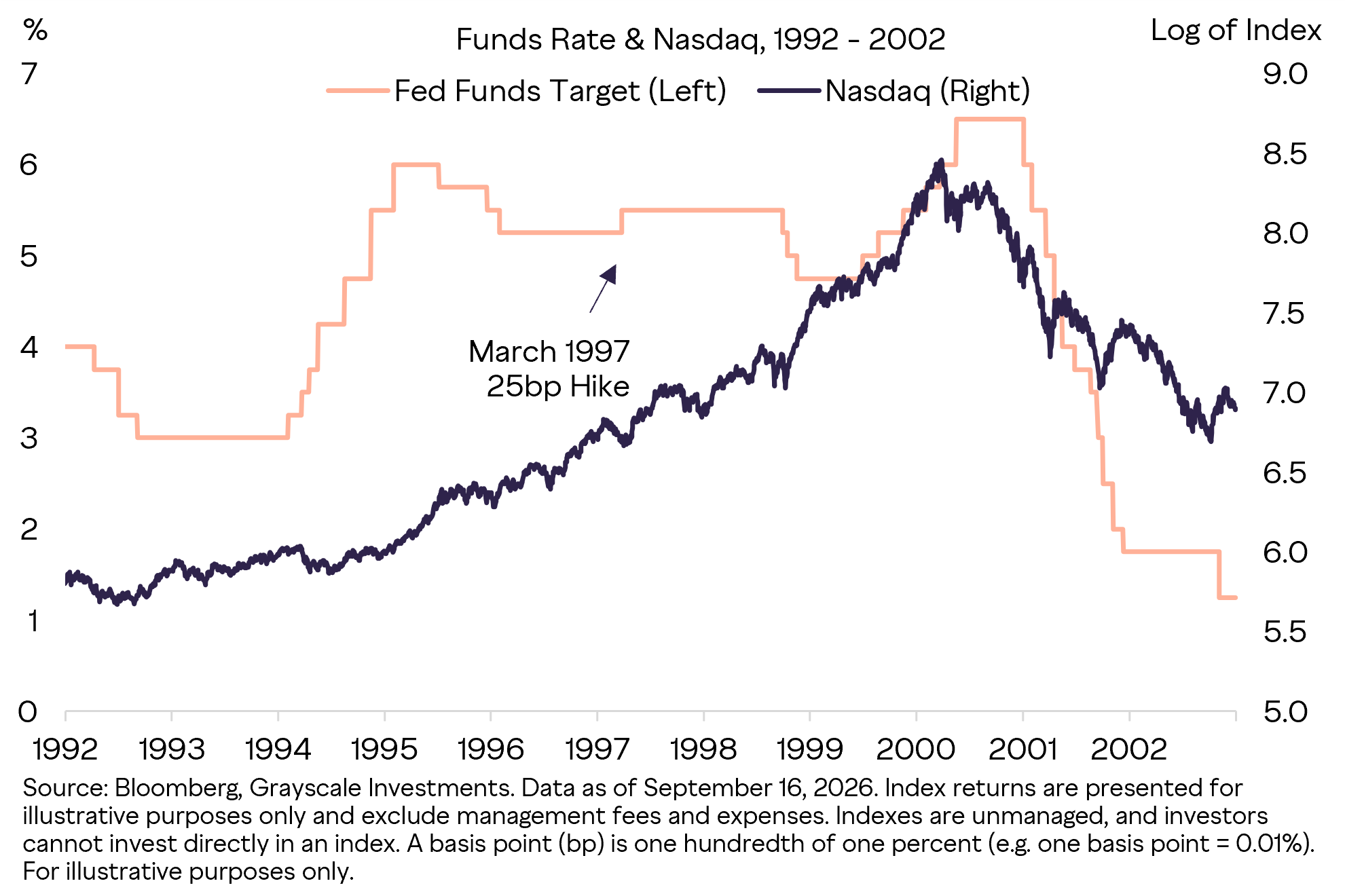
Grayscale says the Federal Reserve’s latest rate hike will not drive major changes in crypto markets. Nor would a second increase this year.
Head of Research Zach Pandl published the note on Thursday. The Federal Open Market Committee (FOMC) had raised its target range to 3.75%-4.00% a day earlier.
Why 1997 Matters More Than 2022
Pandl drew a line between two very different Fed moves. The central bank began a cyclical shift in March 2022 to contain inflation.
It raised rates by 550 basis points by July 2023. That lifted the opportunity cost of holding Bitcoin (BTC) and similar non-interest-bearing assets.
Wednesday’s quarter-point move carries no such weight, he argues. Traders sided with Pandl this week, and Bitcoin climbed instead of selling off.
His reference point is March 1997, when Alan Greenspan’s Fed delivered a one-off hike. The Nasdaq bull market kept running.
“We believe yesterday’s move was a mid-cycle adjustment, not a cyclical change. And we doubt the one or two rate hikes expected for 2026 will lead to much change in capital allocation,” Pandl wrote.
Follow us on X to get the latest news as it happens

Pandl does see uneven effects inside crypto. Stablecoin issuers such as Circle and Tether collect more revenue when cash rates rise. Higher yields on tokenized bonds and money market funds could also pull capital onchain.
“Crypto is diverse, and higher rates affect certain assets differently than others, just like in traditional finance,” he added.
Traders Put 88% Odds on Another Hike by December
Meanwhile, traders assign 54.2% odds to another increase at the October 28 meeting, according to CME FedWatch data.
By the December 9 meeting, traders see an 88.2% chance that the range sits higher than today. A further 40.3% put it at 4.25%-4.50%, or 50 basis points above the current level.

Policymakers are close behind. Projections show 16 of 18 officials expect at least one more increase in 2026.
Pandl’s framing faces its real test if the Fed moves again in December. That decision would show whether crypto reads this cycle as a blip or a turn.
Subscribe to our YouTube channel to watch leaders and journalists provide expert insights
The post Grayscale Rules Out Major Crypto Shifts From a Second 2026 Hike appeared first on BeInCrypto.

JPMorgan analysts led by Nikolaos Panigirtzoglou said in a note this week that Bitcoin (BTC) could draw more price support than gold if hedging demand in the ETF market eases, with short interest in BlackRock’s iShares Bitcoin Trust (IBIT) sitting near its highest level of the year.
IBIT’s put-to-call open interest ratio runs above that of the SPDR Gold Shares ETF (GLD), which the analysts read as heavier hedging around Bitcoin, while short interest in GLD sits below its historical average.
Bitcoin Vs. Gold
Bitcoin still faces a more skeptical positioning backdrop than gold despite recent inflows and a build-up of futures positioning, the note said. Moreover, figures reported by FINRA and compiled by MarketBeat put IBIT’s short base at 45.9 million shares as of the August 31 settlement date, the highest reading of 2026 and up 23.8% from 37.1 million two weeks earlier.
The position equals 3.53% of the float and would take 0.6 days of the fund’s average trading volume, about 53 million shares, to cover. At the end of March, the short base stood near 13 million shares, the year’s low.
Bitcoin and gold funds both drew inflows after the Federal Reserve’s late-July meeting, when the debasement trade returned, according to the note. That’s part of the reason behind the rally that carried Bitcoin toward $80,000 and gold near $4,600 an ounce as investors rotated into scarce assets on US fiscal concerns.
However, momentum faded over the past week as inflation-adjusted bond yields rose and the Senate failed to advance the CLARITY Act in a procedural vote that fell short of the 60 votes needed, the analysts wrote. Gold ETFs have recovered all of their outflows from earlier this year, the note said, while Bitcoin funds have recaptured about half.
Panigirtzoglou’s team has run the Bitcoin-gold comparison before. In February, with crypto assets under pressure, the analysts put a volatility-adjusted comparison to gold at $266,000 per Bitcoin, in their words, “an unrealistic target for this year” but one that “shows the upside potential over the long term once negative sentiment is reversed.”
Bitcoin traded near $76,500 on Thursday, little changed over the past 24 hours, per CoinGecko data.
ETF Flows Swinging Hard
Moreover, US spot Bitcoin ETFs have swung hard this month, posting $236 million in outflows on September 1 before taking in $731 million on September 3, their strongest day since January, with IBIT alone accounting for roughly $454 million.
Net assets across the funds stood at $103.3 billion in early September, about 6% of Bitcoin’s market capitalization, per SoSoValue data.
The post Bitcoin Could Get More Support Than Gold as ETF Hedging Eases: JPMorgan appeared first on CryptoPotato.

Nick Bartlett’s 2026 Week 3 Fearless Predictions

Hisense Crashes the Party With Four New Boom Portable Bluetooth Speakers
![How To Invest in Crypto as A COMPLETE Beginner [2025 GUIDE]](https://wordupnews.com/wp-content/uploads/2026/01/1769891288_maxresdefault-80x80.jpg)
How To Invest in Crypto as A COMPLETE Beginner [2025 GUIDE]



-

 Fashion7 days ago
Weekend Open Thread – Corporette.com
-

 Tech5 days ago
The Latest Weird Thing to Play Doom Is the Mapped-Out Brain of a Fruit Fly
-

 Business7 days ago
10 Most-Streamed Songs On Spotify In 2026 So Far, Led By Ella Langley’s Dominant Run On The Charts This Year
-

 Crypto World7 days ago
XAG/USD: Silver’s Short-Term Rally Meets Its Moment of Truth
-

 Crypto World7 days ago
Diesel Tops $6 a Gallon for the First Time as 28 States Set Records
-

 Crypto World3 days ago
Kraken Lets xStocks Holders Earn Yield Through DeFi
-

 Crypto World1 day ago
US Charges Robinhood Engineers Over Crypto Listing Trades
-

 News Videos7 days ago
Facing Financial Fears
-

 Crypto World4 days ago
Elon Musk Drops a Bombshell: Grok 5 Could Be the AGI Breakthrough
-

 Crypto World6 days ago
Can AI Build a Startup in 72 Hours? Elon Musk's Team Will Livestream the Test
-

 Entertainment6 days ago
News Specials, Movies, Shows, More
-

 Business5 days ago
Rivals Sam Altman and Elon Musk Rally Behind Dario Amodei’s Call for a Slowdown in AI Development
-
 Crypto World5 days ago
New Tesla Roadster Uses SpaceX Tech. Will It Impact the Stock Price?
-
 NewsBeat4 days ago
‘Sick conspiracy’: Trump says only guardrails AI needs is ‘a strong and smart (High IQ!) president’ in all-caps rant
-

 Crypto World6 days ago
Robinhood Chain Never Stopped But its Blobs Did Stop Reaching Ethereum For 14 Minutes
-

 Crypto World2 days ago
What Is the Status of the U.S.-Iran Peace Talks? Here's What Both Sides Are Saying
-
 Entertainment6 days ago
New Horror Movie Officially Earns a Rare Stephen King Recommendation
-

 Business6 days ago
Marvell: Most Potent Setup Of The AI Factory Decade
-
 Crypto World4 days ago
3 Token Unlocks to Watch in the Third Week of September 2026
-

 Crypto World3 days ago
DOJ Seeks to Seize $61M in Iran Oil Funds From Binance Accounts It Vouched For
You must be logged in to post a comment Login