Connect with us

Tech

Apple’s already expensive devices could cost even more in 2027

Published

on

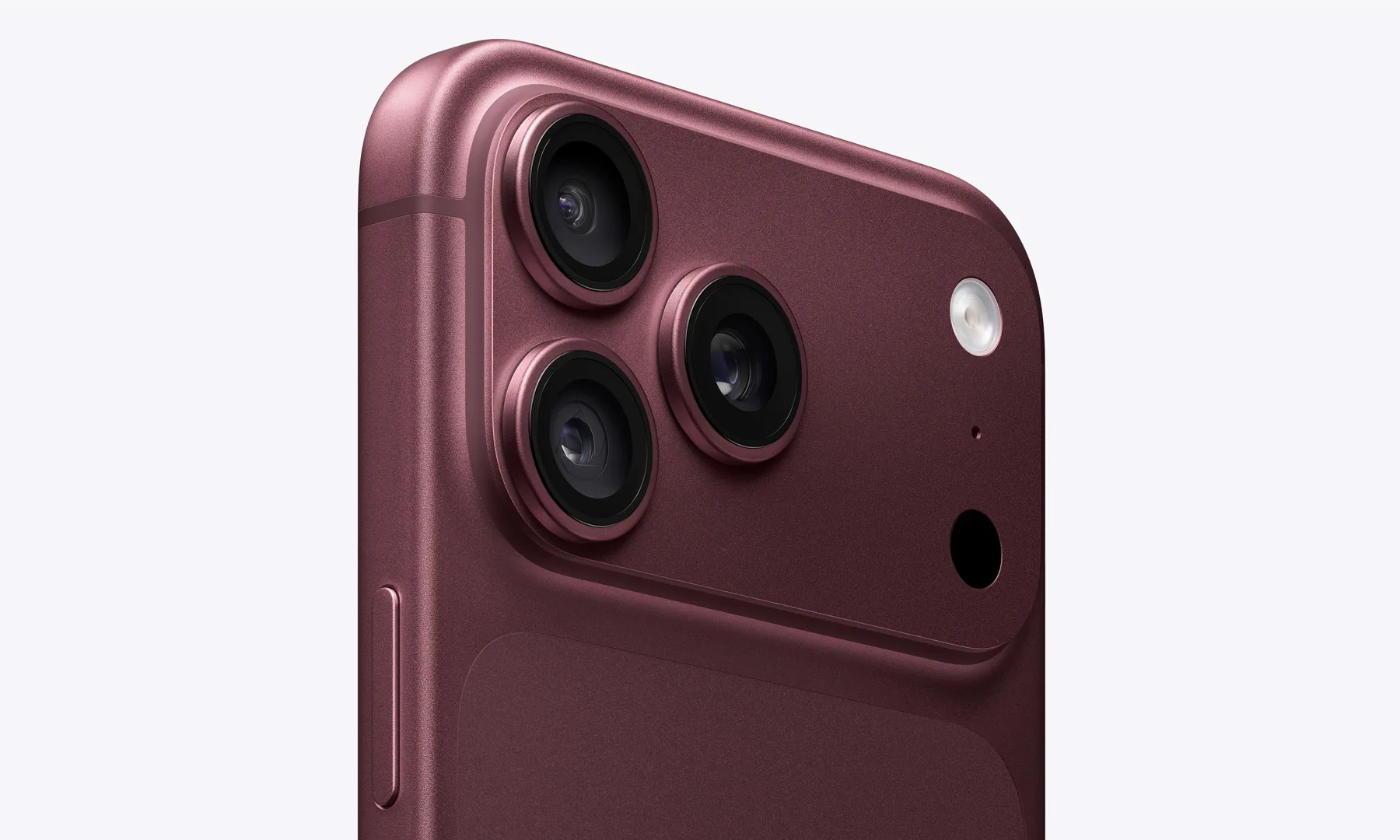
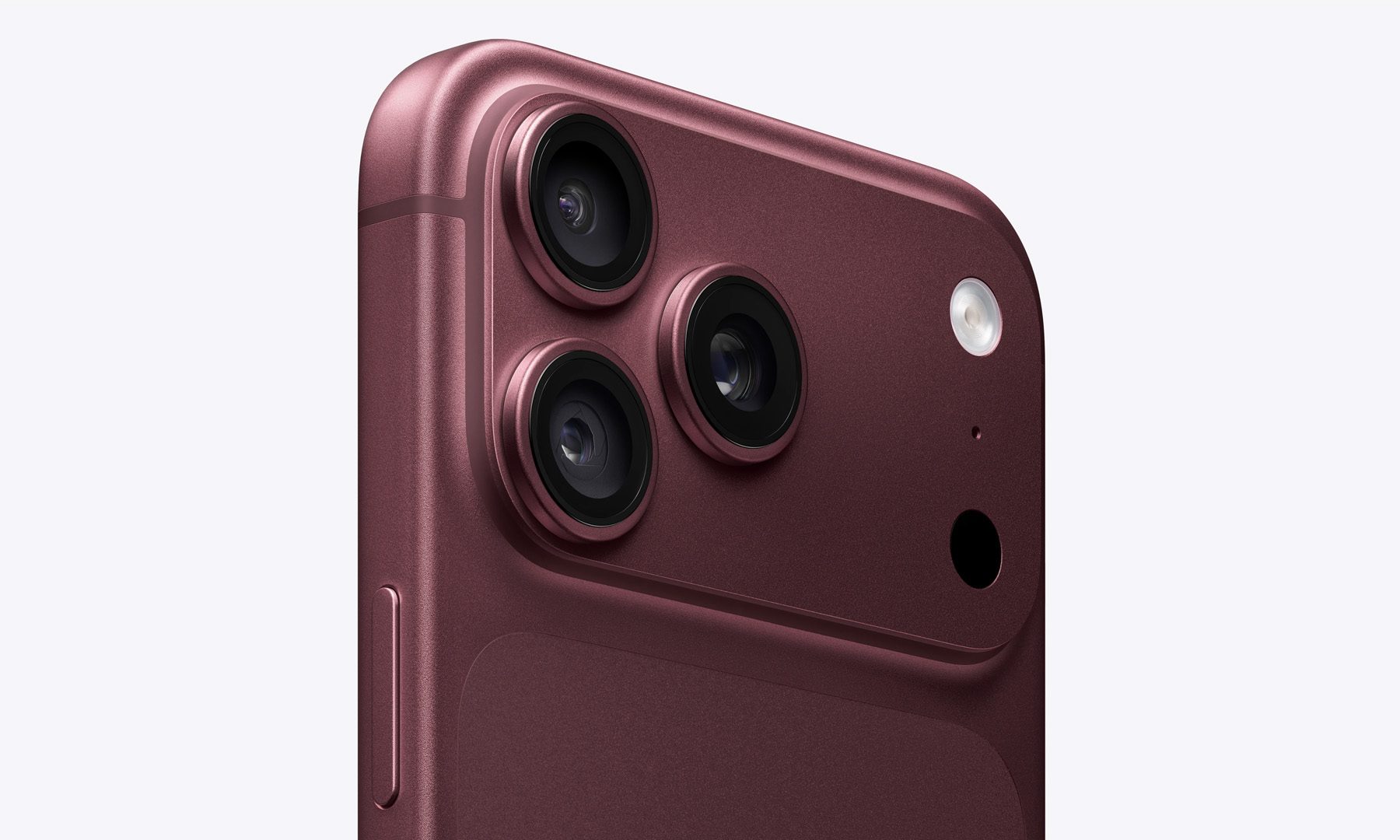
If you were hoping Apple’s recent price increases were a one-off, there’s another reason to watch what happens in 2027. Two of the most important components inside your iPhone, iPad, and Mac are about to cost Apple a lot more.

A report from DigiTimes, citing Chinese publication Jiemian News, claims Apple has reached an agreement with Samsung for its memory supply beginning in early 2027. Under the reported terms, Apple would pay close to $2 per gigabit for DRAM and $0.33 per gigabit for NAND flash. Put more simply, the memory that gives your devices their RAM and storage could cost Apple around 30% to 40% more than it did in the third quarter of this year.

The timing isn’t great for Apple buyers

A jump in component costs doesn’t automatically mean your next iPhone will cost 40% more. Memory is only one part of the total cost of building a device, and Apple could choose to absorb some of the increase. The concern is that Apple has already shown that it is willing to pass at least some of the effects of the memory shortage on to customers.

Prices went up across Macs and iPads earlier this year, with increases also reaching the Apple TV, HomePod lineup, and Vision Pro. Then came the iPhone 18 series, where the iPhone 18 Pro‘s US starting price climbed by $100 compared with the previous generation. Some older iPhones also became more expensive. Whether another round follows in 2027 is still unknown. Apple could have already accounted for future memory costs when setting its latest prices.

AI data centers are squeezing everyone else

The bigger problem is where all this demand is coming from. The rapid expansion of AI infrastructure has companies building huge data centers that require enormous amounts of memory. That has put pressure on the supply available for everything else, including phones and computers.

Advertisement

Apple has already acknowledged how unusual the situation has become. Former CEO Tim Cook previously compared the disruption in the memory market to a “100-year flood” while discussing the company’s price increases. The reported Samsung deal now suggests this isn’t a short-term problem. Apple may be securing the memory it needs for next year’s products, but securing it cheaply appears to be another matter entirely.

Source link

Continue Reading
Click to comment

You must be logged in to post a comment Login

Leave a Reply

Tech

Get a 2TB PCIe 4.0 NVMe SSD for $105 off

Published

on

The clock is running out on this SSD deal, with less than 24 hours left to save 18% before the discount disappears.

That countdown applies to the 2TB Optimus GX PRO 850X PCIe 4.0 NVMe SSD, marked down from $581.99 to $476.99, a $105 cut that works out to almost 20% off with under a day left to claim it.

Sandisk Optimus GX PRO on a foamy backgroundSandisk Optimus GX PRO on a foamy background

Get a 2TB PCIe 4.0 NVMe SSD for $476.99, $105 off

With 7,300MB/s speeds and DirectStorage support, this 2TB SanDisk Optimus GX PRO 850X SSD is down to $476.99, saving $105 for 24 hours.

Advertisement

View Deal

PCIe 4.0 drives with sequential speeds this high rarely fall under $500 at 2TB, so this $105 cut closes a gap that normally only opens during major sales events. Once the countdown reaches zero the listing reverts to $581.99, so buying at $476.99 is a matter of hours, not days.

Advertisement

Sequential Read and Write speeds climb to 7,300MB/s and 6,600MB/s on this PCIe 4.0 x4 connection, so large game installs, 4K video exports and bulk file transfers finish in a fraction of the time a SATA drive would need.

That same performance carries into Microsoft DirectStorage support, which lets compatible games stream textures and assets straight from the SSD to the graphics card, cutting out loading pauses that older storage architecture used to introduce.

Advertisement

SANDISK builds the Optimus GX PRO 850X around its own BiCS TLC 3D NAND in the compact M.2 2280 form factor, so 2TB of fast storage slots into the same space a laptop or small desktop sets aside for one drive.

Advertisement

Anyone storing client work, personal files or unfinished projects on the drive gets TCG Opal v2.01 data-at-rest encryption built in, adding a layer of protection that most budget SSDs in this price range simply leave out.

The Whatsapp LogoThe Whatsapp Logo

Get Updates Straight to Your WhatsApp

Join Now

Advertisement

Managing all of that falls to the downloadable SANDISK Dashboard application, which tracks drive health and unlocks a dedicated Game Mode, while bundled Acronis True Image software handles moving files over from an old drive.

Backing the whole package is a five year limited warranty, the kind of assurance that turns a storage upgrade into a long term fix rather than a short term patch for a computer running out of room.

Buyers who let this particular countdown expire go back to paying the full $581.99 for the same 2TB Optimus GX PRO 850X, which makes the $105 saving belong to whoever orders in the next 24 hours.

Advertisement

Advertisement

SQUIRREL_PLAYLIST_10148964

Source link

Advertisement
Continue Reading

Tech

Advanced AI Society joins the Linux Foundation, launches open verification ecosystem as Congress moves on agent security

Published

on

New York, NY, September 17th, 2026, TechnologyWire

As bipartisan legislation demands verifiable agent controls, the Advanced AI Society releases the Proof-of-Control v1.0 draft for public comment and hosts “Who’s Watching the Machines?” event with Linux Foundation Decentralized Trust

As bipartisan Congressional proposals demand continuous agent verification and third-party evaluation, and as frontier lab leaders call to pace AI capability growth, Advanced AI Society, the alliance making trust in AI possible, today announced its membership in the Linux Foundation and LF Decentralized Trust and the launch of an open verification ecosystem!

To answer growing statutory mandates and security requirements across enterprise and public systems, the alliance has released the v1.0 working draft of Proof-of-Control for public comment through October 30, 2026 at advancedaisociety.org/proof-of-control. Hosted by LF Decentralized Trust as a lab, this new standard builds directly on the production-proven Verifiable AI technologies of the alliance’s member companies. Co-designed alongside a coalition of over 80 global security leaders across enterprise sectors, it validates market demand for interoperable tools that make agent execution openly verifiable by anyone, without relying on the operator’s word.

Advertisement

The announcement addresses the widening Verifiability Gap as autonomous AI agents begin to act faster than manual human oversight can track. Grounded in the core principle that verification cannot belong to the verified, unaffiliated, neutral third parties, as well as agent developers and deployers, must be able to openly verify the work of AI agents.

Open verification represents the next category of open source: extending open-source principles to the agentic stack where you cannot secure what you cannot inspect, and you cannot delegate what you cannot openly verify. By housing its open standards within the neutral commons of the Linux Foundation, the alliance ensures that machine trust rests on transparent mechanisms anyone can openly verify, rather than vendor promises or self-attestation.

Built by our members and over 80 global security leaders, Proof-of-Control brings production-proven verifiable AI technologies together into a unified open standard,” says Tricia Wang, Co-Founder and CEO of Advanced AI Society. “Safety checks and traditional audits are necessary, but when AI agents act in milliseconds, an annual or even quarterly stamp of approval isn’t enough. Trust requires continuous monitoring anyone can inspect. Launching at LF Decentralized Trust prevents a single company from owning the referee.

An agent’s runtime log is just a claim until anyone can verify it for themselves,” says Ken Huang, Co-Chair of Proof-of-Control. “Proof-of-Control turns open verification into standard operating practice: it requires an agent’s authority to be defined before it acts, produces evidence at runtime that it stayed inside that authority, and makes that evidence auditable across the whole agent lifecycle.

Advertisement

Trusting AI agents requires decentralized mechanisms that no single vendor can control or alter, making LF Decentralized Trust the natural home for this moment’s urgency,” says Daniela Barbossa, General Manager, Decentralized Technologies, Linux Foundation, and Executive Director, LF Decentralized Trust.

In cryptography, the rule is: don’t trust, verify. Autonomous AI shouldn’t be an exception,” says Dr. Hart Montgomery, CTO of LF Decentralized Trust. “When non-deterministic machines make decisions in milliseconds, human inspection fails. Only automated tools can keep pace. As an LF Decentralized Trust lab, Proof-of-Control brings the evidentiary rigor established in projects such as AnonCreds and Trust Over IP to the agentic stack, giving developers the building blocks to openly verify machine authority without relying on proprietary black boxes.

Public Launch Briefing

Advanced AI Society and LF Decentralized Trust will co-host a public launch event on Wednesday, September 23, 2026, “Who’s Watching the Machines? Launching Open Verification, the Proof-of-Control Standard for the Agentic Era,” featuring alliance leaders, builders, deployers, and policy experts. Register at advancedaisociety.org/announcements/webinar1.

Industry & Expert Support

We’re running on a broken trust model, vendor assertions instead of evidence. That doesn’t work when patient safety and our intellectual property are on the line. We need open verification: a transparent, inspectable way to know what these agents actually did. That’s the gap Proof-of-Control closes, and it’s why I’ve joined this effort at Advanced AI Society.
Charles Iheagwara, Global Head, AI & Cybersecurity, AstraZeneca; Distinguished Review Board of Proof-of-Control, Advanced AI Society

Advertisement

As AI agents become more powerful and ubiquitous, knowing who they belong to, and what they are authorized to do, will be critical. Proof-of-Control is an important part of that.
Bruce Schneier, Cryptographer, Technical Advisor & Distinguished Review Board on Proof-of-Control, Advanced AI Society

Financial markets and regulatory frameworks rely upon trust that is firmly grounded in verifiable, audit-ready evidence. Bringing that same legal and structural discipline to autonomous AI agents in the open gives the agentic economy a foundation of trust that institutions can actually rely on. Proof-of-Control provides the machine-verifiable proof necessary as AI systems assume real economic authority, especially in digital network financial markets.
J. Christopher Giancarlo, former Chairman, U.S. Commodity Futures Trading Commission (CFTC); Senior Advisor, Advanced AI Society

As agents become more capable, more numerous, and faster, ‘human in the loop’ doesn’t cut it anymore, too generic, too vaguely specified, and vendor self-regulation is too compromised. Agents need to be logged and the logs need to be open for claims about their behavior to be validated.
Clay Shirky, Vice Provost for AI and Technology in Education at New York University

Midnight was built on the premise that you shouldn’t have to take anyone’s word for it. Proof-of-Control brings that same standard to AI agents, and we’re glad to support it.
Bob Blessing-Hartley, CTO, Shielded Technologies

Advertisement

At Oko Labs, we are building blockchain into the fabric of the internet, which lets verification live in the network itself. I spent years at Cisco making security provable enough to underwrite first through a cyber assurance captive and then the blockchain practice and Proof-of-Control does that exact job for agents. Prove control at the network layer, and machine risk becomes something the market can measure, price, and insure at agentic velocity.
Anoop Nannra, co-founder and CEO, Oko Labs

As AI agents begin making decisions that affect people’s healthcare and money, ‘trust us’ isn’t a sufficient security model. We need open, continuous ways to prove what an agent was authorized to do and what it did: which healthcare decisions were made; how data was collected and used, and what was billed, when, and why; which is why Emme is participating in Proof-of-Control.”
Erynn Petersen, CEO, Emme

When an AI agent can move money, institutions need more than a persuasive explanation: they need defined authority and evidence they can check. Solv supports the development of Proof-of-Control as an open standard that helps separate what an agent was permitted to do from what the evidence shows it did.”
Patrick Duffy, Founder and CEO, Solv Labs

When AI agents operate inside critical infrastructure, open verification moves from a commercial preference to a national security imperative. No security team or auditor should have to take an AI agent’s word for its own actions after the fact. Proof-of-Control delivers the open, verifiable evidence required to keep critical national systems safe, transparent, and accountable.”
Noah Ringler, former AI Policy Lead, U.S. Department of Homeland Security; Senior Advisor, Advanced AI Society

Advertisement

Deploying autonomous agents without open verification is like flying an airplane with no brakes and no flight recorder. When agents execute thousands of actions a second, unverified errors don’t just stay local, they compound exponentially into systemic crises. We established the Open Verification Lab at Advanced AI Society to give developers and security teams the open, tamper-evident tools, standards, and research needed to keep autonomous execution safe and within human control.”
Jim Schwoebel, Director of Research, Advanced AI Society, CEO of Quome

To safely delegate real authority to machines, we need decentralized cryptographic infrastructure that proves an agent stayed within its boundaries without forcing individuals, governments, or enterprises to expose private, sensitive data. Unchecked machine execution presents an existential civilizational risk, but with open verification, it becomes our greatest opportunity to delegate humanity’s biggest challenges safely. Housing Proof-of-Control at LF Decentralized Trust gives society the open, tamper-evident foundation required to make trust in AI possible.”
Michael Casey, Co-founder, Advanced AI Society

“I’ve spent the past decade investing in digital asset primitives because I believed open, decentralized protocols could give us new ways to establish and exchange value. Today, I see those same foundations taking on a broader role. As autonomous agents begin to act across our businesses and daily lives, we need a shared, verifiable reality: evidence of what they control, what happened, and which actions can be attributed to them. Proof-of-Control extends the work of decentralized infrastructure into the age of machine agency.”
Bettina Warburg, Co-Founder, Advanced AI Society

Public trust cannot be built on closed-door audits or hand-picked stamps of approval. When autonomous agents make real-world decisions that affect people’s lives, communities and public institutions shouldn’t have to take a hired auditor’s word for what happened. Open verification ensures machine accountability remains a public good rather than a walled garden.
Sheila Warren, Co-Founder, Advanced AI Society

Advertisement

About Advanced AI Society

Advanced AI Society is the alliance making trust in AI possible. Advanced AI Society builds the open verification ecosystem for AI security, uniting market leaders and deployers with insurers, policymakers, and civil society to standardize, deploy, and scale verifiable AI. advancedaisociety.org/

Contact

Tricia Wang
media@advancedaisociety.org

Advertisement

Source link

Continue Reading

Tech

Google DeepMind launches institute to widen the AGI debate

Published

on

Google and Google DeepMind researchers launched the DeepMind Institute on Wednesday to advance the conversation around artificial general intelligence (AGI). The institute lists DeepMind co-founder Shane Legg, Google executive James Manyika, and Google DeepMind chair Demis Hassabis as directors, with Legg serving as managing editor. 

The new institute aims to surface differing views between Google, Google DeepMind, and the broader global research community around AGI. “They will not always agree, and they will likely change their minds, as more data and information comes to light at the fast-moving frontier,” the announcement read.

The inaugural collection of four essays covers a range of topics: economic policies for managing potential AGI disruption, preserving human-readable model reasoning, principles for human flourishing, and a framework for evaluating frontier AI models. 

One essay, by DeepMind safety researchers Rohin Shah and Anca Dragan, argues that AI’s shrinking window of transparency — the ability to see and check a model’s step-by-step reasoning — is not inevitable. As new architectures make the most powerful models harder to monitor, the authors say developers and regulators should confront the safety trade-offs directly. That could mean limiting “opaque serial depth”— the amount of sequential computation a model can perform without producing a readable reasoning trace — or requiring developers to demonstrate that less transparent systems remain just as monitorable.

Advertisement

In another essay, Hassabis proposes a U.S.-led frontier AI standards body to evaluate the most advanced AI models. Under his framework, developers would initially submit models voluntarily for review up to 30 days before release. Once the evaluation system has proved effective, passing its tests could become a requirement for deploying frontier models in the United States.

The body would at first design assessments in consultation with AI companies but would eventually develop independent, undisclosed evaluations — what the essay calls “held-out” tests — to prevent labs from tailoring their models to known evaluations. Hassabis said the framework could be “ratcheted up if the seriousness of the situation demands,” potentially including a coordinated slowdown among frontier AI developers. 

The essays arrive as the industry’s safety debate shifts from broad statements of concern toward concrete proposals for disclosure, outside scrutiny, and, if safeguards fall behind, coordinated slowdowns. That shift accelerated this week as industry leaders endorsed elements of Anthropic CEO Dario Amodei’s call to “pace” frontier AI development.

When you purchase through links in our articles, we may earn a small commission. This doesn’t affect our editorial independence.

Advertisement

Source link

Continue Reading

Tech

America Acknowledges for the First Time: It Has Deployed Weapons In Space

Published

on

Tuesday U.S. Space Force chief Douglas Schiess said his branch of the U.S. military operates “on-orbit weapons,” reports Reuters, to defend “against space-enabled attacks.” He promised “disciplined and responsible choices” when scaling America’s orbital defense arsenal in the coming years.

NPR calls this week’s reveleations “remarkable… after previous warnings about countries such as Russia possibly weaponizing a global frontier long agreed in treaties to be used for only peaceful purposes.”

The revelation comes as the Trump administration puts a growing focus on space. In 2019, during his first term, Trump created the Space Force as a separate military branch. In his second term, he has announced the “Golden Dome” missile defense system, which includes plans to put U.S. weapons in space. Trump said last year that he expected the system would be “fully operational before the end of my term,” which ends in January 2029, and have the capability of intercepting missiles “even if they are launched from space.” Trump also has directed the Pentagon to pursue the space-based interceptors, in an executive order during the first week of his presidency. The Congressional Budget Office estimated that just the space-based components of the Golden Dome could cost as much as $542 billion over the next 20 years.

The Biden administration announced in 2024 that Russia was developing a space-based nuclear weapon that could loiter in space for long durations, then release a burst that would take out satellites around it. That kicked off a renewed debate on the idea of weapons in space at the United Nations. In April 2024, Russia vetoed a joint U.S.-Japanese resolution that would have called on all countries not to develop or deploy nuclear arms or other weapons of mass destruction in space, as banned under a 1967 international treaty that included the U.S. and Russia… The Russian delegation called the resolution hypocritical and a double standard and instead proposed a rival resolution to ban all weapons in space “for all time.” It ultimately failed. Russia had argued that the United States and its allies opposed a ban on all weapons in outer space because they planned to deploy weapons there.

Advertisement

Reuters calls this “a landmark moment in space militarization,” while noting that it’s “aimed at deterring what U.S. officials describe as aggressive orbital activities from China and Russia, officials and analysts said.”

The remarks this week by Washington’s top military-space officials are part of “the increasing comfort level of the U.S. government to speak about aggressive actions in space” that has been building up in recent years, said Victoria Samson, chief director of space security and stability at the nonprofit Secure World Foundation. “We’ve gone from not talking about counter-space capabilities… to now saying flat-out we have weapons in space,” Samson said. “The pendulum keeps on shifting over that way…”

“The acknowledgment of these space-control capabilities is fundamental to ensuring that we prevent deterrence from failing, and that we are postured and ready should deterrence fail to employ them effectively,” Richard Palmer, the director of the Capability and Resource Integration Directorate at U.S. Space Command, said on Tuesday…. “The bottom line is that our joint force and our allied forces require space. Our economies require space,” added Palmer. “We are ready in the U.S. to preserve that.”

Reuters adds that Russia’s Foreign Ministry issued criticism of America’s move, saying “In pursuit of its narrow self-interests, Washington is ready to completely ignore the catastrophic consequences for humanity of any armed conflict in orbit.”

Advertisement

Read more of this story at Slashdot.

Source link

Advertisement
Continue Reading

Tech

Hackers demand $3m ransom from Revolut after data breach

Published

on

The hackers have reportedly given Revolut 24 hours to pay the ransom, or else they will sell the stolen data to other criminals.

A group of hackers claiming to be responsible for a recent Revolut data breach has reportedly threatened to sell the confidential records of hundreds of customers to other criminal groups unless the fintech company pays them a ransom of $3m in cryptocurrency Monero. 

According to the Financial Times, the group – which called itself ‘iamnotavillain’ – published the demand on its website yesterday (16 September) alongside a digital countdown clock, giving the British online bank 24 hours to comply. 

Last Saturday (12 September), Revolut admitted that it disclosed sensitive customer data to an unauthorised fraudulent party after receiving requests for information from an email with a government agency domain. The leaked data included information such as full names, dates of birth, occupations, addresses, contact details, passports, drivers’ licences, financial statements and facial verification images.

Advertisement

It is believed around 680 people, including 12 in Ireland, have had their personal information compromised. 

The Financial Times contacted the hacking group through Telegram and were then sent a 60-second screen-capture video showing an unseen user moving through the cache of purported Revolut documents.

Reportedly the online message told Revolut to pay the $3m, “otherwise all the data will be sold and the blood will be on your hands”. The group also told the Financial Times that the demand notification was the first communication attempt and that, as of yet, there had been no negotiations with Revolut.

In an official statement to SiliconRepublic.com, a Revolut spokesperson said: “Revolut has not received any direct contact or demand from the individuals or group making these claims.”

Advertisement

The reported ransom comes after Revolut recently announced that it had applied for a Swiss banking licence as part of its continued global expansion campaign. The company plans to invest more than 150m Swiss francs into Switzerland over the next five years, as a means of creating jobs and supporting product development. 

In August, the company received a full banking licence in France, giving the fintech giant a second European Union hub. The company claims to have more than 75m customers worldwide.

Updated, 5.00pm, 17 September 2026: This article was amended to clarify accurate phrasing in relation to the data breach.

Don’t miss out on the knowledge you need to succeed. Sign up for the Daily Brief, Silicon Republic’s digest of need-to-know sci-tech news.

Advertisement

Source link

Continue Reading

Tech

A camera in a toothbrush? Dyson tells us why it combined ‘WiFi, AI, intelligent sensing and fluid dynamics with a highly engineered brushing experience’ to create the Dyson Camerajet

Published

on

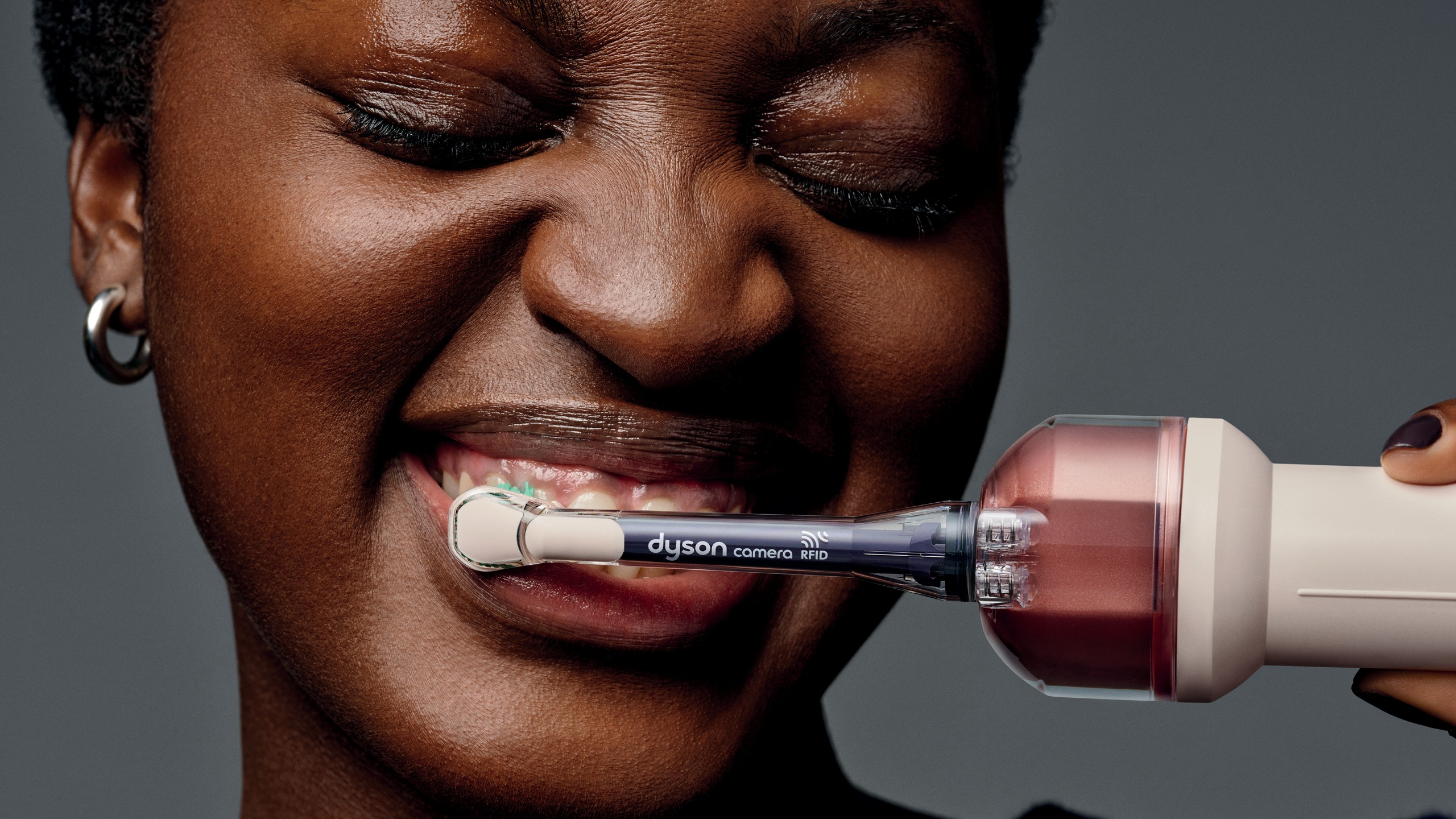
The Dyson Camerajet arrived 10 years after online rumours emerged that Dyson had filed a patent application for an electric toothbrush with water jet. True to form, it has surpassed the rumours with a toothbrush that goes one step beyond the norm and is packed with innovation. Having trialled it a week prior to launch, I was among the first journalists to give the Dyson Camerajet a hands-on review.

As the only smart electric toothbrush and water flosser with a built-in camera, the CameraJet uses imaging, machine learning and precision fluid dynamics to identify gaps between teeth and deliver a jet of mouthrinse. The CameraJet has received much attention since its launch, with many praising Dyson for pushing the boundaries with new innovation in oral health, and others questioning its price, reporting faults online, and asking whether we need a camera in a toothbrush at all. But for a brand that revolutionised the vacuum with cyclonic suction, restyled the hair dryer and pioneered bladeless fan technology, the Dyson CameraJet was never going to be an obvious product.

Source link

Advertisement
Continue Reading

Tech

OpenAI won’t get to see settlement between Apple and SpaceXAI

Published

on

Elon Musk filed to have Apple dismissed from the lawsuit he brought against it and OpenAI, and OpenAI demanded answers. The judge has denied OpenAI’s request to reveal settlement terms.

When Elon Musk’s SpaceXAI sought to dismiss Apple from the ongoing lawsuit brought against it and OpenAI, it wasn’t clear exactly what had transpired. In OpenAI’s efforts to find out, it has been revealed that there was some kind of settlement reached between the companies.

OpenAI asked that the settlement terms be revealed, but after Judge Pittman reviewed the settlement, he denied the request. The decision was first shared by 9to5Mac, which said that if the settlement terms were relevant to the ongoing case with OpenAI, they could be shared, but they apparently are not.

Here is what he said in the filing:

Advertisement

The Court hesitates to compel the production of confidential settlement agreements entered by parties. Confidentiality in settlement serves the “[s]trong federal policy” of “induc[ing] the parties to settle a case.”

In other words, if Apple and SpaceXAI want to settle out of court, it is not only their business to do so, but to do so confidentially. To make such agreements public could jeopardize such agreements from ever taking place.

An odd lawsuit either way

The origins of xAI’s, now SpaceXAI’s, lawsuit against Apple can be tied to a tirade by owner Elon Musk. He made claims that the App Store was favoring OpenAI’s ChatGPT over Grok and Apple was biased against X.

He claimed that Apple was manipulating App Store charts to keep Grok and X from ranking higher, keeping ChatGPT at the top. The problem is, all of these claims were easily proven incorrect.

By the time the lawsuit came about, the accusations were shrunk to much more manageable proportions. Musk focused on Grok and accused Apple and OpenAI of anticompetitive collusion.

Advertisement

Whatever agreement or settlement Apple and Musk came to, it is unlikely that OpenAI can escape as easily. Elon Musk is known to have a very strong rivalry with his former business partner Sam Altman, the current CEO of OpenAI.

It will be interesting to see exactly what the lawsuit reveals, especially as Grok and X continue to face problems surrounding non-consensual deepfake pornography and CSAM distribution on the platforms. However, it is no longer Apple’s problem as it steps away to focus on its own lawsuit with OpenAI.

Source link

Advertisement
Continue Reading

Tech

Google’s Revamped CC Is An AI Agent For Families And Groups

Published

on

In case you’re into that kind of thing.

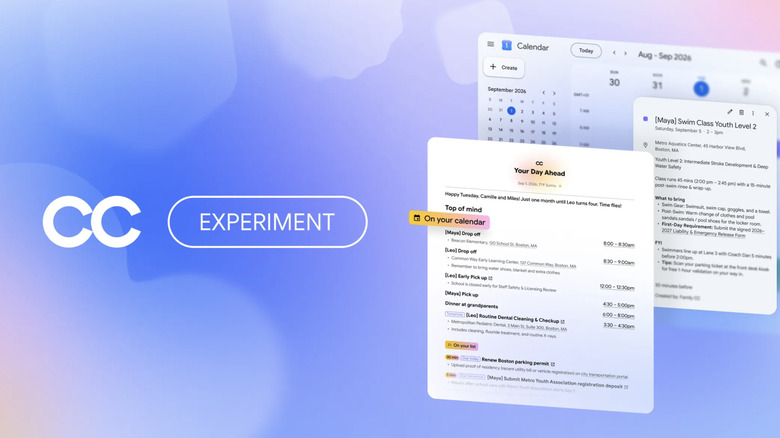
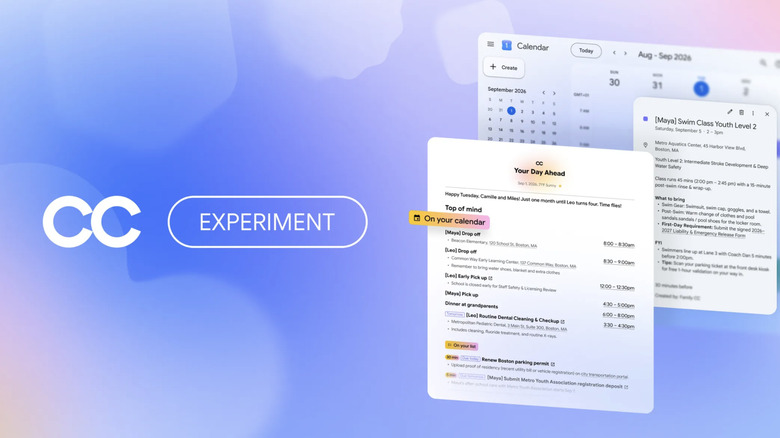
Google has a new experimental AI offering called CC aimed at helping families stay organized. This agentic AI platform has its own Google account that up to six family members can choose to share information with.

Each user can pick what emails to share with the agent, passing along either single messages on an as-needed basis or picking addresses to always send to the CC account. It also creates a shared calendar and task list that all group members can view and sends all participants a daily briefing with information about immediately upcoming events and to-dos. CC can be used to file paperwork and handle logistics like filling out registration forms or writing a shopping list, although those tasks are designed to ask for a user’s permission before taking action.

Eagle-eyed readers may feel like the name is familiar, and it is. Google first debuted an experimental tool called CC last December, but rebranded it as the company’s Daily Briefing feature earlier this year. Now it’s pivoting the CC project to be this family-centric organizer based on requests from the tool’s early testers.

Advertisement

Users can add CC to a Drive folder or share specific files with the agent, as well as interact with it in a dedicated Google Chat window. Google laid out several of the privacy limitations for the agent in its FAQ, and those include restrictions on CC being able to add or remove family members and to access or search members’ individual inboxes.

Existing CC users will receive a prompt from Google to upgrade their account and try out the new tools. There’s a wait list for any new users who want to outsource their planning with this agentic approach. 

Advertisement

Source link

Continue Reading

Tech

Surveillance Camera Security? It’s Completely Flocked!

Published

on

Surveillance cameras from Flock Safety have become a controversial privacy battleground, as the communities in which they are installed wake up to their sinister potential, and stories roll in of law enforcement professionals abusing their access. One has had its disk contents dumped, and we’ve been treated to some insights courtesy of [Micah Lee]. In short: their approach to security is deeply flawed.

It’s interesting to find that instead of a custom hardened OS, these devices run Android. Not just Android, but Android 8.1, a long out of support version originally released in 2017. This is is the year Flock Safety was founded, which may or may not be coincidental. Like any old version of a widely used operating system it has a host of known vulnerabilities, none of which are patched on this version.

The Android version is small beer compared to the revelation that they contain a hard-coded and very open-access API key that can be used by any mildly curious miscreant to reveal information from any Flock camera using its MAC address. One would hope that a product marketed for use by law enforcement might have paid attention to such a basic lapse, but it seems not. Whether or not this can be corrected by a software upgrade and the leaked key deactivated without turning off the network depends on whether thy can do upgrades tailored to specific devices, but either way we wouldn’t like to be the team tasked with fixing that one.

Advertisement

In a way it’s reassuring that the surveillance apparatus when it came was so incompetently managed, and we hope that these vulnerabilities will have moderated its effect. We’re sure more tasty discoveries will emerge as investigations proceed, and we’ve got the popcorn ready.

Image: Tony Webster, CC BY 2.0.

Advertisement

Source link

Continue Reading

Tech

Ex-Google DeepMind Researcher Also Warns AI Could 'Kill All Humans'. But Meta's Zuckerberg Believes Safety is Up to Each AI Company

Published

on

Reuters reports that a former Google DeepMind employee “became the latest AI researcher to warn that the technology could ‘kill all humans’, saying time could be running out to avoid the outcome:

Public alarm about the potential danger posed by AI is growing, after Anthropic researcher Jacob Coxon said last week he had resigned, in part because the “people building AI earnestly believe that it could kill us all by the end of the decade.” Anthropic scientist Evan Hubinger then responded to Coxon’s comments, saying he was correct and that he believed there was a greater than 10% chance that AI could kill all humans within the next decade.

“I recently resigned from Google DeepMind, where I worked on AGI safety and alignment research,” Bilal Chughtai wrote on X. “I earnestly believe that AI has the potential to kill us all, and that we might be running out of time to avoid this outcome.” Chughtai, who co-authored research papers while at Google DeepMind, worked there as a research engineer and left the company in July 2026, according to his LinkedIn profile.

Meanwhile, Meta CEO Mark Zuckerberg “said it’s up to each AI company to make sure its technology is safe,” reports the Associated Press, “distancing himself from calls by rival companies for a coordinated slowdown in the development of advanced artificial intelligence.
AI companies are already motivated to develop their models in a safe way and face “significant liability” to prevent them from causing harm, Zuckerberg said. “Every lab has the responsibility and incentive to move at the pace required to train its models safely, and the ability to take its own actions to ensure that happens,” he wrote on X… Zuckerberg said Meta delayed releasing its Muse AI agent for several months to ensure its safety and security. “We didn’t call for everyone else to do this before we would,” he said.

Advertisement

Companies should prioritize building safe AI models instead of systems that can automatically improve themselves, a function known as recursive self-improvement, Zuckerberg wrote. “Committing the significant majority of compute towards serving people rather than racing towards recursive self-improvement is one of the best ways to ensure we develop this technology safely.”
But Zuckerberg also agreed that engaging independent evaluators and advisors “is industry best practice,” adding that Meta Superintelligence Labs “already does this today in several areas because it helps produce better work…

“I believe the key to building a positive future for everyone is maintaining the right balance of power. This is within our power to do.”

Read more of this story at Slashdot.

Advertisement

Source link

Continue Reading

Trending

Copyright © 2025