

Crypto World
Stablecoins have their ‘permission slip.’ Now comes the hard part.

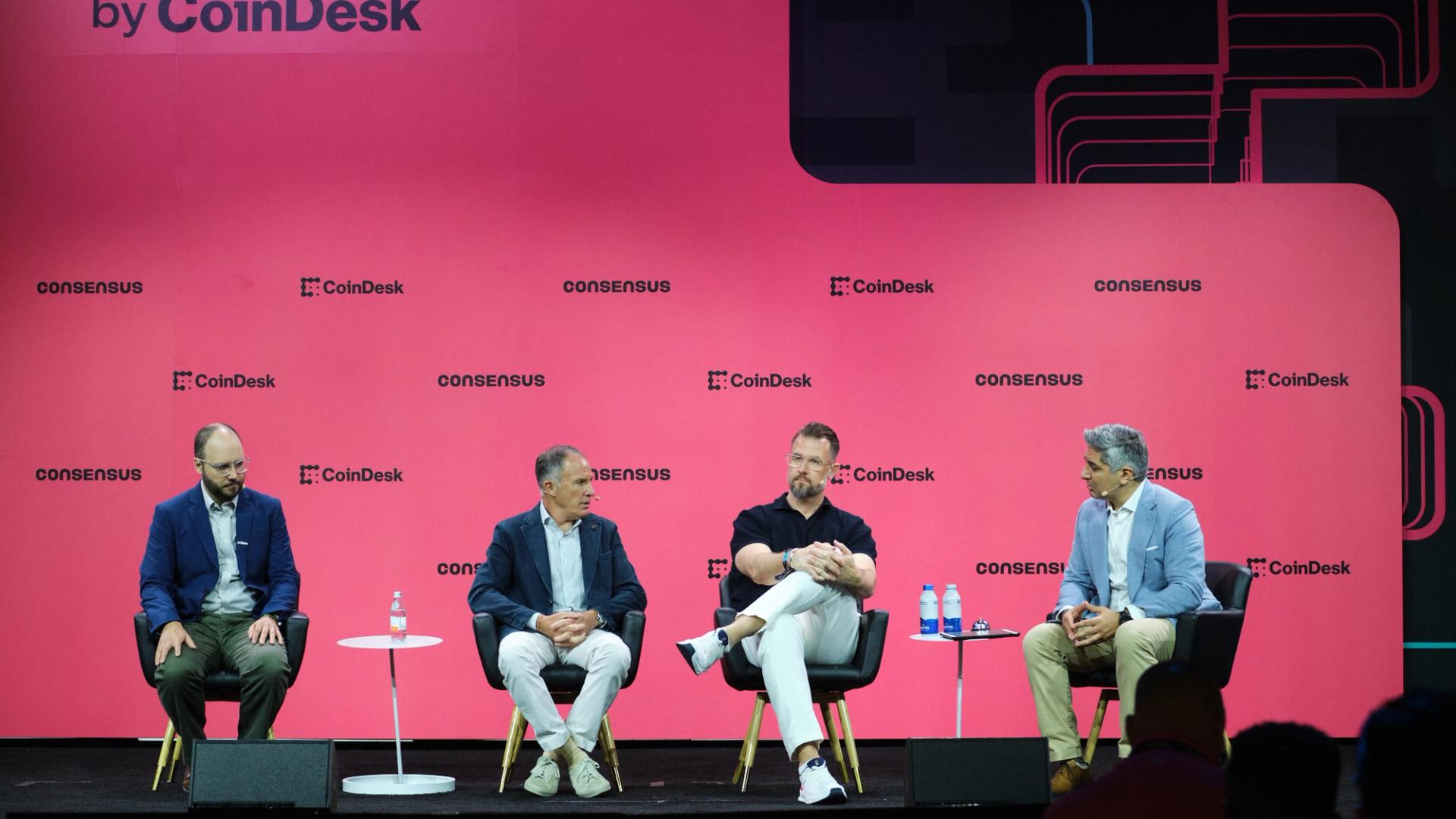
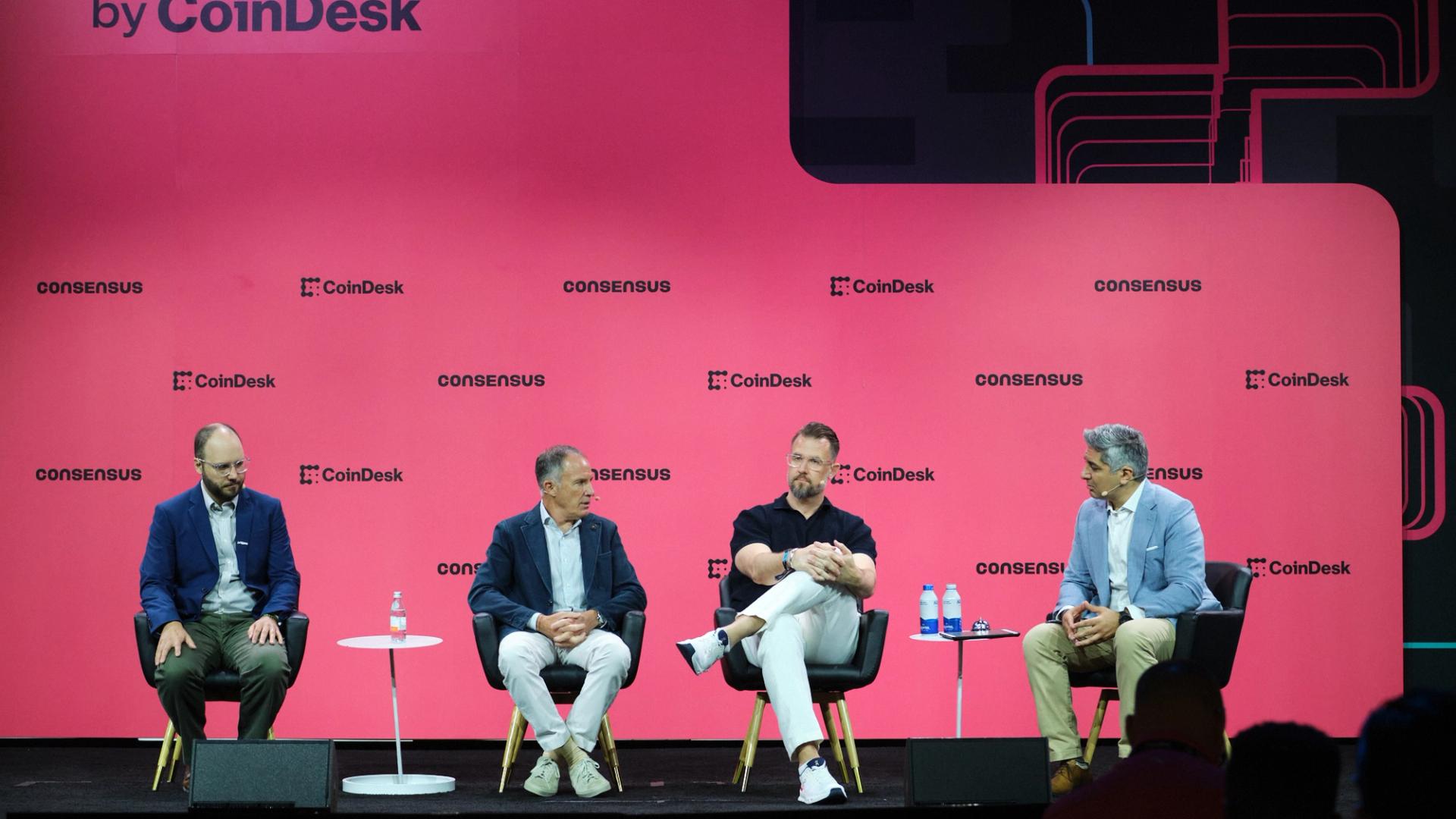
Stablecoins have moved from crypto niche to an institutional priority, but the next phase of adoption will depend on infrastructure, privacy and real-world usability, executives from MoonPay, Ripple and Paxos said at Consensus Miami 2026.
Richard Harrison, MoonPay’s vice president of banking and payment partnerships, said traditional finance firms are entering stablecoins faster because regulation has made the market easier to navigate.
“What GENIUS brought us was clarity,” Harrison said. “It was like a permission slip for companies to enter into stablecoins.”
Harrison said stablecoins are also a natural evolution of payments, where speed and convenience have long been limited by legacy rails. Cross-border transfers can still take days and remittances can carry steep fees, he said, while stablecoins allow near-instant, one-to-one value transfer.
Still, Harrison said stablecoins represent only a small share of global remittances today and may reach roughly 10% within five years. Business-to-business payments are already a clear use case, he said, but consumer adoption remains harder.
Jack McDonald, Ripple’s senior vice president of stablecoins, said institutional customers require regulated products, strong counterparties and trusted custody arrangements before moving meaningful volume on chain.
“For institutions to really unlock the full demand … you have to be regulated at the highest level,” McDonald said.
He said Ripple is focused less on stablecoin market capitalization than on utility, including payments, corporate treasury movement and collateral use in capital markets. McDonald said Ripple’s stablecoin complements XRP rather than competing with it, because transactions on the XRP Ledger still use XRP as the native token.
Brent Perrault, senior staff software engineer at Paxos, said newer regulated stablecoins can compete by emphasizing trust, distribution and user incentives. He cited PayPal USD’s growth and large institutions such as Charles Schwab using Paxos infrastructure as signs of demand from sophisticated financial firms.
But Perrault said privacy remains unresolved. Public blockchains expose transaction amounts and flows, and partial privacy is insufficient if users eventually move between private and public environments.
Harrison compared stablecoins to electric cars: the core product works, but adoption depends on supporting infrastructure.
“How do you use stablecoin to pay your rent?” he said. “How do you use it to buy a cup of coffee?”

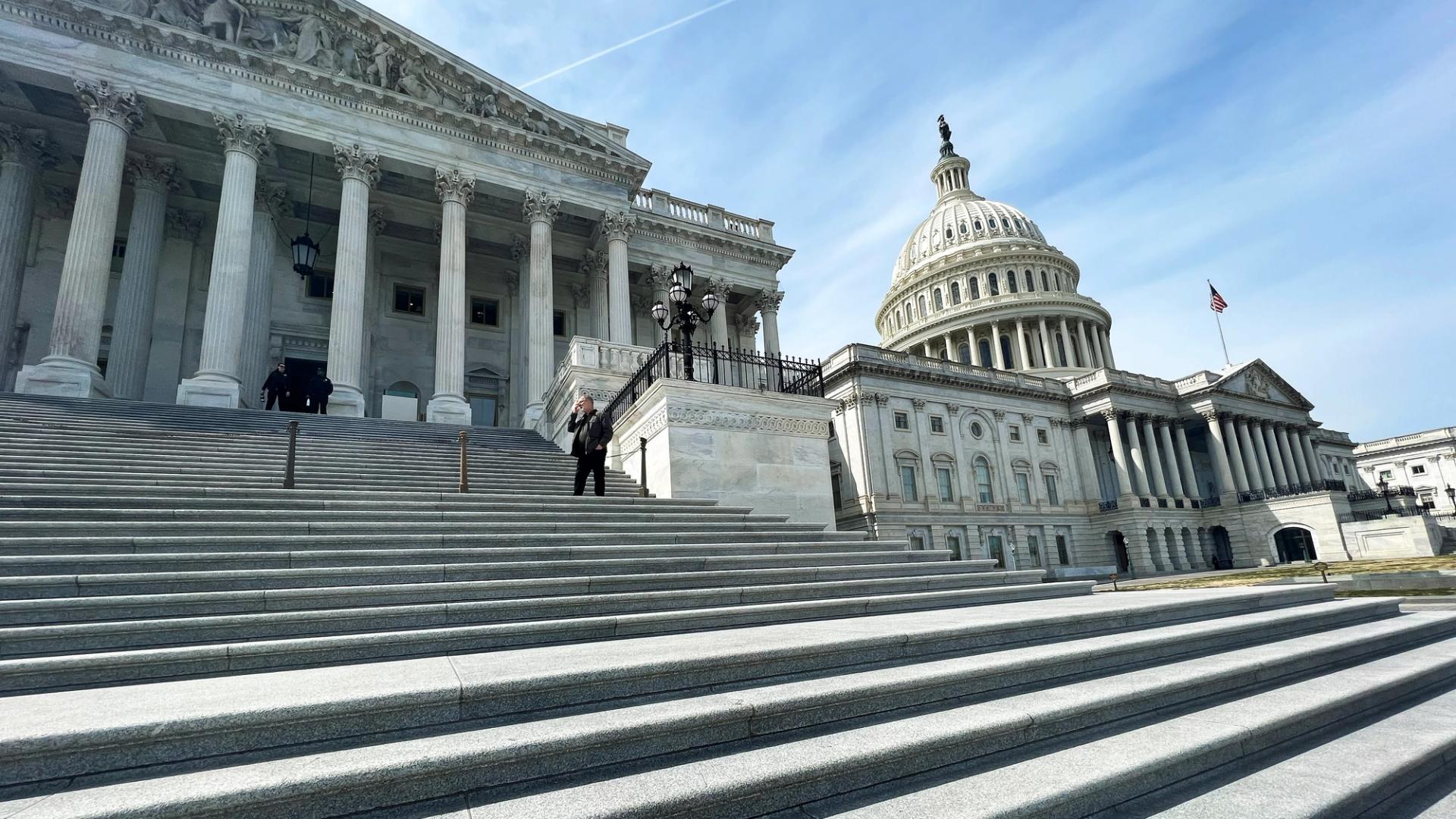
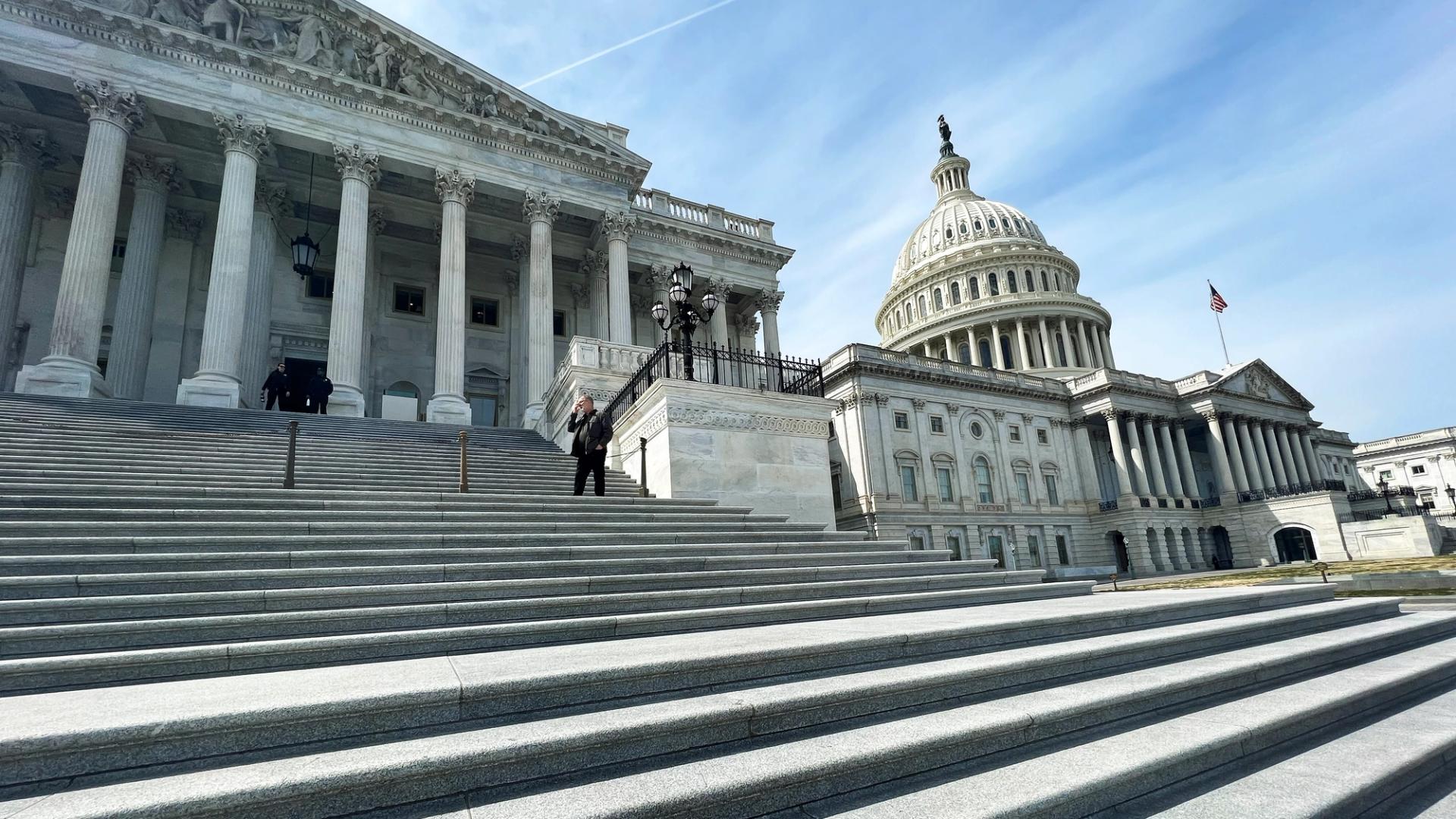
Coinbase’s (COIN) weak first-quarter earnings report sparked another divide on Wall Street over whether the crypto platform is building a more durable business or remains tied to crypto’s boom-and-bust cycles.
Several analysts lowered forecasts after the company missed expectations on revenue and adjusted EBITDA as trading activity slowed across the crypto market. Still, a number of firms argued Coinbase’s expanding stablecoin and derivatives businesses — along with the possible passage of crypto legislation in Washington — could improve the company’s outlook later this year.
JPMorgan said the quarter reflected “a challenging environment” but added that Coinbase had “positioned the company well to operate in an increasingly digital world.”
The bank said pending U.S. crypto legislation “does set up for a better outlook into 2H26 and into 2027” and maintained an overweight rating on the stock.
The legislation in focus is the CLARITY Act, a proposed market structure bill that would establish rules for how crypto assets are regulated in the U.S. The bill aims to define which digital assets fall under the Securities and Exchange Commission (SEC) and which would be overseen by the Commodity Futures Trading Commission (CFTC). Coinbase and other crypto firms have argued clearer rules could encourage banks, asset managers and large companies to expand crypto activity.
Coinbase executives told analysts they expect a Senate Banking Committee markup this month, followed by a broader vote later in the summer.
Clear Street also pointed to regulation as a major catalyst.
“We see multiple catalysts ahead and remain constructive on the shares going into 2H26,” the firm wrote, even as it lowered its price target to $107 from $140 following weaker trading volume.
The firm highlighted growth in newer products including prediction markets, which generated more than $100 million in annualized revenue by March, and retail derivatives, which surpassed a $200 million annualized pace.
Oppenheimer said Coinbase’s push beyond spot crypto trading is beginning to show traction.
“Prediction Markets has emerged as one of the fastest growing new products,” the firm wrote, adding that the company’s “Everything Exchange strategy” could support long-term growth. The strategy includes stablecoins, derivatives, payments and tokenized assets alongside traditional crypto trading.
William Blair argued the first quarter may represent the low point of the current cycle.
“If Bitcoin has bottomed, as we suspect it has, April could be the trough spot volume month of the cycle,” the firm wrote.
The firm also pointed to growth in USDC stablecoin activity and Coinbase’s Base blockchain network as signs the company is becoming more embedded in crypto infrastructure beyond trading fees.
Not all analysts were convinced.
Barclays maintained an Underweight rating and warned that “profitability [is] under pressure” as trading activity continues to weaken. The bank said second-quarter transaction revenue trends remain well below Wall Street expectations.
Compass Point also kept a Sell rating, arguing Coinbase “remains entirely beholden to crypto cycles five years after going public.”
The firm said weaker monthly user activity raised questions about whether newer products are attracting new customers or simply replacing older trading businesses.
Shares of Coinbase are down 3.6% in pre-market trading.


Coinbase CEO Brian Armstrong personally sold more stock over the past year than his company lost on behalf of its COIN shareholders last quarter. Although he took a break from his sales in Q1, he entered the quarter with more personal compensation than his company would lose in three months.
The company lost $394 million for its shareholders during the first quarter of 2026. Armstrong, between May 2025 and January 2026, personally sold over $540 million worth of COIN.
Coinbase reported a $394 million net loss on $1.4 billion in revenue compared to a profit of $66 million in Q1 2025 during the brief exuberance over Donald Trump’s pro-crypto policies.
Net transaction revenue, the engine of the business, fell 40% from Q1 2025 to less than $756 million.
Coinbase also marked the start of the Consensus conference in Miami by slashing its workforce by 14%, firing about 700 employees on the first day of the mega-event.
The company’s stock closed yesterday down roughly 57% from its July 18, 2025 high of $444.64. The stock was trading another 4% lower in after-hours trading on its earnings disappointment.
Read more: Coinbase sued for witholding frozen crypto linked to $55M hack
Brian Armstrong takes a break from dumping COIN
Armstrong’s sales are filed with the SEC under his name or the name of his living trust. Both report dispositions of beneficial ownership by the same person.
Many sales occurred within a day of his stock-based compensation.
A sum of his sales from May 5, 14, June 2, 11, 25-26, July 1, 11-14, 15-16, August 4, 12, September 4, 15, October 2, 13, November 3, 10, 17, 26, December 8, 22, and January 5 equal 1,550,000 shares of COIN sold for $541,863,703.
That gave Armstrong an average sale price of $349.58 — double the price available to retail shareholders today.
Indeed, Armstrong’s largest sales clustered in late June and mid-July 2025, when COIN traded above $350. By the time the Q1 2026 arrived and profitability collapsed, Armstrong was done selling.
Got a tip? Send us an email securely via Protos Leaks. For more informed news and investigations, follow us on X, Bluesky, and Google News, or subscribe to our YouTube channel.
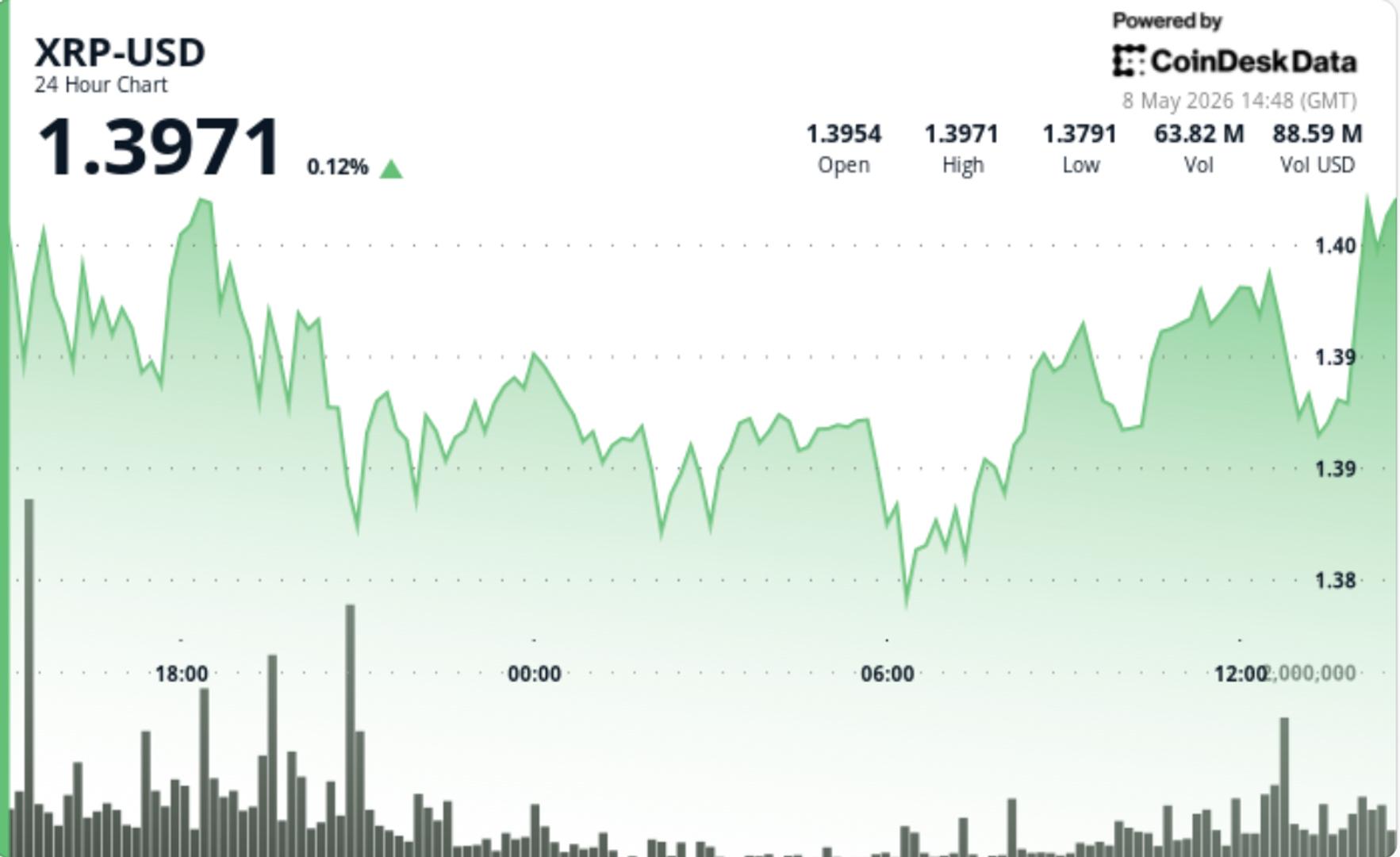
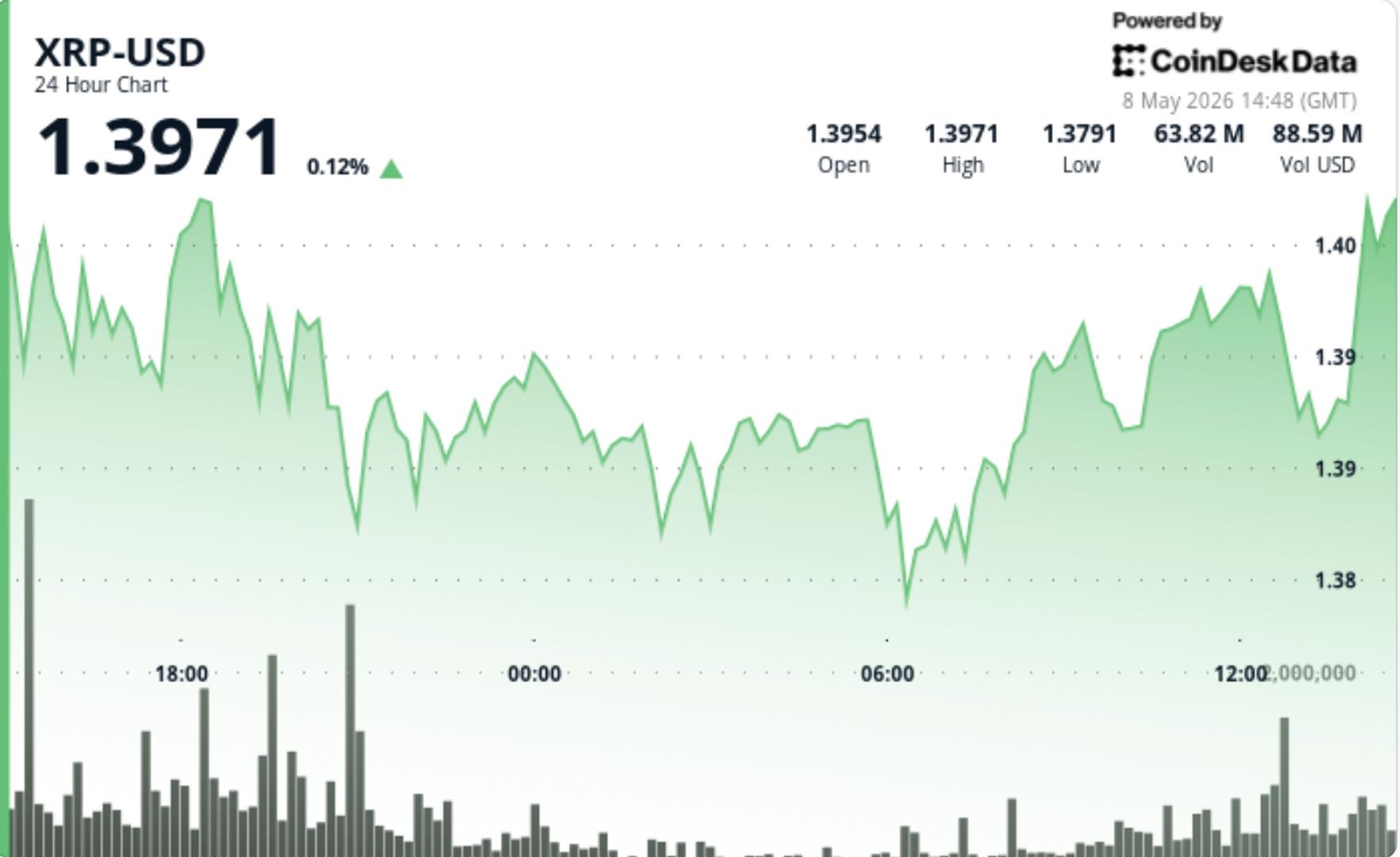
XRP keeps grinding toward the top of its recent range, and the move is starting to matter more because liquidity has thinned out while price keeps compressing underneath resistance. That combination tends to make breakouts sharper once the market finally picks a direction.
News Background
• Analysts continue pointing to longer-term bull flag and falling wedge patterns that resemble setups seen before previous XRP rallies.
• XRP ETF inflows and thinning Binance liquidity have added to speculation that the market is entering a higher-volatility phase after weeks of sideways trading.
Price Action Summary
• XRP traded in a tight 1.4% range between $1.3787 and $1.3948 over the 24-hour session.
• A late-session push lifted price from $1.3879 to $1.3930 on a 1.45M volume spike, breaking above the immediate consolidation ceiling.
• Support repeatedly held between $1.3825-$1.3870, while sellers continued defending the $1.3930-$1.3950 zone.
Technical Analysis
• The market has spent weeks compressing between support near $1.38 and resistance just below $1.40, with volatility continuing to tighten.
• Volume expanding into the latest move higher matters because thin liquidity conditions tend to exaggerate price reactions once resistance finally gives way.
• XRP is still stuck below larger breakout levels near $1.47 and $1.50, but repeated tests of resistance usually weaken seller control over time.
• Analysts tracking bull flag and wedge formations continue targeting the $1.60-$1.73 range if the broader structure confirms.
What traders should watch
• $1.3930-$1.3950 is the immediate resistance zone. A sustained move above it shifts focus toward $1.42 and $1.47.
• $1.3825 remains the key support floor holding the current consolidation structure together.
• Liquidity conditions remain unusually thin, increasing the odds of a fast move once the range finally breaks.
Crypto World
Ondo, Ripple, JPMorgan, and Mastercard Complete First 24/7 Tokenized Treasury Settlement

TLDR:
- Ondo and Ripple completed a near real-time tokenized Treasury redemption across borders.
- XRP Ledger processed the blockchain asset transfer in under five seconds during pilot.
- Mastercard MTN connected blockchain redemption directly with banking settlement rails.
- The pilot demonstrated 24/7 institutional settlement beyond standard banking hours.
Ondo Finance has completed the first near real-time cross-border redemption of a tokenized U.S. Treasury fund. The transaction was carried out in collaboration with Kinexys by J.P. Morgan, Mastercard, and Ripple.
Together, the four firms settled a cross-border transaction using both a public blockchain and traditional interbank rails.
The process cleared outside standard banking windows, connecting blockchain execution directly to fiat settlement. This marks a practical framework for 24/7 global settlement of tokenized financial assets.
How the Transaction Was Structured
Ripple redeemed a portion of its Ondo OUSG holdings on the XRP Ledger as part of the pilot. Ondo processed the redemption and issued a fiat instruction via the Mastercard Multi-Token Network. The MTN then routed that instruction to Kinexys by J.P. Morgan for settlement execution.
Kinexys debited Ondo’s Blockchain Deposit Account and settled U.S. dollar proceeds to Ripple’s Singapore bank account.
The transfer moved through J.P. Morgan’s correspondent banking network, completing a full cross-border, cross-bank flow. No separate manual instructions were needed at any point in the process.
The XRP Ledger processed the asset leg in under five seconds. Markus Infanger of RippleX stated that this pilot showed institutions can execute cross-border transactions as a single integrated flow.
That speed enabled settlement well outside traditional banking cut-off windows. That distinction gave the pilot a clear operational advantage over conventional settlement systems.
One leg cleared on a public blockchain while the other settled on banking infrastructure. The two systems coordinated directly rather than requiring parallel, independent instructions. Ian De Bode of Ondo Finance said this lays the groundwork for 24/7 global markets that never close.
What This Means for Tokenized Asset Infrastructure
Tokenized real-world assets have grown across the financial sector, but redemption infrastructure has lagged behind.
Traditional wire systems, manual processes, and limited operating hours have restricted how institutions redeem and settle these assets.
Together, these constraints have limited the scalability of tokenized asset redemption for institutional players. This pilot connects blockchain-based redemption to automated fiat settlement, removing those long-standing barriers.
The Mastercard MTN served as the interoperability layer between the blockchain and banking environments. Raj Dhamodharan of Mastercard said the MTN makes near real-time, cross-border settlement available through existing bank accounts. That connectivity allows institutions to access tokenized assets without replacing existing banking infrastructure.
Zack Chestnut of Kinexys by J.P. Morgan said broad adoption requires collaboration across geographies, banking systems, and public blockchains.
This pilot proves that multi-party coordination at that level is achievable today. The transaction was not theoretical — it was executed between real global financial institutions.
The framework supports redemptions from any public blockchain where OUSG is issued, starting with XRPL. Ondo Finance has positioned this as a scalable model for continuous, round-the-clock tokenized asset markets.
The completed pilot shows that 24/7 cross-border settlement across global banks is now operationally within reach.

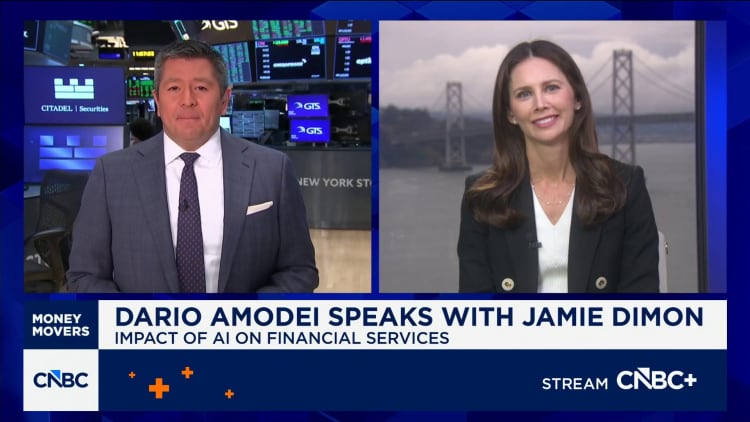
Dario Amodei, co-founder and chief executive officer of Anthropic, at the AI Impact Summit in New Delhi, India, on Thursday, Feb. 19, 2026.
Prakash Singh | Bloomberg | Getty Images
Global banks, tech giants and governments were sent scrambling last month to contain the risks posed by Mythos, the Anthropic model said to be so powerful that it has found thousands of previously unknown vulnerabilities in the world’s software infrastructure.
There’s just one problem: the capability they’re worried about is already here.
Cybersecurity experts and artificial intelligence researchers told CNBC that the software vulnerabilities revealed by Mythos can be found using existing models, including those from Anthropic and OpenAI.
“What we are seeing across the industry now is that people are able to reproduce the vulnerabilities found with Mythos through clever orchestration of public models to get very, very similar results,” said Ben Harris, CEO of cybersecurity firm watchTowr Labs.
Mythos has jolted executives and policymakers alike over concern that a perilous new era of AI-enabled cybercrime may be near. Anthropic limited its release to a few American companies including Apple, Amazon, JPMorgan Chase and Palo Alto Networks to reduce the risk that bad actors get their hands on it.
Even with that precaution, the release has prompted the Trump administration to consider new government oversight over future models.
It’s the latest in a string of high-profile launches from Anthropic that have intensified its rivalry with OpenAI as the two AI giants approach their highly anticipated initial public offerings. Weeks after the arrival of Mythos, OpenAI CEO Sam Altman announced GPT-5.5-Cyber, a model specifically tailored for cybersecurity.
OpenAI on Thursday allowed limited access to GPT-5.5-Cyber to vetted cybersecurity teams.
The controlled rollout of Mythos, part of a security measure called Project Glasswing, was to give the corporate world time to gird its cyber defenses against a coming onslaught of attacks from criminal groups and adversarial nations.
“The danger is just some enormous increase in the amount of vulnerabilities, in the amount of breaches, in the financial damage that’s done from ransomware on schools, hospitals, not to mention banks,” Anthropic CEO Dario Amodei said this week at an Anthropic event.
‘Scary enough’
But to those fighting in the trenches of cyber warfare, one of the key capabilities advertised by Anthropic — to find software vulnerabilities at scale — has been around since last year.
“The models that we have right now are powerful enough to detect zero days in a large scale, and this is scary enough,” Klaudia Kloc, CEO of cybersecurity firm Vidoc, told CNBC.
That has been the case for “a couple of months, if not a year,” she said.
The term “zero-day” refers to a previously unknown software flaw that hasn’t been patched, giving attackers a window to exploit it before defenders can respond.
Researchers at Vidoc leaned on a technique called “orchestration” to test if they could find the same vulnerabilities that Mythos did. As the name suggests, the process involves creating workflows that split code into smaller pieces, coordinating between various tools or models to cross-check results.
“We ran older models against the same code base to see if we’d be able to detect the same vulnerabilities,” Kloc said. “We did, with both OpenAI and Anthropic’s older models.”
Another cybersecurity firm, Aisle, found that many of Mythos’s headline results could be reproduced using cheaper models working in parallel — suggesting that scale and coordination were more important than having the latest model.
“A thousand adequate detectives searching everywhere will find more bugs than one brilliant detective who has to guess where to look,” Aisle founder Stanislav Fort wrote in a blog post.
In comments to CNBC, Anthropic didn’t dispute that earlier models were capable of finding software vulnerabilities.
In fact, a company spokesperson said, Anthropic has been warning for months that AI’s cyber capabilities were advancing rapidly. They pointed to a February blog post showing that Claude Opus 4.6, a widely available model, found more than 500 “high severity” vulnerabilities in open-source software.
At the Anthropic event this week, Amodei affirmed this point, saying that while the scale of software vulnerabilities found by Mythos surged from earlier models, the trend wasn’t new.
“The risks are very real. This is why we took the actions we did,” Amodei said. “But they’re also, in some sense, not that surprising. … We’ve been seeing warnings of this for a while.”
Hysteria and panic
What makes Mythos different is its ability to take the next step, developing working exploits with little or no human input, effectively automating a process that previously required skilled researchers, the Anthropic spokesperson said.
But hackers working for criminal groups and adversarial nations already have this skill set, cyber researchers say. Hackers in North Korea, China and Russia “know how to do this, with or without Anthropic,” Kloc said.
The threat of AI-enabled hacking has corporations and government regulators worried about protecting crucial systems from a new wave of ransomware and other types of attacks, according to Harris.
He described conversations with banks, insurers and regulators in recent weeks as “hysteria.”

Even before the advent of generative AI, corporations faced the problem of skilled hackers exploiting newfound vulnerabilities in hours, while patching the code often takes days or weeks. Some patches require key systems to be taken offline, complicating matters.
“The industry is panicking about the number of vulnerabilities they face now,” Harris said. “But even before Mythos is widely available, it couldn’t fix vulnerabilities fast enough.”
Before, only a tiny population of experts globally had the ability and time to find obscure vulnerabilities in software and exploit them, according to Harris. Now, using currently available AI models, the barriers of entry to wreaking cyber havoc have been lowered.
That means that banks and other targets will see more attacks, and that software systems that previously didn’t draw as much interest from cybercriminals will now face threats, Harris said.
Advantage: Offense
While Anthropic, OpenAI and others are working on developing cyber defense capabilities commensurate with the problems they have identified, the initial advantage goes to offense, not defense, researchers say.
JPMorgan’s Jamie Dimon suggested as much when he said last month that while AI tools could eventually help companies defend themselves from cyberattacks, they are first making them more vulnerable.
“You have a significant increase in the volume of vulnerabilities discovered, but they don’t seem to have deployed a tool that helps you fix them,” said Justin Herring, partner at the law firm Mayer Brown and former executive deputy superintendent for cybersecurity at New York’s financial regulator.
“Vulnerability management is the great Sisyphean task of cybersecurity,” Herring said.
The limited group that was part of the initial Mythos release got a head start on patching vulnerabilities, but there is a downside. AI researchers haven’t been given access to Mythos to independently verify Anthropic’s claims or to begin building defenses against it.
Some say it prevented the wider cyber community from being part of the solution.
It has created “tiers of haves and have-nots,” which could stunt the pace of cybersecurity innovation, said Pavel Gurvich, CEO of cybersecurity startup Tenzai, which uses Anthropic’s models.
Many cybersecurity startups are working on solutions that can help businesses in this new era of AI, he said.
“They’re trying to figure out the best way to fix the world before this becomes accessible to the world,” said Ben Seri, co-founder of cybersecurity startup Zafran Security. “It’s this kind of chicken-and-egg situation, and you’re going to break some eggs. It’s unavoidable.”

Bitcoin is trading around $80k, holding slightly above the psychological threshold that has defined the ceiling of every recovery attempt over the past three months. The ascending channel is intact, the 100-day MA reclaim is holding, and BTC is now pressing into the zone between the current price and the 200-day MA. This area is a stretch of approximately $4–$5k that contains the next meaningful resistance.
Beneath all of this, one of the most unusual features of this entire rally is only now beginning to resolve: the recovery was built almost entirely on negative funding rates.
Bitcoin Price Analysis: The Daily Chart
Bitcoin has spent the last few days consolidating above the $80k mark amid rejection at the ascending channel’s upper boundary, a meaningful contrast to prior breakout attempts that reversed quickly. The 100-day MA currently at approximately $72k has been cleanly reclaimed, and the RSI is sustaining in the 60–65 range. This signals healthy momentum without the frothy excess that preceded prior failures.
The immediate path higher runs through the $88k–$90k blue resistance band, followed by the 200-day MA descending near $84k, which will likely be the harder test given how long it has been above the price. On the other hand, a drop back below the $76k order block support would be the first sign the move is failing and would refocus attention on the 100-day moving average and the lower boundary of the channel just below $70k.

BTC/USDT 4-Hour Chart
After pushing into the $82k area where the upper channel boundary and the static resistance zone converge, the asset has pulled back to the current $80k level in what might look like a healthy short-term reset. The RSI on the 4-hour chart, though, has dropped rapidly from its recent overbought peak to 50, indicating a massive weakening of momentum on this timeframe.
However, the yellow bullish trendline from early April is still intact and provides dynamic support near $79k. Below this trendline, the same bullish order block mentioned on the daily analysis can be the demand zone that holds the price on a deeper correction.
Meanwhile, as long as the price holds above $79k-$80k on a 4-hour closing basis, the structure remains constructive, and the next push toward the $82–$84k zone is the primary scenario. However, if a break below the yellow trendline and the order block at $76k occurs, the rejection from the upper boundary of the channel will be viewed as a bearish reversal that can push the price all the way back toward the $70k region and further delay a full recovery.

On-Chain Analysis
One of the defining features of Bitcoin’s recovery from $60k to $80k is that it happened almost entirely amid persistently negative funding rates. From February through early May, the perpetual futures market was dominated by short positioning, which is shown by the red bars ranging from -0.005 to -0.02. Meanwhile, the price climbed approximately $20k in this period.
This combination is the fingerprint of a short-squeeze driven rally, as spot buyers and forced short liquidations powered the move, not fresh long positioning. It is structurally healthier than a leverage-fueled surge precisely because it does not carry an overhang of highly leveraged longs that need to be unwound on the next pullback.
The current funding rate reading of +0.002 marks the first sustained move toward neutral and marginally positive territory since the correction began. Futures traders are seemingly beginning to shift their positions from short to long as the price action forces a reassessment. This transition from disbelief to early acceptance is a natural stage of recovery, and could be the fuel the market needs to overcome the $80k resistance zone in the coming weeks.

The post Bitcoin Price Analysis: Rejection at $83K Shows Major Weaknesses in BTC’s Structure appeared first on CryptoPotato.

In this video, we’ll explore the key economic events and market trends, shaping the financial landscape. Get ready for insights into financial markets to help you navigate the week ahead. Let’s dive in!
In this episode of Market Insights, Gary Thomson unpacks the strategic implications of the most critical events driving global markets.
👉 Key topics covered in this episode:
✔️ US Inflation Rate
The US inflation report on 12 May could become a key short-term catalyst for the dollar, especially as markets remain cautious amid geopolitical uncertainty and steady Fed policy expectations. While headline inflation has accelerated due to rising energy prices, traders will closely watch whether inflationary pressures continue to build. Will persistent inflation support the US dollar, or will markets continue to expect no Fed rate changes this year?
✔️ UK GDP Data
The British pound is showing relative strength ahead of the UK GDP release on 14 May, with recent GBP moves largely driven by US dollar dynamics and improving UK economic data. As traders assess quarterly and annual growth figures, the release could trigger heightened volatility in GBP pairs. Will strong GDP data support a sustained recovery in the pound, or will broader market uncertainty limit further gains?
✔️ US-China Meeting
Attention will also turn to the reported meeting between Donald Trump and Xi Jinping on 14-15 May in China. While the event itself may not trigger major volatility, any comments or signals on trade, geopolitics, or global cooperation could influence overall market sentiment and risk appetite. Will the meeting help ease geopolitical concerns, or add further uncertainty to global markets?
To summarise, the market outlook remains driven by a combination of macroeconomic data and geopolitical developments, with no clear dominant trend yet established.
In this environment, traders closely monitor incoming data, being flexible and getting ready for short-term volatility.
Gain insights to strengthen your trading knowledge.
💬 Don’t forget to like, comment, and subscribe for more professional market insights every week.
Watch it now and stay updated with FXOpen.
This article represents the opinion of the Companies operating under the FXOpen brand only. It is not to be construed as an offer, solicitation, or recommendation with respect to products and services provided by the Companies operating under the FXOpen brand, nor is it to be considered financial advice.
European Central Bank (ECB) President Christine Lagarde rejected calls for euro-denominated stablecoins, arguing they cannot strengthen the currency’s international role and could destabilize bank funding across the eurozone.
Speaking at the Banco de España LatAm Economic Forum in Roda de Bará, Spain, Lagarde framed the speech as a direct rebuttal of the US GENIUS Act and the argument that Europe must answer with its own dollar substitute.
Two Functions, One Policy Split
Lagarde separated stablecoins into two functions to set up her case, arguing that conflating the two has distorted European policy.
- The monetary function extends a reserve currency’s global reach.
- The technological function provides on-chain settlement for tokenized assets.
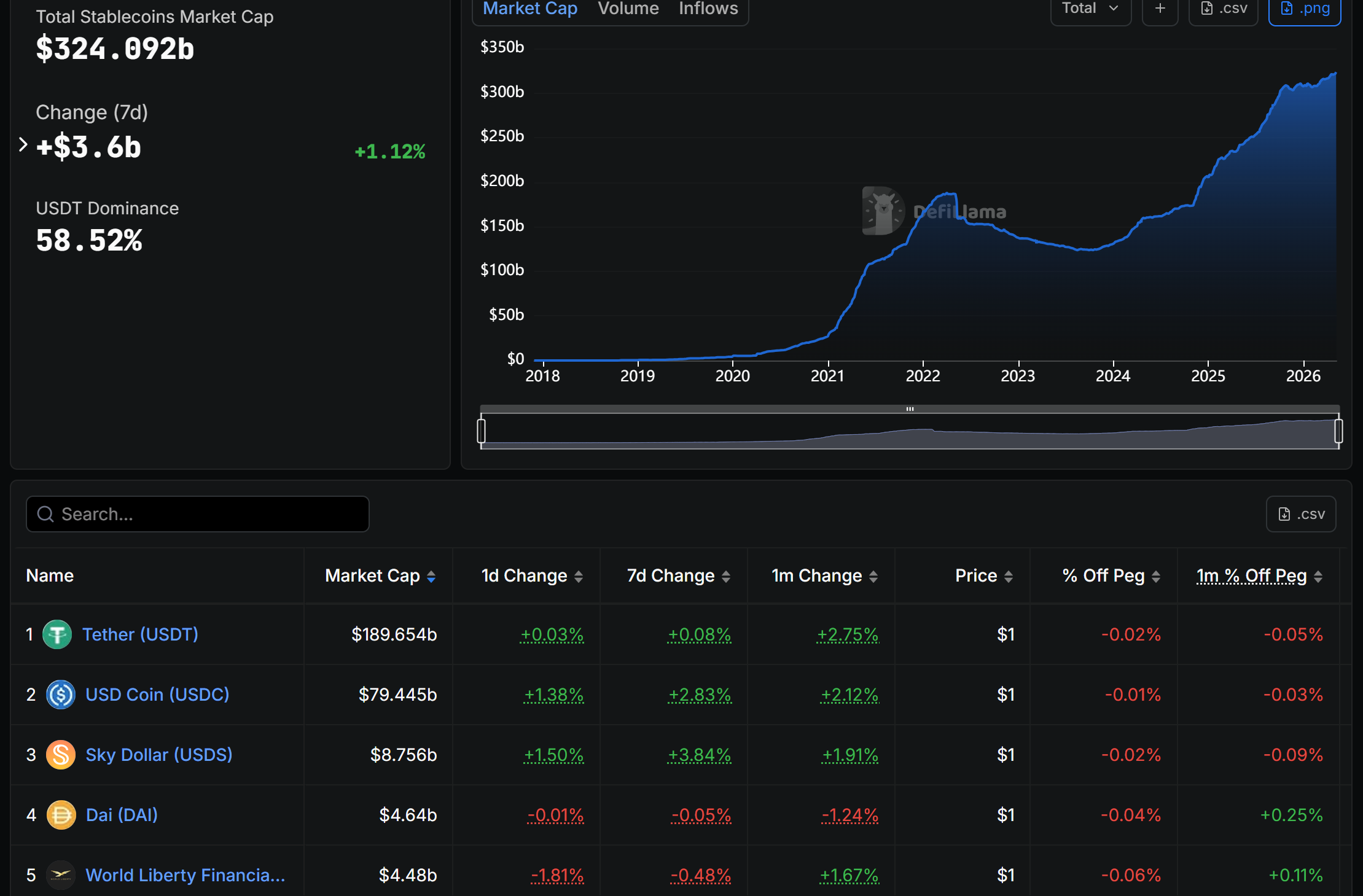
Stablecoins now top $324 billion in market value. Nearly 98% are denominated in dollars, with Tether and Circle issuing roughly 90%.

Transaction flows already hit 7.7% of GDP across Latin America and 6.7% across Africa and the Middle East. Lagarde used those numbers to show the dollar’s reach is already deeper than the euro’s outside Europe.
“Stablecoins reduce those frictions, as digital access is faster and easier than hard cash, and it reaches savers in countries where weak currencies can erode savings. In economies where access to a stable currency has historically been constrained, transaction flows already reach around 7.7% of GDP in Latin America and 6.7% in Africa and the Middle East,” she explained.
The US GENIUS Act, signed in 2025, framed federal stablecoin oversight as a tool for preserving dollar primacy. She quoted that intent to contrast it with Europe’s Markets in Crypto-Assets Regulation (MiCAR), which entered force in 2024.
Industry Challenges the Diagnosis With Europe’s Alternative Path in Focus
However, critics outside the bank ecosystem reject Lagarde’s framing, with Rand Hindi, founder of encryption firm Zama, issuing a sharp on-the-ground counterargument.
“And yet, the entire developing world is adopting the dollar thanks to USDT. This is the next petrodollar, it’s so obvious to anyone who has been on the ground…” he noted.
Hindi also pointed at dollar adoption inside the bloc itself. He claimed European startups raise, invoice, and pay in dollars and use euros only for tax obligations.
Lagarde used the speech to spotlight infrastructure work the Eurosystem already has underway. The Pontes pilot will link distributed ledger platforms to TARGET for wholesale settlement in central bank money from September.
The Appia roadmap targets a fully interoperable European tokenized ecosystem by 2028. Earlier 2024 trials settled roughly 1.6 billion euros across nine jurisdictions in 50 transactions.
Lagarde argued that a public anchor would let MiCAR-compliant stablecoins and tokenized bank deposits compete on safer ground without ceding settlement rails to dollar issuers.
The split is now explicit.
- Washington is building a dollar moat through private stablecoin issuance.
- Frankfurt is betting that public infrastructure and a deeper capital union will keep the euro relevant on chain.
Subscribe to our YouTube channel to watch leaders and journalists provide expert insights
The post Why ECB President Christine Lagarde Rejects Europe’s Answer to the GENIUS Act appeared first on BeInCrypto.
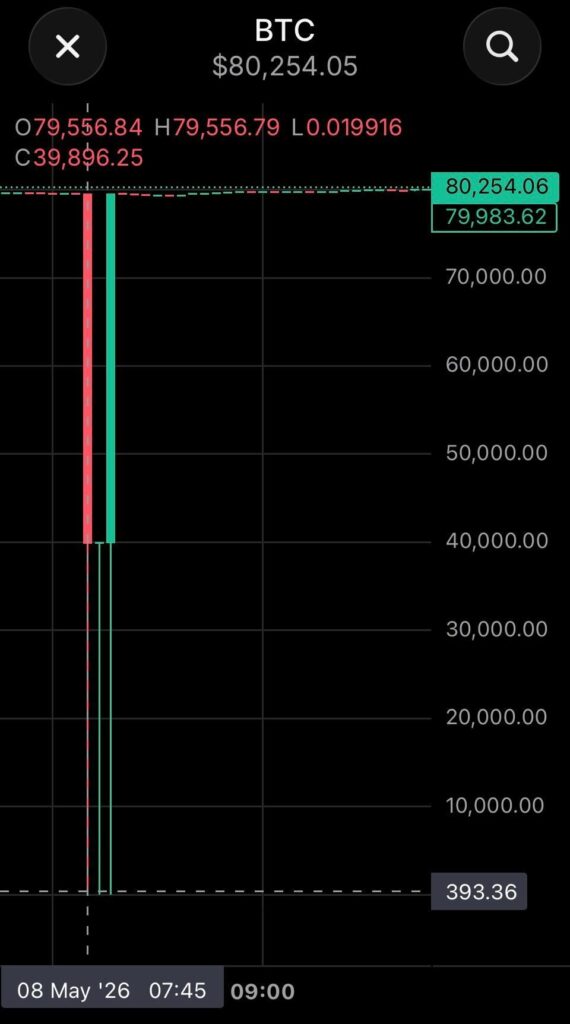
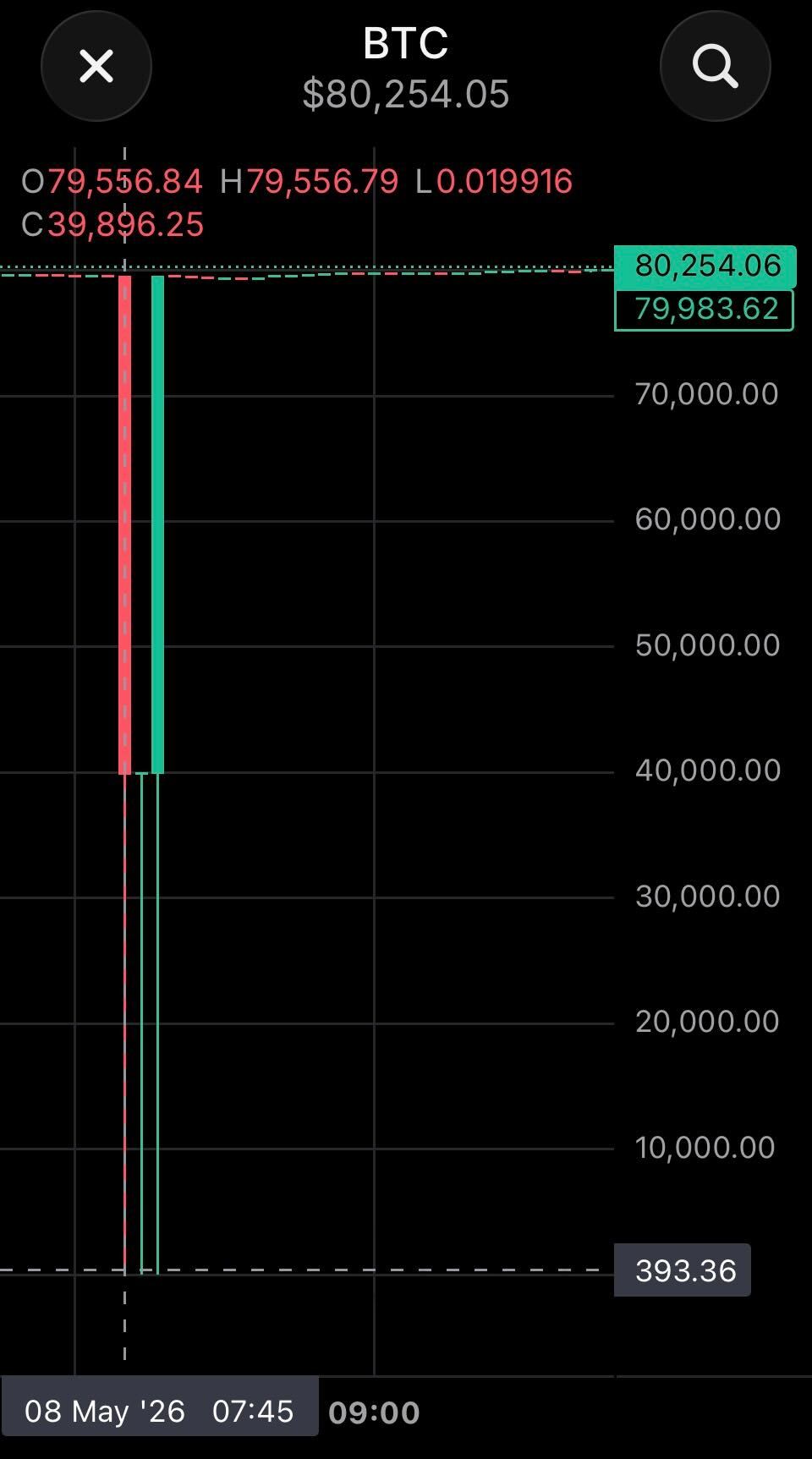
Bitcoin’s (BTC) briefly slipped from $79,000 to just $0.019 today on UK online banking platform Revolut. Mercifully, the dip lasted just a few seconds before it returned to its original price.
Using Google Chrome, Revolut displays the low between 7:45/50 GMT+1 as $73,000. However, the platform’s mobile app mobile displays the BTC drop as low as $0.019.
Revolut told Protos that the inaccurate pricing was caused by “a service disruption at a third-party provider.” It said the issue has since been solved and that it’s still “in the process of evaluating the details of the disruption.”
There was a flurry of confusion from onlookers on X this morning as they wondered whether or not a flash crash had taken place.
Many received a push notification from Revolut on their lock screens claiming that BTC had reached a 52-week low, and that the price was now $0.02. This would be closer to an all-time low.
Read more: Hot air at AWS causes Coinbase outage
All Revolut told users at the time through its support account is that it’s “currently experiencing technical issues affecting some crypto functionalities.”
However, it’s still unclear if this third-party disruption, leading to BTC’s brief cratering, was the result of a visual glitch or liquidity issues. Neither CoinGecko nor Coinbase are displaying such BTC crashes.
Visual glitches and flash crashes aren’t uncommon
Similar visual glitches aren’t uncommon in the crypto world. Binance, for example, displayed a glitch in people’s wallets last year that dropped everybody’s balance to $0.
This was caused by “network congestion,” which followed a $400 billion crash in the global crypto market just days beforehand.
In 2021, crypto exchange PDAX briefly listed BTC for $6,000, almost 90% cheaper than it was at the time. Users rushed to buy at the low price, and PDAX began suspending accounts.
The exchange then began to exchange legal threats with buyers. The listing in the end was a visual glitch.
Read more: Explained: How bitcoin market sell orders cause flash crashes
Other flash-crashes involved a sudden 10% BTC dip on South Korean crypto exchange Bithumb. The platform accidentally rewarded a user 2,000 BTC (worth $134 million at the time), who then sold it afterwards, causing the dip.
UK banks also experienced a weird visual glitch earlier this year that displayed the transactions and bank account details to random users.
People were reporting that they could see other people’s transactions, and the issue was widespread across Lloyds, Halifax, and the Bank of Scotland.
Got a tip? Send us an email securely via Protos Leaks. For more informed news and investigations, follow us on X, Bluesky, and Google News, or subscribe to our YouTube channel.
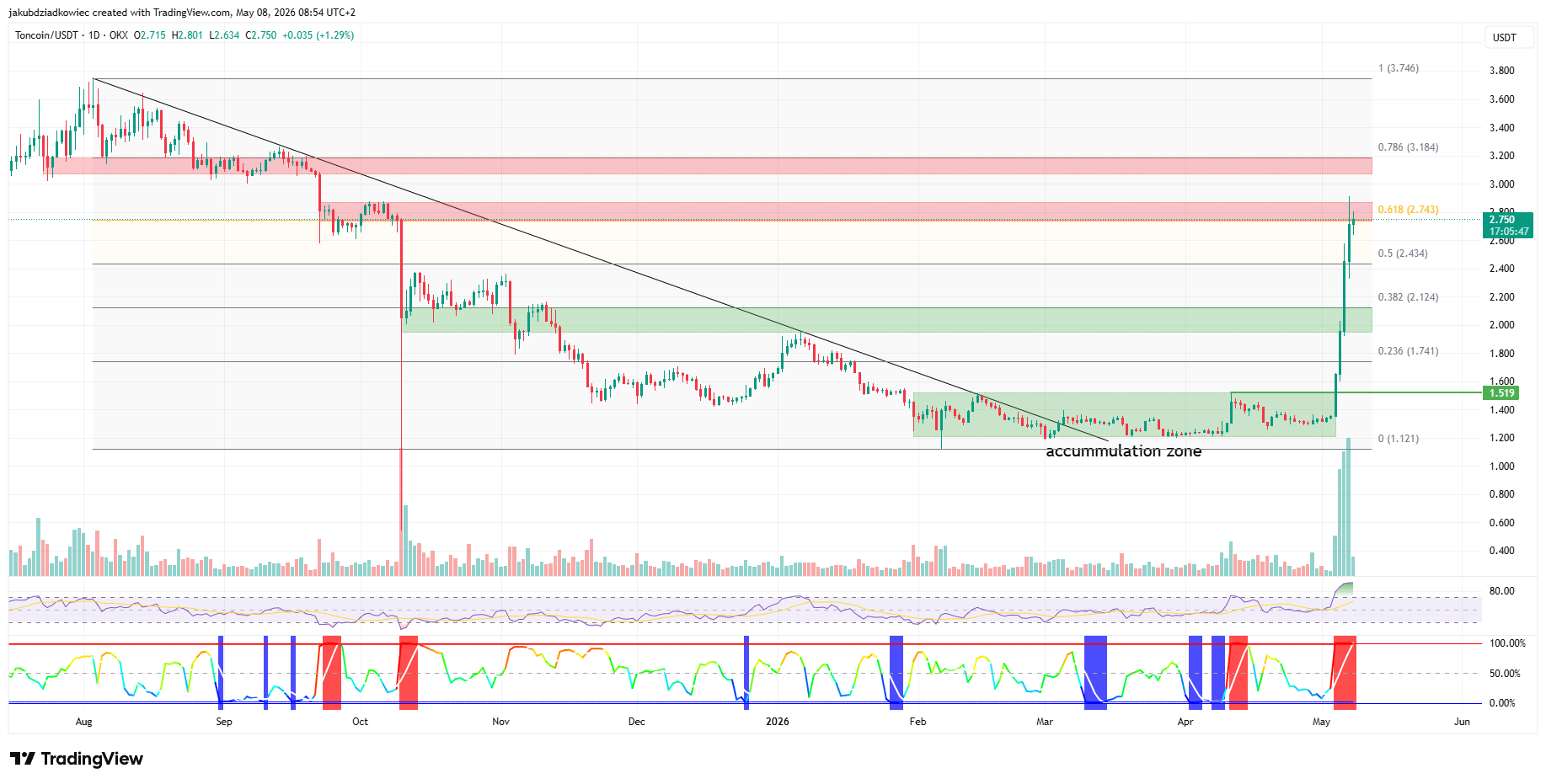
Toncoin (TON), Zcash (ZEC), and Venice Token (VVV) make up the top 3 altcoins flashing bullish daily structures this weekend. Each token enters Saturday with fresh breakouts on rising volume and clear paths toward the next major Fibonacci targets.
Each coin has cleared a critical resistance level over the past week. Supporting voices on X point to extended legs higher if current consolidations resolve in favor of buyers.
Toncoin (TON) Breaks Out Above $2.74 With Path to $3.10
Toncoin (TON) has broken out from a multi-month accumulation zone on May 4. Daily volume on the breakout candle was the largest green print on the chart since October.
Buying volume has continued to expand every session since. Price now trades at the 0.618 Fibonacci retracement at $2.74. The level is drawn from the August 2025 high down to the April low at $1.12.
A daily close above this level opens the path to the 0.786 Fib at $3.10. In the event of a correction, the first major support sits at the 0.382 Fib near $2.12.
Momentum readings have pushed near 93. The Bollinger Band Width Percentile (BBWP) also flashes extreme red readings, signaling stretched conditions. However, no bearish divergence has formed yet, which keeps the immediate trend intact.

The breakout coincides with fresh enthusiasm around the network. Telegram founder Pavel Durov has outlined a roadmap that puts Telegram itself as the largest TON validator.
Trader Zach Humphries sees the move as the start of a textbook expansion phase. He argues that TON is now testing a distribution block at $2.89. A flip of that level into support would open a longer-term path to $6.
“The expansion phase on $TON is playing out exactly as scripted… If we flip this resistance into support the path to $6.00 is wide open for the summer.”

Zcash (ZEC) Breaks $533 Resistance With $628 Next on the Map
Zcash (ZEC) has trended higher since April 13, when the price bounced off the 0.236 Fib at $317. Two days ago, the privacy coin broke through the 0.618 Fib at $533. That level also coincided with the December 29 swing high (blue circle).
The next target sits at the 0.786 Fib near $628. On the downside, the 0.382 Fib at $400 marks the first meaningful support if buyers lose control. The Visible Range Volume Profile (VRVP) shows the last significant resistance node near $690, with thin volume above that pocket.
Momentum is stretched. The 14-day Relative Strength Index (RSI) prints 86, deep in overbought territory, while BBWP also signals extreme volatility expansion.

The breakout has coincided with a sharp burst of institutional interest. Multicoin Capital disclosed a significant ZEC position at Consensus Miami this week. ETF speculation has accelerated alongside a fresh Robinhood listing.
X analyst TheMoonShow shared an hourly chart showing a tight consolidation triangle that resolved to the upside above $580.
“$ZEC looks like it’s getting ready for ATHs. Consolidated after the breakout and now looks ready for another expansion move.”

Venice Token (VVV) Pushes to $13.96 With $17.30 Target
Venice Token (VVV) is the strongest performer of the three. The native token of the Venice AI ecosystem has reached a fresh 2026 high near $13.96. Price has trended higher since the breakout on February 13.
A Fibonacci retracement drawn from the February 13 low to the current swing high reveals two key support zones. The 0.618 Fib sits at $9.30, and the 0.382 Fib rests at $6.42.
Upside targets come from external Fibonacci extensions. The 1.272 extension lands at $17.30 and the 1.618 extension at $21.52.
The 14-day RSI sits at 80 and continues to trend up without any bearish divergence. Volatility, measured by BBWP, also remains in expansion mode.

A move into the $20 zone would sit between the 1.272 and 1.618 external Fib levels. Both extensions are mapped on the daily chart. For traders eyeing the VVV longer-term path, the same structure remains intact as long as $9.30 holds on any pullback.
Top 3 Altcoins Outlook for the Weekend
All three setups remain technically aligned for upside continuation, as long as their respective breakout levels hold. A close below $2.51 (TON), $400 (ZEC), or $9.30 (VVV) would invalidate the immediate thesis. Such a move would shift focus to deeper retracements.
The bullish case rests on momentum staying expanded through Saturday and Sunday. If buyers absorb supply at the current Fib levels, each chart points to an extended leg higher into next week.
The post Top 3 Altcoins Flashing Bullish Setups Heading Into the Weekend appeared first on BeInCrypto.

Can a neighbour refuse access for maintenance or repairs?

Can Lebron Even Win One Game Against the Thunder Without Doncic?

Coinbase (COIN) bulls point to crypto legislation and stablecoins after earnings miss

Manchester United reach agreement with Casemiro over contract clause amid transfer speculation

US brings back mandatory military draft registration

Steven Gerrard disagrees with Gary Neville over ‘shock’ Chelsea and Arsenal claim | Football


-

 NewsBeat5 days ago
Channel 5 – All Creatures Great and Small series 7 new post
-
 Crypto World6 hours ago
HarrisX Poll Found 52% of Registered Voters Support the CLARITY Act
-

 Crypto World1 day ago
Upbit adds B3 Korean won pair as Base token gains Korea access
-
 NewsBeat1 day ago
NCP car park operator enters administration putting 340 UK sites at risk of closure
-
 Tech7 days ago
Trump’s 25% EU auto tariff breaches Turnberry Agreement that also covers semiconductors and digital trade
-
 Sports7 days ago
Paul Scholes issues Marcus Rashford reality check as agreement emerges over Man United star
-

 Tech4 days ago
Image AI models now drive app growth, beating chatbot upgrades
-

 Entertainment7 days ago
Met Gala 2026 Rumored Guest List Is Turning Heads
-
Entertainment7 days ago
New on Prime Video in May 2026 — Full List of Movies and Shows
-

 Entertainment7 days ago
Kylie Jenner Hit With Second Lawsuit From Ex-Housekeeper
-

 Sports7 days ago
Cavaliers vs. Raptors Game 6 live score, updates, highlights from 2026 NBA playoffs first-round series
-

 Entertainment6 days ago
Melissa Joan Hart and More Stars Attend 2026 Kentucky Derby
-
 Sports7 days ago
David Benavidez responds to team Canelo saying the fight will never happen
-
Entertainment6 days ago
New Netflix Movies in May 2026 — My Top 3 Picks to Stream
-
 Sports7 days ago
IPL 2026: ‘Love you darling’- Hardik Pandya’s reaction to MS Dhoni steals the show |Watch | Cricket News
-

 Entertainment7 days ago
Young and the Restless Next Week: Cane Arrested & Matt’s Deadly New Scheme!
-

 Tech7 days ago
Mother’s Day 2026 Gift Guide: Audio to Upgrade Mom’s Lifestyle
-
Crypto World6 days ago
Pi Network Mandates Protocol 23 Upgrade for All Mainnet Nodes Before May 15 Deadline
-

 Business5 days ago
Luka Doncic Injury Update: Doncic’s Hamstring Recovery Slows Lakers’ Hopes Against Thunder: Can He Run Yet?
-

 Business7 days ago
Can Victor Wembanyama Bring the NBA Ring to Spurs in 2026? Historic Playoff Run Fuels Title Dreams
You must be logged in to post a comment Login