

Crypto World
Standard Chartered, Circle Bring USDC Into Banking System

Standard Chartered and USDC issuer Circle have developed a system that lets institutional clients mint and redeem the USDC stablecoin through a bank-led onboarding process.
Standard Chartered said Thursday it is the first Global Systemically Important Bank (G-SIB) to offer such services for USDC, bringing stablecoin access into the same risk, compliance and governance frameworks used in traditional banking. Clients will be able to mint and redeem the US dollar-backed stablecoin directly through StanChart’s platform instead of opening separate accounts with Circle.
“By embedding USDC access directly within Standard Chartered’s institutional offering, Standard Chartered will bring together banking, custody, and digital asset services within one integrated offering,” the announcement said. The initial rollout will be through the Dubai International Financial Centre (DIFC).
The collaboration comes as stablecoin infrastructure is increasingly integrated into traditional banking systems, as issuers and financial institutions compete to control how digital assets such as USDC are distributed and accessed.
Source: Circle on X.com
The capability supports institutional use cases such as on-chain settlement, treasury, and liquidity management, while also providing the infrastructure to support payment-related use cases in the future.
Initial rollout via Dubai International Financial Centre
While the service is initially rolling out through Standard Chartered’s operations in the DIFC, the bank said it intends to expand the capability to other markets, depending on regulatory approval and demand from clients.

Source: Standard Chartered
Roberto Hoornweg, CEO of corporate and investment banking at StanChart, said the goal is to bring traditional banking standards into crypto markets as demand for regulated infrastructure increases.
“Ultimately, this is about enabling broader institutional participation in digital asset markets through the frameworks, controls and regulatory oversight that have long supported confidence in global financial markets,” he said.
Related: French banking giant Crédit Agricole launches EURXT euro stablecoin
The news came in the wake of Circle CEO Jeremy Allaire’s statement defending USDC’s network effects against new stablecoin entrants like Open USD (OUSD), pointing to growing competition over distribution, liquidity and revenue models in the stablecoin market.
“With OUSD, we work closely with many of the founding members, and we expect that those same members will remain large USDC partners and customers,” he said on Wednesday.
Magazine: Crypto wanted to overthrow banks, now it’s becoming them in stablecoin fight

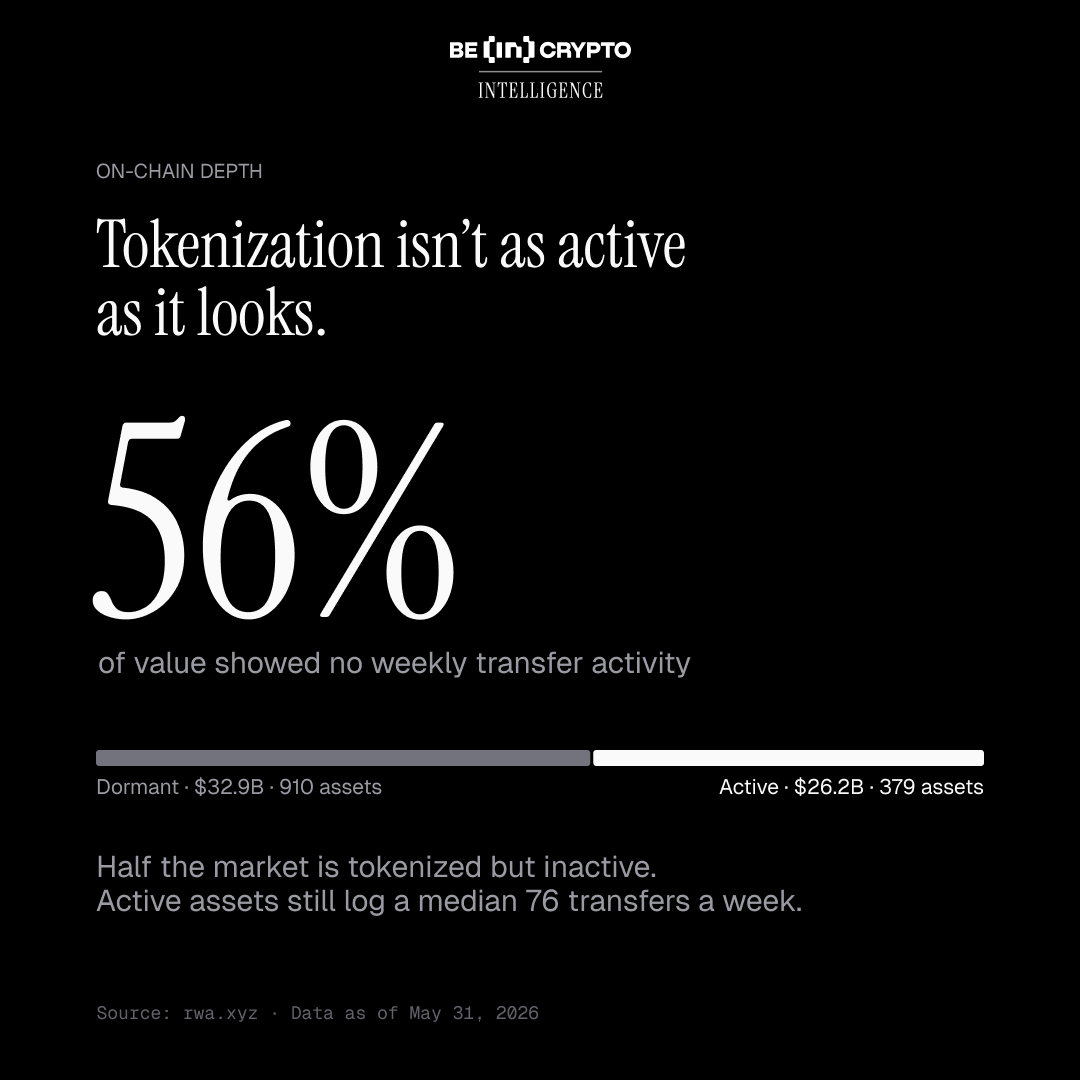
More than half of the tokenized real-world asset market showed no weekly transfer activity, according to new research from BeInCrypto.
The report, Real State of Tokenization in 2026, tracked roughly $60 billion in tokenized real-world assets across more than 7,000 products and 12 asset classes. It found that the market is growing fast, but actual on-chain activity remains far thinner than the headline numbers suggest.
Across 1,289 tokenized assets worth more than $100,000, 910 showed zero weekly transfers. Those dormant assets represented $32.9 billion in value, or 56% of the market measured for transfer activity.

Only 379 assets showed weekly movement. Together, they represented $26.2 billion in active value.
Tokenization Has Value, But Not Always Movement
The finding points to one of the biggest gaps in tokenized finance. Assets may be brought on-chain, but that does not mean they are actively traded, transferred, or used across financial infrastructure.
The report draws a distinction between “Distributed” assets and “Represented” assets.
Distributed assets can move on public blockchain rails and may be used across wallets, platforms, or DeFi protocols.
Represented assets use blockchain more like an internal ledger or digital record of an off-chain position.
But why does this distinction matter? Because about $27 billion of dormant value came from Represented assets.
In these cases, low transfer activity does not necessarily mean failure. Some products were not designed for public secondary-market movement in the first place.
However, the data still shows that tokenized finance has not yet become a broad, liquid market. Even among active assets, activity is concentrated in a much smaller group than the total product count suggests.

The Next Problem Is Infrastructure
The research concludes that tokenization’s next phase depends less on launching more assets and more on building the systems that allow those assets to move, settle, comply with regulation, and reach investors.
Without stronger infrastructure around access, transfer controls, compliance, collateral use, and market depth, many tokenized assets may remain digital records rather than usable financial instruments.
The full BeInCrypto Research report is available here.
The post Half of the $60 Billion Tokenization Market Has No Real Activity appeared first on BeInCrypto.

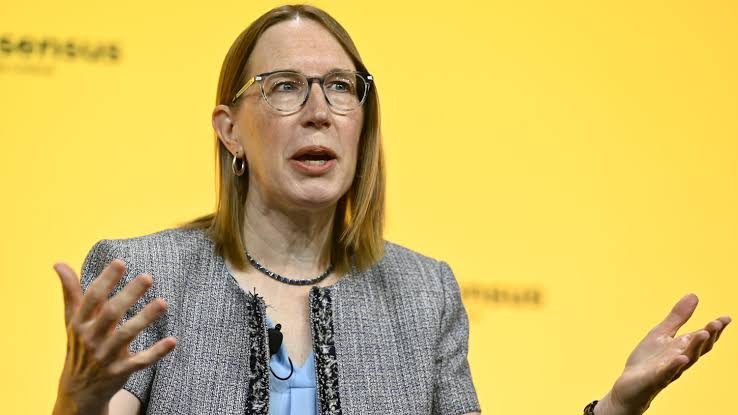
SEC Commissioner Hester Peirce said on the Searching for Mana podcast that she expects the CLARITY Act to pass the full Senate this summer, adding an authoritative internal voice to a timeline the market has treated as optimistic but far from guaranteed.
The bill cleared the House on a 294–134 bipartisan vote in July 2025 and advanced out of the Senate Banking Committee on a 15–9 vote in May 2026, meaningful procedural progress, but still short of a floor vote, a merged text, and a presidential signature.
That distinction matters. Peirce is not a neutral observer offering a general forecast, she is a sitting SEC commissioner and former Senate Banking Committee staffer who knows exactly how many gates remain.
Her saying this publicly signals that the agency’s leadership does not regard the summer timeline as aspirational cover, but as a live expectation.
The procedural math is tighter than the headline optimism suggests. The Senate Banking Committee text and a parallel Agriculture Committee bill, the latter focused on commodities and derivatives, must be merged before a floor vote. That merged text then needs 60 votes to clear cloture, a threshold that requires sustained bipartisan cooperation.
JUST IN: — Bitcoin Magazine (@BitcoinMagazine) July 1, 2026
 SEC Commissioner Hester Peirce on the Clarity Act: "I'm still optimistic it will get done this summer."
"I expect that we'll see it pass soon."  pic.twitter.com/DwiZcJwy2a
Democrats Ruben Gallego of Arizona and Angela Alsobrooks of Maryland joined all 13 Republicans in committee, which is an encouraging signal, but committee votes and floor votes are different arithmetic problems.
The urgency is not theoretical. More than 100 crypto firms and trade associations have signed a public letter pressing Senate leadership to move the bill forward, and Treasury Secretary Scott Bessent has framed passage as critical to maintaining U.S. financial leadership and the dollar’s reserve status.
Agency guidance is reversible, a future administration can undo every no-action letter and staff bulletin without legislation. Statutory clarity from this bill is not. That asymmetry is what makes the summer window consequential beyond a single news cycle for digital assets markets.

Discover: The Best Token Presales
CLARITY Act: How Crypto Oversight Gets Split Between SEC, CFTC, and the Howey Test
Peirce outlined the bill’s core mechanics plainly. The CLARITY Act would divide jurisdiction over crypto between the SEC and the CFTC based on a three-bucket classification framework.
Digital commodities, Bitcoin and Ethereum are the clearest cases, with Solana likely included, would fall under CFTC jurisdiction for spot market oversight, a structure that does not currently exist in statute. Assets that qualify as investment contracts would remain under SEC oversight. Permitted payment stablecoins would sit under joint supervision.
The Howey Test clarification is the piece with the most direct market-structure implication. Under current law, whether a token constitutes part of an investment contract depends on a fact-intensive analysis that the SEC has applied inconsistently, leaving issuers and secondary market participants exposed to retroactive enforcement.
The CLARITY Act would codify a clearer standard for when that test applies to a given token, resolving the ambiguity that has kept major Layer 1 tokens in a classification gray zone and suppressed U.S. exchange listings.
Peirce has long argued the prior enforcement-first approach made honest builders indistinguishable from fraudsters; this provision would give developers a statutory framework to build against rather than a body of contradictory staff positions.
The Clarity Act has 16+ illicit finance safeguards, not loopholes:
Sec 201: BSA/AML applies to crypto
If you don’t like crypto, then say it, but stop these baseless attacks. https://t.co/JZVhjC9Efn— Senator Cynthia Lummis (@SenLummis) July 1, 2026
The developer liability protection in the bill addresses a separate but related risk. Under the prior SEC regime, software developers faced exposure when third parties used their protocols in ways regulators later deemed unlawful.
The CLARITY Act would shield developers from that liability in cases where a decentralized network lacks a centralized intermediary exercising control, a protection that directly affects DeFi protocol builders and open-source contributors who currently operate under meaningful legal uncertainty.
Peirce framed the window directly: “This is a rare window where you have a lot of regulatory goodwill.
Use that to build things that last, things that matter,” she said.
SEC Chair Paul Atkins reinforced the same directional signal in separate remarks to the Economic Club of New York and in a Fox News interview, saying President Trump had challenged the agency to make the U.S. the crypto capital of the world and faulting the prior administration for treating digital assets as suspect by nature.
Atkins pledged to bring innovators who had left the country back to build under American law, framing consistent with Peirce’s comments and indicative of aligned SEC leadership on the bill’s importance. The Trump administration’s deep financial exposure to the crypto sector adds political weight to that commitment beyond rhetoric.
Don’t Miss Out on Our $1,000 USDT Airdrop on ByBit
The post SEC’s Peirce Expects CLARITY Act Senate Vote Before August Recess appeared first on Cryptonews.

At the start of May, oil markets were still pricing in elevated geopolitical risk and expectations of sustained supply disruption.
But easing tensions between Washington and Tehran, along with improving supply expectations, have rapidly shifted sentiment back toward fundamentals.
📉 Brent crude has fallen back to around $71–74 per barrel
📊 Prices are now close to pre-conflict levels after a drop of more than 35% since early May
⚖️ The market is reassessing whether the geopolitical risk premium has been fully removed
The debate is now split between two clear narratives.
📉 Bearish case: supply is recovering and demand remains uneven
📈 Bullish case: geopolitical risks in the Strait of Hormuz are still not fully priced in
The key question for markets is whether oil has already priced in good news — or whether volatility is simply paused, not gone.
Gain insights to strengthen your trading knowledge.
Watch it now and stay updated with FXOpen.
💬 Don’t forget to like, comment, and subscribe for more professional market insights every week.
This article represents the opinion of the Companies operating under the FXOpen brand only. It is not to be construed as an offer, solicitation, or recommendation with respect to products and services provided by the Companies operating under the FXOpen brand, nor is it to be considered financial advice.
“Today’s milestone shows we can tokenize securities in ways that meet both market and regulatory requirements, for U.S. and global investors and provides a strong foundation for our expanding access to onchain investments for more U.S. investors,” he added.
Tokenization, or the process of representing traditional assets as blockchain-based tokens, has emerged as one of the fastest-growing areas blurring digital assets and traditional finance. Supporters say it can modernize capital markets through faster settlement, around-the-clock trading and easier movement of assets across financial platforms. A report by Citi projected that tokenized securities could reach $5.5 trillion market size by 2030.
Debate around tokenization models
The launch follows the SEC’s January staff statement on tokenized securities, which outlined how a third-party custodial model could comply with existing securities laws. SEC staff statements don’t have the full weight of formal guidance approved by the agency’s commissioners, but do indicate how the regulator is thinking about issues like tokenization.
Under that approach, a regulated intermediary holds conventional shares in custody and issues blockchain-based tokens representing a holder’s entitlement to those assets. That’s an alternative approach to the issuer-sponsored tokenization, where the issuer of the underlying security is involved in the process.
The agency’s guidance coincided with a growing debate over whether tokenized stocks issued without issuer involvement confer the same rights as traditional shares. The topic drew broader attention when OpenAI said last year it did not authorize Robinhood’s tokenized offering tied to its shares and warned the tokens did not represent equity in the company.
TLDR
- June employment figures showed only 57,000 new positions created, significantly below the anticipated 113,000.
- Major equity indexes rallied following the release, with the Dow climbing approximately 0.7%.
- Jobless figures declined modestly to 4.2%, compared to predictions of 4.3%.
- Federal Reserve Chairman Kevin Warsh emphasized that markets should analyze economic indicators rather than central bank signals for rate direction.
- Probability of unchanged rates through December increased to 21.7% based on CME FedWatch Tool data.
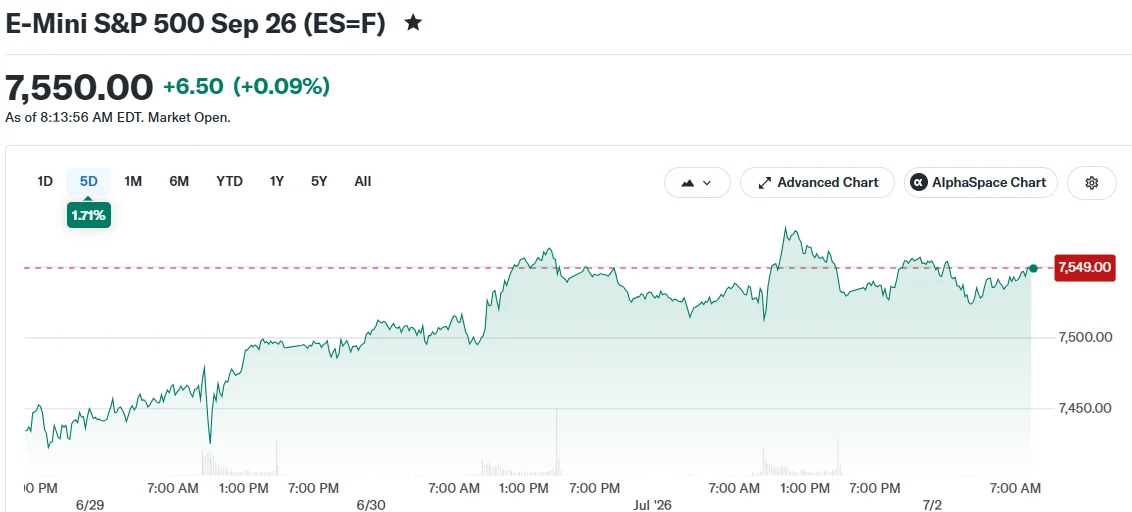
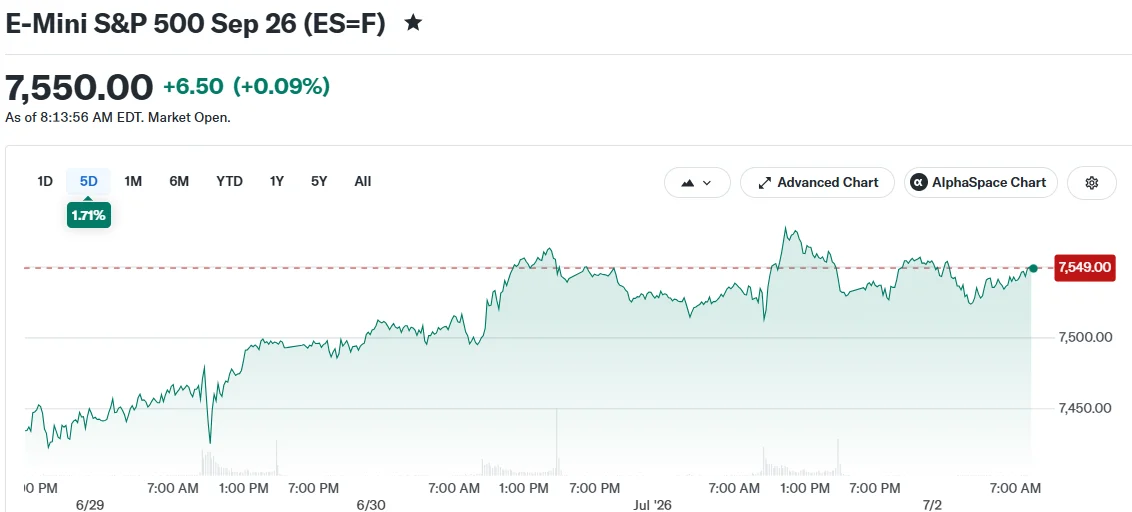
Equity markets across the United States posted gains on Thursday following a disappointing June employment report that suggested the Federal Reserve might pause its interest rate tightening campaign.
The Dow Jones Industrial Average advanced approximately 370 points, representing a 0.7% increase. The S&P 500 climbed 0.6%, while the Nasdaq Composite registered a 0.5% gain during morning trading sessions.
Employment Data Falls Short of Projections
According to the Labor Department’s latest release, the American economy generated 57,000 new positions during June. This figure represented a substantial miss compared to economist consensus estimates of 113,000. The data marked a notable deceleration from hiring patterns observed over the preceding three-month period.
The unemployment metric registered at 4.2%. Analysts had projected the rate would remain unchanged at 4.3%, making the slight decline an unexpected development.
The subdued hiring figures interrupted what had been a consecutive three-month stretch of robust employment growth. It simultaneously altered market sentiment regarding the Federal Reserve’s upcoming policy decisions.
Chairman of the Federal Reserve Kevin Warsh recently advised Wall Street participants to concentrate on fundamental economic metrics instead of anticipating explicit central bank communication. Thursday’s employment data provided market participants with tangible information to digest.
Chris Zaccarelli, serving as chief investment officer at Northlight Asset Management, suggested the deceleration in job creation might encourage more aggressive Federal Reserve policymakers to reconsider the pace of monetary tightening.
The likelihood of interest rates remaining unchanged through year-end climbed to 21.7%, as indicated by the CME FedWatch Tool. Market participants continue to factor in the possibility of at least one rate increase during 2025.
Government bond yields adjusted following the data release. The 2-year yield declined to 4.15%, whereas the 10-year yield ticked upward to 4.49%. The U.S. dollar simultaneously weakened against major currencies.
Technology Sector Experiences Headwinds From Semiconductor Decline
Despite broader market strength, technology equities encountered resistance. The Nasdaq underperformed relative to both the Dow and S&P 500 during the trading session.
A significant decline among South Korean semiconductor manufacturers dampened investor sentiment. The Kospi index plummeted 7.9%. SK Hynix tumbled more than 14%, while Samsung Electronics experienced a decline exceeding 9%. Both corporations had recently unveiled substantial artificial intelligence infrastructure investment initiatives.
Microsoft shares defied the broader technology sector weakness, posting gains despite surrounding headwinds.
Oil prices retreated after Qatar, serving as intermediary in U.S.-Iran nuclear negotiations, characterized this week’s diplomatic exchanges as productive. While no agreement materialized, the diplomatic atmosphere was interpreted favorably.
With American financial markets scheduled to close Friday in observance of Independence Day, certain traders appeared to be adjusting positions ahead of the extended holiday weekend.
The S&P 500 was trading at 7,501 during midday activity. The Dow reached 52,757. The Nasdaq positioned at 25,992.

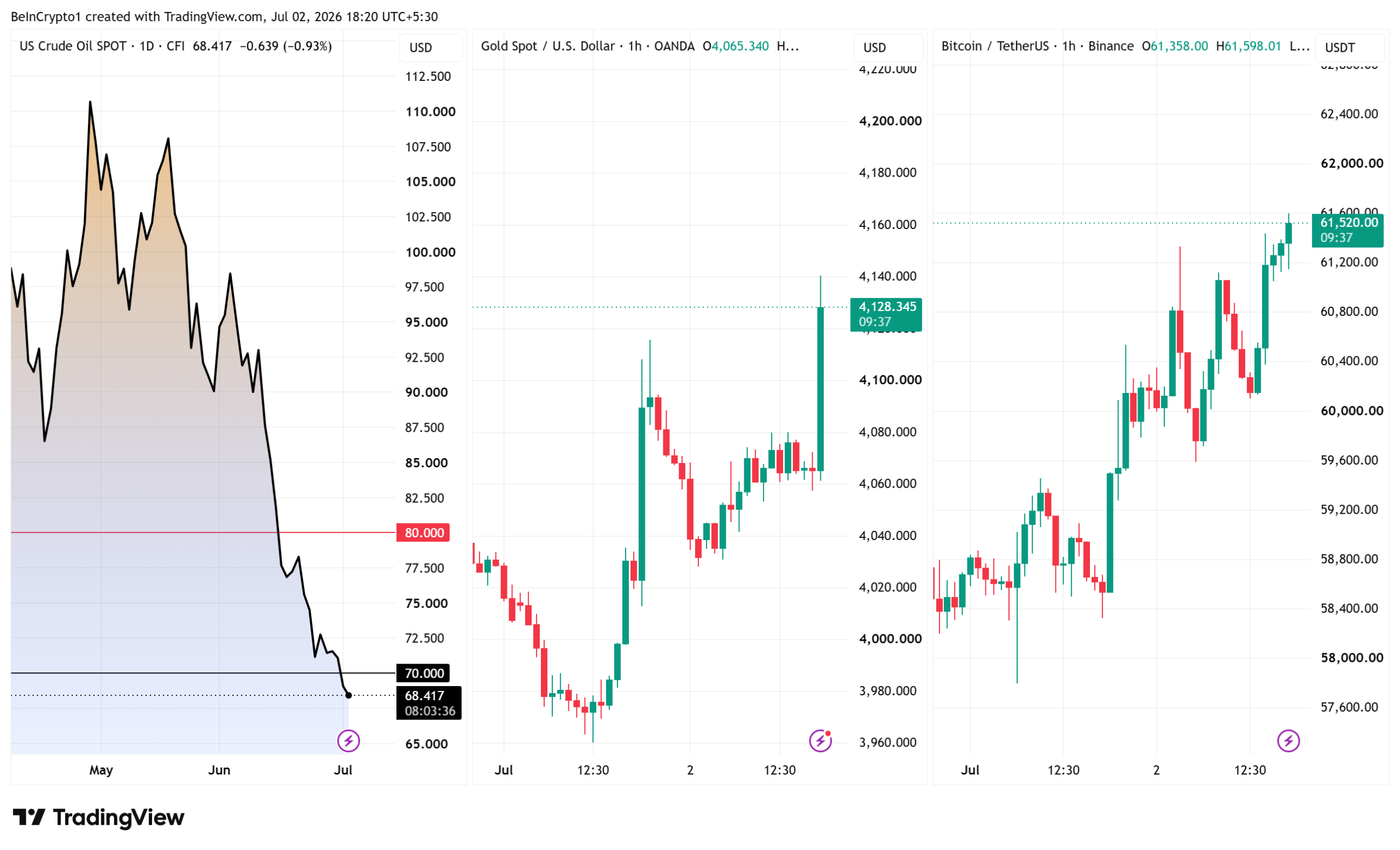
The oil price fall deepened on Thursday as WTI crude slipped below $68 for the first time in 125 days. Meanwhile, Bitcoin (BTC) climbed more than 5% to levels above $61,500, and gold extended gains beyond $4,000.
Recovering Saudi shipments through the reopened Strait of Hormuz have erased much of crude’s war premium. Prices had climbed above $110 at the height of the conflict.

Why the Oil Price Fall Deepened
Saudi Arabia is shipping its most crude through the Strait of Hormuz since the US-Iran truce reopened the waterway. Four supertankers operated by national carrier Bahri reportedly exited the Gulf with roughly 8 million barrels.
The recovery is steep. Exports had slumped to about 4 million barrels per day during the fighting, down from more than 7 million in February. They are again approaching the pre-war pace of 6.3 million barrels per day recorded in Argus data.
During the closure, Riyadh kept roughly half its exports flowing by diverting cargoes to Red Sea ports. Saudi Aramco has since resumed loadings at Ras Tanura, the world’s largest oil terminal, after a near four-month halt.
Shipping analytics firm Kpler estimates strait traffic has recovered to about 40 vessel crossings per day. Neighboring UAE flows have already returned to pre-war levels.
The stakes are global. The waterway handles roughly 20% of seaborne oil trade, according to the EIA. Consequently, WTI now trades below its level when US strikes on Iran began in late February.
However, the 60-day truce roadmap remains interim, and insurers stay cautious on Gulf shipping.
Bitcoin and Gold Move the Other Way
Bitcoin gained over 5% over the past 24 hours to trade near $61,649 as of this writing. Cheaper energy and fading geopolitical fear are reviving appetite for risk assets. Falling crude also cools inflation expectations, an added support for risk-taking.

The bounce extends signs that Bitcoin selling pressure was already easing before the truce. Equities tell a similar story, with nearly 60% of S&P 500 stocks carrying record Buy ratings as tensions cool.
Inflation worries have not vanished, though. San Francisco Fed President Mary Daly noted the AI investment shock has markets asking if it will fuel inflation.
That helps explain gold’s resilience. The metal traded near $4,119, with an intraday push toward $4,140, and remains well below January’s record above $5,500.

However, bullion is still up more than 22% over the past year. Investors continue to hold it as an inflation and geopolitical hedge.
The divergence suggests markets are pricing a durable supply recovery while still hedging the truce’s fragility.
The post Oil Extends Fall After Saudi Exports Surge: Why Are Bitcoin and Gold Rallying? appeared first on BeInCrypto.
SBI Crypto has announced it will shut down its mining pool on July 31, ending a service tied to one of Japan’s largest financial groups and giving miners less than a month to redirect their hashrate.
The pool will stop accepting mining shares, which represent a miner’s contributions in the pool, on the cutoff date, according to SBI Crypto. Shares submitted after that cutoff will not be accepted, and the firm said the pool is expected to operate normally until the shutdown date.
The company urged customers to keep mining with the pool until the cutoff so eligible shares are included in the final payout calculation.
SBI Crypto’s mining pool, according to data from Hashrateindex, accounts for roughly 2% of the Bitcoin network’s total hashrate. The firm did not disclose a reason for the closure in its shutdown notice, and it did not provide current hashrate figures for the pool.
SBI Crypto operates under SBI Group, the Japanese financial conglomerate. The mining pool opened to the public in 2021, with SBI saying at the time that it would support the pool with roughly 1.1 EH/s of its own mining power.


The U.S. Treasury’s Office of Foreign Assets Control (OFAC) added 134 crypto wallet addresses to its ISIS-Khorasan (ISIS-K) sanctions entry on Wednesday, including 131 Tron addresses and 3 Monero addresses.
The TRON wallets received more than $1.4 million since 2023 and sent more than $880,000, according to Chainalysis. Tether froze balances on all 131 Tron addresses.
ISIS-K, the Islamic State affiliate active across Afghanistan, Pakistan and parts of Central Asia, has used its media arm al-Azaim Media Foundation to solicit crypto donations through websites and messaging platforms, Chainalysis said.
Chainalysis said it identified historical donation addresses tied to the group on the Tron, Monero and Bitcoin networks.
The freeze reinforces the role of centralized stablecoin issuers in sanctions enforcement. Tether froze more than $182 million in USDT across five Tron wallets in January under its sanctions compliance policy.
OFAC also sanctioned a Brazil-linked network tied to Primeiro Comando da Capital, or PCC, which Treasury described as Latin America’s largest criminal gang.
The network laundered more than $30 million in U.S.-generated illicit proceeds and used crypto to move funds back to Brazil, according to the Treasury.


The six-figure Strategy stock purchase that FBI Director Kash Patel forgot to disclose last year is currently down 45%.
NOTUS reports that on November 21, 2025, Patel bought between $100,001 and $250,000 worth of shares in the BTC treasury firm. If he invested $100,001, it would now be worth $55,000 and if it were the full $250,000, it would be worth $137,500.
Patel didn’t disclose the purchase until May 26 this year. This is despite rules stating that executive government officials have to report trades worth over $1,000 within a 45-day period.
First-time offenders face a $200 fine, but FBI officials told NOTUS they haven’t fined Patel as of yet.
A letter written by the Deputy Assistant Attorney General William Taylor to the Office of Government Ethics claimed Patel “inadvertently omitted” the transaction after a “miscommunication.”
Taylor added, “Director Patel is in compliance with applicable laws and regulations governing conflicts of interest.”
Strategy’s stock price is also down almost -77% over the past year. The company and its founder, Michael Saylor, has previously said that BTC is an asset that traders should refrain from selling.
Read more: Kash Patel ‘spiderkash’ leak triggers dozens of Solana memecoin scams
Despite this, the company decided to sell 32 BTC (worth $2.5 million) last month. It’s since committed to selling another $1.25 billion worth of BTC in order to cover share buybacks and dividends.
Trump’s crypto ventures dwarf Patel’s Strategy trade
Patel’s Strategy trade appears insignificant when compared to the recent portfolio disclosures from President Donald Trump that reveal that his crypto-related profits from last year totaled over $1 billion.
His Office of Government Ethics disclosure revealed that he made $635 million from selling his TRUMP crypto token, and $526 million from the sale of World Liberty Financial tokens.
He also holds over $50 million worth of ETH and over $50 million worth of BTC.
This is despite the price of TRUMP falling 94% since its launch in January 2025. If someone had invested $1,000 at the time, their holding would be worth $60 today.
Got a tip? Send us an email securely via Protos Leaks. For more informed news and investigations, follow us on X, Bluesky, and Google News, or subscribe to our YouTube channel.
Crypto World
XRP Ledger Lending Amendments Face 80% Validator Hurdle as Institutional Credit Layer Takes Shape
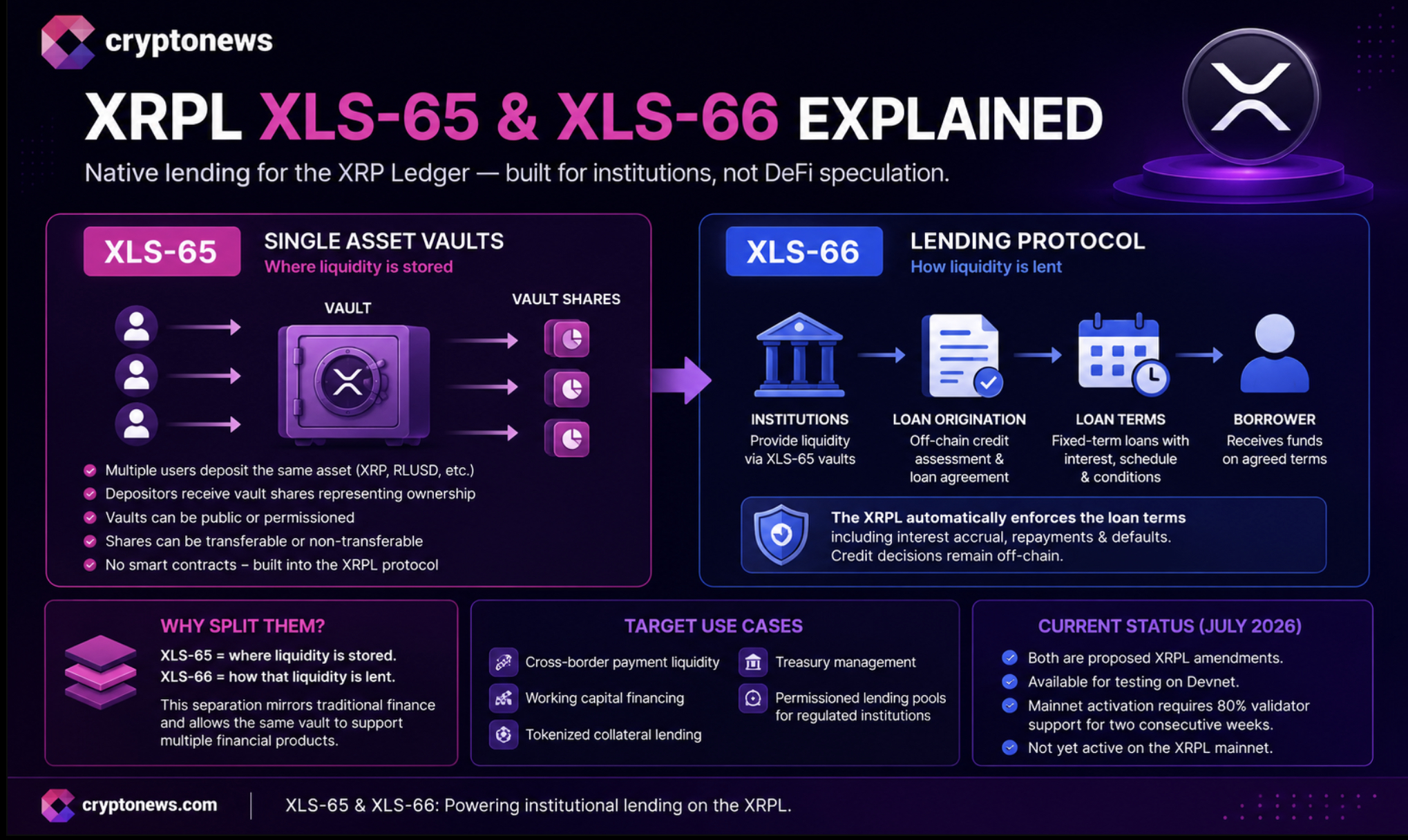
Ripple has formally proposed two XRPL amendments, XLS-65 and XLS-66, that would embed fixed-term institutional credit infrastructure directly into the XRP Ledger. With it rolling, the validator voting is also now active following the Rippled v3.1.0 release in late January 2026.
The framework targets uncollateralized, underwritten lending for regulated financial institutions, positioning XRPL as a credit layer rather than a payments rail. It is a structural shift that hinges entirely on whether the amendments can clear an 80% validator consensus threshold.
Don’t Miss Out on Our $1,000 USDT Airdrop on ByBit
That threshold remains the critical unknown. As of recent tracking, XLS-65 held approximately 8 validator yes votes, or just 22.86%, while XLS-66 had secured around 7, or 20%. Both figures sit well below the sustained 80% support required over two consecutive weeks for mainnet activation.
Discover: The Best Crypto to Diversify Your Portfolio
Single Asset Vaults and the Lending Protocol Mechanics
The two amendments operate as an interlinked system. XLS-65 introduces Single Asset Vaults, permissioned pools where liquidity providers deposit a single token. It holds RLUSD, XRP, tokenized U.S. Treasuries, or other tokenized assets, which are held directly by the vault structure itself. The XLS-65d revision simplified this model by eliminating two previously required transactions, reducing overhead for both depositors and redemption flows.
XLS-66 builds the XRPL lending protocol on top of those vaults, specifying the on-ledger mechanics for loan origination, interest accrual, amortized repayment, and default enforcement via LoanSet, LoanPay, and LoanDelete transactions. Critically, underwriting and borrower credit assessment remain off-chain.
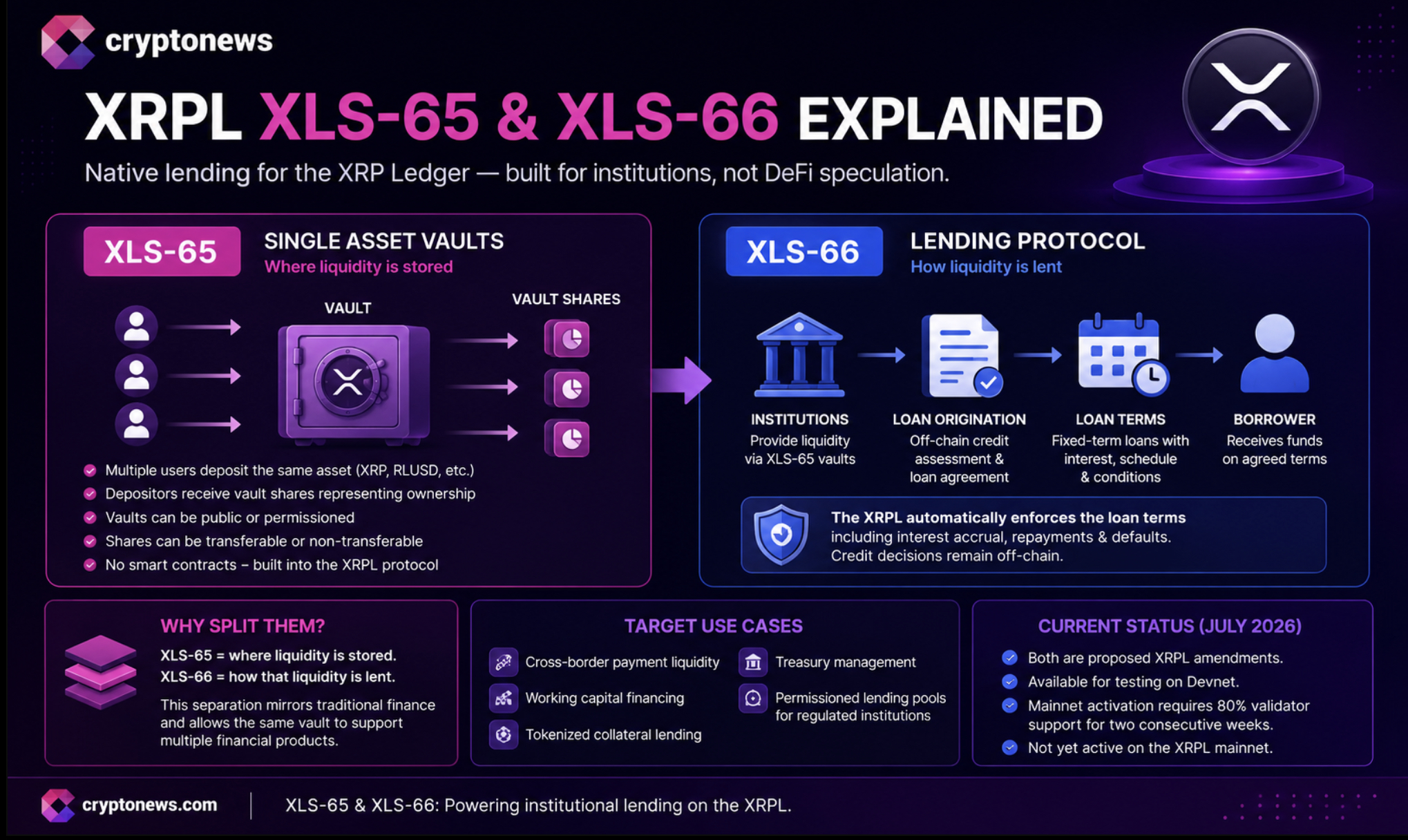
With this, institutional credit desks handle the risk evaluation while XRPL manages execution and the loan lifecycle. This is not Aave-style overcollateralized lending; it is fixed-term, underwritten credit extended to credentialed counterparties.
The compliance architecture runs through XRPL’s existing permissioned domains, credential verification, clawback mechanisms, and freeze functionality. Vault operators can restrict participation to KYC/AML-compliant entities at the protocol level, which is precisely what separates this from open DeFi.
Discover: The Best Token Presales
XRP at $1.00: What Activation Would and Would Not Prove
XRP is trading near the $1.00 level, a psychologically significant threshold that has drawn attention from technical analysts tracking a coiling triangle pattern with progressively higher lows against flat resistance.
XLS-65 and XLS-66 activation would confirm XRPL as a viable credit infrastructure layer, but the demand signal that actually moves price is institutional adoption. Price movement will depend on whether regulated entities deploy capital into RLUSD-funded vaults at scale.

The amendments are currently testable on devnet, and developers can integrate against the lending stack ahead of mainnet activation. XRP’s market performance in the near term will be shaped more by whether validator momentum accelerates toward that 80% threshold than by any single technical level. The framework is credible; the activation path is not yet assured.
Discover: The Best Crypto to Diversify Your Portfolio
The post XRP Ledger Lending Amendments Face 80% Validator Hurdle as Institutional Credit Layer Takes Shape appeared first on Cryptonews.

Zoom snaps up Seattle startup Common Room to bolster AI-powered sales tools

Ripple XRP INSANE LDN PUMP INCOMING ITS TIME TO CELEBRATE THE FIRST OF JULY GREEN LIT OMG!

Quantum Computing: More Treasury Income Than Product Revenue (NASDAQ:QUBT)


-

 Fashion6 days ago
Weekend Open Thread: Staud – Corporette.com
-

 Politics6 days ago
The House | Manchesterism won’t survive the painful trade-offs unless it gets citizens on board
-

 Crypto World3 days ago
Strategy authorizes up to $1.25B in Bitcoin sales under new capital plan
-

 Politics7 days ago
Potential 2028er World Cup attendee leaderboard
-

 Business6 days ago
Asia stock markets slide as tech shares slump
-

 News Videos4 days ago
MAJOR BITCOIN & MARKET UPDATE!!!! (MUST WATCH ASAP!!!)
-

 Tech7 days ago
A Look At A Gaggle Of Transputer Boards
-
 Crypto World7 days ago
Dell (DELL) Shares Tumble Over 5% Following Analyst Downgrade to Hold
-

 Crypto World5 days ago
Coinbase, Circle Deepen Crypto Stock Losses Despite Resilient S&P 500
-

 Business3 days ago
Australia treasurer says alleged access of prime minister’s bank data ’incredibly concerning’
-

 Crypto World5 days ago
Kraken's xStocks Opens Bending Spoons IPO Registration to EEA Retail
-

 Tech3 days ago
Anonymous researcher drops 0-day ‘exploitarium’ repo
-

 Sports6 days ago
FIH Pro League: India defeat Pakistan 7-1, register biggest win of campaign | Other Sports News
-
 Crypto World7 days ago
Bitcoin Sparks $600M Hourly Liquidations With $65,000 Set To Become Resistance
-

 Tech5 days ago
Bluekit phishing kit adopts browser-in-the-middle for login theft
-

 Tech5 days ago
Russian hackers now target Signal backup recovery keys
-
 Crypto World6 days ago
Hyperliquid Named on Singapore MAS Investor Alert Register
-

 Crypto World6 days ago
RTX holders must register wallets before token distribution begins
-

 Sports1 day ago
Broncos roster: OL Ben Powers (No. 74) entering final year of contract
-
 Business3 days ago
The AI boom won’t burst all at once. It will pop in ‘rolling bubbles’: Macquarie
You must be logged in to post a comment Login