
Crypto World
Stock Market: Oil And AI Stocks Score High Marks On Elite Screen


In a stock picker’s market, investors look for stocks that outperform their peers. Research tools at Investor’s Business Daily leapfrog this process, and among them is a screen for stocks whose relative performance is not just better than others but is at new highs. Shipping stocks have been getting a boost amid the oil supply shock. Also, software provider JFrog…
Copyright ©2026 Investor’s Business Daily, LLC. All rights reserved. 87990cbe856818d5eddac44c7b1cdeb8

Cardano’s native cryptocurrency has lost much of its gains posted in mid-August and has dropped below the psychological level of $0.20.
We asked three of the most popular AI-powered chatbots about what’s next in September – a rally or a deeper decline. Here are their answers.
The Slightly Bullish Prospects
ChatGPT predicted a volatile September for ADA, claiming the asset is most likely to trade between the $0.18-$0.27 range. OpenAI’s platform noted that the rebound from $0.17 earlier this month showed that buyers are still willing to jump on the bandwagon when the token is heavily discounted.
That said, it assumed that a return above $0.23 could trigger another attempt at $0.25-$0.27. Moreover, if ADA breaks $0.27 with strong volume, the next realisting area would be $0.30-$0.35, ChatGPT added.
The chatbot claimed that the asset’s biggest problem in September is the upcoming FOMC meeting, where the Federal Reserve will discuss its monetary policy and decide whether to hike, cut, or keep interest rates unchanged.
“A hike – or even a strongly hawkish message – could push Bitcoin lower and send ADA back toward $0.18. Losing that support would expose $0.17 and potentially $0.14-$0.15.”
In conclusion, ChatGPT remains slightly bullish but suggested that September will be more about rebuilding the chart than starting a major bull run.
Perplexity described the coming month as “challenging” and paid special attention to the $0.21 mark, classifying it as the “make-or-break” level.
“Clearing and holding $0.21 is the single most critical technical trigger for Cardano right now because it acts as the pivot point between a healthy bull market structure and a deeper correction,” it explained.
Not long ago, X user Sssebi issued a similar thesis, arguing that a weekly close above that zone would mean “game on” for ADA. If you want to explore additional price predictions involving the asset, check our detailed article here.
Bearish to Neutral
Google’s Gemini presented a more cautious outlook, suggesting that the following month could prove unfavorable for Cardano’s token due to a mix of macroeconomic pressures, market dynamics, and technical headwinds. That said, it warned that an extreme pullback to $0.10 in the next four weeks is not completely impossible.
The chatbot also noted that September has historically been the worst period for the asset. According to CryptoRank, ADA has finished the month in the green only once (in 2024), while the other seven closes were all in the red.

The post Cardano (ADA) Enters Its Worst Month: 3 AIs Examine Its September Prospects appeared first on CryptoPotato.
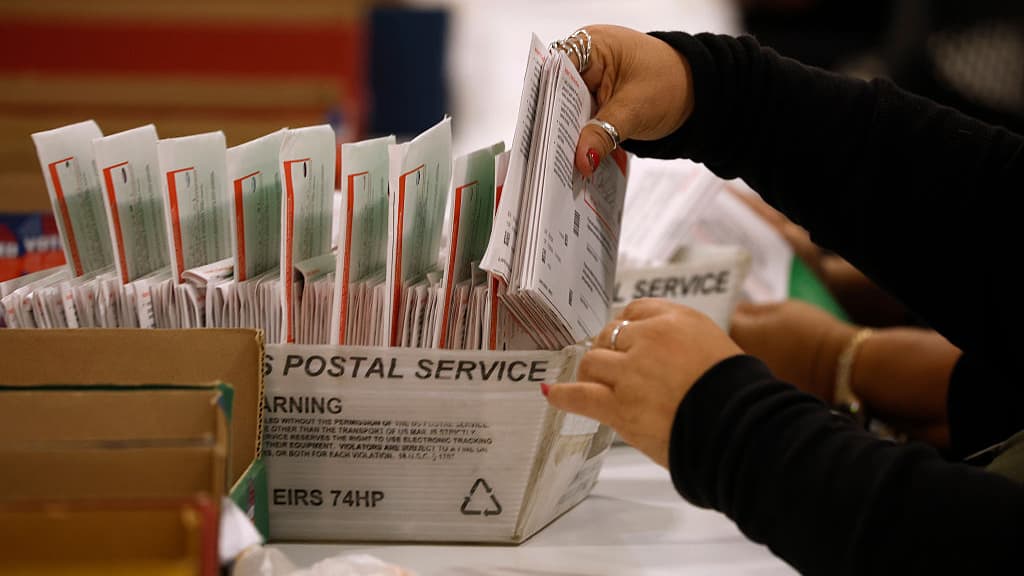
“We’re all flying blind,” says one Democratic campaign consultant.
“That’s the 8 million-vote question,” responds a Republican consultant when asked about how their party is adapting to the legal limbo.
For over a year, President Donald Trump has been laying the groundwork for the U.S. Postal Service to take on a new role in deciding which mail-in ballots get to be counted, working off lists of citizens created by the Department of Homeland Security. It’s a process that experts predict would likely lead to the disenfranchisement of many legitimate voters. Most of them, it’s worth saying, are Democrats.
Last week, the Supreme Court issued an emergency order that amounted to a procedural and preliminary win for Trump’s plan, but other courts have stepped in to block it on merits. The result is growing confusion over how, exactly, the votes might—or might not—be counted come November.
Some election experts insist that things are not as urgent as either side would have you believe. “I’m annoyed, but not freaked out,” says Michael Waldman, president and CEO of the Brennan Center for Justice, a nonpartisan think tank. “The court’s ruling was a procedural one, with a great deal of legal back and forth to come. The executive order is still illegal and still unconstitutional.”


HKDAP could move the Hong Kong dollar beyond payments and into cross-border settlement, corporate treasury management and tokenized finance as regulated stablecoins gain a role in Hong Kong’s on-chain financial system, according to a HashKey researcher.
Summary
- HashKey senior researcher Tim Sun sees HKD stablecoins becoming an on-chain settlement vehicle rather than simply another payment method.
- Insurance has emerged as an early HKDAP use case, with HashKey and YF Life already completing a live transaction using real funds.
- Trade settlement, corporate treasury management and tokenized assets could provide additional uses as HKDAP’s institutional network expands.
- Sun said HKD stablecoins could also prevent on-chain finance from depending solely on U.S. dollar stablecoins over the long run.
HashKey senior researcher Tim Sun told crypto.news that the future role of Hong Kong dollar stablecoins, including HKDAP, could extend well beyond payments as financial assets increasingly move onto blockchain networks.
“From our perspective, the role of HKD stablecoins (including HKDAP) in the future will be more than just a new payment tool; more importantly, they will serve as a digital vehicle for the Hong Kong Dollar to enter the on-chain financial system.”
According to Sun, Asia’s large cross-border capital flows, established financial system and growing use of asset tokenization create several possible applications for regulated HKD-denominated stablecoins. He identified cross-border settlement, corporate treasury management, and digital asset trading as areas where tokenized HKD could be used.
Tokenized financial assets could create another use case because their subscription, redemption, and settlement require a compatible form of money, Sun said.
“Looking further ahead, as more financial assets move on-chain, the market needs not only on-chain assets but also a matching on-chain settlement currency,” he added.
HKDAP insurance tests provide an early use case
Insurance has already provided one of the first institutional environments for testing the token.
On Aug. 14, HashKey Exchange said it had completed a live HKDAP transaction with YF Life Insurance International using real funds. The exercise covered the stablecoin’s subscription and redemption process, while YF Life said it planned to support HKDAP premium payments in the future, subject to regulatory requirements.
Sun said the regulated nature of insurance makes it compatible with a stablecoin issued under formal regulatory oversight. Premium payments also offer a standardized and recurring transaction that institutions can use to test settlement infrastructure.
“The two announced cooperation cases indeed both have a background in insurance institutions,” Sun said.
“On one hand, insurance is a highly regulated industry, which aligns well with the positioning of a regulated stablecoin. On the other hand, from a business perspective, premium payment itself is a relatively clear, standardized, and high-frequency real-world scenario.”
HashKey has also partnered with insurer OneDegree to explore local and cross-border applications for HKDAP, adding another insurance-related test to the token’s early institutional rollout.
The activity follows Anchorpoint Financial’s controlled launch of HKDAP earlier in August. As previously reported, Anchorpoint appointed HashKey Exchange as an authorized distributor, allowing eligible institutions and professional investors to access minting, redemption, and fiat conversion during the beta phase.
HashKey had completed an initial minting and redemption transaction with eligible clients when the distribution arrangement was announced.
HKDAP use cases are extending into trade and treasury
Insurance is not the only financial activity being tested.
On Aug. 13, Unloq said its SC+ trade-finance infrastructure completed a Hong Kong transaction using HKDAP as the settlement instrument for a receivables-financing transaction. SC+ created a blockchain representation of the approved receivable, while HKDAP handled settlement within the workflow.
Sun said trade, corporate cross-border fund management, and tokenized assets are among the areas where stablecoins could provide additional utility.
“These fields inherently have strong demands for multi-currency, cross-timezone, and capital allocation capabilities, which better reflect the incremental value of stablecoins in on-chain settlement and cross-border fund management,” he said.
Institutional distribution has also continued to expand since HKDAP entered beta access.
Standard Chartered Bank (Hong Kong) became HKDAP’s first bank distributor on Aug. 24 and said it was working with eligible institutional clients on potential applications involving fund settlement, treasury management and cross-border trade payments.
Anchorpoint’s records show further additions to the distribution network during the final week of August. Finloop became an authorized distributor on Aug. 25, followed by Yunfeng Financial on Aug. 26, while Bank of East Asia signed an agreement with Anchorpoint on Aug. 28 to explore applications for the HKD-backed token.
HKDAP remains under Hong Kong’s regulated rollout
Despite the expanding list of institutional participants, HKDAP remains in a controlled rollout rather than unrestricted public distribution.
Anchorpoint began beta access on Aug. 12 for institutional distributors and professional investors, initially identifying cross-border payments, fiat conversion, and tokenized-asset settlement among its intended applications. The institutional rollout followed months of regulatory and technical preparation.
Before distribution began, Anchorpoint, OSL Group and Futu-backed PantherTrade tested HKDAP transfers on Ethereum mainnet in May. The Ethereum test covered the token’s transaction process after Anchorpoint received regulatory approval.
HKDAP has a par value of HK$1 per token, according to Anchorpoint’s whitepaper. Tokens in circulation must be supported by a reserve pool with a market value at least equal to the outstanding HKDAP, with the assets held in trust for token holders.
The regulatory foundation was established in April, when the Hong Kong Monetary Authority granted its first stablecoin issuer licenses to Anchorpoint and HSBC. The first licenses came under the Stablecoins Ordinance, which took effect in August 2025 and subjects covered issuers to requirements involving reserves, redemption, governance and risk controls.
Anchorpoint itself was formed by Standard Chartered Bank (Hong Kong), HKT and Animoca Brands after the companies participated in the HKMA’s stablecoin issuer sandbox.
HKD stablecoins could offer an alternative settlement currency
For Sun, one of the longer-term questions is whether tokenized financial activity should remain overwhelmingly dependent on dollar-denominated stablecoins.
“The significance of the HKD stablecoin lies in enabling the HKD to participate in this new financial infrastructure system, preventing on-chain finance from relying solely on USD stablecoins in the long run.”
The argument comes as the United States builds its own federal framework around payment stablecoins. President Donald Trump signed the GENIUS Act into law in July 2025, creating a federal regulatory structure for permitted payment stablecoin issuers.
U.S. regulators, however, missed the law’s July 18, 2026 deadline for completing key implementing rules, leaving several proposals unfinished ahead of the framework’s Jan. 18, 2027 effective date. U.S. rulemaking deadline
Treasury and other U.S. regulators have also proposed customer-identification requirements for certain permitted payment stablecoin issuers. Under the proposal, covered issuers would be treated as financial institutions for Bank Secrecy Act purposes and would need to verify customers in direct relationships, while secondary-market transactions generally would not trigger the same requirement.
Hong Kong’s framework, meanwhile, has placed HKDAP under HKMA supervision from issuance. Anchorpoint’s whitepaper states that the token is authorized for issuance in Hong Kong and may be distributed in other jurisdictions only in accordance with applicable local laws.


The crypto market has posted sharp gains across Bitcoin and several major altcoins, but Cryptex Finance data covering 36 assets and roughly 92% of the digital asset market shows that capital remains heavily concentrated in Bitcoin and Ethereum despite prices rising across the market.
Summary
- Cryptex’s 36-asset index gained just 1.92% over the trailing seven days, even as several major cryptocurrencies posted much larger gains from their recent lows.
- Joe Sticco said low price dispersion suggests cryptocurrencies are moving together rather than investors rotating capital between assets and sectors.
- Sticco said roughly nine out of every ten dollars entering regulated crypto products during one recent session went to Bitcoin and Ethereum.
- U.S. spot Bitcoin ETF inflows provide evidence of institutional demand, although Sticco said rising asset values should not be confused with fresh capital entering the funds.
Cryptex Finance co-founder Joe Sticco told crypto.news that participation in the recent rally had spread across the market, but the allocation of capital had not followed at the same pace, leaving cryptocurrencies trading more like a single group than a market in which investors are selecting individual winners.
Cryptex’s market index stood at 1,199.69, almost 20% above the base level of 1,000 set on Feb. 20. The index tracks 36 assets across five sectors using Coinbase pricing, giving Sticco a larger sample than Bitcoin or a handful of major altcoins alone.
Over the trailing seven days, however, the index had risen only 1.92%. Sticco said the figure matters because much of the rally that produced large percentage gains from recent lows took place within roughly 72 hours between Aug. 19 and Aug. 21, followed by several days of relatively flat trading.
“Measure from the low, and you get a rally. Measure the trailing week, which is what most readers think they’re being told, and you get almost nothing,” Sticco said.
Bitcoin’s acceleration during that period followed a major derivatives flush alongside renewed spot demand. Earlier market coverage showed BTC jumping from below $65,000 to around $69,500 on Aug. 19 as more than $1 billion in crypto short positions were liquidated within an hour.
Crypto market gains show little separation between assets
Price dispersion within Cryptex’s index provides another reason Sticco is reluctant to describe the rally as a full capital rotation.
On the day measured by Cryptex, the strongest constituent gained 6.71%, while the weakest declined 1.49%. Despite covering 36 cryptocurrencies from five sectors, the entire range between the best and worst performers amounted to roughly eight percentage points.
“That is not a market sorting winners from losers. That’s a market moving as one block,” Sticco said.
According to Sticco, such low dispersion indicates that a common market factor is lifting cryptocurrencies together instead of investors moving money between assets based on individual fundamentals.
Major tokens nevertheless produced very different headline returns when measured across the rally. Sticco put Bitcoin’s seven-day increase at roughly 14%, XRP’s at 28%, and Solana’s at about 19%.
Capital allocation did not match the apparent spread in price performance. Bitcoin dominance remained around 57% to 60%, depending on the market universe used, while Sticco cited an Altcoin Season Index reading below 40, far under the 75 level generally used by the index to signal an altcoin season.
Solana also remained more than 50% below its October 2025 level despite gaining about 19% during the week, according to Sticco.
“Participation broadened. Allocation didn’t,” he said.
Institutional flows remain concentrated in Bitcoin and Ethereum
Regulated investment products give Sticco another way to separate rising cryptocurrency prices from the destination of new capital.
During one recent Wednesday session, Sticco said U.S. spot Bitcoin ETFs received about $232 million, while Ether ETFs attracted roughly $192 million. XRP products brought in around $28 million, compared with approximately $15 million for HYPE products and $9 million for Solana.
By his calculation, close to nine dollars out of every ten went into Bitcoin and Ethereum. Weekly figures showed a similar concentration, with Bitcoin receiving about 71% of flows and Ethereum another 26%.
The concentration comes even as U.S. spot products have helped support Bitcoin’s recovery. A previous report on ETF demand found that U.S. spot Bitcoin ETFs had taken in approximately $1.9 billion across five consecutive inflow sessions by Aug. 24, while analysts said continued spot buying would be needed after forced short covering helped accelerate the initial breakout.
Sticco said the subsequent streak had reached eight consecutive sessions of net Bitcoin ETF inflows totaling about $2.8 billion, while Ether ETFs had also recorded eight positive sessions and more than $1 billion in inflows.
August Bitcoin ETF inflows had exceeded $3 billion by the time of his comments, making it the strongest month of 2026, according to Sticco. He said BlackRock had absorbed a large portion of the demand, including around $1.3 billion during the previous week.
“Eight straight sessions of regulated spot creations is not what a short squeeze produces,” he said.
The ETF numbers, however, require another distinction when assessing how much new institutional money has entered Bitcoin.
Sticco said net assets held by the funds had climbed from roughly $77 billion in mid-August to just above $99 billion by Tuesday, an increase of about $22 billion. Actual net inflows during the eight-session streak totaled only around $2.8 billion.
Much of the difference came from Bitcoin’s rising price increasing the value of assets already held by the funds, he said, rather than investors supplying another $22 billion in fresh capital.
Earlier in August, five consecutive inflow sessions had brought approximately $853.5 million into U.S. spot Bitcoin ETFs between Aug. 3 and Aug. 7, reversing withdrawals recorded during the preceding week.
Sticco also cautioned against viewing August in isolation. He said spot Bitcoin ETFs lost roughly $5.4 billion during the first half of 2026 and remained about $2.5 billion in negative territory for the year despite the latest inflows.
ETF demand is clearer than derivatives positioning
Separating institutional buying from leverage requires looking at different parts of the market, according to Sticco.
ETF flows and market depth measure demand, while funding rates, futures basis, and open interest give more information about trader positioning. Sticco said falling open interest alongside rising prices can indicate shorts are closing rather than new buyers entering.
He declined to characterize current open interest as either bullish or bearish because publicly available readings differed. Some datasets quote open interest in Bitcoin while others measure its dollar value, which can produce different trends when BTC itself moves sharply.
Market depth presents a similar problem. Sticco described depth as one of the most useful measures for institutional participation because it shows how much capital can enter or exit without materially moving the market.
“Price tells you what the last trade cleared at. Depth tells you what the next big one will cost.”
Available public depth figures were not current enough for Sticco to say confidently how much liquidity had recovered. He pointed instead to the damage following the October 2025 deleveraging event, when he said an estimated $10 billion to $20 billion in leveraged positions were erased and Bitcoin’s top-of-book depth on major venues fell more than 90% intraday.
Market makers subsequently reduced resting liquidity after getting caught with inventory while hedges were force-closed, according to Sticco, leaving order books at their thinnest since 2022.
For Sticco, the institutional side of crypto has therefore developed faster than the liquidity supporting the underlying market.
U.S. policy and Treasury conditions remain part of the rally
Macroeconomic conditions have also played an important role in the latest advance, according to Sticco, who pointed to the U.S. Treasury’s Aug. 19 decision to increase long-dated debt buybacks as an important catalyst.
The Treasury doubled the maximum size of certain long-end liquidity support buybacks from $2 billion to at least $4 billion per operation. The Treasury announcement was followed by falling long-term yields and an 8.2% Bitcoin advance from an intraday low around $64,100 to approximately $69,500 in less than 12 hours.
Sticco said Bitcoin’s close relationship with software stocks during the move shows how crypto has become more connected to U.S. macro conditions. As interest-rate expectations later changed and short-term yields rose, Bitcoin surrendered some of the gains even though the legislative situation in Washington had not materially changed.
Congress presents another variable for U.S. investors. Sticco pointed to the CLARITY Act, which would establish a statutory division of responsibilities between the SEC and CFTC for parts of the digital asset market and create a federal framework affecting exchanges, brokers, dealers, and custody.
The Senate Banking Committee advanced the legislation 15-9 in May, with Democratic Sens. Ruben Gallego and Angela Alsobrooks joining Republicans. Sticco, who attended the markup as part of Cryptex’s policy work, said both Democrats made clear at the time that their committee votes did not guarantee support on the Senate floor without progress on unresolved provisions.
A Sept. 15 cloture vote requires 60 votes to move the legislation forward. Previous coverage of the negotiations identified ethics rules, stablecoin rewards, and financial-crime provisions among the issues still unresolved ahead of the procedural vote.
For regulated index products, Sticco pointed in particular to provisions covering CFTC registration of digital commodity exchanges, brokers, and dealers. Capital, asset-segregation, surveillance, and customer-protection requirements could increase the number of regulated venues capable of supporting assets used in exchange-traded products, he said.
Sticco also cited custody provisions and changes affecting financial holding companies as potentially important for institutions, while arguing that statutory classification of digital assets would give index providers more certainty than relying on agency interpretations that future regulators could change.
Policy expectations, however, have weakened even as cryptocurrency prices have risen. Sticco said Polymarket odds for the CLARITY Act becoming law in 2026 had fallen from roughly 82% in February to around 25% in late August, while Galaxy Research placed the probability closer to 10%.
The Sept. 15 vote will also fall on the first day of the Federal Reserve’s Sept. 15-16 meeting, leaving two major U.S. policy events scheduled within the same period.
Unresolved Senate negotiations include ethics and conflict-of-interest rules involving government officials, possible secondary enforcement authority for state attorneys general, illicit-finance provisions and banking-industry objections to crypto exchanges paying yield on stablecoin balances, according to Sticco.


MEXC has launched a Visa-linked Global Card offering eligible users up to 10% cashback in USDT as monthly crypto card spending reached $759 million in July, roughly 2.5 times its level a year earlier.
Summary
- MEXC has launched its Global Card with USDT spending through Visa, Apple Pay, and Google Pay.
- The card offers 4% to 10% cashback, with monthly rewards capped at up to 800 USDT.
- Purchase fees are waived through Sept. 30 before a rate starting at 1% takes effect.
- A separate MEXC Earn product offers cardholders up to 7% annualized returns on subscribed USDT.
- U.S. residents cannot apply for the card under MEXC’s current regional restrictions.
According to MEXC’s Aug. 31 announcement shared with crypto.news, the Global Card is a virtual Visa card that lets eligible users spend USDT through the card network while supporting Apple Pay and Google Pay for mobile payments.
The exchange is waiving purchase fees from launch through Sept. 30 and charges no issuance, annual, or top-up fees. Once the promotion ends, purchase fees will start at 1%, according to MEXC’s published fee information.
Transactions use Visa’s exchange rates, while MEXC said it does not apply an additional exchange-rate markup. Foreign exchange fees may still be charged for certain currencies under Visa’s rules.
MEXC Global Card combines USDT spending with cashback
Alongside its fee structure, MEXC has tied the Global Card to a tiered cashback program paying rewards in USDT.
Users receive between 4% and 10% cashback based on their VVIP status and M-Score, which MEXC calculates using activities such as trading, Earn subscriptions, and platform tasks. The Standard level pays 4% with a monthly cap of 100 USDT, while Premier users receive 6% with a 300 USDT cap.
At the highest Elite level, users can receive 10% cashback up to 800 USDT per month. MEXC’s rewards documentation states that a user’s rate is determined by their VVIP level on the final day of each calendar month, with cashback distributed to the user’s spot account on the 15th of the following month.
Refunded and reversed purchases can affect the final reward amount, while some merchant categories are excluded from earning cashback.
MEXC is also offering a separate flexible savings product through MEXC Earn for cardholders. Users who subscribe eligible USDT to the product can earn an annualized return of up to 7%, with MEXC saying the funds can be redeemed without a lock-up period.
The 7% rate applies to USDT subscribed to the Earn product rather than automatically applying to money available for card purchases. MEXC calculates the Earn returns separately from spending cashback.
MEXC CEO Vugar Usi described the card as part of the exchange’s effort to cover more financial activities beyond buying and selling crypto.
“We want users to see digital assets not simply as an investment tool, but as part of a complete financial journey, from saving and yield-generating products to principal-protected solutions and, ultimately, everyday spending,” Usi said.
Usi added that the card allows users to keep assets in digital form until they need to make a payment, connecting asset management with real-world spending.
Crypto card spending reached $759M in July
MEXC’s launch arrives as payment activity through crypto-linked cards has climbed during 2026.
According to an August analysis by a16z crypto using Paymentscan data, monthly crypto payment card volume reached $759 million in July, compared with $306 million one year earlier. Paymentscan had recorded less than $1 million when its tracking started in October 2023.
Transaction counts have risen alongside payment volume. Nearly 9 million purchases were recorded in July, up from about 5.2 million a year earlier, leaving the average purchase at roughly $86.
Stablecoins account for most of the activity tracked by Paymentscan. USDC and USDT together represented 84% of crypto card spending, according to the data cited by a16z.
Other crypto companies have been building similar links between stablecoins and established card networks. In May, crypto.news previously reported that Fold had started issuing its Bitcoin Credit Card to selected waitlist users, with a 1.5% base Bitcoin reward and rewards of up to 4% through additional offers. The Visa-based product also supports Apple Pay and Google Pay.
In August, Western Union launched its Stablecard with Rain, allowing customers to hold and spend its USDPT stablecoin through Visa. The service launched across 37 markets, with Western Union targeting more than 60 markets by the end of 2026.
Visa has also been testing payment models that connect stablecoin balances more directly to its merchant network. A stablecoin spending pilot with WeFi, announced in May, covered selected markets in Europe, Asia, and Latin America and was designed to make self-custodied stablecoins usable for card purchases.
Daily MEXC Global Card spending is capped at 1M USDT
For cardholders making larger payments, MEXC has set the maximum purchase at 80,000 USDT per transaction and the daily spending limit at 1 million USDT.
The limits are considerably higher than those attached to MEXC’s separate APAC card. MEXC’s published comparison states that the Global Card and APAC product remain separate cards with different fee structures and transaction limits.
Applicants must complete MEXC’s advanced identity verification before requesting a Global Card. MEXC said the application process can take about one to two minutes, after which approved customers receive a virtual card that can be used without waiting for a physical card.
MEXC’s card documentation says the Global Card is funded with USDT held on the exchange. The product sits alongside the company’s original APAC card and its co-branded card with ether.fi rather than replacing either product.
Earlier in August, MEXC also expanded its RealStocks product with recurring investment features, portfolio tracking and additional tools tied to tokenized U.S. equities. The product gives eligible users exposure to tokenized assets linked to U.S.-listed stocks, including companies such as Nvidia and Tesla.
U.S. users remain excluded from MEXC card access
Despite Visa’s large U.S. payment network and growing domestic competition among crypto-linked cards, MEXC’s Global Card is not available to U.S. residents.
MEXC’s current card eligibility documentation places the United States on its application blacklist, alongside countries including China, India, Indonesia, Turkey and Russia. Eligibility is based on proof of address, and the exchange tells users to check its current restricted-country list before applying.
The restriction separates MEXC’s launch from crypto cards already available to American users. MetaMask, for example, rolled out its Mastercard-linked debit card across 49 U.S. states in February, allowing eligible customers to spend assets from self-custodial wallets through Apple Pay and Google Pay.
MEXC also operates its main exchange under geographic restrictions. Its published regional guidance states that it does not provide exchange services to U.S. residents, while the company can revise its restricted-jurisdiction list based on legal and compliance requirements.
For eligible Global Card applicants, MEXC requires advanced identity verification before approval. Once approved, the virtual card can be activated immediately, according to the exchange, while card availability and individual services remain dependent on the user’s jurisdiction.
The Federal Trade Commission (FTC) plans to sue Amazon on Monday, according to a report on the Wall Street Journal. Officials say the company quietly raised the minimum price sellers paid for ads on its store. The practice earned Amazon tens of billions of dollars over seven years.
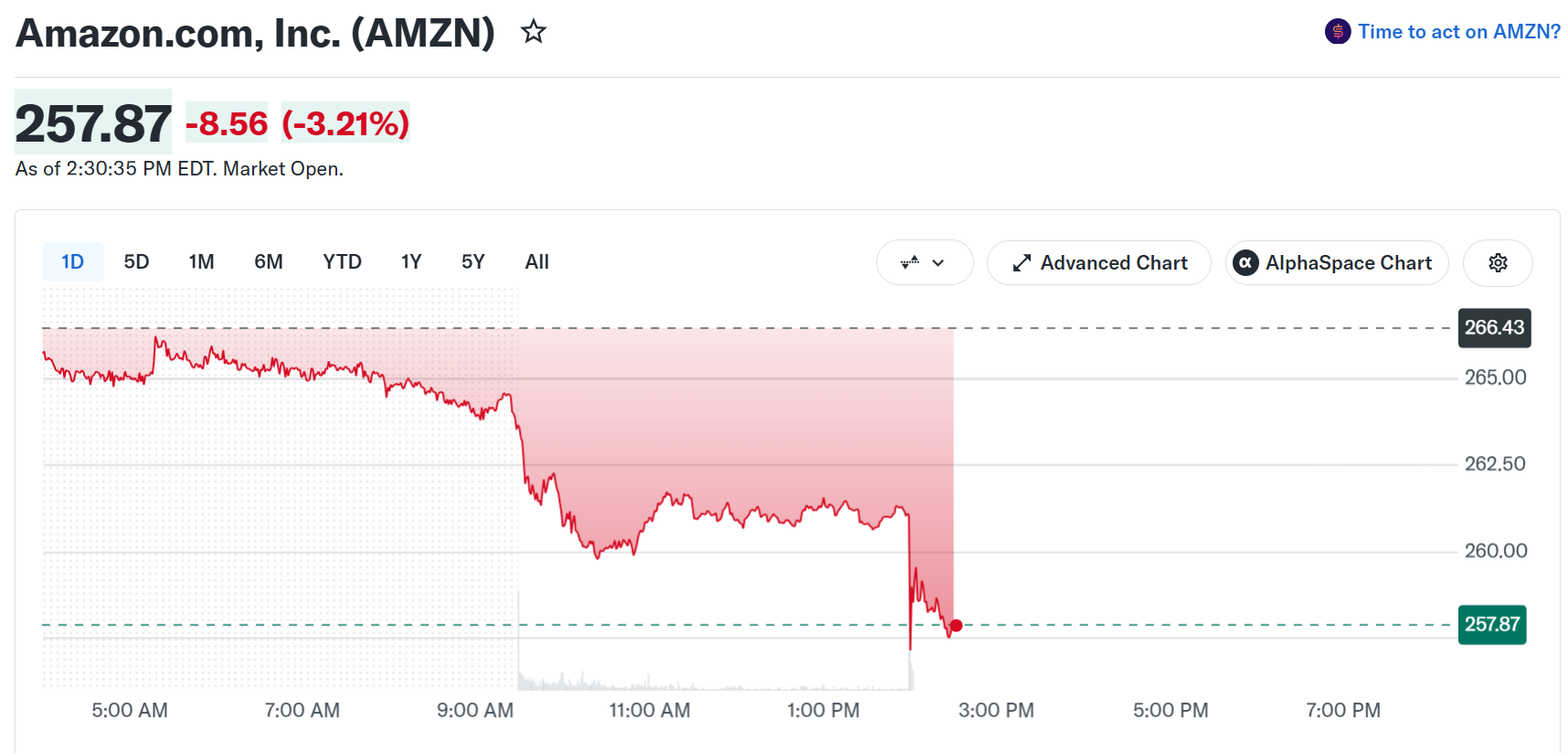
More than 20 state attorneys general are joining. Investors did not wait for the complaint. Amazon shares fell over 3% on Monday afternoon, erasing roughly $86 billion in market value.

How the Alleged Ad Price Manipulation Worked
Sellers bid against each other every time a shopper searches. Amazon once ran an auction built to stop winners from overpaying. That design kept bids low.
In 2018, officials say, Amazon began placing a bid of its own. It sat just above the runner-up, so the winner paid more. Insiders called it a soft reserve.
Amazon could see every rival bid. It never told sellers about the change. Executives tracked the extra revenue and kept the details tightly held.
The tactic first appeared on busy shopping days, when sellers would blame heavy competition. Amazon now lifts the minimum in 70% to 80% of auctions. On peak days, the FTC says click prices climbed 50%.
Amazon’s seller guidance, updated in April, does mention reserve pricing.
“Some reserves help allocate ad space by setting a bid threshold,” Amazon advertising guidance, via WSJ.
Follow us on X to get the latest news as it happens
How Amazon Stock Could React Once the Case Is Filed
Amazon (AMZN) traded at $257.87 early Monday afternoon, down from a $266.43 close. The stock had held near record highs through August.
Monday’s selloff already dwarfs past fines. Amazon paid a $1 billion civil penalty last September over Prime sign-ups. The market erased about 86 times that figure in a single afternoon.
So the fine is not the real risk. Ads brought in $69.6 billion in 2025, close to a tenth of Amazon’s $716.9 billion in sales. Those dollars carry high margins that help fund heavy AI capital spending.
A judge who rewrites the auction rules would hit that engine directly. Watch the remedy section of the complaint, not the dollar figure.
Google shows how slowly this plays out. A judge ruled against its ad business in 2025. The remedy is still unsettled.
The post FTC To Sue Amazon for Deceptive Advertising, How Will Stock React? appeared first on BeInCrypto.


The Crypto.com-supported Cronos blockchain had to halt and rewind its history this week to stop an ongoing theft due to the Tectonic protocol that Crypto.com had spent months promoting.
Tectonic warned users to pause using its protocol altogether. PeckShield first estimated the value of compromised funds at approximately $74 million.
Crypto.com supplied one of the largest retail onramps for Tectonic, this newly compromised protocol that nearly drained tens of millions of dollars from Cronos’ DeFi ecosystem. As fear about the hack has spread, Cronos’ CRO token has lost 6% of its value over the past 24 hours.
Kris Marszalek’s Crypto.com exchange proudly offered TONIC purchases through more than 20 fiat currencies. Crypto.com advertised TONIC-denominated Visa card spending at 80 million merchants.
It listed TONIC for trading on its main exchange, advertised staking returns of up to 100% per annum, and promoted staking rewards within its Crypto.com DeFi Wallet.
Read more: DeFi exploiter targets lending protocols with oracle tricks
Crypto.com’s Earn program guide provided step-by-step instructions for TONIC staking, including mentioning its ‘automatic compounding’ of ‘earnings.’
Crypto.com’s DeFi Wallet even simplified TONIC staking with one-click access with no lock-up periods.
Tectonic’s oracle page lists only two data sources for the USD price of TONIC, VVS Finance and — you guessed it — Crypto.com.
Crypto.com’s Cronos blockchain halts, erases history
After Tectonic suffered an exploit on Sunday, the Crypto.com-supported Cronos blockchain stopped producing blocks. Validators erased some of the blockchain’s history by reverting to the pre-exploit state and then resuming block production.
Tectonic’s litepaper talked up its connections to Crypto.com and identified Particle B as its incubator, which was renamed Cronos Labs. Crypto.com’s $500 million investment arm is a “strategic partner to Cronos Labs.”
Researcher Weilin Li described the TONIC exploit as a Mango Markets-style price manipulation hack that allowed the thief to withdraw real collateral from DeFi lending protocols using an artificially inflated price of TONIC.
Although Crypto.com’s Cronos EVM blockchain describes itself as ‘permissionless,’ its official FAQ says its 33 validators serve by invitation only. Applications to become a validator are also closed.
Total value locked (TVL) on Cronos DeFi protocols has fallen 92% since 2022.
This controversy is certainly not the first in Crypto.com history. In 2021, Cronos ‘permanently’ burned 70 billion CRO tokens to boost scarcity and hype the price of its token. However, in March 2025 it pushed through a community vote — using its own majority validator control and despite heavy opposition — to re-mint those 70 billion tokens into a ‘Cronos Strategic Reserve’ that restored supply to 100 billion as a de facto benefit to Crypto.com.
Crypto.com effectively controlled the Cronos Strategic Reserve in practice, because the exchange and its affiliated validators held majority power governing the Cronos chain, which administered the reserve’s terms. Before February 2022, CRO tokens were known as ‘Crypto.com Coins.’
Got a tip? Send us an email securely via Protos Leaks. For more informed news and investigations, follow us on X, Bluesky, and Google News, or subscribe to our YouTube channel.
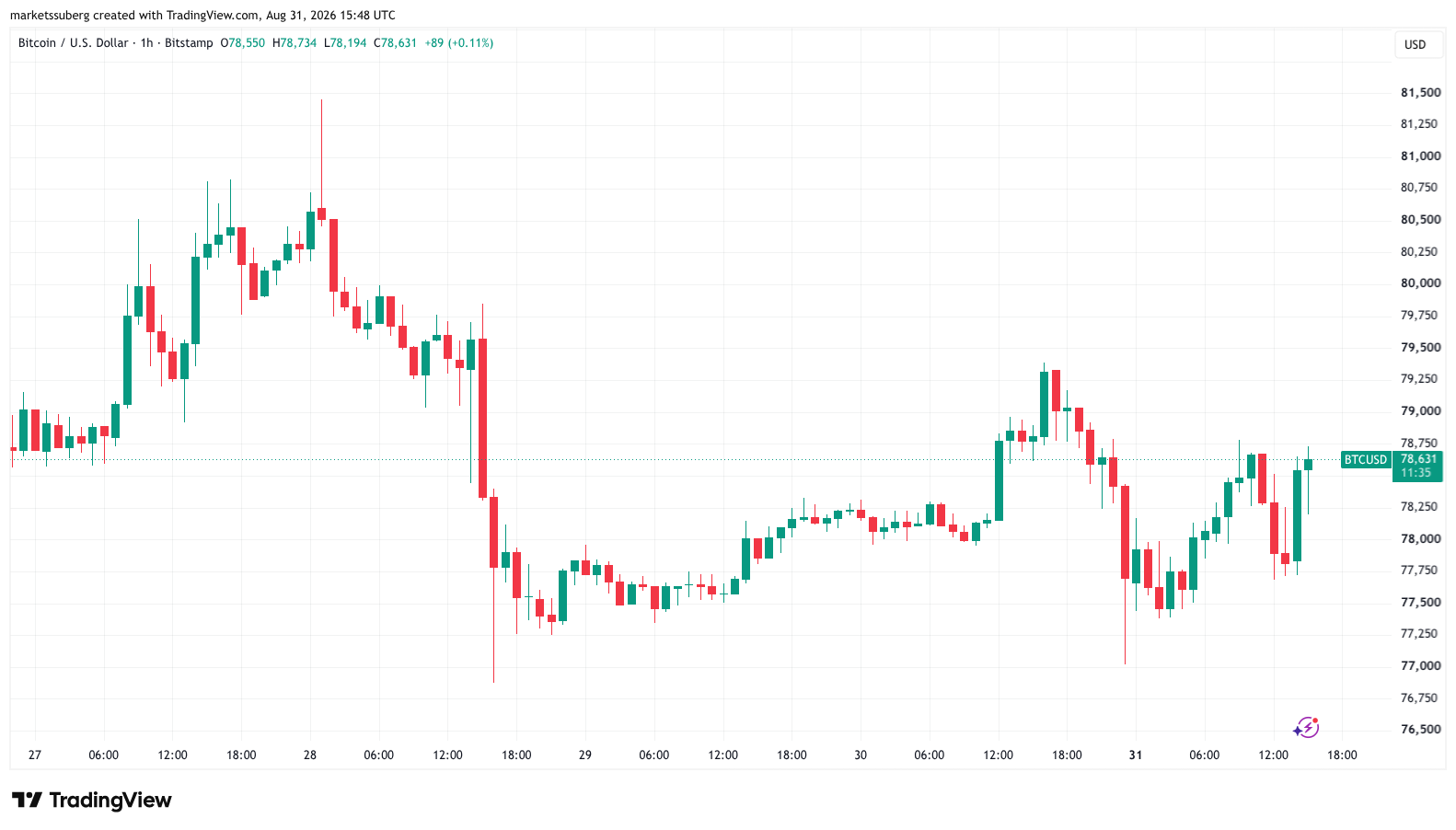
Bitcoin (BTC) gyrated around $78,000 at Monday’s Wall Street open as US bond yields neared 20-year highs again.
Key points:
- Bitcoin reacts as the US Treasury Secretary comments on bond markets in a mainstream media interview.
- Analysis warns that bonds are “ignoring” policy changes as new 20-year highs loom for the 30-year yield.
- BTC price analysis sees an emerging hidden bearish RSI divergence contributing to month-end weakness.
Bitcoin spikes as Bessent discusses bond yields
Data from TradingView showed BTC/USD trading in a narrow range, up around 1% on the day.
BTC/USD one-hour chart. Source: Cointelegraph/TradingView
After falling into the start of the US trading session, the pair saw a swift rebound as US Treasury Secretary Scott Bessent hinted at further interventions in the US bond market. In an interview with CNBC, Bessent stressed that he had not yet acted to shore up the long end of the yield curve — 10-year and 30-year bonds.
“I haven’t bought anything yet,” he told the network, adding that he was “fine” with yields rebounding after the announcement.
This month, the Treasury announced that it would be at least doubling the size of its debt buyback transactions to $4 billion from September. At the time, yields fell, but on Monday, the 10-year yield was back at its highest levels since January 2025 at 4.76%.
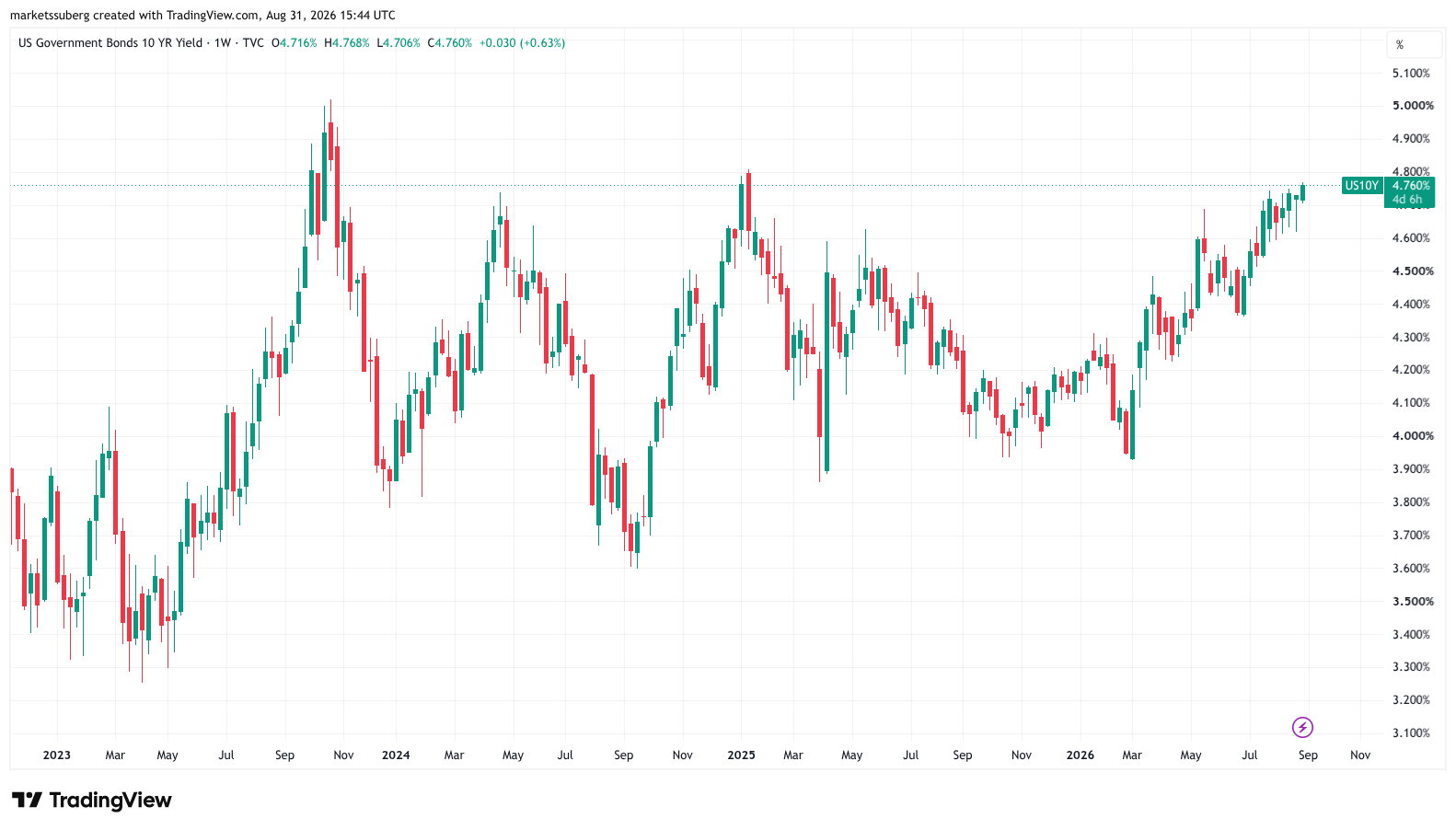
US 10-year bond yield one-week chart. Source: Cointelegraph/TradingView
The 30-year yield reached 5.269% on the day, six basis points short of its highest levels since January 2007.
“The bond market appears to be completely ignoring the US Treasury,” trading resource The Kobeissi Letter responded in a post on X.
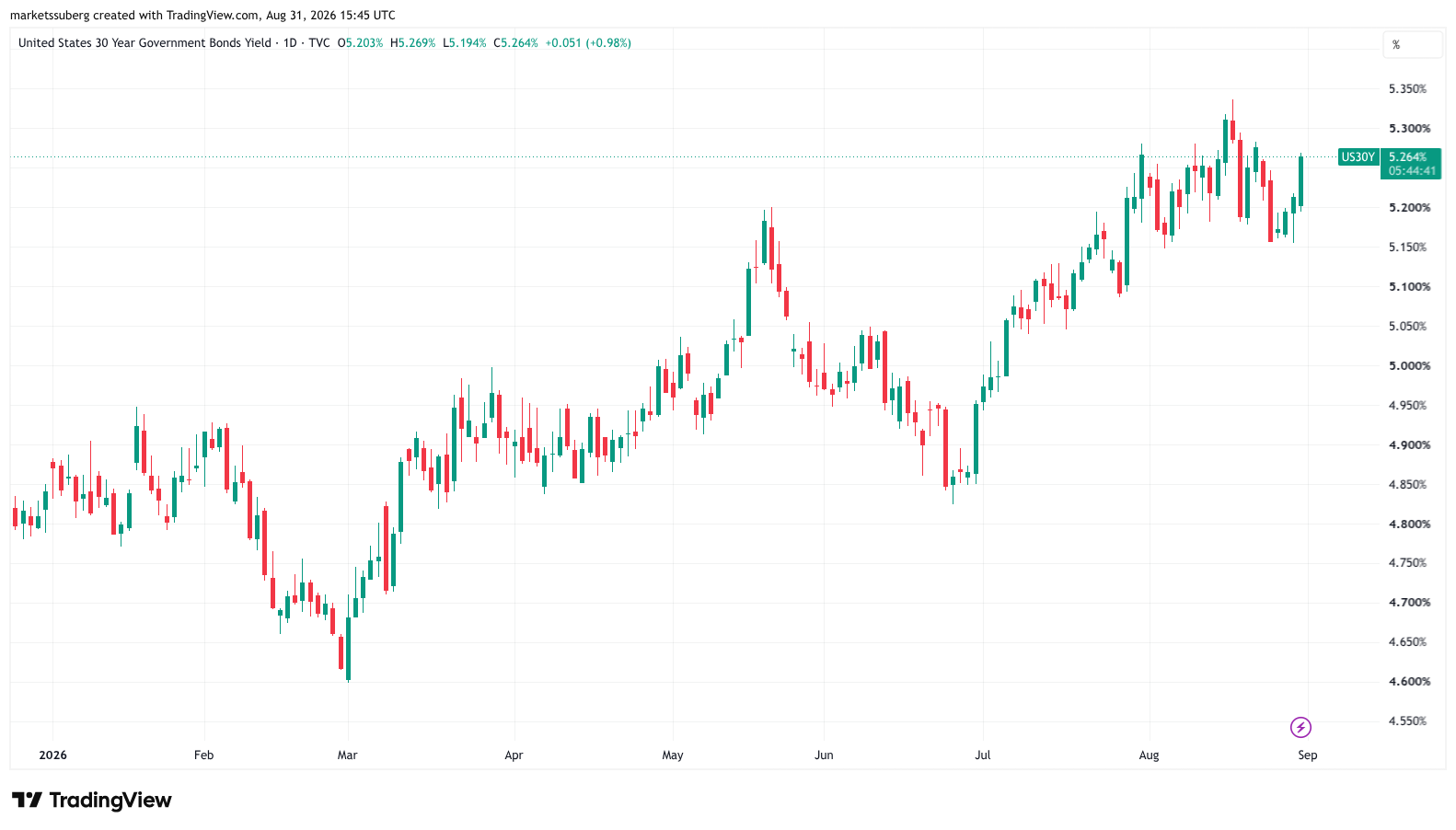
US 30-year bond yield one-day chart. Source: Cointelegraph/TradingView
Earlier, Ray Dalio expressed skepticism at the Treasury’s ability to control bonds, even under the new program. Forecasting a future US debt crisis, he named both Bitcoin and gold as potential hedges.
“As general advice, I suggest diversifying well in asset classes and countries that have strong income statements and balance sheets and are not having great internal political and external geopolitical conflicts, underweighting debt assets like bonds, and overweighting gold and a bit of Bitcoin,” he wrote in a post on LinkedIn.
US stocks, meanwhile, remained red on the day, with both the S&P 500 and Nasdaq Composite Index trading around 0.4% lower as tensions over new US-Iran strikes filtered through to markets.
Bitcoin RSI sparks new bearish warning
Ahead of the August monthly candle close, BTC/USD maintained its 50-week exponential moving average (EMA) at $77,269 as support.
Related: Bitcoin bear market ‘over’ as price metric copies 2023 recovery: CryptoQuant CEO
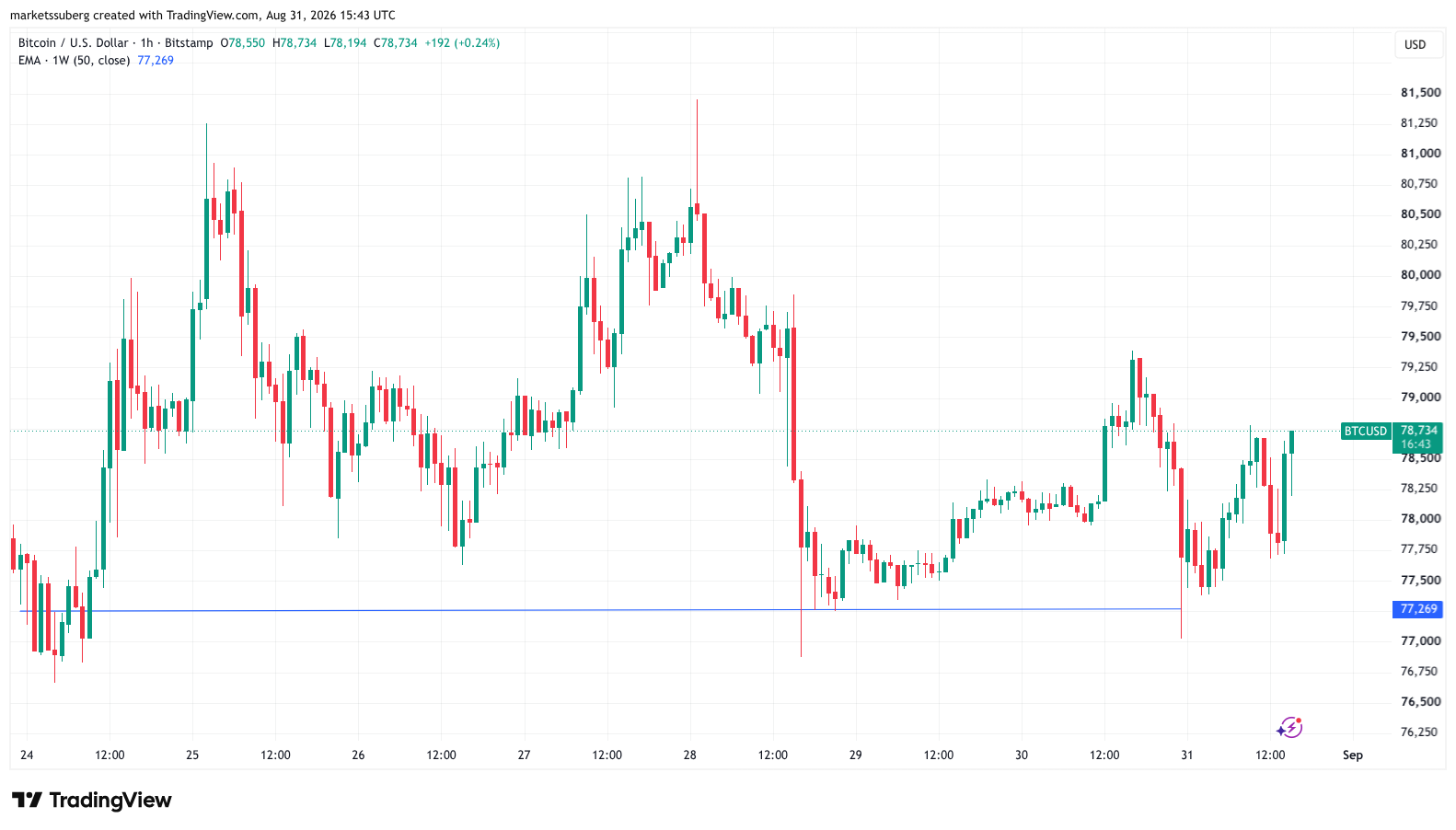
BTC/USD one-hour chart with 50-week EMA. Source: Cointelegraph/TradingView
Previously, Cointelegraph reported that this level is a key line in the sand for bulls. Month-to-date gains have neared 25% in Bitcoin’s best August performance since 2017.
In a note of caution, trader and analyst Rekt Capital warned of a hidden bearish divergence playing out on daily time frames between price and the relative strength index (RSI). Despite bullish RSI signals on the weekly chart, the latest daily values, he warned, pointed to waning momentum.
“if the Daily RSI continues to make Lower Highs (blue), that’ll contribute to mounting weakness here,” he told X followers alongside an explanatory chart.
Daily RSI measured 70.7 on Monday, still within “overbought” territory.
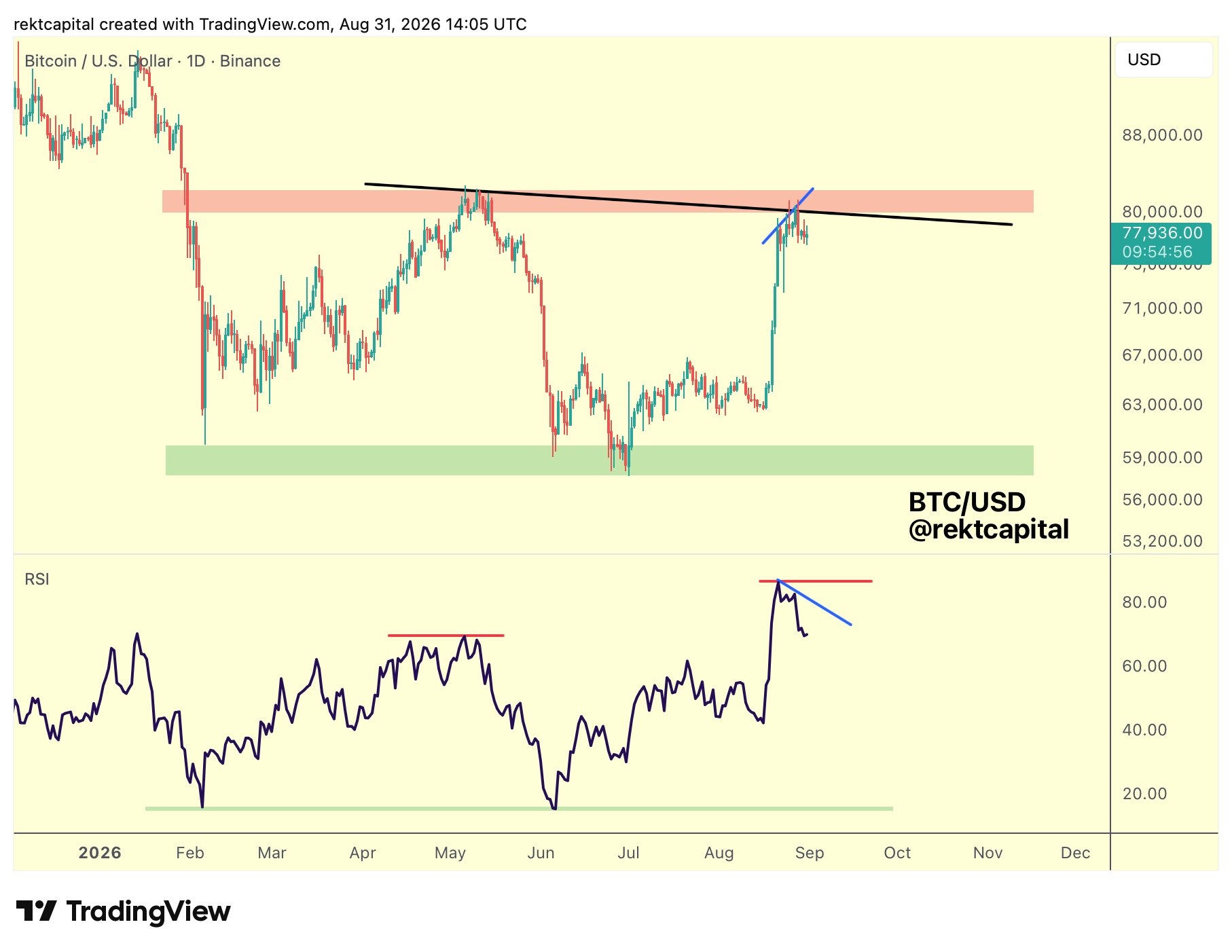
BTC/USD one-day chart with RSI data. Source: Rekt Capital on X.com

Webull, a self-directed brokerage and trading platform, is widening its Canadian product lineup by adding cryptocurrency trading for retail customers. The expansion arrives as the country’s regulators continue laying groundwork for clearer rules across parts of the digital-asset market.
Webull said Monday that its Canada crypto offering will be powered by Coinbase’s “Crypto-as-a-Service” infrastructure. Under the arrangement, Coinbase is set to provide the underlying trading and custody capabilities that support Webull’s new crypto access in Canada.
Key takeaways
- Webull is launching crypto trading in Canada, expanding beyond stocks, ETFs, and options available to its retail user base.
- The service will run on Coinbase’s Crypto-as-a-Service, with Coinbase handling core trading and custody functions.
- Webull points to rising Canadian interest in crypto, citing Ontario Securities Commission research on ownership growth.
- Regulatory clarity is still developing in Canada, including work on a stablecoin framework that would apply to both domestic and foreign issuers.
Webull adds crypto to its Canadian retail platform
Webull’s Canadian website currently displays 10 cryptocurrencies, including well-known assets such as Bitcoin and Ether, along with Solana. The platform also indicates that additional cryptocurrencies are available beyond the initial list, suggesting a staged rollout or expanding selection after launch.
For investors who already use Webull for traditional markets, the move effectively brings digital assets into the same self-directed ecosystem. That matters because crypto access through mainstream brokerage-style interfaces can lower friction for retail users who prefer established platforms and consolidated account experiences rather than switching between exchanges and wallets.
Coinbase infrastructure sits underneath the offering
Webull did not present its own trading or custody stack for Canada in its announcement. Instead, it said the company’s crypto offering will rely on Coinbase’s Crypto-as-a-Service infrastructure.
In practical terms, this means Coinbase supplies critical back-end services—specifically trading operations and custody—while Webull acts as the front-end platform for Canadian users. This kind of partnership can be attractive for brokerages that want to add new asset classes without building and operating complex custody and trading systems from scratch.
Webull cites Canadian demand and regulator momentum
As a justification for the expansion, Webull pointed to growing crypto adoption in Canada, including findings from Ontario Securities Commission research. According to the OSC, digital asset ownership has risen to 25% this year from 10% in 2023.
The company also highlighted that broader regulatory activity is underway. Canada is working toward more explicit rules for parts of the crypto industry, with attention not only on exchange-like services but also on stablecoins—an area that has become a focal point for regulators globally.
Stablecoin rules remain incomplete, but a framework is coming
While Webull’s immediate product is spot cryptocurrency trading, the regulatory direction in Canada affects how stablecoin-linked products and services may develop over time. The announcement noted that Canada does not yet have comprehensive rules specifically for fiat-backed stablecoins. However, a pathway is taking shape.
The Stablecoin Act, introduced following the 2025 federal budget, is intended to establish requirements for both domestic and foreign stablecoin issuers. In addition to its domestic impact, that “foreign issuer” angle is significant because it can influence whether international stablecoin brands can operate under Canadian standards and what disclosures or operational controls they would need to meet.
Investors watching crypto in Canada will likely view this as an important medium-term signal: platforms and liquidity providers typically want stablecoin arrangements that align with clear legal expectations before expanding product offerings tied to fiat-pegged assets.
Webull’s Canada launch raises the near-term question of how its crypto lineup will evolve—whether the initial 10 assets remain limited or broaden quickly—and whether regulators’ stablecoin framework ultimately accelerates or reshapes the range of digital-asset products available to retail users.


Webull, a self-directed brokerage and trading platform, is expanding its Canadian offering to include cryptocurrencies, adding Canada to a crypto footprint that already includes the United States, Australia and Brazil.
The company announced Monday that its Canadian crypto offering will run on Coinbase’s Crypto-as-a-Service infrastructure, with Coinbase providing the underlying trading and custody services. Webull’s Canadian website currently displays 10 cryptocurrencies, including Bitcoin (BTC), Ether (ETH) and Solana (SOL), while indicating that additional assets are also available.
The addition of crypto broadens Webull’s Canadian offering beyond stocks, exchange-traded funds and options, bringing digital assets alongside the traditional investments already available to its retail clients.
Webull cited growing crypto adoption in Canada as one reason for the expansion, pointing to Ontario Securities Commission research that it says shows digital asset ownership has risen to 25% this year from 10% in 2023.
Canadian crypto investment is growing as the country’s regulators move to establish clearer rules for the industry, including a federal framework for stablecoins. Canada doesn’t yet have comprehensive rules for fiat-backed stablecoins, but the Stablecoin Act, introduced following the 2025 federal budget, would set requirements for both domestic and foreign issuers.
Related: Canadian crypto ownership increases to 25%: Ontario survey

Virgo 2026 Health & Financial Discipline Horoscope | Stability, Savings & Wellness | Astro Vedansh

Teen charged for recording livestream of San Diego mosque shooting charged with murder

Marvell: Market’s Myopia On Alphabet Deal’s Potential Is Baffling (NASDAQ:MRVL)





-

 Crypto World6 days ago
SpaceX stock could rise 75% to $240, JPMorgan says
-

 Fashion3 days ago
Weekend Open Thread: Maeve – Corporette.com
-

 Crypto World4 days ago
Bitcoin’s 22% rally now needs real demand to outlast Treasury liquidity boost
-

 Crypto World5 days ago
Warsh Jackson Hole keynote puts financial innovation first
-

 Crypto World7 days ago
A $30 Billion AI Fund Implodes, Now the SEC Is Investigating Wall Street’s Role
-

 Business4 days ago
Salesforce Stock Soars 19% as Blowout Earnings and Agentforce AI Growth Silence Software Skeptics
-

 Crypto World6 days ago
Did Trump Just Move SpaceX Stock With One Truth Social Post?
-

 Crypto World5 days ago
Elon Musk Grok Bot Promise: We Will Make You Whole if AI Loses Your Money
-

 Business4 days ago
Apple Confirms September 9 Keynote and Reveals Its Full Pre-Order Schedule
-
 NewsBeat5 days ago
Lindsay Clancy jury braces for closing arguments as judge tells court: ‘You’ve heard all the evidence’ – Live updates
-

 Business5 days ago
Walmart takes aim at younger shoppers with new fashion brand
-

 Business3 days ago
Onto Innovation Stock: AI’s Next Bottleneck Is Yield (NYSE:ONTO)
-

 Crypto World3 days ago
Bitcoin price tests $82K resistance as Brandt stays long
-

 Business6 days ago
Thailand’s Eastern Economic Corridor Capital City (EECiti): Key Developments and Investment Opportunities
-

 Crypto World5 days ago
NVIDIA revenue hits $96.2B as AI demand doubles
-

 Business3 days ago
iPhone 18 Pro Pre-Orders Could Shift to Saturday as Apple Reportedly Avoids September 11 Anniversary
-

 Business7 days ago
NVIDIA Stock Drops Nearly 2 Percent to $210 on Seventh Losing Day Ahead of Critical AI Earnings
-

 NewsBeat6 days ago
Trump’s trade truce with China faces test with Iran effort
-
 Crypto World5 days ago
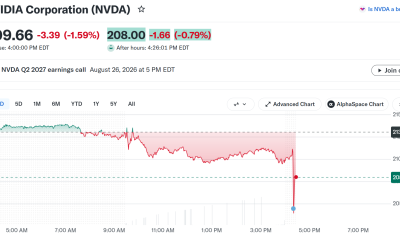
Nvidia Q2 Earnings Reveal $96.2 Billion Beat, So Why Is NVDA Falling?
-

 Tech5 days ago
Claude Cowork gets its own browser that doesn’t touch your tabs, bookmarks, or saved passwords
You must be logged in to post a comment Login